Showing posts with label Sameer Saxena. Show all posts
Showing posts with label Sameer Saxena. Show all posts
Manjummel Boys to Merry Christmas, filmmakers are going beyond borders
3:21 PM

The pan-Indian movie has gone beyond dubbing or casting the odd crossover star. A new breed of directors is making cinema that reflects India’s linguistic diversity
Shruti Sonal (THE TIMES OF INDIA; March 24, 2024)
In 1991, when Kamal Hassan-starrer Tamil psychological romantic drama ‘Gunaa’ hit the box office, it had an average run. However, over the next few years, the film achieved a ‘cult status’, with its song ‘Kanmani Anbodu’ — composed by the legendary Ilaiyaraaja — becoming a rage. The film’s most lasting contribution, surprisingly, was something else. Parts of the film were shot in the hill station Kodaikanal, including a cave known back then as the Devil’s Kitchen. The notoriously dangerous cave became so popular as a tourist spot as a result that it began to be known as ‘Guna Caves’.
Over three decades later, Kamal Hassan, ‘Kanmani Anbodu’ and Guna Caves have gripped the imagination of cinephiles again, this time through a Malayalam film. ‘Manjummel Boys’ is a dramatic re-telling of the real story of a bunch of friends whose trip to the caves in 2006 turned into a disaster after one of them got trapped in it. The film — stripped of any ‘star’, songs, or even a female lead — has sprung a surprise and emerged as the first Malayalam film to enter the Rs 200 crore club.
A fourth of that has come from Tamil Nadu. Ruban Mathiavan, managing director of Chennai-based G K Cinemas, says even after five weeks, some shows are running housefull. “It has already earned equal to what films with Tamil superstars earn. Kamal Hassan and the Ilaiyaraaja song have been a huge factor in it,” he says.
Not just in this particular film, but in multiple movies and web shows today, linguistic and state boundaries are blurring. From dialogues to pop culture references, filmmakers cater to an audience that’s increasingly multi-lingual, mobile, and more comfortable with subtitles than ever before.
REGIONAL DELIGHTS
Big star-led blockbusters such as ‘KGF’, ‘RRR’ and ‘Baahubali’ led the way, but have now opened the floodgates for more experimental forms of content, says Harshit Bansal, founder of Humans of Cinema, an online community of cinephiles that has nearly four lakh followers on Instagram. “Audiences are now more comfortable with the cinematic languages of different regions. From action sequences, songs and background music, to how women are portrayed... Everything differs. A Marathi film looks very different from a Tamil film. Audiences are realizing that they don’t need to turn to Hollywood or Korean cinema in order to get something different,” Bansal says.
What this means is that ‘pan-India’ content today has dived deeper, moving away from lazy remakes, television re-runs with oft-hilarious and unsynced dubbing, or merely putting together stars from different regions in order to broaden the appeal.
For instance, two different versions of Sriram Raghavan’s ‘Merry Christmas’ were simultaneously shot in Hindi and Tamil. In an earlier media interview, Raghavan said he didn’t want any of the versions to ‘sound dubbed’. While the story of the slow-burn romantic thriller was almost identical, the references were carefully tweaked: the Hindi version had references to Rajesh Khanna, the Tamil one had Kamal Hassan. Two different teams of writers were hired for the languages, and original songs were composed for each! Bollywood’s Katrina Kaif and Tamil actor Vijay Sethupathi were leads in both versions, but the secondary cast differed.
However, some things remained the same. Both the versions were dedicated to director Shakti Samanta, and Sethupathi’s credits referred to him via his popular Tamil title ‘Makkal Selvan’ (people’s treasure).
In last year’s biggest hit ‘Jawan’ too, references to an old song being played at a pivotal point in the film differed in each version. The Hindi one had ‘Bekaraar Karke Yun Na Jaiye’ (Bees Saal Baad, 1962), the Tamil one had ‘Paattu Padava’ (Thennilavu, 1961), and the Telugu one had ‘Ee Mounam’ (Doctor Chakravarthi, 1964).
In ‘Manjummel Boys’, director Chidambaram didn’t shy away from letting the audiences know his inspirations. Illustrations from ‘Kanmani Anbodu’ play in the background as the title credits come on screen. The boys buy a CD of the film and play the song on the trip. They refer to the caves as the ‘place where the Kamal Hassan song was shot’. And, perhaps most fittingly, the love song plays in the climax itself, with the lyrics now spotlighting the power of friendship instead.
“The idea to put the song in the climax was in my head even before I started writing the film. I asked my team to get the rights to it before the production started. I told them if we can’t get them, then I won’t make the film. Everything else was written around it,” the director says.
Interestingly, the second half of the film has more Tamil dialogue than Malayalam, which Chidambaram says is ‘organic’ because of the setting. “Lingual boundaries are blurring. Even if one has to make a movie in Bengaluru, the characters can’t just speak Kannada. There will be a mixture of Kannada, Hindi, English, Tamil, Telugu. Similarly, Malayalam content also has to change. That’s how our country is today,” he adds.
ACCENT KHICHDI
In the world of OTTs too, different settings are being explored in order to offer something fresh to the audiences. From characters speaking a mish-mash of different languages to stories being set in far-away locations, creators are opting for it all. Netflix India’s dark comedy ‘Killer Soup’, for instance, is set in a fictional hill station in South India, and has dialogues in Hindi, Tamil, and Dakhni. Starring Manoj Bajpayee and Konkana Sen Sharma as the leads, it is based on a 2007 murder case in Telangana, and has emerged as a sleeper hit.
Harshad Nalawade, one of the writers of the show, says the fictional setting allowed them to also create more eccentric characters that spoke in peculiar accents and mannerisms. “We didn’t want to make yet another show that is set in a small town in north India. I think a section of the audience is tired of content coming from the north, and there’s no fresh world that they are seeing. So this was the opportunity to actually explore that,” he says.
Raj and DK’s hugely popular shows ‘The Family Man’ (season two) and ‘Farzi’, which featured a few Tamil dialogues alongside Hindi, made it easier for the audience to consume more of it in subsequent shows, the writer adds.
One thing is clear. For more and more viewers in India today, language is no bar. As South Korean director Bong Joon-ho said in his 2020 Oscars acceptance speech: “Once you overcome the one-inch tall barrier of subtitles, you will be introduced to so many more amazing films.”
--------------------------------------------------
MAKING UP A REEL LANGUAGE FOR REAL
Others are creating a whole new language themselves. At the global boxoffice, the sequel to Denis Villeneuve’s scidrama ‘Dune’ has earned accolades for offering viewers a glimpse into the fictitious Chakobsa language, created by a group of linguistic experts who borrowed from real-world languages.
In India, grim survival drama ‘Kaala Paani’ has managed to do the same. Set in the Andaman and Nicobar islands, it traces the journey of tourists and officials who try to tackle the outbreak of a mysterious disease.
The fact that it featured tourists from multiple parts of the ‘mainland’ made the use of a multilingual setup necessary, says creator Sameer Saxena. However, the main challenge was to create a fictional language spoken by the ‘Oraka’ tribe featured in the show.
“We got language scholars from across the world, and made a guidebook from scratch, with all the alphabets and pronunciations. We didn’t want it to sound similar to any of the existing tribal languages,” Saxena points out.
The end product was rather finessed, as opposed to the often-derogatory representations of tribal languages that have existed previously. (Think : the jhinga la la hoo hoo songs in the past.)
No matter which community got offended, we were sure the lawyer community would not-Maamla Legal Hai team
8:38 AM
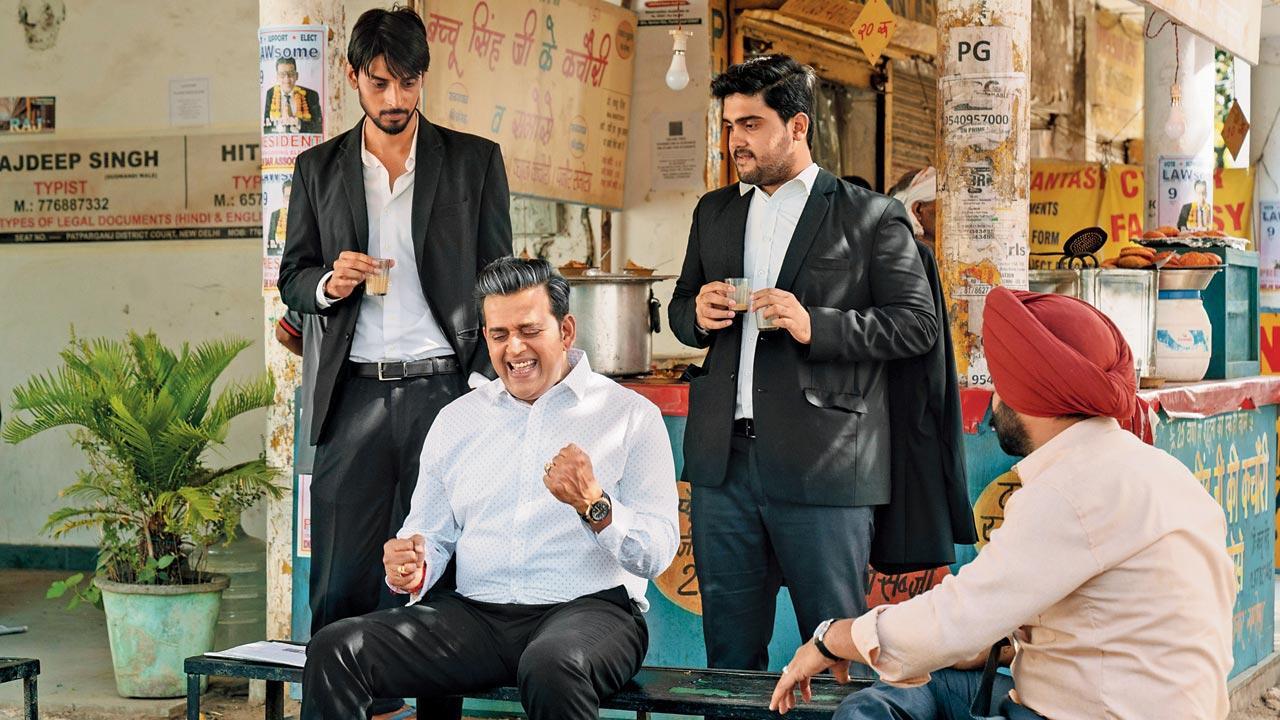
What goes into the making of a legal drama laced with humour? Directror Rahul Pandey, writers Saurabh Khanna and Kunal Aneja walk us through the creation of Maamla Legal Hai
Letty Mariam Abraham (MID-DAY; March 12, 2024)
Amid the chaos of the courtroom, the legal battles and the pursuit of justice lies a realm that is rarely explored—the backstage of the legal world. Netflix’s Maamla Legal Hai, written by Saurabh Khanna and Kunal Aneja, offers viewers a light-hearted glimpse into the everyday lives of lawyers, judges, court staff, and those who come to seek justice. From bizarre cases to workplace banter, the Ravi Kishan, Nidhi Bisht, Tanvi Azmi and Brijendra Kala-starrer looks at the legal system from a comedic lens. mid-day explores the series’ journey from script to screen and what went into creating director Rahul Pandey’s directorial venture that is both a laugh riot and dark.
The idea
It all started with Aneja receiving an e-mail from co-writer Khanna that explained the story. As he delved into the material, he realized the potential and found himself captivated by the legal world.
Aneja recalls, “I had not seen such a take on the legal world. Generally, in films and series, the story is based on one case, and it ends when the case ends. Our approach was to treat it like a workplace comedy, with the background of a sessions court. [It focuses] on the everyday lives of a lawyer, a judge and how the court managers deal with things. The idea was always to make a binge-able comedy series.”
While they began scripting in 2022, it took the duo a year-and-a-half to lock the cases. They drew inspiration from real-life court cases, which took them to the district courts in Delhi. “[We came across] so many bizarre cases because the right to legal remedy cannot be denied to anyone. In the first case, wherein a husband files for divorce because his new bride didn’t shy away on the first night, a regular person can ignore it, but the judge has to listen. We went to almost all the district courts in Delhi. Khanna has a friend who is a lawyer in Saket court, so we went there several times,” shares the writer, who was also in touch with other lawyers for information.
Characters and the cases
While many shows and films focus on lawyers and judges, Aneja also examined the workforce behind the scenes. “A staff of almost 100 people is running the show; it is their job to manage cases, send the public attending cases to the right courtroom, and manage parking. That is how the character of Vishwas [played by Anant Joshi] came to be,” he explains.
For director Pandey, who was brought on board by showrunner Sameer Saxena, it was initially difficult to believe that such cases existed. The selection of the cases was a meticulous process that had to match the character’s trajectory.
“By the time I joined [the team], the cases were more or less locked. There were a lot of cases that didn’t make it to the final eight,” says Pandey.
Aneja gives one instance—in a weird turn of events, a daughter had sued her father for cheating in a game of Ludo. “Our cases had to be such that they went with the character’s journey. For example, the case of the parrot using abusive language was to show Sujata’s [Bisht’s character] journey of finally fighting a case on her own. There was a case between Starbucks and [another brand] called Sardarbucks. As a citizen, I can easily say it’s [blatant] copying, but in court, you have to prove beyond a reasonable doubt that the name has been copied. But we didn’t use it [as it didn’t take the narrative ahead].”
Calling action
Before facing the camera, the cast underwent workshops and rehearsals. The exercise gave Pandey the opportunity to finalise the series’ treatment. “I had decided that between the punchline and realistic treatment, I would go with the latter. Sometimes, the jokes that are landing very well while shooting might not work on the edit table, and vice versa. So, we had to be careful of that,” he shares.
As a director, he claims there are three things he would never compromise on, the first being the support of the cast. He was grateful when veteran actors contributed to making the scene look better. He remembers how Kishan, who had missed a few rehearsals, would give suggestions that would elevate the sequence.
“My favourite scenes were the ones with Brijendra Kala. In the scene where Sujata suggests to Tanvi Azmi’s judge character that the prosecutor has also [used profanities] for her, BK responds with a quick ‘no, no, no’. These were nuances he added to the character.”
The second factor was the set production. He recalls reading an article about a case in a Dhanbad district court where a person refused to testify in the absence of a dock. “The opening scene is where the [courtroom clerks] cart a dock for a witness to testify. That idea was to keep the look and feel real. The last factor is the edit. We even kept the bit when Ravi Kishan’s character fumbles in one of his speeches to [make it more] realistic.”
The verdict
While navigating the comedic landscape, Aneja and Pandey were careful not to offend the legal community. They say that lawyers have applauded the series for its authenticity and humour. “While writing, we wondered if we were offending anyone because that was never the intention. Luckily, the lawyers who have reached out to us have liked the show,” assures Aneja. Pandey adds, “No matter which community got offended, we were sure the lawyer community would not because their notions of right and wrong are also legally driven.”
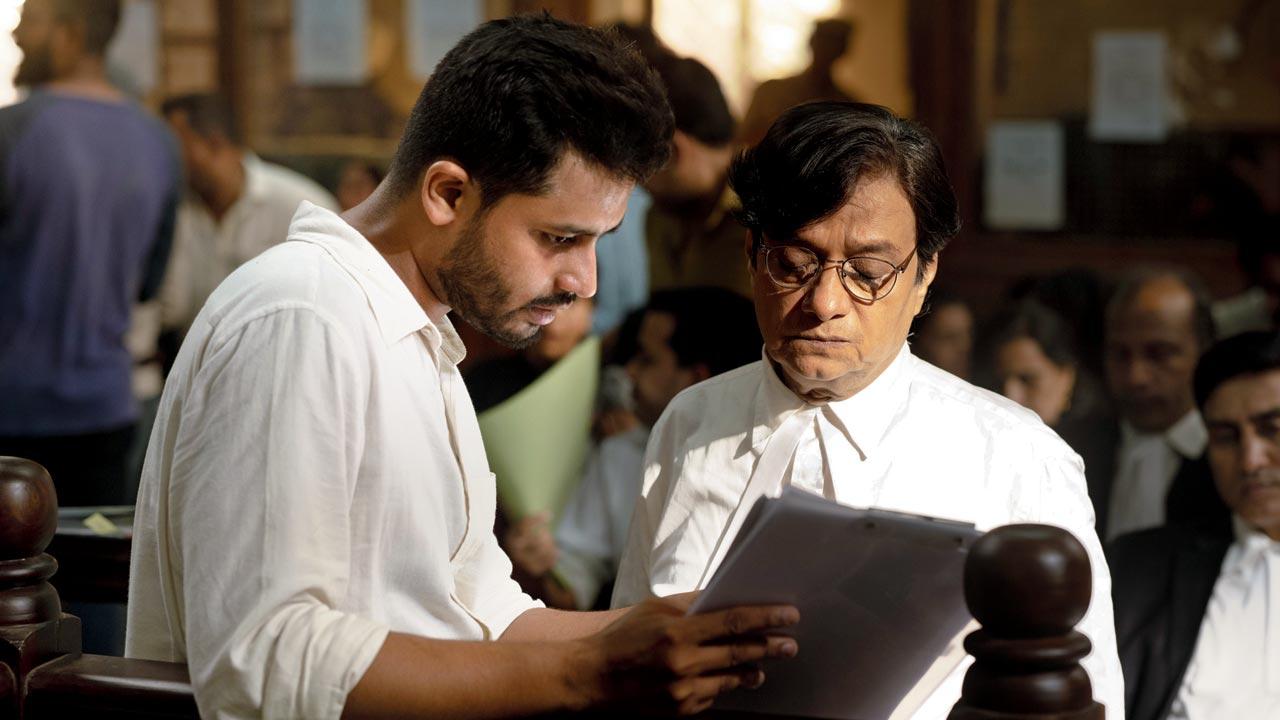
Director Rahul Pandey and Brijendra Kala going over scenes
I wasn’t sure how Tripling's storyline would be affected by the pandemic-Sumeet Vyas
8:05 AM
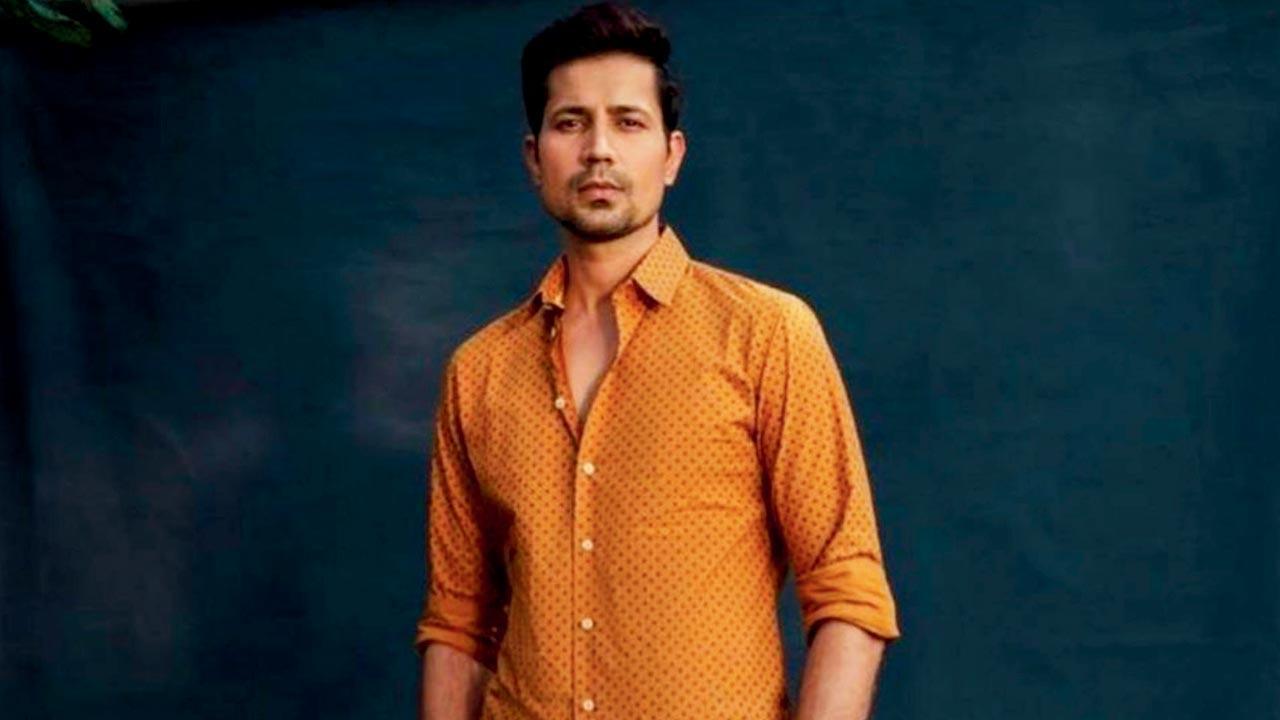
Writer-actor Sumeet Vyas on penning the third instalment of Tripling
Mohar Basu (MID-DAY; April 18, 2021)
A road trip story when you are not allowed to travel is a hurdle Sumeet Vyas never thought he would have to jump through. While year 2020 has been a brain freeze for the writer-actor, he has been trying to weave a script for the third season of Tripling. “Would a story about a time when there were no masks on people’s faces make sense? I wasn’t sure how our storyline would be affected by the Coronavirus pandemic,” says Vyas.
Learning from the feedback of season two, the actor is hoping to pen down a story for Tripling in 2021 and kick it off by 2022. “We bounced several ideas between the team at TVF, Akarsh [Khurana] and me. We are also accounting for the fact that the second season of Tripling didn’t get as much love as the first one,” explains Vyas, adding that the second instalment was a travel journal through multiple cities, hence the “focus was on the city’s culture and flavour”. “Stitching that in the narrative ended up widening the story. Learnings from the previous season will be channelised in the writing this time.”
The series was developed by Sameer Saxena, who also served as a director on the show. Asked how he and Khurana planned to fill the void of their key collaborator and he said, “He was the showrunner for both seasons and my fallback guy. We don’t always have to work together, but he will be missed.”
Key players of The Viral Fever resign
7:01 PM

Uncertainty reigns at India's leading digital content creation company after the exodus of key members; newly-appointed president asserts 14 projects on floors, including second seasons of Panchayat, Kota Factory
Mohar Basu (MID-DAY; August 12, 2020)
The Viral Fever (TVF) had a glorious run last year, with the success of Kota Factory, Tripling, Hostel Daze and the recent Panchayat (above) proving that they were the undisputed masters of quirky desi shows. However, the dream run came to an abrupt halt last week as the key players — Biswapati Sarkar, Nidhi Bisht, Amit Golani, Sameer Saxena, Dhawal Gusain, Karan Chaudhry and Saurabh Khanna — bowed out of the picture over alleged differences on the company's business approach.
 So, where does TVF — the true embodiment of homegrown digital entertainment in India — stand post the exodus, without its founders to steer it ahead? The exit of Saxena, head of TVF original content, has fuelled rumours that OTT bigwigs have lost faith in the company. After all, he had helmed the sophomore season of Tripling and the much loved Yeh Meri Family, and also served as the executive producer of Panchayat, the company's biggest hit this year. Insiders say that the upcoming seasons of the stable's popular series could be in limbo without his creative guidance. mid-day reached out to Saxena, who declined to comment.
Even as uncertainty looms large in the corridors of the company, Vijay Koshy (left; above) – who returned to TVF in July after a brief stint in Arre – has been appointed president. This is the second change of gears since 2017 when Arunabh Kumar stepped down as the CEO, following a series of sexual harassment charges, paving the way for Gusain to take charge.
 Despite the recent turn of events, Koshy asserts that 14 shows are set to go on floors. "Several OTT platforms are in talks with us for new shows. Some senior-level stupendous talent have moved on to pursue their own interests. But the writers and directors of Panchayat, Kota Factory (right), Permanent Roommates and Humorously Yours are still with us. The entire core team is still here. Besides Arunabh, Shreyansh Pandey [assistant vice president, content strategy & creative producer] and Akansh Gaur [content strategy head] are people who have been behind the scenes all along and will now shoulder larger responsibility. The second seasons of Panchayat, Hostel Daze and Kota Factory are in development. The same holds true for Flames season 3, Girls Hostel season 2 and Gullak season 2," he says, without refuting rumours of a brewing pandemonium within their workforce.
Quiz him on the future of the shows that were created by Saxena, and he explains, "Considering Yeh Hai Meri Family is a show based in the '90s, we are discussing whether we will take it forward. A story has yet to be locked for the third season of Tripling. When we get the right story, we will assign a director and take it ahead."
Mid-day reached out to Bisht, who declined to comment.

Sameer Saxena and Biswapati Sarkar
Whenever there is a vacancy in a government office, my parents ask me to go for it-Jitendra Kumar
7:54 AM

Despite Cheesecake's success and a Bollywood film in his kitty, TVF star Jitendra Kumar on how it's a long road ahead to fame
Letty Mariam Abraham (MID-DAY; December 17, 2019)
After Kota Factory, Pitchers, Truth aAd Dare With Dad, Jitendra Kumar, the poster boy of TVF, released a five-episode series, Cheesecake, with co-actor Akanksha Thakur. The MX Player show revolves around a couple who reignites the spark in their marriage as they welcome a dog into the family. In conversation with mid-day, Kumar talks about finding an unlikely co-star in a dog, his Bollywood debut and meeting his family's expectations.
Edited Excerpts from the interview.
How did you come on board for Cheesecake?
The concept belongs to Palash [Vaswani, director] and he is a pet lover. He got writer Gautam Ved on board, and along with Sameer Saxena [executive producer], the project began to take shape.
Are you pet-friendly?
Not really [laughs]. Despite my fear of dogs, I insisted on doing the show. The track of the married couple was interesting and different from the projects Akanksha and I have been part of. We trained with the dog to make it seem natural. Since she loves dogs, the training was essentially for me. It was fruitful because I gradually got comfortable with Aryan.
Was it difficult to shoot with a dog?
I think Aryan is more experienced than us. He has done several commercials and films. After his shot, he would immediately be taken to his vanity van because he couldn't bear the heat [laughs].
There were rumours about Pitchers 2 going on floors. Is it still on the cards?
The concept of start-ups is no longer fresh. We had started work on the script but realised that there is not enough material to play with. So, it's currently on hold.
You are making your Bollywood debut with the same-sex love story, Shubh Mangal Zyada Saavdhaan. What was it like to romance Ayushmann Khurrana?
Romancing a girl comes easily because you've done it before; that's not the case here. Initially, it was awkward, but we got comfortable as we did readings, [understood] our characters and the situations they face. Before filming a romantic scene, the director [Hitesh Kewalya] would come to us and say he wants to see the chemistry between us. Thankfully, it flowed naturally when the camera rolled.
Has your family finally accepted you as an actor?
They are supportive of my decision. But whenever there is a vacancy in a government office, they call me, asking me to interview for the job. This happens especially when I'm going through a low phase.
We borrowed a little bit of culture from every city we visited-Sumeet Vyas
7:57 AM

Tripling writer-actor Sumeet Vyas joins co-stars Maanvi Gagroo and Amol Parashar to decode the journey of season 2
Letty Mariam Abraham (MID-DAY; April 30, 2019)
Ask any writer and he will tell you that while scripting the first season of a show is usually organic, the second outing proves to be the litmus test. In that regard, TVF Tripling shines bright — the recently dropped second season, which has Sumeet Vyas, Maanvi Gagroo and Amol Parashar play the squabbling Sharma siblings, has been widely appreciated.
Vyas, who doubles up as an actor and screenplay writer for the slice-of-life comedy, says the team spent a considerable time developing the material. "We took almost a year to develop the script as Akarsh [Khurana, co-writer] and I were busy with our individual projects. In fact, we were shooting for a film together, and told our director [Sameer Saxena] that we will crack the script during that time. Luckily, there was no haste to finish, and we didn't want to write for the sake of finishing it. TVF and Sameer were patient enough to let the idea breathe," he explains.
If Vyas's Chandan and Gagroo's Chanchal found their feet in the first instalment, the latest edition belongs to Parashar whose character Chitvan matures from a fun-loving youngster to a responsible father figure. "The idea was never to bank on the same kind of craziness. It may be easier, but it wouldn't hold in the long run; it limits you. Spirit-wise, the character has remained the same," explains Parashar.
As much a travelogue as it is a family drama, Vyas says the locations play a pivotal role in the narrative. "We borrowed a little bit of culture from every city we visited and incorporated that into the story. That was a wholesome way to utilise each location."
Gagroo, on her part, is ecstatic that the show enabled her to tick off a few destinations from her travel list. Having shot across Kolkata, Delhi, Jaipur, Lucknow, Ahmedabad and Sikkim, it is the north-eastern state that has her heart. "It was the first time I was visiting Sikkim. It was cold and beautiful, and the food was delicious," she gushes, before Parashar good-naturedly cuts in, "It was so cold, I couldn't get out of the blanket."
Their travel diaries are filled with anecdotes that range from sweet to bizarre. Ask them if a city wasn't agreeable to them, and Parashar is quick to respond, "Maanvi had a problem that her hotel room in Kolkata was too big. How does one empathise with that?" Feigning hurt, Gagroo defends her stance, "It was a vintage hotel with high ceilings and huge rooms. I get scared alone at night. My rooms have to be the right size. This happened right after the Ahmedabad stay where we all were cribbing about how the rooms were too small."
Their easy banter shows how the three actors have evolved from being co-stars to friends. "During the first season, we were only concerned about finding our characters. Thankfully, the stress points were gone by this season," smiles Parashar.
I want to bite my husband’s bum-Kajol in TVF video
7:47 AM

Shah Rukh-Kajol spoof their popularity and the result is hysterical
Subhash K Jha (DNA; December 29, 2015)
A lot of us believe that Bollywood’s can’t take a
joke on themselves. Well, here’s proof to the contrary. In an
outstanding new spoof video titled Bhaag Jeetu Bhaag: The Jodi Awakens,
Shah Rukh Khan and Kajol not only allow fun at the expense of their
long-standing popularity, the duo also show up in the video to join the
fun in a sporting display of self-deprecatory humour.
The video imagines the Shah Rukh-Kajol fan club as a sinister secret society whose fanatical members can go to any lengths if their duo of deities are mocked. So we see a bunch of squealing girls and actor Varun Sharma packed together in a movie theatre waiting for Dilwale to start, when suddenly the guy next to Varun — Jeetu, our unfortunate hero—wonders aloud what it is that is so special about the jodi. What follows is an incredibly funny little horror-chase film edited by Apurva Asrani and directed by Sameer Saxena.
The satirical centre of the film is when Jeetu, now held captive by members of the SRK-Kajol fan club is cross-examined by, ahem, Shah Rukh Khan and Kajol as to why the poor cornered Jeetu doesn’t think the jodi to be the best.
“There are other good jodis…like John-Bipasha,” suggests Jeetu feebly. “We’re talking about acting, not picking up dumbbells,” chortles SRK. “Hrithik-Kareena?” Jeetu pushes on bravely. “Oh ya, Yaadein and Main Prem Ki Deewani Hoon,” sing SRK and Kajol in unison (for the record both the films were flops). And when poor Jeetu squeakily suggests Ranveer-Deepika as a likable jodi SRK and Kajol squabble over which ‘Ran’ Jeetu means, the one with the ‘b’ or the ‘v’. B or V, it was all done in a spirit of sporting satire. No offence meant. More ‘Dost’ than ‘Roast’.
Through the spoof, Kajol and Shah Rukh are great with their comic timing, specially when Kajol’s caller tune starts singing Mr Lova Lova, a song from the Kajol-Ajay Devgn starrer Ishq. What follows is a giggly conversation between Kajol and Ajay Devgn as SRK squirms, with Kajol confessing she wants to….errr… bite her husband’s bum because it’s so cute. Okay then.
If the truth be told, this spoof is funnier than all of Dilwale, and Shah Rukh and Kajol give a better account of their magical togetherness here than they do in the feature film.
Sameer reveals how he managed to convince Shah Rukh and Kajol to spoof themselves for this video. He says, “Well, everyone strongly believes in the content of TVF, so does SRK. We did a hugely popular episode of ‘Barely Speaking with Arnub’ with him last year. So he knew when we come up with something for him and approached him for it, it would be exciting.”
To get the two superstars to joke about themselves seems like a Herculean task. But Saxena says it was a cakewalk. “SRK and Kajol are mature and sporting enough to take a joke on themselves. So there wasn’t any convincing required. They were on board the moment they heard the script. And they also knew this was going to be the Biggest Qtiyapa Ever in terms of scale, so there was not a shadow of doubt in their minds.”
Subscribe to:
Posts (Atom)