Showing posts with label Salim Merchant. Show all posts
Showing posts with label Salim Merchant. Show all posts
Not surprised by BTS pulling out of Grammys-Salim Merchant
8:53 AM

Nishad Neelambaran (HINDUSTAN TIMES; August 3, 2026)
The introduction of the new Best Asian Pop Music Performance category for the 2027 edition of the Grammy Awards has raised a discussion online, especially after K-pop band BTS decided to pull out their submission because of this move. Singer-composer Salim Merchant asserts that he understands where the band’s decision is coming from.
“The Recording Academy has a standard policy of giving preference to their artistes; that is how they operate, and it is their prerogative. All the proceeds that the Grammy receives as charity go towards the recording artistes in America. So, as a non-American, there are very few chances that your entry will come in the main category. I’m not surprised about BTS’ decision,” he says.
The 52-year-old explains the situation in the Indian context, saying that if he were to submit his album for a Grammy nomination, it would be “nowhere close to a nomination”, unless he collaborated with an Academy member.
Giving an example of the three-time Grammy Award-winner from India, musician Ricky Kej, Merchant says, “For Divine Tides (2021), Kej had collaborated with Stewart Copeland, the former drummer of English rock band The Police. And Copeland is a very respected member of the Academy. He is a celebrated American artiste. Hence, Divine Tides was a strong contender to win that year.”
He also points to the case of composer A R Rahman, who won two Grammys for his work in Slumdog Millionaire (2008), highlighting the “very strong representation of his management in the US”. “They used to make sure his representation was done in Hollywood because, for some time, Rahman was considering moving to the USA. During his affiliation with them, they must have made him a recording artiste, and that’s why the Grammys,” he ends.
The Asian category debate
BTS recently announced that they won’t be submitting their work for the 2027 Grammys nominations after the introduction of the Best Asian Pop category, saying that they hope music is appreciated for what it is rather than being divided by region or language. In response, The Recording Academy’s CEO Harvey Mason jr. said, that nominations
When music isn't just about the note but about 'notes', too
9:38 AM

Music is emerging as a valuable asset class with singers and composers launching their own labels to make more in royalty payments
Rajesh N Naidu (THE ECONOMIC TIMES; February 27, 2026)
Mumbai: In a shift mirroring a long-established trend in Western markets, a growing number of Indian composers and singers are launching their own music labels, signalling that music is increasingly being viewed as an asset class by both artists and investors, executives at independent labels, music licensing platforms and industry analysts said.
Most recently, Tamil composer Anirudh Ravichander launched Albuquerque Records, his own music label.
Over the past six to seven years, at least eight prominent artists have set up similar ventures, including Salim Merchant, A R Rahman, Badshah, Armaan Malik, Sanjay Leela Bhansali and Arijit Singh. The move reflects a broader push by artists to retain control over intellectual property and capture a larger share of long-term revenue streams.
“Over the past four to five years, India’s music industry ecosystem has become fairer and more transparent. Singers and composers have realized that music has genuinely become a very valuable asset class which they can monetize in different ways,” explained Gaurav Dagaonkar, co-founder and CEO of Hoopr, a leading platform for music licensing.
A favourable revenue structure involved in functioning as a label is a key reason why artists are launching their own labels.
“It is a great time to be an independent artist. Today, seven out of the top ten songs on audio streaming platform Spotify are non-film songs, which shows the growing importance of independent artists in the music ecosystem. By launching a label, an artist gets the share of labels in royalties. They also own perpetual rights to their creations. This is a much better deal for them,” said Shivansh Jindal, CEO, Merchant Records, a label launched by music composer duo Salim-Sulaiman.
Apart from streaming, publishing, licensing platforms, YouTube and other digital avenues, music labels earn revenues from royalties (from audio streamers as well). The revenue structure of royalty payment is as follows: 50% goes to labels, and the remaining 50% of royalty revenues is equally shared by composers and lyricists. Singers earn revenues from payments either by composers or labels and from concerts. So, when composers or singers launch their own labels, they earn 50% of the royalties earned by labels, in addition to their own share of earnings.
Increasingly, labels fetch attractive valuations in the long run, music licensing players said.
“Today, private equity investors and HNIs are interested in music assets. They want to now invest in intellectual property. And music is good for long-term monetization," shared a CEO of a leading platform for music licensing. "Also, labels, when acquired by private equity investors, can generate 10 to 25 times returns on investments. Emerging labels are good candidates for acquisition by large labels as well,” he added.
“Beyond the acquisition of music IPs, these strategic investors have realized that music assets provide almost consistent revenues from various digital avenues available in the music ecosystem. One must also bear in mind investing in labels can be a way of portfolio diversification for these investors,” he explained.
In launching one’s own label, artists gain creative freedom under their own labels. “A label frees artists from the constraints of film music. They can create music the way they want to. Independent artists also nurture new talent through their labels. So, in a way, they give back to the industry what they have rightfully earned through their labels,” said Aditya Kalia, an independent music business professional.
The Journey to Launching Music Labels:
- On average, singers generally earn between 2 lakhs to 10 lakhs a song
- Singers earn from concerts—a strong revenue source.
- Royalty Revenue Structure: 50%--labels, 25%--composers, 25%--lyricists
- In launching labels, composers gain more than singers as their share goes up to 75% in royalties.
- Singers gain 50% of royalties in launching labels apart from perpetual rights to creations
- Globally, more composers than singers launch labels.
- Film Music fraught with uncertainty as stories do not demand songs and films flop
- Young artists reinvest money earned from concerts and digital avenues to launch labels
Bombay High Court rules in favour of musicians as it upholds 2012 Copyright Act
8:19 AM
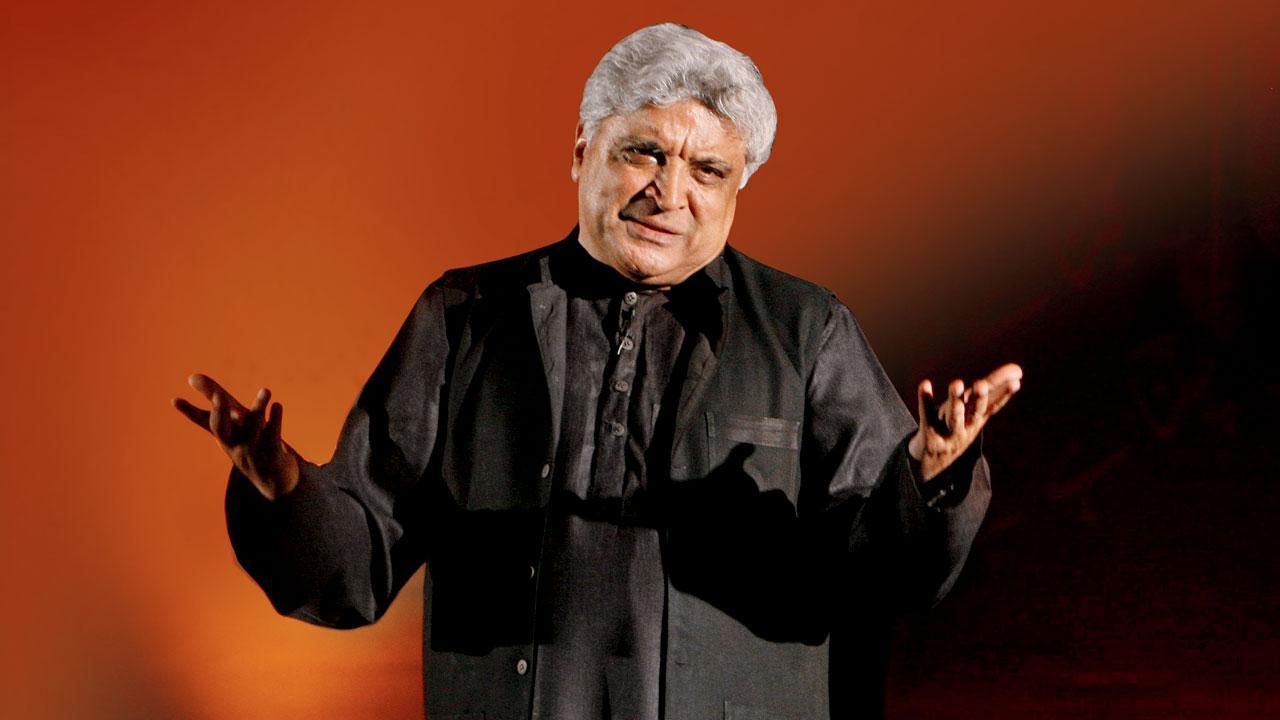
Lyricists, composers heave a sigh of relief as High Court upholds 2012 Copyright Act; rules in favour of musicians by directing FM Radios to pay royalties for their work
Sonia Lulla (MID-DAY; May 8, 2023)
It’s been a long-awaited win for music composers and lyricists in India who, despite the existence of the Copyright (Amendment) Act, 2012, had to fight for royalties for their work. Days after the Bombay High Court granted the rights of The Indian Performing Right Society Limited (IPRS), a music copyright society in India registered under the Copyright Act, 1957, against private FM radio broadcasters, lyricists and composers have heaved a sigh of relief.
“It shouldn’t have taken so many years, but now that we are here, we are very happy,” says songwriter Sameer Anjaan, also part of the IPRS board of directors.
Anjaan, who along with legendary songwriter and IPRS chairperson Javed Akhtar fought the case for more than five years, says through this win, they have tried to secure the future of the upcoming generation of musicians.
“Sometimes, it feels odd that despite the [existence] of the 2012 Copyright Act, this litigation existed. Now, the next breed of musicians can secure their future, even if they have a few songs to their credit,” he says.
Lyricist screenwriter Mayur Puri, another member on the board of directors, says the arduous fight has been a result of musicians and lyricists standing their ground despite running the risk of offending corporates.
“Whether it’s Javed saab, me, or anyone who has raised this cause, we have done so at a cost to our careers. We cannot repay Javed saab for what he has done. This is an important milestone. I know the opposition we have faced over the years,” he says, quick to add that dealing with individuals who continue to hesitate to give artistes their due, will be the bigger fight.
“People think royalty is something extra that they need to pay for, but this is a basic right. I’m happy, but I’m also scared, because I know they’ll come for us again.”
Composer Vishal Dadlani seconds his opinion and says there is the need to treat royalty as a right instead of a favour. “This judgment means that finally the work that a creator of music does will provide for him or her for as long as it is relevant or being consumed. This should, in fact, have been a basic right that any creator enjoyed. It’s sad that it has taken this long to happen, but it’s wonderful that it finally has. For years, we have been treated as intruders when we’ve claimed authorship of the work we have done,” he says.
Dadlani’s friend and colleague Salim Merchant adds that the development is significant when one considers the market size of FM radio. “It generates big revenue, but composers weren’t able to get their share.” Lyricist Shellee urges people to share a thought for lyricists who “don’t even do concerts, unlike other artistes”. “This is a revenue [stream that they can avail].”
Lyricist-singer Swanand Kirkire gives a shout-out to those artistes whose work is still celebrated, even as they continue to struggle with their finances. “This is their money, but they couldn’t access it to make a living. In times of emergency, like during the pandemic, this could have been the money they could have used. Finally, they will be benefited even if one of their songs is played on the radio.
Lyricist Raj Shekhar highlights the dichotomy that existed until now — while an artiste’s music may brighten a person’s day, the person who created that piece of art would be living hand-to-mouth. “At this moment, I remember Javed saab’s lyrics from the song Mitwa — ‘Sach aur sahas hai jiske mann mei, ant mei jeet usi ki hai’.”
The case
While the The Copyright (Amendment) Act, 2012 aimed to establish a framework to share revenue with artistes, it was subsequently challenged by corporates. The IPRS has fought the case for a decade to enable composers and lyricists to earn royalty for their work.
It was my dream to bring Disco Dancer alive and relive the ’80s-Salim Merchant
8:19 AM
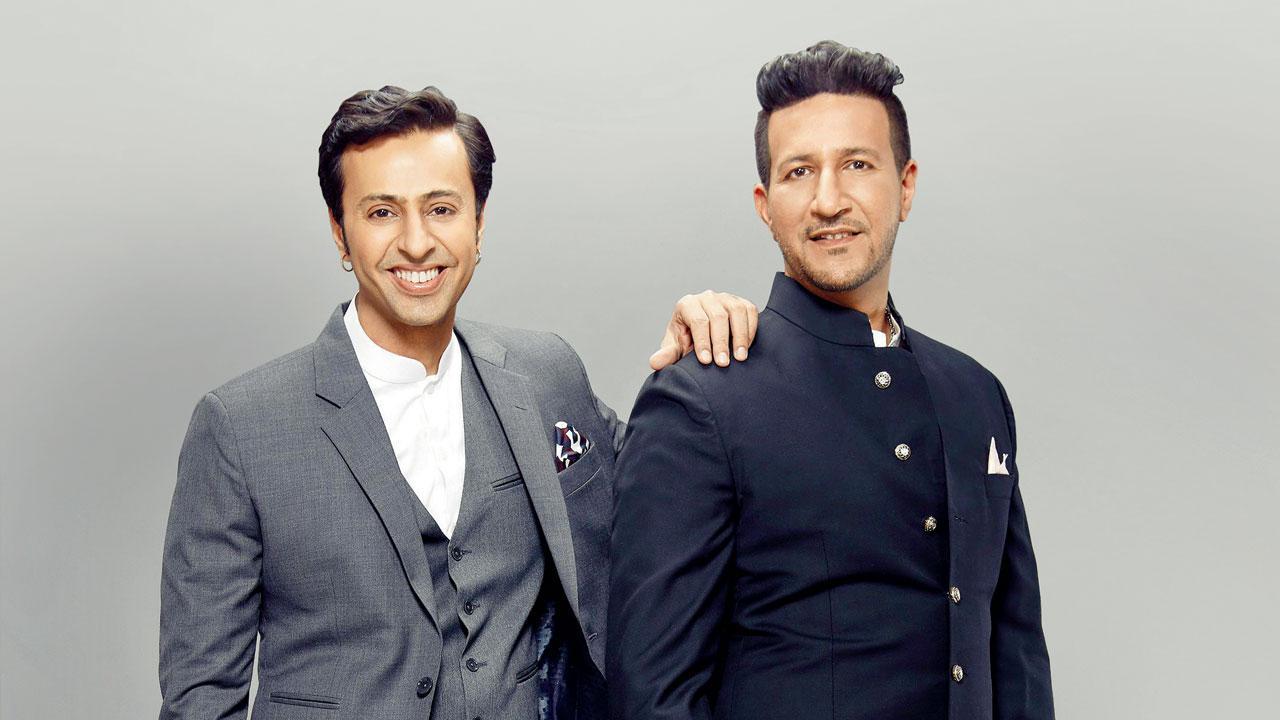
Set to present the musical adaptation of Disco Dancer in the city, Salim Merchant of Salim-Sulaiman, on how his appetite for stage shows served him
Sonia Lulla (MID-DAY; March 27, 2023)
Come April 14, Mumbai will witness Salim and Sulaiman Merchant’s acclaimed show, Disco Dancer — The Musical, which first premiered in London. The composer duo that previously successfully presented the musical, Umrao Jaan, was on the hunt for a project that was “different”.
“I am a huge disco fan,” says Salim, adding, “I had met Bappi da [Lahiri], and he was keen to work on a musical. However, he had limitations due to his health, and had also been living in Los Angeles, for the most part. After Umrao Jaan, which had travelled to the UK, Mumbai and then Delhi, we began to think about what we should do next. When I thought about Bappi da’s work, I realized that the film, Disco Dancer was such a prominent one. Few know that this was the first movie that crossed the Rs 100 crore mark. This was a big achievement, especially at a time when ticket prices were (very cheap).”
Also, think about the songs like I am a disco dancer, Yaad Aa Raha Hai, Jimmy Jimmy, Goron Ki Na Kalon Ki and Ae Oh Ah. Which film had so many successful songs in the same soundtrack?” Salim was certain his idea had promise when he ascertained that the story of a boy who goes from rags to riches would interest watchers.
“It was my dream to have Bappi da present at the musical, but, unfortunately, that will no longer be possible. It has been heartbreaking to lose him. It was my dream to bring this alive, and relive the ’80s.”
Barring the fact that the English show has been adapted in Hindi, he says all other elements, including the sets, and costumes, have been retained. “Since the stage is larger, we’ve been able to make this larger-than-life. But, we’ve not changed a single note of the original compositions. We do have two new compositions though — One is a love song called Paas Aaye, it’s a ballad between the main characters. And the other is a track for the sections that showcase Jimmy’s rise [to the top].”
Having grown up with an appetite for musicals, Salim says he began to learn the nuances of theatrical productions from his childhood. “I’ve watched Phantom Of The Opera, My Fair Lady, and Chicago live on stage. In school, I’d be part of musicals because I was a fan of theatre. I would compose plays and rearrange existing songs. When I’d head on trips, I’d dedicate a day to watch as many musicals as I could on Broadway, even though I didn’t know I’d eventually become a producer,” says Salim, who joins hands with Suniel Shetty for this production venture.
Unruly behaviour at concerts; music fraternity weighs in on the way forward
8:07 AM

Rishabh Suri (HINDUSTAN TIMES; February 24, 2023)
In May last year, singer KK walked out of an overcrowded concert venue in Kolkata feeling uneasy and hours later, he was dead. Singer Shaan’s concert in December 2022 in Hooghly, West Bengal, saw a stampede-like situation that left many injured. Last month, a bottle was thrown at singer Kailash Kher during his show in Hampi, Karnataka. Most recently, singer Sonu Nigam was manhandled during an attempt for a selfie at his concert in Mumbai. All of these incidents have added to the growing concern of mismanagement and safety, or the lack of it, at live shows.
Crowd control gone wrong
Instances of mismanagement largely occur when the crowd gets unmanageable, says singer Divya Kumar of Jee Karda (Badlapur, 2015) fame. “Organizers are so keen on doing an event that they forget other issues. They think, ‘Artiste ek baar aa jaaye, baaki hum handle kar lenge’. That leads to mismanagement,” he says, as he goes on to recall a gig of his with composer-singer Amit Trivedi in Prayagraj (UP): “It was a college show. Ground mein maara-maari chal rahi thi. While performing, a bottle was thrown at my co-singer. There was some substance in it, but we couldn’t figure out what it was. We stopped [the concert] immediately. Amit sir was upset, he said we won’t perform.”
The Selfie craze
“Cheezein toh bahut improve hui hain,” says Kher, adding, “But, the craze for selfies has gripped everyone. People get overexcited, forget their limits and how they should behave. Organizers apne level par achha sambhalte hain, but the crowd goes berserk and security lapse ho jaata hai.” But, the singer admits artistes’ green rooms are “more secluded now”.
Can’t blame the Organizers alone
Composer-singer Salim Merchant says, “It’s very easy to blame the organizers. The one thing that’s taken for granted is that people attending will be well-behaved. One organizing team can have 100 security persons, but what about the 15,000 who come for the show? In Sonu’s case, the person (wrongdoer) was the organizer of the show. How do you stop this?”
Singer Abhijeet Bhattacharya is also of the opinion that when venues tend to get unexpectedly overcrowded, organizers are in a fix despite having security measures in place. “In Mumbai, venues are small. The crowd turnout is at least 10,000, even if the capacity is 5,000. How can anyone control this big a crowd?” he reasons.
Give background score its due credit, say music composers
7:52 AM
After music composer Clinton Cerejo’s recent outburst over not being credited for his work in a film’s review, other composers join in and explain how background score truly makes or breaks a film and the people behind it must be credited and recognized
Debarati S Sen (BOMBAY TIMES; December 8, 2022)
Clinton Cerejo, who has composed the music for Kartik Aaryan’s latest OTT release, Freddy, recently shared on social media that his work was wrongly credited to someone else in the film’s reviews. Calling it out, the music composer said that it was not okay to attribute the background score to someone else and negate months of hard work done by the entire music department.
Speaking to Bombay Times, Clinton said, “My post was not intended to target any one individual. The point of the post was to highlight the larger problem where critics sometimes credit the person who has done one or two songs as the film’s scorer.”
Clinton said, “This doesn’t happen abroad. Billie Eilish composed the opening credits song in the Bond film No Time To Die, but was the music credit of the film given to her because of that? Of course not! The credit goes to Hans Zimmer, who has done the background score. He is the film’s composer. You cannot attribute the entire music credit of the whole film to someone who has just composed for a few minutes over someone who has done it for over 100 minutes.”
Clinton feels that most of the time, background scores are treated like the second cousin of songs in the Hindi film music industry. “Today everything is content-driven, and the musical element of a film is an essential part. The background score really pushes a film. People are realizing that when a film works, it works because of the sound. Of course, songs too are important when it comes to a film, but 50% of the film experience is the background score and the sound design. These are the elements that are there throughout the film,” he added.
Clinton is not the only one who feels strongly about the issue. A number of composers agree with him. We spoke to a few of them and here’s what they had to say:
IF YOU PULL OUT THE BACKGROUND SCORE, A FILM WILL NOT BE ABLE TO STAND AT ALL: AMAAL MALLIK
Composer-singer Amaal Mallik said, “If you pull out the songs, maybe the film can still survive, but if you pull out the background score, the film will not be able to stand at all! In Christopher Nolan’s Batman (The Dark Knight), if you remove the score (Original Motion Picture Soundtrack) by Hans Zimmer, certain serious scenes may look comical. Everyone has both worked in synergy to create that intense soundscape and that’s what makes it great. You cannot disregard the musicians, the music team, the music supervisors, the sound engineers, the background score composers — all of us together make the sound of a film.”
BACKGROUND SCORE COMPOSERS SHOULD BE GIVEN MAIN CREDITS AND BE ON POSTERS TOO: SALIM MERCHANT
Salim Merchant, of the Salim-Sulaiman composer duo, who have been creating BG music since 1997and have worked in around 100 films, strongly feels that the BG scorers should be given due credit. “The background score of a film is actually the unseen character in the film. It plays quite an important role and it truly makes or breaks the film. So many times a film has succeeded because of the BGM, which helps build the story and take it ahead. It also helps in making the audience ‘feel the film’ in its true sense. It is important to give the BG score the main credit in the film. I also feel that it should be on the posters. In the West, the person who does the background score is credited first as music by so-and-so and after that credits for the songs are given. Background score is the heart of any film,” said Salim.
REVIEWERS DID NOT CREDIT ME FOR MY WORK IN BRAHMASTRA’S BG SCORE: PRITAM
Pritam, who worked on Ayan Mukerji’s Brahmastra Part One: Shiva for two years, is miffed at the way some film critics have wrongly credited Simon Franglen instead of him for the score. “Simon was
initially supposed to be a part of this, but that never happened eventually. We began working on the background music of the film in early 2019. I did the score, and he was in no way even remotely a part of the background score of Brahmastra. Yet, my name was not mentioned in many reviews, only his was. In fact, it was a long battle to get even Wikipedia to correct this mistake. They only corrected it recently,” he said.
COMPOSING SONGS AND COMPOSING BG SCORE ARE TWO DIFFERENT DISCIPLINES OF MUSIC: EHSAAN NOORANI
Songs and background score are very different from each other, say composers. There are technicalities involved while giving background music, which is not always the case in composing songs. Ehsaan Noorani explained, “I wouldn’t say that one is easier and the other isn’t because they both are completely different disciplines of music. For a background score, you need to be mature and very objective. You can’t use a piece just because you like it. The main thing about the background score is to see how it works with the scene. And at the same time, silences are important too. Also, one must make sure that the music in the film is changing. However, you must do it with such subtlety that it doesn’t overpower the film. The background score is incidental and yes, the film cannot do without it, but at the same time, it cannot be showcased so strongly that it will overtake it.”

Punjab court stays release of Sidhu Moose Wala’s song
8:19 AM

Jaspreet Nijher (BOMBAY TIMES; August 31, 2022)
Following Salim Merchant’s announcement over the release of Sidhu Moose Wala’s song Jaandi Vaar on Friday, the late singer’s family instituted a suit for permanent injunction against Salim-Sulaiman and their company, seeking restraint on the release of the song. On Monday, a Mansa (Punjab) court gave an ex-parte ad-interim order restraining the release of Jaandi Vaar. Salim, who had made the announcement on his Insta handle, had also said that the song would be available as NFT for the public on a digital platform.
Samarjit Patnaik, partner at Karanjawala & Co, the law firm that is representing Moose Wala’s family in the matter told us, “The Hon’ble Court has restrained the song’s release along with a direction restraining them from using, broadcasting, releasing, uploading, streaming the song in any manner. The music producers do not have the rights to release Moose Wala's song just because the recording was done in the studio where they were present.”
Punjabi music producer Bunty Bains, who was managing Sidhu’s releases with him, said, “We have been requesting Mr Merchant not to release Sidhu’s song or sell his e-signatures, merchandise and NFTs without obtaining the license and permission from his family. But this announcement on Friday by Salim on his Instagram handle caught us by surprise. Then too we requested him against doing so, but he didn’t take down the announcement for the song and lured Sidhu’s fans to buy unlicensed NFT’s, E-signatures and merchandise in Sidhu’s name. We want this case to be exemplary for others too who are contemplating leaking or releasing Sidhu’s music without his family’s permission. We are keeping tabs on all these activities and want those who violate this to be cognizant of this fact.”
Meanwhile, Salim posted an update on his Insta handle, saying, “We have decided to defer the release of Jaandi Vaar and will finalise the next release date after taking the blessings of Sidhu’s parents.”
Salim Merchant breaks silence after Sidhu Moose Wala’s family objects to song release
8:12 AM

Jaspreet Nijher (BOMBAY TIMES; August 29, 2022)
Recently, music composer Salim Merchant posted on his Instagram handle that he was going to release a track by the late singer, Sidhu Moose Wala shortly. Salim says the track, Jaandi Vaar, a duet with Afsana Khan, was recorded in Chandigarh last year in July at a recording studio that belongs to Salim’s friend. Soon after this announcement, Moose Wala’s family and professional advisor took to social media, urging Salim against this release.
Addressing Salim’s post, Punjabi music producer Bunty Bains wrote on social media, “This release has not been authorised by Sidhu Moose Wala’s family yet. We have requested you multiple times even when you wanted to release the song just 3-4 days after Shubh veer left us and at that time as well during those circumstances Shubh veer’s father saab had sent you a voice note to hold on for any release so that family can first take some time and then discuss and understand the entire details of project with you and accordingly the future plan can be decided. I would really request you with folded hands that while we are anyways disappointed with various people putting out unreleased and leaked songs, we are hoping to get the support from such a well known artist and professional like you and to not put out any song yet without family’s confirmation and approval. Sidhu’s parents would be very pleased to meet you soon and discuss this project in person (sic).”
In his announcement, Salim also said that the song will be available as NFT on an online platform for people to buy. To this, Bains added, “Commercializing his vocals as well as his name in the form of NFT in addition to offering unlicensed merchandise of Sidhu Moose Wala… is entirely illegal.”
When we reached out to Salim, he replied, “All I can say is I wish Sidhu was alive, he wanted this collab as much as we did. Nothing else really matters.”
Salim-Sulaiman's single, featuring Sidhu Moose Wala, to be released on September 2
4:24 PM

Soumya Vajpayee (HINDUSTAN TIMES; August 26, 2022)
Soon after Punjabi singer Sidhu Moose Wala’s death in May, we had reported that composers Salim-Sulaiman were looking forward to releasing a single with him in June. Now, the composer duo will drop the song, Jaandi Vaar, on September 2, as a tribute to Moose Wala. “It feels surreal that Sidhu is not around. This song was supposed to release on June 8 and he was assassinated on May 29,” says Salim Merchant.
Sharing how the track worked out, he adds, “In 2021, Afsana Khan (singer) suggested that we work with Sidhu. I had a Punjabi composition, so I went to meet him. When I played the composition, Sidhu said, ‘Sir, mujhe thoda waqt de do. I will definitely sing this, but I need time to prepare’. I figured that Sidhu preferred singing his own lyrics and compositions. I listened to one of his songs and loved it. So, I composed some notes for the female part (sung by Afsana) and the song went on to become Jaandi Vaar.”
Salim took to social media to share that some proceeds from the song’s earnings would go to the late musician’s family. “We connected with his company, which is a platform where you can own a part of the song for a certain amount of money. So, every time the song makes money, we get equity. It was a great way to create a fund that can be given to Sidhu’s family. This is a way for me and Sulaiman to pay respects to his family and to keep Sidhu alive in our hearts forever,” he wraps up.
Sidhu Moose Wala was extremely soft spoken, and respectful-Salim Merchant
8:19 AM

Merchant, who composed Moose Wala’s upcoming song, expresses shock over singer-politician’s murder
Sonia Lulla (MID-DAY; May 30, 2022)
On Sunday, Shubhdeep Singh Sidhu aka Sidhu Moose Wala’s murder sent shockwaves in Punjab. The singer-politician, 28, was shot dead in a firing incident at Jawaharke in Mansa district. The incident happened only a day after the Punjab Police ordered the withdrawal of security of 424 people, including that of Moose Wala.
The Congress leader, who rose to fame because of his popular and controversial Punjabi numbers, was to release his next song in a week’s time. Speaking to mid-day, music composer Salim Merchant, who had collaborated with him on the track, said, “The news is shocking. He was extremely soft-spoken, and respectful. When I went to him with our composition, he said he first wanted to collaborate on a song he had written. The track was recorded in Chandigarh last year, but we had paused [work on] the project [after that] because he was campaigning around for the Punjab elections.”
They were slated to launch the poster on June 2 with co-singer Afsana Khan. “[His sudden demise is] so unfortunate,” added Merchant.
Moose Wala had contested the Punjab assembly election on a Congress ticket from Mansa, and was defeated by AAP candidate Vijay Singla. Soon after his demise, condolences started pouring in. Canada-based gangster Goldy Brar, an aide of gang leader Lawrence Bishnoi, reportedly claimed responsibility for the murder.
Moose wala’s hits
>> So High
>> 47
>> Bambia Bole
>> Game
>> Dhakka

Salim-Sulaiman complete 30 years; say "We have just begun"
8:25 AM

The music composers look back at their journey and talk about navigating through creative differences
Titas Chowdhury (HINDUSTAN TIMES; April 17, 2022)
It was in 1992 when composer duo Salim and Sulaiman Merchant started working on their first album, titled Ragga Raaga. Looking back at the past three decades, Salim tells us, “I feel like we have just begun. Over the years, we have seen many changes, from doing advertising jingles to background scores, film songs and then being on television, doing concerts and starting our own music label.”
Sulaiman feels thankful to the industry for letting them evolve: “We started pretty early on in our lives and we never thought we’ll get to where we are. But there’s so much more to do ahead, so much more music to make and so much more to conquer.”
The duo has seen success with films like Chak De! India (2007) and Band Baaja Baaraat (2010), among others. But there have also been creative differences throughout their journey. “There are so many times when we aren’t on the same page, creatively. We’ve difference of opinion and ideas, and at that stage, music always wins,” says Salim.
Sulaiman takes these creative conflicts to his stride, as he shares, “Salim and I are two sides of the same coin. Sometimes he is going in one direction and I in another, but creatively, it’s all beautiful and that’s the magic of Salim-Sulaiman.”
Apart from their contribution to Bollywood, the Merchant brothers have collaborated with global artistes like Lady Gaga, Fink and Enrique Iglesias. “It’s always a matter of pride to have the opportunity to represent your country. We scored a track, We Like Being Small for a TV show, which was nominated for the Emmys and we were the first Indian musicians to be nominated for it,” recalls Salim.
Sulaiman chimes in, “There are lots of artistes who have contributed to the international music scene and we are proud to be a small part of it.”
I never felt any difference between film and non-film music, bFor instance, Ainvayi Ainvayi has an indie vibe-Salim Merchant
7:19 PM

Composer-singer Salim Merchant talks about spending the last two years making indie music with brother Sulaiman
Soumya Vajpayee (HINDUSTAN TIMES; March 4, 2022)
Composer-singer Salim Merchant, along with brother Sulaiman Merchant, utilised the Coronavirus pandemic time quite constructively. Since the duo (also known as Salim-Sulaiman) didn’t have any gigs during the last two years, they utilised the time to fulfil their long-pending dream of making independent music under their own label. “Every song was a reflection of our emotions. This phase gave us the time to complete the tracks that were lying unfinished with me for a long time. Working on the singles became like a nasha for me, and every week, I’d create a new song,” says Salim, who turned 48 yesterday and had a low-key birthday with close friends and family.
After completing the singles, the duo made the most of every unlock opportunity to shoot the music videos. “The only challenge was to film the videos, because of the restrictions that Covid-19 brought along,” says Salim, as he goes on to highlight another area of concern.
“Budget was a worry, as we funded the singles ourselves during the pandemic. At that time, we didn’t know when we would perform next and where our next revenue stream would come from. But there was a saving and we decided to go for it. There was a sense of satisfaction and liberation when we spent that money for shooting the music videos,” says Salim.
Ask the Chak De! India (2007) composer if working on independent music felt any different from film music, and Salim says, “Sulaiman and I have been making independent music since 2013, and I never felt any difference between film and non-film music, because even for movies, we made very indie kind of songs. For instance, Ainvayi Ainvayi (Band Baaja Baaraat; 2010) has an indie vibe.”
While many artistes crib about the monotony that the pandemic brought along, for Salim, it was a different story. Calling it a learning phase, he shares, “The fact that the pandemic went on for so long gave us the time to make more music. It empowered us that way. I learnt the importance of being consistent, pushing myself to a creative world, disconnecting myself from watching any movies or shows and creating music. It was a learning phase for me.”
Yash Chopra ji had asked me to visit Amritsar before we began working on Rab Ne Bana Di Jodi-Salim Merchant
8:26 AM

Merchant with Ali on set
Inundated with requests to recreate the magic of Rab Ne Bana Di Jodi’s music, Salim Merchant ropes in Salman Ali for a love track set in Amritsar
Sonia Lulla (MID-DAY; February 14, 2022)
Within a matter of a few minutes, Salim Merchant paints for us a picture of Amrtisar’s Darbar Sahib, its residential properties, the Attari border situated kilometres way, and its people’s love for food. “Whenever you meet anyone, the first thing they ask is, ‘Kya khaoge?’” says the composer, having evidently romanced the world that his latest song is set in.
Merchant developed a fondness for Amrtisar when he first visited the Northern city to “soak in the vibe” ahead of his work on Rab Ne Bana Di Jodi. “The late Yash Chopra ji had asked me to visit the place before we began working on the film. It is devotional, and simplistic. The people’s love for food is unmatched. We shot a love song called Rab di sau in Attari for Valentine’s Day,” says the composer of the song that has been penned by Kumaar, and rendered by Indian Idol singer Salman Ali.
The conspicuous terraces of the city’s smaller towns flashed through his mind as he composed the track and weaved the narrative. “I needed [to locate] the buildings with those terraces where we could showcase the boy and girl looking at each other. This is how small town love stories actually begin. I wanted to showcase the open fields, and include simple elements like bicycles to recreate the old-world charm. The song showcases a boy who is [returning home], thinking about his lover, and looking at her pictures on his phone. Creating the story while composing the song helps me arrange it better, and select the right instrumentation.”
The assorted array of tracks coming out of the Merchant Brothers’ stable is rather noteworthy. Apart from their annual passion project, Bhoomi, the third edition of which is underway, the musicians have collaborated with the who’s who of the industry for their two-year old music label. “Our next is a Maha Shivratri song with Indian Idol singer Pawandeep Rajan. We follow it up with a playful Holi track, and near Diwali, we bring out Bhoomi again. So, we do follow the calendar and cater [to the important days]. There is an indie single, a beautiful song with a new singer named Muheet Bharti, a dance track with Raj Pandit, and a few Punjabi tracks to cater to current tastes.”
In a bid to back female singers in need of a worthy platform, the brothers are also finalising a few names to associate with. “It is so nice to be part of the musical journeys of all these artistes who we are involved with.”
A simple parameter helps Merchant sieve a song that should make it to the Bhoomi album from one that should not. “Bhoomi is a specific project — a reflection of India’s culture, our folk roots, and traditional [practices]. It is a reflection of our country.”
Omicron scare: Covid-19 forces artistes to call off live gigs, again
8:20 AM

Debarati S Sen and Riya Sharma (BOMBAY TIMES; January 9, 2022)
In light of the rapid spread of the Omicron variant, the unprecedented increase in the number of Coronavirus positive cases in Mumbai, and the curbs set up by Maharashtra government to curtail its spread, most concerts, private gigs and stage events in the city stand cancelled or postponed.
Live performances that had picked up quite well in the last quarter of 2021, have all quieted down to a large extent under the current circumstances in Mumbai, despite it being the season for live music shows, concerts, events, college festivals and wedding gigs. The Maharashtra government has banned large gatherings and also put restrictions on the number of people that can attend events. That apart, in the last few days, Mumbai’s singer-musician community has had multiple Covid-positive cases including Sonu Nigam, Vishal Dadlani, Shankar Mahadevan and others. While musicians agree that the situation is tough, they urge fans to mask up and stay safe, and also talk about how this current phase will impact the music industry, once again.
ABOUT 80% OF THE EVENTS HAVE BEEN POSTPONED; IT’S DIFFICULT FOR MUSICIANS AND PEOPLE INVOLVED IN THE BUSINESS: RAHUL VAIDYA
“About 80% of the events have been postponed. It is extremely saddening for the people who work in the live entertainment industry, especially those who survive on daily wages. It’s also very difficult for musicians. I have already started getting messages from people who are worried about what’s going to happen, but I am positive that this won’t last for very long,” says Rahul Vaidya.
WAS IMPORTANT TO CANCEL OUR UK TOUR FOR THE SAFETY OF OUR FANS: JUBIN NAUTIYAL
Jubin Nautiyal, who cancelled his December 2021 UK tour, shares, “It’s just unfortunate that we are once again facing this situation, but postponing the concerts was a conscious decision taken for the safety of my fans. A couple of shows in India have been cancelled too.”
Jubin adds that it is important to follow the guidelines that are being issued. “One thing we have learnt recently is to work from anywhere. Last time we were not as prepared, but now, with many of us fully vaccinated, we all have to be responsible and follow whatever guidelines are being issued by our government and health experts. That is the only way to keep moving ahead,” he says.

UNPREDICTABLE IS THE NEW NORMAL AND WE MUST ADAPT TO THAT: SHALMALI KHOLGADE
Shalmali Kholgade says, “I just got back from a holiday, ready to begin working again, but it looks like I will have to wait. Although I would have loved to get back to it, several of my shows are either cancelled or postponed. Unpredictable is the new normal and we must adapt to that as well, just like we’ve adapted to other things in the past. I’ve decided to focus my energies on completing my album.”

IT’S GOING TO BE DIFFICULT FOR ARTISTES WHO DEPEND ON LIVE CONCERTS FOR THEIR LIVELIHOOD: KAVITA KRISHNAMURTI
Kavita Krishnamurti shares, “All my engagements have been cancelled. Though concerts were beginning to start a couple of months ago, the pace was still slow compared to the pre-COVID scenario. It’s going to be very difficult for artistes who depend on live gigs for their livelihood. The situation is really bad now and I do hope that some organisations raise money for these artistes through online events and fundraisers.”

THERE’S LOSS OF WORK DUE TO THE PANDEMIC AGAIN, BUT WE HAVE TO BE PATIENT: ARKO PRAVO MUKHERJEE
Arko says, “I’ve just arrived in LA from Chicago after a music video shoot and judging a singing competition. My recording has been cancelled as my music producer and family tested positive. So, I understand the loss of work due to this pandemic again. But we have to be patient. A couple of years of difficulty will be forgotten in the long run, but we can’t afford to be ‘penny wise pound foolish’ by ignoring the health scare.”

THESE MONTHS ARE CRUCIAL BECAUSE THERE ARE A LOT OF THINGS HAPPENING: SALIM MERCHANT
“Just as we began to go back to normalcy, events started to get cancelled. But, this is something that we have to live with now. Musicians and performers have to work out a way to live and we have to work out an alternate way of life. The performance industry has really suffered in the last two years and it’s about to suffer some more now. These two to three months are crucial for us because there are a lot of weddings, concerts, college festivals that usually happen. The earnings of musicians, performers, people in the events industry, stage artistes are affected. Having said that, I’m still performing at some events and I feel grateful about that. These are small private gatherings and weddings in smaller cities,” the musician shares.

IF THIS PHASE LASTS FOR TOO LONG, IT WILL SEVERELY IMPACT THOSE WHO DEPEND ENTIRELY ON LIVE GIGS: AKRITI KAKAR
Akriti Kakar says three of her gigs have been cancelled in January itself. “Just when we felt that things were getting better, with artistes travelling extensively, and weddings and concerts returning, this new variant came in to walk all over us again. I hope this phase passes soon and we can resume our work again. If it does not, then it will severely impact those who depend solely on live gigs, just like in the first and second wave,” she shares.

SINCE THE LAST WEEK THINGS HAVE GONE QUIET: NIKHITA GANDHI
She says, “It was exciting to start travelling again for concerts. Things were picking up in November 2021 and it felt incredible to be on the road. But, things have gone quiet again and almost everyone I know seems to be catching the new variant. I find myself feeling low quite often and it's counterproductive. There’s a lot of studio work to do from home, but the heart is hurting from all of this, making it hard to make music.”

IT’S DEPRESSING AND SCARY, BUT HEALTH IS A PRIORITY: MAHALAKSHMI IYER
“It’s heartbreaking to see that just when we were all gearing up for a good season, events are getting cancelled or postponed. It’s both depressing and scary. But yes, health is a priority, so let’s hope we get through this quickly. Everyone please mask up and stay safe,” the singer urged.
WE ARE HOPING THE COVID SITUATION IMPROVES BY APRIL-MAY: SACHIN-JIGAR
Composer duo Sachin-Jigar shares that they have cancelled many of their gigs keeping the current situation in mind. “The whole live entertainment industry will take a hit because of this situation. January to March was slated to be the peak shaadi season, but we are hoping the situation improves by April-May. The last two years have been terrible. We know a lot of musicians who left Mumbai and went back to their hometowns for alternative means of income.”

Crypto-lovers Salim-Sulaiman launch their own NFTs in digital investment business move
3:38 PM

Sonia Lulla (MID-DAY; December 6, 2012)
Before their search to collaborate with the appropriate trading company bore result, Salim Merchant, along with brother Sulaiman, had been prepping to launch his non-fungible tokens (NFTs), for a while. The duo had been investing in cryptocurrency since a long time, and making their art accessible via NFTs was only a natural extension of their investment in digital portfolios.
“It is an interesting space to explore. As an artiste, you can make an exclusive art — be it music, or a painting — and fans can remember you by this work. We know how things in the crypto space work,” says Salim, adding that it was while breathing life into his passion project, Bhoomi 2021 that the brothers simultaneously began work on preparing exclusive content for their NFTs.
“These are exclusive things that fans can own; they are not available anywhere else. There are certain songs, and music pieces that we thought will fit this [investment]. The process has been on since four months. We were going to launch it in Diwali, but are finally bringing it out now, before Christmas.”
Concerns over copyright issues kept them from entertaining the idea of making their film music available as artwork on the platform. What they have dabbled in is pop music. “Some of the stuff is funky, the rest is futuristic. A lot of creative hard work has gone into designing it,” says the musician, who is also eager to purchase NFTs of other musicians whom he considers “my heroes”.
The duo is the latest to join the league of artistes who have been turning to digital currencies as a new income stream. Rapper Raftaar, Ritviz, Nucleya, and Mika Singh are some of the other names who have also reportedly launched NFTs to capitalise on the digital currency boom.
Where did the children’s songs disappear from Bollywood?
8:06 AM

On Children’s Day, industry insiders tell us that with fewer prominent kid characters in films and the focus on creating a hit song that caters to all segments, children’s songs are no longer considered essential or viable in Bollywood
Divya Kaushik (BOMBAY TIMES; November 14, 2021)
When curating a Children’s Day playlist, the most obvious selections are Lakdi Ki Kathi (Masoom, 1983), Nani Teri Morni Ko Mor Le Gaye (Masoom, 1960), Nanha Munna Rahi Hu (Son Of India, 1962), Hum Bhi Agar Bachche Hote (Door Ki Awaaz, 1964) and many others such classic tracks, that have remained a constant favourite with kids (and adults too!). Then came Chak Dhoom Dhoom (Dil Toh Pagal Hai, 1997), Chhota Bachcha Jaan Ke Hum Ko (Masoom, 1996) and Bam Bam Bole (Taare Zameen Par, 2007).
Once an essential part of Bollywood movies, the number children’s songs has gone down considerably in films, and the ones that are there could never match the popularity of songs like Lakdi Ki Kathi or Aao Tumhe Chand Pe Le Jaye. “There can never be a replacement for these old favourites,” says singer Udit Narayan, who has sung popular tracks like O Mere Papa The Great (Papa The Great, 2000) and Oh I Love You Daddy (Akele Hum Akele Tum, 1995), adding, “The reason is that the writing of those songs and the composition was so good that it connected with the audience of every age group, every generation. It is difficult to find those kinds of songs today.”

‘TODAY, THERE ARE FEWER MOVIES WITH PROMINENT KID CHARACTERS, THUS FEWER SONGS FOR CHILDREN’
Udit Narayan adds that when we talk about children’s songs in films, it is impossible not to talk about child artistes who would be an integral part of film plots earlier. But over time, as the role of child artistes in Bollywood stories reduced, songs specific to children were no longer needed.
Music composer and singer Salim Merchant adds, “Even the projection of kids has changed. Take the example of movies like Dangal or Bajrangi Bhaijaan, both of which features kids in prominent roles, but the storyline was communicating something that is not specific to only kids. So children’s songs today do not really fit in most of the stories that we are narrating in our films. There are fewer stories or situations which would demand such a song.”
Lyricist Raj Shekhar, who made his Bollywood debut with Tanu Weds Manu and has written children’s stories, says that in films he grew up watching, kids were an important part of stories. “What I liked was that they were treated as an important character, not a supporting element in the film, and even the songs were written keeping this in mind. If you take the example of the song Hum Laayein Hain Toofan Se Kashti Nikal Ke (Jagriti, 1954), the song is addressed to children. When that scenario changed in films over time, even writing for kids reduced, which I think is sad. We are failing in giving the present generation music that is written exclusively for them,” he says.

‘TODAY, THE FOCUS IS TO AT LEAST GET ONE COMMERCIAL HIT FROM A FILM AND A KID’S SONG CAN’T BE THE PITCH’
In times when social media hits decide the fate of songs, a lot of effort goes into making music that can be a commercial hit and also gain traction online. “In such a scenario, creating a kid’s song feels like a risk when the movie is not about them,” says singer Javed Ali, adding that out of many songs offered to him, he has barely sung two-three tracks which were for kids. “Not just me, this will be the case with all the singers, as there are hardly any songs being written for kids. These specifics that were once an important part of films — like a Holi song, Raksha Bandhan song or Diwali song — are becoming rare. Even if films have them, most of these songs just come and go.”

‘SONGS ARE CREATED OR AUDIENCE AT LARGE, NOT FOR A SEGMENT’
“Let’s not forget to talk about the changing preferences and choices of modern kids,” says Salim Merchant, adding, “I have seen kids in my own home and once they grow out of their nursery rhyme phase, what they consume are songs which are for adults. The songs that are created today in films can’t be created for any segment. To make them popular, it is important that they are created keeping in mind the larger audience, which also includes kids.”
FOREVER FAVOURITE KIDS’ SONGS FROM HINDI FILMS:
- Nani Teri Morni Ko Mor Le Gaye (Masoom, 1960)
- Lakdi Ki Kathi (Masoom, 1983)
- Nanha Munna Rahi Hu (Son Of India, 1962)
- Phoolon Ka Taaron Ka (Hare Rama Hare Krishna, 1971)
- Chanda Hai Tu Mera Suraj Hai Tu (Aradhana, 1969)
- Aao Tumhe Chand Pe le Jaayein (Zakhmee, 1975)
- Hum Bhi Agar Bachche Hote (Door Ki Awaaz, 1964) \ Railgaadi (Aashirwad, 1968)
- Ichak Dana Beechak Dana (Shree 420, 1955)
- Re Mama Re Mama Re (Andaz, 1971)
- Dadi Amma Dadi Amma Maan Jao (Gharana, 1961)
- Bachche Man Ke Sacche (Do Kaliyan, 1968)
- Hum Laayein Hain Toofan Se Kashti Nikal Ke (Jagriti, 1954)
- Chanda Mama Door Ke (Vachan, 1955)

Children of Shankar Mahadevan, Shaan Mukherjee, Salim Merchant and Sachin Sanghvi following in their parents’ footsteps
8:19 AM
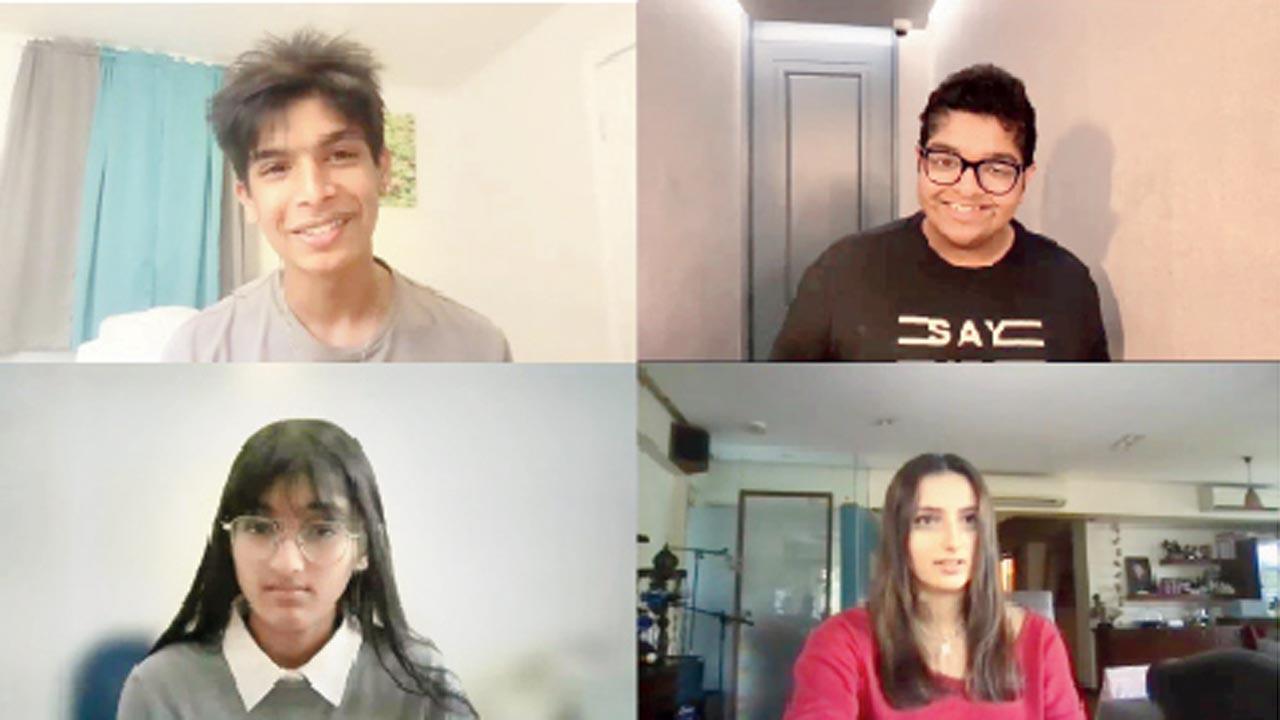
(Clockwise) Shubh Mukherjee, Shivam Mahadevan, Ayesha Merchant, and Shubh Mukherjee
Children of Shankar Mahadevan, Shaan Mukherjee, Salim Merchant and Sachin Sanghvi on following in their parents’ footsteps as young musicians
MID-DAY (August 30, 2021)

Ayesha Merchant, daughter of Salim Merchant
Your journey to becoming a musician:
I’ve been privileged to find support and guidance around me, given that both my parents are musicians. My father was among my biggest inspirations. Watching him compose and produce music, even when he is on the go, has inspired me to keep working on my craft even when it hasn’t been easy to stay motivated. Every now and then, while I’m practicing on the piano, or singing, my father will teach me new chords, or help me [train] my vocals. The best part about learning from him is that there is never a dull moment.
Why did you decide to become a musician?
I have a wide variety of interests, including dancing, painting and competitive swimming. But, as I grew older, I discovered that singing enabled me to express myself in a way that nothing else could.
Genres that gain your attention:
Via dad, I was exposed to Bollywood. My mother is a jazz singer, so I was introduced to jazz as well. But, I started to take keen interest in musical theatre. I’ve liked the process of learning and performing songs from the plethora of musicals I have watched, including the Phantom Of The Opera, The Lion King, and Wicked. I also like rhythm, blues, and classical music. Musical theatre enables me to sing songs for different characters, and tell stories through their personal experiences. Being a student of theatre, I find it fascinating.

Shubh Mukherjee, son of Shaan Mukherjee
Your journey to becoming a musician:
I was given the freedom to choose what I wanted to become, but being constantly exposed to music surely influenced my decision. I am a trained classical singer. While I initially didn’t enjoy the riyaaz sessions, I eventually developed a fondness. Dad often gives me impromptu lessons on dubbing and [creating] better harmonies, be it for live performances or recordings. I’m fortunate to have access to the wisdom and techniques he’s learnt in his career.
Why did you decide to become a musician?
I wasn’t a born singer. There was a time when it was evident that my brother was the more talented singer. Today, he is a skilled music producer, already making his mark in the industry. On the other hand, I fell in love with singing, later. I also love to play the guitar.
Genres that gain your attention:
Dad and I are different. When I am singing, you’ll find a guitar hung around my shoulders. But, dad is a pure vocalist. Yet, like him, I would also want to pursue independent and Bollywood music. I’d like to add western influences, and a hint of R&B, to my sounds. My goal is to make music that makes people smile. I want to make dance tracks, and playful songs. I hope my music will be associated with the sound of happiness.
Prominent work
I’ve worked with Disney for Duck Tales. I also partnered with [a music label] for a mash-up of 12 songs. I [made] a mash-up of Aankhon Mein Teri, and Night Changes.

Tanishkaa Sachin Sanghvi, daughter of Sachin Sanghvi
Your journey to becoming a musician:
My family members are avid listeners of music, with a keen interest in bhakti music, ’90s songs, and hip-hop. My first musical experience was at the age of seven, when I sang Laadki, which featured on Coke Studio. As I grew up, I started performing with my dad. The vibe on stage encouraged me to learn [music]. Working with dad taught me that every detail of a song is important, and that can only be perfected by observing [him]. He pushes me to explore new possibilities.
Genres that gained your attention:
I’m learning Hindustani classical music, and Trinity rock and pop. International pop has influenced me a lot. I also like indie pop and international hip-hop. I find [them] informal and conversational. Dad likes Indian classical music, but I’ve been drawn to western genres. My dad has appreciated listening to world music and encourages me to follow my heart. He says the genre is secondary; [what matters is that] the music touches the artiste’s soul.
Prominent works:
Apart from Laadki, I’ve sung in Hindi and Gujarati films like ABCD 2, Hindi Medium, Angrezi Medium, and Best of Luck Laalu. I want to be a singer, songwriter, and composer.

Shivam Mahadevan, son of Shankar Mahadevan
Your journey to becoming a musician:
I had many passions, including dancing, and teaching. Growing up, I dreamt of becoming a teacher, or being involved in the field of education. But, when I was four, my family was stumped by the flawlessness with which I sang Itni shakti humein dena. They discovered that I had the rare musical ability of [exacting] the melody I had heard. I had a knack of understanding whether or not I was singing correctly, and if I was maintaining the pitch. There was never any pressure to venture into the same field. But, I had raw talent that I chose to hone.
On the experience of learning from your father:
My father understood my strengths, and limitations, and analysed areas that needed improvement. Simply sitting beside him as he [jammed] was an invaluable lesson. Lessons involved playing the harmonium, and repeating what he did. Given how busy he is, every minute of these sessions was instrumental in my journey. The knowledge I’ve gained from him is extraordinary.
Genres that gained your attention:
Growing up, I was attracted to old Bollywood songs by Lata Mangeshkar ji, and Asha Bhosle ji. I would replicate the melody down to every single harkat. Then, I gravitated towards ghazals, and became a huge fan of Ghulam Ali Khan Sahib. I appreciated the nuances. These experiences fuelled my desire to pursue this genre.
Prominent work:
I made my Bollywood debut with Dhoom 3, while YRF’s Bande Hai Hum Uske was my first studio experience. I’ve rendered songs for Marathi, and Tamil films and web shows. And I’ve sung other numbers including Vadi-e-Kashmir, by Gulzar saab.
Salim Merchant reveals how Priyanka Chopra’s career as an international singer began
8:32 AM

The musician reveals that he and his brother Sulaiman had recorded a song with the actress that never got released
Debarati S Sen (BOMBAY TIMES; July 17, 2021)

Salim says, “It all began when we were making the music for Pyaar Impossible! (2010). Priyanka’s character in the film was called Alisha and we had a song by that name. I told the director, Jugal Hansraj, that Priyanka sings, so let’s get her to sing this song in the film. When we told her that we wanted her to sing for the film, she was sweet and recorded it. However, she wasn’t comfortable with the recording and told me that it would be nice if we could get another singer for it. I couldn’t understand why she felt like that because she had sung pretty well.”
He continues, “On the day of the film’s premiere, I broached the topic with Priyanka and asked about the song. She said, ‘I am glad you are asked me. I am cut out to do something bigger; an international album. I don’t want to feature as a singer in a Bollywood film’. A few months later, I got a call from an international music label as their team was in town and wanted to meet us. I had earlier done a Lady Gaga remix for them. They told me that they were looking for an Indian singer, who can make the cut internationally. They had done their research and were looking at a few names, which included Priyanka, so I messaged her. We practised a popular English song at my studio and I organised a meeting where she sang before them. Priyanka knew what she wanted. She had the inclination and the intent to go international and that’s how her recording career began. A different phase in her career kickstarted from there and the basic foundation of it all was set right here in my studio in Mumbai.”
I wanted the music to be minimalistic in Skater Girl-Salim Merchant
8:07 AM

Film about skateboarding Rajasthani village girl called for minimalist musical intervention to keep story the hero, says composer Salim Merchant
Sonia Lulla (MID-DAY; June 14, 2021)
Late actor Mac Mohan’s daughter Manjari Makijany made her feature film directorial debut with the Friday release, 'Skater Girl', based on a rural teenager’s life-changing experience when she discovers her passion for skate-boarding. Offsetting the rustic ambience of the film with a soundtrack that’s contemporary and upbeat, composer Salim Merchant sheds light on creative decisions taken during its making.
Edited excerpts from the interview:
Given the array of projects you are currently working in, not all of which are associated to cinema, what drew you to this film?
[Sulaiman and I] like to explore genres that we haven’t dabbled in, because there’s always a wealth of knowledge to acquire from such projects. 'Skater Girl' has so many layers; it’s about skate-boarding, and also the caste system. We had to interplay the struggles of the other protagonist, an American woman, Jasmine, played by Amy Maghera, as well. When you have to inculcate all these emotions within the music, it makes for an interesting task. Creating music for cinema is an evolved process, and a beautiful one.
I have worked with the director and writer, sisters Manjari and Vinati Makijany respectively, on a short film in 2015. The Corner Table was directed by Manjari. Vinati acted in it with Tom Alter. I knew then that these two sisters will go ahead and achieve their dreams. When I saw ['Skater Girl'], there was no doubt [that I wanted to be part of it]. I got emotionally involved, even when it had no music. I wanted the music to be minimalistic. The storyteller had already captured the emotions well, and music could spoil it. I didn’t want that, and so, tried to do as little as possible.
But the team felt we should try making a song, and a few sections for the skate-boarding sequences. So we did. And they sounded so good that Manjari and Vinati got greedy. The other number, Mari Chhalangein, comes at a point when the film, until then, is at a low point, and needs a lift. This track brings in a sense of euphoria. Since the film is in two languages, I knew it would also be nice to have the song in English and Hindi.
How did you arrive at the singers for the tracks?
Raja Kumari is someone I have been wanting to work with for a while. She’s a good singer and has been on my radar. The person I wanted for another song was Bhanvari Devi. She recorded the track, and I liked it, but Manjari was keen to have a younger voice render it. We couldn’t find a young girl, so we found a young boy, Mohmmad Fazil, who sounded like a girl. For Mari Chhalangein, I knew it had to be Sharvi [Yadav]. She has a pop-rock voice, and belts out her songs [strongly].
Why was the decision to limit traditional folk elements taken?
I wanted a Rajasthani flavour since it has been shot in a village. But Manjari urged me to stay away from that. With the contemporary pop-rock vibe that we created — only employing a [traditional] voice to support it — we were able to create a soundtrack that will be more palatable for the audience consuming it on Netflix. Adding Rajasthani flavour would not have been bad, but I don’t miss it when I see the film.
Varun Dhawan has done a great job in portraying a tapori with an 'I don't care' attitude-Salim Merchant
8:29 AM

Ahead of the release of the third song from Bhoomi 2020 today, Salim Merchant on his unwavering focus to represent folk music in India
Sonia Lulla (MID-DAY; December 14, 2020)
The slate of projects that demand the Merchant Brothers' attention doesn't seem like work for two. After wrapping up the 2019 musical, Umrao Jaan, they began to give finishing touches to their passion project, Bhoomi 2020. In the interim, they pulled off production work on a documentary on Karsh Kale with such deft that it earned multiple titles at the Golden Gate International Film Festival. And despite their chock-a-block schedule, the duo still found time to cater to the demands of the music industry's Big Daddy — Bollywood.
Salim Merchant is run off his feet, and can only afford a call when en route to fulfil another work commitment. But, when discussing his latest endeavour, Bhoomi 2020, he is unhurried and accommodating. Set to release today, the album's third song pairs the Merchant Brothers with the music powerhouse, Arijit Singh. As though reserving the best for Singh to helm, Salim says Zinda dili mirrors the duo's individual personalities. "Sulaiman and I think about the present, and that is the spirit that we have tried to capture in this song. We enjoy the thrills that are offered by activities like skydiving. The best term to describe this song is, nonstop. It encapsulates all that [one should] feel if it were their last day. Given that it has elements of Indian classical music, and contemporary pop rock, we wanted someone as versatile as Arijit to back it."
A set of distinct names feature in the album's credits. While Jonita Gandhi and Nikhita Gandhi represent new-age singers, veterans like Sukhwinder Singh and Shreya Ghoshal lend credibility to the offering. However, it is the involvement of folk artistes like Swaroop Khan and Osman Mir that makes for a major part of our discussion. "The album was crafted to represent Indian classical music, thumri, and folk music. We didn't want this to be just another contemporary album. Two songs are traditional thumris by Ustad Bade Ghulam Ali Khan saab. A piece of lyrics belongs to Sant Kabir. Given that I am a Krishna devotee, there is an original flute section, and then an original sufi qawwali as well. Since Sulaiman and I belong to Kutch, we wanted a song from that region too, and aptly created Haji peer, which is our dedication to a dargah. It is believed that couples who fail to conceive are able to have children after visiting this dargah."
Singers like Kaushiki Chakraborthy were "always on my radar", but his collaboration with Sukhwinder Singh was a chance occurrence. "I have liked [the song] Sanwal mor moharan since childhood. One day, I heard Sukhi croon it while we were having tea, and got so excited that I knew we had to have it on the album. Each song can be traced to a similar emotion. In the next edition, we will create a meeting ground for folk and contemporary music."
While the Merchant Brothers continue to unravel the independent music scene, Bollywood still hasn't had its fill of what the duo has to offer. In the pipeline is the upcoming film, Coolie No 1, which sees them as score composers. "We have done several films with David Dhawan, so there is a sense of comfort in this association. Varun [Dhawan] has done a great job in portraying a tapori with an I-don't-care attitude. As Mumbaikars, we've grown up with this emotion. This film was made with a lot of love."
Subscribe to:
Posts (Atom)