Showing posts with label Rohtak. Show all posts
Showing posts with label Rohtak. Show all posts
Dream Girl director Raaj Shaandilyaa to make his OTT debut with the comedy, The Great Weddings Of Munnes
7:47 AM
Mohar Basu (MID-DAY; November 23, 2021)
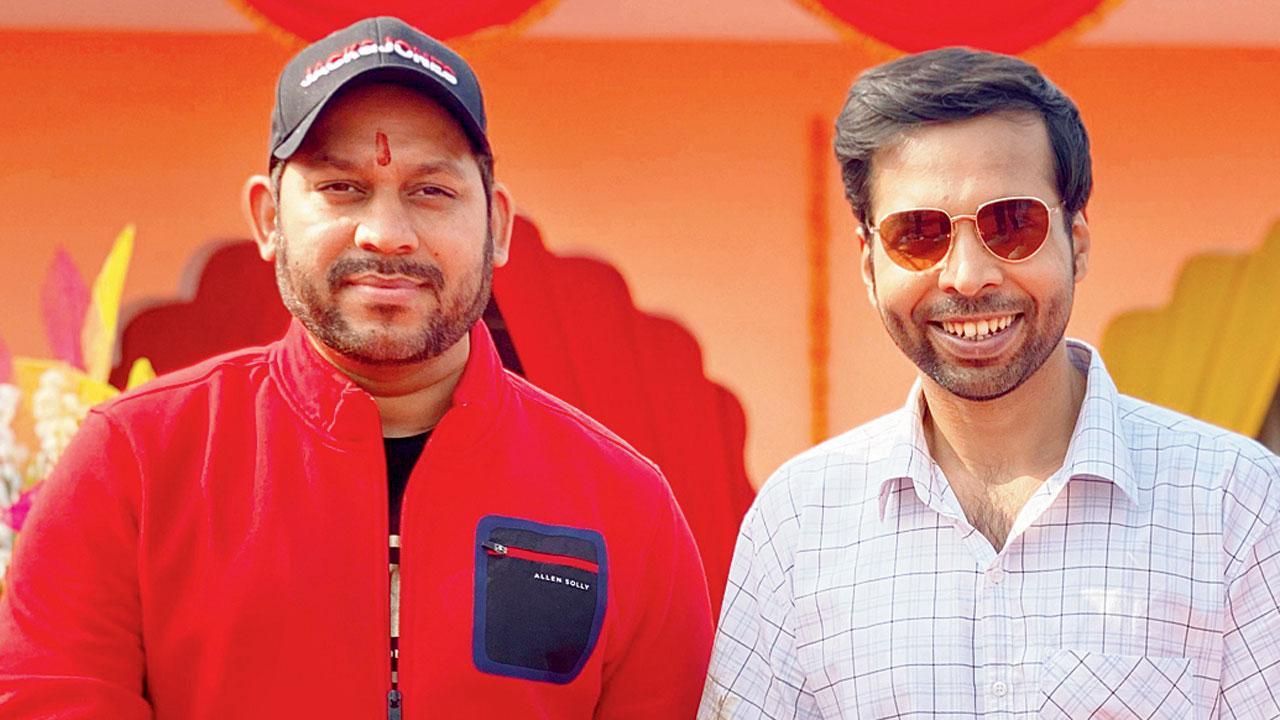
While there’s no denying that digital entertainment has upped the content game in India, filmmaker Raaj Shaandilyaa notes there aren’t enough comedy shows. This has led the writer-director, who displayed his expertise in the genre with Dream Girl (2019), to be web-bound. He has begun filming his maiden OTT venture, The Great Weddings Of Munnes, with Abhishek Banerjee and Barkha Singh in Rohtak. The series, which depicts a middle-class man’s desperate attempts to marry the woman of his dreams, will see Shaandilyaa serve as creator-producer and Sunil Subramani as the director.
“With so many crime and thriller shows being made, I felt there should be a comedy show mounted on a big scale of a Bollywood movie. The team at Jio Studios backed my vision. Our aim is to change the trend,” says Shaandilyaa, who intends to shoot the series across Mathura, Agra, Hyderabad and Jaipur.
For Banerjee, the laugh riot comes as a change of pace after his serious turns in Rashmi Rocket and Ankahi Kahaniya. “I look for roles that challenge me as an actor. I was [itching] to do a good comedy. When the makers approached me to play Munnes and narrated the story to me, I was blown away by the material,” says the actor.
Singh adds, “I’m looking forward to sharing screen space with Abhishek for the first time.”
Anushka Sharma-backed Paatal Lok was shot in 110 locations across six Indian cities
8:37 AM

Sonia Lulla (MID-DAY; May 8, 2020)
 Sudip Sharma's Paatal Lok, which is produced by Anushka Sharma and will drop on Amazon Prime Video on May 15, was shot in 110 locations across six Indian cities. "We wanted to explore different cultures, and perspectives, and [narrate] tales from various regions of India. The idea was to present to the audience what they possibly didn't know, or at least, in a manner they weren't familiar with. It is set in parts of Delhi and Punjab," says Sharma of the nine-part investigative crime drama that follows an inspector chasing four suspects nabbed in the assassination of a renowned journalist, and the subsequent dangerous fate he is met with.
 "I have spent a lot of time in Delhi, Punjab, Bundelkhand, and UP while researching for previous projects. Delhi is also the apex of Indian politics, and where the power centres lie. That most media channels operate out of Delhi was another reason to set the series there. The city is fascinating owing to its location too. It has the feel of a frontier town, bordering certain lawless parts of Uttar Pradesh, Haryana and Rajasthan."
Gurgaon, and parts of Haryana, particularly Rohtak, were the primary areas where the Jaideep Ahlawat, Neeraj Kabi, and Gul Panag starrer was filmed.
"While 70 per cent of the show has been shot at actual locations, the rest was done in Mumbai, where we recreated certain areas. We researched on various aspects, like what a cop station actually looks like, and the design and aesthetics of a Delhi policeman's home, and [integrated] that into the show to make it authentic," says Sharma, who filmed in Delhi, Gurgaon, Rohtak, Chitrakoot, Ahmedabad, and Mumbai.
We also want to set up a Film City in Haryana-Satish Kaushik
8:12 AM

Satish Kaushik, newly-appointed chairperson of the governing council for projects under Haryana Film Policy, wants to improve the exhibition sector too
Hiren Kotwani (MUMBAI MIRROR; September 9, 2019)
Actor-director Satish Kaushik has been recently appointed as the chairperson of the governing council for projects under the Haryana Film Policy. This development is very satisfying for the Bollywood veteran who has produced a Haryanvi film, Chhoriyan Chhoron Se Kum Nahin Hoti, helmed by his assistant Rajesh Amarlal Babbar and released earlier this year in March.
Kaushik who has his roots in Danaunda village of Haryana’s Mahendragarh district, had been on board for the drafting of the policy from the onset. Pointing out that the state has come to the forefront in entertainment after the success of films like Dangal, Sultan and Tanu Weds Manu Returns, the new chairman is optimistic that they will be able to attract more filmmakers to the state with subsidies and incentives, as well as single window clearance for filmmakers, be it from the municipal corporation, roads, traffic or the police. Diljit Dosanjh’s Soorma and Rajkummar Rao’s Turram Khan have also been shot in the Northern state.
Kaushik points out that from the sports and architecture point of view, there are many heritage structures and places where films can be shot. “And the visual impact of the places you see in movies will make you want to visit them too. This will promote tourism and as more films are made in Haryana, a lot of people will get employment too,” he reasons.
The filmmaker rues that not only are lesser films being made in Haryana, even the exhibition sector is weak as there are not enough theatres. “Improving and increasing screens is on the agenda. We’ll set up a committee to look into distribution and exhibition,” he promises.
Kaushik goes on to say that there is ample talent in the state that is being nurtured through theatre in Rohtak and Hisar. “We already have a film institute in Rohtak and now want to set up a Film City in Haryana too, for which we are open to a partnership with a private firm,” he says, adding that that with its proximity to Delhi, Punjab, Rajasthan and Uttar Pradesh, there is abundant scope.
Working with Alyque Padamsee was special, he had directed my mother 50 years ago-Shabana Azmi
7:57 AM

Aditi Pancholi (BOMBAY TIMES; August 6, 2019)
 Shabana Azmi took to the stage in Mumbai (August 3 and August 4) and Delhi recently to portray the role of Manjula Sharma, an internationally bestselling author in Alyque Padamsee's play, Broken Images. Written by Girish Karnad in 2005, this solo act tells the story of two sisters — Manjula, a not-so-successful Hindi writer, who suddenly gets international acclaim when she writes in English, and Malini, an intellectual paraplegic. “This performance is a tribute to the two stalwarts of theatre. Alyque, who directed me in the play, had directed my mother Shaukat Azmi, 50 years ago, and Girish Karnad, the writer of the play,” said Shabana, when the play was staged in Delhi.
SHOT PRE-RECORDED SEGMENT IN 44 MINUTES: SHABANA AZMI
Talking about the challenges that she faced while rehearsing for the play, the actress told us, “The whole story is between two sisters. The older sister, Manjula, is the live character who is speaking to a recorded frame on the television. The basic challenge is that you must remember that the recorded frame is a pre-fixed image, which was done in one shot. In films, I have never done 44 minutes in one go, because you don’t have that kind of films at all. We had no idea how this was going to play out, and we had booked the theatre hall for three days. To everybody’s surprise, it was the first take that went on so smoothly. I feel it went like that because I was so relaxed and thought that it was a rehearsal. It was only in the 40th minute that I woke up to the fact that it was coming to an end.”
She added, “What was amazing was yahan on the one hand, we had given three days to shooting, and Alyque just looked at it and said, ‘It is done, pack up.’ Alyque and I had some disagreements in the beginning, but then I went along with what he wanted, and realised that all the notes that he had asked me to hit were the notes that work with the audience.”
Pointing out another challenge, she added, “When you are working with co-actors and if you fluff your lines or make a mistake, then someone else (co-actor) takes up or covers up for you. In this play, the other actor is a fixed frame, so she is not going to come to your rescue. You have only yourself to depend on, and the basic challenge is that she is not constantly looking at the image, she is facing the audience and yet because the image is constantly moving ahead, you cannot miss time. So, to be able to get it technically right and yet keep the emotional core real is obviously a challenge.”
HOW SHE IMPROVISES ON STAGE
Sharing some personal anecdotes related to the play, the actress said, “At one of the shows, when I went behind the TV screen for a scene, I pulled a plug by mistake and the screen went blank. I did not know what to do, and it was only instinctively that I went back and managed to plug it in again. When I came back, the image also came on, and the audience thought it was on purpose. So, this is how things can go wrong on stage, but one needs to improvise.”
She added, “Another occasion that I will never forget is when we were staging a performance of this show in Rohtak before a 1,800-strong audience, and one of the organisers came up to me and said, ‘Ma’am, only 20% of the audience present here understands English.’ I told him, ‘Isn’t it too late in the day to discover that?’ He said, ‘Madam, aisa kariye ki kuch Hindi mein bhi kar dijiye.’ I knew he didn’t know anything about theatre. Nonetheless, I went on stage and enacted the entire play in Hindi. I had no idea how that happened, but I guess, when the actors get into that groove, it happens.”
WONDERED WHO TO EMPATHISE WITH OUT OF THE TWO SISTERS: AUDIENCE
Shubhangi, who came along with her friend, Rohan, said, “It is a well-crafted, multilayered play by Girish Karnad. It was a great delight to see Shabana ji perform the act so convincingly. Throughout the play, we kept wondering who to empathise with – Manjula or Malini. It made the play an engaging and entertaining watch.”
Rashi Gupta, another audience member, added, “I felt the use of the prerecorded image that played Manjula’s confessor and inquisitor stole the attention from the actor’s live character. It also highlighted an important fact that how vernacular writers feel writing in English can make them wealthy and secure in their careers.”
THE AUDIENCE BECOMES THE THIRD PARTICIPANT IN THIS PLAY: SHABANA
Talking about the relevance of the play, the actress said, “There is a Manjula and a Malini in each one of us, male or female, in the compromises that we make in life and how in order to keep our sanity tell all kinds of lies. Girish’s obsession with masks, you can see it has been going on for a long time and when you peel off that mask, you can see what happens.” She added, “We have done so many shows of this play, but why it is still alive is because the audience almost becomes the third participant in the play. Till date, I haven’t been able to figure which of the two sisters my sympathies lie with. I asked Girish and his answer was, ‘I am the writer and you are the actress, you figure it out.’ I said, ‘Thanks, that’s very helpful!’ Sometimes, the older sister scores and sometimes the younger one, so that is what keeps it alive. I haven’t pre-determined which of the two I want to empathise with. My performance decides whose side I am on.”

#MenToo is as important as #MeToo-Deepika Narayan Bhardwaj
7:58 AM

Deepika Narayan Bhardwaj, a documentary filmmaker who advocates for men’s rights, makes a case for gender equality
Deepika Narayan Bhardwaj (BOMBAY TIMES; May 13, 2019)
On May 10, a court in Rohtak, Haryana, asked the police to register a complaint against a basketball player, who has accused several men of rape, in order to extort money from them. The judge, while hearing the bail plea of a Kabaddi player accused of rape by the woman, said, “It is established that the complainant is a blackmailer and is habitual of getting false cases of rape registered, extorting money and then withdrawing the case or endorsing no objection.” While reading this judgment, I got to know the name of the accused, but not the alleged rape victim as she enjoys anonymity by law, which says no victim of sexual assault can be named. When the case was filed, the player’s name was splashed in newspapers just like actor Karan Oberoi’s, who has recently been accused of rape on the strength of alleged promise of marriage by a woman who was in a relationship with him. Scores of men are named and shamed the moment an FIR is registered against them. Forget even an FIR, they are named and shamed even if an anonymous tweet comes up alleging sexual harassment, as we saw happening with so many during the #MeToo Movement. It doesn’t matter if there isn’t an iota of truth in these allegations, but the word of a woman is treated as the gospel truth by society and the media and the accused man is lynched socially, causing irreparable damage to his social status and life. No one bats an eyelid when a man is called a “rapist, sexual predator, molester” and much worse without anything proven against him, just because a woman accused him.
VICTIMISING MEN WITHOUT PROOF HAS SERIOUS REPERCUSSIONS
While the constitution says that no person should be discriminated against on the basis of gender, caste or religion, our laws are extremely discriminatory against men. While on one hand, men are not even recognised as victims of domestic violence or rape or sexual harassment, on the other, if they are falsely accused by a woman, there is hardly any recourse available. I am currently dealing with a case where a man falsely accused of rape was granted Rs 5 lakh as compensation by the Sessions Court in Rohtak because he had to spend eight months in jail for no fault of his. After battling a false accusation for three years, it has been two years since this man has been struggling to get the compensation. Now, the Punjab and Haryana High Court has stayed the compensation granted to him because it believes that the judge who passed this order went out of her judicial powers to grant such an amount. This man lost his job, several years, reputation and money, and the High Court thinks the compensation granted to him is undue.
“Until and unless a person is proven guilty, his reputation should not be maligned. If a court finds that a woman has falsely accused a man based on concrete evidence beyond doubt... her name should be publicly revealed”

ONE SHOULD NOT BE LABELLED GUILTY, TILL PROVEN SO
I recently spoke to one of the accused in what the media called the “Rohtak double gang-rape case.” The case made headlines a few years ago, with TV anchors shouting at the top of their voice, showing the face of these men and labelling them “rapists,” raising questions about law and order, that the same men could gang-rape the same woman again. All of these men had several pieces of evidence, including CCTV footage clearly showing that none of them were even present in that city during the alleged incident, but it did not matter to anyone. Because of the media trial, three of the accused spent three months behind bars even though the police clearly knew they had been falsely accused. Today, while the second gang-rape complaint filed by the woman has been dismissed by Rohtak Police declaring it false, the first case filed by her has also led to honourable acquittal of the two accused, who were tried for it at the trial court in Bhiwani. But no one in the media has reported on either of the final verdicts. One of the accused men in this case, whom I spoke to, told me that when they were being taken to court after the sensational media trial, the public wanted to lynch them. Everyone was baying for their blood. But now when he has been proven innocent, no one even knows about it. I have met several men who have been falsely accused of rape. The emotional trauma of these men is nothing less than the trauma of real victims of rape or sexual harassment. The humiliation in the media adds to the pain of being wrongly accused, leaving a scar forever. In my documentary, Martyrs Of Marriage, on the misuse of Section 498A of the IPC (Husband or relative of husband of a woman subjecting her to cruelty), I have discussed several cases of men who have committed suicide because of false accusations. We are now seeing the same happening because of false accusations under Section 376 of the IPC (Punishment for rape).
WHY IT’S IMPORTANT TO KEEP THE ACCUSED AND THE VICTIM’S IDENTITY A SECRET
A Public Interest Litigation has now been filed in the Supreme Court asking for protection of the identity of the accused in sexual assault cases, just the way the identity of a woman is protected. I personally feel that this must be done. Until and unless a person is proven guilty, his reputation should not be maligned. Also, if a court finds that a woman has falsely accused a man based on concrete evidence beyond any doubt, she should be given the same sentence as a man would get if he actually committed the crime, and her name should also be publicly revealed. This will discourage false accusers to a large extent. The absence of these mechanisms has led to extortion gangs becoming active in all parts of country where the same woman accuses several men of rape or molestation in order to extort money.
GENDER EQUALITY CAN MAINTAIN THE STATUS QUO
Gender equality cannot and should not be about rights of women alone. If rapists should be named and shamed, women who file false cases should be named and shamed as well. If men who perpetrate domestic violence, demand dowry, molest or rape women should be called out, female perpetrators of similar crimes should be booked and called out too. If media enthusiastically reports crimes against women by men, it should show the same concern for crimes against men by women. If we constantly talk about maintaining dignity, respect and honour of a woman, we need to think about the dignity, respect and honour of a man too. The silence of society, media and lawmakers towards issues that men face is slowly and steadily fuelling a great amount of unrest. It is also encouraging women to think that they can get away with any lies against a man or harassment of a man. Men are not disposable or collateral damage that should be sacrificed at the altar of the idea of protecting women. They are as human as women. Talking about their rights is as important as that of women. #MenToo is as important as #MeToo.

BJP's Secret Star-Power Survey: Madhuri Dixit to rock Pune; Gautam Gambhir, Virender Sehwag to open in Delhi, Rohtak?
8:16 AM

Exclusive: Bollywood and cricket stars get one step closer to their bow in the electoral potboiler. Also starring: Sonu Nigam, Gurdas Mann, and others
Dharmendra Jore (MID-DAY; December 5, 2018)
 A Pan-India survey by the ruling Bharatiya Janata Party about the winning prospects for stars from Bollywood and cricket has strengthened the likely candidatures of A-listers like Madhuri Dixit-Nene, Virender Sehwag and Gautam Gambhir for the 2019 polls.
While some of these names, including Madhuri's, have been making the rounds for a while now, the survey has zeroed in on Pune or Mumbai as the most apt battlefield for the Dhak-Dhak star.
Similarly, the survey — respondents included hard-core BJP supporters, neutrals and anti-BJP voters alike — has said that the swashbuckling Sehwag's prospects in Rohtak will be bright, while his stoic former India opening partner Gambhir will be best suited for a constituency from New Delhi.
 Sources told mid-day that the surveyors provided respondents with the names of probable star candidates and asked them to rate their winning chances. In constituencies that the party currently holds, the questionnaire slotted them alongside sitting MPs and their prospects. In non-BJP seats, the survey featured the stars alongside other hopefuls.
As per the survey, the star-struck Gurdaspur constituency, a BJP fortress where the late Vinod Khanna held sway for many decades, might feature the political debut of bhangra king Gurdas Mann. Several reports have said the seat would go to Bollywood star Akshay Kumar, but he is a Canadian citizen and cannot contest elections in India.
 The survey found that Marathi mulgi Madhuri will be a strong candidate from Pune where the sitting BJP MP Anil Shirole is on a weak wicket. Besides Madhuri, Union Minister Prakash Javadekar and state minister Girish Bapat were also favoured by the respondents.
Madhuri emerged popular among respondents in Mumbai, too. Sources told mid-day that she could contest one of the Mumbai seats depending on the competition in Pune and the seat-sharing arrangement with Shiv Sena (Party president Amit Shah met her in June). Sources said Nigam could be considered for a reserved constituency, but mid-day could not independently verify if the singer falls in any socially reserved category.
 Good wicket in cow belt
While it is all Bollywood stars in the West, it is cricket all the way in the cow belt. It is common knowledge that cricketer Gambhir (who incidentally, announced his retirement on Tuesday evening) and his now-retired senior Sehwag are diehard BJP supporters.
Gambhir — who never misses an opportunity to stand up for the armed forces and is equally vocal in putting down what he thinks are anti-national voices; also on Tuesday , he took a dig at Delhi CM Arvind Kejriwal on Twitter — was popular among respondents in New Delhi, where firebrand party spokesperson Meenakshi Lekhi is the sitting MP.
Sehwag — who famously took on 19-year-old student Gurmehar Kaur to brandish his right-wing credentials — could be fielded against Congress strongman Deepender Singh Hooda. Unlike Gambhir, Sehwag has a strong grassroots presence in Rohtak thanks to his world-class education institutions and social work.
Proven formula
The idea of fielding film and television stars worked well for the BJP in 2014. Saas-bahu serial actor Smriti Irani, who took on Rahul Gandhi in Amethi and lost in 2014, is the highest-ranking star in the BJP. Other star lawmakers include Hema Malini (Mathura), Kirron Kher (Chandigarh), Babul Supriyo (Asansol), Manoj Tiwari (north-east Delhi).
Two others — ex-cricketer Kirti Azad (Darbhanga) and Shatrughan Sinha (Patna Sahib) — have recently turned against the party leadership. While he refused to comment on the survey, BJP spokesperson Keshav Upadhye said having celebrities on board was part of party's all-inclusive policy that has given it great leverage all these years.
"Achievers from various fields come with their own experiences and expertise. We have always welcomed them into the party fold and given them roles that suit their strengths. This has helped in governance and policy making. The party organisation too benefits from such successful people," he said.
The characters in Badhaai Ho are from our families, that’s what makes it relatable-Amit Sharma
8:24 AM

Aarushi Nigam and Abhimanyu Mathur (BOMBAY TIMES; October 14, 2018)
"When we started writing Badhaai Ho, I realised that it has happened in my family also – my grandmother was pregnant at the same time as her mother,” says director Amit Ravindernath Sharma. However, he says, the film is today’s, and challenge was to keep the story real and relatable – how the family, the mohalla, the relatives would react to the ‘good news’. Amit tells us that it was important to make sure that the audience laughs at the story, not cringes. Excerpts from the interaction:
‘THERE IS A CUTENESS IN THE STORY’
Earlier, a couple in their 50s having a kid was not a taboo, but it is happening today also. Like, 18-year-old, 22-year-old, and then a sibling is coming, yeh aaj bhi ho raha hai. I know a few people – there’s a girl I know who was 26 when her sibling was born. Aur issko likhne ke samay bhi, we kept it ki real mein natural reaction kya hoga logon ka, mohalle ka kya hoga, bachchon ka kya hoga. Apne ghar mein jo mother hain, unka kya hoga. Aur husband-wife ke beech ki chemistry ka kya hoga. Chemistry is very important – when I say ‘family’, family means chemistry. Whether it is two brothers, whether it is girlfriend-boyfriend, whether it is husband-wife, whether it is daadi.
When you see things happening around you, you see the reactions, you feel it, and that’s what is written. It is not vulgar at all. You can come with your kids and watch the film. You’re going to have fun. Even if the film was U/A, it wouldn’t matter. The cuteness is there in the whole thing. Usske andar har kisi ka apna apna point of view hai. Like Nakul (Ayushmann Khurrana’s character) and Renee (Sanya Malhotra’s character) – Nakul ke ghar mein hua hai, par usski girlfriend usko bol rahi hai, ‘Yaar tera problem kya hai? Tu iss baat pe upset hai ki tere mummy-papa sex karte hain?’ She doesn’t believe ki aisa nahi ho sakta. That’s why, when her mother asks ki yeh kaise hua, she says, ‘jaise hota hai waise’! Everybody has got a point of view, which is very important, that you have characterisation written like that. Like her (Renee’s) mother, she’s saying what the audience will be thinking, actually. That character has been created because those questions were coming to my mind – ‘Toh matlab aap iss umar mein, why will you have a kid?’ She has her own point of view. Which is not wrong. She doesn’t become the villain. That’s the balance which was very important when you’re creating the characters.
‘ALL THE CHARACTERS COME FROM OUR FAMILIES’
In Kaushik sahab and Mrs Kaushik, I actually saw the relationship of my parents. They were like, very strong with each other. They were like, agar unko jana hai sabzi khareedne ke liye toh he will say to my mother, ‘chalo yaar sabzi khareedne chalte hain’, to which she will reply, ‘Arre yaar tum ja ke le aao na yaar, samne market hai’. He’ll say, ‘nahi yaar chal na saath mein’. She’ll say, go, and as he reaches the door, she’ll say ‘achha wait, main aati hoon’. Toh ek aisa pyar jab aapke relationship mein hai, you’re still in love with each other, whether you are 50 or 60, whatever age, doesn’t matter. It doesn’t matter. It’s fine. We’re not saying having a kid at the age of 50 is fine. We are saying that being in love with your wife is fine.
Because we are all from middle-class backgrounds, we understand how people think, how a daadi would react. In my mind, my daadi was there, she was also a Jhansi ki raani. Jab main shoot kar raha tha, maine unke photographs bhi dikhaye, ki this is the way she used to dress up, this is the way she used to talk, but accent aapka woh rahega. Sab kuch apne ghar-parivar se hi jo aap seekhte hain, because I’m from a middle-class, and at the same time, joint family. Joint family ki apni hi ek politics hoti hai.
My grandmother and my mother had this kind of a relationship. Unki ladayi bhi hogi lekin shaam ki paanch baje ki chai dono ko saath mein baith ke peeni hai. Meri maa shaam ko do baar chai peeti thi, ek baar with my father, and then with my daadi. All this has come from somwhere or the other, kisi ki family se, kisi ke ghar se, koi ek aisa character, that makes the film more relatable, and more real – ‘ki humne aisa character dekha hai’.
‘IT TOOK US TWO YEARS TO WRITE THE FILM’
When I heard that one line idea from Shantanu (Srivastava, one of the writers), I asked kiska hai yeh? He said Akshat (Ghildial, who wrote the screenplay) ka. So, I said let’s do this. It started from that one line and to write that whole story, whole script. Again that one question, that very valid question ki mummy-papa ke saath film dekh rahe hoge toh aap cringe toh nahi karoge? Aapko aisa toh nahi lagega? Toh actually nahi lagega, aur aise likhna bada difficult hota hai. Aisi samajhdari badi mushkil se aati hai, kyunki aisa nahi hai ki aaj idea aaya aur 5-6 mahine mein script ready kardi. It took us two years to write the film.
Constantly, we would throw ideas at each other, and the way both of them have written the film – when I heard the script finally, I was so happy.
At the same time, it’s not very easy to make a film like this. It becomes very difficult ki writing process ke andar hum iss family ka jo milieu dikha rahe hain, woh kitna real dikha sakte hain. Aap kitna uske saath relate kar payenge. I wanted that when the audience starts watching the film, they see the family and they become a part of it. That quality of writing came from both of them because they have seen life. Akshat is from Meerut. He has lived his life in Meerut, 12th class tak woh wahin par padha hai. Usko language bahut achhe se aati hai. Shantanu is from Rohtak, so he understands the middle-class. Professor ka beta hai. Woh sab cheezein, iss poori cheez mein, are the most important things.

When I heard the character of dadi, I was like isko kaun play karega? That casting was important for this film. Surekha ji ka naam aaya, and – I told this to Surekha ji also – I was not very convinced. Maine unke kuch serials dekhe thay toh mere ko aisa laga ki yaar, nahi, kaise hoga. Then one day, I said, ma’am, aaiye reading karte hain. She came and she was reading one scene, and I had tears in my eyes. Toh film ke aur bhi pehlu hain. Yeh toh humne sirf aapko ek hi pehlu dikhaya hai. Later, when it opens, you will see, you will feel, you will know.
Same with Neena ji. You know I was thinking who will play the mother. Neena ji ka naam aaya. I hadn’t seen anything Neena ji ka recently, and Khujli kar ke ek short film kari thi inhone, toh woh dekhi maine aur maine kaha, ‘Oh my God, I got my mother, I found my mother!’ When we called her, we said Neena ji jab aayengi toh bahut simple kapde pehen ke aayein. Toh woh simple si salwar-kameez pehen ke aa gayi. Aa ke baithi aur boli ki, yeh simple enough hai na? Kyunki mere paas actually iski salwar nahi thi toh maine apni maid ko bola apni salwar de do. Toh itni simplicity agar ek actor mein hai, toh wohi chahiye tha character ke liye.
For Nakul, I wanted ki ek aisa banda jiska you see the face and you say that it’s relatable. Ek aisa actor jo usko andar se le paaye, andar se maan paaye uss baat ko ki meri maa pregnant hai. Those reactions are not easy. Bahut mushkil se nikalte hain woh. That is something which came from Ayushmann. I was so happy. Then Gajraj ji, I have known him since I was 18. We had never worked together as director and actor. Mere liye bhi revelation tha, inke liye bhi revelation tha (laughs).
Then comes Sanya. Mujhe zyada brief karne ki zaroorat nahi padi. She underplayed the character so well. It was not ki aap kuch over kar rahe hain. Over ki gunjayish thi hi nahi. She is not over at all. She is understated. Everybody in the film, like Gullar, the younger brother, the one guy to whom I didn’t have to say ki tu aisa kar. I used to say, tu kaisa karega, bata.
Junglee Pictures presents Badhaai Ho in association with Chrome Pictures. Produced by Vineet Jain, Aleya Sen, Hemant Bhandari and Amit Ravindernath Sharma, the film is co-produced by Priti Shahani. Badhaai Ho releases on October 19

I am heartbroken to see my city Rohtak up in flames-Randeep Hooda
7:50 AM

Mohar Basu (BOMBAY TIMES; February 24, 2016)
As the violence-ridden
Haryana succumbed to the pressure of protests of the Jat community
seeking reservations in the OBC category (Other Backward Classes), and
set up a separate committee to examine the demands made by them, Rohtak
boy, Randeep Hooda laments the 'unprecedented' violence that broke down
the beautiful town of his childhood.
Speaking exclusively to BT, the actor says, “I am heartbroken to see my city Rohtak (amongst the worst-affected areas) up in flames like that. I have not witnessed this kind of violence in many years. Somewhere, I have this strong feeling that it was not just against reservation. Anti-social elements have instigated a series of events that took place and the entire agitation took up an inter-caste colour, and it turned into a riot. The violence and outbreak erupted more in cities than in rural parts of the region. I feel people have the absolute right to ask for reservations but violence is not the way to do it.“
So, does Randeep support reservations for his community? Reacting to that he says, “We are all trying to bring about modernisation. But the existent social stratification by caste is a ground reality that cannot be ignored. As a kid, I had witnessed something similar during the Mandal Commission outrage. People say Jats are self-respecting and affluent people, but farming as a profession does not suffice for their families anymore. Young people are looking for more opportunities, and they have real spunk and potential in them that never gets realised due to lack of resources. Children from farming background are not able to compete in the general category. People of the community are now beginning to feel the pinch.“
He adds, “Jats also have a peculiar problem, because they are not a community who by tradition can learn trade. They are not inclined to business. Of course, there are exceptions to this. But at the grass root level, this is a socio-cultural issue with Jats. The thought process limits their options even further. Whether reservation should or should not be there is not the question, but better resources should be made available to people. Other communities are a part of the quota whereas Jats are not. Due to the rise in population, land size has become smaller, which is making things difficult for people.“
The conversation naturally flowed towards whether he feels reservations should be there at all or not. He says, “Reservations should be based on what your situation is and not what you are born into. There should be a socio-economic basis to quota rather than it being based on caste, creed or religion. In a utopian set-up, there should be level playing field and reservation should be completely done away with. But the Indian political system is based on caste politics, which makes it impossible to do away with it. There should be a holistic solution to even out these things.“
Randeep reiterates what cricketer Mahendra Singh Dhoni said a few days ago - 'We are able to argue about things because the army is guarding our freedom'. The actor goes on to say, “The Jats are proud of the countless martyrs and sportsmen they have given our country. They are the nation's protectors and the popular vocations amongst them are army and sports, besides agriculture. Be it Captain Pawan Kumar or Army Chief General Dalbir Singh Suhag or Virender Sehwag, we have people who have made the community very proud. My father has taught us that Jat stands for Justice, Action and Truth. Yeh apne sidhanto pe ladne wale log hai. Look at my father's (Dr Ranbir Hooda) struggle. In his times, he became a doctor and his struggle was inspirational. A lot of my classmates have died fighting in Kashmir and Kargil. I hope people get some perspective and stop the violence. What good can come out of burning down our neighbours, or the new towns that have been built painstakingly? People are hurting others and in turn, causing pain to themselves. The scale of violence bears testament to the fact that it can't be one community doing it.“
Speaking exclusively to BT, the actor says, “I am heartbroken to see my city Rohtak (amongst the worst-affected areas) up in flames like that. I have not witnessed this kind of violence in many years. Somewhere, I have this strong feeling that it was not just against reservation. Anti-social elements have instigated a series of events that took place and the entire agitation took up an inter-caste colour, and it turned into a riot. The violence and outbreak erupted more in cities than in rural parts of the region. I feel people have the absolute right to ask for reservations but violence is not the way to do it.“
So, does Randeep support reservations for his community? Reacting to that he says, “We are all trying to bring about modernisation. But the existent social stratification by caste is a ground reality that cannot be ignored. As a kid, I had witnessed something similar during the Mandal Commission outrage. People say Jats are self-respecting and affluent people, but farming as a profession does not suffice for their families anymore. Young people are looking for more opportunities, and they have real spunk and potential in them that never gets realised due to lack of resources. Children from farming background are not able to compete in the general category. People of the community are now beginning to feel the pinch.“
He adds, “Jats also have a peculiar problem, because they are not a community who by tradition can learn trade. They are not inclined to business. Of course, there are exceptions to this. But at the grass root level, this is a socio-cultural issue with Jats. The thought process limits their options even further. Whether reservation should or should not be there is not the question, but better resources should be made available to people. Other communities are a part of the quota whereas Jats are not. Due to the rise in population, land size has become smaller, which is making things difficult for people.“
The conversation naturally flowed towards whether he feels reservations should be there at all or not. He says, “Reservations should be based on what your situation is and not what you are born into. There should be a socio-economic basis to quota rather than it being based on caste, creed or religion. In a utopian set-up, there should be level playing field and reservation should be completely done away with. But the Indian political system is based on caste politics, which makes it impossible to do away with it. There should be a holistic solution to even out these things.“
Randeep reiterates what cricketer Mahendra Singh Dhoni said a few days ago - 'We are able to argue about things because the army is guarding our freedom'. The actor goes on to say, “The Jats are proud of the countless martyrs and sportsmen they have given our country. They are the nation's protectors and the popular vocations amongst them are army and sports, besides agriculture. Be it Captain Pawan Kumar or Army Chief General Dalbir Singh Suhag or Virender Sehwag, we have people who have made the community very proud. My father has taught us that Jat stands for Justice, Action and Truth. Yeh apne sidhanto pe ladne wale log hai. Look at my father's (Dr Ranbir Hooda) struggle. In his times, he became a doctor and his struggle was inspirational. A lot of my classmates have died fighting in Kashmir and Kargil. I hope people get some perspective and stop the violence. What good can come out of burning down our neighbours, or the new towns that have been built painstakingly? People are hurting others and in turn, causing pain to themselves. The scale of violence bears testament to the fact that it can't be one community doing it.“

Subscribe to:
Posts (Atom)