Showing posts with label Reema Kagti. Show all posts
Showing posts with label Reema Kagti. Show all posts
66 hard disks worth Rs 13 lakhs vanish from Zoya Akhtar’s office
10:04 AM
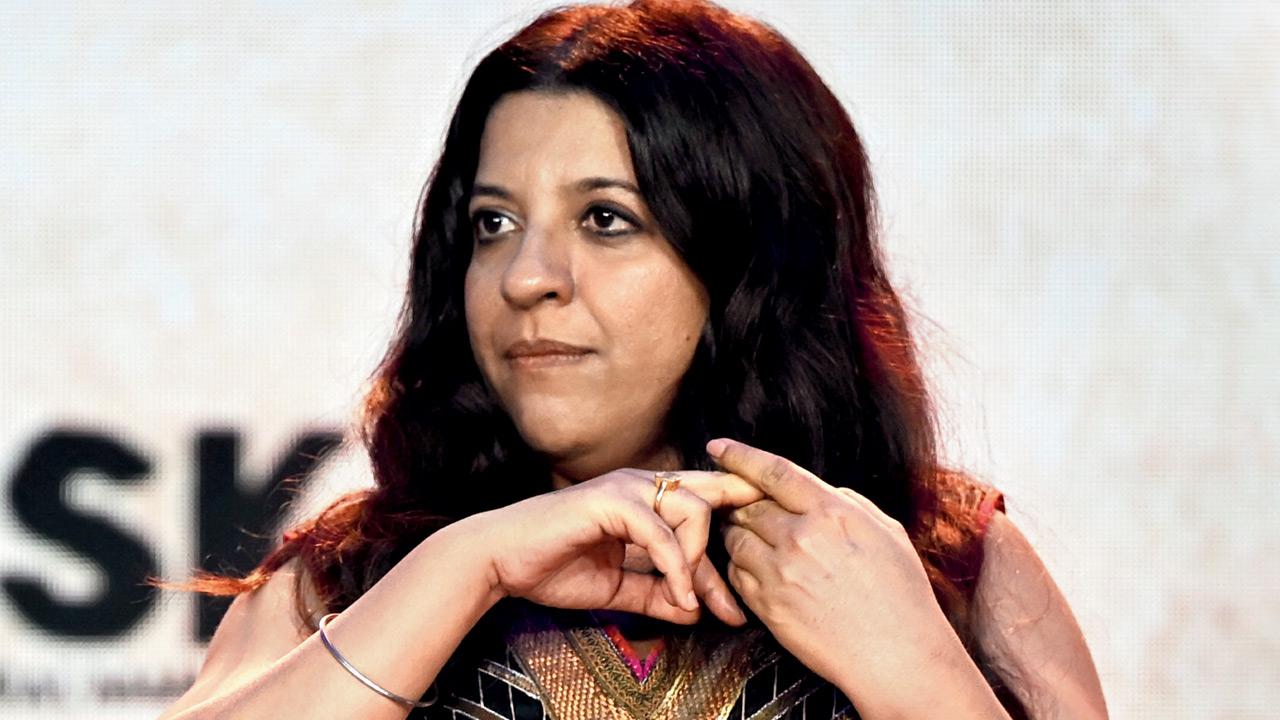
Hardware containing unreleased footage vanishes from Zoya Akhtar and Reema Kagti’s production house; staffer sold 24 drives for Rs 20k apiece
Anish Patil (MUMBAI MIRROR; May 26, 2026)
In an alleged data theft that has raised concerns over digital security in the entertainment industry, 66 hard disks containing film-production material, edited footage, advertisement projects and unreleased content allegedly went missing from the Bandra office of filmmakers Zoya Akhtar and Reema Kagti’s production house Tiger Baby Digital LLP.
Based on a complaint filed by the company’s executive assistant and HR administrator Mehjabeen Mushtaq Shaikh, Bandra police registered an FIR against Mohammad Shahid Azim Khan and Borivali resident Ritesh Suresh Shah (44). Police said both accused have been arrested and remanded to police custody till May 29.
According to investigators, Shah had allegedly purchased 24 of the stolen hard disks from Khan for Rs 15,000 to Rs 20,000 each. Police suspect some of the hard disks may have been sold in the grey market.
The theft came to light on May 21 after staff members were unable to locate certain hard disks required for ongoing work. A subsequent inspection of storage cabinets allegedly revealed several empty and damaged hard-disk boxes inside the office premises.
Investigators said the company maintained an inventory of 119 hard disks, of which 66 were allegedly missing. The drives, ranging from 16TB to 72TB in storage capacity, reportedly contained raw shooting footage, edited scenes, post-production material, advertisement films, archival content, backups and completed movie data linked to film and OTT productions.
Sources said some of the missing drives allegedly contained unreleased and work-in-progress content, raising concerns over possible leaks and unauthorized circulation.
During internal questioning, Khan allegedly admitted to stealing 24 hard disks over the past five months, police said. However, investigators are yet to trace the remaining missing drives.
Police are also examining whether any data was copied, transferred or leaked before the hard disks disappeared. Cyber experts may be consulted to determine whether the material was accessed externally or circulated online.
Investigators said the allegedly stolen data included footage, rough edits, scene cuts and project files linked to productions such as Made In Heaven and Ghost Stories, along with advertisement campaigns associated with beauty and digital-content companies.
Police are also probing the possible role of another office employee after suspicions were raised internally regarding access to some of the missing drives. However, officials said no conclusions have yet been reached regarding his involvement.
When contacted, complainant Mehjabeen Shaikh declined to comment on the matter.
DCP Mohit Garg confirmed the arrests. Bandra police are now trying to recover the missing hard disks and determine whether the data was duplicated, misused or circulated through any organised network.
-------------------------------------------
THE TIMES OF INDIA (May 26, 2026)
Mumbai: Two men were arrested on Monday over the alleged theft of 66 hard disks worth Rs 13 lakh from the Bandra office of Bollywood filmmakers Zoya Akhtar and Reema Kagti.
Police said one of them, Mohammad Shahid Khan, had worked at the filmmakers’ office as a support staffer for the past seven years, while the other, Ritesh, purchased the stolen property from him.
Police registered an FIR on Sunday based on a statement by an executive assistant working at Akhtar and Kagti’s production house, Tiger Baby Digital LLP. There are 11 employees, four of whom are support staffers.
According to the FIR, the production house stores data of shoots from films and commercials in hard disks that are kept at the Bandra office. The complainant said she had placed all the hard disks in proper order in the office cupboard in Nov 2025. Thereafter, whenever hard disks were required, Khan was asked to fetch them.
On May 21, other employees at the production house asked Khan to fetch a particular hard disk, which he couldn’t get, according to the FIR. The complainant then checked the cupboard and discovered that some of the boxes in which hard disks had been kept were partially burnt. But neither were there hard disks in them nor was there any burn mark on the cupboard.
The other employees then performed an audit and discovered that 66 hard disks were missing, some of which contained data from films, OTT shows and commercials shot by the production house. The filmmakers were informed and the support staff was quizzed.
According to the FIR, Khan admitted to stealing 24 hard disks over the past five months and selling them to Ritesh, who is based out of Borivali. He did not admit to stealing the rest. Bandra police were then informed.
BNS charges of theft by servant of property in possession of employer and retaining or receiving stolen property have been invoked against Khan and Ritesh.
-------------------------------------------
Cops arrest two, including employee of filmmaker’s production house, after devices worth around Rs. 13 lakhs disappear from cupboard
Dinesh Vaktania (MID-DAY; May 26, 2026)
The Bandra police arrested two men in connection with the theft of film shoot hard disks worth around Rs 13 lakh from Tiger Baby Digital LLP, the production house owned by filmmaker-producer Zoya Akhtar and screenwriter Reema Kagti.
The complainant, Mehjabeen Mushtaq Sheikh, 36, works as an executive assistant and HR admin at the company. Important film, advertisement, and shoot-related data were stored in the hard disks kept at the Bandra West office.
Theft comes to light
According to the police, on May 21, 2026, around 4.30 pm, a hard disk required for work could not be found. A check of the office cupboard revealed several hard disks were missing, while only a few burnt cardboard boxes were found inside. During verification, police discovered that 66 out of 119 hard disks were missing from the office.
Staff questioned
Suspicion fell on two members of the company’s support staff, who were questioned by police. During interrogation, one employee allegedly confessed to stealing 25 hard disks over the past five months.
Police said the accused sold the hard disks to a Borivali resident for Rs 15,000 to Rs 20,000 each. CCTV footage from the company office has also been seized for investigation.
Two arrested
The arrested accused have been identified as Mohammad Shahid Azim Khan, an employee at the production house, and Ritesh Shah, 44, a Borivali resident who allegedly purchased the hard disks.
Senior Inspector Ravindra Salunkhe of Bandra police station said, “We have arrested both accused, including the employee who stole the hard disks from the company. Further investigation is underway.”
Zoya Akhtar working on Gully Boy sequel; to have new cast
8:20 AM
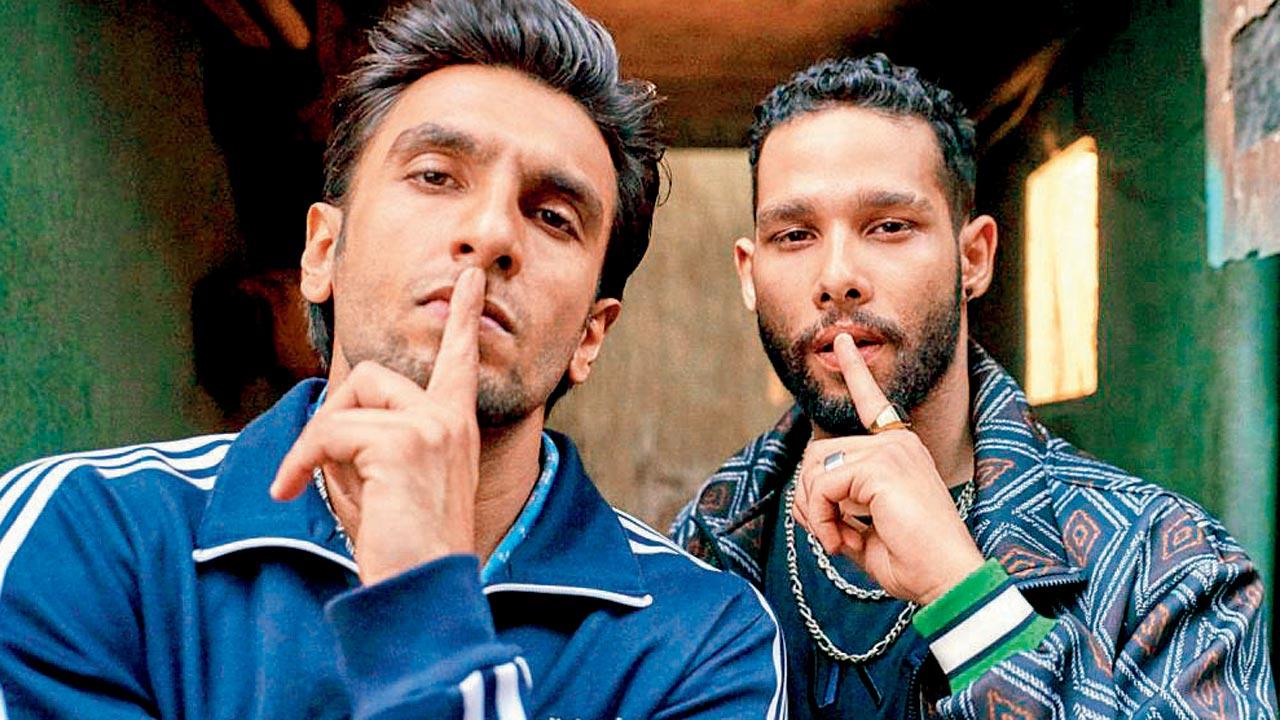
Sources say Gully Boy sequel, revolving around a new rapper, in the works; Zoya Akhtar passes the baton to Kho Gaye Hum Kahan director Arjun Varain Singh
Priyanka Sharma (MID-DAY; July 3, 2025)
With Gully Boy (2019), filmmaker Zoya Akhtar told a moving story of rap, rebellion, and resilience. That is a tough act to follow. But mid-day has learnt that Akhtar is returning with a sequel to the Ranveer Singh and Alia Bhatt-starrer. It turns out she will serve as the producer on the sequel, passing the directorial baton to Arjun Varain Singh, who helmed the much-loved Kho Gaye Hum Kahan (2023).
A source reveals, “With Gully Boy, Zoya and Reema [Kagti, co-producer and writer] brought on screen not only the struggles and perseverance of Indian rappers, but also the wide class divide. They felt the theme could lend itself to a sequel as there are many such rich stories to be explored. While Gully Boy saw the journey of Ranveer’s Murad reach its culmination, the second part will trace the story of another rapper.”
The gem is also remembered for spotlighting two talents in Vijay Varma and Siddhant Chaturvedi. This time around, the makers will bring a new cast. “The film is in prep. If all goes as planned, it will roll by the year-end. Arjun showed depth in his directorial debut, and Zoya felt he was the right person to take this franchise ahead,” says another insider.
Industry insiders on why good content is gasping for air while mediocrity is having a moment
9:42 AM

Do we live in a world where Nadaaniyan is greater than Superboys Of Malegaon? Screenwriters, creators and studio executives tell us why good content is gasping for air while mediocrity is having a moment
Mohar Basu (MID-DAY; March 16, 2025)
Last week, I went with a few screenwriter friends to watch Superboys Of Malegaon. Reema Kagti’s film has that rare magical quality—of reminding people why they do what they do, which is so important for artistes to remember.
But, as we entered an empty theatre, I could see the heart-broken faces of my friends aged 25, 31 and 35. On most days, it’s safe to assume that a good movie can fix everything, but not that day. A large part of the post-movie conversation became about how good films are slowly being disincentivized by the system, while the same system backs mediocrity. The conversation then focused on the Internet’s hate-watch of the week—Nadaaniyan, starring Khushi Kapoor and Ibrahim Ali Khan, backed by Karan Johar.
I picked up the phone to speak to the commissioning lead at a notable streaming platform. “Many of these film studios just don’t want to put their a** on the line. If a show doesn’t come from a relatively successful creator, filmmaker, the studio doesn’t find it safe to bet on it. Star kids appear to be a safe bet because you can explain it through numbers on an excel sheet. I am sure someone on the team of Nadaaniyan had said, ‘we can get Saif to do some promotions’. It is all about recovering a cost. It’s not personal. It’s not even good business. It’s a lack of belief in themselves about what stories work,” they tell us.
For years, streaming platforms like Netflix and Amazon Prime were heralded as the great equalizers. They did offer us an array of fresh talent breaking away from Bollywood’s star-driven machinery.
When did that change?
A recent social media post by writer Cchintan Shaah said that these platforms are anything but the inclusive spaces they claim to be. Shaah, like many aspiring screenwriters, has spent years pitching scripts to OTT giants, only to receive templated rejections. “There are three standard responses—this doesn’t fit into our slate, our slate is full, we are already doing something on the same lines.”
“It often feels like they don’t even read my work,” he lamented in the viral post. His frustration has struck a chord among independent filmmakers and writers, who argue that these platforms have merely transferred power from Bollywood studios to the new elite of digital gatekeepers.
Are pitches even being read? One studio exec tells us, “Pitches get read. It is simply that unsolicited pitches are like the slush pile. The cold hard truth is that young talent seems to get promoted/noticed/picked up only if we know them. Everyone in corporate boardrooms loves to say ‘we have to be promoters of young ideas’ but it’s a punchline. That said, I also feel that many young writers who send in their cold pitches don’t have a sense of what the market is looking for. Right now, everyone’s on the hunt for a good horror or a Young Adult show. Or business legacy stories. But so many pitches are the standard cop and crime dramas. I don’t know how to bridge that gap. Maybe there could be some sessions, where studio heads and writers could communicate to each other.”
When the streaming boom kicked off in India, there was optimism that fresh, diverse voices would finally have a platform. The rise of content like Paatal Lok, Delhi Crime and Scam 1992, all featuring relatively untested creators, seemed to validate this belief. However, many now argue that the doors are closing again, with green-lighting decisions being dictated by existing industry relationships.
A well-known screenwriter, who delivered a streaming hit this year, says, “Streaming isn’t television. It was supposed to be about making disruptive content. But the streaming heads in India come from a television background. I am not surprised at the decisions they are making. Cringe or not, Nadaaniyan did what it had to do—made enough noise for people in small towns to watch the film. It got them numbers. Something a great, nuanced show won’t be able to achieve. Sony Liv has a wonderful show called Tabbar. Ask around and you’ll know many people have not watched it.”
I recall a conversation with Tabbar director Ajitpal Singh. He had told us, “I was an indie maker with a script. We went to small, medium, and large platforms. Some of them didn’t even read our pitch. There were excruciating periods of lull.”
Studio execs point out that every major slate announcement is a mix of star-led ventures and shows which are creative gems. Chaitanya Tamhane, who made Court, in a recent interview, said it’s a simple solution—you can always do one for the kitchen, one for the soul.
Hansal Mehta, creator of Scam and Scoop, says, “It will need solid financial discipline, intelligent exhibition strategy, and marketing that is well-thought-out. Everyone has the data. But they need to have some faith in good talent. We need a shift in priorities.”
But maybe the audience needs to course correct too. “If you show up to watch a film with talented people, you are saying give me more of this. But if you watch bad movies, maybe you are a part of the reason,” a filmmaker who is making an actioner for a leading streamer told us.
If producer pays writers more, and they deliver, it’s the producer who makes more money-Niren Bhatt
9:32 AM
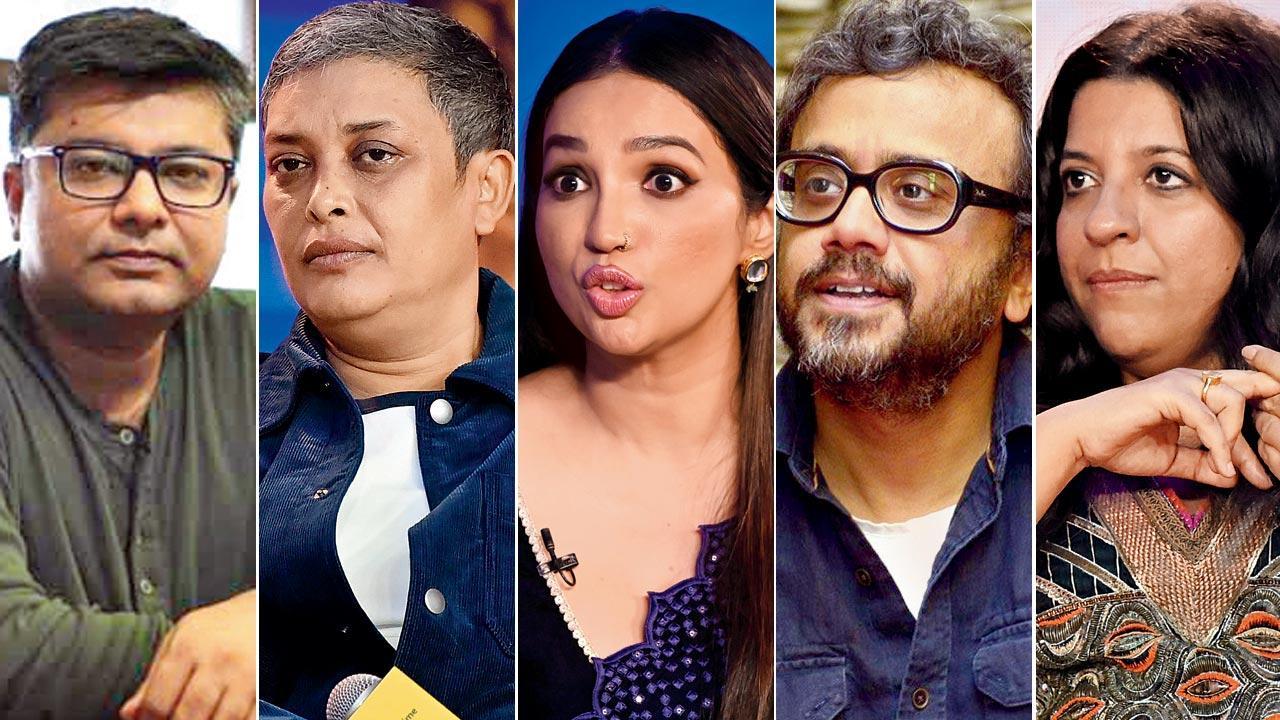
Niren Bhatt; Reema Kagti. Pic/Kirti Surve Parade; Kanika Dhillon. Pic/Satej Shinde; Dibakar Banerjee. Pic/Getty Images; Zoya Akhtar. Pic/Kirti Surve Parade
At the recently concluded 7th edition of the Indian Screenwriters Conference, writers spoke about the industry’s unhealthy practices that are hurting the ones who shape the backbone of the project—the story
Priyanka Sharma (MID-DAY; February 23, 2025)
Never seen before”, “phenomenal”, “relevant”, “hatke” are just some of the adjectives stars often deploy to sell the stories of their next releases during promotions. But one hardly hears the names of the writers, whose work prompt stars to green-light their projects. But the invisibilzation of screenwriters in the Hindi film industry doesn’t begin when a film nears release. It goes back to the beginning of the process, when a writer’s words start taking shape.
As we catch Niren Bhatt at the seventh edition of the Indian Screenwriters Conference held by Screenwriters Association (SWA), the man behind last year’s blockbuster Stree 2, says a brainstorming session between a director and a writer ends up with the former taking the writing credit. “Directors stealing credit is a practice that has been going on for years. The final credit slate will feature them as both director and writer of the project, while the actual writer is given credit somewhere else.”
The fight for rightful credit is exhausting and many a time, a writer is forced to make do with the remuneration and move on. But how is that struggle any better, when more often than not a writer’s pay is dependent on everything else but his/her story. “A writer friend of mine recently showed me his contract with a studio, which I will not name, where it was mentioned that the tranches (of his fee) were dependent on the actor’s approval and once the director comes in, then on his approval. Those kinds of contracts are unhealthy,” shares Bhatt, who also had his share of unfair contracts at the beginning of his career, but success has made negotiations easier. “People need to realize that if you pay writers more, and they deliver, it’s you who makes more money,” he adds.
“Young writers sit with bigger writers or producers and directors, soak in all that these people say, and go home and write. And then, they get the last credit. Just talking a lot doesn’t make you a writer. Only the ones who writes, is a writer. This is one of the biggest challenges that young writers are struggling with today,” says filmmaker-writer Reema Kagti, behind acclaimed works like Talaash, Made In Heaven and Dahaad. She makes her point in her art as well. Her upcoming work, Superboys Of Malegaon, penned by Varun Grover, features an emotionally charged dialogue, which says, “Writer baap hota hai, writer”.
But a mere small talk with any screenwriter in Mumbai will reveal that a writer actually the neglected child of a large family. From stolen credits to abominable fee, Bollywood screenwriters pay a heavy price for every written word. “It’s obnoxious,” says Zoya Akhtar, Kagti’s frequent writing partner and co-producer on Superboys Of Malegaon.
She breaks down why exploitation of writers is casual. “Because everyone thinks they can write. I can’t think I can act or be a cinematographer, as these are very ‘specialized’ skills. With writing, everyone thinks they know end mein kya hona chahiye. They don’t understand a lot of the times what the integrity of the story is.”
Filmmaking doesn’t happen in isolation, it thrives on collaborations, which naturally involve suggestions and inputs from cast and crew members. But that shouldn’t dilute a writer’s role and position, Akhtar says. “Every actor I have worked with isn’t a prop. They are talented beings, who have their process to reach a character, whether we have written it or not. They will come up with their suggestions. As a filmmaker or a writer or a showrunner, it’s your job to filter it, by thinking, is this adding to the larger narrative or the theme I want to sell?”
Screenwriter-producer Kanika Dhillon is reminded of her initial days, when producers and directors would be baffled at her demands. After all, the industry notoriously expects writers to forgo fairness in lieu of work offered to them.
“When I used to go for meetings with producers or directors, their main grouse would be, ‘How are you talking like this? This has never happened here. No writer asks or says this. Hence, you can’t get it’. So, every time I have crossed a milestone, I have made sure to speak about it. So others can do it as well,” she says. Even today, after Dhillon has created a successful filmography that features titles like Manmarziyaan, Kedarnath and Haseen Dillruba (Part 1 and 2), she is asked to not speak up for writers’ rights. “I am told, ‘Arey, you have achieved so much. Why do you need to speak up?’ But why should I not? My success has emboldened me.”
Bhatt believes speaking up is the only option. “Don’t say ‘I am just a writer. No one bothers about me’.” But self-victimization is only natural, when an artiste is constantly pushed to a corner. That’s where community support becomes essential, says National Award-winning filmmaker-writer Dibakar Banerjee.
“A lot of the writers, who work here, are not from Mumbai. They try to write, survive, and face all the existential and creative questions. They are trying to improve their craft. In this kind of a situation, having a community with shared problems, thoughts and ecosystem really works. A community is most important so that nobody is left alone. If you are left alone, you will be exploited. If you are in a community, it’s that much harder to exploit you because we all stand for each other,” he says, lauding the efforts of SWA to uphold a writer’s rights and back him/her in time of need.
"I really hope that this kind of building from strength to strength really reaches that level, where no writer at least who is a part of SWA, feels alone. It’s when you feel alone, you start getting depressed, having doubts about your craft and start listening to idiotic requests from a studio or a platform, who doesn’t understand what you are trying to do. In every which way you become vulnerable. Writers in this city are the most needed and the most neglected at the same time. I have seen the advantages of having a community. That can be anything, your crew, a number of like minded people, who are there. Like, I just got a call from a writer and he had something to say, which was very hard to share. But he shared. That’s what having a community feels like.”
Nobody was seen screaming, shouting, or using cuss words on Reema Kagti's set-Gyanendra Tripathi
8:27 AM
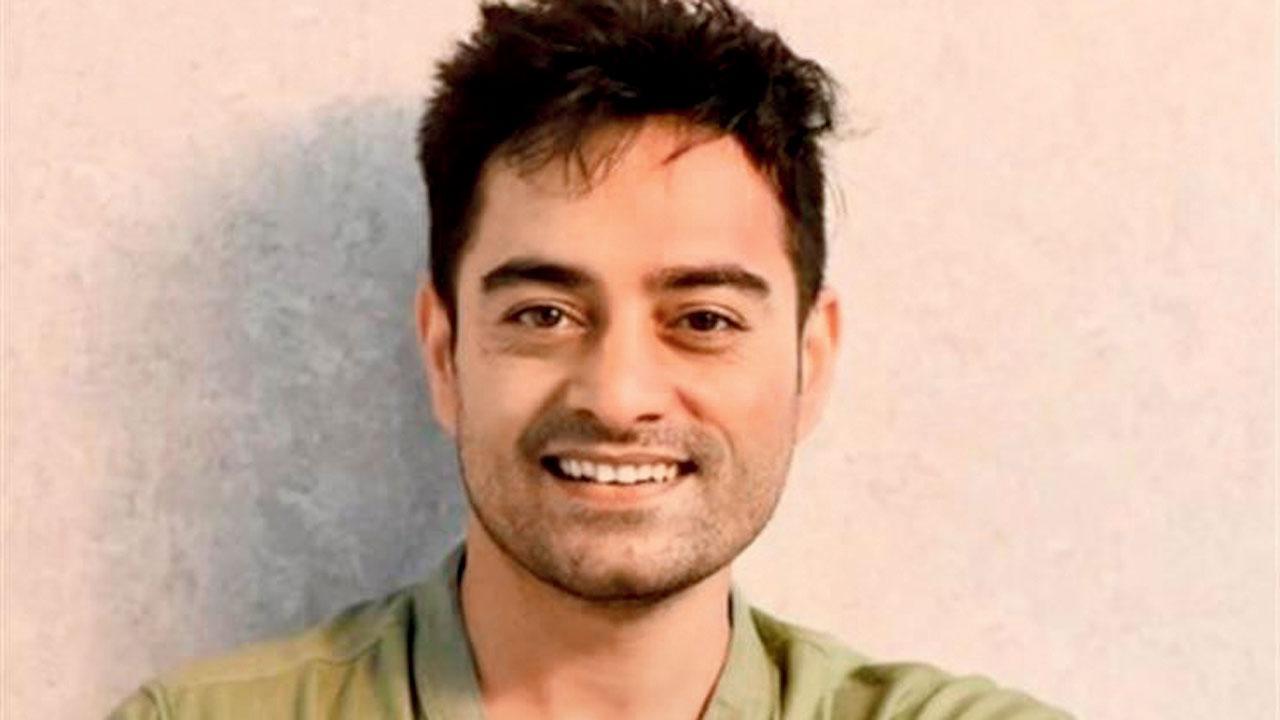
As a death photographer in Barah By Barah, Gyanendra on roaming the streets of Varanasi, watching cremations
Priyanka Sharma (MID-DAY; May 20, 2024)
Gyanendra Tripathi had umpteen questions when he first read the script of Barah By Barah, his upcoming film which narrates the story of a death photographer based in Varanasi.
“He clicks pictures of dead bodies that are brought for cremation. I wondered what his outlook on life would be, and if there was a spiritual element linked to this job. These questions excited me,” says the actor, days ahead of the film’s theatrical release following a two-year-long festival run.
To step into his character for the project, which marks director Gaurav Madan’s feature debut, Tripathi roamed the streets of Varanasi, interacting with locals and observing cremations.
“I reached Varanasi a week before the shoot began. Most of the filming happened at real locations. The pyres that you would see in the film are real. So, it was important that my body language was appropriate. I would sit on a ghat, and see multiple dead bodies being brought in, one after the other. People would harbour different emotions—some would also come with band baaja, and celebrate it. I also worked on the dialect, and kept an eye on how locals greet each other,” he says.
Up next in his kitty is Reema Kagti’s Superman Of Malegaon, also starring Adarsh Gourav and Vineet Kumar. “Reema’s set was driven by women. The atmosphere was completely different. Nobody was seen screaming, shouting, or using cuss words. Everything was well planned.”
Kagti’s directorial venture has been penned by Varun Grover.
Zoya Akhtar just wanted to follow around three boys, no hair/make-up for Zindagi Na Milegi Dobara-Reema Kagti
8:36 AM
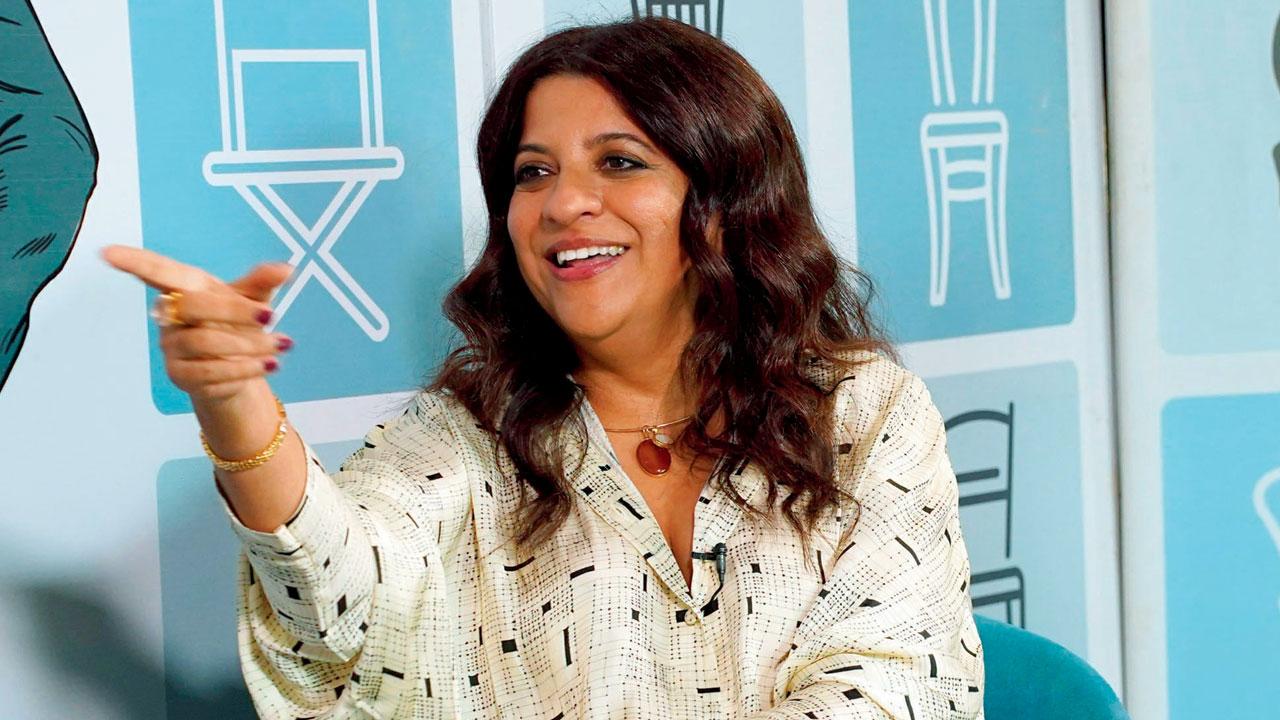
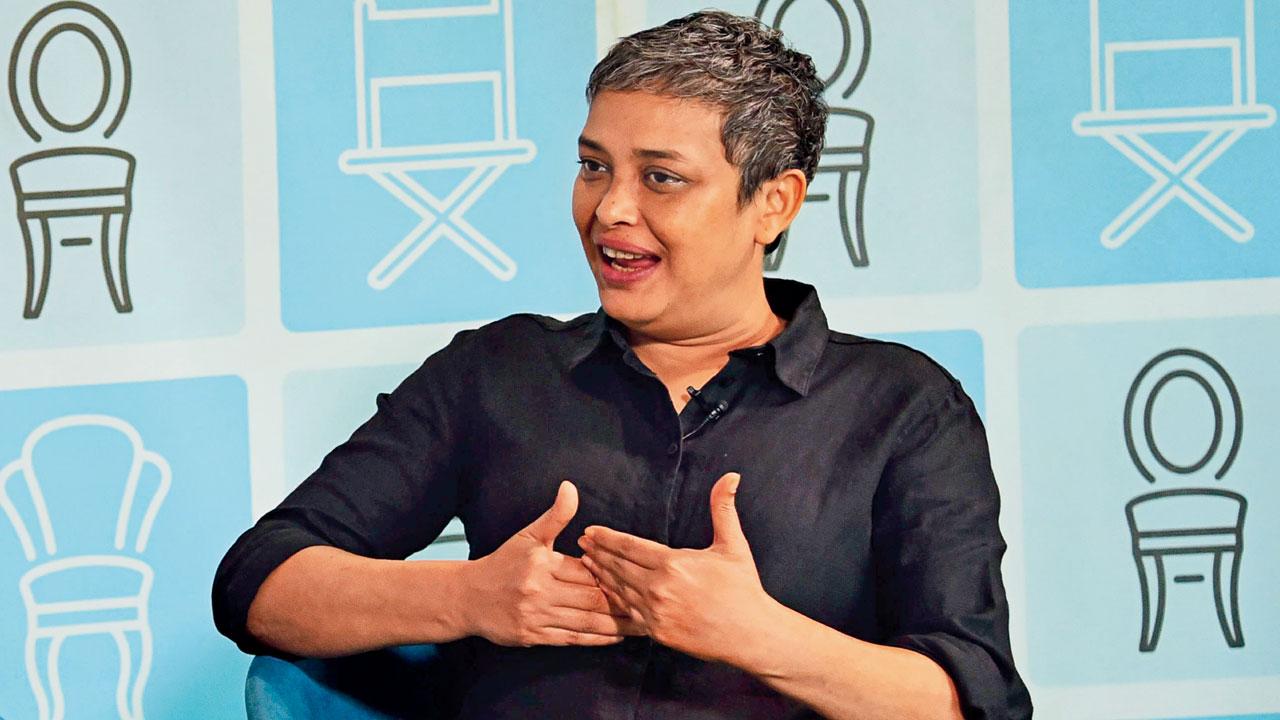
Bollywood’s top screenwriter plus producer duo, Reema Kagti, Zoya Akhtar, decode the craft behind their art
Mayank Shekhar (MID-DAY; January 20, 2024)
Made In Heaven, that’s wrapped two seasons on Prime Video—surely, you’ve seen it already—is an episodic series. In the sense that ensemble characters and stories change, with each episode, while the leads remain the same.
That is, Tara (Sobhita Dhulipala) and Karan (Arjun Mathur), who are BFFs/soulmates, single, sharing life together—also business and creative partners, at a wedding planning firm. Which involves stressful planning and production, some scripting, and creativity, too. Not very different from filmmaking itself.
It’s only while watching the show’s second season that it occurred to me—hey, these two protagonists could be inspired by the life of the screenwriting plus producer duo, Reema Kagti, Zoya Akhtar, who are behind the show themselves; no?
“No. Well, work-wise, yes. But not [so much] socially,” Zoya argues, when I bring this up. Although Reema concedes, “When we were discussing [the show, with co-writer], Alankrita [Shrivastava], this did come up—if we have set the people on ourselves. Definitely the friendship, where they are also kinda soulmates. Not that Zoya and I are soulmates.”
They are “professional soulmates,” they concur. So, the social lives are largely separate? “We do have the same gang, when we hang out. But let’s just put it this way: Zoya is extremely social. I’m absolutely anti-social,” Reema laughs.
The two have remained friends and colleagues for over two-and-half decades. Starting out as assistant directors (ADs) on Kaizad Gustad’s Bombay Boys (1998). And with a combined filmography of over 10 films/shows as credited writers on the screen, since.
Yet, while we know enough about Zoya’s background, famously daughter of writers Javed Akhtar and Honey Irani—we barely know anything about Reema.
I’ve scoured the Internet, before meeting them. It hasn’t helped much. Most of her video interviews online are with Zoya. Reema’s calmingly chilled, securely quiet. Which sufficiently explains the “anti-social” self-description, doesn’t it?
Reema says she grew up in Assam. Went to a boarding school, Loreto Convent, in Shillong, Meghalaya: “Back then, there were hardly any good schools in Assam, so it was common for parents to send their kids off to boarding schools. Unlike in bigger cities, where only the naughty kids got sent!”
She was admittedly a naughty kid, though: “I used to make my parents’ lives hell. But they were supportive.” Not as much for her filmmaking ambitions, initially.
“I think my father had this very 1980s, ’90s notion of Bollywood. He was very disappointed [with my career choice]. It’s only when I got him to watch Lagaan, that I was an AD on, that he said, okay—if this is the kind of films you want to make.”
Reema’s father was an engineer at an oil company, before leasing out a 350-acre land to farm, “four hours’ drive from China”. The umbilical cord with her home-state remains.
“You can’t really outgrow your roots. My cook is Assamese. I eat Assamese food. My family is back in Assam.” Reema had moved to Bombay for college, at Sophia, and thereafter a course in social communications at the media school, Sophia Polytechnic.
“At some point, I bumped into Zoya. We liked the same kinda films, had a lotta common ground, we began writing small stuff together” she trails off.
To be more precise, this was during the auditions for Bombay Boys (1998), where Reema was already an AD. Zoya had dropped in for the same position.
Zoya had been an AD on Dev Benegal’s Split Wide Open (1999), after returning from a diploma in filmmaking from New York University (NYU). She had assisted in the costume department on Mira Nair’s Kama Sutra (1996), before NYU.
“Only, the director, Kaizad, was keen to test Zoya for Tara Deshpande’s part in Bombay Boys,” Reema recalls. She was staffing the audition. Right after which, Zoya told Reema, “I’m the world’s worst actor!” Reema replied, “Listen, I don’t think you’re getting this job either!” Well, she got the job she wanted.
Which was as a freelance AD, the rotating culture of which only spawned in Bollywood in the late ’90s, early ’00s: “We were moving into a phase of sync-sound on the sets, shoots getting wrapped in a single schedule. To pull that off, you needed a more structured system. Unlike before, when films would take years to finish, and everyone just hung around in offices—there would be 12 ADs, and everybody did everything,” Zoya says.
Reema had earlier worked on Rajat Kapoor’s directorial debut, Private Detective: Two Plus Two Plus One (1997): “That was my film school. I got to dabble in all departments of filmmaking.” But there was one thing both Zoya and her were clear about—they were not going to assist only one person, throughout, which was, at the time, the common practice.
Zoya says, “I don’t know how we had the guts to take that call. Back then, ADs were associated with particular filmmakers, or even production houses, when it came to advertising. There was a ‘chhaap’ [creative trademark] of that director, that remained with you, even once you left them and went your own way.”
Sensing a trap, neither wished to mirror particular mentors. Writing and directing their own movie was the end-goal, anyway. They got to work on multiple sets, when they did; and wrote their own scripts, when they didn’t. It was around this time they decided to script a short film together.
Zoya remembers, “We almost killed each other—let’s do this, let’s not do that, etc. Later, I wrote Luck By Chance (2009). Reema started writing Honeymoon Travels Pvt Ltd (2007). We gave our scripts to each other for feedback. She finished the portions I got stuck at. Likewise, me with Honeymoon. While we hadn’t credited each other, we were on each other’s films. Because this worked out so well—plugging holes in either script—after that, we just wrote together. Talaash (2012) was the first script we developed [as a team], from scratch.” Zindagi Na Milegi Dobara (ZNMD, 2011), arguably the finest Bollywood entertainer in the ’10s decade, was their second.
It’s not like the creative bickering, if you may, has stopped, or receded. Zoya admits, “People around have just got used to it in our office.”
Reema laughs, “This one time [producer] Ritesh [Sidhwani] told us, you should just not work with each other anymore. During ZNMD, [Zoya’s mom] Honey aunty got a call from the neighbours—something is going on in your house; please, it’s really scary, people are shouting!”
The art of their conflict management is pretty simple, though: “Show up at work. If we are writing, it’s 10 am. No muse is gonna come. If nothing is happening, we just do other things, watch movies, just chat, gossip… Also, you should never be afraid of scrapping what you’ve done, and starting all over again,” Zoya says.
With Reema, it’s even simpler: “If you’re stuck with an idea, and neither is able to resolve it, let it stay—move on to other things. Later, you return to those ideas, and the better argument, once it stays with you, eventually wins. It works well, if you have the story first.” They’re sure of the story’s end, beforehand; working themselves backwards.
In terms of agreeing to disagree, between them, the one who’s directing the film, gets the final say: “Otherwise, we will never stop arguing.”
For instance, in the Netflix original, The Archies (2023), Reema wasn’t convinced about the placement of a song that would break the narrative: “But once I saw the way Zoya had outdone herself with the visualization, I knew she was right. It is my favourite song.”
In terms of success stories among screenwriting pairs, none beat Salim-Javed in Bollywood still. As in, script starring Salim Khan and Javed Akhtar, in the opening credits. The latter, of course, being Zoya’s father.
Only lately has Javed begun to decode how the partnership worked, having kept mum, since it broke up at the turn of the ’70s decade.
It’s clear now that Salim was the scenarist and the plot-guy, while Javed was the man of words. For instance, as Javed has mentioned before, the greatest twist in Chandra Barot’s Don (1978)—the fake don reveals, inside the jail, that he’s not the real one.
Wherein, the cops don’t believe him still. But his consiglieres, for inmates, instantly do. The dilemma worsening for the protagonist—he’s stuck between both lots, who’re gonna kill him, regardless. Now, that was Salim’s idea!
But, say, the Don’s line, “Mujhe do tarah ki ladkiyan pasand nahi aati. Ek woh, jo mere pass aane mein bahut der lagayein. Aur ek woh jo bahut jaldi aa jayein. (I don’t like women who take too long or too little time to attract).” Now, that’s decidedly Javed!
It’d be great to hear Zoya-Reema similarly break down their own scripts. Firstly, Zoya exclaims, “This comparison is freaking me out. Nothing of the sort [of Salim-Javed] had happened before, or will happen again. They were 22 blockbusters down. Let’s not put us in the same sentence!”
“[That said], our strengths are very different. We talk, talk, talk. We align on themes, characters, story, and what the film is about. Then, Reema is very strong and succinct with structure and screenplay. She gets to the point. I tend to soak.”
Reema couldn’t agree more, “The editing! You give Zoya a 100-page script, she’ll send you back 120 pages. I’m, like—what have you edited, you’ve added! But she’s better at nuances, layering, characters. And dialogues, of course.”
“Zoya feels all my characters sound like me! But she can be lazy. Zoya will refuse to write the first draft of the screenplay, once the events have been fleshed out. So, on the dialogues, I just make everyone sound like me. Because I know she will fix it!”
Zoya adds, “I get lazy, yes, but once Reema does the barebones, I take it, and juice it. I write the dialogues in English. If you want to shoot the film in English, the screenplay is completely ready.”
“Then, it goes to one of my family members—brother, Farhan (ZNMD, Dil Dhadakne Do, The Archies); father, Javed (Luck By Chance), or Vijay Mourya (Gully Boy)… They know what I want, putting it into the syntax that works best in Hindi.”
The Archies, in that sense, for the way the audiences would have watched it globally, is closest to the original screenplay with English dialogues then? “The person subtitling might approach it differently, but the English draft is the template for it,” Reema says.
While writing, per se, is a solitary job—it’s in the parleys between each other, bringing out personal experiences and influences—that the Zoya-Reema script essentially comes together.
I ask Zoya to quote examples, where there’s fully Reema in a script, that she’s directed. She points to Alia Bhatt’s part in Gully Boy (2019): “Safeena was the character, from Dharavi, in a script, that Reema had written for her movie. That film didn’t happen. But I fell in love with her. I asked her if I can just take Safeena. Yeah, why not! We supplanted and then adapted her to fit into the world of Gully Boy.”
For something more specific, in terms of moments, Zoya cites, “The scene in ZNMD, with Laila (Katrina Kaif) chasing Arjun (Hrithik Roshan) down on the bike, and kissing him! The point of the film was to follow your dreams; live in the now. Reema said Laila needed to do something [to capture that essence]. She can’t just say it. Let’s have her kissing him outside, and let her leave!”
This ready-to-film screenplay cooked between partners is also how Salim-Javed operated, staying within the realm of screenwriting still—a reason some ’70s directors fell off the crevice, once Salim-Javed were unable to send them bound scripts any longer.
For Zoya-Reema, it’s merely the end of a process: “A big hurrah moment,” as Zoya puts it. The actual movie can’t film itself. How’re they different as directors from thereon, I ask Reema, who has, thus far, directed Honeymoon, Talaash, Gold (2018), two seasons of Made In Heaven, the series, Dahaad, and the feature, Supermen Of Malegaon, that’s on its way.
She says, “Zoya visually references a lot. I tend to arrive at the visual world, after recce-ing [locations].” Zoya agrees, “It is, after all, a visual medium. I like to find a visual tone, seeing the film from before, and start recce-ing it, accordingly; to lift it off the page.”
Zoya, evidently, has her clear list of dos and don’ts as well. For instance, she was certain before the filming of Gully Boy, set in the slums, that there will be none of Bombay’s tarpaulin-blue throughout the film: “I just don’t like the colour.”
Likewise, with The Archies, the setting would be dreamy, hence, visually, story-book like: “full framing, wide-lensing, classical shots, like 1950s-60s photography.” With Dil Dhadakne Do: “mainly mid-shots and long shots, because the picture is from the POV of Pluto, the family dog.”
Besides screenwriting and direction, there’s the graduating aspect to their creative careers, which is as producing partners. Gully Boy was the first film with Zoya-Reema’s film company, Tiger Baby.
The name, by the way comes from “the nickname that Anurag [Kashyap] and all” gave Zoya: “It’s my spirit animal!” Left to Reema, the company would’ve been called Balls of a Brass Monkey: “Zoya is like, don’t be ridiculous! Also, Tiger Baby is fierce and feminine. It has a nice ring to it.”
Even as producers, the two couldn’t be as complimentarily separate from each other. As Zoya deciphers, “I’m the one meeting with the actors, Reema doesn’t wanna go anywhere. She’s better with budgets, and numbers. But both of us are into mentoring scripts. She’s better at creative packaging and producing. I handle the Tiger Baby social media.” Reema sighs, “I can barely do mine.”
An upcoming production of Tiger Baby is a documentary on Salim-Javed.
If you were to strain yourself to find connecting dots, if not a larger link, between each of Zoya-Reema scripts, it might be the fact of alternating worlds, perhaps.
Say, in the OTT space, their two releases in 2023 were Made In Heaven S02, and Dahaad (both on Prime Video). One is set around the blingy world of posh, New Delhi weddings.
The other is a police-procedural in the rugged terrains of Rajasthan, following missing women, and a serial killer on the loose.
Likewise, with films, The Archies, on Netflix—with “idealism for its point”, in the near-perfect, imaginary world, mimicking the American comic book, in 1960s India—comes after Gully Boy, that went deep into Mumbai’s underclasses. Which, in turn, came after Dil Dhadakne Do, dealing with importantly familial, but First World issues.
Zoya-Reema obviously don’t see it this way: “We just follow the world our characters live in. It’s about being authentic to the world you’re trying to create,” Reema says.
Zoya adds, “We are avid readers and movie watchers, fans of various kinds of filmmakers, not fixated on a genre. For instance, I’m actively looking for something in the big crime/underworld space. It’s exciting to be scared [trying new things]. I’ll be bored waking up for work, otherwise.”
The ideas, of course, can come from anywhere, Reema argues: “Supermen Of Malegaon was a documentary. Gully Boy came from a music video. With ZNMD, it was road trips taken [by us]. We’d also gone on a Europe tour, with Zoya and a bunch of friends. Zoya just wanted to follow around three boys, no hair/make-up, for ZNMD. Of course, it didn’t end up that way.”
One of those inspiring trips was when Reema, a “broke AD”, was in Goa, having spent all her money, with none left for a bus-ticket back to Bombay. She hitched “a car-ride with the sister of a friend. Throughout, [the host was] cautious of a plastic bag in the backseat, because it had an expensive vase, or something. We named that bag, Priscilla.”
This is how Bagwati in ZNMD came into the scene. Only, Reema hadn’t even heard of a Birkin: “What’s that Berk, Berk, whatever. When Zoya told me about it—I’m like, why would someone pay lakhs for a bag? I wanted [the motif] to be something breakable in the film. Zoya’s the director. I had to go with her!”
With ZNMD, Zoya says she was looking at a low-budget, easy-peasy production, given she had just got off a huge ensemble cast debut, Luck by Chance.
Which was about an actor getting a shoe-in to showbiz. The Archies, in that sense, is her coming full circle, since the film launched seven debutants. If she was to make Luck by Chance, how different would it be, a decade-and-half later, give how much entertainment as an industry itself has changed since?
“If I have to revisit, rewrite, I don’t know what [Luck By Chance] will be. But, thematically, it’ll still be about success, and failure. That’s what the film is about—how do you define success, and failure? Is your self-worth determining both? The rest is backdrop.”
A widely shared clip online, from Luck By Chance, is superstar Shah Rukh Khan’s (SRK) cameo in it, where he gives life’s lessons to the lead character (Farhan Akhtar). Given The Archies marked the acting debut of SRK’s daughter, Suhana, I wonder if Zoya ever got SRK over to the set, for a Chak De India type pep-talk, to a full team of debutants? “No. That is supposed to be my job!”
That pep-talk in Luck By Chance was essentially about never leaving behind those who’ve known you from before success/stardom—when it appears that you’ve probably moved ahead. Zoya says, “Shah Rukh, as a person, typifies that.” In terms of rallying the OG troops around her, so does she.
Zoya sorta admits, “I do like working with the same crew. Because they’re great at their job. There is trust, and a sync of aesthetics. Which is not to say I won’t work with someone new.
“Suzanne [Caplan Merwanji] was the set-decorator, when I was a production assistant, on Kama Sutra. [Editor] Anand Subaya and I went to school together; [costume designer] Arjun Bhasin, [hair stylist] Avan Contractor… So many around me have been friends since teens and tweens.”
“There’s Ritesh [Sidhwani], Farhan… Also, then, I enjoy going to work. I work a lot. I don’t want life passing me by, while I’m isolated, working 13-14 hours, a day. The friends are there.”
Friendships also being a recurring theme in Zoya-Reema scripts, if you casually glean through them. They could claim a friend-verse of their own. Starting out, Zoya-Reema worked as ADs on Farhan’s Dil Chahta Hai (DCH, 2001). Both believe Farhan, their former boss, to be the more methodical director, sharp with his final edits, even while on set.
Together, with DCH, and ZNMD, Netflix placed three hoardings in Mumbai, before the film Kho Gaye Hum Kahan (KGHK) dropped on the platform—terming them movies that defined friendship for their respective decades. I kinda agree.
Tiger Baby’s KGHK, directed by debutant Arjun Varain Singh, is probably the only Zoya-Reema script that neither has filmed. It peeks into the life of GenZ, through three buddies (Ananya Panday, Adarsh Gourav, Siddhant Chaturvedi), who also somewhat embark on a professional partnership together.
This is not a love triangle. It’s about friends, who are also family. They are not seeking healthy romance, but fulfilling companionship.
You sense that mental intimacy with the male-female leads over two seasons of Made In Heaven as well. I reckon, that’s the future of relationships. Zoya-Reema get that. Better than others.
Zoya Akhtar, Reema Kagti read first draft & said, ‘Throw it in the dustbin and start again’-Arjun Varain Singh
7:45 PM
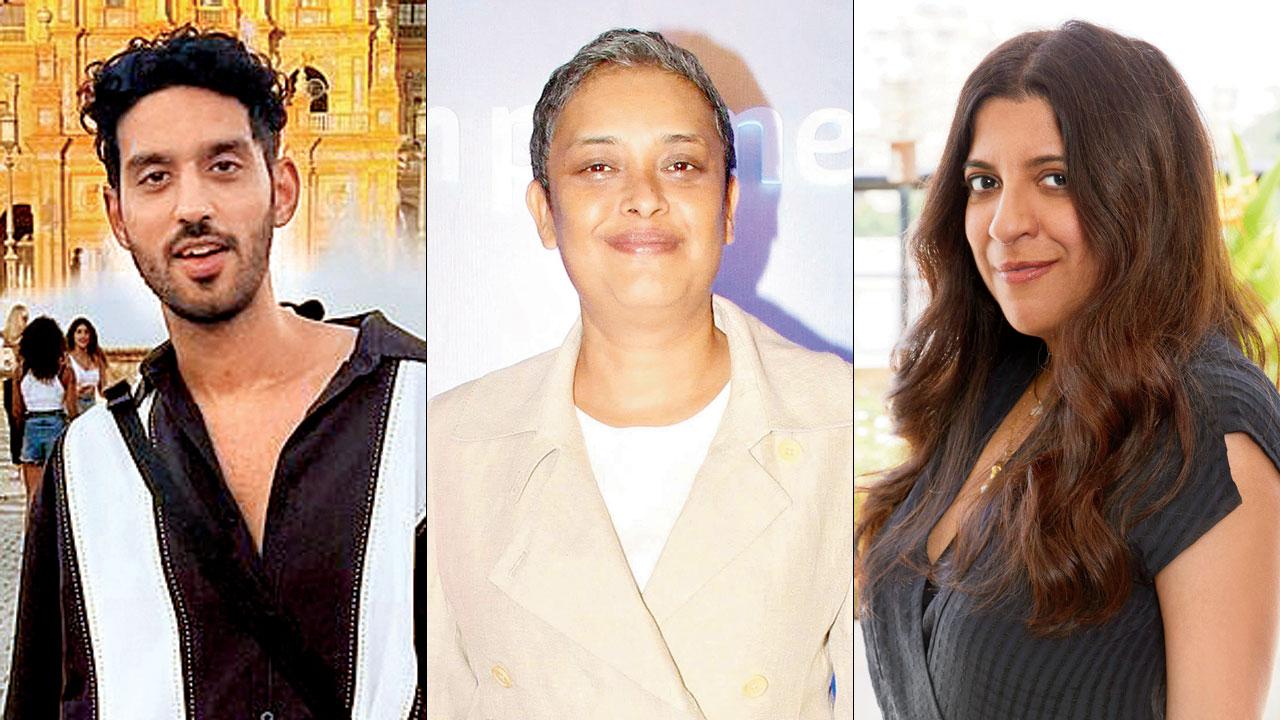
Kho Gaye Hum Kahan director recalls Zoya and Reema’s reaction to his first draft; expresses gratitude to them for trusting him to develop young adult drama
Priyanka Sharma (MID-DAY; January 6, 2024)
It all started with casual conversations. While assisting Zoya Akhtar on Gully Boy (2019) and Ghost Stories (2020), Arjun Varain Singh would chat with her about social media, and how it exasperates yet comforts the current generation.
Singh remembers, “At some point, Zoya said, ‘This is a movie.’” That marked the birth of Kho Gaye Hum Kahan, which is winning praise since its release last week.
Writing the Siddhant Chaturvedi, Ananya Panday and Adarsh Gourav-starrer took time. As the debutant director sat down to pen the story of three friends whose joys, deceptions and frustrations are all influenced by social media, Akhtar and Reema Kagti joined him as co-writers.
“When Zoya and Reema read the first draft, they said, ‘Throw it in the dustbin and start again.’ I’m blessed they came on board as it allowed the story an outsider’s lens and made it cross-generational. But many things remained true, like two boys and one girl, and the core idea of learning to be authentic to yourself,” Singh says.
The Netflix film is a rare young adult drama in Bollywood, which has ignored the genre in the last few years. “If we look at Dil Chahta Hai [2001] or Wake Up Sid [2009], it’s important that these stories are told by people at that age or who have just passed that age. It’s important to trust younger creators and give them the space to explore [such stories].”
Among the film’s many highlights is its depiction of an online troll. Singh shows the transformation of Gourav’s character from a middle-class boy seeking validation to an anonymous troll. The director says his intention was to capture how a person going about his life turns hateful. “We wanted to show that no one is entirely good or bad. Everything we do is a reaction to circumstances. Even in the case of trolls, their hate is coming from a place of hurt or loneliness.”
Another highlight is the seamless performance of Panday, who is often subjected to online hate. “She has been good in other films as well, but unfortunately has got a lot of hate. The work and energy she put into making this role her own is incredible. Despite all of the hate, people have come to love her. That tells you so much about the fighter she is.”
Male characters by female directors are more interesting-Adarsh Gourav
8:24 AM
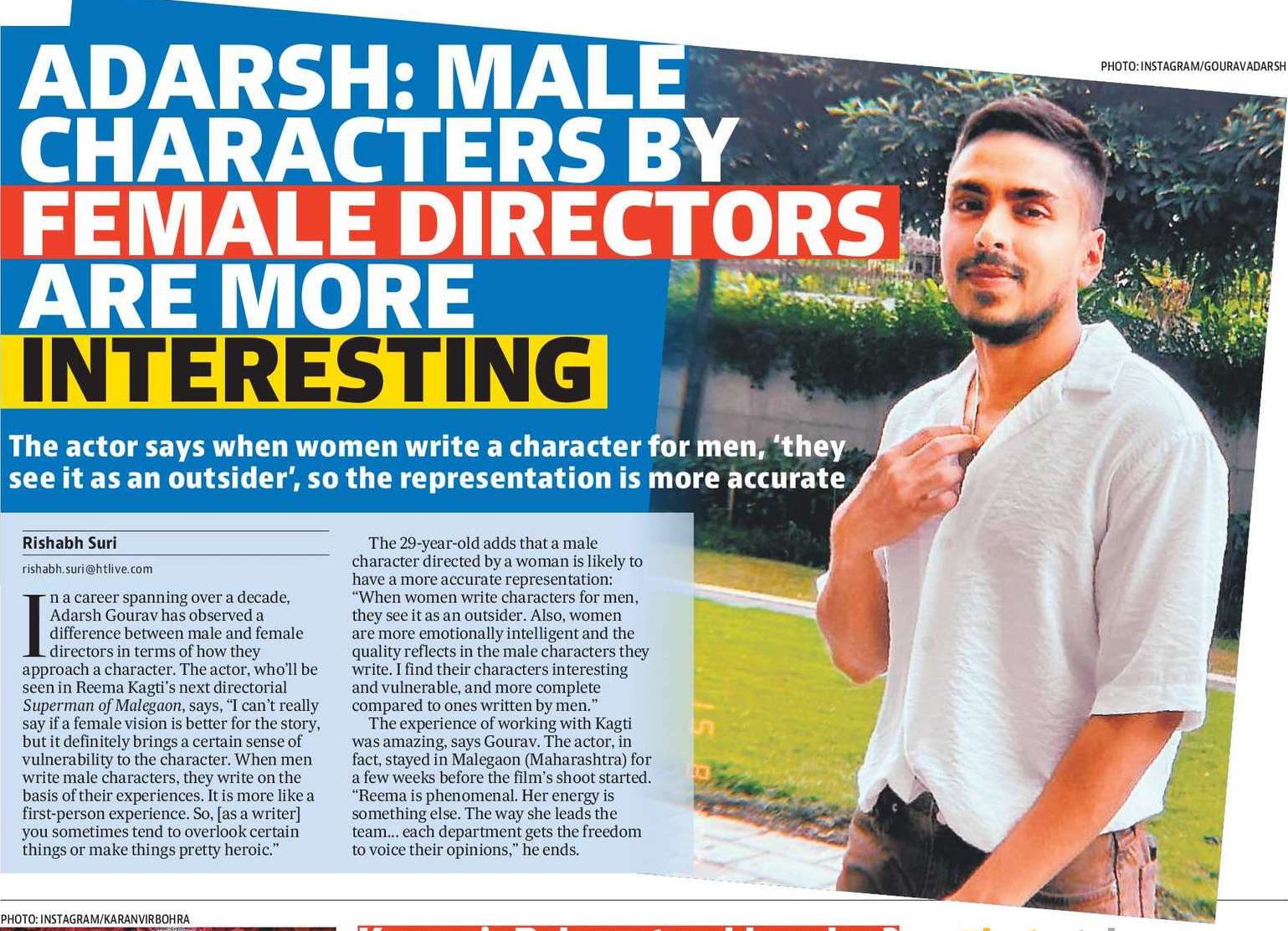
The actor says when women write a character for men, ‘they see it as an outsider’, so the representation is more accurate
Rishabh Suri (HINDUSTAN TIMES; November 14, 2023)
In a career spanning over a decade, Adarsh Gourav has observed a difference between male and female directors in terms of how they approach a character. The actor, who’ll be seen in Reema Kagti’s next directorial Superman Of Malegaon, says, “I can’t really say if a female vision is better for the story, but it definitely brings a certain sense of vulnerability to the character. When men write male characters, they write on the basis of their experiences. It is more like a first-person experience. So, [as a writer] you sometimes tend to overlook certain things or make things pretty heroic.”
The 29-year-old adds that a male character directed by a woman is likely to have a more accurate representation: “When women write characters for men, they see it as an outsider. Also, women are more emotionally intelligent and the quality reflects in the male characters they write. I find their characters interesting and vulnerable, and more complete compared to ones written by men.”
The experience of working with Kagti was amazing, says Gourav. The actor, in fact, stayed in Malegaon (Maharashtra) for a few weeks before the film’s shoot started. “Reema is phenomenal. Her energy is something else. The way she leads the team... each department gets the freedom to voice their opinions,” he ends.
When we depict progressive women, there is a certain brazenness used-Dia Mirza
8:25 AM
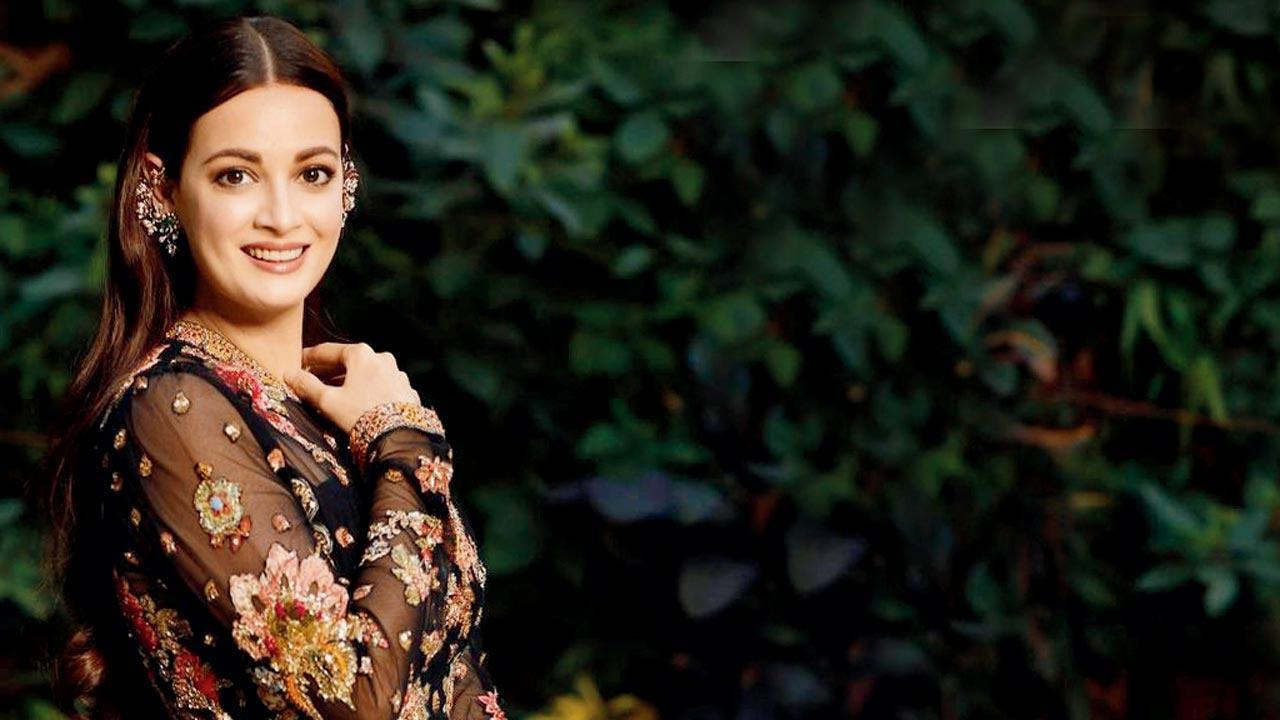
Despite lack of promotions, Dia Mirza asserts Dhak Dhak will shine for its intent; says drama about sisterhood busts myth of women pulling each other down
Mohar Basu (MID-DAY; October 12, 2023)
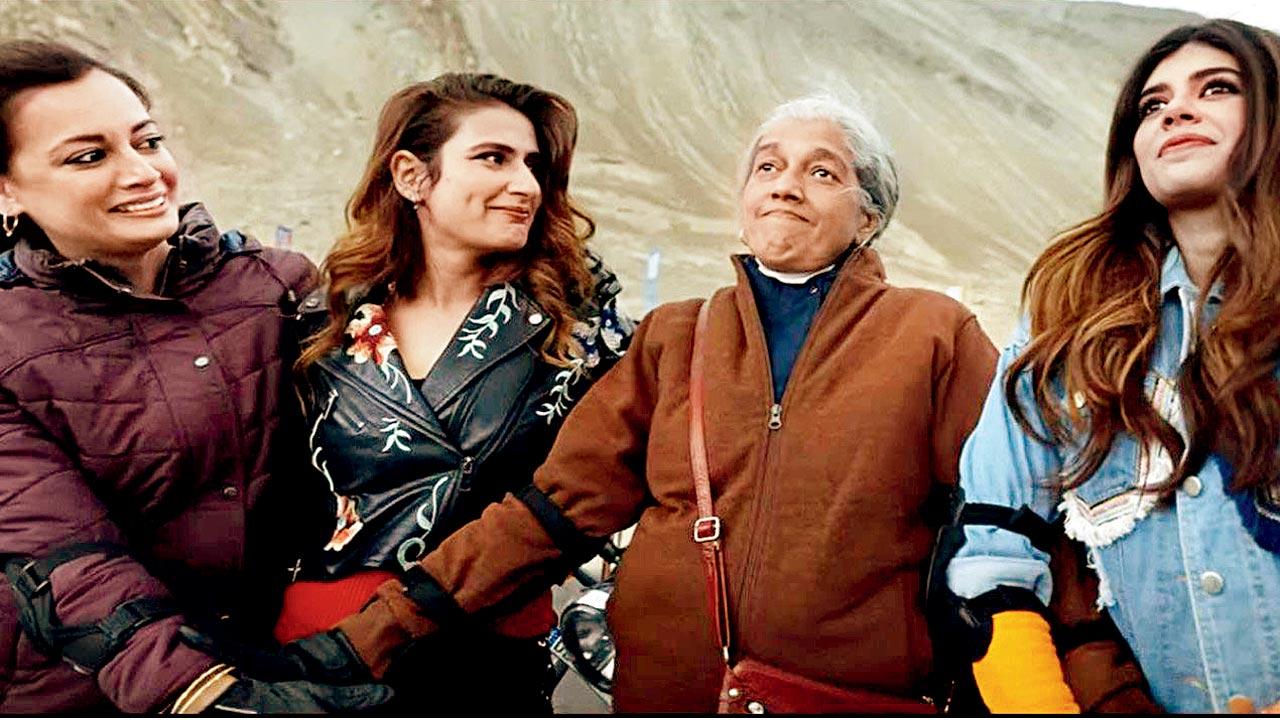
Twenty years ago, if someone had told Dia Mirza that, at 41, she would star in an all-woman biker drama, she wouldn’t have believed it. But life has a way of surprising us. Amid Bollywood’s larger-than-life actioners comes Dhak Dhak, Taapsee Pannu’s production featuring Ratna Pathak Shah, Mirza, Fatima Sana Shaikh and Sanjana Sanghi.
“That a studio backed it and this movie got made, shows that we have come some way. It’s a harbinger of times to come,” beams Mirza.
Tarun Dudeja’s directorial venture revolves around four women on a journey of self-discovery. The actor says that the movie will shine because of its intent.
“It’s a balanced story that celebrates authenticity, reveals layers about people and does so gently. I don’t want to be disrespectful to the feminist movies being made, but when we depict progressive women, there is a certain brazenness used. Sometimes, there is disrespect to the country’s cultural and religious ethos. Only a few storytellers—Hansal Mehta, Zoya Akhtar and Reema Kagti—have the aesthetic to represent progressive Indian women the way they are. In Dhak Dhak, the women seek agency but that has nothing to do with their cultural rooting. It might be written from the lens of men, but it is such a strong feminist narrative.”
Dhak Dhak also underlines the power of sisterhood, she says. “A lot of patriarchal mindsets are shaped by women. So, we have to show women pushing each other up. For too long, we have watched saas-bahu bickering. Movie promotions [are sometimes] hinged on two leading ladies not getting along. These narratives have to change because they can’t be farther from the truth. I’ve had more fun on this film than I’ve ever had and that’s because I was with three cool women.”
Despite it being a film that she believes in, Dhak Dhak was barely promoted until its release week, which may affect its commercial success. But Mirza believes that the movie’s fate on a Friday cannot take away from its larger impact.
“Rehnaa Hai Terre Dil Mein [2001] is called a cult film today, but it was a box-office dud. I am detached from the [commercial] success and failures of my work because an honest film will reach people sooner or later.”
Pallavi Menke is me-Neeraj Ghaywan
8:42 AM
Director Neeraj Ghaywan opens up on the conversation-starter episode of Made in Heaven that spotlights owning your Dalit identity
Mayank Shekhar (MID-DAY; August 20, 2023)
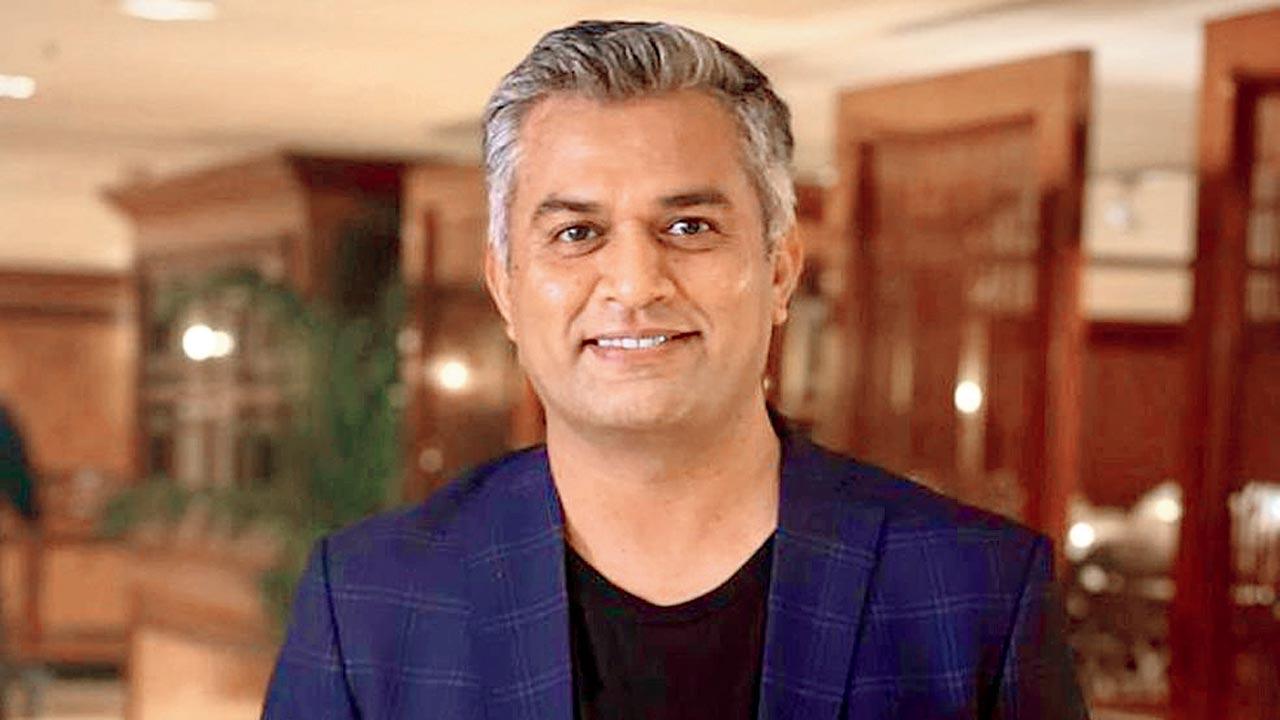
"Pallavi Menke is me,” filmmaker Neeraj Ghaywan confesses, before apologising for emotionally choking up, during a video call with mid-day, along with Alankrita Shrivastava, Reema Kagti, Zoya Akhtar, writer-directors of the second season of the Emmy-nominated series, Made In Heaven (MIH), on Amazon Prime Video.
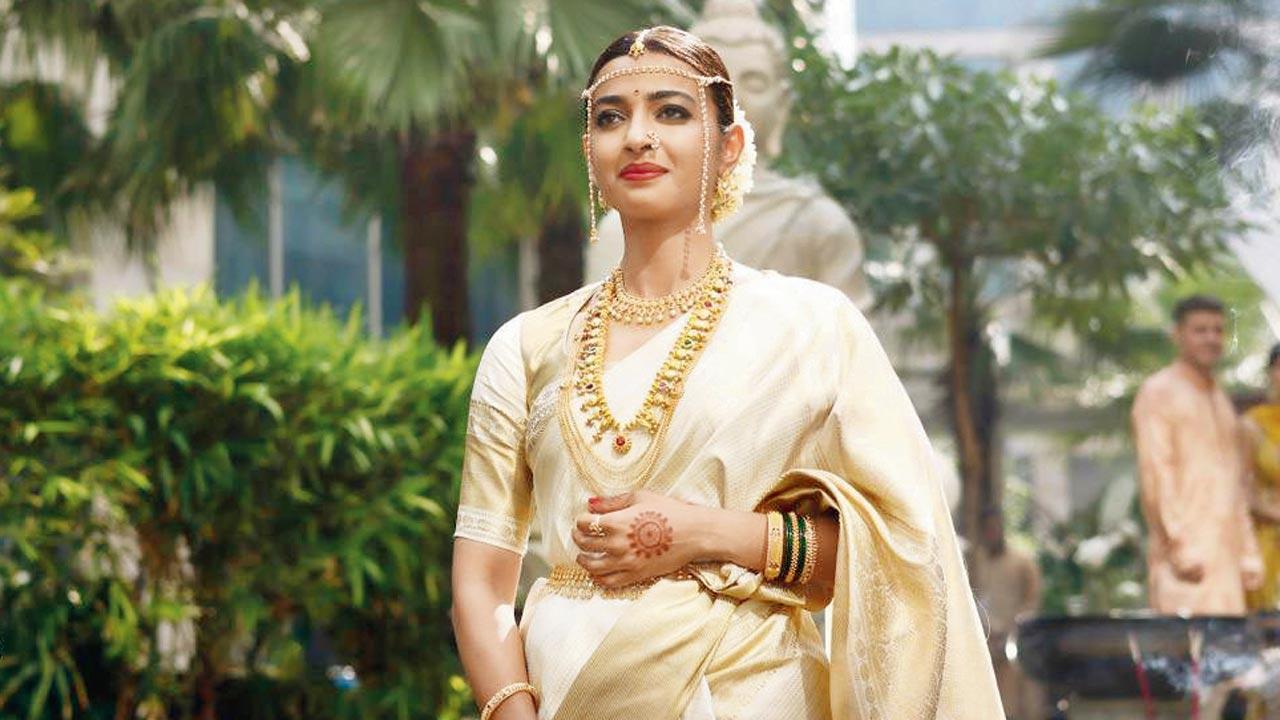
Ghaywan is referring to Radhika Apte’s Ambedkarite Dalit, upper-class, lead-character, in the fifth episode of MIH, titled The Heart Skipped A Beat, directed by him. That’s singularly turned into a conversation-starter online.
The episode—focusing on publicly reclaiming/owning one’s Dalit identity—climaxes with the protagonist putting her foot down to host an additional Buddhist wedding, while getting married into an upper-caste family.
Ghaywan—who Akhtar describes as “wild card entry” into the MIH franchise, and has been credited for “additional story” for the said episode—says, “The writers, Alankrita, Reema and Zoya had an idea about where they wished to go [with the episode]—about an accomplished person, from the marginalized, Dalit community, who’s received love, adulation, internationally. But is still not off the clutches of caste.”
“Which hearkens back to B R Ambedkar. This man was the most well-read in our country. And when he was coming back to India, after his education abroad [reading law at Columbia University], he expected garlands to welcome him. But he was thrown out of the lodge he was staying. That’s when it hit him that no matter what you do, the inter-generational trauma is not going to escape you!”
When Ghaywan entered the writers’ room, he recalls, “I somehow ended up speaking about my entire life. I haven’t even spoken as much to my therapist! And I poured a lot of myself [into the writing later]. It is scary to put out something you’ve spent all your years, growing up, hiding away from the world.”
For instance, Ghaywan points out, “When she [Pallavi Menke] talks about using a [caste-neutral] last name, Kumar—that’s me. Soon as you tell someone your full name, there is endemic scrutiny in our country. People want to know where you are from, location, gotra, caste… It’s genuinely scarring. In my passport, my last name is still Kumar. But I’ve reclaimed Ghaywan. It’s been five years.”
In 2018, Ghaywan had publicly owned his Dalit identity over a post on X (formerly known as Twitter). He says, “A lot of the press picked that up. My extended family were still masking [their Dalit identity]. They felt miffed, that it’s public now, and everybody knows they’re related to me. Which is what we used for Pallavi’s brother’s track [in the MIH episode]. And that boy’s character is also right about having to live with India’s reality.”
Ghaywan adds, “The other thing that weighs me down is being the only acknowledged artiste in the whole of the film industry, while 25 per cent of the country belongs to the [Dalit] community. That weight is too much to carry. I have doubts about myself. That reflects in Pallavi’s life too.
“Also, as an artiste, who wants to tell different kinds of stories, I’m always pulled into every panel discussion to talk about caste. Even on MIH, they want to talk to me about episode five. Which was my way of exorcising demons; a catharsis. I was scared about how the parents would react. Will my niece unfollow me on Instagram?”
“But there’s been so much love. I didn’t expect people crying to me to say it’s the first time in centuries, they’ve felt seen, heard—that we exist with our beauty, that is ours. [Dalit issues] have always been seen in an atrocity-porn sort of way—through a privileged caste, ‘white-male saviour’ complex.”
The character Pallavi on MIH is a Columbia-alum, who ‘comes out’ a Dalit, through her book. Which, on the face of it, relates to author Yashica Dutt who, in turn, has complained on social media, about feeling slighted, erased for not being credited for the inspiration.
“Whatever we had to say [on the issue], we already have,” says MIH co-creator Kagti, referring to a statement issued by the show’s directors, citing all other inspirations for the episode, to “deny any claim that Ms Dutt’s life or work was appropriated.”
Ghaywan adds, “Art reflects reality. And if it doesn’t, then it’ll become hollow. [What] if you tell Truffaut, look at all the post-modern kitsch that you’ve shown—why have you not attributed? You have to see things through the lens of art.”
Speaking of which, Akhtar, in another context, points out instances in MIH that are based on real life, “The in-laws [Neelam, Samir Soni], in love, running away from a wedding [in episode three] was taken from a news report. So was the girl marrying herself [in the finale episode]. Stories are rooted in truth—your personal lives, families’, literature, news, political zeitgeist—that’s how you make fiction.”
Apart from caste, MIH touches on multiple issues, from ‘colourism’ to domestic abuse, over a seven-part, second season. Was that a conscious call? Kagti rebuts, “That’s a reductive way of looking at it. Women’s empowerment is at the base of the show, [and the irony] of two people [Sobhita Dhulipala, Arjun Mathur] organizing weddings—one of whom is divorced; the other can’t ever get married!”
According to Akhtar, “[MIH] is the love story of Tara and Karan [the said central protagonists]—that your soulmate can be somebody you’re not married to, or in [physically] intimate man-woman relationship with.”
As for Shrivastava, “The show is about insiders and outsiders, and what it takes to feel like you ‘belong’—whether socially, geographically, financially. It’s reflective of the city of Delhi.”
It’s a miracle that despite so many factors, we shot Made In Heaven 2-Jim Sarbh
8:33 AM
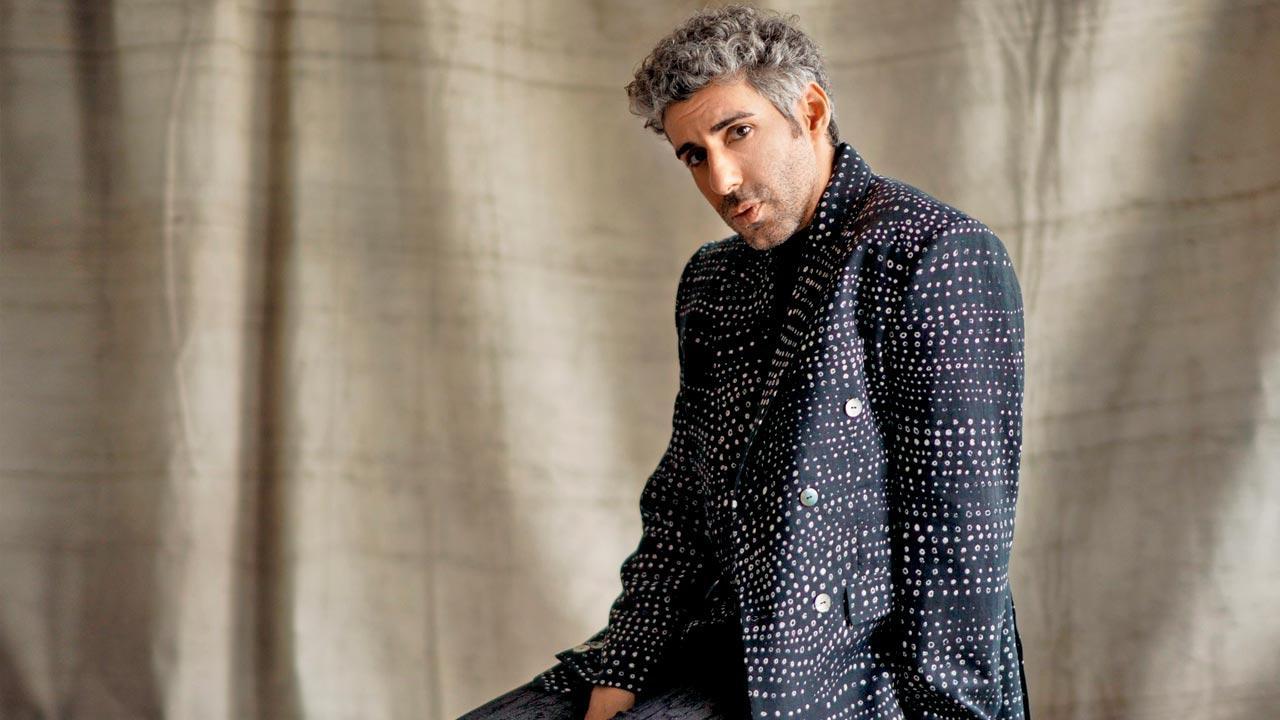
Despite the four-year gap between seasons, Jim says writing of Made In Heaven 2 made it easy to reprise role
Letty Mariam Abraham (MID-DAY; August 6, 2023)
Four years is a long gap between two seasons. And it feels longer when you’re awaiting the second edition of a well-crafted series like Made In Heaven. But Jim Sarbh, who reprises his role of Adil Khanna in the upcoming season, says the delay was inevitable.
“The pandemic delayed the shoot, and then [there were] delays because the filming was riddled with [many issues]. We shot in Delhi and several tricky places. It’s a miracle that [despite] so many factors, we shot the series. The makers were strictly adhering to the protocols,” shares the actor.
The opening season of the Zoya Akhtar and Reema Kagti-created series played out against the backdrop of grand weddings as two planners—essayed by Sobhita Dhulipala and Arjun Mathur—organised one shaadi after another. Sarbh played the character of Adil Khanna whose marriage with Dhulipala’s Tara is headed towards divorce. Reprising his character after four years wasn’t difficult, says the actor.
“It’s almost like an old record that you used to listen to. As soon as you put it back on the gramophone and set that needle, you’re back in the groove. The character is written [so well]. I tried to stay true to those moments as best I could.”
This time around, the International Emmy-nominated show has an addition—Neeraj Ghaywan. How was it working with the acclaimed director? “It was interesting to see how he saw the characters and hear his perspective on it. With Zoya, Nitya [Mehra], Alankrita [Shrivastava] and Reema, there is a lot of comfort because of having worked together in the past. You know how they think of the character and how they would break down the scene,” he explains.
Malegaon film industry churns out fun movies, and sees a 100 per cent return of investment-Adarsh Gourav
8:07 AM
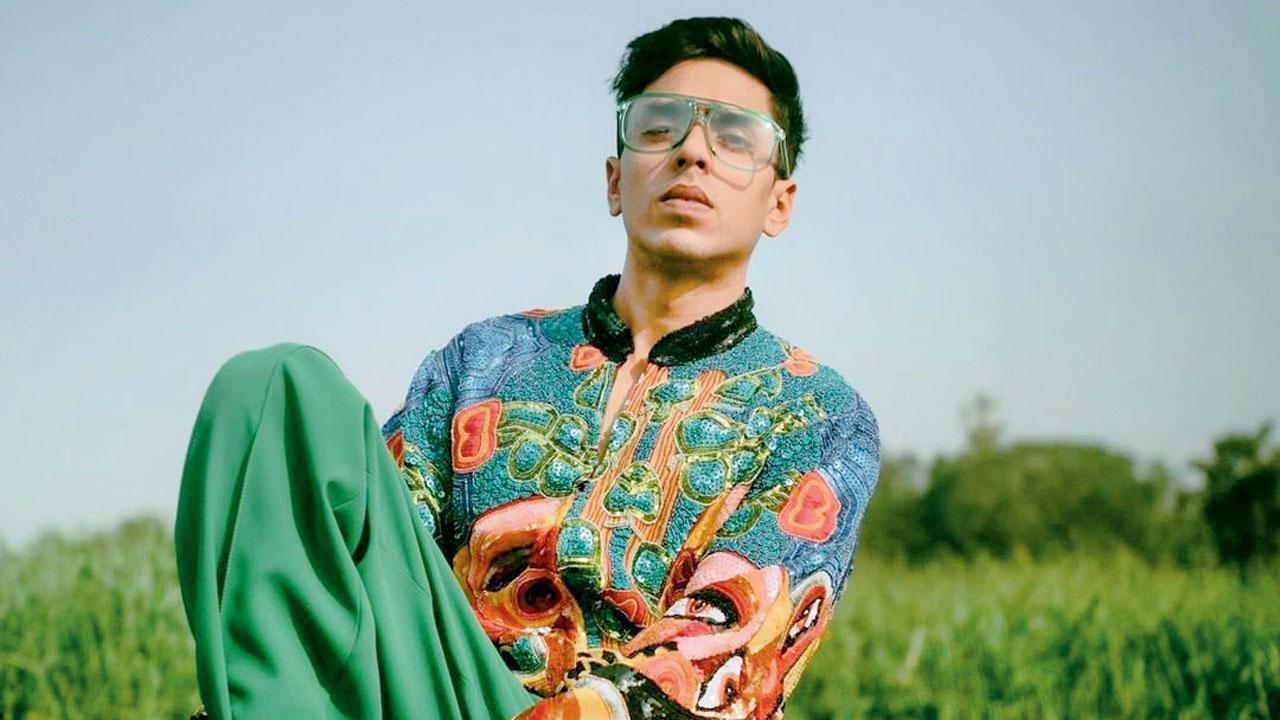
Set to explore an industry that works with limited money but abundant passion, Adarsh says it’s time to put the spotlight on Malliwood
Mohar Basu (MID-DAY; July 31, 2023)
Colloquially referred to as Malliwood, the Malegaon film industry is touted to be one that makes films on a limited budget, but with immense passion. Fittingly then, when Adarsh Gourav was approached to be part of a movie that takes inspiration from this industry, the actor was intrigued.
“When director Reema [Kagti] told me about Malegaon, I knew I was going to say yes to it. I have heard about the Malegaon industry before and it is interesting to know how they make and finance movies. It is one of the most underrated film industries that churns out fun movies, and sees a 100 per cent return [of investment],” he says, further adding that the industry deserves to receive its due credit.
He doesn’t deny that the opportunity to have a Reema Kagti-film on his resume is one that he wasn’t willing to let slip. “I feel lucky that I got to work with her. She is energetic, witty and fearless, and has a gift. She can write and present characters that come from all walks of life. The people she writes about are confident but vulnerable, and full of flaws. Her desire to find the imperfection in each character makes her special. This film is about a bunch of misfits who admire the movies, and decide to make them in their own way.”
Meanwhile, Gourav dons a look from the ’80s for Guns & Gulaabs, an upcoming comic crime thriller created by Raj and DK. He also has Kho Gaye Hum Kahan in his kitty.
I feel I have made my debut all over again-Sonakshi Sinha
3:34 PM
Rishabh Suri (HINDUSTAN TIMES; June 2, 2023)
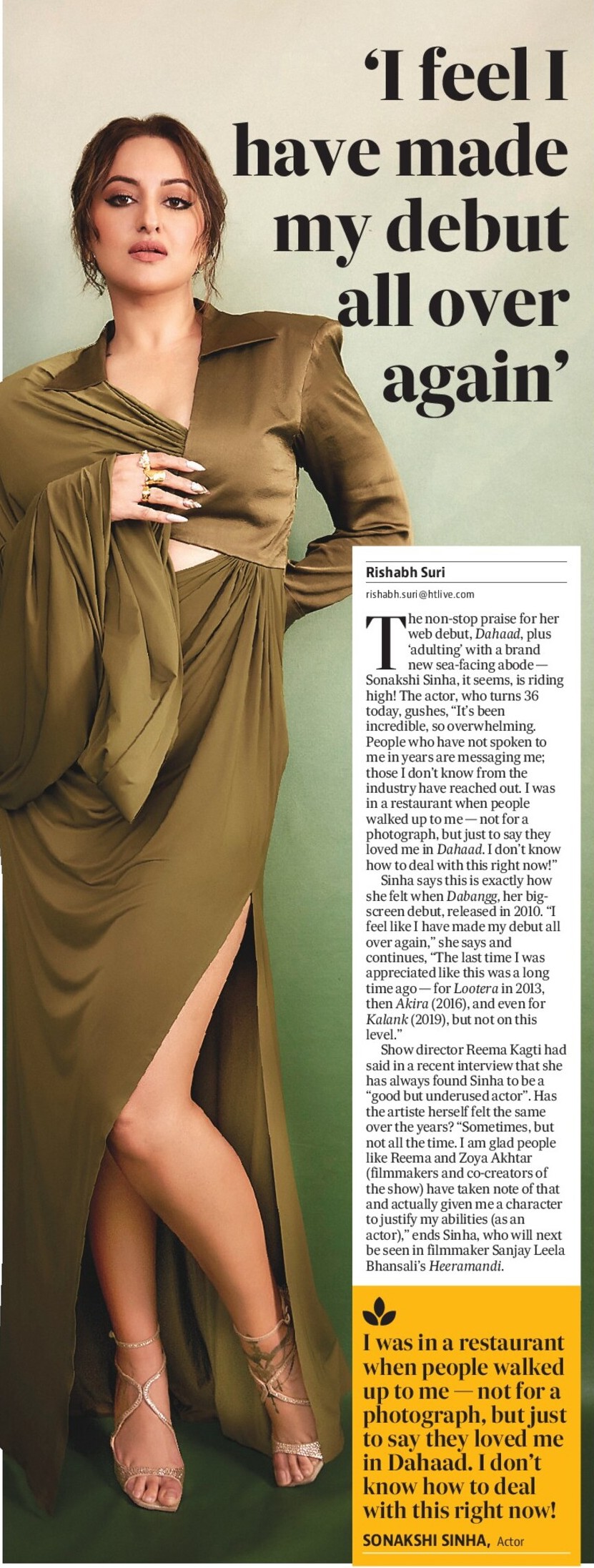
The non-stop praise for her web debut, Dahaad, plus ‘adulting’ with a brand new sea-facing abode — Sonakshi Sinha, it seems, is riding high! The actor, who turns 36 today, gushes, “It’s been incredible, so overwhelming. People who have not spoken to me in years are messaging me; those I don’t know from the industry have reached out. I was in a restaurant when people walked up to me — not for a photograph, but just to say they loved me in Dahaad. I don’t know how to deal with this right now!”
Sinha says this is exactly how she felt when Dabangg, her big- screen debut, released in 2010. “I feel like I have made my debut all over again,” she says and continues, “The last time I was appreciated like this was a long time ago — for Lootera in 2013, then Akira (2016), and even for Kalank (2019), but not on this level.”
Show director Reema Kagti had said in a recent interview that she has always found Sinha to be a “good but underused actor”. Has the artiste herself felt the same over the years? “Sometimes, but not all the time. I am glad people like Reema and Zoya Akhtar (filmmakers and co-creators of the show) have taken note of that and actually given me a character to justify my abilities (as an actor),” ends Sinha, who will next be seen in filmmaker Sanjay Leela Bhansali’s Heeramandi.
Those who believe the caste system doesn’t exist, are privileged-Reema Kagti
3:23 PM
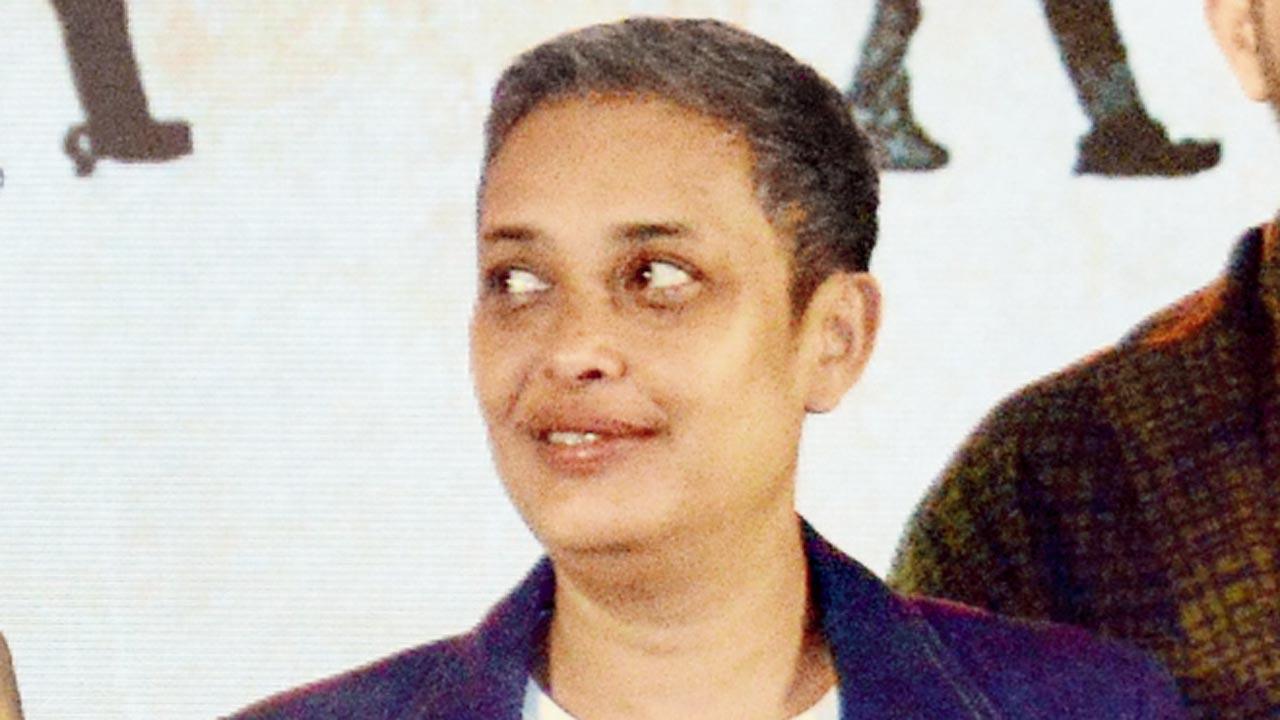
Dahaad creator Kagti on how she wanted to go beyond a serial-killer story to highlight country’s rampant casteism and patriarchy
Priyanka Sharma (MID-DAY; June 2, 2023)
What does Reema Kagti seek from her projects? Not necessarily the audience’s validation. All she hopes is that people understand the intent behind her creations. With Dahaad, the creator-director has experienced the satisfaction of people acknowledging the truths she wanted to highlight.
The trailer may have made one believe that the Sonakshi Sinha and Vijay Varma-starrer revolves around the cat-and-mouse chase between a fierce woman cop and a serial killer. But what makes it a winner is how effectively it delves into themes of gender violence, patriarchy and casteism.
“Whether it’s the case or the caste politics, we took most of it from newspapers. We wanted to tell a bigger story that examines the socio-cultural situations,” says Kagti, who shared the directorial responsibilities with Ruchika Oberoi. Through the Amazon Prime Video series’ protagonist and the multiple murders, Kagti put the social ill of casteism front and centre. She was certain about making her stand clear on issues that people may be reluctant to address.
“Many in this country are in denial of what is happening. Those who believe the caste system doesn’t exist, are privileged. It should be addressed because cinema has the power to make us think,” she asserts.
But wasn’t she apprehensive about tackling the subject of inter-faith marriage in the current political climate? “If your intent is good, you are okay. I have shown one inter-faith marriage, where the woman wants to do it. I’m not making a statement about anything else. I’m not saying the reverse doesn’t exist. In inter-faith marriages, the narrative that’s coming up is that you are taking [away the] agency of a woman. I couldn’t do Dahaad without getting into it.”
It was dangerous for me to sympathize with my character in Dahaad-Vijay Varma
8:11 AM
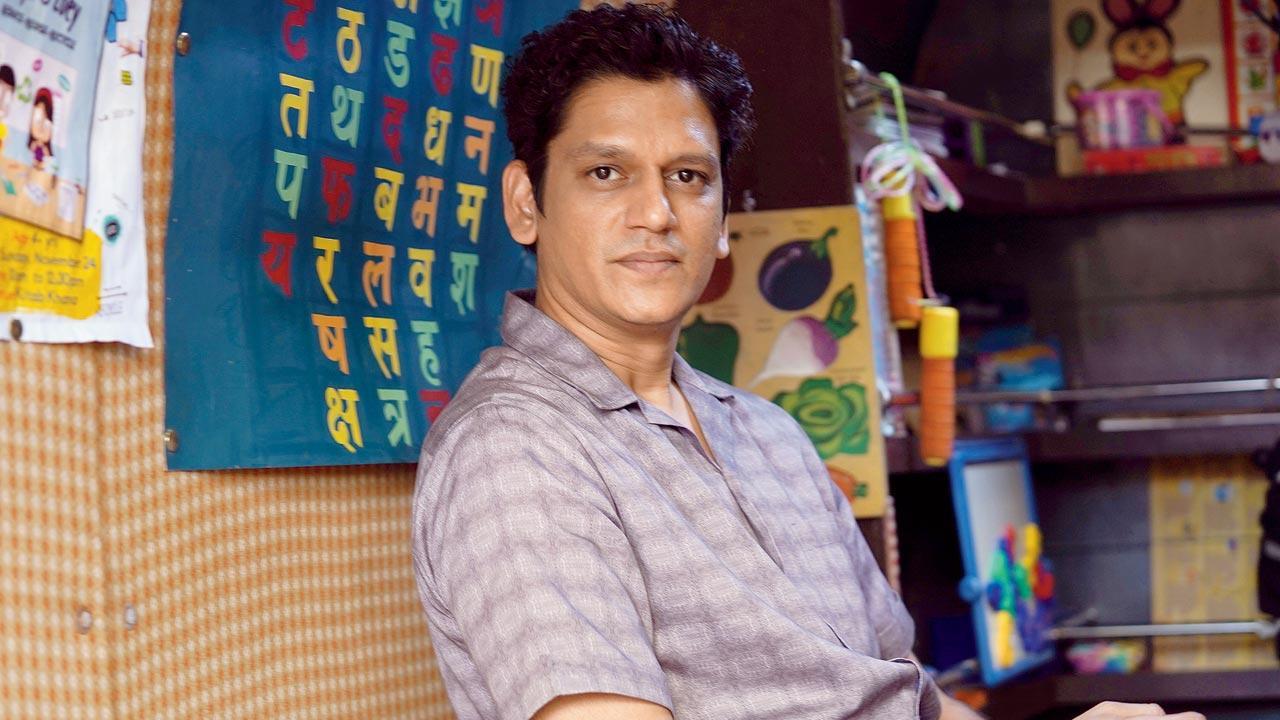
Obsessed with thrillers, Vijay Varma discusses drawing a line between playing and sympathising with his serial killer character in his latest release
Letty Mariam Abraham (MID-DAY; May 30, 2023)
He loves the genre of thrillers and was eager to play the part of serial killer-teacher Anand Swarnakar in Zoya Akhtar and Reema Kagti’s Dahaad. But little did Vijay Varma know that getting into the psyche of the character, who killed 29 women with the promise of marriage, would be so tough.
“I was scared of the part,” he says, adding, “I couldn’t stop thinking about it. Halfway through [the script], I realized it was going well. So, I finished reading it and got on a call with Reema. She said, ‘If you are interested, let’s cook this together.’ And I was onboard.”
The cast and crew started shooting for the Amazon Prime Video series, directed by Kagti and Ruchika Oberoi, in 2020. Due to the nationwide lockdown, the shoot was stalled for 10 months thereafter. “Even to go back and access this character all over again was a bit of torture, but it was something we all wanted to do. Apart from playing this character, the bond that I had formed with the team and fellow cast members was so special. It was a double-edged experience for me.”
While perfecting the look of the character came easy, Varma confesses that he needed help to understand Anand’s mind. “I knew that on the outside he is a simpleton, well-cultured, well-behaved, and leaning towards being an ideal man. [I felt] the commonality of this character could be far more dangerous than making him overtly [dramatic]. When you look at him, you feel there is something off about him, although you can never put a finger on it. I didn’t understand this person. Why would anyone do this? Reema said that he gets a kick out of it. As much as I understood the terminology, I still needed to understand what went on in his mind. What is this kick? I spoke to a psychologist, explained the character and what he was doing. She then gave me clarity on psychopathic tendencies that drive him.”
While some actors are unable to shake the characters off after shooting, others form an alliance and try to look at the character through his eyes. Varma claimed that he drew a clear line, so much so that he “detested Anand Swarnakar”.
“I completely judged him and every single action that he took, but I was able to imitate him because that’s what we do as actors. The external factors were relatable, but what was happening in the character’s mind was completely [beyond me]. Therefore, it was dangerous for me to sympathize with my character. I detested the person,” says the actor, crediting the writing team for coming up with what he calls a brilliant script.
In Dahaad, I tried to play the flawed character with a stroke of innocence-Sohum Shah
8:07 AM
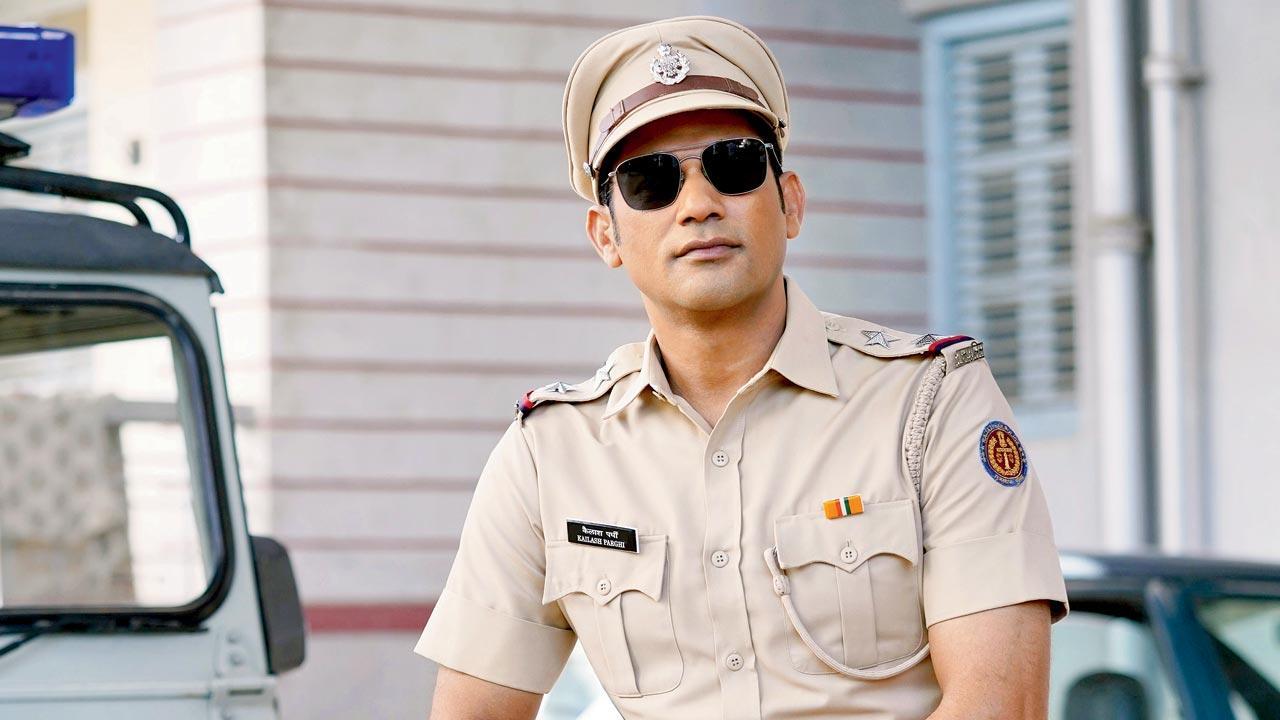
Sohum Shah on balancing the conflict of playing good and bad in Reema Kagti and Zoya Akhtar’s 'Dahaad'
Mohar Basu (MID-DAY; May 23, 2023)
Sohum Shah outdid himself as Bheema Bharti in Maharani last year, but with Zoya Akhtar and Reema Kagti’s 'Dahaad,' he changes gears to slip into the role of a man trying to come into his own. Playing sub-inspector Kailash Pargi, who struggles between right and wrong, Shah says that his character “is an amalgamation of his own education, or lack of it”.
“I love the complexities of this character. Pargi is in a world where the lines between right and wrong are blurred, and his worldview is a product of that very cynicism.”
The eight-episode Amazon Prime Video series follows a crack team — Sonakshi Sinha, Gulshan Devaiah, and Shah — on the lookout for a serial killer who has killed 29 women on the pretext of marrying them. Shah believes he could identify with Pargi because he also hails from a small town in Rajasthan. “He is a flawed guy, sure, but he doesn’t understand political correctness. I tried to play it with a stroke of innocence,” says Shah, adding that his Dahaad character questions and breaks out of his own patriarchal conditioning as he becomes a parent in the series.
“My mother doesn’t like it if I make my own tea. That is her conditioning. Pargi similarly goes through this when he starts working on this case and understands how he must stand as an ally to the women around him. The show’s nuances work because it is directed by two women, Reema and Ruchika [Oberoi]. I don’t think a male director would have done it as well. Reema encouraged every opinion and thought [I had]. She allowed [me] space to own the material.”
The show also throws light on caste politics in modern India, which the actor claims to have been witness to “since birth”.
“Caste [divide] is a reality. My worldview evolved after I moved to Mumbai. I used to have a chauffeur, who wouldn’t sit with me no matter how much I insisted. It was his way of thinking. I feel the first-hand experience I have of a small town helped in layering my character and giving it the balanced perspective and understanding it needed,” concludes Shah.
Gulshan Devaiah, Sohum Shah and Vijay Varma open up on playing their characters in Dahaad
8:24 AM
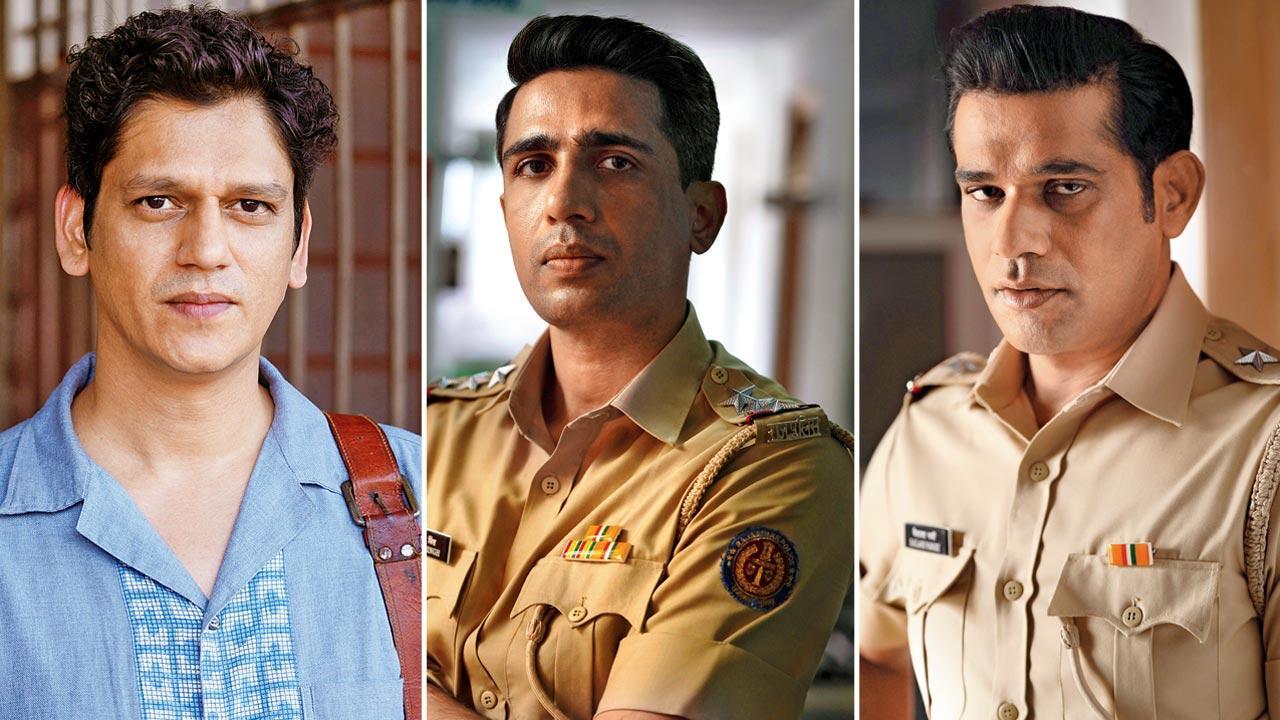
What’s it like to be on a show that’s run by women, casts a woman as ‘hero’ and has men play characters not liked by women? Dahaad’s male trio gets in conversation with Sunday mid-day
Aastha Atray Banan, Priyanka Sharma (MID-DAY; May 21, 2023)
Devi Lal Singh, Kailash Parghi and Anand Swarnakar sit at three disparate points on the goodness barometer. The first, an honest police officer shunted to Mandawa for not accepting bribes; the second, a confused, ambitious, corrupt and mildly chauvinistic but willing-to-evolve sub-inspector. And the last, a mild-mannered Hindi professor with a sick mind and no moral compass. You are able to plot their place basis how they view and treat women against a variegated backdrop of patriarchy and caste oppression.
The actors playing these men—Gulshan Devaiah, Sohum Shah and Vijay Varma—also found themselves guided and controlled by women. Zoya Akhtar and Reema Kagti are creators of Amazon Prime’s recent thriller, Dahaad. The pair is known to write male characters that women love, and female characters who speak their mind. Another woman, Ruchika Oberoi, joined Kagti as the show’s co-director.
Varma, who is rivetingly disturbing as a remorseless serial killer who traps and murders 29 women after promising them everlasting love much in the same way ‘Cyanide Mohan’, a primary school teacher from Karnataka did between 2004 and 2009, says the hardest part was to come on board with his character.
“I have been raised by women, and have great respect and love for them,” says Varma, “My mom, Kanta, supported me and my choices when no one believed in me. She, my sister Shobha, and my three nieces are my biggest cheerleaders. I have also worked with female directors like Zoya, Reema [Kagti] and Nandita Das, who have shaped me as an actor. I had no idea how to orient myself with these [manipulative] feelings. Reema guided me. She explained that my character had deep issues with how his father had treated his mother, but somehow ends up adopting the same behaviour despite being scarred by his atrocities. I didn’t dwell much on it, and tried to disconnect. Anand also doesn’t let his feelings show, so, I was able to hide behind that character trait.”
He says that being on a set helmed by powerful women, who don’t quite care to preserve societal structures, helped him see that two realities exist in India—the woman who can take her own decisions, and those who cannot even if they desire.
Unlike Varma, Shah says he was able to find similarities between his own person and the character. “My journey is very similar to Parghi’s,” Shah admits.
Like the newly married Rajasthani police officer, Shah also comes from the small town of Ganganagar. “I come from a conservative family. If the women in my home.. my sisters...even so much as stood on the entrance of our home, I’d be naturally tuned to ask them to step inside. This, despite that I was younger to them. Society isn’t favourable [to gender equality], and boys on the street would gawk at them. It’s only after my stay in Mumbai, meeting a variety of people, working with women and experiencing the birth of my own daughter, that I have become progressive. I now feel different although I still get livid at the very thought of someone touching my daughter!”
Devaiah, interestingly, was surprised when he was told that Devi Lal Singh encouraged his wife to keep a open mind about handing their teenage daughter’s freedom. He attributes this to stereotypes we harbour about small town residents. “We tend to paint them in a broad stroke, get judgmental. Devi Lal shatters this idea. He comes from a socio-economic background that probably didn’t allow him to be highly educated or exposed to contemporary ideas. But he is a good guy, doing the right thing. He also wants to do the right thing for his daughter,” the actor says.
Like Shah, Devaiah feels that it’s because Devi Lal plays father to a teenage girl, that he is softer and wants to be a better man. “At home, Devi is a father, not a cop. If you look at Soham’s character, he carries the guilt of not being an upright man. He is not bad at heart but he is greedy. And that’s exactly why he struggles to accept that he is about to bring a child into the world.. a world where he too is not always doing the right thing.”
Devaiah, who in the series, urges his wife to be “modern” like his colleague and sub-inspector Anjali Bhaati (Sonakshi Sinha), points out that it’s not just the men who are flawed. Bhaati has a deeply problematic relationship with her mother (Jayati Bhatia) and her eagerness to see her married. Her backward class lineage is a corpse she carries.
“She is obsessed with proving herself, which is a fault because it gives her a tunnel vision. She is disrespectful of her mother, takes advantage of the leeway her boss offers her. We [viewers] want her to win in the end of course, but we cannot deny that she goes around breaking the law. Caste and gender politics feature prominently here, but in the end, we are all just human beings trying to deal with situations,” he thinks.
The answer to the million dollar question—how is a timid, short-on-looks teacher able to lure dozens of women to abandon their families—lies in the glaring inequality of sexes that continues to permeate everyday life in much of India. Exhausted with the rejection that comes with not being able to pay dowry and overshooting marriageable age, they chase an impossible dream of finding selfless love. “Maybe, some people who watch the show will say, this is not good, let’s change this about ourselves,” Shah hopes.
Varma had come away being more empathetic to the other sex. “For me, kindness is paramount. The story points at how this is lacking in some people. When a piece of art can instill empathy in the audience, that’s the best part. When I took on this role, I thought about how this story would serve us. That offered me motivation. Sometimes, you may be uncomfortable with the issue you are shining a light on, but it’s important to do it.”
I have only been in the industry for 20 years and still have 40-50 years to go. So, I will get more romantic roles-Amit Sadh
8:29 AM
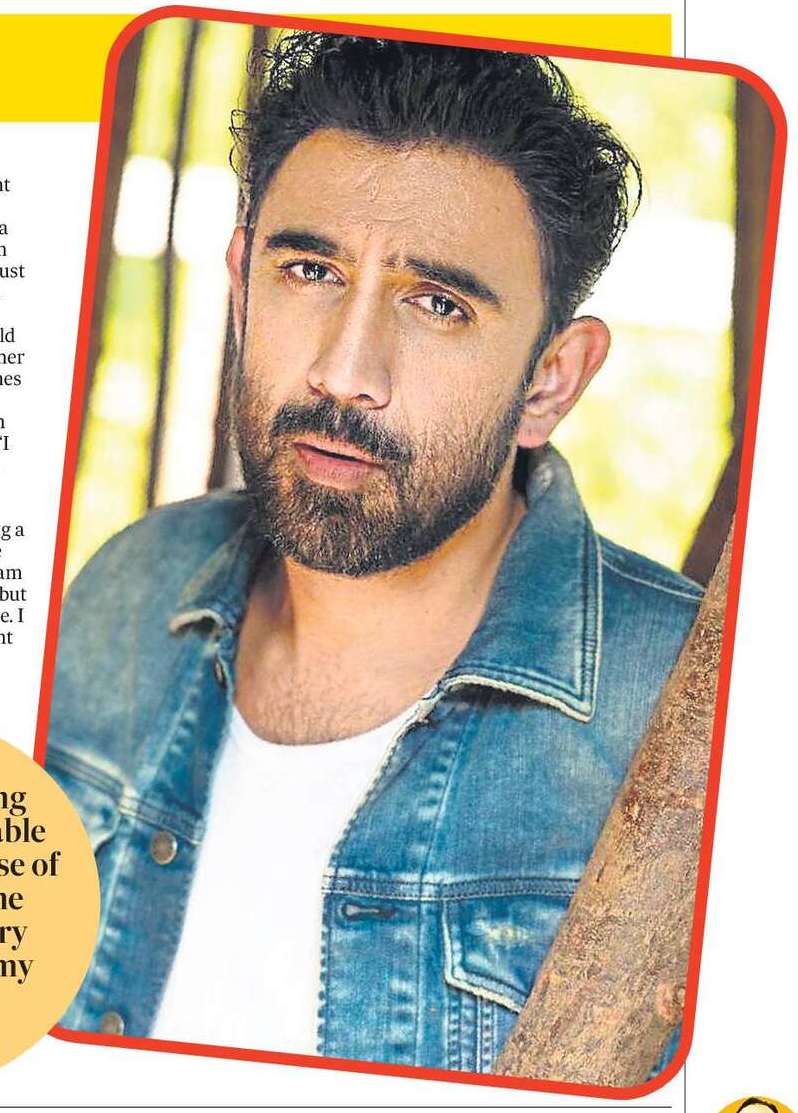
The actor clarifies that he hasn’t distanced himself from rom-coms
Navya Kharbanda (HINDUSTAN TIMES; May 16, 2023)
Around 20 years ago, actor Amit Sadh won hearts as Aditya Bhargav in the TV show Kyun Hota Hai Pyarrr. He has since gone on to do a slew of serious roles in web series such as Jeet Ki Zid and Breathe, among others. In his next, Main, the actor is playing an encounter specialist.
Is it a conscious choice to stay away from rom-coms or romantic roles? Sadh says, “I am not a cry baby, but I don’t really get so many movie options.”
He explains, “When I did Gold (2018), the role of Raghubir Pratap Singh was very charming. The audience liked it. I remember Reema Kagti, my director, asked me, ‘Why don’t they give you such roles?’ I said, ‘I can’t really complain’. I have only been in the industry for 20 years and still have 40-50 years to go. So, I will get more [romantic] roles, it’s not like I won’t be getting any such roles.”
Having cemented his position in the industry as a versatile artiste, is there a particular kind of role that he wishes to portray on screen? Sadh is quick to mention that he doesn’t have any kind of inclination and his only motive is to “entertain”.
“I have shown that I can play a hockey player, Army officer and cop. In Shakuntala Devi, I played a husband... I have been lucky that I got versatile roles,” he shares, adding, “I am an actor, I want to work. I want to entertain, make movies — I want to do everything! I want to do romance, jump off planes, play a psychopath... I want to entertain people, that’s my inclination. I just want to improve and work with great people.”
Going forward, the 39-year-old wants to challenge himself further with the roles he picks and wishes to mix it up.
“You just have to choose from what you get,” he says, adding, “I have a romantic role in the film Sukhee opposite Shilpa Shetty (Kundra, actor), which is also releasing very soon. I am playing a light-hearted role and I am sure my fans are not complaining. I am not sure what the future holds, but as an actor, I want to be versatile. I want to be challenged and I want to do different roles. Fingers crossed, I think things will be good!” he signs off.
Zoya Akhtar and Reema Kagti have the same vision-Elnaaz Norouzi
8:48 AM

Eagerly waiting for the second edition of Made In Heaven, Elnaaz Norouzi on working with Zoya Akhtar and Reema Kagti
Letty Mariam Abraham (MID-DAY; April 23, 2023)
It’s been four years since the first season of Zoya Akhtar and Reema Kagti’s Made In Heaven dropped on Amazon Prime Video, but the wait for the second edition seems endless. However, Iranian-German model-actor Elnaaz Norouzi revealed that the show may finally come sometime in July this year, adding, “It is not entirely confirmed. We don’t have a date as yet, but we know that if anything goes wrong [in July], it should be released by August.”
Eagerly waiting to see her episode, Norouzi shares that her story is the “only one shot in France”. “The episode has beautiful visuals and a fantastic story that is relatable. I love my character, [as] it is different from anything I have done before,” she says, refusing to divulge any further details on the wedding drama that would follow.
“While we were dubbing for it, we were laughing and enjoying [the episode]. We received great feedback. I am just waiting for Zoya to finish, so I can watch it.”
Ask her if Akhtar runs a tight ship on sets, and Norouzi claims that she had a “fantastic time with so many women in the crew”. “Zoya provides a great working environment. When you are working, everyone is [on point] and concentrating on the shot, but the moment there is a break, it is all happy and fun. That is the way I prefer to work. Although I didn’t get to work much with Reema, as Zoya was directing my episode, they are not very different from each other. They have the same vision and both know where they are going,” she says.
OTT is going to open a lot of new doors for me-Sonakshi Sinha
8:27 AM
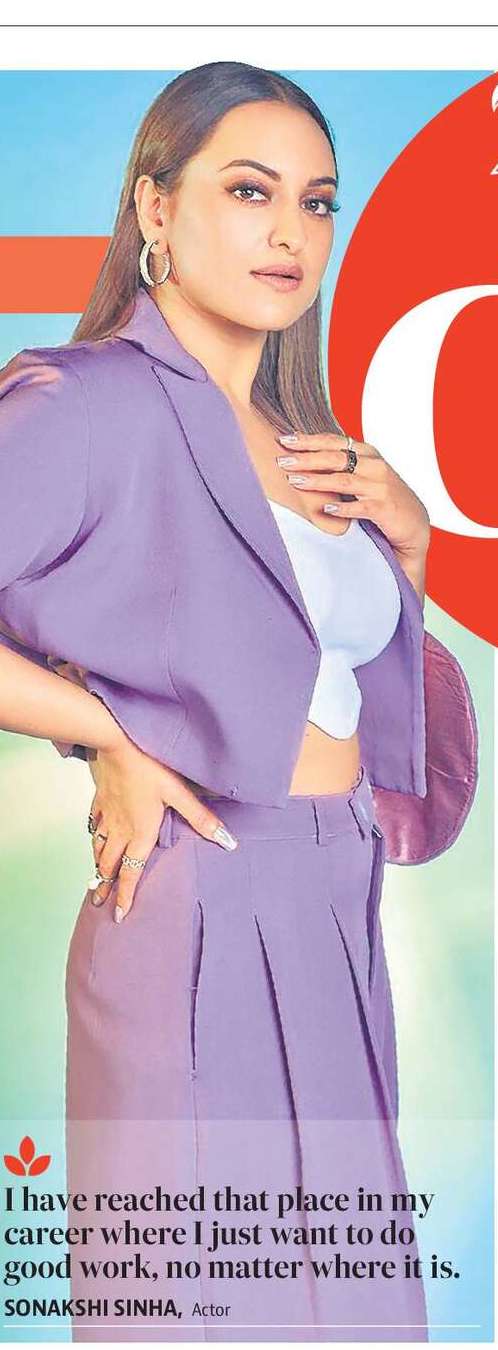
Rishabh Suri (HINDUSTAN TIMES; February 12, 2023)
The year 2023 has begun on a ‘roaring’ note for Sonakshi Sinha, for the actor will make her web foray this year with the OTT series Dahaad.
The actor made her big screen debut with Dabangg in 2010, and 13 years later, she is trying her hand at a new medium. Is she nervous? Pat comes the response: “I just want to do good work, no matter where it is.”
“I took up Dahaad before Covid happened. During the pandemic, there was a huge OTT boom. Everybody was consuming content at home. Look at what it has done for so many people’s careers. There is so much good work for everyone — actors, directors and producers. A lot of wonderful projects are happening. OTT is going to open a lot of new doors for me,” adds the actor, who was last seen in Double XL.
Was doing Dahaad a no-brainer, then? “When Zoya (Akhtar) and Reema (Kagti, makers of the show) narrated the script, I didn’t think it was going to be on OTT at all. It was just a role in a project. I was very prompt in saying yes,” says the 35-year-old.
As for the present year, Sinha has her hands full. “I have a couple of projects up for release — Kakuda, Nikita And The Book Of Darkness, which is directed by my brother. I am currently shooting for Heeramandi,” she shares.
Subscribe to:
Posts (Atom)