Showing posts with label Ranjeet. Show all posts
Showing posts with label Ranjeet. Show all posts
Maharaja In Denims is made completely through AI; to release in 2025
8:12 AM
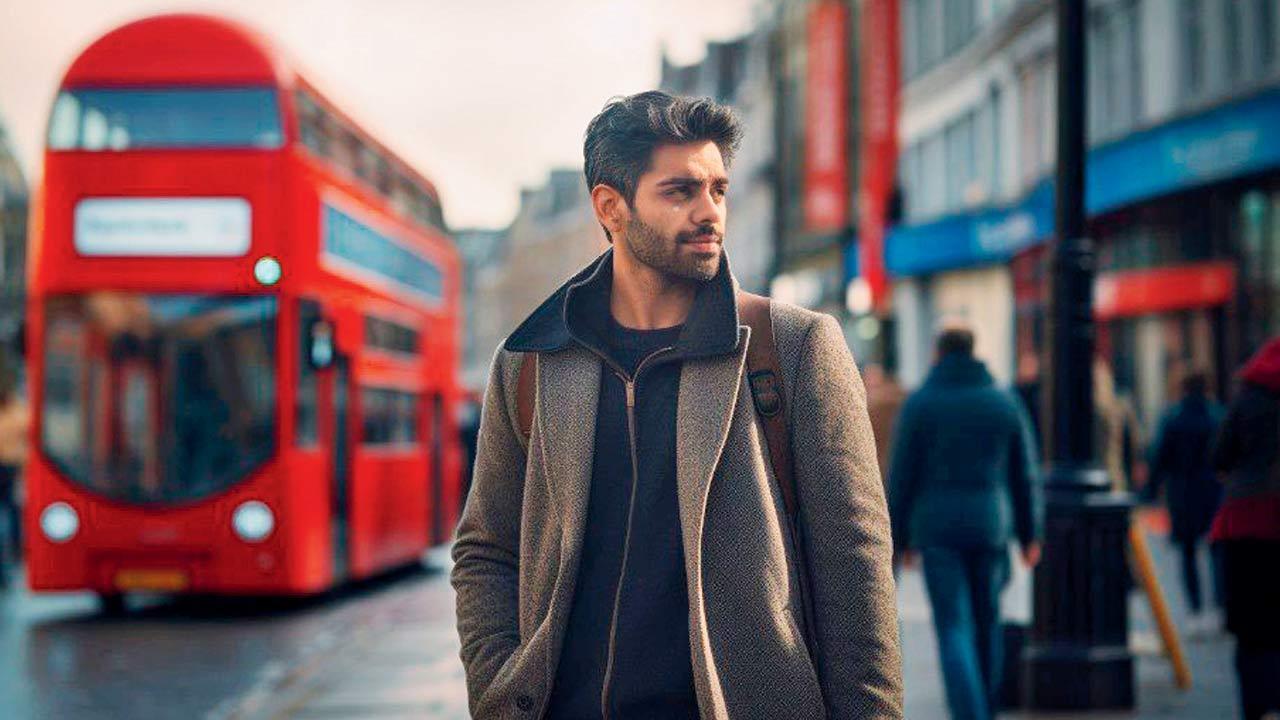
Hari, an AI-created protagonist, believes he is the reincarnation of Maharaja Ranjit Singh
How do you make a movie with no cast? As they make Maharaja In Denims purely using AI, Khushwant Singh and Gurdeep Pall decode the process, from achieving lip-sync to perfecting Indian features
Letty Mariam Abraham (MID-DAY; July 26, 2024)
If veteran actor Ranjeet had his way, he would have launched his son Jeeva in Bollywood with the screen adaptation of the 2014 book, Maharaja In Denims. We’re told by young author Khushwant Singh that his book had even caught the attention of actor Arjun Rampal, who wanted to acquire its rights. But someone else entirely was destined to be this film’s hero—an AI-generated leading man.
At a time when technology is improving by leaps and bounds, the Chandigarh-based author has decided to make what he believes will be India’s first AI-generated feature film. The idea, Singh admits, didn’t come to him organically. After penning the novel, he was thrilled when Ranjeet, Rampal and producer Guneet Monga Kapoor approached him for the adaptation rights. It was his cousin Gurdeep Pall—a former corporate vice-president at Microsoft, playing a pivotal role in shaping the tech giant’s products, services, and AI technologies—who sowed the idea.
Singh recalls, “In March last year, Gurdeep told me not to renew [adaptation contracts of] Maharaja In Denims with anyone. Seeing how the technology was developing, he said we would be able to make a full-AI movie within the next two years.” Thus, in 2023, was born their company Intelliflicks Studios, and with it, the ambition of bringing this film to life.
Humans shaping AI
They released the movie’s first trailer earlier this year; the two-minute video has not only AI-created figures, but also the backdrops and background score developed by different tools. “The first six months went in experimenting,” says Pall, adding that it took two months to get the trailer ready. Behind this is a core team that includes Singh, Pall, creative director Revant Bogra, and former journalist Palpreet Singh as the screenplay writer.
“Palpreet completed the screenplay a month ago and now sits with the team at every stage. Lyrics will be written by a human. We’ve already commissioned the songs [to a composer]. We may train a voice for the songs and get someone to record it, but the symphony will be AI-generated,” explains Singh. Pall says that the background music is already generated by AI.
That brings us to the hard part, of actually executing the movie that tells the story of Hari, who believes he is the reincarnation of Maharaja Ranjit Singh, commonly known as the Lion of Punjab. What makes it harder is that the novel is set in three different eras, aside from the present day—Maharaja Ranjit Singh’s reign from 1801 to 1839, India’s Partition in 1947, and the anti-Sikh riots in 1984. Singh breaks it down for us, explaining that a team of five to six prompt engineers, under Pall and Bogra’s supervision, started creating the world from March 2023, using their patented software as well as those from different companies, including Runway, Midjourney and Stability AI.
“We do a lot of discussion because each character has to be rendered. It could take two minutes or four hours. We keep making, adding, cutting, rendering, and adjusting the colour tones. We’ve passed the early stage. With tech advancement, we are now working on bringing emotions to the face, we’re able to turn their head, make them sway and do the kathak,” says Singh.
Pall adds that they’ve sourced tech from different companies for various needs. “Some specialize in voices, others in still images, and some others in creating expressions.”
Desi-videsi dilemma
The challenges too are many; some expected, others unforeseen. While perfecting lip-syncing to long dialogues is one example, Singh highlights another facet. “AI is very well-tuned with the western model. To get Indian faces, colour, and features [was difficult]. Now, we’ve rendered a Kashmiri woman, as Maharaja Ranjit Singh was in love with one. She has turned out beautiful. Also, the software would exhibit a cap when we were trying to get the Sikh turban. It’s not a topi, it’s a kalgi and has a certain design to it,” explains Singh.
The team plans to release their passion project, with a runtime of 100 minutes, in June 2025. With that deadline in mind, the team targets a specific number of scenes, to be completed in a month. “Some scenes can be difficult, and my creative engineer will say he requires more time to make it come alive. For instance, to make a person come out of the car [can be difficult because it involves motion] in different angles. When I saw the Partition scene, I asked my creative engineer where he found such a moving picture [to form the base]. The scene is recreated by AI after picking up data that is available, and then smartly matched with various prompts and software.”
“Everyone said that a movie, which depicts three eras, will require [a budget of] about Rs 80-Rs 100 crore. If I had gone with that, I would have been stuck with [production studios] taking time. Plus, 70 per cent of the movie cost would have been the actor’s fee. Imagine if that is eliminated, we can make so many movies!”
That is all in good time. For now, as Maharaja In Denims is about 25 per cent complete, the author-filmmaker emphasizes that the movie is a means to showcase new ways of filmmaking.
“You have to look at it like the first movie ever made. You cannot compare it to contemporary movies. It will have its limitations. But if the technology picks up, there will be a phase when we might even create AI superheroes!”
What is it?
Maharaja In Denims is an AI-generated film, adapted from Khushwant Singh’s book of the same name. Set to release in June 2025, the author believes it will be India’s first AI feature film.
How it works?
Creative director Revant Bogra and his team of six prompt engineers create scene after scene, using their patented software as well as those like Runway and Midjourney, as per the narrative. Each scene is created by AI after picking up relevant data that is available online, and then matching it to the current need.
Who it benefits?
Singh argues that making a period film like Maharaja in Denims, which depicts three eras, would have easily cost Rs 80-Rs 100 crore. In contrast, employing AI is cost- and time-effective. He also states that the bigger benefit is that it democratizes creativity.
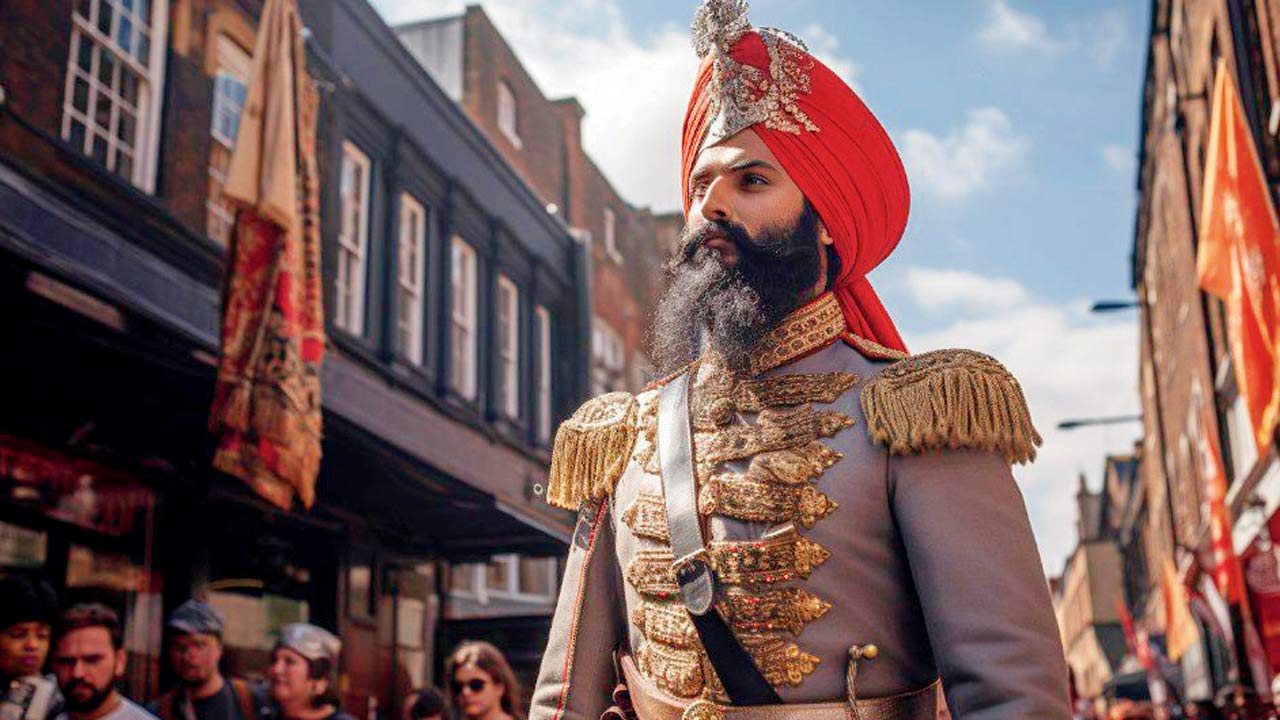
The film spans three eras—Ranjit Singh’s reign in 1839, India’s Partition in 1947, and the anti-Sikh riots in 1984
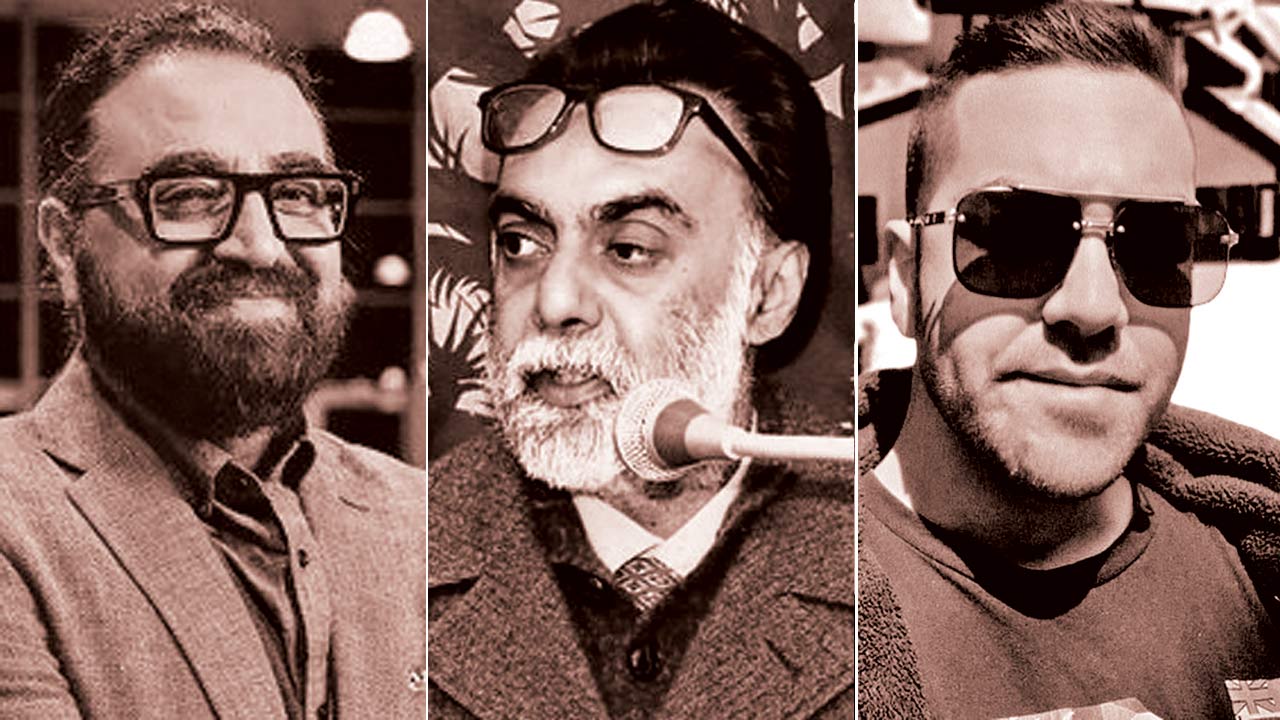
Gurdeep Pall, Khushwant Singh and Revant Bogra
My father Ranjeet always wanted to carve that path for me, but we didn’t see eye to eye on it-Jeeva
8:14 AM
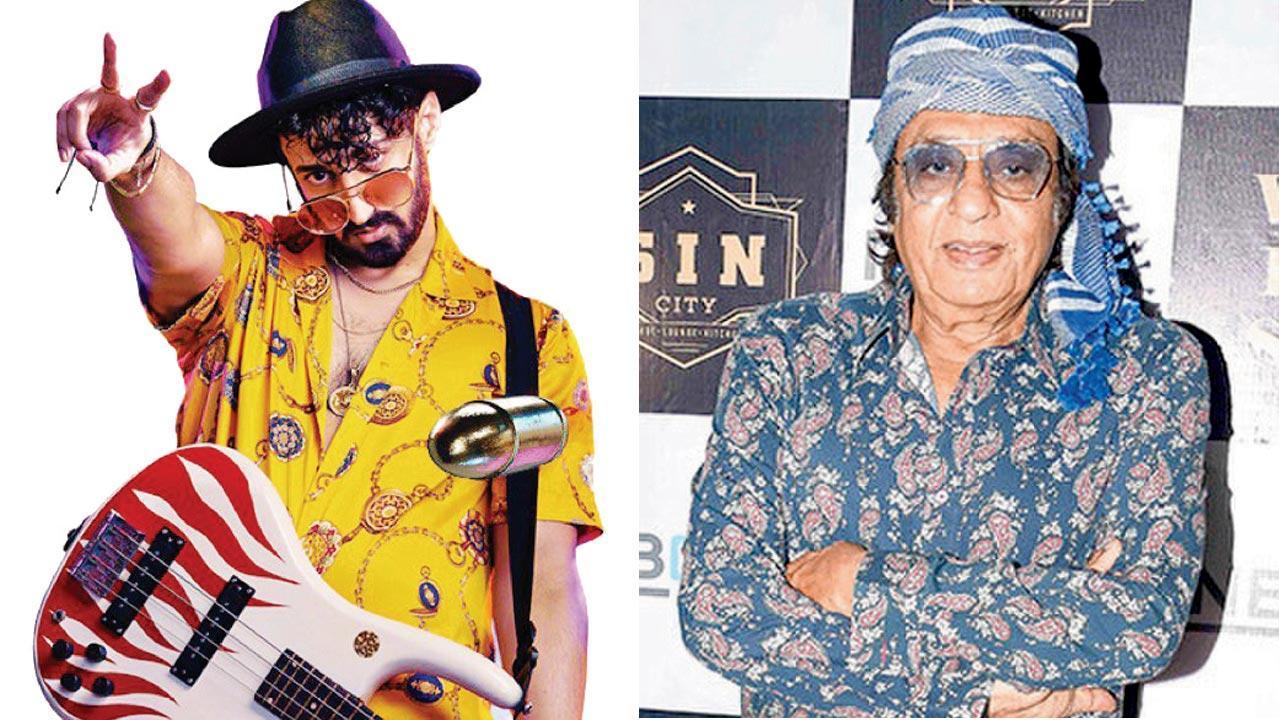
While yesteryear villain-father Ranjeet wanted to launch him in a grand manner, Jeeva on how he chose to debut with supporting role in Govinda Naam Mera
Letty Mariam Abraham (MID-DAY; December 22, 2022)
Playing a supporting role in a movie doesn’t align with the idea of the grand debut that star kids usually get. But Jeeva, son of yesteryear villain Ranjeet, wouldn’t have it any other way. He made his acting debut with Vicky Kaushal-led Govinda Naam Mera, which sees him play the character of Six-Pack Sandy. Jeeva admits that like every protective father, Ranjeet too wanted to give his son a big launch.
“My father always wanted to carve that path [for me], but we didn’t see eye-to-eye on it. The best gift that my parents have given me is the opportunity to fail. I cannot disregard the privileges that I have today. I don’t have to worry about food, rent, or the shirt on my back. So, the least I could do is figure out the rest on my own,” says the actor.
Breaking into Bollywood is easier said than done. It was after years of auditions and rejections that he bagged Shashank Khaitan’s crime comedy. “This film didn’t happen overnight. I have been [struggling] for nine years, and my father was definitely not happy about it.”
But the car racing enthusiast-actor relied on his merit over daddy’s connections. “I told my family about Govinda Naam Mera five months after signing the project,” he smiles.
While he has grown up on a steady diet of movies, especially those featuring his father, it was only in the past decade that he gravitated towards acting. “The films that got me intrigued were Vaastav [1999], Maqbool [2004], and Omkara [2006]. What made me dive deep into this industry was Kai Po Che [2013].”
A scream stopped me in my tracks. The airhostess standing at the entrance was in shock-Ranjeet
8:23 AM

Ranjeet with and without wig (right) in Namak Halaal
Roshmila Bhattacharya (MUMBAI MIRROR; May 16, 2020)

That missed opportunity haunts me as much as the white stallion on the charm bracelet had haunted Vijay in the film. That prancing animal had eventually led the brooding cop to his parents’ killer while I was only served a thanda remake of Zanjeer 40 years later. By then, the quest for the story behind a story had started, and this week I dialed yesteryear baddie, Ranjeet, who had worked with Prakash ji in several memorable films, including Haath Ki Safai, Laawaris, Muqaddar Ka Sikander and Namak Halaal.
“Do you know I wore a wig in Namak Halaal? But only in one scene,” the veteran actor revealed, pointing to the sequence where Amitabh Bachchan’s Arjun Singh comes into his office for a job interview and, in response to his “Yeh kis cheez ko le aaye ho?” launches into the now-famous monologue, “I can talk English, I can walk English, I can laugh English because English is a very phunny language.” What happened to the wig? He chuckled, “The next day, I told Prakash Mehra I didn’t care for it and would go with my own hair. He didn’t argue. Those days filmmakers were accommodating because we were otherwise committed actors. That first scene was retained and the dialogue has since gone viral.”
If you think that’s hair-raising then you have to know how the climax of Haath Ki Safai was shot. The run-of-the-mill film revolved around two brothers, Vinod Khanna and Randhir Kapoor, and the lost-and-found theme, with Simi Garewal and Hema Malini as their leading ladies. Ranjeet, who was the baddie, was as busy as these stars. Yet, they managed to finish the film smoothly, with the exception of the climax.
“While shooting a scene in the hills of Khandala, I sprinkled petrol around a car, in which the dummies of the hero and heroine sat, and pressed the lighter to set it ablaze. As the flame sparked, the petrol ignited and a ball of fire rushed at me,” he flashbacked. Though he had a lucky escape, they couldn’t complete the shoot that day or the next. Prakash ji tried to rush the shoot through at the Dadar railway yard, but the presence of stars brought along the crowds. Some of the bystanders started pelting stones and once again, they had to quit midway.
“After that, I flew to Mauritius for Sanjay Khan’s Chandi Sona. On my way to Beirut from there, I had a five-hour stopover in Mumbai. Normally, you are not allowed to leave the airport when in transit, but the producer of Haath Ki Safai (I A Nadiadwala) had got special permission to whisk me off to Panvel railway station to complete the climax,” recounted Ranjeet.
He got into the car to find director Satyen Bose sitting inside, with his cinematographer. “Dada ki korcho?” Ranjeet asked, taken by surprise, and the filmmaker informed that he wanted some close-ups for his film, Mastaan Dada, and had come prepared. “He gave me the eye-patch which was a part of my get-up and the jacket I had been wearing, along with a cigar, and as the car sped along, they clicked several shots of me mouthing my lines. By the time we reached Bandra, he was done. I dropped dada off and sped towards Panvel, a car in front and one behind to ensure that there were no hold-ups along the way,” the actor reminisced.
By the time they reached Panvel railway station, Ranjeet had changed into his costume in the car and was ready for action. He just had to make a run, get fatally shot and fall face-down. End of the story. The scene went off without a hitch and with a flight to catch, Ranjeet dashed off, still wearing the blood-splattered white suit.
He ran into the airport as the last boarding announcement came on. “The security at the gate was shocked by my appearance and asked, ‘Saab, kya hua?’ I told him I’d been shooting and hurried inside. I was the last passenger to board. As I ran up the stairs and entered the aircraft, a scream stopped me in my tracks. The airhostess standing at the entrance was in shock,” he guffawed at the memory, saying it took a while to convince everyone that the blood stains were not real. “Since my baggage had already been checked in and I was not carrying a change of clothes, I had to keep the suit on, scrubbing at the stains with a pile of tissues the air-hostess brought me. They have remained, a memory of Prakash Mehra and Haath Ki Safai.”

A still from Haath Ki Safai
Akshay Kumar, Rana Daggubati to have a qawwali face-off in Housefull 4
8:05 AM

Himesh Mankad (MUMBAI MIRROR; August 21, 2019)
 After featuring in the qawwali song “Wallah Re Wallah” alongside Katrina Kaif and Salman Khan in the 2010 film, Tees Maar Khan, Akshay Kumar is ready to revisit the musical format. Mirror has learnt that Sajid Nadiadwala’s upcoming reincarnation comedy, Housefull 4, features a qawwali sequence with the actor and his co-star Rana Daggubati taking centrestage. According to a source close to the development, the song sequence is a face-off between Akshay and Rana and an important elememt that takes the story forward. “It appears at a crucial juncture and is on the lines of a fun conversation between the protagonist and the antagonist,” the source informed. While Akshay and Rana are at the centre, other key characters played by Bobby Deol, Riteish Deshmukh, Kriti Sanon, Pooja Hegde, Kriti Kharbanda, Johny and Jamie Lever, Chunky Pandey and Ranjeet joining in the jugalbandi.
The Farhad Samji directorial is spilt in two eras—the present and the past—wherein the latter is a comic take on S S Rajamouli’s epic saga Bahubali. Farhad has also penned the lyrics and composed the basic tune for the qawwali. “The song is set in the present era and was shot at a studio in Mumbai,” the source added. For the shoot, Akshay and Rana were dressed as qawwals and were joined by 200 back-up dancers. Touted to be the costliest Bollywood comedy ever made, Housefull 4 went on the floors last year. While the present era is majorly set in London, the costume-heavy flashback portions were shot in Rajasthan. Akshay plays a barber residing in the Queen’s City but details of other characters have been under wraps. The film also features Nawazuddin Siddiqui in a special turn as an exorcist in a song which was shot earlier this year.
Amitabh Bachchan requested to shoot 'I can talk English' scene the next day-Ranjeet
7:48 AM

Roshmila Bhattacharya (MUMBAI MIRROR; May 4, 2019)
“I can talk English, I can walk English, I can laugh English because English is a very funny language. Bhairon becomes Baron and Baron becomes Bhairon because their minds are very narrow…” You only have to rattle off these lines and though the film opened on April 30, 1982, cinephiles will instantly nail the iconic dialogue down to Prakash Mehra’s action-comedy Namak Halaal.
Yesteryear baddie Ranjeet flashbacks to the hilarious scene when he as Ranjit Singh, the manager of a five-star hotel, encounters Amitabh Bachchan aka Arjun Singh for the first time when he comes to him looking for a job. He is stumped by the man’s verbal diarrhoea in answer to a simple query about whether he can speak English. Those days Ranjeet saab would report for film shoots on an hourly basis and in this case, he had to really juggle his dates to accommodate the film that day. “But after one shot, Amitabh retreated into his make-up room and finally emerged to request his director to continue with the scene the next day, so he could go home and rehearse his lines,” he recounts.
Ranjeet reasons that it was a long monologue with Arjun Singh going on to launch into a rib-tickling running commentary of a cricket match between India and Australia being played in Melbourne with Vijay Merchant and Vijay Hazare at the crease. After much “consideration” the duo took a run and chatty Arjun jumped a decade to another match, The India-Pakistan test match at Mumbai’s Wankhede Stadium with Wasim Bari giving the same “consideration” to his partner at the other end, Wasim Raja. But, this time, in the chaos of considerations, the two players ran themselves out and Arjun finally ran out of breath too. “The next day, the scene went off perfectly and almost four decades later, we are still talking about it,” adds Ranjeet saab.
 The actor was a favourite of Prakash Mehra who, he informs, was at his Juhu residence every evening, at least six days a week, for story sittings, music sessions or just gupshup. “Whether I was in town or not, Prakash ji and many of my co-stars, including Amitabh, Rajesh Khanna, Vinod Khanna, Danny (Denzongpa), Bindu and Prem Chopra would be in and out of my bachelor pad which was conveniently located. That was the kind of camaraderie and comfort we shared. We were one big family and knowing that I was a strict vegetarian and my drinking was limited to a glass of vodka at parties, they would holler for doodh or lassi and some ghaasphus when I was around, along with daaru and non-vegetarian snacks for them,” he guffaws.
It’s nostalgia times for the film’s composer Bappi Lahiri (left) too as “Pag Ghungroo” is one of the golden man’s brightest jewels. The long number was the perfect fusion song, starting out with a two-minute classical sargam by Pandit Satyanarayan Mishra, followed by Bappi da’s trademark disco beats. He recalls that it was recorded over four days with a 100-piece orchestra and took his Kishore (Kumar) mama a full day to dub it, fetching him the Filmfare Award for best playback singer.
 Another experimental track was “Raat Baaki” (right), a Bappi-Asha Bhosle duet. The plan was for Mohd Rafi to redub the male portions but Prakash ji decided to retain Bappi da’s voice. The provocative, come-hither song was filmed on a ‘vampish’ Parveen Babi trying hard to lure Shashi Kapoor to his death. “There is a dialogue track by Shashi uncle (Kisey nahi marne dogi? Yeh kya ho gaya tumhe? Haan! Tumhare maathe par pasina kyun? Kiski maut ke baare mein soch rahi thi? Meri? Huh! Arey meri zindagi aur maut toh ab tumhare saath hai aur pyaar karne wale, maut se dara nahi karte.) I told Prakash ji I wanted to record it musically in the studio with musicians and live beats. Shashi uncle was a little nervous because he had never done this before, but my father Aparesh Lahiri helped him. He had released my album with Baba, Moving Away, in London and they shared a great rapport,” reminisces Bappi da who describes the late actor as the “perfect gentleman” who always had a smile playing on his lips. Prakash Mehra had first offered the role of Raja to Raj Babbar who was a struggler then, but the distributors wanted a more saleable name and that’s how Shashi Kapoor entered the picture.
The rain-drenched “Aaj Rapat Jaayen”, Smita Patil’s first commercial Bollywood song, also clings to our collective consciousness but the bigger challenge for Bappi da was “Jawani Jaaneman” an eight-track experimental song, made memorable by the magical Asha ji. The song was remixed by DJ Jatin for the album Die Hard and more recently Tanishk Bagchi recreated “Raat Baaki” for the Ittefaq remake. Quiz Bappi da on whether “Pag Ghungroo” can have a contemporary spin-off too and he quips, “Why do you need a new version when the original still makes youngsters groove at parties and discos?” Touché.
Ranjeet returns to the stage after 15-year hiatus with Taak Jhaank
7:45 AM

Sonil Dedhia (MID-DAY; October 3, 2016)
The iconic Bollywood baddie of the ’70s and ’80s, Ranjeet is gearing up for his comeback to the stage. He features in an upcoming play, Taak Jhaank, a comedy. He admits that while he hardly had any interest in theatre, he was bowled over by the play’s script and couldn’t refuse the offer.
“ I just did one play way back in 2001. I was never interested in theatre and didn’t take it seriously. But, I loved the comical manner in which the script was written, so I gave my nod. Normally an actor starts with theatre and then moves to television and films. For me, it has been the other way round. I hope people like my work,” says Ranjeet, who plays a film director conned by a producer.
The veteran actor says he would love to be a part of a reality show next. “The idea of judging a standup comedy excites me,” he adds.
Recalling how he tore into the limelight for his rapist act in Sharmilee (1971), Ranjeet says yesteryear actress Rakhee had recommended her for the role. “I was offered the role of a molester, and I agreed. Since then, filmmakers started casting me in negative roles. Producers would demand a rape scene in the film to increase its viability. I never thought I would become so famous. I laugh when people call me a rapist,” he says.
Ranjeet’s driver found dead in swimming pool
7:41 AM

Bharati Dubey (MID-DAY; March 20, 2014)
Yesteryear villain Ranjeet was in for a rude shock when he found the body of his driver, Nagraj Gowda, floating in the swimming pool of his Juhu bungalow on Tuesday night.
“He had not been keeping well for quite some time now. Last night, my wife went to check on him but couldn’t find him in his room. We looked around the house and found him in the pool. We rushed him to the hospital but he was declared brought dead,” said Ranjeet. A case of accidental death has been registered by Juhu police.
The actor, however, isn’t sure if Nagraj, his driver of 30 years, committed suicide. “I don't know if it was an accident or he deliberately jumped into the pool. Nobody even knows when he sneaked out of the room despite the presence of his son and brother,” said Ranjeet.
He reminisced how Nagraj was just 14 years old when he started working for him. “ He was like a family member and we had been taking care of him after he started suffering from various health ailments,” he added.
The actor’s family was making arrangements to send Nagraj’s body to his hometown in Karnataka where his last rites will be performed. “It is his mother’s wish. I do not feel guilty as we did our best for him,” Ranjeet said.
Many young filmmakers sensitive towards crimes against women
7:54 AM

Seema Sinha (BOMBAY TIMES; March 11, 2014)
For over a decade now, incidents of rape have become more a part of our reality than our scripts. With sordid cases like the Nirbhaya gangrape in Delhi and the Shakti Mills gangrape in Mumbai occurring with alarming frequency, sensitive directors no longer see the need to include these in films in the name of titillation anymore.
Most Bollywood films set in the 1950s to the 90s had a set rape “formula”. The biggest villains — from Pran and Prem Chopra to Ranjeet, Shakti Kapoor and Gulshan Grover — played rapists over and over again, sometimes as simply dominating the fairer sex and sometimes, as a tool for revenge.

Says filmmaker Sudhir Mishra, “Almost every film in the 80s showed rape in a crude manner. But sometime in the early 1990s, Rajkumar Santoshi handled the issue very sensitively in Damini, where rape horrified rather than titillated the audience.”

In the last three years alone, rape, molestation and sexual harassment cases have gone up by as much as 50% across the country, with Maharashtra alone rising by 233%. On screen, however, rapes have greatly diminished. And this is perhaps because today’s youth just doesn’t watch cinema for titillation. Back then, rape was used more to stimulate and excite rather than being a script necessity. With today’s generation having ready access to different kinds of porn, mere skin show in films isn’t enough anymore. Director Imtiaz Ali further elaborates, “These days, we consciously make a distinction between a sex scene and a rape scene because with liberalisation in society, a consumer has access to all kinds of video footage. It is understood that a sex scene should titillate, while a rape scene has to titillate as well horrify and disturb you. Earlier, the intent of showing a rape scene was sexual impulse, but with time it has changed. If costumes and conversations can be bold, pornographic intent has no reason to survive in India. Sex content can be watched on the net and the audience doesn’t need to go for movies for that purpose.”
Mishra attributes the change in the thought process to “more evolved young filmmakers”. He says, “Post 2000, many young filmmakers, who are sensitive towards women-related issues, have entered the industry. They are much more evolved and gender conscious.” Director Soumik Sen adds, “And then the filmmakers don’t want to feed reality when there are so many channels that are bombarding us with the ugly truth.”

Most importantly, the brutal gang-rape of a Delhi girl in December 2012 that triggered a national debate over the portrayal of women in popular cinema and TV, has definitely had a huge impact on the filmmakers and their conscience. As Shabana Azmi says, “It led to a lot of soulsearching in different sections of society, including the film industry. Discussions were held amongst us as to what we can do to create more positive images of women, to resist commodifying and objectifying them. The newer lot of filmmakers are more conscious and leading ladies themselves are empowered enough to say no to crassness and gratuitousness. Even if rape is crucial to the film’s story, it can be filmed without deriving vicarious pleasure. Shekhar Kapur’s Bandit Queen is a prime example.”


Mahesh Bhatt says, “There were certain creeps who showed the heinous crime in a crude manner, but after the Nirbhaya case, deep introspection has gone into it. Commodification of women has been given thought to.” However, he also strongly believes that issues related to real and reel life cannot be linked. Bhatt adds, “You can’t link the problem in virtual space to the problem in real life; it trivialises the whole issue. People attribute too much power to films, but it is only limited. Films are a temporary climate of well-being. Books and films can play only that much of a role. Real life issues need to be tackled by actioning and strict vigilance.”
With viewers using more discretion, leading to directors becoming more imaginative, the future looks brighter. One hopes filmmakers will continue tackling serious issues with sensibility and sensitivity.
BOLLYWOOD’S FAVOURITE RAPISTS IN THE PAST


Subscribe to:
Posts (Atom)