Showing posts with label Rangita Pritish Nandy. Show all posts
Showing posts with label Rangita Pritish Nandy. Show all posts
We knew Zeenat Aman's health challenges; we handpicked scenes, calculated screen time-Priyanka Ghose
10:25 AM
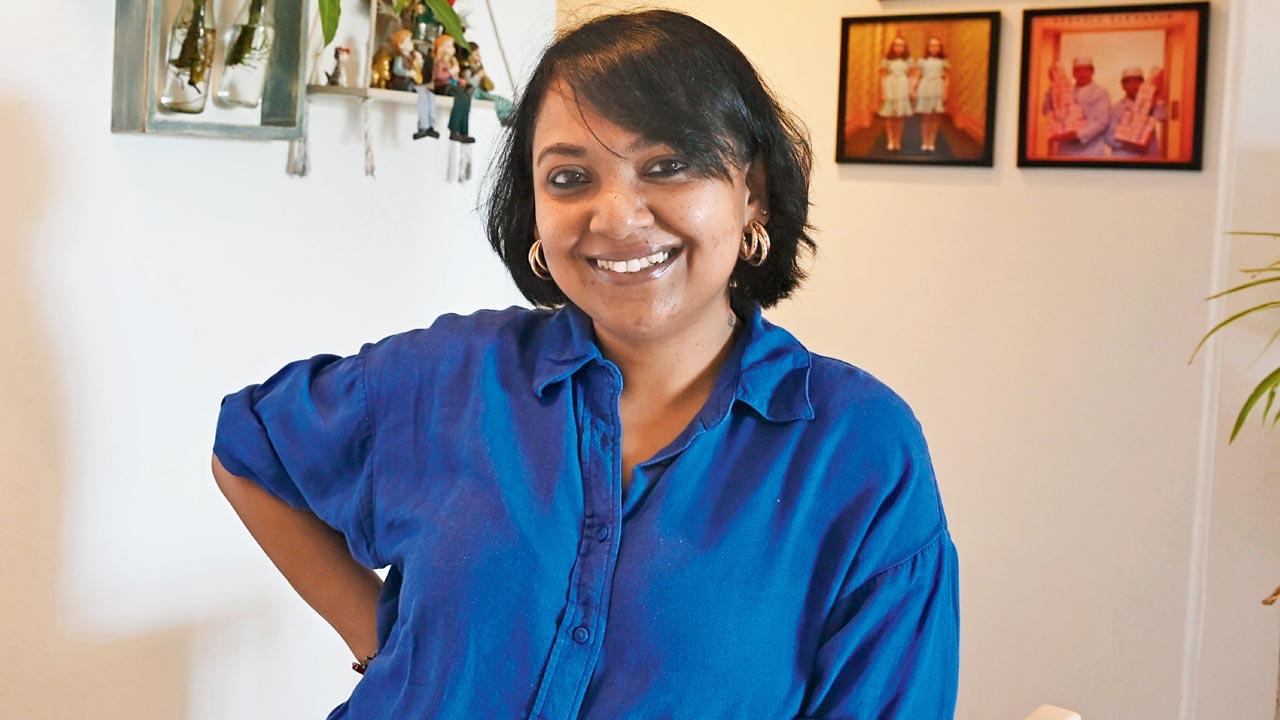
Director Priyanka Ghose discusses Zeenat Aman’s limited screen time, and why Ishaan Khatter and Bhumi Pednekar’s casting was the right choice for The Royals
Letty Mariam Abraham (MID-DAY; May 14, 2025)
It wasn’t Ishaan Khatter and Bhumi Pednekar, the new pairing, or the curiosity surrounding royal lives that drew us to creators Rangita Pritish Nandy and Ishita Pritish Nandy’s latest show, The Royals. It was to see how yesteryear actor Zeenat Aman marks her comeback on the screen. However, when we confessed that to director Priyanka Ghose, she clarified that they had every intention for the senior actor to have more scenes.
When we said we only began rooting for Khatter and Pednekar’s love story after episode six, she said, “That was by design. I knew that by then people will want them to get back together.”
The Netflix eight-episode series follows the clash between an entitled prince and a tech startup entrepreneur amid a contemporary fairytale setting. In conversation with mid-day, she discussed the casting choices and why she had to hand over direction to Nupur Asthana later. Excerpts from the interview.
Zeenat Aman was the biggest pull to watch The Royals. While it was a cameo, why did it feel that she was under utilized?
When you’re writing a script, writers shouldn’t be limited by restraints. The minute you get to execution level, you know the challenges. You’re aware that you’ll get an actor only for a limited time and shoot only so much. As a director, you have to be clear on what to cut and what to keep. We had written and wanted more of Maajisa, but by the time we cast Zeenat ma’am, we knew her health challenges. We had spoken to her and her management, and learnt that her health would permit her only a few days. So, I worked backwards. We handpicked the scenes and calculated how much screen time to give her. I knew the key scenes she had to be part of, even in the royal ensemble during the charity fashion show. Her scenes with Sakshi [Tanwar] ma’am were non-negotiable — we needed the emotional arc. In the royal gathering, there were earlier scenes for her, but since she couldn’t shoot more days, I had to remove her from them. I shot the polo scenes for three days and the fashion show for two. It was difficult to have Zeenat ma’am sit through all that. I had to finish her parts all at once. The next day, I would shoot the opposite axis to avoid her angle. The intention was more, but the reality differed. Still, we did our best to include Maajisa in the right proportions across the season.
When did Nupur Asthana come on board as a director?
We brought in Nupur to direct episodes four and seven, which we shot last. The schedule had shifted because when we were to shoot in the mahals, it was peak wedding season in January and February. The dates shifted, and by the time we got to episodes four and seven, I wasn’t available. Rangita and I actively went out looking for a director to take over. Nupur had little to shoot in Rajasthan because her episodes were set in Mumbai and Madurai. Even the royal ball was shot in Mumbai. It broke my heart — I had done all the homework — but I had already committed to another project.
How many palaces were used in the show?
That’s like giving away secrets [she laughs]! Across six episodes, the entire schedule was in Rajasthan, then a short one in Goa for the opening episode, and some bits in Mumbai like the Gastronomics competition. I did three rounds of location recces. I picked different palaces because one palace doesn’t offer everything. We needed a bat-pooping corner, a dancing hall, darbar hall, exteriors, a swimming pool, and a polo ground. I went out with my production designer — incidentally, my sister Payal Ghose. The challenge was to make different locations seamlessly look like one palace. Even when we got access, we were only given empty barren halls. Payal dressed them up from scratch. Yuvanath Singh’s [Milind Soman] room was a giant open hall with no artwork or bathroom. Everything was constructed on-site by Payal and her team, including painting the walls.
How much of the state of royal estates shown is true?
Each royal family from different provinces is positioned differently — financially, socially, or politically. On our recce trips, I had met some royals. Through those interactions, I realized every family’s trajectory is different. They might be holding onto a title from the past, but some of them are very affluent doing well after foraying into fashion, polo, politics and other fields. We showed different shades inspired by them.
How did you convince Sakshi Tanwar to play such a controversial role?
I knew of Sakshi ma’am through casting coach Atul Mongia, who directed her in Mai [2022] and spoke highly of her. I had to convince her of Padmaja’s arc across the season. This was new to her, and she was skeptical, but that was the challenge she took as an artiste. She was also going through a personal crisis, but I saw a hungry artiste wanting to prove herself. In three days, she found her rhythm. Watching her scenes with Ishaan on camera was a joy.
Ishaan was the epitome of thirst trap in this series. How did you blend his emotional and sexy sides?
Ishaan in real life is a sexy, endearing, sensitive man — that was easy to portray. I was surprised no one had tapped into that before. He made Aviraaj far more likeable than he is on paper. If you just read the script, he’s a brat who behaves badly — during the will-reading and post a one-night stand. No one would root for him. But Ishaan brought more to the table. Yes, the ‘eye-candyness’ helps. His shirtless scenes didn’t feel forced and he is comfortable in his skin. I never used an inch of body make-up on him. He carried the trauma of the crown taking his father away and ran from it. Ishaan brought those layers effortlessly.
Was it intentional to show the leading lady as a knight in shining armour instead of a damsel in distress?
Yes, that arc was always in the story — Sophia is the one pulling the royal family out of its misery. Full marks to the women creators who thought of the female character in a wholesome way.
Sophia is ambitious, but also impulsive. Was that due to Bhumi playing the part?
Her impulsiveness was on paper. We leaned into it knowing Bhumi could pull it off without making it overbearing. With any other actor, I’d be skeptical. In India, we don’t easily accept authoritative women. But Bhumi has softness and vulnerability. Sophia is flawed, and only Bhumi could make her likeable. Sophia is Bhumi in real life.
Zeenat Aman, Bhumi Pednekar, Ishaan Khatter shoot Mumbai leg of Royals
8:37 AM

Zeenat, Bhumi and Ishaan shoot Mumbai leg of Royals, said to be partly inspired by Rajasthan’s aristocratic families; rom-com series mounted on a grand scale à la The Crown
Upala KBR (MID-DAY; April 18, 2024)
Imagine The Crown in an Indian setting. That would be a fascinating world. Soon, Zeenat Aman, Bhumi Pednekar and Ishaan Khatter will take us into that universe with Royals. While talk about Pednekar making her web series debut with the show hit headlines earlier this year, little was known about it. Now, mid-day has learnt that producers Rangita and Ishita Pritish Nandy wrapped up the series’ first schedule in Rajasthan in March-end and are currently shooting in Mumbai.
So, does Royals trace a particular aristocratic family? Not really. Sources tell us that the Netflix offering is a blend of fiction and facts, with some parts inspired by the different royal families of Rajasthan. Pednekar, who leads the series, apparently plays a big-league entrepreneur.
A source reveals, “The desert state has seen generations of royal families, from Jaipur to Mewar and Alsisar. Bits and pieces have been taken from the lives of these families, marrying it with a generous dose of fiction. The show will travel back and forth between two eras—the present day and the past decades. Like The Crown, it is being made on a grand scale, depicting lavish palaces, extravagant parties, and polo matches. At its core, Royals is a romantic comedy that will delve into the style, politics and fabulous lives of the aristocrats. Four More Shots Please’s success showed that the producers have a finger on the audience’s pulse, and this time, they are putting out a stylish and emotional drama.”
Pednekar, Khatter, Sakshi Tanwar, Chunky Panday and Milind Soman were a part of the first schedule that kicked off on February 10 in Rajasthan.
The source adds, “The unit shot at real locations like the City Palace and the Rambagh Palace. Simultaneously, the production design team was building huge sets reflecting the interiors of a palace, at a studio in central Mumbai. As soon as that schedule was wrapped up, the cast and crew kicked off the month-long stint in Mumbai. They will have a short schedule in Goa before wrapping up.”
Apparently, Rangita has chosen Four More Shots Please director Nupur Asthana, and The Night Manager’s Priyanka Ghose to helm the offering.
Film Editors United to formulate guidelines establishing reasonable work hours, higher remuneration
8:48 AM

Production houses led by (from left) Aditya Chopra, Rangita Pritish Nandy and Karan Johar are known to be cognisant of editors’ needs
After Screenwriters Association, Film Editors United to formulate guidelines establishing reasonable work hours, higher remuneration; notes how streamers make assistant editors function without weekly off
Mohar Basu (MID-DAY; May 27, 2023)
Change can have a ripple effect as can be seen in the Hindi film industry. After the Screenwriters Association flagged the issues faced by Bollywood writers (Bollywood headed on the ‘write’ path, May 8), the editors’ community has put the spotlight on their grievances. The Film Editors United (FEU) – a 500-plus member collective comprising editors, associate and assistant editors – is taking cognizance of the long working hours that are being demanded from them, leading to multiple cases of burnout and depression. Keen to establish fair working practices, the FEU is having dialogues with editors across the board with the aim to formulate guidelines that are in their best interest.
Editor Antara Lahiri, who has worked on Delhi Crime, Rudra: The Edge Of Darkness (2022) and the recent Tooth Pari, says the FEU will present an agreement to the Association of Film and Video Editors (AFVE), which will then take it forward to the Federation of Western India Cine Employees (FWICE).
"For starters, they are trying to negotiate a basic minimum wage much like SWA. The issue with wage is that it can be forcefully implemented. If a production approaches a young editor and offers something lower than a minimum wage, and the editor feels this is the best I will get, then they will go for what’s being paid even if it is subpar. One part of the issue is that editors are not empowered to say no or ask for better. That is a systemic industry issue. Budgets are being slashed lower and lower everyday and there’s never been any discussion around overtime payments. Several productions in the meantime are opting for young, newer and therefore cheaper editors who are afraid to ask for what they deserve."
The biggest concern of the FEU – which includes leading editors Sreekar Prasad, Namrata Rao, Nitin Baid, Jabeen Merchant, and many others – is that assistants and associates are working 18-hour days, sometimes seven days a week. Editors are often receiving footage worth several hours per day because multiple cameras are being deployed to cover more angles and cover scenes faster on shoot.
On an average, an editor can safely edit 3-4 minutes a day. But current post-production schedules, specifically those received from streamers are not factoring in humane working hours, quantum of footage, or holidays for the edit team. In fact, most contracts have a clause where they have to agree to “work on all days of the week, irrespective of Saturday, Sunday or govt holidays”. The FEU is in the process of having conversations with editors of different Experience groups and creating a requirements draft.
Lahiri elaborates, “Independently, FEU can only present an ideal agreement to the Union, who can then present it to the federation (FWICE). A negotiation can then begin on the feasibility of the demands being made. Eventually, the matter will have to be heard by the Guild. Not to sound like a cynic, but there will still be producers who will not agree to certain things. The Guild and the union can only do that much but individual producers have to be less feudal in their approach.”
Overtime and no day off are the most concerning facets, says Lahiri. “The concept of overtime doesn’t exist in the industry. The Union says editors should get a day off every week. On shoots there is a compulsory day off. But in post-production, there have been situations with new editors that I have been told if there is work you have to come on Sunday. On paper all rules are there but in practice they are not followed. Unfortunately the contracts note that editors sign up to work on Saturdays, Sundays and Government holidays. When we checked with lawyers, unfortunately freelancers are not covered by the rules of the labour laws.”
Lahiri explains that even basics like meals are not provided to younger editors. “The working hours, pay and working conditions for editors ought to be improved. Many producers send a dabba for the team based on hierarchy. So HOD will get a good budget to order but assistants are meted out way lower budgets. There is a strange sort of hierarchy where juniors are getting below average food.”
She says that reputed producers, including Aditya Chopra, Karan Johar, Rangita Pritish Nandy and Siddharth Roy Kapur, are cognizant of editors’ needs. “Senior producers in the industry appreciate editors. Platforms like Netflix and Amazon make calls and understand how the post production process works better. The senior editors always have their way. They have clout. But it’s always about how the associate editors are treated. They know workflow processes and promote a certain level of equality. I don’t believe it is malicious. But many smaller set ups don’t value what editors bring to table. Bigger set ups are more cognizant of what editors (regardless of their designations) need. The spaces are clean and thoughtfully provided.”
The FEU is also seeking “good working conditions” that include:
>> A comfortable ergonomic chair for the editor, a work-appropriate table, and other equipment
>> A pleasant and clean edit room
>> Clean bathrooms, especially for women
>> Nutritious meals, clean drinking water, and fresh beverages
>> Adequate rest period, ideally 12 hours, for the editor and team
Antara Lahiri
Four More Shots Please and Made In Heaven makers to revive long-pending foreign schedules?
8:17 AM
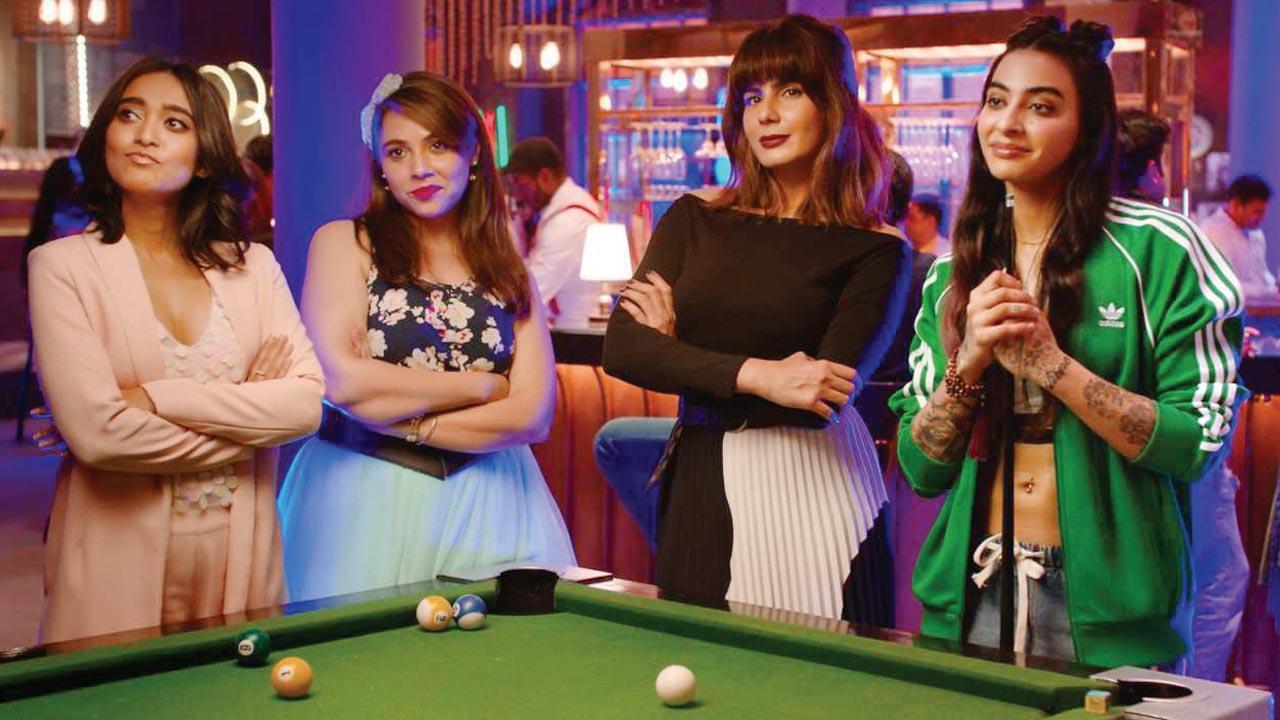
With EU set to welcome vaccinated travellers, makers of Four More Shots, Made in Heaven revive long-pending foreign schedules
Mohar Basu, Uma Ramasubramanian (MID-DAY; May 22, 2021)
The European Union, on Wednesday, announced that it will soon reopen its borders for fully vaccinated travellers. Among the vaccines approved by the European Medicines Agency are Pfizer, Moderna, AstraZeneca and Janssen. Closer home, this news came as a ray of hope for the makers of films and web series who have long put their foreign schedules on the backburner. Zoya Akhtar and Nitya Mehra had lined up an extensive Made In Heaven schedule for April 2020. After waiting out the 2020 lockdown, the team began filming the second season in Delhi this year. “The makers had to cancel their Italy leg last year. If all goes well, the international schedule will kick off in the latter half of 2021,” says a source.
Before producers can begin reworking their plans, the top priority is to get the cast and crew vaccinated. Four More Shots Please creator Rangita Pritish Nandy has apparently kept a six-month window before lead actors Kirti Kulhari, Sayani Gupta, Maanvi Gagroo and Bani J can be Europe-bound. “The team had begun shooting the third season in February in Mumbai, but had to soon call time on it in April. With the timelines now being reworked, they are targeting November for the international leg,” says a source.
However, the shortage of vaccines may disrupt the best-laid plans. While Aditya Chopra has teamed up with the Federation of Western India Cine Employees to inoculate 30,000 film workers, Birendra Nath Tiwari, president, FWICE, says, “In case of foreign shoots, the concerned production houses will get the crew vaccinated.”
We will shoot Four More Shots Please 3 in Mumbai till May end-Rangita Pritish Nandy
7:53 AM

Four More Shots Please creator kicks off the third season in the city, adhering to safety norms; says schedule unaltered despite rising COVID-19 cases in the state
Mohar Basu (MID-DAY; March 20, 2021)
Creator Rangita Pritish Nandy, who kicked off the shoot of the third season of Four More Shots Please last weekend after a year-long wait, believes her emotional state can be captured in three words: “We feel alive”. The all-women drama, headlined by Kirti Kulhari, Sayani Gupta, Maanvi Gagroo and Bani J, is being shot in South Mumbai. “After the year we’ve all had, being on set, exchanging ideas, discussing characters, and even squabbling over costumes — it all feels like coming home,” says Nandy.
The creator finds herself leading a 100-plus crew at a time when the impact of the second wave can be strongly felt as Maharashtra recorded its highest number of Coronavirus cases in a day since March 2020. Undeterred, Nandy says they are being cautious and following guidelines to the T. “Our protocols are driven by the government’s prescribed norms and Amazon’s exhaustive list of SOPs [standard operating procedures]. We’re testing [daily], masking up, using the private mode of travel, and not sharing food or liquids. We’re living in a bio-bubble — all this, while we keep a close watch on the changing situation to devise new precautions.”
The team is sticking to the original plan despite the adverse conditions. “We will shoot in Mumbai till May-end. We have another Indian city and an overseas location on the cards.”
The benchmark is set high for the third season. After all, the first edition bagged an International Emmy nomination and the second instalment became Amazon Prime India’s most-watched Indian original of 2020. “We wrote and prepped for season 3 before any of this happened. So, we don’t feel any pressure. But we have a duty to all the fans; we want to deliver a bigger and stronger season for them.”
India’s top web bosses confess how the cloud of COVID had a silver lining that no one could’ve predicted
8:23 AM
Ahead of mid-day & Radio City’s Hitlist OTT awards, India’s top web bosses weigh in how the cloud of COVID had a silver lining that no one could’ve predicted
Mayank Shekhar (MID-DAY; February 6, 2021)
Towards the end of 2019, Saugata Mukherjee, then with Disney+ Hotstar, switched job to head original content for rival, Sony LIV. Except, Sony LIV as a streaming app wasn’t quite Hotstar’s competitor in a real sense.
Because they had yet to develop a single web-only, original show or series. Which is strange, if you consider that Sony LIV is probably India’s first OTT platform - they’ve been around since 2013!
What was Sony LIV playing, up until early 2020? Catch-up TV - basically Sony broadcasting network’s shows downloaded on the app.
And then the pandemic struck. Production came to a halt. There was no new TV episode - only audiences with an insatiable visual appetite, sitting at home, staring at a screen, when not out of the window.
Mukherjee recalls, “Sony LIV re-launched right in the middle of the pandemic [with original web content]. One couldn’t have planned for the frenetic pace at which we had to recalibrate, from technology, business and content development point of view - [lead time on] all of which had to be crunched dramatically.”
Likewise for Ferzad Palia, from Voot, which as an app was also simply an advertising-led digital arm for Viacom as a TV broadcaster: “We’d been meaning to play the subscription game for sometime. We had to bring all the plans forward by about a year. Voot Select is a COVID baby. We launched on March 3, 2020. By March 16, we were working from home. To get tech like that so early in the game? It was chaotic as well, of course.”
But it paid off, as Palia points out, with audience numbers outgrowing estimates they’d made for both Year One and Two; and viewers from beyond top 10 Indian cities willing to pay for online entertainment, even post unlock!
Monika Shergill from Netflix, the nascent OTT industry’s first-mover in India, calls 2020 the year of “intense connection, with an acceleration in adoption [of streaming services]; a whole new set of audiences [coming in].”
The thriller Asur was the flagship show for Voot Select. Like Scam 1992 was for Sony LIV. Both of which have earned nominations at the mid-day and Radio City’s Hitlist OTT Awards that this discussion is a heads up for. Netflix has totally dominated the films and non-fiction nominations. They had 28 Indian original releases last year anyway, besides international productions, making Netflix an entertainment industry of its own! Rather than just a streamer/app.
The best instance of an independent producer inadvertently benefitting from Coronavirus might well be Sameer Nair, from Applause Entertainment, who delivered 11 shows in 2020 alone, across platforms, including the nominated Criminal Justice: Behind Closed Doors on Disney+ Hotstar.
Hungry eyeballs were all there. Library shelves on OTTs needed constant replenishment. While Nair denies there was a hard-sell on among platforms to pick up shows, rumours suggest the big Bollywood films were indeed up for top dollars, at astronomical rates, over a fierce bidding war, since theatres had shut down!
Shergill clarifies, “There is in fact a lot more juicy speculation around this; very little truth. What really happened is that with most services, there is already a pipeline of films you look at for a post theatrical [premiere]. Barring a couple of [mainstream] titles, most platforms that premiered [Bollywood] films [during pandemic] had already been signed up [from before].”
Which doesn’t take away from the bad blood between the OTT and cinema/theatre industry, as we speak, with the latter accusing top Bollywood producers of leaving the traditional exhibition sector in a lurch. Having sold off their major releases directly to web.
To a point that in a chicken-egg situation, theatre owners argue that, sure, cinemas have re-opened; and people aren’t still coming in. But even if they did, what’s there to watch?
Some of this drought was of course unavoidable. For example the Tamil event pic Soorarai Pottru that Guneet Monga co-produced: “We had a big music launch on a plane in February, 2020. And then with the lockdown and pandemic, we just kept sending out press releases for updates. We didn’t know how long this would continue?”
Nair reasons, “You really can’t fault anyone. Cinema is a heavily cash-flow business. And it’s not like movies will stop getting made. You can fight another day, once you survive.” Shergill is glad that Netflix and other OTTs stepped in to partner with Bollywood at this hour of need.
Rangita Pritish Nandy admits, “Surely there was job-loss in cinema business; even theatres that have shut down may never open again. But for a producer, [investment on a] film is a [financial] ticking bomb, until the [point of] release.”
Nandy should know, having been a film producer for almost a couple of decades. Her nominated show Four More Shots Please 2 was declared the most watched Indian content on Amazon Prime Video during the early part of pandemic.
While much is made of the current fracas between OTTs and cinemas, the impact of the pandemic on the television industry — a more direct competitor, with people’s changed viewing habits — isn’t perhaps highlighted enough. Also given that traditional TV is dependent on advertising, which in turn relies on the health of the economy.
Nair says the ratio between earnings from subscription and advertising had already reached 50:50 ratio by 2020. As for advertising revenue, Palia (Voot Select) and Mukherjee (Sony LIV), both broadcasters in the OTT space, contend the numbers have nearly returned to pre-pandemic levels already.
This is no time for media obituaries whatsoever. Whether TV, cinema, web, broad consensus at the Sit with Hitlist huddle is that they will all co-exist. Both audiences and their options are potentially limitless.
Right down to an app like Mubi that shows only world cinema and art-house titles, and that Monga helped launch in India in 2019: “That library has completely captured the imagination of cinephiles.”
And, why, even Netflix could become network TV, no? Shergill says, “Taking our shows back to a linear feed on TV in France is something new for us. Either way, choice and ease for consumers will determine audience behaviour. Linear TV versus streaming, versus cinema, are all slightly different spaces.”
Hardly five years old, the Indian OTT industry has clearly outdone itself in terms of globally competitive content. Rare happy news of 2020 was Delhi Crime (Netflix) winning an Emmy, where Four More Shots Please (Amazon Prime Video) was also nominated. Some of this has to do with how, unlike cinema and TV, web platforms in India (like with other democracies) have so far grown without the restrictive shadow of external control/suppression/editing.
Panelists don’t deny that this might just change, for the worse; who knows, with cloud of COVID-19 receding, and the darkness of state censorship looming instead. OTT content bosses, I suspect, would prefer to sit out this part of the discussion.
Nair says, “We’ve grown up watching flowers kissing instead of humans, but we grew up, right?” Palia says, “Take heart from the fact that we’re still better than a lot of countries.” Monga says, “Iranian cinema is so beautiful, and then you see Korean content that’s travelling across the world.” “She’s just drawn those parallels straight, and given you the best quote,” Nandy suggests. Well.

I am the woman who wants to know about Jaya Bachchan’s character in Sholay-Rangita Pritish Nandy
8:26 AM

With Four More Shots Please 2 nominated in Best Series: Romance/Comedy, Best Ensemble Cast at mid-day and Radio City Hitlist OTT Awards, creator Rangita Nandy unfazed about lack of critical acclaim
Mohar Basu (MID-DAY; February 1, 2021)
Within weeks of the series dropping online, the New York Times described the second season of Four More Shots Please as India’s very own Sex And The City. Not to mention, the Kirti Kulhari, Sayani Gupta, Maanvi Gagroo and Bani J-led season soon became Amazon India’s most-watched Indian original of 2020. “We [sister Ishita Nandy and I] wanted to put our lives out there,” says creator Rangita Pritish Nandy, whose all-women series has been nominated in the Best Series: Romance/Comedy and Best Ensemble Cast categories of the mid-day and Radio City Hitlist OTT Awards.
Though the Devika Bhagat and Ishita Moitra-written series enjoys immense popularity, critical acclaim remains elusive. “I have done serious stuff, like Hazaaron Khwaishein Aisi [2003] and Chameli [2003], but we don’t need to do just that. Entertainment in all forms is being appreciated. As far as critical acclaim is concerned, it will follow if we remain honest to our characters. The love we get supersedes it all. We were [nominated] at the Emmys for God’s sake,” exclaims Nandy.
She is proud that in the universe of Indian shows, there isn’t another story like hers. “Our cinema has celebrated testosterone-heavy material, from Sholay [1975] to Mirzapur. But I am the woman who wants to know about Jaya Bachchan’s character in Sholay,” says Nandy, emphasising that a fun show isn’t necessarily insignificant. “[In our society], a woman having a blast is already labelled and deemed irrelevant. I am glad the audience made us relevant again.”
Did you know?
The third season was to be shot in Italy, but the location had to be changed due to the pandemic.
- Cast your vote for the Hitlist OTT Awards
- Four More Shots Please 2 has been nominated in the Best Series: Romance/Comedy category.
The other nominees are:
- Bandish Bandits (Amazon Prime Video)
- Bhaag Beanie Bhaag (Netflix)
- Masaba Masaba (Netflix)
- Mismatched (Netflix)
- Panchayat (Amazon Prime Video)
- Log on to www.hitlistottawards.com to cast your vote.
- You can also vote via SMS. Send HITLIST <space> category name <space> your choice (a/b/c as on the website) to 57575.
- Voting lines close on February 9
Tandav row: Writers decide to self-regulate; stay away from politically and religiously sensitive references
8:29 AM

After multiple FIRs and extreme pushback to political drama Tandav, lawyers are likely to vet web show scripts at inception. What does that mean for streaming regulation, and where does this leave the writer?
Aastha Atray Banan (MID-DAY; January 31, 2021)
A director like Hansal Mehta knows how to deal with, and digest censorship. His 2017 film Omerta told the story of Ahmed Omar Saeed Sheikh, a British terrorist of Pakistani origin, who was behind the 1994 kidnapping of tourists in India. In 1999, he was released and found himself safely in Afghanistan backed by the Taliban in exchange for the release of Indian passengers aboard an Indian Airlines hijacked flight. When the film went to the Censor Board, two scenes proved contentious: Omar relieving himself as the national anthem played, and the protagonist having violent sex preceding a terror operation. “I had expected that it would be problematic, but you [the filmmaker] can try. My argument was that it’s the character who is disregarding the national anthem, not me!” Mehta argues.
His argument would certainly not hold true today.
The last few weeks have been defining for freedom of expression for the entertainment industry in India. After Saif Ali Khan-headlined political drama Tandav, directed by top Bollywood maker Ali Abbas Zafar, premiered on Amazon Prime Video, dissenting voices said Hindu religion had been disrespected through scenes in the first episode. The first was a stage play where college students playing Shiva and Narada wonder how they can improve the former’s social media popularity, while another was seen as a casteist slur where Tigmanshu Dhulia, who plays Prime Minister Devki Nandan Singh mocks a Dalit politician. After the trolling, BJP MLA Ram Kadam filed a complaint at Ghatkopar police station on January 20, and an FIR was registered in Mumbai. On January 18, a FIR was filed against the director, producer and the writer of the web series, along with Amazon Prime Video’s India head of original content at the Hazratganj police station of Lucknow. Another one at Greater Noida, then Jabalpur, followed by a complaint in Patiala House, New Delhi. Even the Confederation of All India Traders wrote a letter to Prakash Javadekar, Union Information Broadcasting Minister, on January 19, asking to stop the streaming. Zafar apologised unconditionally, and the makers responded by deleting the scenes. Last week, the Supreme Court declined to grant interim protection to Zafar, actor Mohd Zeeshan Ayyub and others facing multiple FIRs, and remarked that an actor “cannot take up a role without reading the script”.
For Mehta, the brouhaha is unreasonable, because “Tandav is just a pot boiler”. But he suggests we don’t let despair take over.
“I get that people are depressed with what’s unfolding, but I also believe that this government is business conscious. The OTT ecosystem rakes in a lot of business. Perhaps we should keep away from religious and political content for a while.”
Mehta’s suggestion may be prudent but this means the end, or at least partial suspension, of freedom of expression that defined web shows in India. Last November, the government brought video streaming over-the-top (OTT) platforms under the I&B Ministry’s ambit instead of the Ministry of Electronics and Information Technology. While the government has demanded a list of what constitutes prohibited content and more muscle to the complaints mechanism, the industry had responded with what’s called an Implementation Toolkit. Following the scale of this recent protest, it could very well mean that makers and writers self-regulate, choosing to stay away from politically and religiously sensitive references.
It’s then the first officers of creation—the writers—who have the most rewiring to do, whether it’s with their beliefs or process. Mayank Tewari, writer of the critically acclaimed political satire Newton, and behind the dialogues for Ragini MMS, is currently working for a Netflix show. “Let’s see how things pan out. It’s curtailment for sure. Can we now show a policeman or judge as corrupt? I don’t know. The good part is that once the content is made, you can have a problem with it, but it will find its audience anyway, even if through WhatsApp. That’s the beauty of living in these times.”
But he also admits that because making a show or film takes a whole lot of money, energy and time, the investment is huge. “No one wants their time and money to go down the drain. So we will be told, ‘you are an entertainer, not an activist’. And when writers start second guessing, it’s not good. The trouble is that today anything can cause a problem — if you look at Kalidas’s poetry, it’s erotica about Shiva and Parvati. If we reference that, even that will cause a problem. We are a nation addicted to outrage, and anything can offend,” he says, adding that platforms and creators are now looking for legal backing, with lawyers likely to vet the script.
For Atika Chohan, who wrote Meghna Gulzar’s Chhapaak, which got into trouble as lead actress Deepika Padukone, visited JNU in her personal capacity to show solidarity with the anti-CAA protesters, auto editing creative thoughts is a reality. The idea of having legal vet a series is making writers doubt their ability and scope. “I read somewhere this crazy word called ‘cinema jihad’. Didn’t writers have enough of a struggle to put up while pitching their stories, that we now have to make sure no one gets offended. India is not an exciting place to be, the creative possibilities are shrinking,” says Chohan.
So, what’s the solution? Resourceful thinking. “History has taught us that in times like these, creatives find ways to say what they want—tiered narratives, metaphors, layers. In Iran, when creators were censored, they still told stories of social divide, but by using children as protagonists. Maybe, we need to do that, but right now I am angst ridden and worried.”
Sidharth Jain is the founder of the Story Ink, a platform that seeks film or dramatisation rights to books written by Indian authors. He says he isn’t surprised b the developments because in India, some things we don’t talk about. He is currently working on a book deal that concerns a fiction title. “And yet [after the Tandav episode], I told the writer, let’s go over it all over again. Fighting legal battles is expensive. Writers and creators can’t be expected to seek legal help in early stages [of creation]. For now, it’s best to stick to finding family comedies, where everyone is happy.”
Some argue that even in the absence of a censor body, the freedom to approach a court of law exists and can be used to stifle expression. Mihir Desai, senior advocate, Bombay High Court, explains that anyone can set criminal law in motion, and it’s harsh. Multiple complaints can be made against a single party across locations, complicating the matter. The police, of course, has the power to review the complaint and judge if an FIR should be registered. “Usually, complaints seem to get converted into FIRs in states where a particular ideology has political backing, and so the consequences are harsh.”
The irony lies in the fact, says a writer who didn’t wish to be identified for the story because he is pursuing a legal suit, that OTT platforms want cutting edge stories. But when the environment isn’t conducive, they have no choice but to take note. For an international player like Netflix, this means having to ascribe to multiple rulebooks, a different one for every market. An article published in The Hollywood Reporter in 2019 said: Until very recently, Netflix has always taken a “move fast and break things” approach typical of Silicon Valley startups, with most criticism of its shows either ignored or dismissed.”
After having a presence in over 190 countries, not anymore. In the past, the platform has got into trouble for smoking scenes in Stranger Things, for depiction of Palestinian terrorists in Fauda, and for kissing scenes in their Arabic original Jinn. Amazon Prime Video, which had admitted to self- censorship as early as in 2016, had said: “Amazon is a responsible company and we are here to entertain the Indian customer with award-winning content from the US along with blockbusters from Indian and regional makers. We will keep Indian cultural sensitivities in mind while offering this content to customers.”
Rangita Pritish Nandy, who created the racy Four More Shots Please!, for Amazon Prime, says nobody really starts out with the idea of offending. “The arts are a reflection of the times we live in, always have been. What we, as creators and producers, bring to cinema and streaming, finds its seeds in the world around us. I don’t really see that changing. What may change is the way we choose to say it. Blatant calling out will stop and intelligent profiling and writing will be celebrated. Streaming has shrunk the world. When the world is your audience, it makes you brave.”
Vishal Watwani, writer and producer for Helllo Jee, a show about phone conversations between call centre employees and men who need to be “entertained”, for ALT Balaji, says while we cannot expect to be free to say anything we like, censorship in India seems more about appeasing the powerful than reviewing content in the interest of audience good. He echoes the words of the senior counsel representing Amazon Video Prime in the Tandav case. Senior advocate Mukul Rohatgi, authorised counsel for Amazon India, had told mid-day last week, “People are entitled to make a political satire. If you don’t need to watch it, don’t; no one is forcing individuals to watch the collection. According to me, these circumstances are not about hurting individuals’s non-secular sentiments, however of individuals looking for publicity.”
Sumeet Vyas, who played dodgy politician Yudi in last year’s show Dark 7 White on ALT Balaji, says he is reminded of George Orwell’s 1984. “Whatever you say, think, write, or perform will be monitored. It’s not just harmful for actors, but for society. My argument is simple—if you think what actors perform has a negative impact on society, then what about all the stories [we perform] where good wins over evil? Then credit us and us alone also for all the good that has happened in this country.”
Ad filmmaker Joyeeta Patpatia replaces Tannishtha Chatterjee as Four More Shots Please 3's director
8:18 AM

As Four More Shots Please 3 is set to roll, creator Rangita Pritish Nandy parts ways with director Tannishtha Chatterjee; ropes in ad filmmaker Patpatia
Mohar Basu (MID-DAY; January 28, 2021)
It was frustrating for creator of Four More Shots Please, Rangita Pritish Nandy, who was on the brink of kicking off the third instalment of her hit show in Italy, when COVID 19 pandemic forced everyone into a global lockdown. In a chat with mid-day, Nandy recounts the months of the pandemic, and the changes they've made as the show's shoot finally kicks off in February. "We moved from Italy and thought of shooting in Vietnam, which was minimally hit. They locked down too. Amazon India even suggested we shoot in Nashik. I was quite certain that's not what I want for this season," she says.
Through the months of the Coronavirus pandemic, there were cataclysmic changes that happened with the new season of show. For starters, the new season that was earlier to be directed by Tannishtha Chatterjee will now be helmed by well-known ad filmmaker Joyeeta Patpatia. "With timelines constantly getting knocked around, Tan couldn't do this season. We ended up changing the director. Joyeeta then came on board and then it was a natural process of bringing in the value of life post-coved into the show's narrative. Emotions were heightened and we took that energy back to the writer's room. We are very clear about where the girls are in season 3 and 4 in terms of the narrative but some things had to be tweaked. Story arcs are similar. This is not Grey's Anatomy where they can't ignore COVID happening but at the same time, this show doesn't need COVID to propel the story forward. We had a strong conversation about basing it in post covid times. We have finalised the draft of the season. The shoot kicks off next month now."
With great clarity, Nandy is kicking off shoot with an elaborate Mumbai schedule. "We start with Bombay followed by two outdoors. Europe stays and another elaborate one in India. Both of the outdoors have been snuck into the schedule's end. The reason we waited to shoot for so long is because we wanted to wait for more information. Coronavirus is a black hole and the vaccination conversation is intense but I am aware it is still a while before we get the vaccine. The protocols of the last 10 months stay strong. Amazon US is tight fisted and didn't allow us to work till now. On any given day, we would have 200 people on set. We are looking at exhaustive amounts of testing. COVID compliance officers that Amazon has identified and helped us bring on board, is reassuring. Additionally, we will take our time. What we would have done over two months will now be done over four so we are not rushing against time. It's nerve wracking."
Roping in a new director is the right way forward, says Four More Shots Please 2 director Nupur Asthana
8:23 AM

Even as she earns immense praise for Four More Shots Please 2, director Nupur Asthana is happy to pass the baton to Tannishtha Chatterjee for next season
Letty Mariam Abraham (MID-DAY; May 19, 2020)
When she had joined the team of Four More Shots Please for its sophomore season, she had barely imagined that the edition — developed under her watchful eyes — would go on to become the most watched Indian show on Amazon Prime of the year so far. As she took on the directorial duties from Anu Menon, Nupur Asthana says her objective was to make the protagonists relatable even as they downed tequila in Istanbul and flaunted Balenciaga bags.
"Since I was directing all 10 episodes, I could approach the season with a blank slate. I didn't have to follow any blueprint in terms of the storytelling. It is a fashion-forward show, so, the girls will be well-dressed, but my aim was to make them more real," explains Asthana.
From body shaming to workplace gender inequality, the instalment has been applauded for touching on various women's issues through its protagonists — essayed by Kirti Kulhari, Sayani Gupta, Maanvi Gagroo and Bani J. Asthana credits the win to the all-women force at work, from the writers to the cast. "I went with my instinct. My crew and cast did extensive workshops, we had free-flowing chats then and bared our hearts. That made things easier. They understood what I was trying to do and how I wanted their characters to grow on screen. I have worked with the writers [Ishita Moitra and Devika Bhagat] before. It was an exhilarating ride for me."
With praise coming in for the second season, one would expect her to helm the next instalment. However, Asthana is only too happy to pass the baton to actor-director Tannishtha Chatterjee. "They [Amazon Prime and creator Rangita Nandy] were keen on having me on board for season three too, but I was exhausted. I had finished working on the show on January 15; to go back to it in a few months [would have been too much]. I need time to recharge my batteries. Also, in order to create a fresh look with the same material, roping in a new director is the right way forward."

Four More Shots Please second season may explore friendship or just one character-Rangita Pritish Nandy
8:23 AM

Four More Shots Please show-runner Rangita Pritish Nandy on the course that the second edition may take after protagonists fall apart
Mohar Basu (MID-DAY; June 5, 2019)
 “If you spot a crew hard at work at your favourite South Bombay spots, checkin to see if it’s ours,” chirps Rangita Pritish Nandy. The show-runner of Four More Shots Please seems cheerful as she discusses the second edition of the Sayani Gupta, Kirti Kulhari, Bani Judge and Maanvi Gagroo starrer, a day after the makers announced that they would return with the sprightly drama. “It continues to be about four young women, their evolving friendship, and their lives. Season one ended with their friendship being affected. Now, the question is if the show will be about their relationship, or will we simply follow the journey of one girl,” she says, evasively.
Tackling with accusation of the series being inspired by Sex And The City (SATC), Nandy doesn’t take to suggestions of “rectifying” similarities between them in season two, because, she says there are none. “Our show is also about four girls, but little else matches SATC. Yes, they dress pretty, share a few drinks and a wonderful friendship, all against the backdrop of a modern city life. But their struggles and flaws are entirely different. We have fans telling us how this show narrated their own story, and made the conversation around sex, female sexuality and fantasies, relatable.”
Nandy is unwilling to discuss another campus series that is suggested to be under works. “We are developing a bunch of things, one among which is a young adult show. This new generation is a different beast. There is absolutely nothing [one can know] about them. They can tell you, at the age of nine, where they will be at 15, 21, 27 or 35. At 40, I’m still searching for myself.”
14 years of Hazaaron Khwaishein Aisi: Sex, lies and doomed love
8:22 AM

Roshmila Bhattacharya (MUMBAI MIRROR; April 20, 2019)
Hazaaron Khwaishein Aisi … If you are a poet, you will know instantly that the words are Mirza Ghalib’s. And if you are a cine aficionado, you will know that I am referring to Sudhir Mishra’s 2005 political drama which he describes as a “love letter to a generation”. A generation trying to find the fading vestiges of beauty, idealism, love, and failing.
It’s a film that made Shekhar Kapur cry. “I don’t know if the youngsters will get it, but thank you for making it,” he told Sudhir emotionally after a screening. “I’ve lost count of the number of young people who have come up to me since and told me how much they love the film,” Sudhir smiles 14 years later.
I’m one of those who do, and that’s an unabashed admission. For me, Hazaaron Khwaishein Aisi , despite the backdrop of the Emergency, has always been more of a love story, heart-breakingly poignant and at the same time heart-warming in its message of humanity.
“Yes, it’s a love story,” the director agrees, admitting that many women all over the world, some of them perfect strangers, have come out of a show and silently clasped his hands for a long time, finally telling how moved they were by one particular character. “Which one?” I wonder. “Vikram Malhotra who is like the guy in college everyone hates -- aggressively ambitious and driven to make it big at any cost. Yet, the strange friendship/ love between Geeta and him, so pure and true, makes for a unique love story,” explains Sudhir, who believes that every woman has a Vikram in her life, even if she never married him. “And every man has a Geeta who may have walked away, but who could well return when he needs her most.”
Today, it is hard to imagine anyone but the earthy, sensual Chitrangda Singh as Geeta Rao. Asserting that she is perhaps the most complex female character on the Indian screen, and also the strongest, Sudhir admits that Chitrangda wasn’t the first choice. He also surprises with the revelation that many actresses whom he doesn’t wish to name, had turned down the role, some even dismissing Geeta as a “slut”.
It was the same with the male leads with several prominent actors calling it the “worst script they had ever read”. As a reaction to the rejection, he decided he would not cast any known name, not even someone from parallel cinema, and instead gamble with newcomers.
He auditioned over 500 girls in Kolkata, Bangalore and several in Delhi, when one day, Chitrangda casually walked into an audition. “Her first screen test wasn’t very good, but her face stayed with me. It was Geeta’s face. And after a series of tests, she was finalised. The film’s beauty lies in the grace she lends it,” he asserts, adding, “If you were to ask me in which character I see myself in, I’d say Geeta.”
For Vikram, they had cast another actor when Shiney Ahuja turned up to audition for the part of Siddharth Tyabji, the ideological Naxalite who tries to ferment a revolution in a remote village but the events that follow, burn out the revolutionary and he eventually moves to London to study medicine. “My assistant Ruchi Narain who took his test, came out saying this guy is Vikram. I had to agree with her after seeing the audition. Shiney was brilliant, particularly in that scene at the end, when he is running through the fields, begging for mercy. No one could have played Vikram better,” he asserts.
After getting Chitrangda and Shiney on board, despite his resistance because he was a known name, Sudhir finally accepted that Kay Kay Menon was his Siddharth. “His face kept calling out to me,” he says.
The film was earlier titled Twist Of Destiny. But when his daughter, Rangita, came on board as a producer, the first thing Pritish Nandy suggested was a new title. “I can’t think beyond Ghalib and since the film is set against the Emergency, a few lines from one of his poems flashed through my mind,” he reminisces. Hazaaron khwahishen aisi ke har khwahish pe dam nikle Bahut niklay mere armaan, lekin phir bhi kam nikle … The words resonating within him, he picked up the phone minutes later and asked Pritish how he liked Hazaaron Khwaishein Aisi for the title. Pritish, a poet himself, respondedy, saying, “Go for it.” Shubha Mudgal’s title track enhanced the beauty of Ghalib’s poetry and a journey of self-realisation for a motley group of people that is doomed to fail.
Th film was screened at 12 international festivals over six months to rave reviews, before its theatrical release. At the premiere in Mumbai, I watched a rivetted audience sit in pin-drop silence till the strains of Shantanu Moitra’s evocative “ Baawra Mann Dekhne Chala Ek Sapna”, sung by Swanand Kirkire died away, then, rose as one, to give it a standing ovation.
Even today, Sudhir admits, at a gathering of like-minded people, it’s the first of his films that comes up in a conversation. “It was about a generation before my time, a generation long forgotten, yet it still strikes a chord perhaps because it was not preachy propaganda or sensational expose. It was not about the Left Wing or the Right Wing, Communists or converts, it was a film about people and even today, many of the issues it raised are relevant, which is why, like Ghalib, Hazaaron Khwaishein Aisi remains unforgettable,” he avers.
The three-times National Award-winning director with a 30-year career behind him, concludes with typical wry humour, “Today the film is better known than me.”
High Court to appoint arbitrator in the Tusshar Kapoor vs Mastizaade producers' dispute
8:55 AM

Hiren Kotwani (BOMBAY TIMES; February 13, 2016)
The legal wrangle between
Tusshar and the producers of his adult comedy, Mastizaade, may see a
closure in the coming weeks. The Bombay High Court (HC), which is
hearing the case filed by the actor for clearance of his dues of Rs 44
lakh, will soon appoint an arbitrator to resolve the monetary
dispute. Sources, however, say the producers have already deposited the
amount with the court.
The dispute began when producer Rangita Nandy reportedly sent a legal notice to the actor for not promoting Mastizaade. In his reply, Tusshar's counsel is said to have told the producers that the actor was waiting for his dues to be cleared, post which he would readily allot promotion dates for their film. Since there was no word from them, the star-son then moved the HC for clearance of his dues.
Last July, Tusshar completed dubbing for the film, which finally released on January 29 following a long battle with the CBFC (Central Board of Film Certification). With no sign of his money, the actor decided to take the legal route to recover his dues. First, notices on his behalf were issued through film trade magazines. Rangita Nandy reportedly replied saying their company has no history of non-payment to any actor.
A source says, “The court will appoint an arbitrator, mutually acceptable to both parties, to resolve the monetary dispute over Tusshar's dues.“
We contacted the actor who confirmed the news. However, since the matter is sub judice, he didn't wish to add anything further. We also contacted Rangita who declined as the matter is before the judicial authorities.
The dispute began when producer Rangita Nandy reportedly sent a legal notice to the actor for not promoting Mastizaade. In his reply, Tusshar's counsel is said to have told the producers that the actor was waiting for his dues to be cleared, post which he would readily allot promotion dates for their film. Since there was no word from them, the star-son then moved the HC for clearance of his dues.
Last July, Tusshar completed dubbing for the film, which finally released on January 29 following a long battle with the CBFC (Central Board of Film Certification). With no sign of his money, the actor decided to take the legal route to recover his dues. First, notices on his behalf were issued through film trade magazines. Rangita Nandy reportedly replied saying their company has no history of non-payment to any actor.
A source says, “The court will appoint an arbitrator, mutually acceptable to both parties, to resolve the monetary dispute over Tusshar's dues.“
We contacted the actor who confirmed the news. However, since the matter is sub judice, he didn't wish to add anything further. We also contacted Rangita who declined as the matter is before the judicial authorities.
Is the Censor Board killing the adult comedy genre in Bollywood?
7:47 AM

Pahlaj Nihalani, chairperson of CBFC, however, maintains that they are not being unreasonable
Hiren Kotwani (BOMBAY TIMES; February 4, 2016)
Till barely a few years ago,
adult comedies were lucrative box office propositions, following the
success of Kyaa Kool Hain Hum, Kyaa Super Kool Hain Hum and Grand Masti.
However, with the Central Board of Film Certification (CBFC)
recommending a lot of cuts to certify movies like Kyaa Kool Hain Hum 3
(KKHH3) and Mastizaade, the genre seems to have taken a beating. The
latest is that the CBFC has refused certification to Great Grand Masti
on grounds of its adult content being too hot to handle. Industry folks
attribute the rigidity to the current chairperson Pahlaj Nihalani, who,
they feel is going overboard by following the archaic guidelines.
Tusshar, who starred in KKHH3 (that was also his home production), says
the recent censorship has come down strongly on this genre.
“Distributors of KKHH3 told us the audience felt it was like a normal
film and despite the 'A' rating, there was barely anything adult in it,
unlike the first two instalments. The 100-plus cuts affected the film,“
he says. With a few outrageous gestures, skimpily-clad women and
suggestive oohs and aahs, KKHH3, which positioned itself as India's
first porn-com, lacked the porn and the com.
Rangita Nandy, producer of Mastizaade, which got its censor certificate after six months of going to Examining Committee (EC), Revising Committee (RC) and also Film Certification Appellate Tribunal (FCAT), says, “Even today, it's difficult to make an adult comedy. We will always have a section of people saying this is the wrong kind of film for the social fabric of the country. However, as long as there's an audience for such movies, we will keep making them.“
Mahesh Bhatt believes his colleagues must stop complaining about the Censor Board's recommended deletion or revision. He says, “Even though we asked for an 'A' certificate for Love Games, the EC asked for 18 cuts. That wasn't acceptable to us so we approached the FCAT, which cleared our film with an 'A' certificate and no cuts.“
Though Tusshar concedes that CBFC members are doing their job and following prescribed guidelines, he also points out that the Board was considerably liberal and flexible a couple of years ago. He adds, “In lieu of the recent censorship of adult comedies, I would think twice before making another one. And after all the deletions, it will cease to be an 'adult comedy'. It will merely be an 'A'-certified film.“
Bhatt feels filmmakers should not be bullied by the Censor Board. He explains, “We want them to roll the red carpet and make things easier for us, which they won't. If you don't agree with the EC, you should go to the FCAT, which is more enlightened, independent, mature and dispassionate about its views. If you knock that door, I'm certain that despite the constraints of their guidelines, you will get away far easier there.“
Rangita's film was refused certification by even the FCAT before she began the entire exercise again. They finally got a certificate after agreeing to the 32 cuts asked for by the Censor Board. She says, “Though we have made adult films like Hazaaron Khwaishein Aisi and Chameli before, Mastizaade was our first adult comedy. There was so much conversation about our film that this censorship issue was blown out of proportion.“ When asked if she would make another adult comedy despite the censor hurdles, she says, “Hell, yeah!
However, Pahlaj Nihalani, chairperson CBFC, maintains that they view and certify films on the basis of the content they get. “We don't know what the original content is and are not concerned with it. We see only what the producer submits. You should ask the producers how many cuts they made in their films before submission and how many cuts we asked for. They are the content providers, not us. If you check the complete history of the film's certification, you will see that we are not being unreasonable.“
Given the current scenario, we wonder when our India audience will be treated to an all-out sex-comedy?
Rangita Nandy, producer of Mastizaade, which got its censor certificate after six months of going to Examining Committee (EC), Revising Committee (RC) and also Film Certification Appellate Tribunal (FCAT), says, “Even today, it's difficult to make an adult comedy. We will always have a section of people saying this is the wrong kind of film for the social fabric of the country. However, as long as there's an audience for such movies, we will keep making them.“
Mahesh Bhatt believes his colleagues must stop complaining about the Censor Board's recommended deletion or revision. He says, “Even though we asked for an 'A' certificate for Love Games, the EC asked for 18 cuts. That wasn't acceptable to us so we approached the FCAT, which cleared our film with an 'A' certificate and no cuts.“
Though Tusshar concedes that CBFC members are doing their job and following prescribed guidelines, he also points out that the Board was considerably liberal and flexible a couple of years ago. He adds, “In lieu of the recent censorship of adult comedies, I would think twice before making another one. And after all the deletions, it will cease to be an 'adult comedy'. It will merely be an 'A'-certified film.“
Bhatt feels filmmakers should not be bullied by the Censor Board. He explains, “We want them to roll the red carpet and make things easier for us, which they won't. If you don't agree with the EC, you should go to the FCAT, which is more enlightened, independent, mature and dispassionate about its views. If you knock that door, I'm certain that despite the constraints of their guidelines, you will get away far easier there.“
Rangita's film was refused certification by even the FCAT before she began the entire exercise again. They finally got a certificate after agreeing to the 32 cuts asked for by the Censor Board. She says, “Though we have made adult films like Hazaaron Khwaishein Aisi and Chameli before, Mastizaade was our first adult comedy. There was so much conversation about our film that this censorship issue was blown out of proportion.“ When asked if she would make another adult comedy despite the censor hurdles, she says, “Hell, yeah!
However, Pahlaj Nihalani, chairperson CBFC, maintains that they view and certify films on the basis of the content they get. “We don't know what the original content is and are not concerned with it. We see only what the producer submits. You should ask the producers how many cuts they made in their films before submission and how many cuts we asked for. They are the content providers, not us. If you check the complete history of the film's certification, you will see that we are not being unreasonable.“
Given the current scenario, we wonder when our India audience will be treated to an all-out sex-comedy?

Sunny Leone is simple, clumsy and doesn’t wear stilettos all day-Milap Zaveri
7:54 AM

Upala KBR (DNA; January 29, 2016)
Milap Zaveri has written many hit films like Masti,
Grand Masti, Shootout At Wadala, Main Tera Hero and Ek Villain. He has
directed Jaane Kahan Se Aayi Hai. This week, his second directorial
Mastizaade hits the screen. Known for raunchy comedy, the film, starring
Sunny Leone in a double role, has run into into many controversies —
from Censor trouble to his leading lady’s interview to a English
channel’s uncouth interviewer and Riteish Deshmukh taking to Twitter to
protest against being used in the trailer, despite his contract saying
otherwise. Here, Milap talks about dirty dialogues, unwillingly
upsetting his friend Riteish, and the two sides of Sunny. Read on...
Let’s talk about that Sunny Leone interview that broke Twitter.
She was phenomenally brave. She was so gracefully and showed so much poise, even though she was disturbed and uncomfortable. She has answered all those questions before. They were just put across in a decent manner. It’s amazing the way the whole country and world has supported her — Aamir Khan, Anushka Sharma, Alia Bhatt, Shahid Kapur and Anil Kapoor — and so many more supported her. I am really happy at the love that she has received. Recently, we were in Delhi and women kept coming up to her and saying that they respect and stand by her. It was amazing!
A lot of people also felt it was a PR stunt.
Even if the greatest PR team in the world sits and plans for months to come up with something like this, it’s impossible, not going to happen (laughs)! Also, Rangita and I wouldn’t demean her just to get publicity for our film on national TV.
Please continue.
You should respect every man and women for what they are. Everybody deserves to choose their path. From the day I met her, I have respected her and today that’s the reason why Sunny and I are such good friends.
Tell us about directing Sunny.
My first meeting with her was during Shootout In Wadala where she did the Laila song. For Mastizaade, I met her husband Daniel with Rangita at a coffee shop. Within five minutes, he was in splits on the floor and called her to say he was getting us to meet her right then. Once I showed the final script to her and she agreed to do the film, I never changed a word or tried to change to something that would embarrass her and she appreciated that. Like the shot in the trailer where her choli bursts open, that was Sunny’s suggestion. It was her faith in me that she did it. Sunny always says it was her dress designer’s fault that the choli was made so tight with tic-tac buttons and when she breathed, it was opening. She asked me if she should do that shot. For her to make a suggestion like that, just shows that, somewhere we all bonded so strongly as a team.
Some of her producers have complained that she was uncooperative when it came to skin show.
I was told by some people before I started the film that Sunny was difficult to work with, she’s a problem and I must say they are absolutely wrong. If you clear a script with someone right at the beginning then there is no problem. If you dump a new surprise on any actor every day, then they are going to react and that’s what happened with Sunny in the past, where people, just because of her past thought they could talk to her however they wanted, behave with her however they wanted to. I never deviated from what I had told her in the script and even if once she said, ‘Milap, I am not comfortable’, within seconds, I changed it to make her comfortable. I have worked with so many actresses and actors, but I have never worked with someone as professional or cooperative as Sunny. At the end of the day, I have made an adult comedy and it’s supposed to be naughty fun. But there’s no sex, no lovemaking or kissing in my film. It’s humor and comedy. It’s like the American Pie series or The Wedding Crashers or We Are The Millers. That is why I prefer these films to be called adult and not sex comedies because every adult above 18 can watch it.
Your leading lady is quite different from her image. Isn’t she a home-to-set and back-home person?
Yes. There are two sisters in the film — Lily who is a dork, introvert, geek, nerd and clumsy. That’s Sunny, she’s clumsy. She’s a tomboy. Like she says, she doesn’t roam around in stilettos and a bikini all day as people think she does. Sunny is a very simple girl madly in love with Daniel. For Sunny, her world begins and ends with her husband. All she wants to do is complete her work and go home. It’s so obvious they are so happy together. When she came to the sets, she was Lily and used to hate the scenes where she was Laila. She said she’s always been Laila for her films. Rangita and I would have to tell her ‘Lily ka pack up ho gaya, we want Laila look hot and sexy!’ She used to love every scene that Lily was in. Sunny loves doing simple things like after shooting she didn’t want to go and party but just enjoy being with her husband, having a pizza or going home or a quiet dinner with us. She’s so busy with films and endorsements but every moment that she gets she only wants to spend with Daniel. She wasn’t allowed to eat pizzas which she loves as she had to wear bikinis every day (laughs). Sunny’s genuinely a geek in real life and leads a very simple life. She doesn’t want drama in life.
You have been associated more with raunchy dialogues. Can you make a clean film?
Yes I am making one like that next. But that doesn’t mean I won’t do a Mastizaade again.
How do you come up with those naughty lines?
(Laughs) I think everyone has a naughty side to them. I grew up watching and enjoying all kinds of cinema. I love drama, adult comedies, serious movies. When Grand Masti did so well, it opened people’s eyes to the fact that this genre could do this kind of business hence Mastizaade was a natural follow-up to that. But as a director, I would love to make a film like Ek Villain. It’s one of the most brilliant films that I have been part of. But I always feel that there’s a time and place for everything.
Riteish Deshmukh is upset with you because of breach of contract. He did a guest appearance for you on the condition it would not be used for promotion. But it was. Comment.
All I would like to say is that he has always been my friend, he still is my friend and come what may, he will always be one of my closest friends. I will always be grateful to him for being part of Mastizaade. That’s all I would like to say on this.
Was Vir Das roped in after Ritiesh said no to the film?
No. It wasn’t like that. I knew that he wasn’t doing adult comedies anymore. He was very clear about it. I wanted him to be a part of the film in some way or the other. He was part of my first film. At that point, he wasn’t ready to do an entire adult comedy, so I didn’t insist and asked him to do a cameo instead. Riteish was gracious enough to do the film.
What’s your equation with Tusshar Kapoor, whose home production released a week before your film?
He is my friend and will always remain my friend. Tusshar chose not to promote Mastizaade. It was his decision. I would have liked him to promote the film, but after a point what can I say about it?
What do you enjoy more. Writing dialogues, screenplay or directing?
I think direction and dialogues are my loves. I have never been excited about screenplay writing. I did it a lot — sometimes well and sometimes badly, so for Mastizaade, I didn’t write the screenplay, Mushtaq Sheikh did. It was important to get an outside perspective, I get so involved that I can’t be objective. I have done the dialogues. It has made me what I am today. Dialogues are my bread and butter and direction is my paratha, so I would like to have both.
Will you continue to do dialogues for other films or only for your films?
I would one 100 per cent continue to write for my dear friends like filmmaker Sanjay Gupta, Mohit Suri, David Dhawan or any director who wants to work with me. I will always want to keep writing because that is my daal-roti and I am what I am because of my dialogue writing and I love it. I have got a certain amount of success and acceptance in that, so I would never want to stop writing. Someday, I would love to write a film for another director. Here’s a message I strongly want to tell the film industry — come to me for dialogues irrespective of whether I am directing or not.
Why Bollywood is going all out while promoting sex comedies
8:30 AM

Bollywood has finally come of age and is promoting their adult flicks unbashedly and without a pretense. We take a look at what makes filmmakers more in-your-face today
MID-DAY (January 3, 2016)
There is no denying that Bollywood has evolved over a period of time. Filmmakers are no longer being coy about promoting their adult flicks under the guise of thrillers and comedies, but are openly marketing the genre, as they seem to be getting more and more comfortable with the idea.
The first half of 2016 will see three sex comedies, 'Kya Kool Hain Hum 3', 'Mastizaade' and 'Great Grand Masti', making their way to theatres. The trailers of 'Kya Kool Hain Hum 3' and 'Mastizaade', which released recently, have already created a buzz among the audience and, in a one-of-its-kind move, the former is being called the first porn-com in India. So, what makes the makers more in- your-face today?
Being accepted
The reason why films relying heavily on sexual content are doing well at the box-office is that the audience is open to all genre of films today. Says trade analyst Akshaye Rathi, "Sex comedies in India are getting bolder and audience is showing interest in the genre. Many sex comedies are popular in the international market, but in India the market has grown in the past five years. According to me, the genre will enjoy its moment for a while in the country. As far as introducing the word porn-com is concerned, I think it’s a great marketing gimmick. It is a brave and smart decision."
While the audience is accepting the genre, it can also be said that an increasing number of producers are backing sex comedies as well.
Gizele Thakral, who features in Kya Kool Hain Hum 3 says, "Producers backing sex comedies is a testimony to the genre being accepted by Indian audiences. Box-office collections also show that if you have a good story, making sex comedies is no longer a risky affair. Also, calling Kya Kool… a porn-com is a genius stroke by Ekta (Kapoor). It will arouse curiosity and audience will be more interested in watching the film."
Important to have fun
Actors such as Aftab Shivdasani and Vir Das who have starred in films with heavy sexual content feel that it is high time people stopped considering sex as taboo and had fun with it instead. "We are a country of over a billion people. We didn’t get to that number through telepathy. Someone somewhere is having sex. We might as well have a sense of humour about it and have some fun with it," says Das, who stars in the upcoming 'Mastizaade'.
Aftab Shivdasani, who will be seen in 'Kya Kool Hain Hum 3' and 'Great Grand Masti', seconds Das’s opinion and says, "I believe that it is important to have a sense of humour. There are a few sensitive issues which should be dealt in a particular manner, but there are some issues which should be dealt with humorously/lightly. I know for a fact that a lot of people criticise such films, but secretly enjoy watching it. I am not hypocrite, if I choose to be a part of an adult film, I will have to use my sense of humour accordingly. We should be open-minded."
The other side
It’s a fact that films revolving around adult content make a lot of money at the box office but on the other hand, the returns on satellite are very low due to censor issues.
Says Komal Nahta, "The market for sex comedies in India is growing but the films’ success depends only on the box office collection since there is hardly any return on satellite. This genre is not for satellite television. So producers have to ensure that the film is rightly budgeted properly."
Rangita Nandy, producer, PNC, opines that films with adult content were always popular, but Bollywood has given them a stepchild treatment. She says, "Films with adult content have always been popular in India, but yes, despite their success, Bollywood has always treated them like stepchildren. Actors, even banners, have shied away from the genre. But through the years, the numbers on the genre have only exploded. This means, like it or not, these movies have a thriving, flourishing and expanding audience. And that has its respect amongst the business community of Bollywood. Every change that enhances box office collections are welcome. And really, these are adult themed movies for an adult audience and for the large part, we are adults". Rangita adds, "So where’s the taboo? But I guess, the taboo associated with the genre will remain till respectable, A-grade actors sign on board like in Hollywood with films like Hangover 1-2-3, Wedding Crashers, etc. Until then the genre will be celebrated as a super money spinning machine. No harm or taboo in that."
Mastizaade producer Rangita Nandy sends a legal notice to Tusshar Kapoor?
7:37 AM

DNA (December 29, 2015)
We had told you that Tusshar Kapoor who is starring in both Mastizaade and Kya Kool Hai Hum3 was stunned to know that both his films will be releasing back-to-back (January 22 and 29 respectively). While Mastizaade is produced by Rangita Nandy, KKHH3 is produced by his sister Ekta. He had said “It will hurt the box-office prospects of the film which comes second as both are adult comedies. It was disturbing for me when the announcement was made. But having said that, I would like to mention that, this is KKHH3’s first announcement. Mastizaade announced a few dates earlier and later changed them. They were to release last October, then on December 4.” He also said that he was committed to promote whichever movies comes fast. “I won’t play favourites. I am an actor and I will only promote one film at a time,” he said. However, we hear that Rangita is upset with Tushar for not promoting her film. So much so that matters between them have come to a head. An insider says that she has sent a legal notice to Tusshar for the same.
Tusshar Kapoor skipping Mastizaade promotions to publicise Kyaa Kool Hain Hum 3?
10:39 AM

Anirban Das (MID-DAY; December 25, 2015)
Hindi film promotions are being redefined like never before, with city tours, media interactions and other marketing activities occupying a big part of the actors’ date diary. And what if an actor has back- to- back releases? That too, in the space of one week? Tusshar Kapoor finds himself in this situation with the release of two sex comedies, Kyaa Kool Hain Hum 3 (KKHH 3) and Mastizaade lined up for the third and fourth weeks of January.
But, if sources are to be believed, the actor is concentrating only on KKHH3 since it is his sister Ekta Kapoor’s production. “Moreover, with Mastizaade featuring Sunny Leone, he feels he might be sidelined during the publicity campaign,” explains an insider.
“Two days ago, the Mastizaade team had organised a few media interactions spanning three-four days. But, Tusshar did not turn up even once. So, the onus is now on Sunny to market the film,” informs a source.
Tusshar, however, claims the two films are equally important for him. He says, “I will never give preference to one over the other. My manager is working on my dates, but sometimes what can’t be worked out, can’t be worked out. But, nothing is deliberate. Unfortunately, both films are coming out close to each other.” Further, sources say Mastizaade makers are upset with Ekta’s production house for scheduling the release of KKHH3 a week before their film hits the theatres. “The date for Mastizaade was announced much earlier and its producers are irked because the other film was scheduled for the week before (January 22),” says the source.
However, Rangita Nandy, producer of Mastizaade, rubbishes the buzz and says, “There is no tiff between Balaji (producers of KKHH3) and us. Ekta (Kapoor) is a dear friend and a producer I respect tremendously. I wish her luck with KKHH 3. With regard to Tusshar prioritizing another film, you will have to check with him. As far as we are concerned, Mastizaade announced its release date of January 29 much before any other film and we are sticking to it.”
Check out 2 sexy avatars of Sunny Leone in Mastizaade
8:02 AM

Sunny Leone says that she’s a dork in real life, just like one of her characters in Mastizaade
Upala KBR (DNA; October 26, 2015)
Double roles seem to have become the new recourse of
Bollywood actresses. After Bipasha Basu (Alone), Jacqueline Fernandez
(Roy) and Kangana Ranaut (Tanu Weds Manu Returns), now Sunny Leone will
be seen in a double role in sex comedy Mastizaade as the sexy Laila and
the nerdy Lily. Besides Sunny, the film stars Tusshar Kapoor, Vir Das
and Riteish Deshmukh in a special appearance.
Sunny says, “This is the first time that I am playing twins — one is nerdy, while the other is sexy. I found that to be a great idea as India sees me more as Laila, but I’m actually nerdy — like Lily is — in real life. Maybe that’s why Lily is closer to my heart because I got to act out a character who’s closer to my personality. It is challenging playing two roles in a film but I enjoyed it very much. I believe that is because of Milap (Zaveri) and Rangita (Nandy) my producer. They made shooting so much fun that I didn’t see it as a pain to be two characters in one day.”
Sunny adds that it was a fun, crazy joyride, shooting in Thailand. “Every single day was funny and the entire cast would always be together all day and for our dinners. It was such a nice experience to get to know everyone like this!”
Director’s cut
Milap Zaveri says, “I wanted Sunny to play a double role because “Do mein zyada mazaa hai!” I love Laila’s sex appeal and oomph and Lily’s cuteness and madness. Laila is a bomb while Lily is a phuljhadi. If you ask me who’s my favourite I can’t choose because I love both! My Lily is Masti while Laila is Grand Masti. We had great fun shooting for the film. I remember, once Sunny got a T-shirt for me that had a bikini printed on it. She made me wear it saying it was her revenge for making her wear so many bikinis in the film!”
Producer’s call
Rangita Nandy says, “Lily Lele is my personal favourite! She’s part of Team Dork as she’s geeky, naughty, cheeky and accidentally sexy! Sunny jumped at playing Laila and Lily Lele, but I know what really got her to say yes was the chance to play dorky Lily. Sunny can sleepwalk through Laila, but not many know this, Lily is actually who Sunny Leone is. She said yes because, for the first time, she was getting to play her true self on screen.”
Double mazaa: Actresses who played doubles in the last decade
-Kajol in Dushman in 1998
-Bipasha Basu in Dhoom 2 in 2006
-Deepika Padukone in Chandni Chowk To China in 2009
-Bipasha Basu (conjoined twins) in Alone in 2015
-Jacqueline Fernandez in Roy in 2015
-Kangana Ranaut in Tanu Weds Manu Returns in 2015
Sunny Leone-starrer Mastizaade likely to go through a few cuts to secure Censor Certificate?
9:00 AM
Gaurav Dubey (MID-DAY; May 4, 2015)
Mastizaade seems to have hit a roadblock with the Central Board of Film Certification (CBFC) supposedly seeing red over the adult content. The Milap Zaveri-directed flick starring Sunny Leone was supposed to hit the theatres on May 1, but the makers are still awaiting certification.
Says a source at the CBFC, “The film has to go through a lot of cuts, thanks to its bold content. The Censor Board’s revising committee will take a final call on the scenes and dialogues that need to be chopped off. Many Board members are not happy with the content and the certification process might take longer than anticipated.”
The film’ producer Rangita Nandy declined to comment on the issue. “I am sorry but I am unable to comment on this matter since it is currently before the CBFC.” Zaveri says, “I believe my producer Rangita has responded to you. She speaks on my behalf too.”
Mastizaade seems to have hit a roadblock with the Central Board of Film Certification (CBFC) supposedly seeing red over the adult content. The Milap Zaveri-directed flick starring Sunny Leone was supposed to hit the theatres on May 1, but the makers are still awaiting certification.
Says a source at the CBFC, “The film has to go through a lot of cuts, thanks to its bold content. The Censor Board’s revising committee will take a final call on the scenes and dialogues that need to be chopped off. Many Board members are not happy with the content and the certification process might take longer than anticipated.”
The film’ producer Rangita Nandy declined to comment on the issue. “I am sorry but I am unable to comment on this matter since it is currently before the CBFC.” Zaveri says, “I believe my producer Rangita has responded to you. She speaks on my behalf too.”
Subscribe to:
Posts (Atom)