Showing posts with label Rang De Basanti. Show all posts
Showing posts with label Rang De Basanti. Show all posts
We live in a world where the more aggressive you are, the more likely you are to go viral-Kunal Kapoor
11:12 AM

Onkar Kulkarni (BOMBAY TIMES; August 24, 2026)
For Kunal K Kapoor, a four-year gap from acting was never meant to be a break from cinema. If anything, it gave him more time to reconnect with the part of filmmaking that drew him to the industry in the first place — storytelling. Now, with his Telugu debut Vishwambhara, Kannada debut Lambodhara 2.0, Nitesh Tiwari’s magnum opus Ramayana and three scripts of his own in the works, Kunal is stepping back into a busy phase of his career, but on his own terms.
He says, “The break gave me a chance to develop the stories I really wanted to tell. At my core, I am a storyteller. I’ve been writing for years and just finished three scripts. Those are films that I’d like to act in. The break happened because I haven’t got the kind of work that I was excited about, but now I see a lot of that coming around.”
‘You don’t set out to make a Rang De Basanti’
This year, Kunal’s film Rang De Basanti, directed by Rakeysh Omprakash Mehra, marked its 20th anniversary. Reflecting on the film’s enduring legacy, Kunal says, “We were just telling an interesting story. It was not like we believed that we were setting out to do something so important that would be remembered 20 years later.”
The actor thinks that the possibility of making a film with that kind of cultural resonance still exists. The challenge, he says, is finding the right story. “I think the possibility of telling an interesting story still exists. It’s only about finding those interesting stories together. But those are far and few in between. I meet so many people who come up to me and say, ‘Rang De Basanti jaisi picture aur banao na.’ And I’m like, sure, but you have to find the content for it, right?”
‘The Ramayana set felt meditative’
Ask him about his experience of being part of Nitesh Tiwari’s much-anticipated film Ramayana, in which he plays Lord Indra, and he replies, “I enjoyed being on that set because it felt meditative. It was quiet. I’ve never been on such a quiet set. Usually our sets are crazy. There’s so much noise and chaos. But the sets of Ramayana felt different. Everyone seemed to feel like they were part of something they genuinely cared about. That doesn’t happen often. I think it’s a combination of Nitesh sir’s energy and also the kind of film that we’re making.”
‘Today, everybody can express what they feel online’
A project as culturally significant as Ramayana was always going to attract scrutiny, particularly in the age of social media. The trailer brought with it a flood of opinions, from casting choices to the appearance of its characters. Kunal, however, sees the online reaction as a consequence of how audiences consume and discuss cinema today.
“We live in a world where everyone has access to expressing their opinion. When I was starting off, we had three newspapers and those three would have a review and you probably had one show on TV that reviewed movies. You either had to be part of a television network or a newspaper network to express how you felt about something. But today, everybody can express what they feel online. We live in a world where the more aggressive you are, or the more you attack something, the more likely you are to go viral. So virality is not necessarily based on just expressing your opinion; it’s based on how aggressively you express your opinion.”
‘Down south, the filmmaking process stays rooted in one language’
Kapoor is also venturing into south cinema with back-to-back projects in Telugu and Kannada. While he doesn’t find the filmmaking process fundamentally different, he says there is one aspect that struck him — the continuity of language throughout the filmmaking process.
He says, “The only difference that I find, and which is one of the reasons that a lot of films from the south industries feel more rooted, is that everybody is operating in one language. For instance, if I’m doing a Telugu film, that film is written in Telugu first. Everybody on that set speaks mostly in Telugu. Then you go and say your lines in Telugu. So the whole process is in one language. That doesn’t happen on the set of Hindi films.”
While we’ve not done sorties in the sky, we did taxiing procedures in the MiG-Siddharth
9:16 AM

Siddharth says he approached ‘Operation Safed Sagar’ as a human interest drama that examines how the Indian Air Force’s mission affected the officers and their families
Priyanka Sharma (MID-DAY; August 1, 2026)
Intent is the soul of every story told. And it’s that very intent that drew Siddharth to Operation Safed Sagar, also starring Jimmy Shergill and Abhay Verma. The Netflix series might be about the Indian Air Force’s (IAF) mission during the 1999 Kargil War, but to the actor, it’s more about the inner lives of the young officers who fought the battle.
Recalling his reaction when he read the script of the Abhijeet Singh Parmar and Kushal Srivastava creation, Siddharth told mid-day, “A lot of research had been done with a good heart and intent. By the time it came to me, it was very clear that it’s not a show about war. It’s not a show about action, or dogfights, or bravado in disguise. Those are elements of the story. But for me, it’s a human interest story. The individuals, their families, what the war did to them and what they did to change the course of the war is what Operation Safed Sagar is about.”
According to the actor, now is the right time to tell the story about the world’s highest aerial operation fought by the IAF. Why? Because of what long-format storytelling affords, he reasoned.
“We have not gone screaming about a crazy action [mission]. We’ve gone into understanding that there were young boys who went into battle for specific reasons. The altitude it happened at, the political climate at the time, the diplomatic situation on both sides of the border — [these factors] make it a layered story. Today we have the luxury of making something so detailed, thanks to long-format storytelling.”
For Siddharth, sitting in an MiG was an experience he had never dreamt of. “While we’ve not done sorties in the sky, we did taxiing procedures. [At such times,] you suffer from imposter syndrome because you’ve not done anything to deserve this honour. But the [IAF] trusted us; they gave us enough time and resources to do the research,” he shared.
The spirit of ‘Rang De Basanti’ (2006) could be felt in the student protests that ran across the country till July 25. Siddharth, who was part of the iconic movie, hopes that ‘Operation Safed Sagar’ too has a similar impact. “My hope is that in 20 years, you’ll be celebrating [this show] the way you celebrate ‘Rang De Basanti’. It will inspire young people to do good things,” he said.
Indian filmmakers fear to tread many paths these days
7:58 AM

Sensitive themes being increasingly dropped at the ideation stage amid increased censoring, legal scrutiny and social media backlash
Rajesh N Naidu (THE ECONOMIC TIMES; July 18, 2026)
Mumbai: The removal of Punjabi film Satluj from a streaming platform has brought attention to a trend that writers and film-makers say has been quietly reshaping India's entertainment industry: self-censorship.
Over the past three to four years, creators say an increasing number of subjects have become difficult to touch, prompting many ideas to be dropped long before they make it to the scripting stage.
Scriptwriters, directors and producers told ET that topics such as Kashmir, communal riots, caste, religious identity, farmer protests, China, national security, the Northeast and Punjab militancy are increasingly being avoided at the ideation stage itself, narrowing the range of stories entering development.
While concerns over regulatory scrutiny continue to loom large, many creators say the fear of organised social media backlash has emerged as an equally potent constraint. Others, however, view the environment as an intellectual challenge, attempting to navigate sensitive themes through more nuanced storytelling without compromising their creative intent.
"There is fear among creative minds. Today, one has to think even about the names of the characters one writes. This speaks for the extent of self-censorship in the industry. One cannot write or create anything against the system today," said Honey Trehan, director of the film Satluj.
"Even before censorship, producers often ask us to change or remove things because they fear trouble. How much of real life or vision is left in a work after these changes," said scriptwriter Sudeep Nigam, known for the web series Illegal - Justice, Out of Order. "I wonder if we could make a film like Rang De Basanti today."
Production houses have legal teams which examine scripts line by line, said industry insiders.
Consequently, the universe of stories which writers can tell has been shrinking. "There is an unwritten but widely accepted self-censorship of certain topics among writers. It has materially shrunk the available universe of storytelling," said Jaidev Hemmady, who wrote the script for the web series Hunter - Tootega Nahi, Todega.
According to scriptwriter Sudeep Nigam, many people feel it is safer to write a romantic comedy than deal with difficult truths.
A scriptwriter who requested anonymity said: "I am tired. Today, most of my decisions are not creative but strategic in nature. I don't know what aspect in my story will trigger an unfavourable response from producers, streaming platforms, people or even the government."
Personal backlash is a key worry, said writers. "Earlier, writers would avoid certain things out of sensitivity. Today, we think twice before selecting a subject. We worry about legal action, social media attacks and even the impact on our families," said Abhishek Chatterjee, scriptwriter for the web series Sutliyan.
"What worries me most is not just whether a film will be stopped but the personal backlash that can follow. This fear is real."
But Chatterjee said he has not lost optimism. "There are challenges today. Despite these challenges, we must find ways intellectually and not compromise on our vision, like Iranian film-makers," he said.
Kai baar main raat ki Delhi ki flight lekar ghoom kar subah wapas Mumbai aa jaata hoon-Rakeysh Omprakash Mehra
11:12 AM

Niharika Lal (BOMBAY TIMES; April 2, 2026)
In the worlds of Imtiaz Ali and Rakeysh Omprakash Mehra – whether it’s the Delhi of Rockstar and Tamasha , or the one shown in Rang De Basanti and Delhi-6 – the city is not just a shooting location. These films are a window into Delhi, and for those who belong to it, it is a mirror. At the closing session of the first International Film Festival of Delhi, the two filmmakers came together in conversation, unfolding the layers that run through each other’s cinema – the shared love for Delhi, the imprint of the city on them and their films. They spoke of the lanes of Delhi like a livedin map – “take this left, that right” – and the audience was definitely not surprised.
WOULDN’T SAY LET’S MAKE DELHI THE FILM CAPITAL: RAKEYSH
Rakeysh Omprakash Mehra doesn’t see Delhi as a contender in the race of film capitals, but as something that exists in its own distinct space.
“I wouldn’t say let’s make Delhi the film capital. For that, Bombay, Hyderabad, Chennai, Kochi, and Kolkata are already there, making films in their respective languages. Delhi can, however, 100% become an alternate expression for cinema.”
It’s not because there’s an “India Gate or Red Fort, not because we have Mehrauli or Qutub Minar,” but the contradictions that sit side by side, noted the filmmaker.
“There is something in the air here which is very serious and, at the same time, very fleeting – something that is extremely socially awakening, and yet, completely societally dead and insensitive to the other person. It all exists in the same place. I meet the bureaucracy in Delhi, and I understand why this complex country called India works – they make it work. Then I meet so many people in Delhi, and I realize, arey satyanash! That’s why we are still struggling, why we move two steps forward and three steps back,” he added.
Delhi, according to him has the capacity to tell stories as “it is a melting pot of people not just from across India, but from all over the world. It is a power capital. And this power is greater than the power of money. The human power here is incredibly strong. These are the stories we can tell.”
Imtiaz Ali sees the same city through the idea of layers, histories folding into one another, “The great thing about Delhi, and I see (this) in your (Rakeysh’s) cinema, is that within one lens, within one geography, there is the presence of many, many layers that have come into this city over the years and centuries.”
THERE ARE SO MANY THINGS THAT YOU ONLY GET AT NIGHT IN DELHI: RAKEYSH
The mood shifts as Imtiaz reveals the Delhi-6 director’s quirky love for the city. “Aapke baare mein ilzaam hai ki kabhi-kabhi Rakeysh ji bina kisi ko bataye Dilli chale jaate hain. Kabhi-kabhi aise hi Dilli ghoom kar – kahin nahi jaakar bhi – wapis airport se aa jaate hain,” asked Imtiaz, and Rakeysh quiped, “Aadha sach hai.”
He then revealed the whole truth, “Kai baar main raat ki flight lekar ghoom kar subah wapas Mumbai aa jaata hoon.” Why? Because “there are so many things that you only get at night in Delhi – jaise Moolchand ke paranthe,” shares Rakeysh, adding, “We used to go to the old Jaipur highway and watch international flights taking off – that sight you can only see at 3 or 4 in the morning. Take a walk in Lodhi Garden after 2 am – it becomes another place entirely. There is nobody there, and you feel like you’ve gone back in time. I love it. Din mein bhi kai baar aata hoon (laughed).”
‘In A R Rahman’s light we all glow’
The conversation drifts to music, and to the songs that stay long after the films end. Rakeysh said, “Rehna Tu Hai Jaisa Tu – Rahman sahab ne chatayi ki tarah kuch aisa buna hai. There was no song situation for Rehna Tu or Luka Chuppi in RDB, and no song situation for Masakali in Delhi-6. It’s just A R Rahman who brings that. And in his light we all glow.” For Imtiaz, it’s Phir Se Udd Chala. “Iski lyrics bhi badi mushkil hain.”
‘Rockstar bilkul imperfect hai, lekin usmein thodi bahut sachhi baatein aa gayi’
Turning the spotlight towards Imtiaz, Rakeysh asked, “Main bahut arson se aap se puchhna chahta hoon. Rockstar dekhi – bahut maza aata hai. Main hall chhor ke jata hoon aur mujhe neend nahi aati. There is something you shake inside us – aisa kuch jo aapko jhanjhorta hai, that keeps you awake. I think that element is you. Is it you in all your characters?”
Imtiaz answered, “Rockstar ek aisa experience hai – jismein ek line hai: jo bhi main kehna chahoon, barbaad kare alfaz mere. So, it was like that during the shoot too. When we were making the film, it was dictating itself – something that was there in the air. Jaise aap kehte hain – hawa mein kuch baat hoti hai. Out of that, something emerged. Dilli mein hi ho raha tha yeh sab. Aap kehte hain na, kuch jhanjhor deta hai – main pehla victim hoon uska. I feel that woh film bilkul imperfect hai, lekin usmein thodi bahut sachhi baatein aa gayi hain.”
Here's why R Madhavan couldn't attend Rang De Basanti’s 20th anniversary screening
8:19 AM

Actor R Madhavan reveals the reason he had to miss the Rang De Basanti’s 20th anniversary screening last week
Natasha Coutinho (HINDUSTAN TIMES; February 11, 2026)
Where was Maddy? That was the question buzzing on social media when Rang De Basanti marked 20 years with a special screening on February 6. As director Rakeysh Omprakash Mehra reunited with cast members Aamir Khan, Soha Ali Khan, Siddharth, Sharman Joshi and Kunal Kapoor, among others, fans quickly noticed one familiar face missing from the frame.
Actor R Madhavan, who played the Air Force pilot in the film, cleared the air soon after, explaining that work commitments kept him away. He shares, “I was at a shoot abroad when the event took place, and couldn’t fly back in time. I really missed it and I wish I could have been there with all of them to celebrate this iconic film.”
The 55-year-old also reveals that the reunion was originally planned for January but had to be postponed following a plane crash in Baramati, Maharashtra on Jan 28, which killed all aboard, including then Deputy CM Ajit Pawar. “We didn’t want to celebrate at that time, naturally. It was a very very tragic, heartbreaking event,” he says.
Meanwhile, the film’s team arrived wearing hoodies featuring the film’s title, posing outside the theatre before heading in for the screening.
I missed Rohit Shetty’s energy on sets, Ajay Devgn’s intensity and calmness-Sharman Joshi
11:13 PM
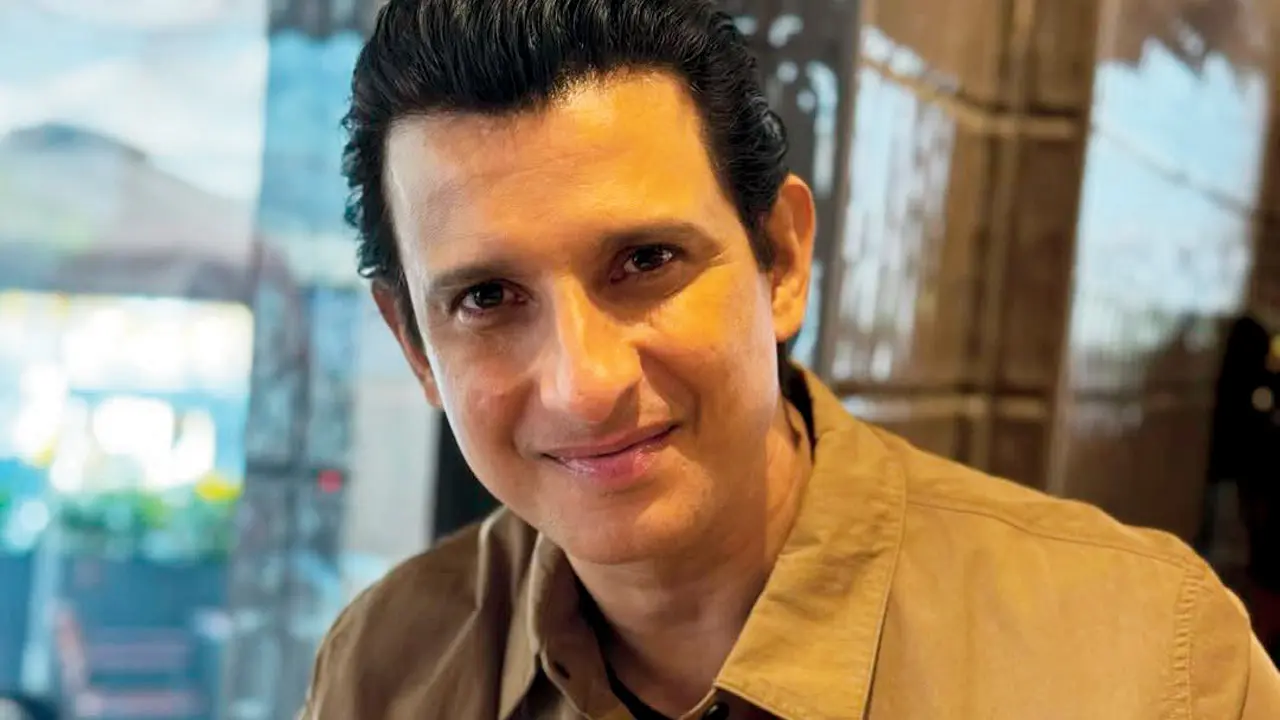
Letty Mariam Abraham (MID-DAY; February 7, 2026)
Twenty years is a long time to be away from a franchise you love. Naturally then, Sharman Joshi — who was part of Golmaal: Fun Unlimited (2006), which kicked off filmmaker Rohit Shetty’s comedy franchise — is itching to return to the world of Golmaal 5. “I’m likely to start working on it soon,” the actor told mid-day.
A lot has happened in the interim. Golmaal, led by Ajay Devgn, has had three instalments. Joshi wasn’t a part of them, with reports claiming that he had hiked his fees, which didn’t go down well with the producers. In several interviews, he claimed it was a miscommunication from his team that led to his ouster and he didn’t know until later.
Even as he has joined Golmaal 5 that will star Devgn, Kareena Kapoor Khan, Arshad Warsi, Kunal Kemmu, Tusshar Kapoor, and Shreyas Talpade, he wished he hadn’t lost the years. “I missed Rohit’s energy on sets, Ajay sir’s intensity and calmness. I missed Tusshar too. Rohit’s entire team is warm and inclusive.”
The comic caper will go on floors in late February. While rumours are rife that Akshay Kumar will play the antagonist, Joshi is keen to explore his on-screen dynamics with Talpade and Kemmu. “I [had seen] Shreyas’s work during intercollegiate competitions as our colleges were next to each other. I’ve been his fan since Iqbal [2005]. Kunal and I will reunite after Dhol [2007].”
The Good old days
‘Rang De Basanti’ (2006) completed 20 years of release last month. Remembering it, the actor said, “Last week, I was listening to the album, and all the fond memories came rushing back. Working on it was a fabulous journey.”
On ‘4 Idiots’
Sharman Joshi denied being approached for the ‘3 Idiots’ sequel. “I’ve not been informed about it so far, but I hope it happens,” he said.
Rang De Basanti has turned 20 years younger instead of 20 years older-Rakeysh Omprakash Mehra
10:54 AM

Natasha Coutinho (HINDUSTAN TIMES; January 26, 2026)
As Rang De Basanti completes 20 years today, the film’s music, composed by A R Rahman, continues to resonate across generations. From Luka Chuppi, voiced by the late Lata Mangeshkar, to Masti Ki Paathshala, the soundtrack remains as popular as ever.
Reflecting on the milestone, filmmaker Rakeysh Omprakash Mehra, who directed the film, says, “I believe the film has turned 20 years younger instead of 20 years older.”
Recounting memories from the making of the film, the 62-year-old says, “Just when we were to shoot the film I had a severe case of jaundice and was hospitalized but we started rehearsals since I had everyone’s dates locked. So I believe blessings come in disguise,” he says.
Mehra adds that much of the film’s music was conceptualized early on: “We had the film recorded like a radio program before we started shooting. I took that recording to A R Rahman in Chennai. He sat on his piano and started making the track based on the recording. The process with A R is, we talk a lot about the film, the characters and the reason I’m making a film. We enjoy meals together, go from drives and music just happens”
Sharing trivia about Luka Chuppi, Mehra reveals it was never part of the original plan: “The film was complete and we were doing the background music. When A R saw the scene he just stopped and composed that song.”
Playing down the recent controversy around Rahman’s remarks about his reduced workload, Mehra focused instead on the timelessness of the composer’s music, saying, “I love his music, good work is timeless. When you listen to songs by composer-duo Shankar-Jaikishan, singer Mohd Rafi and lyrisict Gulzar, you savour it. We are blessed that AR has given us such beautiful music.”
Industry makes you believe that only solo leads succeed but parallel leads are the way forward-R Madhavan
11:28 PM
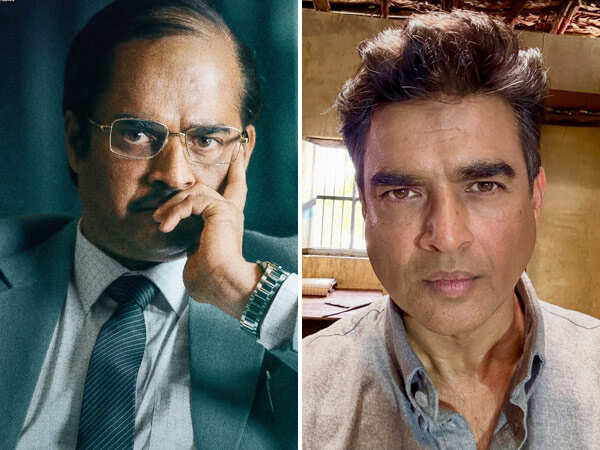
Renuka Vyavahare (BOMBAY TIMES; January 12, 2026)
Beyond its mammoth box-office success, Dhurandhar has emerged as one of the most talked-about Hindi films in recent times. Everyone seems to have an opinion – some are raving about its craft and entertainment value and calling it a game-changer for Indian cinema, while others have divergent views about its political stance. In an in-depth conversation with us, R Madhavan, who plays Ajit Doval, India’s National Security Advisor, in the film, opens up about the film, his career choices and reinvention at 55.
‘DHURANDHAR SHOWS WHAT INDIANS ARE CAPABLE OF WHEN PUSHED TO THE EDGE’
Drawing a parallel with Hollywood, Madhavan explains, “America makes you believe that if there’s a problem anywhere in the world, only Americans can solve it. They’re always shown as having the answers, and that’s what turned Hollywood into a powerful form of soft power. Whether it’s an alien invasion or a global crisis, American films portray their people as powerful, intelligent and scientifically advanced. That’s why they command such a massive global following. In India, we have all of that too. Yet our stories have largely remained rooted in small towns and smaller mindsets. Dhurandhar shows what Indians are capable of when pushed to the edge; it all feels real.”
‘EVERYTHING SHOWN IN DHURANDHAR IS ROOTED IN REALITY’
The actor clarifies that the film clearly states at the outset that it is a fictional account inspired by real events.
He explains, “Everything shown is rooted in reality. We have been attacked, we have been bombed, a plane was hijacked in Kandahar, and 26/11 happened. So, who are these assailants? If they are our enemies, what are we doing about them? Crime must have repercussions, not just headlines. There are people in this country protecting us without our knowledge. Someone, somewhere, is doing their job right.”
He adds, “If, as a nation, we fail to acknowledge those who safeguard our freedom – be it the administration or the judiciary – we miss the larger picture. Yes, we have shortcomings and issues, but we are still a functioning democracy. Disagreements are natural, but nothing comes before the nation, and not everything is politically aligned.”
‘THE INDUSTRY MAKES YOU BELIEVE THAT ONLY SOLO LEADS SUCCEED, BUT THAT’S NOT TRUE’
From Alai Payuthey and Rehna Hai Tere Dil Mein to Shaitaan and The Railway Men, R Madhavan’s filmography reflects a consistently diverse set of choices. At 55, with the burden of being a solo lead no longer defining his career, is he in a better creative space?
He believes so. “The reinvention is happening because I still feel I’m only at the threshold of giving the industry all that I’m capable of. I haven’t even scratched the surface when it comes to the characters I can play. The films lined up will show you the faith directors and storytellers have in me,” he says.
Madhavan also challenges the long-held notion that only solo leads work. He says, “We’re products of conditioning. The industry makes you believe that only solo leads succeed. But if you look at Hollywood – Al Pacino, Robert De Niro, Jack Nicholson – they’ve all played parallel leads. My role in Shaitaan was a parallel lead. Some might call it a supporting role, but it wasn’t. In Rang De Basanti, I was on screen for barely nine minutes, yet it was one of the leads. In 3 Idiots, we were all leads.”
‘True solo leads rarely work today’
The actor points out that even in Tanu Weds Manu, the narrative demanded restraint. “It was Kangana’s character that was aggressive and required to take the lead. My job was to step back and let that happen. Similarly, in Dhurandhar, would you say Ranveer Singh isn’t the lead? If you look purely at screen time, he has the most. But the maturity to step back and allow another actor to carry the narrative – that’s what creates iconic films. Parallel leads are the way forward. Storytelling has evolved,” he shares.
Madhavan credits fellow actors for enabling such storytelling. He says, “I’m in awe of Ranveer Singh for allowing that space in Dhurandhar, and of Ajay Devgn for making it happen in Shaitaan. Take me out of Guru, and there’s no one to oppose Abhishek. True solo leads rarely work today. Films like KGF or Kantara are exceptions, not the rule.”
-------------------------------
‘I knew Dhurandhar would be a game-changer’
While the actor had anticipated Dhurandhar’s massive success, Madhavan admits he didn’t fully foresee the intensity of the debates it would spark. “When I heard the narration, I knew immediately that the film would be a game-changer. I expected the discussion to focus more on a social discourse – on what India has become,” he says.
Delhi itself was a character in No One Killed Jessica-Raj Kumar Gupta
11:11 PM

Niharika Lal (BOMBAY TIMES; January 8, 2026)
Released in the first week of January 2011, No One Killed Jessica became a film audiences returned to each time the case saw a new turn. At the time, director Raj Kumar Gupta was warned that January releases rarely worked and that films led by women didn’t work – his had two. Yet the filmmaker says his faith in the film never wavered, a belief shared by everyone involved in the project.
A decade and a half on, the film remains iconic – for its hard-hitting subject, its authentic portrait of Delhi, its grounded courtroom sequences, and for helping open doors to female-led cinema at the time. Raj Kumar Gupta, who also wrote the film, looks back at the project that quietly reshaped the space for women-centric narratives in Hindi cinema.
‘There was no agenda behind the film’
“I wanted to tell the story, there was no agenda,” asserts Raj, adding, “I chose to tell it through the eyes of the two protagonists. One was Sabrina’s perspective and another perspective came from a character (of Rani Mukerji) who represented the media and, more broadly, the people who were seeking justice – those who wanted to see that justice was done. That is how the narrative came together. My approach was to stay focused on these viewpoints. Of course, many other characters came in and out of the story, but the core always remained centered on these two perspectives.”
‘It was a long and hard-fought battle for justice, and that was deeply inspiring’
Raj says, “When this incident happened in 1999, I was in college, so I remember it very clearly. This case was stuck in my head. Later, when we were discussing possible subjects, it came up again, and I felt it was something worth pursuing. I had lived in Delhi during my graduation, I had seen the city up close, and I had a certain point of view – both about Delhi and about the case. That perspective is what brought everything together.”
He reflects, “It was a long and hard-fought battle for justice, and that was deeply inspiring – a sister who refused to give up, who kept fighting for justice. The way the media and others collectively came together to support the cause was also powerful. This reflects society at large and is inspired by real events, and that is what ultimately compelled me to tell it.”
For the character of Jessica, Raj shares that he had Myra in mind. He says, “She was my friend. I also clearly remember the iconic smile of the real Jessica – I could see that smile in Myra, and that was extremely important for me to get it right. Although it was her first film, Myra did a great job in it.”
‘Filming the scene when Jessica was shot had an emotional complexity’
Raj recalls, “While we were shooting the first party sequence, it was one of the most complex scenes in the film not just technically, but emotionally as well. In many ways, the entire argument of the film rests on that scene. How it was shot was crucial, because later in the film, this is the very sequence that would be discussed in the courtroom.”
Shooting in real spaces
Raj Kumar Gupta wanted to shoot the film largely on real locations in Delhi. He says, "Delhi had a certain grit, a certain rawness, and that feeling was essential to the film. We had to have Delhi in the film. In many ways, Delhi itself was a character in the story. In the opening of the film, we talk about Delhi almost as if it’s a living presence."
Because of that, it was important for me to shoot across the city and the film was shot at locations like ITO, Tees Hazari, the streets of Delhi, Chandni Chowk, and other real locations.
He says, "I wanted the film to feel as authentic as possible, to be filmed in the real spaces where these events unfolded."
India Gate protest scene
Back in 2006, on Republic Day, Rang De Basanti hit the screens and gave Indian cinema one of its most unforgettable protest scenes. A couple of weeks later, what India witnessed was the RDB effect when the film served as a catalyst for civic justice in the Jessica Lal case when thousands of people, including students, gathered for a candlelight rally at India Gate.
Raj Kumar Gupta shares, "While there are many places in Delhi, when we have to think of a place in Delhi, we think of India Gate. It became a place of collective rebellion. In No One Killed Jessica, we incorporated the protest at India Gate because in reality, people protested at India Gate after Manu's acquittal. I think India Gate is one of the locations in Delhi which evokes strong emotions."
He shares, "India Gate scene was the climax of the film. That sequence had a very strong emotional arc, and logistically it was a huge challenge. We were shooting at India Gate and had permission only for certain hours. On the same day, there was a major sports event happening, so teams were being shuttled through the area. That meant we had to finish the shoot within a very tight time frame. There was also a massive crowd present during the shoot, which added to the difficulty. Despite all that, the sequence was extremely emotional. It was designed to represent the end of the film through a song, and the light, the atmosphere, and the setting all had to come together perfectly. The challenges were many - managing the crowd, executing the scene within the limited time, and ensuring that the emotional weight came through. Most of the characters seen in that sequence are people the audience has already watched fighting for justice throughout the film - friends, supporters, and allies, so it was important to bring them together in a way that felt truthful and earned."
------------------------------------------------
"The story is about hope and justice. In real life also, people came together and justice was done. The story itself is driven by a tragedy; it should not have happened. I wanted to tell the story in a format where the story never goes dark. It was a very conscious effort. We were telling the story about real people. Life is about hope. The world runs on hope. I took a hard-hitting approach, but I also took an approach where it never gets too heavy to handle." - Raj Kumar Gupta
------------------------------------------------
Raj Kumar Gupta says, "Vidya and Rani come from different schools of acting. Vidya is very meticulous; she prepares for her character and is very methodical about her approach. With Rani, she is very spontaneous. You will not believe that five minutes back, she was laughing and joking. I got to work with two contrasting and opposite actors, and the character was also such that it gave me a wide range. Vidya Balan met Sabrina, but not before the film."
Now Ladakh has a point named Bhaag Milkha Bhaag point-Rakeysh Omprakash Mehra
9:20 AM

Natasha Coutinho (HINDUSTAN TIMES; September 27, 2025)
It’s World tourism day today and filmmaker Rakeysh Omprakash Mehra revisits some of the locations featured in iconic scenes from his filmography.
He says, “Locations emerge from the script. When I write my scripts I also write the location. After that I visit the place, spend time there and rewrite as per the feeling I had at the location. Locations are definitely the third character in my films”
‘If we had to film a protest it had to be at the heart of the nation’
For Rang De Basanti, India Gate is where the boys go and salute, it’s also where the candle lit march against corruption was held. Being a Delhi boy, that’s the first place that came to mind. If we had to film a protest it had to be at the heart of the nation. India Gate has the symbolism of martyrs who died in the world war and it was important that we shoot the film there. There was another sequence in RDB where we filmed at the Golden Temple right before the documentary shoot began. Ours was one of the first films to be shot there.
There’s another location Nahargarh Fort in Jaipur, where the song Masti Ki Paathshala and some other scenes were shot, people still tell me they remember the film when they visit the place.
‘Old Delhi had a huge impact on me growing up’
Old Delhi is where I spent my growing up years. Chandni Chowk has a Gauri Shakar temple, diagonally opposite there is a church, opposite which is a Gurudwara and hospital, right in front of it is a Masjid. You turn around and you have the tricolour flying on the Red Fort. That’s where we used to play cricket. The place had a huge impact on me growing up. The idea was to explore these nuances through Delhi-6.
‘Ladakh has a point named Bhaag Milkha Bhaag point’
For Bhaag Milkha Bhaag we had to recreate places that existed during the 50s. We found some old places in Haryana, that had mud tracks not synthetic ones. As someone who is into sports myself, I knew that training at a high altitude helps expands the lungs, once you come down to sea level, training is easier. which is why we filmed at Ladakh. Now Ladakh has a point named Bhaag Milkha Bhaag point.
For the pre-partition scenes I filmed at a village near Fateh Pur, Pakistan. The authenticity of the locations reflects in the film.
How cinema made India Gate a site of protest
2:54 PM

Niharika Lal (BOMBAY TIMES; January 25, 2025)
Every year, the Republic Day parade begins at Rashtrapati Bhawan and proceeds towards India Gate. India Gate isn’t just an iconic location for Delhi but also for cinema. Back in 2006, on Republic Day, Rang De Basanti hit the screens and gave Indian cinema one of its most unforgettable protest scenes. A scene that still gives goosebumps to audiences – no shouting slogans, no waving banners, no chaos – just a crowd holding candles in silence.
The scene became a cultural phenomenon both onscreen and off-screen, inspiring many real-life protests at the site.
Since 2006, India Gate’s relevance as a protest site has been depicted in several films, including No One Killed Jessica, Raanjhanaa, as well as in the web series Delhi Crime. Ahead of Republic Day, we speak to directors to understand what keeps India Gate’s cinematic relevance alive.
‘For Rang De Basanti, I was drawn to India Gate because of the importance it holds’
Rakeysh Omprakash Mehra grew up in Delhi and attended Bal Bharati School. Talking about the protest scene in Rang De Basanti at India Gate, he says, “The entire area of India Gate and Rajpath has always been in my consciousness. It had a different meaning. I remember, in the 9th standard, I was part of the Republic Day parade. We were always mesmerized by the jawans who would stand there like a statue, without moving. Each brick has the names of martyrs from British India. I’ve always been drawn to India Gate because of the importance it holds for us. To me, India Gate also represents the Amar Jawan Jyoti.”
Talking about Rang De Basanti, which took inspiration from the real-life incidents where Air Force pilots lost their lives, he says, “In reality, when those pilots sacrificed their lives, nobody protested. I think it’s the duty of civil society to raise their voice. Everybody can’t just sit on the fence and point fingers this doesn’t work, and that doesn’t work. It is our responsibility to raise a voice, and it is very important. In Rang De Basanti, when we lose the Air Force pilot played by R Madhavan, his mother and his friends wanted justice, so they held a silent protest at India Gate. I was drawn to India Gate because of the importance it holds.”
‘INDIA GATE HAS BECOME A PLACE OF COLLECTIVE REBELLION’
Raj Kumar Gupta, the director of No One Killed Jessica, who also studied in Delhi, says that India Gate is the iconic place that defines Delhi. He showed India Gate as a protest site in No One Killed Jessica because it was the actual location of protests in the real case.
He explains, “Of course, Jantar Mantar was the place for protests in Delhi and still is. But India Gate very organically became a protest site after Rang De Basanti. Films only work as a catalyst; it was the people who made it the spot. While there are many iconic places in Delhi, India Gate is the first that comes to our minds. Over the years, India Gate has become a place of collective rebellion. It evokes strong emotions.”
He adds, “Democracy is about people’s voice, and one must speak against injustice. Over the years, with films using the imagery of a protest in the backdrop of India Gate, it has now become a symbol of the people’s voice. Besides, the monument has its own value.”
My role in Rang De Basanti was only for 9 minutes but it added to my immortality as an actor-R Madhavan
8:30 AM
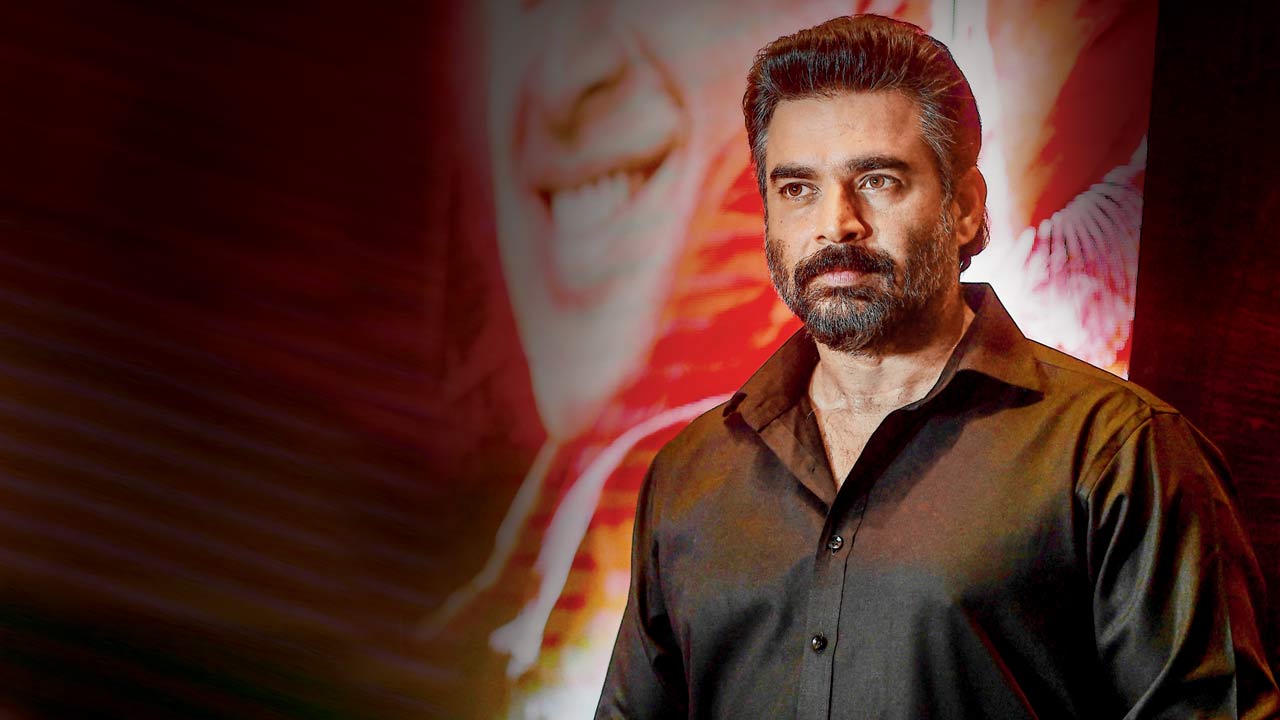
R Madhavan, who moves on to Dhurandhar with Ranveer Singh after Hisaab Barabar, states ensemble films have enriched his career over the years
Priyanka Sharma (MID-DAY; January 23, 2025)
You’ll see me a lot this year,” promises R Madhavan when we call him to speak about Hisaab Barabar. The ZEE5 thriller is his first project of what will be a busy year, with De De Pyaar De 2, a rom-com with Fatima Sana Shaikh, and Dhurandhar in the pipeline. Incidentally, each of his characters is different.
“I want to do roles that I can relate to. I’ve had such varied life experiences that I know how a railway man behaves, as well as how someone in Decoupled [2021] does. My wife says, ‘You’ve done a comedy in English, dramas in English and Tamil, and action. Why can’t you make up your mind about who you are?’ That’s exactly who I am, someone who can’t make up their mind,” he laughs.
What drew Madhavan to Hisaab Barabar, also starring Kirti Kulhari and Neil Nitin Mukesh, is the story’s relatability. Ashwini Dhir’s directorial venture revolves around how a ticket collector uncovers a bank scam.
“History has seen that the moment the regime starts derailing the common man’s life, [he will fight back]. This has been explored beautifully in the film,” shares the actor.
After Hisaab Barabar, Madhavan will star alongside Ranveer Singh, Sanjay Dutt, Akshaye Khanna and Arjun Rampal in Dhurandhar. The actor’s filmography is peppered with ensemble films despite the industry’s perception that they pose a risk to one’s stardom. Mention this, and he simply says,
“Imagine all the ensemble films that I’ve done. Now, imagine me not doing a Rang De Basanti [2006], or 3 Idiots [2009] or Vikram Vedha [2017]. Whose loss would it have been? Even though my role in Rang De Basanti was only for nine minutes, being part of such projects adds to my immortality as an actor. In 3 Idiots, I was playing second fiddle to Aamir Khan. But it didn’t upset my stardom in Tamil [cinema]. These are barriers that people in the industry draw around themselves to protect their own insecurities. I don’t have such insecurity.”
Madhavan recalls being advised against being a part of Anbe Sivam (2002) with Kamal Haasan. “Everyone said, ‘He is not known to share credit.’ But he bent over backwards to make sure that I got the role of a lifetime,” he recounts.
Aamir Khan is very conscious of the work he does. Taare Zameen Par made me a better person-Prasoon Joshi
9:00 AM

As he completes a three-decade milestone in his career, writer-poet Prasoon Joshi talks about his love for the lyric, the genius of Aamir Khan and why he disagrees with the notion that it’s difficult to make political films in today’s India
Priyanka Sharma (MID-DAY; September 22, 2024)
As far as he can rewind, Prasoon Joshi has always felt like a storyteller. “Writing mere hone ki shart hai (Writing is the condition of my existence),” he says. No wonder he has spent last three decades of his life dabbling in every possible extension of the art form—books, advertisements, poetry, short stories, songs and screenplays.
“I just wrote a musical, Radhiraaj: Love, Life, Leela. I am glad I can continue to experiment with different forms of writing,” Joshi says, as we try to decode his diverse career over an hour-long telephonic call.
Even before he entered the world of advertising, Joshi, all of 17 years of age, had published his first book, Mai Aur Woh. Born to classical vocalist parents, Joshi was surrounded by words from an early age. “It’s not like you decide one day, that from tomorrow, I will be a writer. It’s not a choice. It’s always there in you through your upbringing and how you are surrounded by that art form. I grew up reading poetry, Hindi poetry, a little bit of Sanskrit and folk music,” he shares. He knew his calling, but the question that Joshi struggled with was whether his pen could earn him a living.
“Hailing from a middle class family in a small town of Uttarakhand, I was sensitive about not being a burden to my parents,” he says. So after completing his Masters in Physics, Joshi pursued an MBA course and found the sweet spot for his passion.
“I found that the profession of advertising was where I could sustain myself and where there were takers for my storytelling.” Weaving sensitive, charming stories for numerous brands, Joshi revolutionized advertisements. Storytelling in Indian ads might not be accorded the same value as movies, but the poet-writer treated both the forms equally.
“People talk about higher and lower art forms but I don’t distinguish like that. In ads, I told stories for brands. In films, I told stories to bring across social values to people.”
Soon, Joshi began writing for independent artistes, including Mohit Chauhan’s Silk Route band and Shubha Mudgal, and his work reached the circles of the Hindi film industry. “I was fortunate that my work reached people before I did. I wasn’t knocking doors but my work had already opened their windows. Films were never on my mind because the kind of vocabulary I developed reading Hindi poetry, I wasn’t sure film industry people would like that. But here I was, writing my first film song for Lata Mangeshkar and Ilaiyaraaja.”
With Lajja, began Joshi’s stint in Bollywood. Hum Tum, Black, Rang De Basanti, Fanaa, Taare Zameen Par, Delhi 6 and Bhaag Milkha Bhaag stand tall as some of his most popular and acclaimed works as a lyricist. “My lyrics have always been poetic because I believe poetry is a gift that you are blessed with. You could be anyone in your professional space and still have a poetic eye.”
For Aamir Khan’s Rang De Basanti, Joshi also wrote dialogues, while Farhan Akhtar-starrer Bhaag Milkha Bhaag featured Joshi as its screenwriter. The Bollywood journey brought with it close collaborators, in the form of musician Shankar Mahadevan and Khan.
“Aamir is such a fabulous mind. We have collaborated on so many films. He is very conscious of the work he does. Taare Zameen Par really made me learn about children and dyslexia. It made me a better person. I am not a sportsperson but writing Bhaag Milkha Bhaag for two-and-a-half years made me realise what sportspeople go through.”
As he discusses one of his most powerful works, Rang De Basanti, Joshi reveals how his much-loved song, Luka Chhupi was an afterthought. “It’s the last track I wrote for the film. There was only a background score written for the scene. The tune was so special that A R Rahman said, ‘There can be a song.’ So, it occurred to me that why can’t it be about hide and seek between the mother and the son? And the mother is saying, ‘I can’t find you,’ and the child says, ‘You can’t find me now because I am in a place from where I can’t come back’.” His illustrious innings, however, wasn’t without its share of rough times. Joshi mentions the industry shows respect towards a lyricist only when he or she becomes popular.
While Joshi is considered one of the most prolific lyrical and poetic voices in the country, an aspect of his professional life remains under constant scrutiny—his position as the CBFC chairperson. Joshi, who was appointed as the chairperson in 2017, has faced his share of criticism over the board’s decisions on certain films. He admits that this journey hasn’t been easy.
“I understand I am on the opposite end of creative spectrum. But someone has to do that. A lot of people can be fence-sitters but nobody is ready to go into the field and do it. I am not someone who chickens out of responsibility. I distanced from films and a lot of my film work suffered after that. I had to do that to be absolutely objective. I always say that it’s a difficult job to balance artistic expression and society’s sensibilities. But I believe that creative people are not there to harm anyone. These things can only be solved through discussion.”
Over the last few years, the filmmaking fraternity has often felt and voiced that it’s not easy to make political films, especially those that are anti-establishment, in today’s India. Does he agree with the sentiment?
“All kinds of films will come out and there will be debates. Only through deliberation, will we understand. There are certain subjects that weren’t touched upon yesterday, but today they are. We are becoming more vocal. I don’t think there is fear among filmmakers that political films will be met with resistance or pressure.”
Recently, Anubhav Sinha’s Netflix series IC 814 had to add a disclaimer after a meeting with the I&B ministry as a section of the audience had taken offence over the Hindu code names that terrorists of the 1999 hijack had taken on during the attack. As we mention it, Joshi tells us he has to get to an event. “Probably we could talk about it later,” he says.
I understood the power of namaste in Punjab-Aamir Khan
8:10 AM

BOMBAY TIMES (April 30, 2024)
Aamir Khan shared some anecdotes from his shoot for Dangal at a recent talk show and revealed how he learnt the power of namaste.
He said, “We shot for Rang De Basanti in Punjab, and I really loved it there. For the Dangal shoot, it was a small village we were shooting in. When I used to reach there at around 5 or 6 in the morning, as my car entered, people would stand outside their homes just to welcome me with folded hands and ‘Sat Sri Akaal.’ They used to wait to welcome me.”
He added, “I belong to a Muslim family, I am not used to folding my hands in namaste. I’m used to raising my hand (gesturing adaab) and bowing my head. After spending those two and a half months in Punjab, I understood the power of ‘namaste.’ It’s a wonderful emotion.”
After watching Rang De Basanti, my friend and I used to take gedi of India Gate and salute-Ayushmann Khurrana
8:22 AM

Niharika Lal (BOMBAY TIMES; January 28, 2024)
This Republic Day, among the spectators who lined up to watch the parade at Kartavya Path was Ayushmann Khurrana. Ayushmann, who attended the parade for the first time, says that going from watching it on TV every year as a kid to being there in person was quite an experience. Ayushmann also met several officers from the forces and shared that it was amazing to see so many women officers commanding the parade.
“It was like a childhood dream to witness the Republic Day parade live in front of my eyes. It finally happened now and it was wonderful. It was a very overwhelming experience because it is something that is etched in the memory from childhood. I have been watching the parade as a kid on Doordarshan. It used to be a holiday and we would wake up in the morning to watch it. Seeing the Armed Forces march would be inspiring and watching them parade right in front of me this time – hardly 20 feet away – was overwhelming,” he shares.
INSPIRING TO SEE WOMEN OFFICERS COMMANDING R-DAY PARADE: AYUSHMANN
For Ayushmann, the best part of this year’s Republic Day parade was that it was women-oriented. “For the first time, the parade was heralded by 100 women artistes playing Indian musical instruments. Being a musician, I was overwhelmed. The parade had different musical instruments and not just the military musical band. It was very wholesome. I saw women from the Armed Forces taking the center stage, it was phenomenal. This year was dedicated to women, which shows the progressive stance that we as a nation are putting forward in front of the whole world. It was amazing that many women were commanding the parade. I do a lot of progressive cinema and I get really inspired by real incidents like this,” he says.
‘As an actor, whenever one dons a uniform there is also a sense of responsibility’
“My films like Article 15 and Anek have a deep message of inclusivity. In Article 15, I donned a uniform for the first time. As an actor, whenever one dons the uniform (of Armed forces or police) there is a sense of responsibility which also comes. We get in touch with real-life officers, imbibe their body language, imbibe their sense of responsibility and their sense of duty. I’ve met many officers and R-Day was another eye-opener when I met officers from Navy, Army, Air Force and police forces.”
‘For me, Delhi is India Gate’
Ayushmann’s first job was in Delhi, and since his mother is from Delhi most of his vacations were also spent in the city. “I have seen Delhi in every season. It has the charm of changing weather. The AQI was much better 20 years back. We never complained about pollution back then. But the city has its own charm. My favourite memory of Delhi is that when Rang De Basanti released, and my friend and I used to take gedi of India Gate and salute because that was the film that instilled the feeling of patriotism in us. I think everybody has done that and every millennial has done that when the film was released. So, for me, Delhi is India Gate. I used to cross India Gate every morning to host a radio show, and (around R-Day) I used to see all the jawans doing their drills. That was truly inspiring for me. For me, the microcosm of India is New Delhi – the capital.”

No matter how much we do to celebrate Ram Temple inauguration, it will never be enough-Daler Mehndi
8:49 AM

Making his foray into Bhojpuri music with a song on Lord Ram, Daler Mehndi encourages efforts to promote to-be unveiled temple
Sonia Lulla (MID-DAY; January 15, 2024)
Almost three decades after he made his industry debut, Daler Mehndi presents his first Bhojpuri song, Ram Ji Ki Jai, Hanuman Ji Ki Jai, for the Bhojpuri film, Rang De Basanti. “I got a call for this number, and five minutes later, we were recording it. It is based on the Ram mandir, and I was attracted to the lyrics and rhythm. It is a number that can get everyone grooving,” says the singer of the song that was filmed in Ayodhya, and features Bhojpuri actor Khesari Lal Yadav.
Ask him if rendering a song in a new language posed a challenge, and he responds in the negative. “I was born in Bihar, and was brought up there for 13 years. Even our Guru Vani [spiritual speech] contains a lot of Brij Bhasha, which has hence been part of my childhood. So, even though this is my debut in the language, it wasn’t difficult to render it.”
Even as the country celebrates the upcoming inauguration of the temple in Uttar Pradesh, a discussion on Prime Minister Narendra Modi’s ability to drive prominent film personalities to spearhead promotional work for the event cannot go unnoticed. Evidently, then, we ask Mehndi about his views on how cinema and politics have become interdigitated to celebrate the inauguration.
“This [matter has been in contention] for 500 years. No matter how much we do to celebrate this inauguration, it will never be enough. We’ve been hearing about these stories from our parents. So, I find myself fortunate to link my name to this event. I recall, when I recorded the song Kala Kauwa, I was told to remove it [from the album]. But, I was sure it would do well, as it did. Similarly, I have faith in this number. It will be the biggest Ram geet of the era,” he touts.
On the day that we connect with Mehndi for this interview, he is set to return to television after 25 years for a Lohri special episode in the show, Tere Meri Jodiya. It’s an exciting time for him as an actor, he confesses, speaking elatedly of his outing in the Akshay Kumar-starrer, Welcome To The Jungle.
“Apart from a song, I am also going to act in it along with Akshay paaji, Sanjay Dutt, Arshad Warsi, Suniel Shetty, and others. There are 20 stars. I play the role of a comic paaji, and enjoyed working on it. It is beautifully written, and left the cast in splits after each dialogue,” he signs off.
I didn’t even know Hindi when I first came to Mumbai-Sobhita Dhulipala
8:50 AM

Onkar Kulkarni (BOMBAY TIMES; October 22, 2023)
She’s been impressive with her work in films like Raman Raghav 2.0, Kaalakaandi and web shows like Made in Heaven and The Night Manager. Sobhita Dhulipala who hails from Andhra Pradesh says that when she arrived in Mumbai she wasn’t even fluent in Hindi.
Talking about the understanding she had of Bollywood, Sobhita said, “I learned Hindi after I came here. While growing up I enjoyed Bollywood music. When it came to films I have grown up watching movies like Rang De Basanti and Mangal Pandey: The Rising. I didn’t have a plan when I came here. I took part in a beauty pageant. Actually when I was in college mujhe acting ke keede ne kaat liya. When I look back, it was a crazy adventure. Ever since I was young I had a strong creative charge and that helped me reach where I have reached today.”
During her school and college days, even though she was academically driven, Sobhita was quite active in extracurricular activities. She says, “I had the habit of reading and writing. I was also training in classical dance forms like Kuchipudi and Bharatanatyam. All these elements that contribute to a creative instinct were very much there. But it just never occurred to me ki isko main career bana sakti hoon.”
As she started looking out for work in showbiz, Sobhita shares that she had given herself a deadline. She concludes saying, “From the time I finished my college I gave myself a deadline of three years - if within that I am not able to find my path then I would go back to studying. I just wanted to give myself a realistic marker. It helped me have an objective and focus. Then when Raman Raghav 2.0 happened… the film had a positive influence on me.”
Making movies on our fight for independence redefined the idea of patriotism for us, say filmmakers and actors
8:43 AM

BOMBAY TIMES (August 15, 2022)
‘THE ROLE OF BOSE CHANGED ME AS A PERSON, AS WELL AS AN ACTOR’
The role (of Subhas Chandra Bose in Shyam Benegal’s Netaji Subhas Chandra Bose: The Forgotten Hero) changed me as an actor and as a person as well. It was academically enriching. Until that role became my second nature, we didn’t start shooting for it. In fact, the character stayed with me even after the film was made and released in theatres. As a part of the prep that went for around six months, I read as many books as used for reference to the script. In fact, I lived the character for almost three years. It, by far, remains my best work. As we complete 75 years of Independence, I feel the younger generation must go back to read about our leaders, or at least watch films to be aware. — Sachin Khedekar, actor Subhas Chandra Bose
‘WORKING ON FILMS ON BOSE AND GANDHI BOOSTED MY PATRIOTISM’
Over the years, I have been associated with several films dealing with our national leaders. (My directorial) The Making Of The Mahatma depicted Gandhi’s evolution into becoming an unparalleled national figure. He managed to mobilise people in an extraordinary way. My other film, Netaji Subhas Chandra Bose: The Forgotten Hero, showed how he mobilised Indians living outside India, like Singapore, Malaysia, etc. to fight for India’s freedom even from the outside. Both these stories are very different from each other and working on these films clearly boosted my patriotism as these are the people who fought against great odds for so many years. The research and the shooting process left me touched. — Shyam Benegal, director
‘THERE SHOULD BE A SPECIAL PERIOD IN SCHOOLS WHERE STUDENTS LEARN ABOUT THEIR DUTIES AS CITIZENS’
When you do a film on a freedom fighter, it leaves a huge impact on you. Going back to that history makes you realise how important it is for an individual to do something more for the nation. You live the character for 60-70 days of shoot and that influences the kind of vision you have for your country. I am lucky to have played Bhagat Singh (in Shaheed-e-Azam). My mother, a history professor, used to share books on our fight for independence. Right from my school days, I would read and watch such films. For everyone who is associated with a patriotic film — be it the technician or the audience — it changes everything. For me, Independence Day is not just about hoisting flags, but touching the lives of fellow Indians. There should be a special period where students learn about their country, their duties as a citizen and humanity. These things will prompt the newer generation to think more about the nation. — Sonu Sood, actor

‘I HOPE A DAY COMES WHEN THE WHOLE WORLD BECOMES ONE NATION’
For Rang De Basanti, apart from understanding the ideologies that the freedom fighters believed in, I didn’t do much research for my role (of Rajguru). But just hearing their stories inspired all of us. The kind of sacrifices our men made for our country… everyone has the right to freedom and these brave men fought for that. For me, patriotism means respect and love for the land you live on. It also means to respect and love the others who live on the land. I hope a day comes when the whole world becomes one nation — Sharman Joshi, actor
‘PATRIOTISM MEANS DIFFERENT THINGS TO DIFFERENT PEOPLE’
I always wanted to make a film about the armed revolution and the young guns of India who stood up against the British Raj because it made me wonder why these 20-something boys picked up the gun and walked to the gallows for the country with a smile. Patriotism means different things to different people. I wouldn’t call Rang De Basanti a patriotic film; it was about a generation waking up. You want to make the country perfect? Dirty your hands with running the country.
We all criticize the machinery like fence dwellers. When I found myself in the director’s chair, I felt I had a chance. — Rakeysh Omprakash Mehra, director
‘BIOPICS ON FREEDOM FIGHTERS REMIND US OF OUR DUTY TO OUR COUNTRY’
When I made Bharathi, I wrote the screenplay with the intention of bringing Subramania Bharathiyar’s multifaceted nature on screen. Bharathi’s inability to work under a feudal king, joining forces with other extremist leaders in the freedom struggle, composing songs about nationalism and independence, resisting the British rule through newspapers and cartoons, his emphasis on women’s emancipation... I wanted the film to talk about it all. When you make a biopic on someone like Bharathi, it doesn’t stop with being a documentation of a life of a personality, but also becomes a film that reminds us of patriotism and our duty to the nation. — Gnana Rajasekaran, director
--------------------------------------
Subodh Bhave who played Bal Gangadhar Tilak in Lokmanya-Ek Yugpurush, says, “When you portray the character of a great patriot like Tilak, you get a better understanding of the country. Their stories are so inspirational that you become more sensitive towards situations and people.”
— With inputs from V Lakshmi, Onkar Kulkarni, Preeti Atulkar, Rachana Dubey, Ruman Ganguly, M Suganth and Sunayana Suresh
When I wrote Forrest Gump's remake, I had visualized only Aamir Khan in the role-Atul Kulkarni
8:30 AM

Laal Singh Chaddha writer Kulkarni discusses it all — from sharing Forrest Gump adaptation idea with Aamir years ago, to making it a “desi film”
Uma Ramasubramanian (MID-DAY; July 25, 2022)
During the making of Rang De Basanti (2006), Atul Kulkarni had suggested to Aamir Khan that Forrest Gump (1994) could be beautifully adapted for the Indian audience, thus enabling viewers to revisit the country’s political and cultural milestones. The idea stayed with Khan, since the Tom Hanks’ starrer was one of his all-time favourites. Almost 16 years on, the duo have brought their idea to fruition with Laal Singh Chaddha.
Adapting the Hollywood drama, rooted in American history, was not easy. Kulkarni, who serves as Laal Singh Chaddha’s writer, says, “Every word was a challenge. It was difficult to adapt it in the Indian context. We have made it a desi film. Also, [when I had written the remake years ago], I had visualized only Aamir in the role.”
He is glad that Khan saw merit in the project and agreed to not only star in it, but also back it through the years. “Rang De Basanti was an experience that stayed on with us, and that translated into a deep friendship. We have been in touch ever since. Aamir is the kind of person who loves to grow each day. At every meeting that we have had, I always felt that I have learnt something from him,” he smiles.
With a superstar involved in a film from the early stages, one may think that a writer does not get a free hand. But Kulkarni points out that creativity is only enhanced by collaboration. “There is a wrong notion about getting a free hand, because on any film, there are bound to be discussions. People feel discussions are disputes, and that’s where the misunderstanding lies. With this film, I would say whatever I had written in the script [has made it to the screen]. There are a few changes that were discussed and made. It was a collective [endeavour], as any film should be.”
As it readies for release, the Khan and Kareena Kapoor Khan-starrer has a tall order. While, like any other movie, it aspires to appeal to the audience, Laal Singh Chaddha will also have the added pressure of comparisons with the Hollywood gem. The writer is unperturbed, as he says, “When you see Laal Singh Chaddha, you’ll see it’s an independent desi film.”

I was really surprised that you could get admission in college on the basis of your acting skills-Abhishek Banerjee
8:46 AM

Niharika Lal (BOMBAY TIMES; July 16, 2022)
Abhishek Banerjee’s role as the hammer-wielding gangster Hathoda Tyagi (in Paatal Lok) made him a household name. An alumnus of KMC (Kirori Mal College), Delhi, Abhishek says he took admission in that college because it was Amitabh Bachchan’s college. In Delhi for a project, he talks to us about his college days and how it took him almost a decade to crack the code as an actor, while he worked behind the scenes as a casting director and also did small roles. Excerpts from our chat with him:
‘I DIDN’T KNOW ONE COULD GET ADMISSION IN DU WITH ACTING SKILLS’
The Delhi boy shares, “Even when I was in school (Kendriya Vidyalaya in Delhi), I wanted to get into KMC because I was a huge fan of Mr Bachchan and he was an alumnus of KMC. Main yeh sochta tha ki main thoda ghoos (bribe) khila ke kaam chala lunga. Then I met Mohd Zeeshan Ayyub; he was from my school and studied in Kirori Mal College. He told me that I could also get admission by appearing for the theatre auditions (under ECA quota). I was really surprised that you could get admission in college on the basis of your acting skills, and that’s how I got into KMC and then Players (the theatre society of KMC).”
Talking about Players, he adds, “It is one of the best theatre groups in the country, and I’m not talking about amateur theatre groups. It is the best professional theatre group in the country. We have many talented people working in the film industry from Players – from Ali Abbas Zafar to Divyenndu (Sharma) and Zeeshan (Ayyub). And of course, we have veterans like Satish Kaushik and Kulbhushan Kharbanda.”
‘AS A CASTING DIRECTOR, I COULD NEVER BE PARTIAL, EVEN TO FRIENDS’
Abhishek’s first brush with films was on the sets of Rang De Basanti (2006). He played a small role in the film. He says, “It was the first time when I went on a film set, and I realized that there are so many other things to do on a film set apart from acting. But I wanted to become an actor.”
Apart from Rang De Basanti, where he played the role of a DU student, the actor also had a small role in Bombay Talkies (2013) and played a pickpocket in No One Killed Jessica (2011). Abhishek had auditioned for the role of Manish in the film but was rejected. The role was eventually bagged by Zeeshan Ayyub.
Abhishek shares that while he did not go to FTII (Film and Television Institute of India) or NSD (National School of Drama), he learned from his experiences on film sets, where he started working as a casting director. He has 90 credits on IMDB as a casting director, which includes films like Secret Superstar and Toilet: Ek Prem Katha. He says that over the years, there have been many times when his fellow casting directors would reject him for roles.
He says, “In Ghanchakkar, I thought I could have been cast as I knew the team, but I was not. It was a learning from my seniors, and that is why I could never be partial as a casting director, even to friends.”
While he kept doing small roles and got a lot of offers for playing the hero’s friend, Abhishek says he didn’t want that. He adds, “In 2018 when I was offered the role of Rajkummar Rao’s friend in Stree, I was not convinced. But Amar sir (Amar Kaushik, director of Stree) told me that it is a film with three guys. While it was an important role, I think the role after which people started noticing me was Hathoda Tyagi. And then they would recall Stree and Phillauri and so on.”
Talking about his experiences and learnings as a casting director, he tells us, “I have been casting from the time when we were known as casting coordinators and not casting directors. We know a lot of good actors who haven’t got space. We try to not waste them on small roles – and when the time and the role and the director are right, we cast them. And then people wonder yeh kahan se aaye? Yeh yahin thay – yahin theatre kar rahe thay.”
Subscribe to:
Posts (Atom)