Showing posts with label Randeep Hooda interview. Show all posts
Showing posts with label Randeep Hooda interview. Show all posts
How will I or any animal lover face anyone who’s lost their loved one to rabies?-Randeep Hooda
5:08 PM

Vinay MR Mishra (BOMBAY TIMES; August 23, 2025)
On Friday, the Supreme Court revised its earlier suo motu order that required all stray dogs in NCR to be confined to shelters. A Bench comprising Justices Vikram Nath, Sandeep Mehta, and NV Anjaria clarified that stray dogs can now be released back into their original habitats after being sterilised and vaccinated. Celebrating the move, actor and animal rights supporter Randeep Hooda says, “The knee-jerk judgment has been taken back, which is a good thing. Releasing the dogs from the shelter after vaccination and sterilization is the way to go about it.”
Randeep says, “A right balance can be struck by enforcing sterilization - phase-wise and repeated sterilization. All the citizen groups and animal lovers can collectively participate in systematic, repeated sterilization drives, which will reduce the number of strays. This should have been done ages ago, but it has been delayed, and all parties involved are to be blamed for it.”
‘Our dogs are our collective and social responsibility’
Randeep acknowledges the seriousness of stray-related incidents, particularly involving aggression and rabies. “Our dogs are our collective and social responsibility, and I understand that they can be a menace as well. Being an animal lover, you cannot ignore that fact. How will I or any animal lover face anyone who’s lost their loved one to rabies or has been grievously hurt by dogs on the streets? You cannot justify that. Safety is important,” he shares.
‘We tend to get foreign breeds, but indies make great pets’
About how citizens can help, he says. “Taking more responsibility for strays and adopting puppies will help. Usually, we tend to get foreign breeds, but indies make great pets. Lead by example. One should donate to shelters and good organizations that take care of these voiceless angels.”
Another critical gap, he feels, is medical support. “There should be a supply of rabies vaccines. They should be readily available.”
Randeep on his indies:
I got my first one, Candy, when I was going to the airport to pick up my parents. I saw this beautiful puppy, who was scared and drenched in the rain. I stopped the car, picked her up and brought her home. We got her vaccinated, and she became a part of my house. I adopted my second pet, Bambi, from a friend. Eventually, your pets become like your children. They bring a lot of joy. Mine is a bit territorial as well.
I am no longer the island that I used to be-Randeep Hooda
9:59 AM

Onkar Kulkarni (BOMBAY TIMES; May 13, 2025)
Known for his intense screen presence and versatile performances, Randeep Hooda reveals that personally, there’s been a transformation in him after his marriage to actress Lin Laishram in November 2023. The actor believes that his marriage has played a pivotal role in bringing about a change in the way he engages with the world.
‘Today, I’m more willing to put myself out there’
Reflecting on how there’s been a mindset shift post marriage, Randeep shared, “I’m no longer the island (isolated person) I used to be. I can still be that island, but now there’s always a bridge back to the mainland through Lin. I’ve become calmer, more open to new experiences and more sociable. Today, I’m more willing to put myself out there and be presentable. There have been great changes in my life, and I’m incredibly grateful to her. She’s a spiritual person, and her calming influence has brought a lot of peace into my life. She’s introduced me to a positive routine with fewer late nights, and it’s definitely been beneficial,” said Randeep, who was recently seen playing the antagonist in Jaat, starring Sunny Deol.
‘After directing a film myself, I have a newfound respect for my directors’
Randeep, who helmed Swatantrya Veer Savarkar last year, plans to take his role as a director ahead. He explained, “I’m excited about directing more films in the future. Right now, I’m writing two projects — one is an international film, and the other is a high-octane action movie.”
Though acting remains his first love, Randeep admits he missed the responsibility and power that comes with being a director when he was on the set of Jaat.
“As an actor, there’s often a lot of downtime, and that was a challenge for me when I shot for a film after Savarkar. I found myself restless in my vanity van with nothing to do. But it’s also a relief that someone else is handling all the problems and challenges that come with filmmaking. After directing, I have a newfound respect for my directors. I’ve always respected them, but stepping into their shoes gave me a deeper understanding of the endless list of issues they have to manage,” said the Highway actor.
South cinema cinema poore Bharat mein chal raha hai because everybody can relate to it-Sunny Deol
8:45 AM

Compiled by Rishabh Suri (HINDUSTAN TIMES; April 13, 2025)
Actors Sunny Deol, Randeep Hooda and Viineet Kumar Singh - the star cast of Jaat were in town recently to meet the winners of the HT City Stars In The City contest. In conversation with Chief Managing Editor, Entertainment & Lifestyle Sonal Kalra, they were up to answer every question that came their way. From an overload of action films, to nepotism, they took it all. Randeep also went on to share some BTS stories from his wedding in 2023 to Lin Laishram, and everyone was left surprised.
Oh, and that was not it. How can you have such macho stars in the house, and not have a panja battle!
There’s so much action in Jaat. Does it come naturally to you at this point? Or do you roll your eyes when an action script is narrated to you?
Sunny: Scripts pasand aati hain, tabhi karta hoon films. In the kind of films I’ve done, [my] character is an underdog who comes up and wins and overcomes the situation. Chaalis saal se tag aisa lag gaya hai ki main [action] se nikal nahin paa raha hoon. But Jaat is a very entertaining film.
Who’s the real ’jaat’ in the film?
Randeep: I am a real-life Jaat, playing a Sri Lankan in the film, and that’s a joke on me (laughs). But it’s good for the movie. Kya yeh community ke baare mein hai? Kisi individual ke baare mein, ya yeh koi agent hai? Film dekh ke pata chal jaayega. The only true Jaat in the film, however, is Sunny Deol. Humare Haryana mein bolte hain, ‘Jaat ki full form hai, Justice, Action and Truth!’”
Viineet, what was it like working with two powerhouses like Sunny and Randeep?
Viineet: I got a lot of love from these two secure actors. Bade ped ke neeche chhota ped khil nahin paata. But agar ped aisa ho, toh ped dam dama ke khilta hai!
There’s a lot of talk about north vs south cinema. Having worked with Telugu director Gopichand Malineni on his first Hindi film, what’s your take?
Randeep: Filmmakers in the south make slick films. As far as North-South goes, language is the last form of communication in any human interaction.
Sunny: Unka cinema poore Bharat mein chal raha hai because everybody can relate to it.
Do you have any real-life memories that felt like a filmi, dramatic moment?
Randeep: My wedding took place in Manipur under heavy Army protection. There were more security personnel than civilians; as soon as the pheras finished, AK-47s went off in the air across the entire valley. Shaadi ho toh aisi ho!
Sunny, as your sons Karan and Rajveer set out in their careers, how will you support them while letting them carve their own paths?
Sunny: As a father, I will always support them, like my dad (actor Dharmendra) did. Karan is on his own journey; let’s see where he goes. Baaki, when you become a father, you realize that you will always have that ‘dhak dhak’ in your heart.
My sister warned that if I lost more weight, she’d break my cameras and walk out-Randeep Hooda
8:11 AM
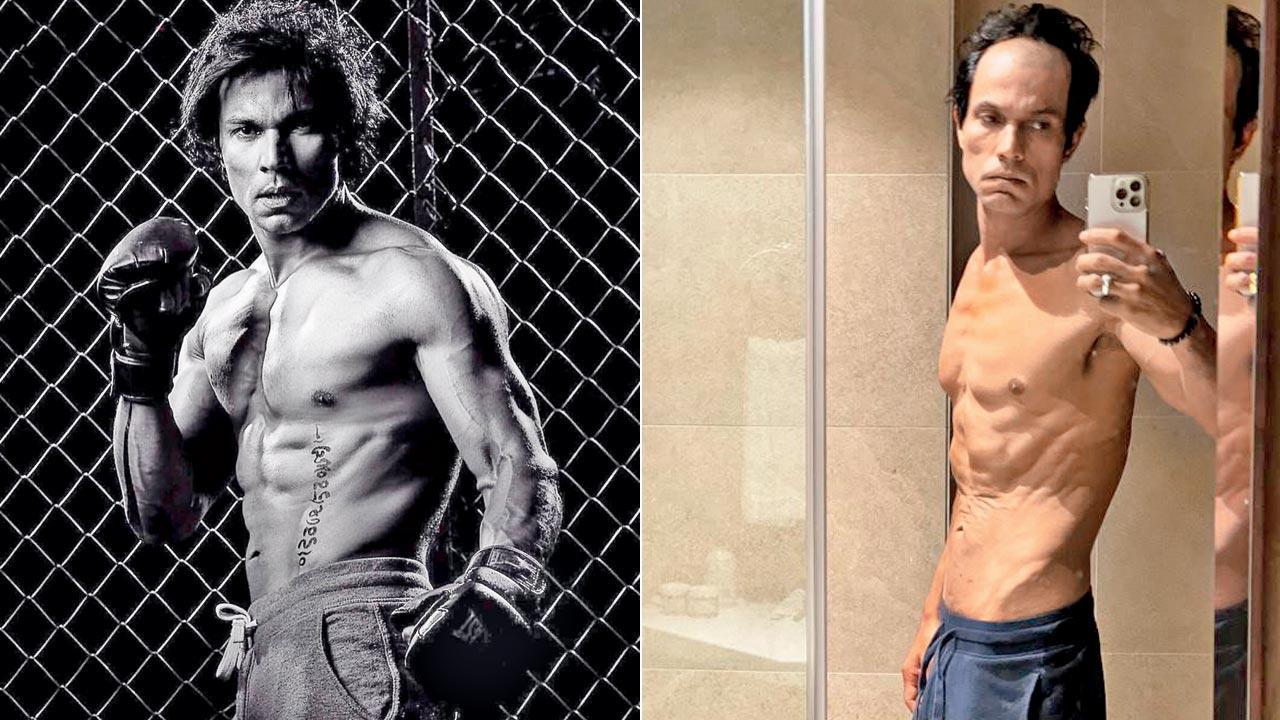
Before and after
In a candid interaction with mid-day, Randeep Hooda chronicles the pain he endured to shed 32 kilos and remain underweight for 18 months as he breathed life into his character for Swatantrya Veer Savarkar
Sonia Lulla (MID-DAY; April 10, 2024)
While production timelines in the film industry are often breached, the implications of a delay in filming Swatantrya Veer Savarkar significantly impacted Randeep Hooda, who took on the Herculean task of shedding 32 kilos for the offering. A defined deadline to commence and conclude the film had been contractually set, but “obviously that did not happen”.
For Hooda, while the decision of his producers to back out of the film may have taken an emotional toll, it was his physical health that also took a hit. “This time around, I was underweight for one-and-a-half years,” he says, while drawing parallels with the programme he previously followed while taking on a similar task for Sarbjit (2016).
“When the previous producers shelved the movie, I had lost all my muscle mass. I recall passing out and tumbling off [my] horse. My calf was bent at a right angle to my thigh, which makes me realise how weak I may have been.”
On regaining consciousness, Hooda recalls “pushing my leg back in place”, and subsequently spending the following eight weeks in bed, indulging in “revenge eating”. “That’s what happens when you deprive yourself of food for a long time. I couldn’t even walk. Then, I took help from [a] physiotherapist, and started practicing walking on the treadmill under water. I had a sequence to execute in the film where my character, Mr Savarkar, escapes in France. This training was essential for that.”
Losing weight, twice over
When work on the film commenced again, that actor needed to “quickly shed weight”. “I had to be losing [a] kilo a day for a certain number of days. That’s when I adopted the fast mimicking diet, which led me back to the place I had been working towards for months. It was very tough. I would often feel extremely weak, and would faint. It’s a terrible thing for an actor to go through. But, I believe, looking the part is something every actor should do. It should be the [very least] one does. I had planned things out, but they didn’t work out. So, the longer that [I had to adhere to the diet], the more frustrated I became. I had to suffer due to lack of organization, and had to do it twice over,” says the actor, who also turned to his sister, Dr Anjali Hooda Sangwan, for assistance.
“She also features in the film, as the guiding light for Mr. Savarkar. On set, she was always worried for me. She’d keep a check on my stats and blood report, and, at one point, warned that if I lost more weight, she’d break my cameras and walk out.”
Hooda now speaks of the Herculean task with humour, but admits that enduring it as an actor was no mean feat. That he had been playing the role of a 92-kilo “khata peeta” cop with a paunch before commencing this film implies that he had a long way to go before he hit his target of 60 kilos.
“This is the least I have weighed. Also, because I was directing the film, I had taken on an added challenge. It was a test of patience, not only for me, but also for the remaining cast and crew. My mind was clouded, and often I felt [I could hear] voices from a distance. I’d lose my patience quickly, and often. But, I made everybody aware of the fact that I was going through something that was not in my control, and requested them to bear with me. I was concerned about the fact that I had been underweight for too long. At one point, I was begging the people involved to finish the shoot so I could get back to [eating normally].”
Not done yet?
When Hooda’s dramatic pictures first made their way to social media, netizens were quick to compare his efforts to those of Hollywood actor Christian Bale, who had taken on a similar task for his role in The Machinist. And while a listener hearing about the daunting feat may assume that an actor would never wish to tread the path again, Hooda, like Bale, only “thinks” he is “done” with such transformations.
“The thing is, you first take on a role if it appeals to you, and then when you get into it, you realise this is something you may need to do. That’s when it hits you. So, it’s an afterthought. Each time that I take on a film like this one, my parents make me promise that I won’t do it again. It’s not just the physical trauma, but also the emotional and financial one that one bears. My parents told me they wouldn’t stay with me in Mumbai if I did it again. And so, I promised them I wouldn’t, but, I’m not sure. I feel like I don’t want to go through this anymore, but if there’s a role that [I am drawn to, I may]. In this case, after I read about the injustice that Mr Savarkar endured, and learned about his contributions to the freedom struggle, and his ideology of an all-encompassing nation, I just had to take it. But I do hope I work on easier roles, in that sense.”
Of course, the experience has left Hooda with his share of learnings. Should he take on a film of this nature again, he would “work with more like-minded people who are considerate of the project’s quality, and my health”. “I absolutely could have died. I was in such a bad state. I [will] try to contractually bind people, if I’m going to attempt something like that.”
It comes at a cost
While other actors who have shed oodles of weight for their professional commitments have often underplayed the physical damages it has left them with, Hooda speaks of his scars without inhibition.
“I’ve been on anti-anxiety and sleeping pills for a while now, and want to wean myself off them. That was needed, because, at times, I was so hungry that I couldn’t sleep. Being hungry gives you a lot of energy; your mind wanders because you don’t have the hormones that aid you to sleep. Also, my body has changed. I have gained 20 kilos again, but my body lacks the [traditional definition] it had. I have to work on building that again with systematic training. My knee needs to be operated on because my ACL is completely [damaged]. In one year, I lost [strength in] both knees due to the lack of muscle mass.”
Hooda, an avid sportsperson who speaks of his love for riding as passionately as he does of his films, admits that taking a backseat from racing affected him. “Sports is a big part of my life, as it should be for everybody. In the last two years, I have not been on top of a horse too much. I’ve got new horses that were born to my mare. One of them is Hope. She’s big, white and beautiful, and I can’t wait to [take her on the track to race]. Some of the best moments of my life have been spent in a saddle.”
The fast mimicking diet entails
- Almond flour pancake
- MCT OIL 1 tbsp
- 1-2 tbsp almond butter
- 2-3 eggs
- 1-3 squares of dark chocolate
- Digestive fibre and multivitamins
It is generally performed in cycles of five days, and is followed by a one-day break where the practitioner can have a low-carb diet
Narayanrao was lynched after Gandhiji’s murder; 8,000 Brahmins were lynched in Maharashtra-Randeep Hooda
10:25 AM
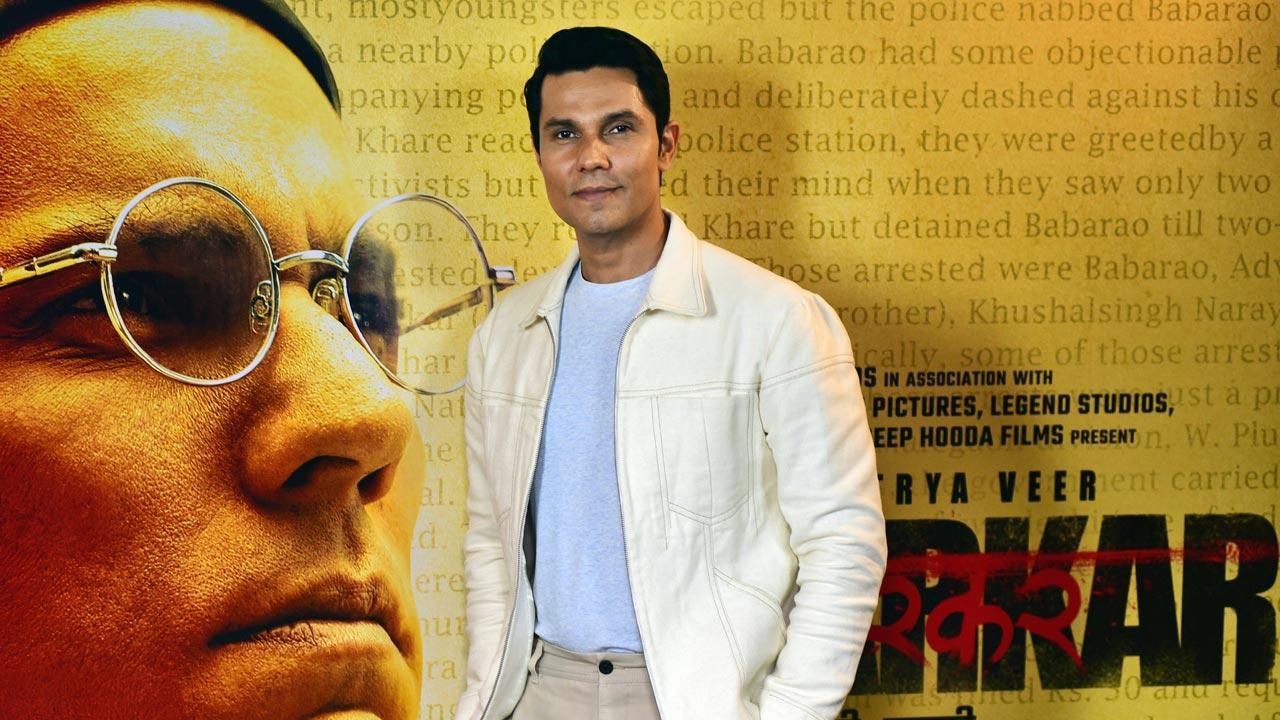
Randeep Hooda plays Vinayak Damodar Savarkar in his directorial debut, and hopes the thriller will shed new light on the much-maligned nationalist
Aastha Atray Banan (MID-DAY; March 10, 2024)
If you thought Vinayak Damodar Savarkar and Mohandas Karamchand Gandhi were antagonists, given that the former was accused of playing a part in the latter’s assassination plot, actor Randeep Hooda will tell you differently. “They had completely different ways of going about it, but their end goal was the same: Akhand Bharat,” he says.
“In fact, when Savarkar was in Kala Pani [Cellular Jail], it was Gandhiji who advised his brother, Narayanrao, about how to draft the bail plea.” It has been claimed that Savarkar swore allegiance to the British if he was released.
Hooda plays the controversial man in his directorial debut, Swatantra Veer Savarkar (due to release on March 22), and is now a veritable expert on his life, likes, dislikes, and ideologies. “But this movie is not a history lesson,” he laughs, “It’s supposed to be entertaining as well.”
The “anti-propaganda film”, as he calls it, is a retelling of Savarkar’s life. The intellectual-writer developed the nationalist political ideology Hindutva in Ratnagiri in 1922, and was a leading figure in the Hindu Mahasabha. He was also sentenced to two life-terms at Kala Pani (after he was found guilty of supplying the pistol used to assassinate the then collector of Nasik, AMT Jackson, in 1909) and composed 6,000 poems when incarcerated. His book, The Indian War of Independence, about the first war for freedom in 1857, was banned before it came out.
However, members of the Hindu Mahasabha turned against him when he distanced himself from Nathuram Godse and others accused of playing a part in Gandhi’s assassination plot during their trial. Though Godse had claimed full responsibility for the assassination, court approver Digambar Badge had said that Godse had a meeting with Savarkar before the assassination, where Savarkar told them all, “Yashasvi houn ya (be successful and return)”.
He was branded a traitor and coward, and though the Bharatiya Janata Party has tried to rebrand him as “Veer”, the nasty names continue to follow him around. We meet Hooda in Juhu, and he is in good spirits, wanting to delve deep into Savarkar’s psyche. Excerpts from an interview
What was your first introduction to Savarkar?
I think Kala Pani and Savarkar were synonymous for me when I was a child. When I started digging deep, I found there was so much missing from the public domain. I wondered why it has been swept under the carpet. My well-wishers told me, “Why are you getting into this? Why become political? You are an artiste”. I replied, “His story needs to be told, whatever it takes.” The kind of name-calling that happens in his name is unjustified. I just pursued the goal to correct that wrong with all sincerity. I ended up co-writing the film and directed it as well. It’s taken me two years of only thinking about Savarkar. I have put everything on the line—emotionally, monetarily, physically. And I’m so grateful people will know his special story.
What was the research involved?
I read books in English, Hindi; spoke to Maharashtrian filmmakers and historians who have written about him. I read about him and I read what he wrote. He is such a profound writer... People have just heard things through “WhatsApp university”, and keep calling him maafiveer (apologist). He was not that. He was just 26, and sentenced to serve two life terms. He went to Kala Pani in 1911 and the date of his release was 1960—he would have been 76! He used to keep writing bail pleas, but they were too flowery. Then Gandhiji asked him to keep it short, and that’s how he got out. Narayanrao was lynched after Gandhiji’s murder—8,000 Brahmins were lynched in Maharashtra. So much for non-violence. People don’t know about most of this.
He had a complicated relationship with Gandhi...
They had opposing ideologies, and both were very stubborn. They met three times—in 1907 at London’s India House; and once at a restaurant on Vijay Dashmi, and gave speeches together. Then in 1927, Gandhi visited him in Ratnagiri when he was placed under house arrest. They started at opposite ends, but met in the centre united by one purpose: A united India. But both of them were not part of the government, much like revolutionaries all over the world. Revolutionaries fight; politicians take control.
Was Savarkar less about religion, and more about nation?
Yes. Till 1920, everyone was one. In 1920, a caliphate movement started in Rae Bareli. Many Muslim leaders thought that India was a sultanate when the British came, and that it should go back to being a sultanate when they left. They didn’t want to be a part of the Congress’ democratic process, where they were a minority. To get them involved, Gandhiji became president of the Khilafat Movement, and there on began the process of appeasement. They were given more seats, and electorates.
This irked Savarkar. He came up with the Hindutva philosophy in response: he held that everyone who lived in the region between the Indus river to the sea, were Hindus. Whatever caste, religion, or community, as long as you love Hind, you are a Hindu. This angers people, but that’s a geographical definition. He said anybody who calls the land between the river and the sea the home of their ancestors, are Hindus.
Are the movie, and you, defending Savarkar?
I hope it does, but that’s not its purpose. I have made it as a thriller; it will enthrall you. It’s for young people. I have laid out the facts; I don’t call him veer, you will have to decide if he was one.
What did you learn the most by playing Savarkar?
Saam, Daam, Dand, Bhed (by any and all means)—that’s what he believed in. It’s what I have used to make this movie and get it released. One should do whatever it takes once one has decided the purpose of his life. And also, “Dushman ko kiye hue vaade nibhaaye nahin jaate”.
What do you want people to take away when they leave the halls?
That there is a bias in the telling of our history; documentation has been very one-sided. Also, you will get entertained and learn more about the freedom struggle than what’s available at first look.
Lin Laishram and I wanted to go to the next step, we wanted to have babies-Randeep Hooda
10:13 AM

Vinay MR Mishra (BOMBAY TIMES; February 14, 2024)
A rather phlegmatic Randeep Hooda becomes mushy the moment his now-wife actress Lin Laishram enters the room. On Valentine’s Day, the newlyweds shoot for their maiden joint interview, for Bombay Times. “You are looking like a doll,” Randeep whispers in Lin’s ears, while playing with the strings of her dress, leaving her pinker than her dress. “It is always fun to shoot with him, because he's trying to crack me up,” Lin confesses after the shoot.
Mention the mushiness to Randeep and he quips, “My carefully constructed façade over many years is going to ruins. All my hard work of being this standoffish person has been punctured, thanks to her.”
Talking about the Valentine's Day, the Jaane Jaan actress says, “It is very cute. I love my teddies, flowers, diamonds (laughs). I am very cheesy that way. So, I love Valentine’s Day.”
'We wanted to have babies'
The couple tied the knot in Manipur on November 26. "It is a strife ridden state as we speak and it has been for a while, which is very sad. I hope peace comes there very quickly. We went to some relief camps where people were displaced due to the conflict and we tried contributing to that part as well," Randeep states.
Ask the Highway actor how did he know Lin was the one, and he replies, "It happened point by point. We started living together through COVID and that really brought us together. We had better understanding with each other. And then it happened very organically, we wanted to go to the next step, we wanted to have babies and grow our family. I have never been a very easy person to be around because I'm always demanding too much of myself, but when she comes around everything changes."
Further excerpts of the interview as followed...
How does it feel to be Mr and Mrs?
Randeep: For me there is a sense of responsibility, the caretaker of sorts. I'm not alone on my own trip (anymore) and there is somebody else along with it. Now, I must adapt to that, do more work and make our life more comfortable. Enough of the single carefree life, now it's time to dig your heels in and make something which will last and will be for the family to come. She has brought new energy in my life, new impetus to do things, look at life differently.
Lin: It has been lovely for me. I love his family. I love talking to his dad; he is such a cool person. I always wanted to have a bigger family. I like what he said, to make my life comfortable (laughs). It gives you that confidence, that somebody is holding your back. I never felt that ever. And that's a very good feeling. One must marry to feel that I guess.
Talk to us about the wedding?
Randeep: There were a lot of problems going on in Manipur (directing at the ongoing Manipur crisis) but then we thought that we cannot stop our lives. We went there amidst a lot of uncertainty and it turned out very well. The whole marriage rituals were very new for me. For the wedding, they had asked me to sit there like a statue, you can't move for 1.5 hours because on that day, I was god, and she was goddess. When I saw her in that splendid attire, I was like, ‘Wow, she looked like a goddess’. It was a wonderful day for us. I made it a point that we should go there and then get married according to her rituals.
Lin: I was skeptical because our wedding is not like Punjabi wedding. It's not loud, there is no disco. But I didn't expect him to perform so well.
Randeep: My parents were just so happy that finally I'm getting married. They had started having doubts that I'll never get married. I'm quite proud of my parents also. They took to their culture very well and there was a cultural exchange. Also, we've got married in the Northeast, came to Mumbai, which is in the West, for a reception, then went for reception to Delhi and then to Kerala for the honeymoon. We have covered the whole country and tried unifying the country.
How did you all plan the wedding?
Randeep: The intention was to go there quietly get married and out. It is a personal thing. The social media pictures just came out and then we had no other option but to post as well.
Lin: We never discussed our marriage for so long. In fact for a really long time I never thought that I would get married.
Randeep: I was actually very busy with the movie SwatantryaVeer Savarkar and all kudos to her. She managed it all, because I had no time and I'm very grateful to her. She did it with so much grace and took control of it because I was busy doing the post production. It has been a very tough journey for me through this movie financially, emotionally, creatively and physically as well. I had lost so much weight and she saw me through it all. I'm very grateful to her. I was not the easiest person to be around. I appreciate the fact that she took charge of it and let me do my work with as much sincerity as I could.
Lin: During our initial dating phase, he told me one thing that was very clear to me. He said I'm married to my job. So, from that day onwards, I have never questioned him about the choices that he makes for himself. He's completely dedicated to what he's doing. It was not easy to see your life partner going through what he was going through, losing weight. I felt like is he sick. I cried seeing him like that, next day he moved to a hotel. But that is marriage. That's why we get married.
I work better in isolation, but you can’t do that as a director-Randeep Hooda
8:34 AM

Renuka Vyavahare (BOMBAY TIMES; April 16, 2023)
Randeep Hooda’s passion towards his craft, bordering on extreme, often overrides any sort of physical or psychological hiccup. Whether he is playing Sarbjit or portraying Charles Sobhraj in Main Aur Charles (2015), each time he gets into the skin of his character. The actor also battled knee injuries for consecutive years, leading to a delay in film projects. Despite the odds, Randeep is back on his feet and is ready tohead back to his ambitious project to date, Swatantra Veer Savarkar.
Having undergone massive weight loss to play the titular role of Vinayak Damodar Savarkar, we met the actor before he left for the Andaman and Nicobar Islands to restart the shoot of the film. Interestingly, Randeep’s responsibilities aren’t limited to being an actor anymore, as he has also taken over as the director and producer of the movie.
Seated in his peaceful new office in suburban Mumbai, surrounded by the tranquility of trees and birds, the actor said, “I work better in isolation, but you can do that only as an actor or a writer, not as a director. It’s like I was an individual tennis player before, and then they put me in a soccer team and made me the captain, and now I must make all the players play tennis individually! Juggling the roles of a director, writer and producer is a great lesson in people management because acting is very individualistic.”
Elaborating on taking on multiple responsibilities for the project, he shared, “This is my first film as a director, writer and producer. I am being fearless about it. I didn’t know many things about Savarkar before I started researching him. Most books have dedicated only two paragraphs to the armed revolution, which was also a part of our freedom struggle. Through extensive research, we will show in the movie what their actual contribution was. I am making this movie also to connect with today’s youth.”
It took Randeep a few months to get back in action post the injury, but he is in no mood to slow down. Looking back, he says, “I was 22 kgs underweight for almost eight months while prepping for Savarkar, I weighed 68 kgs. Post the injury, I am now 71 kgs and I need to lose weight again as we restart the shoot as there must be continuity. With age, it all gets tougher for sure.”

BT Exclusive: Staying at home almost tied to the bed or the chair has been the most difficult part-Randeep Hooda
8:11 AM

Renuka Vyavahare (BOMBAY TIMES; February 15, 2023)
Randeep Hooda met with an accident last month after he fainted while riding a horse, which led to a nasty fall. The actor was rushed to a hospital and was admitted for a few days. He injured his knee severely due to the fall. During the process of recuperating, he took to penning short stories. In an exclusive interview with Bombay Times, the actor opens up on his health, healing, and road to recovery. Excerpts:
There were various reports about your fall from your horse due to a fainting spell. What led to it?
It was because of weakness resulting from staying underweight for too long. I blacked out, and because of almost no muscles (due to weight loss), the knee got dislocated, damaging all the ligaments. I also had a small fracture.
What has helped you to heal and be positive during this recovery phase?
Family and friends have been there for me. I also have great support from my doctors, who are guiding me in the whole recovery process. But being an active person who loves working, riding horses and exploring jungles, staying at home almost tied to the bed or the chair has been the most difficult part.
As I was already playing a writer in Swatantra Veer Savarkar saab’s biopic, writing short stories helped engage my mind positively. The fear of gaining too much weight due to revenge eating was a great source of worry, but I managed to keep that at bay with the help of my trainer.
You are known for pushing the boundaries to get into the skin of the character. In the past, too, you have done it for the film Sarbjit. Has this second knee injury made you rethink the extreme physical transformation that you go through for your roles?
The only way I have learnt to work and enjoy my work is by pushing the boundaries. The opportunities that the process gives to experience more in life, gives me immense joy. However, the shooting of this movie (SwatantryaVeer Savarkar) got delayed and I had to stay underweight for too many months and that had its consequences. Every passing year affects your metabolism, and most importantly, your resolve to attempt drastic body transformations and stick to it. There are times when one wonders if it’s even worth it. The decision on your effort’s worthiness is up to people, so I am doing it. When it feels like I’ve had enough, I’ll quit it completely. That’s highly unlikely, though.
Does all of this also take a toll on your mental health as well?
The knee injury is just the tip of an iceberg which I can share with people. The mental stress of doing this for such a prolonged period creates issues that are far worse than the physicality and harder to share. It’s probably harder on the ones around you.
You are acting and directing the Savarkar biopic. It’s bound to be stressful to manage that while nursing an injury. When shall we see you back on set and on the horse?
You must get back on the horse again if you fall off it. It’s the same with life and film roles. I have to buckle up (the knee) and lose weight again for the continuity in the film and have a go at it all over again. I am glad that I got to do a Sikh character in the series CAT and that the audience at large could relate to it. This is a year of varied projects, and I will be donning more hats than just that of an actor. I need my legs healed to carry out the responsibilities well.
Direction is a far tougher job than acting-Randeep Hooda
8:18 AM
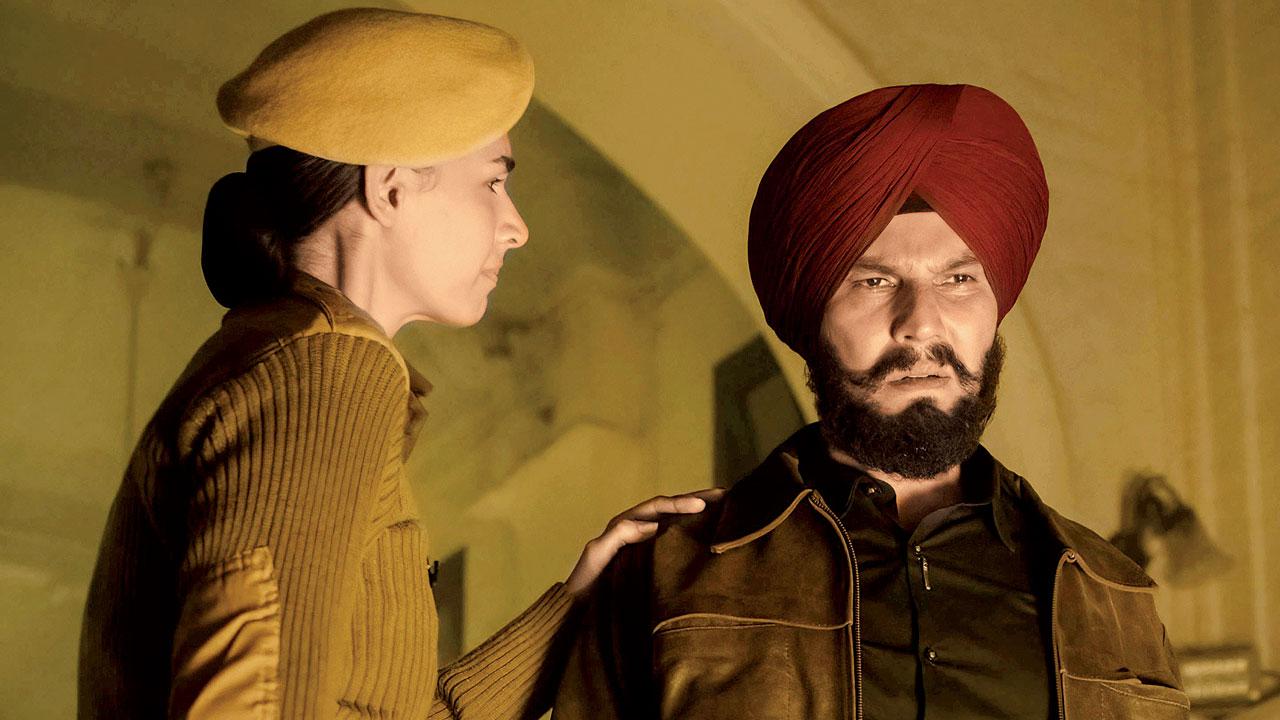
Having got a taste of direction with 'SwatantryaVeer Savarkar', Randeep Hooda on why Balwinder Singh was the perfect choice to helm the spy thriller, 'CAT'
Letty Mariam Abraham (MID-DAY; December 13, 2022)
When narrating a true story, staying authentic to the subject is one of the director’s biggest responsibilities. For first-time director Balwinder Singh Janjua, the responsibility was only compounded as he told the story of Punjab in the ’80s and ’90s that was threatened by insurgency and drugs. Fortunately, he found a like-minded artiste in Randeep Hooda. As they present the Netflix series, 'CAT', the actor-director duo give us a low-down on the challenges of tackling a real-life subject.
Edited excerpts from the interview.
What does CAT mean?
Singh: CATS are undercover informants for the cops. It was relevant back in the day, and was used by cops in the US and Russia. Hailing from Punjab, I have witnessed these [episodes] first-hand, and [always] felt that I must share this story. I caught up with a few people who were CATs [earlier]. My co-writers Jimmy [Singh], Rupinder [Chahal], Anil [Rodhan] and I created a story of two brothers and tried to showcase the problems of that era. It is fictionalised, but set against true events.
Considering the story is set in your land, was that one of the reasons why you came aboard?
Hooda: I am from Haryana, which used to be Punjab till 1964. I have a deep connection with my land that I never lost, in spite of being in glitzy Mumbai for 22 years. So, that was part of the appeal. Besides that, it was an intriguing script that pans two timelines. The two big problems faced by Punjab since the Partition have been insurgency and drugs. To have these dramatic fictional characters against that backdrop was interesting.
As a new director, how does it feel to be in charge of translating your written material on screen?
Singh: I think I am a born director. This is my second film as a director. If you are a writer-director, it [becomes] easier. Even when you write, you keep the direction in mind. The thing I find fascinating as a director is the opportunity to set the tone of the show, to create the same mood that I discovered during writing. Then I will look at performances, casting. The challenges for me were to show Punjab of the ’80s and ’90s. I had to find such locations [that have the old-world charm]. Back then, cars were different; people travelled by scooters or bicycles. The villages had kachcha houses.
Hooda: I believe writing is the most enriching experience, the rest is execution.
How do you view Balwinder’s directorial skills, considering you’ve turned director now with 'SwatantryaVeer Savarkar'?
Hooda: I never felt, even for a moment, any sense of apprehension, or conflict or that I was forced to do something that doesn’t suit the character. [As an actor], that is a big deal. He said earlier he was born to be a director. I back that thought because he is undoubtedly a talented writer-director, but he is also a good manager. I am telling you because I am attempting it myself. Direction is a far tougher job than acting.
When 'Udta Punjab' was released, there was a huge furore about associating Punjab with drugs. Were you wary about attempting the subject?
Singh: You are a journalist. Tell me, was there a drug problem or not? The people [we] are trying to tell the story to, are aware that drugs are an issue. I am from Punjab, and I have seen those broken families who were affected by it. Some people have lost close to six sons to drugs, leaving behind a grieving mother. Most of our stories originate from the things that happen in society. As a creator-writer, it is my job to connect with the story and tell it convincingly. I cannot talk about people who create controversies, or deny that Punjab is plagued with drugs. Our story is backed by proper research. We have tried to say it with as much honesty as possible.
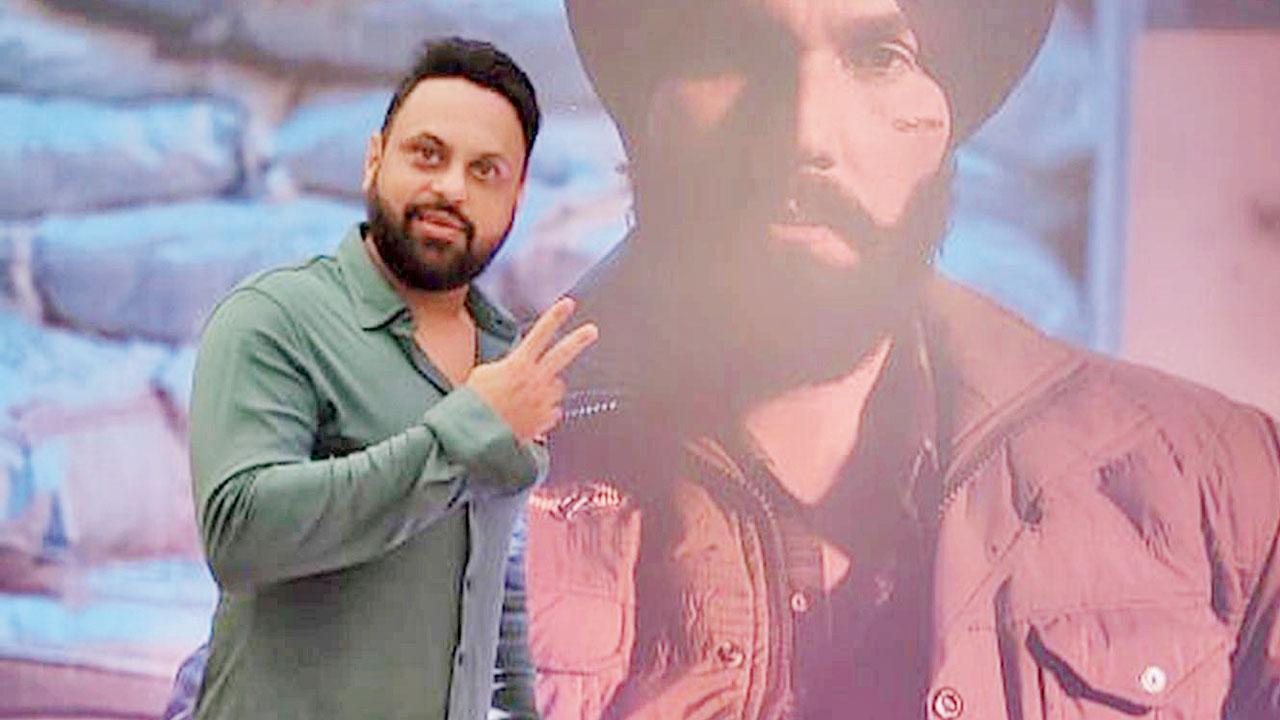
Randeep Hooda sponsors ice skater Vishwaraj Jadeja, who will represent India at World Cup
8:34 AM

Onkar Kulkarni (BOMBAY TIMES; August 14, 2022)
During the recently concluded Commonwealth Games (CWG) 2022, Randeep Hooda was seen constantly cheering on the athletes and the winners on social media. He keenly followed the various matches and India’s performance at the sporting event held in Birmingham.
“It gives me great satisfaction to see our sportspersons do so well. This time around, we got a lot of medals in various new sports, especially in athletics, which is a very tough discipline,” says Randeep, congratulating the athletes who ensured India grabbed the fourth spot on the list of countries with the maximum number of medals this year.
Proud of the talent coming from various states of India, as well as his home state Haryana, an overjoyed Randeep says, “Athletes from Haryana have always done well in sports. Sports is a part of the culture there. People start participating in various sports at a young age. So, it’s a little bit of genetics and a lot of hard work.”
The actor, who studied at Motilal Nehru School of Sports (in Rai), is a sportsman himself. Randeep says that he has seen the trials and tribulations that sportspersons face right from his childhood. “I know the discipline and the hard work that they put in. You do very well in one competition, and as a result, people get to know you and then, you face the burden of expectations. You have to live up to their expectations. In their sporting career, athletes have to deal with injuries, too.”
Randeep, who participates in equestrian events like show jumping and dressage, has won several medals in the National Equestrian Championship over the years. He has battled severe injuries, but he has never let the pain deter him. Reflecting on the process of suffering injuries, recovering from them and regaining form post-recovery, he stresses on how it is important to stand by the players not only during their highs, but also their lows.
He opines, “We clap when our players win medals and make us proud, but we should be there for them through their journey, especially when they fail, get injured or do not live up to their potential. During situations like these, if we support them emotionally, financially or in any other way, it will give them a big boost. I think it is already happening. A lot of help is being given to them.”
The Highway actor has always gone out of his way to stand by the players that make India proud. Last year, he met and congratulated the Tokyo Olympics gold medalist and javelin thrower Neeraj Chopra (pictured above). This year, Randeep along with entrepreneur and philanthropist Jay Patel sponsored ice skater Vishwaraj Jadeja, who will represent India at World Cup 2022 for long track speed skating.
“I can only be a facilitator or someone who encourages athletes. In Vishwaraj’s case, his sport is very different, and there was no support for that sport in India. He was doing everything on his own, so we thought of supporting him. If he does well in this sport, other people will join in, too. We have to encourage this (a sport that isn’t among the popular ones) because every bit of support is a step towards bringing it into the mainstream. For many years, especially after the Indian cricket team won the World Cup in 1983, all our focus and attention has been on cricket. I am happy that today this focus is shifting towards other sports, too,” he says.
During his school days, Randeep was a swimmer and played equestrian sports. He’s happy that though work as an actor keeps him busy, he’s managed to balance his passion for sports. “In school, I used to do drama and ride horses, and today, I am doing the same thing (laughs). Playing sports is a relief as I have an obsessive personality, so I need another passion to offset my passion for acting or cinema.”
The tiger doesn’t vote for local issues to be resolved-Randeep Hooda
8:53 AM

On International Tiger Day, he feels non-exploitative economic benefits from tigers for local people can help save big cats
Sugandha Rawal (HINDUSTAN TIMES; July 29, 2021)
Actor Randeep Hooda, who is concerned about the growing tiger-human conflict, says, “To actually save the tiger, we need to have non-exploitative economic benefits from the tiger where locals benefit, and not some fancy resort”.
On International Tiger Day, the 44-year-old calls to dispel the misconception that “the tiger belongs to the government”, while emphasising the need to mobilise local people in direct everyday contact with the national animal of the country. “The special day serves as a reminder and homage to this great creation of nature. It is a great day to rehash the conversation around tigers and their importance in our ecosystems,” shares Hooda, referring to the tiger as “an umbrella over millions of species of flora and fauna”.
As per the actor, who is vocal about wildlife preservation and tiger conservation, fast-paced development is cutting into their habitats, leaving them vulnerable. He says it is important to start conversations among people close to the animal. Hooda explains, “We have to stop talking to the converted and look at the bigger picture. We have to reach out to more people who come in direct contact with the tiger, and sensitise them.”
Hooda says the biggest problem that obstructs the mission of protecting tigers is the fact that “it doesn’t vote”. “The tiger doesn’t vote for local issues to be resolved. Somebody says, ‘I’ve built a new road for you guys in the village’. That local change has a global effect. In many cases, such a road goes through a tiger reserve. If they voted, they would be looked after,” says the Extraction (2020) actor, wondering what’s stopping one to take a longer route rather than fragmenting a habitat.
Here, Hooda asserts that he is not against development, but it shouldn’t come at the cost of the planet.
“We have a really robust environmental policy made in the 1970s. Due to changing circumstances, those laws are being diluted. It is worrisome, and all of us are responsible for it. For the government, forest land is the easiest to give away. There should be very strict laws for such things,” he says.
Hooda, who uses his camera to capture the beauty of big cats, adds, “We have to constantly check people we have elected and make sure they do not destroy the future of our country and the planet in the name of development”.

Although, I have an action-hero image, I have barely done action scenes in our movies here-Randeep Hooda
7:58 AM

Rachana Dubey (BOMBAY TIMES; July 5, 2021)
A year ago, had everything worked as planned, Randeep Hooda’s international film, Extraction, which was released on a digital platform, would have had a mega premiere in the US. The actor is now in talks for more international projects and an announcement might be made soon. When asked if he has achieved what he intended to with the film, Randeep says, “Yes, I have — I have widened my audience base and opportunities for the future, built great relationships, and finally, done action and combat scenes in my movie. Although, I have an action-hero image, I have barely done action scenes in our movies here. So, that was a new genre to explore, and it came to me at a time when I had spent three years prepping for a movie that was shelved. I was in a dark space.”
Around the time of the film’s digital premiere, Randeep had said, “Maybe they didn’t like my acting,” when he was asked about Bollywood’s cold reaction to his Hollywood project. Bring this up, and he shares, “I was asked that Bollywood which lauds a poster launch, a teaser launch or a blink-and-miss appearance of an actor in a Hollywood film had not said much about my work. I responded to that saying that maybe they didn’t like my acting man…”
Randeep, who was recently seen in Radhe: Your Most Wanted Bhai, admits that he does find himself in a better place on the international film circuit. “Their industry has just opened up and conversations have begun. Talks are on and I hope one of them materializes soon. They don’t want people to travel there right now looking at the situation that exists here and everywhere else in the world.”
After a two-decade career, one wonders if Randeep, who has barely had 50 releases, has figured where he’d like to head from here. Randeep says, “I want to do more action films now. I enjoy that genre and want to expand myself as an actor where I need to prepare and change myself in every way and experience another life. I feel fortunate that 20 years down the line, filmmakers find me exciting and unexplored. I am offered challenging work, and I hope it continues. I hope that I can keep doing challenging things till the day I die. I saw Anthony Hopkins in The Father. To win an Oscar for the best actor at his age is so amazing. It tells actors what they can do even when they get older. He’s brilliant. There is no end to roles and craft. It keeps getting better as long as you stay interesting and interested.”
The actor further adds, “Staying relevant is about a whole juggernaut of things that you need to do, which are not entirely in your hands. Keeping yourself interested in your work, trying to be better at it and translating thoughts into your work while connecting with yourself is in your control. I am going to keep doing that.”
It’s fun to work with Salman Khan because he is easy going-Randeep Hooda
8:00 AM

As he essays all-black antagonist to Salman’s cop in Radhe, Randeep Hooda discusses picking unusual parts to avoid being typecast
Uma Ramasubramanian (MID-DAY; May 13, 2021)
You need an ominous villain to offset the larger-than-life heroics of Salman Khan. Enter Randeep Hooda as the drug kingpin to Khan’s cop in Radhe: Your Most Wanted Bhai. The actor, who relishes playing dark characters, says his part in the Prabhudheva-directed venture stood out for its moral bankruptcy. “I have played many negative characters with moral ambiguity. However, in Radhe, this guy is black inside out,” begins Hooda. “It’s liberating to play negative roles. I have turned down films where the character is [similar to] me. It’s exciting to be other people, and cinema gives you the means to do things that you won’t do in real life.”
The actioner, which simultaneously releases in theatres and on ZeePlex today, marks his third collaboration with Khan after Kick (2014) and Sultan (2016). “It’s fun to work with Salman because he is easy-going. We share an off-screen camaraderie that makes it easier in front of the camera.”
Over the years, Hooda has built an eclectic repertoire, where an offbeat Saheb Biwi Aur Gangster (2011) features alongside a massy Radhe. Assessing his career moves, the actor reflects, “I have been against typecasting. Many people believe that you should do a certain kind of [films] and make it [your domain], but I don’t share the idea. I have done few films compared to [my peers]. Filmmakers continue to find me interesting because I mix and match my movies, and thankfully, I don’t have to repeat myself.”
Point out that he had gone missing from the screen for a few years after 2016 — a move that is considered hara-kiri in the industry — and he says, “I did not take on too much work out of choice. It wasn’t that I was out of work. I grew my beard and hair for three years to [play] a Sikh character for a film that got shelved. I believe you have to [cut] off from work to [rediscover] yourself. In showbiz, people say, ‘Jo dikhta hai, wohi bikta hai’. But I know many [artistes] who have gone off work for years and returned with interesting roles.”
I was chasing Salman Khan in Kick, I trained him in Sultan and I am now testing him in Radhe-Randeep Hooda
8:04 AM

Rachana Dubey (BOMBAY TIMES; May 12, 2021)

In one of your recent social media posts, you gave a shout out to help with oxygen concentrators in the battle against Coronavirus. How did you get involved with this work?
During the last wave of the pandemic, I had done whatever I could to help people. Back then, people didn’t have basics, daily amenities, and so many had been laid off from their jobs. This time, the fight is for oxygen. I have been associated with Khalsa Aid for many years now. We decided to tackle the most important and immediate requirement - oxygen concentrators. Some patients can manage with these devices at home for their oxygen requirement. By getting hospitalised, they occupy beds that can be used for critical patients. Concentrators are fewer in number. So, we decided to help out with it. Once a patient reaches out to us, we either home deliver it or have someone from their side pick it up from us. We collect it back once the patient is alright and pass it to the next one who needs it. We’ve got a tremendous response. Today, everyone is trying to help. In fact, I was also planning to go on the ground and assist, but I was asked to refrain from it to avoid chaos. So, I am doing whatever I can from home.
Amid this crisis, your film Radhe: Your Most Wanted Bhai is releasing. It has waited a year to see this day. Did you feel restless and impatient at any point, during this waiting period?
Well, as an artiste, you don’t have much control over the timing of a film’s release. There are bigger problems at hand and people are suffering a lot more than a film not making it to theatres on a preset date. So, one does not feel much about it being delayed. In the past, I have been guilty of preparing for a film for two-three years, and after that, things didn’t move. So, waiting is okay for me. During the last wave of the pandemic, my international project Extraction released and I was happy that we were able to entertain people and take their minds off a gloomy situation temporarily. Around the same time this year, we have Radhe... it doesn’t matter if it’s a year late.
You have worked with Salman Khan before and there seems to be a certain ease when you appear on the screen together. Whether you play the villain, his coach or someone chasing him — there is an unmissable camaraderie there.
Salman and I have hung out together and we have a friendship that goes back years. We get along well and I really like the guy. There is a camaraderie there which exists off-screen, too. I am very happy with my collaborations with Salman. I was chasing him in Kick, I trained him in Sultan and I am now testing him in Radhe... I think this progression was all planned by him (laughs!). The camaraderie on screen works out well when both the actors concentrate on their parts. Radhe... is an action entertainer and a story of cleaning the city of a drug ring, something that was being talked about last year. It’s an action entertainer. I worked with a cool action team from Korea and a team from the South, which, I would agree, is quite a blend. Prabhudheva keeps it simple and it’s not taxing to work with him. It’s a quintessential story about the good and bad guy and how the bad guy is taken down.
At this stage in your career, with 20 years and numerous roles in movies across genres, what do you seek in a prospective film?
There are many reasons I would say yes to a film — it has to primarily offer something new and exciting for me to do. I don’t like repeating myself. Of course, working with friends is an incentive. A scale like that of Extraction is something that also ticks a box. Primarily, I seek a story that should be something worthy of my time. I have worked with over 20 new directors in my career, so that has never been a constraint. At this stage in my career, with a few experiences in the past, the rest of the people attached to a film also matter a lot now. I have had many movies which didn’t get the perception and the release that they deserved.
Digital platforms have opened doors for actors to break new grounds, while the content is assessed purely on its merit. With Extraction,and now, Radhe..., which releases simultaneously on OTT, does the medium hold more appeal for you?
The longer format is interesting indeed, and I am doing a show, too. But the long format shooting is a new thing for me, and I don’t know yet if I am excited. Shooting for one show is like filming three-four films. This is a new territory and no doubt that new things are being explored. But I am not switching to the digital platform entirely. I still have that excitement about watching a film and being collectively infected with people’s energies in a cinema hall. That medium is still something! Over my career of two decades, I have delved into all sorts of roles across genres — villain, hero, satellite character — the work involved is the same in all these. I have to be truthful to the script, and the rest will happen. A lot of content comes my way, and some of it really excites me. I have enough on my plate to keep me busy; in fact, dates sometimes are an issue now. But I have a good blend on my table.
Lastly, in the pandemic, many actors have made their relationships formal and tied the knot. Have you been thinking on those lines?
Well, I am in the process, I guess. That’s all. That’s my answer — we are all progressing in life and let’s see where it takes us.
I’m playing a full-fledged villain in Radhe. That has been a welcome change-Randeep Hooda
7:58 AM

Sugandha Rawal (HINDUSTAN TIMES; May 12, 2021)
The Coronavirus pandemic might have disrupted the cinema-going experience, changing the way content is consumed, but Randeep Hooda insists that nothing can replace the big screen. Just when everything was getting back on track, things have become bleak once again with the second wave.
Hooda’s next, Radhe: Your Most Wanted Bhai, which was earlier slated to open on the big screen, has opted for a multi-platform model and will now simultaneously release on a web platform, too. Changing the route might be the need of the hour, but for the actor, it doesn’t mean OTT is a threat to the big screen. “I don’t think the cinema watching experience, in a large darkened hall with other people, which is infectious, can be replaced,” he says, adding, “But OTT platforms have recently defined its audience.”
Hooda points out that the web is also giving new lease of life to some old projects. The 44-year-old reveals, “A lot of my films which suffered because of marketing or release (plan), have now found their audience on OTT.”
The actor, who is exploring the OTT space in India as well as internationally, says the pandemic has definitely boosted its popularity.
“All these months when people were in lockdown, they explored a variety of different themes and different executions,” he opines. Fortunately, Hooda does not fear change. “I adapt to the changing world as best as I can,” says the actor, who made his international web debut last year with Chris Hemsworth-starrer Extraction, and will soon be seen in web series, Inspector Avinash.
At the moment, he feels more adaptable than before. “There’s nothing I want to avoid. I’m playing a full-fledged villain in Radhe. That has been a welcome change. I’m hoping there will be more things that knock on my door,” he says.
Fimmakers still find me interesting and unexplored; that’s probably the biggest compliment-Randeep Hooda
8:01 AM

Randeep Hooda admits he attempts to push himself with every project he picks
Sugandha Rawal (HINDUSTAN TIMES; March 16, 2021)
He has a slice-of-life project, a dark action film and a web series inspired by a real life story lined up for release, and Randeep Hooda says he’s being “stretched” as an actor in all his upcoming projects. He admits that he attempts to find something new with each project, instead of working with a stylised baggage.
“I go back to scratch, approach every project with a fresh (perspective). I’m a bundle of nerves, always searching for something. That quest in me is still alive,” says the actor, taking a break from his packed shooting schedule in Lucknow.
Hooda, who spent six years in Australia as a student, during which he worked as a taxi driver, got his big break in 2001 with Mira Nair’s Monsoon Wedding. He has shown his acting chops in films such as Saheb Biwi Aur Gangster (2011), Highway (2014), Sarbjit and Sultan (both 2016), and made his international web debut last year with the Chris Hemsworth-starrer Extraction. Strangely though, he doesn’t really remember much about his roles.
“I’m a new person every time. It’s not that I’m carrying some stylised baggage or certain body shape. It’s always a new thing, a new project, and a new me,” he tells us, adding, “After so many years, filmmakers still find me interesting and unexplored — that’s probably the biggest compliment.”
He has also faced moments of panic, which he overcomes by giving himself a pep talk. “Sometimes, we’ve to do something which is tough. You just have to look at yourself in the mirror: ‘Okay boss, you will be alright. You have done this before’... That’s where the evolution of experience comes in,” he shares.
Hooda, who will soon be seen on the big screen in Radhe: Your Most Wanted Bhai alongside with Salman Khan, a rom-com and a web series, is glad to be doing a variety of roles. “They’re all very different, and took a different side of me and a different commitment. I’m being stretched as an actor, which I like. I believe one can only enjoy the process. Karam karo, fal ki chinta mat karo. The result is in somebody else’s hands,” he concludes, on a thoughtful note.
Randeep Hooda voices against deforestation, says ‘we can’t replace a forest by planting trees’
7:54 AM

Shreya Mukherjee (HINDUSTAN TIMES; December 4, 2020)
Randeep Hooda highlights the importance of preserving biodiversity and creating awareness around wildlife on the occasion of Wildlife Conservation Day today. The actor, who has been championing environmental causes be it animal welfare or wildlife protection, shares that deforestation is a major issue that needs to be addressed immediately.
“We all have to understand the importance of having all these different creatures that we share the planet with, the importance of them in the way that even if one these go missing it’ll affect us badly in some way or the other. Preserving the biodiversity is the only way we can survive,” he says.
Hooda urges everyone to “protest against any kind of deforestation” as that means habitat loss of the wildlife. “Loss of wildlife is the loss of delicate balance of mother Earth. We share the planet with them. We’ve to behave responsibly,” adds the 44-year-old.
Elaborating more on the pressing issues concerning wildlife conversation, he shares one of the biggest concerns in India in recent times is deforestation in the name of development. “More than a thousand square kilometres of protected forest has been denotified in the last few decades, probably the largest chunk ever. It seems whenever there’s a development, the easiest access to government land is protected forest. We can’t replace a forest by planting trees, it’s a myth. I’m not against development. But it has to happen in the right way,” he adds.
Apart from spreading alertness among general public, on whether he also tries to make his industry colleagues aware of wildlife conservation, the actor replies, “Film industry people are mostly aware. Of course awareness is one thing and doing something about it is another. So, it’s time to take necessary steps towards saving our planet.”
I finally saw a leopard in the wild, it was unbelievable-Randeep Hooda
7:56 AM

Actor Randeep Hooda, a passionate traveller and an avid photographer, shares with us his travel diaries. Here’s an exclusive account of the actor’s recent trip to the Jhalana Leopard Reserve where he spotted a leopard in the wild for the first time and captured its beauty through his lens
By Randeep Hooda (BOMBAY TIMES; October 31, 2020)

On the day of the shoot, we took a scenic route through the forts of Amer, Hawa Mahal, Johri Bazaar and the little heritage gateways that reminded me of our transient existence. Enroute we came across many elephants bouncing their way to wherever they were headed, making Hathi Gaon a destination on my wish list.
The shoot took place on a road going through the Nahar Singh forest just outside Jaipur. Riding the winding hill road meandering through the forest on a motorbike, reminded me of a more carefree existence.
At 3 am, I finally got to bed a bit unsure of the possibility of making it to the safari. Waking up at 5.15 am, I dragged myself out of bed and drank some strong coffee to get going. We reached Jhalana Reserve in barely 20 minutes from the centre of Jaipur. I was struck by its proximity to a big city as I’ve always had to travel hours to get to any such areas. The 23 sq km area of Jhalana housed 30 odd leopards. The leopards are all around us, and I strongly feel that leopard habitats should be designated protected areas, which will, in turn, save the lungs, especially of urban places like our own Aarey Colony in Mumbai.

Alarm call! We were on a steep road, but our driver, Narender Meena, manoeuvred the jeep deftly and had us racing down the hill towards a couple of jeeps parked. There, lo and behold… was a mostly-eaten carcass of a Blue Bull female or a calf hanging precariously from a tree. The people already there told us they had seen a leopard climb down the tree and disappear into the thicket below. Damn! So near, yet so far. Every flick of non-green now seemed like a leopard, every movement enhanced. And then a rather big leopard jumped onto the tree and with grace and speed disappeared above into the branches. I was excited to see the big cat in its full glory and form, but at the same time, disappointed I couldn’t get my camera up quick enough to capture it. The more we get, the more we want!
I finally saw a leopard in the wild, but so fleetingly. I waited for another look. The carcass moved violently in bursts as the leopard was probably taking chunks of meat out of it. I could hear the seconds hand on my watch as forever passed. I adjusted the zoom back and forth for a good frame. And then, while we all focused on the treetop, from the thicket below emerged the cutest cat I’ve ever seen. She was, I came to learn, the mother of the young male leopard in the tree and an epitome of feline grace. The camera went off in my hand in the multiple shot setting as she looked straight in my lens with curiosity and calm bewilderment hard to describe. It was as if a model was giving me all the expressions and poses, so my desire of capturing her kind could be satiated. This was Flora, the first leopard I photographed.
A short moment later, things were to go from unbelievable to unimaginable. The male cub came down the trunk and paused, and sweet, beautiful Flora also climbed down to join him, as if to tell me to tell everyone of their beautiful habitat in the middle of the city, a call to secure their existence, which can resonate throughout the country and change the planet and its future. Both the mother and cub stood there halfway down the tree trunk, giving me the shot that’ll imprint in my soul forever. We must save them to save us from ourselves.”

I should be able to run and ride in another week-Randeep Hooda
4:59 PM

Randeep Hooda opens up about a surgery that had been pending for 11 years and how he plans to explore new pastures, both here and in the West
Ankita Chaurasia (MUMBAI MIRROR; September 19, 2020)
Randeep Hooda can’t recall if he was trying too hard or just showing off while stretching to hit a ball during a game of polo, when Raja, the horse he was riding on, slipped and fell on him sideways. “When he got up, my leg was still in the stirrups. Thankfully, he just stood there instead of dragging me with him or trampling me,” the actor recalls with a shudder. The accident, that took place 11 years ago, left him with a broken leg that he could use only after a metal plate was inserted and fastened in place with screws, to be removed once the bones had had time to heal. “I was screwed up, man,” he deadpans, adding that ever since, whenever he wanted to get the operation done, he was either short on time or money.
With the lockdown leaving him with ample supply of both, he got the surgery out of the way and is on his way to a complete recovery. “The leg is carrying my weight now; I should be able to run and ride in another week,” Randeep informs, hoping that action scenes won’t require him to down painkillers anymore. “I hope it doesn’t take away some of my gravitas. The metal has been carrying me around since Once Upon A Time In Mumbaai after all,” he quips. Since doing two back-to-back action films, the actor has discovered his limitations. “It’s exciting to find out that even after 20 years in movies, there’s something new to try. I aim to make my action scenes real as opposed to just flying kicks and punches,” he says, gushing over his collaboration with Chris Hemsworth. “It felt like I was at the Olympics, against an Australian in an American arena. Though I only got a silver medal, it was a good show,” he chuckles.
Randeep, who played love guru Raj in Imtiaz Ali’s Love Aaj Kal, enjoys the romance space too, and wouldn’t mind doing an out-and-out love story. “Just not the running around the trees routine; it’s not me,” he is quick to add. For now, he is dubbing for Salman Khan’s action-thriller Radhe and is looking forward to the shoot once he returns from the Haryana schedule of Unfair And Lovely in October. “I want to take a three-four day trip to the wild before that,” muses Randeep, who spent most of his free time shooting wildlife before the lockdown imprisoned him.
He invested the break clicking new photographs and studying old ones, to ascertain if they had potential or were good fluke shots. “I also put up a bird feeder in my balcony and clicked sparrows, parakeets, and what looked like hummingbirds,” Randeep reveals, adding that it also gave him time to introspect. “I wondered why I had come here with Rs 1500, and where I am now. It allowed me to revisit, so I can return with the passion of a rookie. I also realised how many of my characters have stayed with me, and came out in my gait, angst, smile, and behaviour. I need to get rid of the extra baggage.”
Point out that internalising a character has often proved to be detrimental to actors and he laughs, “By the time actors like me internalise a character, someone else finishes six movies and brings in a lot more money. I’m a bit of a fakir in my attitude, which I need to correct. I plan to do many more films now”.
However, given the current scenario, a few projects that he has lined up are yet to be finalised. “I’ll be moving to other pastures, both here and in the West,” he shares, happy to be finally getting the kind of roles in Hollywood he had passed over bigger franchises for. “I didn’t want to play cabbies, 7/11 clerks, IT geeks or millionaires—all nonphysical roles that poked fun at our culture and accents. I was lucky to be rewarded with a role like Saju at a time when I voluntarily sat it out to prepare for Saragarhi, which didn’t come to fruition. I was really down and out and didn’t know where to pick up the threads,” he relays. Will we ever see him play larger-than-life heroes in mainstream films? “For me, Mahabir Bhati of Highway, Shankar Malik of Laal Rang, Charles Sobhraj of Main Aur Charles, or Sarbjit Singh in Sarbjit were all larger-than-life characters.”
I did a lot of action scenes in my movies while on painkillers-Randeep Hooda
9:35 AM

Renuka Vyavahare (MUMBAI MIRROR; September 6, 2020)
Randeep Hooda’s recent surgery at a city hospital led to a lot of speculation about his health. Clearing the air about his leg surgery, the actor, who is now recuperating at his home, said, “In 2008, I met with a major accident on the polo field. After the incident, I had metal plates and screws inserted in my leg to hold the bones together. I was supposed to take these plates out in a year, but either I didn’t have the money or the time. After living with the metal plates for 12 years, I had to get them removed because my leg got infected.”
Talking about how he was coping with the pain all these years, he said, “I managed to do the action sequences in my movies with the help of painkillers. I didn’t want to tell anyone because then people get too careful around you. I decided to have an elective surgery to end the trauma. Also, there was no shooting because of Coronavirus.”
Randeep said, “I went to the hospital early in the morning and the operation was scheduled for the same day. The surgery also helped me get rid of some of the backache that I have been carrying for 12 years. I have some good action movies lined up, and I wanted to be fit for them and also look after my body more.”
Randeep now has his father, who is a doctor, keeping him company. The actor admits that he did miss the outdoors during the past few months when he was homebound. He shares, “I am an outdoorsy person, and I do miss my jungle trips and horses. But, I could see the environment healing. In these past few months, I caught up on reading and went back to the basics in terms of the craft. It was a good time to introspect. I saw shows, which I didn’t have the time for earlier. I learnt more about photography, Urdu and read plays. I also ate healthier. It was a therapeutic and productive time for me. In the last six months, I caught up with myself beyond the world of movies.”
Subscribe to:
Posts (Atom)