Showing posts with label Ramesh Sippy interview. Show all posts
Showing posts with label Ramesh Sippy interview. Show all posts
I don’t believe that cinema is dead, it’s alive and thriving-Ramesh Sippy
8:59 AM

Eshna Bhattacharya (BOMBAY TIMES; November 15, 2025)
When Ramesh Sippy took the stage at the 31st Kolkata International Film Festival for the Satyajit Ray Memorial Lecture, the packed hall was transported back to the dusty plains of Ramgarh, where Sholay first came alive. Fifty years since its release, the filmmaker’s words still carried the same spark of storytelling that defined one of Indian cinema’s greatest epics.
Sholay: From two lines to timeless legend
Ramesh Sippy recalled, “Sholay started as a two-line idea, maybe four, about an army officer and two mischievous ex-soldiers, later changed to police officers because army permissions would have slowed filming.”
He praised Salim-Javed, saying, “I told Javed sahib only about Gabbar - impulsive, heady, smiling one moment and exploding the next. From his first narration, I knew he’d captured exactly what I wanted. That scene in the ninth reel gave us the immortal line, ‘Kitne aadmi the?’”
On unseen technical challenges, Sippy explained, “The Thakur family massacre sequence took 23 days because weather kept changing; clouds appeared after days of perfect sunlight. The lamp-lighting scene with Amitabh and Jaya took 15–20 nights - we rehearsed in the afternoon and shot at dusk, often capturing just one take per day. There were no post-production fixes; every shot demanded meticulous planning, patience, and teamwork. Even a bike-with-sidecar shot was nailed in the first take after careful preparation.”
On casting, he said, “Dharmendra debated Thakur, Gabbar, and finally Veeru. Hema Malini’s speed and energy made Basanti unforgettable, while even small roles like Asrani’s jailor or Sachin’s priest’s son were built with perspective.”
Concluding on the film’s legacy, he reflected, “Every frame, every contribution - from Salim-Javed to technicians like M S Shinde and Mangesh Desai, to artisans like Aziz Bhai - mattered. That’s why Sholay endures, fifty years later, delighting audiences worldwide.”
Cinema, change, and the art of balance
For Sippy, the core of filmmaking lies in balance - between art and commerce, between dream and discipline. “The combination of art and commerce, to me, is true cinema,” he said. “Markets change, but the fundamentals remain. Filmmakers, producers, financiers -all adapt, but what lasts is sincerity.”
He dismissed the idea that cinema is losing its relevance. “Don’t believe for a moment that cinema is dead,” Sippy said. “It’s alive and thriving. Every genuine hit proves how audiences still come back to fill the halls. Multiplexes may be smaller than single-screen theatres, but they deliver what matters - great sound, beautiful projection, and that same old magic.”
Sippy’s message to young filmmakers was clear: “Follow your dreams, trust your instincts, and give the world good, powerful, entertaining cinema. The audience always knows what’s genuine - and they reward sincerity and passion. That’s the real legacy.”
He also spoke about the role of women in cinema, the rise of new voices, and how technology has transformed storytelling. “Whether you learn in film school or by observation, what matters is the urge to create,” he said. “Any time is a good time for cinema.”
Bengal, and a hope of a future bridge
The filmmaker grew nostalgic as he reflected on Bengal’s influence on his work. “To have someone like Satyajit Ray admire Sholay is an honour I’ll always hold close,” he said.
“Ray’s storytelling taught generations of filmmakers to aim higher.” He acknowledged the imprint of Bengali cinema on his own philosophy, adding, “I learned so much from Bengali cinema and from filmmakers everywhere: the ideal is always to combine art and commerce, making films that connect with audiences on all levels.”
Expressing a desire to return to Kolkata, he said, “Kolkata breathes cinema. I think I would be quite happy to look at some kind of proposal, a project bridging Bombay and Bengal. If we find the right film, the right subject that appeals to both audiences, and in general, to everyone, I’ll be very happy and willing to do it. If the opportunity arises, I’d love to make something that bridges Bombay and Bengal, a story that speaks to everyone.”
------------------------------------------------------
“My father was in films, but my first visit to a set was when I was just seven years old. I walked through those huge wires and all the equipment on set. It was dangerous, I realize now, but at the time, as a kid, I didn’t think about that. I was simply fascinated by the entire atmosphere.” - Ramesh Sippy
------------------------------------------------------
“Don’t think that cinema is dead. It is very much alive, and when a hit comes along, you realize the audience never left - they always come back. Whenever there’s a good film, they will return” - Ramesh Sippy
------------------------------------------------------
“Satyajit Ray was a great admirer of Sholay. He once told me it was one of the most well-crafted films in Indian cinema he had ever seen.” - Goutam Ghose
Ramesh Sippy on why he never made Sholay 2: "Some films should remain untouched"
9:38 AM
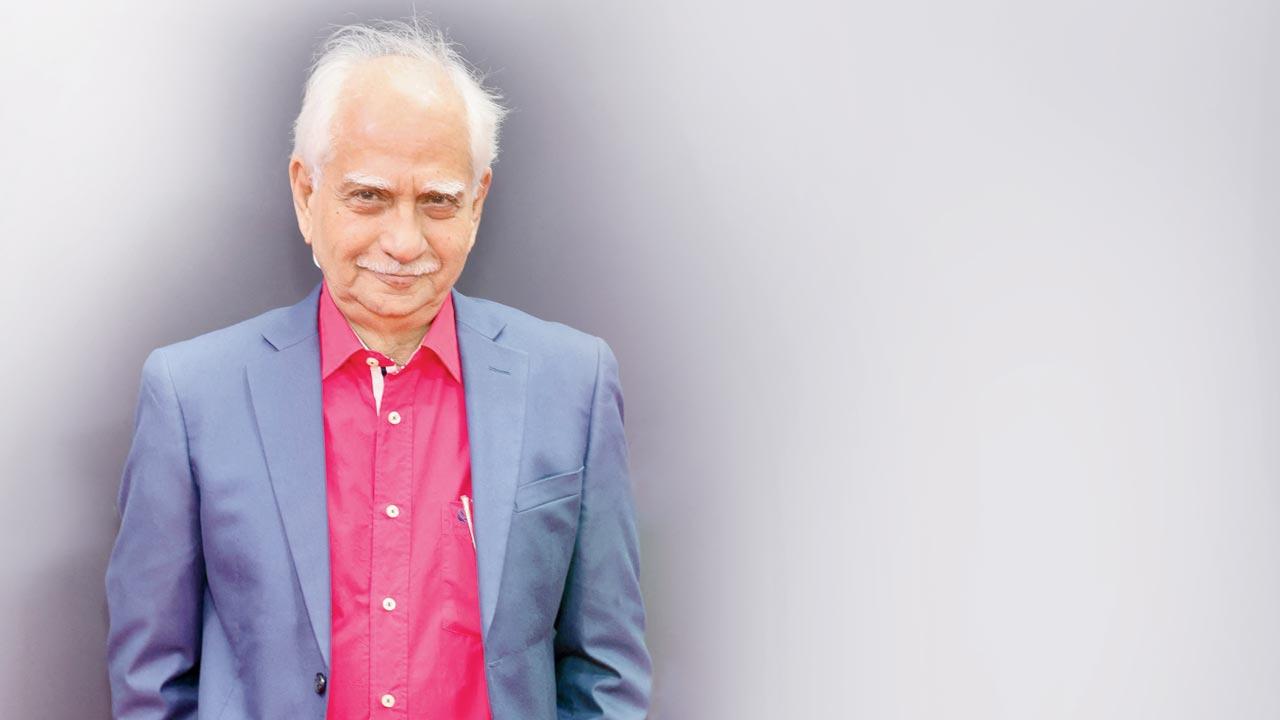
Komal RJ Panchal (MID-DAY; October 15, 2025)
For Ramesh Sippy, 2025 has been a significant year. The veteran filmmaker’s masterpiece Sholay completed 50 years of its release in August. Over decades, Sippy has carried the tag of the Sholay director. It’s something he wears with pride, but doesn’t let it weigh him down.
“I never felt any pressure to outdo Sholay. Every film must have its own identity. I don’t chase success; I chase inspiration,” he begins, when we, after over two months of chasing the filmmaker, sit down for a chat with him.
Inspiration has struck him again. The filmmaker, whose last directorial venture Shimla Mirchi released in 2020, is going back to the director’s chair.
“I’m developing a new project. It’s in its early stages. I’ve always believed in being completely sure of an idea before moving forward. Once I’m certain, you’ll hear an announcement,” he says, refusing to divulge any further details. While the buzz is that the project is an action film, he stays tight-lipped, only saying, “I am currently shaping it with writers.”
Sippy is understandably more forthcoming as we turn the lens on his 1975 classic starring Sanjeev Kumar, Amitabh Bachchan, Dharmendra, Jaya Bachchan, Hema Malini, and Amjad Khan. To mark the 50-year milestone, the movie’s restored version was screened at the Toronto International Film Festival. Many domestic film festivals too hosted special screenings. The response continues to move Sippy deeply.
“It’s overwhelming. When we made the film, we had no idea what it would become. I recently watched Sholay in Toronto with a full house, and the audience reacted exactly as Indian viewers did back in 1975. That was truly heart-warming.”
Very few Hindi films have managed to be as enduring as the classic. Ask Sippy the secret to the movie’s longevity and he points to its honesty.
“We kept it simple — drama where it was needed, humour and warmth where it belonged. Salim-Javed wrote a superb script, and the actors performed with sincerity. Add to that R D Burman’s unforgettable music, and everything just clicked.”
In today’s cinematic landscape, a film like Sholay would have spawned sequels and spin-offs. But Sippy never considered taking that route. “The culture of sequels didn’t exist back then, but more importantly, Sholay is fine as it is. After 50 years, the audiences react the same way. Why change something that continues to work perfectly? Some films should remain untouched.”
I will never make another Sholay-Ramesh Sippy
8:37 AM

Ramesh Sippy with Hema Malini and Amjad Khan on the sets of Sholay
Neha Maheshwri (BOMBAY TIMES; September 10, 2025)
Sholay, the 1975 blockbuster that redefined Indian cinema, turned 50 earlier this year. Touted as the greatest Indian film ever made, the film was honoured at the Toronto International Film Festival (TIFF), a recognition that speaks volumes for its timeless appeal and cultural influence.
Director Ramesh Sippy says, “Making a film is a lot of hard work. So, when it receives appreciation at the end of the day, it feels good. After all, being appreciated is an important aspect of moviemaking.”
Sholay created characters that became a part of popular cultural lore. However, Sippy dismisses the notion that the cult film helped him crack the formulaic moviemaking code in Indian cinema.
He says, “No one makes a good film with the thought that it must have some good songs, action that hasn’t been seen before, or a romantic scene that stands out. You begin with what you have, a bunch of writers who give you a strong storyline that you build up with good characters.”
‘Trade pundits felt Sholay would not recover the money spent on it’
Sippy says, “I was fortunate to have fine writers like Salim-Javed on board. Together, we were able to develop a powerful script. Casting the right actors was equally crucial. With music by R D Burman and lyrics by Anand Bakshi, we had a fabulous score.”
Surprisingly, Sholay did not open to a great start at the box office initially. He recalls, “Sholay was a very expensive film. It would normally cost Rs. 50-60 lakhs, but Sholay cost Rs. 3 crores, and trade pundits felt the movie would not be able to recover the money that was spent on it. No film had recovered that kind of cost, so they felt, what’s the point of it being a well-made film? We discussed the excessive criticism surrounding the film, but finally decided to leave it as it is. We thought time would tell and it did tell.”
The iconic characters of Sholay
The casting process of Sholay is the stuff of legends, with stories about Dharmendra initially wanting to play Thakur, while Sanjeev Kumar eyeing the role of Gabbar Singh.
Sippy shares, “If one character is more colourful, the other one seems to have more depth. Jaya Bachchan, playing the silent Radha, was just as important as the chatterbox Basanti, played by Hema Malini. It was the same in the case of Mr Bachchan as Jai, the silent and calm contrast to Dharam ji’s flamboyant and outspoken Veeru. It all worked out beautifully. However, it was not easy to make a film like Sholay. Most films are made in 40-50 days, but for Sholay, it took us 300 days to shoot it. We put our shoulders to the wheel as a team and plodded on.”
‘Films like Sholay become timeless, which is why we’re still talking about them’
Sippy is firm in his belief that Sholay should never be remade. He says, “I will never make Sholay again. If the film is still being remembered after 50 years, does it make sense to make it again? Films like Sholay become timeless, which is why 50 years later, we’re still talking about them. If somebody else wants to remake Sholay, they can, but I personally would not want to.”
In 2007, Ram Gopal Varma attempted exactly that, with Ram Gopal Varma Ki Aag, but the film failed to resonate with the audience. Sippy recalls, “Ram Gopal Varma had come to me wanting to remake it, and I very politely suggested to him not to. However, every maker has a right, and I told him it’s entirely his decision.”
Dilip Kumar was hungry for another take-Ramesh Sippy
8:33 AM

As told to Uma Ramasubramanian (MID-DAY; July 8, 2021)
He was a great storyteller. As an actor, he had his own interpretation and used it to express things. With his demise, an era has come to an end. He is among the finest actors ever — choosy about what he did. My dream to work with him was fulfilled when Shakti (1982) came about.
When I narrated the script, he was taken aback, because it was entirely his film. His was the central character, and he did not hesitate to say yes. We had a reading session. I had heard that he rewrites [scripts], but he did not interfere with this one. We discussed the scenes. The fine actor that he is, he observed and imbibed it all, and made the performance his own.
He was a perfectionist; unfortunately, I am one too. We had a sequence in the film where his and his wife’s characters are in the kitchen. He starts eating the food made by her. We had innumerable takes because something or the other kept going amiss. By the 64th take, we got it right. But we had no lunch break because by then, everyone had eaten so much throughout the filming that they could no longer eat.
It was delightful to work with him, because he wanted to give his best. He was always hungry for one more take; eternally convinced that he could do it better. Sometimes, I had to insist that a take was beautiful.
Whether it is films or any other field, if you don’t have the talent, nepotism doesn’t help-Ramesh Sippy
8:23 AM

Tanvi Trivedi (BOMBAY TIMES; August 30, 2020)
Actor Sushant Singh Rajput’s death by suicide on June 14 has once again triggered the insider-outsider debate in Bollywood. When Bombay Times got in touch with veteran filmmaker Ramesh Sippy, whose father G P Sippy was a film producer, and whose son Rohan has also made films like Kuch Naa Kaho, Bluffmaster!, Dum Maaro Dum and Nautanki Saala, he said, “Nepotism exists all over the world, in every business. If my father belonged to a particular profession — be it a doctor or a lawyer — I am not denying that the youngsters of my family will always have an advantage. They can avail the benefit of our experience. However, in the end, it will give you a stepping stone and nothing more than that. Whether it is films or any other field, if you don’t have the acumen or talent, nepotism doesn’t help. It’s a fact that not every star kid has been successful.”
He added, “People feel that film families always have an advantage. But, it is only an advantage, not a handover.”
Meanwhile, the filmmaker, who has directed one of India’s best known classics, Sholay, is currently celebrating 45 years of the film. When asked why the movie, after all these years, has not lost its magic, he replied, “Sholay is one film that has stood out. It is difficult to explain how it became a cult movie, because had I known the formula, I would have done it all over again. I have made good films before and after Sholay, too, but it is not easy to explain a phenomenon. Everything just fell in place for the film. It was very tough initially, but the end result was excellent.”

We had no inkling Soorma Bhopali would become so iconic-Ramesh Sippy
8:28 AM

Prashant Singh (HINDUSTAN TIMES; July 11, 2020)
It was just a two-scene part, but neither filmmaker Ramesh Sippy nor late actor Jagdeep ever thought that Soorma Bhopali — from the 1975 hit Sholay — would become a legendary character. As Sippy puts it, “Honestly, it (the part) was only meant to be a comic diversion, something that used to be a norm in those days, in a Hindi film. But we had no inkling about the kind of impact the character would have on the audience. With his unmatched sense of timing and gestures, Jagdeep brought Soorma Bhopali to life, and made it one of the most loved characters ever.”
Though it was an extremely small role, late Jagdeep, who was a known face by then, readily agreed. Before Sholay, Sippy had worked with the comedian in Brahmachari (1968). “When we were casting for Sholay, I immediately thought of him as he was fantastic in Brahmachari. Plus, he was well versed with Bhopal, so, I knew he’d bring out the flavour of Soorma Bhopali,” he says.
For Sippy, what made the late actor “absolutely wonderful” was his range as an actor. “Comedy is a serious business, but the kind of flair and ease he’d bring shows the kind of great actor he was. Once he got hold of a character, you didn’t have to tell him too much on the sets. That’s wonderful about a really good actor,” says the filmmaker, adding that the veteran actor was “very unwell” for the past couple of years.
Interestingly, not many know that Soorma Bhopali was close to getting edited out of Sholay. Sippy tells us, “The film released during Emergency, and it was nearly three-and-a-half hours long. So the last show would end around midnight, which wasn’t ideal for that period. Also, Sholay was criticised on it’s initial release and declared a flop.”
Sippy recalls that he was requested by distributors to shorten the length of the film, and he took out the comedy scenes featuring Jagdeep and Asrani. “In those days, a film would usually release in B and C centres after having had a run in A centres. But when Sholay came out in B and C centres (minus the comedy scenes), people complained a lot, so we had to put the edited parts back,” he shares.
One didn't need to direct Rishi Kapoor-Ramesh Sippy
8:15 AM

Upala KBR (MID-DAY; May 1, 2020)
 My first directorial venture Andaz [1971] was with Shammi Kapoor. A decade later, I made Shaan [1981] with Shashi Kapoor. Babita was introduced by my father [G P Sippy] opposite Rajesh Khanna in Raaz [1967]. I made Saagar [1985] with Rishi Kapoor, so my association with the Kapoors goes back a long way.
My daughter, Sheena, was married to Shashi Kapoor's son, Kunal. We are related as well. How much closer can we get?
I was in touch with Rishi but not as much as I should have been. I remember catching a play at the Royal Opera House with his brother Randhir Kapoor. After the show, we sat down to chat and Randhir called Rishi who was at that time seeking treatment in the US. Rishi was sounding fine and kept a positive front. We were happy to know that all was going well until this sudden turn of events. I was shocked to hear of his demise. We had heard that he had been hospitalised. The awful part is that because of Coronavirus and social distancing, we could not go to pay our last respects. I feel miserable about it.
I thought of making Saagar after Dimple Kapadia expressed her desire to make a comeback after marriage and motherhood. I sat with Javed Akhtar saab and discussed the script and spoke to Rishi.
We decided to make it a love triangle and got Kamal Haasan on board. It was a lovely experience working with the three talented actors. Unfortunately, it wasn't a success when it released, but over time it lingered on and developed a cult following. Its songs are still a big draw.
One didn't need to direct Rishi. He was such a consummate actor. Once the scenes were narrated to him, he understood it perfectly. He just needed to be ready and come on the set and perform the scene. I didn't have to say much to him about what to do and what not to do. We will miss presence but he will always be with us through his movies.
Sholay grew out of my love for westerns while Shaan was more like a Bond film-Ramesh Sippy
8:04 AM

Roshmila Bhattacharya (MUMBAI MIRROR; January 21, 2020)
Suave and well-spoken, the Sholay maker doesn’t look like a man who has built his career on risks, but his first directorial, Andaz, brought together a widow and a widower, a taboo subject back in 1971. Ramesh Sippy recalls that when he took the subject to Shammi Kapoor, with whom he’d bonded during Brahmachari, produced by his father G P Sippy, with him as the executive producer, the actor asked him if he really wanted to tackle such a serious subject at such a young age. The 23-year-old debutant was sure he didn’t want to do another song-and-dance film with the Yahoo star even though he aced them. “I knew I was taking a chance, but with their children playing matchmakers, I thought the audience might be happy to see Ravi and Sheetal come together at the end of Andaz,” he reminisces.
Sippy took another gamble, pairing an ageing Shammi ji who was on a journey of rediscovery, with the fresh-faced Hema Malini who was on the threshold of her career. With Rajesh Khanna, whose Aradhana had made him a craze, entering the picture in a guest appearance, the filmmaker was able to carry off the awkward romance. “It was too much to expect a super-hit, but the film did well,” says Sippy, who turns 73 on January 23.
That gave him the confidence to attempt a double role with Hema Malini next. Dilip Kumar’s Ram Aur Shyam had already experimented with the twin track successfully, but Sippy believed the idea could be explored better with a subdued woman being exploited by her family and pulled out of misery by another woman who’s her lookalike. “The year was 1972 and women were slowly coming to fore, refusing to be taken for granted, and as part of this young world, I wanted to do my bit,” he smiles, admitting that his heroine was not confident of pulling off the dual challenge, but he pushed her into giving the two characters distinguishing traits while juggling with multiple projects. “It was hard work, but with two successful actors, Dharmendra and Sanjeev Kumar, who were really fond of her, agreeing to be a part of a part of my woman-centric film, Seeta Aur Geeta, worked well,” he smiles.
In a chequered career of nearly half a century, Sippy today is also remembered for giving Hindi cinema two unforgettable villains in Gabbar Singh and Shakaal. The original choice for Sholay’s daku was Danny Denzongpa, the best of the baddies then. But by the time the film went on the floors, he was in Afghanistan shooting for Feroz Khan’s Dharmatma, and had to apologetically bow out.
Unwilling to take an established actor and run into date problems again, Sippy took heed of his writer duo Salim Khan and Javed Akhtar’s suggestion to consider actor Jayant’s son, Amjad Khan. “I had seen him in a play on apartheid in South Africa opposite my sister and invited him to my office. He was a mountain of a man with a peculiar face and voice but turned out to be the most colourful character in Sholay,” he recounts.
He was also such a larger-than-life character that when Shaan came along five years later in 1980, with Kulbhushan Kharbanda as Shakaal, many were expecting another Gabbar and were disappointed. But Sippy points out that he wanted to get away from the rustic dacoit and came up with a sophisticated, clean-shaven villain who keeps playing with his bald pate. “I had seen Kulbhushan in Shyam Benegal’s Manthan and knew he could perform. But the setting was different here, moving from a rocky terrain to an almost futuristic den. Sholay grew out of my love for westerns while Shaan was more like a Bond film with car chases, gadgets, special effects and an international crime lord operating from a remote island. It was an expensive film and I am grateful to my father for having faith in me and pumping in so much money into it,” he says.
In 1985, the leap of faith took Sippy into Saagar, an epic romance in 70 mm, which brought Dimple Kapadia back to the screen and reunited her with her Bobby co-star Rishi Kapoor. For any other maker that would have been enough, but Sippy took it a step further, roping in Kamal Haasan whom he’d seen in Ek Dujje Ke Liye and turning his film into a love triangle. “Kamal Haasan had great intensity and juggled between light and tragic scenes with amazing dexterity,” he points out.
Saagar was India’s entry for the Oscars and though it didn’t make the cut, RD Burman’s “Chehra hai ya chand khila hai… Yeh to bata tera naam hai kya?” still makes me fall in love with the ethereal Dimple Kapadia who’s never looked more beautiful. “That’s the magic of cinema. Everyone, from my actors to my writers, composers and other technical crew contributed to making these movies memorable,” Sippy avers.

Shammi Kapoor in Andaz, Hema Malini in Seeta Aur Geeta, Amjad Khan in Sholay, Kulbhushan Kharbanda in Shaan and Kamal Haasan, Dimple Kapadia and Rishi Kapoor in Saagar
After 50 years, I’m acting again, with Hema Malini-Ramesh Sippy
8:40 AM

Ramesh Sippy admits that at 68, he cannot afford long breaks anymore
Roshmilla Bhattacharya (MUMBAI MIRROR; January 26, 2015)
Not many know that as a teenager Ramesh Sippy had dabbled in acting and one of the cameos was in a film titled Bewakoof. He played a young Pran who cheats his way to a win after knocking the hero out cold in a boxing ring. But Sippy quickly realised that he was more inclined towards direction and didn't appear on camera for almost half a century till Shimla Mirchi, which brings him back as a director after 20 years, came along.
It was Hema Malini's first day of shooting. The actress who's reuniting with the director after four decades, was ready to accept the role even without a narration though Sippy insisted on one. "It's a one scene appearance and we were looking for an actor when Hema suggested I do it myself. And after 50 years, I ended up on screen again with the Dream Girl," says Sippy.
Their innings started in 1971 with his directorial debut Andaz about a widow and widower with young children who get another chance to love. Sippy remembers filming the chartbuster, Zindagi ek safar hai suhana, with Rajesh Khanna careening down Marine Drive on a bike, Hema laughing gaily behind him.
Suddenly, taking everyone by surprise the actor took his legs off the foot pegs and swung them on the handle bar.
"All of us froze, the camera capturing the OMG! expression on Hema's face. It was a spur of the moment decision, prompted perhaps by the adoring crowds around. Rajesh Khanna's split-second move was extremely dangerous as he was surrounded by fast-moving cars on all sides. We had our hearts in our mouths," Sippy shudders, adding with a laugh, "Fourty years later, Hema Malini, takes Rajkummar Rao for a ride, literally, on a bike."
That's not all. In Seeta Aur Geeta, Hema clambered up to sit on a ceiling fan in the police station, taunting her aunt, "Upar aa ja moti." In Sippy's upcoming rom-com, she climbs up a tree. "It was one thing to do it when she was in her 20s, but when I suggested she climb a tree after so many years, she looked at me and quipped, 'You won't stop doing these things to me, will you?' Eventually, she obliged," he laughs.
Their last film together was Sholay in 1975. Sippy remembers that on the last say they were waiting for a train to pass by, so they could can their final shot before Dharmendra and Hema boarded the flight. Everyone was ready, when suddenly an AD remembered that in the earlier shot she had a flower tucked in her hair. They needed it for continuity. A frantic search revealed that the truck with the flower was on its way to fetch breakfast for the unit. "We chased it down, retrieved the flower, and just as it was tucked into Hema's hair, the train came roaring down and Sholay was done," reminisces Sippy.
In contrast, the 'tangy' Shimla Mirchi, which wrapped up yesterday, was smooth sailing. But Sippy recalls that after they'd been spotted on the streets of Shimla for three consecutive days, a bemused bystander suddenly piped up, saying, "Arrey, these guys are still shooting for a two-hour film! Yeh kya kar rahe hain?"
He says that despite the technological advances that have made filmmaking a different experience, for some viewers the reel life action should correspond with real time. "That's the magic of cinema," he asserts.
So, has he started planning his next film or will there be another long break?
"I can't afford any more long breaks," admits Sippy who turned 68 on January 23. "What I want to do, I have to do in the next few years. Clint Eastwood who is still making films at 84 is an inspiration to rest of us to continue."
Subscribe to:
Posts (Atom)