Showing posts with label Ramesh Deo. Show all posts
Showing posts with label Ramesh Deo. Show all posts
I’ll always remember Seema Deo tai's sweet, homely, warm, motherly face-Kishori Shahane
8:23 AM

Rajesh Khanna, Seema and Ramesh Deo in Anand (1971)
Kishori Shahane Vij and Aruna Irani reminisce about the late actor’s down-to-earth nature, and her equation with actor-husband Ramesh
Upala KBR, Hiren Kotwani (MID-DAY; August 25, 2023)
Filmmaker-actor Ramesh Deo considered actor-wife Seema Deo his lucky charm. Apparently, her mogra grabbed his attention when they first met on a train. The couple had a beautiful relationship until Ramesh passed away last year. Born Nalini Saraf, Seema is best known for her performance in Hrishikesh Mukherjee’s Anand (1971). Seema, 81, breathed her last at a private hospital on Thursday morning after a long battle with Alzheimer’s and other ailments.
The actor was part of over 80 Marathi and a few Hindi films. But people mainly remember the actor for her motherly roles. Reminiscing about her 35-year association with Seema, dancer-actor Kishori Shahane Vij says that the Deos were the “first family of Marathi cinema” she got to know at the start of her career.
“I’ve known Seema tai since the initial stages of my career. I have acted in their productions too. They were active for a long time and always spread cheer on the set, even in the later years. Despite being such a great actor, Seema tai would do all the grocery shopping herself. I would often bump into her at Sahakari Bhandar in Juhu, and she would say, ‘It is our home, so we only have to do things for it.’ She was not too active professionally after marriage but would do select projects; often Ramesh kaka would be there. Makers [often] wanted her to play his wife on screen. Ramesh kaka and Seema tai were respected and loved as a couple,” shares Shahane, who has also worked with the Deo sons—Ajinkya and Abhinay.
While the family was warm and welcoming, Shahane shares that her bond with Seema was different. “Seema tai was more like a mother. I’ll always remember her sweet, homely, warm, motherly face. She was always caring. During the making of Jivan Sandhya [2021], she would hold my hand, sit together, and discuss the scene. She was so natural as an actor that I’d never know whether she was speaking her lines or talking to me,” she shares, further adding that the late actor taught her an important life lesson earlier on in her career.
“Rarely do you get to meet such a warm person from the same profession. When I worked with her on Jeeva Sakha [1992, which also featured Ajinkya], I asked her how she went about her career. She told me, ‘Always listen to your heart. Don’t think about the people around you. If something makes you happy, keep doing it. Your happiness will soon spread among others too.’ That was an important piece of advice I’ll cherish forever.”
Remembering their camaraderie, yesteryear actor Aruna Irani, who worked with Seema in Sansar (1987), says that the senior actor was “humble, homely, and a multi-tasker. Ramesh and she were so much in love. They were a lovely couple. I met her at a beauty parlour seven years ago, and she was as warm as ever. Seema worked in movies, but her heart was at home. She never got involved with what others were doing but rather focused on her work. She was a great actor—simple and sweet-looking, like the characters she used to play. On the set of Sansar, Seema, Rekha, and I would form a trio and have fun together,” shares Irani.
The Deo family
Ramesh Deo: The film and TV actor tied the knot with Seema in 1963. He worked in more than 285 Hindi films, 190 Marathi films, and 30 Marathi dramas with over 200 showings in his career, before passing away last year at the age of 93. His last film was Ghayal Once Again (2016).
Ajinkya Deo: The actor and the eldest son of Ramesh and Seema made his mark in Marathi and Hindi cinema and television. His 1987 film Sarja won the National Film Award, where he played the lead role. His latest outing was the Salman Khan-starrer Kisi Ka Bhai Kisi Ki Jaan.
Abhinay Deo: While his family has a background in acting, youngest son Abhinay chose to stay behind the scenes. His directorial debut, Delhi Belly (2011), became a cult favourite, which garnered him awards. He also helmed the series 24, starring Anil Kapoor.

Noted Marathi-Hindi film actor Seema Deo passes away
8:20 AM
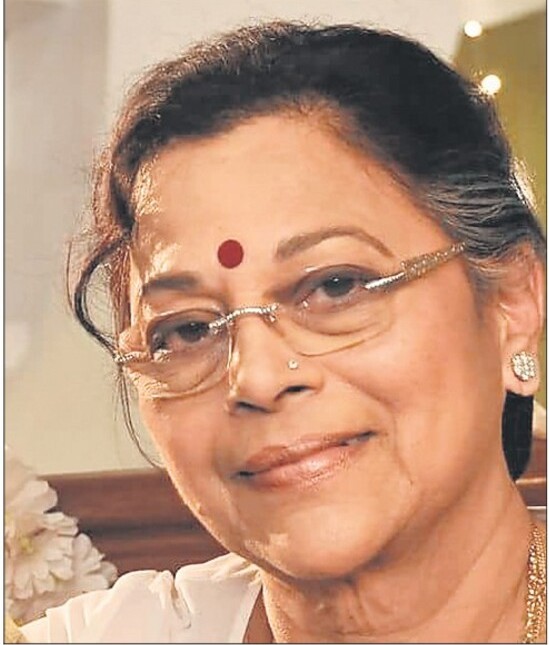
Bella Jaisinghani (THE TIMES OF INDIA; August 25, 2023)
Mumbai: Seema Deo, who acted in over 80 Marathi and Hindi films in a career spanning more than six decades, passed away at her Bandra residence on Thursday. She had been suffering from several age-related ailments including Alzheimer's. She was 81.
Her notable movies include ‘Jagachya Pathivar’, ‘Juna Te Sona’, ‘Anand’, ‘Bhabhi Ki Chudiyan’, ‘Kora Kagaz’, ‘Apradh’, ‘Janaki’, ‘Bezubaan’, ‘Koshish’, ‘Sansar’ and ‘Yehi Hai Zindagi.’
Born Nalini Saraf, her gentle manner and warm smile often led her to being typecast as the sweet sister, daughter-in-law, mother or aunt or a hostel warden as in 'Bezubaan'. In producerdirector Sadashiv J Row Ka vi’s hit, ‘Bhabhi Ki Chudiyan’ (1961), which had Meena Kumari and Balraj Sahni in central roles, she was paired opposite Shailesh Kumar as a young couple in love.
Seema's husband, actor Ramesh Deo, died in February 2022. In a TV interview, Ramesh once recounted how he had proposed marriage on a bullock cart during a shooting. "Seema's mother knew I was fond of her so she kept a close watch on her during our shoots. One day we were filming a bullock cart scene. I drove the cart out of sight of her strict ‘helicopter’ mother! Seema thought it was part of the scene. But I said no, I have brought you here to persuade you to marry me. Now say you will marry me. And she agreed!"
Seema and Ramesh recreated their real-life partnership in 20 movies such as ‘Anand’, ‘Kora Kagaz’, ‘Jagachya Pathivar’, ‘Vardakshina’, and the Marathi hit, Molkarin. Many would remember the scene in Anand where Rajesh Khanna lip syncs ‘Maine tere liye hi saat rang ke sapne chune’ as Amitabh Bachchan and the Deos listen in attention. In an odd instance, Seema also played Ramesh’s sister in 'Saraswatichandra'. The couple was conferred the Raja Paranjape Lifetime Achievement Award in Pune in 2014.
Seema is survived by two sons, actor Ajinkya Deo and adman-director Abhinay Deo. Abhinay told PTI, "My mother passed away at 8.30-9.00 am at her residence in Bandra due to old age. She had withdrawn completely, and eventually it was just old age. Alzheimer's is such a thing that you stop figuring out how to function. She had dementia leading up to Alzheimer's and she was suffering from it for over three years."
"There's no specific reason (for her death). Due to Alzheimer's and dementia, the person forgets how to walk. The muscle memory starts coming down and one by one, the organs start shutting down."
Maharashtra CM Eknath Shinde and various film celebrities, including actor Ashwini Bhave, offered condolences. The last rites were scheduled to be held at Shivaji Park crematorium at 5.00 pm on Thursday.
------------------------------------------------
HINDUSTAN TIMES (August 25, 2023)
Yesteryear actor Seema Deo, known for her roles in iconic films such as Anand (1971) and Kora Kagaz (1974), died on Thursday morning due to age-related ailments, her filmmaker son Abhinay Deo said. She was 81. The actor, who acted in over 80 Hindi and Marathi films, passed away at her Bandra (Mumbai) home. She was suffering from Alzheimer’s disease for over three years.
“She passed away around 9 am. Alzheimer’s is such a thing that you stop figuring out how to function. She had dementia leading up to Alzheimer’s and she was suffering from it for over three years. She had withdrawn completely. There’s no specific reason [for her death]. Due to Alzheimer’s and dementia, the person forgets how to walk. The muscle memory starts coming down and one by one, the organs start shutting down,” Abhinay told PTI.
Her husband, Ramesh Deo, also a veteran of Hindi and Marathi cinema, died in 2022 at the age of 93. She is survived by two sons — actor Ajinkya and Abhinay.
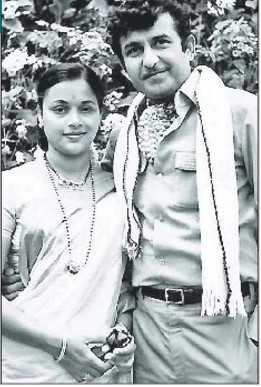
He had vigour to live till 100, says Ajinkya Deo on his father Ramesh Deo
8:09 AM

Vinay MR Mishra (HINDUSTAN TIMES; February 4, 2022)
Veteran actor-filmmaker Ramesh Deo died on Wednesday night at a Mumbai hospital due to cardiac arrest. The 93-year-old had featured in more than 250 Hindi films and nearly 200 Marathi movies, in a career spanning six decades.
As his son, actor Ajinkya Deo, was preparing for the final rites that took place on Thursday, he spoke briefly to us on a call: “He lived a king-size life — full of energy and enthusiasm. On Wednesday, at 6 pm when I was with him, he was quite in his spirits. Then, in an hour, everything deteriorated and he was gone.”
His Hindi film outings included Anand (1971), Mere Apne(1971), Aap Ki Kasam (1974) and Dream Girl (1977), among others. One of his most popular roles was in filmmaker Hrishikesh Mukherjee’s 1971 classic Anand.
Ramesh was also a television veteran. He also produced feature films, turned director, backed TV shows and over 250 ad films.
Ajinkya, who starred in Tanhaji: The Unsung Warrior (2020), adds that they are celebrating the legacy his father has left behind. “Instead of saying we are saddened by his demise, I would like to say that we celebrate his life in full glory, the way he celebrated it and the way he would have wanted us to celebrate,” he says.
The veteran had celebrated his birthday on January 30. Although he “was not keeping well”, his family met and had a “quiet” celebration. “He had the vigour to live till 100. He wanted to do that, we hoped he would.”
On a parting note, Ajinkya mentions that he is “grateful to be his son and carry on his name”. “He made me what I am. Even if I achieve 5% of what he has achieved, it will be a notable achievement for me,” he concludes.
Mahesh Manjrekar and Ashutosh Gowariker remember Ramesh Deo, the last man standing from the bygone era
8:04 AM
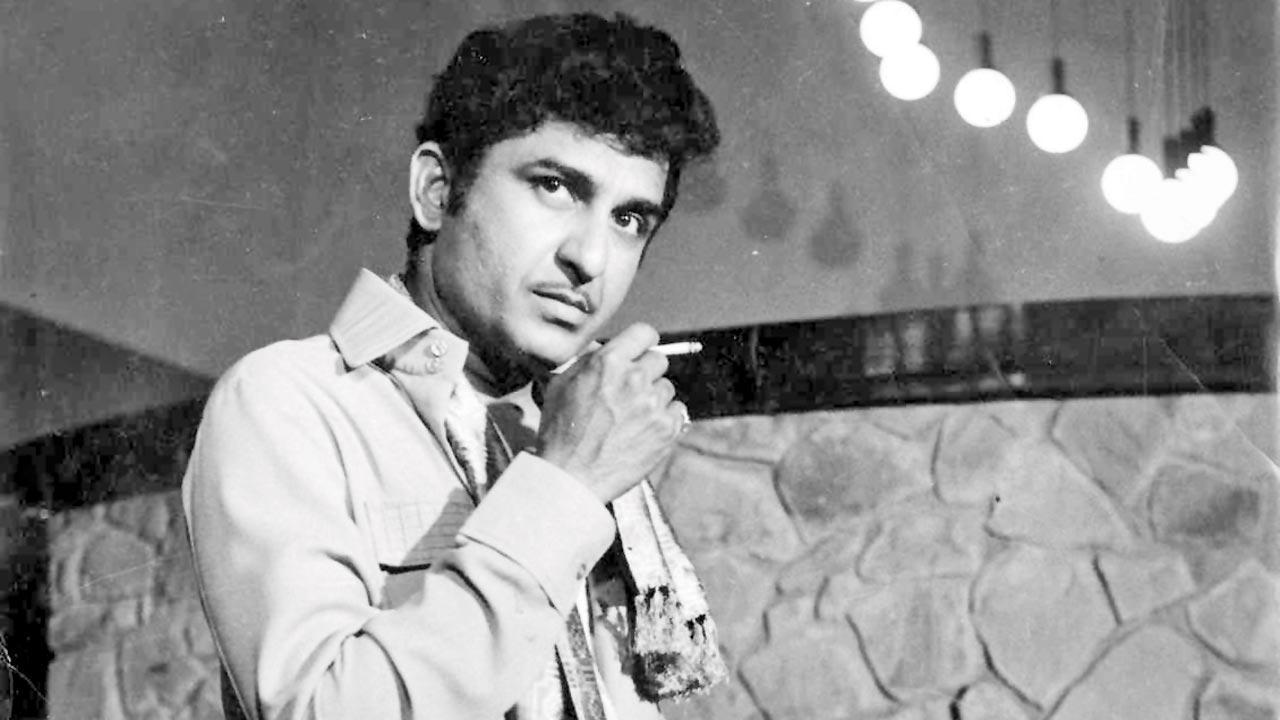
Manjrekar and Gowariker remember their first director Deo, a heavyweight in Marathi cinema who shone in Hindi films with his supporting act
Upala KBR (MID-DAY; February 4, 2022)
Those unfamiliar with Marathi cinema will remember him as the ever-smiling Dr Kulkarni in Rajesh Khanna’s Anand (1971), or for his grey role in Gulzar’s Mere Apne (1971). While Ramesh Deo gained prominence in Hindi cinema for his fine performances in supporting roles, the actor-producer was a force to reckon with in Marathi theatre and cinema. A cameo in the Marathi film, Paatlaachi Por (1951), marked the beginning of a seven-decade career. He followed it up with Andhala Magto Ek Dola (1955) and many other notable Marathi films, before foraying into Bollywood with Rajshri Productions’ Aarti (1962).
That sowed the seeds of what was to be a long run in Bollywood as he became a regular fixture in Hindi films, essaying different roles — from the hero’s trusted friend to an exploitative villain — with equal ease. He featured in several landmark films, including Anand, Khilona (1970), Jeevan Mrityu (1970), Aap Ki Kasam (1974) and Ghayal (1990). In the ’80s, the veteran actor turned filmmaker, and went on to direct Marathi movies, including Chor Chor (1992) and Jeeva Sakha (1992).
Filmmaker Mahesh Manjrekar, who was launched in Marathi films by Deo, remembers working on Jeeva Sakha with him. A day after the veteran filmmaker passed away due to a heart attack, Manjrekar tells mid-day, “I had done theatre and bit roles earlier, but this was my first notable role. Ashutosh Gowariker and I played antagonists in the film. During a fight scene, I had to fall down. As actors, we are not trained to fall down, so I told him to take my duplicate for the next fight sequence. He told me, ‘If you want to be an actor, you have to train for this.’ When I started directing, I [took his lesson] and would tell my actors that they would have to do everything on their own [without body doubles].”
Having switched gears to filmmaking later, Manjrekar admits that his work is deeply influenced by Deo, who featured in over 200 movies and 30 television serials. “Ramesh dada was a legend, and it feels like the end of an era in Marathi cinema. He was the last man standing from that era,” he says, adding that he had met the 93-year-old only a month ago.
“I met him during an event for MaharashtraCha Favorite Kon, where he had gone to receive the Lifetime Achievement Award. Ramesh dada held my hand as we chatted for over 15 minutes. He told me, ‘You are making so many movies, but you have not taken me.’ I promised him that I would cast him in my next film. It’s unfortunate that I won’t be able to do that.”
Deo also gave Ashutosh Gowariker his first break as an actor in Marathi cinema with Jeeva Sakha. Although it was Gowariker’s first film, several released before this one hit the theatres. Remembering Deo as an actor and director, he says, “The passing of the legend, Ramesh Deo ji is indeed sad news, not only for Marathi or Hindi cinema, but Marathi theatre as well. In my growing-up years, I remember watching his Marathi films. Ramesh ji was the only actor, who could put on a charming smile when he played a hero in Marathi and a crooked [expression] while portraying a villain in Hindi films. I was fortunate to get a break with Jeeva Sakha, which he was not only producing but also directing.”
Reminiscing about delivering lines for Deo, he says that the late actor-director always “encouraged” his team. He says, “On set, Ramesh ji was a dignified man; always kind and generous with his compliments. Even when I gave a bad performance in a shot, he would say, ‘Chhaan shot dilaas. Pan yaachyaa peksha chaangla deu shaksheel. Punha kar. [You have given a good shot. But you can do better than this. Do it again.]’ This encouragement is something that I will always cherish. I will always miss Ramesh kaka’s gentleness and warmth.”
His noted works
- Paatlaachi Por (1951): Ramesh Deo made his debut in Marathi cinema with a cameo in this.
- Andhala Magto Ek Dola (1956): The actor started his full-fledged film career in the Marathi cinema with this film.
- Aarti (1962): Directed by Phani Majumdar, Aarti was his first Hindi film.
- Saraswatichandra (1968): Based on a Gujarati novel by Govardhanram Madhavram Tripathi with the same name. Deo played a rich but illiterate husband to Nutan in this one.
- Teen Bahuraniyan (1968): This comedy film directed by SS Vasan and SS Balan is a remake of the 1967 Tamil film Bama Vijayam.
- Jeevan Mrityu (1970): This romantic drama, directed by Satyen Bose, starred Dharmendra and Rakhee Gulzar as the lead couple.
- Khilona (1970): The late actor played the role of Kishore Singh in this film, directed by Chander Vohra.
- Mere Apne (1971): Deo plays the role of Arun Gupta in this Gulzar-directed and written film.
- Anand (1971): He played the affable doctor treating a terminally ill Rajesh Khanna suffering from lymphosarcoma of the intestine in this blockbuster.
- Ghayal Once Again (2016): This is a sequel to Sunny Deol’s 1990 film, Ghayal. Deo plays grand father-in-law to Deol. This was his last Hindi film.
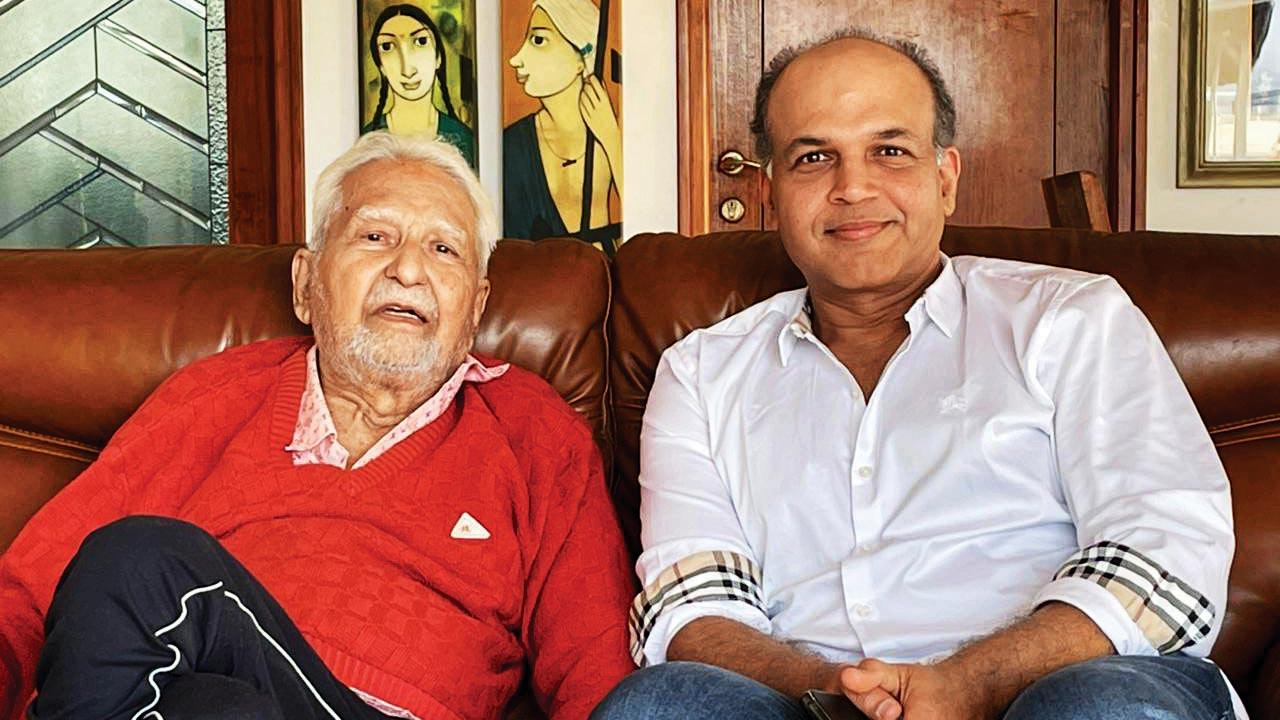
Ramesh Deo passes away at 93
8:02 AM

Avijit Ghosh (THE TIMES OF INDIA; February 3, 2022)
Actor Ramesh Deo, who enjoyed a popular and prolific career in Marathi and Hindi films over a staggering seven decades, died of heart attack at a Mumbai hospital on Wednesday. He was 93.
Several roles performed by Deo remain vivid as ever. The only and wily distant relative who sweet-talks an elderly Meena Kumari to move in with them, only to reduce her to a house help in ‘Mere Apne’ (1971). The amiable but worldly-wise doctor, who sits with his wife (real-life wife too, Seema) in ‘Anand’ (1971) as Rajesh Khanna sings ‘Maine Tere Liye Hi Saat Rang Ke Sapne Chune’.
Who would have forgotten the scene where ‘Jumping Jack’ Jeetendra sings and whips him in the same breath, belting out the title track in ‘Jaise ko Taisa’ (1973). Only a first-rate actor could have displayed the different shades that these roles required with such effortless ease. Deo, also a performer of repute in the Marathi theatre world, did it with ease and elan.
Born in Kolhapur, Deo went to school and college there and got a break in the Marathi film industry as a junior artist in the early 1950s. He went on to set up his own production house: Ajinkya Theatres. Deo became a top star. ‘Umaj Padel Tar (1960), ‘Vardakshina’ (1962), ‘Molkarin’ (1963) and ‘Aparadh’ (1969) are just four of his memorable films.
Director Phani Majumdar’s superhit, ‘Aarti’ (1962), the first film produced by Rajshri Films, was among his early Hindi films. He got the much heftier part of a senior police officer in the thriller ‘Love And Murder’ (1966) directed by the famous Marathi director Raja Paranjpe. The veteran was to play a cop in dozens of other Hindi films, ‘36 Ghante’, a desi remake of Hollywood’s ‘The Desperate Hours’, being one of them.
Deo was the lead villain in the Amitabh Bachchan-Hema Malini starrer ‘Kasauti’ (1973), a box-office hit. Deo continued to be a familiar face in Hindi films over the decades. Some years ago he was a regular on TV, endorsing products like Surf Excel, Vijay Sales and Lufthansa. It helped that with his sons, he also ran a vastly successful ad production house. According to IMDB, his last film, ‘Jeevan Sandhya’ (Marathi) was released in 2021.
Deo’s grandfather came to Kolhapur to work as an engineer for Rajarshi Chhatrapati Shahu Maharaj and his father worked as a legal advisor to the Kolhapur Sansthan. According to his company website, Deo acted in over 285 Hindi films, 190 Marathi films and 30 Marathi dramas. He is survived by wife Seema, and sons Ajinkya and Abhinay. Ajinkya is an actor too and Abhinay is known for directing films such as ‘Delhi Belly’.
Deo contested the 1996 Lok Sabha election from Kolhapur at the insistence of Sena supremo Balasaheb Thackeray but lost in a triangular fight.
On Delhi Belly's 10th anniversary, Abhinay Deo begins work on another quirky film
8:10 AM
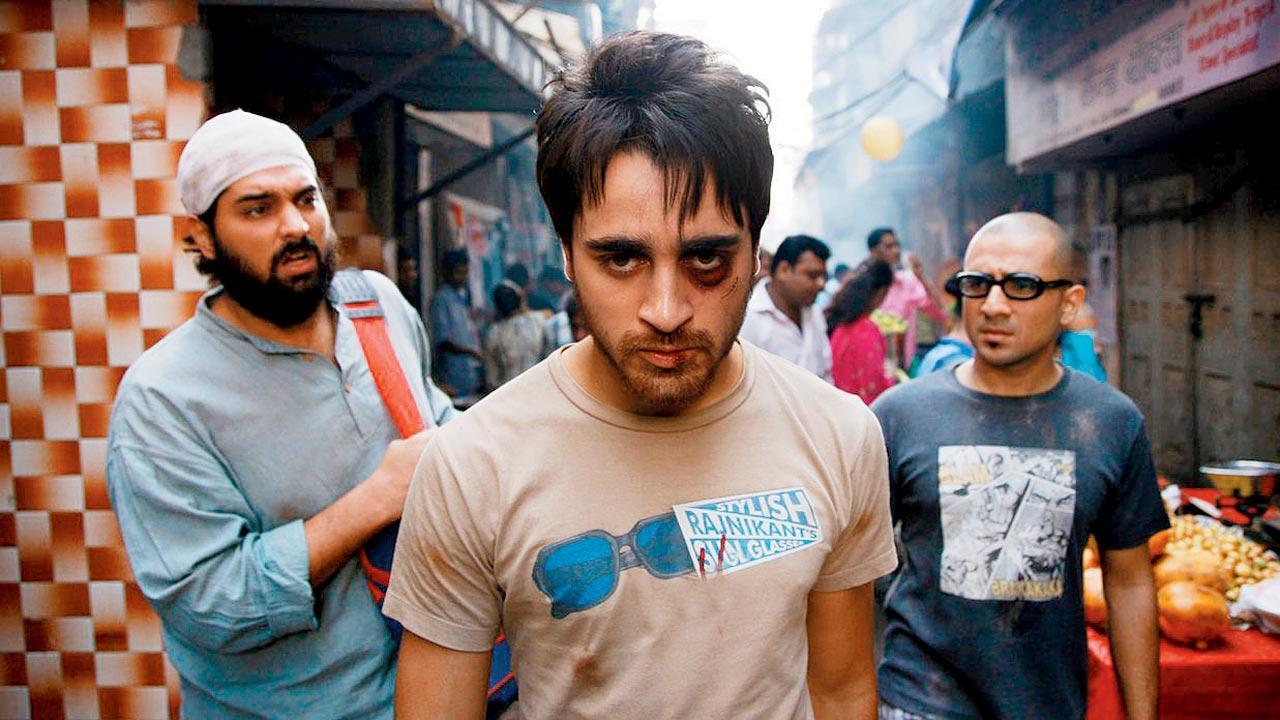
To mark a decade since Delhi Belly’s release, director Abhinay Deo announces his next in the same genre
Shaheen Parkar (MID-DAY; July 1, 2021)
Abhinay Deo’s Delhi Belly clocks a decade since its release today, July 1. The Aamir Khan production, starring Imran Khan along with Kunaal Roy Kapur and Vir Das, revolved around three roommates and a mixed-up package. Considering the present scenario, there is no celebration on the cards, nor a virtual get-together of the cast and crew of the adult comedy.
Instead, Deo will be celebrating with his parents, veteran actors Ramesh and Seema Deo, as the day also marks their 58th wedding anniversary. “Probably I will then sit and watch Delhi Belly yet again,” he says.
To commemorate the occasion, Deo has announced that he has begun work on another quirky film “of a genre similar to that of Delhi Belly”. The project is in the writing stage, and he hopes to roll it next year. “It is not a sequel nor is it linked to Delhi Belly [in any way], but a fresh story in the same mould.” Delhi Belly, a film in Hinglish, was considered cool, explicit, and an insanely funny film that stepped into a new terrain in Bollywood with its chartbuster track Bhaag DK Bose. “It was ahead of its times,” explains Deo, admitting that had the film released today, it would be intensely appreciated in the OTT space.
Delhi Belly was written by Akshat Verma as part of his screenwriting programme at the University of California, Los Angeles, and was titled Say Cheese. After he shared the story with Aamir Khan’s production office, it was the superstar’s wife, Kiran Rao, who found the script impressive even though it was not a clean family entertainer.
During the making, there were reports claiming that Aamir often interfered in the filming. Refuting the claim yet again, the director says, “There is a difference between interference and interest. Aamir did not ask us to re-shoot a single scene. The only time he came on the set was to film his cameo song. He sat in edits because he likes to go through every minute detail when in post-production.”
I’d like to blackmail the Coen brothers so that they give me one of their scripts to make-Abhinay Deo
8:14 AM

Renuka Vyavahare (BOMBAY TIMES; April 5, 2018)
He swears by the Coen brothers, and just like the acclaimed Hollywood filmmakers, he too has a few quirks. There are two things that put him off — badly made chai and people mistaking his name for Abhinav. The man has acting in his genes; his parents Ramesh and Seema Deo are veteran Marathi and Hindi film actors. Yet, Abhinay was always fascinated by the art of storytelling. In an interesting conversation with BT over a cup of invigorating chai (just the way he likes it), the director talks about his forthcoming black comedy, Blackmail, starring Irrfan, and also tells us why Bollywood needs to take a leap and make more genre-bending cinema. Read on…
Your parents Ramesh and Seema Deo and brother Ajinkya, are actors. Were you never drawn to acting?
Yes, aai, baba and my brother are into acting, but how many members of the family should do the same thing? (laughs!) From the start, I was inclined towards directing as facing the camera never appealed to me. What matters to me is how I can tell a story differently. I wrote my first screenplay at the age of 14 and I did it hoping I could direct it. My writing was always directorially driven. I remember taking the script to my father. He told me, “First finish your studies and come to me when you are 21.” Education was always a priority at home, but it was never just about getting a degree or a job.
It was about knowing and exploring things beyond the surface. They never stopped us from doing what our heart wanted and that killed our desire to rebel. I am an architect first, then an ad filmmaker and then a filmmaker. My brother is a computer engineer. We are academically qualified, and only after we completed our studies we decided to enter the film industry. I guess it’s a very Maharashtrian way of life. I must have accompanied my father to a film set not more than 6-7 times. My parents weren’t really in favour of taking me along on the set.
Coming from a home where your parents were both renowned actors, did you interact with actors from those times?
The atmosphere at home was very simple. My parents weren’t as social or starry. They consciously kept us away from the limelight or filmy parties, but I have fond memories of dadamoni (Ashok Kumar sahab) coming over and having varan bhaat with tup (ghee) in our house. I was little but I also remember Rajesh Khanna visiting us and chatting with my father for long hours in the afternoon. He used to smoke cigarettes and I was very fascinated by his tin of cigarettes and the way he smoked them on our terrace. It was all very informal. Even if we met stars we never met them in the capacity of Bollywood actors. We met them as family. I don’t remember any fancy parties at home like the ones we see today.
Delhi Belly put you on the map. It set a benchmark for dark comedies in India but that genre largely continues to be untapped. Blackmail comes six years after Delhi Belly and it’s a dark comedy, too.
I love that genre. I have grown up with a quirky sense of humour myself and I am a huge fan of the Coen brothers. Their stories are inspired by true events, their characters are realistic and yet their films are so quirky. That is exactly the genre that Blackmail and Delhi Belly are set in too. You are laughing at someone else’s misfortune. Having said that I also love other genres like action, which is why I made the television series 24, Force 2 and Game. Conceptually, I don’t like to repeat the same thing again. I want to explore newer territories and keep coming back to what I love the most. With Blackmail, I feel like I am coming back to the genre I love the most.
Filmmakers who make comedies always stress on the fact that making people laugh is tough business. More so, when you are making a black comedy, it has to be intelligent and funny. Your films also have a good dose of toilet humour. It can be hilarious, but tricky too…
Yes, I enjoy the kind of toilet humour I use in my movies, but I am aware that the writing needs to be clever, not crude. It is a delicate genre. You need to handle it cleverly because if you cross the line then it becomes slapstick. The minute it becomes slapstick, it’s anybody’s game. To do it subtly is the challenge. Dark humour, particularly, is the most difficult to pull off. Slapstick is relatively easy to write or perform. To keep a straight face, do less but show more and make people laugh without doing much is challenging.
Blackmail seems like a zany take on infidelity...
The story is part real and part fiction. The premise is real, but of course, it’s a fictionalised tale of a straightforward middle-class guy, who discovers that his wife is sleeping with someone else. Think about the common man’s predicament. Can he beat up his wife’s lover or the wife? No. So he gets smart. He has an EMI problem so he decides to blackmail his wife’s lover and kill two birds with the same stone. It’s a quirky way of handling a very grim, realistic problem.
An actor like Irrfan must have added his own quirkiness to a story like this?
Irrfan was my first choice. I wanted somebody to look like an aam aadmi and who can act like he doesn’t have the balls to tackle his boss, his own wife or her lover. He is a zindagi se haara hua aadmi. The character needed someone who can deliver with the least amount of lines and expressions on what’s going on inside him, and there was no one better than Irrfan who could pull it off.
While working with Irrfan, did you have the slightest inkling of his illness?
No. Even he didn’t! Nobody knew. It’s so unfortunate. My heart goes out to him and his family. They are fighting this battle well. They are incredibly strong and amazing people. I am sure they will win this fight and will be back soon. I met Irrfan before he left for his treatment. I showed him the film and he loved it. What he has managed to do with the writing is spectacular.
If you had a chance to blackmail someone for a day, who would be that be and why?
I’d blackmail the Coen brothers so that they give me one of their scripts to direct! They can sue me after that but this is what I would love to do (laughs!). You keep thinking about their films long after you’ve watched them and they make you smile. Burn After Reading for instance, was insanely funny and an actor like Brad Pitt played a daft role. Matt Damon does so many crazy cameos too. He does an Ocean’s series and then a Bourne film, where he is the lead star. More Indian actors should be open to doing such stuff.
Do you think Indian actors have a long way to go before they give preference to great scripts over their screen time in a film?
Unfortunately yes. I would appeal to all the Bollywood actors that for every two commercial films you do, do one for yourself or for the craft or the story. What they don’t realise is that the so called ‘mass audience’ that we try and cater to is slowly converting. They want better ideas and better films. Imagine a film like Pad Man releasing 25 years ago. It would not even hit the theatres. Actors like Akshay Kumar and Aamir Khan take risks. Ajay Devgn is pushing the envelope as well. An actor is as good as the audience and an audience is as good as the actor. You can’t wait for the audience to get smarter and then do something different. You need to start the trend. If it wasn’t for genre bending films like Jaane Bhi Do Yaaro and Dil Chahta Hai and, we would still be making the same kind of cinema today.
Have you ever thought about directing your parents?
My father is 90 and mother is 80, I really hope that one day I’ll be able to direct them and make a film on their love story. That’s been on my mind for a while.

Blackmail is not Delhi Belly. It’s a tad darker perhaps because of the subject-Abhinay Deo
7:53 AM

Filmmaker has plenty on his plate, from a quirky comedy to a man-kid drama, a buddy flick, an action comedy and a bang-bang franchise
Roshmila Bhattacharya (MUMBAI MIRROR; February 6, 2018)
What was the most amusing reaction to your 2011 black comedy Delhi Belly?
“Boss, after watching your film I can’t drink orange juice anymore!” (Laughs) When I was at Harvard University, some NRI students were excited to have a new words for laundry… ‘lundry’. But for me personally the biggest high was watching my then 85-year-old dad (actor Ramesh Deo) and my son who was 12 laugh together over the same film. Of course, my dad had been skeptical initially, wondering if I really wanted to show this film to my son while my son had asked, “You really want to show this to grandpa?”
Your father, Ramesh Deo, is in his nineties now and still active…
Yes till last year he was actively doing films and commercials. He’s younger than my brother and me put together and I feel so blessed to have parents like mine who are not just inspiring public figures but inculcated in us the right values. I wasn’t launched by my father, that was never an option. I had been told early on that I would have to work really hard for every opportunity and I’m happy for it.
It’s seven years since your first directorial, why haven’t you cashed in on its success with a sequel?
I was pretty gung-ho about a sequel and had even left the film open at the end. But the writer, Akshat Varma, couldn’t come up with an idea that would merit a Part 2. I’ve always wanted to direct another quirky comedy since but not rightaway. Blackmail was the 48th script I read. Actually I read both Force 2 and this one sent by my friend Parveez Sheikh almost simultaneously and knew instantly that I had to make this film. Even Irrfan (Khan) saw the potential in it and said yes immediately. It’s crazy, quirky stuff, with an instant connect with the new-age audience, yet Blackmail is not Delhi Belly. It’s a tad darker perhaps because of the subject.
Have you ever been blackmailed?
Never, emotionally or financially! But as a storyteller and a director, I like to play with emotions, reverse them for creativity and originality. There was this crazy Brit black comedy, Death At A Funeral which really tickled my funny bone even though it revolved around something as morbid as a funeral and a corpse.
While Force 2 was in the making John Abraham had revealed that you already had an idea for Part 3.
Yes, we do have a couple of stories in mind, but after that I got busy with Blackmail and John with Parmanu and now (producer) Vipul Shah, the third part of the Force franchise, will be tied up with his directorial, Namstey England, so Part 3 will have to wait its turn.
And what about another season of the TV series, 24?
We do have an idea for season 3, but today with the digital players in the market, TV is a different ball game altogether and I’m not sure if 24 on GEC (General Entertainment Channel) today would be wise for a channel but there are a lot of people involved, including Fox, and it’s their call.
So what’s the next big thing?
My life is all about movies so some scripts are written, some are being written… I’m working on a crazy action-comedy and there’s also a heartwarming drama revolving around a man and a kid. Then there’s a buddy flick that will make you laugh and cry and a totally Indian, lavishly mounted period-drama. Our weakest area has always been our script. It’s time to stop aping the West, give the world a story that is homegrown and engaging.
Interesting to see a guy who likes quirky comedies as much as action.
Yes, action and humour are not usually on the same platform but since I was a kid I’ve been a huge fan of Jackie Chan and John Woo and an avid gamer who’s played all the action games. And the sense of humour is intrinsic, I’m always cracking jokes on everything around and there was this persistent itch to do an out-and-out action film and Force 2 was born out of the desire. And I can promise you the third instalment of the franchise will be way bigger, the writing already is. I’m not afraid to take risks, rather I thrive on them.
Subscribe to:
Posts (Atom)