Showing posts with label Ram Gopal Varma. Show all posts
Showing posts with label Ram Gopal Varma. Show all posts
Ram Gopal Varma pays Rs. 1.11 crore after technicians halt his film shoot
3:12 PM

Neha Maheshwri (BOMBAY TIMES; August 19, 2026)
The shooting of Ram Gopal Varma’s Police Company was stalled for nearly five hours on Monday at a set in Versova, after technicians and daily-wage workers affiliated with the Federation of Western India Cine Employees (FWICE) refused to work over Rs. 1.32 crore in pending dues dating back nearly nine years. The impasse ended after Rs. 1.11 crore was transferred to FWICE, following which work resumed.
Birendra Nath Tiwari, President of FWICE, says, “Varma, who owed money to technicians and daily-wage workers for three projects, including Sarkar 3 (2017) and Officer (2018), had written a letter to us in 2019, assuring us that the dues would be cleared at the earliest and requesting that he be allowed to continue working. We kept following up with him, but he continued to avoid the issue. We contacted him again when we learnt that he was preparing to shoot his next project, but for almost a month, we were told that the payment would be made shortly and were asked not to take action.”
The association eventually decided to halt the shoot over the unpaid dues. Ashok Dubey, Honorary General Secretary of FWICE, says, “On Monday, we had no choice but to stall the shoot. We asked the cameraman, fighters and members of the lighting department not to work until the payment was made. The outstanding amount involved several departments, including fighters, spot boys and the sound department. After almost nine years, the workers finally received the money that was due to them.”
FWICE Chief Advisor and President of the Indian Film & Television Directors’ Association (IFTDA), Ashoke Pandit, adds, “It is high time producers recognize that technicians and daily-wage workers who contribute to completing a film also have families and responsibilities. We do not want to stop a shoot or cause difficulties because the producer can also suffer as a result. We will continue to seek action when payments are withheld.”
There was no response from RGV till the time of going to press.
Earlier in June, FWICE and Ram Gopal Varma clashed after the filmmaker took to social media to criticise the federation over its directive concerning Ranveer Singh’s Don 3. FWICE hit back at Varma, with Chief Advisor Ashoke Pandit objecting to his remarks and questioning his credibility on the issue. Pandit alleged that Varma owes more than Rs. 1 crore in unpaid dues to technicians and daily-wage workers since 2017, including those who worked on Officer (2018).
He said Varma had assured FWICE in 2019 that the dues would be cleared, but the payments remain outstanding. Pandit also defended FWICE’s role in protecting the interests of technicians and workers, maintaining that the federation has a responsibility to intervene when members’ payments are withheld. The exchange added another layer to the ongoing friction between Varma and the federation.
Ram Gopal Varma eyes gritty biopic on encounter specialist Daya Nayak
10:49 AM

Mohar Basu (MID-DAY; June 18, 2026)
It’s going to get dark, gritty, and bloody when Ram Gopal Varma dives into the underbelly of Mumbai’s crime world, where the line between law and outlaw is razor-thin. Industry sources tell mid-day that early discussions are underway for the filmmaker to direct a biopic on celebrated Mumbai encounter specialist Daya Nayak. Multiple insiders indicate that the project will be backed by a big studio.
“The idea has been around for a while, but in recent months there has been renewed movement on it. Right now, the priority is getting the screenplay right and deciding the lens through which Daya Nayak’s story should be told,” says a source familiar with the development.
The film could potentially be positioned as a revival of the ‘Company’ franchise. Varma had once planned to make ‘Company 2’, centred on encounter specialists, with Nayak reportedly serving as a consultant, says another insider.
“In 2010, there were conversations around fitting it organically into the larger world of ‘Company’. While nothing has been decided yet, it has come up during discussions.”
Don 3 row: Producers Guild seeks amicable resolutions between Ranveer Singh and producers
11:03 PM

After FWICE withdraws its non-cooperation directive against Ranveer Singh, Producers Guild vice-president says meeting about ‘Don 3’ dispute yet to be tabled; lays out two roads ahead
Mohar Basu (MID-DAY; June 4, 2026)
Ranveer Singh’s Don 3 controversy is far from abating. After the Federation of Western India Cine Employees (FWICE) announced at the June 3 press conference that it is withdrawing its non-cooperation directive against the actor with immediate effect, mid-day has learnt that the Producers Guild of India is stepping in again to resolve the dispute between the superstar and producers Farhan Akhtar and Ritesh Sidhwani.
The Guild is expected to hold another round of discussions in the coming weeks. When mid-day reached out to Manish Goswami, vice-president, Guild, he refrained from putting a timeline to it, but agreed that the body will reconvene to resolve the issue that sparked when Singh apparently exited Don 3, to be directed by Akhtar, weeks before it was to roll.
“The Guild is yet to formally table the deal. From here, it can go two ways. We encourage an amicable resolution and hope the parties can resolve the matter through dialogue. But there is always the court route, if that falls through,” said Goswami.
The Guild’s meetings are expected to focus not only on resolving the current conflict, but also on establishing clearer industry protocols around actor commitments and safeguarding producers’ interests.
Meanwhile, sources, who worked on Don 3, revealed that Excel Entertainment — which alleged a loss of Rs. 45 crore due to Singh’s exit — made payments to all associated with the project. “All payments were cleared last month. To ensure there’s not another instance of loss of livelihood for technicians, we hope this incident changes things for good,” said a source.
Directive revoked
On June 3, in a press conference, FWICE announced the withdrawal of its non-cooperation directive against Ranveer Singh. Earlier in the week, the actor reportedly served a legal notice to the cine body against its non-cooperation directive. FWICE President Birendra Nath Tiwari said at the presser, “On behalf of the Federation, we would like to request Ranveer Singh to come and sit with us… No one has won or lost in this matter. Our legal department will respond to his legal notice.”
FWICE Chief Advisor Ashoke Pandit said the decision was taken following requests from other cine bodies.
-------------------------------------------------
Vishakha Pandit (HINDUSTAN TIMES; June 4, 2026)
The standoff between actor-filmmaker Farhan Akhtar’s Don 3 team and actor Ranveer Singh seems to have taken a new turn. On Wednesday, the Federation of Western India Cine Employees (FWICE) withdrew its Non-Cooperation Directive against the actor, weeks after the body backed complaints related to his exit from the franchise and urged members not to work with him.
Speaking at a press conference in Mumbai, FWICE president Birendra Nath Tiwari said the decision was taken following appeals from the Cine and TV Artistes Association (CINTAA) and the Indian Motion Picture Producers’ Association (IMPAA).
“Initially, we believed that once we issued the Non-Cooperation Directive, Ranveer Singh and his team would come forward for discussions. However, I feel his team misguided him. They wrote to us saying that he did not fall under our jurisdiction, but he is an artiste and a member of CINTAA, which is affiliated with the federation,” Tiwari tells us.
“Our intention was never to pull down a superstar or stop his growth. We have now withdrawn the Non-Cooperation Directive and the producer bodies, the Guild and other stakeholders will take the discussions forward,” he adds.
CINTAA general secretary Upasana Singh stressed the need for dialogue. “The only solution is conversation and mutual understanding. Even though Ranveer never approached CINTAA, he is our actor and it is our responsibility to try and resolve any issue concerning our actors,” she says.
‘FWICE had no business taking sides in a contractual dispute’
Hitesh Jain, legal expert and managing partner at Parinam Law, says, “The directives issued by FWICE were meaningless and unenforceable. In the past, FWICE has not been able to enforce such directives and courts have criticized them as well. In any event, these directives were always meant to be taken with a pinch of salt. The film industry is not going through a glorious time and people are struggling for work. When you issue such directives, it is not in the interest of the workforce, which FWICE claims to represent. When you halt a project, you go against employment opportunities for the many people engaged on it. FWICE had no business taking any stand in a matter involving two parties.”
He adds, “If Excel Entertainment felt it had a strong case, nothing prevented it from approaching the court. In a contractual dispute, there is no question of morality. The fact that Excel did not approach the court and instead used backdoor methods exposes its vulnerability.”
— As told to Natasha Coutinho
-------------------------------------------------------
We have nothing against Ranveer Singh: Ashoke pandit, FWICE chief advisor
FWICE chief advisor Ashoke Pandit maintained that the federation’s stand was never against the actor personally. “We have nothing against Ranveer Singh and continue to celebrate his success. This was never about one actor, but about protecting the culture of commitment in the industry. If such instances become a trend, it will create mistrust and damage the film industry. We hope the matter can now be resolved through dialogue,” he says.
Reacting to actor-politician Kangana Ranaut’s comments in support of Ranveer, Pandit says, “A lot of people in the industry have started commenting on this matter without understanding it.” Referring to Kangana’s remarks about being “banned” by the industry in the past, he adds, “Kangana said she had been banned by the industry. I told her, ‘You talk nonsense, that’s why I banned you.’ There is a much bigger issue concerning the industry here.”
Taking a jibe at filmmaker Ram Gopal Varma, Pandit further alleges that the filmmaker still owes Rs. 1.25 crore to technicians and workers. “If we issue a Non-Cooperation Directive against you, you say it is illegal. You are not giving money. Isn’t that illegal?” he asks.
India hums 'Abhi Na Jao Chod Kar' as Asha Bhosle passes away
10:37 AM

PM Modi, celebs such as Shah Rukh Khan, Tendulkar, music fraternity remember iconic singer’s legacy
Rajesh N Naidu (THE ECONOMIC TIMES; April 13, 2026)
Asha Bhosle, whose incandescent voice lit up film screens over more than seven decades, died in Mumbai on Sunday.
Prime Minister Narendra Modi called her “one of the most iconic and versatile voices India has ever known.” Her voice had a “timeless brilliance” that elevated soulful melodies and vibrant compositions, he said.
Bollywood star Shah Rukh Khan described her voice as “one of the pillars of Indian cinema” and would continue to resonate around the world for centuries. Filmmaker Ram Gopal Varma said her voice gave Rangeela (1995) “an immortal soul and raw, youthful fire.” The title track Rangeela Re was a thunderclap that shook Bollywood, he said.
Cricket great Sachin Tendulkar called it “a deeply sad day for India, and for music lovers across the world,” saying time itself seemed to have paused, though her eternal songs would keep her timeless forever.
Ashalata Dinanath Mangeshkar was born September 8, 1933, making her debut as a singer in the Hindi film industry in the film Chunariya in 1948 at the age of 15. Three women dominated female playback singing at the time — her sister Lata Mangeshkar, Shamshad Begum and Geeta Dutt. Against this backdrop, carving out a niche was an almost insurmountable challenge. But she was undaunted, trekking from one studio to another, meeting one music director after another. She began to sing in low-budget films such as Madari (1950), Titli (1951) and Thokar (1953).
Range & Versatility
“Lata ji never reduced her fees. This fact worked in Asha ji’s favour. Music directors who could not afford Lata ji’s fees collaborated with Asha ji,” said veteran music critic Rajiv Vijayakar.
It was in 1957 that the turning point came in the form Naya Daur, when music director O P Nayyar brought out the best in her on an upbeat soundtrack brimming with hits, showcasing her vocals alongside those of Mohammed Rafi. She and Nayyar would go on to collaborate on other hit musicals such as Tumsa Nahin Dekha (1957), Howrah Bridge (1958), Kashmir Ki Kali (1964) and Mere Sanam (1965).
Life at this point was turbulent on other fronts as well. She married Ganpatrao Bhosale when she was 16 but that wasn’t a happy union, forcing her to become a single parent to three children. Later, she went on to marry R D Burman in 1980.
What made Asha Bhosle stand out were her sheer range and versatility, giving voice to a world of infinite possibilities. She could be the innocent, the nautch girl, the vamp, and, most memorably, the tawaif, delivering an outstanding performance on the Umrao Jaan soundtrack (1981).
Long Career
In a career spanning more than 78 years, she excelled in almost every emotion, sentiment, mood or genre of Hindi film music, whether it was the cabaret song Piya Tu Ab To Aaja from the film Caravan (1971), the ghazals of Umrao Jaan, or the poignant classical song Mana Anand Bhayo in Vijeta (1996). She gave her voice to actors ranging from Madhubala, Vyjayanthimala and Asha Parekh to Mumtaz, Helen, Zeenat Aman, Rekha, Urmila Matondkar, Kajol and Madhuri Dixit.
Among her international collaborations, one of the last was her appearance on the Gorillaz album, The Mountain, released earlier this year. She also collaborated with Michael Stipe of rock band R.E.M. on the 2002 track The Way You Dream and with Boy George in 1991 for Bow Down Mister. Incidentally, UK band Cornershop’s tribute, Brimful of Asha, became a hit in the late 1990s after a Fatboy Slim remix.
“The range and versatility of Asha ji’s singing is unmatchable,” said Lalit Pandit of the music director duo Jatin-Lalit. “In playback singing, there are two types of singers — one who has a melodious voice and sings what a music director has created. But an artiste like Asha ji added new dimensions and nuances to songs. In the song Zara Jhoom Loo Main (Dilwale Dulhania Le Jayenge, 1995), just listen carefully to how she sings the words ‘thandi thandi pawan.’ It is her contribution. It took the song to another level.”
This ability to add subtle detailing became a hallmark of her career. Her collaboration with music director R D Burman in films such as Teesri Manzil (1966), Caravan (1971) and Ijaazat (1987) would spawn all-time classics Aaja Aaja, Daiyya Main Kahan Aa Phasi and Mera Kuch Saaman.
These underscored not only her vocal range but her intricate understanding of music. In fact, the initial inspiration for the composition of the song Mera Kuch Saaman from Ijaazat came from her own humming of the lyrics written by Gulzar.
Music composer Anu Malik, who had a long association with Bhosle, recalled how helpful she was to a newcomer.
“I was only a 17-year-old teenager when Asha ji helped me,” Malik said. “She was at the peak of her career in the 1970s, working with all great directors. But she made time and met me. She sang my first song in the film Hunterwaali (1977). She gave me so much love and affection like her son. This shows her greatness as an artiste who had empathy and care for people around her.
Beyond film music, Bhosle was known for her ghazal collaborations with the legendary Ghulam Ali as well as with Hariharan.
Contemporary Voice
“One of the best qualities in Asha ji was that she always kept with the times,” shares veteran playback singer Udit Narayan. “There are singers whose voice quality deteriorates as they age or reach the last leg of their career. But Asha ji’s voice was always contemporary. This is the mark of a great artiste who represented not just music but the history of Indian cinema.”
Comparisons between the two Mangeshkar sisters were natural but weren’t really justified. “Both sisters must not be compared. Both represent history in different ways. In every field there are comparisons between two great people, whether it is Sachin Tendulkar or Sunil Gavaskar, or singers Pankaj Mullick and K L Saigal,” said Gujarati novelist and former music critic Anil Rawal.
“Both are great and provide a long and sumptuous thali of exquisite and diverse emotions to listeners.”
Bhosle sang more than 12,000 songs for more than 1,000 Hindi films. In addition to this, she sang in 20 Indian and foreign languages. She was awarded the Padma Vibhushan in 2008. Besides this, she won six Filmfare Awards for singing and two National Awards. She received the Dadasaheb Phalke Award in 2000.
-------------------------------------------------------
Avijit Ghosh (THE TIMES OF INDIA; April 13, 2026)
Asha Bhosle, whose voice foregrounded the rebellious notes of desire and abandon in Hindi film music at a time when such attributes were frowned upon in cinema and society, who overcame the looming shadow of her peerless sister Lata Mangeshkar to become the empress of a versatile music universe, and whose voice is sub-consciously part of every Indian's emotional archive, passed away on Sunday. She was 92.
Asha tai, as she was fondly called, was admitted to a Mumbai hospital on Saturday following exhaustion and chest infection.
A Dadasaheb Phalke recipient, her career spanned nearly eight decades and more than 11,000 songs; her best rendered under the baton of O P Nayyar and R D Burman.
Rollicking duets (especially with Kishore Kumar), bhajans, ghazals, qawwalis, discos, Indi-pop, Bhosle didn't just sing for every possible genre, she owned them all, enthralling Gen Now and Gen Nehru alike. "All singers are actors. We just act with our voices," she once said.
Her voice was an ideological antonym of her sister's. At its core, Lata's voice personified decorum and goodness, attributes tailor-made for decent leading ladies in the 1950s and 60s while Asha's embodied dissent created space for celluloid social outsiders such as cabaret dancers and gangster's girls.
Nobody also adapted better to the changing trends. And nobody defied age like her. It's scarcely believable that even in 2026, she collaborated with Gorillaz, a virtual British band. An era has ended. But Asha Bhosle is forever.
-------------------------------------------------------
Avijit Ghosh (THE TIMES OF INDIA; April 13, 2026)
Societies clinging to the past while dreaming of the future are often trapped in a duality. India, just out of the clutches of colonialism, too experienced this. The nation’s attitude to the female playback voice was complicated. After all, voices are secret catalogues of social history.
Around Independence, several singers such as Zohrabai Ambalewali, Rajkumari, Amirbai Karnataki, Shamshad Begum, Geeta Dutt, jostled for space and ascendancy in Hindi film music. But within a few years, Lata Mangeshkar’s voice encapsulating purity and propriety became the gold standard.
Asha Bhosle, almost four years younger, began her career under the shadow of her elder sister Lata. Keen to find her own voice, the Sangli-born singer listened to a farrago of foreign artistes: samba singer Carmen Miranda, the joyous Caterina Valente, even the breathless Elvis Presley. “Slowly,” Asha revealed in an interview to composer Salil Chowdhury on DD Bangla in 1993, “I carved out a different style from my sister.”
In time, the two became antonyms to each other. Lata’s voice had the innocence of a morning hymn, the sanctity of a temple while Asha’s evoked the sizzle of cabaret, the rush of a French kiss. “Lata didi and I are like Mahatma Gandhi and Nehru. Gandhi was great; Nehru wasn’t bad either,” Asha told Outlook magazine in April, 2006.
The sisters were fundamentally apart, even in their choices and their personalities. She thinks with her “head”, me with my “heart”, Asha once said. Perhaps, circumstances played a role. Lata started singing for films at 13 after their father singer-actor Deenanath Mangeshkar’s untimely demise. She never married. Lata disapproved when Asha eloped.
In the 1950s and 60s, Asha wasn’t the preferred singer of most A-list music directors, barring OP Nayyar. She was rarely the playback for major heroines. She once credited BR Chopra for giving her the chance to sing for a big movie, Dilip Kumar’s ‘Naya Daur’ (music: OP Nayyar, 1957).
By mid-60s, Asha had carved out her distinctiveness. Her range expanded. And her voice was richer in tone, more nuanced in texture. Three songs exemplify this. ‘Aagey bhi jaane na tu’ (Waqt, composer: Ravi, 1965) underlined a felicity for aligning each note with the lyric’s emotional intent. In ‘Teesri Manzil’ (1966), young composer R D Burman rewrote film music grammar, capturing the new musical zeitgeist. In ‘Teesri Kasam’, set in hinterland Bihar and released the same year, her rendition of ‘Pan khaye saiyan hamaaro’ was flawless flavouring the film with a folksy authenticity. The three belonged to three different musical worlds.
Music director R D Burman, whom she would marry in 1980, “really exploited the full potential of my voice and challenged me to greater heights,” she told journalist Kavita Chhibber in a long 2003 interview. “When he offered me Aaja aaja, I was petrified…but didi said you are a Mangeshkar and you can do it.” The remark reveals how Lata was also a mentor despite their differences.
Broadly speaking, R D preferred Lata for his more classical compositions. But the nightclubs with cigarette smoke and the grungy hippy joints were Asha’s fiefdom. These settings were home to some of the most furious and distinctive 70s rhythms. ‘Mera naam hai Shabnam’ (film: Kati Patang, 1970), ‘Piya tu ab to aaja’ (film: Caravan, 1971), ‘Dum maaro dum’ (film: Hare Rama Hare Krishna, 1972) and many more.
In 1981, ‘Umrao Jaan’ (music: Khayyam) became to Asha what films like ‘Anarkali’ and ‘Pakeezah’ were to Lata. Her voice became an extension of the courtesan’s melancholic life. “Through her voice, you reach Umrao Jaan’s soul,” Khayyam told this reporter in 2008.
Compared to Lata, Asha was more eager to embrace and adapt to shifting music trends. Hers was the sensual voice that the more conservative India sought to consign to the background. But as the country changed and evolved, she found wings. In 1980s, when disco was the celluloid favourite and ghazals the flavor of private albums, she sang ‘Disco Station’ for Bappi Lahiri (film: Hathkadi, 1982) and outshone Pakistani singer, Ghulam Ali, in Meraj-eGhazal (1983). And when Indi-Pop took centre stage in the 1990s, she delivered one of its most memorable tracks, “Jaanam samjha karo (1997).”
Much before the two sisters reached the autumn of their careers, Asha had become the preferred voice for a new generation of singers. She was their lighthouse and lodestar. Whether we like Asha or Lata has more to do with the person we are rather than the songs they sang. We see in their voices our own reflections. For true lovers of music, it is never Lata or Asha; it is always both.
-------------------------------------------------------
The most prolific recorded artiste ever, songstress from Mangeshkar clan mastered a range of genres and held millions in thrall with her sensual, exuberant voice
Bella Jaisinghani (THE TIMES OF INDIA; April 13, 2026)
Exemplary singer Asha Bhosle, whose life quilt was woven by skeins of struggle and triumph, passed away at age 92 Sunday. The evergreen artiste breathed her last at Breach Candy Hospital, a day after being hospitalized for cardiac and respiratory ailments.
An innocuous “chance” given to her by All India Radio at the age of 15 led into a career spanning 11,000 songs, the final flourish being a three-hour concert at age 90.
Her son Anand Bhosle said the final rites will be performed at Shivaji Park crematorium at 4pm Monday April 13 with full state honours. Members of the public can pay respects from 11am to 3pm at her residence Casa Grande in Lower Parel.
Born Sept 8, 1933 in Sangli to noted Natyasangeet exponent Pt Deenanath Mangeshkar and Shevantibai, Ashaji defied the adage that nothing grows beneath the shade of a vast banyan tree. She blossomed into a robust musical persona despite the abundant talent and fame of her older sister, legendary singer Lata Mangeshkar. “It is the sapling’s will to grow that helps it sprout,” she said.
Their rivalry became a frequent topic of conversation down the years. Siblings Meena, Usha and Hridaynath Mangeshkar were also stalwart artistes who bonded firmly as India’s first family of playback singing.
Financial compulsions initially forced Asha ji to accept songs that Lata ji declined -cabaret numbers, and songs picturized on the lead heroine’s sister or friend, dancer and vamp. But that turned out to be a blessing in disguise as Asha ji’s full plumage of vocals unfurled before the nation. Her partnership with Helen is history.
In her heyday she recorded seven or eight songs, flitting between studios, languages and genres. Old visuals of her recording in a pastel cotton sari with a flower in her hair slowly graduated to beautiful silken saris with similar coloured faux blossoms as the years wore on.
Diverse composers like Madan Mohan, O P Nayyar, Kalyanji Anandji, Laxmikant Pyarelal, R D Burman and Khayyam, and Marathi music directors Shridhar Phadke and Hridaynath Mangeshkar partnered her journey. Between her early hits like ‘Aaiye meherbaan’ to ‘Tora mann darpan kehlaye’ and ‘Sapna mera toot gaya’ to the memorable Umrao Jaan ghazals, everything in between was as consequential.
The in-house Mangeshkar pool of talent also created a fragrant bouquet of melodies. Ashaji laughingly recalled how she felt shy to sing ‘Tarun aahe raatra ajoon’, a beautifully erotic Marathi bhavgeet composed by her brother Hridaynath ‘Bal’ Mangeshkar. Son Hemant Bhosle tuned the whisperlike ‘Jaage jaage nainon mein’ for her in Damaad.
However the stairway to heaven was paved with gold and rocks both. Asha ji was candid about the numerous setbacks she suffered in her personal life including domestic abuse by her first husband Ganpatrao Bhosle, whom she eloped with and married as an impressionable teenager. Her liaison with composer O P Nayyar ended in bitterness while her second marriage to R D Burman was no bed of roses either.
“Irrespective of all the ups and downs I was facing in my personal life, the moment I stood before the microphone, I shut that out of my mind and concentrated solely on the song I had to deliver. There were days my children were sick but I had to come to the studio and sing a peppy or romantic number. God gave me troubles but he also gave me the strength to overcome them. I have worked hard. Very hard,” she said in an interview to Doordarshan.
It will be very stupid not to use AI-Ram Gopal Varma
9:20 AM
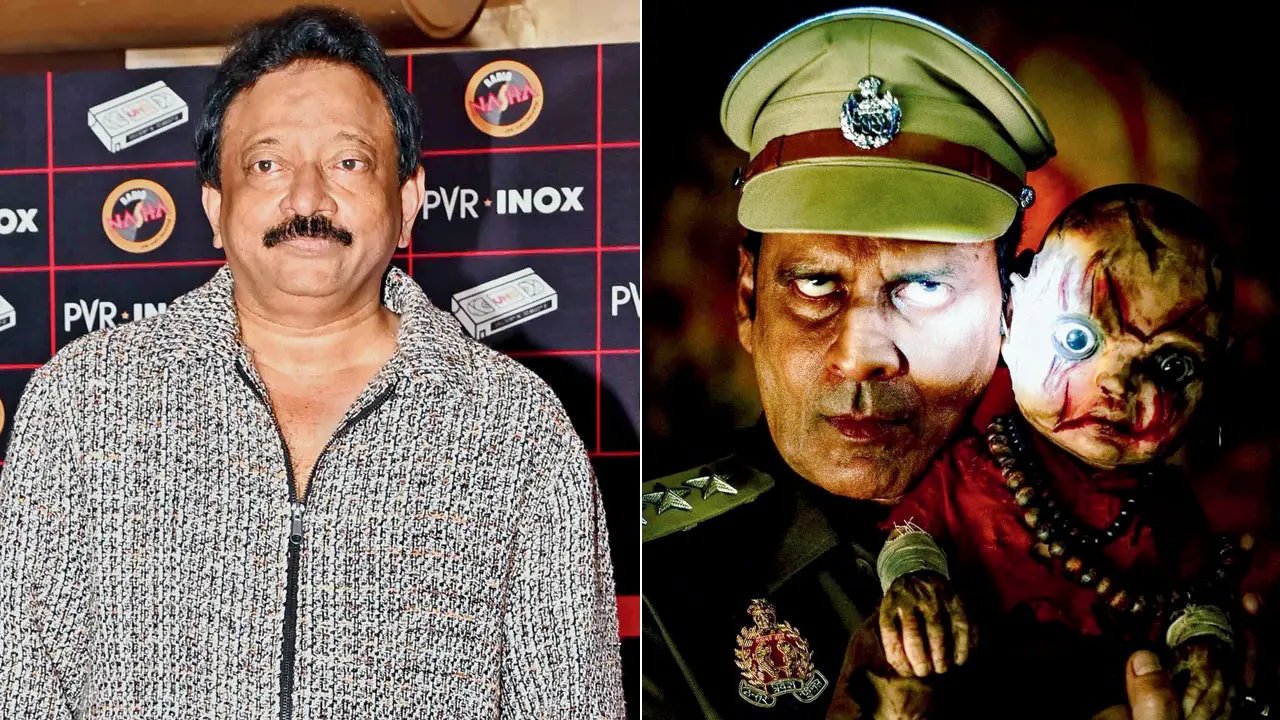
Ram Gopal Varma, who wrapped his Manoj Bajpayee-led ‘Police Station Mein Bhoot’, says he is eager to use Artificial Intelligence to his advantage in his future projects
Priyanka Sharma (MID-DAY; March 20, 2026)
Months ago, Manoj Bajpayee told mid-day that his next, Police Station Mein Bhoot, would be a “creative shock” as filmmaker Ram Gopal Varma had evolved significantly (Ramu sees me differently from others, November 9).
When we met Varma recently and mentioned that his leading man was all praises for him, he smiled before replying, “He enjoyed shooting this film with me. I think he saw a different side to me because we had worked together before as well.”
The horror comedy is the latest collaboration of the duo, who earlier teamed up on Daud (1997), Satya (1998), Kaun (1999), Shool (1999), and Sarkar 3 (2017).
Evolution is necessary for an artiste seeking longevity in his career. Varma would be among the first to agree with that. Recently, at a film festival in Mumbai, the director spoke about embracing Artificial Intelligence (AI) in filmmaking. Naturally, we asked him if he would use it in his future films.
“Any technology will enhance the craft of filmmaking. It will be very stupid not to use it because people tend to resist any new technology.”
AI has certainly given rise to apprehension in many, including actors. The fear extends to filmmakers as well, noted Varma. “All the big-budget filmmakers are scared because a tool like Seedance [AI video generator] is creating sequences for a few dollars that hundreds of crores of rupees cannot do.”
So how does he plan to protect himself and not become a slave to AI? “You can be a slave only when it requires you. I don’t think AI needs you, to begin with.”
Both Amitabh Bachchan and Abhishek Bachchan will be a part of Sarkar 4-Ram Gopal Varma
2:45 PM
Priyanka Sharma (MID-DAY; March 15, 2026)
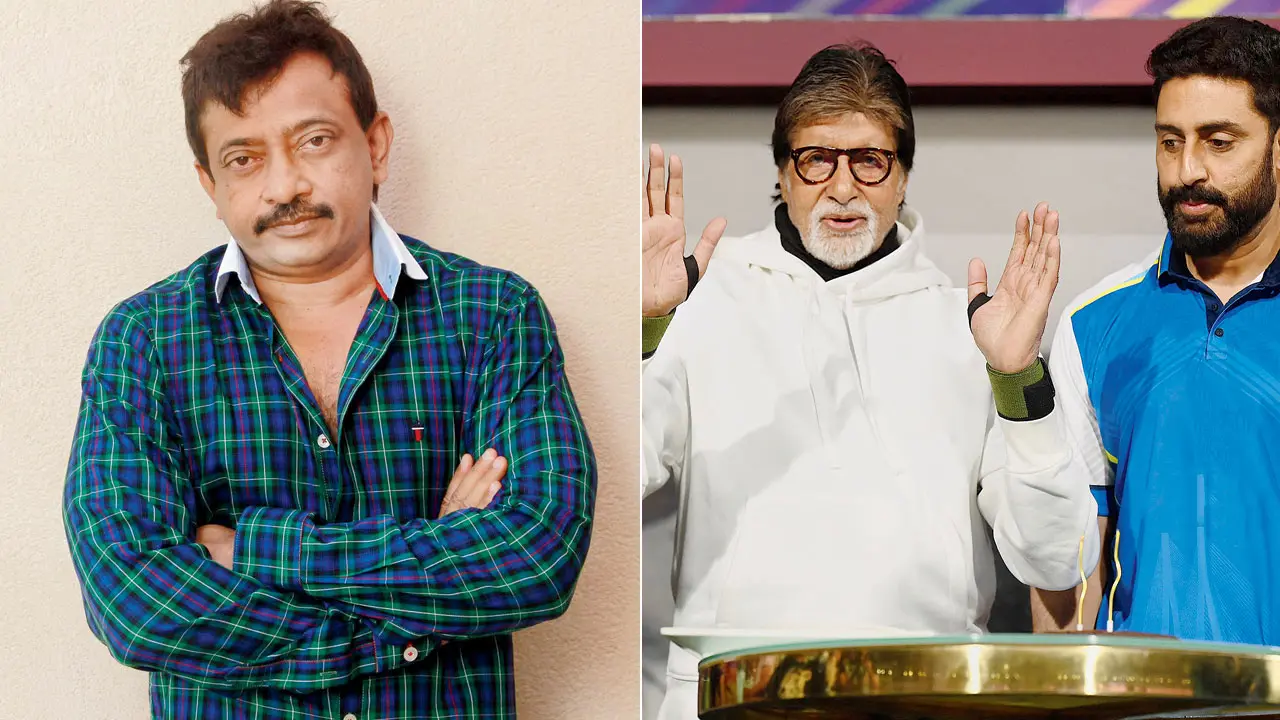
Almost nine years after the last instalment of the Sarkar franchise, filmmaker Ram Gopal Varma has announced its fourth chapter. The director tells mid-day, “The writing is done. I am starting the shoot in [mid-2026].”
Of course, it is impossible to imagine Sarkar without its principal cast — Amitabh Bachchan and Abhishek Bachchan. Asked if the father-son duo will return for the fourth film, Varma confirms, “Both Amitabh Bachchan and Abhishek Bachchan will be a part of the film.”
The story began in 2005 with Sarkar, followed by Sarkar Raj (2008) and Sarkar 3 (2017). While the Bachchan duo remained a constant through the franchise, the rest of the cast changed with each instalment.
While Varma chose not to divulge the names of any additional cast members, he revealed that he aims to wrap up Sarkar 4 within the year. Post that he will begin work on his previously announced thriller, Syndicate. The director says the project is currently in the casting stage.
Kamal Haasan, Ram Gopal Varma speak up on Jana Nayagan’s CBFC controversy
10:47 AM

HINDUSTAN TIMES (January 11, 2026)
After actor Vijay’s final film, Jana Nayagan, was postponed from its January 9 release for failing to receive CBFC certification following allegations that it hurt religious sentiments, several film personalities have voiced their support.
Taking to X, actor-politician Kamal Haasan wrote, “India’s Constitution guarantees freedom of expression, guided by reason, never diminished by opacity. This moment is larger than any one film… when clarity is absent, creativity is constrained, economic activity is disrupted, and public trust is weakened. Tamil Nadu and India’s cinema lovers bring passion, discernment, and maturity to the arts; they deserve openness and respect.”
Meanwhile, director Ram Gopal Varma posted on X, “It’s truly foolish to think that the censor board is still relevant today. It has long outlived it’s purpose, but it’s being kept alive out of laziness to debate it’s relevance now, and it is the film industry as a whole which is mainly responsible for this.”
He added, “Everything is available on the internet instantly, anonymously, and without a gatekeeper… And in this reality, for the honourable censor board to believe that cutting a word in a film, trimming a shot, or blurring a cigarette will ‘protect society’ is a joke.” HTC
Producer’s take on the issue
In his first statement since the legal tussle with the CBFC at the Madras HC, producer Venkat K Narayana described the situation as “extremely difficult.”
In a video statement, he said, “On 5 January, we were informed that the film had been referred to the revising committee. With time running out to approach the revising committee, we approached the Honourable HC.”
With the fate of Jana Nayagan’s release now hanging in limbo, especially amid the upcoming Tamil Nadu elections, Venkat said the process has been both challenging and emotional. He added, ”Above all, we firmly believe that Thalapathy Vijay sir deserves the farewell he has earned through decades of love from his fan.”
In the post-Dhurandhar era, it’s time to elevate the masala template-Ram Gopal Varma
10:51 PM

Renuka Vyavahare (BOMBAY TIMES; January 2, 2026)
Bollywood has long been a dominant force in India’s film landscape, but the growing pan-India appeal of south cinema in recent years has challenged its supremacy. With the exception of a few Hindi releases, many films struggled at the box office, fuelling the narrative that Bollywood was losing ground. However, the massive success of Dhurandhar, which has entered the Rs. 1000 cr club, appears to have shifted the conversation – something filmmaker Ram Gopal Varma strongly believes.
In a post on X recently, RGV wrote, “The fireball of the southies’ invasion into Bolly wood has been kicked back by Aditya Dhar. From what I saw of Dhurandhar 2, if the first scared them, the second will terrify them.”
‘Aditya Dhar elevated the masala template aesthetically’
Known for his blunt opinions, Ram Gopal Varma clarified that his comment was not intended to undermine South cinema or create a divide. Speaking to Bombay Times, he said, “I referred to South cinema because their potboilers follow a certain template. Korean cinema is known for its unique style, and so is South cinema. Aditya Dhar took the same masala template, but elevated it aesthetically. That’s what has shaken everyone.”
According to him, the success of Dhurandhar will force South filmmakers to reassess their approach to scripts and storytelling. “The film is far more mature and nuanced in its execution,” he said, adding, “What makes the difference is the detailing. Instead of exaggerated action where people fly or bounce unrealistically, the action here feels believable. That level of maturity and character clarity is rarely found in traditional masala cinema, which often veers toward the tacky.”
‘In Dhurandhar, you don’t just remember Ranveer – you remember everyone’
Discussing Dhurandhar’s grounded storytelling, Varma highlighted the film’s decision to move away from the concept of hero worship, “When audiences embrace something as intense as Dhurandhar, how will over-the-top pan-India films survive? When Ranveer Singh makes his entry, the intention isn’t to make people clap. He’s treated purely as a character who disappears into the story. Every character matters equally. You don’t just remember Ranveer – you remember everyone. Giving each character their due is extremely rare.”
Addressing the claims that Bollywood is ‘finished,’ Varma remarked, “People say Bollywood is done because it stopped making films people enjoy. South masala films dominated during that phase. But would those films work the same way if they released after Dhurandhar? South cinema often strives for a perfection that ends up looking unreal – be it overly glamorous heroines or questionable relationship dynamics. That disconnect matters.”
‘The storytelling sensibility of South cinema often didn’t connect with North Indian audiences’
Reflecting on history, the filmmaker added, “Many South stars – Rajinikanth, N T Rama Rao in the ’70s and ’80s – rose to superstardom through remakes of Hindi films, especially Amitabh Bachchan’s. In the ’90s, Bollywood shifted from masala to musicals, driven by music companies turning producers. Then came a generation of foreign-educated filmmakers focused on slice-of-life cinema. The South, barring Malayalam cinema, never stopped making masala films, which is why their stars became nationally popular. But the storytelling sensibility often didn’t connect with North Indian audiences.”
He continued, “Dhurandhar uses the same action-masala template but grounds it in realism. It’s being discussed for its music, dialogues, cinematography and action. South films may generate huge numbers and entertain theatre audiences, but there’s often little to discuss afterwards – excluding period epics.”
Comparisons between Dhurandhar and Varma’s own films, like Satya (1998) and Sarkar (2005), have been inevitable. Responding to that, he said, “Human conflict is universal – whether it’s the American mafia, Mumbai’s underworld, or any other setting. What matters is how the conflict is portrayed. The Godfather (1972) became a global benchmark because of how it was made. That’s what great cinema does.”
Saroj Khan told me that I should have also been credited as Rangeela's choreographer-Urmila Matondkar
10:05 AM

As ‘Rangeela’ re-releases today after 30 years, Urmila Matondkar reflects on the movie’s timeless quality and how she choreographed some portions of its iconic songs
Upala KBR (MID-DAY; November 28, 2025)
Urmila Matondkar running on the beach in an oversized white ganji. Or dancing on the streets of Mumbai with abandon, as others join in. Some images of Rangeela (1995) remain iconic even today, 30 years after its release. “It’s thrilling because it shows that people never forget such timeless movies,” says Matondkar of the film that has been restored by Ultra Media and is re-releasing today.
Centred on Matondkar’s Mili, the Aamir Khan and Jackie Shroff-starrer told the story of a girl-next-door pursuing her acting ambitions and love. In a way, Mili redefined the Bollywood heroine — while the styling influenced fashion trends across the country, Ram Gopal Varma’s directorial venture gave us a heroine who celebrated her sensuality.
“I certainly didn’t think of it from that perspective when I did Rangeela,” reflects the actor. “There was a lot of relatability as she was from a middle-class family. Manish Malhotra and Ram Gopal Varma created Mili’s look. The entire team contributes to a film’s success, and it’s one of the career-best works of these people.”
Another element that made waves was the unusual choreography to AR Rahman’s chartbusters — be it dancing by the beach in Tanha Tanha, or Mumbai streets becoming Matondkar’s stage in Rangeela Re. Legend has it that the leading lady stepped in for choreographer Saroj Khan on more than one occasion and designed some steps herself.
Mention this to the actor, and she shares, “When I met Saroj ji after Rangeela’s release, she told me that I should have also been credited as a choreographer. I was so embarrassed. [Such a compliment] coming from a master like her was something to be proud of. There were some pieces like the opening of Hai Rama and Pyaar Yeh Jaane Kaisa Hai, and a few steps here and there that I had done. I have done that in other movies as well.”
Rangeela marked the beginning of a successful collaboration between Matondkar and Varma. Why haven’t we seen them team up after Varma’s production Ek Hasina Thi (2004)? She says, “There is really no reason. He had great collaborations with most of his actors like Amitabh Bachchan ji or Manoj Bajpayee. He worked more with them. I was [cast], depending on whether the movie required me or not.”
On Jackie Shroff
“If my character is the epitome of femininity on celluloid, then Jackie’s is the ultimate male portrayal in cinema. He was such a phenomenal co-star to someone like me, who was still trying to find her way at that time.”
On Aamir Khan aka Munna
“I was crushing on Aamir after ‘Qayamat Se Qayamat Tak’ [1988]. He was playing a tapori for the first time here, and was a true perfectionist. His beauty is that even after 15 takes, he makes the last shot look spontaneous.”
Behind the screams: Decoding the craft of horror filmmaking
10:08 AM

Vinay MR Mishra (BOMBAY TIMES; October 29, 2025)
What makes a good horror film truly terrifying? It’s not just the blood-curdling screams, eerie silences or sudden jump scares — it’s the invisible architecture behind the fear. The best horror filmmakers know that real terror lies in storytelling, emotion and technical precision. Crafting fear that lingers long after the credits roll demands far more than prosthetics and dim lighting; it requires vision, patience and a deep understanding of human psychology.
As Halloween approaches, BT speaks to directors who have ventured into the dark corridors of horror cinema to decode what makes the genre so challenging and rewarding to create.
‘Invest in the story, the scares are just packaging’
For any director, the heart of a horror film is its story. Without it, scares feel hollow. Pavan Kirpalani, who directed Ragini MMS and Phobia, emphasizes that a strong script and invested characters are the foundation. “What makes a good horror film is a good script, a good story and a good theme. You have to invest in the story; invest in the world you’re entering into. Then the scares are just packaging. An action movie without a story is hollow. Once you have characters that you care about, the horror becomes intriguing, and the stakes are higher,” he explains.
‘When you fear the unknown, it has to exist in a world you recognize’
Aditya Sarpotdar, director of Munjya and Thamma, believes relatability amplifies fear. “What always works in a good horror film is a relatable set-up. When you fear the unknown, it has to exist in a world you recognise,” he says. Recalling Bhoot directed by Ram Gopal Varma, he adds, “A ghost in a Mumbai apartment was terrifying. I thought... why wouldn’t the ghost be around where I am? That relatability is everything.”
‘It’s difficult to get horror films backed by producers’
Despite the recent success of films like Shaitaan and Stree 2, directors admit that pure horror remains a hard sell. “It’s difficult to get horror films backed by producers. A horror comedy is easier because it casts a wider net. Straight horror, production-wise and money-wise, is tougher to mount. We are still nowhere close to what the West is doing with it. We are still barely scratching the surface when it comes to horror,” says Pavan Kirpalani.
‘Unfortunately, people here make horror films to make a quick buck’
For director Vishal Furia, passion is paramount. “A filmmaker’s absolute love for the genre is what it takes to make a horror film. Unfortunately, people in India make horror films just to make a quick buck. But then they end up making a shoddy horror film, which is why the genre has not evolved in Bollywood. But if a filmmaker really puts his passion and love into the film, then he can make something interesting out of it,” he states.
‘Only when the actor feels scared is when the audience feels scared’
When asked if it is a challenging genre to direct, Aditya Sarpotdar says, “Horror is difficult to direct because making the audience enter the world that you’re building depends on many factors, like the way you tell the story, the performances and other technicalities.”
Vishal Furia adds, “When the actor feels scared is when the audience feels scared. Even the person playing the ghost has to be mentally and physically strong. Under layers of prosthetic and constant retakes, performance can suffer. That’s why it’s one of the hardest genres to direct.”
On the other hand, Pavan Kirpalani believes, “A horror movie is easier to make as you’re only striding one tone.”
‘Horror is a very technical genre’
Once the story is set, horror lives in the craft. Vishal Furia, of Chhorii fame, believes this is a very technical genre. “Every department has to work perfectly. One misstep, and the scene could look funny or pull the audience out. The mood has to be consistent. The DOP, sound designer, prosthetics team, editor — everyone must be in rhythm. One bad lighting cue can kill a scare,” he explains.
Pavan Kirpalani echoes this and adds, “Making a horror film is a technical process. Sound, prosthetics, VFX, camera work, lighting — everything has to align. But most important is, what the character is doing, driven by the story.”
I made Rangeela because of Urmila Matondkar-Ram Gopal Varma
8:40 AM

Renuka Vyavahare (BOMBAY TIMES; September 11, 2025)
Thirty years after its release, Ram Gopal Varma’s iconic Rangeela still enchants the audience with its blend of sweetness, sensuality and cinematic magic. The film has been restored in 4K and will be rereleased in India theatrically on October 10. We caught up with RGV to discuss his celebrated film, featuring Mili (Urmila Matondkar), Munna (Aamir Khan) and Raj Kamal (Jackie Shroff). Excerpts:
Rangeela was a sleeper hit. Did no one expect it to succeed the way it did?
Around that time, Aamir’s films hadn’t worked. Urmila’s films also didn’t work. I am from the South, so no one really knew what to expect from this film. In fact, even the music was a new form. Rangeela’s songs didn’t sound like the hit film songs of that time. Whenever something new comes, people tend to get disoriented, but by the time the release came close, the music caught on.
Munna’s “AC idhar ghuma, kanda kaatke la” dialogue is remembered even today, among other special moments from the movie. Three decades later, what do you think gives Rangeela its lasting appeal?
Huge credit to writers Neeraj Vora and Sanjay Chhel. What really makes a film last is how unforgettable its characters are, because no matter how much time goes by, human emotions remain the same. With Munna (Aamir Khan), Mili (Urmila Matondkar) and Kamal (Jackie Shroff) still etched in our minds, the passage of time doesn’t matter anymore. The story of Rangeela will find appeal today or 30 years before it was made.
What inspired you to make Rangeela?
Cinematically, I would say my inspiration was the 1960s Hollywood musical, The Sound Of Music. Although it’s not the same story, Rangeela is also a love story where there’s no conflict at all. There is no antagonist either. Everyone is nice – Mili, Munna and Kamal. There’s not a single bad person, but the situation creates the conflict. I love the aspect that Rangeela is a sad kind of a story where your heart goes out to Aamir, but at the same time, you can’t really hate the other person either.
You have made some memorable films with Urmila. Do you consider her your muse?
When you’re working together for a long time, and especially when a film becomes so successful, you tend to make the next film with the same actor.
Urmila can give versatile expressions, which I realized after seeing her in the song Hai Rama. That’s the reason I cast her in such a wide variety of films – a horror film like Bhoot, the gangster film Satya and a caper like Daud. I made Rangeela because of her. Why I wanted to make Rangeela was because I felt inspired seeing a song of hers in my Telugu film (Drohi with Nagarjuna). The origin of Rangeela stemmed from my desire to showcase Urmila’s sensuality and her beauty. She had never worn such revealing clothes in the films she had done before that, but I told her, if you feel beautiful about your body, you shouldn’t be conscious. That bindaas attitude, the fact that she’s not aware of herself, and the fact that she’s not intending to create an effect on somebody else created a wild, animal-like, exotic feeling in the audience. The most memorable aspect of Rangeela was to look at Urmila through the camera.
On roping A R Rahman for Rangeela’s music
When I heard the songs of Roja, I was blown away. The kind of new sound, packaging and production that Rahman created was something no one had ever heard. It was inspiring for me to capture that visually. When the music is generic, everyone from the choreographer to the actor comes up with a predictable output, but because it was so unpredictable that no one had a choice but to reinvent themselves.
I will never make another Sholay-Ramesh Sippy
8:37 AM

Ramesh Sippy with Hema Malini and Amjad Khan on the sets of Sholay
Neha Maheshwri (BOMBAY TIMES; September 10, 2025)
Sholay, the 1975 blockbuster that redefined Indian cinema, turned 50 earlier this year. Touted as the greatest Indian film ever made, the film was honoured at the Toronto International Film Festival (TIFF), a recognition that speaks volumes for its timeless appeal and cultural influence.
Director Ramesh Sippy says, “Making a film is a lot of hard work. So, when it receives appreciation at the end of the day, it feels good. After all, being appreciated is an important aspect of moviemaking.”
Sholay created characters that became a part of popular cultural lore. However, Sippy dismisses the notion that the cult film helped him crack the formulaic moviemaking code in Indian cinema.
He says, “No one makes a good film with the thought that it must have some good songs, action that hasn’t been seen before, or a romantic scene that stands out. You begin with what you have, a bunch of writers who give you a strong storyline that you build up with good characters.”
‘Trade pundits felt Sholay would not recover the money spent on it’
Sippy says, “I was fortunate to have fine writers like Salim-Javed on board. Together, we were able to develop a powerful script. Casting the right actors was equally crucial. With music by R D Burman and lyrics by Anand Bakshi, we had a fabulous score.”
Surprisingly, Sholay did not open to a great start at the box office initially. He recalls, “Sholay was a very expensive film. It would normally cost Rs. 50-60 lakhs, but Sholay cost Rs. 3 crores, and trade pundits felt the movie would not be able to recover the money that was spent on it. No film had recovered that kind of cost, so they felt, what’s the point of it being a well-made film? We discussed the excessive criticism surrounding the film, but finally decided to leave it as it is. We thought time would tell and it did tell.”
The iconic characters of Sholay
The casting process of Sholay is the stuff of legends, with stories about Dharmendra initially wanting to play Thakur, while Sanjeev Kumar eyeing the role of Gabbar Singh.
Sippy shares, “If one character is more colourful, the other one seems to have more depth. Jaya Bachchan, playing the silent Radha, was just as important as the chatterbox Basanti, played by Hema Malini. It was the same in the case of Mr Bachchan as Jai, the silent and calm contrast to Dharam ji’s flamboyant and outspoken Veeru. It all worked out beautifully. However, it was not easy to make a film like Sholay. Most films are made in 40-50 days, but for Sholay, it took us 300 days to shoot it. We put our shoulders to the wheel as a team and plodded on.”
‘Films like Sholay become timeless, which is why we’re still talking about them’
Sippy is firm in his belief that Sholay should never be remade. He says, “I will never make Sholay again. If the film is still being remembered after 50 years, does it make sense to make it again? Films like Sholay become timeless, which is why 50 years later, we’re still talking about them. If somebody else wants to remake Sholay, they can, but I personally would not want to.”
In 2007, Ram Gopal Varma attempted exactly that, with Ram Gopal Varma Ki Aag, but the film failed to resonate with the audience. Sippy recalls, “Ram Gopal Varma had come to me wanting to remake it, and I very politely suggested to him not to. However, every maker has a right, and I told him it’s entirely his decision.”
I was pushed into directing Fiza after plans with Ram Gopal Varma fell through-Khalid Mohamed
9:31 AM
S Farah Rizvi (HINDUSTAN TIMES; September 8, 2025)
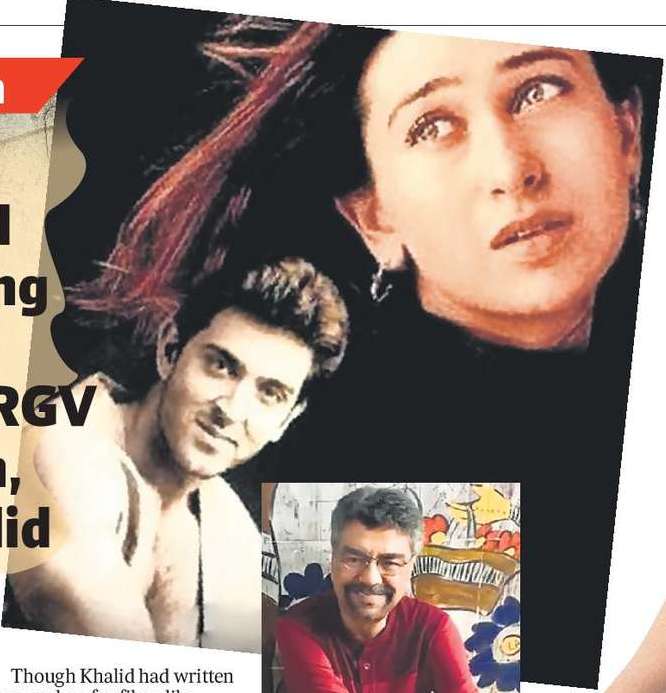
Fiza, released in 2000, celebrates its 25th anniversary today. On this milestone, the film’s writer-director, Khalid Mohamed, shares, “These 25 years seem like yesterday. Looking back, there’s a sense of self-fulfilment and pride.” He calls actors Karisma Kapoor a “dream to work with” and Hrithik Roshan the “most immersive” actor.
Khalid says he wasn’t meant to helm the film originally but was “pushed into directing” after filmmaker Ram Gopal Varma, the first choice, didn’t work out. It was cinematographer Santosh Sivan who stepped in with a suggestion: “Why don’t you direct it yourself?” Later, Karisma also joined Santosh in encouraging Khalid.
Though Khalid had written screenplays for films like Mammo (1994), Sardari Begum (1996), and Zubeidaa (2001), directing had its own challenges: “Of course, there were some tough days, like when we didn’t have enough resources to show a large room.”
Funding was also major concern until a new producer came on board. “The film had been started with loans derived from friends by co-producer Pradeep Guha and myself,” Khalid explains.
Sharing how the music became a huge asset to the film, he muses, “I lucked out.” Anu Malik “was in his element”, and A R Rahman composed Piya Haji Ali for free. Gulzar’s lyrics for Aaja Mahiya also “worked wonders for the song,” Khalid adds.
Shabana Raza Bajpayee: My goal was to get more scenes
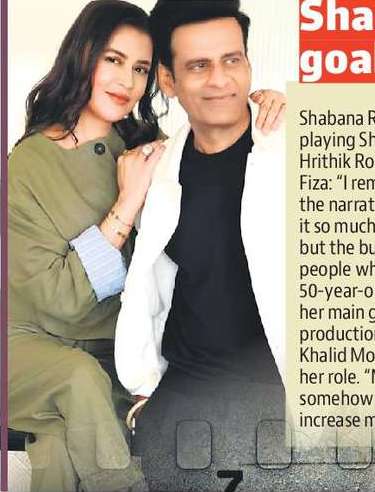
Shabana Raza Bajpayee recalls playing Shehnaz Sulaiman, Hrithik Roshan’s love interest in Fiza: “I remember when I got the narration of the story. I liked it so much, not just its canvas but the bunch of talented people who were involved .”
The 50-year-old actor reveals that her main goal during production was to get director Khalid Mohamed to broaden her role. “My only aim was to somehow persuade Khalid to increase my scenes, as I loved the story so much and, like any other aspiring actor, I wanted to be there in more frames,” Shabana explains, adding, “No one could deter him even a bit from the original plot.”
She also reflects on working with her husband, actor Manoj Bajpayee, who played Murad Khan. “Manoj had a small but memorable role,” she says, adding, “Every character was an anchor to the story in their own way; that’s what makes the film more special.”
Ask anyone who won a National Film Award last year, and most won’t remember-Manoj Bajpayee
4:11 PM
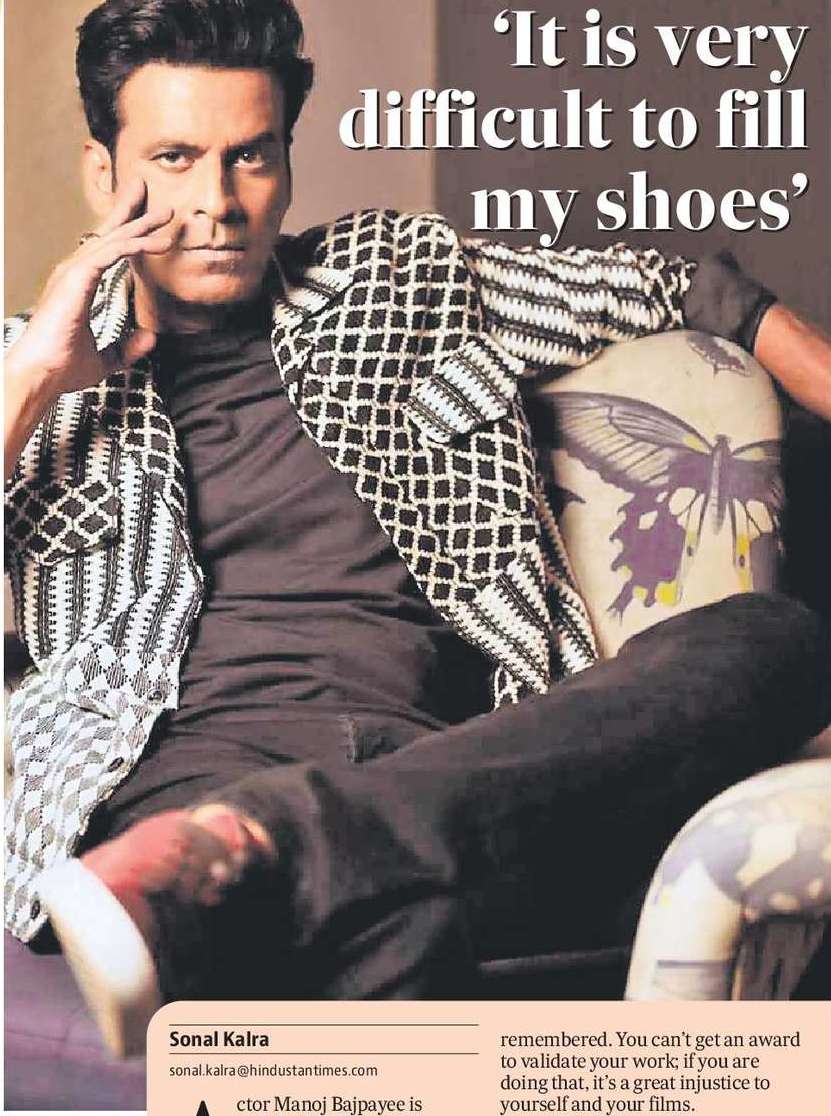
Sonal Kalra (HINDUSTAN TIMES; September 6, 2025)
Actor Manoj Bajpayee is making waves for his trademark knack of playing middle-class men and turning the ordinary into unforgettable stories in his latest release, Inspector Zende. Now, he is reuniting with filmmaker Ram Gopal Varma after 27 years.
Manoj, 56, joined Sonal Kalra, Chief Managing Editor, Entertainment and Lifestyle, in this week’s episode of The Right Angle with Sonal Kalra, and opened up on the money struggles of actors across mediums, and how passion, not validation, drives him.
If someone wants to be the next Manoj Bajpayee, what do they need to do?
Very difficult shoes to wear (laughs). I’ve been crazy about acting since I was 10 and I still am. I’m not giving any gyaan, nobody wants that. [But] today, too, I feel every great role should only come to me and no one else. If you want to buy a nice car, live in a nice house, wear good clothes, or tour the world through your acting, don’t go for it. The ratio of people who achieve that is very low. The passion for your work must always be present. If you want to act because without it you might die, then come.
You’ve received many awards. Have you ever felt bad about losing one?
That’s very difficult to judge. Ask anyone who won a National Film Award last year, and most won’t remember. But they’ll remember Sirf Ek Bandaa Kaafi Hai and Joram (both 2023) as great films, even though they didn’t get any National Awards. What matters to me is how great the films are and how proud I am of my work. Awards are for one evening; your work will be remembered. You can’t get an award to validate your work; if you are doing that, it’s a great injustice to yourself and your films.
OTT stars have the same fame as theatrical stars, but when will they be paid like them?
I never get paid (laughs). And nowadays, even those in theatres aren’t getting paid like they used to because of the risk and budget constraints. On OTT, I’ve been busy for seven years. The biggest advantages are out-of-the-box stories and actors getting respect, and writers and directors getting employed; it’s a win-win situation for all of us, including the platforms. Theatres are slowly making a comeback, but budgets are lower. I really want all mediums — films, OTT, and satellite — to do really well. If they do, there won’t be a monopoly, and that will only be good for filmmakers, actors and all creative departments.
Fans are excited about you reuniting with Ram Gopal Varma after 27 years. What was it like?
I’ve finished one schedule, and I am completely zapped. He is the real OG (laughs). This guy has not gone anywhere; he is going to be back, and how! Ramu’s ability to go beyond anybody’s imagination as a filmmaker, his courage, and his audaciousness have not changed! But he has become very inclusive. Unlike the Ramu I saw and experienced during Satya (1998), Shool (1999) and Kaun? (1999), this one is like a three-year-old kid in a candy store. And even today, he sits down with you and tells you what has gone wrong with him in all these years. The output so far is mind-blowing. A director like Ram Gopal Varma can always come back and throw you out of your alignment; he is that kind of talent.
Which of your roles is closest to your heart, discounting their commercial success?
I’ll be the last person to keep the commercial thing in mind. Very few films of mine have been theatrical hits (laughs). My own personal favourites are Gali Guleiyan (2017; Prime Video) and Budhia Singh (2016; Netflix). Of all the cop roles, Inspector Zende is the most chilled out and realistic. And Jugnuma; I’ve spent seven years on this film, and it is now about to release. It started filming before lockdown, and when we went back, the Delta variant of Covid hit. Somehow, we completed the film. It had a great festival run. That film is very close to me, like Inspector Zende.
The trailer of Inspector Zende looks very interesting. Tell us something about him.
Inspector Zende is a celebrated police officer in Maharashtra for some impossible tasks he accomplished, but the rest of India doesn’t really know him. (Producer) Om Raut’s father always wanted a film on him because he caught an international criminal. But as we researched, we realized his story couldn’t be told as a grim film because he’s such a chilled-out man. I’ve been told he never fired his pistol, yet solved incredible cases — releasing trapped police officers, rescuing people from the mafia. His life deserved this tribute.
Was the team concerned about humour diluting the seriousness of the role?
Nobody is trying to create a comedy here. But everything that will happen will compel you to laugh. Zende was a regular 48 or 49-year-old middle-class man with a team of lower-middle-class policemen. Before their Goa mission, nobody had ever been on a flight. In Goa, they had to blend in but the team doesn’t even have money, so they took an accountant to track expenses. That leads to a very comic thriller. None of us is trying to be funny, but the way things unfolded is very funny.
Ram Gopal Varma, Manoj Bajpayee's horror comedy Police Station Mein Bhoot to go on floors on July 26
9:17 AM
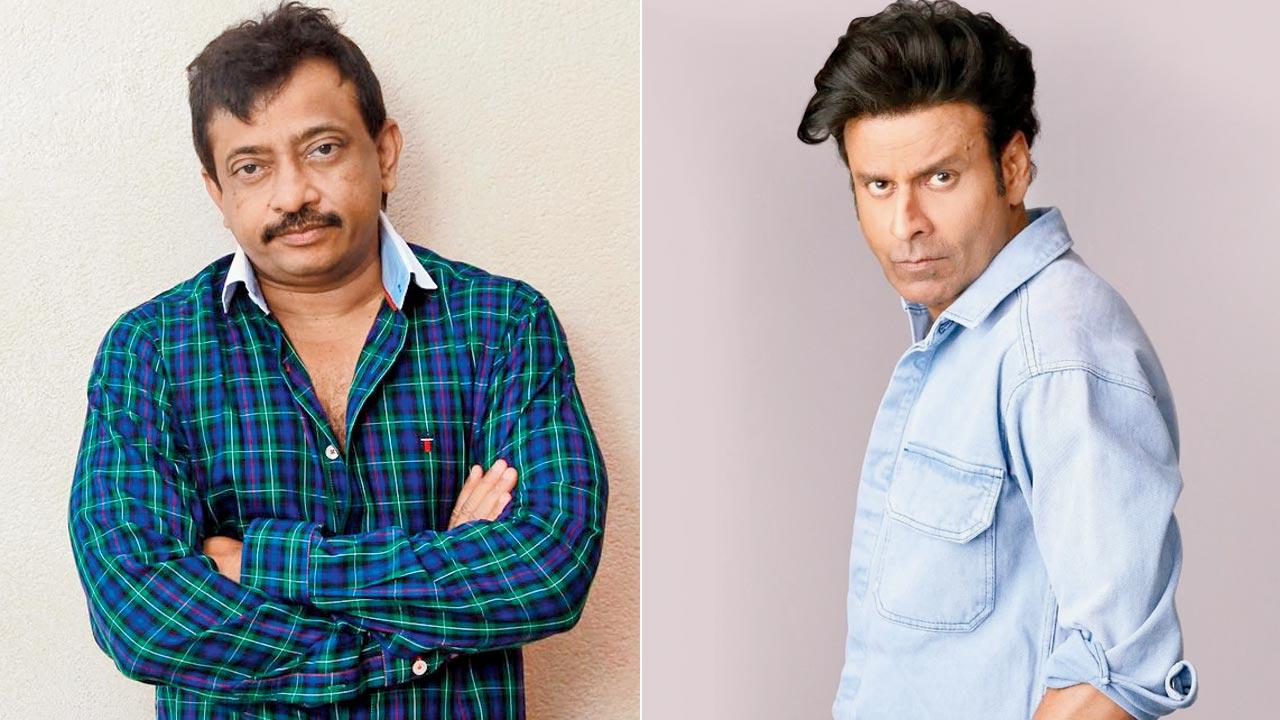
Upala KBR (MID-DAY; July 23, 2025)
One of the best things we heard this summer was Ram Gopal Varma’s announcement in April that he was reuniting with Manoj Bajpayee for a horror action comedy titled Police Station Mein Bhoot. Three months since, it’s time for the filmmaker-actor duo to head to the sets. mid-day has learnt that Varma will call action on the film from July 26 in Hyderabad, where they will shoot for a month.
When it comes to the duo, expectations are sky high, especially since they gave us the iconic Satya (1998) that catapulted Bajpayee aka Bhiku Mhatre to overnight fame. Several promising films followed — from the underrated Kaun (1999) to the cop drama, Shool (1999). This time, they are attempting a new genre together as they tell the story of Bajpayee’s cop, who kills a notorious gangster and is possessed by him in turn.
A source reveals, “Manoj will begin shooting Police Station Mein Bhoot at a bungalow in Ameerpet in Hyderabad. The bungalow will be converted into a police station. Ramu has written a wild story that sees how Manoj’s character transforms from an honest cop to a maniacal one after he is possessed by the gangster’s spirit and the police station becomes haunted.”
Police Station Mein Bhoot, which also stars Genelia Deshmukh as Bajpayee’s wife and Rajpal Yadav, will be shot over four schedules.
The source adds, “After the Hyderabad leg, the remaining schedules will be conducted in parts of South India. Ramu wishes to wrap it up by the year-end.”
When Prem Aggan didn’t succeed, I was quickly written off-Fardeen Khan
9:52 AM

Onkar Kulkarni (BOMBAY TIMES; February 7, 2025)
Fardeen Khan grew up in an environment that was all about movies. In a chat with us, he shares that while his father, actor-filmmaker Feroz Khan, gave him a launch pad, he also told him that beyond that, he would have to find his own foothold. “It was crucial for my father that his children create their own identity. He was protective but always insisted that I had to earn my own goodwill and place in the industry,” says the actor.
‘I had a front-row seat to how films were made’
Fardeen agrees that he had the privilege of being from a film family, but he was also aware that there was a certain responsibility that came with it. “As time passed, I built my own relationships, separate from my father’s legacy. I grew up learning from him – not just as an actor, but seeing him as a producer and director. I had a front-row seat to how films were made and the challenges filmmakers faced. And that taught me to balance both the actor’s and producer’s perspectives, so I’ve never caused trouble for any producer,” he shares.
‘Whenever there’s been a tough situation, I’ve taken responsibility’
Over the years, Fardeen believes he has built his own goodwill in the industry. He says, “I’d like to think I earned my reputation. I have worked with several filmmakers like Sanjay Gupta, Mudassar Aziz, and Ram Gopal Varma multiple times. Also, whenever there’s been a tough situation, I’ve taken responsibility to resolve it personally.”
‘When Prem Aggan didn’t succeed, I was quickly written off’
Recalling the time when his debut film, Prem Aggan (1998), directed by Feroz Khan, failed at the box office, Fardeen says, “When Prem Aggan didn’t succeed, I was quickly written off. My father sat me down and said, ‘Son, we made an effort, but we failed. You’ve got a college degree, you’ve learned from my experiences and from your own life. Now, you’ll have to pave your own way.’ He told me he would support me for one year, but after that, I would have to be on my own.”
Zero sum game: Box office numbers vs Egos
8:53 AM

After filmmaker Ram Gopal Varma called out the makers of Game Changer for inflating their box office report, we ask trade experts whether this practice benefits anyone
Yashika Mathur (HINDUSTAN TIMES; January 20, 2025)
In a recent post on X, filmmaker Ram Gopal Varma took on the makers of the Ram Charan-starrer Game Changer for allegedly showcasing inflated box office numbers. Varma’s post revived the debate around filmmakers overstating a film’s earnings to create the impression of success and positive word-of-mouth reviews.
With Game Changer, however, it is clear that this issue isn’t just prevalent in Bollywood, but in southern cinema as well. Despite it being a long-standing practice, it seems to benefit no one in the long run. We ask trade experts if there is an endgame to misleading audiences.
THE GAME CHANGER’S GAME
Game Changer producers reported that the film earned Rs. 186 crore on release day, January 10. If true, this would make the film the fourth-best opening for an Indian film ever, behind Pushpa 2,Baahubali 2, and RRR.
However, as per trade sources, the film opened under Rs. 100 crore worldwide; in fact, data portal Sacnilk reported a collection of only Rs. 80 crore. A source from within the Telugu film industry tells us, “Generally, [film teams] do this within a margin of 10-15%. but what Game Changer did is way beyond 70-80%.” The insider adds, “It is usually done to satisfy the fans or a hero’s ego.”
LOST IN THE TECHNICALITIES
Distributor Sanjay Ghai explains that filmmakers often use terms such as gross or net value in their marketing to confuse audiences who might not understand the distinction. “Public ko yeh sab samajh nahin aata. Unko ko bas itna samajh aata hai ki film Rs. 500 crore cross kar gayi.”
While Ghai clarifies that distributors have no say in the numbers, he continues, “South aur north dono jagah halat kharab hai par janta sab janti hai sach kya hai.”
A GAME OF PERCEPTION
Notably, films in the past year such as Jigra and Kalki 2898 AD, among others also faced scrutiny for allegedly inflating box office figures. But why is this done?
Trade analyst Atul Mohan says that the motive is primarily to shape public perception: “Yeh sab perception build karne ke liye kiya jata hai.” Pointing out that accurate first-day collection reports are typically only made available the following afternoon, he shares, “The numbers that [makers] project in the first three days is all marketing; it is done to make people curious.”
Who said what in the past
Vidhu Vinod Chopra, Director: “Marketing today is full of lies. Influencers are paid to promote fake narratives. When theatres are empty, producers buy their own tickets and spread false box office numbers. I’m being honest—my film released yesterday, and very few people showed up. No one else will admit their film didn’t have a good opening.”
Bhushan Kumar, Filmmaker: “I can’t speak for others, but I don’t believe in this; it’s made-up. Maybe [numbers are increasing] through corporate bookings. That doesn’t mean people are buying tickets since the halls are empty.“
Anil Sharma, Director: Film agar achchi hai toh number badhao, ghatao koi farak nahin padhta. Ab time ho gaya hai branding ka, sabko brand banana hai. Kuch saal baad sirf poster reh jaate hain branding waale. But this doesn’t help the industry or actors.actors.
Karan Johar, Filmmaker: During an interview in October, the filmmaker confirmed that inflating numbers was a long-standing practice in Bollywood. “Yes, numbers are fudged, true,” he had said.
Atul Mohan, Analyst: I think this began with Ghajini (2008), when the Rs. 100 crore clubs started. Everyone wanted to brand themselves as champs. Now it’s at a point where before the first day is over, posters claim that a film is ‘close to Rs. 25 crore’ and so forth.
Kartik Aaryan, Actor: On Thursday the actor said, “Some people [inflate the numbers], and some don’t. It has reached a level where the lines are so blurred that you have to guess how much a film has actually earned. Audiences are smart... they use their own judgment rather than relying on numbers. Eventually, I think films find their [own] space.”
There was no fallout between Ram Gopal Varma and me-Urmila Matondkar
8:34 AM

Renuka Vyavahare (BOMBAY TIMES; January 21, 2025)
Urmila Matondkar made fitness fashionable much before Bollywood lapped up the gym culture. Her chiselled body and glam quotient, especially in Rangeela, and her dance moves in songs like Kambakth Ishq and Chamma Chamma were a game changer in the ’90s. When it came to her performances, the director with whom she delivered some of the highs of her career was Ram Gopal Varma (RGV) with films like Rangeela. Bhoot, Jungle, Kaun? and Satya. With Satya (1998) back in the cinemas, Urmila reunited with the talented cast and crew of the film recently, including RGV, who for the longest time considered Urmila his muse. Over the years, rumours of a fallout between the two have been a topic of chatter within industry circles. In an exclusive conversation with us, Urmila addressed the speculations for the first time and recalled her memories of Satya.
‘Rangeela made me a huge star and Satya made me unlearn that’
Talking about how she had to drop the glam girl image and remodel herself as a girl-next-door for the film, Urmila says, “When Satya happened, I was probably the only known face in the movie. Rest were talented newcomers. RGV was counting on me to pull it off. Rangeela made me a huge star and Satya made me unlearn that. When you have spent many years trying to become somebody and have to shed that status overnight to become a nobody, that was me in Satya. My character Vidya in the film has no identity of her own, she is literally relevant because she happens to be Satya’s neighbour. To step back into a girl next door avatar was a huge challenge. I remember using my mother’s old saris which she was on the verge of giving up and draping them because I felt it was perfect for the role. I am glad I could use my star status in a film that went on to become one of our finest.”
‘RGV is one of our finest filmmakers’
Appreciating RGV’s contribution to cinema, Urmila adds, “Ramu ji is undoubtedly one of our finest filmmakers. Look at his body of work and the kind of talent he got into the film industry. Not just actors, but cinematographers, technicians, writers and music directors. At the screening of Satya’s re-release, Sriram Raghavan, Madhu Mantena and Anurag Kashyap were there for him as they all had started out with him. He is an institution in cinema. I am proud of the work I have done with Ram Gopal Varma. If the right opportunity comes along, I would love to collaborate with Manoj Bajpayee and Ramu ji again.”
‘I made it on my own without anyone’s backing’
Dismissing rumours about their fallout, Urmila revealed, “There is no such thing as we stopped working. There was no fallout between RGV and me. I even did special songs in his movies like Company and Ram Gopal Varma Ki Aag. The 90’s media was obsessed with everything about me except for my acting capability. Today, people openly talk about nepotism. Back in the day, too, there were actors around me who came from film families. Many couldn’t handle the fact that this nobody coming from a middle-class Marathi background was simply doing her work and shining. I made it on my own without anyone’s backing. I will say this proudly, that I am a people made star. My work has always spoken for itself.”
‘I’m glad the media today has a different perspective on women’
Urmila’s biggest grouse is her portrayal by the media in the 90’s. “My body of work included films like Kaun?, Bhoot, Ek Hasina Thi, Pinjar, Rangeela, Maine Gandhi Ko Nahin Mara… but I was still slotted as an item girl or a sex siren. Rangeela is also about a simple girl, who dreams big. The sexy image you see of her is her screen image or a character’s fantasy. I am glad the media today has a deeper understanding and a different perspective on women,” she says.
The great and not so great side of working with RGV
Speaking of the process of working with RGV, Urmila says, “It’s not that I was in every movie that Ramuji made. I am sure he didn’t think that he would put me in every movie either. He is a director who gives you great freedom to explore and that is a lot of work. He expects the actor to do a lot of work. He puts you in a dark room and tries his voice to guide you through that room, but it is you, who has to find your way out. It is you who must take that character to the finality. This work process is great and not so great part of him. It grows you tremendously as an actor, but those who cannot find their own way will not be able to make it.”
----------------------------------------------
Want to spend my life creating something as worthy as Satya - RGV
In a post on X, filmmaker Ram Gopal Varma talked about Satya and wrote, “Some of my later films might have been successful but I do not believe that any of them had the same honesty and integrity which is in SATYA.”
He added, “When Francis Coppola was asked by an interviewer about a film he made after GODFATHER, whether it would be as good, I could see him squirming because I could see that it didn’t occur to him. No one asked me about any film I was about to make post SATYA whether it will be as good, but what’s worse is that I didn’t ask myself… whatever little of my life is left, I want to spend it sincerely and create something as worthy as SATYA.” Addressing Urmila, he added, "“Satya went so beyond the rangeela glamorous quotient you were already known for. It is you alone in Satya who made the film much more than just a gangster drama to give it a deeper soul. It’s no small feat to stand out in such a man’s world, but you did it unbelievably effortlessly.”
Game Changer's box office numbers a ‘fraud’-Ram Gopal Varma
9:01 AM

HINDUSTAN TIMES (January 15, 2025)
The makers of actor Ram Charan’s latest outing, Game Changer, have filed a police complaint against around 45 persons for allegedly leaking a pirated version of the film online.
The pirates reportedly also demanded money from members of the production team before the release of the film and warned that they would leak the pirated version if their demands were not met.
But as the producers did not give in to the demands, plot points of the film were shared online two days ahead of its release on January 10. Eventually, on the day of the film’s release, an HD pirated print was leaked on various internet platforms, such as Telegram. An investigation is on to ascertain if the accused individuals committed these crimes independently or as a group.
Directed by filmmaker S Shankar, the movie features Charan and actor Kiara Advani in the lead roles. The project, which marks the director’s first Telugu film, sees Charan play dual roles — that of a politician and an IAS officer. HTC
Film’s box office numbers a ‘fraud’: Ram Gopal Varma
Filmmaker Ram Gopal Varma has called into question the reported box office figures of the Ram Charan-starrer. This comes amid controversy over discrepancies in the box office numbers claimed by the producers and those reported by trade sources. While the producers claimed that the film made Rs. 186 crore on the first day, trade sources quoted figures well below Rs. 100 crore.
Taking to X on Monday, Varma wrote sarcastically, “If @ssrajamouli and @SukumarWritings sky rocketed Telugu cinema in real time collections into a fantastically stratospheric heights thereby sending legitimate shock waves into Bollywood, the people behind G C succeeded in proving that the south is much more FANTASTIC in being a FRAUD.”
"Not a gangster drama," says Manoj Bajpayee on his next with Ram Gopal Varma
8:47 AM
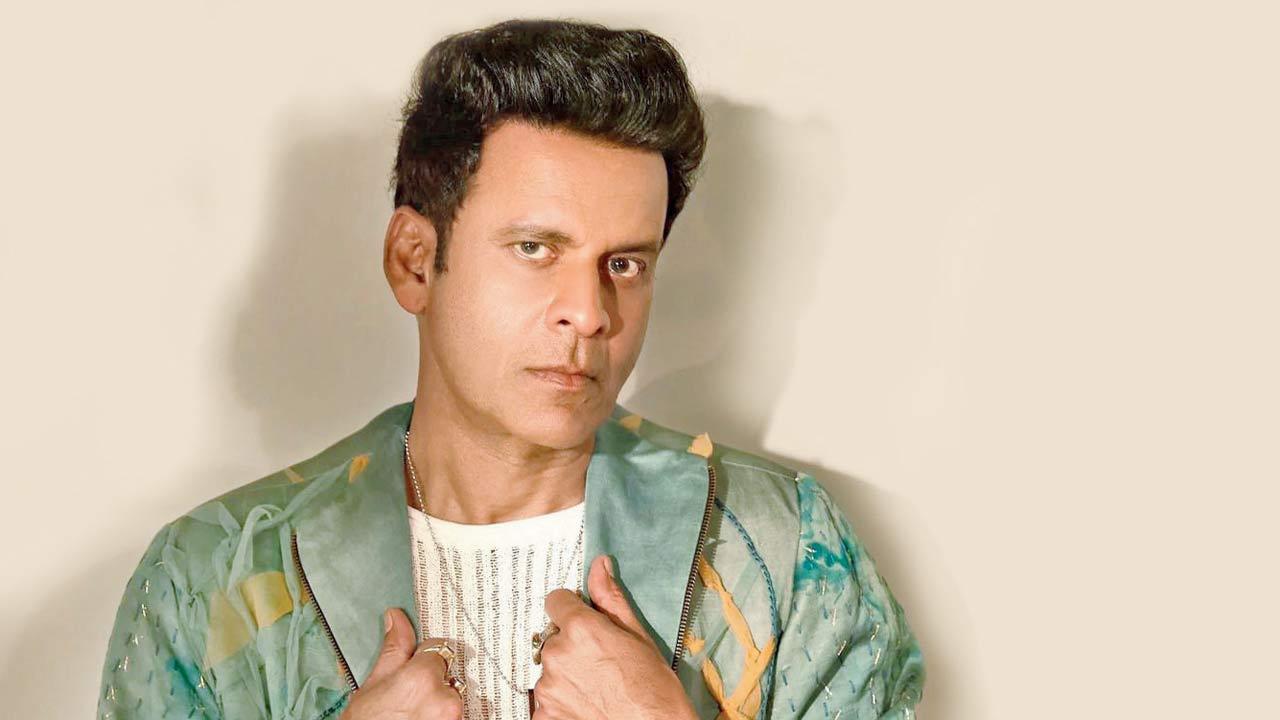
Announcing his reunion with his filmmaker-mentor Ram Gopal Varma, Manoj Bajpayee reveals their next isn’t a gangster movie; shares his reluctance about featuring in Satya 2
Upala KBR (MID-DAY; December 9, 2024)
Filmmaker Ram Gopal Varma’s Satya (1998) gave Bollywood two gifts—an iconic gangster drama, and a powerhouse performer in Manoj Bajpayee. Their collaborations since have resulted in experimental films, some hits, others misses. Now, the actor is set to reunite with his mentor for a movie, seven years after their last collaboration, Sarkar 3 (2017). Almost as if reading our mind, the first thing Bajpayee tells us is that it’s not a gangster drama.
“I am doing Ramu’s next project. As soon as the script is ready and a window opens in my schedule, we’ll do it. It’s not a gangster film, but it will be a vintage Ram Gopal Varma film,” he promises.
When it comes to the actor-director duo, one can expect unconventional stories. Think the psychological thriller Kaun (1999), or the road-trip-gone-wrong thriller Road (2002). What can we expect this time?
“[A few months ago], Ramu called me saying that he has a story developing in his mind; he hasn’t shared [the details]. Ramu has given me a career, and I always tell him that if he asks me to stand in any frame, I will stand there. He’ll call me after a few days with the storyline.”
Sequels are money-spinners these days. Would he and Varma consider a sequel to Satya, or their cop actioner, Shool (1999)? Bajpayee picks Shool 2 over Satya 2. “To see my character Samar Pratap Singh again, in a retired stage, would be an interesting storyline. He is on the verge of retirement, looking back at the life he had and how he has lost everything,” shares the actor.
Tell him his fans would love to see him reprise the role of Bhiku Mhatre from Satya, and he says, “I cannot play Bhiku Mhatre at my age today as he was a fireball; I don’t have that energy today. I’ll be happy if you just give me a chair to sit on and perform. There are no gangsters in our modern corporate world today. The mafia is all wiped out.”
Irrespective of whether it’s an original story or a sequel, Bajpayee is simply glad to team up with the filmmaker again. It is Varma’s rebellious streak that the actor values the most.
He shares, “Ramu brings unpredictability to the scenes. He is unpredictable and I love that about him. There is a rebel in him even at this stage, a revolt against all that is conventional. That makes his films far more exciting.”
Subscribe to:
Posts (Atom)