Showing posts with label Rajnigandha. Show all posts
Showing posts with label Rajnigandha. Show all posts
In the era of the angry young man, I was just a common man trying to survive-Amol Palekar
9:25 AM
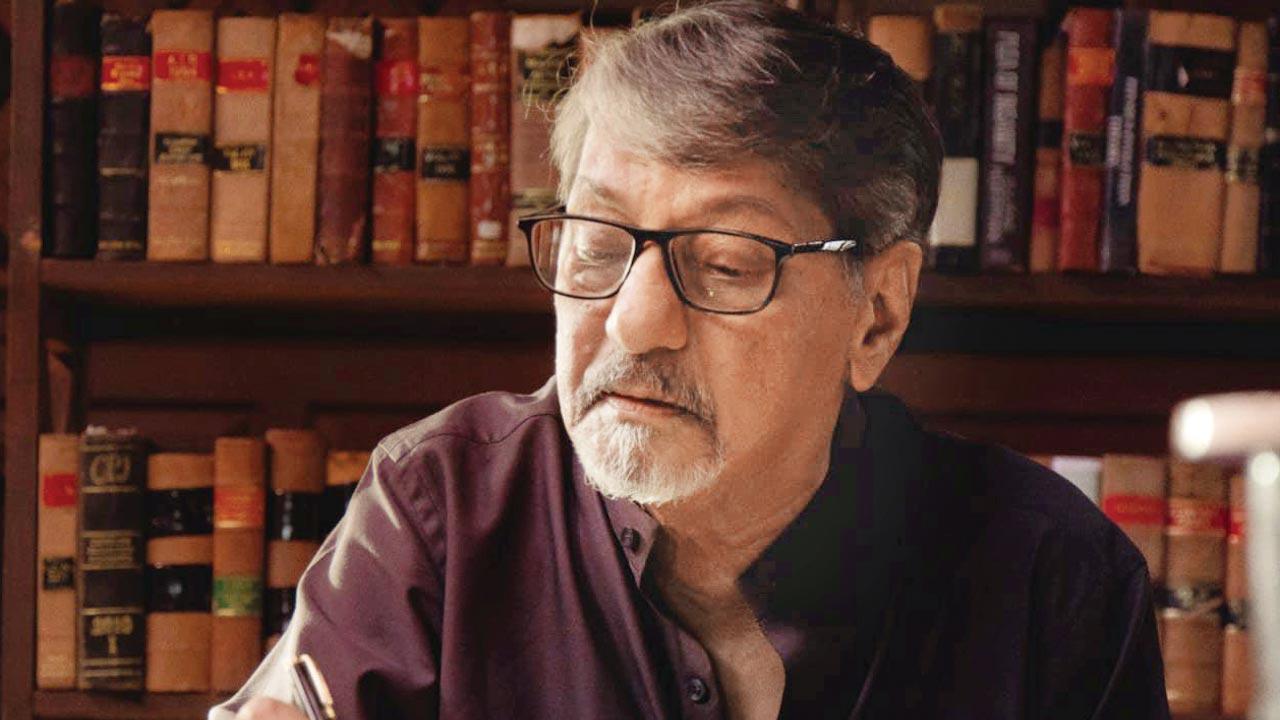
Divya Kaushik (BOMBAY TIMES; January 6, 2024)
Among his many achievements as an actor and filmmaker, one thing that Amol Palekar will always be proud of is how he came close to every common man through the characters he played on screen. From Gharonda, Gol Maal to Chhoti Si Baat, the actor says that he always tried to be the “boy-next-door who comes across as vulnerable as any common man is.” The veteran actor, who was in the city recently, spoke to us about Hrishikesh Mukherjee and Basu Chatterjee’s era of filmmaking, when simple stories ruled the celluloid.
‘I CONSCIOUSLY TRIED TO RETAIN THAT VULNERABILITY OF A COMMON MAN’
“I feel nice that I was a part of the era when parallel cinema evolved,” says the actor as he talks about the audience relating to his characters.
He adds, “In Rajnigandha, Chhoti Si Baat, Chitchor, Baton Baton Mein, Gol Maal, Naram Garam – the hero that I played never utters a simple line ‘I love you’ and that was the continuing point in all those portrayals. I think every young boy related to it. I think I managed to bring out that aspect of the boy-next-door quite nicely. And the vulnerability of the man... I have consciously tried to retain that vulnerability. I found this vulnerability in every character that I portrayed, and I think I haven’t done badly.”
Talking about what made him stand out, Palekar says, “The time when I was portraying the boy-next-door, it was not just the era of angry young man, it was the era of lover boy Rajesh Khanna, Dharmendra the He-Man, Jeetendra who could dance so beautifully and charm a girl – I think I had none of those qualities and that’s what people liked. What I also liked was that I was none of those ‘heroes’, I was just a common man trying to survive, trying to convey his love without uttering those words. It made me stand out among all those larger-than-life portrayals on screen back then.”
‘WORKING WITH BASU DA, HRISHI DA, SHYAM BENEGAL USED TO BE LIKE A FAMILY PICNIC’
Palekar credits Basu Chatterjee for his acting career. “Basu da approached me for Piya Ka Ghar, which I refused. I didn’t think he’d ever come back to me – I was a nobody from theater. But he did and that’s how Rajnigandha happened. Basu da, had a great command on his craft and celluloid narration, but in real life, he was a terrible narrator. Woh kahani bata hi nahi paate thay. Our conversation was like, ‘Amol main ek film banane ja raha hoon. Ek ladka hai, maano tum ho, aur ek nayi ladki hai Vidya Sinha naam ki, aur phir… yaar tum yeh padh lo!’ This was his narration!”
He adds, “Hrishi da (Hrishikesh Mukherjee), Basu da, Shyam Benegal, all the people that I have worked with – it used to be like a family picnic. It was like fun and hansi mazak karte karte film ban jaati thi. And that’s what reflected on screen. The kind of fun we used to have in Gol Maal, oh my god! We were like a family on the sets, it worked beautifully.”
The veteran actor has relived many of his memories in his book, View finder: A Memoir. “The end result of writing this book was a catharsis, but to reach that catharsis it was like excavating and peeling off oneself. So many memories came out, I thought I had forgotten them. I relived so many memories. I felt nice, relieved and quite overwhelmed... The dilemma was what to keep and what not keep from all those memories. That was a major step. I belong to the dinosaur era, I still write on a paper. They were about 450 hand written pages in Marathi and I handed over to Sandhya (his wife). Sandhya and I have associated in so many roles. So this final product is our collaboration in the true sense as we have been doing for the last 25 years of our marriage. This proudly can be termed as the lovely climax to that journey.”
‘ENJOYED PLAYING GREY CHARACTERS’
In contrast to the vulnerable, common man, Palekar also played characters with a grey or dark side. “I played a villain in Benegal’s Bhumika, which was unheard of at that time. The industry resisted that, they said you are a successful hero with three silver jubilees in your belt why do you want to play a villain, have you gone bonkers? But I chose to because it was a huge challenge for me as an actor. From there to Vidhu Vinod Chopra’s Khamosh, where I play a murderer, I was very happy to choose such roles. In Gharonda, too, the character is so grey, he is actually a villain. All these grey shades are attributed to a villain, and I enjoyed that.”
Amitabh Bachchan, Shashi Kapoor, Sharmila Tagore were original choices for Basu Chatterji's Rajnigandha
9:57 AM
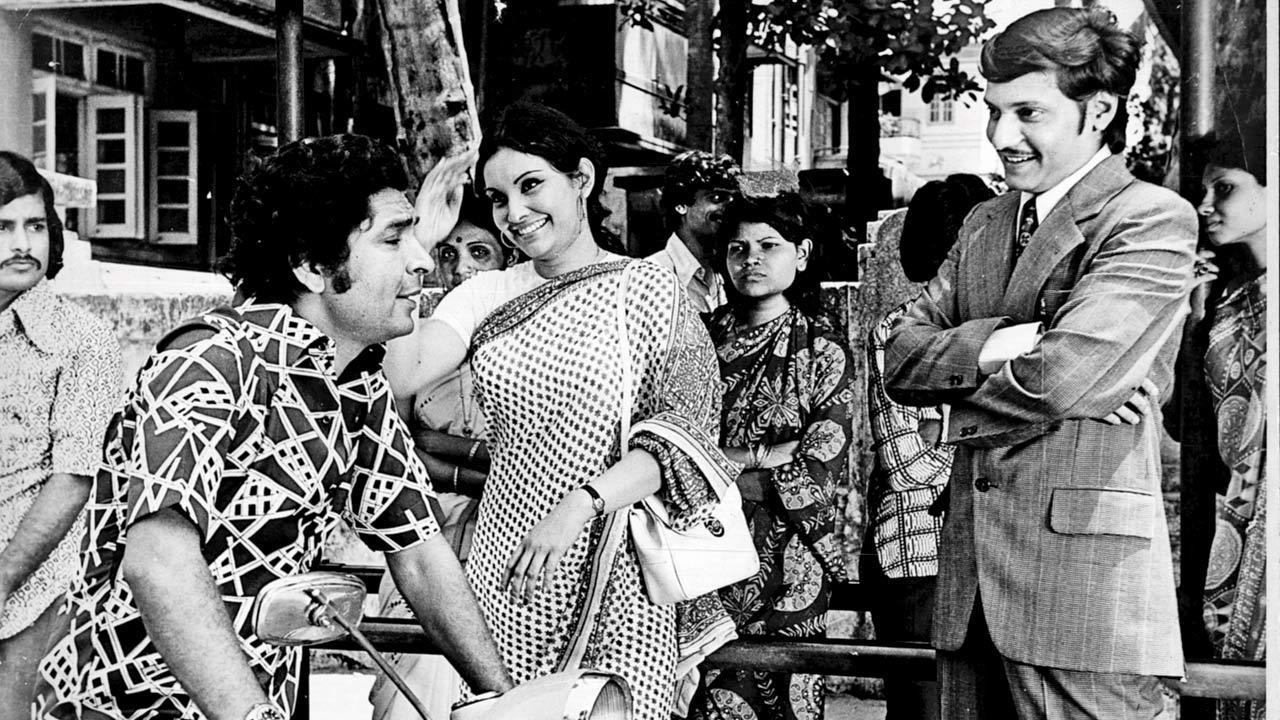
Rajnigandha’s lead pair Amol Palekar and Vidya Sinha, who play Sanjay and Deepa, were later seen in Chatterji’s 1976 film
It was Shashi Kapoor and a host of other big stars, who Basu Chatterji first had in mind for the lead pair of his 1974 film Rajnigandha. A new biography of the late filmmaker discusses how the ‘simple-looking’ Amol Palekar made the cut
MID-DAY (March 26, 2023)
Like most small-towners, Basu was an early riser. Post Piya Ka Ghar, he would be at work by 7 am. By 8.30 am, the ceiling fans would be switched off in the rooms where the others would be sleeping. It was their wake-up call. Those who woke up early would find Basu in his chair, sometimes on the floor, writing his screenplays. Except for the days when he had a morning shoot. This was the time when Basu cut down his professional assignments for Blitz. The script of Rajnigandha happened during the early morning sessions when Piya Ka Ghar was in the making.
The first actor Basu had in mind for the role of Sanjay was Amitabh Bachchan. He was yet to become the Alpha Male then. History could have been very different had Basu stuck to his original choice. Shashi Kapoor was offered the role of Naveen. Suave, slick, with leadership qualities that extended beyond the college campus to wield influence in college selection panels, he was, as defined by Sulagna Biswas, the original LinkedIn Man.
Sharmila Tagore was Basu’s first choice as Deepa. Independent, but not a renegade. Observant, sentimental, committed, steadfast and yet ambivalent. The plan fell through. Shashi Kapoor was fine with playing Naveen, subject to the condition that the film was sold to distributors at the existing rate for a Shashi Kapoor film, something Basu was not comfortable with. Sharmila was out of the contention too, but the reason is not known. Maybe Basu wanted fresher faces.
Meanwhile, Basu flew to Calcutta and offered Aparna Sen the role of Deepa. Aparna, who probably had not seen Sara Aakash, felt that the story of Deepa was ordinary. Her refusal prompted Basu to pitch it to Mallika Sarabhai. She was referred by Yogesh. Both Yogesh and Mallika were working in Sonal (1973) then. Basu met Mallika in Ahmedabad and the dates for a few shoots were fixed. However, Mallika was planning to do her MBA and later walked out of the film. In the meantime, Piya Ka Ghar was released in Calcutta. News of its critical acclaim reached the cognoscenti. Aparna Sen, being one of them, had a change of mind and wrote to Basu expressing a desire to play Deepa.
A few days after Basu acknowledged the mail, Aparna came down to Bombay to complete her part of the shoot of Tapan Sinha’s Sagina (1974). Basu met her, and when the discussion boiled down to money, Sen said she was fine receiving in kind as a small film-maker like Basu would find it difficult to compensate her at the market rate. The contract with Suresh Jindal had been finalised by then.
Said Basu: “I discussed the possibility of giving Aparna Sen a Fiat car. It would have cost us around Rs. 32,000. But things began to get topsy-turvy when she refused to work with the Naveen I had in mind—Samit Bhanja, who I had seen in Guddi (1971) and liked. While the producer and I were fine with the monetary arrangements, we started to become skeptical of starry tantrums. This is when we consciously took the decision of taking all new faces.”
The search for rookies thus commenced. Basu, for a short time, had also mulled trying out Rakesh Pandey, but he was preoccupied, as told to the author. “Basu-da wanted me to do Rajnigandha. At the time, I was doing a film with Mohan Segal called Intezar (1973). The set was at Rooptara Studios. Basu-da came down to the set, and said, ‘I am doing a film called Rajnigandha. It is about a girl and two boys. It will take 20 days to shoot.’ I said, okay, when do you want to start? He said next week. I said, ‘Basu-da, I am doing this film, and it will take at least 15–20 days here on this set. I can manage three to four days at the most if you shoot in Bombay.’ He said, ‘No no, the producer might run away.’”
-----------------------------------------------
In addition to his National Award-winning screenplay for Shyam Benegal’s Bhumika (1977), theatre veteran Satyadev Dubey—who people would recall as the weekly waged stevedore who confronts the goons only to be run over by a truck in Deewar (1975)—made one extremely significant contribution to Hindi cinema: Amol Palekar.
Dubey had directed the Hindi play Aadhe Adhure, starring Amol, who was acting in Marathi plays at the time. Basu loved his acting, and Amol was Basu’s original choice for Piya Ka Ghar (1972), but producer Tarachand Barjatya’s son Raj Kumar Barjatya, who was there at the theatre with Basu, opined that Amol was too simple-looking for a hero. Suresh Jindal, however, had no issues in accepting Amol, a postgraduate of JJ School of Arts, Bombay, as the Sanjay of his film.
Basu was happy with the onboarding, about which he told the author: “Amol was then working with Bank of India. He was a part-time actor. I was fond of Marathi theatre and had seen Amol in a few plays. He used to come to film shows arranged by Film Forum as well. Raja Thakur, the maker of Mumbai Cha Jawai (1970) had also put in a word. Amol had played a small role in his film Bajiravacha Beta (1971). After he was rejected by Raj, I proposed his name to Suresh Jindal.”
Amol had talked about his first business meeting with Basu with author Balaji Vittal: “There used to be a café named Samovar inside the Jahangir Art Gallery. I met Basu-da and producer Suresh Jindal there. Mr Jindal did not talk during this meeting. But the interesting part was that Basu-da did not talk much either. He narrated the story of the film like this. ‘Amol, kya hai, ek ladka hai, mano tum. Aur ek ladki hai. Nayi ladki hai, Vidya Sinha hai uska naam. Usse miloge tum. Toh, ye dono hai . . . aur . . . yaar ye tum padh lo na [Amol, there’s a boy. You. And a girl, a new actress called Vidya Sinha. You will meet her . . . you two . . . oh, why don’t you read it for yourself].’
Basu-da handed me Mannu Bhandari’s story. Following my acceptance to do his film, he gave me the script as well. After reading that, I kept wondering how someone who was so ill at ease narrating a story could write a screenplay in so much detail. Even the dialogues were there. He was extremely eloquent in the cinematic language. Once you understood that, communication becomes easy.”
Excerpted with permission from Basu Chatterji And Middle-of-the-Road Cinema by Anirudha Bhattacharjee; Vintage, Penguin Random House
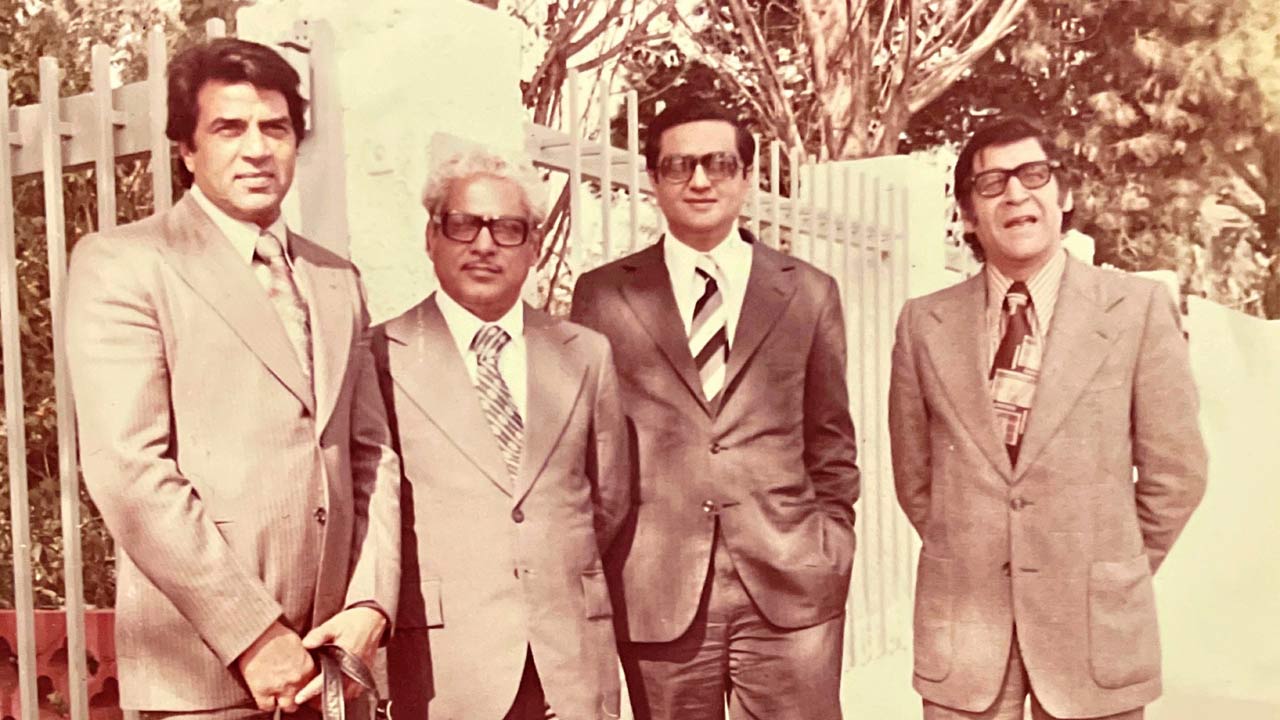
Chatterji and Dharmendra at the Cairo Film Festival. Pics courtesy/Rupali Guha
Mannu Bhandari, Hindi litterateur who wrote the film Rajnigandha, dies at 90
8:04 AM

Avijit Ghosh (THE TIMES OF INDIA; November 16, 2021)
New Delhi: Hindi litterateur Mannu Bhandari, who penned wildly popular short stories and novels without sacrificing literary merit and who constructed a new and aware modern woman in her works, passed away in a Gurgaon hospital on Monday. She was 90.
“She had suffered a series of strokes over the last few years. She was frail but never bedridden. This time she was hospitalized for an infection which turned fatal” her daughter Rachana Yadav, a kathak dancer, told TOI.
Film director Basu Chatterjee, with whom she shared a fond association, transformed Bhandari’s long short story, Yehi Sach Hai, into a feature, Rajnigandha (1974). The film was both a critical and a commercial success. Basu da’s Jeena Yahan (1979) was also based on her work, Ekhane Aakash Neyee. Bhandari also wrote the dialogues for Swami (1977), another box-office winner.
Her novel, Aap Ka Bunty was made as Samay Ki Dhara (1986), which veered away from the original story and ran into legal trouble. Mahabhoj, a hard-hitting political novel, was numerously staged as a play.
Born in Bhanpur, Madhya Pradesh, Bhandari earned her masters at Banaras Hindu University. She also taught at Delhi University and was married to eminent writer-editor Rajendra Yadav who passed away in 2013. Both were pillars of the Nayee Kahani (New Story) movement.
Writer Mridula Garg said along with Krishna Sobti and Usha Priyamvada, Bhandari was regarded as the three best Hindi women writers of the 1960s and 70s. “She wrote with spontaneity and empathy for her characters. Her style was easy going and direct. People identified with her characters,” Garg said.
Remembering Basu Chatterjee: Khalid Mohamed pens tribute; Amol Palekar, Zarina Wahab too remember Basu da
9:12 AM

Chhoti-badi baatein about Basu Chatterjee, champion of middle class cinema who passed away on Thursday
Khalid Mohamed (MUMBAI MIRROR; June 5, 2020)
 Bustling into his airy study room, on the first storey of Violet Villa, Santacruz, he nonchalantly pulled out a file titled “The Window.”
“That’s my last script,” Basu Chatterjee, often attired in a grey safari suit, darted his boyish grin. “You make it. I’m tired of flogging it around to producers.”
The story revolved around a Muslim girl in love with a police officer who proposes marriage. It turns out to be a ruse to arrest her brother, a suspected terrorist, at the wedding. Heartbroken, the girl never opens her home’s window again.
“But Basu da, who’ll finance a film with Muslim characters?” I asked.
He countered, “Just get one or two big stars. I’m not charging you a rupee anyway. Now, what’ll you have —scotch and soda or with water?”
 Scotch evenings with the puckish writer-director, who was surmised to be 90-93 and passed away on Thursday of age-related ailments, were enlivened with conversations about his early days in Ajmer and his move to Mumbai, where he became a cartoonist-cum-illustrator with the Blitz tabloid.
Backbone of the cineaste club, Film Forum, and a constant presence at its pokey office overlooking the Dadar railway station over-bridge, he was working on the script of Sara Akash (1969), and could no longer edit the Forum’s quarterly magazine Close-Up. He asked a college friend, Abbas, and me, to take over. We didn’t know the ‘e’ of editing. “Neither do I,” he had chortled. In return, we could attend the film society screenings for free.
 After the uncompromised Sara Akash and the slice-of-life Piya Ka Ghar, he became a champion of the middle-class ethos with the sleeper success Rajnigandha (1974).
In 1975-’76, Chitchor and Chhoti Si Baat once again sided with Simple Simon over cool man-about-town.
Intermittently, Basu da took on more than he could chew, resulting in the disappointing Us Paar, Tumhare Liye and Do Ladke Dono Kadke. Yet, the writer-director bounced back with Khatta Meetha, Baton Baton Mein, Swami, Apne Paraye and Shaukeen.
He did work with the top heroes — Rajesh Khanna (Chakravyuha), Amitabh Bachchan (Manzil), Dharmendra (Dillagi), Jeetendra (Priyatama) and Anil Kapoor (Chameli Ki Shaadi) — but sought to avoid the star system, preferring intimate to showy cinema.
The film Jeena Yahan (1979), featuring Shabana Azmi and Shekhar Kapur, remained closest to his heart. “It was quite easily my best,” he would say about the barely-remembered reflection on a young couple’s adjustment to daily commutes and housing issues. Not Ek Ruka Hua Faisla? “Naah,” he’d say. “You know that was taken from 12 Angry Men.”
Not the sort to whine, he was okay with his light-hearted Prateeksha (Jimmy Sheirgill-Dia Mirza) being dumped on Sahara TV channel. From what I could glean, he at least hoped to travel to Kolkata where he’d be received with open arms, thanks to the success of his two Bengali films (Hochheta Ki, Trishanku).
When he retired (not out of choice), he’d spend time surfing the net and emailing. Worried about his huge collection of cinema books, he’d wonder, “What’ll happen to them? You take them.” “Basu da, stop it, you’re going nowhere”, I’d retort.
By the time I gathered a team to work on a documentary on Basu da, some three years ago, he had started to fade. He walked by taking support of the wall, would recognise his wife and TV filmmaker-daughter Rupali Guha, but drew a blank on seeing me. Alzheimer’s was setting in.
During the first and only shoot, he tried to be amiable, but answered only with “Yes” or “No”. Questions about his firebrand TV series Rajni or the sleuthing Byomkesh Bakshi made him restless. Maybe, he didn’t wish to delve into the past or he had erased them subconsciously.
Once, he told me he had started writing his biography in Hindi but quit midway because “it meant writing lies on every page, I would have cheated myself”. And if he had done that, he wouldn’t have been able to open his study room’s window again.
-----------------------------
Amol Palekar: He never attempted a typical masala movie, yet top heroes worked with him
Basu da was a simple person. It reflected in all his films and his humour. He was a man of few words. When we met for a narration of Rajnigandha, he started off saying, “Ek ladka hota hai, maan lo tum ho, ek ladki hoti hai, Vidya Sinha…” Then, he stopped, handing me the story, screenplay and dialogue. “It’s better if you read this.” Looking back, I’m amazed by his inability to narrate a simple story. However, he could do it on screen beautifully, without the cliched melodrama.
It took us almost two years to release Rajnigandha because no one wanted to distribute it. They would ask “Hero kaun hai?”, and wonder how a new boy with a Marathi name could be the hero? Then, they would learn that the heroine was a debutante, too, and that the film had no villain. Quickly losing interest, they’d ask Basu da, “Toh phir film kyun bana rahe ho?” Later, these memories made him laugh but at the time, I could see the trouble he was going through and marveled that he stuck to his vision.
He never attempted a typical masala movie, yet all the top heroes, from Dharmendra and Hema Malini to Amitabh (Bachchan), Vinod Mehra and Moushumi (Chatterjee), worked with him. Basu da was probably the first major link between parallel and commercial cinema, thanks to the subtle humour that lit up his films and the strength of his characters. Hailing from the film society movement, he was aware of world cinema, took its strength and carved his own niche. I’m privileged to have had such a long association with him.
—As told to Hiren Kotwani
-----------------------------
Zarina Wahab: He could crack a joke with a straight face
This year has been very bad so far and Basu da’s demise is very upsetting because I was really close to him and his family. His daughter was our neighbour till she moved away. Around two years ago, Amol Palekar, Deepti Naval, Vidya Sinha, Bindya Goswami and I all met at Basu da’s place. He was fine then, a really sweet man. After that, I passed by his house a couple of times and today, wonder why I didn’t drop by.
I played the main lead in his film, Chitchor, for the first time. Once, during the shoot, I was sitting around with Master Raju (the child artiste then) and a few others. Raju was showing us how a mute man would ask for water. Basu da watched for 10 minutes, then, incorporated it in the sequence where we go to Amol’s house.
After Chitchor, I did Hua Savera, which never released. He told me that he couldn’t pay me but would get the producer to give me a car. Back then, you could get a car for Rs 25,000-Rs 30,000. He was one of the best directors I worked with, a genuinely wonderful person who could crack a joke with a straight face.
— As told to Hiren Kotwani
Vidya Sinha was thrilled when I had made a portrait of her-Amol Palekar
8:00 AM

Remembering his first co-star Vidya Sinha, Amol Palekar reminisces their friendship that grew over love for parallel cinema and gupshup
Amol Palekar (MID-DAY; August 16, 2019)
 I am extremely sad to hear the news although one knew that it was coming. I was aware that she had been admitted in the ICU. In fact, I spoke to her daughter Jahnavi on Wednesday night, to check on Vidya. We shared a long friendship which went beyond our acting careers. Whenever I would travel to Mumbai, Vidya and I used to get together for lunch and gupshup.
It was thoroughly enjoyable to work with her in Basu Chatterjee's Rajnigandha (1974) and Choti Si Baat (1975). Those were wonderful and enriching times, as the parallel cinema movement was taking root. I was most privileged to be part of that movement and to have somebody like Vidya with me as we both witnessed the birth of a new cinema. She held a special place in my life as she was my first co-star — we both debuted in Rajnigandha. The movie was shot in real locations in Delhi and Mumbai. Vidya and I shot all our scenes in Delhi while her scenes with the late Dinesh Thakur [her co-star] were filmed in Mumbai. We would often laugh at the irony — I came from Mumbai, and Dinesh hailed from Delhi, and here we were, shooting in each other's cities.
One of the most beautiful memories I have of her is when I had my last painting exhibition in Mumbai, in 2015. Vidya had attended the event. I had done her portrait at that time in the gallery and gifted it to her. She was so thrilled about it. It was a beautiful portrait because the muse was a beautiful person at heart. In 2016, on my 70th birthday, I met with Vidya and all my heroines again. It was a wonderful gift planned by Sandhya [his wife] — she had invited all my leading ladies, playback singers who sang for me, my school mates and college mates. It was so emotional to see all my co-stars — Vidya, Bindiya [Goswami], Deepti [Naval] and Zarina [Wahab] — come together for me.
I didn’t know that I wouldn’t get to meet my friend Vidya Sinha for that one last time-Amol Palekar
7:58 AM

The actor gets emotional while talking about his co-star of films like Rajnigandha and Chhoti Si Baat, Vidya Sinha, who passed away in Mumbai yesterday
Rachana Dubey (BOMBAY TIMES; August 16, 2019)
 Actress Vidya Sinha, who was last seen as Bebe in the TV show Kulfi Kumar Bajewala, passed away on Thursday morning in Mumbai. She was recently admitted to a suburban hospital in a critical condition due to aggravated heart and lung disorders.
 The 72-year-old actress made a mark in Bollywood in the 1970s and 80s with films like Chhoti Si Baat, Rajnigandha and Pati Patni Aur Woh. Talking to BT, Amol Palekar, who now lives in Pune, said, “It’s terribly heartbreaking to know that my friend Vidya is no more. I was in touch with her daughter until the night before she passed away. I wanted to come over to Mumbai and meet her, but I couldn’t because I’ve had an injury. I didn’t know that I wouldn’t get to meet my friend for that one last time. She went through so much in the last few years of her life. It was a beautiful life wasted. I feel extremely sad; she’s left a void. We had remained friends even after I quit acting. What started off as a professional equation, while working on Basu Chatterjee’s Rajnigandha, turned into a friendship of a lifetime. We always stayed in touch. Each time that she was in Pune or when I was visiting Mumbai, it was a ritual that we had to catch up. Over the years, Vidya had developed a lot of health issues, but this time, whatever happened, was sudden. In fact, I had even spoken to Zarina Wahab. She and I would often exchange notes with each other about Vidya.”
Recalling the first time he met Vidya Sinha, Palekar says, “I met her at Basu da’s Worli residence before we started shooting Rajnigandha. Dinesh Thakur and I were theatre actors, and Basu da suggested that the three of us rehearse our lines together, something that was a rare practice then and is a must-do now. I met Vidya there. It was an attempt to make her feel comfortable in our company because she didn’t have an acting background. I gradually got to know her and it sparked off a friendship that became an inseparable part of our lives.”
She was like a mother to me off screen, too: Mohit Malik
Tanvi Trivedi (BOMBAY TIMES; August 16, 2019)
Actor Mohit Malik, who played Vidya Sinha’s son in the show Kulfi Kumar Bajewala, sounded quite shaken, shocked and at a loss for words when we spoke to him. He said, “She played my mother in the show and off screen, too, she was a mother figure to me. She was a constant support and always looked after me on the set. In fact, I used to tell my mother back home in Delhi that I have found someone like her on the set. Vidya ji had not been shooting with us for the last one month and when I visited her in the hospital a few days back, I was hoping that she would get better and come back to work. She also told me that she was missing work and was waiting to get back. I pray that her soul rests in peace. I can’t believe that she is gone. This has happened too soon.”

Scent of Rajnigandha: Remembering Vidya Sinha...a tribute by Khalid Mohamed
7:55 AM

Remembering Vidya Sinha, the actor who made low-key performances, fluid body language, unaffected dialogue delivery and an ethnic wardrobe her calling card
Khalid Mohamed (MUMBAI MIRROR; August 16, 2019)
Her handloom saris were selected from the rows of discount-rate shops in Dadar and Girgaum. At most, she was allowed to apply kajal around her eyes. Make-up and lipstick were strictly forbidden. No bouffants or teased hair-styles please, either. She had to look and behave like the quintessential girl-next-door of a middle-class colony of the 1970s for Rajnigandha.
The parsimoniously-budgeted film—commuting between Delhi and Bombay—established her as a heroine who didn’t require an iota of glamour to score a surprise hit when it opened on September 13, 1974 for limited shows at the Akashwani auditorium at Churchgate in South Bombay.
To date, Vidya Sinha who passed away on Tuesday at 71, after a protracted illness, is called the ‘Rajnigandha’ girl.
This was her second film. She had already featured in Raja Kaka opposite Kiran Kumar, an actioner which had tumbled under the cracks. Ignoring her inauspicious debut, film society activist-cartoonist-turned-film director Basu Chatterjee didn’t audition her for the role of Deepa, a young woman who has to decide between her two suitors, a mousy white-collar worker of Delhi and a flamboyant ad guru of Bombay, portrayed by Amol Palekar and Dinesh Thakur respectively.
Incidentally, the to-die-for role of Deepa had been initially offered to Mallika Sarabhai, who had turned it down politely.
Vidya Sinha, the daughter of film producer Pratap A Rana, who had modelled for fabrics and consumer products, was recommended to Chatterjee who in his patented casual manner had said, “Why not?” Although the director went on to cast frontline heroines, ranging from Hema Malini and Jaya Bachchan to Neetu Singh and Tina Munim, he collaborated with Vidya time and again through Chhoti Si Baat, Tumhare Liye and Safed Jhooth, not to forget a cameo in Jeena Yahan, which the auteur has often cited as his best work.
Chatterjee at age 89 is bed-ridden and cannot remember things easily, states his filmmaker-daughter Rupali Guha. Speaking on his behalf, she points out, “Dad was never demonstrative or given to praising anyone. But he regarded Vidya as an actor he could depend on. Since she considered him a mentor, she immediately agreed to act in my TV serial Ishq Ka Rang Safed. I always found her to be an extrovert and she treated me like a baby who’d watch her with round eyes at the shoot of Rajnigandha.”
The Rajnigandha girl had acted in almost 20 films, and nine TV serials, kicking off with Kkavyanjali. She was last seen in the Salman Khan-starrer Bodyguard and in the serial Kulfi Kumarr Bajewala. The transition from status of the leading lady to the typical hand-wringing maa and next, grandma, wasn’t exactly smooth, perhaps because she had resettled in Australia for close to a decade.
Towards the end of 1986, roles reduced to a trickle. Her childood neighbourhood sweetheart, Venkateshwaran Iyer, whom she had married, passed away in 1996. Next, she moved to Sydney where after chatting online, she married Dr Netaji Bhimrao Salunkhe in 2001. Eight years later, she filed a complaint against him for physical and mental torture and divorced. The actor, with her daughter Jhanvi, then returned to start life again in an Andheri apartment.
Low-key performances, an infectious smile, fluid body language, an unaffected dialogue delivery and an ethnic wardrobe were her calling card. Besides the interpretation of a girl who’s charmed by the scent of tube-roses in Rajnigandha, her other impactful performances were evidenced in BR Chopra’s Pati Patni Aur Woh, Raj N Sippy’s Inkaar, and in Gulzar’s Kitaab and Meera.
Gulzar recalls, “Vidya and I enjoyed working with Uttam Kumar in Kitaab. That was a lovely journey which comes rushing back to me today. In Meera, the title role was Hema Malini’s of course, Vidya enacted her sister gracefully. She was a director’s actor, sincere to the script to the last letter and punctuation mark. She would be friendly on the sets with the assistants, spotboys and technicians. I wonder if that quality still exists today. We will always miss her unbridled joy for life. She had a doodhiya (milky) laughter. Whenever she laughed, you had to laugh with her.”
Vidya Sinha, face of the working woman in 70s, passes away
7:54 AM

Chhoti Si Baat Heroine Dies Of Lung Ailment
Avijit Ghosh & Bella Jaisinghani | TNN (THE TIMES OF INDIA; August 15, 2019)
In 1970s India, she typified the nice, neighbourhood middle-class girl whom shy guys would wait for wordlessly at the bus stop. Vidya Sinha, who played that girl to perfection in the middle-of-the-road classic Chhoti Si Baat (1976), passed away at Mumbai’s Criticare Hospital on Thursday. She was 71.
"Vidya Sinha died around 11.30 am. She was ailing with lung disease and recently also had heart trouble. She was not responding to treatment,” Dr Deepak Namjoshi, who treated her, said.
Chhoti Si Baat was the bigger hit but Vidya had already caught everyone’s eye earlier in the modestly successful Rajnigandha (1974), which was based on Hindi litterateur Manu Bhandari’s story, Yehi Sach Hai. Both films were directed by Basu Chatterjee, the master of miniature middle-class life.
The characters played by Vidya in these films had larger social echoes. In Rajnigandha, she was a student unable to choose between two lovers. In Chhoti Si Baat, she played a typist wooed by two suitors. Both these women were half-confined, half-free. Through them, Vidya seemed to be representing thousands of middle-class women in urban and small town India. She became their celluloid mirror, her life and pleasures a fulfilment of their fantasy. In times when Bombay heroines were synonymous with shimmery glamour and inviting pouts, Vidya was the divergent other: big, kohl-laced eyes, smart saris and a smile that reminded you of flowers in the morning sunlight. She was the real, attainable middle-class girl for thinking young men.
The hashtag, Vidya Sinha, was the top trend on Thursday evening. And it only underlined that she still retained a fond, if forgotten corner in many hearts even four and a half decades later.
To Vidya’s credit, she tried to break free of the “good girl” image. She even bashed up baddies in Chalu Mera Naam (1977). But it didn’t work. Neither did producer-director B R Chopra’s Karm (1977) where she was cast opposite Rajesh Khanna, then a superstar on a slippery slope.
The following year, Pati, Patni Aur Woh (1978) became a box-office smash, though actor Sanjeev Kumar walked away with the plaudits. Apart from Amol Palekar, the hero of both Rajnigandha and Chhoti Si Baat, she shared screen space with Kumar in other films such as Mukti (1977) and Tumhare Liye (1978). Vidya also acted in Raj N Sippy’s profitable thriller Inkaar (1978), which was inspired by Akira Kurosawa’s High and Low.
No image-conscious heroine would have played the avenging killer in Ramsay’s murder mystery, Saboot, or the female Fagin who exploits child beggars in Raj N Sippy’s Josh (1981), in a desi Oliver Twist kind of film.
“I still remember her final scene where she gets buried amid a barrage of coins, the very coins she would exploit the children for. We did not use visual effects, that scene was actually shot with heavy coins. We took precautions not to hurt her. But Vidya ji was very brave. She endured retakes without complaint,” recalled Sippy.
Another notable film in her resume is Tyaag Patra (1978), based on renowned Hindi writer Jainendra Kumar’s famous novel of the same name. Gulzar’s Kitaab (1977) was certainly more watched.
In a 2015 interview with rediff.com, Vidya had said that she grew up in central Bombay’s Matunga area. She was Miss Bombay in 1968 and started modelling which led to her being cast by Basu Chatterjee, her daughter Jahnavi told TOI.
In the rediff interview, Vidya regretted having said no to Raj Kapoor for the role eventually played by Zeenat Aman in Satyam Shivam Sundaram.
Her first husband, whom she had married before signing her first movie Raja Kaka, passed away in 1996. A second marriage ended in acrimonious divorce. In recent years, she found comfort in television work. What will endure longer is the girl with sparkling eyes of Rajnigandha and Chhoti Si Baat.
I had forgotten about Rajnigandha & suddenly saw long queue outside Plaza-Vidya Sinha
7:37 AM

Roshmila Bhattacharya (MUMBAI MIRROR; September 14, 2017)
There’s something about rajnigandhas which makes me pick up a bunch every week. Maybe it’s pure nostalgia, because often the sweet-smelling tuberoses are wan and wilt in the stifling heat of Mumbai, bravely trying to hold up straight in the vase. But for me, the flowers are still redolent with the fragrance of Lata Mangeshkar’s “Rajnigandha Phool Tumhare, Mahake Yun Hi Jevan Mein...”
This Salil Chowdhury song from Basu Chatterjee’s ‘aam’ love story has become synonymous with Vidya Sinha, the girl-next-door star of the ’70s, who, three decades later, admits that even she didn’t know about this particular ‘phool’ until Amol Palekar’s Sanjay started handing her a bouquet every time he was late for a date in the film. The bank clerk eventually woos her away from Dinesh Thakur’s Navin, and the memory of an unspoken first love, which had cast a shadow over their romance, before another bunch of rajnigandhas resolves the conflict with their message that say jo samne hai wohi sachh hai.
Amol had once told me just how impressed he was with the way writer-director Basu Chatterjee had stretched Manu Bhandari’s two-page story, Yehi Sach Hai, into a two-hour love story without villains, fights, crisis or even a climax. Amol had agreed to make his Hindi film debut as the smiling Sanjay after a series of intense roles on stage.
“Amol had a theatre background, as did Dinesh, who’d done films like Mere Apne and Anubhav. I was completely new to the medium having been a model,” says Vidya, whose freshfaced picture Basuda had seen in a film weekly and come calling. “I opened the door myself and after he introduced himself, invited him in. He told me he was making a film and I suited the role. I’d seen his Sara Akash, and agreed to play Deepa. The first scene required me to be in a tizzy over an interview and since I was really nervous, I got away with my first shot.”
Basuda had initially planned Rajnigandha with Shashi Kapoor, Sharmila Tagore and Amitabh Bachchan. Then, he changed his mind and took the film to Bengali actors, Aparna Sen and Samit Bhanja. Aparna was ready to compromise on her fee but wanted a bigger name and classical dancer Mallika Sarabhai entered the picture. But the dates clashed with her final MBA exams and the role landed in Vidya’s lap. Once the initial nervousness passed, the 26-year-old debutante was a natural in front of the camera and even dubbed her own lines.
Meticulously planned, the first 20-day schedule in Mumbai was over in 16. A fortnight’s schedule in Delhi also went off well but then its NRI-producer Suresh Jindal wanted to raise the finance from outside, resulting in a two-year delay. The film finally limped to a finish in 1974 and on September 6, after a trial show, the Rajshris bought the Mumbai territory and released one print at the just-opened Akashwani theatre.
Slowly, the fragrance of Rajnigandha started spreading and it went on to celebrate a silver jubilee. “I’d forgotten about the film and was walking from King’s Circle to Mahim to my gym, when I was surprised to see a long queue outside Dadar’s Plaza Cinema which was screening Rajnigandha. Suddenly, someone recognised me, and as more people started turning towards me, I jumped into a cab and rushed home. After that I could never go to the shops, eat panipuri or walk on the streets,” admits Vidya, who’d strolled down these same streets during the shoot without any trouble.
After the film’s release, a bunch of rajingandhas became a must to take forward a budding romance. “The flowers entered many homes, including mine,” laughs ‘dadi’ Vidya, walking away to face the camera for her period tele drama serial, Chandra Nandini.
Somewhere, miles away, the strains of “Rajniganda Phool Tumhare…” lingers.
Subscribe to:
Posts (Atom)