Showing posts with label Raj Shekhar. Show all posts
Showing posts with label Raj Shekhar. Show all posts
We unite to make songs. Why not unite to fight?-Vishal Bhardwaj
8:46 AM
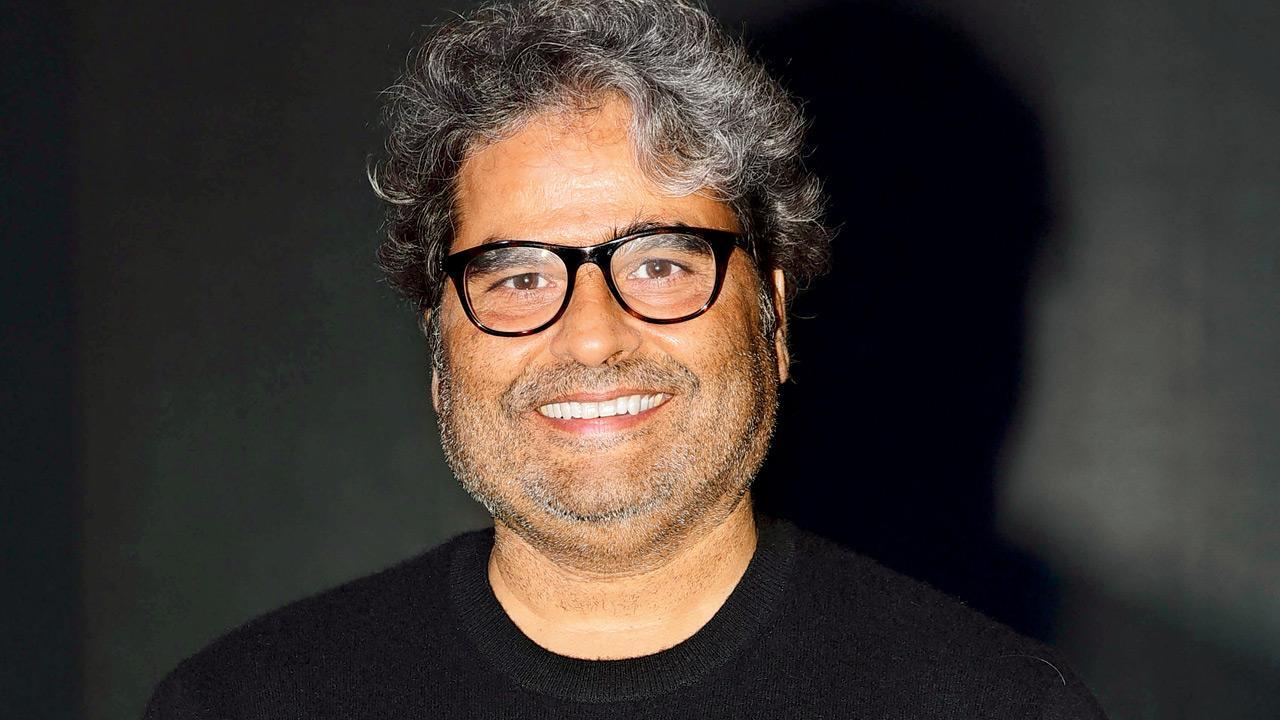
Music Composers Association of India, led by Vishal Bhardwaj, and Screenwriters Association sign MoU that make music directors and lyricists equal authors of songs; agreement mandates credit on promo material and streaming apps
Priyanka Sharma (MID-DAY; March 1, 2025)
“This should’ve been thought of earlier,” says filmmaker-composer Vishal Bhardwaj. But it’s never too late for positive change. On February 27, Bhardwaj, president of the Music Composers Association of India (MCAI), led the change as he signed a Memorandum of Understanding (MoU) with Screenwriters Association (SWA) that represents lyricists. The landmark agreement establishes composers and lyricists as equal authors of songs, and is designed to ensure fair credit and contracts for both parties.
The MoU proposes that lyricists and composers will be deemed “primary artistes”. This will serve as the artistes’ foundation for negotiations with producers and music labels. Bhardwaj tells mid-day that over the past year, the MCAI and SWA have been formulating the MoU, keeping in mind the challenges of composers and lyricists.
He hails the move, stating, “It’s a commendable development. Both parties are progressive. It took almost one year, as they brainstormed so that the point of view and challenges of both parties could be captured. Seventy years passed, and we hadn’t thought that we should come together for this. We unite to make songs. So, why not come together to fight? Each is incomplete without the other. If a song is a hit, it’s never only because of the tune or only for the words.”
A crucial consequence of equal authorship is fair credit. While lyricists are often not credited on a film’s publicity material or audio-streaming platforms, the MoU mandates fair creative practices.
Lyricist Raj Shekhar, who has penned songs for Deva and Animal (2023), states, “The MoU is the first step in ensuring fair credit. If on the publicity material of a film, HoDs are mentioned, composers and lyricists’ names will be mentioned as well. We’ve been talking to streaming platforms, and there are missing credits of a lot of artistes. I can reach out to [them] regarding the lack of my credit, but who will talk on behalf of Shailendra and Sahir Ludhianvi, who are no more? Their credits are missing, as are those of SD Burman and Madan Mohan. This needs to be changed.”
The agreement also mentions that a composer and lyricist will have separate contracts with a film’s producer to establish independence of the artistes. With the exception of certain leading lyricists, the practice so far was that a film’s composer would choose a lyricist, and act as the intermediary between the producer and them.
Shekhar elaborates, “Now, there will be no middle-men. Lyricists and composers will be treated as individual entities. A lot of composers are happy with this because they would feel an unnecessary doubt [looming] on them regarding transparency of fee.”
Looking ahead, Bhardwaj wants the two associations to fight for their moral rights. “Our derivatives are stolen from us; our composition or words are mutilated later. For instance, Goli maar bheje mein has been remixed [for Crazxy], and I couldn’t do anything about it. We aren’t even consulted on our song. We need to raise this issue so that the moral rights [rest with us],” he urges.
More say, more freedom
Hussain Haidry, who has penned songs for Sherni (2021), says lyricists are feeling “a sense of relief” with the MoU. He is happy that composers and lyricists, as primary artistes, will have ownership over their creations, and hence, greater freedom.
He explains, “The ownership of lyrics will reside with the lyricist, and that of the tune with the composer. But the ownership of the song recording would rest with the producer, who facilitated the recording. So, if a music director doesn’t like my lyrics, he can sell his tune to someone else. Similarly, I can sell my lyrics to someone else after getting consent from him/her. But the composite of the two, which has been produced by someone, cannot be sold by the lyricist or music director alone.”
When a film is big, the reach of the songs is multiplied, says Animal lyricist Raj Shekhar
8:46 AM

Soumya Vajpayee (HINDUSTAN TIMES; March 3, 2024)
His songs Papa Meri Jaan, Pehle Bhi Main and Marham from Animal continue to be chart-toppers. While lyricist Raj Shekhar has had another release, Bhakshak, recently, he continues to revel in the glory the tracks from the 2023 Ranbir Kapoor-starrer have earned him.
“I am thankful for the love my songs Papa Meri Jaan, Pehle Bhi Main and Marham have received. When we were making these songs, we didn’t know they would receive so much appreciation. However, Sandeep Reddy Vanga (director) sir, Vishal Mishra (composer), Harshavardhan Rameshwar (composer) and I were confident throughout the process, and I could sense something beautiful happening,” he says.
Ask if the scale of the film helped the songs do well, and Shekhar agrees: “I truly believe that when a film is big, the reach of the songs is multiplied. But besides the scale, I guess the way Sandeep Reddy Vanga visualized the songs and situations in the film played a critical role, too.”
While the world talks about composers and singers, lyricists often claim that their contribution is overlooked. As someone who has been around for over a decade, does he feel lyricists don’t get their due?
“You’re correct. In many cases, music directors and singers get all the credit, but thankfully that wasn’t the case with Animal. I really hope lyricists receive equal recognition and visibility for their contribution across projects,” says Shekhar, who marked his Bollywood debut with Tanu Weds Manu in 2011.

Bombay High Court rules in favour of musicians as it upholds 2012 Copyright Act
8:19 AM
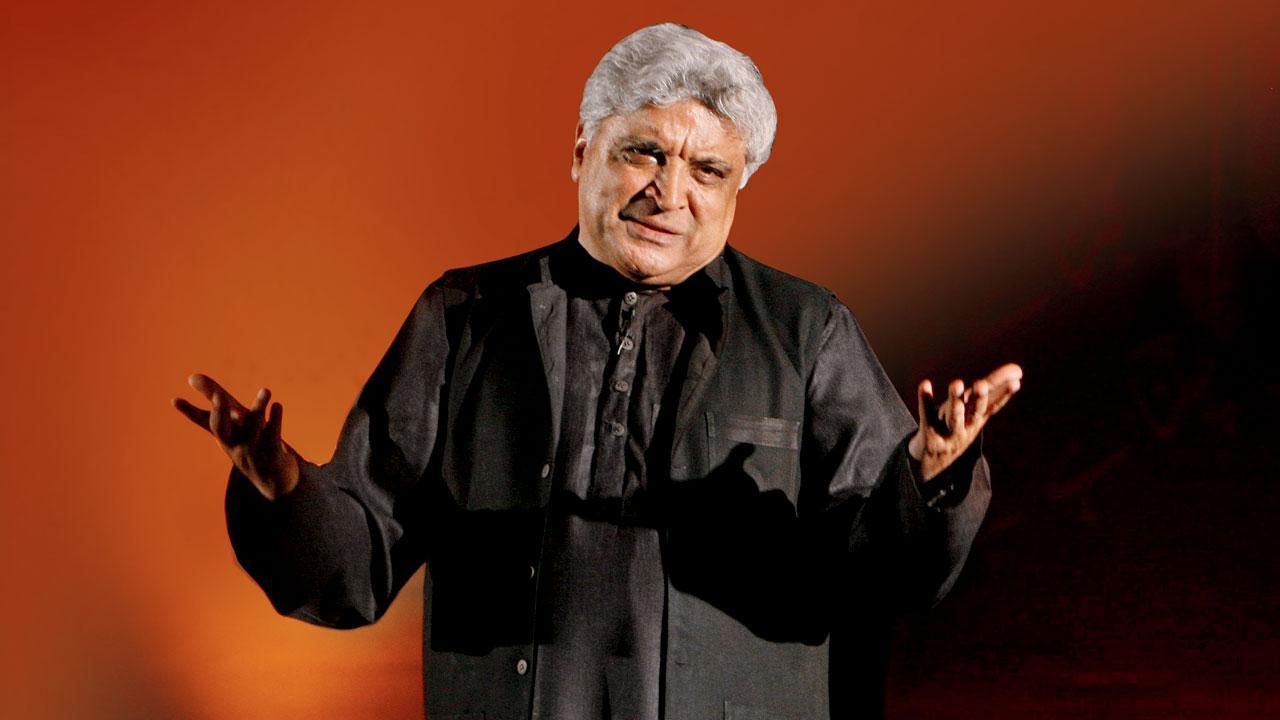
Lyricists, composers heave a sigh of relief as High Court upholds 2012 Copyright Act; rules in favour of musicians by directing FM Radios to pay royalties for their work
Sonia Lulla (MID-DAY; May 8, 2023)
It’s been a long-awaited win for music composers and lyricists in India who, despite the existence of the Copyright (Amendment) Act, 2012, had to fight for royalties for their work. Days after the Bombay High Court granted the rights of The Indian Performing Right Society Limited (IPRS), a music copyright society in India registered under the Copyright Act, 1957, against private FM radio broadcasters, lyricists and composers have heaved a sigh of relief.
“It shouldn’t have taken so many years, but now that we are here, we are very happy,” says songwriter Sameer Anjaan, also part of the IPRS board of directors.
Anjaan, who along with legendary songwriter and IPRS chairperson Javed Akhtar fought the case for more than five years, says through this win, they have tried to secure the future of the upcoming generation of musicians.
“Sometimes, it feels odd that despite the [existence] of the 2012 Copyright Act, this litigation existed. Now, the next breed of musicians can secure their future, even if they have a few songs to their credit,” he says.
Lyricist screenwriter Mayur Puri, another member on the board of directors, says the arduous fight has been a result of musicians and lyricists standing their ground despite running the risk of offending corporates.
“Whether it’s Javed saab, me, or anyone who has raised this cause, we have done so at a cost to our careers. We cannot repay Javed saab for what he has done. This is an important milestone. I know the opposition we have faced over the years,” he says, quick to add that dealing with individuals who continue to hesitate to give artistes their due, will be the bigger fight.
“People think royalty is something extra that they need to pay for, but this is a basic right. I’m happy, but I’m also scared, because I know they’ll come for us again.”
Composer Vishal Dadlani seconds his opinion and says there is the need to treat royalty as a right instead of a favour. “This judgment means that finally the work that a creator of music does will provide for him or her for as long as it is relevant or being consumed. This should, in fact, have been a basic right that any creator enjoyed. It’s sad that it has taken this long to happen, but it’s wonderful that it finally has. For years, we have been treated as intruders when we’ve claimed authorship of the work we have done,” he says.
Dadlani’s friend and colleague Salim Merchant adds that the development is significant when one considers the market size of FM radio. “It generates big revenue, but composers weren’t able to get their share.” Lyricist Shellee urges people to share a thought for lyricists who “don’t even do concerts, unlike other artistes”. “This is a revenue [stream that they can avail].”
Lyricist-singer Swanand Kirkire gives a shout-out to those artistes whose work is still celebrated, even as they continue to struggle with their finances. “This is their money, but they couldn’t access it to make a living. In times of emergency, like during the pandemic, this could have been the money they could have used. Finally, they will be benefited even if one of their songs is played on the radio.
Lyricist Raj Shekhar highlights the dichotomy that existed until now — while an artiste’s music may brighten a person’s day, the person who created that piece of art would be living hand-to-mouth. “At this moment, I remember Javed saab’s lyrics from the song Mitwa — ‘Sach aur sahas hai jiske mann mei, ant mei jeet usi ki hai’.”
The case
While the The Copyright (Amendment) Act, 2012 aimed to establish a framework to share revenue with artistes, it was subsequently challenged by corporates. The IPRS has fought the case for a decade to enable composers and lyricists to earn royalty for their work.
Where did the children’s songs disappear from Bollywood?
8:06 AM

On Children’s Day, industry insiders tell us that with fewer prominent kid characters in films and the focus on creating a hit song that caters to all segments, children’s songs are no longer considered essential or viable in Bollywood
Divya Kaushik (BOMBAY TIMES; November 14, 2021)
When curating a Children’s Day playlist, the most obvious selections are Lakdi Ki Kathi (Masoom, 1983), Nani Teri Morni Ko Mor Le Gaye (Masoom, 1960), Nanha Munna Rahi Hu (Son Of India, 1962), Hum Bhi Agar Bachche Hote (Door Ki Awaaz, 1964) and many others such classic tracks, that have remained a constant favourite with kids (and adults too!). Then came Chak Dhoom Dhoom (Dil Toh Pagal Hai, 1997), Chhota Bachcha Jaan Ke Hum Ko (Masoom, 1996) and Bam Bam Bole (Taare Zameen Par, 2007).
Once an essential part of Bollywood movies, the number children’s songs has gone down considerably in films, and the ones that are there could never match the popularity of songs like Lakdi Ki Kathi or Aao Tumhe Chand Pe Le Jaye. “There can never be a replacement for these old favourites,” says singer Udit Narayan, who has sung popular tracks like O Mere Papa The Great (Papa The Great, 2000) and Oh I Love You Daddy (Akele Hum Akele Tum, 1995), adding, “The reason is that the writing of those songs and the composition was so good that it connected with the audience of every age group, every generation. It is difficult to find those kinds of songs today.”

‘TODAY, THERE ARE FEWER MOVIES WITH PROMINENT KID CHARACTERS, THUS FEWER SONGS FOR CHILDREN’
Udit Narayan adds that when we talk about children’s songs in films, it is impossible not to talk about child artistes who would be an integral part of film plots earlier. But over time, as the role of child artistes in Bollywood stories reduced, songs specific to children were no longer needed.
Music composer and singer Salim Merchant adds, “Even the projection of kids has changed. Take the example of movies like Dangal or Bajrangi Bhaijaan, both of which features kids in prominent roles, but the storyline was communicating something that is not specific to only kids. So children’s songs today do not really fit in most of the stories that we are narrating in our films. There are fewer stories or situations which would demand such a song.”
Lyricist Raj Shekhar, who made his Bollywood debut with Tanu Weds Manu and has written children’s stories, says that in films he grew up watching, kids were an important part of stories. “What I liked was that they were treated as an important character, not a supporting element in the film, and even the songs were written keeping this in mind. If you take the example of the song Hum Laayein Hain Toofan Se Kashti Nikal Ke (Jagriti, 1954), the song is addressed to children. When that scenario changed in films over time, even writing for kids reduced, which I think is sad. We are failing in giving the present generation music that is written exclusively for them,” he says.

‘TODAY, THE FOCUS IS TO AT LEAST GET ONE COMMERCIAL HIT FROM A FILM AND A KID’S SONG CAN’T BE THE PITCH’
In times when social media hits decide the fate of songs, a lot of effort goes into making music that can be a commercial hit and also gain traction online. “In such a scenario, creating a kid’s song feels like a risk when the movie is not about them,” says singer Javed Ali, adding that out of many songs offered to him, he has barely sung two-three tracks which were for kids. “Not just me, this will be the case with all the singers, as there are hardly any songs being written for kids. These specifics that were once an important part of films — like a Holi song, Raksha Bandhan song or Diwali song — are becoming rare. Even if films have them, most of these songs just come and go.”

‘SONGS ARE CREATED OR AUDIENCE AT LARGE, NOT FOR A SEGMENT’
“Let’s not forget to talk about the changing preferences and choices of modern kids,” says Salim Merchant, adding, “I have seen kids in my own home and once they grow out of their nursery rhyme phase, what they consume are songs which are for adults. The songs that are created today in films can’t be created for any segment. To make them popular, it is important that they are created keeping in mind the larger audience, which also includes kids.”
FOREVER FAVOURITE KIDS’ SONGS FROM HINDI FILMS:
- Nani Teri Morni Ko Mor Le Gaye (Masoom, 1960)
- Lakdi Ki Kathi (Masoom, 1983)
- Nanha Munna Rahi Hu (Son Of India, 1962)
- Phoolon Ka Taaron Ka (Hare Rama Hare Krishna, 1971)
- Chanda Hai Tu Mera Suraj Hai Tu (Aradhana, 1969)
- Aao Tumhe Chand Pe le Jaayein (Zakhmee, 1975)
- Hum Bhi Agar Bachche Hote (Door Ki Awaaz, 1964) \ Railgaadi (Aashirwad, 1968)
- Ichak Dana Beechak Dana (Shree 420, 1955)
- Re Mama Re Mama Re (Andaz, 1971)
- Dadi Amma Dadi Amma Maan Jao (Gharana, 1961)
- Bachche Man Ke Sacche (Do Kaliyan, 1968)
- Hum Laayein Hain Toofan Se Kashti Nikal Ke (Jagriti, 1954)
- Chanda Mama Door Ke (Vachan, 1955)

Asha Bhosle to sing in Taapsee Pannu-Bhumi Pednekar's Saand Ki Aankh, courtesy Vishal Mishra
7:43 AM

Dhaval Roy (DNA; October 7, 2019)
A playback song rendered by Asha Bhosle is a rarity these days. One of her last outings was Prem Mein Tohre in Begum Jaan (2017). But now, Vishal Mishra has managed to get her to croon a track in his upcoming film album, Saand Ki Aankh. Titled Aasman, this is the second time the composer and the veteran songstress have collaborated musically. Before this, she lent her voice to his non-film single, Ae Zindagi, along with Suresh Wadkar, Alka Yagnik and Shaan among others. Vishal admits that he didn’t think she would sing it for him. “When we recorded the song with her, she did it so beautifully. She has rendered a number for a film after so long. It makes a lot of difference to me that she has sung for me,” the artiste said.
Calling it the most memorable journey of his life, Vishal states that he heard the script two-and-a-half years ago when director Tushar Hiranandani and writer Jagdeep Sidhu narrated it to him. “This situation was emotional and hit me hard. I had to make a melody that had special divinity to it,” he avers.
As soon as the song was composed, he and lyricist Raj Shekhar wondered how they’d convince Asha to sing this track. “After listening to it, Asha ji loved it so much that she said, ‘Aaj kal aise gaane bante nahin hain’. I remember it so fondly. I can’t wait for people to hear it,” says Vishal excitedly, adding that the song will remain with him forever.
Taapsee Pannu to play one of the leads in Womaniya, a film on world's oldest female sharpshooters
8:00 AM

Sanyukta Iyer (MUMBAI MIRROR; June 11, 2018)
Acclaimed writer Tushar Hiranandani, whose repertoire boasts of films like Dishoom, Ek Villain, ABCD 2 and Grand Masti, is now gearing up for his directorial debut with an Anurag Kashyap co-production. Titled Womaniya, the film is a biopic on the lives of the world’s oldest female sharpshooters — Chandro Tomar, 86, and her sister-in-law, Prakashi, 81 — who reside in the Johri village of Western Uttar Pradesh. While Taapsee Pannu was brought on board to play one of the protagonists recently, the makers are currently on the lookout for actors for the rest of the acting line-up.
 The film is expected to go on the floors later
this year. “The story of these two women conveys a strong message — that
life can begin even after 50. Every time I am faced with a mid-life
crisis, I am reminded of their stellar story,” lyricist Raj Shekhar who
has penned six songs for the film, tells Mirror. For the last one year,
he has been closely working with Tushar and composer Vishal Mishra to
keep the film’s music rural yet peppy and contemporary.
Raj insists that the film, which is a light-hearted drama, will make the audience laugh as well as tear up. The lyricist was making his debut with Aanand L Rai’s 2011 blockbuster, Tanu Weds Manu, when he first met Anurag, who is also mentoring the script and the film. The Gangs of Wasseypur filmmaker had been so blown away by the script that he’d initially wanted to direct it himself.
 Popularly
known as the “Revolver Daadis”, Chandro and Prakashi first learnt of
the sport when the former, then in her mid-50s, had accompanied her
granddaughter to the Johri Rifle Club. The octogenarian-duo has since
won over 100 medals in the veteran category across championships in the
north zone and at pre-nationals.
Prakashi’s awards include a Stree Shakti Puraskar by former President Pranab Mukherjee, a Women’s Achievers in India trophy and an Icon Lady Award by the Ministry of Women and Child Development.
One of Prakashi’s eight children, Seema, is an international shooter and India’s first woman shooter to win a Shotgun Silver at the International Shooting Sports Federation (ISSF) World Cup. Today, many of Prakashi’s 20 grandchildren and Chandro’s six children and 15 grandchildren are shooters. Also, many women from the Tomar family now train girls at the Johri Rifle Association.
“Every song in the film has been written with the script as an inspiration. In turn, Tushar has drawn inspiration from the songs and rewritten some of the dialogues. It has been a beautiful give-and-take relationship. The music is deeply rooted in rural India and gives out a strong message that even ‘this India’ is cool,” Raj signs off.
I went to the studio in my school uniform and recorded Talli-Anmol Malik
7:39 AM

Singer Anmol Malik, who's on a high after Old School Girl from Tanu Weds Manu Returns, talks about jazz music and starting young
Lakshmi V (BOMBAY TIMES; June 5, 2015)
Anmol Malik likes to talk
dime a dozen and loves sprinkling her conversation with bits of
songs she's either written and composed or sung. The daughter of
Bollywood music composer Anu Malik opens up to Bombay Times about how
her dad's music studio was the place she'd be most at home in. Excerpts:
Your version of Old School Girl in Tanu Weds Manu Returns has a jazz
feel to it. How did the song happen?
When I was studying in Warwick University, England, I was part of a jazz music band, and we would hold concerts every Friday. I like jazz, primarily because of (British singer) Norah Jones. Even my dad (Anu Malik) is a fan of the genre. I'm blessed to have had the chance to sing it in a commercial way. I'd sent my covers to Krishikaji (Krishika Lulla, the producer of Tanu Weds Manu Returns), who took it to director Aanand L Rai. I honestly didn't expect to hear back from them. But they called me up to say they've zeroed in on me to sing a western version of the song. Composer Krsna Solo and lyricist Raj Shekhar have created a beautiful song. They were so encouraging throughout the recording session.
When I was studying in Warwick University, England, I was part of a jazz music band, and we would hold concerts every Friday. I like jazz, primarily because of (British singer) Norah Jones. Even my dad (Anu Malik) is a fan of the genre. I'm blessed to have had the chance to sing it in a commercial way. I'd sent my covers to Krishikaji (Krishika Lulla, the producer of Tanu Weds Manu Returns), who took it to director Aanand L Rai. I honestly didn't expect to hear back from them. But they called me up to say they've zeroed in on me to sing a western version of the song. Composer Krsna Solo and lyricist Raj Shekhar have created a beautiful song. They were so encouraging throughout the recording session.
Have you always wanted to
be a part of the music industry? After all, you began your
career when you were barely seven...
I've actually been recording much
before that. I was always on the set with my dad. I'm the most
comfortable in a recording studio. The first time I wanted to sing was
in 1997, after seeing Celine Dion render My Heart Will Go On from
Titanic. Later, I sang Mujhe Maaf Karna with Aditya Narayan for Biwi No.
1. I still remember that big bar of chocolate that (producer) Vashu
Bhagnaniji gave me after I finished singing.
Was singing at such a young
age stressful?
No, not at all. My parents didn't push me into this field. In fact, I saw my dad's studio as an escape from school. I was in high school when I recorded Talli (Ugly Aur Pagli). Producer Rangita Nandy had wanted a scratch of a song for the purpose of choreography. So, I went to the studio in my uniform, with my school bag and water bottle, learnt the song on the set and recorded it. I never thought I would taste success of that kind at 16! I realised the song was so big only after I went back to Warwick and heard students from India making their foreigner friends listen to it. My friends dragged me to a pub one night. When the doors opened, I heard my song playing. It was surreal.
No, not at all. My parents didn't push me into this field. In fact, I saw my dad's studio as an escape from school. I was in high school when I recorded Talli (Ugly Aur Pagli). Producer Rangita Nandy had wanted a scratch of a song for the purpose of choreography. So, I went to the studio in my uniform, with my school bag and water bottle, learnt the song on the set and recorded it. I never thought I would taste success of that kind at 16! I realised the song was so big only after I went back to Warwick and heard students from India making their foreigner friends listen to it. My friends dragged me to a pub one night. When the doors opened, I heard my song playing. It was surreal.
You also write songs. How did the single, Graduation, happen?
I've been composing and writing romantic numbers since I was 10. This was the first time I'd written a non-commercial number. Graduation was a personal song I'd written for my graduating group. In fact, the video is made up of pictures of my friends. Aamir Khan sir heard the song and spoke about it on his social media page. Then, all of a sudden, it was everywhere. Every song has its own destiny.
I've been composing and writing romantic numbers since I was 10. This was the first time I'd written a non-commercial number. Graduation was a personal song I'd written for my graduating group. In fact, the video is made up of pictures of my friends. Aamir Khan sir heard the song and spoke about it on his social media page. Then, all of a sudden, it was everywhere. Every song has its own destiny.
You have a flair for western
music...
My interest in western music stemmed from a bizarre need to be
different, so I could have an identity of my own. One of my biggest
regrets is that I am not classically trained. I have enough knowledge of
ragas though, which I learnt from my father and dadaji Sardar Malik.
ANMOLL'S PICKS
Favourite artistes: Mariah Carey, Norah Jones
Favourite bands: Third Eye Blind, The Beatles, Coldplay
Dad's number I'd like to remix: Title track of Main Hoon Na and a house version of Sau Dard (Jaan-e-Mann)
Genres I want to experiment with: Rock and Sufi
ANMOLL'S PICKS
Favourite artistes: Mariah Carey, Norah Jones
Favourite bands: Third Eye Blind, The Beatles, Coldplay
Dad's number I'd like to remix: Title track of Main Hoon Na and a house version of Sau Dard (Jaan-e-Mann)
Genres I want to experiment with: Rock and Sufi
Subscribe to:
Posts (Atom)