Showing posts with label Raj Kumar Gupta. Show all posts
Showing posts with label Raj Kumar Gupta. Show all posts
Raj Kumar Gupta announces his next theatrical project with Junglee Pictures
9:29 AM
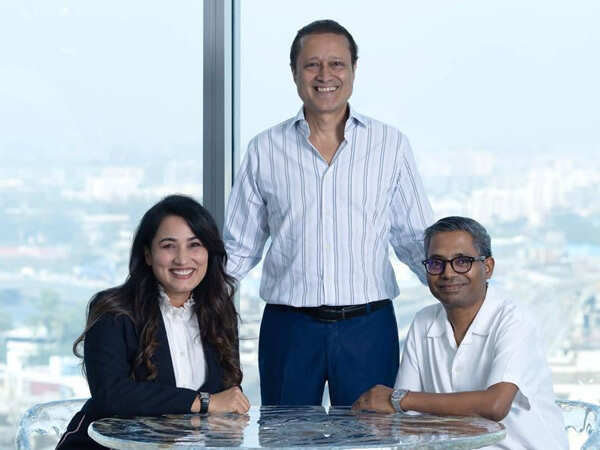
BOMBAY TIMES (January 19, 2026)
Junglee Pictures has announced its collaboration with filmmaker Raj Kumar Gupta for an ambitious tentpole film, to be directed by him, marking the coming together of two creative forces known for delivering engaging, rooted narratives that resonate powerfully with audiences.
The versatile filmmaker, best known for the successful Raid franchise, and films such as No One Killed Jessica and Aamir, has carved a distinct space in Indian cinema with stories grounded in realism, sharp observation, massy entertainment while remaining high in emotion and drama. He is fresh off the success of Raid 2, one of the top 10 highest grossing theatrical films of 2025.
Over the years, the banner has built a formidable filmography, championing meaningful and disruptive narratives across genres. The studio began its journey with Dil Dhadakne Do and went on to produce critically acclaimed films such as Badhaai Ho, Raazi, Talvar, Badhaai Do and Bareilly Ki Barfi . Moreover, its 2025 releases Haq and the Malayalam film Ronth, have received widespread acclaim during their theatrical and streaming runs.
The yet-to-be titled film has completed scripting, with casting set to begin shortly. It is said to be a gripping, intense narrative reflecting the director’s signature style while pushing the envelope in terms of impact.
Speaking of the collaboration Vineet Jain, MD, The Times Group shared, “Junglee Pictures has always focused on backing distinctive, relatable stories with lasting cultural value. This collaboration with Raj reflects the studio’s intent to join forces with filmmakers who strengthen its slate through purposeful, impact-driven cinema, bringing quality storytelling with relevance, scale and audience connection. This film will also be a true tentpole for Junglee bold and impactful, rooted in realism.”
Raj Kumar Gupta added, “I’ve always been drawn to narratives grounded in reality that also have the ability to connect with audiences on a larger canvas. This film is conceived as a hard-hitting, immersive, engaging and entertaining theatrical experience. Junglee Pictures has a strong legacy of backing thoughtful, content-led cinema, making this collaboration feel like a natural alignment. I’m excited to collaborate with them.”
Speaking about the association, producing partner, Myra Karn said, “Junglee Pictures brings together heart, vision and fearless storytelling. Its bold innovative approach meets Raj Kumar Gupta’s unflinching storytelling, crafting stories that questions the status quo. This collaboration is special, and I am honoured to be part of this dream team.”
While further details of the story remain under wraps, the film promises a compelling experience that blends strong narrative depth with wide audience appeal.
Delhi itself was a character in No One Killed Jessica-Raj Kumar Gupta
11:11 PM

Niharika Lal (BOMBAY TIMES; January 8, 2026)
Released in the first week of January 2011, No One Killed Jessica became a film audiences returned to each time the case saw a new turn. At the time, director Raj Kumar Gupta was warned that January releases rarely worked and that films led by women didn’t work – his had two. Yet the filmmaker says his faith in the film never wavered, a belief shared by everyone involved in the project.
A decade and a half on, the film remains iconic – for its hard-hitting subject, its authentic portrait of Delhi, its grounded courtroom sequences, and for helping open doors to female-led cinema at the time. Raj Kumar Gupta, who also wrote the film, looks back at the project that quietly reshaped the space for women-centric narratives in Hindi cinema.
‘There was no agenda behind the film’
“I wanted to tell the story, there was no agenda,” asserts Raj, adding, “I chose to tell it through the eyes of the two protagonists. One was Sabrina’s perspective and another perspective came from a character (of Rani Mukerji) who represented the media and, more broadly, the people who were seeking justice – those who wanted to see that justice was done. That is how the narrative came together. My approach was to stay focused on these viewpoints. Of course, many other characters came in and out of the story, but the core always remained centered on these two perspectives.”
‘It was a long and hard-fought battle for justice, and that was deeply inspiring’
Raj says, “When this incident happened in 1999, I was in college, so I remember it very clearly. This case was stuck in my head. Later, when we were discussing possible subjects, it came up again, and I felt it was something worth pursuing. I had lived in Delhi during my graduation, I had seen the city up close, and I had a certain point of view – both about Delhi and about the case. That perspective is what brought everything together.”
He reflects, “It was a long and hard-fought battle for justice, and that was deeply inspiring – a sister who refused to give up, who kept fighting for justice. The way the media and others collectively came together to support the cause was also powerful. This reflects society at large and is inspired by real events, and that is what ultimately compelled me to tell it.”
For the character of Jessica, Raj shares that he had Myra in mind. He says, “She was my friend. I also clearly remember the iconic smile of the real Jessica – I could see that smile in Myra, and that was extremely important for me to get it right. Although it was her first film, Myra did a great job in it.”
‘Filming the scene when Jessica was shot had an emotional complexity’
Raj recalls, “While we were shooting the first party sequence, it was one of the most complex scenes in the film not just technically, but emotionally as well. In many ways, the entire argument of the film rests on that scene. How it was shot was crucial, because later in the film, this is the very sequence that would be discussed in the courtroom.”
Shooting in real spaces
Raj Kumar Gupta wanted to shoot the film largely on real locations in Delhi. He says, "Delhi had a certain grit, a certain rawness, and that feeling was essential to the film. We had to have Delhi in the film. In many ways, Delhi itself was a character in the story. In the opening of the film, we talk about Delhi almost as if it’s a living presence."
Because of that, it was important for me to shoot across the city and the film was shot at locations like ITO, Tees Hazari, the streets of Delhi, Chandni Chowk, and other real locations.
He says, "I wanted the film to feel as authentic as possible, to be filmed in the real spaces where these events unfolded."
India Gate protest scene
Back in 2006, on Republic Day, Rang De Basanti hit the screens and gave Indian cinema one of its most unforgettable protest scenes. A couple of weeks later, what India witnessed was the RDB effect when the film served as a catalyst for civic justice in the Jessica Lal case when thousands of people, including students, gathered for a candlelight rally at India Gate.
Raj Kumar Gupta shares, "While there are many places in Delhi, when we have to think of a place in Delhi, we think of India Gate. It became a place of collective rebellion. In No One Killed Jessica, we incorporated the protest at India Gate because in reality, people protested at India Gate after Manu's acquittal. I think India Gate is one of the locations in Delhi which evokes strong emotions."
He shares, "India Gate scene was the climax of the film. That sequence had a very strong emotional arc, and logistically it was a huge challenge. We were shooting at India Gate and had permission only for certain hours. On the same day, there was a major sports event happening, so teams were being shuttled through the area. That meant we had to finish the shoot within a very tight time frame. There was also a massive crowd present during the shoot, which added to the difficulty. Despite all that, the sequence was extremely emotional. It was designed to represent the end of the film through a song, and the light, the atmosphere, and the setting all had to come together perfectly. The challenges were many - managing the crowd, executing the scene within the limited time, and ensuring that the emotional weight came through. Most of the characters seen in that sequence are people the audience has already watched fighting for justice throughout the film - friends, supporters, and allies, so it was important to bring them together in a way that felt truthful and earned."
------------------------------------------------
"The story is about hope and justice. In real life also, people came together and justice was done. The story itself is driven by a tragedy; it should not have happened. I wanted to tell the story in a format where the story never goes dark. It was a very conscious effort. We were telling the story about real people. Life is about hope. The world runs on hope. I took a hard-hitting approach, but I also took an approach where it never gets too heavy to handle." - Raj Kumar Gupta
------------------------------------------------
Raj Kumar Gupta says, "Vidya and Rani come from different schools of acting. Vidya is very meticulous; she prepares for her character and is very methodical about her approach. With Rani, she is very spontaneous. You will not believe that five minutes back, she was laughing and joking. I got to work with two contrasting and opposite actors, and the character was also such that it gave me a wide range. Vidya Balan met Sabrina, but not before the film."
Most of us have been underdogs at some point, so I always tell an underdog’s story-Raj Kumar Gupta
4:48 PM

Anshul Chaturvedi (BOMBAY TIMES; August 18, 2025)
Raj Kumar Gupta last stepped behind the camera in 2019 with India’s Most Wanted. In the post-pandemic landscape – where Indian viewers are spoilt for choice with global OTT content and theatrical releases often struggle to draw crowds – he made a return to the big screen with Raid 2, delivering an impressive theatrical run. Best known for films like Aamir and No One Killed Jessica, the director believes that even in an OTT-saturated ecosystem, there is still room for procedural dramas in mainstream cinema. And the USPs of that are two elements: a distinctly Indian setting and the story of an underdog battling the system from inside to achieve justice – a narrative arc uniquely rooted in the Indian context. Excerpts from a chat:
Given the high-quality police procedural content available on OTT, how have things changed since you made the first Raid film in 2018? Is it more complicated to carve out space today than it was when the first film happened?
Even if you look at Raid (2018), it wasn’t an easy film to make, it wasn’t an easy story to tell. Of course, there was a novelty to it. We all relied on the underdog story – the story of a righteous officer against somebody who was never questioned in terms of power dynamics. And we rested it on storytelling as well as emotions. So, that has not changed.
Of course, there is a lot of exposure now to different content, but the challenge was always there. In filmmaking, the one element that we really depend on – apart from telling a good story– is the emotion of it. An American story, of course, can work here also in terms of reception; but the connection that one would have from an Indian story would be very different.
Often, your protagonist is fighting the system and from within the system. So, you’ll have a lawyer or a police officer or an Income Tax officer, who is trying to get things done in a system that is really not enabling them to sort of take things on. Is this a conscious personal sympathy point – towards people who try to deliver results while they are inside? Where does it come from?
I find them fascinating. A lot of these people are government employees, a lot of them I know personally because they’re my friends, and I’m aware of their struggle inside the system. The limitations, what they are up against, the politics of it, and there are repercussions to their actions. They have to perform their duty despite these hurdles, be resourceful without the resources, put their own resources because they are passionate and be sure about something that they are doing, because in these jobs sometimes you work with facts and evidence, and sometimes you work on your instinct. There is a heroic nature to these jobs.
So, these things really fascinate me. And it is very dramatic. I’ll give you two small examples from when I was researching Raid. One of my Income Tax friends, when they raided somebody who was evading taxes, they could not recover anything from him. And it was a very high-profile raid. Suddenly, acting on instinct, this I-T guy remembered what was the last thing that this guy wore, and he got that shirt and pants.
And there was a chit in his pants – and the entire case was built on that (what was written in it). It was so instinctive, so subtle and dramatic.
And the second incident was long back, I guess in the early 2000s or mid 2000s – when there was a riot about to happen between two communities. The DM and SP, whom I know, came in between (the two groups) and told them that if you want to harm each other, you have to first kill us. Everybody went back, nobody did anything. It was so dramatic.
So, one incident was so subtle, and the other was so in-your-face dramatic. These are the kinds of dramas that really, really fascinate me. And it is always an underdog story.
How are the characters in your stories underdogs?
In Aamir, he was a normal guy who was standing against a thought process. He was asked to do certain things he was against – and we rooted for him. In No One Killed Jessica, we rooted for Sabrina and for the journalist Meera’s character, and we wanted them to win because they were up against a system, against powerful people. If you look at Raid 1 or Raid 2, it is a normal government employee who is again standing against powerful people. In India’s Most Wanted, our protagonist went to another country to get India’s Most Wanted terrorist, and we rooted for these people.
So, that’s how that underdog element comes in, and there is an inherent emotion attached to it. Most of us – if not all of us – have been underdogs in our lives. We have been up against something or someone at some point. It might not have looked that larger-than-life in our day-to-day life, but we all have lived it.
So, what is the general throwback of your career in your mind at this point in time – after this movie?
(Laughs) I mean, as a filmmaker, I feel that my job is to tell a story and I’ve been doing it. This is my sixth film. I feel that I have just started, you know. There is a lot to learn, and there are so many new things coming. There are many stories to tell in terms of narrative style – one would want to explore various elements and stories.
In terms of throwback, one always looks at whether the stories that I’ve told till this point have connected with the audience or not. And I’m happy about the fact that, largely, it has connected to the audience. That gives me the strength to tell more stories, and explore, experiment.
One of my films has not worked – India’s Most Wanted. To some extent, Ghanchakkar had a mixed reaction. But it was an average film. I don’t know why...
What did you do differently in those two projects?
Nothing. As a filmmaker, I have told all my stories with sincerity and trusted those scripts. And I still believe in those scripts. But it happens. You know, you go with your conviction. Some work, some don’t work. And that’s the way it has been. But it has nothing to do with what I did differently in those films. So why they didn’t work is still a mystery to me, but I told those stories with equal passion.
During No One Killed Jessica you said that Delhi is a city with more power than it can handle. You have also had some degree of exposure to Delhi from your background and studying here in Ramjas College. Is it different making a film set in Delhi’s power corridors than going to the hinterland and making stories like Raid? Are there different dynamics?
Yes, for sure. Because there is a physical complexity and an emotional complexity to Delhi. Delhi is the centre of power, and so many things happen in this city which probably would not happen in a smaller town like, say, suppose – in Kanpur or Lucknow or Patna, or, for that matter, any smaller places. And our nature as humans might be very different in a bigger city than in a smaller city because of exposure...
The humour is also very different. The humour that would come in a smaller town in terms of power politics would be more defined than what would come in a place like Delhi.
Any film that you sort of watched and felt ‘I wish I had got a chance to direct this one’ recently?
No.
That means you’re happy with your CV?
No, I’m not saying that I’m happy with my CV. I’m just saying that I’m happy that I got the opportunity to make the films that I have. I’m also a student of cinema, as other filmmakers are. So, I’d love to make different films, explore different genres, and I’m glad that I’ve got an opportunity to make these films that I have made.
If you look at my films – those were not very usual, formula films. I’m happy about the fact that, largely, my work has connected to the audience. It could very easily have been otherwise, and I am fully aware of that. And that’s what gives me strength to tell more stories and explore more genres, more challenging stories.
----------------------------------------------------
It is always an underdog story... In Aamir, he was a normal guy who was standing against a thought process. In No One Killed Jessica, we rooted for Sabrina and for the journalist because they were up against a system, against powerful people. In Raid 1 or Raid 2, it is a normal government employee who is again standing against powerful people
----------------------------------------------------
As a filmmaker, I have told all my stories with sincerity and trusted those scripts. Some work, some don’t work. But it has nothing to do with what I did differently in those films. I told those stories with equal passion
Raid 2 was offered to me-Ileana DCruz
10:30 AM

BOMBAY TIMES (June 2, 2025)
Ileana D’Cruz, during an online chat, revealed that she was offered to reprise her role in the Ajay Devgn-starrer Raid 2 . However, they couldn’t work out the schedule given that she had just had her baby.
When asked about being missing from the film and her possible comeback, the actress said, “I miss working in movies too and I would have loved to be a part of Raid 2. Raid was a special film, but Malini was such a special character to play and working with my director Raj Kumar Gupta was a wonderful experience as was working with Ajay again. The makers of Raid 2 did offer the movie to me but unfortunately we couldn’t work out the schedule given that I had just had my baby and my priorities are very different at the moment.”
Talking about Vaani Kapoor, who was seen in the sequel to the 2018 film, Ileana added, “That said, I think Vaani looked lovely in all the promos I’ve seen, and I’m sure she brought her own lovely charm to her character. Hope that clears any confusion (sic).”
The actress and her husband, Michael Dolan, are all set to become parents again. The couple welcomed their first child, son Koa Phoenix, in August 2023.
------------------------------------
HINDUSTAN TIMES (June 2, 2025)
Actor Ileana D’Cruz played Malini Patnaik, actor Ajay Devgn’s wife, in the 2018 film Raid. However, she was replaced by actor Vaani Kapoor in the film’s recently released sequel. While there was speculation that the makers didn’t approach Ileana for Raid 2, she took to Insta on Sunday to put the rumours to rest.
Responding to a fan, she wrote, “I miss working in movies too and I would have loved to be a part of Raid 2. Raid was a special film, but Malini was such a special character to play and working with my director Raj Kumar Gupta was a wonderful experience as was working with Ajay again. The makers of Raid 2 did offer the movie to me, but unfortunately, we couldn’t work out the schedule given that I had just had my baby and my priorities are very different at the moment (sic).”
Praising Vaani, the 38-year-old added: “I think Vaani looked lovely in all the promos I’ve seen and I’m sure she brought her own lovely charm to her character. Hope that clears any confusion (sic).”
Raid 2 director hints at third instalment of Ajay Devgn starrer: "Maybe the idea can be taken ahead"
10:17 AM
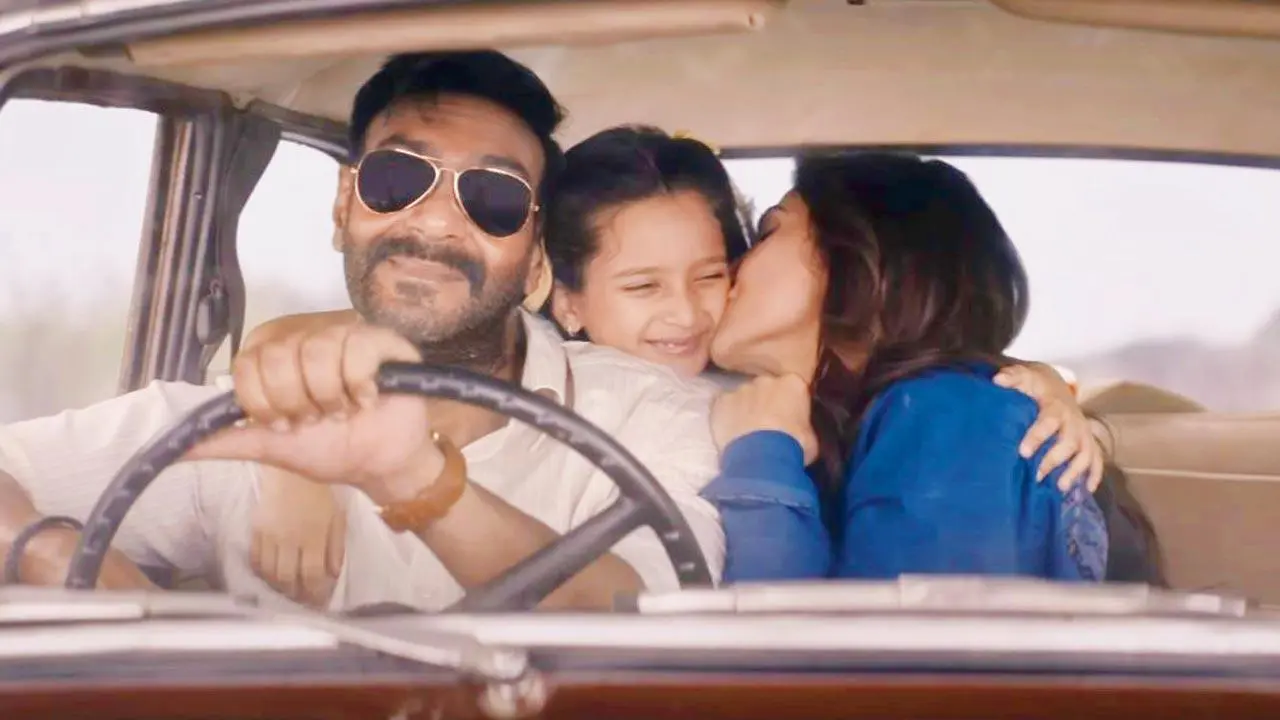
With Raid 2’s ending hinting at a third instalment, director Raj Kumar Gupta indicates that Ajay Devgn’s thriller can lead to an on-screen universe exploring themes of crime and corruption
Upala KBR (MID-DAY; May 15, 2025)
In a world of heroes and superheroes, Ajay Devgn’s no-nonsense Indian Revenue Service (IRS) officer Amay Patnaik from the Raid franchise is a refreshing change. Director Raj Kumar Gupta knows that he has not only an enduring character in Patnaik, but also a universe that can be expanded. That’s probably why he has hinted at the possibility of the third instalment in the final shot of Raid 2, which sees the antagonists — played by Riteish Deshmukh and Saurabh Shukla — strike a deal behind bars to get back at the hero. So, is a threequel on the anvil?
“I thought it would be fun to have a scene like that, but it has taken its own meaning,” laughs Gupta. “I can’t predict what will happen in the future, but I’d love to work with powerful actors like Ajay Devgn and Riteish Deshmukh again.”
With Raid 2 coming seven years after the 2018 original, the director turned Devgn’s crime thriller into a franchise and showed how income tax raids — a subject that had hardly caught Bollywood filmmakers’ attention before — can play out dramatically on the big screen. Given the concept’s adaptability, Gupta can create an on-screen universe of crime, politics, and corruption. Something that Raid 2’s climax teases. The director is measured when asked whether he is taking that route.
“As a filmmaker and writer, there are stories I want to tell. Also, having grown up in the small town of Hazaribagh and being familiar with this kind of world, I have more of such stories to tell. Maybe the idea can be taken ahead with different characters or different [premises]. Making a successful film is difficult, and making sequels is more difficult since there are more expectations attached to it. What these characters have in store, only time will tell.”
What he is forthcoming about, however, is the research that entails such films. He shares, “Today a lot of my college friends are IRS and IAS officers, bankers, and businessmen. They form a part of my research and help me understand the characters.”
Raid 2 has fared well, earning over Rs. 130 crore in the domestic market. Understandably, it slowed down last week because of the India-Pakistan conflicts. “The film would naturally get affected as there are bigger causes at stake. But when things started becoming normal, people started going to the theatres again to watch it,” states Gupta.
Forgiveness is individual choice, and I’m conflicted-Raj Kumar Gupta
8:16 AM
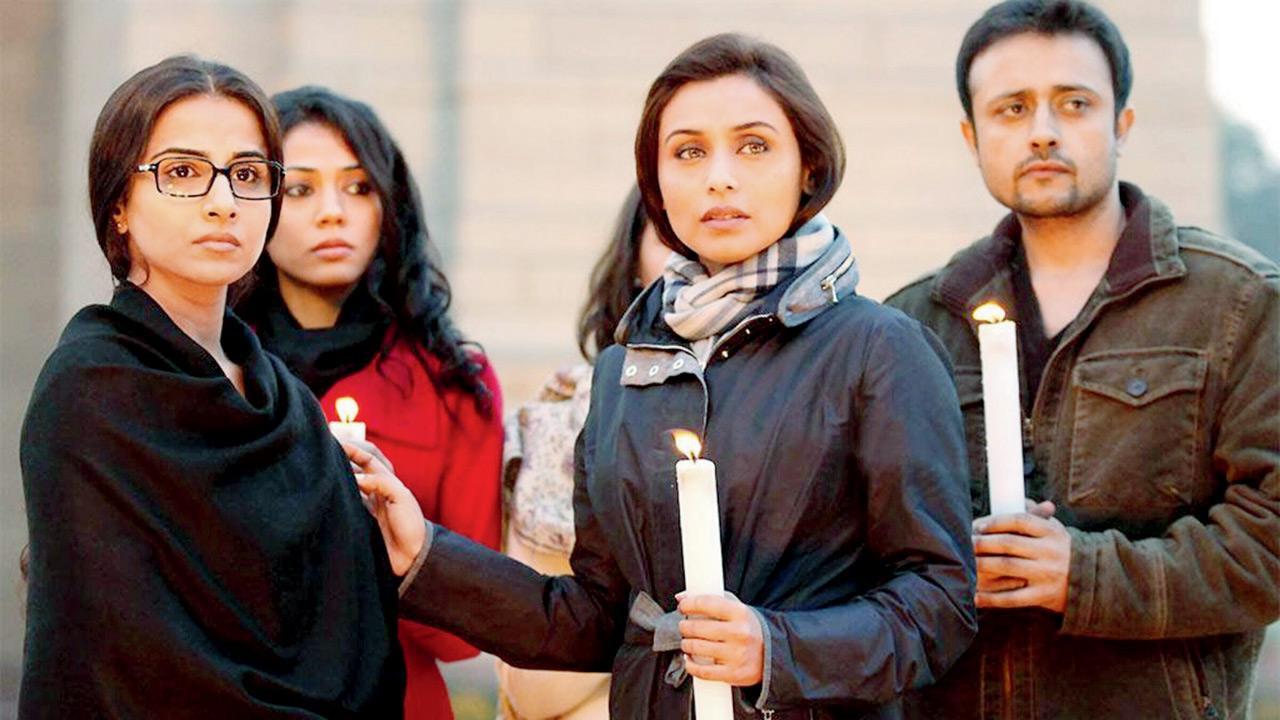
After Jessica Lal’s murderer Manu Sharma’s rehabilitation amid the success of his Indri whiskey sparks outrage, No One Killed Jessica director Raj Kumar Gupta notes that Sabrina Lal had forgiven him after he served his sentence
Mohar Basu (MID-DAY; April 21, 2025)
Last December, Manu Sharma hit headlines again. Sharma, who was sentenced to life imprisonment in 2006 for Jessica Lal’s murder and released from the prison in June 2020, was discovered to be the owner of the whiskey brand, Indri. It was found out that Sharma—born Siddharth Vashisht—now went by Siddharth Sharma and is associated with a £15 million investment in Scotland’s distillery Argyll and Bute, through his family’s company Piccadily Agro Industries. It led to wide debate over his rehabilitation and the role of privilege in it.
When we recently met director Raj Kumar Gupta, we asked him about his stand on the matter. His directorial venture No One Killed Jessica (2011)—starring Vidya Balan and Rani Mukerji—chronicled Jessica’s sister Sabrina Lal’s seven-year fight for justice.
“Sabrina Lal had fought tooth and nail to get her sister justice. But [in 2018], she had written a letter to the Tihar Jail authorities, saying she had forgiven Manu for his crime. She had said, ‘He has served his sentence and I’ve forgiven him. It will be like a catharsis to forgive and move on.’ When I had first read about her stand, I was numb. Our loss or rage can’t be more than Sabrina’s. No one suffered as much as she did. [Yet], she didn’t oppose his release. Everyone can have an individual take on it, but Sabrina reminds me of forgiveness,” he noted.
In early 2006, Sharma was acquitted after his privilege as a politician’s son had ensured that witnesses were silenced. It led to a nationwide uproar. In March 2006, the case was reopened in the Delhi High Court and he was convicted in December 2006. The recent turn of events has left Gupta with more questions than answers.
“Forgiveness is individual choice, and I’m conflicted. The court [served] justice. After that, he is back to where he is. This makes me wonder whether a criminal, who has done his time, has a right to live normally again. I wonder, doesn’t a criminal, having served his sentence, deserve to assimilate in the society or earn a living?”
The case that shook the nation
- Jessica Lal was shot dead on April 30, 1999, after she refused to serve liquor to Manu Sharma, son of former Union Minister Venod Sharma.
- In February 2006, Manu and eight others accused in the case were acquitted due to lack of evidence.
- His acquittal led to widespread outrage. Numerous candle marches, and SMS campaigns were organized to protest against the decision.
- As a result of the public outcry, the case was reopened in the Delhi High Court on a fast-track basis.
- In December 2006, Manu was convicted for the murder and sentenced to life imprisonment.
- In June 2020, he was released from the Tihar Jail for ‘good behaviour’.
How cinema made India Gate a site of protest
2:54 PM

Niharika Lal (BOMBAY TIMES; January 25, 2025)
Every year, the Republic Day parade begins at Rashtrapati Bhawan and proceeds towards India Gate. India Gate isn’t just an iconic location for Delhi but also for cinema. Back in 2006, on Republic Day, Rang De Basanti hit the screens and gave Indian cinema one of its most unforgettable protest scenes. A scene that still gives goosebumps to audiences – no shouting slogans, no waving banners, no chaos – just a crowd holding candles in silence.
The scene became a cultural phenomenon both onscreen and off-screen, inspiring many real-life protests at the site.
Since 2006, India Gate’s relevance as a protest site has been depicted in several films, including No One Killed Jessica, Raanjhanaa, as well as in the web series Delhi Crime. Ahead of Republic Day, we speak to directors to understand what keeps India Gate’s cinematic relevance alive.
‘For Rang De Basanti, I was drawn to India Gate because of the importance it holds’
Rakeysh Omprakash Mehra grew up in Delhi and attended Bal Bharati School. Talking about the protest scene in Rang De Basanti at India Gate, he says, “The entire area of India Gate and Rajpath has always been in my consciousness. It had a different meaning. I remember, in the 9th standard, I was part of the Republic Day parade. We were always mesmerized by the jawans who would stand there like a statue, without moving. Each brick has the names of martyrs from British India. I’ve always been drawn to India Gate because of the importance it holds for us. To me, India Gate also represents the Amar Jawan Jyoti.”
Talking about Rang De Basanti, which took inspiration from the real-life incidents where Air Force pilots lost their lives, he says, “In reality, when those pilots sacrificed their lives, nobody protested. I think it’s the duty of civil society to raise their voice. Everybody can’t just sit on the fence and point fingers this doesn’t work, and that doesn’t work. It is our responsibility to raise a voice, and it is very important. In Rang De Basanti, when we lose the Air Force pilot played by R Madhavan, his mother and his friends wanted justice, so they held a silent protest at India Gate. I was drawn to India Gate because of the importance it holds.”
‘INDIA GATE HAS BECOME A PLACE OF COLLECTIVE REBELLION’
Raj Kumar Gupta, the director of No One Killed Jessica, who also studied in Delhi, says that India Gate is the iconic place that defines Delhi. He showed India Gate as a protest site in No One Killed Jessica because it was the actual location of protests in the real case.
He explains, “Of course, Jantar Mantar was the place for protests in Delhi and still is. But India Gate very organically became a protest site after Rang De Basanti. Films only work as a catalyst; it was the people who made it the spot. While there are many iconic places in Delhi, India Gate is the first that comes to our minds. Over the years, India Gate has become a place of collective rebellion. It evokes strong emotions.”
He adds, “Democracy is about people’s voice, and one must speak against injustice. Over the years, with films using the imagery of a protest in the backdrop of India Gate, it has now become a symbol of the people’s voice. Besides, the monument has its own value.”
People in India see medicine and mandir ka prasad in the same light-Riteish Deshmukh
8:07 AM
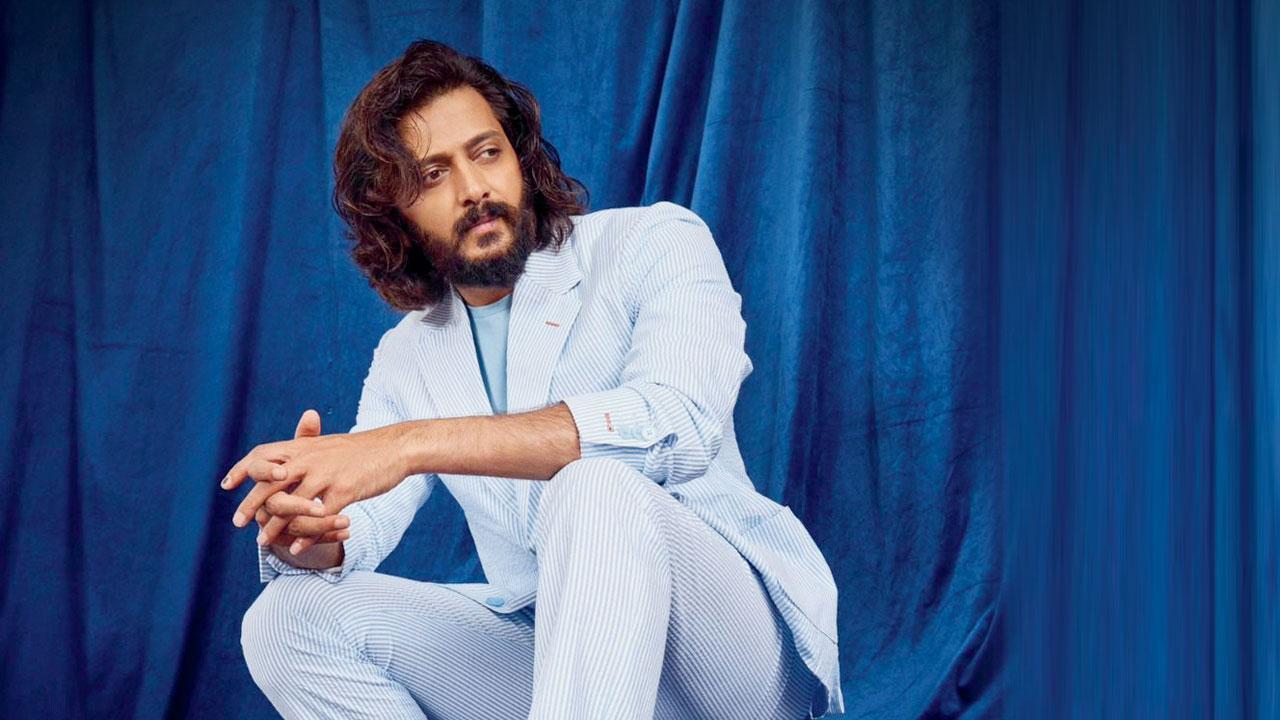
Trading his funnyman image to front the medical thriller Pill, Riteish says he seeks ‘thehrav’ in his work today as an actor-director
Letty Mariam Abraham (MID-DAY; July 11, 2024)
It’s not easy to shed the image you’ve built over years, but Riteish Deshmukh is steadily doing it. The actor, who shines in comedies, has chosen a hard-hitting thriller, Pill, for his web series debut. Did his desire to steer away from comedies draw him to the Jio Cinema offering? Not at all. What appealed to him was how director Raj Kumar Gupta trained his lens on the healthcare industry.
“People in India see medicine and mandir ka prasad in the same light. We’ve all read about [unethical practices in the pharmaceutical industry], and most companies will pay people to keep it hidden. I’m glad that Raj and Ronnie Screwvala [producer] thought it is important to reflect on this issue,” he says.
Be it No one Killed Jessica (2011) or Raid (2018), Gupta often marries real-life events and fiction. The actor says that here too, the director has blended elements of a thriller and courtroom drama to weave a fictional tale of a deputy medicine controller, who raises his voice against a pharma giant and his seniors for rolling out a drug with grave side-effects.
“Raj [doesn’t just] give you a thriller; he also shows you the process. In Raid, he depicted the entire process of how a raid is conducted. Similarly, here, he shows the way in which my character and his team [expose the nexus]. We are used to exaggerated drama, but we’ve kept it as real as possible.”
Working with the director took him back to his school days, he jokes. “The climax was a 10- to 12-page scene. [Prepping for it] reminded me of school days when I’d stay up nights [to study]. In the morning, I gave the shot in one take,” he smiles.
With a 21-year career behind him, Deshmukh is more assured of what he wants as an artiste today. While he ventured into direction with Ved (2022), he maintains that acting is his top priority. He finds joy in exploring different genres and refining his craft.
“I want a bit of thehrav in whatever I do. Comedy needs timing, but I want to explore different facets. Earlier, I would rush into comedy, but I don’t do that now. After my directorial venture, I have only worked on two projects.”
Riteish Deshmukh is a director’s actor. Being a director himself, he knows filmmaking-Raj Kumar Gupta
8:12 AM
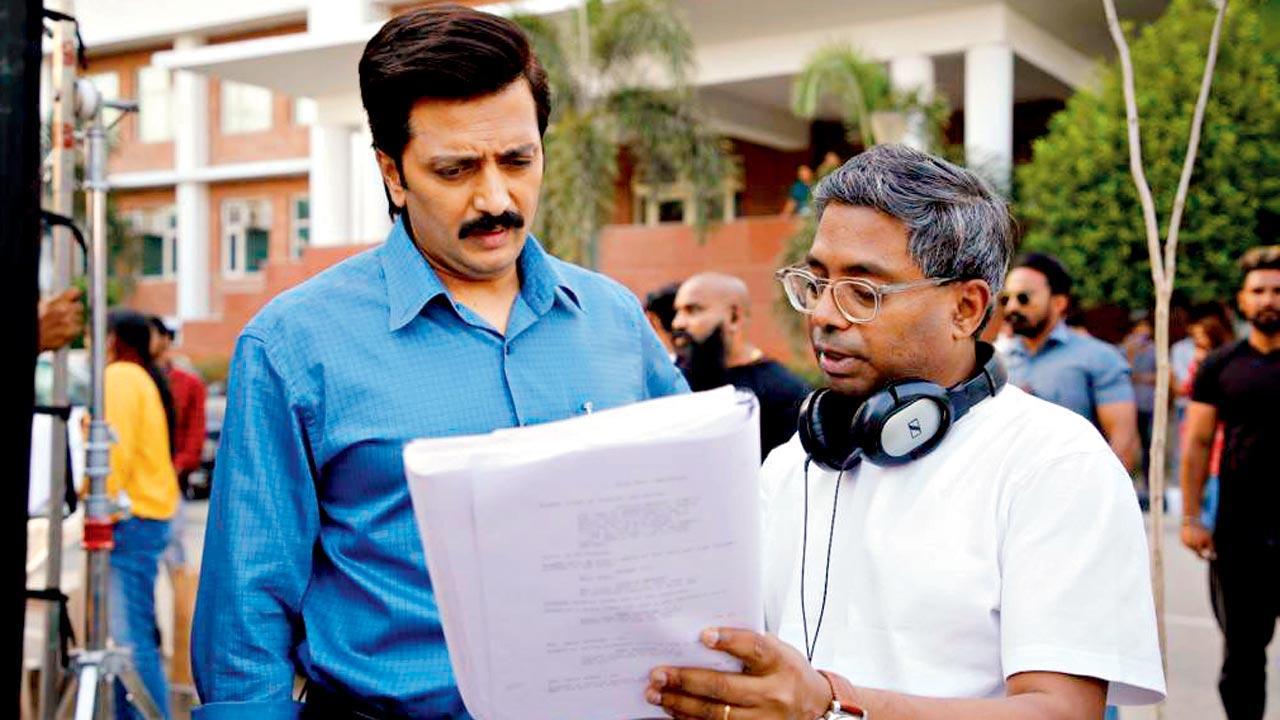
Delving into healthcare industry with Pill, creator-director Gupta says his maiden web series raises questions about substandard drugs
Upala KBR (MID-DAY; July 8, 2024)
The incidents that happen around us every day are the ones that interest Raj Kumar Gupta most. From No One Killed Jessica (2011) to Raid (2018), the director has brought to the screen hard-hitting stories that had their roots in real life. Now, for his maiden web series Pill, he has trained his lens on the pharmaceutical industry.
“While I had many offers to direct web series earlier, the stories didn’t appeal to me as this concept did. We all are consuming pills every day, and we live in an environment where we are impacted by what we see and read. While these form the bases of Pill, it’s a fictional take on the medical world,” says the creator-co-director.
The Jio Cinema offering sees Riteish Deshmukh as a deputy medicine controller, who raises his voice against a pharmaceutical company that rolls out a drug, with grave side-effects, in the market. With the show, Gupta wants the audience to be aware of the malpractices of the healthcare industry.
“How many times does an average Indian pop pills in a year? It’s important to know what goes into the pill, how it is made, and whether taking drugs is safe or not. We’ve read about fake or substandard drugs. Those are the questions we’ve raised with Pill. It’s a blend of thriller, drama, and investigative journalism,” he says of the show that was shot in Delhi, Chandigarh and Mumbai.
In Deshmukh, Gupta found a perfect collaborator whose acting and directing experience enabled him to judge the material better.
“Riteish is a director’s actor. Being a director himself, he knows filmmaking. So, when he comes on set as an actor, he has his own suggestions and queries. It’s always welcome if an actor comes on my set with his intellect.”
Ajay Devgn wraps up Raid 2 after extensive shoot across north India; film based on UP tax case
8:23 AM

Upala KBR (MID-DAY; June 5, 2024)
Ajay Devgn knew 2024 would be a busy year with five releases lined up. The actor wasted no time, kicking off the year with the shoot of Raid 2 in the first week of January. Now, we have heard that Raj Kumar Gupta’s directorial venture—also starring Riteish Deshmukh and Vaani Kapoor—was wrapped up last month in Delhi.
Sources tell us that the sequel to Devgn’s 2018 crime thriller reached the finish line on May 10 after an extensive shoot that took the team to Uttar Pradesh, Rajasthan and finally to the capital.
“The first schedule was conducted in Mumbai over a week with Ajay and Riteish. This was followed by a month-long stint in Lucknow, where they shot at Isabella Thoburn College and La Martiniere College. In the next leg in Rajasthan, they shot in the sand dunes of Khimsar, at Mehrangarh Fort and other parts of Jodhpur. Barring Mumbai, the director shot mostly in real locations,” says a source.
The post-production of Raid 2, which sees Devgn reprise his role of senior income tax officer Amay Patnaik, is underway. This time, the director has apparently turned to a real-life raid case in Uttar Pradesh for inspiration.
“The story has its roots in a case that saw a UP politician-businessman being accused of tax evasion of over Rs. 100 crore,” adds the source.
Producers Kumar Mangat, Abhishek Pathak and Bhushan Kumar are planning a November 15 release.
Directing Doctor G was a great learning experience-Anubhuti Kashyap
8:22 AM

Riya Sharma (BOMBAY TIMES; November 16, 2021)
As part of its talk show Box Office Careers, Bennett University invited Anubhuti Kashyap, the director of the upcoming film Doctor G, which stars Ayushmann Khurrana and Rakul Preet Singh, to talk about opportunities that await young professionals hoping to enter the entertainment industry. During the talk show, which aims at promoting BA /PGD programmes in films, TV and web series, Anubhuti spoke about her journey, the difference in making films and web series (Afsos), and her experience of working on Junglee Pictures’ Doctor G.
‘FILMMAKING IS A VERY DEMANDING PROFESSION’
Anubhuti, who has worked as an Assistant Director in Gangs Of Wasseypur earlier, shared her story with the students. “Mine has not been a simple, clear-cut journey. I come from a small town and in those days, the belief was still strong that people from good families don’t join this industry, so I always had this pressure on me to not go join in the footsteps of my brothers (Anurag and Abhinav Kashyap), who are in the film industry. I pursued a management career for seven-eight years. When I was doing really well in my career, I thought this is the time for me to think about whether I want to change my profession. So I took a short sabbatical from work. I started spending time with my brother (Anurag) since I happened to be in Mumbai at that time. He has always encouraged me as he always thought that I had a great writer in me. I had done a little bit of writing so he pushed me into writing and researching for a film. I bought a good computer and started begging amateur filmmakers to give me footage that I could edit and taught myself some editing. I realised that this job demanded too much. It is an interesting process but you have to be very patient. I met Raj Kumar Gupta in one of the social gatherings when he was just about to film Aamir. He told me that he had a position of assistant director and asked me if I would like to join as an intern AD. I agreed and that was really the first film when I observed all aspects of filmmaking and felt like that I fit in seamlessly. I did not feel out of place. From then on, my journey started.”
‘IT WAS A GREAT LEARNING EXPERIENCE TO DIRECT DOCTOR G’
Talking about her next, she shared that it was an amazing experience to work on Doctor G. “There was a long wait involved in it, but it really paid off. Before this, I had only seen directors go through this experience from a distance, it was a great learning experience and I had fun along the way,” she said.
Anubhuti, who has had the experience of working on both films and web series, spoke about the difference between working for both mediums. “It’s quite different, the entire approach to it is very different. Right from scripting, you are looking at an episode as a film. For each episode, the first 10 minutes is the most important because that’s when you engage the viewers. These kinds of pressures you don’t have in Indian films. You have box office pressures which means you have to draw stars to it, you have to put in masala to draw the audience whereas, on the web, the content is the king.”

I don’t want to mourn Sabrina Lall’s death. Instead, I want to celebrate her life-Raj Kumar Gupta
8:06 AM

Director Raj Kumar Gupta – whose film No One Killed Jessica focussed on Sabrina Lall’s long, uphill battle to bring the killers of her sister Jessica Lall to book – says he’ll remember her for her relentless courage
By Raj Kumar Gupta (BOMBAY TIMES; August 17, 2021)
I don’t want to mourn Sabrina Lall’s death. Instead, I want to celebrate her life. I want to remember her as a braveheart, a fighter, and as a person of great integrity and compassion. I want to remember her as a warrior who was not afraid to fight for justice, no matter the power and strength of the opposition.
I want to remember Sabrina as a person who was responsible for galvanising the consciousness of a country into questioning — are you ready to take injustice lying down?
She certainly was not!
In a city like Delhi, that had more power than it could handle, she made us believe that courage is not something that can be bought by power and money — that courage is to stand up, face it and fight, no matter how strong the headwinds are. I also want to remember her as a gentle, beautiful, introvert soul — full of understanding and compassion for fellow human beings.
In films, the screen heroes always put up remarkable and sometimes unbelievable fights against villains and win against all odds. The part of the heroes is aptly written on paper, propped up and performed inside the confines of a studio, ably guided and assisted by highly skilled stuntmen.
In real life, there is no script, no studio, no stuntman or a stuntwoman to fight your fights. I want to remember Sabrina as someone who fought her own fights, including an incredible one, against all odds and she WON. I want to remember her as a HERO, a REAL ONE!
2010: IN AN INTERVIEW FOLLOWING APEX COURT’S JUDGMENT UPHOLDING JESSICA’S KILLER MANU SHARMA’S LIFE IMPRISONMENT
“The sense of loss remains. See, the gain has only been putting a certain thing to end, which was punishing the boy who perpetrated the crime. But that cannot bring back any of the people I’ve lost. It cannot bring back my mother or my father. When I look back, have I gained anything? I don’t think so. But like my family, I try and look at the positive side of things. I hope they’re happy wherever they are, life has to carry on. I can’t spend my life crying and moping all the time, I think the happier I am and the more I do in my life, they will be happier too... I believe they are somewhere around.”
2018: A FEW YEARS LATER, SHE SPOKE TO US ABOUT LEAVING BEHIND WHAT HAD HAPPENED, AND HOW SHE NO LONGER ‘CARED’ ABOUT MANU BEING GRANTED BAIL OR BEING RELEASED
“He messed up my family and I think he has paid for it. Fifteen years is a long enough time. I wanted justice for my sister, and I think I achieved it. Now whether he spends another two years in jail or three years, it doesn’t really matter to me.”
“It’s not about forgiveness. It’s that I don’t really — it sounds horrible — I don’t care if he comes out of jail. He messed up my entire family and I think he has paid for it. Fifteen years is a long enough time.”
“It’s been far too long for me to hold on to so much anger and resentment, and I just don’t feel that it is worth it anymore.”
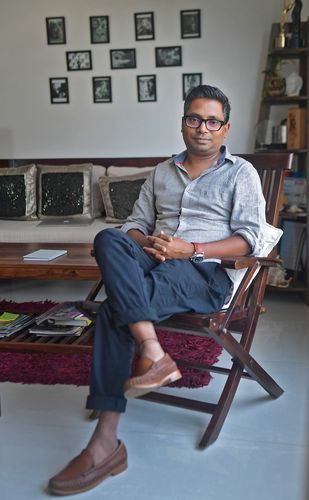
No One Killed Jessica stood up for so many things. I’m glad people still talk about it-Raj Kumar Gupta
8:26 AM

Raj Kumar Gupta’s No One Killed Jessica completed 10 years recently. Reflecting on the film, the director says he’s proud to have told a story that needed to be said
Niharika Lal (BOMBAY TIMES; January 10, 2021)

The film shows the journey of Jessica’s sister Sabrina, played by Vidya Balan, in getting justice for her sister and how she is helped by a journalist, played by Rani Mukerji. Last year, while speaking to us after Manu Sharma was released from jail early due to good conduct, the filmmaker had said, “As a filmmaker, you have to hope that these kinds of films might have an impact on those who are victims and on the culprits as well. You’d want to believe that we don’t make cinema in a vacuum. Yes, we keep making such films, but these incidents still happen. However, that shouldn’t stop us from telling those stories. We should not stop reflecting or telling stories that put a mirror to ourselves and to the society, and hoping things will improve.”
As the film completes 10 years, the director looks back at the journey and says he’s proud of telling the story that needed to be told. Excerpts from a chat:
‘NOKJ WASN’T AN EASY FILM TO MAKE’
NOKJ stood up for so many things — right things. I’m glad that people still talk about it and the film is seen as a reference point to the case. At that time, it was not an easy film to make. There were so many things that were not in favour. It was such a sensitive topic. We had female protagonists, and at that time there were not many femaleled films. It was a big challenge to make the film and to get it released. It was also believed that a January release won’t work. But the film connected with people, they loved it. I am glad that I got an opportunity to tell the story. I thank Sabrina for trusting me to tell the story which needed to be told. Ten years down the line, I am proud of the film.
‘MEDIA WAS INSTRUMENTAL IN JESSICA LALL CASE’
If you look at the word ‘media trial’, the word itself is not right. Trial — where is it supposed to happen? In the court. Media trials can never be a positive thing because obviously the media is not a court. What happened in Jessica’s case was not a media trial, I think it was a campaign for justice. I think, when the media saw that justice was not served, they raised their voice and brought out the facts. That connected with people, which further led to the campaign for justice. Ultimately, the court saw it. I think the media was instrumental in Jessica Lall’s case. It was the positive side of media.
‘SPARKED OUTRAGE WHEN WITNESSES DIDN’T STAND FOR WHAT WAS RIGHT’
In Jessica’s case, after the first trial, it was clear that justice hadn’t been served. The accused were let go. That’s when people raised their voice. Jessica was let down by the witnesses, the judiciary system and the bureaucracy. Justice wasn’t done because she was let down at so many levels. People (witnesses) should have stood for what was right, but they didn’t. That sparked an outrage. That was the moment when media questioned why justice was not done to her. Regular people stood up for her and questioned and all these happened — protests, candlelight vigils and campaigning for justice.

Delhi is a city with a lot of power, more power than it can handle-Raj Kumar Gupta
7:55 AM

As the legal process comes to a close in the infamous Jessica Lall murder case with Manu Sharma being released from prison after spending 17 years behind bars, Raj Kumar Gupta, who made No One Killed Jessica, reflects on the strength of Sabrina Lall, Jessica’s sister, and the typical ‘Delhi’ power mindset that drives incidents such as this
Anshul Chaturvedi (BOMBAY TIMES; June 4, 2020)
 What do you recall of the events that led you to make No One Killed Jessica? In an earlier interview you had said that NOKJ ‘was a story born out of tragedy’ and that ‘I spent 20-25 days with Sabrina. I used to sit with her for two-three hours every day. It was not easy and you get overwhelmed’.
I had finished my first film, Aamir, and I was looking for my next film. We were all aware that this (the Jessica Lall murder case) could be a good subject to explore. Emotions were running high, there was tragedy, injustice and the media had done a good job of bringing that incident to the forefront.
The first step was to meet Sabrina, tell her that we wanted to make a film on it and see what she thought about the idea. That’s how it all started. After that there were two parts. The first was sitting with Sabrina and getting her thoughts and experiences, whatever she had been through. The second part was reading – there was so much to be read, so many versions, reports and stories. For 20-25 days, I spent a couple of hours daily with Sabrina. I used to go and meet her and go through the timeline and what she had gone through. It was so emotional, overwhelming... it affected me. It was quite a long process. By the end of it, I was emotionally overwhelmed.
As far as Sabrina was concerned, I found her very open. Of course, she was very emotional. She was also very strong. There was a certain angst as well about what had happened, fairly so. She had lost her sister, she had lost her parents. But I found her very strong, very emotionally balanced. She had specifically told me that she was not ready to forgive the person who had killed her sister, but then in 2018, when she was asked about Manu being pardoned early, she was okay with it. That again shows how strong her character is – she is somebody who is ready to let go. It made me remember a quote by Mahatma Gandhi, that ‘The weak can never forgive. Forgiveness is the attribute of the strong.’
So when you researched the story, you would have spoken to the nightlife sector, the bureaucracy, the police, lawyers, the system and so and so forth. What was the sense you got in the city’s vibes – how ‘typically Delhi’ was the incident?
In No One Killed Jessica, the monologue that comes when the film begins, it is the voice of the journalist (played by Rani Mukerji) who is talking about Delhi. She says that she has never understood Delhi. It is a city where people are ready to show power, ‘You don’t know who I am’. I tried to address that because I have lived in Delhi. I studied in Delhi and spent three-four years in the city, graduating from Ramjas College. So that side of Delhi is something which I had seen. The wrong side of masculinity. It really, really disturbed me.
Do you think Delhi has changed at all in ten years? Stories of people pulling out a gun at the smallest of provocations continue to be part of what Delhi — NCR, actually — is.
I would like to believe it has. But whenever I visit Delhi, I do not see it. Delhi is a city with a lot of power, more power than it can handle. I think that is something that really corrupts people. It has too much power to be impartial or to be fair. So I don’t know if it is as bad it as it was, but I think that not much has changed. That kind of power wakes up the monster, the evil.
 What is your take on Manu — not in terms of your movie’s character, but as someone who read the news, and followed what was actually happening?
From whatever I read or saw, it was a very typical representation of what power does. It was very typical of how these characters behave, you know, when they are drunk in a bar or when they think they can get away with it. It was a very typical kind of a character.
NOKJ is among many realistic films where a Delhi-based female character has to bear the brunt of what happens – Talvar, Chhapaak, Pink, even Thappad. As a filmmaker, does this make you feel optimistic that these topics are now discussed in the public domain, or disturbed at how NCR is such a fertile territory for such topics and stories? Do such movies make a difference to how we conduct ourselves?
As a filmmaker, you have to hope that these kinds of films might have an impact on the people who are victims and on the culprits as well. You would want to believe that, we don’t make cinema in a vacuum. Yes, we keep making such films but these incidents still happen. But that should not stop us from telling those stories. It takes a lot to tell a No One Killed Jessica, or Talvar, or Chhapaak, or Thappad. I don’t think we should stop reflecting or telling stories that put a mirror to ourselves and to the society.
-----------------------------
DIDN’T MEET MANU TO PREP FOR NO ONE KILLED JESSICA: ZEESHAN
Niharika Lal (BOMBAY TIMES; June 4, 2020)
 Mohammed Zeeshan Ayyub made his film debut with No One Killed Jessica, in which he played a character based on Manu Sharma. He says he never met Manu to prepare for the role. “Raj Kumar Gupta had told me that he didn’t want me to meet the real convict, so I didn’t really prepare for the role and just acted raw. I just had two scenes in the film and a few shots. I focussed on two things for the role – the character didn’t speak English properly, and he had a Haryanvi tone. But after the movie, I never looked back or followed the case. Honestly, I never followed this case, neither before doing the film nor after.”
Raid 2 on the cards for Ajay Devgn; makers want to spin it into a multi-film franchise
8:13 AM

Bhushan Kumar, with the actor and Kumar Mangat, looking to spin the crime drama, inspired by the longest running income tax raid in the ’80s, into a multi-film franchise
Himesh Mankad (MUMBAI MIRROR; April 23, 2020)
 After collaborating on the period drama, Tanhaji: The Unsung Warrior, Ajay Devgn and Bhushan Kumar’s next is the Abhishek Dudhaiya-directed Bhuj: The Pride of India, which is set against the backdrop of the 1971 India-Pakistan war. But even before it releases, the duo is planning multiple collaborations, which include a sequel to their 2018 hit film, Raid. The Raj Kumar Gupta-directed crime drama featured Ajay as a no-nonsense IRS officer, Amay Patnaik and was based on a real-life case, the longest-running Income Tax raid in the ’80s. The film earned rave reviews for its narrative, hard-hitting dialogue and performances, with Ajay leading the way and Saurabh Shukla memorable as the wily politician, Tauji.
Now, Mirror has learnt that a Raid sequel is underway and like Part One, will be inspired by a true story. A source close revealed that the makers have already zeroed in on another interesting case.
“The franchise seeks to bring into the public eye heroes who work closely with intelligence agencies to track white-collar crimes. To this day, nobody knows the identity of the officer on whom Ajay’s Amay was modeled. Raid 2 will also be a tribute to men who don’t wear the uniform,” the source added.
When approached, Bhushan, who had produced the original film with Kumar Mangat, confirmed the news, saying, “It will be a huge multi-film franchise and Ajay ji and I, along with Kumar Mangat ji, are looking to take Raid forward. The script of Part 2 is being developed. Since the original was a much-loved film, the sequel is a huge responsibility. After the super success of Tanhaji: The Unsung Warrior, there’s a lot of pressure on this collaboration to live up to the expectation. We have always aimed at creating high concept films,” he assures.
Post the lockdown, Ajay Devgn is expected to start shooting for Indra Kumar’s Thank God, also featuring Sidharth Malhotra and Rakul Preet Singh, followed by the official remake of Tamil hit, Kaithi, and Neeraj Pandey’s period drama, Chanakya. He is also committed to Golmaal 5 and Singham 3 with director-friend Rohit Shetty, and the films are expected to take off sometime next year. Raid 2 will also kick off only next year, but is expected to wrap up in one marathon schedule.
India’s Most Wanted is not about a terrorist, but the people who captured him-Arjun Kapoor
8:04 AM

Renuka Vyavahare (BOMBAY TIMES; May 20, 2019)
The upcoming spy thriller, India’s Most Wanted, starring Arjun Kapoor, follows five unlikely heroes, who embark on a dangerous covert operation to capture one of India’s deadliest terrorists. They carry out this Herculean task without firing a single bullet. The film, based on true events, which is an ode to unsung heroes, has been directed by Raj Kumar Gupta. The director was inspired by the Intelligence Bureau (IB) officers, who led the mission to catch terrorist Yasin Bhatkal. Arjun Kapoor talks about what makes this film special and more.
 Your choice of cinema over the years has been interesting. You have stayed away from those typical heroic characters…
The audience has changed. I came into the industry at a time when unconventional was more interesting than conventional. I wasn’t playing a typical hero. I have enjoyed being away from what was expected from me. Be it Ishaqzaade, Aurangzeb, 2 States or Ki & Ka. None of these roles had me as a ‘hero’.
‘The audience will reject the ordinary and support a genuine story’
I also did my Tevars and Mubarakans and enjoyed those, too. I try not to repeat myself. I am at a stage in my career where I go with what I am convinced about instinctively and impulsively. It doesn’t matter if it’s a conventional project or an unconventional one. That’s where a film like India’s Most Wanted comes into the picture.
What drew you to a subject like India’s Most Wanted?
For me, it’s a conventional film, but made in an unconventional way, and that’s what I liked about it. The director told me, “I want the circumstances, choices and decisions that your character takes to make you a hero. Not every hero wears a cape. When you try to behave like a hero, you tend to lose your audience. These Intelligence Bureau officers that you are representing are normal people.” He made me meet some of the officers. They are simple people, who look like they do a 9-to-5 job. They are supposed to blend in, so they have to be as normal as possible. The director allowed me to portray the character in a realistic manner. And Prabhat (Arjun’s character in IMW) will be a hero in the audience’s eyes by the end of the movie. The film is about the victory of underdogs. It’s also about patriotism, it tells a story of a true mission and has been given a tone of reality. It isn’t jingoistic. It’s about the ground reality of what transpires in our country and how our intelligence officers actually operate. It’s the true story of a manhunt, and capturing someone without the use of a single weapon is more heroic than using guns and other ammunition.
The film is allegedly based on the capture and arrest of Yasin Bhatkal, who is still in Tihar Jail, Delhi.
Yes, it’s based on an actual despicable human being, but I don’t want to glorify him. This man (Yasin) is still alive and requesting pardon as he claims he is not guilty. This film gives a glimpse of how our intelligence agencies work to protect our people. I was emotionally stirred by this story.
The research required to recreate a real life covert operation must be immense.
Raj sir gave me the dossiers, we sat together and went through them. Plus, I was already aware of him (Bhatkal). However, this film is not about a terrorist but the people who captured him. It’s an emotional, humane story about the unknown people who put their lives on the line to protect us. For the officers, it was important to catch Bhatkal, but our story revolves around the men who went on a mission to capture him. Raj sir had done his research thoroughly, he took three years to write it, so I relied on him completely.
Today, films are more relevant to the times that we are living in. It’s no longer just about entertainment, is it?
India is evolving as a nation and the audience is changing. Stories today are much more relevant and rooted. People want honesty and truth in cinema. The audience will reject the ordinary and support what is genuine. Films that are looked upon as timepass, paisa vasool and escapist entertainers will always be there, as there is an audience for such films, too. Today, the audience wants to ask questions, seek answers, be involved and get provoked. There has to be a sense of connect. 2 States could have been anybody’s story and that is what made it so relatable. Or even Ki & Ka... It mirrored an evolving India, where women want their voice to be heard and men need to be supportive of that because that’s the right thing to do. Stories of middle-class India, common men with extraordinary spirit will always stand out because that is what our country is all about. India’s Most Wanted represents the Indian mindset. There’s a line in the film that says, ‘Pachchas lakh kharch karenge phool pe 26 January ki parade mein, par mission ke liye pachchas hazaar nahi dengey.’ That’s the reality. There is a certain bureaucracy and protocol to follow in India, which delays a lot of processes.
India’s Most Wanted, produced by Fox Star Studios, Raj Kumar Gupta and Myra Karn, releases on May 24.

I felt I have reached a stage of maturity where I can tackle a film like India's Most Wanted-Arjun Kapoor
7:50 AM

India's Most Wanted leading man Arjun Kapoor on graduating from romantic fare to gritty espionage thriller
Mohar Basu (MID-DAY; May 14, 2019)
On the surface, India's Most Wanted — inspired by a real-life manhunt for India's most dreaded terrorist — seems divorced from mainstream Bollywood offerings. But leading man Arjun Kapoor says he could not pass up the chance to be part of a gritty Raj Kumar Gupta-directed film. "I have grown up watching espionage films. So, when this script came my way, I felt I have reached a stage of maturity where I can tackle a film like this," he begins.
Sold as he was on the idea of playing an intelligence officer, Kapoor admits that it wasn't easy to understand the psyche of the protagonist. "My first prerogative was to not look like a miscast. I met civil servants to understand my role better. I noticed that the way they carry themselves is different from that of a common man. They don't have a hero's demeanour. They are cold and calculated who rely on their brains more than brawn."
Point out how slick James Bond films constitute a movie-goer's idea of a spy agent, and the actor vehemently disagrees. "Today, aspirational characters have lost their sheen. The texture of commercial cinema has changed, and we are enjoying apni gully ki kahani. The concept of entertainment has now become story-driven rather than hero-driven. For instance, a Raazi [2018] sells because the film works."
Kapoor is aware that the thriller comes at a crucial point in his career — his past few offerings have had a less than favourable run at the box-office. But the actor, who has another promising movie in Panipat, says that every film has only honed his craft. "In the first few years, I picked up anything that came my way, like an excited kid in a toy store. It's only slowly that I started hearing what the audience is asking of me. I got it wrong a lot of times and also got it right equal number of times. When a film doesn't work, I go back to the reason why I did it."
Intelligence officers behave as if they are doing a 9 am to 5 pm job and are not out to save the country-Arjun Kapoor
8:13 AM

As told to Avinash Lohana (MUMBAI MIRROR; May 13, 2019)
Prepping for a film is not just about physical training, it’s about mental conditioning as well. In my upcoming thriller, India’s Most Wanted, my character is an Intelligence Bureau officer, Prabhat, who is a skilled interrogator, mining information from locals, even those wholive in another country. The role required me to understand the psyche of interrogators and their tactics. It’s all about how they speak with their subject, sometimes playing the good-copbad-cop routine. Raj sir (director Raj Kumar Gupta) and I worked on this a lot because there are scenes where my character is unsure how trustworthy a person is, but he has to ascertain if the information they provide is authentic.
I met Intelligence officers and what struck me about them was the normal demeanor, it’s as if they are doing a 9 am to 5 pm job and are not out to save the country. Their heroism is inherent in the cause and not mirrored in their persona. I realised that while they can look aggressive, they need to be soft spoken, calm and collected. Raj sir did not want me to get too dramatic with dialogues, just be precise and straightforward, as that’s the tonality of an interrogator. Since this one is from Patna, we added a linguistic twang where needed.
I play a cop from Gurgaon in Dibakar Banerjee’s Sandeep Aur Pinky Faraar and lived in Delhi for a month, met people in the force and spoke to them at length. I even learnt how to dismantle a pistol for cleaning and put it back for a particular scene.
 The big challenge, of course, is Ashutosh Gowariker’s historical drama, Panipat, for which I started horse-riding lessons last November, three months before shooting. It’s important to connect with the animal as there will be good days when the horse is willing to listen and bad ones when it misbehaves. It’s a game.
I would go to the Mahalaxmi Race Course at 6 am. It was therapeutic waking up at 5.30, driving to town and sitting on a horse as the sun rose. It allowed me time to introspect and made me comfortable with a horse for the shoot. I’m glad I’m not using a body double.
Sword-fighting is also an integral part of period films but that’s action in your head and that simplifies the process as you work towards it. But riding must come naturally or you will never get it right. The bigger challenge is learning how to ride a horse and use a weapon simultaneously.
For my debut film Ishaqzaade, I had to ride a bike and they gave me a Yezdi which is one of the tougher bikes to learn on. I started a month before the film rolled and over the 60-day schedule, got better at it. Even though I’m not a biker, ironically, I was put on a bike in every film after that. In real life, my sister Anshula doesn’t allow me to spend money on a hobby like biking.
For Ki & Ka, Balki sir (R Balki, director) sent me to attend a 10-day workshop that taught me how to chop vegetables, make eggs, pasta and tea. We used a body double only for the really fast chopping portions for safety reasons. But though I got comfortable in the kitchen, mera kaam hai khana aur mujhe nai aata hai pakana. I can only cook eggs but believe cooking is a beautiful art form.

Mirror Exclusive: Yasin Bhatkal's capture is the subject of Arjun Kapoor's thriller India's Most Wanted
1:21 PM

Himesh Mankad (MUMBAI MIRROR; May 10, 2019)
During the trailer launch, the team of India’s Most Wanted had admitted that the upcoming film is inspired by a true story of five unlikely officers from Bihar who captured one of India’s most dreaded terrorists, without a single bullet being fired. The man dubbed ‘India’s Osama’ had, over a span of six years, from 2007 to 2013, master-minded 52 blasts across several Indian cities, including Jaipur, Hyderabad, Mumbai, Delhi, Ahmedabad, Bangalore and Pune. Ever since, speculations have centered around the subject of director Raj Kumar Gupta’s story of an undercover stakeout. The production studio, Fox Star, director Gupta, leading man Arjun Kapoor and everyone associated with the project have however remained tight-lipped on the subject.
Now, Mirror has learnt that Yasin Bhatkal, the founder of Indian Mujahideen, is the yet-unnamed terrorist. In 2013, the Indian Government had announced a Rs 3.50 crore reward for anyone who could provide details of his location or help in his capture. At 30, Bhatkal is believed to be responsible for more than 220 deaths across India and figures on the ‘Most Wanted’ list of 12 states, including Gujarat, Uttar Pradesh, Karnataka and Andhra Pradesh.
The mission kicked off when an IB official received information from one of his ‘key human assets’ that Bhatkal, in the guise of a doctor, was stationed in Nepal. Soon after, the officer got clearance from the joint director of the Intelligence Bureau in Patna to go after the ‘Ghost Who Bombs’. Arjun’s character, Prabhat Kumar, is based on a real-life IB officer who led the mission with other members of the Patna police, played by Prashanth Alexander, Asif Khan, Devendra Mishra and Praveen Sisodiya. Rajesh Sharma enacts the role of the Arjun’s superior. The joint mission of the Special Operations Group, Intelligence Bureau and the Bihar police which led to the arrest of Bhatkal on August 29, 2013, is described as a ‘victory of human intelligence’ as it was accomplished without any gunfire or turbulence to normal civilians. Bhatkal is currently serving out his lifetime imprisonment sentence at prison no. 2 of Delhi’s Tihar Jail.
“The officers of the mission didn’t get their due acknowledgement back then and the film is a tribute to the unsung heroes of our country. The characters have been fictionalised but the genesis of the idea came from this historic mission that led to the capture of the terrorist,” the source concluded.

Ravindra Kaushik’s family trusted me with the rights to his story-Raj Kumar Gupta
1:20 PM

Raj Kumar Gupta on what makes the Black Tiger fascinating, his journey with India’s Osama and why he is against taking creative liberties with translating real-life stories for the big screen
Himesh Mankad (MUMBAI MIRROR; May 10, 2019)
Raj Kumar Gupta is at his office, waiting. And the first thing he says is, “I hope you have some interesting questions that I would enjoy answering.” And that sets the ball rolling. Excerpts:
For over a decade since Aamir in 2008 to the soon-to-release India’s Most Wanted, all your films have been thrillers. What’s with the fascination with this genre?
It’s something that comes naturally to me and is not genre-specific. Yes, Aamir, No One Killed Jessica, Ghanchakkar, Raid and now, India’s Most Wanted are high on thrills, and drama and humour too. Every film has different moments and I approach them in a way that all the elements come together in a thrilling manner.
When did you decide on making a film based on this lesser-known mission of the Intelligence Bureau which led to the capture of India’s most wanted terrorist?
I started researching the subject in 2013 and thought this story deserved to be told to a wider audience. I took another year to finish the script and then, I got busy with Raid. But right after that, around four years after being involved with the subject, everything fell into place. What kept me going was how unbelievable the story is, the information is not readily available, but I wouldn’t let it go. Imagine five unlikely people on a mission to capture India’s most-wanted terrorist without a single gun? If this doesn’t sound cinematic, I don’t know what would!
Arjun hasn’t played such a character, what made you opt for him?
I think it’s great to have unlikely actors playing roles of unlikely officers on a mission. Arjun and I have been talking about doing something together for a while, and after seeing the trailer of Raid, he called to congratulate. We got talking and he asked, “What are you doing next.” I told him I was working on something and was sending it across. “Just read the script and tell me what you think of it,” I told him.
Then?
The conversation took place at 1 pm, and at 5 pm, he called asking me to let him be a part of the film. What he brought on the table was a passion for the script and a love for the subject.
 Tell me honestly, after working with Ajay Devgn in Raid, didn’t you think of casting him?
That’s a difficult question because we had a great time shooting Raid and the film did really well at the box-office. But I knew that as an actor, Ajay had different commitments and as the director, I wanted to start this film immediately after Raid. So, we never even entered into a discussion. Hopefully, we will do something together soon.
Next up, a spy thriller, Black Tiger…
Yes, my partner and I have acquired the official rights to Ravindra Kaushik’s life from his family. He is famously known as the Black Tiger and I have been wanting to make this film for a while now. The family trusted me enough with the rights and I am currently scripting the film.
Will it be a period film set in the ’70s or are you planning to adapt it to modern times?
It would be ridiculous to make a film on someone’s life and change the time frame. That would be an insult to the person who has done so much for the country. I want to be as authentic as possible in my portrayal of that subject, as I have tried to be in all other films.
How did you come across Ravindra Kaushik’s story?
My wife (No One Killed Jessica actress Myra Karn) played a role in getting me to this script. It took three years to research and will take another year to finalise the script.
Buzz is, you have spoken to Hrithik Roshan to play the titular role.
I am not one of those directors who would approach an actor without a script. Having said that, I would love to work with Hrithik in the future, but I can take the casting call only after I have a script in place.
Any plans of working with your wife as an actor in your film?
She has worked with me on India’s Most Wanted as a producer and helped me in other aspects of filmmaking. As far as I know, she is more interested in being behind the camera than in front of it.

Subscribe to:
Posts (Atom)