Showing posts with label Raghav Mathur. Show all posts
Showing posts with label Raghav Mathur. Show all posts
I’ve been approached many times with offers to recreate Angel Eyes, some of which came as veiled threats-Raghav Mathur
10:42 AM

Raghav, who shot to fame with 2004’s Angel Eyes, shares the events that led to his song becoming the title track of Shahid-Kriti’s film
Sonia Lulla (MID-DAY; February 12, 2024)
In the era when pop music enjoyed its time under the sun, Raghav Mathur’s Angel Eyes (Teri Baaton Mein) (2004) became the easy hit that made its way to clubs, iPods, and song-streaming shows. The track from Storytellers—the album that brought the musician immense stardom—was in every way an evergreen number that underwent several official and unofficial iterations over the years. Soon after it went viral again during the lockdown-induced social media boom, Mathur found himself with an offer.
“[The makers of Teri Baaton Mein Aisa Uljha Jiya] came to me two years ago with an idea to recreate it. I’ve been approached many times with similar offers, some of which came as veiled threats. This time, I agreed to go ahead. However, the original number, Angel Eyes, was written over an old reggae song called Murder She Wrote. Before my music career started, I was working in a CD store selling electronics in Calgary. My manager was working with some of the greatest Jamaican reggae producers of all time, and I had access to amazing producers. I believe this rhythm is probably the greatest dance hall rhythm of all time. I told my manager that I could write 100 songs over this rhythm because I just felt it. It’s a four-bar loop over which you can sing anything,” he recalls, further highlighting how his mother helped him pen the lyrics to Angel eyes, one of the “biggest hits of my career”.
While Mathur was willing to share the rights with the makers, the team had to also procure the required permissions from the makers of Murder she wrote. “They had to approve of the financial and creative terms because the music is synonymous with that record. We needed to have seven publishers on the same page, willing to allow iterations in the lyrics, and verses. I would give T-Series credit for being patient,” says Mathur, who asserted that the new version be rendered by him. He shares that while he was taken aback when he realized that the film had been named on the song, he “sorted it out pretty quickly”.
Mathur acknowledges that unlike several hit records of the early 2000s, Angel eyes was synonymous with the artiste who created it. In this case, it was him. “Teri Baaton was a cult classic for 20 years, if I may say so. But it was never benefited with a proper music video. I’m glad [it does have it now]. Many people said I should have been in the video, and I’m like, have you seen Shahid Kapoor?”
Eventually, we went from being the most influential people, to not having the same degree of power-Raghav Mathur
8:19 AM
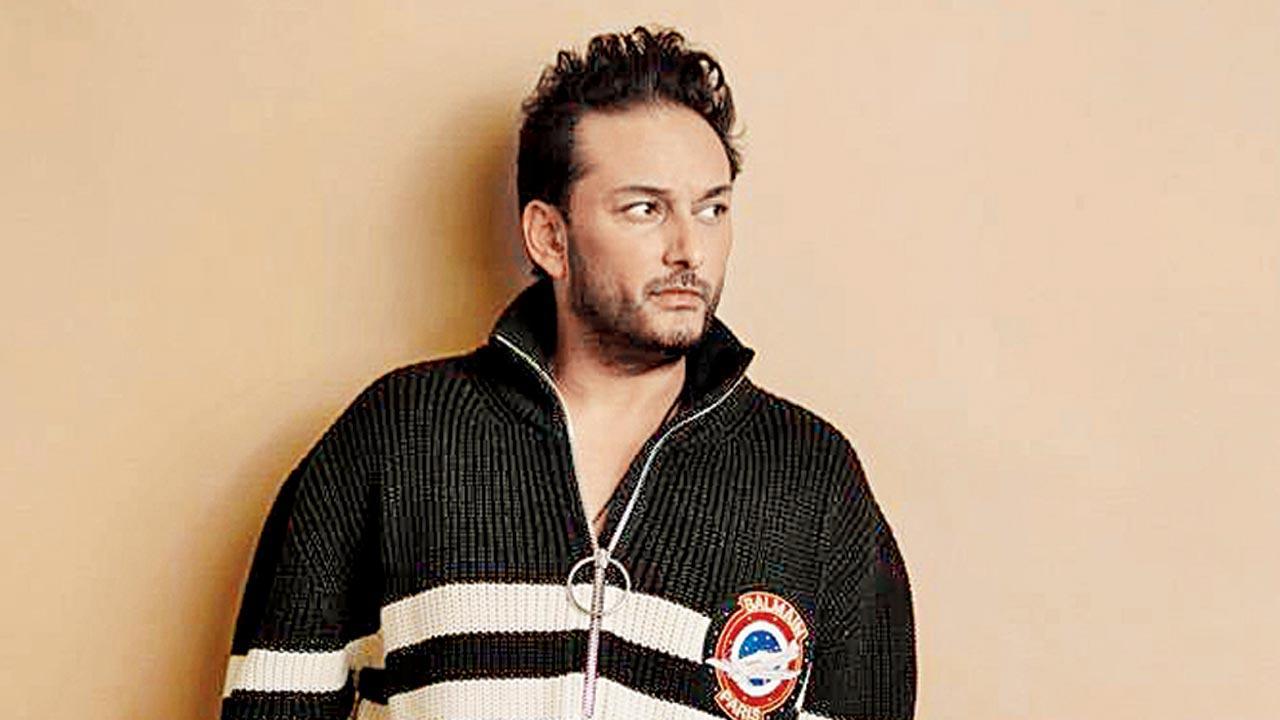
Angel Eyes and Can’t Get Enough hitmaker Raghav returns to the studio (and the industry) with Desperado; he discusses what’s in store for his fans
Sonia Lulla (MID-DAY; April 17, 2023)
Washed in hues of red and black, Desperado is in every way an homage to Raghav Mathur’s debut album, Storyteller. In this interview, he says it was intended to be so, as he had set out to see if he could revive the sort of music that got ’90s kids, up and grooving. He could, indeed!
Edited excerpts from the interview.
You have been referring to this song as a comeback of sorts. Why did you step away, and what inspired you to return?
I had been putting out records. I also [worked] on something with Mr [A R] Rahman, and had a few hit records here, in Canada. This song is an homage to my first album. [After its success], my producer Mushtaq and I tried to navigate our way [in the industry]. It was easy to get samples of songs like Kabhi Aar Kabhi Paar [approved], but then, the business changed. In 2009, companies like VH1 were devoting only a small share to pop music. Eventually, we went from being the most influential people, to not having the same degree [of power]. The kind of work that I was doing in fusion needed a thriving indie pop scene, which was no longer there. Of course, I could have done things differently to have more equity within the industry, but the industry changed a lot too. Because my music was not unabashedly Bollywood, it was a strange place to be in. This isn’t to lambaste anyone. This was capitalism. Companies like MTV were faced with the decision to give a platform of such significance to artistes like me, where the budget for promotions are significantly lower than what would come out of a film house. Filmmakers spend millions on a soundtrack. We couldn’t match those numbers. When you see who you’re up against for the same platform, that makes it [less] confusing. I went from having a number one album to having to pay to make my records, hire my own PR team and plan my own tours.
Musically, how would you say you’ve evolved over the years?
[My recent tracks] Maayara and Sufi are songs that I’m really proud of. The breadth of my work cannot be spoken about without discussing them. There was a yearning in me to explore a dark, contemporary sound. But, what influenced me during the lockdown was that I had the time to see videos on Instagram, and notice the renaissance of my early work. While those who grew up with my music were nostalgic, the new generation had also been making reels to my music. I thought it was a good time to go back and see if we could create that magic again.
How did you zero in on the Hindi song, Chura Liya, for Desperado, and did you actively think about making any amends to your style to suit contemporary listeners?
I did not. I thought, I’m in the studio with Mushtaq, the guy who understands me as a creator, and whom I understand, and we decided against paying heed to anything. We didn’t write to any brief, or look for any influences. I’ve never sampled a male voice on my records, which I did now for this song. The way Rafi saab sits over the beat [in this verse] of Chura Liya makes it sound cool. Also, we knew that we wanted Tesher to feature in it. He had the vibe, and was at the [peak] of fame after Jalebi Baby.
As someone who received a lot of love early on in your career, how do you reflect on your success?
When my first album came out, I had been trying to get a record deal for seven years. In your early 20s, seven years is a long time. It was rough, because I was staying in places like Los Angeles and London without money. It was in those moments that I came up with those ideas and wrote those hooks. It was validating. My parents were incredibly supportive. People might have wondered if they were doing the right thing by supporting me, so, from the family’s perspective, it is validating. That motivation is back again, because now, I’m a dad. I want my daughter to see what I experienced, know what my legacy is, and what I am all about.
Your music should be such that even though out of sight, you should never be out of mind-Raghav
8:10 AM

Soumya Vajpayee (HINDUSTAN TIMES; May 30, 2022)
Singer Raghav Mathur aka Raghav, who is known for his hit singles in the early 2000s — Angel Eyes and Teri Baaton — is making waves again, thanks to social media. His 2004 number Teri Baaton was trending on social media recently, after 18 years of release. This not only makes the Canadian singer proud, but also encourages him to come up with new music.
“I have a few compositions that are underway and I’ll soon be treating my fans back home,” says Raghav, who is glad that independent music is thriving in India, again. “Pop is making a big comeback and I am glad to see that. I hope my new music makes people feel the way my old compositions did. It (the current phase) is exciting,” he adds.
The 41-year-old, who has “a long-pending visit to India”, is glad that his work continues to stay relevant. “As a musician, you need the universe to have your back if you want a multi-decade career like I have had so far and the universe has done it for me, again. I am thankful. I have always believed that your music should be such that even though out of sight, you should never be out of mind,” says Raghav.
Ask if there’s any mantra for staying relevant over the years, and he shares, “Give the listeners music that they can call their own, given them a reason to make memories and celebrate, and your music will remain with them forever.”
I feel lucky, says Raghav on Teri Baaton going viral after 18 years of release
7:37 AM

Soumya Vajpayee (HINDUSTAN TIMES; April 14, 2022)
Who can forget the magic that his songs Angel Eyes and Teri Baaton created when he debuted in 2004? Singer Raghav Mathur aka Raghav is making waves again, not because of a new release, but because Teri Baaton is trending on social media 18 years after its release.
Ask him how he feels about it, and he says, “I feel lucky. The idea that music can revive to this degree after so long is a great compliment. When (artistes/content creators) Sagar Bora and Neel (Just Neel Things) made a video, it all changed overnight. I thank them for bringing the song to the top of the streaming charts for the second time.”
Over 1.5 million reels have been made of the song so far. So, what is it about the number that’s resonating with the youth? “I’m sure it’s because of my mum’s timeless lyrics and the greatest rhythm in reggae music history, courtesy Grammy winners Sly and Robbie (Jamaican musicians). I also believe that music that’s made from the heart never fails to connect,” says the 41-year-old Canadian musician.
He has released two ballads in the last couple of years, with Maayera having over 15 million streams, and he’s been working on a few new tracks. He’s glad that “the universe has brought me back into people’s lives just in time”.
What does he feel about the role social media plays for an artiste today? Raghav shares, “I like the trend of reels, as it has the potential to transform a consumer into a creator. Success there comes from love alone; that’s pretty special.”
Subscribe to:
Posts (Atom)