Showing posts with label Radio Ceylon. Show all posts
Showing posts with label Radio Ceylon. Show all posts
On Binaca Geetmala's 70th anniversary, Ameen Sayani talks about its popularity: "Somebody heard it in Germany"
8:39 AM
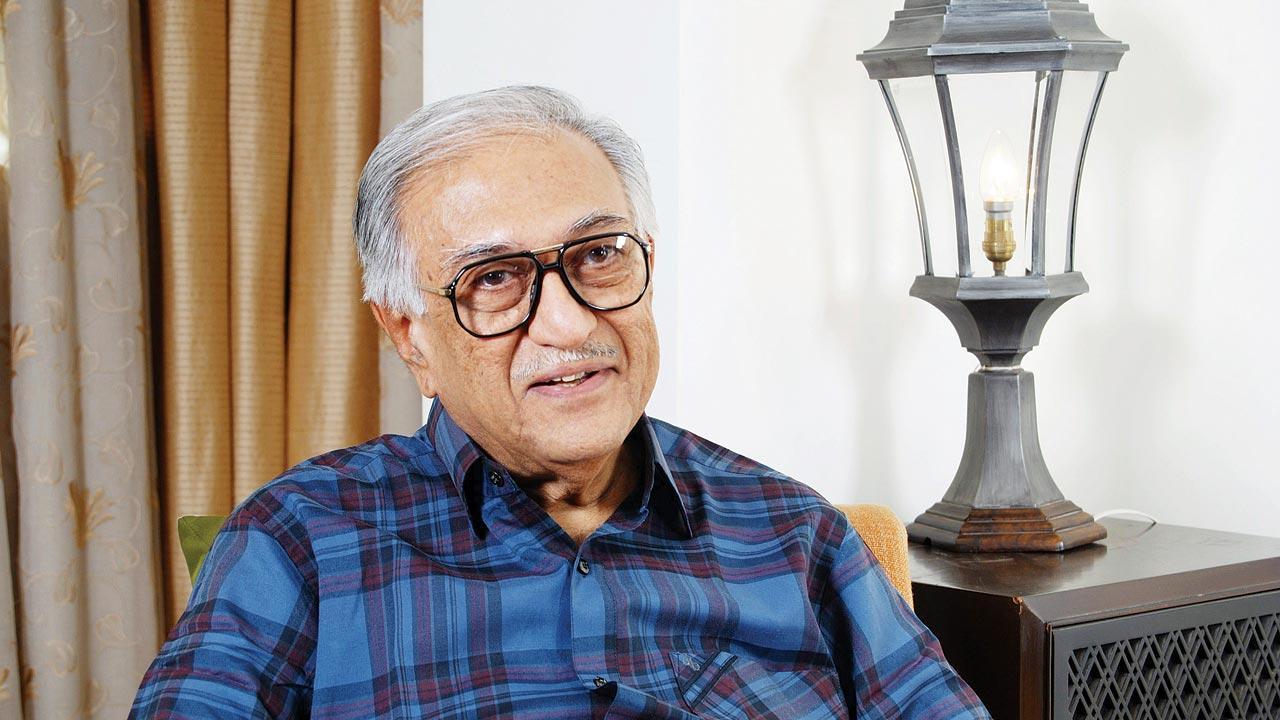
December 3 will be the 70th anniversary of the most beloved radio entertainment show. Happy birthday Binaca Geetmala!
Meher Marfatia (MID-DAY; November 20, 2022)
Beheno aur bhaiyo, this is a fortnight so worth the song and dance about. It marks the 70th year of a show-of-shows appearing on the airwaves, which wiped Indians cleanly off the streets. Into their homes they disappeared, huddling round the radio for the ultimate programme of popularity-based Hindi film songs. Hosted, of course, by the genial Ameen Sayani, who ruled the broadcast universe with uncommon passion and perception.
The orange flicker from my parents’ Bush set blazed bright at 8 pm midweek, warmed by the pitch-perfect inflection: “Main aapka dost Ameen Sayani bol raha hoon aur aap sun rahe hain Binaca Geetmala.”
Twenty years before Doordarshan’s screening of the Sunday evening movie brought the country to a complete standstill, Wednesdays (8-9 pm) became Geetmala Day, celebrating one of the longest running programmes in broadcast history.
The sweeping cultural phenomenon was introduced on December 3, 1952, by Radio Ceylon, Asia’s oldest station. The British left Ceylon short-wave transmitters belonging to Louis Mountbatten’s South East Asia Command. Colombo used them for commercial radio offerings in Sinhalese, English, Tamil and Hindi.
Wowing an estimated weekly listenership of 21 crores by the end of the 1970s, Sayani emerged the most idolized compere any channel could boast. He interviewed music personalities in other shows. Saridon Ke Saathi, in 1970, Vividh Bharati’s first sponsored programme, was produced and presented by him on All India Radio (AIR).
Geetmala got going in 1952 as Binaca Hit Parade on Radio Ceylon, hosted by Ameen’s brother Hamid Sayani and Happy-Go-Lucky Greg (Greg Rostowski) for the Commercial Service of Radio Ceylon. It shot to prominence as AIR slid on account of I&B Minister B V Keskar’s 1952 ban on film songs. Keskar dourly deemed that tunes like Tadbeer se bigdi hui taqdeer bana le, infusing S D Burman’s buoyant guitar riffs for Baazi in 1951, were over-orchestrated with Western instruments. Radio Advertising Services was opportunely established, with Hamid heading its production wing.
In his Churchgate home, over chai and chivda, Ameen Sayani explains, “Audiences flooded the station with requests for a similar Hindi film songs countdown. The client, Ciba Geigy, landed at the Radio Advertising Services office where I worked, looking for someone to write the script, narrate it, announce selected songs, go through listeners’ letters—for only Rs 25 per programme. Raising my hand I said, ‘I’ll do it.’”
“After the inaugural broadcast, I prayed to God, Gandhi ji and my mother, for 200-300 letters from listeners. We got 7,000. St Xavier’s College friends helped sort them. Doubling each week, within the year mail spiralled to 65,000 a week.”
Listeners arranged their individually preferred sequence of seven songs played in random order. A prize amount of Rs. 100 was split among seven of them. When the award system discontinued after a year, the show stayed a hit parade.
Small subterfuges abounded. Multiple entries were supposedly dispatched from different addresses on the envelope. A telltale post office chhappa revealed the same place—Kalbadevi, for instance.
The obsession from India knit millions internationally. At its peak, Geetmala attracted fans and followers in Ceylon, Pakistan, Bangladesh, Nepal, Afghanistan, UAE, Oman, the West Indies, Africa and then America. “Somebody heard it in Germany, so Europe seemed covered as well. Nothing must have blocked the shortwave reach. The signal probably went into China, which was countering Ceylon getting powerful.”
Rapturous responses poured in, filling stacks of sacks. Sayani generally refrained from accepting gifts. “What can you do, sometimes it’s just love,” his son Rajil says. When a woman sent a shawl as a token of appreciation, he politely conveyed—“Thank you for the present but this would upset my wife.” The lady wrote back, “Ameen bete, I’m of age enough to be your mother. Please accept the gift.”
Older women to schoolboys were in starry-eyed thrall. Byculla resident Rustom Jasoomoney remembers, “In 1955-56 pre-transistor days, at Scout camp in Matheran forest, we abandoned campfire activities on Wednesdays. Trekking two miles by lantern light, with staffs and in uniform, to Sayaji Park in the town centre, where Geetmala was on a public address system. We crossed fingers that failing electricity wouldn’t cut short the show.”
Another excited kid rushed to the radio minutes ahead, little dreaming he would grow up to market the same show. Former Ciba-Geigy advertising manager Homi Randeria says, “Suvi Godambe sifted through the post that record dealers sent and the tabulation went to Ameen. His charm alone made Geetmala shine, even with parallel film music programmes in the early 1980s. We polled listeners, asking if the show should continue amid competitors. The reaction was fantastic. I was shocked, being forced to wait five days before getting into my cabin. It was piled that high with mail begging us to never stop. Till today, I cherish Ameen’s signed cassettes and can’t nap in the afternoon without hearing those retro recordings on my Carvaan radio.”
Manohar Mahajan, Radio Ceylon’s iconic announcer, acknowledges, “He is my guru, my bhagwan, my everything. Unbelievable how, as a child, I was mesmerised by Geetmala tracks from a hotel near my home in Jabalpur, and that legendary voice soon advised, ‘Bombay aa jao.’ To be mentored by the finest industry veteran is a blessing.”
Sayani reminisces, “The beautiful quality of melodies resulted in Geetmala songs becoming an absolute craze. As younger talents, Laxmikant-Pyarelal, Kalyanji-Anandji, Shankar-Jaikishan and R D Burman, gained fame, senior music directors complained the ratings procedure was faulty.”
The basis of the listing initially was sales figures obtained from records stores and, later, numerous listeners’ clubs. To dissolve further rancour, rather than be ranked, songs simply played for a brief year.
Here are Sayani’s own favourites, not necessarily Geetmala inclusions:
Man re tu kaahe na dheer dhare (Chitralekha)
Piya tose naina laage re (Guide)
Bhooli hui yaadon (Sanjog)
Raaton ko chori chori (Mohabbat Zindagi Hai)
Poochho na kaise maine rain bitai (Meri Soorat Teri Aankhen)
Tere bachpan ko jawaani ki dua deti hoon (Mujhe Jeene Do)
Jaane jaan dhoondta phir raha (Jawani Diwani)
Main paagal mera manvaa paagal (Aashiyana)
Rasik balmaa dil kyon lagaaya (Chori Chori)
Jeevan dor tumhi sang baandhi (Sati Savitri).
Mass adulation meant restaurants and paan stalls packed with fevered patrons at that magic hour. “Without a radio in their struggler years, Laxmikant-Pyarelal hung around a cafe—they couldn’t afford entering—peeping in from its window to hear chartbusters blaring out,” Sayani recollects.
“My relationship with playback singers was excellent, especially Lata, Asha, Mohammed Rafi, Mahendra Kapoor and above all Kishore Kumar. Among music directors, I bonded with Naushad, C Ramchandra, Madan Mohan, S D Burman, R D Burman and Roshan, who was a dear friend. I also interviewed these wonderful sangeetkars. The lyricists closest to me were Sahir Ludhianvi and Shakeel Badayuni.”
Rajil adds, “Shakeel Badayuni wrote the sehra verse that was read out when Dad got married [to Rama Mattu, a veritable music encyclopaedia relied upon for information related to any Hindi film song under the sun].”
Geetmala moved from Radio Ceylon to Vividh Bharati, radio to stage, to LPs and cassettes, to TV, CDs, live streaming and finally, to the film music player Carvaan, containing Saregama’s hit Geetmala Ki Chhaon Mein series, paying tribute to less heard, yet deserving, songs.
With Chhoo lene do naazuk hotho ko, in the film Kaajal, the Sartaj Song (crowned song) strategy gracefully retired a number already aired 25 times. The marks scored decided whether it was to be included and ranked in the annual programme.
An admirer of Casey Kasem, producer-presenter of the American Top 40, Sayani reveals that Kasem’s signature line—“Keep your feet on the ground and keep reaching for the stars”—particularly appeals to him.
In 2000, the Advertising Club honoured Binaca Geetmala with the Golden Abby for Outstanding Radio Campaign of the 20th Century. “Entrenched in the hearts and minds of the nation, I still receive about 20 letters a month describing how Geetmala has influenced people’s lives,” says Sayani. “The interaction between me and my listeners has always been very personalised. I was their Ameen Bhai, they my sweet beheno aur bhaiyo.”
Geetmala milestones
December 3, 1952: First Binaca Geetmala broadcast, as a half-hour show
December 3, 1953: First annual programme of 12 top songs
January 5, 1954: Becomes a one-hour-long hit parade with 16 songs
From 1957: Annual programmes start on the last two Wednesdays of every year
March 23, 1966: Introduction of the Sartaj Song concept
January 8, 15 & 22, 1978: Silver jubilee broadcast in three parts from 11 AM-12 noon
August 12, 1981: Entry of the first non-filmi song, Disco deewaane, aha
May 21, 1986: Name change from Binaca Geetmala to Cibaca Geetmala
October 27, 1988: Slot change from Wednesday 8-9 PM to Thursday 9-10 PM
April 6, 1989: Number of songs becomes 14 from 16
November 6, 1989: Starts on 24 Vividh Bharati stations; broadcast day change again to Monday 9 PM
March 21, 1994: Last regular programme of Cibaca Geetmala broadcast. On March 28 and April 4, Sayani features two specials with previous years’ top songs
April 4, 1994: Last broadcast of Cibaca Geetmala
February 18, 2001: First broadcast of Colgate-Cibaca Geetmala
August 24, 2003: Last broadcast of Colgate-Cibaca Geetmala
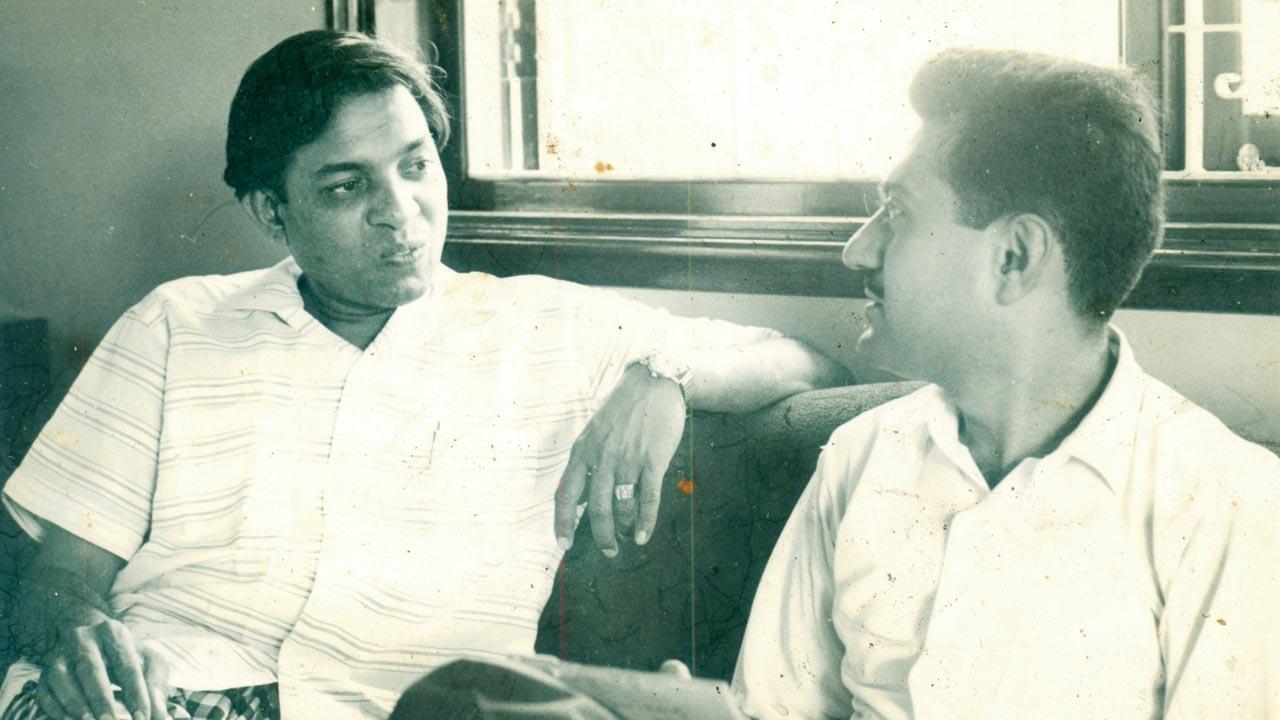
With singer Manna Dey and music director Ravi
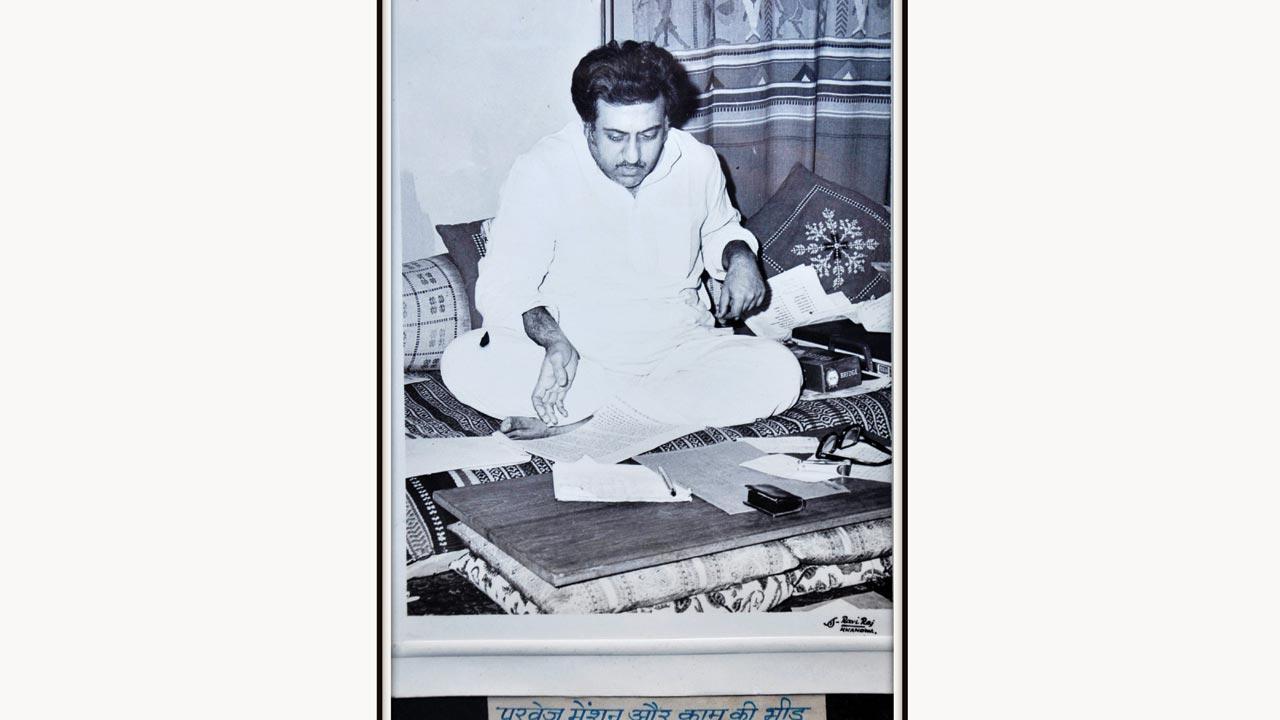
Preparing for the Geetmala silver jubilee stage show in December 1978
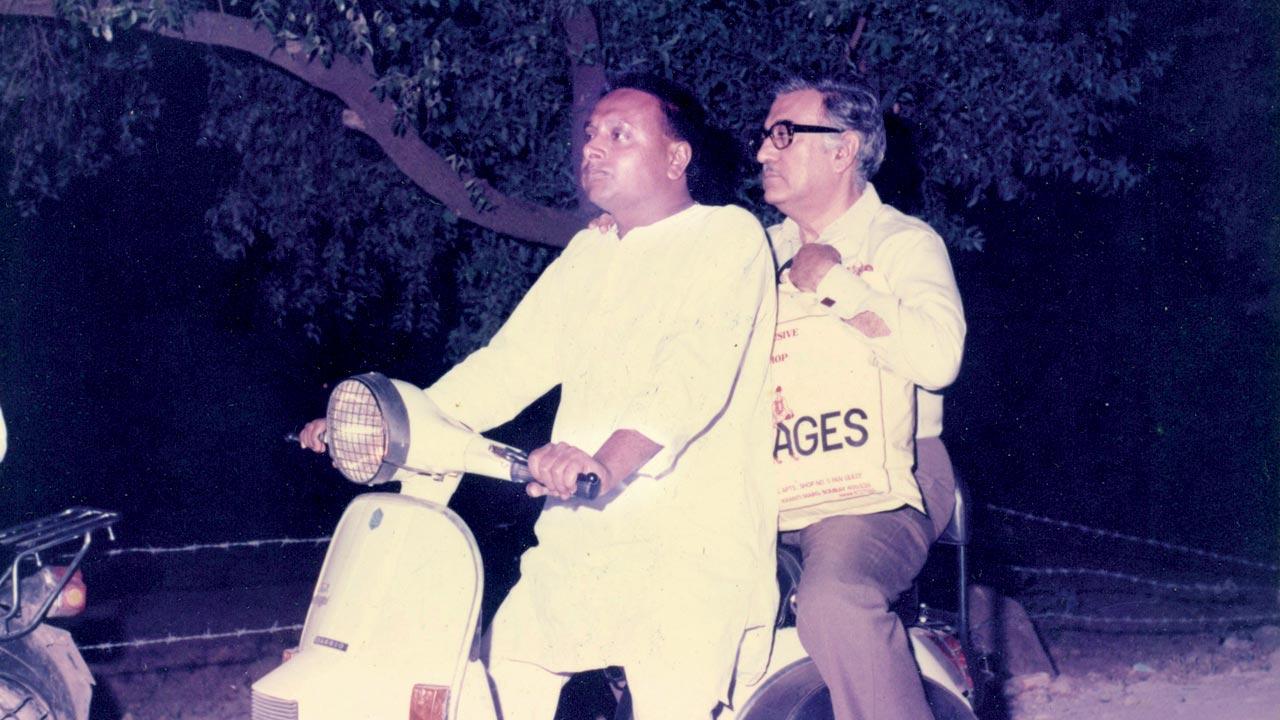
With his ardent fan Srinivas Agarwal in Khandwa, Madhya Pradesh, in 1993; Agarwal wrote him a birthday tribute every year
I compered the stage show which introduced Amitabh Bachchan-Ameen Sayani
8:26 AM

The man who spoke to generations of Indians with his shuddh Hindi and clear diction looks back on what it took to become radio's best known name
Meher Marfatia (MID-DAY; March 1, 2020)
 "Behenon aur bhaiyyon…" Half a century ago, the words held us in thrall. The warmest greeting to waft from the radio, "Sisters and brothers" was a respectful inversion to cheer. Flipping the conventional "Bhaiyyon aur behenon" salutation with amazing adab was, of course, the redoubtable Ameen Sayani. With just-right cool at the mic and typically tender lilting tone, the man behind what must be the most mellifluous announcement in broadcast history, compered over 54,000 radio programmes, jingles and spots.
Binaca Geetmala on Radio Ceylon defined him. The smash hit show presenting top listeners' choices in Hindi film songs saw spiralling lakhs of households tune in for this Wednesday evening hour. Kids collected "Binaca charms", miniature toy animals packed with Binaca toothpaste tubes. We named and secretly traded these plastic delights in hissy whispers at morning school assembly—why keep two of Slow the snail or Tarzan the tapir?
In middle class homes television was yet to invade, the radio crackled centre-stage. That orange flicker from my family's big Bush set seemed to blaze brighter at 8 pm midweek, caressed by the pitch-perfect inflection of "Main aapka dost Ameen Sayani bol raha hoon, aur aap sun rahe hain Binaca Geetmala". His infectious presence on air, the way he ruled its waves with passion and perception, had generations gravitate towards radio as a lifelong companion.
When the British exited Ceylon, they left behind powerful short-wave transmitters belonging to Mountbatten's South-East Asia Command. Colombo used them for commercial radio offerings in Sinhalese, English, Tamil and the very lucrative Hindi.
Beginning in 1952 as a model version of what evolved as the ultimate countdown for Hindi film songs based on popularity, Binaca Geetmala was the Radio Ceylon rage. By the end of the '70s, its estimated weekly listenership was around 21 crores. Letters from people, pouring in by the gunny bagful, swelled to a staggering 65,000 per week. The rankings show boasted the most idolised radio station host any channel hoped to have. Geetmala shifted to Vividh Bharati on All India Radio (AIR) from 1989 to the mid-1990s.
Sayani compered fashion shows and Made for Each Other couples' contests, acted in English and Gujarati theatre (the twinkle in his eye dances even deeper when he warbles ditties from Adi Marzban revues) and joined the country's sole secular choir. Formed in 1958 by Salil Chowdhury and Ruma Guha Thakurta, the Bombay Youth Choir performed songs of different Indian languages arranged in western choral patterns.
I interview the legend at his Colaba studio office where son Rajil devotedly ensures small boxes of nuts and fruit appear on his desk at regular intervals. The famed father's voice rings with every syllable of the joyful affability it always has, the tone deliberately upped to drown the din of road repair outside. Sipping chai from a mug printed "Quizzing is my kind of fun" (taking over the Bournvita Quiz Contest from elder brother and guru Hamid after his death in 1975, he swung it forward another eight years), Ameen Saab recounts how he became a household name throughout South Asia and parts of the Middle East and Europe.
Appearing as an announcer in movies including Bhoot Bangla, Boxer, Teen Devian and Qatl, in 2016, after a sabbatical, he voiced the promo of Rustom with undimmed gusto. Inspiring how he follows a schedule as gloriously devoted to the medium as can be managed at 87, with sciatica pain. Calling to fact-check one morning, I find he has returned home at 2 am after attending a music awards night.
What else to expect from still-the-most-imitated announcer on the subcontinent? Ji haan, behenon aur bhaiyon, Ameen Sayani remains the quality benchmark in the radio and compering worlds. Over to the mesmerising voice….
My grounding in Hindi resulted from helping my activist mother Kulsum produce Rahber editions from 1940 to 1960. A champion of literacy, she published Rahber (Leader) in Devnagri, Urdu and Gujarati from our Cumballa Hill home. The newspaper advocated simple Hindustani as a unifying language.

Ameen Sayani at his Churchgate home, surrounded by trophies and film jubilee mementoes marking highlights of a stellar, internationally renowned 80-year innings in the broadcast world. Pic/Pradeep Dhivar
We never had much money but were well taken care of. My brother Hamid was six years older and Habib six years senior to him. Our father Jan Mohamed Sayani, a physician, treated poor patients for free, often paying for their medicines. A square, hand-cranked gramophone he brought exposed us to KL Saigal and Pankaj Mullick.
Going on air as a seven-year-old, well before my voice broke, was thanks to Hamid. At New Era School, I scored good English grades. It was an education encouraging Gujarati in the primary years, balanced by Rabindra Sangeet taught by Pinakin Trivedi and Shahaab Saab, the excellent Munshiji for basic Hindustani and Persian.
Entrenched in the broadcasting world, Hamid literally led me by the hand into the AIR station at Churchgate. Showing me a wire recorder, he said, "Speak, I'll play it back." I burst into "If I were Lord of Tartary" by Walter de la Mare. When he rewound, the recitation sounded tinny. Tutored for refined pronunciation and projection, understanding gliding diphthongs and triphthongs, I voiced children's shows. By 13, these progressed to roles in radio plays.
At school in Gwalior, I outgrew Bambai ki khichdi bhaasha. A kidney problem I developed worried my parents. At the recommendation of family friends, they moved me to the Scindia School in Gwalior as a Senior Cambridge boarder. Within a month of joining, I acted as a drunk waiter in The Crimson Coconut. There ensued several extracurricular activities giving me more confidence in Hindi.
On that dreadful day of Gandhiji's assassination, I made a firm resolution. News of those gunshots reached us in the Common Room. I was determined, as "naye Bharat ka naya naujawan", I would work in our raashtra bhaasha. Back in Bombay, the AIR chiefs heard I was keen on Hindi broadcasting. An audition proved that despite good reading of a script, my diction needed to lose English and Gujarati cadences.
Reward after rejection, Ovaltine Phulwari paved the path for Binaca Geetmala. Minister for Information and Broadcasting, B V Keskar's ban, from 1952, on film songs, sadly meant mass disposal of 78-rpm records. While AIR slid, Radio Ceylon bloomed. Daniel Molina, an American in Bombay, stepped in to opportunely establish Radio Advertising Services. Hamid ran its production wing, with greats like Balgovind Shrivastav and Manmohan Krishna.
To improve my Hindustani accent, I attended sessions at the radio technology training studio in St Xavier's College. One day, an announcer for the Ovaltine Phulwari programme, which discovered promising singers, did not show up. Spotting me hang around, Shrivastav ji asked if I would read three Hindi commercials. I punched them with the volume of Mark Antony's speech. "Chillaana kyon? Yeh radio programme hain, kushti ka akhaada nahi," I was advised and quietened.
"Happy-go-lucky Greg", as he was called, compered the English pop Binaca Hit Parade which spawned Geetmala. Greg Rostowski, whose family owned Hotel Nippon in downtown Colombo, boomed familiarly on the Commercial Service of Radio Ceylon and All Asia Service. Audiences flooded the station with requests for a similar Hindi film songs countdown. Binaca Geetmala was born. A notice in our office advertised the duties expected of a producer-scriptwriter-compere for the intended new show at a weekly fee of Rs 25. I raised my hand and said, "I'll do it."
I longed for 200-300 letters from listeners of the first show in December 1952. I got 9,000. Having waited with bated breath for the inaugural broadcast, I prayed to God, Gandhiji and my mother for a decent amount of mail. On getting 9,000 letters, the entire agency jumped for joy. Enlisting friends to sort and sift from this flood, I readied winners' lists in time to be "live" from Radio Ceylon along with the second programme.
Meeting my wife Rama Mattu had an interesting prelude. Quite remarkably, the New Era School principal, M T Vyas, had told my parents, "Your boy will marry a Kashmiri girl." Written in gold letters in my heart, that line turned reality when I met Rama, a voice artiste and singer, whose uncle headed Hindi music at AIR. Our son Rajil called her a music encyclopedia.
Among the virtuosos I struck lasting friendships with were Roshan, Kishore Kumar, Pancham (R D Burman), son of everyone's father figure S D Burman, Shankar Jaikishen and Kalyanji Anandji, whose stage shows I compered worldwide, including one which introduced Amitabh Bachchan.
The best radio programme is one you "see", with every listener feeling addressed individually by the host. The sincere presenter creates a personal equation, as binding as a lover's embrace, warm as a true friend's handshake. A compere should mind seven Ss: sahi (correct), satya (true), saral (simple), spasht (clear), sabhya (decent), sundar (beautiful) and swabhavik (natural).
Once among the most beautiful cities in the world, ours has visibly changed. I wonder at tourists visiting the Churchgate railway office, strangely enamoured by our dabbawalas! But Bombay has certainly enjoyed far better days.

At a RAPA (Radio and Television Advertising Practitioners' Association) function with Amitabh Bachchan, and veteran voices Vinod Sharma and Pramod Dasgupta. Pics Courtesy/ Ameen Syani

Ameen Sayani and wife Rama Mattu, an accomplished singer and voice artiste

With actors Ashok Kumar and Pran
Subscribe to:
Posts (Atom)