Showing posts with label Radhu Karmakar. Show all posts
Showing posts with label Radhu Karmakar. Show all posts
100th birth anniversary of Raj Kapoor: The phenomenon of India’s first major global star
9:18 AM
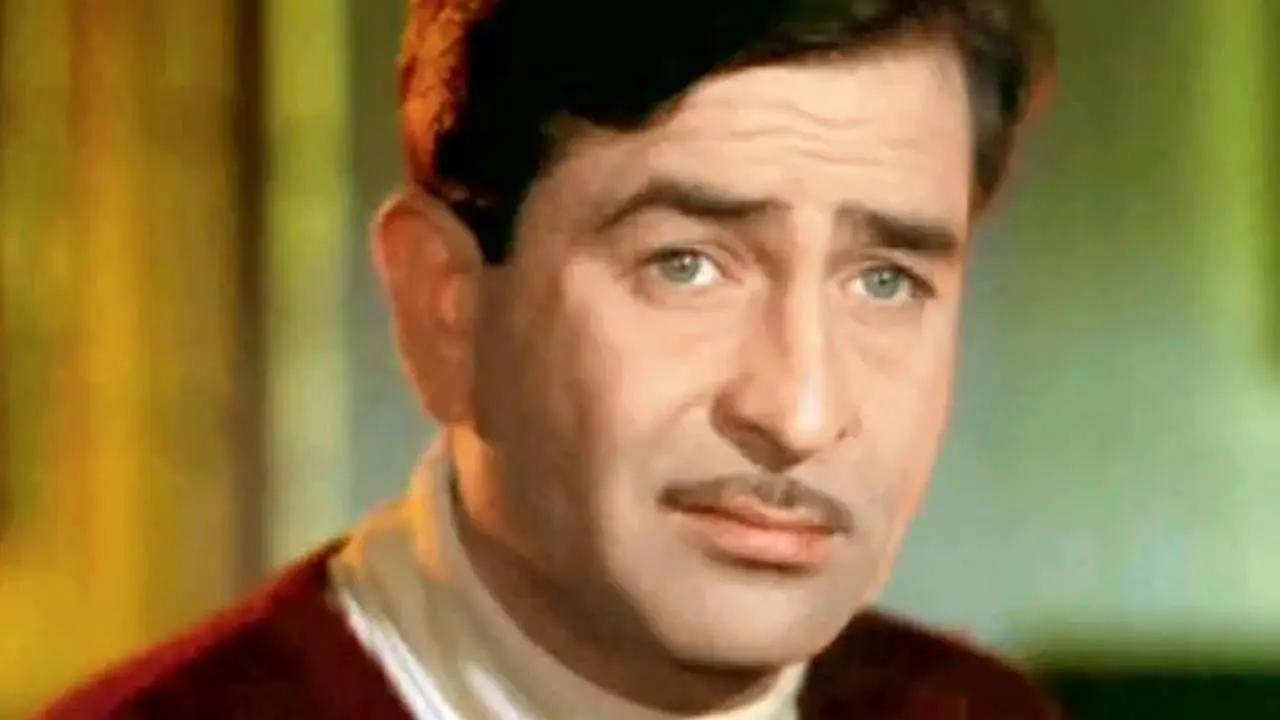
From USSR to North Africa and from South America to Iran, Raj Kapoor’s films swept the world in the 1950s and 1960s. On his 100th birth anniversary today, TOI rewinds to recreate the phenomenon of India’s first major global star
Avijit Ghosh (THE TIMES OF INDIA; December 14, 2024)
On arriving in Moscow in the summer of 1982, Raj Kapoor discovered that he’d left behind his visa papers. The actor-director was stopped by immigration. Frantic telephone calls were made. Nobody was sure what was to follow. But they need not have worried. A senior official soon arrived, embraced Kapoor, kissed him on both cheeks and warmly escorted him out.
“Is there anybody else in the whole wide world who could enter Soviet Russia without a valid visa? You should have seen that sight — it was a sight for the gods,” actor-director Sanjay Khan, who was also part of the film delegation, is quoted as saying in ‘Raj Kapoor: The Fabulous Showman’ by Bunny Reuben.
Another encounter of the fondest kind further underlines how Kapoor continued to command a hallowed place in the land of Tolstoy and Tarkovsky decades after the Awara craze swept the USSR like a forest fire in 1954.
In 1993, Russian president Boris Yeltsin told Kapoor’s daughter, Ritu Nanda, “I was in love with your father Raj Kapoor, and I remember him even today.” The anecdote is recounted in the book, ‘Raj Kapoor: The One And Only Showman’.
It wasn’t just the post-Stalin Soviet Union. In the 1950s, China, Iran, Turkey, Israel, Greece, North Africa and Eastern Europe were captivated by Kapoor’s movie and its title track. Slowly the film and its title song became an unofficial anthem, a cultural marker and a totem of national recognition.
It was also a diplomatic ice-breaker. TOI reported in 1994 that the then Chinese Premier Li Peng recalled Awara and its title track when he met India’s human resources minister Arjun Singh in Beijing. That hasn’t changed. “Every Chinese knows this movie,” goes a comment on YouTube. Awara anecdotes can fill a book.
As the nation today celebrates the 100th birth anniversary of India’s first actor-director who became a major global star in a pre-globalised era, what better time to re-appraise the magnitude of the impact that Kapoor’s movies have had across the world.
Inspiration For Turkish Poets
Awara has provided inspiration to much that is popular in Turkish culture: films like Genclik Hulyalari (1962) and Kader Bu (1976), songs and even novels, Turkey based academic and critic Ahmet Gurata told TOI. “A favourite of my mine,” Gurata said, “is a poem by Lale Muldur, which goes like this: ‘“Awaara hoon / Those kids who neither have a Barbie nor a Ken / They always wanted to be visited by Raj Kapoor one night / They would like him to enter their room and bring milk with gold-leaves... and baklava too / How many stories are embedded in the eyes of those shoeshine boys / Who have been paying the price for their genetic sins, / Did you know awaara hoon?”’
Muldur was born in 1956, a year after Awara was released in Turkey. The poem, taken from her ‘Book of Series’ (1991), is yet another testimony to how the gold hearted tramp continues to stir a generation’s imagination.
In his seminal article, ‘The Road to Vagrancy’, Gurata quotes a newspaper advertisement that says “the film was attended by 100,000 spectators during its first week and another 100,000 were unable to watch the film since it had sold out”. He also notes that Awara was voted as the best movie of 1955 by the readers of the popular daily Milliyet, beating Hollywood films such as Roman Holiday (1953) and Limelight (1952). “The film’s director and star Raj Kapoor ranked third on the list of best actors in the Milliyet survey,” he adds.
The title song was a top-selling record and even featured in official functions. “Several Turkish singers circulated it as a Turkish record in music markets. The song literally became part of folk culture when Turkish folklorist Ilhan Basgoz recorded a folk version in 1957,” Gurata writes.
‘Tramp’ Who Was Irresistible In Greece
Watching it under the title, ‘The Tramp Of Bombay’, Greeks too were besotted by the Nargis-Raj Kapoor pairing. Many Raj Kapoor films such as Shree 420, Aah, Anhonee, Paapi, Chori Chori, Pyaar, Amber, Sangam and Do Ustad made their way across over the next 10 years, film researchers from Greece say.
Indian films were not only shown in Athens, but also in villages at improvised open-air cinemas during summers. The songs were often rehashed with minor variations by Greek composers, creating a subgenre of such songs called Indo-Prepi.
Helen Abadzi and Manolis Tasoulas, who have extensively researched the influence of Hindi films in Greece, have identified at least 25 Greek songs whose melodies come from songs composed by Shankar Jaikishan for Raj Kapoor films.
“For instance, the song, ‘Ramaiya Vastavaiya’, from the film, ‘Shree 420’, became a Greek song titled, ‘When I kiss him and when he kisses me’, and was sung by Achilleas Koulaxizis and Filitsa in the Greek film drama, ‘Why was I born poor’,” Tasoulas told TOI.
Tasoulas also provides a fascinating anecdote that underlines the popularity of the Nargis-Raj Kapoor pairing. When in the early 1980s, Mehboob Khan’s film, ‘Aan’, was rescreened in Greece, the local advertisers wrote Raj Kapoor and Nargis as protagonists, instead of Dilip Kumar, Nadira and Nimmi, in the Greek posters. “Few understood the difference, because many years had passed since Kapoor’s films had been screened in Greece, and fans did not remember their faces as much as their names,” he says.
Sangam, Hindujas and Shah of Iran
‘Sangam’ (1964) floored Iran. Radhu Karmakar, who was Kapoor’s regular cinematographer, writes in his autobiography ‘The Painter of Lights’, that the film was a major hit, especially in South America and Iran, where it ran for over a year. Made approximately on a budget of Rs 1 crore, ‘Sangam’ earned over Rs 12 crore, including Rs 5 crore in foreign exchange, he estimates.
Karmakar remembers how the film’s success helped the Hindujas expand their business. The Hindujas, who distributed the film, invited Raj Kapoor and Vyjayanthimala for the golden jubilee celebrations in Iran and, in turn, got invited to a dinner reception hosted in Tehran by Iran’s ruling family. Karmakar says that the Hindujas “till then were film distributors and contractors, trying unsuccessfully to get bigtime business contracts... The Sangam golden jubilee reception opened the palace doors to the Hindujas and thereafter they moved into the big-time league with large arms contracts and business gains”.
“Everyone also knew the singing-dancing persona of Raj Kapoor in Bulgaria. His popularity was witnessed by many from my generation who grew up in the 1960s. This was mainly courtesy of Awara, which many people had seen more than once,” says Bulgaria-born Dina Iordanova, emeritus professor of global cinema at University of St Andrews, Scotland.
Secret of Kapoor’s Success
Kapoor, who produced and directed the film and played the male lead, was a prodigious 27-year-old when Awara was released in India in 1951. He created a Hindustani Chaplin — a survivor of class inequity and circumstance (Awara, Shree 420) — and the naive and sentimental underdog with a heart of gold who could stray but eventually return (Shree 420). These stories found a global echo, especially in places of limited cultural freedom. The sloshing of socialism and songs with a slice of the sensuous had an affirmative resonance for millions, converting RK Films into a premier banner. His name was synonymous with Indian cinema. As PM Narendra Modi said in his interaction with the Kapoor family on Wednesday, “He created India’s soft power before the term, soft power, was born.”
K A Abbas, who co-wrote the story with V P Sathe, remembered in his autobiography, ‘No Man Is An Island’, what a student told him during their 1954 USSR visit: “We are tired of the war, we went through it, and now must we relive it in every book we read, in every film or play that we see? Instead of war, we want to see love on the screen, we want to see carefree happiness, we want someone to make us laugh. That’s why we are crazy about Awara.”
Many young students bragged that they’d seen Awara 20-30 times. A young Russian interpreter noticed that a dialogue in the film was borrowed from Krishan Chander’s short story, ‘The Night of The Full Moon’. “No one had noticed it in India,” he wrote.
As Kapoor himself said once, “Awara was my little contribution to USSR-India friendship.”.
---------------------------------------------------------
When Kapoor met Chaplin
Ranjan Dasgupta (THE TIMES OF INDIA; December 14, 2024)
Raj Kapoor was a born serio-comedian whose face conveyed every emotion perfectly. According to Satyajit Ray, Kapoor was a better actor than a director. Mehboob Khan once confessed to Film India editor Baburao Patel that Raj Kapoor perfected his shots in fewer takes than Dilip Kumar.
Kapoor understood his limitations well. He modelled himself along the lines of Charles Chaplin. Kapoor always shared fond memories of his interaction with Chaplin at the latter’s residence in Montreux. Along with Dev and Chetan Anand, Nargis, Balraj Sahni, KA Abbas and Bimal Roy, Kapoor was part of the first Indian film delegation to visit Venice in 1953. Chaplin invited the delegation for a discussion.
During the interaction Kapoor spoke the most. He asked Chaplin how serio-comedy could be performed effortlessly. Chaplin was silent for a minute. Then looking into Kapoor’s eyes, he asked him to emote silently. Kapoor obliged the legend for three minutes. Chaplin was deeply moved by Kapoor’s performance and advised him to follow his own instincts. As they left, Kapoor kept waving to Chaplin with tears of joy in his eyes. Nargis simply told Kapoor to control his emotions, laughing her heart out.
The Kolkata-based writer interviewed Kapoor many times
In Urdu, ‘awara’ means ‘khushboo’ and even today, the ‘fragrance’ of Raj Kapoor fills our senses-Manoj Kumar
8:22 AM

Manoj Kumar with wife Shashi and Raj Kapoor at a suburban hotel, celebrating his National Award win for Shaheed; with Rishi Kapoor in Mera Naam Joker (below; right)
Roshmila Bhattacharya (MUMBAI MIRROR; June 3, 2020)
 I knew about the Joker long before Joaquin Phoenix brought him home to me. And unlike his trigger-happy Arthur Fleck or Pennywise the Dancing Clown of It, my funnyman with the painted smile and cherry nose did not give me the shakes; he made me smile, sigh and sing, “Jeena Yahaan, Marna Yahaan, Iske Siva Jaana Kahaan.” On Raj Kapoor’s 32nd death anniversary on June 2, I decided to rewind to the film closest to his heart, Mera Naam Joker, with the man, who, though on screen for a short time as David who woos Mary away from an adolescent Raju, had a major role to play in this 224-minute story.
Let’s start with Raj Kapoor’s Shree 420, which released in the Capital’s Regal cinema. Among those who queued up for tickets, first day, first show, was a young boy fondly called Ghulu. He entered the auditorium, took a corner seat and, as the lights dimmed, gave himself up to the story of Raj, Vidya, Maya and a life gone astray. Suddenly, when the song, “Shaam Gayi, Raat Aayi Ki Balam Aaja” came on, a group of men stood up, started to whistle and create a commotion.
“In a flash, a man dressed in white raced past me towards the stage. As he went up on the dais, the lights came on and I saw an enraged Raj saab calling the men, hired by rival distributors to run down the film, ‘bhaade ke tattu’. He told them that he’d made the film with heart and honesty and God would reward him. Pointing to the door, he told them to get out and shame-faced, the men complied,” Ghulu, who grew up to become Manoj Kumar, reminisces, adding that at night, when his naani wondered why he couldn’t sleep, he told her all that had transpired and asked her who was this man who could talk so fearlessly. “‘He’s a karmayogi—one who connects with God through actions’—she told me, and the words stayed with me.”
A decade later, Manoj saab was shooting for Raj Khosla’s Anita at Mehboob Studio when he got a call from Raj saab, who wanted to come over and meet him. He offered to drop by himself and a couple of days later, was at RK Cottage at 2 pm, where Raj saab requested that he oblige him by doing a cameo in Mera Naam Joker. “I immediately agreed. We decided to shoot after I’d released my Upkar,” he narrates.
Soon after, while he was away in Delhi or maybe Kolkata, Raj saab tried calling him and was brusquely told he had got the wrong number. On his return, Manoj saab was surprised when singer Mukesh relayed this to him, saying Raj saab was upset, thinking that he was being avoided as Manoj saab didn’t want to do Mera Naam Joker. Almost immediately, Manoj saab called Raj saab and asked to see him.
“We met at 4 pm at (composer) Jaikishan’s residence, where I assured Raj saab that neither I nor my wife Shashi would dare discomfit him. I told him I was looking forward to working with not the showman but a karmayogi and went on to tell him about the earlier incident at Regal. Raj saab quietly heard me out, then, put his head in my lap and started crying,” he recounts.
Soon after, Manoj saab flew down for the shoot in Ooty where, while narrating a scene that they were to shoot the following day, Raj saab stopped abruptly, alerted by the expression on his face that he didn’t agree with something. When prodded, Manoj saab pointed to a certain dialogue which made a reference to Gandhi ji’s assassination. He pointed out that since Raju was an adolescent then, the Father of the Nation would have been alive. Taken aback, Raj saab retreated to his room on the first floor, but after half an hour, came down, telling Shashi ji to persuade Manoj saab to re-write the scene for him. “When I demurred, pointing out that (K A) Abbas saab (who had penned the story and screenplay) was a senior writer, he made me speak to him on the phone and he gave me his permission,” the writer-actor-filmmaker reveals.
Raj saab was so impressed with his dialogue, particularly one where, in response to young Raju’s query about who’s the biggest joker till date, David points his thumb towards the sky and reacting to Raju’s “Bhagwan” reasons that God, like the joker, does everything for others, apne liye kuchh nahin. “Appreciating that dialogue, Raj saab called (DoP) Radhu Karmakar and a few others to listen to me as I narrated what I’d written, pointing out that I had encapsulated the philosophy of the joker in these lines,” Manoj saab recalls, adding, “The first story in this three-story film was reworked by me, but I didn’t do it for name, fame or money. I paid for my travel expenses and hotel stay and refused to take credit as writer. Mera Naam Joker was my tribute to karmayogi Raj Kapoor. In Urdu, ‘awara’ means ‘khushboo’ and even today, the ‘fragrance’ of Raj Kapoor fills our senses.”
Subscribe to:
Posts (Atom)