Showing posts with label R K Films. Show all posts
Showing posts with label R K Films. Show all posts
100th birth anniversary of Raj Kapoor: The phenomenon of India’s first major global star
9:18 AM
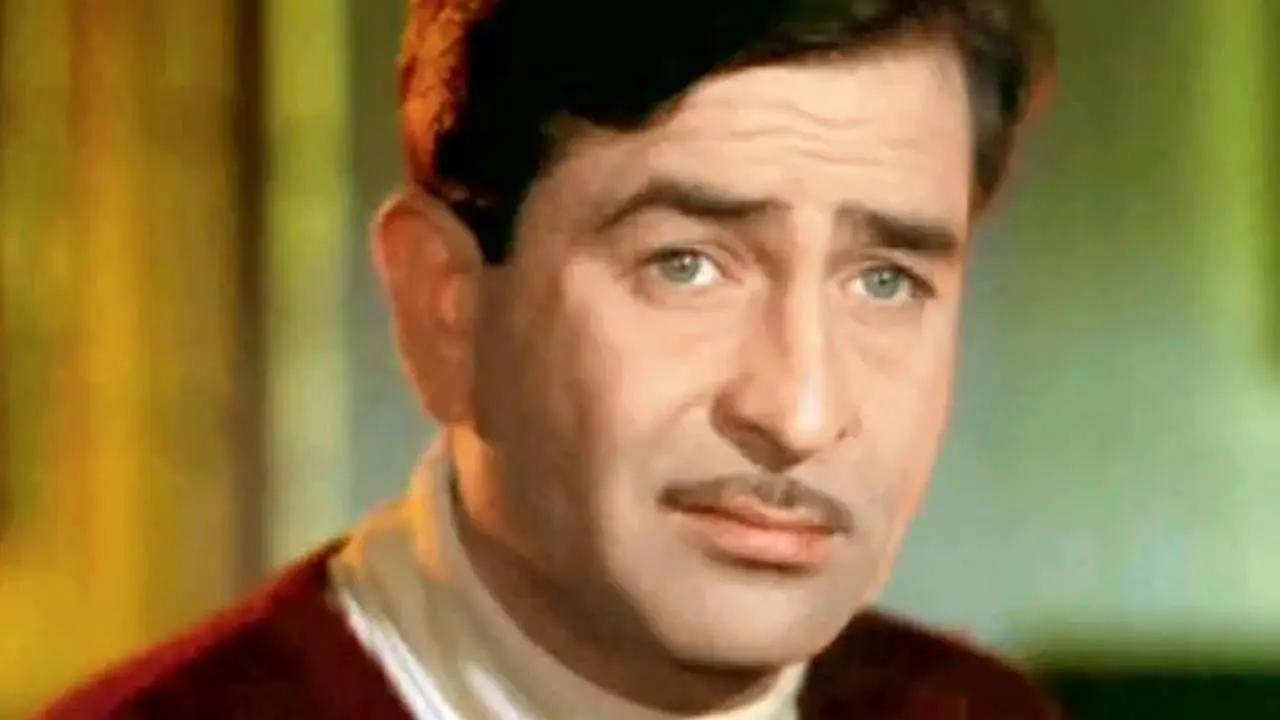
From USSR to North Africa and from South America to Iran, Raj Kapoor’s films swept the world in the 1950s and 1960s. On his 100th birth anniversary today, TOI rewinds to recreate the phenomenon of India’s first major global star
Avijit Ghosh (THE TIMES OF INDIA; December 14, 2024)
On arriving in Moscow in the summer of 1982, Raj Kapoor discovered that he’d left behind his visa papers. The actor-director was stopped by immigration. Frantic telephone calls were made. Nobody was sure what was to follow. But they need not have worried. A senior official soon arrived, embraced Kapoor, kissed him on both cheeks and warmly escorted him out.
“Is there anybody else in the whole wide world who could enter Soviet Russia without a valid visa? You should have seen that sight — it was a sight for the gods,” actor-director Sanjay Khan, who was also part of the film delegation, is quoted as saying in ‘Raj Kapoor: The Fabulous Showman’ by Bunny Reuben.
Another encounter of the fondest kind further underlines how Kapoor continued to command a hallowed place in the land of Tolstoy and Tarkovsky decades after the Awara craze swept the USSR like a forest fire in 1954.
In 1993, Russian president Boris Yeltsin told Kapoor’s daughter, Ritu Nanda, “I was in love with your father Raj Kapoor, and I remember him even today.” The anecdote is recounted in the book, ‘Raj Kapoor: The One And Only Showman’.
It wasn’t just the post-Stalin Soviet Union. In the 1950s, China, Iran, Turkey, Israel, Greece, North Africa and Eastern Europe were captivated by Kapoor’s movie and its title track. Slowly the film and its title song became an unofficial anthem, a cultural marker and a totem of national recognition.
It was also a diplomatic ice-breaker. TOI reported in 1994 that the then Chinese Premier Li Peng recalled Awara and its title track when he met India’s human resources minister Arjun Singh in Beijing. That hasn’t changed. “Every Chinese knows this movie,” goes a comment on YouTube. Awara anecdotes can fill a book.
As the nation today celebrates the 100th birth anniversary of India’s first actor-director who became a major global star in a pre-globalised era, what better time to re-appraise the magnitude of the impact that Kapoor’s movies have had across the world.
Inspiration For Turkish Poets
Awara has provided inspiration to much that is popular in Turkish culture: films like Genclik Hulyalari (1962) and Kader Bu (1976), songs and even novels, Turkey based academic and critic Ahmet Gurata told TOI. “A favourite of my mine,” Gurata said, “is a poem by Lale Muldur, which goes like this: ‘“Awaara hoon / Those kids who neither have a Barbie nor a Ken / They always wanted to be visited by Raj Kapoor one night / They would like him to enter their room and bring milk with gold-leaves... and baklava too / How many stories are embedded in the eyes of those shoeshine boys / Who have been paying the price for their genetic sins, / Did you know awaara hoon?”’
Muldur was born in 1956, a year after Awara was released in Turkey. The poem, taken from her ‘Book of Series’ (1991), is yet another testimony to how the gold hearted tramp continues to stir a generation’s imagination.
In his seminal article, ‘The Road to Vagrancy’, Gurata quotes a newspaper advertisement that says “the film was attended by 100,000 spectators during its first week and another 100,000 were unable to watch the film since it had sold out”. He also notes that Awara was voted as the best movie of 1955 by the readers of the popular daily Milliyet, beating Hollywood films such as Roman Holiday (1953) and Limelight (1952). “The film’s director and star Raj Kapoor ranked third on the list of best actors in the Milliyet survey,” he adds.
The title song was a top-selling record and even featured in official functions. “Several Turkish singers circulated it as a Turkish record in music markets. The song literally became part of folk culture when Turkish folklorist Ilhan Basgoz recorded a folk version in 1957,” Gurata writes.
‘Tramp’ Who Was Irresistible In Greece
Watching it under the title, ‘The Tramp Of Bombay’, Greeks too were besotted by the Nargis-Raj Kapoor pairing. Many Raj Kapoor films such as Shree 420, Aah, Anhonee, Paapi, Chori Chori, Pyaar, Amber, Sangam and Do Ustad made their way across over the next 10 years, film researchers from Greece say.
Indian films were not only shown in Athens, but also in villages at improvised open-air cinemas during summers. The songs were often rehashed with minor variations by Greek composers, creating a subgenre of such songs called Indo-Prepi.
Helen Abadzi and Manolis Tasoulas, who have extensively researched the influence of Hindi films in Greece, have identified at least 25 Greek songs whose melodies come from songs composed by Shankar Jaikishan for Raj Kapoor films.
“For instance, the song, ‘Ramaiya Vastavaiya’, from the film, ‘Shree 420’, became a Greek song titled, ‘When I kiss him and when he kisses me’, and was sung by Achilleas Koulaxizis and Filitsa in the Greek film drama, ‘Why was I born poor’,” Tasoulas told TOI.
Tasoulas also provides a fascinating anecdote that underlines the popularity of the Nargis-Raj Kapoor pairing. When in the early 1980s, Mehboob Khan’s film, ‘Aan’, was rescreened in Greece, the local advertisers wrote Raj Kapoor and Nargis as protagonists, instead of Dilip Kumar, Nadira and Nimmi, in the Greek posters. “Few understood the difference, because many years had passed since Kapoor’s films had been screened in Greece, and fans did not remember their faces as much as their names,” he says.
Sangam, Hindujas and Shah of Iran
‘Sangam’ (1964) floored Iran. Radhu Karmakar, who was Kapoor’s regular cinematographer, writes in his autobiography ‘The Painter of Lights’, that the film was a major hit, especially in South America and Iran, where it ran for over a year. Made approximately on a budget of Rs 1 crore, ‘Sangam’ earned over Rs 12 crore, including Rs 5 crore in foreign exchange, he estimates.
Karmakar remembers how the film’s success helped the Hindujas expand their business. The Hindujas, who distributed the film, invited Raj Kapoor and Vyjayanthimala for the golden jubilee celebrations in Iran and, in turn, got invited to a dinner reception hosted in Tehran by Iran’s ruling family. Karmakar says that the Hindujas “till then were film distributors and contractors, trying unsuccessfully to get bigtime business contracts... The Sangam golden jubilee reception opened the palace doors to the Hindujas and thereafter they moved into the big-time league with large arms contracts and business gains”.
“Everyone also knew the singing-dancing persona of Raj Kapoor in Bulgaria. His popularity was witnessed by many from my generation who grew up in the 1960s. This was mainly courtesy of Awara, which many people had seen more than once,” says Bulgaria-born Dina Iordanova, emeritus professor of global cinema at University of St Andrews, Scotland.
Secret of Kapoor’s Success
Kapoor, who produced and directed the film and played the male lead, was a prodigious 27-year-old when Awara was released in India in 1951. He created a Hindustani Chaplin — a survivor of class inequity and circumstance (Awara, Shree 420) — and the naive and sentimental underdog with a heart of gold who could stray but eventually return (Shree 420). These stories found a global echo, especially in places of limited cultural freedom. The sloshing of socialism and songs with a slice of the sensuous had an affirmative resonance for millions, converting RK Films into a premier banner. His name was synonymous with Indian cinema. As PM Narendra Modi said in his interaction with the Kapoor family on Wednesday, “He created India’s soft power before the term, soft power, was born.”
K A Abbas, who co-wrote the story with V P Sathe, remembered in his autobiography, ‘No Man Is An Island’, what a student told him during their 1954 USSR visit: “We are tired of the war, we went through it, and now must we relive it in every book we read, in every film or play that we see? Instead of war, we want to see love on the screen, we want to see carefree happiness, we want someone to make us laugh. That’s why we are crazy about Awara.”
Many young students bragged that they’d seen Awara 20-30 times. A young Russian interpreter noticed that a dialogue in the film was borrowed from Krishan Chander’s short story, ‘The Night of The Full Moon’. “No one had noticed it in India,” he wrote.
As Kapoor himself said once, “Awara was my little contribution to USSR-India friendship.”.
---------------------------------------------------------
When Kapoor met Chaplin
Ranjan Dasgupta (THE TIMES OF INDIA; December 14, 2024)
Raj Kapoor was a born serio-comedian whose face conveyed every emotion perfectly. According to Satyajit Ray, Kapoor was a better actor than a director. Mehboob Khan once confessed to Film India editor Baburao Patel that Raj Kapoor perfected his shots in fewer takes than Dilip Kumar.
Kapoor understood his limitations well. He modelled himself along the lines of Charles Chaplin. Kapoor always shared fond memories of his interaction with Chaplin at the latter’s residence in Montreux. Along with Dev and Chetan Anand, Nargis, Balraj Sahni, KA Abbas and Bimal Roy, Kapoor was part of the first Indian film delegation to visit Venice in 1953. Chaplin invited the delegation for a discussion.
During the interaction Kapoor spoke the most. He asked Chaplin how serio-comedy could be performed effortlessly. Chaplin was silent for a minute. Then looking into Kapoor’s eyes, he asked him to emote silently. Kapoor obliged the legend for three minutes. Chaplin was deeply moved by Kapoor’s performance and advised him to follow his own instincts. As they left, Kapoor kept waving to Chaplin with tears of joy in his eyes. Nargis simply told Kapoor to control his emotions, laughing her heart out.
The Kolkata-based writer interviewed Kapoor many times
3-day Raj Kapoor film festival to be held in 40 cities and 135 cinemas from December 13 to 15
10:22 AM

A rare picture of Raj Kapoor editing the film Satyam Shivam Sundaram
Niharika Lal (BOMBAY TIMES; December 4, 2024)
To mark Raj Kapoor’s birth centenary, R K Films, the Film Heritage Foundation, NFDC, NFAI and cinemas have come together to organise a retrospective titled ‘Raj Kapoor 100 – Celebrating the Centenary of the Greatest Showman’. The three-day fest will showcase 10 films of Raj Kapoor across 40 cities and 135 cinemas from December 13 to 15.
Earlier this year, the Toronto International Film Festival (TIFF), Festival des 3 Continents, and the recently concluded International Film Festival of India (IFFI) in Goa paid tribute to Raj Kapoor with screenings and discussions. Considered the ‘the greatest showman’ of Indian cinema, Raj Kapoor’s screen characters and films drew a tremendous response from fans not just in India but abroad too, particularly in the erstwhile Soviet Union and the Middle East.
Discussing Raj Kapoor’s films and filmmaking, Ranbir Kapoor admitted at IFFI that he is a bigger fan of Raj Kapoor the filmmaker than Raj Kapoor the actor. He also spoke about how, throughout his entire career, Raj Kapoor's films had messages of socialist reform. Awara addressed casteism, and Shree 420 dealt with greed and so on.
Not just India, but Raj Kapoor's screen characters and films drew a tremendous response from fans abroad. His characters and songs were extremely popular in the Soviet Union and the Middle East.
This month, India will start the centenary celebrations of Raj Kapoor - the actor, director, and producer considered to be ‘the greatest showman’ of Indian cinema. The celebration, titled 'Raj Kapoor 100 – Celebrating the Centenary of the Greatest Showman', is a retrospective of his ten films.
To commemorate 100 years of world cinema in 1990, the then Soviet Union honoured Raj Kapoor alongside eminent global film personalities like Ingrid Bergman, Jean Gabin, Charlie Chaplin and Marilyn Monroe.
Raj Kapoor's stories are timeless and this festival is our way of reliving that magic and inviting everyone to experience his legacy on the big screen: Ranbir Kapoor
"We are incredibly proud to be members of the Raj Kapoor family. Our generation is standing on the shoulders of a giant whose every film spoke of the time that it was made and was the voice of the common man over decades. I think it is our responsibility and our privilege to preserve his films for future generations. His stories are timeless and this festival is our way of reliving that magic and inviting everyone to experience his legacy on the big screen. See you at the movies!”
Raj Kapoor was truly India’s greatest showman: Amitabh Bachchan
"Raj Kapoor was truly India’s greatest showman. His life was a celebration and I am sure he would have been delighted to see his films back on the big screen. Raj Kapoor was an artist who lived for cinema. Even today Awara is a film that is etched in my mind. Made at a time of newly independent India, the film was socialistic, reflecting the mood of the times. Talking about Raj ji’s incredible showmanship, the way he envisioned the dream sequence in the film had never been seen before. You are amazed by his fantastical imagination that visualized the surreal setting, the ethereal Nargis ji emerging through thick clouds of smoke, Raj ji surrounded by demonic figures and burning fires – there is a powerful, mystical symbolism in the dream sequence, and that is my favourite."
Raj Kapoor had an all-consuming passion for cinema: Shivendra Singh Dungarpur, Filmmaker and Director of Film Heritage Foundation
"Contemporary audiences in 40 cities will have an opportunity to watch ten landmark Raj Kapoor films that put Indian cinema on the world map spanning almost four decades. These were films that not only captured the imagination of the people but reflected prevalent social and political themes beginning from a newly independent India. Raj Kapoor had an all-consuming passion for cinema. His unforgettable avatar as a tramp that embodied the common man and till his last film he remained a great showman."
Raj Kapoor was not just a filmmaker; he was a visionary who shaped the emotional landscape of Indian cinema: Randhir Kapoor
“Raj Kapoor was not just a filmmaker; he was a visionary who shaped the emotional landscape of Indian cinema. His stories are more than just films; they are powerful, emotional journeys that connect
generations of viewers. This festival is our humble tribute to the greatness of his vision.”
Celebrations across the globe
- This year, The Toronto International Film Festival (TIFF) screened the world premiere of the 4K restoration of Awara to commemorate the 100th anniversary of Raj Kapoor who directed and starred in the film.
- To celebrate 100 years of Raj Kapoor, the Festival des 3 Continents in Nantes, France conducted a book discussion on Raj Kapoor and Anari, Awara, Shree 420, Jis Desh Mein Ganga Behti hai, Teesri Kasam was screened.
- The recently concluded International Film Festival of India (IFFI) rolled out a tribute to honour the 100th birth anniversaries of four Indian cinema legends including Raj Kapoor.
Honours and accolades for Raj Kapoor
- Raj Kapoor received the Padma Bhushan in 1971 and the Dadasaheb Phalke Award in 1988.
- Shree 420 won a National Film Award in 1955.
- Awara and Boot Polish competed for the Grand Prize at the Cannes Film Festival in 1953 and 1955, respectively.
R K Studios razed, the iconic gate stays
7:44 AM

Rachana Dubey (BOMBAY TIMES; August 22, 2019)
 It was 71 years ago in the month of August when Raj Kapoor shot Aag (1948) with Nargis, the first film to be produced under his banner R K Films. The movie, shot at the iconic R K Studios in Chembur, gave birth to Raj Kapoor’s company and studio that went on to live for generations, even long after he passed away. In August last year, the filmmaker’s son Rishi Kapoor announced that he and his siblings had decided to sell off the studio, which faced irreparable damage in a fire in 2016.
The studio, which had seen innumerable films and TV shows being shot in its premises, was also home to the Kapoor family’s annual Ganeshotsav in Chembur. Last year, Raj Kapoor’s eldest son, actor Randhir Kapoor, had told us that it was indeed the last of the celebrations in the studio, which had by then, changed hands. When we visited the site of the studio recently, we found that apart from the iconic gate, nothing of the studio really remains. Its canteen (frequented by stars of yore), the shooting floors and recording studios have all been demolished to make way for a plush complex. However, the gate of the studio will be maintained by the new developers as a memory of Mumbai and Hindi cinema’s iconic cinema landmark.
 When we reached out to Randhir Kapoor, he said, “I am sad to see everything has been razed. However, the place will always hold a special place in our hearts because it’s been a part of our lives. It was my father’s legacy. When the studio got terribly damaged in that fire, we had to take a step back and think. Such decisions are not easy to arrive at. It was economically not viable for us to keep the studio, repair it and maintain it because we did not have many takers for the studio floors. The shoots have all moved to the Western suburbs. So, it only made sense to let R K Studios go. The gate, I’m told will stay as is and will continue to remind people of RK Studios. We will be thankful to the developers for that.”
 Actress Padmini Kolhapure, a Raj Kapoor discovery, shot several films at the RK Studio, including her debut Satyam Shivam Sundaram (1978). When we told her about the studio floor being razed, she reminisced the times when she would spend her days working at the studio. “Today, so many memories attached to R K Studios are coming back to me. It’s sad that now whenever I pass Chembur, I won’t find the studio there, but in Raj uncle’s words, ‘The show must go on’. The memories will live on forever. I shot a lot of films there, so much so that I could call the studio my second home. Satyam Shivam Sundaram, Prem Rog (1982), Rahi Badal Gaye (1985), Yeh Ishq Nahi Aasan (1984) are some of my films I vividly remember shooting for at R K Studios. I feel a stronger connection to the place because I was an R K Films’ heroine. We shot 30 per cent of Prem Rog in the studio at Chembur. We had set up massive sets for the songs. I can never forget those days when we filmed Mohabbat hai kya cheez and Yeh galiyan yeh chaubara there. I was virtually living there. Raj uncle would treat us to such amazing food, and their canteen was phenomenal, too. He would often open the theatre for me to watch some of his classics like Awara (1951) and Shree 420 (1955). He loved cinema and he wanted people to acquaint themselves with it. Raj uncle’s cottage (where he would sit and talk to us), his Holi parties, the recording rooms, the canteen — there's no corner of R K Studio that I don’t remember and that I won’t miss. Whenever I travelled to Pune, I made it a point to go past the R K Studios because I would bow before the Lord Shiva idol they have at the entrance. The studio formed a great part of the city’s legacy and I will miss it each time I pass the bend where it once stood.”
 Simi Garewal, who had worked in Raj Kapoor’s Mera Naam Joker (1970), had also made a documentary on the legendary filmmaker's life. She said, “I always thought men go, but their monuments and buildings remain. Now, both have gone. But the memories will remain as long as we live. I don’t mourn the end of R K Studios, the films we made there will remain forever.”
 Filmmaker Imtiaz Ali, who shot a song for his last film, Jab Harry Met Sejal (2017) at the studio, told us, “R K Studios is a hallmark in progressive Indian filmmaking and it’s my privilege to have filmed there. Although it is sad to know that it does not exist physically anymore, it will live on in the ethos of Indian filmmaking forever. I would also like to point out that things change, and filmmaking techniques have changed a lot as well, so from time to time, such hard news is inevitable. I shot a song of Jab Harry Met Sejal there, and I visited the make-up rooms as often as possible in the memory of all the great film personalities like Raj Kapoor and others, who have spent time there.”
I keep asking my wealthy daughters to adopt me-Randhir Kapoor
7:58 AM

Meena Iyer (MUMBAI MIRROR; January 28, 2015)
 Randhir Kapoor, the old guard of RK Films and father of two of
Bollywood’s most successful heroines, Karisma and Kareena, turns 70 on
February 15. The actor-filmmaker on his life in semi-retirement:
Randhir Kapoor, the old guard of RK Films and father of two of
Bollywood’s most successful heroines, Karisma and Kareena, turns 70 on
February 15. The actor-filmmaker on his life in semi-retirement:Buzz is, you’ll turn 70 this February with a big bash?
(Guffaws) People want to know whether I’m throwing a party to trumpet my old age. Well, the answer is, yes, but rather than a big bash it’ll be an intimate gathering of family and a few close friends. Babita, who is still my wife, and my daughters, Karisma and Kareena, will look after my guests. They are still my family. I have three lovely grandchildren too. Taimur (Kareena’s son Taimur Ali Khan) will barely be two months old then but I’m hoping the other two, Samaira and Kiaan (Karisma’s children), can come to my party for a little while. But it’s a school day, so they may not be able to attend. I still lead a happy-go-lucky life but I’m also growing old gracefully now. Half a bottle of Black Label and some good food at night are my only requirements.
You don’t look 70…
I can’t take credit for that, it’s thanks to my parents’ genes. I’ve led a happy life and I’m semiretired now. I have no regrets, no bitterness. I still have the same set of friends, the same set of girlfriends, and the same set of people I meet. (Chuckles) I’m quite a boring guy really.
Why do you say that?
Well, I still have just one wife (Babita) and two daughters (Karisma and Kareena). Nothing around me has changed in all these years. The only thing that has is that I don’t live with them anymore. The girls are married and have their own homes. And Babita is in a happy space by herself. She’s not got married again and nor does she intend to, neither do I. She continues to be my wife and I continue to be her incorrigible, horrible husband. So be it!
Your brother has just written a book, heard there is going to be one on you too?
A book on me? What for? My life has always been an open book and it’s not such an eventful life. I don’t want to write or commission a book which no one will read.
Is it true that you declined an offer to make a biopic on your father?
Yes, I did. Nargis and Vyjayanthimala will be principal players in the biopic, there will be so many other ups and downs. Everyone is happy in their own lives, their children are our friends, why should we step on anyone’s toes? We do not wish to make money doing something like this.
You are the old guard of RK Films? Why haven’t you kept the wheels churning?
Yes, we three brothers (Rishi, Rajeev and he) are guilty on that count. If we couldn’t direct films under our banner, we should have at least hired outside directors to make films for RK. This year, I’m hoping to get back to filmmaking. I’d like some of the new, young filmmakers to direct for RK banner.
One has often seen you watching a film alone…
I like going to the movies with my friends or my brother Chintu (Rishi Kapoor). If they cannot make it, I’m happy watching on my own, eating my popcorn. No one bothers me in the theatre for an autograph, I haven’t signed one in years. Sometimes people want to take selfies with me but that’s about it!
Aren’t you lonely at times?
I am, but I now have a routine to try and beat the boredom and loneliness. I spend a few hours at RK Studios every day, then, drive to Bandra to spend time with my grandchildren. After that I’m at the Otters Club and only a couple from my friend’s circle is from the film world. We crack jokes, many on ourselves, and drink. We pay our own bills before going home for dinner.
You cannot cry about your life at the club which we call the penalty corner. You are not allowed to do anything except talk about girls, crack dirty jokes, laugh till your stomach hurts and you forget your woes. The idea is to leave your woes behind for a few hours every evening. Tomorrow is another day.
That’s a wonderful way of looking at life…
I truly believe ki iss zindagi mein ek muthi aasman meri bhi thi. That thought keeps me going. I’ve played my innings, have hit a couple of centuries and some sixes and fours. I’m content being semiretired. I work in films when I want to and if I like the role. I don’t owe anyone anything anymore.
My children are settled. In fact, both my daughters are wealthier than I am and I keep asking them to adopt me as their father, so that I can also be rich. I still meet Babita for dinner sometimes, we eat and laugh. That is the way we are.
Your brother, Rishi, and you are so close. Why doesn’t he join you at the club for your evening sessions?
He is a busy guy and even if he is free, he will not come to the club because he doesn’t have the patience to listen to others. He is a centrestage kind of guy who will not laugh at himself or like it if others do. But in our penalty corner, we crack the maximum jokes at ourselves.
I feel bad that I don’t own a plane and genuinely distressed that the Ambanis are richer than I am, that Shah Rukh, Aamir and Salman Khan are more successful than me. But I don’t sulk about it. They are good and that is why they are successful. I’ve got what I was destined for. I joke that I was the best actor to play the older, fatter Mahavir Singh Phogat in Dangal but they didn’t take me because I didn’t suit the younger version. But hey, the old man could have been a fat frump like me and Aamir could have played him when he was younger. (Laughs) I wonder why the thought didn’t cross their minds.
Your brother tweeted that Aamir is the modern-day Raj Kapoor. Do you agree?
I think Chintu is right. Aamir is a complete filmmaker like our father. After the debacle of Mera Naam Joker, Raj Kapoor made a movie with rank newcomers (Rishi and Dimple Kapadia) called Bobby and it was a superhit. That needs guts and conviction. And it’s creditable that Aamir has a lot of conviction too. He does not need Deepika Padukone and Kareena Kapoor to enhance Dangal, he can pull off a film with rank newcomers.
Subscribe to:
Posts (Atom)