Showing posts with label Qayamat Se Qayamat Tak. Show all posts
Showing posts with label Qayamat Se Qayamat Tak. Show all posts
Thank God for Dhurandhar. We are allowed longer films now-Imtiaz Ali
9:20 AM

Madhureeta Mukherjee (BOMBAY TIMES; June 15, 2026)
There is a reason Imtiaz Ali’s stories linger. Beneath the romance, music and heartbreak lies a deeper search — for home, for meaning, for the versions of ourselves we leave behind as we move through life. With Main Vaapas Aaunga, inspired by an emotional return to his childhood home, the filmmaker once again turns inward, exploring memory, longing and the ache of belonging.
In this conversation, Imtiaz reflects on love and loss, the purity today’s generation is searching for, and the invisible pull of the past. He reflects on why the stories that stay with us are often not born from cinema, but from life itself.
Would you say, there’s a certain beauty in that sense of loss?
There’s beauty in that because it brings you to yourself. The yearning, therefore, sometimes cannot be cerebrally understood. Everyone always feels that they have left something behind, in whatever they might have achieved. You feel…kya choot gaya? Inevitably, you want to go back to that. I guess the feeling of who we were is something we can never leave behind, however far we go.
From Love Aaj Kal, Rockstar to Tamasha – your films often ask whether love liberates us or consumes us. Has your own understanding of love changed over time?
I feel the simplistic answer is that it’s the being consumed that liberates you. It’s the surrender that liberates you. You realise your power when you surrender. And it’s easier said than done. In love, you’re constantly engaged with yourself. You are constantly talking to yourself. I’ve noticed that people who are in love with different women at different times in their lives, are in love in the same way. They yearn in the same way. If somebody is, let’s say, obsessive, then they will be obsessive in every relationship of theirs. They will try to find someone to shower love and affection on, and become obsessive about. The thing is, I don’t have answers about love or life, if I had answers, I wouldn’t be making movies.
So, you’re finding your answers through movies, characters, stories?
I don’t think I’ve found anything from my movies (laughs).
And you insist you aren’t a romantic? You have this image of being a romantic, a bit of a philosopher, too…
I am not. These words like romantic, philosopher and all of that sound very boring to me. I don’t know why I have this image. Tell me, how do I break this image?
Music in your cinema isn’t just something that happens in the background or around the story – it forms a character. It adds to the emotional rhythm, literally. You seek something from music emotionally that dialogue alone cannot achieve?
Oh, I love the work of music. I don’t listen to music too much, but I’ve always been a fan of music in films – whether it’s being part of the making of the song, the background music or shooting to music. The biggest thrill of shooting for me is when music plays on a set. I am the director who prays every day that we are not forced to reduce or remove music from films. For romantic movies, sometimes we connect to the music first and then the story.
This is your second collaboration with Diljit Dosanjh after the much-acclaimed Amar Singh Chamkila. He has an interesting emotional quality about him; he can appear really vulnerable, restrained with a certain kind of power. How do you direct someone like him?
He has somehow kept himself pure. He’s connected to himself and for that reason, he has not done many things that other people do. He is not like an actor who’s standardized in a certain way he lives. He doesn’t care for the obvious things, but some other things. Like, when we were starting out with Chamkila, we had to postpone the shoot, because of which one and a half months of his dates got wasted. I called him and told him about the problem. He said, ‘Koi nahi paaji. Main chala jaunga. Main solo trip pe chala jaunga pahadon mein. Problem hi nahi hai. Meri taraf se toh ho gaya.’ I said, ‘Lekin aapke days waste ho gaye.’ He said, ‘Arey, waste thodi hote hain dates. Mujhe jaana tha pahadon mein, toh solo trip pe chala jaata hoon.’ So, he went ahead and did whatever he wanted.
You’ve made generational love stories and worked with actors across generations. Today, in a world that is increasingly instant, performative and filtered, do you think people still crave the purity and beauty of truly connecting with another person?
I feel you can be very lonely in the present world. There is so much noise all around us that it’s difficult to talk and communicate. I believe this generation is seeking much more than before. For instance, today getting intimate with a girl or a guy is not difficult. Previous generations were distracted by the thought, as they knew that they would get intimate after marrying the person. Now that happens early on, they get over it and they aren’t lusting anymore. Lust is out of the park. What this generation is seeking is pure. They are digging deeper and are truly trying to find meaning. It’s just that they are very lost.
How do you protect your own sensitivity in an industry that can often become transactional and noisy?
I believe that the film industry is actually better than most other places in the world, because there are drifters and dreamers here. And no matter how smart they pretend to be, at the end of the day, all of these great guys in the film industry who talk about numbers and all of that, they are basically dreamers and drifters. What they want to do is to huddle somewhere and talk about cinema (laughs). This is what I have realized. Otherwise, it wouldn’t be possible for a rank outsider like me to be here. It must have been the kindness of some people that gave me my first step, my first break, right? The world is what it is, but I feel that the film industry is better, really, than most of the other parts of the world.
Your cinema generally revolves around the idea of yearning, not just from the point of view of yearning for romantic love, but yearning to come into yourself, to become someone else. What was the starting point for this film Main Vaapas Aaunga?
There was a point when I went home to the place which I call home, which was just a company quarter in Jamshedpur where I grew up. My earliest memories are from there. It was a rented place, but every time I think of home, I think of that place. One day, I went back there with my dad and I got so overwhelmed, I just went straight inside the house and in the courtyard, and obviously the present occupants found it strange. The courtyard had changed; that whole area seemed like it had changed, and something came over me, and I broke down. I never cry, in fact, my mother feels there’s something wrong with my system. But I broke down. I kept asking myself…what happened here? There was this sense of loss, but it’s not as though I’ve lost something.
Love portrayed in your films is rarely idealistic. It’s messy, transformative and often heartbreaking. Do you think our cinema still struggles to portray emotionally complex relationships with honesty?
For me, it’s impossible to show something clean and perfect because I would have no reference. If you asked me to make a clean love story with no heartache, I wouldn’t know where to begin because I’ve not seen it in my life, and I don’t think it exists. I don’t go out to make love stories, really. I make stories where people have various emotions and I follow those characters and see where they come at. And sometimes, of course, there’s an echo of what I’ve seen and felt, since I don’t draw from cinema as inspiration, I draw only from life as inspiration. Yes, I feel relationships are messy sometimes. They have the potential to be messier if the film duration were longer.
Now we’re slowly going back to longer films…
Thank God for Dhurandhar. We are allowed longer films now (laughs).
In Bollywood, at one time, romantic films were celebrated as spectacle films, today, action seems to occupy that space. Do you think filmmakers should make more romances for theatrical viewing?
I don’t think that era of romances can go away. A prominent producer recently told me, ‘Imtiaz ji, good love stories always run. If there are more action films being made, then that is the time to make a good love story.’ I think that is true. There will always be a Qayamat Se Qayamat Tak, and suddenly, you won’t even remember the other movies around you. I’m not saying that films of other genres are not good, but somehow, the memorability of a Qayamat Se Qayamat Tak or Maine Pyar Kiya is much more.
Dalip Tahil reveals the bitter battle behind iconic tragic ending of Qayamat Se Qayamat Tak
10:45 AM

Onkar Kulkarni (MUMBAI MIRROR; May 4, 2026)
As Qayamat Se Qayamat Tak marked 38 years on April 29, actor Dalip Tahil revisited the intense creative conflict that ultimately shaped one of Hindi cinema’s most memorable endings. Tahil revealed that the tragic climax, now inseparable from the film’s legacy, was far from a settled choice during production.
“We had actually shot the sad ending which you finally see in the film. But at that time, when the film was being made, the distributors were very unhappy. Their main concern was that both the lovers die in the end. They kept telling Nasir saab, ‘Please change it, make it a happy ending.’ There was a lot of pressure because they felt a tragic ending would not be commercially viable,” he said.
The push for a happier resolution placed producer-writer Nasir Hussain in a deeply emotional bind, particularly as his son, debutant director Mansoor Khan, stood firm on his vision.
“Since it was Mansoor’s first film, and Nasir saab was producing and had also written it, it became a very emotional situation,” Tahil recalled. “Mansoor told his father very clearly, ‘If you make a happy ending, then please take my name off the film as director.’ That was a huge blow for Nasir saab,” he shared.
The team went ahead and filmed an alternate ending. “We did go ahead and shoot the happy ending,” Tahil said. “But I remember very clearly that Mansoor was completely disinterested in it. He was physically present on set, but he had distanced himself from the process. He was sitting far away, reading a magazine, not engaging at all. He didn’t want to have anything to do with that version,” he said.
Eventually Nasir Hussain went to Rahi Masoom Raza saab and explained the entire dilemma to him. “He told Nasir saab, ‘This is a really good film, and it will do well regardless. But if you put the happy ending, it will be a successful film. If you keep the sad ending, it will become a classic. That one line changed everything,” Tahil added.
I am loyal to cinema first, and then to theatres-Aamir Khan
9:20 AM

Madhureeta Mukherjee (BOMBAY TIMES; August 11, 2025)
Breaking the mould is second nature to him. Now, in a bold move that challenges the norms of a largely risk-averse industry, Aamir Khan has chosen the pay-per-view model on his YouTube channel for his latest film, Sitaare Zameen Par (SZP), which had released in theatres in June. This aligns with his decades-long pattern of being a disruptor – as an actor and filmmaker. In this freewheeling conversation with us, the superstar talks about access, affordability and the future of cinema beyond theatres. Aamir also confesses that he’s not fearless, unlike what most would assume, and tells us why, at 60, comfort is not an option — “ab comfort hai hi nahi, toh kuch karna padega.” Read on...
How do you think the pay-per-view model gives more power and choice to both the audience and the producer?
You are aware that we are able to reach only 2-3% of our population in the theatrical business, and this is for the biggest hit. For a film like Sitaare Zameen Par, around one crore people would have watched it by the end of its theatrical run. In the absence of enough theatres being built, this model is perhaps the only way to reach the vast majority of India, especially with rising internet penetration. In one stroke, this solves that problem for everyone. It’s great for filmmakers because it strengthens them and empowers them to make better films.
To be able to watch a movie, access and affordability are key. Was this model born out of that philosophy – to make both these points a reality?
Today, cinemas in India, and here I am talking about the multiplexes, are trying to give a unique experience, but that costs money. So, over the years, theatres have evolved from the time when I started out with Qayamat Se Qayamat Tak (QSQT). Back then, the average ticket price was Rs 10. Today, the ticket prices are not affordable for a large section of society. And multiplexes, because of the high cost and heavy investment (in terms of rent, etc), have also started catering to an audience who can afford to come there. So, who will cater to the masses? This model caters straight to the masses.
Continue…
In every press conference prior to my film’s release in the past 10 years, I would be asked, ‘Aap filmbana rahe ho, jo masses hai woh kaise dekhenge?’ The answer to this and the pricing of tickets is not in my hands. I can’t tell theatre owners who have invested a lot of money to go into a loss. If this model works, it will dramatically change the way we distribute films. From an economical point of view, I had strong OTT offers for SZP, if I were to accept that, it would have been a safe bet. I chose not to. I would rather earn Rs 100 from each Indian who watches my movie. Also, this is a great opportunity for younger filmmakers who are trying to break in and don’t get a chance to showcase their work. It will give creative voices more freedom. It will give them the freedom to price their content the way they want to.
You are a theatre loyalist and have spoken about ‘protecting our theatres’. What are some ways exhibitors and filmmakers can work together to reimagine cinema-going as a more inclusive, feasible experience?
Let me clarify, my loyalty is to cinema. Cinemas came first, then theatres came to serve cinema. Earlier, there was no theatre. Cinema dikhaneke liye pardah laga dete the, and it would be shown through a projector. Phir tent aaya, wahan dikhate the. Then permanent theatres came about. Cinema is what I am protecting, and emotionally, I am very tied to theatres. I believe that the theatrical experience cannot be replaced by anything else. When you are sitting in that dark space with 300 people around you, it’s a group experience where you laugh and cheer together. Imagine watching Lagaan, where the whole theatre is cheering...abhi woh experience aapko ghar pe baithke apne family ke saath bhi nahin milega. I am loyal to cinema first, and then to theatres, clearly in that order. To answer your question, I think first of all, we need more theatres. In districts where there is no single screen, not even a single theatre, we should at least have one theatre. India needs many more theatres, but they should be economical theatres.
Do you believe that, at some point, the theatrical business will start thriving again?
Yes, of course. I really hope so.
Do you think that, as makers, focusing on tier-2 and tier-3 cities is key, as therein lies the scope for theatrical recovery in India?
Absolutely! I believe that we need theatres in tier-2 and tier-3 cities. The tier-2 cities have theatres, but as we go deeper, we don’t. I also feel that it’s not that people want to watch only action films in theatres – that was the feeling for some time. If that were the case, SZP wouldn’t have done well, and Saiyaara wouldn’t have been such a success. These are phases that keep coming and going. When I did Ghajini, everyone told me that you are doing an action film at a time when this genre was not working. It worked. I think audiences are interested in watching films irrespective of the genre.
So, the genre of your film and how it fits with current trends and mood doesn’t concern you?
No, it doesn’t. Stories that inspire me and affect me the most are what I gravitate towards.
You’ve consistently been a disruptor — as an actor and a filmmaker. In an industry that often plays it safe, where does this creative fearlessness come from?
No, no, there is a lot of fear. There is fear every time I am doing a film, and unfortunately, my choices are also unusual, but I can’t help but make them. When I was doing Dangal, I felt that dus saal baad karte hain, abhi mein itna mota, buddha dikh raha hoon. Just before that, I had done PK and Dhoom 3. People thought I am 30-35, they didn’t know I am 55. I thought yeh film karoonga toh meri asliyat saamne aa jayegi (laughs). It was in my blood; I had to do it. I am not a fearless person. Before the release, you can’t assume the film will work, at least my films. There were exceptions like Ghajini and Dhoom 3, where you could say yeh kuch toh karegi. But with the unusual ones, it’s difficult to tell. I go with my instinct and my heart. So, I am not thinking about what the audience wants to see. I am thinking mujhe kya banana hai.
There’s still this restless energy about you. Does that fuel your creativity?
I suppose so. If the status quo is comfortable, I have no problem with it. But when it’s not, then I want to do something to correct it. I am comfortable about being comfortable, but ab comfort hai hi nahi, toh kuch karna padega, haath pair marna padega, because in today’s times it is difficult for creative people to make what they want to make. Unless you have a subscription model pre-sale, you can’t greenlight a project. That’s not a comfortable situation to be in for creative people.
Knowing the kind of connection and influence you have with audiences across generations, do you feel a certain sense of responsibility when you take on a film?
I do feel a sense of responsibility, so I don’t do films that propagate any thoughts, views or ethos which are not mine. At the same time, I also believe in having my freedom as an artiste, as that’s how I always operated from the beginning. I have selected films that I wanted to do. Some of them worked, some didn’t. Fortunately, most of them did. I have tried not to take the unnecessary load, ki meri har film 300, 500 ya 600 crore banayegi. I am not chasing that. Mujhe Talaash ki script pasand aayi aur mujhe pata tha yeh 500 crore ki film nahin hai, yeh 200 crore ki bhi nahin hai. In fact, I remember telling the team that I believe the film will do about 70 crores. It went on to do 95 crores. I did the film as I loved the story. Just because I knew it wouldn’t break my Ghajini record, didn’t mean I wouldn’t do it. I can’t think like that. This comes from my excitement as an artiste, and also because I can’t keep doing the same kind of films again and again; I don’t know how to do that.
You said that you feel a sense of fear every time you embark on something new. Can you recall what you felt on the first day first show of QSQT?
I still remember that moment – I remember the premiere show of the film. My uncle (Nasir Hussain) had booked the balcony, and the stall was for the paid audience for the first day, 6 pm show. And Shammi (Kapoor) uncle had come, in fact, he was the only star my uncle had called from the film industry. I remember walking into the film with no one recognizing me, and when the film got over and I walked out, I was mobbed.
Before multiplexes: What cinema tickets once said about you
7:57 AM

Niharika Lal (BOMBAY TIMES; August 2, 2025)
When Amitabh Bachchan recently shared a ticket from a Sholay screening, what caught attention was the seat classification printed in bold: Special Class. According to film experts, such tickets reflect a long-forgotten language of cinema-going in India. Your seat didn’t just determine your view, it also revealed your social standing. “It wasn’t a standard classification at all cinemas. But the ticket is from Excelsior cinema in Bombay (Mumbai), where the last few rows, separated from the main cluster of seats, were called Special Class,” says film historian Shivendra Singh Dungarpur.
Today, watching a film is a different experience – with recliners, gourmet snacks, and curated drinks, it feels more like a luxe night out. But it wasn’t always this fancy. Experts say old movie tickets act like time capsules, capturing how your seat reflected both access and your place in society.
‘Front bench full hai toh film hit hai – yeh criteria tha hit film ka’
The front bench was as crucial as the director’s name on the poster. “Front bench full hai toh film hit hai – yeh criteria tha hit film ka,” laughs Alok Diesh, a veteran in the cinema business, who was around long before ticketing apps came along. He says that the front bench was rowdy and loud. If those seats – often the cheapest and closest to the screen – were packed, it meant the film had made its way to the masses.
Chaitanya Prasad, a moviegoer in his 60s, recalls, “Balcony seats were always something to envy. It was almost like winning a medal if you got a ticket for the latest release. So, a balcony ticket was just something we could only wish for as students. And some places, like Regal, even had box seats for VIPs.”
“Cinema owner toh DM se bada hota tha!” jokes film distributor Sanjay Ghai. “DM bhi film ki ticket ke liye usi ko phone karta tha. If the show was full, the manager would actually put the phone aside to avoid requests.”
The balcony, the box, and the dress circle
Cine experts say that back in the day, your seat at the movies didn’t just decide your view – it said something about who you were. “In the ’50s and ’60s, men and women wouldn’t sit together. They had separate seats,” says Shivendra Singh Dungarpur. “Then came the idea that families could sit together. Later, the halls were redesigned to include balconies, dress circles, stalls. The stalls were closer to the projection and had a better angle. The dress circle was more separated and above.”
Film historian Gautam Chintamani describes seating at that time as highly stratified. “Roughly 65–80% of a cinema hall consisted of regular seats. Above those, you had the balcony, dress circle, and family boxes – small private enclosures with curtains or side doors. It used to be reserved for VIPs or people who didn’t want to be seen. So the seating reflected that hierarchy,” he says.
From places of leisure to places of luxury – the evolution of cinema seating
Post-Emergency (1975), while film content shifted towards escapism, the kind of audience frequenting cinema halls also changed. A certain segment of society – families and the working-class continued going to theatres. For them, cinema was an escape. You could smoke during interval (inside the cinema), have a cold drink and unwind. Seating reflected this shift, as theatres became places of affordable leisure for the masses.
Technological upkeep of theatres declined in the late 80s. India had 70mm theatres, grand halls with large seating capacities, but over time, infrastructure deteriorated.
Filmmaker Mansoor Khan once mentioned how he visited a theatre to watch Qayamat Se Qayamat Tak (1988) and found the doors didn’t shut completely, allowing light to spill onto the screen, and how 300–400 chairs creaked due to lack of oiling or maintenance. This decline shows the type of audience that still came to theatres – mainly lower and middle classes – while the elite moved towards home entertainment.
A significant shift happened with Hum Aapke Hain Koun..! (1994) . For the first time, a filmmaker gave theatre owners a checklist – unless the cinema had a particular sound system, clean restrooms (especially for women), and quality snacks, the film would not be released. This forced theatres to upgrade their infrastructure.
By late 90s, multiplexes like Priya in Delhi ushered in a new era. With advanced sound, better projection, and more comfortable seating, the expectations around what a cinema experience should feel like changed. By the 2000s, theatres began offering recliners, blankets, and luxury lounges. Cinema-going became an upscale, family-friendly outing.
– Film historian Gautam Chintamani
Saiyaara among the biggest newcomer films of all times
9:25 AM

Box Office India Trade Network
SAIYAARA will join the list of biggest newcomer films in the history of Hindi cinema. There are seven films in the list so far and SAIYAARA will be the eighth but it has taken twenty five years for such a success with newcomers while the other seven films came in the preceding thirty years. The films generally have to be love story to reach such huge success with newcomers though PHOOL AUR KAANTE is the exception. But even here, there was a love story and it was the blockbuster music which was a huge driver of the film.
The music factor is there for all the films and there some films like LOVE STORY (1981) and QAYAMAT SE QAYAMAT TAK (1988) missing on the list which in terms of footfalls will be higher than SAIYAARA but in their time they were not as big as SAIYAARA is in todays time. BARSAAT (1995) also deserves a mention as that was the first time that the most costly film ever made was with newcomers and such is risk is unlikely to be ever taken again.
The films listed below are not only the biggest newcomers films but will be among the biggest Love Story genre films ever made even if we count films with established actors. MUGHAL-E-AZAM (1960) remains the biggest ever Love Story film ever made in India and if we take this film out, as it had huge scale and opulence, then it could be MAINE PYAR KIYA (1989).
Where SAIYAARA stands with the others in the list below is actually tough to say as admits is the measure but in each era admits have been up and down to due to various of reasons; at present, footfalls are down in the industry. The fact that the comparison of SAIYAARA in terms of its success is with these films shows how big the film has become.
The biggest films with newcomers of all time are listed below. There will be films below where the one the main artistes had some sort of role in another film earlier but generally the films are seen as debut films.
Bobby (1973)
Ek Duuje Ke Liye (1981)
Betaab (1983)
Hero (1983)
Maine Pyaar Kiya (1989)
Phool Aur Kaante (1991)
Kaho Naa Pyaar Hai (2000)
Saiyaara (2025)
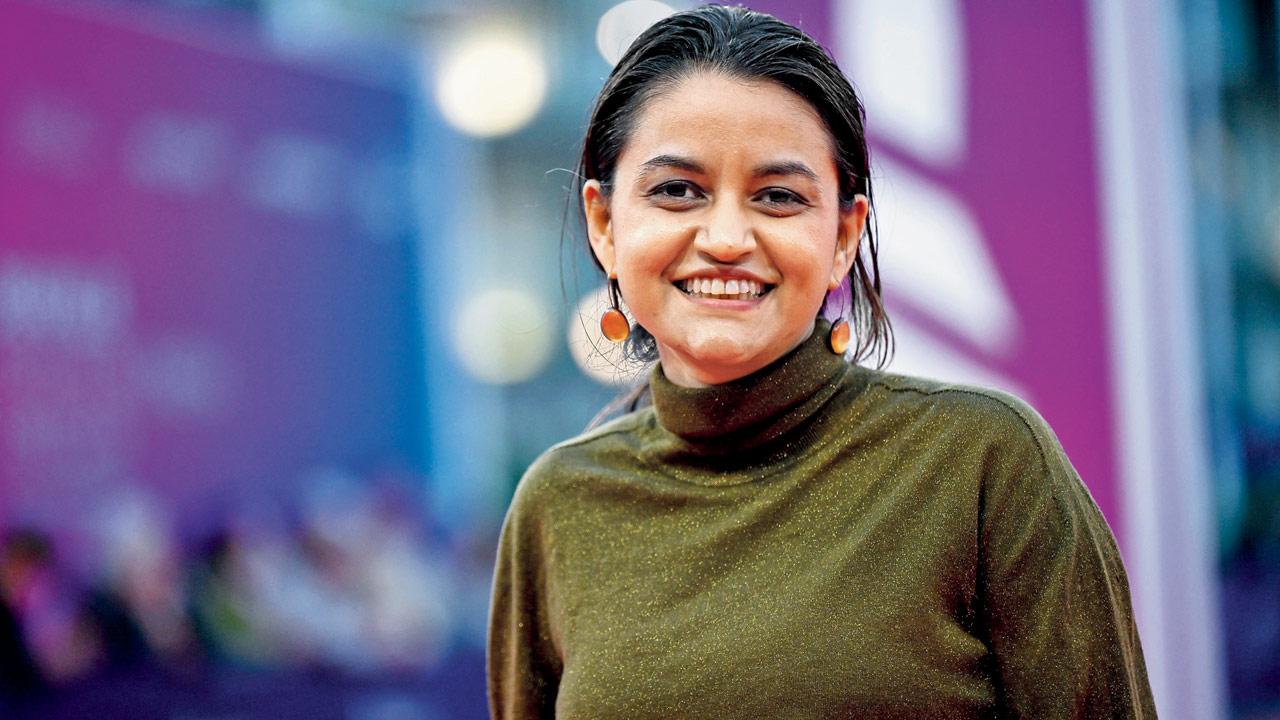
It’s only in cinemas where you can cry in front of strangers-Payal Kapadia
10:18 AM
Niharika Lal (BOMBAY TIMES; November 18, 2024)
Despite her historic Grand Prix win at Cannes for All We Imagine As Light, Payal Kapadia says she didn’t want too much spotlight.
“I didn’t want to put so much out there because I felt that somewhere the film’s story gets lost in my personal story. It’s too much about ‘me, me, me’, and that sometimes overshadows the film. And I always felt like I (should) guard myself from that. As things moved on, I’ve tried to reconcile more to talking about myself and my work. Now that the film has got a lot of love, I’m feeling a little bit more confident. I want to show it around.” The filmmaker speaks to us about the themes in her film and the role that FTII played in her journey.
This FTII alumna, who brought the institution so much glory, was rejected in her first attempt when she applied for the editing course. Interestingly, becoming an editor was her first choice. "Woh safety bhi hota hai ki aap editor banoge toh you can get some work and job," she says. But then this rejection pushed her to work as an assistant director and in several other capacities in advertising and documentaries before attempting FTII again five years later in direction.
Payal believes in the importance of public institutions and says, "I love public institutions where you get some time to focus on your work, kyunki kuch bhi artistic cheez padhna aise jaldi se nahi hota. Hamare public institutes humein bahut support karte hain in sab cheezon mein. I'm totally for it. Ek accessibility honi chahiye ki aapko kuch bhi padhna ho toh ek university jahan pe aap afford kar pao. Journalism, filmmaking, or engineering - ek institutions hona chahiye jahan pe har koi ja sake. Normally, private film institutes are very expensive. It's too expensive! In our country, it is ridiculous to have it like that, I feel."
She adds, "For me, FTII was also about other students who were there. Itni diversity thi, pure desh se log aate thay wahan. Jab bhi itni diversity hoti hai toh koi bhi art school, film school, ya journalism school mein ek discourse banta hai jisse as a human being you can grow. That helped me a lot." Excerpts from an interview-
‘I love the catharsis cinemas bring’
Payal shares that when she is in India, then she go to watch films too and feels that the theater is only place where we can cry in the company of strangers. She says, "That's something you can only do in the cinema. To do it in a cinema, and where you feel so open, which is something you never do with people around. I love that catharsis. As an audience, I cry in most movies. For me, I want to be able to create that experience for the audience as a filmmaker."
Talking about the cinema scene from All We Imagine As Light she says, "The scene in All We Imagine As Light where Kani's character cries in the cinema hall is a homage to that feeling. She has tears; she is crying in the scene. I was thinking about a woman like her who's always saying - you should not show your emotions to anybody - and then she is sitting in the cinema where she finds a place to cry. Woh tab tak royi nahi aur cinema ke andar usne chhor diya aur woh aansu aane lage. That was what I was feeling."
‘I think my film is like QSQT in a way’
Whenever asked about the films she loves, Payal often says that while growing up, she used to watch Govinda's films and says, "Some of Govinda's films are really good, you have to watch them! I used to love QSQT (Qayamat Se Qayamat Tak). That was my favourite film as a kid. I used to love it. And I think my film (All We Imagine As Light) is that only. You see, how it is! It's connecting to my childhood days of QSQT (the escape theme). I loved that they were running away with the song - humne ghar chhora hai. It's a Romeo-Juliet. I loved that. And yes, so many more movies."
Hamara system aisa hai ki woh female friendship se bahut darte hain
The film is also about inter-generational friendships and female friendships. Elaborating on how female friendships are often not encouraged in our society and how women are frequently pitted against each other - whether in families, society, or the workplace - Payal said, "I wanted to make a film about this kind of internalized misogyny - hamara system aisa hai ki woh female friendship se bahut darte hain. Unko lagta hai agar ye sab auratein dost ban jayengi toh pata nahi kya ho jayega. So, that's what I wanted to make the film about. Sometimes, responses toward other women come that way, not because you're really feeling that way, but because the whole conditioning is such that it’s like we are pitted against each other."
She added, "That's something I wanted to talk about in the film because sometimes I find myself falling into that trap too. Then I think - why did I respond like this? It was a kind of self-reflexivity that I was thinking a lot about, and it came out in the writing. As I grow older, I'm reflecting more on my responses. I want to tackle that."
'So many times men are not physically in our lives, but they are still lingering there'
Talking about how she wrote about those men who seem to be present in women's lives even when they're either gone or not physically present, she shared, "Actually, my nani, to whom I've dedicated this film - when she was in her late 90s, she was kind of losing her memory, so I encouraged her to write a diary so that she could recall her past. So, she would write every day, and sometimes she would write – he (her husband) has come, and I can see him over there and smell tobacco. I started thinking about it because he died when my nani was 50 years old; she lived up to 98, so more of her life she was alone than she was with him. And I got the feeling she didn’t like him very much. Phir bhi woh aa rahe hain, woh 98 ke age mein woh tapak ke aa rahe hain, unke husband. Usko leke main bahut sochne lagi – what's this thing in our culture? That she would never remarry - at 50, you're still very young, but it's still hard for women that age to move on. Or be with somebody else because life can go on without men too, it's totally fine. That's what Parvati (Chhhaya Kadam's character) wants to do. It's her choice. I was thinking a lot about that. "
She continues, "Also, I have met women like Prabha (Kani Kusruti's character). So much of her life - how these women think and how they would respond to things - was about this guy who was not even there. Even when they were not estranged, just living somewhere else. Woh mujhe ek lady mili jo kehti thi – 'You're wearing jeans, I also want to wear jeans.' And I would say – 'Then wear jeans.' So, she would say – 'Mere pati rehte hain Dubai mein aur agar unko pata chalega ki main jeans pehen rahi hoon toh woh pareshan ho jayenge bahut, toh woh nahi pehen sakti.' He is far away, but still lingering there.
"There was another girl I met who was wearing a sari, and I asked her – 'Aren't you feeling hot? It's Bombay.' And she was like – 'My father-in-law lives in the village, but he will be very upset if I wear salwar.' Then one day, I spotted her on the street, and she was wearing a salwar. I asked her – 'What happened?' And she said – 'Off ho gaye.' (Laughs)."
Payal adds, "Toh yehi hai, ye log hote nahi hain tab bhi itna control karte hain. I connected the dots that how so many times men are not physically in our lives, but they are still there."
'It is so interesting to discover your own mother at the age of 21 - how she was and how she would think'
The title of Payal's film All We Imagine As Light has been borrowed from the title of one of her mother's paintings. Talking about how her mother and her work have encouraged her, she shares, "It took me a long time to make films. My mother was always encouraging - 'What do you want to do with your life?' Recently, she had an exhibition at Chhatrapati Shivaji Museum where they have the Jehangir Nicholson Gallery section, and they have the earliest paintings of my mother from when she was in her early 20s. So they decided to do an exhibition, and in that, I saw one of her works when she was 21. I'm just saying it is so interesting to discover your own mother at the age of 21 - how she was and how she would think."
She says, "I wish I had known at 21 what exactly I wanted to do. Seeing that painting was like meeting her again, but in a younger version. It really overwhelmed me. She was always pushing me, but never too much. She was like, 'Take your time and figure it out.' I was anyway doing odd jobs, making documentaries and all kinds of stuff. But she was always telling me - 'Maybe you want to study.' She herself went to JJ School of Arts in Bombay, where she studied for five years."
'These actresses are really the ones who made the film. They were not like actors who came to do the job'
These actresses are really the ones who made the film. Unke bina koi film hoti hi nahi. I thought it was very normal to take them there on the stage. They were not like actors who came to do the job. Hum bahut saath mein kaam kiye, script pe kaam kiye, dialogues pe, gestures pe. Nobody gives this kind of time to, especially, first-time directors like me. They were so giving and so generous. They didn't think, "Oh! It's your film, and we're part of it. They were like, hamari film hai. And not just them, but the entire crew - from make-up to costume - it became like a true team. It was really a collaboration, and I think that can only lead to a true feeling amongst all of us. Audience mein sab log baithe thay toh mujhe laga ki we should take everybody, but they were already giving me dirty looks, so I just took the three main actresses.
Earlier, people only wanted virgin female actors-Mahima Chaudhry
8:37 AM

Rishabh Suri (HINDUSTAN TIMES; October 17, 2021)
Mahima Chaudhry prefers to call a spade a spade, and doesn’t shy away from saying it loud and clear that the film industry was not kind to its female actors previously and has evolved now. The actor claims that earlier, it was “far more male dominant” than it is now.
Chaudhry, who began her career with the 1997 film Pardes opposite actor Shah Rukh Khan, notes that back in the day, even the relationship status of a female actor had direct impact on her professional life and the opportunities that came her way.
“The minute you started dating someone, people would write you off because they only wanted a virgin who had not kissed. If you were married, then your career was over, and if you had a child, it was absolutely over. Even a lot of men used to hide [their relationship status] before,” she recalls.
Citing actors Aamir Khan and Govinda, she shares, “Even when Qayamat Se Qayamat Tak (1988) came out, we didn’t know he was married, same for Govinda. People didn’t show their kid’s photographs as that would tell their age!”
Contrasting how things have changed for the better now, the 48-year-old adds, “Earlier, it was either or, but now, you can continue with both. People are accepting women in different kind of roles, even romantic ones after her becoming a mother or wife.”
Happy that female actors are also “calling the shots now”, she says, “They’re getter better parts, better pay, endorsements... they’re at a great and much powerful position.”
Rishi Kapoor had a tough exterior and the heart of a softie-Juhi Chawla
7:56 AM

Juhi Chawla, who had shared screen space with Rishi Kapoor in many films in the 80s, was also working with him in his last film Sharmaji Namkeen. Tomorrow,it’ll be a year since the legendary actor passed away, and Juhi shares some funny and lovable anecdotes about Chintu ji
By Juhi Chawla (BOMBAY TIMES; April 29, 2021)

At the onset, he was the star whose work I had watched and was a fan of. When he came for the music launch of Qayamat Se Qayamat Tak (1988), he was the star of our evening. Humein toh koi pooch bhi nahi raha tha. Over 30 years that Chintu ji (Rishi Kapoor was lovingly called that) and I worked together, he went from being the senior who I was very conscious of and in whose presence I never wanted to go wrong with my lines, to someone I played Scrabble with, to the actor who was helping me improve my craft. With time, as one got to know him, it became easier to work with him. He was great fun in his own, unique way. I don’t think anyone can encapsulate what Chintu ji meant to them in one word. I envied the fact that he was so effortless on screen. When I was a newcomer, he would shoot in double shifts and yet, he was never tired or irritated.
‘CHINTUJI WRAPPED HIS ANGER AROUND ALL HIS EMOTIONS’
Chintu ji had a unique way of speaking it almost always sounded like he was shouting at you. He had a tough exterior and the heart of a softie. Once I got used to his ways, and I figured out that this is how he was, I started enjoying that about him. While shooting for Sharmaji Namkeen, I would be rolling with laughter because he had something to pull me up for every single day. One day, he actually called me an insecure actor because I’d rush to see the monitor after every shot. His shots were fantastic, and I was worried if I was holding up well. In his typical style, he shouted at me and said, ‘That monitor is for the director. Not you… you insecure actor.’ It was so funny...
I never questioned why he had such a tough exterior, but over the years, I started enjoying it because it was cute. I used to visit his residence for Ganpati celebrations every year. Then, I didn’t go for a few years in between, and when I met him on the sets, I complained that he hadn’t invited me home for the festival for some time. He responded in his typical style, ‘I am not supposed to invite you, you’re supposed to come on your own. Tum aa jaya karo.’ He grumbled that I didn’t turn up all these years. I loved that about him — he wrapped his anger around all his emotions.
‘CHINTU JI TOLD ME — THERE IS NO SUCH THING AS LINES FOR ME, IT’S THE EMOTION IN THE SCENE’
While shooting Sharmaji Namkeen, I was trying to learn a thing or two from him. I wondered how he could be so effortless and spot on with his performances every time, year after year. I would just watch him during the shots. He resumed after a gap of one year, after his treatment, and that was the first schedule that we were shooting together of the film. Even after a year of being away, he hadn’t lost touch with his character. We were canning a shot in a car when we started talking, and he said, ‘There is no such thing as lines for me. It’s the emotion in the scene. If I get that right, the lines will come.’ It was that simple. I was just observing how that plays out because I always did the reverse. During the last scene we shot together at a dhaba in Delhi, the camera was over my shoulder. I saw how he spoke to me as the character he was playing. He flowed like a river and became the person he played.
It had surprised me years ago when he had told me that he could never do advertisements. He found it tough to face the camera with no emotions at play. He’s left me with the greatest life-lesson — to know the emotions of the character you’re playing. It’s just that I didn’t know this would be the last lesson I would get from him. I wish I could be half as good as he was. I still remember, when he had walked into the room for the reading of Sharmaji Namkeen, he had said, ‘I have come here today because Amit ji (Amitabh Bachchan) does this and he thinks yeh bada achcha hota hai. I have never done this. I have work and I will leave early, don’t mind it.’ He sat at the head of the table, and the director read for him. Eventually, he was the last one to leave the room. Sab chale gaye and he continued to sit and chat with the director for god knows how long.
‘I WOULD TRY HARD TO BEAT HIM AT SCRABBLE, BUT HE WOULD WIN ON MOST OCCASIONS’
Chintu ji was very cheerful and upbeat, and one had never seen his energy dip. Unka toh gussa bhi gusse jaisa nahi tha. He was approachable, and yet, a little distant, he would crack jokes on people, and he was hugely observant, which made him see things differently. He once told me, ‘I became a star at 16, and I have always been one since then.’ He was the only one who could really say such things. That was him! He was a lovable brat and someone you could rely on completely to have your back. He could breathe life into any character, and he was funny in the most unique way. He was also extremely intelligent and sharp. I would try hard to beat him at Scrabble, but he would win on most occasions. He loved playing that game.
‘I REMEMBER HIM VERY FONDLY AS THE MAN FROM WHOM I LEARNED SO MUCH’
The only time in my life that I heard him say, ‘I’m tired’, was when we started shooting for Sharmaji Namkeen. By the end of the day, he would say that. The news of his death left me devastated. It’s even more disheartening to speak about him in the past tense. I don’t like to think of him in the past, he’s still around, and I remember him very fondly as the man from whom I learned so much. We have not re-shot any of his portions, Paresh ji (Paresh Rawal) was kind enough to help us complete the remaining scenes with his get-up. What I could not ignore on set is the fact that the actor had changed.
— As told to Rachana Dubey

Rajkumar Hirani told me, you must take on 3 Idiots, the core of the film is what you’ve lived by-Aamir Khan
8:55 AM

Aamir Khan delivered a masterclass in the basics of learning and also stepped into throwback mode about playing a student in 3 Idiots at the convocation ceremony of Bennett University on Thursday. Excerpts:
BOMBAY TIMES (October 4, 2020)
‘I WAS VERY CLEAR WHAT FIELD I WANTED TO BE IN VERY EARLY’
I don’t know if many know here that I am not a graduate myself. But I do strongly believe in education. I may not have been to a formal college, but I did strongly believe in educating myself. When I actually stopped my formal education, I remember there was a big ruckus at home when I told my parents that I want to start learning about cinema and films. I remember I was 16 and by then I was pretty clear this is the field I want to be in. This is the world I belong to – of stories, of characters, of being part of storytelling, of touching people’s hearts, make them smile, cry and affecting them in different ways – and that excited me. So it was then that I decided that I want to learn about cinema and films. At that time there was FTII and there were film schools elsewhere in the world, but I couldn’t afford any film school. My parents weren’t that well-off. It was very difficult to get into FTII as it had limited seats, plus you had to be a graduate to be in FTII, which I wasn’t. So what was left for me to learn about cinema and filmmaking was learning at work – and which is why I decided to start working as an Assistant Director in films. This was in 1983. I remember when I even suggested this there was such a big ruckus, my entire family was like are you mad, you have to be a graduate, no matter what! None of them wanted me to be in films, though my father was a producer and my uncle was a director and producer. I had to fight tooth and nail, I was stubborn and finally, I did what I wanted, and they couldn’t stop me.
I went my route and I worked as an Assistant Director for four years. Those were my learning years, and that’s when I realised that whenever I am interested in something and I want to understand it, it is up to me to learn it on my own. Thereafter, all the subjects in school that I was not interested in – History, Social Sciences, Philosophy, Physics, all these I read and learnt on my own and it’s been beautiful because I am interested in them. And I think that is the key, when you are interested in something, when you love something, when you want to learn, there is a thirst and a desire to learn, that’s when you learn the best.
‘I LEARNT THE MOST BY TRAVELLING WITHIN MY COUNTRY’
One thing I want to say to all of you as you are about to start your lives – the most that I have ever learned in life is by going deeper into my own country. That has been my own learning. I have told my own kids this and every young kid who wants to have some advice from me, take one year off from your life. Just travel from Kashmir to Kanyakumari. Take a bunch of friends and be safe. The amount you will learn in that one year will be priceless, you will go to towns, villages, meet people.
One of my biggest learning in life has been when I was doing Satyamev Jayate, because I have lived a very sheltered life. You live in Mumbai, you don’t come to know what’s happening at the grassroots. When I did Satyamev Jayate, I got to know so many things about my life, country, society, challenges we face, and the kind of courage we have as people. I got to learn so much about my own country. I wish I had thought of this idea when I was 18 or 19.
‘MY MOTHER’S LESSON: BE SENSITIVE TO THE FEELINGS OF OTHERS’
I always like to share this story with people and some of you may have heard it earlier. When I was a kid, I used to play a lot of tennis. I was Maharashtra number one for a brief period, in sub-juniors. My mother used to keep some newspaper cuttings. Toh Times of India mein aata tha, you know, ‘Aamir Hussain upsets top seed’. My full name is Aamir Hussain Khan. At that time, we had dropped the Khan, it was too long — Aamir Hussain. And then when I became an actor, we dropped Hussain, then again, Aamir Hussain Khan was too long.
I am very close to my mother, and she is a big influence on me. She would wait for me to come home after tennis and ask me if I won or lost. One day, I came home and she, as usual, asked me the same and I told her I had won. A little later, while we were having tea, she was introspecting, and said: ‘The boy who lost to you, he must also have reached home by now, and his mother would have asked him the same thing, and she would be feeling bad that her son lost’. I was shocked, I had not thought of that! She was able to feel what that boy’s mother would have felt at that time. That had a deep impact on me. That made me realise that my mother is able to care, and think, and be sensitive to what others are feeling. Since then, I felt that one should never hurt someone or make someone upset, no matter what profession you get into, the ability to be sensitive to other people’s feeling is a quality that is rare and special to have. It is an important emotion. So go out there, have a great life, have a great time, but see if you can make others happy and be sensitive towards others.
‘RAJU SAID YOU HAVE LIVED THE CORE THOUGHT OF 3 IDIOTS,YOU HAVE TO DO THIS ROLE, AND I TRUSTED HIS JUDGMENT OVER MINE’
I often make a blasphemous error even today, where I assume in my head that I am still 18 or 21 (laughs!). When I meet people, toh mujhe lagta hai main 18 ka hoon aur ye aunty hai. Toh mai aunty aur uncle bolta hoon — and then I realise that they are sometimes younger than me now!
But coming to how I played an 18-year-old at 44: When Raju first came to me with the script of 3 Idiots, I loved the script. But I asked him, why are you thinking of me? I am 44 and your role is of a young kid, who is 18 to 21, he is going to graduate. Why do you want me in this film? I couldn’t for the life of me understand why he wanted me. He kept saying, ‘No, because these lines are very important, and when you say them, I believe them’. Basically, what he was trying to say was that the core thought of the film is don’t chase success, just chase excellence — and when you chase excellence, success comes chasing after you. Raju said that ‘Yaar, you have lived by this principle. Your choice of films, your career, you have done Taare Zameen Par (TZP), Lagaan, you have done films that were, on the face of them, like when you signed them, not supposed to be successful. So clearly, you were the one person who was not chasing success. You were trying to do whatever you felt like and trying to do the best you can. As a result, success came chasing after you because you are not chasing it.’ Clearly, I wasn’t — somebody up there loves me! And then Raju said that ‘When you say that line — yaar kamyabi ke peeche mat daudo, kabil bano, kamyabi khud tumhare peeche aayegi, yeh line jab aap bologe toh audience ko believe karna hai. Audience aapse believe karegi kyunki aapki life aise aap jee chuke ho.’ I said woh sab toh theek hai Raju, par jab main 18 saal ka dikhunga nahi toh phir hum kya karenge, matlab main aise classroom mein book pakad ke ghus raha hoon 40 saal ka ajeeb lagega, people will laugh at us.
I really respect Raju as a director and so I kept telling myself that yeh kuch dekh raha hai jo main nahi dekh pa raha hoon. It was one of those rare occasions when I decided to trust somebody else and say okay, I am trusting his judgment over mine. I had seen two of his films by then, and they were both really amazing, and I thought there is something in this guy, he is seeing something which I am not seeing. So I am going to trust his instinct. And that’s why I did the film.
ON THE ROLE OF THE CREATIVE INDUSTRY IN SOCIETY
I believe that it is the creative community which brings grace to society. If we so choose to, we do have the opportunity to try and build the social fabric of society, we can inspire people, we can bring hope to people. We can create heroes and icons that people like to emulate. So we can make people sensitive towards things. When I say creative community, I don’t mean actors alone, I mean writers, poets, lyric writers, painters, actors, dancers — these are all creative people. I believe that it is very important for creative people to understand, and whenever possible, use that ability to bring grace to society, to try and build the social fabric, whenever they can. I am not judgmental towards people who just make entertaining films because that is your primary responsibility. If you are just entertaining, that is good enough, if you are giving people a good time that is good enough — but along with that if you can tell something which makes them think, which makes them ponder, which sensitises them, that’s great.
‘WHEN MY FILMS TANKED, I SWORE TO MYSELF THAT NO MATTER WHAT, I WILL NOT SIGN A FILM THAT I’M NOT HAPPY ABOUT’
My first film Qayamat Se Qayamat Tak was a big success, I became an overnight star. Then I signed a bunch of eight or nine films, but these films started bombing and I was being called one-film wonder. I used to be very unhappy with the work I was doing. I used to come home and cry. At that time, I swore to myself that no matter what happens I am not ever going to sign another film that I am not happy about, even if it means my career is going to end.
I was giving auditions even after the success of Pyaar Ka Punchnama 2-Kartik Aaryan
8:14 AM

Kartik Aaryan, who hit pay dirt with buddy films, explains why it is imperative to do a project like Imtiaz Ali’s next directorial, a love story
Himesh Mankad (MUMBAI MIRROR; February 4, 2020)
Kartik Aaryan appears to be tackling Monday blues better than most people, as he saunters into Love Aaj Kal director Imtiaz Ali’s Lokhandwala office. Settling down with coffee in one hand and a cookie in another, the actor points out that he was a “bro-mantic” actor (with Luv Ranjan’s Pyaar Ka Punchnama series and Sonu Ke Titu Ki Sweety) who turns romantic for the first time with Imtiaz’s next. “I’m fortunate to have started my career with Luv Ranjan sir. I’ve also worked with Laxman Utekar and Mudassar Aziz. It’s been a journey of learning different things from different people,” he shares, adding, “Imtiaz sir is a special filmmaker; he changed my thought process as an actor.”
Imtiaz’s last outing, the SRK and Anushka Sharma-starrer Jab Harry Met Sejal, tanked at the box office. When asked if that made him do a double take before signing Love Aaj Kal, Kartik says that the thought never crossed his mind. “He doesn’t make films for the box-office. As a long-time Imtiaz fan, I want to work with him again and again. He is a passionate story-teller and devoid of filters,” the actor asserts.
The duo’s Valentine’s Day release is set in two eras—1990 and 2020—with Kartik playing Raghu and Veer respectively. To prep for the ’90s turn, he watched films like Qayamat Se Qayamat Tak, Hum Aapke Hain Koun and Maine Pyar Kiya. “In fact, my introduction scene is set to Salman (Khan) sir’s song from Maine Pyar Kiya. I also revisited a lot of Shah Rukh (Khan) sir’s films,” Kartik reveals.
To get the physicality right, the actor underwent body language training. “The challenge was to break the off-camera rhythm of my body. We worked on everything, from the way Raghu blinks, to the way he smiles, talks and walks,” he says.
Calling it a significant film in his career, Kartik says, “This is the first time that I am exploring an intense character. It shows versatility. I’m a romantic at heart, so the journey towards bagging a film like this was great.” Buzz is, he and Imtiaz are in talks for another film that pairs him with Deepika Padukone. “That’s something you should ask him,” Kartik smiles. Next up, there’s the sequel to Akshay Kumar’s 2007 horror-comedy, Bhool Bhulaiyaa. Kartik confirms that he will resume work on it by the month-end. “It’s a new film for me. No one can fill those (Akshay’s) shoes. I hope to live up to expectations,” he adds.
The success of Sonu Ke Titu Ki Sweety (2018), changed the course of Kartik’s career. He followed it up with Luka Chuppi and Pati Patni Aur Woh, which made him a bankable actor. “Hopefully, it will continue with Love Aaj Kal,” he smiles, adding, “I wanted an opportunity to showcase my talent and it was after Sonu that I started getting scripts to choose from. Now, producers are confident that I can carry a film on my shoulders. I believe I am on the right path and I am choosing scripts that the audience wants to see.”
He goes on to reveal that till last year, he wasn’t in a position to choose scripts. “I was giving auditions even after the success of Pyaar Ka Punchnama 2. I wouldn’t even find out who was the director I was auditioning for. After Sonu and Luka Chuppi, I have started getting a lot of offers. I believe, there is still some time to evolve,” he avers, adding that now, he wants to do an action film, a thriller and play a negative role.
Love is still a mystery to me-Imtiaz Ali
8:54 AM
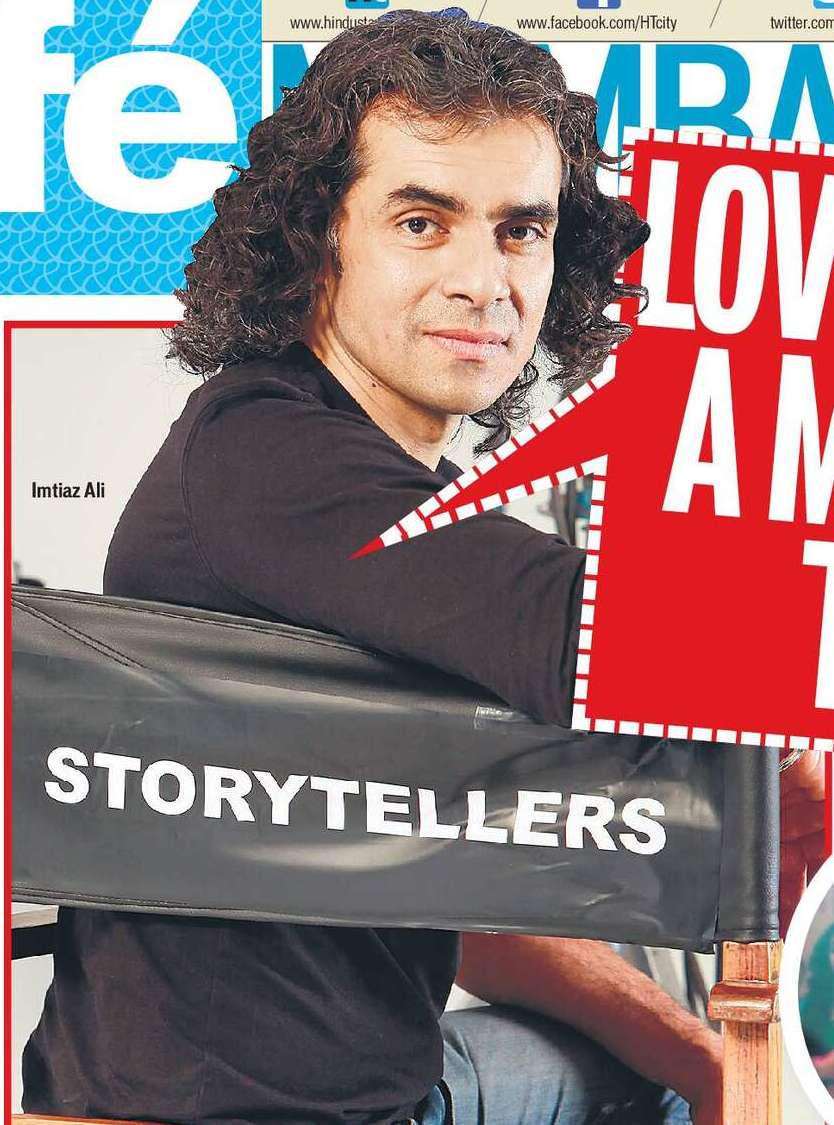
Imtiaz Ali says he knows nothing about love; relies on his thoughts and reflections to explore the concept
Prashant Singh (HINDUSTAN TIMES; February 3, 2020)
When he first made people sit up and take notice of his talent in Socha Na Tha (2005) followed by the cult hit, Jab We Met (2007), not many knew that Imtiaz Ali will soon leave an indelible mark in the Hindi film world with his inimitable, deep-rooted take on love. But just when you think of anointing him the ‘master of romance’, Imtiaz leaves you stumped, saying he knows nothing about it. “It’s not as though I am a master at it so I am telling you such stories but it’s more like I’m trying to understand it and movies are getting made,” says Imtiaz, as he readies for the release of Love Aaj Kal (LAK) starring Kartik Aaryan, Sara Ali Khan and Arushi Sharma. Excerpts:
2020 marks 15 years since you have been weaving stories...
Honestly, I don’t look back at my career or the professional life. But I do look back at my life, friends and people, so looking back is personal that way. I am always connected with people from my past. But I don’t try to learn too much from what [work] I did in the past. Maybe, I should (laughs). You work on one film and put all of yourself into it. And then, you kind of move on from there, and not go back. So, in some way, it’s poignant and good too because that way, you clear out the deck for newer things to come in. Else, it’ll be like being in a relationship that you don’t have anymore.
Your first film (Socha Na Tha) had an innate charm that stemmed from the fact that it was very raw, real and innocent. Have you managed to retain that magic?
I don’t think I’m the right person to answer that. And I don’t even know whether I have been able to maintain or conserve the innocence or rawness in my filmmaking. But whatever I do, even now, I don’t try to be more innocent or raw. I think the only way ahead is truthfulness and honesty. I’m a different person from when I made Socha Na Tha, and have learnt many things after that. Now, I have to look at how I perceive things at this stage and depict them beautifully. But my basic tools, fascinations, interests and process, remain the same. Also, since I’ve always written and directed my films, the process has remained intact.
Along with your legion of fans, a section of people also feel that you only make romantic films. How do you react to this?
I feel many emotions at the same time. If it’s said in praise, I feel like telling them, ‘I don’t know about it [love]. Maybe, you know more than I do. And that I am just more interested in it than you are.’ If someone feels I only make romantic films, I also wonder, ‘why that happens (smiles).’ But the fact of the matter is that I can show only those grains that grow in my garden. I just can’t invent or artificially inseminate something. So, most of the times, when such things are said, I try and not get affected by it as I want to enjoy the freedom of the range that I naturally have. I try to be in touch with my ‘real’ self, and not do things in reaction to something.
Coming to your next, Love Aaj Kal [LAK], it seems to have the same concept, pattern as your first Love Aaj Kal. Your take?
See, I’ve never done a remake, part two, a sequel or anything of that sort. So, vis-à-vis LAK, it all started with random conversations that if it was to be made today, it’d be very relevant and you would have a particular kind of guy and a girl. Also, I feel, it came from the fact that in the last 10 years, I’ve seen young people getting into relationships in a totally different — almost in a reverse kind of a process — than it was a decade back or 20 years ago. Yet, what they are looking for and their desire remains absolutely the same.
So, are you saying that your ‘regular’ conversations led you to this film?
Yes, and also, I guess the whole idea of love and relationships have gradually gone through such a dramatic change that I found myself talking about it time and again. I was going to make another film but I spoke so much about it that it started to form like a story in my head. While I was prepping to get into the shoot of the other film, I realised that I already have this story and I’m more excited about it. And plus, this was also more topical. So, I went for it.
Has your idea of love/romance changed, or metamorphosed over the years, or does the core remain the same?
I know that since I often make films about romantic relationships, I’m supposed to be someone who ‘knows everything about love.’ But the fact is that I know nothing. Since I don’t know anything about it and am still engaged with that concept, I’m still trying to understand it, as it remains a mystery to me. And the movies I make are a result of that churning in my mind. I don’t know anything more than anyone else. I do have some images, reflections and thoughts, and I’ve also realised a few things which I can present through stories.
You’ve seen many successes as well as failures. But by now, have you developed any software or hardware to deal with everything?
I think I entered the industry equipped with the software to deal with success and failure, and that’s shamelessness (laughs). It helps me not to ponder much. I always tell myself that I came from Jamshedpur/Delhi since I love making films. That’s what I should do and make them as well as I can since I enjoy that. I hope all my works is successful but if it’s not, then what different you can do. When Jab Harry Met Sejal didn’t do well, I, of course, didn’t enjoy that fact at all. But even if it was a success, I’d still be making the best film that I can. Right?
Talking about Love Aaj Kal [LAK], you chose the ’90s to showcase the past era. Do you feel a special affinity towards the ’90s?
I am at a different age now but when I see 20-year-olds, I think of the times when I was that age. That’s why the ’90s, when I was in my 20s. So, be it getting into relationships for the first time or the gamut of love-related emotions, it all happened to me then. In my case, it was even earlier but the 20s is the age when it happens to most people. So, if a person, who is nearly my age, looks at modern-day relationships thinking of times when he was that young, then the ’90s becomes the right period.
For you, did the ’90s also bring a personal connection?
Yes, because I understand the texture of the romance of that era because I was there. I have seen those things around me, in me. For instance, in our film, a group goes to watch Qayamat Se Qayamat Tak (1988), and that affects their romance. I know that emotion very well and also how people would wear clothes, especially in small towns. So, it’s about familiarity and also a secret desire to see what happens when Dil Deewana [from Maine Pyar Kiya; 1989] plays in a gully. Those things bring a smile to my face. So, I was like, ‘let’s depict it, and pay homage to those great films, which had a great influence on my life.’
Coming to film’s star cast, what made you choose Kartik Aaryan and Sara Ali Khan?
I was initially trying to work out another story. And when I happened to meet Kartik, I discussed that story with him and found him very accessible, someone you can talk to, and he also understands quickly. So, I knew I can work with this guy. And then I spoke to him about Love Aaj Kal. And the same happened with Sara too, who is very talented. I have known her for the longest time, and was very eager to work with her. Now, I realise — especially after watching the film — that they are more suited to this story than the first one. I feel it’s all about signs connecting you to the right direction, where I also wanted to go.
And then, you also have a newbie, Arushi Sharma?
I am very fond of her. We first bumped into Arushi at her engineering college near Shimla, when one of my assistants zeroed in on her for the part of Princess Sanyukta [in Tamasha; 2015]. And she did a great job in that little part. I was enchanted when I saw her for the first time. There’s something very pleasant about her. While working with her, I realised she has an innate, natural ability to act. So, I was looking for a chance to work with her again. When I finished writing LAK, I knew I will look for many girls — everyone out there — but I’ll finally choose her (smiles). Now, when people praise her after the trailer and songs, it kind of vindicates me. I feel relieved and gratified.
You don’t seem to be in a hurry to make your films. For instance, your last one, Jab Harry Met Sejal came in 2017…
Yeh ho jaata hai! I want to make films frequently. But I also write many scripts at one go. The same goes for my films such as Rockstar (2011) and Highway (2014). I made Highway 10 years after I wrote it. This time around too, I wrote four scripts but went with LAK. At times, subconsciously, you want to let a script be for a bit so that it grows organically. Even after Socha Na Tha (2005), I didn’t have work for a long time, so I wrote many scripts. This time too, the same thing happened. Since I have a bank now, I can, hopefully, come up with films sooner as a director. Also, since I’ve a production house now, I can present or produce more films than I direct.
I became popular after acting with Ranbir Kapoor-Arushi Sharma
8:11 AM

Shimla girl Arushi Sharma, Imtiaz Ali’s latest discovery, on her serendipitous journey from Tamasha to the Kartik Aaryan and Sara Ali Khan-starrer
Himesh Mankad (MUMBAI MIRROR; January 29, 2020)
 In 2009, Imtiaz Ali introduced Giselli Monteiro with his Saif Ali Khan and Deepika Padukone-starrer Love Aaj Kal. The Brazilian model-turned-actress played Harleen Kaur, love interest to Saif’s second character in the film. Ten years on, the filmmaker is ready to launch another fresh face. The new Love Aaj Kal, fronted by Sara Ali Khan and Kartik Aaryan, is Arushi Sharma’s first film as a leading lady after a cameo in Imtiaz’s 2015 rom-com, Tamasha.
The 24-year-old former engineering student says that acting wasn’t in her plans. “I am from Himachal Pradesh, which doesn’t have an active theatre scene,” she explains, adding that Imtiaz was in her college in Shimla for recce for Tamasha. She auditioned for the part of Sanjukta and that’s when the acting bug bit her. “Engineering colleges are usually boring. I became popular after working with Ranbir Kapoor,” Arushi smiles.
After her first taste of showbiz, the aspiring actress started sending out recordings of her performances to casting directors. In February last year, she got a call from Mukesh Chhabra’s office. “I auditioned in Delhi and within 15 days, I was brought on-board Love Aaj Kal. The shoot was to begin within a month and suddenly, I had this huge mountain to climb,” she recalls.
Arushi had watched the original but refrained from revisiting it so she could approach the new script with a fresh mindset. “It’s a beautiful story. Every character has their own charm, conflict and are different, not just from each other but also from the previous film,” she asserts.
Her track is set in the ’90s and to prep for her part of Leena, the actress watched Qayamat Se Qayamat Tak and Maine Pyar Kiya. “I didn’t want to load myself with too much information, so I just watched these two films to understand love from that era,” she says. And what was the biggest takeaway from the two films? “They were slightly over-the-top for me initially; we don’t watch such films anymore. I had to unlearn everything and appreciate what they were doing on screen. Then I started to enjoy their innocence,” she sighs wistfully.
As a co-star Kartik was extremely friendly on the film set and made her feel comfortable. “Even he is an engineer, it was like meeting an old buddy. He is an actor who is always trying to improve his craft and a good co-star who elevated my performance, too. He can stay focused even in chaos, I can’t,” she shares. While she doesn’t have any scenes with Sara in the film, they did shoot for a song together. “She has a lot of energy, is involved in every aspect of filmmaking.”
Arushi is bracing herself for the competitive industry, which has recently witnessed the launch of Janhvi Kapoor, Sara, Ananya Panday and Tara Sutaria. “I stalk them on Instagram all the time. Everyone is working so hard to create their own identity. It’s difficult to know who you are at such a young age,” she reflects.
Next up, she is preparing her wish-list of co-stars. “I would love to work with Ranveer Singh, Ranbir Kapoor and Ayushmann Khurrana. Alia Bhatt, too, is a favourite,” Arushi concludes.
-----------------------------

Newcomer Arushi Sharma recounts how a scene in Tamasha helped her bag Imtiaz's next
Mohar Basu (MID-DAY; January 29, 2020)
 You can hear a sense of wonder in her voice as Arushi Sharma acknowledges that a fleeting scene in Tamasha (2015; right) changed her life. An IT engineer by education, the youngster made a brief appearance as Princess Sanjukta in the song Chali Kahani, in the Imtiaz Ali-directed venture. Cut to five years later, she finds herself romancing Kartik Aaryan in the filmmaker's next, Love Aaj Kal.
"I shot for that film five years ago, and had tasted blood [after the cameo]. I went up to him and told him I would love to do movies. Even though I subsequently got a nine-to-five job in Gurgaon, I had an alternate life at home. I would get home from my job and make audition tapes," shares Sharma. When she was called for an audition to Delhi last February, little did she know that she would find herself face-to-face with Ali again. "At the audition, I saw this curly-haired, tall man. It turned out to be Imtiaz sir. I got locked for the part 10 days later."
The February 14 release offers two love stories — while the present-day story features Sara Ali Khan and Aaryan, the '90s romance has Sharma play an Udaipur girl. Considering Aaryan and Khan's chemistry is being much talked about, did she feel intimidated about rubbing shoulders with them? "On the first day of the shoot, I had a bigger challenge — to do a good job as an actor because such opportunities don't come easy to any actor, let alone a newcomer. So, I kept calm and did not get swayed by the noise around. Sara and Kartik are professionals. We derived our energy from Imtiaz sir who was clear about what he expected from us."
-----------------------------
Prashant Singh (HINDUSTAN TIMES; January 29, 2020)
She is a certified engineer who studied in Waknaghat, Himachal Pradesh. And the newbie, Arushi Sharma, who is readying for her full-fledged debut with Imtiaz Ali’s Love Aaj Kal, shows a glimpse of it right at the start of the conversation by bringing up electrons. “Shooting for the film seemed like work. But now, it’s like an electron that starts to collect energy and shoots to the next level,” says the young actor, whose parents are judges and uncles are government officials. “That’s why sometimes, I wonder, ‘is my family really proud of me (about becoming an actor) or are they hiding their feelings (laughs)?” she says. Excerpts from an interview:
You are a true-blue Imtiaz Ali discovery (he cast her in small role in Tamasha, 2015, after his team spotted her in the college). Does that put any pressure on you?
I don’t think so. When I got the part in Tamasha, I didn’t know shooting mein kya hota hai. So, I was like, ‘jab shoot pe jaate honge tab bahut pressure hota hoga’. But there was none. Everything flowed effortlessly. Even during Love Aaj Kal, I didn’t feel any pressure. I don’t know why and how. It’s definitely because of Imtiaz sir and the way he directs and keeps things so simple. I feel when you go simple, you are being yourself and that’s the best thing. And I am happy with the tag of being Imtiaz Ali’s discovery. And if people are putting that pressure, I’m happy to take it because that’s how I would be able to bring out something good.
You were spotted by Imtiaz’s team in your college in Shimla, and now you are his lead star. Has it all been dream-like?
I do feel that it’s a dream (smiles). Sometimes, when I would get nervous on the set, and feet that I am not doing something correctly, Imtiaz sir would say, ‘Think of it as a dream Arushi’. After Tamasha, I felt that magic and the feeling is still with me. It all feels like a fairy tale, to be honest. Coming from Shimla to Mumbai, is something I had wished for. I feel really blessed that it has happened in my life.
Since Tamasha, how has your journey been? What were you doing after that film?
In the meantime, I finished my engineering. And while I was in college, I started giving auditions. And I would always ask [Imtiaz] sir if there’s any opportunity in any of his films in the future, and that I would love to do it. He gave me (casting director) Mukesh Chhabra’s number and asked me to be in touch with him. After my college got over, I started working. But I continued to give auditions. Although I wanted to be an actor, you also have to be practical about it. I never had the guts to leave everything and come to Mumbai because it seemed impractical to me. In this journey, I have learnt more about myself, more than anything. I never thought that I am this brave and patient. So, that way, it’s been a learning experience.
How was your co-star, Kartik Aaryan to work with?
He is so full of life and a fun-loving person. He is so involved, friendly and supportive that it feels really good. I was initially a bit scared but he made me feel comfortable. Also, initially, I wasn’t able to focus on the right things. But then, I started observing him, and learnt that everything is chaotic around you but you have to be focused. I think he does it so well, and I tried to emulate that. He helped with the technical aspects of acting as well.
Do you have any future plans in your head?
I think I do have a vague idea about what I want to do but I think this film is going to decide a lot of things for me. For me, people’s reactions as well as industry’s response really matters a lot. I want to note down what they say and how they feel about me, because I am not an actor. Once the film releases, I think I am going to write a thesis (laughs). Right now, I just want to be patient and see how things go.
Were you always a filmi girl? Any favourites?
I used to love dancing at birthday parties and all, but I was never really a film buff. I started to watch films seriously when I was in college. Kajol is my favourite. Even in the phase of ‘over-acting’, she was very real. Now, it’s Alia Bhatt and Deepika Padukone. But I love Alia a little more. Ranveer is also amazing as the kind of versatility he has shown of late is difficult and amazing. Ranbir Kapoor is also a favourite. His eyes are so intense.

Akshay Kumar had the hair of a rockstar and wore these long shirts with sleeves rolled-Vaibhav Anand
8:18 AM

Actor Vaibhav Anand on restoring Ketnav Theatre, where he once played cricket with Jeetendra and had chai with Akshay Kumar
Kunal Guha (MUMBAI MIRROR; October 6, 2019)
One of Vaibhav Anand’s fondest childhood memories of Ketnav Theatre, which once served as his residence, has little to do with films. The son of legendary actor-filmmaker Vijay Anand remembers the day he was playing cricket on the theatre’s porch with his father’s manager and office assistants, when he was distracted by a sudden commotion. Turning around, he spotted actor Jeetendra leaving the preview theatre, which was also a venue for post-production work. The film star, whose inimitable dance moves had earned him the moniker of ‘Jumping Jack’ took over the bowling and delivered a deceptive in-swinger, quickly getting the young Anand out. But stubborn that he was, Anand refused to budge. “Jeetendra asked, ‘Yeh gora bachcha kaun hain?’ and someone told him ‘Goldie Saab ka ladka hain’ and then he continued to bowl to me for another five minutes or so before leaving,” says Anand, who recently made his debut in The Verdict: State v/s Nanavati, a series based on the controversial Nanavati murder trial of 1959.
It’s no coincidence that he was cast to play his uncle Dev Anand on the show. “I wasn’t even asked to audition,” says the actor, sharing a photograph of a look test in which he’s seen replicating his uncle’s iconic pose from the poster of Guide, complete with a shawl draped around his shoulders.
Anand, 35, now plans to restore his family’s iconic preview theatre to its former glory. Once a favoured haunt of the film industry’s bigwigs who would gather there for select screenings, Ketnav shut operations almost four years ago. Anand has, since, been consulting architects to zero-in on restoration options. “I want to restore the modernist architecture of the ’70s. For most, Ketnav wasn’t a place of work, it was home. They would say, ‘Ketnav mein milte hain, wahin baat karenge’,” he says. That is why, apart from a preview theatre and an editing studio, Anand also plans to open a coffee shop — to also revive that tradition of banter and brainstorming.
A student of the Lee Strasberg Theatre and Film Institute in the US, Anand was tasked with running the theatre rather unexpectedly in 2004, when his father passed away during one of his visits to India. On a break from his acting course, Anand had a return ticket but decided not to go back. “My mother was alone and the studio was without a manager. And, there were vultures circling, so I thought it best to stick around.”
We’re seated on the second floor of Ketnav. This, Anand tells us, is where he lived with his family until his father developed a cardiac disease. The family moved to an apartment in Pali Hill because “doctors warned him against climbing stairs”. Anand points to an elevated corner of the immense living room and says, “That’s R D Burman’s harmonium — there would be music sittings here.” It is just one of the many priceless pieces of film memorabilia scattered around. “There’s also a lot of stuff from films such as Guide, Tere Mere Sapne and Chhupa Rustam but I haven’t decided what I want to do with it.”
In its new avatar, Anand promises the theatre will pay a pictorial homage to films made under the Navketan banner, and particularly those directed by his father such as Jewel Thief, Teesri Manzil and Guide. Luckily, the theatre is a treasure trove of rare photographs and Anand has meticulously digitised them. “Given the moisture in the air, one can’t risk it. Now, it’s only a matter of getting them framed.” His favourite photograph from the collection happens to be one taken on the sets of Tere Mere Sapne. It features his father sharing the frame with actors Mumtaz and Hema Malini with his uncle Dev Anand seated on a carpeted floor. I want them [the photos] to be the first things people lay eyes on as soon as they enter this space,” he says.
Interestingly, the traffic that flowed through Ketnav also included political figures. Most notably, the Shiv Sena supremo, the late Bal Thackeray, who, says Anand, “felt quite at home at the theatre,” and would come by often for private screenings. “We knew each time he was coming because his security detail would arrive 30 minutes before he did. They’d scan the theatre electronically and his entry and exit points were marked,” Anand says.
A chance encounter with Aamir Khan makes it to his list of most memorable moments. Khan had come by to visit Anand’s father following the release of Qayamat Se Qayamat Tak, a film whose initial reception had been lukewarm. Anand, who was four then, exclaimed, “Yeh toh zinda hain”, and Aamir burst out laughing. “He said, ‘If this is the reaction then the film has made an impact’.”
It was also at here that Anand got to have chai with his idol Akshay Kumar who his father was to launch in a movie called Pal Pal Dil Ke Paas but the project never took off. “He had the hair of a rockstar and wore these long shirts with sleeves rolled.”
Anand also plans to relaunch his family banner Vaibhav Vijay Anand Pictures next year and has been working with filmmakers to develop web content. While he is grateful for his lineage, he shares that it didn’t win him any big breaks. “My father always told me ‘Don’t emulate my films. Watch them as an observer. You can’t be me and shouldn’t aspire to be either. You have my genes, but you have to work to prove your potential’.”
Yet, Anand is acutely conscious of the cinematic sensibilities he has inherited. “I was introduced to the intelligent side of cinema from Chetan uncle to the commercial aspect of it by my father, and the production side by my uncle Dev because he was not a director, but a producer,” he says, in appreciation of his rich legacy.
The real challenge was 'Ghazab Ka Hai Din' which had a toota phoota metre-Anand Shrivastav
7:52 AM

Majrooh Sultanpuri; Anand-Milind
Roshmila Bhattacharya (MUMBAI MIRROR; October 4, 2018)
The one person who can claim to have known Majrooh Sultanpuri, whose birth anniversary was on October 1, since the day he was born, is Milind of the composer duo Anand and Milind. His late father, music director Chitragupta Saab, and Majrooh Saab, were a formidable duo in the ’50s, ’60s and the early ’70s and Milind flashbacks to the bungalow in Khar where they lived till he moved to Powai in 2003. On his way home from school, he remembers seeing Anand Bakshi writing in the verandah and another lyricist Prem Dhawan sitting under a coconut tree in the garden. A third, Rajendra Krishan, would be sitting in the living room by the telephone while Majrooh Saab would be working in the music room.
This year, as part of Chitragupta’s centenary celebrations, the junction between 14th Road and Khar Danda was named Sangeetkar Chitragupta Chowk, with the notations from the song “Papa Kehte Hain Bada Naam Karega” on the plaque. This popular track from Qayamat Se Qayamat Tak was penned by Majrooh saab for Anand and Milind. “We finished it in one sitting even though we changed the metre in the second line. But the real challenge was 'Ghazab Ka Hai Din' which had a toota-phoota metre and had chhota chhota dialogues in every line. I don’t know anyone other than Majrooh uncle who could have written this song,” asserts the younger music director.
He goes on to fondly reminisce about some of the gems his father and his Majrooh uncle composed, including Oonche Log’s “Jaag Dil-E-Deewana Rut” and “Mujhe Darde Dil Ka” from Akashdeep to “Jodi Hamari Jamega Kaise Jani” which had Manna De singing for a Chaplenesque Mehmood in an anglicised accent and Asha Bhosle crooning for gaon ki gori Aruna Irani in a dehati accent. “Only a master wordsmith could rise up to this challenge,” asserts Milind, who also collaborated with the veteran lyricist for an album, Lal Dupatta Malmal Ka, which was turned into a film for television following the popularity of the songs.
His Majrooh Uncle would always call him his “gora beta” and it was only years later that he revealed that it was because while his siblings, Anand, Savita and Sudha, were all fair, Milind had a slightly darker complexion. “He didn’t want me to feel inferior to them in any way,” he laughs, adding that though he worked a lot more with Sameer who was a year older than him and a year younger than Anand, the veteran lyricist was a favourite because he never let them feel the age difference.
“He served the best kebabs and was full of jokes till he lost his son Eram. But time heals and today, Milind’s daughter, Ritika Shrivastava, who is an assistant director, has worked with Majrooh Saab’s grandson and Andalib’s son, Farzan, who is also an AD. “So it’s the third generation working together now,” Milind says.

I feel artistes should not get married-Alka Yagnik
9:10 AM

Alka Yagnik tells the story behind the yesteryear hit to interviewer Neeti Mohan
Soumya Vajpayee Tiwari (MID-DAY; July 9, 2018)
While Neeti Mohan is in awe of her senior, Alka Yagnik, the veteran is all praise for the young star and how newer singers are confident about their skills. As they settle for an interview peppered with music at a Juhu five-star, they walk each other through their musical journeys. Edited excerpts from the tete-a-tete:
Neeti to Alka
You redefined how singers carry themselves. Before you, few female singers would pay attention to dressing.
I am fond of good clothes and accessories, and I like to dress up. Earlier, for almost 15 years, my life was limited to home and studio. I would record five songs daily, and do stage shows occasionally. Later, when I started getting a little more time for myself, main apne shauk poore karne lagi.
At stage shows earlier, singers were only expected to perform well, with little attention paid to their dressing. But today, the spotlight is also on your appearance when you perform live.
Earlier, media was not so active and you wouldn't be clicked wherever you went. I did several shows with Kalyanji-Anandji and Laxmikant-Pyarelal. They taught me how to conduct myself on stage. Gradually, I started speaking to the audience. Back then, so much importance was not given to outfits, background dancers and presentation. I was a shy person. I could let go of my inhibitions only when I was in front of the mic. Now, I am a changed person on stage. I make the audience laugh.
(Mohan adds)
I experience something similar when I perform live — mere andar ki diva unleash ho jaati hai.
Do you feel singers are also actors?
Absolutely! Performing arts are always connected. You have to be an actor to be a good singer. When I sing a song, the actor in me comes out as I emote for the track. Actors also have a singer in them. Unless they have an idea of rhythm and sur,how will they dance to a song?
You said you would record five songs daily. How did you take care of your voice?
I had tonsillitis since childhood. My doctor suggested not to get it operated as my tonal quality would change. So, I had to live with tonsillitis attacks. The good thing was that the more I would sing, meri awaz utni hi khulti thi. Some artistes get tired after singing a couple of songs, but my voice used to blossom.
Do you remember recording a song with a bad voice?
When I had to record Ek Do Teen [Tezaab, 1988], I could barely talk. The song required strong throw, and we didn't have technical help those days. Mehboob Studio was filled with musicians that day — there was a 45-member chorus and around 100 instrumentalists. I told Laxmiji [of Laxmikant-Pyarelal] that I was not in a state to sing. He said, “Aap socho hi mat uske baare mein, aur bas gaao.” Though we had to finish recording before 12 am, we hadn't had a single take till 11.30 pm because balancing all the instruments was taking long. Finally, when it was all set up, Laxmiji said, “Alkaji, sing a rough version today. We will dub your voice again.” I belted out the number in one go. But that dubbing never happened. He was so happy with the song that he said, “Agar aapko lagta hai is gaane mein aapka gala kharab hai, to aap mera har gaana kharab gale se gaao.”
I read that when Osama Bin Laden's Abbottabad house was raided in 2011, hundreds of your song recordings were found.
Somebody had told me when this was reported. I felt weird. I think maybe he too had an artiste inside him (laughs).
Have you ever thought of teaching music?
Music cannot be taught. Either you are a singer or you're not. I always guide singers who need help. Over the years, I've done so many reality shows, and the participants often send me their works or come over to my home for suggestions.

Alka to Neeti
Do you plan to get married?
It has been on my mind of late. I hope to get into a relationship now.
(Yagnik adds)
I feel artistes should not get married. An artiste's life is erratic and most of them are moody. In such cases, the partner has a tough time adjusting to his/her moods and schedules. Even Ashaji [Bhosle] often says kalakaaron ko shaadi nahin karni chahiye.
(Mohan)
I have been in a relationship with my music and career. I am so busy that I don't have time for a guy in my life.
(Yagnik)
I got married early and my daughter [Syesha Kapoor] was born within a year. It was around the same time that Ek Do Teen and Qayamat Se Qayamat Tak (1988) released, and my career took off. I used to feel guilty that I wasn't able to devote time to my husband and her.
What kind of songs are your forte?
I don't know my forte yet. As a kid, I used to sing a lot of Hindustani classical songs and bhajans. When I went to a boarding school in Pilani, Rajasthan, I learnt folk music. I was there for seven years and would hear local women sing Marwari songs.
Did you always want to become a singer?
As a kid, I loved being on stage - be it acting, singing or dancing. I could never pick one, so I would often be in a fix. We used to have an hour-long extracurricular class daily. My dramatics, music and dance teachers would fight over me for their respective sessions. I struggled to figure out what I enjoyed the most. Eventually, I realised that when I sing, I get to do all three things - sing, dance and act - together. That's when I decided to participate in a singing reality show. I recently performed with A R Rahman sir in Kochi. I sang Jiya Jale Jaan Jale live and put up a Bharatanatyam act for it. It was fulfilling.

Subscribe to:
Posts (Atom)