Showing posts with label Pyaar Mein Kabhi Kabhi. Show all posts
Showing posts with label Pyaar Mein Kabhi Kabhi. Show all posts
I may not have a Rs. 100 cr film to my credit, but I’ve been fortunate to be part of some wonderful films-Sanjay Suri
3:17 PM

Neha Maheshwri (BOMBAY TIMES; June 12, 2026)
Joining the TV show Juhi Mui marks a full-circle moment for Sanjay Suri. Having begun his career on television in 1997 before moving to films, the show’s socially relevant theme and limited commitment made it an appealing proposition.
He says, “I kept myself away from longer commitments. This was a month-long commitment, and we’ve kept the track open so I can return when required. In cinema too, I’ve mostly been part of socially relevant films. When this show was offered to me, I felt it was a good story and socially relevant too.”
Talking about returning to the medium after nearly three decades, he shares, “I hosted the travel show Indian Holiday nearly 30 years ago followed by Yehi Toh Pyar Hai as the lead. Then Pyaar Mein Kabhi Kabhi happened, followed by films and producing, and life took another trajectory. So, this is like my ghar wapsi after 30 years.”
Sanjay believes the distinctions between television, films, and OTT are increasingly becoming irrelevant. He says, “You’ve got to remain platform-agnostic and do the work you want to do, especially at this stage of my career. Earlier too, it wasn’t that I didn’t want to take up a TV show. I simply couldn’t commit to one or two years because I was focusing on films.”
The actor dismisses the belief that film actors turn to television only when opportunities elsewhere become scarce. He says, “That could be someone’s perception. Even back in the day, I sat at home for two years and didn’t do anything. I’ve just had a release with Imtiaz Ali’s Main Vaapas Aaunga, have an upcoming OTT show, and will dabble in short films. If you look at the 27 years I’ve been active since 1999, I may not have a Rs. 100-crore film to my credit, but I’ve been fortunate to be part of some wonderful films that have stood the test of time. My aspirations have never been driven by panic or visibility.”
Over time, Sanjay stopped measuring success by mainstream benchmarks and focused instead on work that aligned with his creative instincts.
He shares, “I was never offered a buffet of films. It was always, ‘Okay, he does this alternate kind of cinema,’ and maybe that forms a perception. I did a commercial film, Tera Jadoo Chal Gayaa, which was Abhishek Bachchan’s second film, but my experience was that everything revolved around one person. In those days, cinema was very hero-driven. Either you’re the lead, or you’re reduced to nothing. I said, ‘Okay, I’ll play on my T20 ground.’ I don’t mind being a brick in the wall, but if you take that brick out, it should make an impact. Even when I turned producer, it wasn’t from the point of view of making money. It was about telling stories. I Am became one of the largest crowdfunded films in the country and went on to win a National Award. That was great gratification for everyone involved.”
Some of our best work has come from creative clashes - Vishal-Sheykhar
4:29 PM

Debarati S Sen (BOMBAY TIMES; March 25, 2026)
From Dil Diyan Gallan, Aankhon Mein Teri, Sheila Ki Jawani to Besharam Rang, composer duo Vishal–Sheykhar have shaped the sound of Bollywood for 25 years.
Known for their instinct-driven partnership and genre-bending hits, the two continue to reinvent themselves while keeping the fun, and the music, at the heart of their collaboration. In this conversation with Bombay Times, they look back on their journey, the trust that binds them, and the madness behind their melodies. Excerpts...
After so many years, do you finish each other’s musical sentences, or argue over commas?
Vishal: Absolutely. We do finish each other’s musical sentences. That’s uncannily true about us. But yes, we also have those “commas” you mention. We argue, we debate, we break things down—where a song can go, where it should go, what it should sound like, the beat, the energy—everything is discussed to the bone. And yet, somehow, we always end up on the same page.
Sheykhar: At this point, we know each other so well musically that one of us can easily complete a thought that begins in the other’s head.
Twenty-five years is a long time in any profession. What has been the glue that’s kept you both together all this while?
Vishal: Honestly, it doesn’t even feel like 25 years. We still have fun doing what we do, we love the process, and we’re always laughing—whether we’re working or just hanging out. There’s a deep respect for each other, and just as importantly, we give each other space. Every person needs an individual identity, even within a partnership, and I think holding on to that individuality has kept us strong all these years.
Sheykhar: At the heart of it, it’s always been about the music—the joy of creating something bigger than either of us. That singular purpose has been the driving force of our collaboration from day one.
When you both hit a deadlock in opinions, how do you break it?
Sheykhar: Taking a break usually works best. Stepping away gives us distance and helps us regain perspective. Sometimes, even a really long break has done the trick. As our friend, lyricist Irshad Kamil, once wrote, “Kuch rishton ka namak hi doori hota hai, na milna bhi bahut zaroori hota hai.” That thought has stayed with us. At the end of the day, it’s always about the music, and whatever makes the song better is what wins.
Vishal: Honestly, we don’t really have deadlocks. We don’t see them as conflicts, just as strong opinions. Both of us are secure enough in our partnership to voice what we feel without ego getting in the way. But if ever there was a deadlock, we’d just step away for a couple of days, come back refreshed, and move on.
Do you have unspoken rules at work, or do you still surprise each other?
Vishal: In many long-term partnerships, roles get fixed. Thankfully, that’s never happened with us. Sheykhar is a far more qualified musician, he’s taught me a lot, but our process is symbiotic. Anyone can do anything. If he sings me a tune and I tweak it, he runs with it. If I sing him an idea and he adds a line, that becomes part of it. It’s fluid.
Sheykhar: Life would be boring without surprises. Over time, we’ve both grown individually, and those experiences naturally shape how we collaborate. The ‘rules’ keep rewriting themselves as we go.
Looking back, is there one moment in the studio or on stage that perfectly sums up your equation as collaborators?
Sheykhar: Honestly, every day in the studio or on stage asks something different of us. Each director is unique, every audience responds differently, so our collaboration keeps shifting too. We’ve learned to recalibrate pretty organically—whether it’s composing for a film or performing live. That ability to adapt has kept things seamless for us all these years.
Vishal: If I had to pick one defining moment, it would be the composition of Jo Bheji Thi Dua (Shanghai). That song was pure instinct. I’d been carrying the hook melody in my head for a couple of days, and when I walked into the studio, Sheykhar already had the mukhda. The hook just slipped in there like they were meant to be together.
If your 25-year journey as a duo were to be described as a track, what genre would it fall into—rock, pop, EDM, or a mashup? Or name a song.
Sheykhar: I’d definitely describe it as a Mashup.
Vishal: For me, it’s Dus Bahane Karke Le Gaye Dil (Dus). By hook or by crook, you’ll end up loving our music, we’ll draw you in. Our songs are meant to become part of people’s lives, and we want everyone to feel included in that experience. I still remember the first time a car drove past playing Woh Pehli Baar from Pyaar Mein Kabhi Kabhi. It blew my mind! I’ve been hooked to that feeling ever since.
Take us inside a Vishal–Sheykhar jam session—how does a melody or beat usually find its way from your minds into a finished track?
Vishal: And these sessions don’t always happen in a studio. It could be in the car, at a coffee shop, or even on the phone when we’re in different countries. Wherever we are, once we’re in the zone, it becomes a session. It’s unstructured, but it has its own rhythm, a method to madness. Sometimes we begin with a melody, sometimes with words, sometimes by just sitting with a script or listening to a director’s narration. Ideas can spark from anywhere.
Sheykhar: The seed of an idea or melody can come from either of us, but it’s our different perspectives that merge to create something we’re both proud of. Sometimes, even the occasional casual jam has turned into a hit unexpectedly.
You’ve often been described as having very different temperaments. How has this contrast been a superpower, and how has it sometimes been a stumbling block?
Sheykhar: Disagreements and differences are inevitable in any partnership. In fact, some of our best compositions have come out of creative clashes. Even when we don’t see eye to eye, the key is trusting each other’s instincts. If one of us feels strongly about an idea, the other gives it room to breathe. Over the years, we’ve learned when to push, when to pull back, and when to simply listen.
My clean shaven look has taken fans back to my Raaz days-Dino Morea
9:24 AM

Onkar Kulkarni (BOMBAY TIMES; September 5, 2023)
His bearded look grabbed a lot of attention and was perfect for some of the roles Dino Morea was seen in recently. “The decision to go clean-shaven again was because I hadn’t seen my face for three years,” he says as he sported the look in multiple projects back-to-back. He explains, “I had the beard for three years. I did Hostages, Tandav, and then The Empire with a longer beard. People saw me in this new look, liked it and so work kept coming in. It became my signature look.”
So, wasn’t it tough to come to a decision to go clean-shaven? “It wasn’t a hard decision. See, the look created a buzz because nobody really saw me in that avatar, especially the one from The Empire where my character looked menacing and dangerous. Even after The Empire, I continued to sport the beard because I did three films… one Telugu, Malayalam and a Hindi film (with the beard). I feel fine now in the new look. It takes a day or two to get used to it. These are beard stories. To shave or not to shave is a bit of a decision. It is a man's decision. Men also have these problems you see.”
His current look, he says, has taken his fans back to his earlier days. He shares, “It took them back to my Raaz, Pyaar Mein Kabhi Kabhi, Fight Club – Members Only days where I was always clean-shaven. Filmmakers have already seen me in a different light (in my bearded look). They have seen me perform. So, interesting stuff is coming my way, a lot in the negative space. Now when they see that I am clean-shaven again I don’t know if that changes, but a clean-shaven guy can also be menacing.”
If there’s one thing that changes Dino wishes is that he gets approached to play a romantic lead. He signs off saying, “I do miss playing the romantic lead. I want to do a really beautiful romantic film. I can’t wait to be a part of a lovely love story again.”
Before every take, Raj Kaushal would say energy instead of action-Sanjay Suri
8:02 AM
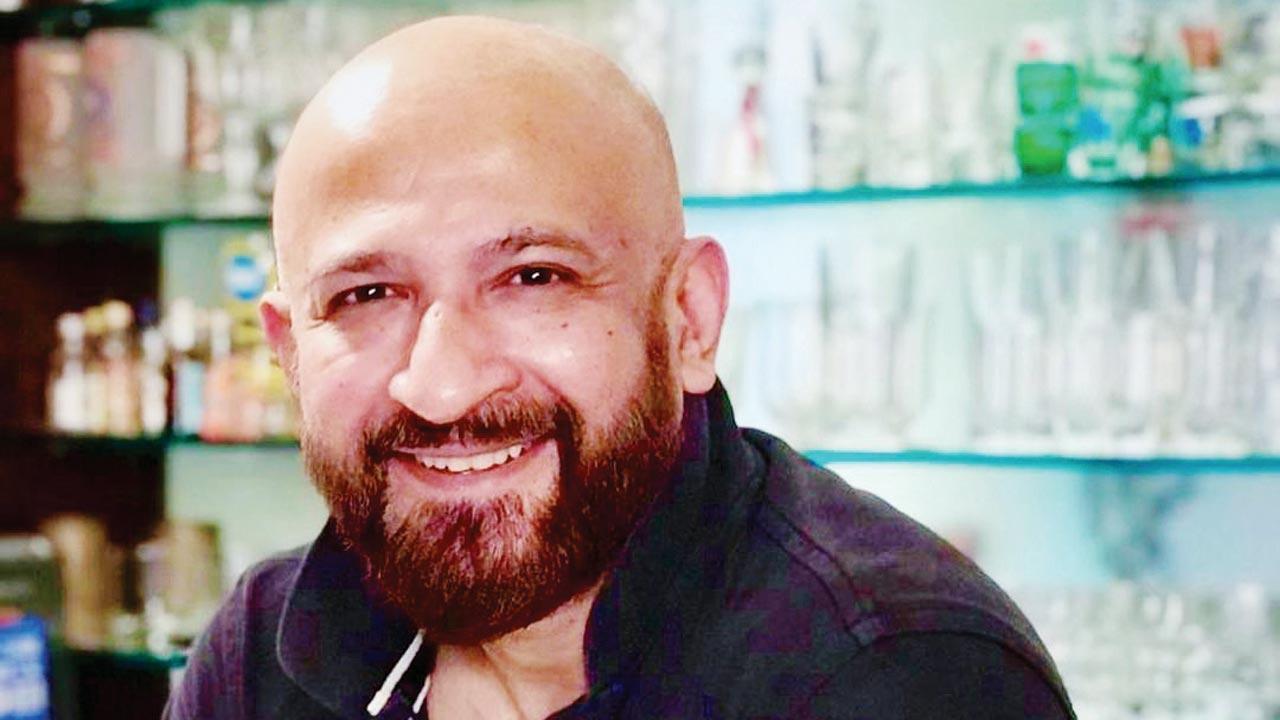
As Raj Kaushal’s sudden demise leaves family, friends shocked, Sanjay Suri and Dino Morea remember coming together for their maiden movie, Pyaar Mein Kabhi Kabhi
MID-DAY (July 1, 2021)
His friends remember him as someone with a ready smile on his face. And his Sundays were dedicated to what he treasured the most — friends and family. Over the weekend, Raj Kaushal’s heart was full as wife Mandira Bedi and he played host to their near and dear ones. Three days later, the film and television industry woke up to the shocking news of the filmmaker’s demise, the incident reminding us of the fragility of life.
Kaushal had forayed into filmmaking with Pyaar Mein Kabhi Kabhi (1999). The campus drama not only ushered in a new sound of music with Musu Musu Hasi and Woh Pehli bBaar, but also launched a string of new faces, including Dino Morea, Sanjay Suri and Rinke Khanna. “I get so many messages about the film’s songs to date. Raj knew how to make it special,” says Morea, remembering how Kaushal was completely in charge of the project. “My most striking memory of the film is Raj’s smiling face. No matter what went on around him, he had a positive energy that rubbed off on everyone. Mandira was a big part of the film’s making. Seeing her distraught today broke my heart. He was young, and has been taken away from us too soon.”
Suri, who had spoken to Kaushal four days ago, is shocked. “When we spoke, he said, ‘Bhai, milte hai aur kuch karte hai.’ I planned to meet him after returning from my shoot [in Uttarakhand],” says Suri, who had gone on to team up with him on Shaadi Ka Laddoo (2004) and My Brother Nikhil (2005).
“Not many know this, but he was one of the best narrators I have ever met. You could give him a boring one-liner, but he would narrate it with such skill that you could visualise it completely. He was always bursting with ideas. He inculcated a lot of confidence in his actors. We were all new, but he gave us complete freedom between ‘action’ and ‘cut’. It was liberating to work with him.”
The actor is grateful to Kaushal for co-producing My Brother...Nikhil when few had faith in the same-sex love story. “Raj played a big part in my career and my life. I called him a yaaron ka yaar. He had magnetic energy to him. In fact, before every take, he would say energy instead of action, and the vibe on the set would be so positive.”
Actor Manish Chaudhari, who recently shot for Kaushal’s web debut Akkad Bakkad, has yet to come to terms with the loss. “We had finished shooting only three weeks ago. He was happy to have wrapped up 10 episodes in less than 30 days of shooting. He was kicked about his first OTT project, and was looking forward to directing the second season. Mandira and he had recently adopted Tara, and he would keep sharing stories about his kids on the set.”
Bollywood director Raj Kaushal dies of cardiac arrest
7:58 AM

THE TIMES OF INDIA (July 1, 2021)
Mumbai: Filmmaker Raj Kaushal passed away of a cardiac arrest around 4.30 am Wednesday. He was in his fifties. Kaushal was actress Mandira Bedi’s husband. The couple have two children, 10-year-old Vir and a daughter Tara whom they adopted in 2020. Kaushal began his career as copywriter and went on to produce and direct scores of advertising films. He also directed three movies namely Pyar Mein Kabhi Kabhi, Shaadi Ka Laddoo, and Anthony Kaun Hai (2006). He produced ‘My Brother Nikhil’, a sensitive film on the subject of HIV-AIDS.
Kaushal’s sudden death evoked shock and sorrow in the entertainment industry. Actors Ashish Chowdhry, Apoorva Agnihotri, Rohit and Ronit Roy, Manasi Joshi Roy, Sameer Soni and Huma Qureshi arrived to console his wife and children. Meanwhile, Vicky Kaushal, Onir, Neha Dhupia, Arshad Warsi, Randeep Hooda, Boman Irani and Shekhar Ravjiani offered tributes on social media. Anupam Kher, Ronnie Screwvala and Sudhir Mishra also expressed sorrow.
Composer Vishal Dadlani tweeted, “The first person to trust me with making music for a film, @rajkaushal created so many careers with #PyaarMeinKabhiKabhi. Above that, he always stood with his friends.”
-------------------------------
BOMBAY TIMES (July 1, 2021)
Filmmaker Raj Kaushal, 49, who made his directorial debut in Bollywood with Pyaar Mein Kabhi Kabhi (1999), passed away yesterday morning after suffering a cardiac arrest. He is survived by wife Mandira Bedi and children Vir (10) and Tara (4).
The couple had adopted their daughter last year. Raj, who had directed many ads and helmed Shaadi Ka Laddoo (2004) and Anthony Kaun Hai (2006), had recently finished wrapping up a web series. While a few friends and colleagues from the industry were present for the final rites, others expressed grief on social media.
Remembering Raj, Onir, whose first directorial venture, My Brother…Nikhil (2005) was co-produced by the filmmaker, said, “He will always be remembered as someone who was always smiling and made everyone feel like a buddy. I am shocked that he left us at this very young age. He extended support for my first film at a time when nobody was willing to, and I give him credit for helping me fulfil my dream of becoming a director.”
Talking about the filmmaker, friend Rohit Roy said, “There is no way one can come to terms with Raj’s passing. He was one of the happiest, positive and vibrant people around. He never had anything negative to say about anyone… nor did anyone have anything negative to say about him. He was the kind of friend anyone would want to have in their life. He stood by people through thick and thin. I will never forgive him for going away without saying goodbye.”
Sudhanshu Pandey, who has known Raj since 24 years, shot with him a couple of weeks ago. “Raj was like a brother to me. I cannot come to terms with the fact that he is no more. We shot for something two or three weeks back and we had a great time on the sets. I didn’t know that it would be the last time I would meet Raj. I couldn’t attend his last rites. But my wife was there. We connected over a video call because I wanted to see him one last time,” he said.
What we have done is just the warm up-Shreya Ghoshal, Shekhar Ravjiani
8:29 AM

Shreya Ghoshal, Shekhar Ravjiani are aware of the measures they've taken to survive in the industry for 20 years. In an interaction, they say they are only getting started
Sonia Lulla (MID-DAY; February 1, 2021)
Two years after Shekhar Ravjiani and Shreya Ghoshal first expressed their interest in collaborating on this property, mid-day is finally able to have them arrive at a time suitable to both. Brought together via a video-conferencing app, the talkative singer-composer duo leave little scope for a third person’s intervention. Over cups of coffee, they amuse one another with poor jokes, and us, with noteworthy stories of their respective journeys in the music industry. Edited excerpts from the interview:
Shreya: How has this phase been for you? You look so comfortable in Khandala that it seems like you no longer want to come back.
Shekhar: This has been a great year for me. I understand that people have gone through a tough time, physically, mentally, in their relationships and due to the pressure of work. But, for me, it was like a gate had opened. I didn’t have to think about anything, and simply went with the flow. If someone asked me which year has been among my most favourite in recent past, it will be 2020. Things rolled with ease. I was busy [working for] my music school, and making songs without worrying about the platform for which they were being created, or how they were being promoted. I wanted to go back to that stage in my life when I had no films, and created music because I loved to do so. Those wings are out now, and I am experiencing that feeling of flying [again].
Shreya: I had a similar experience. I have never spent as much time in my kitchen or living room as I have been spending now. The first few days were about cooking meals. Then, it seemed like [we had been in lockdown for] too long. At some point, I [feared] for the future. Then, I gave in, and took to a routine I had once diligently followed. [I began to] do my riyaaz regularly. An aspect of self-improvement was completely lacking in my life. And implementing that again has brought about a big change.
Shekhar: If you could revisit your life and do anything differently, what would that be?
Shreya: Had the things that happened to me, not have happened, I would not have been able to take the decisions that I did to reach here. I lived in Rajasthan, in a township of scientists and engineers. No one in the community had made a career out of music, and often [school authorities] would frown upon me for skipping school to fulfil a music commitment. But, my parents were supportive, and made me believe that what I was doing was special, and I was privileged to have this gift. I didn’t have a degree. My friends are all big techies today, and I could have been among them. But I would have been mediocre, and I am glad that I didn’t [choose another career]. I realised early on that I may not be great, but I felt good about myself when I sang.
Shreya: Tell us about how you fell in love with music.
Shekhar: It started pretty early. Luckily, my family members were such that if any chord was struck at home, each member was capable of catching the note and singing in tune. We didn’t come from a music background, but music was always played at home. When guests would come over, people would jam. My dad was a phenomenal accordion player, which he pursued as a hobby. I eventually took music lessons from the piano player Xavier Fernandes. I was never interested in the first 50 minutes of the sessions, which involved theory. But, the last 10 minutes, when he taught me a song, were cherished. I would practice what he’d teach in those last minutes, long after he would leave. Thus, I say, I have learnt by listening. A friend who worked for Mr Mukul Anand took a tape of mine to him. He heard it, and wanted to meet me. At 16, I got my first job as a composer and singer, and at 17, I was among the busiest composers for 60-second ads.
Shreya: When did [your debut film] Pyaar Mein Kabhi Kabhi, come out?
Shekhar: I had been working in the industry for seven years before it came my way. It was made by Mukul Anand’s assistant Raj Kaushal, and most of the artistes associated with the film, went on to [achieve immense fame].
Shreya: I want to know about your new music school, the GIIS Shekhar Ravjiani School of Music.
Shekhar: In 2018-2019, I did workshops in Singapore. The kids were so talented, and sang Carnatic and Hindustani classical music so well, that the limited workshops that I did there were very successful. That’s when we locked the GIIS and Shekar Ravjiani Music School, with 22 campuses and 15,000 students. Fifteen of them will be personally mentored by me. I will pick those students who really have the desire to learn, and who are happy souls. Your heart has to be happy to flourish.
Shekhar: Can you tell us about your latest song?
Shreya: The music that we have around us is not inspiring. With Angana more, I wanted to do a bandish, but decided to make a song instead. I wanted it to be unique, and that is when [I roped in] my brother [Soumyadeep]. He is a full-time techie, but has always been passionate about music. But, neither did [the family] encourage him to take it up [professionally], nor did he consider it a [career option]. But, he has found an outlet [to express himself]. I have been a singer and have not been [exposed to] the process of composing. So, this is a journey I really enjoyed.
Shreya: I want you to start working on the collection of songs you have created. When do we begin? I am supposed to work on many of them.
Shekhar: Yea, unfortunately I haven’t been able to connect with Shreya Ghoshal. Do you have a line on her?
It's been 20 years for me in the movies, with a Rs. 100 crore movie that too-Sanjay Suri
8:04 AM
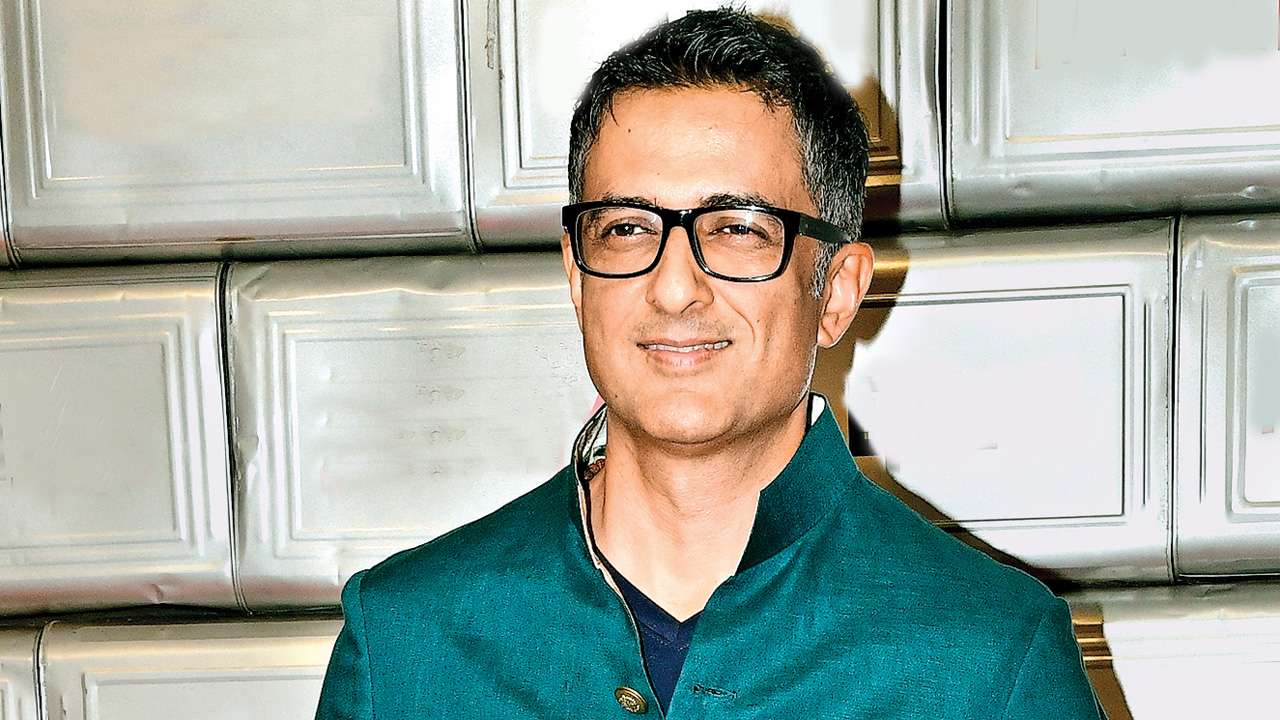
Deepali Singh (DNA; July 29, 2019)
Last year, Sanjay Suri presented the Cannes Palme d’Or winner, Japanese film, Shoplifters, to the Indian audiences. Now, the actor and producer is back with celebrated Chinese director and screenwriter Jia Zhangke’s film Ash Is Purest White, starring Zhao Tao and Liao Fan. Set in contemporary China, it’s a love story with an intriguing plot. Sanjay tells After Hrs that he is excited about bringing world cinema to India. Excerpts…
What’s the thought behind the title, Ash Is Purest White?
Ash is created with fire and purity only comes at a high temperature. It doesn’t remain mediocre anymore. The title is relevant to the film and theme. It’s about the deep love that goes beyond mediocre love. It’s a Chinese film and we are distributing it here. It’s a theme that one can relate to. Characters, sometimes, undergo challenges and emerge victorious. Here, it’s in the context of love, about a woman standing up for a man she loves. It’s about loyalty and patience.
What appealed to you about the movie?
It works at various levels. The characters and the situations they go through. The whole treatment works at a sub-conscious level. It has travelled to festivals and was selected to compete for the prestigious Palme d’Or at the 2018 Cannes Film Festival. The protagonist is in love with a gangster but she stands up for him and sacrifices everything for him. So, it’s not about good or bad. It’s about acceptance. We liked the film and there was an opportunity to release it in India. It’s set in contemporary China and it’s a window to another culture. While a lot of Indian films are being released in China, a festival gem from there is being released here. Last year, we did something similar with the Japanese film Shoplifters.
With world cinema being brought to our doors, do you think the Indian audience wants to see stories that go beyond their culture and country?
I’ll tell you something. It’s not now. When I was growing up, one could watch regional cinema on Doordarshan. In the early ’80s, I have seen Malayalam films, Bengali movies, etc. With the privatisation of channels and dependence on advertising and branding, it just became more populist. Then we were literally starved of even Indian cinema, forget world cinema. So, the audience is always ready. You switch on any radio station now, it’s only Bollywood. There is nothing wrong with that, but what about the diversity? I have made independent films; it’s a challenge to put these films out.
Do you plan to continue bringing films from other cultures to Indian theatres?
Yes, the idea is to have continuity. Next year, it will be an Egyptian film and we hope to bring more. What we are lacking is a destination for these films. Where do we go and watch them? Now, with OTT platforms, one can see them there but the experience is something else in the theatre.
Everyone keeps talking about how these days, content is king…
(Cuts in) But distribution is God (laughs)! Smaller films don’t have budgets. Ticket prices are the same. People have to navigate through traffic and find parking space to go and watch a film in a theatre. It’s a challenge but people are doing it and continue to do it, which is heartening.
On the acting front, you have been more active on the OTT platform rather than movies.
Yes, I did a couple of web shows, with the last one being Leila. I think actors like me, who have done alternate films, are finding it quite comforting to work on OTT platforms. There is a diversity of stories and also characters. In films, it still comes down to box-office decisions. In the digital space, there is still democratisation of numbers. Everyone loves a Narcos and Pablo Escobar but half the people don’t know the actor’s real name. In a way, it’s the characters that work, which is great.
Pyaar Mein Kabhi Kabhi released in 1999. It’s been 20 years for you in the movies…
Without a Rs 100 crore movie! Thirty-eight films, eight as a producer, one National Award. I’m not complaining!
You’re often named among the most underrated actors in the industry. Do you feel you’ve not received your due?
Initially, that was a thought. Once I started producing, I realised that casting is often economics based. You do need talent but economics also comes into play. I’m sure the right opportunities will come my way. I’m quite happy doing what I do. But yes, I would love to do more.
We have a duty to elevate each film that we do, both emotionally as well as at the box office - Vishal-Shekhar
8:26 AM
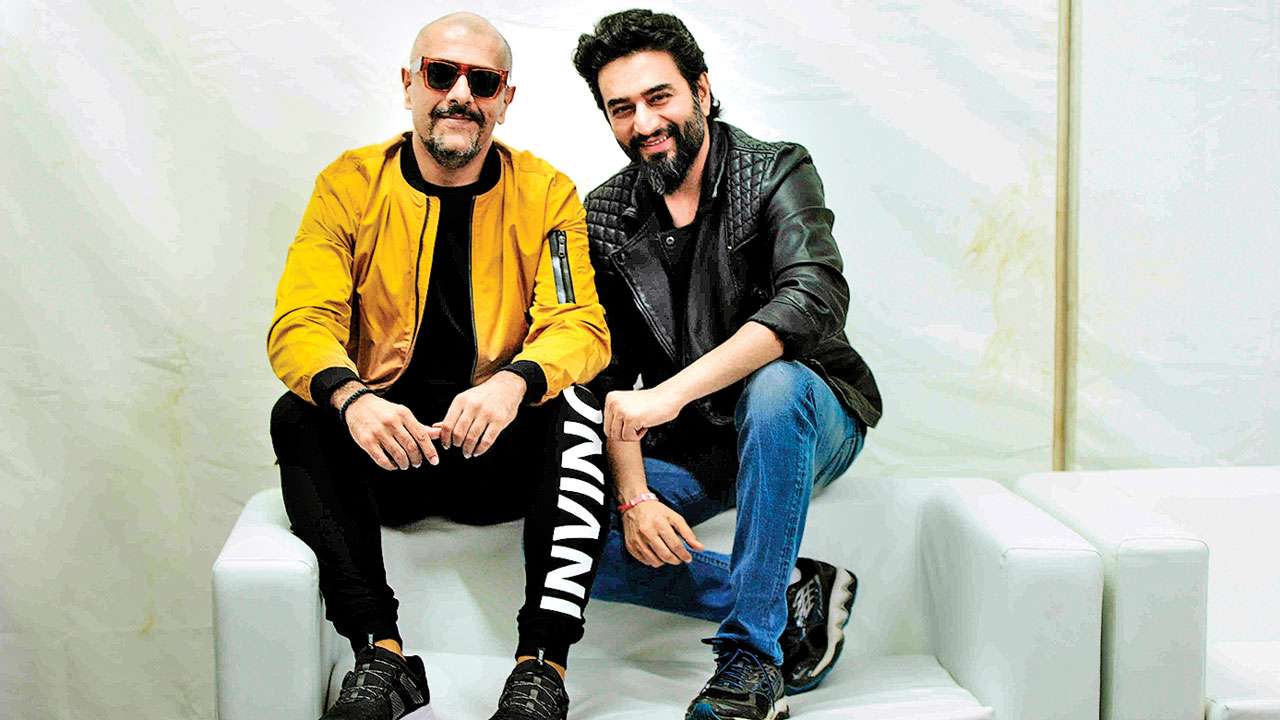
Dhaval Roy (DNA; November 18, 2018)
Vishal Dadlani and Shekhar Ravjiani (better known as Vishal-Shekhar) have had just one release in 2017 (Tiger Zinda Hai, TZH) as well as in 2018 (Telugu film Naa Peru Surya, Naa Illu India), but 2019 looks big for the duo. Apart from Salman Khan’s Bharat, they have Karan Johar’s Student Of The Year 2 (SOTY2) and YRF’s as-yet-untitled film starring Hrithik Roshan and Tiger Shroff. Right now, they can be seen as judges of music reality shows Indian Idol and Zee TV’s Sa Re Ga Ma Pa, respectively. They spoke to After Hrs about their upcoming movies, their partnership, creative differences and solo works.
THREE BIGGIES NEXT YEAR
Even though TZH was their only movie album last year, Dil Diyan Gallan and Swag Se Swagat were both chartbusters, with the latter being the first Hindi track to cross 600 million views on YouTube. Quiz the composers why they have been missing in action of late and Vishal replies, “SOTY 2 was supposed to come out sooner, so we spent a lot of time working on it. On a few occasions, release schedules go for a bit of a toss. We normally do two films a year, but next year will be three.”
Shekhar reminds us that they composed for Fan, Befikre, Sultan, and TZH back to back. “So, it might look like just a couple of films a year but suddenly for us it was a lot of work,” he says. Having fewer films does not bother them. In fact, the former states that it works well for the two. “We like to focus on what we’re doing, and give it the time and love it deserves,” he avers.
Describing the three projects, he says, “SOTY 2 is young and hip while keeping its soul intact. The Hrithik-Tiger film is a dance-action flick, so there are just a few songs, but they are quite cool. Bharat is rooted and large in terms of the number of songs as well as the scale of the sound. So, what we are trying to do is like leading three different lives simultaneously.”
GOING STRONG SINCE TWO DECADES
Remind the duo that it’s been almost two decades since they debuted in Bollywood, with Pyaar Mein Kabhi Kabhi (1999) and he exclaims, “Is it? Damn! Time flies!” Shekhar beams with pride and says, “We have done about 450 songs and been together on stage, television as well as in the studio having a blast. It feels like we’ve just got started.” The Chennai Express composers say that they have stayed on top of the game by never treating their work as a contest. “We have a duty to elevate each film that we do, both emotionally as well as at the box office, and that’s what we focus on,” Vishal emphasises.
CONFLICTS GALORE
Though they dish out crackerjack tunes together, differences between them are inevitable. Shekhar explains, “I have my views and he has his, but that’s how music is created. It’s all about jamming. Sometimes, I sing the first line and he nails the next one and vice versa.” At other times, one dislikes what the other has created and he adds, “We have creative differences in almost every single song, but that makes the number bigger and better.” These days, however, their greatest fights are about nuts and coffee! “I keep stealing almonds and walnuts that Shekhar stows away to snack on in a hunger emergency,” Vishal states. “And I slink his coffee,” the latter laughs. Their last explosive fight was back in 2009-10, when Vishal was going through a bad personal phase and it percolated into work. “Thankfully, Shekhar kept a cool head and was patient with me. That was the last big one,” he recalls.
SOLO WORKS
Vishal frontlines one of the biggest Indian bands Pentagram while Shekhar has a solo career, too. However, in the indie space, they haven’t collaborated yet. “That’s going to happen soon,” reveals the soft-spoken singer-composer, adding, “There will be an announcement of something big.” The musicians have co-judged Sa Re Ga Ma Pa Challenge in 2007 and Indian Idol Junior in 2013 among others, but now they stick to separate shows. “There is no one else I’d rather judge a show with. But, production houses or channels always try to get us as a ‘package deal’,” Vishal reasons candidly. Shekhar adds, “He is my best and the most ideal co-judge. If someone pays us a fat cheque, we will do a show together.”
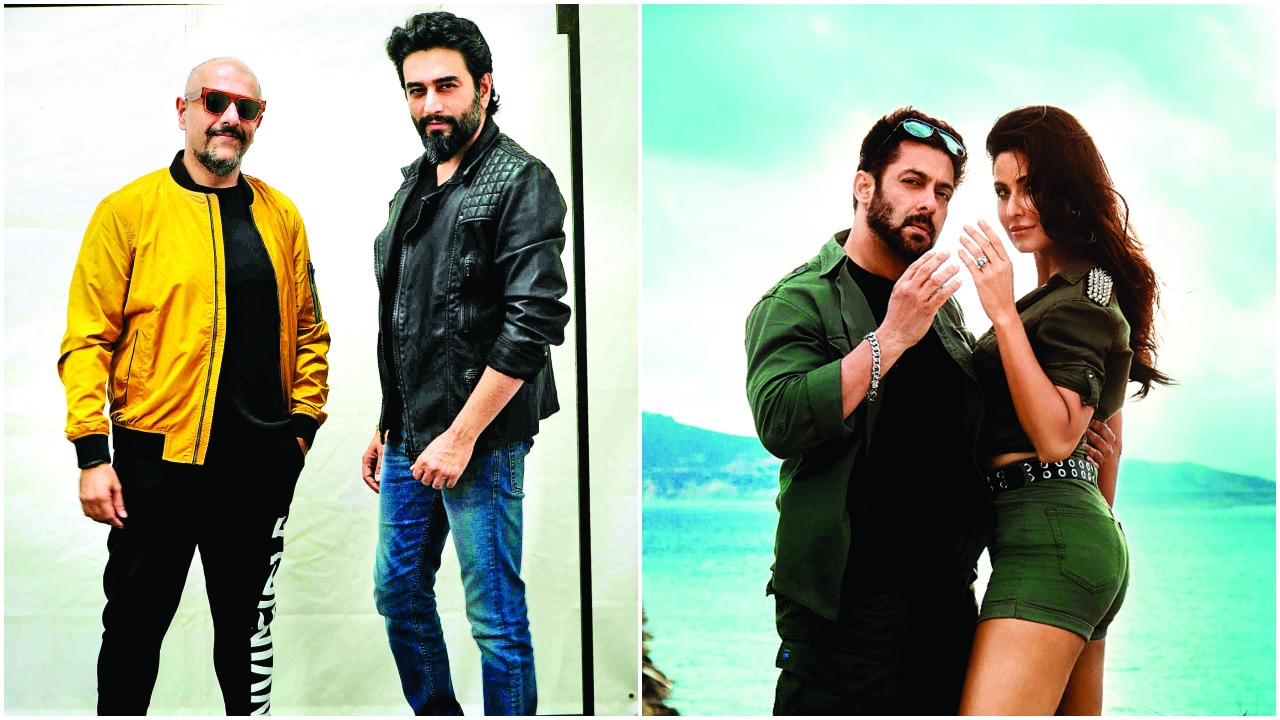
Vishal Dadlani and Shekhar Ravjiani (left); and Salman Khan and Katrina Kaif in a still from the song Swag Se Karenge
I want to be the voice of people outside Bollywood-Shailendra Singh
7:56 AM

Purvaja Sawant (BOMBAY TIMES; August 28, 2016)
At our first meeting,
Shailendra Singh comes across as someone who doesn't mince words and
likes to live life king size. But this Bollywood producer, who has
backed movies including Dor and Firaaq, has much more to him - he's also
passionate about filmmaking and nurtures the dream of introducing new talent. He wants to create a parallel
industry, where newcomers without filmi connections, too, can get a
chance. As he makes his directorial debut with Sunshine Music Tours and
Travels (SMTT), a youth-centric road trip film that he has also written,
he tells BT why launching 170 newcomers in the movie, though a
calculated risk, will pay off.
After being a producer for so long, what prompted you to become a writer and director?
I have produced 74 movies, some of which have won National Awards. During this journey, I realised that Bollywood is a fortress and there are a few hundred people inside. But there are crores of strugglers outside its walls, who are also waiting for a chance. Filmmakers like Karan Johar and Anurag Kashyap are already launching new talent in the industry. So, I decided to target people who are not a part of this fortress and become a voice for them. Even in my first film, Pyaar Mein Kabhi Kabhi (1999), I gave the industry almost 170 debutantes. This included Vishal-Shekhar, Shaan and Dino Morea amongst others. Apart from introducing new talent, I also wanted to challenge myself. I've been a storyteller and a creative person all my life. I can narrate ten screenplays to you within a few minutes. I wake up at five in the morning and write the whole day. I have the gift of the gab. When I took up the challenge of directing this film, everyone told me I was crazy. I can make money doing other things, but I find this more thrilling. Money means nothing to me.
Don't you think it's a gamble to work with so many newcomers?
It's more of a calculated risk. My cast has worked for free. I don't pay people, I give them a break. My funda is clear - I tell my actors to give it their all, and I give them a platform. Also, these newcomers are hungry to prove themselves. They don't have any baggage and are ready to do whatever it takes. While shooting with a bunch of newcomers, there is always a lot of improvisation, but that's exactly what travel film needs.
For instance, we were shooting portions of the film during our EDM (electronic dance music) festival in Goa. Since it was hectic, I shot the main scenes myself, put out six camera units and asked my assistant directors to supervise the other sequences. I would explain the scene to them, and send a team to shoot. All my assistant directors are in their early 20s. Imagine how good they felt about taking decisions. If they made a mistake, I would tell them to reshoot and they would do it willingly. If I had hired experienced technicians, they would have refused to do it.
Are you afraid of being criticised?
In 2007, when I started my music festival Sunburn, my brother, who is also my partner, didn't attend it. He thought it's just another hobby, because I like music. Today, it's one of Asia's biggest music festivals and has become a business. I follow a simple logic - I don't react, I only act. I am a steady player. I like challenges. I think constructive criticism is phenomenal and inspiring for people like me because I believe business is a sport, which I play everyday. At the end of the day, I don't care if I've lost or won. I just want to give 100 per cent to everything I do and want to have a blast doing it.
You've backed films with bold and hard-hitting subjects. What made you choose a youth-centric script for your directorial debut?
I work hard at doing things that are out of the box. I have done that with my earlier movies, be it Hanuman the animation film, Makdee or even get ting Pakistani films like Khuda Kay Liye to India. My job is to challenge the system. Also, I am a creative person. Once I write the script, it seeps into my soul. I know every dialogue and scene of my film by heart. I want to create a versatile environment on set and make every actor understand their character and the scene. I don't give them the script or dialogues. I ask them what they would do in a particular situation. And the results are phenomenal.
Since you're musically inclined, what has been your contribution to the film's soundtrack?
We have worked very hard on it. The songs are circumstantial and they are only there to enhance the screenplay. There are no item numbers. I think this is the first Bollywood film, which has a background score with 14 tracks that we have purchased. These are songs made over two years; they weren't made for the film. My philosophy of filmmaking is that you don't just watch the film, you also absorb and feel the background sound and music of the movie.
Which Bollywood films were you inspired by while making SMTT?
All travel movies, right from Dil Chahta Hai and Zindagi Na Milegi Dobara to Chef and Bombay To Goa. I love the universe of slice-of-life films. I'm a hard-core movie buff and watch every film. On most days you will find me at 8.45 in the morning at a theatre. I don't judge cinema; I consume it as an experience.
Do you have any plans of directing any more films?
Yes. I have decided to direct five films a year. This is my calling.
After being a producer for so long, what prompted you to become a writer and director?
I have produced 74 movies, some of which have won National Awards. During this journey, I realised that Bollywood is a fortress and there are a few hundred people inside. But there are crores of strugglers outside its walls, who are also waiting for a chance. Filmmakers like Karan Johar and Anurag Kashyap are already launching new talent in the industry. So, I decided to target people who are not a part of this fortress and become a voice for them. Even in my first film, Pyaar Mein Kabhi Kabhi (1999), I gave the industry almost 170 debutantes. This included Vishal-Shekhar, Shaan and Dino Morea amongst others. Apart from introducing new talent, I also wanted to challenge myself. I've been a storyteller and a creative person all my life. I can narrate ten screenplays to you within a few minutes. I wake up at five in the morning and write the whole day. I have the gift of the gab. When I took up the challenge of directing this film, everyone told me I was crazy. I can make money doing other things, but I find this more thrilling. Money means nothing to me.
Don't you think it's a gamble to work with so many newcomers?
It's more of a calculated risk. My cast has worked for free. I don't pay people, I give them a break. My funda is clear - I tell my actors to give it their all, and I give them a platform. Also, these newcomers are hungry to prove themselves. They don't have any baggage and are ready to do whatever it takes. While shooting with a bunch of newcomers, there is always a lot of improvisation, but that's exactly what travel film needs.
For instance, we were shooting portions of the film during our EDM (electronic dance music) festival in Goa. Since it was hectic, I shot the main scenes myself, put out six camera units and asked my assistant directors to supervise the other sequences. I would explain the scene to them, and send a team to shoot. All my assistant directors are in their early 20s. Imagine how good they felt about taking decisions. If they made a mistake, I would tell them to reshoot and they would do it willingly. If I had hired experienced technicians, they would have refused to do it.
Are you afraid of being criticised?
In 2007, when I started my music festival Sunburn, my brother, who is also my partner, didn't attend it. He thought it's just another hobby, because I like music. Today, it's one of Asia's biggest music festivals and has become a business. I follow a simple logic - I don't react, I only act. I am a steady player. I like challenges. I think constructive criticism is phenomenal and inspiring for people like me because I believe business is a sport, which I play everyday. At the end of the day, I don't care if I've lost or won. I just want to give 100 per cent to everything I do and want to have a blast doing it.
You've backed films with bold and hard-hitting subjects. What made you choose a youth-centric script for your directorial debut?
I work hard at doing things that are out of the box. I have done that with my earlier movies, be it Hanuman the animation film, Makdee or even get ting Pakistani films like Khuda Kay Liye to India. My job is to challenge the system. Also, I am a creative person. Once I write the script, it seeps into my soul. I know every dialogue and scene of my film by heart. I want to create a versatile environment on set and make every actor understand their character and the scene. I don't give them the script or dialogues. I ask them what they would do in a particular situation. And the results are phenomenal.
Since you're musically inclined, what has been your contribution to the film's soundtrack?
We have worked very hard on it. The songs are circumstantial and they are only there to enhance the screenplay. There are no item numbers. I think this is the first Bollywood film, which has a background score with 14 tracks that we have purchased. These are songs made over two years; they weren't made for the film. My philosophy of filmmaking is that you don't just watch the film, you also absorb and feel the background sound and music of the movie.
Which Bollywood films were you inspired by while making SMTT?
All travel movies, right from Dil Chahta Hai and Zindagi Na Milegi Dobara to Chef and Bombay To Goa. I love the universe of slice-of-life films. I'm a hard-core movie buff and watch every film. On most days you will find me at 8.45 in the morning at a theatre. I don't judge cinema; I consume it as an experience.
Do you have any plans of directing any more films?
Yes. I have decided to direct five films a year. This is my calling.

Subscribe to:
Posts (Atom)