Showing posts with label Pyaar Ke Side Effects. Show all posts
Showing posts with label Pyaar Ke Side Effects. Show all posts
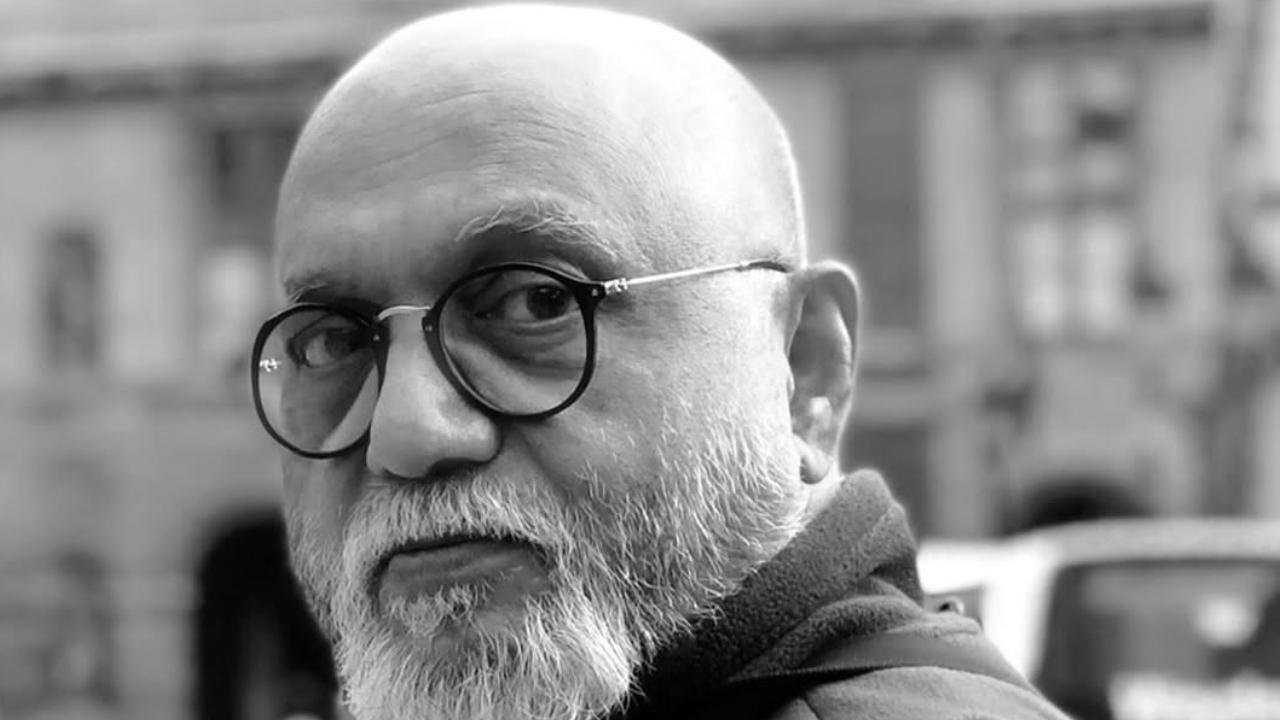
Pritish Nandy passes away at 73
8:24 AM
THE TIMES OF INDIA (January 9, 2025)
Poet, editor, TV show host, film producer, Rajya Sabha member, animal rights activist - Pritish Nandy, a gifted man of many parts and surprises, passed away in Mumbai on Wednesday. He was 73.
Born in Bihar's Bhagalpur town, Nandy was the brother of renowned academic Ashis Nandy. He was a prolific poet, writing with the passion and intensity of Latin American versifiers in his youth. Nandy often wrote with empathy for the young Naxalites who were killed for the cause they believed in, including in a poem titled, 'Calcutta if you must exile me.'
Eventually, it was Nandy who exiled himself. Shifting to what was then called Bombay, he found a new calling at The Times of India. He edited The Illustrated Weekly of India and oversaw Filmfare and Femina.
Pritish Nandy foresaw the future, and was always full of surprises. During Pritish Nandy’s tenure as editor, The Illustrated Weekly came up with several exclusives. Among his famous reports was an interview of Frank Camper, a mercenary who ran a training camp for his tribe in the jungles of Alabama. Nandy’s interview with singer Kishore Kumar provided an insight into the mind of the musical genius. As an editor, he also had a fondness for special issues related to quiz, sports and cinema — all collector’s items.
Moving on to the world of motion pictures and television seemed to be a natural step. He hosted The Pritish Nandy Show on DD. When he set up his own media company in the early 1990s, he named it Pritish Nandy Communications.
In the 1990s, Bollywood was still doing film business the traditional way. But Nandy foresaw the future. He was among the pioneers in the corporatisation of Bollywood. Among his noteworthy films are the big budget, multi-starrer thriller, Kaante, and director Sudhir Mishra’s masterpiece, Hazaaron Khwahishen Aisi. Other films such as Bollywood Calling, Jhankar Beats, Chameli, Pyaar Ke Side Effects were entertaining yet different from humdrum Bollywood. They typified the new polished Bollywood, still trying to find its way in the new millennium.
Considering his affinity for Leftist movements in the past, many were surprised when he was nominated to Rajya Sabha by Shiv Sena. Nandy was the first MP from the city to use his local area development fund (MPLAD) for the heritage precinct at Kala Ghoda.
But Nandy was always full of surprises. He played a key role in setting up NGO People for Animals with Maneka Gandhi. He saw the potential of the internet before most, playing a key role in setting up one of India’s first cyber cafes. And he was a popular columnist.
His death was mourned by many ranging from actor Sanjay Dutt to writer Ashwin Sanghi to academic Amitabh Matttoo. Actor-politician Anupam Kher wrote on X, “Deeply deeply saddened and shocked to know about the demise of one of my dearest and closest friends #PritishNandy! Amazing poet, writer, filmmaker and a brave and unique editor/journalist!” Kher also posted how Nandy had anchored him during his day of struggle.
Farhan Akhtar's need for order is borderline OCD-Saket Chaudhary
7:57 AM

Priya Gupta (BOMBAY TIMES; February 22, 2014)
Saket Chaudhary, 39, is curious, sensitive and structure-oriented. He is little closed and creates a space around him, making it difficult for others to get in. To him, competence matters more than financial success and he needs to be convinced that what he is doing, he is doing well. His parents have only asked one thing from him — to do in life whatever makes him happy and independent and that has emotionally made him secure and freed him from the burden of having to explain to others what makes him happy. It took seven years to make his second film but he sailed through the tough emotional period, thanks to his co-writer Zeenat Lakhani. Over an hour-long conversation ahead of his romantic comedy Shaadi Ke Side Effects, he spoke to Bombay Times about Farhan’s need for order, Vidya’s comfort with chaos and why sessions of whisky with Aziz Mirza were invaluable. Excerpts:
How did you become a filmmaker?
I am a Punjabi, born and brought up in Delhi. My father was into marketing of pharmaceuticals and is now retired. After graduating in Physics, I had more or less decided that I would not do that even though I sat for the JEE and wanted to do something related to writing, be it in journalism or advertising. So then I went to Pune and did a masters in Mass Communication, post which I came to Mumbai when I was 21. I started assisting ad commercial makers for a year and then started writing Movers And Shakers and became the head writer for the show. I then started assisting Aziz Mirza and that is the first time, I started helping out with writing in a feature film. I met Santosh Sivan, who was the cinematographer, who asked me if I wanted to write Asoka and that’s how I wrote my first film and decided that I wanted to be a filmmaker.
Who are the people who have encouraged you in your career?
I wrote my first script for Pyaar Ke Side Effects, but no producer was willing to make it till I met Rahul Bose, who liked the script and took me to meet Rangita Nandy, who then decided to produce it. When I came to Mumbai, my parents supported me financially for the first year, after which I took care of myself. Despite being the seventh assistant to Aziz Mirza, he allowed me to participate in writing and he allowed me to speak in front of himself as also in front of a giant star like Shah Rukh Khan, which gave you confidence. Aziz sahab is this grandfatherly figure, who is extremely accepting and open and he has his durbar, where everyone contributes and gets to share his whisky, that is his pride and joy. His way of working was very fluid, but I learnt how to think on my feet. Then there was Santosh Sivan. I was just 25, but he gave me the confidence to go write a film like Asoka and that was a massive learning curve. He understood the camera and is a genius and one of the most fearless people I know who can do anything. I am neither fearless nor fluid like Aziz sahab or Santosh and may be that is why I liked them so much. I studied at Springdales School in Delhi and I remember telling my teachers in fifth standard that I wanted to be a writer, but they not only didn’t mock at that, which could easily have been the case in Delhi, but they were very encouraging. I would finish my English paper in half hour as I wanted to spend the balance one-and-half hours in writing my essay. And lastly, but most importantly, I never had to worry about my parents’ support. Even in fifth standard when I wrote stories, they would read them out to me and always encourage.
What is Shah Rukh Khan like?
He was a massive star but he was very friendly and did not have an attitude that a star his stature could have had. Santosh Sivan being a South Indian would be on the floor by 9am wanting to start the shoot but Shah Rukh would not show up till 12.30. But once Shah Rukh came on the set, he just switched on and was extremely spontaneous and organic.
What is Farhan Akhtar like?
Farhan is also very invested in the script. For him, your evaluation comes from the script and if that is good, he has full confidence. He is very precise in taking up things in the script. He does not let go of something he is uncomfortable with and even though he will make his point in a polite manner, he will make his point. Either you have to convince him or he will convince you. He likes to concentrate a lot, so the set needs to be in a certain organised manner for him. He likes quietness. Even if I do my best, the fact is that our sets are very noisy, but due to him I learnt how to cut the chaos on the set to give actors their space. He likes order. In fact, his order is borderline OCD. Farhan will not shout but he makes his point well enough.
How about Vidya Balan?
Vidya read the script four times and took two narrations before she said a yes. But once she is sure, she invests herself completely. I remember once the house in which she and Farhan live in the film was ready, she went there a day in advance to make the space her own and in fact, changed some things there that she felt would go with her character. She will keep a constant conversation about the script going with you to take references of your life and use her own life references for acting. The film is about what happens to a couple after they have given birth to a child. So she drew references from her sister Priya as she was a mother. As much as Farhan operates with order, she does not mind working with chaos. Both Farhan and Vidya come from directorial backgrounds (Vidya was an assistant director on TV). I love and respect when actors read the script as that is the only tangible thing you have before the film. You'd believe that everyone does it, but there are a lot of people who don't read scripts and just take a narration. Both Vidya and Farhan read the script thoroughly to the extent that they would come back with notes on it.
What makes you a part of the executive council of the Film Writers Association?
I am extremely passionate about the Film Writers Association and feel that writers should get their due recognition and return. If we need to make better films in this business, then it may be the most clichéd thing that story is the most important thing, but that does not reflect in a way. A storywriter gets paid from 10 lakhs to 80 lakhs if it’s a senior writer compared to a senior director, who could get paid upto 7-8 crores. I am a director and a writer and can safely tell you that as much as come parts of a director’s work may be bigger and larger, but it is not that much larger what a writer creates. Why should a writer be paid just 10% of a what a director is paid as the writer generates employment for everybody else. Tell me which director can go to work if a writer doesn’t write a script? A producer will tell you it is his money driving the film but had there not been a story, he would not make more than his bank interest on that money. A certain recognition and royalty is an aspect in any civilised society today. Why should there be so much resistance to it over here?
How do you safeguard a script?
When I was in the Film Writers Association, I was in the dispute committee and would see how people’s work was stolen and advised them on what to do. I learnt from there. I am fairly precise on the legal process, have lawyers and register my script before I give a narration to anyone.
There was a gap of seven years between your two films. Was that period tough for you?
After Pyaar Ke Side Effects, I wrote another script that was not as good. But I had wasted a year-and -a-half writing it. Then I wrote Shaadi Ke Side Effects which I had resisted to write earlier as I did not want this to be my second film. Getting up and just sitting in front of your computer for that many years is an incredibly difficult process. It’s one of the loneliest things to do. Of course you have to enjoy loneliness to write. But a blank page is damn scary. I lived in a bare minimum manner during this time as I did not know the future. You see your friends acquire things you have not acquired. But it made me reach a conclusion that you have to believe that writing is your calling and that life is not going to pan out for you like it has for other people and therefore you lower the expectation from the things you want from life. My co-writer Zeenat was a personal and professional anchor as we have been in this journey for so many years together. It was even more difficult for her as this was her first film and she had to wait for so many years. But we were a constant support to each other. I could see that my parents were concerned about me, but they never said it. To grow up with the emotional freedom in your head that you can do whatever makes you happy and independent is the best thing your parents can give you. You land up internalising that whatever I am doing has to satisfy me and I don't have to explain that to other people.

I wanted to get married even before the movie-Shaadi Ke Side Effects director
9:53 AM
Shaadi Ke Side Effects might be one of the films the audience is
looking forward to the most this year, but filmmaker Saket Chaudhary
says he never intended to make a sequel to Pyaar Ke Side Effects
Deepali Dhingra (MID-DAY; February 9, 2014)
 Eight years ago, when director Saket Chaudhary made his debut with
Pyaar Ke Side Effects (PKSE) , the Mallika Sherawat-Rahul Bose starrer
wasn’t really expected to do box office wonders, but the movie turned
out to be a surprise hit. Things have changed now. Expectations are
already high with Shaadi Ke Side Effects (SKSE), Chaudhary’s second
film that’s set to release on February 28. While some of those
expectations are to do with the film being a sequel to the debut hit
film, most are to do with the lead jodi — Farhan Akhtar and Vidya Balan. Chaudhary, who has earlier scripted Asoka , talks about directing two
married people while he himself is unmarried and how making a sequel was
never his intention.
Eight years ago, when director Saket Chaudhary made his debut with
Pyaar Ke Side Effects (PKSE) , the Mallika Sherawat-Rahul Bose starrer
wasn’t really expected to do box office wonders, but the movie turned
out to be a surprise hit. Things have changed now. Expectations are
already high with Shaadi Ke Side Effects (SKSE), Chaudhary’s second
film that’s set to release on February 28. While some of those
expectations are to do with the film being a sequel to the debut hit
film, most are to do with the lead jodi — Farhan Akhtar and Vidya Balan. Chaudhary, who has earlier scripted Asoka , talks about directing two
married people while he himself is unmarried and how making a sequel was
never his intention.
Pyaar Ke Side Effects came out in 2006. Why did it take you eight years to bring out your second film?
There were a couple of scripts I was working on that didn’t pan out before I started to pen down SKSE and then, it took about a year or so to write this movie. After that research and casting took time. Finally, when the cast was finalised, they were busy finishing their respective projects. So one thing led to another and it just compounded into a long break.
Did you always intend to make a sequel to PKSE?
In fact, there was never an intention to make SKSE. It was just that after some of the scripts I was working on didn’t work out, this idea came to me and it felt like an interesting space to go into because most people don’t explore marriage, especially marriage after a child. I started writing it, and then, from a marketing point of view, it made sense to brand it like a sequel. But all that came in later. The initial idea was just to do a film on marriage and family.
With actors such as Farhan Akhtar, who just delivered the super-successful Bhaag Milkha Bhaag and Vidya Balan, who is one of the top actresses of today, are you playing it safe?
Not really. When Farhan gave the green signal for the movie, the shooting for Bhaag Milkha Bhaag had not even completed. My reference point was Zindagi Na Milegi Dobara. There was all the potential and he was very popular but he still hadn’t become this established solo star. As for Vidya, as incredible as an actress she is, she is not a typical rom-com actress. I was playing safe by getting two really good actors, but it wasn’t safe in terms of commercial viability because of the casting.
You’re directing a movie on marriage and you are yourself unmarried. How was it directing two married people on the sets? Were there any revelations for you?
Some of it alters, while some of gets confirmed. So what you get is lot of feedback and connection. In that sense, it becomes interesting because the subject matter links to most people’s lives, and everybody has a take on it, even the ones who are not married on the sets. So there’s a lot of influence that comes in the script this way.
So after directing this movie, do you plan to get married?
I wanted to get married even before the movie (laughs). I think we are trained for a lot of things in life, but somehow not trained for things like marriage or raising a family. It just seems like these are things that are supposed to come naturally to us, but that’s not true. Marriage and family are a lot of work. We’re making a romantic comedy so there is no grand idea to give a message but the idea is that people can maybe understand the dynamics of making marriage work. There are a lot of clichés circulating about how marriage works, and people end up becoming victims to the clichés. Hopefully, when they see the film, they will be able to create an interesting new dialogue with their partners.
We heard that you’re working with Saif Ali Khan next?
I am working on a film with Illuminati Films which is Saif’s company but I don’t necessarily know Saif will be in it or not. I’m still working on the script. We’re making a romantic comedy so there is no grand idea to give a message but the idea is that people can maybe understand the dynamics of making marriage work
Deepali Dhingra (MID-DAY; February 9, 2014)
 Eight years ago, when director Saket Chaudhary made his debut with
Pyaar Ke Side Effects (PKSE) , the Mallika Sherawat-Rahul Bose starrer
wasn’t really expected to do box office wonders, but the movie turned
out to be a surprise hit. Things have changed now. Expectations are
already high with Shaadi Ke Side Effects (SKSE), Chaudhary’s second
film that’s set to release on February 28. While some of those
expectations are to do with the film being a sequel to the debut hit
film, most are to do with the lead jodi — Farhan Akhtar and Vidya Balan. Chaudhary, who has earlier scripted Asoka , talks about directing two
married people while he himself is unmarried and how making a sequel was
never his intention.
Eight years ago, when director Saket Chaudhary made his debut with
Pyaar Ke Side Effects (PKSE) , the Mallika Sherawat-Rahul Bose starrer
wasn’t really expected to do box office wonders, but the movie turned
out to be a surprise hit. Things have changed now. Expectations are
already high with Shaadi Ke Side Effects (SKSE), Chaudhary’s second
film that’s set to release on February 28. While some of those
expectations are to do with the film being a sequel to the debut hit
film, most are to do with the lead jodi — Farhan Akhtar and Vidya Balan. Chaudhary, who has earlier scripted Asoka , talks about directing two
married people while he himself is unmarried and how making a sequel was
never his intention.Pyaar Ke Side Effects came out in 2006. Why did it take you eight years to bring out your second film?
There were a couple of scripts I was working on that didn’t pan out before I started to pen down SKSE and then, it took about a year or so to write this movie. After that research and casting took time. Finally, when the cast was finalised, they were busy finishing their respective projects. So one thing led to another and it just compounded into a long break.
Did you always intend to make a sequel to PKSE?
In fact, there was never an intention to make SKSE. It was just that after some of the scripts I was working on didn’t work out, this idea came to me and it felt like an interesting space to go into because most people don’t explore marriage, especially marriage after a child. I started writing it, and then, from a marketing point of view, it made sense to brand it like a sequel. But all that came in later. The initial idea was just to do a film on marriage and family.
With actors such as Farhan Akhtar, who just delivered the super-successful Bhaag Milkha Bhaag and Vidya Balan, who is one of the top actresses of today, are you playing it safe?
Not really. When Farhan gave the green signal for the movie, the shooting for Bhaag Milkha Bhaag had not even completed. My reference point was Zindagi Na Milegi Dobara. There was all the potential and he was very popular but he still hadn’t become this established solo star. As for Vidya, as incredible as an actress she is, she is not a typical rom-com actress. I was playing safe by getting two really good actors, but it wasn’t safe in terms of commercial viability because of the casting.
You’re directing a movie on marriage and you are yourself unmarried. How was it directing two married people on the sets? Were there any revelations for you?
Some of it alters, while some of gets confirmed. So what you get is lot of feedback and connection. In that sense, it becomes interesting because the subject matter links to most people’s lives, and everybody has a take on it, even the ones who are not married on the sets. So there’s a lot of influence that comes in the script this way.
So after directing this movie, do you plan to get married?
I wanted to get married even before the movie (laughs). I think we are trained for a lot of things in life, but somehow not trained for things like marriage or raising a family. It just seems like these are things that are supposed to come naturally to us, but that’s not true. Marriage and family are a lot of work. We’re making a romantic comedy so there is no grand idea to give a message but the idea is that people can maybe understand the dynamics of making marriage work. There are a lot of clichés circulating about how marriage works, and people end up becoming victims to the clichés. Hopefully, when they see the film, they will be able to create an interesting new dialogue with their partners.
We heard that you’re working with Saif Ali Khan next?
I am working on a film with Illuminati Films which is Saif’s company but I don’t necessarily know Saif will be in it or not. I’m still working on the script. We’re making a romantic comedy so there is no grand idea to give a message but the idea is that people can maybe understand the dynamics of making marriage work
Shaadi Ke Side Effects director all set to take the plunge
10:35 AM

Roshmilla Bhattacharya (MUMBAI MIRROR; January 16, 2014)
How does a bachelor make a film on shaadi ke side effects? By observing his married friends and borrowing from their lives and that includes his lead pair.
“Farhan (Akhtar) has been married a long time and has two kids. Vidya (Balan) has been around her sister’s twins and is just getting out of the honeymoon period herself. She admitted that post her marriage the biggest problem was sharing her space with husband (Siddharth Roy Kapur). It’s understandable, you arrange things one way and someone else does it a different way,” says Saket Chaudhary.
The writer-director of the upcoming rom-com admits that after years of researching the film, he has come to the conclusion that every marriage is a story in itself with its own problems, that can range from dealing with each other’s families to unrealistic expectations about the spouse. “But the biggest side effect is definitely a baby who can turn everything topsy-turvy and even rip apart a marriage,” Saket says knowledgably.
How does he know that given that he is yet to father a child? “I’ve not had the courage to babysit my nephew, who was born just before we started shooting, all day but from playing with him for an hour I can see what my brother and sister-in-law are put through. Besides I have first hand experience,” he retorts, reminiscing about his experience with young ones on the film’s sets.
Saket shot with five babies for the film, from a 15-day-old infant to a three-year-old toddler. “In one scene Vidya had to put the baby to sleep. As soon as the child arrived on the sets post 6 pm, we’d dim the light, talk in whispers, and pray she wouldn’t wake up. But she always did, as soon as Vidya put her into the cot. And this went on for four evenings in a row. It’s difficult to stick to a plan with babies and animals,” he sighs.
It’s been eight years since his directorial debut, Pyaar Ke Side Effects. Saket insists that the toolong intermission is more by default than design. “It took over a year to lock the script for Shaadi Ke Side Effects. Casting took time too with Vidya reading the script four times before giving her nod. And another script which was to happen didn’t,” he reveals.
The years, he admits, were filled with insecurity and anxiety because in showbiz, out of sight is out of mind. Bust he was encouraged by the fact that people still remember his first film. However, he’s quick to point out that Farhan and Vidya inhabit a world completely different from his earlier protagonists, played by Rahul Bose and Mallika Sherawat.
So what’s going to happen in Side Effects 3? And will it be another eight years before his third film? “I don’t know if there will be another Side Effects film yet. Next up is a film for Illuminati, Saif Ali Khan’s banner, which should roll by the end of this year. We’re still working on the screenplay so all I can say is that it will not be a urban rom-com like these two."
And after going through the pyaar and shaadi rigmarole in reel life he probably intends to remain single all his life? “No way!’ he quips. “Now that I know the side effects I am better equipped to side step them. There’s a lady, no names yet, and am close to taking the plunge.”
Subscribe to:
Posts (Atom)