Showing posts with label Punjab. Show all posts
Showing posts with label Punjab. Show all posts
Akshay Kumar paaji may be Haiwaan on screen, real life mein true insaan-Gurpreet Ghuggi
10:29 AM

Rishabh Suri (HINDUSTAB TIMES; August 16, 2026)
With floods recently wreaking havoc across India, the devastation in Punjab last year comes to mind. The floods left 40 people dead and damaged thousands of homes. Actor Akshay Kumar, we learn, stepped in to help, and his efforts are now bearing fruit.
Actor Gurpreet Ghuggi, who hails from Punjab and has worked with Akshay in films such as Singh Is Kinng (2008) and Cuttputtli (2022), tells us, “Akshay paaji got in touch with me, asking how he could help. Since people were getting assistance with food supplies, I suggested that the real help would be needed after the floods, for those whose houses were destroyed.”
Akshay then pledged to build 100 houses, 80 of which are now complete. Gurpreet adds, “I assembled a team to identify the people in need. These houses are mostly in the Gurdaspur and Amritsar districts. The work on the pending houses will be completed soon. It was all Akshay paaji’s doing.” The project has been carried out under the aegis of the Hari Om Foundation, founded by Akshay in memory of his late father, Hari Om Bhatia.
“Akshay paaji sirf on-screen hi haiwaan play kar rahe hain (in his upcoming film), real life mein he is a wonderful insaan. Woh nahin chahte thhe unka naam saamne aaye. He said, ‘Iss mein koi badi baat nahin hai. Help karna aur phir logon ko batana, mujhe theek nahin lagta’,” recalls Gurpreet.
I hope more people speak about the Assam floods-Bhumi Pednekar
10:18 AM

Rishabh Suri (HINDUSTAN TIMES; July 26, 2027)
With the Assam flood toll at 62 and over 7 lakh people still affected, actor Bhumi Satish Pednekkar has urged citizens to support relief and rehabilitation efforts in the state. Bhumi shared a video on Instagram appealing for donations of food, mattresses, sanitation supplies and other essentials.
Speaking to us, she says, “At this point, large parts of the country have come together for a unified voice. A lot of other important things across the country are not getting a platform, and one of those things is the Assam floods.”
The actor says she became aware of the scale of the crisis after being contacted by someone involved in relief work. “That’s when I realized how disastrous the entire situation is... dead bodies are floating… and the amount of cattle that has been swept away in the flood.”
Calling for citizen-led support, she adds, “Of course we have our Army on ground, and the government is doing what they can do. But I really appeal to all citizens… the way they came together last year for the Punjab floods via citizen-led initiatives, people going on boats to distribute food, we need to come together for this too.”
Diljit Dosanjh's Satluj taken down amid fears of reviving separatist sentiment
11:04 AM
Mohar Basu (MID-DAY; July 7, 2026)
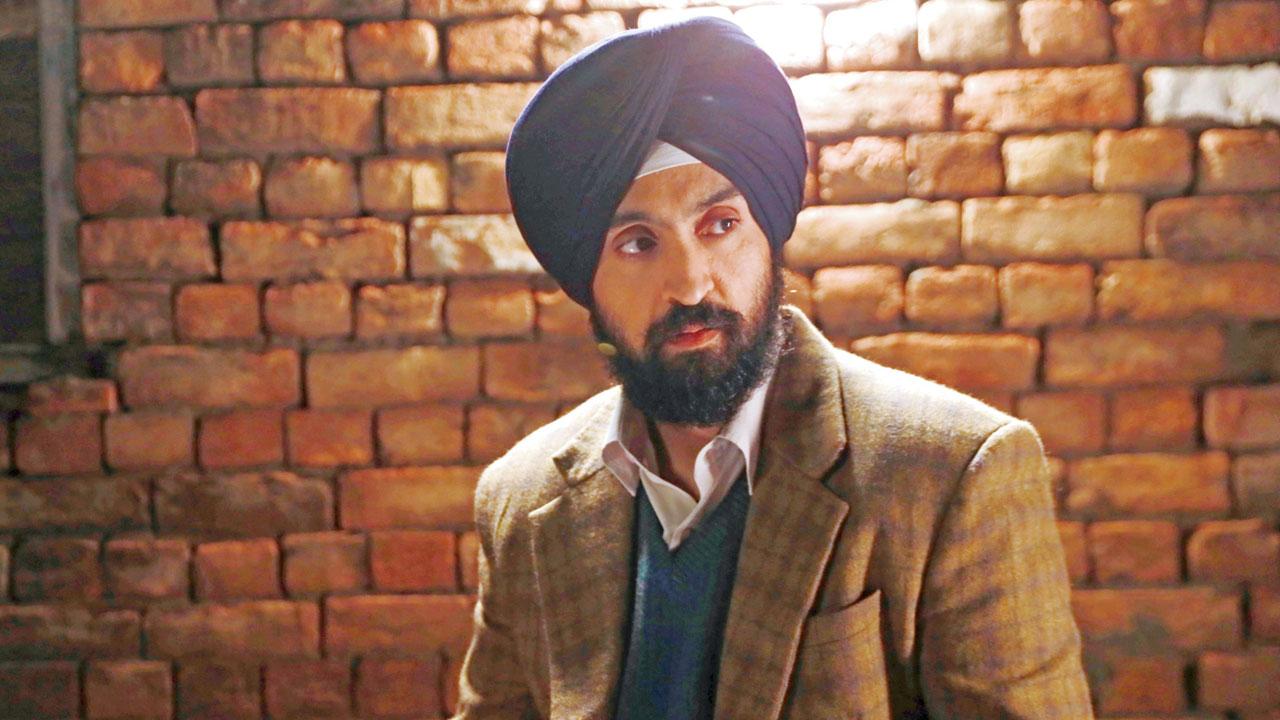
Just about 48 hours. That’s how long Diljit Dosanjh’s Satluj, formerly titled Punjab '95, was available for streaming in India before it was pulled down from ZEE5 on the evening of July 5, even as it remained accessible overseas. Sources have told mid-day that the takedown decision came after the government apparently flagged the film — a biopic on human rights activist Jaswant Singh Khalra — citing threats to national security.
Satluj chronicles how Khalra investigated the extrajudicial killings of Sikh youths during the Punjab insurgency between 1984 and 1995. Sources revealed that authorities were concerned that the film could be used to revive separatist sentiment in Punjab ahead of the Assembly elections in November.
An insider said, “The concern is the environment in which the film is releasing. There is a feeling that certain groups could weaponize the film to further their own agenda. The assessment has been made from a national security perspective, not a political one. With Punjab heading towards elections, the authorities are not willing to take chances.”
Despite the latest takedown, director Honey Trehan’s movie — that was stuck in a years-long battle with the Central Board of Film Certification (CBFC) — continues to circulate online. During a recent Instagram Live, Dosanjh acknowledged that users were downloading the film through torrent websites.
Shortly afterwards, an X account user told mid-day that over 5000 people had downloaded the movie through their link. “It started with over 300 downloads, but now there are over 5000 downloads of our print,” said the user.
The film’s journey
- On the first viewing in 2022, the CBFC sought 21 cuts. The makers approached the Bombay High Court
- In July 2024, mid-day reported that the CBFC’s list of cuts had risen to 85
- By September 2024, it sharply rose to over 120
- In January 2025, mid-day reported how the makers unsuccessfully tried a global release for the biopic
------------------------------------------
After years of censorship battles, title changes and release delays, Diljit Dosanjh’s long-delayed film finally reached audiences without cuts — only to disappear from ZEE5 within two days. As speculation grows, no official explanation has emerged
HINDUSTAN TIMES (July 7, 2026)
For years, Honey Trehan’s film on human rights activist Jaswant Singh Khalra existed more as a censorship controversy than a movie. Announced as Ghallughara, later retitled Punjab ’95 and finally released as Satluj, the Diljit Dosanjh-starrer spent nearly four years battling certification hurdles before quietly premiering on ZEE5 on July 3.
There were no promotions, interviews or marketing campaigns. Then, just 48 hours later, the film disappeared.
On July 5, ZEE5 announced that Satluj would be unavailable in India “until further notice”, citing unspecified “developments”. The platform has not elaborated further, and neither the CBFC nor the film’s producers have publicly explained the move.
HT City reached out to all stakeholders but had not received a response at the time of going to press.
ONLY ONE MAN IS TALKING — DILJIT
The most detailed response has come from Diljit, who suggested the team always feared such an outcome. During an Instagram Live session, the actor said the makers deliberately avoided announcing or promoting the release because they worried the film might never reach audiences otherwise. In fact, during a fan interaction a day before the takedown, he had predicted it could happen: “Today is Saturday. I feel it could be taken down by Monday. But no worry, you download it and watch.”
After the removal, Diljit remained defiant. “You can trouble me as much as you want. I am with Punjab till the day I die,” he said, adding that he was satisfied the film had reached viewers and urging those who downloaded it to share it further.
Beyond Diljit, most stakeholders have remained silent. Producer Ronnie Screwvala has not commented, while director Honey Trehan only reposted ZEE5’s statement with the message, “Tera bhana meetha lage” (God’s will seems sweet).
WHY WAS THE FILM CONTROVERSIAL?
The film tells the story of Jaswant Singh Khalra, the human rights activist who investigated alleged illegal cremations and extrajudicial killings during Punjab’s militancy years. Khalra was abducted and murdered in 1995, and the case later led to the conviction of several police personnel. Because it revisits one of the most sensitive chapters in Punjab’s history, the project faced scrutiny from the start. After being submitted to the CBFC in 2022, the film reportedly ran into objections and was asked to make more than 120 cuts. Trehan maintained that such changes would fundamentally alter the film. The prolonged dispute derailed release plans and eventually pushed the makers towards a direct-to-digital release.
WHY OTT?
Unlike theatrical releases, OTT platforms do not require prior CBFC certification. Industry observers believe streaming offered the makers the only realistic way to release the film in its intended form. That makes its sudden removal all the more puzzling.
SO WHAT HAPPENS NOW?
Some observers point to the film’s politically sensitive subject matter, while others have noted that Punjab is due to hold Assembly elections early next year. Film trade analyst Atul Mohan says the exact trigger remains unclear but believes the subject itself may have raised concerns. “It is definitely a sensitive issue. Elections are coming in Punjab and maybe there could be a concern that no one should use this as propaganda,” he says.
Adding to the controversy, advocate Vineet Jindal has said he filed a complaint with the Ministry of Home Affairs seeking action against the filmmakers and ZEE5, alleging that the film promotes a distorted narrative around Punjab’s insurgency years, in addition to an FIR against Diljit. There is currently no indication that the complaint is linked to the film’s removal.
Imtiaz Ali on Main Vaapas Aaunga's slow opening: "We are not a star-driven film, so it was supposed to be like this"
9:52 AM

The filmmaker on his latest movie’s slow-burn box office journey, why Gen Z is often misunderstood, and Diljit Dosanjh
Akash Bhatnagar (HINDUSTAN TIMES; June 19, 2026)
Even as Main Vaapas Aaunga (MVA) records a gradual uptick at the box office, filmmaker Imtiaz Ali says he always expected the film to find its audience over time rather than through a blockbuster opening.
“We are not a star-driven film, so it was supposed to be like this. If people like it, they will tell others to watch it, and that’s how the film will grow,” he says.
Ali is particularly encouraged by the response from younger viewers, who he believes are yearning for deeper connections. “I feel the younger generation needs love the most. They are sensitive, romantic and seeking commitment, but they are often misunderstood and labelled as flaky. Their lives are different from previous generations, but they are searching for something meaningful,” he says.
Set against the backdrop of Partition, the film intertwines a love story with the lived experiences of survivors. “When I heard their stories of what they’ve seen, what they remember now after 78 years, I realized that no love story can happen in a vacuum. It happens in the real world, and the real world of the era of partition was necessary for the setting of this love story,” says Ali.
He was also unfazed about mounting a large-scale film led by relatively new actors Vedang Raina and Sharvari. “I am a man, not from the trade, but from the art of filmmaking. I do understand the power of cinema and performance, and also the power of good casting. If all those things come together, then there is a certain power that is created. I had no doubt that both these actors will be able to headline this story well,” he says, adding, “But I also knew that on the poster, there is also Diljit (Dosanjh). Everybody in the world knows him and they are interested to see what he’s doing. I was sure that there was going to be a poster appeal because he is there.”
While Imtiaz Ali has made romances across decades, he claims that he “doesn’t come from a point of understanding love”. “In Socha Na Tha (2005), the confusion of Viren (played by actor Abhay Deol) was actually my confusion of committing in a direction but your heart pulling you in another. I didn’t have an answer for that but I made a movie on it. Jab We Met (2007), in my mind, was not even a love story. It is about two people who meet as strangers and eventually become like the other. They complete each other and realize that [they are in love] later,” he says.
Similarly, Main Vaapas Aaunga (MVA) is set up as a love story, but also showcases the ordeal faced by the people of Punjab during the 1947 Partition. Does Ali feel that the film should be made tax free, especially in Punjab? “A lot of people have said that this is a story of Punjab, and also in a way of Bengal and other parts of India. If people feel that way genuinely and if that comment of national interest is out, then there must be a process in these states to see if the film can be made tax free and we’d be looking into it,” he says.
The filmmaker also asserts on the universality of the story, insisting that tragic incidents like the Partition are happening even today, something he brought out with the video of Kya Kamaal Hai in MVA’s end credits. And it was Diljit who pushed for it.
“I must thank him and Irshad (Kamil, lyricist) for encouraging me to make the video. I had never done or seen anything of this sort, but Diljit said, ‘Ye to karna hi hai kyunki ye phir isko sabki film bana dega’,” he shares.
We don’t get the same financial security as actors, says Kohrra 2 writer Gunjit Chopra
9:14 AM

Samarth Goyal (HINDUSTAN TIMES; February 20, 2026)
As Kohrra Season 2, released recently, opened to rave reviews, especially for its intriguing storytelling, writer Gunjit Chopra feels the spotlight hasn’t changed the reality for screenwriters.
“After every show, you’re back to a blank page. It’s not the same financial security that maybe an actor gets,” he says, adding, “We need to do more for screenwriters so they feel safe to tell their stories. Most writers think, ‘Let me make one story I want, and then one for the producer, so I can pay the rent’.”
Set in the small town in Punjab, Dalerpura, the series follows officers Dhanwant Kaur (Mona Singh) and Amarpal Garundi (Barun Sobti) as they investigate a murder. What begins as a routine case slowly unravels deeper truths about the victim’s past, exposing layers of patriarchy, power, and suppressed guilt.
While the first season was praised for its gritty portrayal of Punjab’s underbelly, Season 2 stands out for its deeper emotional resonance and more character-driven storytelling.
The emotional realism that defined both seasons, the screenwriter who also wrote the show Pataal Lok says, came from looking outward. Comparing how thrillers are presented in a human way in foreign cinema, Chopra notes, “In India, we either make things larger than life or go into something like Singham (2011), which is on another tangent.”
He adds, “When you make a human drama, you look for humanity in any profession, be it a cop or a businessman. So that was the idea (behind Kohrra).”
To make sure that the show prioritizes human connection, rather than a mere spectacle, the 38-year-old says, “I did deep research, and I spent a lot of time with cops, so I know it’s not an easy job.”
He adds, “In Punjab, one police station covers 60 to 80 villages and one investigating officer is dealing with 70 or 80 cases. That is not human.”
I hope someday I get to photograph Ganesh Chaturthi in all its emotion and glory-Sharvari
10:22 AM

Onkar Kulkarni (BOMBAY TIMES; January 30, 2026)
Sharvari’s love for photography, which began years ago with an old-school broken camera that needed a film roll, has now blossomed into a full-fledged passion.
She remembers, “My friend’s mom had a camera that wasn’t working. We somehow fixed it, and she let us use it. With that camera, you couldn’t take 10 photos and decide later. You were in the moment completely. I would click pictures and then develop the film. The process felt exciting and magical.”
Later, a second-hand Nikon FM10 from a Churchgate store became her loyal travel companion.
“The light meter, loading the roll, everything felt like entering a whole new world. Photography is all about the way you see the world. Which moments feel enduring, what emotions pull me in… whether it’s people, architecture or the spirit of a city, a film camera forces you to pick the moment. And that makes every frame special.”
‘Punjab has this peace and positivity that you can feel in the air’
When she travelled to Amritsar recently to shoot for Imtiaz Ali’s next film, Sharvari packed her camera. This was her first shoot in Punjab, and she loved the experience. “I’ve absolutely fallen in love — with the food, the people, the culture. Punjab has this peace and positivity that you can feel in the air.”
During the shoot, whenever time allowed, she would set out with her camera, documenting the landscapes, the bustle of the streets and the quiet of dawn.
The Munjya actress says, “I captured a series there. It reflects Punjab for me - full of warmth, kindness and serenity. I also love clicking pictures of every person I work with. I’m also creating a series for each film — capturing the crew and the people who actually make cinema happen. These behind-the-scenes moments feel so alive.”
‘I now notice architecture more’
Photography, she says, has changed the way she travels. “I notice architecture more, the way cities are built for their weather, how roads and buildings are maintained. I pay more attention to people — their moments and moods.”
Her dream is to capture the vibrant mood in the city during Ganesh Chaturthi. “It’s my favourite festival. I’ve seen stunning visarjan pictures on Instagram. I hope someday I get to photograph it in all its emotion and glory.”
Kahin bhi chale jao, Golden Temple ki Diwali ka koi mukabala nahin hai-Shehnaaz Gill
9:55 AM

For Shehnaaz Gill, Diwali shines brightest when spent with family, faith and the warmth of lighting a diya both around and within
Vishakha Pandit (HINDUSTAN TIMES; October 17, 2025)
Actor-singer Shehnaaz Gill believes that Diwali feels truly special only when spent at home, surrounded by family, laughter, and festive cheer. “It’s going to be a working Diwali, but the best part is that I will be home in Punjab this year,” she tells us. She is missing her brother, singer Shehbaz Badesha, who is currently a contestant on Bigg Boss 19. “Although I’m sad he won’t be with us in person, he’ll be there virtually through our TV,” she shares.
“Kahin bhi chale jao, Golden Temple ki Diwali ka koi mukabala nahin hai. The peace that you will feel there is something else,” she insists, adding, “Chhote hote sab saath mil kar gurudwara jaya karte the. Itne saalon baad, we have kept the tradition intact.”
As a youngster, Diwali was “all about crackers, dher sari mithai, playing around, and darshan”. But having “matured and understood life better”, the 31-year-old feels, “Now, Diwali is about light; we should light a diya inside us so we can get rid of the darkness within.”
Celebrations include giving back to the community. The actor shares, “Whether it’s donating to an orphanage or visiting an old-age home, these small gestures can bring so much joy... Diwali is about bringing light into someone else’s life, too. And if we can do that even in a small way, then that’s the real celebration.”
With the festival also marking a season of indulgence, Shehnaaz admits that maintaining fitness can be challenging: “I love Kaju Katli. Bahut mushkil hai usko resist karna! Fitness zaruri hai, par Diwali par mithai toh banti hai.”
And while celebrations are important, Shehnaaz is mindful of the environmental impact. “Diwali hai toh pataake toh bajenge, but it’s important to celebrate responsibly... I’ll burst crackers but just a few, for shagun, which is more than enough.”
Salman Khan lends a helping hand by sending boats, ration to those affected by Punjab floods
9:15 AM
Upala KBR (MID-DAY; September 11, 2025)
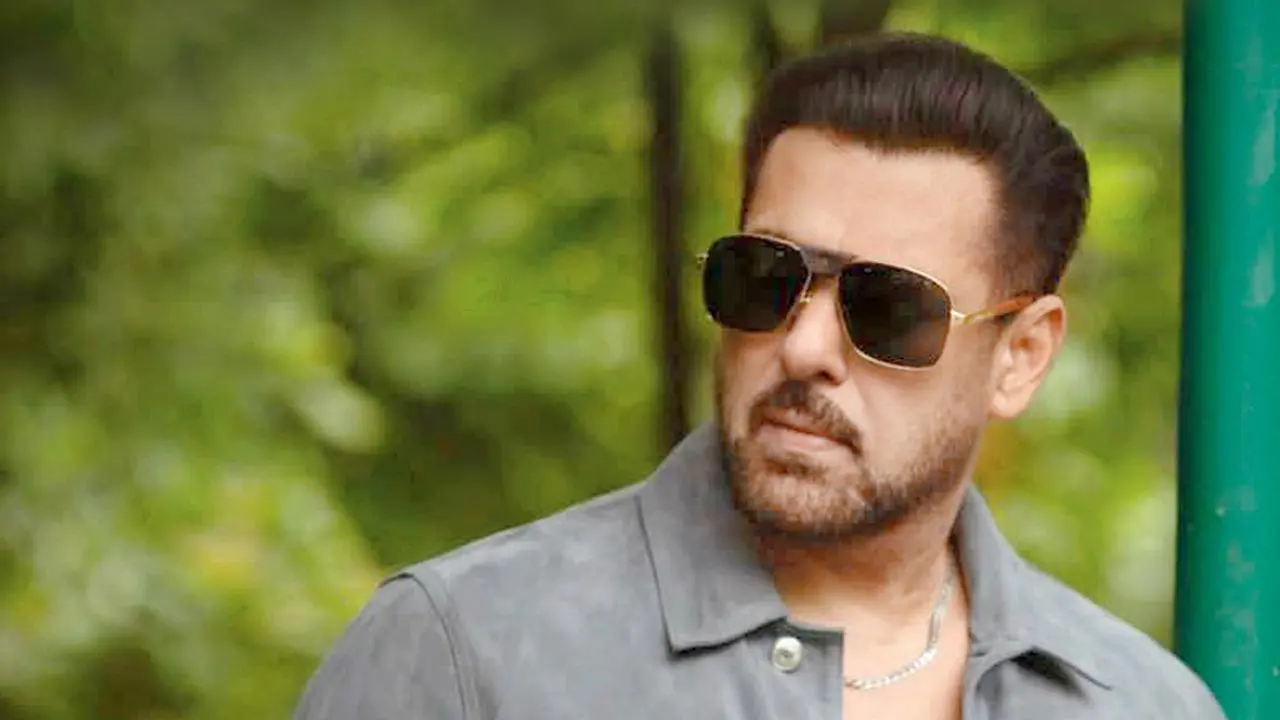
Salman Khan may be in Ladakh currently for Battle Of Galwan’s shoot, but he is never too far away to extend a helping hand. On the Weekend Ka Vaar episode of Bigg Boss 19, the host indicated that he had joined the relief efforts as Punjab reeled in the aftermath of the floods. mid-day has now learnt that the superstar, distressed by the unfolding tragedy, mobilised the team of his not-for-profit organization Being Human, which began by sending 25 rescue boats to the hardest-hit areas of Ajnala, Firozpur, Gurdaspur, and their nearby villages.
The foundation’s next step is to distribute food. To that end, the superstar has instructed his team to keep 25,000 ration packets ready, each containing two kinds of dal, rice, wheat, mixed masala, sugar, and tea leaves.
A source says, “Salman started monitoring the situation right when the floods began, and a week before his outburst on Bigg Boss 19, he had charted out his course of action. Coordinating with a politician and his friend, Rahool N Kanal, the actor has kept 25,000 ration packets ready for affected areas like Gurdaspur, Kapurthala, Firozpur, Pathankot, Fazilka, and Hoshiarpur. As soon as the local authorities give the go-ahead, these packets will reach the cities and towns.”
With the disaster response teams and many not-for-profit organizations handling the immediate care of those affected, Khan is focusing on the long-term rehabilitation plans of the state. The superstar wants to ensure proper medical care is available across towns and villages.
The source elaborates, “He has arranged for five lakh tablets of Doxycycline and Azithromycin that are essentially antibiotics, and chlorine tablets to disinfect water, as a rise in infections and diseases can be expected in the floods’ aftermath. The Being Human team has also roped in private doctors, who will go to the villages as soon as the water recedes. They plan to also put up gazebos or tents in the affected villages, which can serve as a centre from where medical or other forms of aid can be deployed. Salman has also mobilized his local fan clubs in Maharashtra, Gujarat, and Punjab to identify families that have been affected and pass on the information to his team. Even though the actor is shooting, he is constantly in touch with his team, monitoring the progress of their relief efforts.”
I wish for a drug-free Punjab this Baisakhi-Sukhwinder Singh
8:35 AM

Debarati S Sen (BOMBAY TIMES; April 12, 2025)
With Baisakhi approaching, singer-composer Sukhwinder Singh reflects on the festival that shaped his early years. Known for chartbusters like Beedi, Taal Se Taal, Fashion Ka Jalwa, Haule Haule, Kar Har Maidan Fateh, Jai Ho, and more recently Doubtwa, Sukhwinder shares memories of celebrating Baisakhi in his village. In this exclusive conversation with BT, he speaks about his musical beginnings, the global rise of Punjabi music, and his hope for a drug-free, healthier Punjab.
What does Baisakhi mean to you?
Baisakhi is a celebration of all your efforts throughout the year. Farmers reap their harvest, sell their grains, earn so, it’s also the vaisakhee (or crutch), ek sahara hai jo aapko aane wale saal mein kaam aaye. Yeh poore Hindustan ka New Year hai, khaas taur par Punjabiyon ka. Baisakh pehla mahina hai, pehla season.
Is this just a festival, or does it go deeper than that for you?
I have beautiful, fond memories of Baisakhi from childhood. In Punjab, you’ll see one colour everywhere during Baisakhi, safed. White kurtas, white dhotis, white padgis. It represents purity, celebration, chamakta hai. Main bachpan mein bhi white libas, white chappal and padgi pehenta tha and I’d sing shabads at the gurdwara. I was just seven when people first heard my voice, and it was Gurbani. Guru Granth Sahib is the only scripture iss Brahmand mein where every hymn is based on a Raag. That’s the deep, divine connection between music and spirituality we have. Today I have worn a blue turban, signifying courage, patriotism and spiritual strength.
Any fond memories from your pind?
On Baisakhi, main gurdwara mein mattha tekta tha, and the whole town would be buzzing with rang-birangi Punjabi songs. I’d sing boliyan, rhythmic couplets that bring people together. Also, bhangra is huge during Baisakhi! The energy would be electric. There’d be competitions everywhere, and it's said that on Baisakhi, more than sawa lakh dhols beat together across Punjab. Though it’s a farmers’ festival and marks a new year, Baisakhi belongs to everyone, every religion, every community.
You mentioned food plays a big role in Baisakhi. What’s your most memorable food tradition?
Kam se kam do kilo mithaiyan kha jaata tha, and not the kind you go out and buy! Mithaiyon ke langar lag jaate the. Jalebi was the star, followed by imartis, rasgullas the size of apples, and crunchy patisas, (similar to soan papdi). But our favourites were always from the langar, because they were free and full of love! I remember I used to get sweets from everyone in the village because I’d sing for them. Aur sabse zyada pasand tha crispy, garma-garam jalebiyan!
Apart from food and bhangra, what other Baisakhi rituals do you remember?
One big highlight used to be kushti! Every village would have a wrestling competition. And the prizes? Pure desi style! Winners would get 100 kg of ghee, a giant cannister of milk, 500 kg of almonds. I remember seeing wrestlers gulp down a kilo of ghee right after winning.
You speak about your village with such love. What do you miss the most?
The culture and purity. The air, the food, even the silence has healing in it. No pollution, no cement, no chaos. Pind di mitti is magical. I still apply Multani mitti to my face regularly. No makeup. Gaon ki mitti ka asar hi alag hota hai.
How are you celebrating Baisakhi this year?
Baisakhi ek din nahi hota for us, its like Diwali, the buzz is for a week. This year, I’m performing in Ras Al-Khaimah, and from there I’ll fly straight to Amritsar. I’ll have langar ki mithai there. Even though I can get sweets anywhere, there’s nothing like the taste of langar. Uska swad hi kuch aur hai. I’m also wearing a special seven-coloured turban this time, satrangi pagdi. Isse badi Taj Poshi kya hogi? On Baisakhi, I forget I’m a celebrity and sing wherever I feel like. I’ll eat jalebis, laal surkh gulab jamuns, and doodh-patti ki chai (tea without water, just milk).
When did you first realize music was your true calling?
Aadat pad gayi thi gaane ki bachpan se. I gave up kites and all those fun childhood games because music had taken over. I didn’t need much, just a harmonium, a percussionist. Back then, people around me, my mentors, believed that if a child was drawn to music, it meant he was straying from studies. But for me, music gave my soul peace and my heart joy. Itna energy aur sukoon milta tha, how to stay away from that? So I chose music and left everything else behind. I went go to Darbar Sahib (Golden Temple) and would sing bhajans and shabads. The aura there, wahi mera maata-pita ban gaya.
Punjabi music has exploded globally. Why do you think it connects so deeply across cultures?
Punjab ke log zindadil hote hain, they live life king-size, even while staying within limits, maryada mein. Dushman ke saamne bhi unki awaaz khuli hoti hai, and that same energy shows up in our celebrations, our music. That’s why our instruments are bold too, dhol baja toh dharti hile. Punjab’s spirit, its poetry, its raw power, people all over the world feel it in our beats. There’s no small-scale celebration in Punjab! I’ve added Punjabi flavour to Bollywood with Aaj Mera Jee Karda (Monsoon Wedding), Chaiyya Chaiyya (Dil Se), Layi Vi Na Gayee (Chalte Chalte) and more. The rhythm, the vibe, the energy, it’s infectious!
What’s your Baisakhi wish for Punjab?
I wish for a drug-free Punjab. Punjab ko isse bhaitareen Baisakhi ka tohfa koi nahi ho sakta. I want my Punjab to return to its original glory — strong, healthy, proud.
Punjab abhi duwidha mein hain. Paani tak ka problem hai. One of the oldest rivers there has become black with chemical pollution. Punjab ke safed libas mein dard ke dhabbe hain.
Baisakhi dish you can’t resist:
Jalebi! And in savoury, samosa with teekhi chatni.
One Punjabi phrase that always makes you smile:
Ki haal hai? So simple, yet full of warmth.
Your go-to Baisakhi songs to set the mood:
Aaj Mera Jee Karda, it captures the Baisakhi spirit perfectly. And of course, Jugni, Jugni!
I am never considered for high society roles-Manoj Bajpayee
8:49 AM
Renuka Vyavahare (BOMBAY TIMES; September 25, 2024)
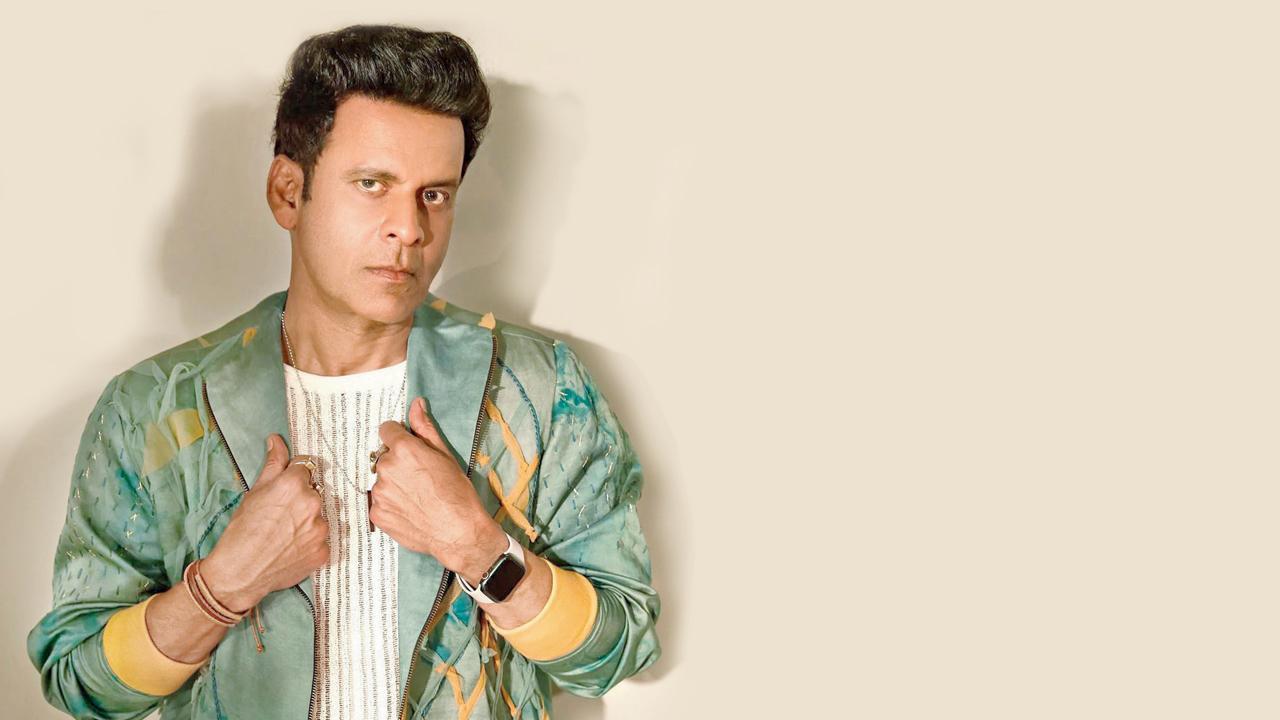
Manoj Bajpayee, whose career boasts of some remarkable and versatile power-packed performances, points out the stereotyping that exists in Bollywood and says that it’s time the film industry looks within and works on its weaknesses instead of defending them.
‘I am never considered for high society roles’
Talking about how stereotyping exists, looking back at his own film journey, Manoj says, “The only film before Gulmohar (2023) where I played a rich guy was Zubeidaa (2001). That was Shyam Benegal’s conviction. He was the one who felt that real maharajas were not Greek gods. They looked normal. In Veer-Zaara (2004), I played a politician from Pakistan. I had two scenes in it, but Yash ji (Chopra) was adamant that I do it. He cast me after watching Pinjar (2003). These filmmakers had that vision which stems from seeing life up close. Bakiyonko mujhe rich dikhaane mein dikkat hoti hai. The roles that I portrayed were mostly set in middle-class and lower middle-class stories. I am never considered for high society roles. No director could think of me as a rich guy, barring the two stalwarts that I mentioned. This stereotyping exists.”
‘Most people in decision-making positions in our industry belong to a generation that hasn’t seen India’
Manoj feels there’s a larger problem that the industry is facing today. He feels, if you dig deeper, you’ll notice that our industry (Bollywood) lacks insight towards life, our country and people.
The celebrated actor explains, “No one can plan a hit or flop. No one sets out to make a bad film. The problem that our industry is facing is lack of insight. Most people who are at the helm of studios or decision-making positions, belong to a generation that hasn’t seen India. They are completely cut off from reality. Their references are other films and not real life. And there came a point when tickets became unaffordable and south films in dubbed versions became people’s staple diet in the north because those films were more relatable.”
‘If you wish to pursue a career in Hindi movies, you must learn the language’
He also believes that actors in Hindi cinema need to have a command over the language. “As parents, those who can afford it, we want our kids to study in the best of English medium schools and get the best education. There’s nothing wrong with that. However, if these kids wish to pursue a career in Hindi movies, you must learn the language,” he argues.
Manoj adds, “You will be surprised to know, 20 years back, I didn’t have to struggle to get my script in Devanagari. Today, it’s a struggle because 98% actors read Hindi lines written in English. Without defending our weaknesses, we need to look within and correct those areas.”
‘People like me who come from remote places have seen life’
Talking about the advice he once gave an aspiring actor, he said, “People like me who come from remote places, we have seen life. I once told an aspiring actor, ‘Train mein baitho aur ek saal Hindustan dekho. Mere gaon chale jao, mera ghar khulva doonga. Stay there. That’s where you will learn about relationships as you will talk to common people’. For me, that experience will teach you more than any acting school.”
Fawad Khan's Pakistani film The Legend Of Maula Jatt not releasing in Mumbai
8:53 AM

As Pak blockbuster The Legend Of Maula Jatt gears up for India release, distributor asserts Fawad-starrer won’t hit Mumbai screens; hopes film will progress to the south after Punjab shows
Mohar Basu (MID-DAY; September 21, 2024)
In December 2022, shortly after it took Pakistan’s movie industry by storm, The Legend Of Maula Jatt was scheduled to hit Indian theatres. However, its release was opposed by certain political groups and subsequently cancelled. Two years on, the Fawad Khan and Mahira Khan-led blockbuster is finally arriving in Indian screens on October 2, becoming the first Pakistani film in over 10 years to have a theatrical release in India. Distributor Nadeem Mandviwalla is confident of a strong run, even though the action drama is opening only in the Punjab circuit for now.
Is he disappointed that it’s not releasing in Mumbai, the hub of Indian cinema? Not really, says Mandviwalla, hoping that Zee Studios -- which is facilitating the India release -- might have bigger plans ahead.
“It was Bollywood which started [the practice of] Pakistani actors not being allowed to work in India. The other film industries, like those in Punjab and south, have no problem. If the picture becomes a success, it should be released in the south. This is our Baahubali, and I feel the south audience will appreciate its scale and vision.”
The Legend Of Maula Jatt – a reboot of Pakistan’s 1979 hit, Maula Jatt – tells the story of village hero, played by a gandasa-wielding Fawad, who becomes a symbol of resistance against tyranny and injustice in rural Punjab. The distributor points out that anticipation around Bilal Lashari’s directorial venture is high in Punjab, as the film’s Punjabi roots are expected to resonate strongly with viewers.
“There was tremendous excitement when it was to be released in December 2022, but it was [halted]. Now, even as the film is releasing after two years, I feel it will fare very well. There is a wide audience who wanted to see it, and since it’s not available on OTT, they haven’t been able to,” he says.
The action drama, having earned Rs. 400 crore globally by 2023, is Pakistan’s highest-grossing film to date. But its release in India is so much more than just another avenue to increase its lifetime earnings. Mandviwalla is hopeful that the movie will reignite a cross-cultural exchange between the two neighbouring countries.
“Whenever we used to tell the local authorities (he means Pak, no?) that we need our movies to go across the border, they used to highlight that Maula Jatt’s release was stopped. At that time, it wasn’t the government who had stopped it; it was local pressure. Whatever is happening politically should not affect art. I’m hopeful that this release will start a better [exchange]. In Pakistan, some Punjabi films do release. We recently released Jatt & Juliet 3, which did tremendous business at my theatre.”
Maula is a village folk hero and his tale is one of vengeance—he seeks to avenge the death of his family, which brings him into a deadly rivalry with Noori Natt, a notorious and equally formidable villain. The character's appeal lies in his complexity; he is a man of few words, driven by a desire for justice but not without his own flaws.
The 2022 remake, The Legend Of Maula Jatt, reimagines this iconic tale for modern audiences. Directed by Bilal Lashari, the film retains the essence of the original but brings a more polished and grandiose cinematic vision, with Fawad Khan taking on the role of Maula Jatt and Hamza Ali Abbasi as Noori Natt. What makes the film click globally?
He says, "I personally feel that it's not the story itself. It was always a big name in Pakistan. But this time what has worked is not the big name or what the film had done 30 years before. This time it's all about how Bilal has made this film. And that became the most surprising part. It is a remake of the film. But he has done it in a way which is exceptional. Nobody could have thought that he would come up with a background and the way he made the film. That has worked tremendously. The star cast - Mahira and Fawad - had a very big contribution towards the success of the film. But ultimately, the biggest thing that happened was that the advance booking of the film when we released it in Pakistan was not up to the mark the way I wanted it to be. But the minute the picture opened up, within the first three days, the kind of report which was coming out, we knew that the second week is going to be much higher than the first week. And that is exactly what happened because the word of mouth was so gigantic. Everybody was shocked to see the film. Nobody could imagine that you can make a film of this sort. It has done about 121 crores in Pakistan. I think it has done 6.5 million dollars."
BJP livid over Kangana Ranaut’s farm stir remark, Congress seeks action
3:12 PM

THE TIMES OF INDIA (August 27, 2024)
New Delhi: BJP on Monday rebuked its Mandi MP Kangana Ranaut for her remarks on farmers’ protest and expressed strong disagreement with what she said. Rebuffing BJP’s damage-control effort, Congress demanded that it expel its “handpicked MP” for calling farmers “rapists and murderers” and the farm agitation a “foreign conspiracy” to destabilize India.
The actor sparked a controversy by suggesting that the farmers’ stir could have led to a “Bangladesh-like anarchy if not for strong measures taken by Modi govt”.
“The statement is not the party’s opinion,” BJP said, adding she was “neither permitted nor authorised” to comment on policies, and it was committed to social harmony.
--------------------------------------
New Delhi: BJP on Monday pulled up its actor-MP Kangana Ranaut over her comments on the farmers’ stir even as Congress lashed out at the party demanding action against her. Stating that Ranaut has been asked to refrain from giving such statements, the party said, “BJP is committed to following the principles of sabka saath, sabka vikas, sabka vishwas and sabka prayas, and social harmony.”
Ranaut, in a statement during the promotion of her upcoming movie, claimed, “Bangladesh-like anarchy could have taken place in India in the name of farmers’ protest. Outside forces are planning to destroy us with the help of insiders. If not for the foresight of our leadership, they would have succeeded.”
Sources said the BJP brass was unhappy with the remarks and Ranaut was immediately instructed that she should refrain from speaking without a mandate as the party has a system of authorizing representatives based on their expertise. There was a feeling in the party that her statement was not only “out of turn” but also against the spirit of BJP’s views on such issues as it had not made such remarks against farmers even when the agitation against the three farm laws was at its peak.
BJP’s statement cut no ice with Congress, which demanded that external affairs and home ministries issue clarifications on Ranaut’s claims that the US and China are seeking to create a Bangladesh-like situation in the country.
AICC spokesperson Supriya Shrinate said BJP cannot wash its hands off, while Randeep Surjewala raised the suspicion that the remark may be a script for BJP’s political polarization in the coming state elections. Congress MP Rahul Gandhi said the “shameful anti-farmer statements” are a gross insult to the farmers.
“PM Narendra Modi’s policy of ‘I have not forgiven her from my heart’, as he had said about Sadhvi Pragya, will not work in 2024. He should make her apologize to the farmers or he should apologize himself,” Shrinate said. Congress said Modi should answer whether the country is so weak under him that foreign powers are able to orchestrate protests for destabilization. Shrinate said the PM should also explain steps undertaken in view of the threat from foreign powers that Ranaut has claimed.
Surjewala asked why does the BJP “hate the annadata” so much, and why the PM, Haryana CM and BJP MPs and MLAs were silent on the actor’s hurtful remarks about the farmers.
I understood the power of namaste in Punjab-Aamir Khan
8:10 AM

BOMBAY TIMES (April 30, 2024)
Aamir Khan shared some anecdotes from his shoot for Dangal at a recent talk show and revealed how he learnt the power of namaste.
He said, “We shot for Rang De Basanti in Punjab, and I really loved it there. For the Dangal shoot, it was a small village we were shooting in. When I used to reach there at around 5 or 6 in the morning, as my car entered, people would stand outside their homes just to welcome me with folded hands and ‘Sat Sri Akaal.’ They used to wait to welcome me.”
He added, “I belong to a Muslim family, I am not used to folding my hands in namaste. I’m used to raising my hand (gesturing adaab) and bowing my head. After spending those two and a half months in Punjab, I understood the power of ‘namaste.’ It’s a wonderful emotion.”
The purple patch of Chamkila’s career was one of the worst times of Punjab-Imtiaz Ali
11:08 PM
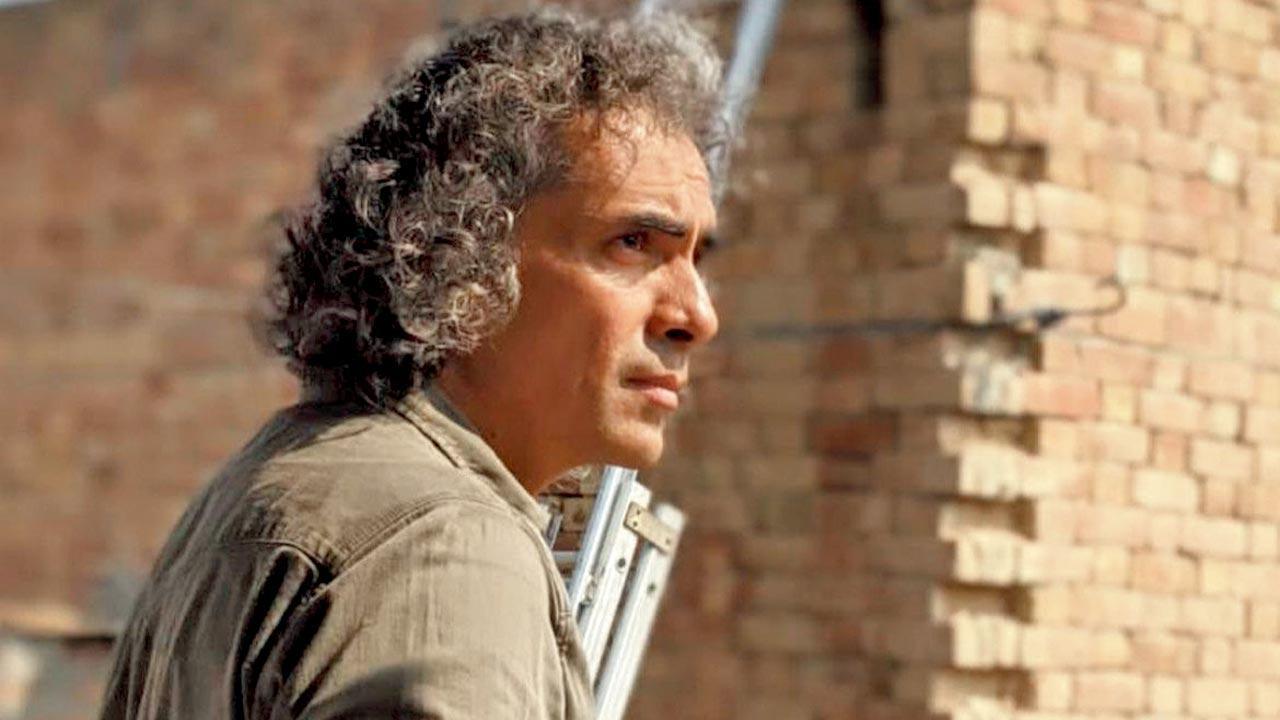
Imtiaz Ali traces the origins of Amar Singh Chamkila, an artiste whose golden phase ran parallelly with one of the worst times of Punjab. As the state burnt, an artiste was born
Priyanka Sharma (MID-DAY; April 14, 2024)
The last time he told the story of a musician, filmmaker Imtiaz Ali sealed his fate in the other world, which in the words of 13th century poet Rumi was “the field beyond right and wrong”. Seventeen years later, Ali tells the story of another musician, whose fate was unfortunately sealed more than three decades ago. But this time around, Rumi’s words become the beginning of the story. There’s no other way to step into the world of Amar Singh Chamkila, Punjab’s controversial yet legendary musician of all time, Ali says.
“The point was to get on with it. Okay, he sang double meaning songs. You can judge him. But let’s go beyond this. Let’s not fight about whether he was right or wrong. Let’s discuss what he loved. In order to reach that, you have to go past judgement. (As Chamkila would say) ‘Theek hai, aap bolte ho, mai galat hun. Now, let’s talk about what really moves my heart.’ That becomes the bigger discussion,” he begins.
Chamkila stars Diljit Dosanjh in the titular role of the musician, who composed, wrote and sang raunchy, suggestive duets with singer and second wife Amarjot during the ‘80s. The couple, along with two members of their band, were assassinated in 1988. Until his untimely demise, Chamkila remained the most popular Punjabi artiste.
But, parallelly to his rise, rose the intense criticism against him, from religious fundamentalists to sections of the media, who found his work dangerous for the society. To Ali, who co-wrote the film with filmmaker brother Sajid Ali, what really spoke about Chamkila was how he became the source of cheer for the state of Punjab when it was surrounded by gloom.
“For me, the story of Punjab came before the story of Chamkila. I knew this aspect of Punjab, where grimness and celebration go hand in hand, for a long time. I have known the fact that all Indian love stories have been Punjabi love stories, from Heer Ranjha to Soni Mahiwal. I also know that the biggest tragic events in India have also happened in Punjab, including the partition and the displacement. So, there’s something very ironic about it. When I then heard the story of Chamkila and discovered more about him, I got into making this film on him because it reflected the same irony. So much so that the purple patch of Chamkila’s career was one of the worst times of Punjab, the ‘80s, when it burnt. That is when Chamkila was on fire as well. I also know this incident that a particular officer of HMV was in conversation with Chamkila and was accepting and, perhaps, even inspiring him to make more happy songs for the audience of Punjab, which was going through darkness. So, in the anatomy of this conflict are both Punjab and Chamkila. I wanted to go there,” shares the director.
A biopic was never on the cards for Ali, who has primarily helmed modern day romances. But Chamkila’s tale gave him an outlet to say things that were personal to him. “It so happened that in the story of Chamkila, there happened to be so many things that I felt I wanted to say, things that I felt were really hidden from the audience.”
Through the story of a man passionately and stubbornly in love with music, Ali makes explicit commentary about an artiste’s relationship with his/her art and its impact on the society. The questions raised during Chamkila’s time, like what is good art, if seeking moral superiority from art is valid and who decides what an audience should consume remain relevant even today.
A much recent example of it is 2023’s divisive action drama film, Animal, headlined by Ali’s frequent collaborator Ranbir Kapoor. While it went on to become a roaring commercial success, it was severely panned by a section of the audience and the media for its depiction of misogyny and violence. Ali says while he takes his responsibility as a filmmaker seriously, he believes personal opinions on a film shouldn’t turn into sweeping judgments about it.
“As an artiste, when I would put something across, I will bear a sense of responsibility. Not only in terms of morality but also in terms of giving the audience something that elevates their experience. Something that they love but something that they haven’t seen before. As far as criticizing a particular film is concerned, I feel that one should avoid because people should judge. We are a democratic nation, we believe in the power of people. They will decide what they want. If they don’t like a certain film, they will not watch it. Who is to decide whether it’s right or wrong? Who casts the first stone? I wouldn’t want to be that person. I can say whether I like a certain song or a film or not. I have the choice of not watching or listening. But I can’t say this is wrong to be made or wrong for people or not suitable for people so they shouldn’t be allowed to watch it. I don’t think anybody has that power to decide for people.”
Motherhood is thankless and exhausting. We should normalize saying this-Gul Panag
10:16 AM

When people with small kids plan vacations, they book a direct flight to a destination that does not involve too much hectic sight-seeing. When Gul Panag takes a holiday with her six-year-old son, she drives an SUV to the mountains and sets up camp amidst pine trees. In 2022, the former Miss India, actor and adventure junkie undertook an eight-day cycling expedition to Ladakh. Nihal, then four, followed in a car as she peddled up the steep slopes. The actor, who uses the display name Tiger Kaur on WhatsApp, spoke to Neha Bhayana about her parenting mantras
Neha Bhayana (THE TIMES OF INDIA; March 10, 2023)
Nihal is six years old now. Does he still keep you on your toes?
Yes and no. I think some things get better as the child grows up and some things become challenging. I find that Nihal vocalises and articulates better now. He is also open to reasoning so much more than he was when he was a toddler. Toddlers tend to be very temperamental, and you don’t know why. In some ways, he does keep me on my toes but he is also very self-sufficient. That’s how I used to be as a kid too. I remember very clearly… I had my own ecosystem. While it was great to play with friends, if I was at some place where there were no friends, I was completely happy to entertain myself.
Most kids constantly need someone to keep them engaged. How did you encourage your son to be independent at an early stage?
I think part of it is nature and part of it is nurture. There is a certain disposition that comes as a result of what we inherit in our DNA. When I was just four or five years old, I lived at a farm in Punjab with my septuagenarian grandparents while my parents were in Russia. So, for two years, when I used to come home from school, there was no company because our farm was a kilometre away from the village. I used to just hang out with dogs, goats and chickens. I was always good at entertaining myself and I think that’s something that is either inherent in Nihal or he’s probably picked it up.
What do you and Nihal like to do when you are together?
I believe in quality over quantity when it comes to spending time with Nihal. There’s no point in me just sitting next to him and staring at my phone. So, the first rule is I leave my phone behind. I try to involve Nihal in whatever I am doing but I don’t perform for him. That’s how our parents brought us up. One doesn’t always have to make puzzles or play with Lego; he does that with my husband (pilot Rishi Attari). The thing we do together is what I am anyway doing as part of my chore list. I ask him if he would like to help me load the laundry or bathe the dogs or pack my bag. If he is busy playing, I may have to ask twice. He then stops what he is doing and comes and hangs out with me. We chat and do the chore together. He asks about the washing machine’s spin cycle or something else. I think that is a very valuable time because we are engaged and we are doing something productive. I also love travelling with him. We always reach the airport early. But when we are there, he is not sitting with me saying “mamma mamma”. He would be doing his own thing, looking at planes or something, within my range of vision. And, he can make a toy out of anything. We have a rule. We never take toys along when we travel.
Which is the opposite of what most parents do….
But then how is the child learning something new from the environment? Like last week when we were in Kazakhstan, he was using a tea bag as a plane and kept ‘flying’ it. On another trip, he took the hotel slippers, put his hand inside them and pretended he was flying a jet. He devises his own entertainment.
Most parents pack their children’s schedule with classes and play dates. What’s your take?
We’ve all made those mistakes. I think free play is really important. Nihal also reads a lot of books. He has been reading independently for some time now. We started reading to him when he was a year and a half, even if it didn’t make sense to him at that age, so books are a big part of his life. When we were at a café-cum-bookshop in Mumbai recently, Nihal went and found himself a book that was relevant to him. It was a collectible book on the story of Star Wars and he just read it the whole time. He has watched the Lego Star Wars which is a super funny and an interesting animated TV show based on the Star Wars universe.
What are your rules about the three big S’s — screens, sugar and sleep?
I am very militant. I have not introduced sugar in Nihal’s diet because we have banned sugar at home. It was a bit of a tough battle because I had friends and family who would point out that we all have had sugar as children. But my argument is that I have spent my life fighting an addiction to sugar. I have to eat one bite of brownie and then I can’t stop myself because it’s dopamine and it’s completely addictive. My husband and I are on the same page on this, and we have been very particular. From the time Nihal stopped formula milk, he was given plain milk with no additives. We carry small tetra packs while travelling, so I can easily give milk to him anywhere. If Nihal goes to a party and somebody offers him cake, he sometimes has a little or sometimes he does not, depending on his wish. We don’t keep sugar or sugary foods at home but we have left it up to him when he is out. In fact, some of my cousins would secretly feed him sweets. But he isn’t a kid who asks for sweets because he hasn’t developed a taste for it.
Screen time is limited to when we have a long flight or long car drive. When we are not travelling, the only screen he sees with us is the big screen at cinemas. Delhi has some lovely kids’ cinemas now. We try to watch a film with him at least once a month. But at home, we don’t watch TV, so he doesn’t either. I think ultimately kids will do what you do.
What about sleep?
Our goal is to sleep 11 hours. Nihal is in bed by 7.30 pm come what may and he wakes up at 6.30 am. On weekends and holidays, it may go up till 8.30 pm but never later than that. When someone tells me that their kid slept at 10 or 11, I am speechless. Sleep is so important for children. The growth hormone is released only in deep sleep. Unfortunately, Indian kids are among the most sleep deprived as per a research discussed in Kerry Bajaj's book 'Sleep, baby, sleep'. And, kids usually stay up late because they wait for their father to come home.
In fact, we are very strict about a fourth S too which is a seat belt. Nihal has never travelled without a car seat. I think most people don’t realize how dangerous it is for a small child to be in a car crash without a seat belt or a car seat. The highest fatality and risk of serious injury is to children who are not belted.
Are you a strict parent?
I don’t know if I’m strict, but I just feel that it’s important to be regimented. My mother was very particular. Even now, when she comes to stay with Nihal when I am travelling, his schedule runs like clockwork. The lights are out by 7.25 pm and he is up perfectly on time. He is so happy and chirpy when we leave for school.
Is there any parenting mantra that you follow?
I think the best way to teach our children is by being good role models. We are anyway by default the first role models of our children and we should aim to be the best possible ones in the which we conduct ourselves. I think my strongest habits, including my commitment to fitness, are the ones that I imbibed from my parents. My father wasn’t this overweight man sitting on a chair and asking me to go work out. He was a fit person who exercised every day. When I was around 15, he told me to exercise daily. When I resisted, he issued a parental diktat. Then it became a part of my life, just like it is part of my father’s life. He is 75 now and still cycles daily. Nihal also does what I do. He goes cycling and running with me. He has been cycling without training wheels since before his third birthday. He was with me (watching from a car) when I cycled to Ladakh two years ago.
I also consider it important to be level-headed all the time as children are very observant. I’m aware that he’s watching me at all times so I am conscious of how I react when I have been triggered by someone or something. I know that my son will do what I do, not what I tell him to do.
You are a sustainability advocate and have also co-founded a company that provides seamless charging for electric vehicles across India. These days most children come to school in their personal cars. Do you think schools should make carpools and buses mandatory?
Schools should certainly do that for three reasons. One, it is more affordable and more environment-friendly. Two, it is better for the neighbourhood because people who live near
schools can’t even go in and out of homes because of traffic jams during school pick and drop timings. Three, I think children become exposed to a certain elitism when they see somebody coming in a particular car. I have heard of instances where children going to fancy schools want to be dropped at a distance so that no one can see which car they are coming out of. So, apart from sustainability and traffic management, I think uniformity is extremely important or some will be more equal than others.
Indian parents tend to have this obsession with studies and marks. As a fitness enthusiast, do you think parents should prioritize sports too?
Fitness has indeed been a very big part of my life, but it was not that I only had to be a good athlete. Being in the top two percent in my class was non-negotiable at the same time. It’s not one thing or the other. And, I did manage. I changed 14 schools and I have never not been in the top three of my class, including college, master’s and law school (she obtained a law degree three years ago). So, the desire to excel has to be ingrained. One can’t be casual about grades and then complain when the child reaches Class 10. One has to ingrain a desire to excel and then hopefully everything will happen on its own. But the desire will not get ingrained automatically.
You openly spoke about having difficulty conceiving. Other celebrities too have not shied away from sharing that they had babies via in-vitro fertilisation, surrogacy or adoption. But the aam janta is still very reluctant to discuss fertility issues. They consider it a matter of shame..
Shame is typically associated with the fact that it is always considered the woman’s fault though scientific evidence tells us that the causes of infertility are equally divided between male and female issues. The shame often stems from the fact that at some point you are trying to cover up the infertility in the male. Fertility is a loaded gun against women. I have been very open about the fact that my son was an IVF child. Sometimes, couples suffer from unexplained infertility despite all tests being clear. These things can happen to anyone and for a variety of reasons so why be all secretive about it. I think we as a society spend too much time hiding things that are irrelevant in the big picture. Having a child is all that matters. Kaise hua, kya farak padta hai (how it happened, who cares).
Is Nihal also adventurous like you?
He goes camping. He does what we do. For him, it is not a choice. It is part of his life.
Describe motherhood in one word.
Overwhelming, thankless, exhausting and in small parts, rewarding every now and then.
What’s the most rewarding part?
When the child occasionally says “Mamma, you smell like roses” and “Mamma I love you” — he has been doing that a lot lately — that’s very rewarding. What’s also rewarding is getting to hang out with moms and discussing that we are all in it together; we are not alone. I wish more women would talk about how challenging motherhood is. It shouldn’t be this big lie that it is all going to be amazing and beautiful. It is very challenging. It is very overwhelming and it’s very exhausting and you constantly are plagued with feelings of inadequacy. Ultimately, we are all struggling.
Moms often hesitate to say they are struggling because they feel they will be judged and considered ‘bad mothers’….
Why? They shouldn’t. We should normalize saying that it is challenging; it is difficult and frustrating. This is why a support group of moms is super important. You need moms who tell you "we are dying as well" and then you feel less dead. I have a gang of mom friends. We meet every week. Three of us are working moms. Homemakers have unique challenges and so do working moms. We should normalize talking about the troubles we face.
Sonu Sood builds home for senior citizens; calls it Saroj Serenity as a tribute to his mother
8:47 AM
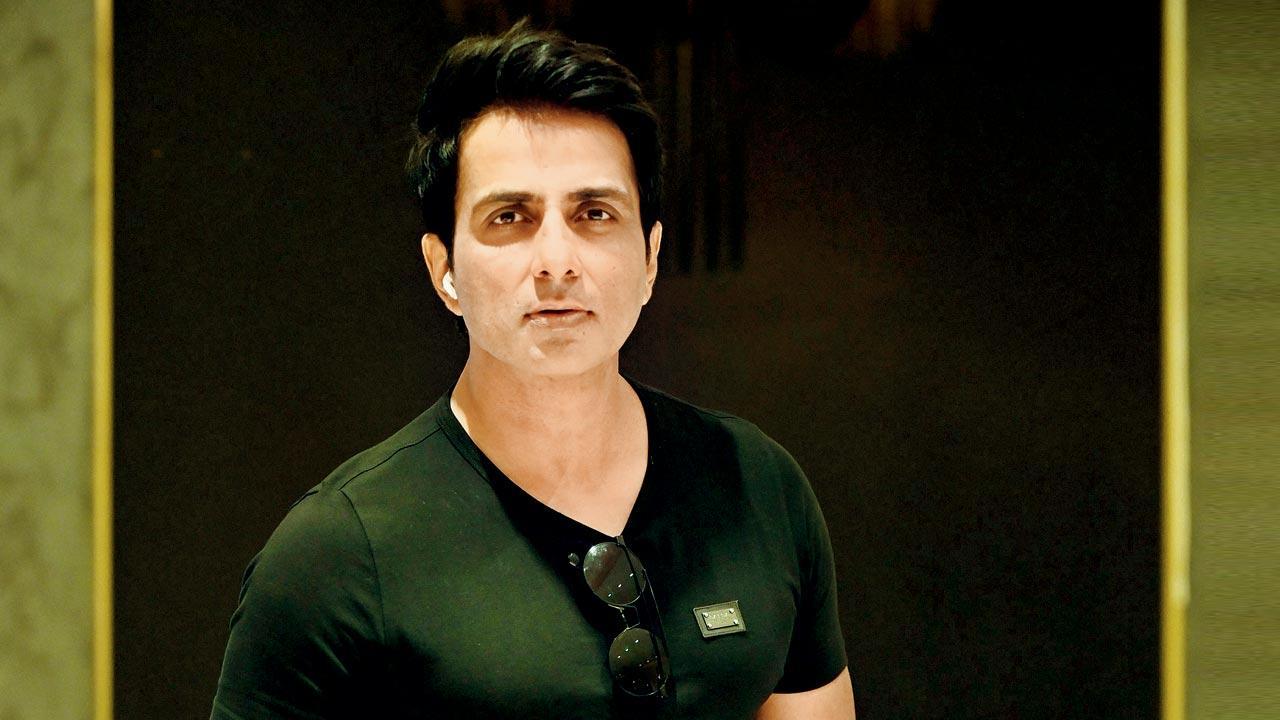
Sonu Sood discusses his plans for homes in Mumbai, Bihar, Punjab, and Uttar Pradesh for senior citizens in honour of his mother
Upala KBR (MID-DAY; January 28, 2024)
Sonu Sood is the gift that keeps on giving. After taking the initiative to rehabilitate migrant workers and residents of calamity-stricken areas, sponsoring education for underprivileged children, and empowering women with essential tools to lead productive lives through The Sood Foundation, the actor-philanthropist has taken up another worthy cause. He is building a home for senior citizens and honouring his mother, Saroj, by calling it Saroj Serenity. Aiming to provide a comfortable environment for the elderly, he says that it is a reflection of the values his mother instilled in him. The first home will be built in Nerul, in Maharashtra, and then in other states.
“This project is more than just a building. We will take care of all those parents whose kids are not there to take care of them. My mom used to always tell me that when people grow old, they feel very lonely. And I should do something to support them so they don’t feel lost, alone, or helpless. I have already started Saroj Serenity in Nerul, which will roll out in one and a half years. The homes in Uttar Pradesh, Bihar, and Punjab are in the planning stages,” says Sood, adding that the home will have the best of facilities.
Sood informs that the old age home will have a clubhouse, beautiful paths to walk, and a recreational centre. “It is for those older people whose children are unable to take care of them or are abandoned. It will have gardens, open spaces, and recreational facilities. It will be affordable and free for needy people. The homes will be self-sustainable models,” explains the actor, who is personally taking care of every little detail about the facility’s infrastructure, including the designs and ambience.
We have designed Fateh along the lines of a slick Hollywood movie-Sonu Sood
3:20 PM
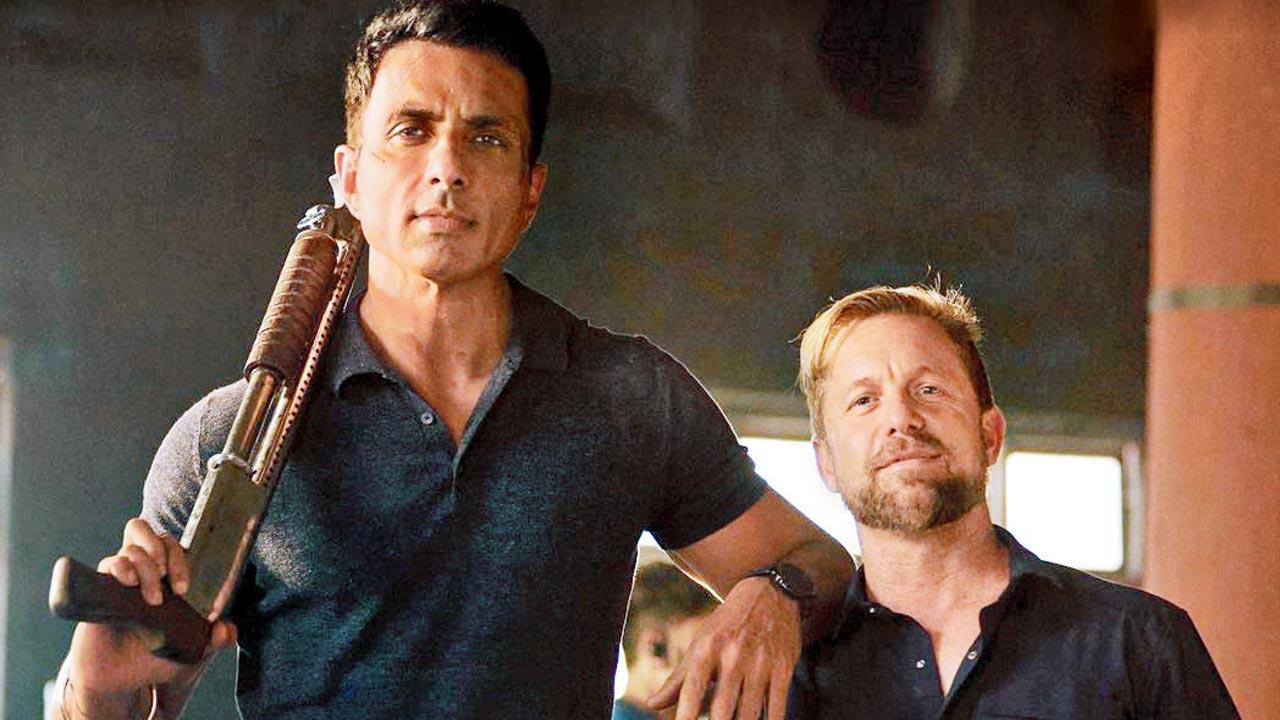
Sonu, who wrapped up the US schedule of Fateh, on roping in Pearl Harbor stunt director to design aerial fight sequences for his maiden production
Upala KBR (MID-DAY; September 22, 2023)
Since March, Sonu Sood has been on double duty on Fateh. The cyber crime thriller not only has the actor leading it, but also marks his foray into production. Juggling the two roles may be demanding, but the contentment in Sood’s voice is evident as he talks about enjoying the process of giving shape to his production.
“Being a first-time producer is a huge responsibility. When I met people who have [been victims of] cyber fraud and scams, I got the idea to do this film. I wrote the story too,” starts the actor-producer about the project that stars Jacqueliene Fernandez as the leading lady.
While the venture rolled in Punjab on March 11, the unit wrapped up the USA schedule earlier this month. The focus of the two-week schedule was the movie’s action sequences. Since Sood had envisioned it as a stylised action fare, he was keen to rope in someone who could up the ante.
Enter stunt coordinator Lee Whittaker, who has worked on Hollywood biggies, including Live Free or Die Hard (2007), X-Men: Apocalypse (2016) and Captain Marvel (2019). Sources say that Sood chose him as he was impressed by the aerial stunts he had choreographed for Michael Bay’s war drama Pearl Harbor (2001). In the upcoming cyber crime thriller, Whittaker has designed several martial arts and aerial combat sequences featuring the leading man.
“I wanted to make Fateh larger than life. We shot a lot of action sequences in New York and San Francisco. We have designed it along the lines of a slick Hollywood movie, and Lee has designed some amazing stunts,” says the actor.
The unit of Fateh will head to Delhi next month for the penultimate schedule, following which they will wrap up the film in Dubai. In the thriller, Sood plays Fateh Singh, a common man who breaks the nexus of cyber criminals, after becoming a victim of hacking. “Every day, the common man gets duped by fake links and OTPs. I wanted to address this issue,” says the actor, who sports three distinct looks in the movie.
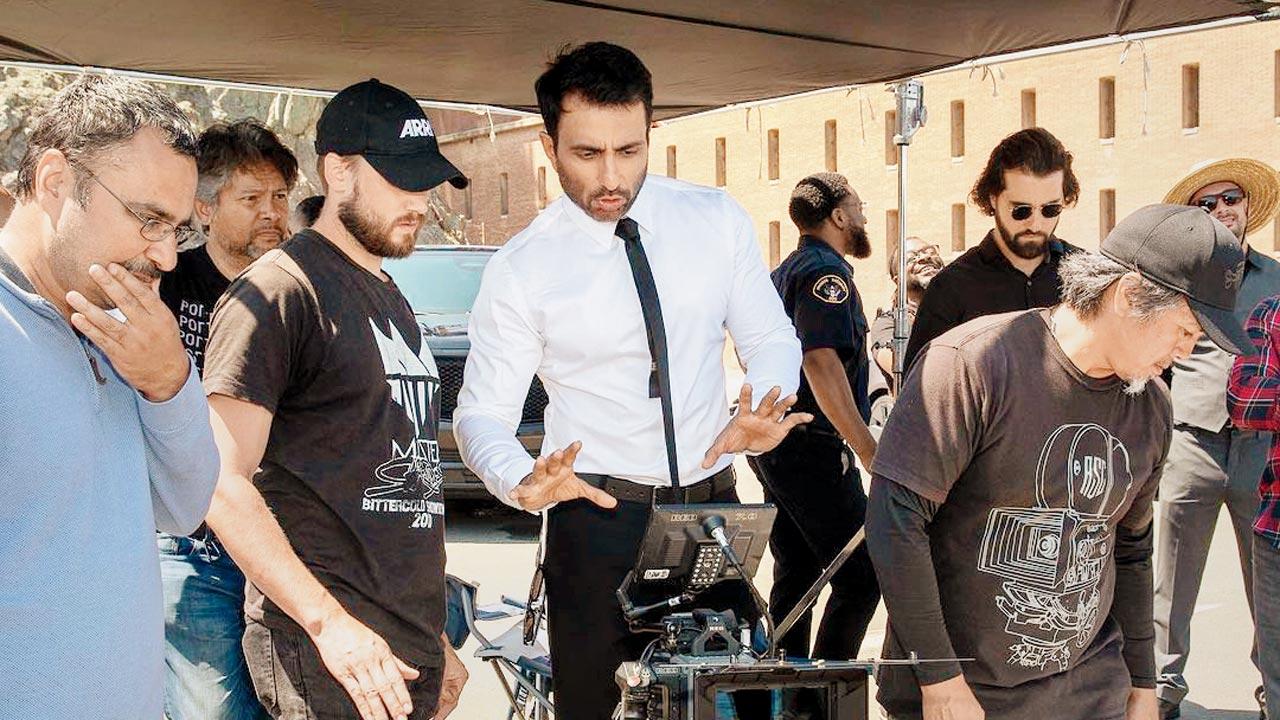
I didn’t even know how to speak in Punjabi. Suvinder Vicky paji helped me-Harleen Sethi
3:07 PM
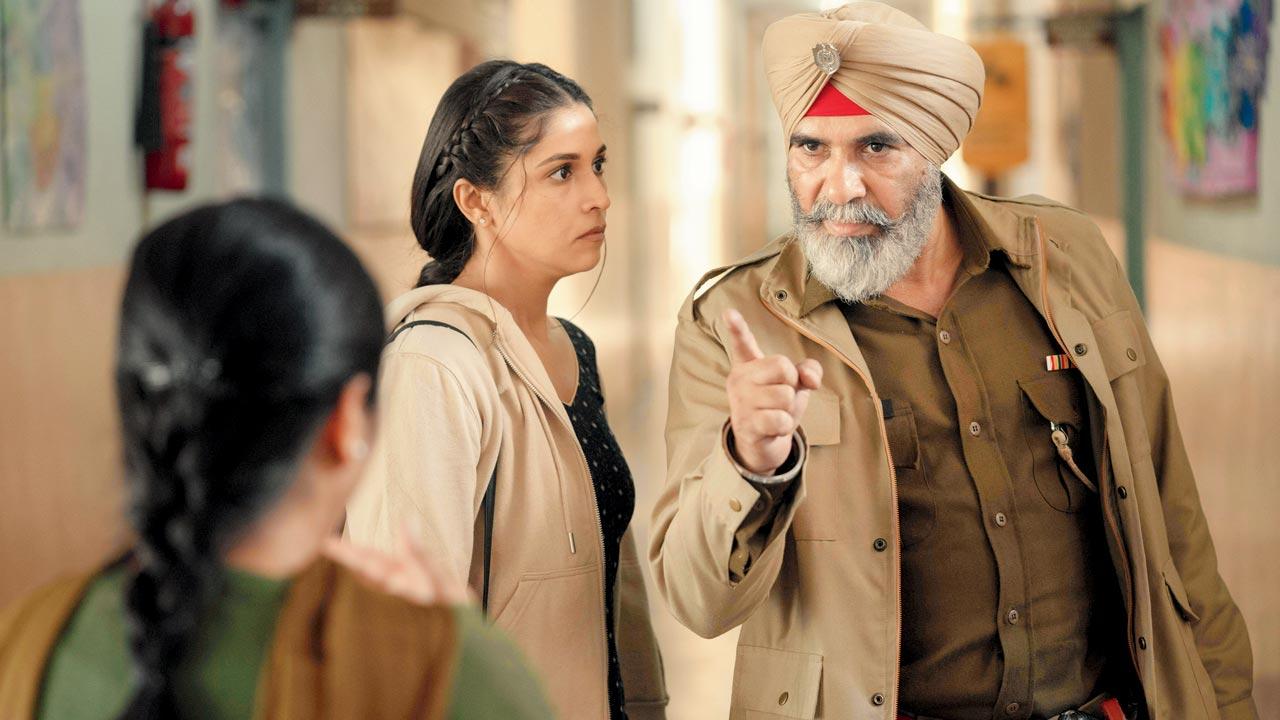
After Kohrra, actor Harleen Sethi hopes she doesn’t get stereotyped as a Punjabi girl, but Suvinder Vicky says he doesn’t mind being a Sikh cop all over again
Aastha Atray Banan (MID-DAY; July 30, 2023)
At the core of Kohrra is the dysfunctional relationship between a father and a daughter. Balbir Singh, played by Suvinder Vicky, and Nimrat Kaur, played by Harleen Sethi, are angry at each other. Where the father thinks their daughter is going wayward, the daughter resents the manner in which she was raised. The relationship needs work, but the performances are pitch perfect. We are speaking to the two on Zoom on a particularly rainy Mumbai day—Sethi is at her home in Andheri, and Vicky is joining in from Punjab.
And that’s the main difference: While Sethi is a Sikhni born and brought up in Mumbai (her ancestors are from Pakistan), Vicky is a Punjabi munda born in Sirsa.
“I didn’t even know how to speak in Punjabi,” says Sethi, “and at one point in the show, I have a long monologue in the language. But Suvinder paji helped me.”
She now seems at ease with the language, asking Vicky when he will be back so that they can meet up. “Tussi toh star ban gaye ho!” she says. Vicky, shy, laughs: “Tu bhi toh! I will be back soon. And of course, we have to meet. But Harleen impressed me. She got a Punjabi tattoo that says ‘Nirbhau Nirvair (without fear, without hate)’, and I knew she had committed herself to the process. She would come up to us after every line, ‘I said it right?’”
Sethi grew up in Andheri West, Mumbai, dancing as part of choreographer Ashley Lobo’s troupe; Vicky grew up doing theatre at Punjab University. Sethi made good with leads in shows such as Broken but Beautiful, and Vicky has done multiple movies (2016’s Udta Punjab) and shows like CAT, in which too he played a Sikh cop. He has been quoted by many reports as saying that “it’s better that success came to him late rather than never”.
But for both, the opportunity to be in Kohrra gave rise to different kinds of emotions. “I was too excited when this role came by,” says Sethi. “I had to go to Punjab and speak Punjabi. It was a challenge and a different kind of role. Also, it was a character role, not lead. There were some apprehensions, but I knew it was going to be great. The industry does stereotype you—so I really wish that doesn’t happen with us.”
For Vicky, who calls the success of Kohrra “a balle balle feeling—Punjabi style”, the role was just another one he needed to take up. “If people want to keep casting me as a Sikh cop again and again, well, that’s the way it is,” he shrugs.
“I can only say no if I have another choice in front of me. But that’s not the case. This is it. So I take what I get. At least now, people are saying ‘Paaji, you look great in pagdi’, ‘Paaji, we saw your other show, CAT, also!’”
Ask whether having Punjab as the background has contributed to the show’s success, and Vicky says it’s the story that’s the true star. “It could have been set in Haryana also,” he says. “Then the language would have changed. The rest would have remained the same—down to the fields. It’s the story that’s got the good stuff and that’s what made this show a hit. But, yes, people have appreciated the language—they like the sound of Punjabi. It’s so sweet.”
People are not talking about floods in Haryana, Punjab-Randeep Hooda
8:37 AM
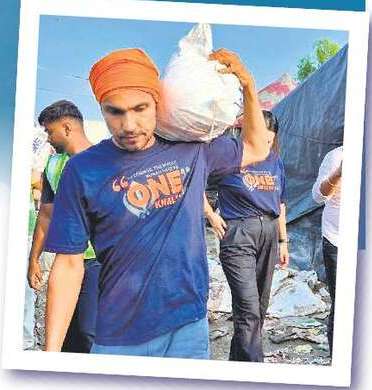
Rishabh Suri (HINDUSTAN TIMES; July 20, 2023)
While flood-like situations and waterlogging in Delhi-NCR have been hogging the headlines, Randeep Hooda, who hails from Haryana, feels there isn’t much awareness about how rains have ravaged his home state and Punjab. The actor has been going the extra mile to help those impacted in the affected regions of these states by distributing essentials.
“People are not talking about these floods and how they’re affecting people and animals in Haryana and Punjab. So, I went on the ground to create awareness and encourage the Khalsa Aid volunteers and others to donate. Also, doing groundwork is the ultimate seva that I have admired in the Khalsa Aid volunteers since I associated with them a few years ago,” says the 46-year-old.
Although he is back in Mumbai now, he continues to be in touch with those on the ground. “I will keep donating, supporting and bringing into the public’s consciousness their (Khalsa Aid’s) relentless efforts to aid those in need,” adds the actor, last seen in Sergeant.
Having seen the situation in Haryana and Punjab, parts of which are “totally submerged in water”, Hooda gives us the details: “Farmlands have become an ocean of water, and the people staying in the fields are isolated and hard to reach. The volunteers have arranged for boats and tractors [to rescue people]; some are even swimming to provide relief to those in need. [Lack of] Drinking water, bare necessities and sanitation-related problems loom large, which might cause the loss of human and animal lives.”
Direction is a far tougher job than acting-Randeep Hooda
8:18 AM
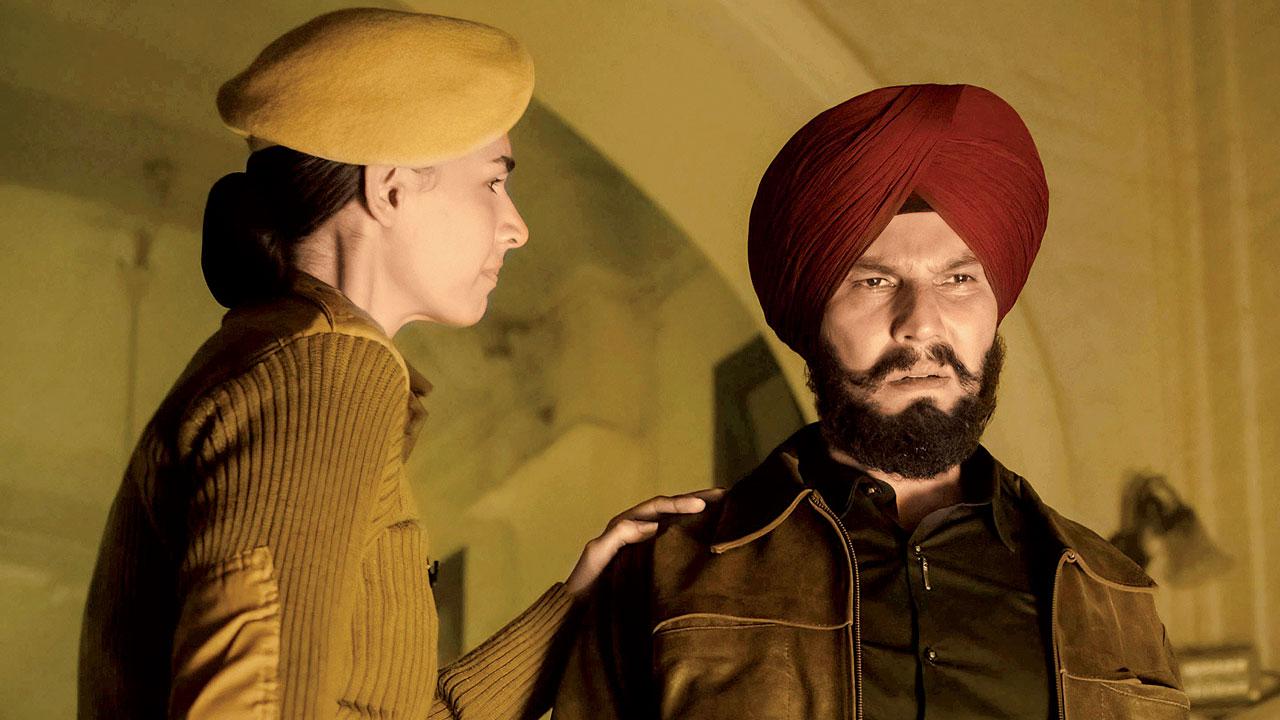
Having got a taste of direction with 'SwatantryaVeer Savarkar', Randeep Hooda on why Balwinder Singh was the perfect choice to helm the spy thriller, 'CAT'
Letty Mariam Abraham (MID-DAY; December 13, 2022)
When narrating a true story, staying authentic to the subject is one of the director’s biggest responsibilities. For first-time director Balwinder Singh Janjua, the responsibility was only compounded as he told the story of Punjab in the ’80s and ’90s that was threatened by insurgency and drugs. Fortunately, he found a like-minded artiste in Randeep Hooda. As they present the Netflix series, 'CAT', the actor-director duo give us a low-down on the challenges of tackling a real-life subject.
Edited excerpts from the interview.
What does CAT mean?
Singh: CATS are undercover informants for the cops. It was relevant back in the day, and was used by cops in the US and Russia. Hailing from Punjab, I have witnessed these [episodes] first-hand, and [always] felt that I must share this story. I caught up with a few people who were CATs [earlier]. My co-writers Jimmy [Singh], Rupinder [Chahal], Anil [Rodhan] and I created a story of two brothers and tried to showcase the problems of that era. It is fictionalised, but set against true events.
Considering the story is set in your land, was that one of the reasons why you came aboard?
Hooda: I am from Haryana, which used to be Punjab till 1964. I have a deep connection with my land that I never lost, in spite of being in glitzy Mumbai for 22 years. So, that was part of the appeal. Besides that, it was an intriguing script that pans two timelines. The two big problems faced by Punjab since the Partition have been insurgency and drugs. To have these dramatic fictional characters against that backdrop was interesting.
As a new director, how does it feel to be in charge of translating your written material on screen?
Singh: I think I am a born director. This is my second film as a director. If you are a writer-director, it [becomes] easier. Even when you write, you keep the direction in mind. The thing I find fascinating as a director is the opportunity to set the tone of the show, to create the same mood that I discovered during writing. Then I will look at performances, casting. The challenges for me were to show Punjab of the ’80s and ’90s. I had to find such locations [that have the old-world charm]. Back then, cars were different; people travelled by scooters or bicycles. The villages had kachcha houses.
Hooda: I believe writing is the most enriching experience, the rest is execution.
How do you view Balwinder’s directorial skills, considering you’ve turned director now with 'SwatantryaVeer Savarkar'?
Hooda: I never felt, even for a moment, any sense of apprehension, or conflict or that I was forced to do something that doesn’t suit the character. [As an actor], that is a big deal. He said earlier he was born to be a director. I back that thought because he is undoubtedly a talented writer-director, but he is also a good manager. I am telling you because I am attempting it myself. Direction is a far tougher job than acting.
When 'Udta Punjab' was released, there was a huge furore about associating Punjab with drugs. Were you wary about attempting the subject?
Singh: You are a journalist. Tell me, was there a drug problem or not? The people [we] are trying to tell the story to, are aware that drugs are an issue. I am from Punjab, and I have seen those broken families who were affected by it. Some people have lost close to six sons to drugs, leaving behind a grieving mother. Most of our stories originate from the things that happen in society. As a creator-writer, it is my job to connect with the story and tell it convincingly. I cannot talk about people who create controversies, or deny that Punjab is plagued with drugs. Our story is backed by proper research. We have tried to say it with as much honesty as possible.
Subscribe to:
Posts (Atom)