Showing posts with label Prosenjit Chatterjee interview. Show all posts
Showing posts with label Prosenjit Chatterjee interview. Show all posts
I once had 26 releases in a year, a world record, I later learnt from a fan club. We never kept track-Prosenjit Chatterjee
8:45 AM

Neha Maheshwri (BOMBAY TIMES; July 6, 2025)
Prosenjit Chatterjee, fondly known as Bumba da, has long been a pillar of Bengali cinema, balancing commercial hits with bold, unconventional roles. Now, with over 350 films behind him, he’s looking beyond boundaries — embracing new languages, younger teams, and stories on a national scale. In this candid chat with Bombay Times, the veteran actor reflects on reinvention, letting go of the comfort of stardom and learning from the next generation.
‘Now I want to act in films that have a national scale’
Prosenjit recently impressed the audience in Khakee: The Bengal Chapter and is ready to broaden his horizons. He says, “I have always embraced challenges; there was a period when I was doing six to eight shifts a day, with 17 to 18 releases a year. My highest was 26, a world record, I later learnt from a fan club. We never kept track back in the day.”
Today, he remains as eager as ever for new roles. He shares, “I tell my directors to bring me something that is out of the box. Now I want to act in films that have a national scale.”
‘It’s hard for a commercial actor to let go of seetees and taalis’
Letting go of the larger‑than‑life image built through commercial cinema was not easy. He says, “The most difficult part for an actor who has found success in commercial films is letting go of the seetees and taalis. You may be willing to give up a lot, but not that curtain call. When a villain walks in and approaches the heroine, the crowd expects the hero to storm in and save her, and they love that moment. So, I had to consciously shed that baggage and recondition my thinking,” he says.
He adds, “I experimented constantly because I believed that in ten years the language of cinema would change — and I wanted to evolve too. I’m not in a race, which is why I’m branching out into Punjabi and Marathi cinema.”
‘The Bengali industry depended on me for two decades’
Ask him why he didn’t make the shift earlier beyond Bengali films, and he replies, “Back then, the Bengali industry depended on me; it was not just about hits, but also a responsibility toward producers, directors and technicians. If I went on a 20‑day outdoor trip, I would get calls saying ‘Dada, aap nahi hain to chhe-chhe shifts nahi ho rahe hain’. So, I stayed.”
He continues, “Being number one in any industry is not easy. If I had come to Mumbai and ended up as number ten, I would have felt I was letting down my Bengali audience who believe I’m their number one.”
‘Nawaz was the first to break the typical Indian-hero mould’
Prosenjit, who has been a part of OTT shows like Jubilee and Scoop, is deeply inspired by the new generation.
He says, “So many of them deliver great performances, not just in Hindi, but across all industries. I wonder, ‘Yeh log kaise acting kar rahe hain!’ That drives me to keep evolving. Acting has changed and cinema has changed. You either say, ‘Main aap logon ka pitaji hoon, main ghar par rahoonga’, or you work with younger teams and learn new things. I choose the latter.”
He especially praises Nawazuddin Siddiqui and Rajkummar Rao. “Nawaz was the first to break the typical Indian-hero mould; he changed the game. And now there are many such actors. Rajkummar, too. The actors today are not chasing stardom alone; they are chasing variety,” he notes.
Raj Kapoor and my father Biswajeet would call each other up and plan their parties-Prosenjit Chatterjee
8:31 AM
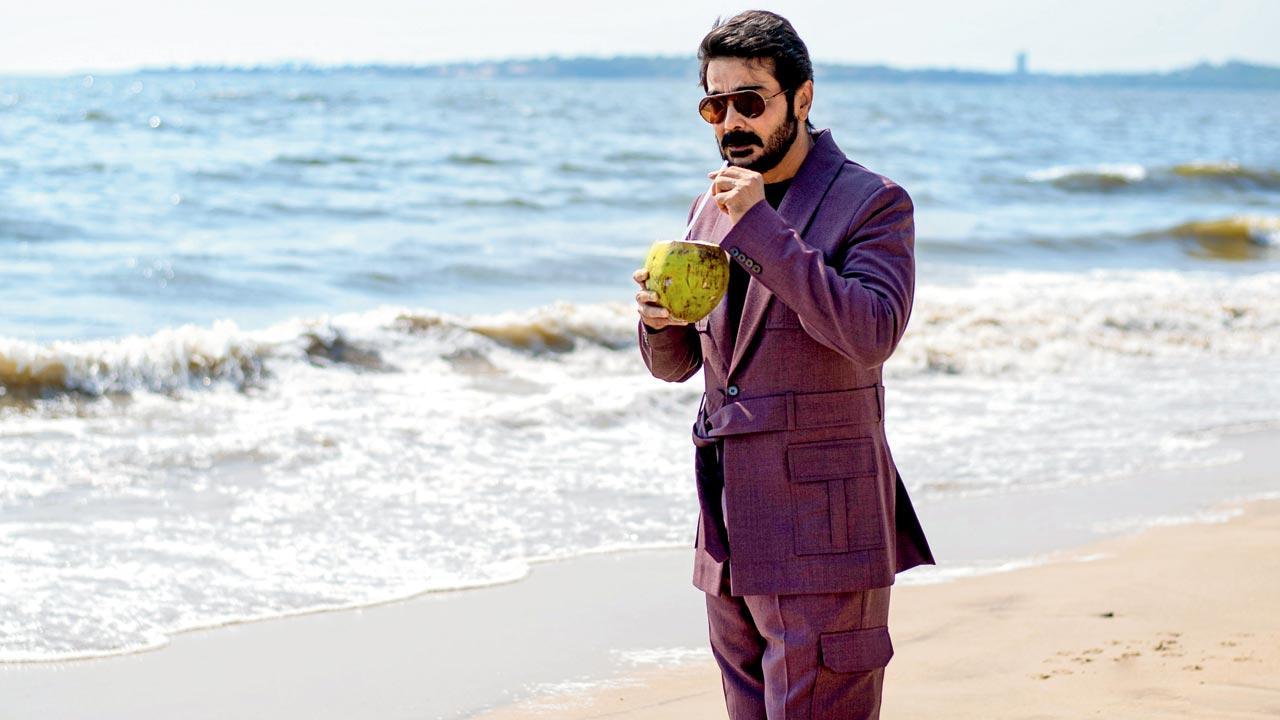
Prosenjit Chatterjee, Bengal’s ‘all three Khans rolled into one’, on finally taking the leap, with a permanent address in the city, where he’s been an on-off guest for 60 years
Mayank Shekhar (MID-DAY; July 28, 2023)
Bhalo kore bujhte paari, bolte paari na [Can understand Bengali, can’t speak it],” is how we break ice with actor Prosenjit Chatterjee, lovingly known as Bumba Da, over a Zoom call, because he’s on a shoot outside Mumbai. He’s suitably impressed.
Although, it must be said, such rudimentary understanding of Bangla, or Bengal, for that matter, can barely equip you to grasp the superstardom of Chatterjee, 61, from Kolkata. For whom Mumbai is now the new home: “I’ve bought a place in Andheri, got a car, driver, the full set-up.”
Younger Hindi audiences have lately discovered him in Vikramaditya Motwane’s series Jubilee (Prime Video), as the fit, dapper, Srikant Roy—a Don Corleone-like patriarch of the Hindi film industry, modelled on Bombay Talkies’ Himanshu Rai. Or as Jaideb Sen (based on crime journalist J Dey) in Hansal Mehta’s Scoop. Jubilee, his OTT debut, was his 349th production (mostly as the lead).
In the ’90s, when Chatterjee was a young lead actor in Bengal, and producer Pahlaj Nihalani “a star-maker in Bollywood”—having launched careers of the likes of Chunky Panday, Neelam, Suniel Shetty, Divya Bharti, Govinda—Nihalani sat the latter down once to introduce Chatterjee.
“Chi Chi,” he told Govinda, Bollywood’s hero no 1: “What are we even doing? Just look at this boy—he’s already crossed 200 films!” A one-man industry, alright.
Since his breakout hit in Bengali cinema with Sujit Guha’s Amar Sangi (1987)—the song ‘Chirodini’ from its soundtrack is an anthem in Bengal, still; the film ran for over 75 weeks in theatres—Chatterjee says he would “open around 12, 16 to 18 films a year [in Bengal]. In one of the years, I had 22 releases!”
Nihalani first got him over to Bombay/Bollywood, in 1990, Chatterjee recalls: “Pahlaj ji had produced a Bengali film with me. During the shoot, he’d tell me about what a star I am! Those were the days, you know—arrey, tu fight bhi itna accha karta hai, dance aur romance bhi, look good [you fight, dance, romance so well].”
His Hindi debut hence followed: “A grand launch party was held at Hotel Sun-n-Sand, with all Bollywood biggies attending. It was a big Bombay party.” Nihalani’s film Aandhiyaan, directed by David Dhawan, also marked the return of the living legend Mumtaz, who’d by then moved to America.
Mumtaz played Chatterjee’s mother in the movie (available on YouTube), which is a bizarrely Oedipal love story, if you may, between mom and son, with young Chatterjee as an overgrown school-kid, also literally dancing around trees with Mumtaz.
That said, Chatterjee recalls, “I got lots of offers from Bombay producers. People say I wasn’t pushy. But I was already working 20-22 hours a day in Kolkata, and booked for the next three years. Also, I am an emotional man. I knew my stardom came from the work of great many Kolkata directors, technicians, co-actors… I had to be with them.”
Chatterjee is quick to point out, on his own: “It’s not about being in your comfort zone. It’s playing to your strengths, to get to where you want. It’s the same with stars from the South. Look at Kamal [Haasan] ji—after Ek Duuje Ke Liye [1981], he didn’t shift base to Mumbai. I’ve learnt from my seniors.”
Which is in contrast to female, Bengali stars in Bollywood: “Oh, they’ve always ruled. There is the concept of the ‘Bangali beauty’. But they’re also great actors.
“I was speaking to Moushumi [Chatterjee] Di, recently. Or you take Sharmila [Tagore] ji. Jaya [Bhaduri/Bachchan] ji changed the pattern of acting, when she did films like Guddi (1971).
“People wanted to see Dharam [Dharmendra] ji and Rakhee [Gulzar] ji together.” Evidently, the male equivalent of the Bengali beauty standard in Bollywood have been Punjabi heroes.
Chatterjee himself is hardly new to Bollywood, or Mumbai, though. His association goes back to early ’60s, when his father, the popular Hindi film actor, Biswajeet, moved to the city. Biswajeet owned a bungalow on 7th Road in Juhu, and now lives in a swanky apartment nearby. He’s been in Juhu for “60 years since”.
Chatterjee recalls, “In 1963, when I was about five or six, along with my mother, sister, and [paternal] grandfather, we shifted to Bombay as well.
“I started schooling here. Only that my grandfather developed health issues. The water didn’t suit him. In those days, the bahu [daughter-in-law] had to take care of the sasur [father-in-law], since my grandmom was no more. And so we moved back to Kolkata.”
The parents subsequently divorced. Ever since, he says, his father has been “a guest in Kolkata, and I’ve been a guest in Mumbai—visiting every year during summer holidays, when I was a child.”
The Bombay of his growing up years doesn’t sound too far apart from his period piece, Jubilee: “I’ve played on Dilip [Kumar] Sahab’s lap. I think Biswajeet ji and Saira [Banu] ji were doing a film together. They’d go out for late dinners. Dilip Sahab liked to stay in. He’d asked to leave the bachcha [the kid] behind with him!”
“We spent a lot of time in Shakti [Samanta] Da’s house. And with Raj [Kapoor] ji. In fact, Raj ji and my father shared their birthday, December 15. They would call each other up and plan their parties, accordingly—Raj ji would host his on Dec 14, and my dad on Dec 15, and alternate it the following year.”
What does he miss from that Bombay? It’s an easy question, clearly: “Oh, the studios, the peculiar smell of raw stock, and the make-up room, where everyone gathered. Spot boys, that belonged to the studios then, who knew everybody’s personal tastes/requirements.
“The huge shooting floors, that could capture so much depth on camera. You can tell from the films of the time—there were no green screens and CGI then. Vikram [Vikramaditya Motwane] captured that really well in Jubilee. I know that technology has changed, and we don’t need such studios anymore. But those were our temples. RK Studio, in particular.”
RK is quite close to where we’re speaking to him over Zoom. It’s just turned into a posh apartment block: “I know. I feel something inside me, when I see it!”
Surely, it’d be the same with similar establishments in Kolkata. The other thing peculiarly common to Mumbai and Kolkata film sets, regardless, is the use of the endearment ‘Dada’ (elder brother), for all males in the technical crew—‘Spot Dada’, ‘Make-up Dada’, etc.
The ‘dada’ in Mumbai sets, of course, comes from Marathi. Which, Chatterjee reckons, has far more in common to Bengali cinema than one recognizes: “For years, I’ve been great friends with people in the Marathi film industry. They share their works with me. I share mine. Our storytelling styles are quite similar.”
His reasoning is simple: “Cinema bears its roots in literature and theatre, that are strong in both Bengali and Marathi cultures. I’m sure other cultures too. But in Bengali cinema, 49 out of 50 actors come from stage. As with Marathi. Likewise, both Marathi and Bengali languages have deep bases in literature.”
And how’s Mumbai and Kolkata different, outside the set, of course, given that the former is also now his home base. Culturally, in the absence of the ‘adda’, he says, “In Kolkata, if you’ve worked for a few hours, it’s fine for you to go, ‘Okay, bahut ho gaya kaam [enough work]. Aadha ghanta adda maarte hain [let’s chill for half an hour]. It’s impossible to do that in Mumbai. People interpret this [trait] differently [as lethargy, perhaps]. But I don’t see it that way.”
Also, he adds, “Both cities are changing a lot. Look at the night-life. Kolkata has gone ahead of Mumbai, in that regard. In Mumbai, I have started seeing streets clearing up after a point in the night. On Park Street in Kolkata, it feels like Christmas all year! People have really started enjoying life a lot there, especially after the pandemic.”
Chatterjee’s own social scene in Mumbai, it seems, starts and ends with Hotel Sun-n-Sand! The Juhu hotel, known as an adda for ’70s Bollywood, especially—you can watch it in practically every other film of the era—that, Chatterjee confesses, has been his home away from home, all along.
“I’ve been coming to Sun-n-Sand for the last 30 years. Now that I live in Andheri [West], my gym is still in that hotel. And if I’m free for even an hour, I just drive up for a cup of coffee there. My father had a suite in the hotel, I think, for a year and half, when he got his break in Bombay, with Bees Saal Baad (1959). I had a suite for quite a long time too.”
Which is true for several stars of the bygone era, the likes of Raaj Kumar, Dev Anand, who used to have an earmarked, year-round, staycation suite, in the sea-side hotel, that appears boutique, only by current standards. Waiters and old-timers often point to those suites as city landmarks of sorts. Which one was his? “402.” Okay, his Bangla fans got a shrine in Mumbai!
Chatterjee comes across as a creature of habit—something that might show in a lot of his mainstream works, that rightly kept the Bengali film industry’s fire burning, all through the decades, that he’d fuel it with dozen-odd movies a year. There was a switch of sorts, he reckons, in his head, therefore his career—“for about 10-12 years now.”
Its genesis lies in the much loved, middle-of-the-road director, Rituparno Ghosh (1963-2013), who offered him a “special appearance; just two days’ work” in the decidedly artsy, Unishe April (1994).
Chatterjee says, “He lit up a matchstick that was inside me. [Until then], I was making films for the audience, and I love them. If they don’t exist, neither do I. But while I am a star, I have to be the actor as well.”
Chatterjee worked with Ghosh for nine films. Dosar (2006), we tell him, is our favourite. The big one, of course, was Ghosh’s Chokher Bali, where he starred with Mumbai’s Aishwarya Rai.
He argues, “You know, people these days talk of ‘pan-India’ films. But Ritu Da, and Mani Ratnam [from Chennai], have been making them forever. When [Ratnam’s] Roja [1992] or Chokher Bali released, we just watched them in theatres, no matter where we were in the country. We never called them ‘pan-India’ films, did we?”
Working with artistic directors like Buddhadeb Dasgupta, Gautam Ghosh, and others, Chatterjee says he began travelling to international film festivals: “When I went to Toronto first, I realised, this is a completely new world, and they should equally look forward to my films. The idea is to win a new audience every day. In Mumbai now, it’s gratifying when people, who don’t know me from my past works, come up to me, in the gym, or when I’m out.”
And that’s been his North Star since. Especially, when he was offered Jubilee, before the pandemic: “I haven’t ever said yes to offers [from Mumbai] right away. As with Dibakar Banerjee’s Shanghai [2012], when he came to meet me in Kolkata. Or Vikram [Motwane]. I want to be convinced about why they want to cast me, first. When Hansal Mehta called me for Scoop, I just knew it was the sort of character that was missing from my repertoire.”
Also, this time on, Chatterjee could sense a wider tectonic shift taking place, among both the audiences, and the Hindi film industry: “It’s become possible for actors from across India to perform together. And it’s not just about films.” Meaning, the braver new world of OTTs as well.
Hence, Chatterjee, bought himself a permanent address in Mumbai: “I had done it before the pandemic. But, of course, I couldn’t move in then.”
And he’s also clear-cut about his professional goal. “I want to do big productions in Bombay, bearing in mind our treasure of [Bengali] literature, that our forefathers had so beautifully tapped into as well. Having been a student of cinema for 40 years, I want to direct now,” Chatterjee reveals.
As for Mumbai and his acting career, the most legendary story about him is how he’d turned down Maine Pyar Kiya, offered to him by the Barjatyas, before the role went to Salman Khan: “Well, I don’t like talking about it. The fact is the film gave Indian cinema its hugest star.”
Evidently, not the one who enjoys looking back much, Chatterjee is only excited for what’s ahead: “David Dhawan was the first person to call me, after he watched Jubilee, you know? He just went, ‘Yaar, tu phaad diya yaar, woh [Bollywood debut] Aandhiyaan ka hero nahin hai tu abhi’ [Killed it, you don’t seem like the hero from Aandhiyaan anymore].” Well, he’s also a Mumbaikar now.
Mumbai meri jaan?
Love about Mumbai
From the film industry perspective, it’s a city that hugely respects talent. They shower you with love and hugs for your body of work alone.
Hate about Mumbai
Honestly? Traffic. It’s gone to another level now, and it scares me. I’m sure things will improve with the metro.
Expectations from Mumbai
I hope, in the next four to five years, Mumbai will give me a home for my creative expression—an intellectual shelter, as a student of cinema, to reinvent myself.
Did Mumbai live up to it?
Especially, after Jubilee, I’d say, yes.
Will it remain forever home?
As it is, it’s my mother, who connects me to Kolkata, and my father [actor Biswajeet], to Mumbai. And now I have a home here as well.
Working across mediums doesn’t take away from my stardom, it elevates it-Prosenjit Chatterjee
8:18 AM
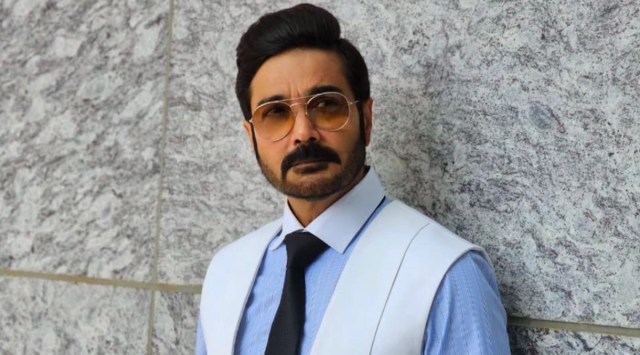
The actor, who made his web debut with Jubilee, talks about experimenting with various mediums, his long, successful career in films and more...
Madhureeta Mukherjee (BOMBAY TIMES; July 2, 2023)
Superstar of Bengali cinema, Prosenjit Chatterjee, recently made a remarkable debut on OTT with Jubilee. The actor, who has reigned in his industry for over three decades, as a leading commercial star and has also shown his acting prowess in parallel cinema – which is rare, says that even today, he feels like a frontbencher on set. And in his words, Prosenjit says, “I am ready to take on any challenge to do different kinds of roles, such is my hunger as an actor.” In a conversation with us, he talks about how he lives and breathes cinema.
You recently made a remarkable web debut with the show Jubilee and followed it up with Scoop. Prior to this, in the Bollywood space, you were seen in Shanghai. As a superstar in Bengali cinema, didn’t you want to explore more roles in Hindi cinema, or was the work that was offered to you here not creatively exciting?
After my debut film in Hindi (David Dhawan’s Aandhiyan), while I was shooting in Mumbai for a Bengali film, Pahlaj Nihalini told me, ‘You are a big star, chalo film karte hai.’ I did some more films here, but I never planned or structured my career in Bollywood. I was a rockstar in mainstream Bengali cinema. I had 22 releases in one year. I felt that I was not alone and that I was taking an industry along with me. In Bengal, people would say that I was number 1 and 2, 3, 4, in mainstream cinema. I wasn’t sure that if had come here (Bollywood), I would have become Shah Rukh Khan. If I had taken that chance, I probably wouldn’t have done justice to the filmmakers in Bengali cinema, as they were the ones who believed in me and made me a star. Today, I can do that because I don’t have those challenges. My intent is to get one new audience every day. I like the fact that my audience cuts across generations. I love to work with new directors. Yes, I am a star, but I broke that image for my films. OTT is the future, and all the big actors are doing it. I don’t think working in different mediums takes away from my stardom, it elevates it.
You made a shift from mainstream to middle-of-the-road Bengali cinema at some point, was that well thought through?
Yes, it was planned. I knew back then that the language of cinema would change. Even before I did Srijit Mukherji’s Autograph, I saw the growth of multiplexes. Every ten years, in our cinema, there has to be a shift in the audiences’ tastes. In my own way, I have observed and studied the change that is going to happen. For over 30 years, I have been a mainstream commercial actor, and I am grateful that this is not my area now. I had created a record of sorts—where I was shooting in my own city (Kolkata) for 19 days at a stretch but didn’t go home for 19 days. Back then, there were no vanity vans, so I would sleep in my car. Now I tell the younger actors, ‘Abhi aap log isko aage le jao (laughs!)’. I am enjoying what I am doing now.
But you do believe that commercial cinema needs to thrive, right?
Yes, absolutely! It has to survive, but we have to do it differently. What is commercial cinema – one that will be watched by people in large numbers? But why do we think that the audience will not understand good cinema – whether it’s commercial or not? We are underestimating the audience. Rituparno Ghosh would tell me that he cast me in Chokher Bali, as he, too, wanted to cross that border. So, I feel I need to support this kind of cinema (middle-of-the-road). Chokher Bali that was made 20 years ago, was a pan-India film, but at that time, no one would talk about it. We didn’t do it for business, today, it is a business model.
Bengal has given us so many iconic filmmakers and actors, what do you think the Bengali film industry needs to do to expand the reach of their cinema and get their footprint pan-India?
Cinema of every language has its own strength, and we need to tap that. Bengali cinema won’t be able to do a Baahubali or an RRR right now, and it’s not because of the budget. Bangla’s strength lies in its literature. We need to make subjects that stem from there and resonate across audiences. Why did I like Kantara? It’s because it struck a chord as it spoke about something close to their culture, which I wasn’t aware of. We need to give the larger audience those subjects that are close to our culture. I would love to do South films and Marathi films. The Marathi film industry has such great actors and directors.
Is your son Mishuk showing a keen interest in becoming an actor?
He is a big fan of Shah Rukh Khan and Bengali actor Dev. He’s a good footballer, and now he’s turned 18 and I feel ki usko actor banna hai. I have told him that I will help him prepare and guide him as I know what a commercial actor needs to do and be. But then, mein usko market mein chhod doonga. I have told him that I am not going to launch him, even I wasn’t launched by anyone. His journey has to be his.
Initially, OTT was all about sex and violence, which is not the case any more-Prosenjit Chatterjee
8:30 AM

Actor Prosenjit Chatterjee feels this is the right time to explore the digital space
Sugandha Rawal (BOMBAY TIMES; June 10, 2023)
The latest addition to the growing list of mainstream actors foraying into the OTT space, Prosenjit Chatterjee made his web debut with Jubilee, and followed it Hansal Mehta’s investigative drama, Scoop. Calling it the “right time” to explore the digital space, the actor feels the medium has moved on from the “sex and violence” phase — that it heavily relied on initially — and is now embracing wholesome stories.
In Jubilee, the actor, mainly known for his work in Bengali cinema, essayed the role of a fictional yesteryear film tycoon, Srikant Roy — a ruthless, ambitious yet vulnerable movie maker. Meanwhile, in Scoop, he portrays the character based on late journalist Jyotirmoy Dey, whose murder in 2011 shook the entire media fraternity.
In a candid chat, Chatterjee opens up about his journey so far and comparisons with other mediums that’s inevitable.
After your OTT debut, there wasn’t much gap before your second show also released. Was it a conscious choice to have back-to-back outings?
No, it wasn’t. While Jubilee was a very planned thing, I did not know Scoop would be out so soon. Jubilee was pushed almost by a year because of the pandemic. Such decisions are not in my hands. Also, I did Scoop only for Hansal, who is a dear friend.
Was there any particular moment that led to the decision that you want to venture into a new medium?
We can’t sit and plan such things. Like, we didn’t know OTT platforms would be so big in India, or Jubilee would become this big — critically, technically, and commercially. I started my career through Bengali films, and have seen the industry change in the last 40 years. I’m always keen on working with new directors. As an actor, it allows me scope to reinvent. And both these OTT shows did that.
You talked about the growth of OTT platforms during the pandemic, and we have seen content and talent from regional industries garnering a lot of praise. Do you feel these language barriers are finally being broken?
When we say India produces the largest number of films and shows, we are not just talking about Hindi, Bengali, Punjabi, Tamil, Telugu, or Marathi. But collective projects. With OTT platforms coming in, the best thing we all can say is that we are making Indian content. I might be sitting in Mumbai or Punjab, and making content that will be watched across the country. We are pan India in the true sense because of the medium. In terms of the storytelling, too, there are some stories which directors can’t do [justice to] in cinemas, but digital is a great platform to tell those stories. Not to forget documentation, which isn’t there is case of theatrical releases. For instance, Jubilee, even after 20 years, if somebody wants to watch the show, they can watch it.
The medium often gets called out for being too explicit and at times, vulgar — either in the language or scenes. Do you feel there needs to be censorship for the web?
Not censorship, but there has to be a way similar to television. The small screen has some rules and regulations. They should be for the OTT world, too. Also, the responsibility lies with the makers about the content they put out. However, I feel that phase has gone. Initially, it was [all] about sex and violence, which is not the case any more, at least not as much as it was earlier. That’s the reason why people are now watching [shows such as] Rocket Boys, Jubilee or Scam 1992. Audiences have also started watching content from a different perspective, which is great.
How do you define the present OTT phase?
OTT reaches out to a wider audience base. The vision is the same as television, though it will take some more time to get there.
When explaining the role of Srikant from Jubilee, Vikramaditya Motwane told me, ‘I just want The Godfather’-Prosenjit Chatterjee
8:34 AM
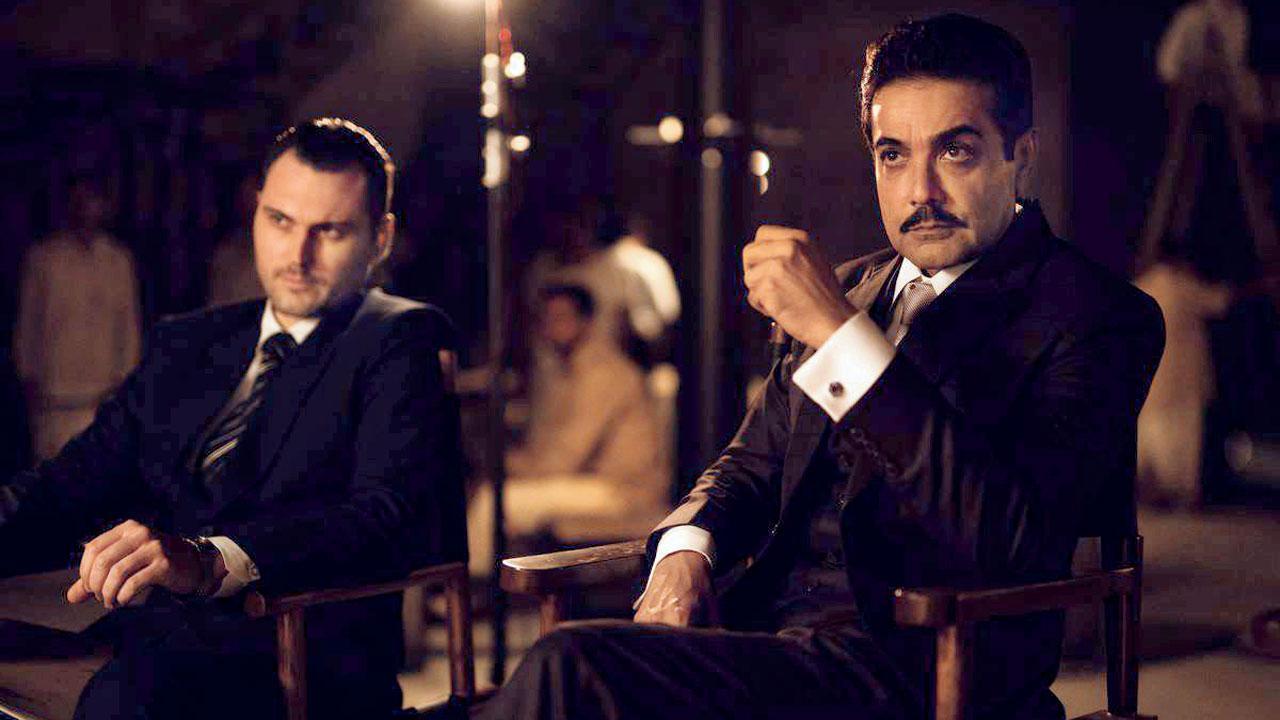
As he makes his OTT debut with Motwane’s widely praised Jubilee, Bengali superstar Prosenjit Chatterjee on how he approached his movie mogul role
Upala KBR (MID-DAY; April 10, 2023)
“Since Friday, his phone hasn’t stopped ringing,” Prosenjit Chatterjee says. Some calls are from members in the Hindi film industry, others from his peers in Bengali cinema. They all have the same thing to say — that Jubilee deserves a round of applause. “I couldn’t have asked for a better OTT debut,” beams Chatterjee, who has dominated Bengali cinema for almost four decades.
With Jubilee, creator-director Vikramaditya Motwane goes back to the Hindi film industry of the ’40s and ’50s. Chatterjee plays Srikant Roy, a powerful movie mogul owning Roy Talkies and a star-maker in his own right. The actor says he had two reasons to give his nod to the Amazon Prime Video offering — his love for that era’s cinema, and the opportunity to work with Motwane.
“Vikram is one of the finest directors of new-age cinema. When he narrated the subject to me, he said that from the day he started penning it six years ago, he had only me in mind for Srikant Roy. What makes him one of the finest directors is that even today, he [behaves like] an assistant director — he will do everything himself. Also, I know about people from that era, and their contribution to Indian cinema. One of my favourite films has been Guru Dutt’s Kaagaz Ke Phool [1959]. When I entered Jubilee’s set, I hugged Vikram and told him that he had fulfilled one of my dreams.”
Motwane’s character brief to the senior actor was pithy: “Srikant Roy is a king who only believes in his cinema”. Chatterjee brought in gravitas and restraint to the part.
“Aditi [Rao Hydari] and my characters are simmering with emotions, but cannot show them. After playing many roles, we get the maturity to handle such parts; expressing [every emotion] through our attitude, eyes and body language. [When explaining the role of] Srikant, Vikram told me, ‘I just want The Godfather.’”
The Bengali superstar is probably best remembered in Bollywood for his act in Shanghai (2012). Asked why he hasn’t been seen in Hindi cinema after Traffic (2016), he quips, “Vikram didn’t [consider] me for his last projects. I need good directors who know my body of work. Hindi movie directors, including Anurag Kashyap and Anurag Basu, have said that it’s not easy casting me as the roles are not challenging enough. I’ve been around for over 30 years. David Dhawan, who gave me my first Hindi film [Aandhiyan], told me I was mind-blowing in Jubilee. I have reached a position today where the roles have to excite me, not the project alone.”
Up next, he has the Bengali film, Shesh Pata.
Buddhadeb Dasgupta's shots were like a choreographed scene-Prosenjit Chatterjee
8:08 AM
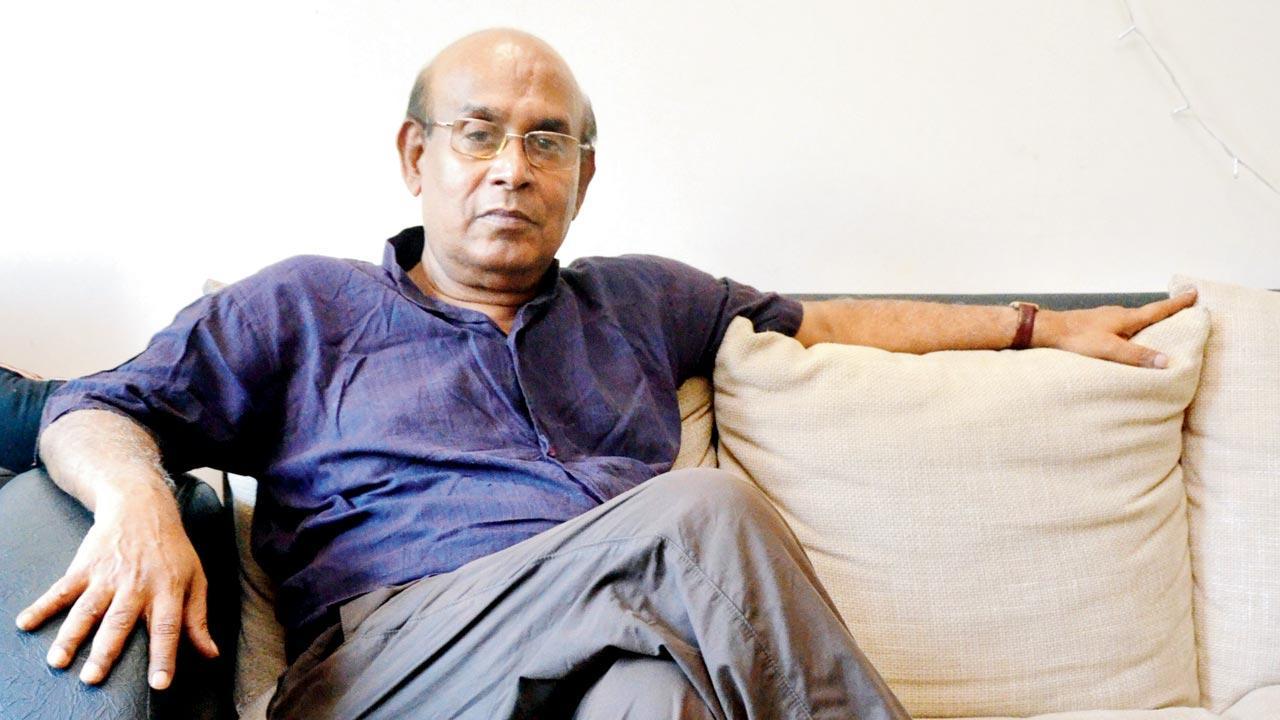
Prosenjit Chatterjee pays tribute to the legendary filmmaker, Buddhadeb Dasgupta, who passed away at 77
As told to Upala KBR (MID-DAY; June 11, 2021)
I was lucky to do two films with Buddha da – Swapner Din [2004] and Ami, Yasin Ar Amar Madhubala [2007]. Unfortunately, they never got a proper commercial release in India. Ami, Yasin Ar Amar Madhubala was screened at Toronto Film Festival and Swapner Din won the Best Film [gong] at the National Awards. He wanted me to do Kaalpurush [2005], where I was to play Mithun da’s [Chakraborty] son, but our dates didn’t match. [I couldn’t be part of] Uttara [2000] because I couldn’t go bald and put on weight [at the time].
Parallel cinema has a [restricted] budget, but we never asked for remuneration as we wanted to work in such films. When I went to meet Buddha da for the narration of Swapner Din, the first thing he told me was, ‘Ami tomake ekta gamchar taka debo [I can pay you the price of a cotton towel].’ I had to change my look to that of an ordinary boy and tone down my skin [colour]. He didn’t think that a successful mainstream hero would go out of his way, put his heart and mind into the role. He was happy. Buddha da would tell people, ‘Prosenjit is a dedicated director’s actor because he is always with the director — from the shoot to managing the sequences and coming up with solutions’.
Buddha da had a huge fan-following at international film festivals and his movies catered to that audience. Hence, all his movies had an international touch. The way he would set up his cameras, by putting one trolley on top of another, and choreograph their movements was different. He worked with the best cameramen and his lighting created magic. I remember we once shot with lanterns for a scene in a dhaba. [Despite] minimal light, it looked completely natural. If actors couldn’t understand the frame, Buddhada would call for me and ask me to rehearse with the rest of the actors.
Every sequence that I have shot with Buddha da was challenging. In Swapner Din, there was a chase sequence where the police were firing at us. Buddha da wanted a real gun for the shot [licensed and brought from Kolkata]. It was a scary moment for me, but dada wanted it. I will never forget that scene in my life. We did rehearsals and workshops at his home before the shoot began. He would take just two to three shots in a day. The first shot had to be filmed at 4.30-5 am to coincide with the sunrise. He considered it the magic hour. So, we rehearsed for the scenes at 2.30 am. [Post] 6: pm, it was pack-up unless there was a night scene. His shots were like one fully choreographed scene and if anything disrupted it — like a cow or person walking across the background — the scene would be shifted to the next day. Buddha da would not take another shot of the same scene that day.
I need to be convinced as to why a director wants to cast me in their Hindi films-Prosenjit Chatterjee
8:11 AM

Titas Chowdhury (HINDUSTAN TIMES; April 15, 2021)
Nine years after his film Shanghai (2012) released, Prosenjit Chatterjee has returned to Mumbai to shoot for his upcoming Hindi language project. The actor had recently kick-started the first schedule of his debut web series, titled Stardust, in the city. He says that the spike in Covid-19 cases and shoots getting stalled are surely matters of concern, but one has to push their fears back and keep working once they resume.
“The situation is tough not just for actors but technicians, too. Shooting during these times will be a major challenge. But this is an exercise that we need to learn and adapt to. There is a fear button within all of us, but we should know when to turn it off,” Chatterjee says.
Ask him about what kept him away from the Hindi entertainment industry for so long and the Bengali film star says, “It’s not like I consciously kept myself away. When Dibakar Banerjee (filmmaker) had approached me for Shanghai, my first question to him was why he wanted to cast me in his Hindi directorial. The same thing happened when Vikramaditya Motwane (filmmaker) approached me for my upcoming collaboration with him. I need to be convinced as to why a director wants to cast me in their Hindi films.”
On the occasion of the Bengali New Year, the 58-year-old says that had the situation been normal, he would have flown back to Kolkata (West Bengal) to spend the day with his family.
So, what is his wish for this new year? “It is going to be a year-and-a-half that we’re living with the pandemic. I pray to God that we overcome this and go back to our normal lives. The process of vaccination has started and I hope we all get vaccinated soon. I also wish for everyone’s good health,” he signs off.
Netaji’s charisma, Gumnaami’s enigma: How Prosenjit Chatterjee and Srijit Mukherji captured both
8:15 AM

Chandrima Pal (BOMBAY TIMES; January 24, 2021)

Is Gumnaami an articulation of the angst that Bengalis have always felt about Netaji not getting his due in Indian history?
Srijit: I generally feel the angst and not-getting-our-due kind of sentiments work majorly with Bengalis. But unfortunately that has expressed itself much more strongly and violently in the case of Sourav Ganguly than Subhas Chandra Bose. That sentiment came out whenever Sourav was unfairly dropped.
In the case of Subhas Bose, apart from the undying sentiment that he is going to return, politically he was considered to be a tragic hero, that is all. Unfairness or not getting his due, are phrases I would have liked our previous generations to come up with, and act upon and position themselves strongly. I have not seen evidence of that happening.
Prosenjit, what drew you to the film?
Srijit’s reasoning, his issue was different. I was not going for any controversy — my job was to deliver as per the director’s requirement. Initially for months, I tried to convince Srijit that I was okay with playing Gumnaami Baba, but I completely disagreed with his idea of casting me as Subhas Chandra Bose. I do not look like Netaji from any angle! But then, if any actor in the world got a chance to play any of the characters – Hitler, Lenin, Rabindranath, Vivekananda, Gandhi ji, will he not take up the challenge?
Srijit, you based your film on the various commissions, hypotheses, some facts and some hearsay. A lot of things were fictionalised as well. How did you sift through all this to arrive at your narrative?
Questions needed to be asked, theories needed to be discussed, truth is something which we can come to later. We need to ask the questions first. Systematically, over the last few decades, questions have been muffled, people have been misled, commissions made in a makeshift kind of manner, not with the rigour one of our greatest national heroes deserves. As a result, the common Indian who breathes free India’s air, he/she is pushed away further and further away from the truth. My narrative was about asking those questions. Think about it, how can you make a film like Gandhi without Subhas Bose? They were intrinsically entwined in the freedom struggle.
What happened when you raised these questions?
Srijit: I faced roadblocks, death threats, high court injunctions, was trolled, bullied. When these happen, you know you are on the right track. Because these questions put a lot of committees, parties, their fundings, certain lobbies, factions of Netaji’s family under the scanner. It was not an easy journey. But we owed this as a collective populace of a free country to a person who probably is the most important reason why we are free.
All the three theories – the plane crash, death in Russia and his return to India as Gumnaami Baba, need to be known and discussed. Sides need to be taken. And I have taken a side.
Prosenjit, while we are all more or familiar with Netaji — his appearance, his gait, his voice, there is a lot of intrigue about Gumnaami Baba. Which was the more challenging role for you to portray?
With Netaji, I could not get creative. I had to get the look, the gait, the jaw line spot on. But Srijit told me, Gumnaami Baba is a confusion, an enigma. Just as you have to be convincing as Subhas, as Gumnaami Baba, you have to be like him, but not entirely. So that there is some doubt in the audience’s mind.
So, I worked on the dubbing and the makeup. My voice as Gumnaami Baba will remind you of Subhas. But he is an older man and so he will sound different, even though his mannerisms would be similar. We worked for hours on just the dubbing to get it right.
Srijit, you’ve said in your film that Netaji was a man of contradictions. Is that why he’s a prime candidate for cultural and ideological appropriation?
So here, we’ve a devout Hindu who worshipped idols, but who’s very secular, whose right-hand man was a Muslim and an army full of Muslim generals, and yet the party which he formed eventually became a part of the Left combine. His venn diagram is incredible! On top of that he was a stupendous political strategist and a selfless son of India. He was a giant in every sense. It’s but natural for everyone to come and pick what’s convenient for them and appropriate Netaji for themselves.
Prosenjit, besides getting the look of Netaji right and that Gumnaami Baba’s voice inflexion, what gave you the most creative satisfaction?
What I liked about the script was that in the end, there was an emotional question from the director, not a statement to all Indians. Here is our greatest hero, and what do we answer to him? As an actor, I understood my director’s mind. He is not playing with Netaji the hero, but with emotions. My job as an actor was to support his vision and connect with the audience.
What happens when someone in the family goes missing? What do you feel when a loved one suddenly disappears and people all around you are getting into all kinds of speculations? As an actor, I learnt a few things in depth. And I sincerely believe, there was a time when he perhaps should have been back. Now, I don’t know. But looking back I feel it was a huge miss. We should have had him as our leader.

The new generation has started researching about the issue shown in Gumnaami-Prosenjit Chatterjee
8:26 AM

Despite battling objections from Netaji Subhash Chandra Bose's family, Gumnaami, says Prosenjit, is having a positive effect in society
Upala KBR (MID-DAY; October 19, 2019)
Bengali star Prosenjit Chatterjee, last seen in Traffic (2016) with Manoj Bajpayee, is in Mumbai to release the dubbed Hindi version of his controversial Bengali movie, Gumnaami. It is the positive response that the makers received from viewers in Kolkata that inspired them to take the film to different parts of the country.
"Considering the way it is running even today in West Bengal, it will achieve a cult status. Though it released with War and Joker, Gumnaami and War were the only two films that ran to a full house, starting from the 8.30 am show. In each theatre, everybody cried in the last scene, and gave the film a standing ovation. This film does not have a particular language. That's why we decided to release it across India; the issue is a national one," says the actor, who plays the part of Netaji Subhas Chandra Bose, in the film.
"I employ Hindi and English in about 90 per cent of the film, and barely use Bengali. Surendra Rajan, who plays Mahatma Gandhi, and Sanjay Motilal Gurbaxani, who plays Jawaharlal Nehru, are both Bollywood actors. The Hindi version, which was released yesterday, has been dubbed by Kay Kay Menon. We know it will go to all the film festivals."
The movie is based on the Mukherjee Commission hearings, which took place from 1999 to 2005 in Rabindra Sadan, and posed questions on Bose's death. "Srijit [Mukherji, director] wanted to question why the mystery [around his death] has not been solved yet. The backdrop is the Commission, where we show Netaji in parts. The movie is a dramatisation of the hearings, where an investigative journalist supporting the Gumnaami Baba theory locks horns with the lawyer who supports the theory of him having died in a plane crash."
Even before the original released on October 2, director Mukherji courted controversy after Bose's grand-nephew Chandra Kumar Bose, criticised him for the portrayal of Gumnami Baba as Netaji in the film. But, despite the backlash, Chatterjee says the team did not struggle with acquiring a censorship certificate. "The censor board received many letters, and several cases were filed against the producer and director. A PIL in my name too was issued from various people, including political parties. Some people said the movie was being funded by the BJP. But, it is not true. It's a controversial film, but we had it censored within a day, and got the uncut version [approved]. I liked the fact that, sitting in Kolkata, a Bengali director raised a question on Netaji, and now political bigwigs want to watch the film. The new generation has started researching about the [issue]."
In a bid to become the character he was set to play, the actor says he would disconnect from society and spend time closeted in a room. "I had to immerse myself if I needed to [successfully enact] Netaji, including [mimicking] how he looked, walked and spoke in Hindi and English. We have used lots of prosthetics. I even spoke to Rajkummar Rao, who did the web series, Bose: Dead/Alive [for references], because I was astonished at how perfectly he took to the character. He told me how he worked on Netaji's role. His performance gave me a kick; [and urged me to] perform right too."
Politics is a big no-no for me. I’m not a person who can go through that journey in life-Prosenjit Chatterjee
7:50 AM

Lasyapriya Sundaram (BOMBAY TIMES; January 10, 2018)
Recently, superstar Rajinikanth put all speculations to rest and announced that he is indeed all set to form a new party and will be actively involved in politics. This is not the first time that a celebrity with stature and a huge fan-following has stepped into the political arena. Some of them have even gone on to become successful politicians. In fact, several movie stars from the South have been formidable politicians with long-running political careers.
Recently, when BT spoke to one of the biggest Bengali stars, Prosenjit Chatterjee, during his recent visit to Mumbai, he dismissed the thought of joining politics and stressed on the fact that the only thing he desires to be is an actor. In a career spanning more than thirty years, Prosenjit has not just been a matinee idol but has also successfully bridged the gap between art and commercial Bengali cinema. He tells us, “Politics is a big no-no for me. I’m not a person who can go through that journey in life. When the Chief Minister of West Bengal, Mamata Banerjee, asked me about it, I admitted that everyone has a calling and are specialists in doing a particular job. Even today, when I wake up in the morning, I wonder what kind of opportunities as far as acting is concerned, will come my way. I was born to be an actor and I haven’t exhausted myself in this particular field. So, I cannot think of doing something else, as I am consumed by my profession.” Bengal has seen other actors like Roopa Ganguly, Dev, Moon Moon Sen, Satabdi Roy and Tapas Paul turn politicians, but it seems Prosenjit will purely stick to what he knows best — cinema.
Subscribe to:
Posts (Atom)