Showing posts with label Priyanka Chandra. Show all posts
Showing posts with label Priyanka Chandra. Show all posts
How photographing celebrity funerals is leading to public consumption of private grief
9:24 AM
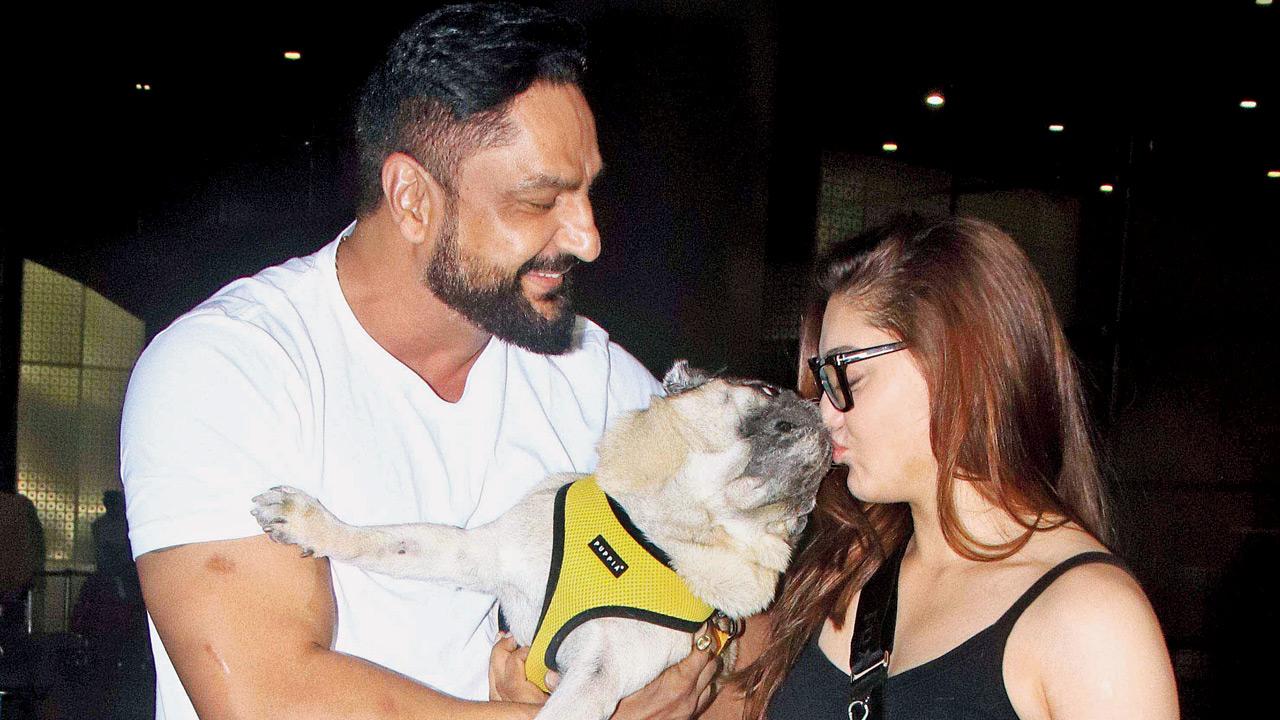
The intrusive digital coverage of actor Shefali Jariwala’s demise is another reminder that someone’s grief is not a spectacle. Sunday mid-day speaks to paparazzi, and film and celebrity publicists to understand where one should draw the line
Priyanka Sharma, Komal RJ Panchal (MID-DAY; July 6, 2025)
Hours after performing the last rites of his actor-partner, Shefali Jariwala, a distraught Parag Tyagi, with folded hands, requested the media and paparazzi to not make fun of the departed, and stop filming the unfortunate event. Tyagi’s request came after a day of what could be best described as grief voyeurism — from paparazzi and mediapersons filming him taking out his dog for a walk, pushing camera and microphones in the faces of those grieving, to shooting Tyagi kissing the mortal remains of his beloved. Shortly after, Bollywood star Varun Dhawan took to Instagram to question the need to cover “someone’s grief”. Many in the industry echoed his sentiments.
It’s not the first time the moral and ethical lines of reportage have been crossed in the face of a celebrity death. It’s also not the first time the media and paparazzi have been criticized for displaying insensitivity. Veteran Bollywood photographer Yogen Shah, a prominent member of the fraternity, poses a blunt question: “Tell me one thing — why cover celebrity funerals at all? What’s there to show?”
Shah emphasizes sensitivity and consent remain central to his team’s approach. “If the family says no, we listen,” he says, citing examples of the death of Jariwala and Anil Kapoor’s mother, Nirmal Kapoor. “When Sunita Kapoor (Anil’s wife) requested that her mother-in-law’s funeral not be photographed, no one clicked a single image. Similarly, Shefali Jariwala’s prayer meet was not covered by the paparazzi at all, in full respect of her family’s wishes,” he shares.
Popular Bollywood pap Snehkumar Zala, who is a part of senior photographer Manav Manglani’s team, says in the absence of any rules, people in the community employ personal discretion in such incidents. “It’s really about humanity. If someone is grieving or crying, I will personally never record or post it. Yes, like we cover a wedding, we will cover a funeral too. But we shouldn’t be invasive. From a news perspective, we will report on who’s attending the funeral, but we shouldn’t be zooming in on faces. These are lines I don’t want to cross. But today, there are many YouTubers and other video channels that have come into the picture. How many of them will stop?” he asks.
But in this unfortunate cycle driven by views and Instagram likes, the villains are many. “While paparazzi and freelancers chase these content for numbers, many dignified platforms are complicit in amplifying it, often without editorial discretion, under the pretext of serving an ‘audience demand’ that may not even exist in the form it’s presumed,” says publicist Priyanka Chandra, who runs film PR firm Mulberry Media.
Zala says the accountability lies on the editors and people, who manage hugely followed video and social media portals. “Besides their on-ground video teams, big news portals also buy content from independent paps and YouTubers. So, someone could shoot something and send it to you, but it’s on you whether you post it or not. The accountability should also be of the people managing these pages,” he points out.
From a publicist’s perspective, a celebrity death is not about disseminating information, but constant firefighting to save the reputation of the deceased. “The PR and media management in case of such events entirely depends on the comfort of the public figure and their family. While official statements are released by spokespersons and family to the media in case of natural deaths, this cannot be a template to follow in cases of active investigations. Media management is also done on-ground in case of some high-profile deaths, but the battle to counter misinformation is the biggest challenge for PR professionals,” says a film PR professional on the condition of anonymity.
To Chandra, it’s the normalization of public consumption of private grief that’s the actual crisis. “From a publicist’s point of view, these situations are such a nightmare to navigate. The publicist often becomes an invisible crisis manager of sorts, trying to hold space for privacy, maintain dignity and simultaneously, mitigate reputational damage. But when content is being generated from phones in the hands of bystanders and sold across these platforms with no gatekeeping, containment becomes near impossible. It’s a complete collapse of moral boundaries,” she explains.
The need for guidelines to enforce something as basic as sensitivity and compassion might feel tragic, but it’s becoming increasingly imperative. “For covering funerals, there should be a designated area at crematoriums and hospitals for the media, at a distance from visitors and those who are grieving. The Ministry of Information and Broadcasting and Press Council of India should take cognizance of the matter, issue guidelines and set SOPs to better regulate press coverage during such instances. There are prominent paps who run a network of representatives on-ground. I strongly believe that they have the power to set an example,” says a PR executive.
But what happens when a publicist also gets their hand dirty? A senior PR shares with us that oftentimes paps are tipped off to cover funerals. “I was talking to a few paps and I learnt that a few days ago, Shefali’s prayer meeting was held, and the family said, ‘Please don’t cover.’ So paps did not cover. No one on social media even came to know that there was a prayer meet. So then what is happening? It’s flawed at many levels. It’s not one person’s problem. There are celebrities who want to be papped,” the publicist says.
The communication from a PR in the event of an untimely death will not necessarily be always streamlined, because it also depends on how powerful the publicist is, shares an insider. “After Shefali, Parag was the one to give approvals for such things such as a statement or other details. Maybe he wasn’t in the state? For Sridevi, there were managers and entire teams. But some don’t have access to that kind of structure who would take charge on their behalf and oversee PR,” the insider says.
Before any guidelines are set from the top, is there a collective action that celebrities and their publicists can take against regular offenders by discontinuing platforming themselves and their clients respectively until they put an end to intrusive practices? “The entertainment industry’s biggest problem is the lack of unity. If everyone stands together, there are many wrongs we can rectify. When an actor like Varun posts something, it’s great. I don’t even know if he knew Shefali well, but it’s not a question of knowing. It’s a question of humanity,” says another PR executive.
In the end, it all comes down to pausing for a minute, rethinking, and choosing conscience over coverage, Chandra sums up. “Ultimately, the question we must ask isn’t whether something will fetch views, but whether it should. Even entertainment journalism cannot be divorced from conscience.”
Riding a bike in Ladakh lets you experience freedom and liberation like nothing else can-Kirti Kulhari
8:27 AM

Driving 800 kms through the Himalayas, Kirti Kulhari realised that in the mountains you are not a woman or man, just a rider
Nasrin Modak Siddiqi (MID-DAY; July 10, 2022)
I have been to Ladakh a couple of times: Stayed there for almost a month when shooting for Bard Of Blood; went there again for some other work, and always came back feeling a connection with the place. However, I never really got to explore it because I have motion sickness.
Last year, I decided to change that and do a bike trip to Ladakh. It seemed like an adventurous and exciting solution to my problem—I could finally move around in the mountains without getting sick.
Gearing up
Last year in November, I bought a Royal Enfield Classic 350. Though I had ridden a two-wheeler before, I had never ridden a motorbike. I had to learn and practice riding it on Mumbai’s pothole-laden roads, manoeuvring the traffic alongside other vehicles that were often too close for proximity. In hindsight, it (kind of) prepared me for Ladakh, a trip I was planning in July-August. It’s summertime there then. The days are adequately hot and you get to enjoy Ladakh in all its natural beauty.
I started putting things together with a friend from Ladakh in April, but it didn’t work out. It just happened that another friend, Priyanka Chandra, had just finished working on a music festival there. She put the whole itinerary together and I just showed up. The others who were to join us dropped out, and eventually it was just Priyanka and me. It was perfect—I wanted to be on my own, enjoy the trip at my pace, and have some me time. A lot of planning went into ensuring we skip the touristy places, more so because it was tourist season. We did find a lot of people on our way back from Pangong lake while crossing the Changla pass. Otherwise, we mostly had the whole place to ourselves.
We started the ride from Saspol, went to Hanu Village, and came back the next day.
The route for the next week was Saspol-Kharu-Chumathang-Nyoma-Chusul-Pangong Tso-Tansgte-Leh—800 kilometres in eight days! We reached out to Stanzin Chokphel, an actor, who has a production house in Ladakh. He was of great help for local connections, because we hadn’t planned the days down to every detail. Most of the things we did were impromptu: Going where we felt like and camping where we felt like, knowing we were safe because the Indian army is stationed here. On day seven, we camped at a secluded stretch, close to a village called Merak, right before Pangong Tso because the sky was so beautiful.
Trusting the best
I was advised against taking my Classic 350, so I had to rent a bike in Ladakh. We reached out to Sushil Chaudhary, founder and CEO of Picturetime, an inflatable theatre company that installed the world’s highest-altitude theatre—at 11,562 ft—in Ladakh last year. He arranged for two bikes for me to test: A Himalayan Royal Enfield and a Yezdi. I chose the Himalayan. It is different in terms of design, height, and structure compared to the Classic 350 that I was used to. I wondered if I would be comfortable, but to my surprise, the Himalayan is an absolute darling in the mountains. It’s so strong and sturdy; It weighs 200 kilos but still moves like a breeze. It never broke down or gave me trouble.
No matter how confident you are, a bike is not the same as a four-wheeler—it can skid. That’s always at the back of your mind. The only way to not let that ruin your ride is to take all safety measures and not panic. Fifty per cent of the roads in Ladakh are beautiful, and 50 per cent are pathways made of stone and gravel. Honestly, you could skid at any point. I am not very proud of saying this, but I just went with the flow, sans a safety jacket or knee pads. I rode wearing normal track pants, a regular jacket, trekking shoes, and a full helmet. I’m so grateful and blessed that while my bike did fall four-five times, it wasn’t in full motion. I was unhurt. But it’s better to be safe than sorry, so always hire the right gear.
Gender no bar
Ladakh is very woman-friendly. You feel safe: there’s no eve-teasing and people readily help you out. It’s one of the few places in India that displays evident gender equality. It is a matriarchal society where both sexes are treated like they matter and are valued for who they are. Also, riding is gender-neutral. It is not about being male or female—you’re just a rider. The beauty is that everyone wears the same gear, so unless you look closely, you don’t know if it’s a man or a woman riding the bike.
Going in natur
Toilets are usually a concern for me. When you are travelling pan-India, unclean toilets are a thing and that’s quite a bummer. In Ladakh, I preferred going in nature rather than trying out dirty toilets. Many people do that. There are stretches when there is barely a soul in sight, and you can stop your bike and do your job.
My first halt was a quaint boutique hotel called Moljoks in Saspol. It’s a new place with few rooms and great food put together by a young chef. Explore smaller places such as Shey, Nyoma, Hanu, and Hanle—there’s an observatory in Hanle, so if you love star-gazing, this is where you should be. We camped at Hanu, Chusul, and by the Pangong lake. At Chumathang, we experienced the hot springs.
Riding a bike on this terrain lets you experience freedom and liberation like nothing else can. I’m so grateful I could do this, and met some wonderful people on the trip, which is always the point of new journeys. I wish we could experience this warmth and friendliness everywhere we go.
Now that I have been bitten by the biker’s bug, some day I’ll ride from Mumbai to Ladakh.
Eat, pray, love
- Ladakh is a tourist-friendly biker’s paradise with many places to stay and eateries catering to travellers.
- Eat at Tsas, a newly-opened fine dining restaurant that has amazing food that’s also economical. It’s about 10 minutes from Leh.
- There’s also Alchi Kitchen in Alchi village, close to Saspol where I stayed for the first two days of my trip. The proprietor Nilza Wangmo makes Ladakhi cuisine.
- Do the monasteries: Go to Thiksey for sure, but also stop by at any of the others that draw you in on your way. Buy prayer flags for yourself, and your friends and families back home. You’ll find them all across Ladakh. I love the sight of small bridges with criss-crossing garlands of prayer flags flapping in the air—it’s mesmerizing.
- Check out the Ladakhi designer stores. I walked into Jigmat and Namza. They have haute couture Ladakhi costumes. You don’t necessarily have to buy anything, but it’s fun to browse.
- Take time to get out of your car and scoop up some Multani mitti (Fuller’s earth) straight from the small hills near Leh.
- Visit Pangong lake: It’s beautiful in winters and summers alike. There are very few things that compare to it at first sight. Spend a day by the lake and camp around there at night.

Kirti and her trusted Himalayan Royal Enfield that she hired for the trip from Saspol. There are plenty of options for riders and it is always best to go with a reliable hiring contact

When staying at Saspol, Kirti and Priyanka trekked down the Indus river and sat by it for hours, taking in the scenery

Night camping at Hanu. You can hire camping gear at most big tourist-friendly villages. Pics courtesy/Kirti Kulhari

Pitstop for Maggi at Mahe enroute Kharu to Chumathang; (left) With Chuskit, owner of the dhabha
Subscribe to:
Posts (Atom)