Showing posts with label Pritish Nandy. Show all posts
Showing posts with label Pritish Nandy. Show all posts
20 Years of Hazaaron Khwaishein Aisi: The only criteria was no known faces-Sudhir Mishra
8:22 AM
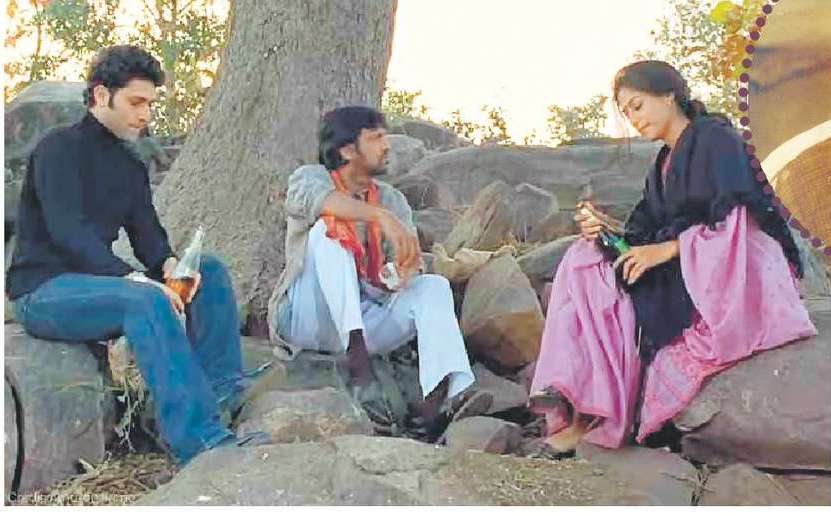
As Hazaaron Khwaishein Aisi (HKA) clocks 20 years, writer-director Sudhir Mishra reflects on its cult status now
Deep Saxena (HINDUSTAN TIMES; April 16, 2025)
Starring Kay Kay Menon, Chitrangda Singh, and Shiney Ahuja, Hazaaron Khwaishein Aisi (2005) was a semi-hit but garnered widespread love and acclaim over the years. Dismissing rumours of a remake, Sudhir Mishra, who served as both director and writer, says that a sequel could be worked out.
A big screen viewing again?
It is the time of re-releases, and Sudhir shares that there were talks about HKA, too, getting a re-release before the death of producer Pritish Nandy: “It’s surely in consideration. HKA was released without PR and was a minor hit. (But) the kind of viewership it got later is weird!”
‘Kharab nahin kar sakte’
The filmmaker feels that HKA is no longer his film: “Over the years, the audience made it their own.” He is also asked about a possible sequel or remake wherever he goes and shares, “A sequel can be done as the story of the three characters can move on. But, nothing should not be done just for the sake of it! If something comes to mind, it will be, but I can’t spoil the memory of the film – kharab nahin kar sakte.”
The biggest award
“The film was rejected by the National Award jury headed by (filmmaker) Basu Chatterjee. The industry thought that it would be sent for the Academy Awards but lost to Paheli (2005). But HKA went to several festivals and won awards all over,” the filmmaker shares, adding “The test of a film is that it has meaning for its audience across time and keeps finding other audience. HKA does. That is the biggest award!”
Fresh faces
Sudhir was certain about casting fresh faces for the film. He recalls how, Swanand Kirkire, who wrote and sang Bavra Mann and also appeared as a villager in the film, auditioned hundreds of actors for the lead roles.
“I had already cast someone for Shiney’s role, who is still very angry with me. But then, Zoya (Akhtar, filmmaker) sent Shiney. I originally tested him for Kay Kay’s role but changed it... Chitrangada was going to catch a flight when I called her... The only criteria was no known faces,” he recalls.
Pritish Nandy asked me for a sequel to Hazaaron Khwaishein Aisi-Sudhir Mishra
9:08 AM
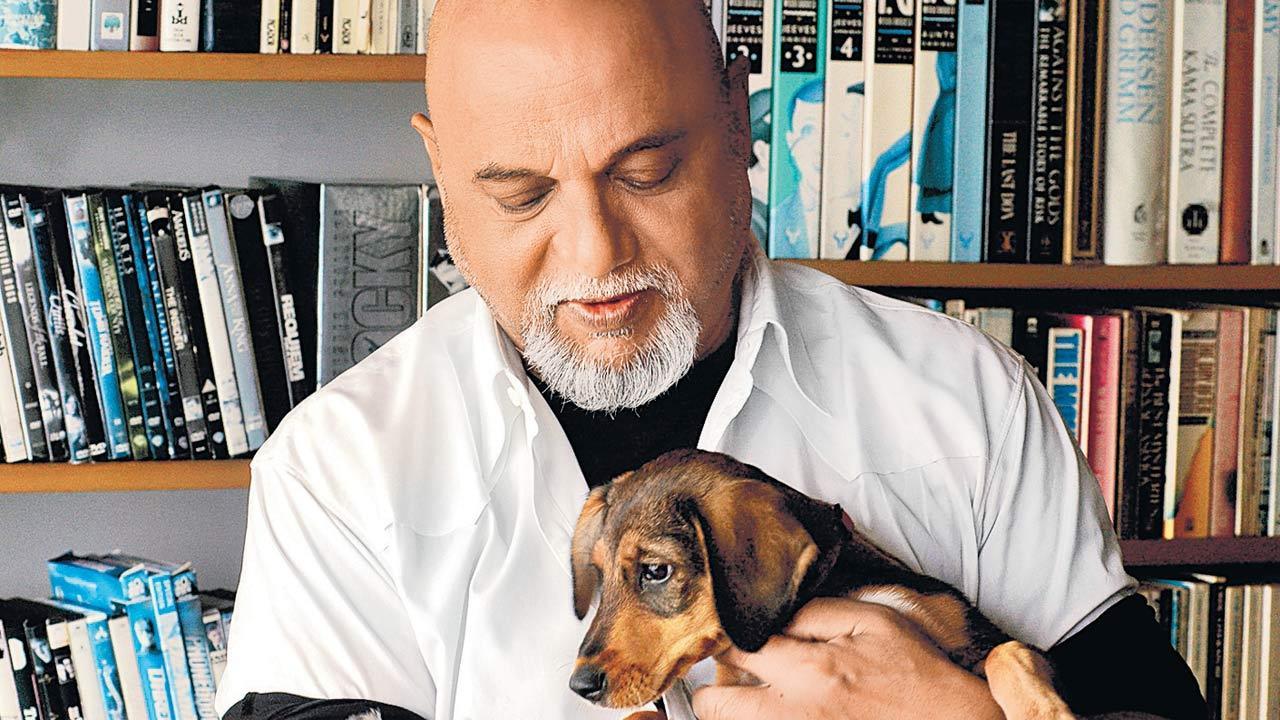
Director Sudhir Mishra on the man who made his Hazaaron Khwaishein possible
Sudhir Mishra (MID-DAY; January 10, 2025)
“You seem stressed”, a voice next to me half-whispered into my ear. I must’ve been crying or something. I was very stressed. I turned around and through my tears, I saw a blurred face of a man, who I recognized to be Pritish Nandy.
We were on a flight to Delhi, and the funding for my film had just fallen through. That film was Twist With Destiny, which would later be known as Hazaaron Khwaishein Aisi. The guy, who was funding me, told me to f*** off, because it was too obtuse, too unlike anything else, too political, and not political enough, where the main girl character was a kind of a sl**.
“Who’s going to sympathize with a bitch like that,” Money Man had said. I turned to look at Pritish again, and trying to get a hold of myself, I told him I was trying to make a film. And now that Money Man had said no, I’ll be unable to make it.
He looked at me, and smiled. Of course, I knew Pritish: the publisher and editor of The Times of India group, and that he had taken over the Illustrated Weekly magazine from the hands of Khushwant Singh!
He had done a lot of famous interviews with Mr Patnaik, the chief minister of Orissa, at the time. The interviews had almost toppled his ministry! I knew that the Delhi circles were quite upset with him. I knew that he didn’t give a damn.
I also knew that he had taken over the Sunday Observer magazine and then left it again! Rumours were that he had started a production company, but there were too many rumours in Mumbai, and we seldom took everything seriously.
I must’ve stared at him blankly, because I didn’t know how to reply when he suddenly asked me what the film was about. Anyway, I was going to spend two hours with the man [on the flight], and he had bothered to ask. My gut instinct told me that he’d get the film, creatively.
I sort of gave him a 15-minute narration. There was a long pause, and he told me “Come to my office tomorrow. I’ll give you the money.” That’s exactly how Hazaaron began.
We met the next day, I signed the contract in a couple of days. He never asked me what the cast was. I showed him pictures of the people I was casting. 40 per cent of the money was supposed to come from France, in kind. This came to us in the form of the DoP, the editor, and the sound designer.
Everyone else from India was new. The actors Shiney Ahuja, Chitrangda Singh were absolutely fresh faces and while KK had done some work, it was still initial days for him. Shantanu Moitra was the music director nobody knew at the time. Swanand Kirkire happened to be my associate director and he would go on to write the songs. He was also the main casting director.
Pritish never said much. He never talked about the film, but talked around it. He was very respectful to us as filmmakers, and very generously tried to tell us things around the subject-matter of the film—in the hope that some things would land, be understood and therefore, become part of the film.
In those conversations, I understood how deeply he knew about those times. There was also a lament inside him for what was changing. There was this Radical Kolkata interacting with the Cosmopolitan Kolkata. The Radical Kolkata was also the product of the Cosmopolitan Kolkata, and the various fissures tearing apart Bengal then.
Pritish Nandy was a product of the Kolkata of that time, and he carried that with him wherever he went. Sometimes, I think, you could feel the loss in his poems, although he never directly talked about them.
Another great thing about Pritish was that he never imposed his power as producer. When he didn’t like something, he never issued instructions. Instead, he gave you many options, of which you could take one, or many. There was never any insistence from his side. But the depth and force of his arguments were so great that you often incorporated his understanding of things into your film.
One day he called me and said, “Your film is about my time, but then it should also be about any time.” For him, the ’60s were also visible in the ’70s; and so was a yearning for the future.
“So, your film should indicate the time period subtly, but not constantly thrust it in the audience’s face. Everyone should not have sideburns. Not everyone should wear a bell bottom, and so on.”
I thought it was a sharp observation and something that I implemented. As a result, Hazaaron became about the people, and the Emergency became its backdrop, and therefore, now it’s not only about the young people of that time, but about the young people and their passions in any time period.
Another sharp memory. I was going to the shoot one day, and he called me and said, “You know, Sudhir. Your title ‘Twist With Destiny’ doesn’t do justice to the film. So, change it, but please don’t give me an English one. It’s an Indian film. Give me a title, which doesn’t just appeal to the anglicized set, but to everyone.”
Five minutes later, I asked him if we can call it ‘Hazaaron Khwaishein Aisi’. He immediately said yes, and put the phone down.
When Hazaaron didn’t release for a long time I was quite upset and he said to me, “I let you make the film you wanted to, right?” Now, let me put it in front of the audience in a way that the audience deserves, and he did.
Hazaaron, in some strange way, in the way he marketed it [though not everyone agreed] became a silent, cult hit, and that has a lot to do with Pritish.
Then we made Chameli. During that time, I met his two lovely, young daughters. He said, “I used to hate them, when they were children. But when they grew up to be bright, intelligent children, I fell in love with them.” You wouldn’t think so, when you met a man like Pritish. But he really adored his children.
I often met him later… We were going to do another film, but it didn’t work out. He called me, and we met again. He asked me for a sequel to Hazaaron. It’s one of my regrets that I couldn’t come up with a worthy sequel for Hazaaron.
We were supposed to meet this month and over a cup of tea, talk about life and cinema. That too is one regret.
Pritish Nandy passes away at 73
8:24 AM
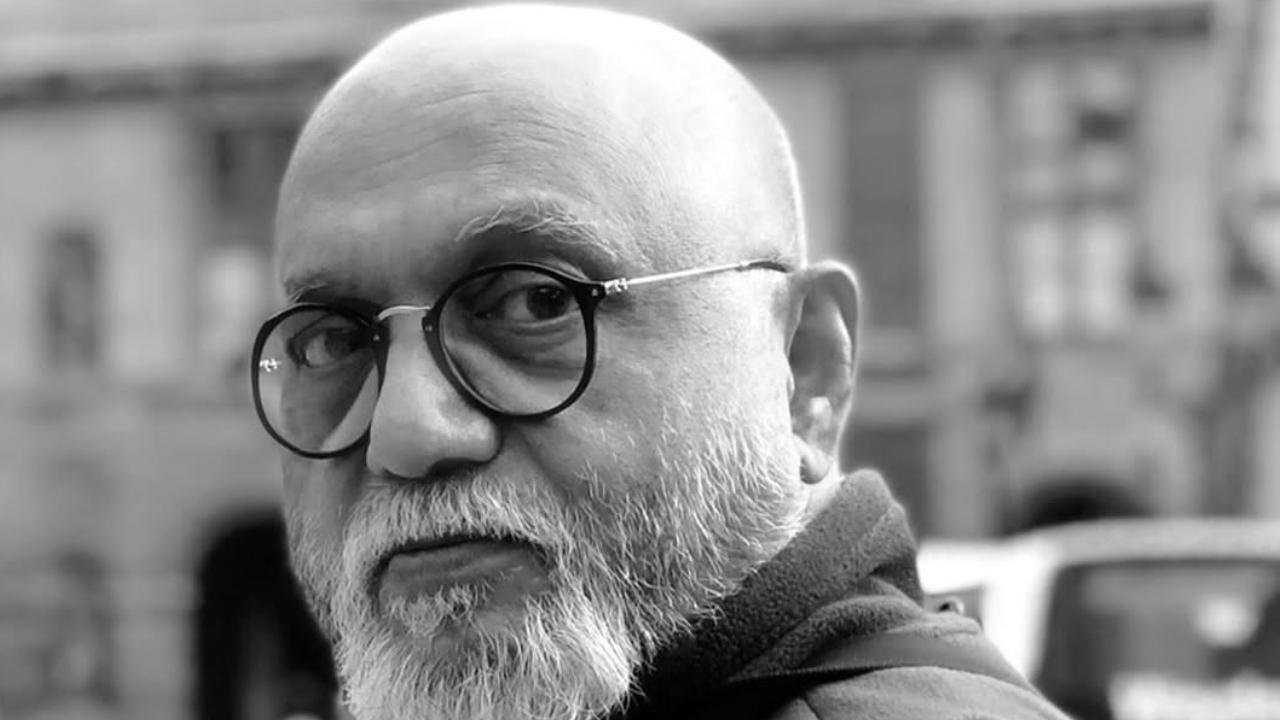
THE TIMES OF INDIA (January 9, 2025)
Poet, editor, TV show host, film producer, Rajya Sabha member, animal rights activist - Pritish Nandy, a gifted man of many parts and surprises, passed away in Mumbai on Wednesday. He was 73.
Born in Bihar's Bhagalpur town, Nandy was the brother of renowned academic Ashis Nandy. He was a prolific poet, writing with the passion and intensity of Latin American versifiers in his youth. Nandy often wrote with empathy for the young Naxalites who were killed for the cause they believed in, including in a poem titled, 'Calcutta if you must exile me.'
Eventually, it was Nandy who exiled himself. Shifting to what was then called Bombay, he found a new calling at The Times of India. He edited The Illustrated Weekly of India and oversaw Filmfare and Femina.
Pritish Nandy foresaw the future, and was always full of surprises. During Pritish Nandy’s tenure as editor, The Illustrated Weekly came up with several exclusives. Among his famous reports was an interview of Frank Camper, a mercenary who ran a training camp for his tribe in the jungles of Alabama. Nandy’s interview with singer Kishore Kumar provided an insight into the mind of the musical genius. As an editor, he also had a fondness for special issues related to quiz, sports and cinema — all collector’s items.
Moving on to the world of motion pictures and television seemed to be a natural step. He hosted The Pritish Nandy Show on DD. When he set up his own media company in the early 1990s, he named it Pritish Nandy Communications.
In the 1990s, Bollywood was still doing film business the traditional way. But Nandy foresaw the future. He was among the pioneers in the corporatisation of Bollywood. Among his noteworthy films are the big budget, multi-starrer thriller, Kaante, and director Sudhir Mishra’s masterpiece, Hazaaron Khwahishen Aisi. Other films such as Bollywood Calling, Jhankar Beats, Chameli, Pyaar Ke Side Effects were entertaining yet different from humdrum Bollywood. They typified the new polished Bollywood, still trying to find its way in the new millennium.
Considering his affinity for Leftist movements in the past, many were surprised when he was nominated to Rajya Sabha by Shiv Sena. Nandy was the first MP from the city to use his local area development fund (MPLAD) for the heritage precinct at Kala Ghoda.
But Nandy was always full of surprises. He played a key role in setting up NGO People for Animals with Maneka Gandhi. He saw the potential of the internet before most, playing a key role in setting up one of India’s first cyber cafes. And he was a popular columnist.
His death was mourned by many ranging from actor Sanjay Dutt to writer Ashwin Sanghi to academic Amitabh Matttoo. Actor-politician Anupam Kher wrote on X, “Deeply deeply saddened and shocked to know about the demise of one of my dearest and closest friends #PritishNandy! Amazing poet, writer, filmmaker and a brave and unique editor/journalist!” Kher also posted how Nandy had anchored him during his day of struggle.
As social media users troll mum-to-be Deepika Padukone, fraternity calls them out
8:59 AM
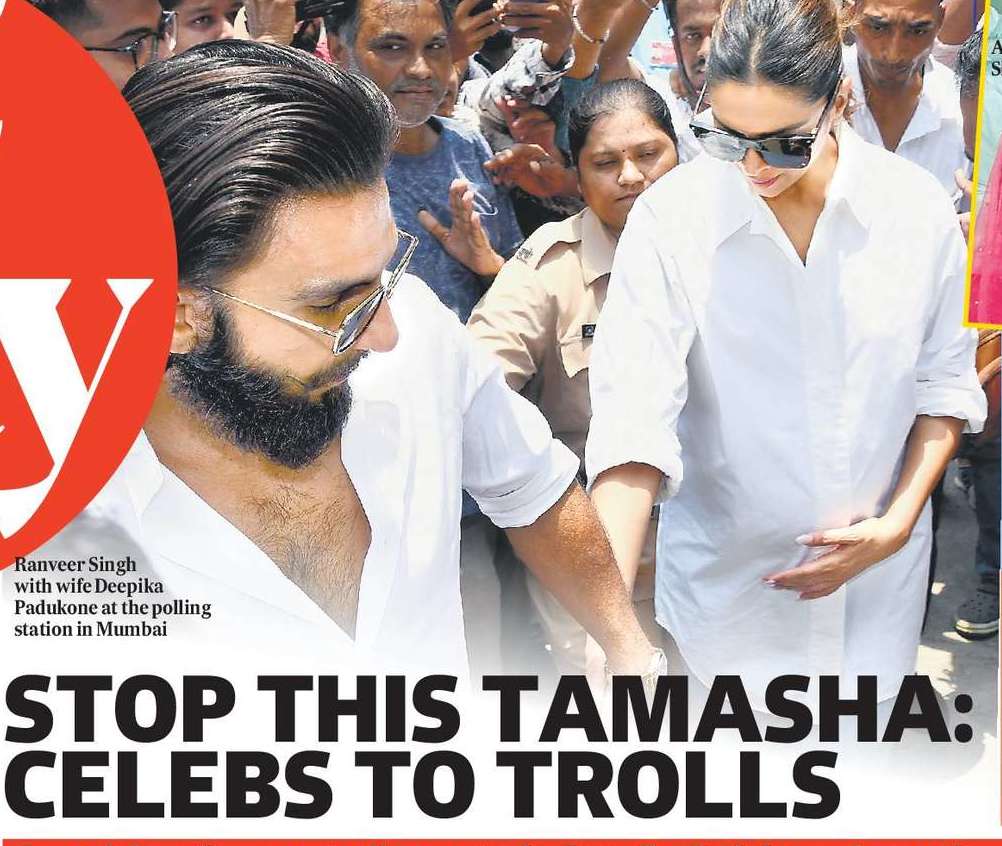
Rishabh Suri (HINDUSTAN TIMES; May 25, 2024)
Her baby bump is fake’ and ‘Pregnant women don’t walk like that, is she even pregnant?’ — these are among the many hard-hearted comments that were posted on social media after actor Deepika Padukone stepped out to vote on May 20. Social media is breeding ground for trolling vis-à-vis celebs. While Sonakshi Sinha quit X in 2020 and wrote on Insta: “I’ve cut the direct source of insult and abuse in my life”, Aamir Khan, too, deleted all his personal social media accounts in 2021 to avoid all the negativity. With buzz around the comments for mum-to-be Padukone, we wonder if social media has gone overboard, again.
Actor Alia Bhatt liked a journalist’s Insta post that was addressed to the trolls: “... you have no right to comment on any aspect of her life”. Actor Aahana S Kumra, who endorsed the post in the comment, was trolled for standing up for herself recently, when a fan kept his hand around her waist while getting clicked with her.
Adah Sharma faced threats for her films The Kerala Story (2023) and Bastar: The Naxal Story. She says, “Once you are a ‘celeb’, your personal life is open to one and all. The whole world becomes your family and is free to give their opinion.”
Actor Divyanka Tripathi Dahiya was trolled when she posted a video of her practising martial arts. The trolls said she should have a baby instead. She says, “When I’m subjected to trolling, I try to ignore them. But at times, I do speak up. I even filed a complaint in cyber cell once. I feel it’s important to raise a voice so they know that the fight is not going to be that easy.”
Producer Pritish Nandy feels celebs are targets: “When you create an army of trolls who work for political purposes, they post nasty things in their free time.”
All about handling the trolls
On being trolled, actor Zareen Khan says, “People frustrated with their realities find social media as a medium of venting out their frustration, and celebs are easy targets. I have stopped reading such comments.”
Talking about Padukone, Kumra says, “It’s her body! Why are people commenting on it? She didn’t want attention when she stepped out to exercise her constitutional right. When I had raised my voice, I was trolled. People said: ‘Yeh kaun hoti hai bolne wali?’ It’s my body! I didn’t want someone touching me.”
As The Kerala Story faces trouble in West Bengal and Tamil Nadu, industry rues the lack of creative liberty
10:27 AM
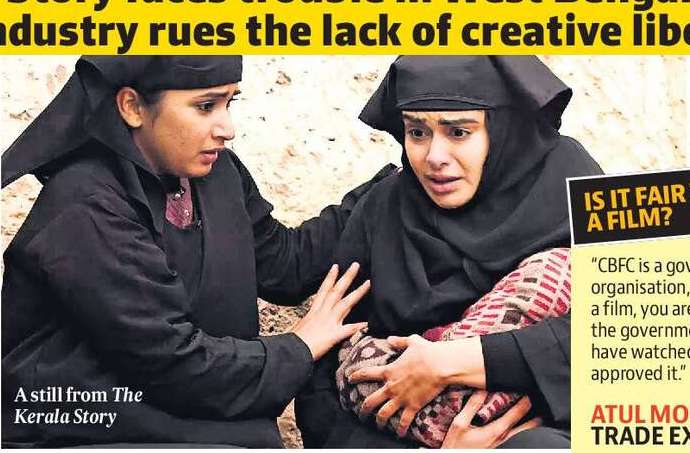
Rishabh Suri (HINDUSTAN TIMES; May 12, 2023)
Sitting at the centre of a nationwide debate storm is The Kerala Story. While Uttar Pradesh and Madhya Pradesh have made the film tax-free, it has been banned in West Bengal and it’s screening has been stopped in theatres of Tamil Nadu.
Filmmaker Anurag Kashyap tweeted, “You agree with the film or not, be it propaganda, counter propaganda, offensive or not, to ban it is just wrong (sic).” Producers Guild of India, too, issued a statement that read: “We are distressed by, and would like to record its strong objection to, the state-enforced bans on The Kerala Story.”
Filmmaker Madhur Bhandarkar says, “I supported Udta Punjab and Ae Dil Hai Mushkil (both 2016). But when Indu Sarkar (2017) was targeted by political parties, no one supported me. I feel once a film is passed by the Central Board of Film Certification (CBFC), it should be released, whether you agree with it or not.”
The film has been doing well at the box office. Trade analyst Joginder Tuteja says, “I am not saying what’s happening in West Bengal is right or wrong. But if the CBFC has allowed something, why should any state go against it? There should be creative liberty.”
Is it fair to ban a film?
Atul Mohan, trade expert: “CBFC is a government organisation, so by banning a film, you are challenging the government. People have watched it and approved it.”
Pritish Nandy, producer: “Once passed by the CBFC, a film is officially cleared for exhibition. But, if certain states feel it could create a law and order situation, it’s their right to decide whether it should be screened or not. They understand the local circumstances.”
‘Kishore would sing to anybody’s tune but not the government’s’: A new book traces the life and times of Kishore Kumar
8:48 AM
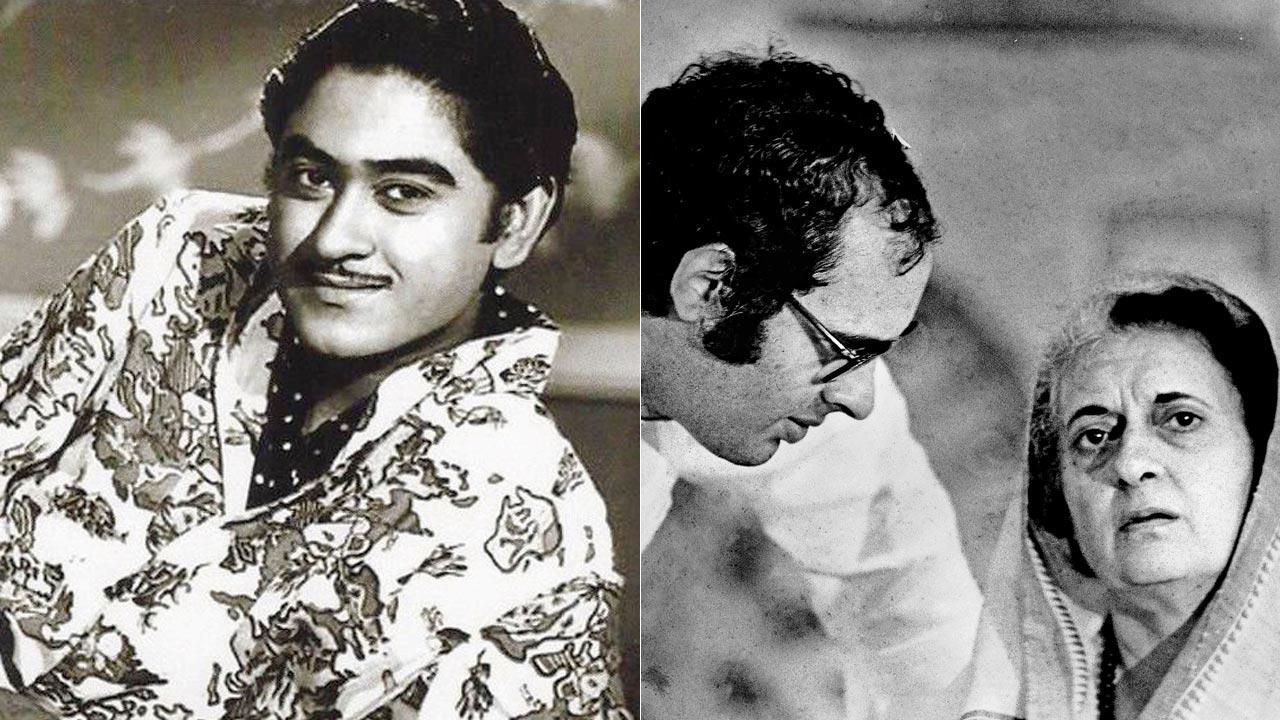
Pic/Wikimedia Commons; (right) Sanjay Gandhi with his mother, Indira Gandhi during the Assam session of the All India Congress Committee, November 19, 1976. Pic/Getty Images
He snubbed Sanjay Gandhi, and cared less about repercussions. A just-released biography looks back at the life and times of veteran singer-actor Kishore Kumar, whose impertinence was as legendary as his music
MID-DAY (October 16, 2022)
It was around January 1976. Geeton Bhari Shaam was Sanjay’s brainchild, and it was decided to rope in film celebrities to do films for television eulogising the Twenty Point Programme. The session was to be the antidote for a nation engulfed in despondency. And who better to lift them from the despair than Kishore, by now the authority on live shows?
He wanted Kishore to sing jingles in praise of the government and its schemes. “Wanted” would be a wrong choice of word for Sanjay of those days. It was more of a demand than an appeal. Kishore was basking in the glory of a Filmfare Award, his first in six years, when the trunk call came from Delhi. Not known to pick up phone calls directly, Kishore had made an exception that day.
“You have to come to Delhi. Sanjay Gandhi ka programme hai.”
“Who are you?” Now it was Kishore’s turn to “demand”.
“Burney.” It was a voice that reeked of unmerited power.
An infuriated Kishore was unusually cool and, for a change, politically correct.
“Please talk to my secretary or else take prior appointment.”
In his interview with Pritish Nandy, Kishore would set the record straight some nine years later. “Who knows why they come? But no one can make me do what I don’t want to do. I don’t sing at anyone’s will or command.”
The conversation would end there, but the confrontation had just begun. In those days, the Gandhi scion would not take no for an answer. Shukla needed to act in a hurry to save his job and honour.
Sayed Muzaffar Hussain Burney, the then Secretary in the Ministry of I&B, reported the conversation to his boss and was swiftly directed to arrange a meeting with some government officials and industry representatives in Bombay. The said meeting took place on 29 April 1976 and was attended by G P Sippy, the then head of the All-India Film Producer’s Council, director Shriram Bohra, B R Chopra, Subodh Mukerji and Nasir Hussain, among others.
Sippy tried to convince Kishore for the show but was snubbed. Sippy then explained to the officials that convincing Kishore was not their cup of tea and that ministry officials should contact him directly.
Next, it was the turn of Joint Secretary C B Jain to engage with Kishore. He spoke to the singer directly on phone and explained the government’s stance on the matter. Jain even suggested visiting Kishore to discuss the matter but was told that Kishore was not to see anyone as per medical advice. Kishore, during these years, was indeed suffering from hypertension, eosinophilia and other issues for which some live shows had to be curtailed midway.
By this time, Kishore was also mentally prepared to make a debut on the streets. With a harmonium hanging from his shoulders, he would sing to anybody’s tune but not the government’s:
I did what I thought best. Singing at private functions is definitely not an anathema. With genuine love and respect, I am only too eager to bend. However, if someone decides to rest his foot in my head, he will not have the good fortune to witness the best of my courtesies.
The film industry had attuned themselves to the eccentricities of Kishore, but for the mandarins at Delhi, this “impertinence” was not to be taken lightly. Note sheets were initiated, and the job was entrusted to Jain.
Jain’s note started with the meeting at Burney’s office, where Kishore Kumar’s name was mentioned as being one of those who was “non-cooperating”.
Therefore, the government needed to immediately ban the playing of Kishore Kumar records on AIR and Doordarshan for three months. Contact had to be made with the gramophone recording companies to request them to “freeze all records of Kishore Kumar’s songs” and to see that “no record of his should be sold”.
Jain had not finished yet. A list of under-production films with Kishore Kumar as the playback singer was also to be produced so that steps could be taken not to release any raw stock to “these productions”. It was also to be examined whether “such films could be refused censor certificate(s)”.
Still not satisfied, Jain took the matter to ridiculous proportions by exploring options regarding the broadcasting of songs by the BBC and if anything, “can be done to stop this”.
Based on Jain’s note, Burney would initiate his on 30 April, which Shukla would approve on 11 May 1976. The note read thus:
All the songs of Sri Kishore Kumar should be banned from AIR and DD and that all films in which he was the playback singer should be listed out so that suitable action can be taken against these films. Besides, the representative of HMV and Gramophone recording Companies should be sent for and, in consultation with the Ministry of Education, the sale of Sri Kishore Kumar’s records and discs should be frozen.
Strangely, the orders were issued even before Shukla had vetted the proposal. Exactly a week before that, on 4 May 1976, orders were issued by the Director General of AIR that songs by Kishore Kumar should not be broadcast and that film excerpts or films featuring him as a playback singer should not be shown on TV. All records of his songs should be kept in the “personal custody” of the head of the various AIR and TV centres. Three days later, on 7 May, another order followed, this time related to advertising spots featuring Kishore Kumar’s voice. They could be used but only without any mention of his name.
The ban had well and truly begun. For Doordarshan, which had just been separated from AIR a month previously, the start could not have been more inauspicious.
Reproduced with permission from Kishore Kumar: The Ultimate Biography by Anirudha Bhattacharjee and Parthiv Dhar, published by HarperCollins India
Calls for Boycott: Can social media decide a film's fate?
8:21 AM

Amid furore over Raksha Bandhan and Laal Singh Chaddha, experts analyse the impact of such negativity on box-office collections of films
Rishabh Suri (HINDUSTAN TIMES; August 4, 2022)
In the last few days, the hashtags ‘Boycott Laal Singh Chaddha’ and ‘Boycott Raksha Bandhan’ have been trending on social media. The former, which is about Aamir Khan’s next film, is driven by those who are still irked by Khan’s 2015 comment on growing “intolerance” in India, despite him clarifying the same. In the case of the latter, starring Akshay Kumar, people dug out old controversial tweets by its writer, Kanika Dhillon.
Khan felt compelled enough by this boycott call that he said in a media address, “Boycott Bollywood, Boycott Aamir Khan, Boycott Laal Singh Chaddha... I feel sad also because a lot of people who are saying this believe that I am someone who doesn’t like India. That’s quite untrue.”
In the wake of such angst, we ask experts if social media holds the power to dictate a film’s fate in the box office.
Any publicity is good publicity, feels social media expert Sorav Jain. Citing the example of Padmaavat (2018), he explains, “When the title was changed and the film released, a lot of people went to watch it just to say that there is nothing wrong. Controversy on social media is a great way to market a film.”
Meanwhile, trade analyst Taran Adarsh feels social media negativity and the boycott trends stem from people’s emotions and cannot be discounted. “There is something people feel hurt about, you can’t ignore them,” he adds, asserting that social media is a “powerful tool that can affect a film’s collections”.
But when the negativity gets too extreme and repetitive, it loses its impact, feels producer Pritish Nandy. “It’s like the credibility of a corrupt film reviewer. They may have enormous power, but as people realize they aren’t trustworthy, their power diminishes. Same is the case with social media trolling,” he says.
Producer Anand Pandit feels such hashtags aren’t something makers of Laal Singh Chaddha should be concerned about. “These sentiments might lead to some restrictions on the opening day, but otherwise, I’ve seen films running on their own strengths. After the opening, no marketing or gimmick can work,” he tells us.
Referring to Khan as a person who “weighs his words carefully”, trade expert Atul Mohan says the actor must have known that him reacting to the boycott calls will add fuel to the fire. “I don’t think these hashtags work in favour or against any film, as they are often controlled by bots. But, these trends do generate some favouritism,” he adds.
Industry hails Akshay Kumar’s step back from Vimal
8:39 AM

Rishabh Suri (HINDUSTAN TIMES; April 22, 2022)
Actor Akshay Kumar’s apology and subsequent stepping down as the brand ambassador for Vimal, an elaichi brand that also sells tobacco, has set social media abuzz. Kumar was appointed as the face of the brand along with actors Shah Rukh Khan and Ajay Devgn via a recent ad. The 54-year-old, who is known for his disciplined lifestyle, faced backlash almost instantly from fans and well-wishers.
He then apologized to them with a note on Instagram: “I am sorry...Your reaction over the past few days has deeply affected me. While I have not and will not endorse tobacco, I respect the outpouring of your feelings in light of my association with Vimal Elaichi. With all humility, I step back.”
The actor also stated that he will be “extremely mindful in making future choices”. He has also decided to donate his fees from the campaign towards a cause.
This unusual move by a star, who stepped down from a brand to choose personal ethics over financial gains, is being greatly appreciated. Ad guru Prahlad Kakar says, “With Akshay doing this, people will start looking closely at the brand they are associating with. This will definitely impact his brand image in a positive sense. Obviously, he was reminded of his promise to never endorse a gutkha brand, and he immediately stepped down. It is a good example.”
Producer Pritish Nandy agrees, “Akshay has corrected himself after he made a mistake. That’s a great thing to do.”
Talking about the backlash, trade analyst Taran Adarsh says, “Fans will of course react when their favourite celeb does not behave in real life the way they think they should.” He adds, “It’s a welcome move by Akshay. It will certainly boost his image.”
Shah Rukh Khan’s brand value to take a hit? No, say experts
8:24 AM

Rishabh Suri (HINDUSTAN TIMES; October 12, 2021)
Actor Shah Rukh Khan is going through a tough personal phase with his son, Aryan Khan, 23, embroiled in a drugs case. However, SRK is also feeling the heat from other quarters of life. Reportedly, Byju’s, an educational technology company, has temporarily paused all ads featuring the actor. With this move, is SRK’s brand value going to take a hit?
Ad guru Prahlad Kakar says that even though everyone knows the current situation is just a “tamasha” and brands will pause ads targetted towards children because the “advertising world hates controversy, they never take sides.” He explains, “Rivals might use it saying your brand ambassador’s son is doing drugs, what are you teaching children?”
Producer Pritish Nandy feels, “SRK’s brand value is no longer as strong as it once was when his films were doing much better. But that cannot be attributed to the episode involving his son.”
Trade expert Atul Mohan agrees and feels that this is all temporary. He says, “I think he will emerge stronger after this. This (case involving Aryan) is generating sympathy towards the Khan family.”
Explaining what decides an actor’s brand value, Nandy says that it is their saleability at the box office in addition to “credibility and the sense of responsibility that a person carries on their shoulder”. He says, “I will be very surprised if someone who is extremely successful but not trustworthy would fetch a large sum of money as an endorser for a brand.”

Censorship row: Barring few brave voices, deafening silence in industry
8:14 AM
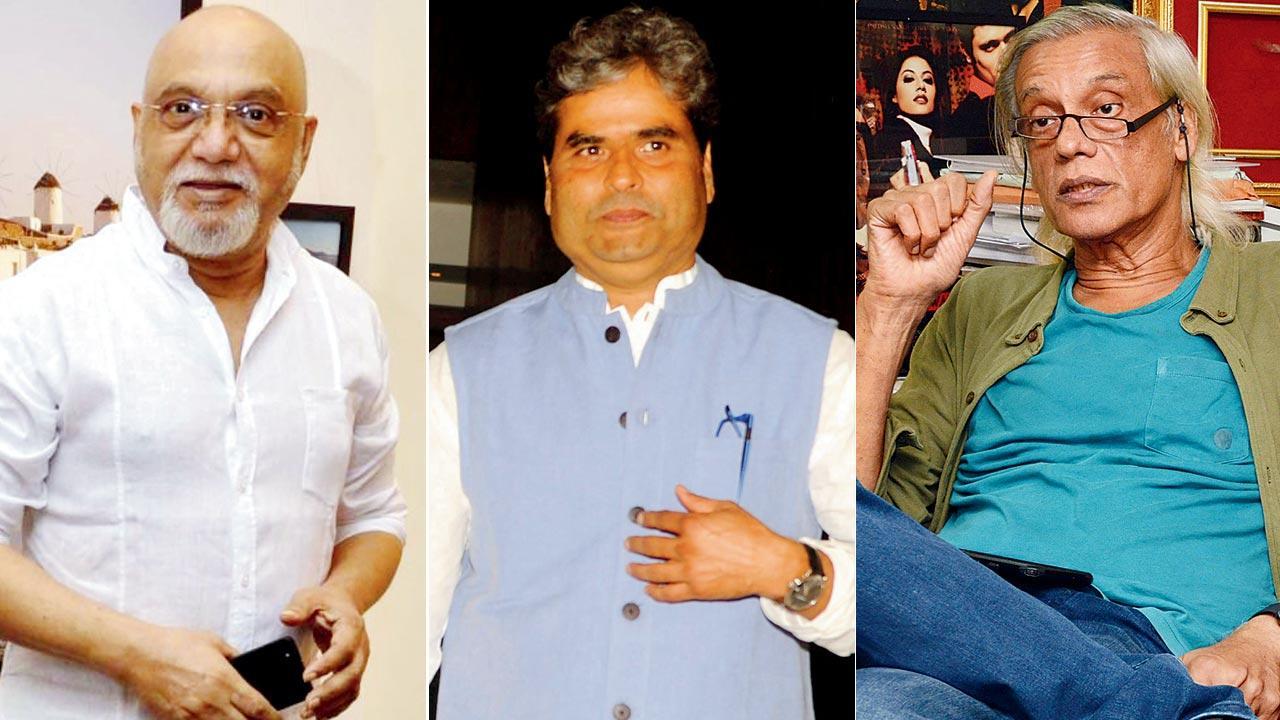
Pritish Nandy, Vishal Bhardwaj and Sudhir Mishra
Vishal Bhardwaj and Sudhir Mishra have raised their voices against amendment to Cinematograph Act, but producers’ bodies yet to take a stand
Mohar Basu, Uma Ramasubramanian (MID-DAY; June 28, 2021)
It has been a week since the Union government sought public comments on the draft Cinematograph Amendment Bill 2021, which proposes to arm the Centre with the power to order recertification of a certified film if they receive complaints from viewers, thus putting movies under direct government censorship over and above the Central Board for Film Certification (CBFC).
It could well be seen as another blow for the entertainment industry that is surely and steadily being weighed down by creative curbs — in April, the Ministry of Law and Justice abolished the Film Certification Appellate Tribunal (FCAT) overnight.
The Hindi film industry has remained largely silent on the latest development, barring a few brave voices. While Sudhir Mishra tweeted how the amendment will make “filmmaking impossible”, Vishal Bhardwaj urged the film fraternity to oppose the “unfair provision”.
When mid-day reached out to filmmaker Pritish Nandy, he said it is yet another effort to clamp down creative expression. “On top of censorship, if you were to impose review of censorship, you are unnecessarily creating impossible conditions for creative people. Soon, you will do that to books, music, theatre and everything. The assault on the creative arts is the sign of a government in desperation. The idea is to tame the creative arts because it has the power to change the world. They [the government] cannot kill the spirit of a creative person, but they can do it to a creative process that changes the way people think.” He noted that once the Centre deems a film unfit for viewing, makers will be compelled to move the Supreme Court, which will be an expensive process.
Down south, National Award-winning director Vetrimaaran has reportedly spoken to the Tamil Nadu Directors’ Association about making a move against the bill. The News Minute quoted him as saying, “[The bill] is their [the government’s] way of trying to control the narratives.” His sentiment was echoed by documentary filmmaker Anand Patwardhan who described the bill as “illegal and unconstitutional.”
mid-day reached out to Bollywood film associations to understand if they intend to open a dialogue with the government on the matter. The Producers’ Guild declined to comment on the story. One of the members from the Guild’s Council of Management, on condition of anonymity, said, “Right now, we have a survival issue. Daily-wagers, producers and actors have made negligible amount of money in the past year. When one’s survival is under question, fighting for creative expression is a battle of luxury.”
Another member assured that the issue will be discussed in the next Guild meeting. T P Aggarwal, president, Indian Motion Picture Producers’ Association, said that the matter will be raised at a producers’ meeting today. Ashoke Pandit, president, Indian Film and Television Directors’ Association, added, “It’s too early to comment because we haven’t received anything in writing.”
For the uninitiated, earlier, under Section 6 of the Cinematograph Act, 1952, the Centre was empowered to call for the record of proceedings in relation to certification of a film and pass any order. However, in 1991, the Karnataka High Court had stated that the union government could not exercise revisional powers on films already certified by the CBFC, a decision that was upheld by the Supreme Court in 2000.
More Changes
- The Cinematograph (Amendment) Bill, 2021 also proposes that content be subjected to age-based classification: U/A 7+, U/A 13+ and U/A 16+. So far, films are certified under three categories: unrestricted exhibition or U, parental guidance required for children under 12 or U/A, and adult films or A.
- The bill will also introduce Section 6AA, which prohibits unauthorised recording, thus curbing film piracy. Those penalised will face a jail term, ranging from three months to three years, and a fine not less than Rs 3 lakh.
Don’t censor but celebrate our soft power-Pritish Nandy
8:18 AM

Pritish Nandy (HINDUSTAN TIMES; January 30, 2021)
Censorship hurts the freedom of expression and injures the creative spirit. That’s why in a democracy of any merit, it is seldom used except in very rare cases of national security. Even there it is used with great circumspection and very rarely.
Creativity is a soft power and India, with its enormous talent and multiple cultures, is capable of emerging as one of the world’s strongest nations in terms of soft power. It is the literature, cinema, music, theatre, poetry, art and our amazing genius for creative expression, which has very often made the world sit up and notice us for the great creative nation that we are.
But unfortunately, now we are seeing a trend towards oppressing the creative voice, censoring it, attributing motives to works of artistic merit. This is a tragedy and is stifling freedom of expression.
The Prime Minister talks of Made In India and he wants brand India to win hearts across the world. But is important to note that this is best achieved not through our factories and plants, where people slog for a living, but through the creative genius of people.
When an Indian wins a Nobel Prize or a Pulitzer, or gets nominated for an Oscar or an Emmy, we achieve enormous global recognition. That recognition and power cannot be defined by the boring yardstick of commercial success. It is our creative success. It is our moral success. It puts India on a higher pedestal before the world.
That is why soft power is so crucial for any nation and India has always had a head start in this. Let not fringe groups and those who disrespect our creative genius hold this nation and its talent to ransom. Freedom is at the heart of every true creative expression and let us all celebrate that freedom, same as we celebrate our democracy. This is what defines us as a nation and people. Let no one stand in the way of India emerging as a great global soft power. That would be self defeating and unjust for a nation with such enormous cultural heritage – a heritage born out of freedom and courage, wisdom and creative talent.
(The author has produced web shows such as Four More Shots Please!)
Disclaimer: The views expressed here are author’s personal
Tandav bows down; is censorship the way forward for OTT?
8:35 AM

Industry insiders feel it isn’t right to censor digital content, add makers must avoid hurting sentiments
Rishabh Suri (HINDUSTAN TIMES; January 21, 2021)
Censorship: this word, of late, has been creating headlines. First, it was films, now, it seems to be OTT content as well. The latest instance is Tandav, the web show starring Saif Ali Khan in the lead and set against the backdrop of Indian politics. One scene that drew ire shows actor Mohd Zeeshan Ayyub playing a modern-day Lord Shiva in a college play. Netizens have alleged it hurts religious sentiments. Another scene involves characters played by Anuup Sonii and Sandhya Mridul, talking about caste. The outrage forced the makers to issue a statement, agreeing to “implement changes”. Does this point towards censorship being the way forward for OTT?
Actor-filmmaker Renuka Shahane, who directed the film Tribhanga recently, is against censorship, but says, “You can’t curtail any kind of outrage that happens these days. But I have to say that as makers...one should not put out anything that hurts anybody’s religious sentiments.”
In the recent past, shows such as A Suitable Boy and Ashram too have been accused of hurting sentiments. Vani Tripathi Tikoo, Central Board of Film Certification (CBFC) member, says she has often argued that the lens of film certification should not be used for OTT. “Theatre viewing is a collective exercise, and watching OTT more personalised. But in Coronavirus times, families have been sitting and watching them together,” she says.
Adding while we shouldn’t be censoring, she says, “Some countries have a code and industry standard for digital content. You can’t dissociate from that responsibility in a hyper sensitive democracy like India.”
Telling the story in the right way is what people are emphasising on. Joining the list is Apurva Asrani, who’s written films such as Aligarh (2015), Shahid (2013) and the latest season of the web show Criminal Justice. He says, “In a democracy, you should be able to tell your story. Someone with another point of view has the right to counter that with a story told in a similar format.”
Pritish Nandy, producer of the show Four More Shots Please! says when the state backs a point of view, generally “most people fall in line”. He elaborates, “It does not mean what they are doing is right, it means people do not want to face the consequences of taking on the might of the state. If India wants to compete in that challenging, creative space, it must learn to do with minimal censorship.”

Are celeb spats making social media extra sour?
8:21 AM

We ask film industry folks about the impact of vitriolic exchanges between celebs
Rishabh Suri (HINDUSTAN TIMES; December 5, 2020)
Social media toxicity is a term that could become one of the highlights of 2020 — for all the wrong reasons, of course. The otherwise calm, fan-friendly content shared by celebrities has been replaced by a toxic war of words — the most recent being the Twitter spat between actors Kangana Ranaut and Diljit Dosanjh. The latter called out one of Ranaut’s tweets about the ongoing farmer protests, and what followed was a rather vitriolic exchange between the duo, with Ranaut calling Dosanjh filmmaker Karan Johar’s “paltu” (pet).
Are such exchanges leading to never before toxicity online? “Toxicity exists on social media in any case. People like Kangana are adding to it, that’s all,” says filmmaker Hansal Mehta. “There are two types of people. One is a toxic person, and the other is trying to ward off and defend themselves or an entire community against these toxic (people). Unless these toxic celebs don’t stop, this toxicity will not end,” he adds.
Actor Taapsee Pannu, however, feels sometimes, in the heat of the moment, these things can happen. “A celebrity is not someone to be put on a pedestal and worshipped. We are human beings who have emotions,” she says, adding that everyone has a different way of venting out. “When such exchanges happen, you can only go through them, see for yourself who is the real person behind this... and see the more human side to celebrities,” she says.
Producer Pritish Nandy doesn’t see why an argument should reach a level “where one side abuses the other”. “The side which is aggressive has already lost, it means it has no case. Whoever has a case argues, but whoever shouts, screams and rants… it has never been more obvious than on social media,” he feels.
Doesn’t it become more alarming when celebs engage in such arguments, considering they have the power to influence millions? “I think this happens when people reach a stage where they either feel they have to come out and speak, or because things have turned bad, or when people are told to speak by their government body. These are two alternatives,” says Nandy.
Many came out in support of Dosanjh, one such being actor Mohd Zeeshan Ayyub, who’s currently shooting for a project with the singer-actor. “It wasn’t toxicity, what he (Dosanjh) did, it was more to curb. That’s why he started saying what he did, to the kind of things she (Ranaut) was saying about farmer protests,” he says.
Producer can’t change rights on 3 properties, says High Court on Sanjay Gupta-Pritish Nandy Communications case
8:21 AM

Sanjay Gupta had lost arbitration case against Pritish Nandy Communications in 2016 over delay in the release of a film
Sunil Baghel (MUMBAI MIRROR; November 19, 2020)
In a 20-year-old dispute between four film production houses over an inordinate delay in the release of a Hindi film, the Bombay High Court has injuncted one of the producers, Sanjay Gupta, from disposing of, transferring or creating any rights on a row house and two plots in Pune.
Gupta’s White Feather Films Ltd (WFFL) has been in a legal tangle since 2006 with Pritish Nandy Communications (PNC), Film Club India Limited (FCIL) and Kaante Productions Inc (KPI). All four were co-producers of the film. Gupta had lost an arbitration case in 2016, with Justice (rtd) KK Baam directing WFFL to pay Rs 3.52 crore to PNC, which had sought over Rs 13 crore for losses incurred. Gupta, however, had challenged the Arbitrator’s order in the HC.
While hearing Gupta’s challenge, the HC in October 2016 agreed to stay the order on condition that he should deposit Rs 3 crore in court, but Gupta failed to do so.
Earlier this month, Justice B P Colabawalla of the HC observed that though Gupta’s petition challenging the award was admitted, there was no stay on the Arbitrator’s order. The court further observed that “the claim as on today under the said award would be approximately to the tune of Rs 5.84 crore”. The court also restrained him “from disposing of, encumbering, alienating, transferring, parting with possession of and/or creating any sort of third-party rights” on certain properties.
The order was passed on a fresh application filed by PNC seeking disclosure and injunction of assets by Gupta and his production house, WFFL. The value of assets on which the injunction has been imposed, as mentioned in Gupta’s affidavit, is Rs 12 crore, with a Rs 8 lakh loan on the row house. The case will come up for hearing again on December 2.
As online platforms come under I&B ministry, censorship fear looms large; but no one ready to pass judgement yet
8:11 AM

The decision to bring online mediums under the I&B ministry has led to fears of censorship
Rishabh Suri (HINDUSTAN TIMES; November 15, 2020)
OTT platforms have always had one trump card over basically every other medium of entertainment — it faces no censorship. The freedom to say what the maker wants, and the viewer getting to see it uncensored always offered a thrill. What’s happening now however has led to some apprehensions.
The Union government, this week, brought streaming video services such as Netflix, Amazon Prime and Hotstar under the ambit of the Information & Broadcasting ministry for regulation. When we reach out to industry people for a reaction, cluelessness figures high.
Producer Pritish Nandy, who was behind the popular web show Four More Shots Please!, says, “Right now, they have brought all online content under them. It is difficult for me to pass a judgement about what they plan to do. They haven’t said anything.” He agrees that it could lead to censorship. “It hasn’t led to it yet. Till now, Prakash Javadekar has not done anything which is a serious infliction or affliction on freedom of media,” he says.
Echoing the same sentiment is Vikramaditya Motwane, who helmed the critically acclaimed show Sacred Games, which was credited as bringing in the web revolution in India. “I can’t comment till we have more information. The only bit that came out is this, what that means is something nobody knows. Censorship could be a possibility, but until they tell us, what we can all do is speculate,” says the 43-year-old.
Actors, on their part, fear the snipping scissors. Sayani Gupta, who has been a part of Four More Shots Please! and the web film Axone, says, “Censorship should not have come. It is too early to say, I have not spoken to anybody about it. Having said that censorship is not a good thing.”
While OTT platforms such as Zee5 and Eros Now didn’t want to comment at the time of going to press, Karan Bedi, CEO - MX Player issued a statement saying they “look forward to working with the ministry to implement self-regulation efforts...”
Trade expert Taran Adarsh says this coming of OTT platforms under the government isn’t a reason to worry. “In any case, when you watch a film on the big screen, even that’s censored. In today’s time, you have so much content coming out, there are people who cross a line. There has to be some kind of censorship, you need to draw a line. I am not being moralistic, but even kids are watching it,” he confesses.

Akshay Kumar ruling startup endorsements
8:07 AM

Be it working with debut directors or supporting startups, the actor doesn’t ‘fear committing to newcomers’
Monika Rawal Kukreja (HINDUSTAN TIMES; November 2, 2020)
Trust Akshay Kumar to set new trends and always lead by example. And it’s not just his film choices, but also his associations off screen. If you’ve seen Kumar’s career graph closely, you’d know he’s perhaps the only actor to have worked with maximum number of debut directors and new female actors.
Asked if it’s taking risk or an urge to try something new, he says, “Every decision in the film industry is risky; no one is guaranteed success. That’s why I have no fear committing to newcomers. I believe strugglers work the hardest and have the most to prove, the biggest passion, and a sense of fight. We were all unwanted newcomers once; if I didn’t get a chance, I’d still be a martial arts coach. It’s the least I can do to help people’s careers.”
Switch to brand commitments, and without inhibitions, Kumar has supported many startups position better. He explains, “The business of endorsements has changed a lot. While routine paid partnerships are still there, the startup craze has spurred on new opportunities — for the brand and the celeb. There’s a larger value to be made when the business grows, and you handhold someone on their way up.”
Kumar insists that a celebrity gets associated with any brand only if they believe in the promoters and the product. “For me, GOQii is something that has a larger fitness goal for the entire nation. PagarBook is two young boys trying to put accounts for a small business firm on their phone. CarDekho has opened up the car sales market multifold. FAU-G is trying to create a world class gaming experience on your phone or tablet. Yes, given the success rates of startups, you’re taking the risk of no value getting created for the brand at all, but then that’s the challenge.”
We also spoke to some of these startups about what makes Kumar the apt choice for their brands. Vishal Gondal, Founder & CEO GOQii & Co-Founder nCore Games makers of FAU-G, says, “Akshay sir works with you as your partner and is equally interested in making your product successful. It was his idea that we donate the fitness bands to the police, and he suggested the name for our gaming app, too. He’s the best startup mentor and advisor anybody could get.”
Calling Kumar “a relatable, self-made actor, and an organic fitment for their startup”, Siva Prasad D, Sr. VP, Marketing & Sales, PagarBook, says, “He understands the nerves of the audience and the product. Just like standing up for social issues in his films, he relates to the cause we’re trying to create as a brand.”
Ad guru and producer Pritish Nandy concurs, “Akshay Kumar is the most successful business person currently in the movies. So, he brings to the table money, reach and power to influence. What more can a startup want?”
To speak or not to speak: Is it a double-edged sword for showbiz celebrities?
8:57 AM

Rishabh Suri (HINDUSTANI TIMES; August 16, 2020)
 A host of celebs from the entertainment industry have been banding together recently, demanding a CBI enquiry into actor Sushant Singh Rajput’s death. Actors Kriti Sanon, Parineeti Chopra, Mouni Roy are a few. Actor Varun Dhawan also shared an Instagram story that read ‘#CBIforSSR’. Triggered by this, trolls questioned why this came two months after Rajput’s death. Some even speculated whether Dhawan did this on seeing the number of dislikes on Alia Bhatt’s Sadak 2 trailer.
 This leads us to the question: Is speaking up a double-edged sword for celebs? Are they bound to get trolled whether they speak or not? Actor Nakuul Mehta, who feels that everybody on social media is out to prove a point, says, “In the midst of this chaos, sharing your thoughts, especially if you are an artiste, can be a double-edged sword. Personally, I have almost never shied away from speaking what I feel...”
While the Supreme Court has reserved its decision, CBI is investigating the FIR registered in Bihar, lawyer Ishkaran Singh Bhandari informs us. On celebs speaking up now, he says, “They didn’t speak in the beginning; only Kangana Ranaut did. Now, seeing the public demanding it, obviously they’ll speak.”
Agreeing that celebs get targeted regardless of whether they are vocal or not, actor Iqbal Khan says, “People on social media become judge, jury, punisher... They get a kick in abusing somebody without knowing them.”
Meanwhile, adman Prahlad Kakar says, “These people, Dhawan and all, ditched young Sushant. When you come out and start doing a double header — first not approving of the guy, then asking CBI for SSR — isn’t it better to keep quiet?”
Producer Pritish Nandy says it’s up to the person if they want to involve themselves in a particular controversy or not. “They may choose not to. It’s not because they don’t have any sympathy, or they don’t want [justice]...,” he says. And filmmaker Vivek Agnihotri feels, “Problem is they always speak in an opportunistic manner. When they are supposed to, they don’t.”

Post lockdown, top actors get to endorsements with vengeance
8:47 AM

Experts say the move will build confidence in the industry, help many earn a living in the crisis
Rishabh Suri (HINDUSTAN TIMES; July 11, 2020)
 They are back — or are they? Well, it sure looks like Bollywood stars are in the mood to resume work, albeit with baby steps — through endorsements. Actor Akshay Kumar was the first to shoot in the lockdown on an outdoor site, and shot for an awareness campaign on Coronavirus. Ayushmann Khurrana shot for an ad in Chandigarh, where he’s living now with his family. Vidya Balan stepped out to shoot for an ad at Mehboob Sudios, Mumbai. And Arjun Kapoor too, we learned, recently shot for a commercial.
Experts feel it’s a sign that big actors are ready to test the waters. Producer Pritish Nandy says, “Endorsement shoots are very short...for half or one minute. What we need to do is test shooting on a continuing basis, which requires another kind of discipline, and entirely different set of protocols.”
Ad filmmaker Vinil Mathew, who made his Bollywood directorial debut with Hasee Toh Phasee (2014), agrees everyone is in a ‘wait and watch’ mode. “They’re all seeing how these days of shooting go, as commercials are easier. If it comes to feature films, it’s a different ball game. In this weather, for people to wear PPE suits, masks and gloves is almost impossible,” he says.
 Given that actors had been missing from the work space for three months, until recently, endorsements might be an alternative route of income. Nandy concurs, “Ads make a lot more money than movies do. Proportionately it’s higher, as you work less, you make more money, except that work won’t be remembered.”
In fact, many agree that while film shoots on a large scale are yet to begin, shooting of commercials will allow people from all departments to earn a living. Amit Sharma, who directed Badhaai Ho (2018), and recently shot an ad film in Goa, says, “Somewhere we’ll have to normalise the situation by taking care of the time of the shoot, and taking precautions. Till when will people sit at home? Those who are associated with filmmaking — the light men, dressing department, they don’t have money to even buy food. For that reason also (ad shoots have started). The commercial I just shot, there were not more than 10 people, everybody was in the background.”
While these instances certainly show that actors are prepared to venture out, trade analyst Taran Adarsh feels they were not apprehensive in the first place. “It’s not that the actors aren’t ready, the film producers also have to work out the details. For an ad shoot, you don’t require 200 people on the set. So, for actors — of course money is involved — it’s also more convenient. If they’ve been approached for an ad, and they can do it in a safe atmosphere, why not?” he says.
Trade expert Atul Mohan says big stars shooting for ads is a “confidence building measure”, one that will inspire their colleagues in the industry to also step out and work. “The actors will share their experience, and tips with their co-stars and that’ll make others comfortable. Right now, a positive mindset is needed. You’ve to live and survive with the Coronavirus, till a vaccine is made. This will set an example for the rest of the film fraternity,” he tells us.
I wondered why Rishi Kapoor won the Filmfare award for Best Actor only once-Pritish Nandy
8:04 AM

Remembering the actor who went from a teen heartthrob to one of Hindi cinema’s finest
Pritish Nandy (MUMBAI MIRROR; May 1, 2020)
 Rishi Kapoor was a clever, witty man always ready to discover a repartee even when there was no reason for one. He enjoyed the art of one-upmanship, particularly when it came to conversations. And yet bonhomie was not just part of his craft as an actor, it was second nature for him.
Rishi entered movies a decade before I came to this city. It was 1973 and his father, the legendary Raj Kapoor, launched him opposite a stunningly beautiful Dimple Kapadia in a teenage romance called Bobby which he directed on the basis of a flimsy K A Abbas story that went on to become the year’s biggest hit-- and the second biggest hit of the seventies. Adjusted for inflation, Bobby is still one of the twenty biggest hits of Hindi cinema.
In the same year, another young man who also started his career with a K A Abbas film, found his defining role in a Salim-Javed scripted actioner called Zanjeer that went on to become a big hit. Though Zanjeer collected much less at the box office than Bobby, it launched a new trend for action movies that made Amitabh Bachchan the popular star he soon became. So, 1973 was the year when both the hottest teenage romance and the Angry Young Man hit the ground running. A decade later, when I took charge of Filmfare, they were both at the top of their careers. The critics swore by Rishi. But Amitabh had an unparalleled fan club that ensured the focus never shifted from him.
They worked together in quite a few films, most famously in Manmohan Desai’s Amar Akbar Anthony, Naseeb and Coolie. And then 36 years later, I watched them together in 102 Not Out. It wasn’t much of a film but the two of them were a riot together. Curiously, over the years while Amitabh got embroiled in controversies, in movies as much as in politics, Rishi stayed away from the limelight and continued to build his repertoire of remarkable roles. He chose few and he chose wisely, and his reputation as an amazing actor kept growing.
The last film of his that I watched and loved was Mulk. It was about a Muslim family trying desperately hard to reclaim its lost honour when one of its members is accused of being involved in terrorism. Rishi’s was a compelling act and, as I watched the film mesmerised by his performance, I wondered why he won the Filmfare award for Best Actor only once and that too for his debut film 46 years ago. He was an actor who deserved many more. But then, as Rishi once asked me over a long phone conversation, are all Best Actor Awards really meant for best actors or only big stars who get their fan clubs to vote en masse? I really had no answer for him then. I still don’t have one today. But yes, I would have loved him to win the Filmfare Best Actor Award for Mulk.
He was always one for the ages. The romantic teenager who stole our hearts eventually turned into one of our finest actors, one who will be forever remembered for the roles he made so memorable. There are some things that even the Grim Reaper cannot take away from us.

Unable to procure Womaniya as film’s title, director includes song with same name in Saand Ki Aankh
7:04 AM

Mohar Basu (MID-DAY; October 3, 2019)
 “I hated Womaniya as the title,” states director Tushar Hiranandani, taking us by surprise. After all, only months ago, filmmaker Anurag Kashyap was at loggerheads with producer Pritish Nandy, who held the right to the name. Kashyap, producer of the film based on the lives of Chandro and Prakashi Tomar — the country’s oldest women sharpshooters, felt that the spirit of the biopic would be best captured by the title, Womaniya.
A war of words later, Kashyap decided to rechristen the Taapsee Pannu and Bhumi Pednekar starrer as Saand Ki Aankh. “Anurag and Taapsee were keen on Womaniya. I always wanted to call it Saand Ki Aankh. When I told Anurag of the new title, he looked at me in disbelief. But when he read it [the script], he realised it was the best name the film could have got,” explains the first- time director.
In an interesting turn of events, the makers have included a song titled Womaniya. Hiranandani reasons that the song — that starts with Pannu and Pednekar in their youth — is instrumental to show their ageing process. “Womaniya is the journey of young girls as they reach their prime.”
Producer Nidhi Parmar adds, “When Vishal [Mishra, composer] made us hear Womaniya for the first time, everyone in the room felt that this would be the biggest song of the album.”
Even as he understands Kashyap’s keenness in naming the film after a term coined by him in Gangs Of Wasseypur ( 2012), Hiranandani reiterates that Saand Ki Aankh, or bull’s eye, has a stronger connect with the core subject of “hitting the right spot in life” — a perfect metaphor for a movie whose protagonists find their purpose in their 60s. “My movie is not about feminism alone, it’s about the fighting spirit of human beings. My hook point was that age is not a barrier. Women stood up at that age and inspired young girls to stand on their own feet. My writer Jagdeep [Sidhu] wove it beautifully in the dialogues.”

Subscribe to:
Posts (Atom)