Showing posts with label Pritam Chakraborty. Show all posts
Showing posts with label Pritam Chakraborty. Show all posts
Amit Trivedi to compose for Rishab Shetty’s historical epic The Pride Of Bharat - Chhatrapati Shivaji Maharaj after Pritam’s exit
2:46 PM

Neha Maheshwri (BOMBAY TIMES; July 1, 2026)
Pritam’s decision to take a break from mainstream music prompted the makers of The Pride Of Bharat - Chhatrapati Shivaji Maharaj to rope in Amit Trivedi for their upcoming historical drama. The composer, who was originally set to helm the music, announced his decision in a birthday post on Instagram last month, revealing that he wanted to “live life differently” and explore “roads unexplored” after years in the mainstream.
With Pritam stepping away from the project, Amit has now come on board to score the music for director Sandeep Singh’s two-part historical saga, starring National Award-winning actor Rishab Shetty as Chhatrapati Shivaji Maharaj.
According to a source close to the production, Amit’s musical sensibilities made him a good fit for the project. The source says, “The team believes Amit Trivedi’s ability to blend powerful orchestration with deeply rooted Indian melodies makes him an ideal fit for the film’s vision. The music has to capture Chhatrapati Shivaji Maharaj’s courage, vision, legacy and the emotional heartbeat of the story.”
Led by Kantara star Rishab Shetty in the titular role, the two-part historical saga, with lyrics by Prasoon Joshi, also features Arjun Rampal and Vivek Oberoi. It is expected to go on floors later this year.
In his birthday note last month, Pritam thanked fans for their wishes and reflected on wanting to make space for new experiences in life. “Thank you for all the wishes. Can’t answer everyone individually, but please accept my sincere gratitude. Today, I have decided to gift myself a few years to live life differently. To catch up on what I’ve missed.” He further hinted at pursuing long-delayed aspirations and interests beyond his mainstream work.
His post read further, “Time to set off on new journeys, which have been kept on the back burner for long. Mainstream is a great ride, But I’ve always been more curious about the roads unexplored. Thank you for all the love & support, Always.”
Pritam Chakraborty says I’m like a potato because I’m in every dish-Nikhita Gandhi
9:28 AM

Debarati S Sen (MUMBAI MIRROR; June 9, 2026)
Singer Nikhita Gandhi has built a career across film music, independent releases and live performances, but she says the journey was never carefully planned. Known for songs such as Qaafirana, Tere Pyaar Mein, Burjkhalifa and Do You Love Me, Gandhi credits curiosity rather than commercial ambition for shaping her career.
“I’ve never chased commercial success,” she says. Trained as a dentist, she was studying in Chennai when music gradually became her profession. She says, “Unexpected artistic choices define me as a person. They’re something I actively pursue, and that’s a big focus for me in 2026 as well.”
Pritam’s ‘Aloo’ nickname
Having worked on several songs with composer Pritam, Gandhi says their association extends beyond playback recording. “Since I also perform live with Dada, there’s a bond that’s bigger than playback singing. We’re friends,” she says. Pritam often calls her “Aloo” — a nickname Gandhi takes in good humour.
“He says I’m like a potato because I’m in every dish. According to him, you’ll hear my voice everywhere,” she shares. Nikhita adds that what she appreciates most is Pritam’s support for her work with other composers, including A R Rahman, Amit Trivedi, Sachin-Jigar and Tanishk Bagchi.
‘There’s more music than ever before’
She believes the biggest challenge facing musicians today is visibility. With streaming platforms making music more accessible than ever, she says artists are competing in an increasingly crowded space. “There’s more music than ever before, and it definitely makes it harder to break through the clutter,” she says.
For independent musicians, promotion can be as demanding as the creative process itself. Limited marketing budgets often make it difficult to reach audiences, even when the music finds appreciation. “Getting your music discovered and reaching relevant listeners is one of the biggest challenges in today’s streaming ecosystem,” Gandhi says. Despite the challenges, she believes originality remains essential. “Being unique matters more than ever,” she says.
Shahid Kapoor, Rashmika Mandanna, Kriti Sanon shoot peppy dance numbers for Cocktail 2
9:52 AM
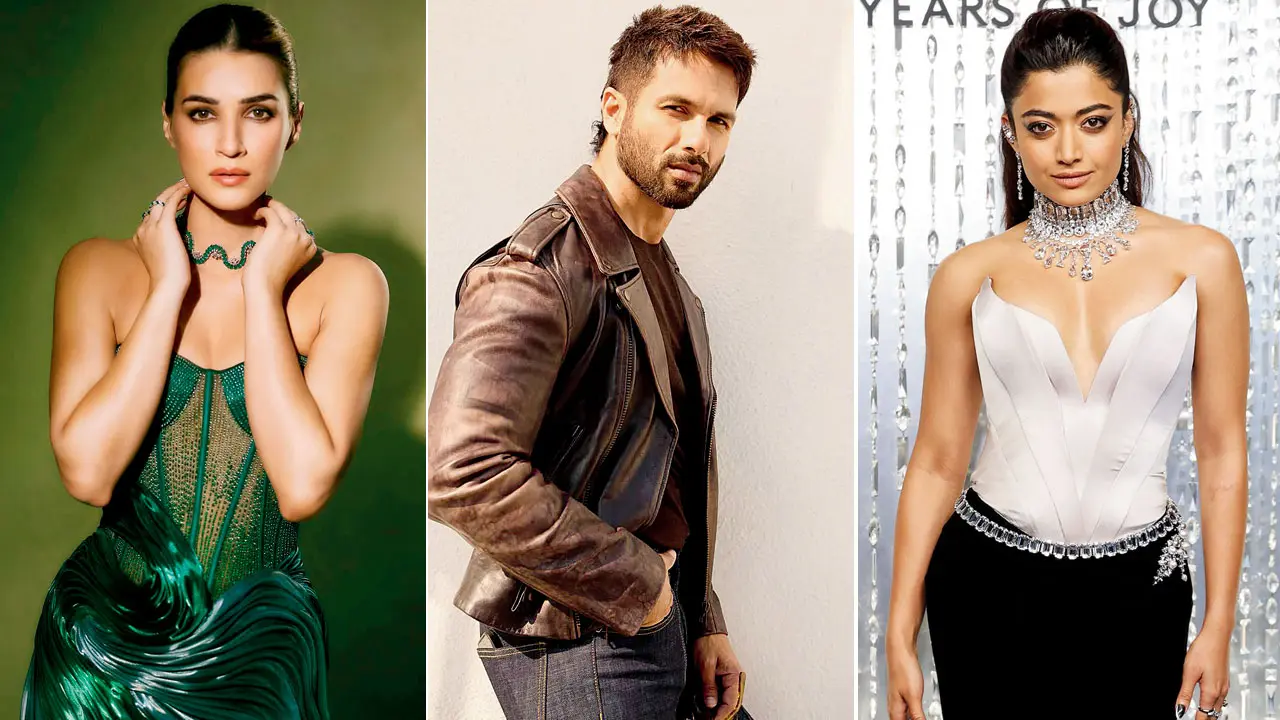
Before a wrap up in January, ‘Cocktail 2’ cast shot a peppy number to balance the intensity of the film
Upala KBR (MID-DAY; March 29, 2026)
Before wrapping up its shoot in January, the cast and crew of Cocktail 2 shot a vibrant special number in Mumbai, featuring Shahid Kapoor, Rashmika Mandanna, and Kriti Sanon — bringing a splash of colour to an otherwise dark, edgy narrative.
“Cocktail 2 is about love, betrayal, and revenge. The two girls — Rashmika and Kriti — have more layers to them. To lighten the intensity, there are lots of peppy dance tracks,” informs a source close to the production, adding that the setting of the song revolves around an engagement ceremony.
Composed by Pritam, the track is an original, and the team built a “huge house” in Film City for the number.
The trio also shot a final club song before the schedule came to a close. “Pritam has made some great stuff for this outing, including a peppy, fun, club song which features the three leads. We shot this in Film City,” shares the source, adding that the tracks were locked and ready before Mandanna’s February wedding with Vijay Deverakonda.
Balam Pichkari was not going to be a Holi song-Pritam Chakraborty
10:18 AM

Samarth Goyal (HINDUSTAN TIMES; March 4, 2026)
It features on every Holi playlist, blaring from speakers around festivities. But composer Pritam has revealed that Balam Pichkari from Yeh Jawaani Hai Deewani (2013) was not originally conceived as a Holi track.
“Initially, it was not going to be a Holi song,” the 54-year-old says, adding that the change happened after director Ayan Mukerji attended a Holi celebration in 2012. “(Ayan) told us, ‘We have to set this song during Holi. It’ll take the vibe to another level’,” he says.
Over a decade later, Pritam is grateful for the love the song has received. “Balam Pichkari trends at the top almost every Holi,” he says, adding, “If I knew exactly what made it cut across generations, I would probably try to recreate it every time. But honestly, it’s impossible to predict these things.”
Nowadays, he feels that there is a seeming lull in iconic festival tracks. But Pritam insists, “There is always space for a good song. Platforms may change, listening habits may evolve, but emotions don’t.”
Arijit Singh doesn’t want to be remembered only as a singer-Mohit Suri
10:32 AM
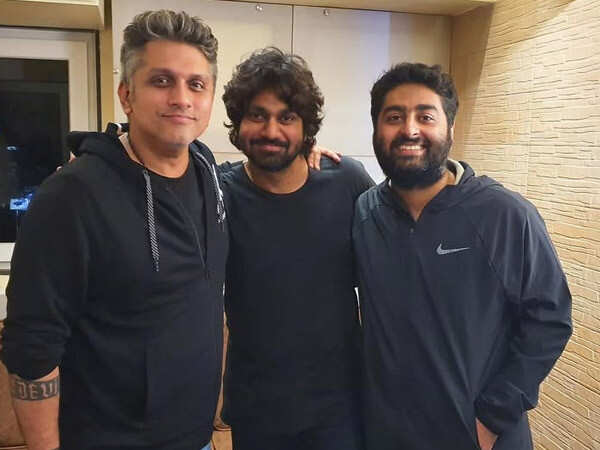
Renuka Vyavahare (BOMBAY TIMES; February 16, 2026)
At 38, Arijit Singh recently stunned fans and the Hindi film industry by announcing his retirement from playback singing. While several have expressed what they feel about Arijit’s choice, we spoke to Mohit Suri, whose films have consistently featured quintessential Arijit Singh songs, dating back to Aashiqui 2 and the iconic Tum Hi Ho. Composed by Mithoon, the song launched Arijit into stardom 13 years ago and defined his voice as synonymous with love and heartbreak. Suri last worked with him on Dhun from Saiyaara.
‘SUCCESS WAS ACTUALLY DELAYED FOR ARIJIT’
On Arijit’s retirement from playback singing, Mohit said the decision didn’t surprise him. “I sensed it. He had reached a stage where he wanted to do more and not box himself into just one identity. You can’t limit his creativity. He doesn’t want to be remembered only as Arijit, the singer,” he said.
On a personal note, Mohit admits he is deeply disappointed, saying that a part of him feels like it has ended with the announcement.
He explains, “I don’t think Indian music can exist without Arijit. People see this as a full stop, but he’s not done yet. I’ve known him since he was Pritam da’s assistant. People think he was just fortunate, but that’s not true. He didn’t let himself break, and success was actually delayed for him. He’s an artiste who will never stop creating. Even if Arijit the singer slows down, he’ll be far more valuable to music and cinema. Once he sets his mind to something, he achieves it.”
‘HE SANG ALL KINDS OF SONGS, WE CHOSE TO HIGHLIGHT ONLY HIS HEARTBREAK NUMBERS’
As Arijit dominated Bollywood music for over a decade, speculation grew about sidelined singers, alleged monopolies and his association with “sad songs.” Mohit, however, says Arijit’s biggest strength became a limitation imposed by others.
“Your best work often becomes the monkey on your back. Arijit sang all kinds of songs — we chose to highlight his heartbreak numbers,” he says, pointing to upbeat tracks like Ullu Ka Pattha and Galti Se Mistake from Jagga Jasoos as proof of his range. “We boxed him into Tum Hi Ho or Channa Mereya kind of songs.”
Dismissing favouritism and lobbying claims, Mohit is categorical. “Arijit never insisted on singing a song. In fact, he often pushed for the scratch singer to be retained, saying the song didn’t need him. That’s how secure he is — and many singers got breaks because of that.”
‘NO ONE CAN REPLACE ARIJIT SINGH, YET NEW VOICES WILL FIND THEIR WAY’
On a parting note, we ask if Arijit’s voice could ever be replaced. “Everyone is special. I was deeply attached to KK sir, but while making Aashiqui 2, I realized I couldn’t use the same voice I associated with Emraan Hashmi for Aditya Roy Kapur. We found a new voice and that was Arijit.”
He adds that with Saiyaara, he introduced Faheem Abdullah for Ahaan Panday, showing that every generation finds its own voice. “That’s the way life works. New singers must find their space, just as Arijit once did. There cannot be another Arijit Singh. We depend on him emotionally, knowing he will nail it — but if he doesn’t make way, new talent won’t emerge. He is truly one of a kind. And yes, I’ll speak to him once he reads this.”
"There can be no music without Arijit Singh": Bollywood responds to singer’s retirement
10:46 AM

For more than a decade, one voice soundtracked Bollywood’s biggest emotions. Now, as Arijit Singh steps away from playback singing, composers, collaborators, and labels reckon with a future without their safest musical bet
Mohar Basu, Priyanka Sharma, Upala KBR (MID-DAY; February 1, 2026)
“There can be no music without Arijit Singh," an emotional Mohit Suri told mid-day, reacting to news that sent Indian music lovers into collective shock. On Tuesday night, in an Instagram post, the two-time National Award-winning singer announced his retirement from playback singing. "There is not one reason behind this. I have been trying to do this since a long time. Finally, I have gathered the right courage. One of the reasons were simple, I get bored pretty quick, that’s why I keep changing arrangements of the same songs and perform them on stage," he wrote.
The voice that became an era
For more than a decade, Arijit was Bollywood's go-to guy for any track in any genre. When a film needed longing, his voice delivered it. When a love story or heartbreak had to feel intimate, his timbre did the work before the lyrics even began. By the mid-2010s, Bollywood leaned heavily on Arijit. Across Hindi and multiple regional industries — including Bengali, Marathi and Telugu — he has recorded over 800 songs, including alternate versions and live-session recordings. Few playback singers in recent decades have occupied that much sonic space.
His dominance carried serious commercial weight. Industry experts estimate his net worth in the range of Rs. 414 crore (roughly $50 million), built on recording fees, tours, streaming royalties and brand associations. Annual earnings reportedly touched Rs. 70 crore in recent years.
Days before announcing his exit, Arijit released Maatrubhumi for Salman Khan’s Battle Of Galwan. A stunned Himesh Reshammiya, who composed the song, told mid-day, "I have always said that Arijit Singh understands the soul of the music composer and the melody; he is fabulous. I wish he changes his stand on not singing for films, love him both as an artiste and a human being."
While he may not take up fresh playback gigs, Arijit still has a few recorded songs lined up for 2026. One of them is Hum Toh Tere Hi Liye The from O'Romeo, composed by Vishal Bhardwaj with lyrics by Gulzar. Another is Sunhari Kirne from Gandhi Talks, composed by AR Rahman.
While he might not be taking up any fresh playback gigs, Singh still has a few recorded songs set to release in 2026. One of them is Hum Toh Tere Hi Liye The from O’Romeo, composed by Vishal Bhardwaj with lyrics by Gulzar, a romantic track filmed on Shahid Kapoor and Triptii Dimri. Another is “Sunhari Kirne” from Gandhi Talks, composed by A.R. Rahman, which is one of the year’s most musically anticipated soundtracks.
Industry confronts a void
A top suit at Sony Music, tells mid-day, on condition of anonymity, “This changes the ground beneath us more than people realize. For years, when a film album came in and there was one song, the one the trailer would lean on the one streaming platforms would push and the first question in the room was always, ‘Can we get Arijit?’ I speak for producers and insiders when I say there was built-in trust. People outside think this is just about replacing one voice with another. It’s not that simple because that's a once-in-a-generation artist. He became the sound of modern Hindi film. When that disappears, you’re filling a big void. And that’s scary when crores are riding on streaming numbers. There’s also habit to undo. Directors, actors, even lyricists were subconsciously writing for how his voice would feel. Without that anchor, the room will be quieter. Everyone second-guesses more. We’ll discover new singers, of course. But it will be hard to replace that voice.”
Industry veterans understand Singh's decision. Mahesh Bhatt, with whom Singh did a large volume of his early work, told mid-day, "I remember the first time I saw Arijit Singh very clearly. It was at the music launch of Aashiqui 2 at Super Sound in Khar—the old place, full of dust, wires, and hope. His name was announced and he was called to the stage to sing Tum Hi Ho. A shy, self-effacing young man walked up, almost apologetically, with no sense of entitlement. He didn’t claim the song; he offered it. And in that moment, something entered the bloodstream of the nation. That song didn’t just become popular, it became personal. What made Arijit Arijit was never just his voice. It was his refusal to perform himself. His singing carried no ego, no demand to be noticed. He stepped aside and let emotion speak. So when someone asks me if I would miss his voice, life has taught me to answer this way: I have learned to say goodbye to people I love without removing them from my heart. Chaplin once said something to that effect, and it has stayed with me. Even if Arijit chooses silence, his voice will not leave us. And I don’t believe he is turning away from music—only from noise. If he sings only for himself now, that is not withdrawal. That is an artist exercising his deepest privilege. Voices like his don’t vanish. They remain long after the song ends."
Inside the mind of a restless artist
Aashiqui 2 director Suri, with whose words we started, gave us an insight into his long-time collaborator's psyche. Singh first fame with the film he made and even in his last hit Saiyaara, Singh had a large role to play Suri tells us.
"I don't remember a time when he wasn't creating something. Before playback, he was an assistant. In some early music sessions of my career, I remember Arijit clicking pictures of Pritam and me at the studio. He would spend a lot of money buying a expensive camera and then tell us, these pictures are for us to remember history. Of course, I am going to miss him a lot but that said, I also understand his decision.
We all evolve as creative people in our journey and step up to find the next phase of our lives and careers. This isn't a man who will be content with himself. He has the itch of an artist. Anyone who has worked with him tell you he would give different iterations, will sit and understand the story of the film and fit his voice to suit the story. I remember during Hamari Adhuri Kahani, we did three versions of the title track. He asked me how does it end and I told him, it ends tragically. He said there needs to be defeat in the voice then. He was such an important collaborator for any director or music composer. But even at that, he was still working on someone else's vision.
May be he wants to create his own vision for himself. He is also such an immensely secure artist, pure artist as they say. There have been times he has been called in to sing a song, he has heard the scratch and said, 'Please retain what you have, I can't do what they've done'. We did Saiyaara's songs across timezones - I was in Japan and he was in Murshidabad. But after the film, his response for the movie was such an honest take. He loved the film more than Aashiqui 2 which gave him his big break. He has evolved into an artist who values the art more than himself. Wherever he goes from here and whatever he does, he will create music because for the close to two decades I have known him, I have never known him without music. That bond will be inseparable."
Not an ending, but a reset
Of course, rumours are rife that Singh has moved to filmmaking and is currently shooting a movie in Shantiniketan that he and his wife Koel have written. The jungle-adventure project features Shora Siddiqui and Arijit’s son, with Nawazuddin Siddiqui. Lyricists Siddharth-Garima, who have collaborated with Singh on several hit numbers, are working on his upcoming directorial. Garima tells mid day that they weren’t shocked by Singh’s decision.
“We met him multiple times in the last one year. We saw it coming because there is a very different kind of burnout that an artist can suffer from in the Hindi film industry,” Garima says, adding that when an artiste is made to repeat his or her previous work, it takes a toll.
“When people repetitively ask you to do the same things or sing similar things, it could get to you. We were seeing that point somewhere. He sings with a lot of sincerity even now. We've seen him record and he would take 100 takes for a line in a song. His process is something else. I'm sure that process tires him out. A burnout is very easy in this industry because you have to work tirelessly and endlessly.”
To Garima, there’s also an expectation from the industry that every song should be sung by Singh. He has enjoyed a monopoly of sorts in Bollywood playback singing for over 15 years now. But it’s not something that the sits right with the singer himself, “When Alia Bhatt just came in, everyone was thinking of scripts in which Alia would play the lead. That's how it is here. Everyone makes songs here, mostly thinking, ‘Arijit gaayega’. The first time you make a really melodious number, you are already imagining how it would sound in Arijit's voice? But the kind of person that he is, he comes from a very just background. He's not the kind of person who will think, ‘Sirf main hi main hoon.’ He thinks this shouldn’t happen and there should be more people who should get a chance,” Garima says, to which Siddharth adds that Singh is “a very secure artiste”.
“People talking about him creating a monopoly has never bothered him. In fact, that is a fuel. He's enabling diversity with this decision. We have that equation with him where we make him listen to every song that we record,” the lyricist says.
Singh has lent his voice to several songs written by Siddharth-Garima, including the chartbusters Yeh Laal Ishq (Goliyon Ki Raas Leela: Ram Leela) and Satranga (Animal). Naturally, it’s a huge loss for them as collaborators.
“Sanjay Leela Bhansali always says that he values a written word and believes a singer's job is to communicate to the listener the voice in those words. that voice. When I say, ‘Yeh laal ishq, yeh malaal ishq,’ how does that line reach you? It's a singer's job entirely. And more often than not, we notice in recording rooms, singers are not really singing, not feeling the line enough. Arijit will take it to that point. That's what his contribution has been. He brings his own imagination to the song.”
So, what does Hindi film music look like without his voice, we ask the duo. “The songs that he's already sung are there as his legacy. But the music scene in Bollywood would change. And it would be a huge change. Of course, it comes as a shock to many people. But I feel this is a natural progression. There’s always space for new people. There won’t be another Arijit but there will be more people, who will get a chance. People will start thinking imaginatively,” she says. And this is something even Singh wants from the industry, shares the lyricist.
“What really irritates him is the fact that people are not thinking imaginatively enough. They are just relying on a set pattern that if we have Arijit, we will get X number of listeners. I think that has put him off from the entire scenario that oh, you want a guarantee hit song, you want him to sing that song. What about experimenting? What about thinking outside the box? It’s great for an artiste to take a step back and take into account that what’s happening around him is not okay. There was no reason for him to say that I'm not going to sing Bollywood songs anymore, but he's an extremely honest and honest person to have taken that step,” Garima shares.
But even as fans express their disappointment over the singer’s decision, Garima is sure Singh will make a comeback sometime in future. “I feel there will at some point be a comeback, like how Sonu (Nigam) ji was ruling the charts in the 90s. And then of course, there was a phase in which he faded out and then now he's back fully. So I feel before that would happen, Arijit has taken the wise call of saying, ‘Okay. Let me not create a monotony with my voice right now.’ Let people yearn for it and then probably he'll make a comeback. I'm hoping he would someday,” she smiles.
But there won’t be dearth of Singh’s music, as he is set to launch his own label. “He is going to keep making independent music. So we are going to hear him a lot more on, his own label and all of that. And not many people know but he is a very m good composer. We've written to some of his compositions. You will see him in a different light,” Siddharth says.
There have been times when I’ve felt overlooked-Shilpa Rao
10:58 PM

Debarati S Sen (BOMBAY TIMES; January 3, 2026)
From Chaleya and Besharam Rang to Kaavaalaa and Tere Hawale, Shilpa Rao’s voice has ruled playlists across genres. In this candid chat with Bombay Times, she opens up about the grind behind the glamour, gender bias in the industry, and what success truly means to her.
When people see you winning awards and belting out hit songs, they often overlook the grind that leads up to it. What’s the part of your journey that often goes unnoticed?
Honestly, our lives are often like a report card; you only get to see the highlights, the hits, the high points. I wouldn’t call it a grind, but for example, at one point, I was attending award functions, receiving recognition, and then heading straight back to the studio to record more songs. And yet, eight of my songs didn’t make it. Even in 2025, two songs I worked on didn’t pan out. People only see the songs that do well and top the charts, and of course, that's amazing, but there's a lot that happens behind the scenes. Since 2005, what I've come to value is the time spent in the studio; that moment when you find the exact right zone for a song and it just clicks. That’s real success for me. It’s what keeps pulling me back to music. And as long as I get to do that, every single day, I’ll keep going, no matter what.
It’s often said that female voices don’t get equal space in the industry. Have you faced gender bias or felt the pressure to fit in?
There were years when female voices and female-led songs were few and far between. We were often asked to sing just a line or two, or maybe a chorus line. That was the reality. But I have to give credit to every female artiste who stood her ground and made those few lines count. Even if it was just two lines, I’d sing them as if it was the whole song. That’s the beauty of it. It’s not about quantity but about making an impact with what you have. Even though female artistes had less work, every time we stepped into the studio, we gave our best. Take Bulleya, for example. My antara comes in the second half of the song. Yet, Pritam gave me the space to express myself fully. I had to be unique, different.
While actors often enjoy the spotlight, singers tend to stay in the background. Have you ever felt overlooked because of that?
Yes, there have been times when I’ve felt overlooked or not fully seen. I think that happens to everyone in this field at some point. But here’s the thing: whether people see me more or less doesn’t matter. What truly matters to me is that they love my voice. If you can hear me and recognize my voice, that means everything to me, even beyond awards. My friends often joke that when my songs are played at a party, no one knows it’s me. They say I should wear a T-shirt that says - I look like Shilpa Rao (laughs).”
Tighter security on sets of Awarapan 2 amid leak scare and Pakistani composer rumours
9:49 AM

Mohar Basu (MID-DAY; December 30, 2025)
What was meant to be a controlled build-up to the sequel to the cult classic, Awarapan (2007), has turned into damage control. After unauthorized images and videos from a Rajasthan shoot surfaced online, the makers have swiftly moved to restrict access and prevent further leaks.
According to sources close to the production, security has been significantly increased at filming locations in and around Sambhar, Rajasthan, after visuals revealing the lead actor’s altered look surfaced online without approval. The movie features Emraan Hashmi returning as Shivam Pandit, alongside Disha Patani, with Shabana Azmi expected to play the villain. The images, which went viral within hours, caused concern within the unit.
“The look reveal was never meant to come out this early,” an insider tells mid-day. “After the photos were leaked, access had to be tightened. Phones are now restricted on set, and movement around the location is being closely monitored and certain areas have been cordoned off. Multiple terrace-sequence videos were leaked by locals.”
The clampdown comes at a sensitive time for the film, which is already facing online scrutiny over rumours that a Pakistani music composer is associated with the soundtrack. “The team wants the content to speak, not controversies. Music is integral to the film and Pritam had done the original score. The producers are mindful of the law of the land and are baffled by the rumours.” the source adds.
“The shoot has been fast-tracked, and the team will wrap this schedule within a week, with local police deployed for protection,” the source concludes.
mid-day contacted Kakkar for further details but he remained unavailable.
Zohran Mamdani’s win is definitely creating Dhoom-Pritam Chakraborty
9:44 AM

Mira Nair hugs her son Zohran Mamdani; (right) A still from ‘Dhoom Machale’
With newly-elected NYC mayor Zohran Mamdani using ‘Dhoom Machale’ after his victory speech, composer Pritam shares his joy with mid-day
Priyanka Sharma (MID-DAY; November 6, 2025)
The late hours of November 4 in the US brought the jubilant news that the supporters of leader Zohran Mamdani were hoping for. The 34-year-old became the first South Asian and Muslim mayor of New York City. For those in India too, it was a moment to cheer. What followed were powerful moments — the newly elected mayor gave a compelling speech, stating, “I am Muslim, and I refuse to apologize for it”, and rounded it off with the perfect Bollywood icing that no one saw coming. The auditorium echoed with Dhoom Machale, the title track of Dhoom (2004), as Mamdani smiled at the huge crowd.
When mid-day reached out to Pritam Chakraborty, whose chartbuster has now found its place in global history, the elated composer said, “It’s apt that Dhoom Machale should be the highlight song when the son of Indian immigrants becomes the mayor of New York [City]. Mamdani’s win is definitely creating Dhoom! I also had the opportunity to interact with Mira Nair. My congratulations to her!”
Sung by Sunidhi Chauhan, the track was a rage when the film released. But now, the song has acquired a political colour. Pritam added, “Our music and films are soft power that have spread our culture across the globe.” This is not the first time Mamdani used a Bollywood reference. In one of his videos, he recreated the Deewar (1975) scene, “Mere paas maa hai,” customizing it to fit the campaign.
My unconventional voice became my biggest strength-Madhubanti Bagchi
10:23 AM

Following up her smash hit ‘Aaj Ki Raat’ with the latest song from ‘Thamma’, Madhubanti Bagchi on breaking into the industry with an unusual voice and dance numbers
Priyanka Sharma (MID-DAY; October 13, 2025)
When Tamannaah Bhatia dazzled in Aaj Ki Raat from Stree 2 (2024), it promised a resurgence of special dance numbers. The popular song also guaranteed something else — the breakthrough of a unique voice, Madhubanti Bagchi. Even though she had been singing Hindi film songs since 2019, it took Sachin-Jigar’s composition to mark her arrival. Now that she has reunited with the composers for Tum Mere Na Huye, a dance song in Thamma, mid-day speaks to her about new fame, fear of typecasting, and the challenge of having an unusual voice. Excerpts from the interview.
Tum Mere Na Huye marks another collaboration with composers Sachin-Jigar. What was their brief for the song?
They wanted the song to be intimate yet cinematic, something that would not just complement the narrative of Thamma, but also stand strong as an individual piece of music. Sachin-Jigar added their signature depth to the composition, ensuring that every note had its own space to breathe. For me, the challenge and joy were to bring that vision alive vocally.
Your collaboration with them is turning out to be solid — first Aaj Ki Raat, now the Thamma song.
Working with Sachin-Jigar has always been a creatively fulfilling experience. Aaj Ki Raat gave us a chance to explore a high-energy, dynamic sound. With the Thamma track, we ventured into a space that is far more emotional. That contrast speaks volumes about their versatility. What I admire most is how they bring out the best in every singer. They know exactly how to guide you, yet give you the freedom to interpret and make the song your own. With them, it never feels transactional, it feels like a true collaboration.
You’ve emerged as one of the most sought-after voices in Hindi cinema. How validating has it been to experience this rise?
It feels gratifying and quite humbling. Every singer dreams of their voice reaching millions, but when filmmakers and composers of such calibre trust you repeatedly, it becomes the highest form of validation. What excites me most is the diversity. I’ve lent my voice to some of the most popular leading ladies of today. To adapt my singing to bring alive their emotions on screen has been a challenge as well as a joy.
Your rise is also special because your voice is unconventional for Hindi playback. Was it difficult to get the big break?
It’s true that my voice is different from the usual palette in Hindi playback. Breaking in wasn’t instant, there were moments of doubt. But I always focused on staying true to my sound rather than fitting into a mould. What helped was finding the right collaborators — composers like Sachin-Jigar, Pritam da, and Amit Trivedi, and filmmakers like Sanjay Leela Bhansali, who were willing to experiment and give my voice space to tell the story authentically. Once that alignment happened, things started clicking. In the end, I feel fortunate that what initially seemed unconventional became my biggest strength.
Having voiced dance numbers one after another, do you fear getting typecast?
I’ve had several dance numbers, but each one has its own personality. At the same time, I actively seek out projects that challenge me vocally. I have sung in Heeramandi [2024] and Coke Studio. Rather than fearing typecasting, I focus on growth and experimentation.
Your singing influences in Hindi cinema?
Begum Akhtar for her depth and mastery in ghazals, Lata Mangeshkar and Asha Bhosle for their range and timeless appeal and Arijit Singh for redefining contemporary playback with his emotive singing.
Let’s not call an item song a ghazal-Rekha Bhardwaj
10:13 AM

Debarati S Sen (BOMBAY TIMES; July 28, 2025)
“Youngsters want instant success,” shares Rekha Bhardwaj, emphasising how even if a film includes a ghazal today, it’s often just to create an instant hit. At the recently concluded ghazal festival Khazana in the city, the singer spoke about the power of live performances, how ghazals have evolved and why they must be treated with reverence. Excerpts:
‘Youngsters want instant gratification and success, toh focus change hota hai’
Rekha, who has lent her voice to songs like Phir Le Aaya Dil, Kabira and Genda Phool, among others, points out how the pursuit of virality creates pressure. She elaborates, “Youngsters want instant gratification, instant success and instant appreciation... toh focus change hota hai. Even if they include ghazals in a film, they will only do so to ensure it becomes a hit. Ek ajeeb sa pressure hai ki gaana hit hona chahiye. Phir toh mushkil hai. There are filmmakers who have used a certain Sufi ghazal in their film, but it’s actually an item song. Why don’t they call it what it is? If you are making an actress do belly dance on a ghazal, then you should call it an item song.”
While she dislikes the idea of using the term ‘ghazal’ loosely, she doesn’t entirely condemn item songs. She explains, “It’s not wrong to have an item song because it’s part of our culture — nautanki, kothe pe gaana bajana, it’s all part of our culture. Let’s take pride in that. There’s nothing wrong with having such songs if the situation calls for it in the film.”
‘Ghazal is a facet of love, romance and longing’
Rekha feels that what sets ghazals apart is their emotional core. “Ghazal ek poetry hai jise hum melody ke through express kartein hain. It’s a facet of love, romance, longing and shringaar ras. Ghazals are eternal. The best thing is that youngsters are taking up this form, more in the interiors than the metros. But this genre needs more exposure.”
‘Aaj ke ghazalon ka, qawaaliyon ka, rang badal raha hai’
The singer believes that there has been a generational shift in creative focus in movies and music. She says, “Yes, there aren’t many ghazals in film albums, but there are composers like Pritam, Vishal (Bhardwaj), who do include ghazals in their films. The only thing is that aaj kal ghazalon ka, qawaaliyon ka, rang badal raha hai, and ab aesthetics ke hisab se hota hai.”
She adds, “Youngsters apne exposure ke hisab se hi ghazal banayenge. If you take Urdu words from Google and put them in a ghazal, woh toh kam hi padega na.”
Pritam Chakraborty told me to think about the attitude that Salman Khan has and way he performs-Dev Negi
9:50 AM
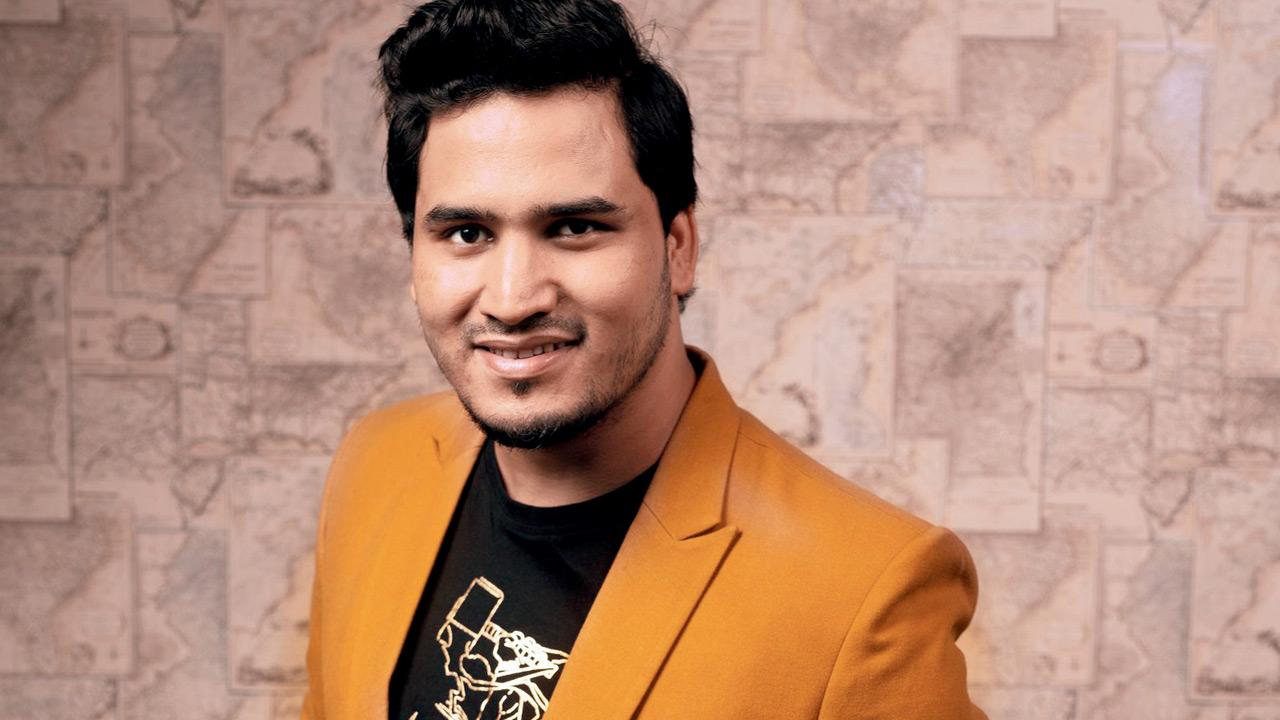
Bollywood superstar Salman Khan-starrer Sikandar singer Dev Negi says lyrics played a crucial role in determining how he rendered the Holi track, Bam bam bhole
Sonia Lulla (MID-DAY; March 17, 2025)
Bam Bam Bhole, a track from Salman Khan’s upcoming film Sikandar, isn’t Dev Negi’s first attempt at a festive song. Having previously successfully rendered a Holi track in Badrinath Ki Dulhania (2017), Negi was familiar with the tricks that he’d need to employ to evoke the emotions synonymous with the festive spirit.
“Usually, it is the nature of the song and its lyrics that dictate how it should be rendered. Since Badri had a rustic and desi vibe, we had to render the song to suit that scenario. For this film, [composer Pritam] told me to think about the attitude that Salman has, and the way he performs. We dubbed the track in different ways and using different expressions, and he zeroed in on one of the four selections,” says Negi, who has previously worked with Pritam in Chhichhore (2019), and Tubelight (2017).
Negi also rendered Zohra Jabeen, which he describes as Khan’s “entry song.” “Because it has Urdu lyrics, I knew that [we’d benefit] by using a qawwali tone,” he says of the number that puts Salman and Rashmika Mandana’s chemistry on display. A R Murugadoss’s Sikandar releases on March 28 and features an ensemble cast including Kajal Aggarwal, Sathyaraj, Sharman Joshi, and Prateik Babbar.
Salman, again
Negi has previously sung for two Salman Khan films, including Kick (2014) and Tubelight (2017). He had written the Kumaoni lyrics (language used by resident of the Kumaon region in Uttarakhand) in Tubelight’s Naach Meri Jaan. It marked the first time that the Kumaoni language was used in a mainstream Hindi film song.
Pure coincidence, says Pritam Chakraborty on plagiarism row
2:36 PM
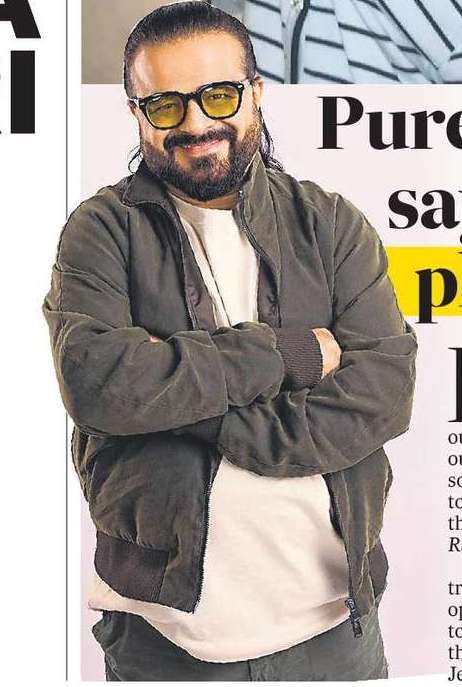
HINDUSTAN TIMES (March 9, 2025)
Earlier this week, K-pop singer and BLACKPINK member Jennie Kim found herself in the middle of an outcry after Indian fans pointed out that a snippet from her new song Like JENNIE sounded a little too similar to Rani’s (Alia Bhatt) theme in the2023 film Rocky Aur Rani Kii Prem Kahaani (RARKPK).
Now, Pritam, who composed the track for RARKPK, has finally opened up about the row. Taking to Instagram account on Friday, the composer wrote, “Rani and Jennie are names that rhyme, so a similar flow in one phrase doesn’t make it a copy. In music, minor similarities are bound to happen. Music is ...sometimes pure coincidence — especially when artistes exist on the same creative wavelength (sic).”
He added, “In today’s interconnected world, where artistes share the same platforms, no one is deliberately trying to copy someone else’s work. Wishing Jennie all the best for the new album.”
Coincidentally, Jennie’s new track also dropped on Friday.
Hrithik Roshan, Jr NTR to film dance sequence for War 2 in Andheri studio
8:24 AM
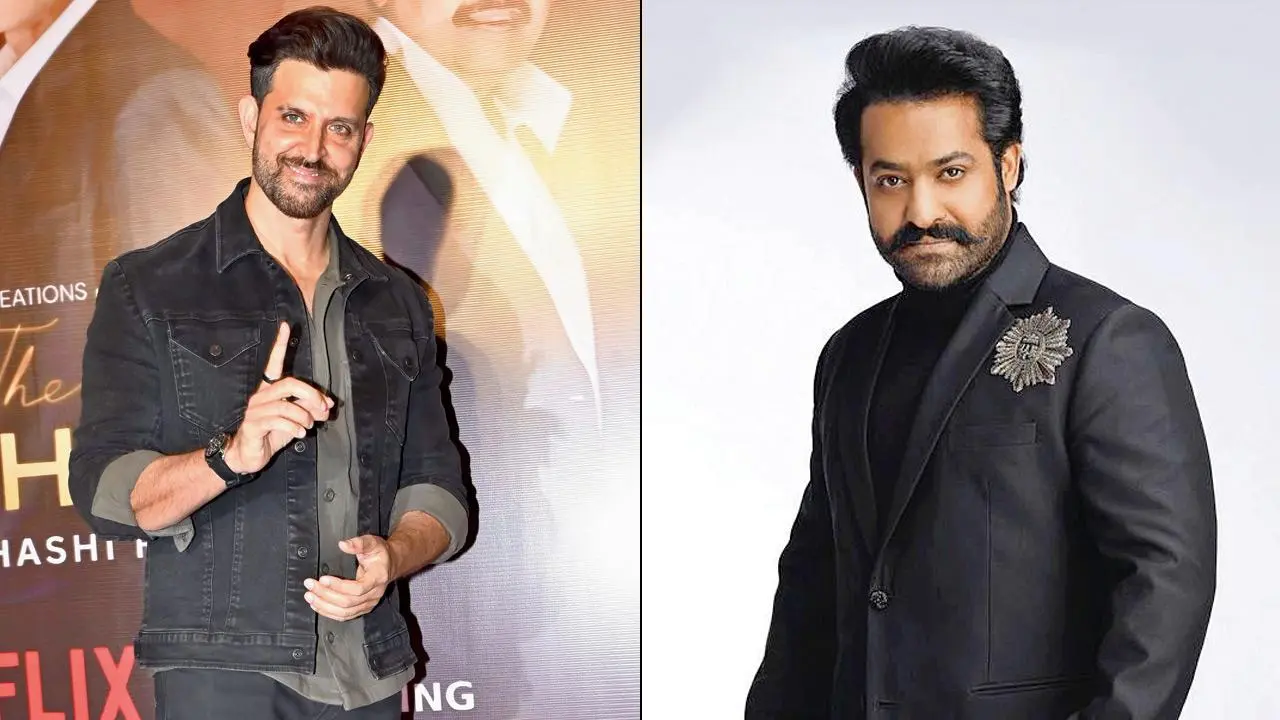
Starting today, Hrithik Roshan and Jr NTR to film a dance-off choreographed by Bosco Martis for spy thriller War 2; 500 background artistes roped in for the song
Upala KBR (MID-DAY; March 5, 2025)
Who is a better dancer between Hrithik Roshan and Jr NTR? The two superstars’ fans don’t have to pick a side just yet. They can give their verdict after seeing the actors shake a leg together in War 2. mid-day has learnt that starting today, director Ayan Mukerji will shoot a dance-off between Roshan and Jr NTR at Yash Raj Studios in Andheri. The sequence is part of the climax of the espionage thriller, which also stars Kiara Advani.
The dance-off’s idea apparently came from producer Aditya Chopra, who knew that pitting the two accomplished dancers against each other would serve as the movie’s biggest highlight. Chopra, along with Mukerji and choreographer Bosco Martis, then conceptualized the set-piece.
A source says, “While Adi was certain that War 2 would be a stylised actioner, he wanted the two superstars to groove together, since they are known for their energy and smooth moves. In the sequence, Hrithik, who reprises his role of R&AW agent Kabir Dhaliwal, makes his way to the hideout of the antagonist, portrayed by Jr NTR. What follows is an electrifying dance battle that segues into the climactic fight set-piece. The two actors have been rehearsing individually for the past 15 days. The makers have deliberately kept them apart so that when they lock horns in front of the camera, it will look natural.”
A grand set has been built by production designer Amrita Mahal Nakai, and Pritam has composed the fast-paced number. Over 500 dancers will be part of the song.
The source adds, “Knowing that the track will arouse curiosity among fans and the media, Adi has beefed up the security at the location. Phones are not allowed on the set, in a bid to ensure that pictures from the shoot don’t get leaked online. Each unit member has been given a badge to avoid a security breach.” After the song is wrapped up by March 10, War 2—which is the latest instalment in the YRF spy universe—will be almost complete.
How cops nabbed music composer Pritam Chakraborty's robber in 8 days before he burned all the cash
9:10 AM
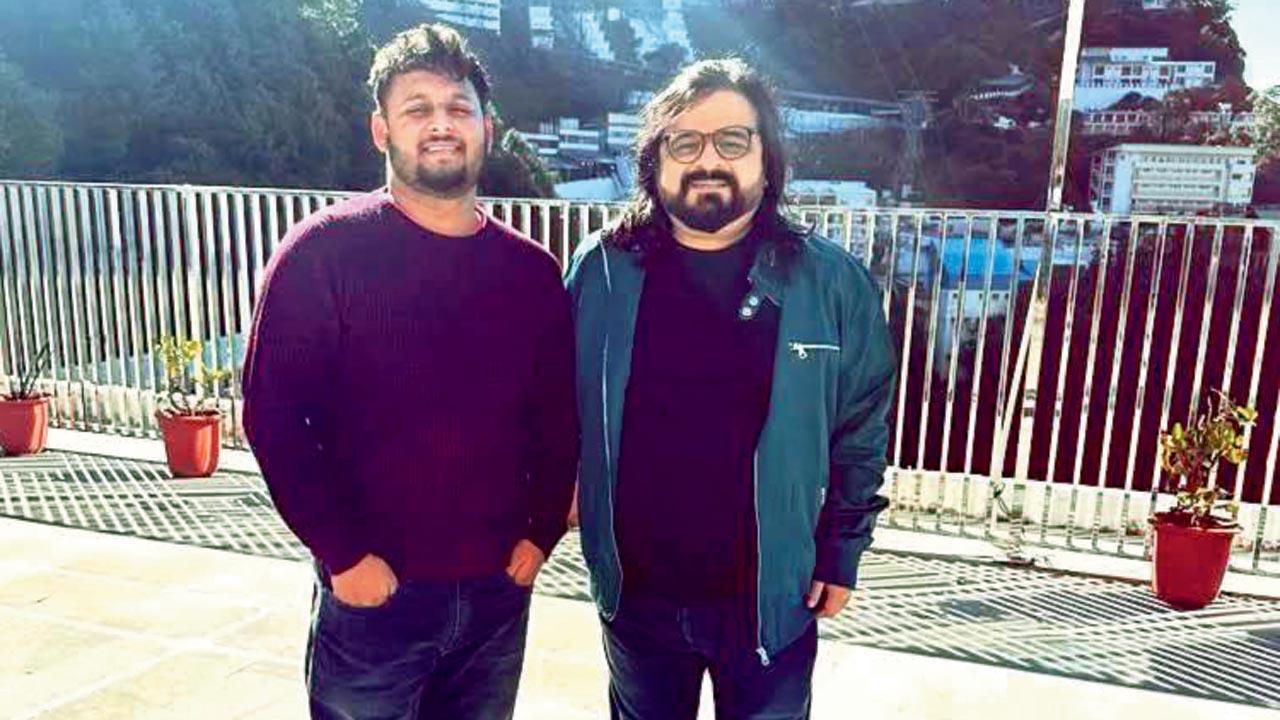
Elaborate manhunt takes police from Versova to Jammu as they crack tactics of man who had made off with Rs 40 lakh from music composer’s office
Samiullah Khan (MID-DAY; February 22, 2025)
The Malad police have arrested the office boy of music director, composer and musician Pritam Chakraborty who allegedly absconded with Rs 40 lakh in cash from the artiste’s studio on February 4. The accused, Ashish Sayal, 32, was traced to Samba district in Jammu, where he was nabbed on Wednesday. Sayal was brought to Mumbai early on Friday on transit remand.
The cops have recovered 95 per cent of the stolen cash.
On the day of the alleged theft, producer Madhu Mantena had sent the bag to the studio, located on the Goregaon-Mulund Link Road, as part of a business transaction.
Pritam’s manager, Vinit Chheda, placed the bag in the studio office in the presence of Sayal and other staff members. Later, he found the bag missing and was informed that Sayal had taken it, claiming he was going to deliver it to Pritam’s residence. Chheda immediately informed Pritam about the situation. However, the music director initially believed that Sayal would return, as he had been working for him for nine years. After waiting overnight and seeing no sign of Sayal, Pritam instructed his manager to file a police complaint. A manhunt was then launched. A team led by PSI Tushar Sukhdeve, along with his detection team, under the guidance of Anand Bhoite, DCP, Zone XI; Senior Inspector Vijaykumar Panhale; and Police Inspector Sanjay Bedwal, made multiple attempts to track him down.
On the run
According to the police after committing the crime, the accused roamed around the suburbs for seven hours to throw authorities off his scent and eventually boarded a flight to Amritsar.
A police officer said, “He travelled through Malad, Kandivali, Charkop and other areas, eventually reaching a friend’s home in Versova carrying the bag full of cash.” Tracking the accused’s movements proved challenging for the police. It took them eight days to uncover his escape route as his mobile phone was switched off.
“Eventually, a breakthrough came after we learnt Sayal had travelled to Versova. It was there where he took help to transfer the cash via an angadia [traditional courier] to Chandigarh. He reached Amritsar via flight a day after the theft. From, there travelled via cab to Chandigarh, collected the money and boarded a bus to Kashmir,” said an officer.
According to the police, the accused, originally from Kashmir, did not immediately return home. Instead, he stayed at various hotels in Jammu and Kashmir to avoid detection. He spent approximately Rs. 3 lakh purchasing the latest iPhone and a laptop.
Samba situation
According to the police, Sayal’s wife resided in Samba district near the Indo-Pakistan border and her father is a sub-inspector in the Jammu police.
“After absconding from Mumbai, the accused travelled to Jammu to attend the wedding of his sister-in-law, which took place on February 21. However, just two days before the wedding, the police arrested him while he was shopping with his wife in a market in Samba,” said a police officer.
Although locals initially created a commotion, they stopped protesting and cooperated with the police after being informed about the accused’s crime. The Malad police team then raided the accused’s in-laws’ house in Samba, where they recovered the stolen bag during a search and recovered approximately Rs 34 lakh in cash as well as the iPhone and laptop. According to the police, if Sayal had managed to evade arrest for another ten days, a significant portion of the money would have been spent on the wedding expenses.
‘Sayal was insecure’
A police officer said, “Pritam was not happy with Sayal’s work. Therefore, he asked the accused to work in another production house and even promised to help him find a job. Sayal felt that he was about to get the boot.”
“He is expressing shame, telling us, ‘I made this mistake out of ignorance’,” the officer added. Pritam’s manager, Chheda, declined to comment on the matter.
Sayal took care of Pritam’s parents during pandemic
- Pritam first met Sayal about nine years ago during a visit to Vaishno Devi.
- The accused introduced himself as a singer who had a deep interest in performing.
- Impressed by Sayal’s rendition of bhajans and kirtans, the music director decided to hire him.
- During the COVID-19 pandemic, Sayal took care of Pritam’s parents and looked after the composer’s well-being, earning his trust.

CCTV footage of Ashish Sayal lugging around the bag on the day of the theft
Bipasha Basu, John Abraham broke up couple of days ahead of Billo Rani shoot-Vivek Agnihotri
9:19 AM
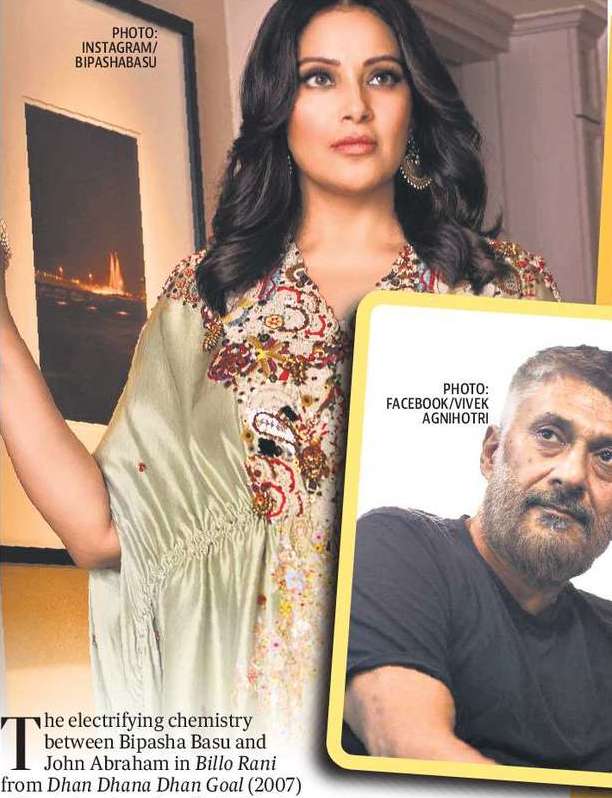
HINDUSTAN TIMES (February 16, 2025)
The electrifying chemistry between Bipasha Basu and John Abraham in Billo Rani from Dhan Dhana Dhan Goal (2007) still sets hearts racing. But behind the scenes, sparks of a different kind were flying.
Director Vivek Ranjan Agnihotri recently spilled the beans, revealing that the song was filmed in the midst of intense personal turmoil — the duo had broken up just days before the shoot. Taking to X, Vivek shared that their on-screen passion was a masterful illusion, crafted despite real-life heartbreak.
Reposting a clip of the song, he wrote, “This song has a history. Producers didn’t want it. Javed Saab was against the hook ‘Billo Rani,’ Pritam wasn’t sure about the qawwali style. John and Bipasha had broken up just days before, so there were a lot of issues.”
However, it was the late choreographer Saroj Khan’s unwavering belief that turned things around. “Only Saroj ji believed in me. She said this will become the biggest hit — and it did. Big salute to Pritam, Javed Saab and Saroj ji,” he added.
The song, from the film, also features Arshad Warsi and Boman Irani. Sung by Anand Raaj Anand and Richa Sharma, Billo Rani became an instant chartbuster. Bipasha and John’s love story, which began on the sets of Jism (2003), spanned nearly a decade. And while their real-life romance may have ended, Billo Rani remains a timeless onscreen memory of their sizzling magic.
Rs. 40 lakh stolen from Pritam Chakraborty's studio
10:37 AM
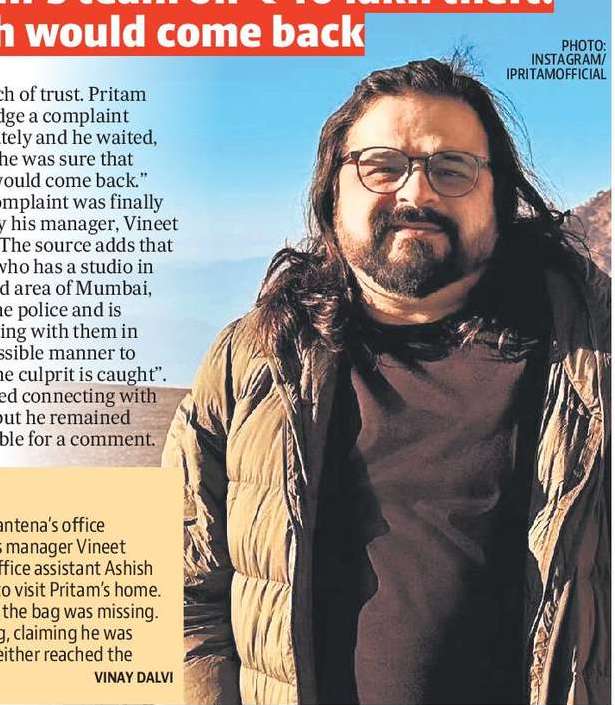
Soumya Vajpayee (HINDUSTAN TIMES; February 10, 2025)
Composer Pritam Chakraborty was in for a shock when Ashish Sayal, a 32-year-old assistant at his studio, allegedly fled with Rs. 40 lakh in cash. The amount had been received as payment from a production house for an assignment.
A source close to Pritam tells us, “The incident came as a shock to Pritam. He really trusted Ashish and more than the money, he was taken aback by the breach of trust. Pritam didn’t lodge a complaint immediately and he waited, because he was sure that Ashish would come back.”
The complaint was finally lodged by his manager, Vineet Chheda. The source adds that Pritam, who has a studio in the Malad area of Mumbai, “trusts the police and is cooperating with them in every possible manner to ensure the culprit is caught”.
We tried connecting with Pritam, but he remained unavailable for a comment.
What exactly happened?
On Tuesday, a person from producer Madhu Mantena’s office delivered Rs. 40 lakh in cash as payment. Pritam’s manager Vineet Chheda stored it in a trolley bag. At the time, office assistant Ashish Sayal was present. Vineet then left the studio to visit Pritam’s home. When he returned around 10.30 pm, he realized the bag was missing. He was informed that Ashish had taken the bag, claiming he was delivering the cash to Pritam’s house, but he neither reached the musician’s home nor returned to the studio.
- Vinay Dalvi
I will no longer make recreations-Tanishk Bagchi
8:37 AM

Tanishk Bagchi knows that his claim to fame may have been the work he has done in reviving old classics for this generation, but hopes his work as Sky Force’s composer will change his trajectory
Sonia Lulla (MID-DAY; January 13, 2025)
Often referred to as the king of recreations, Tanishk Bagchi is certain that the album of Akshay Kumar’s Sky Force will compel filmmakers to see him in a new light. While fans have celebrated his original hits, including Raataan Lambiyan and Bolna, the songs have often been dissociated with his name given the spate of rehashed numbers he has served music aficionados.
But Dinesh Vijan’s Sky Force, he says, is set to put his best work on display. “Imagine an album that has Raataan Lambiyan, Ve Mahi, Bolna, and Badri Ki Dulhania, all in one album,” he says of the film that has five songs crafted by him. In this interview, he reveals how he charted his career to facilitate this transition. Edited excerpts of the interview.
What was the discussion you had with the makers with regards to the music of this album?
I used to create a lot of songs for Dinesh sir, but it would be one song in the entire soundtrack. I’ve also done a lot of recreations. Dino [Vijan] had praised my skills as a composer. Nobody understood that I have the potential [to helm] a solo film. Dinesh sir told me about this film that he was working on, and told me to make the entire soundtrack. That is where we began. He spoke to me about the situations the songs were to be placed in, but left the work to me. He didn’t share any references and allowed me to decide the genres.
Because this is a patriotic film, we’ve tried to retain honesty in the emotions. I can’t take references from other tracks. I’m proud of this album because these are the songs that I’ve always wanted to make. I knew that if I ever got an entire film to work on, I could design the soundscape as I desired. When I’d see [composers like] Sachin-Jigar, Vishal Dadlani, or Pritam, I’d always wonder why I couldn’t get an entire soundtrack [like they do], and was only entrusted with promotional numbers. That was, in a sense, a struggle for me. So, this film marks a new journey. I have been known as the person who did recreations, so this breaks the barrier for me. All the songs are original, and have been composed by me. The credit goes to Dinesh sir.
Were there any active steps you took to make this transition?
It began with saying no to a lot of [offers]. I turned down offers to back recreations. The last remix I did was for Bhool Bhulaiyaa 3, and I did that only because I had worked on the second part as well. Even then, I tried to treat that number like an original song and added a new sound. I no longer wish to do any recreations. As much as I can, I will decline those offers. I’ve done what I had to do; I’ve established a trend. Now, I want to focus on my original music.
Is there a genre of music you’ve employed here that you feel you have dominance over?
When I compose, my music reflects a lot of the emotions that I encounter. Because I belong to Bengal, I’ve been inspired by folk melodies. I always wanted them to be reflected in my music. For Sky Force, I put all my skills to use, including using all the genres I know. Everything was scattered, but I created this package that brought it all together. This album includes one of the best tracks I believe I have ever composed. There’s another romantic song that, I am certain, will be liked by people. There’s also a number that adds emotional depth to the situation is was made for. Imagine having an album that has songs like Raataan Lambiyan, Ve Mahi, Bolna, and Badri Ki Dulhania and Aankh Marey, all in one album. I think, this is that.
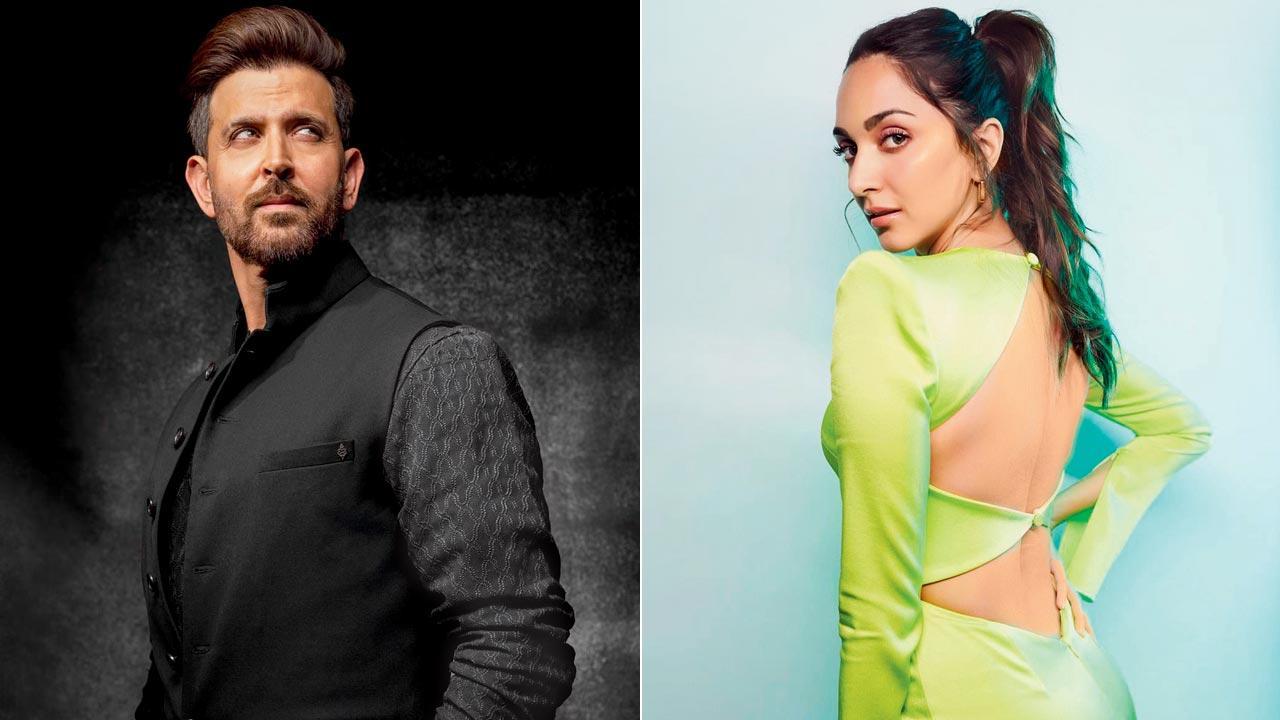
Hrithik Roshan, Kiara Advani to shoot War 2 romantic song in Venice, Tuscany, Naples, Lake Como
8:36 AM
Upala KBR (MID-DAY; September 10, 2024)
Action has been the keyword ever since War 2 went on floors in October 2023. While Hrithik Roshan kicked off the shoot in March with an action-packed scene, Jr NTR joined the unit in April and the duo filmed a face-off sequence set in an aircraft (This flight’s ready to take off, April 12). Now, director Ayan Mukerji is shifting gears. mid-day has learnt that the unit will head to Italy, where they will shoot a romantic song featuring the leading man and Kiara Advani from September 18.
Keen-eyed fans would remember that War’s chartbuster Ghungroo was shot on the beaches of Positano in Italy’s Amalfi Coast. This time, even as Mukerji and producer Aditya Chopra have zeroed in on the usual haunts like Venice and Lake Como, they have discovered untapped locations in these places that they plan to bring to the screen.
A source tells us, “The Italy schedule will begin from September 18 and go on for about 15 days. Ayan has allotted the first six days for the song shoot. Considering Hrithik and Kiara are two of the hottest actors in Bollywood today, the director wants the video to do justice to their glamour. The romantic track, composed by Pritam, is being mounted on a lavish scale, and will be shot in exotic locales of Venice, Tuscany, Lake Como, Naples, Amalfi Coast, and Sorrento Peninsula. After the number, the unit will can a high-octane action sequence and some dramatic scenes before flying back to India by early October.”
Roshan and Advani’s fresh pairing is one of the highlights of War 2. The source adds that the makers have, so far, ensured that their images are not leaked in the media— something that they will keep an eye out for during the international schedule too.
“An army of local Italian security has been hired to comb these locations prior to the team’s arrival. They will also be part of the shoot to ensure that no images make their way online,” says the insider.
The sequel, slated to release on August 14 next year, will take the narrative of Roshan’s Kabir Dhaliwal, an R&AW agent gone rogue, forward. After the September stint, the director is expected to conduct two more schedules, an international one and another in Mumbai, before calling it a wrap early next year.
For the longest time, people said that I couldn’t sing-Shilpa Rao
8:18 AM

Debarati S Sen (BOMBAY TIMES; August 31, 2024)
Shilpa Rao first sang for the Hindi film music industry over 17 years ago and since then, has had hits like Khuda Jaane, Kalank, Subhanallah, Bulleya, Ghungroo, Tere Hawaale, Chaleya and Besharam Rang among others to her credit.
In a conversation with us, this Grammy-nominated singer talks about creating a space for herself in the music industry despite her voice being termed unconventional at the beginning of her career. Excerpts:
Initially, your voice was termed unconventional. Did you face challenges to get a break in the music industry because of that?
Throughout my childhood, people said I couldn’t sing, and I believed them. Back then, I was learning to sing because I liked music. I never thought I’d be a musician. I wasn’t very goal-oriented, in that sense. Even now, I am learning music because it brings me happiness. Also, today, I don’t think much about what people say. I just believe in working hard. People can say whatever they want, but we must filter out the comments that are not relevant. If someone like Rashid Khan sahab would say something to me, I would listen and see value in it, but not from everyone. It's important to use your own mind, pick things that you're passionate about, work hard on that and listen to people who are wiser than you. Like, if Pritam tells me something, I will think hard.
How did you manage to find your voice even after facing criticism at a young age?
I think it helped me when people said I couldn’t sing (laughs). On a serious note, my parents instilled in me the idea of having my own voice and opinions, which shielded me from being too affected by others’ opinions. My dad always believed in learning music because it enriches your life, and I still hold onto that outlook. My voice was nurtured by my parents, who were big fans of artistes like Begum Akhtar, Prabha Atre ji, and Parween Sultana ji. I was fortunate to have seen some of them perform live as a child. Listening to Farida Khanum was also common in our house. My parents instilled in me the idea of having my own voice and opinions, which shielded me from being too affected by others' opinions on my singing abilities. My dad always believed in learning music because it enriches your life, and I still hold onto that outlook. Attaching happiness, love and good energy to my songs translates to the audience, and that’s important to me.
You’ve sung numerous popular Bollywood songs in the past few years. What’s your process when it comes to singing?
For me, it’s about approaching each studio session as if it were my first. Every recording is a fresh opportunity to connect with music, like a child in a chocolate factory exploring new flavours. For instance, when I was first told about Kaavaalaa (Jailer, 2023), I wondered why Anirudh (composer Anirudh Ravichander) chose me for it, as it was unlike anything I had sung before. However, trusting the composer and director’s vision is crucial. With Besharam Rang (Pathaan, 2022), Siddharth Anand was confident about me singing it. That meant a lot to me. People have told me how much they have loved the song. Sometimes, it’s not just about singing for a movie, it’s also about the emotional attachment people form with the song. So, having faith in what you do is essential.
During recording sessions, is your input as a singer considered?
Yes, always. Artistes who have been in the industry for a long time, whether it’s Pritam, Vishal-Shekhar or Mithoon, are always open to inputs from singers. They’re willing to listen to ideas and suggestions because they understand that it can only enhance the work. I enjoy collaborating with new people as witnessing their spontaneity and energy in the studio is amazing. There’s a unique dynamic that emerges when you bounce off ideas and energy, and often, something magical happens when they listen to your input.
You'd said earlier ‘Kalank’ took three months to complete. Which other song has been challenging for you?
Every song requires dedication and hard work. But if I had to pick, Mudhi Mudhi Ittefaq Se (Paa, 2009) was particularly challenging. I worked with Ilaiyaraaja Sir for that song, and he is known for his discipline and perfection. Impressing him wasn’t easy. Gustakh Dil (English Vinglish, 2012) was also tough because it conveyed complex emotions. Bulleya (Ae Dil Hai Mushkil, 2016), too, posed its own challenges, depicting a unique relationship dynamic.
And are there any songs that you breezed through?
I’d say "Manmarziyan" was definitely one of those songs. It felt tailor-made for me, and Amitabh (Bhattacharya) and I wrapped it up in just 30 minutes. It's quite rare for things to come together so seamlessly like that. Initially, it wasn't even called Manmarziyan, but as soon as I sang the first line, Amitabh immediately named it. Another quick recording was Chaleya. We finished the recording in just 20 minutes because we were both (composer Anirudh Ravichander) present, making decisions swiftly and bouncing off each other's energies. It really does make a difference when you have multiple perspectives in the room, including the composer, lyricist, and sometimes the director. When you're alone, it's challenging to navigate all those possibilities.
In an industry where most songs are male dominated, Tere Hawaale from Laal Singh Chaddha was one of those rare ones where male and female voices were given equal weightage. How did this song come about? How involved were you all?
Tere Hawaale is an ideal duet. The film is not just about one character; it's about the parallel lives of Laal Singh and Rupa, intersecting and drifting apart. The song reflects this journey, where they finally acknowledge their need to be together. It took a lot of time to perfect. We started working on it before COVID in 2019 and experimented with different ways of singing the two lines, and then the final recordings were done. Aamir Khan sir felt that the last part should be from Rupa’s (Kareena Kapoor Khan’s character in the film) perspective to conclude the song properly. It was truly a collaborative effort.
Subscribe to:
Posts (Atom)