Showing posts with label Prem Ratan Dhan Payo. Show all posts
Showing posts with label Prem Ratan Dhan Payo. Show all posts
Sikandar is the tenth highest first weekend ever for Salman Khan
8:51 AM

Box Office India Trade Network
SIKANDAR was the tenth highest first weekend for Salman Khan at 70 crore nett plus when the target was to get to 100 crore nett over three days. The 100 crore target is also because the music or trailers did not generate much heat because if they did then there is no target as the sky is the limit.
The last release for Salman Khan had collected 138 crore nett on a similar weekend with a Sunday start and at that time this number was also looked at as if it was on the lower side which was not the case. The numbers were double of SIKANDAR; its another story that TIGER 3 was not appreciated but the initial was very good.
SIKANDAR has similar numbers to DABANGG 3 which was released in 2019 just before the pandemic and its numbers are actually not much higher than KISI KA BHAI KISI KI JAAN which did 58 crore nett. TIGER 3 was double its weekend numbers in terms of its lifetime business and that will be the case for SIKANDAR as well.
The top ten opening weekends for Salman Khan are as follows.
1. Tiger 3 - 1,38,56,00,000
2. Tiger Zinda Hai - 1,14,91,00,000
3. Sultan - 1,05,55,00,000
4. Bajrangi Bhaijaan - 1,01,42,00,000
5. Race 3 - 1,00,64,00,000
6. Prem Ratan Dhan Payo - 97,63,00,000
7. Bharat - 90,47,00,000
8. Kick - 80,43,00,000
9. Dabangg 3 - 72,46,00,000
10. Sikandar - 70,50,00,000 apprx
11. Tubelight - 61,53,00,000
12. Kisi Ka Bhai Kisi Ki Jaan - 58,56,00,000
13. Dabangg 2 - 48,43,00,000
14. Jai Ho - 58,17,00,000
15. Ek Tha Tiger - 56,11,00,000
Prem Ratan Dhan Payo did well but when I look at it now, I don’t like to see the climax-Sooraj Barjatya
3:07 PM

One of Bollywood’s top blockbuster directors, Rajshri bossman, Sooraj Barjatya, 61, dives deep into his film journey as he switches into web-series with Bada Naam Karenge
Mayank Shekhar (MID-DAY; March 22, 2025)
Before I sit down with Sooraj Barjatya, 61 — the director rightly deemed the father of the great Indian family drama, ever since the blockbuster success of his Hum Aapke Hain Koun..! (HAHK, 1994) — I entertain an unusual thought in my head.
For decades, the gentle, reticent Sooraj has maintained a stoic, quiet public image. What if the actual man behind those conservative movies, dipped in shudh desi ghee, espousing love for mamaji, chachiji, samdhan, devar, is actually a wayward chiller, himself—given to slasher flicks at home, for his private pastime!
I playfully poke him with these fantasies, for this profile—asking him what he does for fun. He’s sweetly measured, as usual. For his hobby, he says, “I am right now into Puranas, reading the Gita, [Tulsidas’s] Ramcharitmanas; that’s my time for fun, when I am actually by myself.”
With Sooraj, what you see is what you get. There is no fakeness. We can see that. In fact, back circa 2001, he recalls, he had once gone over to Fire ‘n’ Ice, a popular nightclub in Mumbai’s Lower Parel. Director Farah Khan spotted him there. She instantly called up Karan Johar, wholly shocked: “Look, who’s here!”
Sooraj was with his wife, Vineeta. They retreated to a nightclub corner, where another partygoer simply asked him to please leave, bellowing: “Yeh [jagah] hum paapi logon ke liye hai [This place is for sinners],” Sooraj laughs.
The filmmaker was actually at a discotheque, in a sense, researching for his forthcoming film then, Main Prem Ki Diwani Hoon (MPKDH, 2003).
Which he wished to make, feeling the need to reflect something more trendy/hip. This is soon after Hum Saath Saath Hain (1999), an adaptation of the Ramayan, set in an Indian joint family.
Sooraj was in his “early thirties”, looking for a reset. He sacked his traditional music composer, Raam Laxman; brought onboard Anu Malik. For the lead cast, he had Hrithik Roshan, Abhishek Bachchan, Kareena Kapoor, instantly ready for the roster.
He says, “I feel so guilty towards all of them. Because they gave me everything. But while making that film, I realized, I am not there. This is not me. I was asking others, if they’d like what I’m making!”
A big feedback came to him from Bollywood’s resident pop-philosopher, actor Govinda. Sooraj says, “Govinda Ji sweetly met me [after MPKDH] to say that hits, flops come to everyone. That’s not the point.
“But, he told me, everyone has a purpose—ghode ka apna kaam hota hai, sheep ka apna kaam hota hai, sabka apna kaam hota hai. These words of wisdom stayed with me so much, that I then made Vivah [2006]. From that film onwards, I stopped wanting to be someone else. Then I can go to a night club to observe, and that’s good enough—but not try and become that person. It’s a liberating thought.”
MPKDH bombed in the theatres. Vivah had a “silver-jubilee [25-week] run in 125 cinemas, across the country.” Perhaps the last such film. To the point that the term ‘silver jubilee’ itself may be lost on the present generation of filmgoers.
But that’s how family films work—Sooraj, who’s also the bossman of Rajshri Pictures, the fountainhead of desi family entertainers, for over 75-plus years, explains its footfall math.
For one, he confesses, his core audience are women. They’re the ones who bring the family into theatres, in the first place. Sooraj says he’s deeply conscious of their tastes—even literally.
For instance, “Observe the food in our films. I make it a point that they’re carefully shot like advertising. In Maine Pyar Kiya [MPK, 1989], when Laxmikant Berde has to carry a tokri of puris, we kept reshooting it, because the puris had to be properly full-blown, on every take.”
Secondly, Sooraj distinguishes the mainstream family film, from a massy actioner. The latter gets the excited audiences right from Day One, for the first dib.
For example, “One would go to see a Dhoom 2, first. Which is what happened at Jaipur’s Raj Mandir theatre, where it replaced Vivah. But after eight weeks [once the audiences had seen Dhoom 2], Vivah was back for a 35-week run. People keep telling [others, about a family entertainer], and people coming, slowly, slowly...”
That’s the Rajshri experience. Sooraj recalls, “I’m going back to 1969. Two films released that year. One was Jigri Dost and the other, Jeene Ki Raah, from LV Prasad Ji’s banner. Both were with Jeetu Ji [Jeetendra], who was a big star. Jigri Dost had a house-full, whereas Jeene Ki Raah barely had collections in its fourth week.”
“L V Prasad Ji called up my grandfather [Tarachand Barjatya] to ask, ‘Where did I go wrong?’ He calmed him down, ‘You did no wrong. That’s Jigri Dost, and people will watch it first; it’s glamorous. Yours is Jeene Ki Raah, that audiences will visit, aaram se [in due course of time].’ That’s exactly what happened.”
The analogy Sooraj uses sort of settles the debate: “One is the new McDonald’s [in your neighbourhood]. But then, you have to come down to Maharaja Bhog [eventually].”
This is the theatrical thumb-rule, from those who’ve known them better. I suspect the same theory might apply to content on OTT platforms as well.
Wherein a new, flashy movie/show on a streamer catches full-on attention as the talking point on the first weekend. As if it’ll disappear after. Only, that sustainable content stays to be discovered, or rediscovered, forever.
Consider the Gen Z/Young Adult family (romantic) drama, Bada Naam Karenge (BNK), on SonyLIV. That’s the web series that Sooraj has turned show-runner with.
It bears the Rajshri stamp, like nothing you’ve watched on a streamer so far—large network of families, a sense of innocence among the young, flavour of small towns Ratlam, Ujjain, Indore…
Shailesh Kapoor, from the content tracking agency Ormax, I noticed, called the series a potential “game-changer” for the home-viewing ecosystem. I can see why. For years, the Rajshris weren’t entertained in the OTT scene; as Sooraj recalls, “They were looking for something edgier.”
BNK is a family series, quite separate from the over-the-top, overlong, swish-pan saas-bahu serials of Star Plus, that dominated Indian TV, 2000 onwards. It’s about subtle, real, young love, in the times of Corona.
What I was struck by is its unpretentious simplicity. It’s possible that you haven’t seen the series. It’s more possible that families will chance upon it at some point, while the word spreads.
The show features two lovely, debuting lead actors, Ayesha Kaduskar, Ritik Ghanshani—part of families that are loving, but conservative. And as it happens with the latter, extra-possessive of their young.
Their transgression is that they once lived together in a big city, out of a circumstance, given COVID-19. Their graver transgression, to me, for a Rajshri product, is they even drink at a party together!
Sooraj laughs, “Well, there is only one party-scene. And even there, I kept telling [director] Palash [Vaswani], if we can set it during Holi, and therefore thandai being passed around.”
It’s a world that Sooraj knows, because he spent a lot of time at his maternal grandparents’ home in Agra, growing up. Also, he says, his own Mumbai home mirrors that same joint family set-up/culture, including the youngest generations.
In the sense, more particularly, of the Marwari community, that the protagonists of BNK belong to. As does Sooraj.
Who, I find to be a fascinating lot—originally from a 50-odd kilometre radius in Rajasthan; spread across the country, broadening their business empires locally, retaining their filial and commercial connections globally.
Sooraj argues, “[Marwaris] are an amalgamation of the entire Bharat. We love to have a lot of money. But there are very few of us in the film business. Because we want to be safe. Before we invest anything, we must know how much we are going to get back. This is very difficult in this profession. Especially, creativity doesn’t come first to us. We know how to make money, out of money. But I think [Barjatyas] had to be here. And we had to tell some stories.”
Before there was fake news, there were quiz masters, who made up facts for questions at inter-school/college competitions. And since Internet hadn’t deepened enough to verify the supposedly right answer, we just won/lost points, from our guesses, and moved on.
One such question asked to my team, I remember, was the visual of a female actor in a song, perhaps from Janwar (1965), ‘Tum se accha kaun hai’.
Question: Who’s the actor, and what’s her relevance to Bollywood history? Answer: Rajshree, V Shantaram’s daughter, on whom Rajshri Pictures is named. This was during college/school. Although I won’t find that phony quiz-master again, it’s taken me years to prove this as fake fact/news.
Sooraj tells me Rajshri Productions is named after his paternal aunt, Rajshri Saraogi (nee Barjatya), who was born the same year the film company was founded by his grandfather, Tarachand. That date being August 15, 1947—making Rajshri exactly as old as independent India!
The company was founded in Kolkata, which is where young Tarachand moved to, from “Kuchaman, a small estate in Rajasthan.”
The only thing Tarachand ever wanted, Sooraj says, was to earn well for his mother: “She came from a poor background, she couldn’t eat well in her sasural. And he wanted to provide for her. That ambition drew him to Calcutta.”
Tarachand found a job as a manager in a Bengali film company, Chamaria Pictures, where he performed rather well. Except, as his family grew, he wished to expand, and go his own.
The company allowed him to pursue his side-gigs, alongside. Which is how Tarachand started a small arm, distributing films for Central Provinces-Berar, a tiny province of British India. But what films could he start with?
Sooraj says, “My grandfather would get tears in his eyes, when he’d tell me about Gemini Pictures, and Shri S S Vasan, in Madras.”
Basically, Vasan/Gemini Pictures had made a huge blockbuster, Chandralekha (1948). Tarachand urged them to dub it in Hindi. Vasan was unsure—who would watch a non-star cast pic across India?
Tarachand persuaded him nonetheless, including shooting portions of the film, with actors originally mouthing some lines in Hindi. Once done, Vasan offered “all India distribution rights of Chandralekha” to Tarachand.
It’s something the young entrepreneur couldn’t believe. “Chandralekha was the Baahubali of its times, or what Pushpa would be today,” Sooraj recalls. Such is how Rajshri entered the big league, subsequently setting up distribution offices across North India.
Similarly acquiring films from the South, for nation-wide releases, with Hindi dubs. Essentially, what’s now called the pan-India release.
And then, of course, they combined it with distributing popular Hindi titles, having established a deep trade-network.
Rajshri entered film production, only in the early 1960s. That’s the business Sooraj’s father, Raj Kumar Barjatya, oversaw. Their breakthrough was Dosti (1964), starring two unknown male leads, Sudhir Kumar, Sushil Kumar, with a phenomenal soundtrack, that continues to resonate.
Sooraj says, “Dosti took everyone by surprise. People first said, who would watch? It’s a black and white film. Langde andhe ki picture hai [it’s about a blind and lame man]. But my grandfather was spiritually inclined, and he was convinced.”
Throughout his career, Tarachand would visit The Mother at her ashram in Pondicherry with his film ideas. She had decreed that he only make films that “elevate the consciousness of humans/society.”
Dosti was one of them. He never looked back after. Sooraj remembers, “As a child, I’d be on story sessions with my grandfather, listening to all the top commercial pictures, and he’d say, ‘It’s a superhit film, but of no use to us.’ I used to wonder, if it’s super-hit, why is it of no use to us? So, then, he took me over to our company emblem, that is [Goddess] Saraswati. And he told me, ‘Jo yahan banega usmein Saraswati ka vaas hona zaroori hai [Saraswati must reside in whatever gets made here]’.”
The script of Rajshri mainly drew from Indian literature. The directors were relatively lesser known. Also, since, as Sooraj puts it, the celebrated ones would want to produce their own films.
But, more importantly, as he says, the lead actors in those films couldn’t be the popular hero-heroines of the times. The subjects were such. The superstars could simply not slip in.
He says, “For example, if you see Uphaar [1971]. There’s a crazy girl. Now, you can’t just put any star in there. You need someone without a screen image. Or a film like Geet Gaata Chal [1975], about a teenager. How can you put ‘Shah Rukh Khan’ in a teenage role? It has to be a newcomer. Those were the subjects we picked.”
For instance, Amitabh Bachchan did star in a Rajshri film, Saudagar (1973). But this is right before Zanjeer (1973). Which made his ‘angry young man’ stardom too big to fit into a Barjatya vehicle.
It took Bachchan almost 50 years to feature again in a Rajshri production, aged 79, with Uunchai (2022), directed by Sooraj; about friends, who are family.
What Rajshri mastered was essentially “the non-star film” that, in turn, gave debutants breaks into an industry that has perennially faced the insider-outsider divide.
As Sooraj says, “I can go on listing the breaks from Rajshri: first film of Sanjay Khan, Jaya Bachchan Ji, Rakhee Ji… We can go down to Mithun [Chakraborty] Da’s first commercial picture; Raj Babbar Ji’s first film was signed with us. Naseeruddin [Shah] sir’s first commercial film…”
It’s astounding alright. What’s equally astounding about Rajshri that I had heard, years ago, is they’ve had a rather precise rule-book of sorts, detailing stuff you can/can’t do in a Rajshri film. This is besides that the whole family should be able to watch the film together.
For instance, Commandment #1: You can’t have a villain in a Rajshri film. The ‘circumstance’ is the villain! Commandment #2: There should be no action. And if there is a required action sequence, the number of punches cannot exceed 14!
Not 13, not 15; 14, to be sure. No, wait, is this really true? Guess what, Sooraj says, “Yes, it is,” and asks me how I know. Actually, I have no clue how I know!
Sooraj smiles, “My grandfather and father’s point was that since the villain is a must—it’s best if it can be a circumstance. We don’t need to have too much of violence, hence.
“HAHK: Bhabhi (Renuka Shahane) dies. That’s all there is to it. She slips. It’s a circumstance. MPK: Currency notes get destroyed by water. Poor boy, so that is a circumstance. Now, Uunchai: The heroes want to climb up [a mountain]. There, age is the circumstance [for an antagonist]. As for 14 punches in an action sequence—that was told to me while making MPK, because I was a young man, and the action director can go on, with a fight sequence [if you don’t put a cap to it]. So, 14 punches. That’s it.”
And it’s not that the rules have always been followed, though. Sooraj admits, “Whenever we have deviated, it hasn’t quite gone down well.”
I bring up his last film with Salman Khan, Prem Ratan Dhan Payo (2015), for instance. He says, “Salman and I can see through each other. The first draft [of Prem Ratan] that I took to him, he said, why are we complicating things; go for simple. Yet, I put some action into it, because I wanted to [serve his audience]. I tried to play it safe. I should have just made a straight emotional affair. The film did well. But when I look at it now, I don’t like to see the climax.”
While Rajshri has been around since 1947, Sooraj was the first member from his family firm to actually direct films. His late father, Raj—better known as Raj Babu in film-industry circles—he says, “had modelled himself on Irving Thalberg of MGM Studios.”
But he had the eye/ear for great stories. And what Raj Babu left behind for Sooraj is actually a detailed file, with plot-points from movies he’s liked—whether from Rajshri or other productions.
Knowing his son’s natural inclinations as director, Raj Babu felt the file would serve as the North Star for subjects to pick. One of the notings, for instance, is where Uunchai came from.
I never got a chance to interact with Raj Babu. I do remember observing him once, from a distance, at a talk by Hollywood’s top screenwriting guru, Syd Field. Everybody was listening. I noticed Raj Babu, sitting down like a student, taking copious notes, instead. Which is ironic, only for the fact that if Syd Field, a stickler for the three-act screenplay structure, ever watched Raj Babu’s idea for Sooraj, HAHK—he could still flip in his grave. Now, that’s a film, without a conflict, up until its final 30 minutes, that defied all logic of screenwriting.
Sooraj says, “The [HAHK] structure originally belongs to [Rajshri’s] Nadiya Ke Paar [1982]. We owe it to K P Mishra’s novel, Kohbar Ki Shart. Which was a textbook in Agra University. My father had read the book. And if you relate the novel to HAHK, Madhuri [Dixit’s character] gets married to Mohnish [Bahl’s character]. What follows is a massive drought in the village, where everyone dies. That’s the third act. My father didn’t like that [final] part of the story.”
So, technically, HAHK was without a third act. Hardly ever has a film been loved more. Madhuri Dixit was its superstar. Incidentally, she had also debuted in a Rajshri production, Abodh (1984), where Sooraj was an assistant.
Back then, Sooraj was given the charge of counting Madhuri’s bangles on the sets of Abodh. Which is when his mother had come to visit.
She was dead against him turning into a director, which she felt was a financially unsafe pursuit. She would’ve liked him to own/run studio-floors instead.
Back home, she admonished Sooraj, “Is this what you’re going to do in life—count bangles?” Sooraj’s dad, with a filmmaking bone of his own, fully betted on his son.
This was at a time when Rajshri were at their financial lowest. Mad actioners had taken over Indian screens. Middle-class audience stayed in to watch films on video players, that made for a more comfortable home entertainment. It was a novelty.
The 1980s, being no different from 2025, with the cycle repeating. And people hitting theatres, only for spectacle as cinema, and bingeing on OTT platforms, at home, for everything else. It’s a phase, of course.
That said, Raj Babu and Sooraj could see the revival of musicals with Saturday Night Fever and Grease, and the like, in Hollywood. That’s the genre Sooraj picked for his first film, a young romance, while he’d only just turned 20.
MPK became a sensation. It revived Rajshri. A condition that Sooraj’s mother had laid before him turning director was that he must get married first.
Which is what he did at 21. HAHK followed. I wonder if he put all that he saw at his own wedding into HAHK! Sooraj says, “That, and so many other family weddings I had been to.”
HAHK is packed with songs and anecdotes, as in kissa, as against story, or kahaani. The beauty of the film is, of course, the space it accords the ensemble cast.
You have Salman [back from MPK] standing in a corner of scenes, while the samdhi, samdhan, mama, chacha, etc, take centre-stage! And this can only happen, because the new superstar had already trusted the director Sooraj’s conviction once.
They first met, because a model, Shabana Dutt, who had also tested for a role in MPK, didn’t land the part, but recommended Salman.
Sooraj recalls, “Salman thought he’d be given dhoti and bansuri for his role, because those are the films Rajshri used to make. He heard the script slouched on his seat, and straightened up only once he heard the ‘Kabootar jaa’ segment. But his auditions didn’t go well. His voice had no throw.”
Choreographer Farah Khan, Salman’s friend, came over to help him with the dance auditions. That bombed too. It’s just that once Sooraj got him to pose to the Rishi Kapoor romantic song ‘Oh hansini’, he could see a debutant heartthrob.
Only, that Salman was already appearing as a second-lead in a mid-tier film [Biwi Ho To Aisi]. Newcomer lead was a must. All this while, Salman kept sending Sooraj pictures of his friends he could cast instead.
Even when Sooraj went over to an ad shoot to finally express regret to Salman for MPK, the actor continued to introduce blokes on the set that he should have for the film!
Sooraj says he was floored by the “genuineness of a human being, first.” It had to be Salman. The rest is history.
Which, I realize, actually goes back to one more generation! Sooraj says, “Salim [Khan] Saab [Salman’s father] tells me he owes his move to Bombay, also to Rajshri Productions. He lived in Indore. That’s where the wedding of my tauji/uncle [Kamal Kumar Barjatya] was being held. Salim Saab said he was a ‘struggler’ then. He knew there would be lots of film dignitaries at the wedding. So, he came to see [having gate-crashed]. There, he met producer, Mr. K Amarnath, who told him, ‘Hero banega? Aaja Bombay!”
And he came to Bombay.
Adipurush is the tenth biggest opener of all time
10:11 AM

Box Office India Trade Network
ADIPURUSH had the tenth highest opening ever as it recorded collections of 36 crore nett plus. It is third biggest opening ever featuring a male lead from South India though both the other two films in the top ten were driven by the branding of those films where the first part proved huge successful.
ADIPURUSH is the first film with a South lead to open at these levels without franchise value though the Ramayana factor is an added advantage. But numbers say that Prabhas is the biggest star from South in the Hindi belts at the moment although the scale and genre of the film is huge importance to generate interest. This is because if the film looks regular even with a budget like RADHE SHYAM, then it falls flat on the first day. There are many of these major South heroes coming with films next year without franchise value and it remains to be seen what happens. PUSHPA 2 – THE RULE will be a sensation but that is more like a BAAHUBALI 2: THE CONCLUSION and KGF - CHAPTER 2 with huge branding due to the first film.
Despite the box office going through a lean phase, there are still 3 releases post the pandemic which are among the top ten openers of all time including the top two. This is because a film which looks spectacular and is cinematic has higher potential as this is what the audience is turning up for in numbers. Basically the bigger films have potential to do more than before the pandemic while the box office of smaller medium films is down.
The top ten openings of all time are as follows with screen count in brackets.
1. Pathaan - 55,72,00,000 (5000)
2. KGF - Chapter 2 - 52,39,00,000 (4500)
3. War - 50,61,00,000 (3850)
4. Thugs Of Hindostan - 48,27,00,000 (4700)
5. Bharat - 41,62,00,000 (4650)
6. Baahubali 2: The Conclusion - 40,73,00,000 (3950)
7. Prem Ratan Dhan Payo - 39,32,00,000 (4200)
8. Sultan - 36,59,00,000 (4350)
9. Happy New Year - 36,31,00,000 (3850)
10. Adipurush - 36,25,00,000 (3900)
My parents were upset with my choice, but today people recognize me for Johnny Gaddaar-Neil Nitin Mukesh
8:11 AM

Tanvi Trivedi (BOMBAY TIMES; September 7, 2021)
Neil Nitin Mukesh has always opted to do things out of his comfort zone. The actor admits he never chose to do a typical Bollywood masala film at the start of his career and has now interestingly, created a space for himself in the thriller-action genre. Being in the industry for more than two decades, Neil who recently turned producer shares his thoughts on BO success and why he had to choose a different path in Bollywood. Excerpts:
You turned producer and screenplay writer with Bypass Road (2019). After acting for almost two decades, how does it feel to wear the producer’s hat?
I feel there are many factors that contribute to the success of a film. Individually, I can’t take credit or discredit for the success of a film. Before my film, there were two films clashing at the BO — Ujda Chaman (which released on November 1, 2019) and Bala (which released along with Bypass Road on November 8). We were juggling dates for the release of our film. The distributors decided to push our dates between these two films. Somehow our film got between two big films, and we were not prepared for that. It was an inevitable situation and we had to accept the fate of the film and move on. I put two years into the film. My job is to work hard and make a good film, but distribution is not my forte. When you are clashing with titans, you have to be somewhat prepared for the fall. But, I am happy that the film was received well.
You started your career with Johnny Gaddaar and have continued to play hard-hitting roles in New York, Jail, Lafangey Parindey, Tera Kya Hoga Johny, 7 Khoon Maaf, Players and more recently, Saaho. It seems that thriller is your favourite genre as an actor.
Seventy per cent of my career is filled with thriller films, I must have done more than 30 films in that genre. And now, when I write a film, naturally I like to write in the same genre. I have grown up watching fiction, make-believe cinema and I like to venture into a larger-than-life space.
When I was younger, I used to get influenced by people’s opinions and never understood my forte or passion, but after facing many rejections at auditions, I realised that I have to do something different. Many people did not want to accept a singer’s grandson or son as an actor, and they treated me politely because of my legacy. They even felt I should sing and give up on acting. That was not encouraging. But, thanks to the late Jhamu ji (Sugandh, producer) who offered me two films — Johnny Gaddaar and Jaane Tu... Ya Jaane Na. I had seen Sriram Raghvan’s films and loved Ek Hasina Thi. So, even though Jaane Tu… was a love story, I decided to opt for Johnny Gaddaar and the gamble paid off. I opted for this film because it was a hard-hitting role, and it would consolidate my position as a good actor from my first film. My parents were upset with my choice, but today people recognize me for Johnny Gaddaar.
And soon after that, I deliberately started choosing films like 7 Khoon Maaf, New York, Players, Jail and Wazir, which were hard-hitting roles. I wanted people to sit up and notice me because many felt a singer’s son cannot act. So, in that context, I am not in the rat race. I also feel that we need to bring back strong characters in our cinema.
Do you feel that even after doing some of the toughest roles in your career, your best films did not meet with the kind of success expected from them?
There were many factors that contributed to some of my films not working at the BO, in spite of them being critically acclaimed. Like I said, sometimes distributors might not do justice to it. Johnny Gaddaar was stuck for two years, Jhamu ji passed away and then it was released after it got a new producer. On the other hand, New York was padded well, and it got the success it deserved. But, having said that, I have a Saaho which was a big success, Prem Ratan Dhan Payo, Tamil film Kaththi and Telugu film Kavacham — all these films made good money. In Wazir, I had a five-minute scene, but it was so crucial to the film that Vidhu Vinod Chopra named the film after my character. Every time I worked hard for a film and it didn’t work, people said, ‘Arre aapka role toh itna accha tha, what happened?’ My role in Jail was the toughest ever, I went into depression because of it. I don’t want to blame the audience, they are intelligent and the rest is the fate of the film.
You come from a film background, yet one has not seen you socialise as much with the movie fraternity or align with any camps in the film industry?
No, I don’t think going to parties or being part of popular camps helps actors land roles. It is unfair to say that just because you are part of popular camps you will find a role. Today, if I am comfortable working with someone, obviously I will choose to work with him or her in my future projects. I am blessed that many big production houses have given me many good opportunities and they have shown willingness to work with me in future projects. To say that groupism or partying helps, it is unfair to all those big production houses. They have been making good films and giving opportunities to many talented people in the industry.
Finally, one sees a lot of your videos with your daughter Nurvi on social media. How has fatherhood changed you?
Suddenly, I realise that I have become very selfless as a father. The world is not about what I want, it is all about Nurvi and her mother’s happiness. She is a great stressbuster. I enjoy doing her hair, reading poems to her and following a certain discipline. She is also growing up around her grandparents because we have all moved into a new home recently. I am happy that she does riyaaz with dad (singer Nitin Mukesh) and puja with my mother. I am enjoying this time with her.

Salman Khan had 16 films in the previous decade with only 1 film failing to cross the 1 crore footfall mark
8:44 AM

Box Office India Trade Network
DABANGG 3 just about managed to get 1 crore footfalls despite the failure of the film. This means that Salman Khan had just one miss in the gone decade where only one of his films failed to hit the 1 crore footfall mark, that is, VEER. One crore footfalls is basically a real 100 crore nett value at the box office be it 1970 or 2020. Obviously today 1 crore footfalls means much more than 100 crore nett at the box office and in a few years it will give even more as ticket rates go higher.
One crore footfalls also means reaching a sizeable audience although some films need to reach a bigger audience due to the size of the films and most Salman Khan films come into this category. The one miss was VEER (2010) which was his first release of the decade and became before DABANGG (2010) which established his image of a mass action superstar across India and then films like BODYGUARD, READY and EK THA TIGER rubber stamped this image. VEER actually scored in Rajasthan and Bihar but Salman Khan was not the same star at the time of this release as he was a year or two later.
Basically just one film under 1 crore footfalls through the whole decade means most of his films got an audience irrelevant of content. If we compare, then Aamir Khan had one film which fell under 1 crore footfalls in the 2000-2009 decade but there were just nine releases and Manoj Kumar had one miss in the 1970-1979 decade but only ten films. Limited films had a hand in not missing the 1 crore mark for Aamir Khan and Manoj Kumar.
The Salman Khan films of the last decade are also finding big audiences on television in the Coronavirus lockdown period especially the two TIGER films. As far as OTT goes its being said that these B and C grade web series which have foundations based on sex and profanities rather than story and screenplay are the rage in the lockdown period but just the price paid for Salman Khan starrers which is around 100 crore is enough to tell what has a bigger audience. TIGER ZINDA HAI, RACE 3, BHARAT and DABANGG 3 have all fetched this price or nearabouts it.
The footfalls of Salman Khan starrer in the last decade are as follows. There were sixteen releases in total.
1. Veer (2010) - 73,47,000
2. Dabangg (2010) - 2,50,86,000
3. Ready (2011) - 1,84,52,000
4. Bodyguard (2011) - 2,21,48,000
5. Ek Tha Tiger (2012) - 2,47,39,000
6. Dabangg 2 (2012) - 2,05,28,000
7. Jai Ho (2014) - 1,43,98,000
8. Kick (2015) - 2,41,92,000
9. Bajrangi Bhaijaan (2015) - 3,54,17,000
10. Prem Ratan Dhan Payo (2015) - 2,22,76,000
11. Sultan (2016) - 3,20,85,000
12. Tubelight (2017) - 1,15,74,000
13. Tiger Zinda Hai (2017) - 3,08,89,000
14. Race 3 (2018) - 1,58,19,000
15. Bharat (2019) - 1,60,68,000
16. Dabangg 3 (2019) - 1,01,63,000
If I don’t love a song, I cannot sing it-Darshan Raval
8:40 AM

Nikita Deb (HINDUSTAN TIMES; February 23, 2020)
When he released a single called Ye Baarish, in 2017, it felt like a breath of fresh air, as Darshan Raval started his path to stardom in the Indian music industry. Of course, he had made his debut long back in 2015 with a song in Prem Ratan Dhan Payo. But after he made a place for himself in the independent music industry, especially with a rain song every year, his popularity grew by leaps and bounds. He then went on to sing superhit Bollywood numbers such as Chogada (Loveyatri; 2018), Kamariya (Mitron; 2018), Ek Ladki Ko Dekha Toh Aisa Laga (Ek Ladki Ko Dekha Toh Aisa Laga; 2019) and Odhani (Made In China; 2019), among others.
Now, as Darshan releases another “heartbreaking single” for his fans and listeners, he feels that we need more original music in Bollywood. “We need a lot more of good sad songs and love songs in the form of original music in Bollywood,” he says, adding, that he has no idea why such few romantic numbers are created nowadays. “I think producers and composers will be able to find an answer to this question. I only make original songs and mostly sing original songs whether it’s in the independent genre or in the form of Bollywood music. In Bollywood, I can only try to sing originals, but when I make my independent music, I ensure I make originals,” says the singer.
Darshan’s latest hit from Love Aaj Kal — Mehrama — starring Kartik Aaryan and Sara Ali Khan has garnered over 150 million views on YouTube. The singer says that it was a “great experience” to sing for Pritam [Chakraborty; composer] da in an Imtiaz Ali film starring Kartik. “I want to thank my fans and all the credit goes to them for listening to the song and loving it so much,” says Darshan, adding, “When I got the offer to sing this song, it was a very hectic period for me. I was performing every day, and I was doing concerts back to back. So, when I went to record this song, I was extremely tired and my voice was tired too, but I think that pain and exhaustion in the voice was needed in this song. So, it worked out well.”
Darshan’s latest single Asal Mein is again a sad romantic number. But the singer says that he can sing songs in any genre as long as he “personally likes the song”. “I am comfortable doing the songs that I like. If I like a song when I hear its melody, I will sing it. If I don’t love a song, I cannot sing it. When I like a song, I do justice to it and people love it too,” says the Tera Zikr singer.
As for the trend of remakes ruling over the music industry currently, Darshan says that he is “nobody to comment on it”. “I personally love independent songs. But the rest is up to the audience. People make songs that the audience likes,” says the singer who reprised the song Ek Ladki Ko Dekha To (1942: A Love story; 1994) for the Sonam K Ahuja-starrer film of the same name in 2019.
Darshan also enjoys a huge fan following online and he says he is blessed to have the people that he does in his life. “It’s a great feeling when I get up in the morning to realise that there are millions of people who listen to my songs and wait for them. I am honoured, blessed and very happy that I have such amazing people in my life,” he says. The singer also says that given a choice to choose between Bollywood music and independent music, he would “most definitely choose indie music”. “I love Bollywood music and movies because I grew up watching them. But I think independent music is very close to my heart. However, at the end of the day, it is all music. We are the ones who differentiate or divide them in categories. After all, I love music so the thing is when I make indie music, I am the creator and I get the opportunity to compose as well, and make the song from scratch. In Bollywood, it is based on a situation and I have to sing according to that,” signs off Darshan.
Housefull 4 records extraordinary debut on television
10:29 AM
Box Office India Trade Network
HOUSEFULL 4 has had an extraordinary debut on television as it recorded over 2 crore impressions and became only the fifth film in history to do so. The film is only behind BAAHUBALI 2: THE CONCLUSION, PREM RATAN DHAN PAYO and BAJRANGI BHAIJAAN. It is best ever premiere for an Akshay Kumar film beating 2.0 (Hindi) which had around 1.65 crore impressions compared to 2.15 crore here.
The film was always likely to get a huge television number but a number like this is higher than expectations. The film could go and have a huge satellite run from here and easily become the most watched film of the year unless WAR can score similar numbers. The only film out of the ten below which could not get a repeat television numbers was DHADAK while the rest had runs ranging from phenomenal to decent and HOUSEFULL 4 will want the former. HOUSEFULL 4 did big numbers at the box office but they were held back by a pre Diwali release and a lot of negativity spread about the film but there was no stopping the film post Diwali and now it continues to to get a huge audience on television.
DREAM GIRL also had a television debut in the same week but proved to be a flop with just 48 lakh impressions. The film had a limited audience and probably got most of that with its theatrical release and then digital after.
The top films on television of all time are as follows. The numbers are impressions which are the number of television sets viewing the film
1. Baahubali 2: The Conclusion - 2,60,54,00,000 (Sony)
2. Prem Ratan Dhan Payo - 2,51,19,00,000 (Star)
3. Bajrangi Bhaijaan - 2,37,45,000 (Star)
4. Housefull 4 - 2,15,42,000 (Star)
5. Baahubali: The Beginning - 2,07,77,000 (Sony)
6. Dhadak - 1,83,16,000 (Zee)
7. Golmaal Again - 1,63,52,000 (Star)
8. Total Dhamaal - 1,67,93,000 (Star)
9. 2.0 (Hindi) - 1,65,13,000 (Zee)
10. Dangal - 1,62,40,000 (Zee)
I knew I could do much more than what I was being offered-Neil Nitin Mukesh
8:03 AM

Titas Chowdhury (HINDUSTAN TIMES; November 6, 2019)
Bypass Road is a rather special film for Neil Nitin Mukesh as the thriller marks his debut as a producer and screenplay writer. He says, “I had great fun. I’ve never felt this kind of a high before. It gave me such creative satisfaction.”
But moments later, the actor adds that the picture wasn’t as rosy as many would think. Neil explains, “I can’t take credit for the production all by myself. Many creative brains came together and wanted to spearhead the process in a certain direction as filmmaking is not a one man’s job. But everyone looked at me for those nods of approval and that would stress me out.”
He goes on to share that the dearth of unique scripts led him to pen Bypass Road four years ago. “I started developing the film when I was just about finishing Prem Ratan Dhan Payo (2015). I had gone to Dubai for one of my shows and on my way back, on the flight, I somewhere read that OTT platforms are going to come to India soon. I knew that it was the need of the hour to start developing the script. As an actor, how long can I wait for a subject to be developed? I knew I could do much more than what I was being offered,” he says.
For Neil, Bypass Road is a trendsetter as it will introduce the Hindi cinema-watching audience to a new sub-genre of thrillers. “There’s a genre in the subtext of thrillers called home invasion. In the West, you’ll see a lot of home invasion films, such as Scream (1996), Hush and Don’t Breathe (both 2016), which have a thin storyline and come straight to the plot. I thought that it would startle my audience here but I still wanted to introduce that genre to them where they would wonder if the protagonist is going to survive or not and what is the survival instinct of a paraplegic in his own house,” says the New York (2009) actor.
Neil intends to push the envelope for himself and venture into a new territory. Hinting at his upcoming plans, he shares, “In the near future, I’ll most likely direct a thriller. I’m also very fond of love stories. Once I feel it’s the right time to jump into that aspect of filmmaking, I won’t wait.”
Prabhas would call everyday to check if my pregnant wife was okay-Neil Nitin Mukesh
8:30 AM

Chaya Unnikrishnan (DNA; August 10, 2019)
He was last seen as the villain in Golmaal Again (2017) and now two years down the line, Neil Nitin Mukesh will be back as the baddie, this time in the action thriller Saaho, headlined by Prabhas. The actor who had an unconventional launch in Johnny Gaddaar, has played characters with an edge in most of his films. He also has worked with the best of filmmakers from Sriram Raghavan to Vishal Bhardwaj, Sooraj Barjatya and Rohit Shetty in Bollywood and AR Murugadoss in the South, and yet his career trajectory doesn’t boast of many hits. He, however, has no complaints. “I have worked with 15 National-Award winning directors, and learnt a lot from them. Unfortunately, the films didn’t work. That doesn’t mean the choices were wrong. There is a lot of math behind a film. But I am happy, I am still surviving in this industry after 12 years,” he says. The 37-year-old talks about his upcoming film, working with Prabhas and playing the baddie.
How did Saaho come about?
Right after Prem Ratan Dhan Payo (PRDP), I was offered the Telugu film Kaththi by A R Murugadoss. At that time I was thinking that every actor needs one film to sharpen his skill set. When you are constantly working you lose your perspective. I wanted a challenge, speak and dub my own lines (in Telugu). It kind of took me back to school. Then I was at that phase of my career — PRDP did really well and Kaththi was a blockbuster — when I met Sujeeth (director of Saaho) at an awards function where I won the best actor in a negative role. We instantly connected as friends. One day he called to meet and gave me a narration of the film. I instantly jumped onto it. I found it lavish and intriguing. Around that time Baahubali 1 was releasing and Prabhas was in it. We knew it would have a Hindi release, so, it kind of made sense that Sujeeth was making Saaho in three languages.
What was it about the role that appealed to you?
My character is well-etched. Without giving much away, I can tell you it’s multi- layered. I needed to do this at this point of my career. There are certain perceptions about me and I like shocking the audience about what I am playing. From Johnny Gaddar to Saaho, I have switched as much as I can. Whether it was Wazir, Indu Sarkar, Players, Saat Khoon Maaf or David there were shades of grey in my character. Jai (his character) in Saaho is unpredictable. As much as you think he is planning something, you’ll see there is more than what meets the eye. The character is delicious and I liked to add to those layers to him.
Did you have to do any prep for the role?
The physicality and the body language was important. I had to be agile. For the role I had to look robust so I gained some muscle mass. However, at the same time I had committed to my production Bypass Road, which is directed by my brother Naman. In that film I play a paraplegic for which I had to lose weight and I didn’t know how long I would be shooting for Saaho, so that was the only stress.
You have established yourself as the antagonist now. Is that the way you want it to be?
I don’t really understand the bifurcation of protagonist and antagonist. For me it’s a character, however much we use that lingo in terms of discussing films. We have so many stalwarts like Rajini sir (Rajinikanth), Amitabh Bachchan and Shatrughan Sinha, who started their career as anti-heroes or played characters with grey shades. They have also pulled off great comedies and family dramas. I am open to all genres, but I find playing an antagonist interesting. It’s always a challenge to come up with a new approach to a grey character. I like being unpredictable. In the West several actors essay characters with a bit of an edge and it makes them intriguing. We don’t make those Alfred Hitchcock kind of movies or suspense thrillers where all characters are grey.
How was it working with Prabhas post his Baahubali success?
He is a darling. Yes, there was always this apprehension going on a set and facing the camera with Prabhas post Baahubali — How would he be? How would his approach be to his co-stars, etc. But, he is such a simple, down-to-earth person making all his co-stars comfortable. He gave me so much room to explore and expand my character. That is why in general people call him darling. I truly love him. My wife (Rukmini Sahay) was pregnant when we were shooting some action sequences in Abu Dhabi. I had just got to know Prabhas, but he came down to my room and got gifts for my wife. Every day there would be one phone call from him to find out if she is okay, and looked after. Who does this? Everyone is so self-absorbed. I learnt a lot from him. My father always says when a tree grows big it starts bowing down to earth. Prabhas is such a big star but he is more humble.
Have you thought of exploring the digital platform, which is the in-thing right now?
It is a great platform to explore different genres and scripts. The audience is used to great shows like Stranger Things and Game of Thrones. Here also there have been shows like Sacred Games and Typewriter which have been good. I would love to be a part of something where the maker is pushing the envelope. Right now, it’s not exciting me at all.

Log subah uthke bhajan sunte hain, main Twitter pe gaaliyan khaati hoon-Swara Bhasker
7:45 AM

Neha Choudhary (BOMBAY TIMES; April 21, 2019)
Feisty and outspoken, Swara Bhasker spoke about how she landed up in Bollywood, working with Salman Khan and more at an event in Jaipur. Swara stated that being in Hindi films has been a humbling journey because she had arrived in Mumbai with ‘intellectual arrogance’. “Bollywood made me realise that every profession has its own rules. You just need to learn how to play your game. And it’s better to question those rules, however abrupt they are when you have achieved something,” she said.
Her role in Veere Di Wedding (VDW) was considered bold by many. But Swara thinks otherwise. “I have never understood what bold means. For me, doing Nil Battey Sannata was a bold choice as I played a de-glamorous mother of a 15-year-old. VDW was an obvious choice. Kaun nahi karega Sonam and Kareena ke saath ek commercial film?” Swara asked.
‘INITIALLY, BEING TROLLED WAS HURTFUL’
The actress has been vocal about her opinions on social media and as a result, has often been targeted by trolls. Opening up on that, she said, “I think I am one of those few celebrities who have verified trolls. Jaise log subah uthke bhajan sunte hain, main subah uthke Twitter pe gaaliyan khaati hoon. Initially, it was hurtful. It almost felt like that the person is standing next to you and abusing you. Now, I am used to it. I don’t read my mentions. Kuch dikh gaya toh dikh gaya, otherwise I have stopped reading my mentions.”
‘AFTER TANU WEDS MANU, I HAVE WORKED FOR Rs 1000 PER DAY’
On her mantra to survive in the film industry, Swara shared that she has never said no to work. “After Tanu Weds Manu (TWM), I was sitting at home thinking that sabko kaam achha laga, ab aage se kaam aayega. I didn’t know that you are supposed to hire managers, PRs, stylists, etc. So, no one was calling me. It took me a while to understand the game. But I decided not to say no to work. After TWM, I have worked for Rs 1000 per day. The other thing that I did was to take risks and it worked in my favour. I did every single role that people advised me not to do. People told me, if you want to be a heroine, don’t play the heroine’s best friend. In TWM, I played Kangana Ranaut’s best friend. Nobody wanted to be Salman Khan’s sister. I played Salman’s sister in Prem Ratan Dhan Payo (PRDP). And I had Nil Battey Sannata coming up after PRDP. I took that risk and it worked,” she said.
‘I LOOK AT NEPOTISM AS HOW YOU WOULD LOOK AT CASTE AND CLASS PRIVILEGE’
Being an outsider in Bollywood, Swara was asked about her opinion on nepotism. “We are lying to ourselves if we say it doesn’t exist. I think Bollywood is a very close-knit, relationship-based industry. There are insiders and outsiders; I am an outsider. Nepotism is not a question of talent. What people are pointing out is that the star kids have a certain kind of access or privilege which I or any other outsider will never get. What Sonam (Kapoor), Sara (Ali Khan) or Alia (Bhatt) have achieved in one year, it took me years to achieve. And one must not negate that privilege. I look at the whole nepotism debate as to how you would look at caste and class privilege in society,” she said.
I was one of the thousands who come to Mumbai with the dream ki Shah Rukh Khan banna hai-Swara Bhasker
11:10 AM

Riya Sharma (BOMBAY TIMES; February 19, 2019)
Actress Swara Bhasker, a Delhi University (DU) alumnus, was recently invited to speak at Shri Ram College of Commerce’s Business Conclave. From disregarding the standard advice given to aspiring actresses, to balancing her principles with her profession, Swara gave examples from her life to tell students not to live their lives only according to formulae or calculations.
‘FORMULAE ARE NOT ALWAYS RIGHT’
Swara began by telling the students that she wouldn’t lecture them, but could share lessons that she learned in the industry. “I can share with you lessons as somebody who has been a part of DU and now works in the film industry. What I’ve learnt in this 10-year journey is that formulae are not always right. My career has been a testament of going against all the advice that aspiring heroines are given,” she said, adding, “I was told that you have to be launched by big directors, and I was like, ‘Par mere papa ya mummy nahi hain Bollywood mein’.”
Swara said, “I was among the thousands of people who come to Mumbai with thedream ki Shah Rukh Khan banna hai. I was also told that if you want to be a heroine, don’t start your career with roles of the heroine’s best friend. But Tanu Weds Manu gave me a break. Everybody advised me to not do Prem Ratan Dhan Payo kyunki Salman Khan ki behen ka role kaun karega, and I thought that on Friday, more than half of the country will have watched the movie and by Sunday, a good percentage of them will remember my face because I was at Salman Khan’s side.”
The actress added, “Every heroine in her 20s is told that she must do young roles. When I got the script of Nil Battey Sannata, I thought they were offering me the daughter’s part, and I was like, ‘Waah, main 15 saal ki lagti hoon!’ But when they said you are the mother, I realised that it was a challenge and I did it. Everybody will tell you that actresses are supposed to be nice, sweet and good looking, but in Anaarkali Of Aarah, I play a badass, bad-mouthed, ‘badchalan’ street dancer. I’m not saying what I did was great, but I know that the advice people were giving me did not factor in the fact that Bollywood was changing during the years I was making my career.”
‘LEARNED TO BALANCE MY PROFESSION WITH MY IDEALS’
Swara added, “The other thing I learnt in Bollywood is that we have to choose our patterns. I had to do that in different ways. I was like, looks are not important, you cannot objectify women. Why should we wear make-up, why should we wax our legs? But look at me now, I’m wearing heels, which is one of my biggest accomplishments in Bollywood. But once when I was cribbing to my mother about all this, she said, ‘Beta, if you want to be a part of this industry, stop bitching about it. If this is the game and these are the rules, does it not make sense to play with those rules till you reach somewhere, and then try to change the rules? At least people will listen to you.’ So I learnt to strike a balance. If actresses are supposed to look nice on red carpets, then I will make that effort. I’ll find those stylists to make me look like that so that after two-three films, when I speak to an audience like you guys, I can tell you that it is all superfluous.”
Family values will always be important-Sooraj Barjatya
8:35 AM
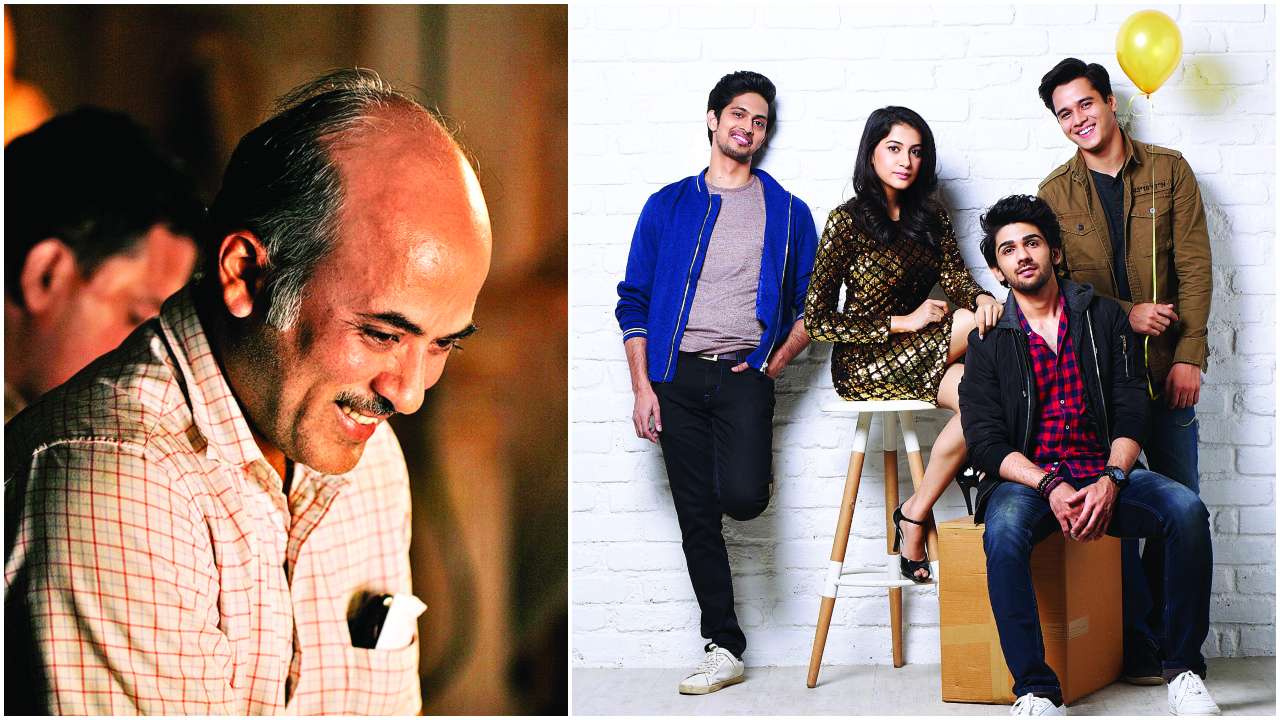
Meena Iyer (DNA; February 9, 2019)
With his quiet demeanour and soft-spoken nature, Sooraj Barjatya in a way epitomises the values that his movies espouse. The filmmaker, who has given cinegoers blockbusters like Maine Pyar Kiya (1989), Hum Aapke Hain Koun..! (1994), Hum Saath-Saath Hain (1999), Vivah (2006) and Prem Ratan Dhan Payo (2015), is known for making clean, family entertainers that cater to audiences of all ages. The 54-year-old, who has played an instrumental role in taking Rajshri Productions to the masses and classes alike, talks to us about being a creative producer for Hum Chaar, mentoring his younger son, Avnish, who will soon make his directorial debut and helming movies that he believes in...
Hum Chaar is a different take on friendship
My last production was Prem Ratan Dhan Payo (PRDP) in 2015. My films are family fare and I know my audience is 35-plus. For a while, I was thinking about making a movie where we could talk a bit about our values. But the language had to be different from mine.
Abhishek Dixit, who has been a creative director in marketing, came to me with the concept about how today, friends are more like family. These are the people who come in to stand by you. I asked him what made him think so. He wondered how many people spend time with their parents on birthdays, anniversaries… Not many of them. We’re at work and indifferent, so we celebrate by ourselves… Then he explained that in his family too, he can’t call up anyone anytime to discuss his problems or share something. If his bhabhi is busy, he has to ask her to make time for him… There is aupcharikta (a certain formality) now.
Also, when I look at my kids and nephews jo Gwalior se Mumbai aaye hain... Their parents are worried, ki inke dost kaise hain, whether they are drinking and partying. So, they are judging... but these boys say, when we lose our mobiles, these are the guys (our pals) who come with us to the police station. So, if we are not judging chacha, chachi, etc, why are you judging our friends? When you see this, you feel this is a nice subject to make a movie on. Abhishek has done it in his own way. I’m looking forward to this film.
It’s a story of pure friendship, but told in a different way. I was involved as a creative producer throughout, because I wanted the correct launch for Abhishek and the actors. Also, I was keen that I wanted one film that doesn’t have my trademark style. I was certain that the director should not follow my way. He wanted some of the old songs, but I asked him to retain his own language.
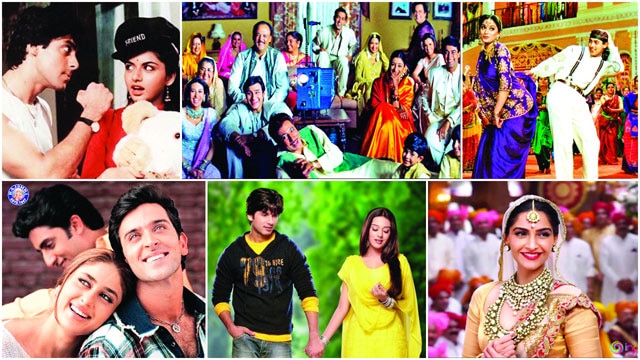
Maine Pyar Kiya; Hum Saath-Saath Hain; Hum Aapke Hain Koun..!; Prem Ratan Dhan Payo; Vivah; Main Prem Ki Diwani Hoon
Taking the tradition forward
I was supposed to start my film with Salman (Khan) and I had spoken to him, too. But my younger son Avnish, who wanted to pursue CA (chartered accountancy), gave it up. He told me he wanted to become a filmmaker and assisted me on Prem Ratan Dhan Payo (PRDP). Since the last one year, he has been working on the script and this month, we’ll lock it.
The love story is a bit complicated; that’s his zone, it’s his choice. Like my father allowed me to make films my way, I’m guiding Avnish, in case he requires anything from me, I’m always there for him.
I’m happy that both Avnish and Abhishek have kept the sur of Rajshri Productions because anyone going to see our film will be satisfied with it, that’s important for us.
I told Salman that once it’s done, I will start working on our film. That’s why there’s been some delay. But, it’s also after 30 years that we have another director from our family. So, it’s a big moment for me, for us.
I just realised that I’m more nervous this time than when I was starting my journey.
‘I must make what I believe in’
The family values remain the same, they will always be important. I made Main Prem Ki Diwani Hoon (2003), where I tried to do something different. Then I realised that you should make what you are, irrespective of what the market says. You create your film, ussi sur mein you experiment. You don’t need to ask anyone else what to make and how to do it. That’s for the next generation. I must make what I believe in and I will find my audience.
For example, PRDP is a huge hit in the Hindi belt and even on TV as it represents Bharat. In fact, all my films cater more to Bharat than India (the metros). So, I’m happy in my zone and I must be at peace. With age, I feel more responsible about how to tell these stories in an entertaining way because it’s important.
When our film releases, people say ki dadi ko dikhana hai, dada ko dikhana hai etc... The younger generation comes with that idea because they feel that they must show it to their grandparents. Even with PRDP, it felt nice to see old people coming to watch a movie, trusting that it’s a family film. It had its core values.
I told Avnish that this should be there in his film too, in his own way and space.
Hum Chaar caters to Bharat’s youth
I hope this film reaches everywhere. It’s a youthful Bharat because the director has stayed in Lucknow, Kanpur and Noida. I told him to make this film the way he led his life because that is what I trust. I told him not to worry about what works or sells but to keep the humour because he has a good sense of humour and he, himself, is a writer. If it caters to India, it is good; but, otherwise, it will surely cater to the youth of Bharat.
These are not the times to aim for certain things like how we did during Hum Aapke Hain Koun..! (HAHK, 1994) when it was like let’s make a number one hit. Having said that, I didn’t make it thinking like that, but it did become a huge hit. It’s going to be 25 years since HAHK, but I haven’t planned anything yet.
People should know that I am not a bad person, I am misunderstood-Armaan Kohli
8:11 AM

Neha Maheshwri (BOMBAY TIMES; December 11, 2018)
He has been controversy’s favourite child ever since he participated in the reality show Bigg Boss a few years ago. Known mostly for his anger issues, Armaan Kohli has been in the news often for the wrong reasons. Six months after his partner, stylist Neeru Randhawa, accused him of assaulting her and more recently, for not paying her compensation on time, Armaan is now striving to clear his image. In a no-holdsbarred chat with BT, he tells us his side of the story. Excerpts…
How did you meet Neeru Randhawa?
 Neeru and I met four-and-a-half years ago at an event in Dubai. We hit it off really well and became friends. I invited her to Mumbai and she stayed at my home for almost four years, as she had nowhere else to stay. Whoever she has met or knows in the city is through me. We started dating eventually and we were in a relationship for three-and-a-half years.
She lodged a complaint against you for assault and demanded compensation for damage and loss of work …
There was never any work. So, what loss of work is she talking about? Whatever work she got was because of me. In fact, I let her design a suit for me during Prem Ratan Dhan Payo (2015), which got rejected. Being an NRI, she can’t work here without a work permit and make money without paying taxes.
So, what went wrong in the relationship?
Everything was perfect till I asked her about the rent that came from my properties, which she was collecting. My only fault was that I didn’t ask her to give me the money immediately, as I trusted her. She has mentioned that the rent money was just Rs 60,000. But in reality, it was Rs 22 lakh. She threw a fit every time I asked her about it, and I realised that she was duping me. The cheques would come, but the cash would disappear as people were transferring it into her account. The tiff started over money. She could have talked about it, but she started fighting with me instead. My mother came out hearing her shout and she started fighting with her, too. My mother retaliated and said, ‘This is my house and not yours. You get out of this house. Which woman stays in a house for three years without being married?’ She charged towards my mother. That was the first time I saw my mom’s hands shiver. She suffers from Alzheimer’s and was scared. Honest to God, I caught Neeru by her arm and pulled her away from my mother on impulse. She toppled and hit her head. She said that I caught her by her hair and banged her head on the ground. How can that be? If I had done that, she would have hurt her mouth and nose. It was a fall injury and not because of a beating. If I had beaten her up, why didn’t it show on her? If I have beaten you up so badly and hurt your dignity, what were you doing with a man like me for four years? After she accidentally hurt herself, she said, ‘Now, I will show you, Armaan Kohli, who I am. My name is Neeru Randhawa and I will f#ck you. I will show you what I can do to you.’ It’s hurtful that somebody, whom my family welcomed as a daughter, put me behind bars.
Were you planning to settle down with her?
I had planned to marry her in a small ceremony a year ago. Thank God I didn’t, or else both of us would have been behind bars! Apparently, she was already married while she was with me and I had no clue about it. She was planning a second marriage without being divorced! I am in touch with that guy’s family as well. A friend’s relative recognised her and said that she had attended her wedding around five years ago and that her name is not Neeru. Apparently, her divorce came through only six months ago. So, she was with me for three-and-ahalf years, talking about marriage and making babies while she was already married to someone and was in touch with him.
Neeru has again dragged you to court for not paying her Rs 50 lakh as promised...
A family friend got involved in the matter and I agreed to put an end to the whole thing by paying Neeru Rs 50 lakh. I paid her the amount three days after she filed the FIR and before I was arrested. While I was expecting the issue to be resolved, she didn’t withdraw the case and made sure that I was put behind bars. In fact, she demanded Rs 50 lakh more from me while I was in jail to withdraw the case. I didn’t realise that it was her game plan. She hasn’t mentioned the Rs 50 lakh that I had already paid her. I have now decided to pursue this case and I am sure that the truth will be out soon. I have filed a case of extortion and cheating against her.
During these three years, did you ever hit her?
Never. In today’s day and age, which woman tolerates such things? If I had done it, why didn’t she come out earlier?
Another FIR has been lodged against you on December 2 by fashion designer Nadia Hayat, accusing you of verbally abusing her...
Nadia is like family. She met a person, who handles my legal work, at a party in my house. They struck a business deal and one day, she called me, saying he had failed to pay her back as promised. No transaction happened in front of me and she didn’t consult me either. She has charged me with verbal abuse and the other person of threatening and blackmailing her. I just scolded her as an elder for not checking with me before striking any deal. How am I responsible for something that happened behind my back?
Why do you have an image as someone who is physically violent towards women?
If any woman claims that I have beaten her up, why didn’t she stand up earlier? The police and law have always been around. I am in touch with my exes. Tell me, why would they be in touch with me? I am boisterous. People have seen me get angry on Bigg Boss, but they have also seen me stay calm and even have fun. Break-ups don’t happen on a good note. They are always ugly. It’s never one-sided, but there is no raising hand in this. It could be a verbal argument. I am a no-nonsense man, I don’t give or take nonsense.
Do you have temper issues?
I used to have temper issues, but I have tamed down a lot with age. There is nobody in the world who can say that Armaan fought for his own problems, I have always fought for others. Everybody has temper issues. Some people control it while some openly talk about it. I openly admit it and thus, become the bad one. Everybody should have aggression, but one needs to channelise it in a positive way. I am doing it now, I don’t know if it’s late, but then it’s never too late.
There is a perception that your temper issues are responsible for your career not taking off the way it could have...
Everything that’s written or spoken about me is not correct. I hope the media gives somebody a chance to speak before they write about him. I have been blamed for something that I have not done. The six months have been difficult, but it made me stronger. I ran around trying to clear my image. If I am wrong, why would I do that? I just regret choosing wrong people. My priority in 2019 will be to choose the right kind of people and not have any negativity around. It’s not that I have not been getting acting offers. I am not taking up offers as they don’t excite me. I don’t need to work to feed myself. I have rejected many films. But now, I am taking up work in South. I am grateful to Salman (Khan) bhai. He called me when I was sitting at home doing nothing and told me to be ready to meet Sooraj Barjatya. I am happy I did a Salman Khan film. During my heydays, unfortunately, some bad films happened. I don’t blame anyone but myself for my career. Blame it on my bad judgement or stupidity. However, I have no regrets. Today, I just want ki naam achha ho jaaye... I have lost two projects because of the case.
What are your future plans?
2018 has taken quite a toll on me, but it has made me stronger than I was. I hope 2019 is good for me. I will make sure that I don’t get involved in any mess. It’s going to be my work year. All these issues have taught me a lesson in life – to be more careful of what I step into. I will ensure that nothing tarnishes my image or my family’s name from now on. People should know that I am not a bad person, I am misunderstood.
Any plans of settling down?
If I get the right girl, I want to settle down. I wanted to settle down last year. Now, I am waiting for someone who is understanding and respects old people; who knows how to handle a house and a man. Somebody who won’t use, abuse or disrespect me or my family. I am sure someone right is there in this world for me. At the moment, there is nobody in my life. If I am in a relationship, I will talk about it.

Dhadak among the all time top television premieres
2:20 PM

Box Office India Trade Network
DHADAK has put up an insane showing in its first screening on television. The film has topped the 1.8 impressions mark which is the fifth highest ever after BAAHUBALI 2: THE CONCLUSION, PREM RATAN DHAN PAYO, BAJRANGI BHAIJAAN and BAAHUBALI: THE BEGINNING. It is easily the best of the year beating GOLMAAL AGAIN.
The numbers are crazy and this film had a different demographic than most other films at the box office where it was the youth audience outside the metros driving the film. Normally youth driven films in the industry today are for metros mainly. Here it was youth of places like Jaipur, Surat and Patna driving the film. A huge audience in these places are unable to watch in theaters due to the cost of tickets which has meant a huge television audience.
DHADAK is also the highest premiere screening for Dharma Productions though the biggest film remains KABHI KHUSHI KABHIE GHAM which still picks up 25-30 lakh impressions when screened with a correct timing and this is almost 17 years after release. The top films on television of all time are as follows. The numbers are impressions which are the number of television sets viewing the film.
1. Baahubali 2: The Conclusion - 2,60,54,00,000 (Sony)
2. Prem Ratan Dhan Payo - 2,51,19,00,000 (Star)
3. Bajrangi Bhaijaan - 2,37,45,000 (Star)
4. Baahubali: The Beginning - 2,07,77,000 (Sony)
5. Dhadak - 1,83,16,000 (Zee)
6. Golmaal Again - 1,63,52,000 (Star)
7.Dangal - 16,25,40,000 (Zee)
8. Baaghi 2 - 1,61,45,000 (Star)
9. Judwaa 2 - 1,52,66,000 (Star)
10. Tiger Zinda Hai - 1,37,04,000 (Sony)
Salman Khan said, 'I hope from this day onward, you never have a day off'-Aayush Sharma
8:08 AM

Chaya Unnikrishnan (DNA; September 27, 2018)
After assisting on films like Bajrangi Bhaijaan and Sultan, Aayush Sharma is gearing up for the release of his acting debut LoveYatri. With Salman Khan launching him, the newbie couldn’t have asked for a better beginning. He is aware of the privilege and candidly says, “If you take away ‘SKF’ from my film, you wouldn’t have talked to me or interviewed me.” And, while his fate at the box-office will be decided on October 5 when the film releases, Aayush has already caught the audience’s attention for his dancing skills in songs like Rangtari and Chogada. Here, he talks about making the transition from an assistant director to an actor, Bhai’s advice to him and more.
Did you always want to be an actor?
No. I never thought I would be an actor. When I came to Mumbai to study at Jai Hind College, I thought I would open a restaurant, but my friends would say I should be an actor. At that time, I thought of doing a prime-time TV show, as it will be a good way to stay in Mumbai and my parents could watch me on the the small screen back home. But I never went for auditions to get work. I was staying in Bandra and happened to meet Arpita (Khan), then Sohail (Khan) and Salman bhai. They, too, told me I should try for acting as they believed I had the potential.
Was that when you started training?
I had neither participated in the school assembly, nor was I into any theatre group. To be honest, I was too shy. So, I had to start from ground zero. I started assisting on films like Bajrangi Bhaijaan (2015), Prem Ratan Dhan Payo (2015), Sultan (2016) and Tubelight (2017). That was really an eye-opener on how movies are made. I also learnt the technical aspects.
Once you have assisted on a movie, you start respecting the hard work that goes behind making one. When Bajrangi Bhaijaan became a blockbuster and won critical acclaim, somewhere I felt it is my film. I thought I should be a part of this profession and do one movie that people will remember me for.
How did LoveYatri happen?
I was assisting on Sultan where Abhiraj (Minawala) was the first AD. He wanted to make his directorial debut and was working on a film written by Narenbhai (Bhatt). He narrated LoveYatri’s idea to Salman bhai saying I could do the film. Bhai liked the plot and asked him to work on it. During Tubelight, I heard the script and I loved it. I found it to be a good blend of content and commerce. You can’t control the box office, but you have to be proud of the content you are going to bring out. They were looking for a studio to produce it when Bhai said, ‘I want it to be an SKF film’.
What tips did you take from Salman Khan?
Every time I was on Salman bhai’s set, I tried to ask him about acting and he would say, ‘Acting is a reflection of what you are in real life, the day you try to act, you will ham’. He told me to keep observing and marking his work before his take. He did not even come on the sets on the first day of my shoot.
Instead, early in the morning at 7 he sent me a message saying: Feel every line, every emotion, every character. You don’t need to be Aayush anymore, you need to be the character. For me, it was too much to process! All these years, he didn’t give me any advice and suddenly so many things (laughs).
How was your first day on the sets?
I was excited, but also nervous. I was still getting used to the idea that from an assistant, I was now an actor. It was new, more so because many people feel that I am here because I am related to someone. Now, I needed to give such a shot that the ADs say, ‘He deserves to be here’. That was playing on my mind along with the advice that Bhai had given me. But it was a smooth day, we started with the song Tera Hua. At the end of the day, when I messaged Bhai about it, he texted back a sweet message saying, ‘Insha Allah! Beta best of luck, I hope from this day onward, you never have a day off and spend every day in front of the camera’.
With all the talk about nepotism, do you feel you are the privileged one?
I believe there are some people whose talent hasn’t got due credit and are waiting for a platform like this. I am lucky to have it, but more than that, I am fortunate to have the guidance of someone experienced. Many people are not guided properly and are wasting their time doing something else. There is also a difference between the box-office collection of debutants who have no i connections as opposed to those who have them. If a film with newcomers doesn’t have a big banner attached to it, it doesn’t get marketed well. Realistically, they don’t get that kind of publicity or screens. If you take SKF away from LoveYatri, who will talk to me or interview me? Of course, it helps. An outsider has to figure his own way out.
At the same time, I am as new and as raw as Warina (Hussain, his co-star) is. I was not born into a film family, but because I have a certain background, people will look at me, and say, ‘Let’s criticise him’. But in case of Warina, whatever she does, they will say, fine, it’s her first film. So, it works both ways, there are advantages and disadvantages. My only hope is that when people see the film and my work they say, ‘He deserves to be an actor’. That will be my victory.
Usually, newcomers tend to hide their marriage or family from the media as it may affect their image...
My wife has been my support system. I got married into a famous family, and I don’t think hiding your wife or child will help in your career. If you are good at your work, married or single doesn’t matter. At the end of the day people will look at your work. My family is my motivation. I believe Arpita is known as Salman Khan’s sister, I want to work hard enough that she is proud to be called Aayush Sharma’s wife. My family is the source of my strength.
Were you upset when the title was changed from LoveRatri to LoveYatri?
I have been living with the title LoveRatri for the past one year, so when they changed it I said, ‘No, that is my identity, you can’t take it away from me’. But I respect people’s emotions, it’s not important what the film is called. I have four hit songs, people know me as the Chogada boy, not LoveRatri boy. The producer’s intention is to launch three careers with the film, so when some people peacefully told us to change the title before it became a media spectacle, we did it. We made it with a lot of pyaar and hope that pyaar continues.
Sonam Kapoor-Anand Ahuja sangeet: Karan Johar to dance to the title song of Prem Ratan Dhan Payo?
8:12 AM

Upala KBR (MID-DAY; April 16, 2018)
After choreographing an on-screen wedding number for Sonam Kapoor's Veere Di Wedding last week, Farah Khan is now handling the reins of the off-screen shaadi too. As rumours about Kapoor's impending nuptials with long-time boyfriend Anand Ahuja get stronger, it has been learnt that Khan is supervising the actor's sangeet. That's not all — Karan Johar will apparently put on his dancing shoes for one of the special acts of the sangeet.
Says a family member, "Karan and Farah have been friends with the Kapoors for many years. Sonam Kapoor's mother, Sunita requested Farah to choreograph her daughter's sangeet. Farah immediately agreed and told Sunita that it'd be her wedding gift to the bride. Sangeet rehearsals with family members have already started at Anil Kapoor's Juhu bungalow since last week."
That Johar is close to the Kapoors is known — the filmmaker has been entrusted with Boney Kapoor's daughter Janhvi's Bollywood launch. Not surprising then that he has a special act lined up for the evening. "Karan is dancing to the title song of Sonam's Prem Ratan Dhan Payo," reveals the source.
Meanwhile, the family is also working out the wedding dates. "The shaadi could take place later this month or in the first week of May. The nuptials will be an intimate affair with immediate family and close friends. They are also considering having the sangeet on the same day as the wedding. A grand reception with their industry friends is also on the cards."

I didn't even know that I was so famous, or my voice mattered this much-Swara Bhasker
10:11 AM

Ahead of the release of her drama, Veerey Di Wedding, Swara Bhasker reflects on her career, and moving from small-budget to commercial films
Mohar Basu (MID-DAY; February 18, 2018)
Connecting with Swara Bhasker for this interview, her open letter to Sanjay Leela Bhansali, slamming his glorification of jauhar in Padmaavat, invariably steers the conversation. Referring to her act of voicing the opinion of many as she chided the celebration of a regressive tradition, I tell her, "It was a bold move!" Pat comes her reply, "And an incredibly stupid one too, I hear..." We laugh at the plight of an industry that doesn't encourage debate around art, even though art, in its truest sense, is debatable. Yet, Bhasker promises that Bollywood has more good than is visible. In a chat with mid-day, she talks about why she isn't agitated with the reaction to her letter, being shrugged off by award gala organisers despite delivering acclaimed acts, and how her next, Veerey Di Wedding, aims to change the way films led by women are perceived. Edited excerpts from the interview:
What has been your take away from the controversy that attached itself to your open letter to Bhansali?
I didn't even know that I was so famous, or my voice mattered this much. Although in a twisted, warped way, it did remind me of the reach I had. However, the Bollywood I know deserves more credit than we give it, because the hatred I received for writing that letter came from social media users, not the industry. Bollywood braves too much criticism. It has accepted me the way I am, and given me the space to thrive. Fundamentally, I have fierce opinions. And if I have them, I must be prepared to deal with trolls. In Bollywood, however, everyone is only trying hard to hold their ground, despite all odds. So, this is not the industry that must be blamed.
Do you find it difficult to be outspoken?
I have to be careful about the things I say because it will be up for scrutiny. Words are twisted out of context to imply something else. This is also probably the reason behind artistes' hesitation to back issues that they feel strongly about.
Your next, Veere Di Wedding, is being helmed by four women. What change do you believe this film will being about?
Primarily, I hope it changes the way people perceived films that are helmed by women. Four women coming together for a film does not imply it will be another Sex And The City. This is not a chick flick. It's a story of women, their flaws and personal journeys. Not every film featuring women must have a social message or a cause to promote. This one is about relationships. I've enjoyed working with the cast [Kareena Kapoor, Sonam Kapoor and Shikha Talsania]. I have worked harder on this film than I have on any other. I hope it changes the way films featuring women as protagonists are viewed in Bollywood.
How do you think the industry has changed since 2010, when you debuted with Guzaarish?
It is now more accepting of outsiders. I've had a wholesome journey. I have seen how difficult it is to make it, yet learnt how easy it can be. My journey has been easier than that of several others. Given that I am well educated, I never lacked confidence. I didn't have financial constraints either. Also, in this industry, talent nahi chupta. And that understanding is relieving. It's interesting to see how the palette of the industry is changing today. Scripts are different, characters are distinct, and carefully created. The role of a hero's sister, the kind I played in Prem Ratan Dhan Payo (2015), demanded more from me than merely tying a rakhi to my brother [played by Salman Khan]. A single scene, a single line can make your life. I remember, when I entered the industry, among the first people I met was Naseer sir [Naseeruddin Shah]. He asked me, "Do you love acting so much that you'll die if you don't do it?" I thought, 'That's dramatic. Who dies if they don't act?' But, now I know what he meant. This industry demands so much from you that unless you have conviction, a passion to survive, you won't. Anything and everything can drive you nuts. I'm ecstatic that my craft is valued today.
Despite being among the most acclaimed actors for your role in Anarkali Of Arrah last year, you didn't receive many awards. Is that upsetting?
Awards are important for someone like me, who has entered Bollywood without any backing from a bigwig. So, an award is a validation that I, a newbie, am getting my due when I perform well. But, they aren't deal breakers for me. Apart from the opinion of the jury, several factors go into determining the winner.
Do you think box-office figures are one of them?
Yes. See, I don't think [good] box office figures are signs of appreciation. Great content is celebrated at the BO, but often, so are poor films. Associating economics with a movie is confusing. Anarkali was a passion project. We struggled to release it. I went to every big studio to get the backing. I don't blame them for not producing it because, sometimes, businessmen can't see content objectively. For me, the film was a hit. It released in a pithy 300 screens at first, and still won hearts. I got messages on social media. Passersby at airports stopped to talk to me about it. So, awards or not, my validation came from the audiences' reception. I hope it marked the beginning of a trend where content-heavy films that don't feature stars are also backed by [big] producers.

Nobody offers me flower pot roles anymore-Sonam Kapoor
8:41 AM

Nayandeep Rakshit (DNA; January 14, 2018)
Sonam Kapoor is one of the few actresses who celebrates her unabashed honesty and sartorial choices with equal panache. As her forthcoming film, Pad Man, gears up for release on January 25, the actress talks about the social drama and how the perception towards women is changing at large.
‘I VEER TOWARDS UNTOLD STORIES’
After Bhaag Milkha Bhaag and Neerja, this is the third time Sonam will be seen in a film that is based on a real-life story. She admits that she gets drawn ‘towards untold tales’. Sonam says, “These are stories that the audience doesn’t know about. I’m conscious about telling tales that will resonate with them. It has to inspire and motivate everyone to be better human beings. That’s how I look at things when I sign such films.”
NOTHING LIKE NEERJA
While Neerja was about Neerja Bhanot, a model and purser who sacrificed her life while protecting 359 passengers, Pad Man is about Arunachalam Muruganantham, a living visionary. Sonam agrees it’s easy and difficult in its own ways. She says, “Having the person around helps hugely. With Neerja, it was completely different because we had photographs and people who could be reference points but the person, in question, wasn’t in front of us. In Pad Man, you can see Akshay Kumar sir capturing the spirit of Arunachalam because he’s right there. So, in a way, it’s easier. But then it’s also tough because the comparisons are immediate.”
‘I WOULD NEVER REFUSE A FILM LIKE PAD MAN’
It’s easy to presume that a star is apprehensive to play a role with limited screen time but Sonam exclaims that she doesn’t plan her career in a typical way. About what prompted her to give a nod to Pad Man, she says, “I’m a huge fan of R Balki and it’s such a huge privilege to work with him. He’s an amazing person and an incredible director. He is somebody who wants to tell stories that make a difference. So, when he called me, I was super excited. After hearing the narration, I thought to myself that he had offered me a fantastic role. There was no way I would have refused a film like this.”
SIZE DOESN’T MATTER
At a time when her contemporaries are shying away from doing films that offer them less screen space, Sonam doesn’t deem it as a risky move. “Why should it be a risk? It’s any day better than doing a movie with a leading actor where you have three songs and two scenes. At least I’m relevant in these films (refers to Pad Man). The size of the role doesn’t matter; it has to be meaty,” she exclaims. “Why should screen-time matter when your role adds value to a story? I was there for 15 minutes in Delhi 6 and had three-four scenes in Bhaag Milkha Bhaag but they resonated with the audience because they were integral to the film. They weren’t there just for fluff,” she adds.
MEN ARE RIDICULOUS SOMETIMES
Pad Man aims to increase awareness about menstrual hygiene, which is considered a taboo subject in India. But with taxes implied on sanitary napkins, calling it an item of luxury more than a necessity, it’s called for a raging debate. Moreover, some countries distribute condoms for free but charge taxes on sanitary pads. Appalled at such state of affairs, the actress says, “It’s because most men are stupid and they are making such ridiculous decisions. They feel a condom is more important than women having sanitary napkins. So, a film like Pad Man is relevant because there are only 12 per cent of women in India who have access to sanitary pads and understand menstrual health. That is scary.”
NEED TO START A DIALOGUE
Akshay Kumar’s last film Toilet - Ek Prem Katha (TEPK) had brought in a change. Will Pad Man do the same? Sonam asserts, “I hope any film that I do starts a dialogue about something that’s required. I hope Pad Man is such a movie. I want it to entertain because a subject like that needs to reach a wider audience. And when it does, I hope it starts a conversation. We’ve already started doing that by our promotions, so it’s important.”
DON’T CARE ABOUT IMAGE
There’s hardly an A-list actor doing what Akshay has done in the film (wearing a panty with sanitary napkin in it). Although many would call it ‘unmanly’, Sonam takes a staunch stand against such pre-conceived notions.
“The very fact that he is doing something like this is laudable and amazing. How many actors will take up such a role and do that scene? It will make a huge difference as Akshay sir is a mainstream star. And it should. He’s backing a film like this, which is produced by his wife and stars two other staunch feminists like Radhika Apte and me.” Many would and have shied away from such roles, to maintain a certain prototype of a star. But the leggy lass says she doesn’t have ‘such trappings of stardom’. “I honestly don’t give a s**t about my image! I just believe in doing the right thing and the correct films. Which is why what people think of me is their problem, not mine.”
NOTHING’S TABOO ANYMORE
Movies such as TEPK and Shubh Mangal Saavdhan have explored topics that have hitherto been unspoken about. Sonam says such movies are the need of the hour. “I feel it’s important for actors and filmmakers to talk about subjects and touch upon things that will affect change in society. Whether it’s taboo or not, it shouldn’t deter you from doing what you really want to do. That’s why you need to make it a bit more entertaining. Which is also why an Akshay Kumar needs to come in. Even though Pad Man is a story about menstruation and an amazing man who brought in a revolution, it’s also a love story. That’s something we shouldn’t forget.”
THINGS ARE CHANGING SLOWLY
Sonam points out that the perspective towards women is changing but it’s happening very slowly. “I wish it was faster and more relevant so that I am around to see the complete change. But I think we are at least a 100 years behind Hollywood,” she says.
Recently, the actress had claimed that producers and investors weren’t willing to invest as much money in her film (Veere Di Wedding), compared to male-centric movies, as it features four actresses. Is that changing too?, we ask. “I don’t know if they will give us as much because you cannot ignore the fact that there’s still a massive pay disparity, which is insane. It’s important to get what you are worth. Otherwise, there needs to be a staunch stand for what you believe in. And women need to step up for sure,” she responds.
NO NEUROTIC ROLES
With films like Raanjhanaa, Khoobsurat and Neerja on her list, Sonam is not keen on doing nonsensical films anymore. She laughs, “People don’t come to me with neurotic roles anymore. Nobody expects me to do a flower pot role. And I love that because I don’t want to waste my time listening to something that’s irrelevant and I wouldn’t do.” Does that mean she’s against the idea of a masala blockbuster? Pat comes the reply, “No, I’m not averse to the idea of a masala film at all. I’m against ridiculous roles for actresses. At the same time, I’m open to doing a film like Prem Ratan Dhan Payo where I get to work with some amazing commercial directors who give women the gravitas that they deserve. So, if someone offers me something of that magnitude and dignity, then why not?”
CAN’T JUDGE OTHERS
She also explains that it’s wrong to judge heroines who are taking up such roles in a commercial film. “They are doing whatever they think works for them. My job is to do films where I can make a difference and which I can be proud of. What anybody else does is not something I can judge because again, none of us know the situation they are in.”
Subscribe to:
Posts (Atom)