Showing posts with label Pravin Bhatt. Show all posts
Showing posts with label Pravin Bhatt. Show all posts
30 Years of Hum Hain Rahi Pyar Ke: Only assistants worked on Ghoonghat Ki Aad Se-Juhi Chawla
8:55 AM

Kavita Awaasthi (HINDUSTAN TIMES; July 23, 2023)
One of the biggest highlights of Hum Hain Rahi Pyar Ke (1993), which completes 30 years of its release today, was the song Ghoonghat Ki Aad Se, composed by Nadeem-Shravan. Actor Juhi Chawla recalls that she and co-actor Aamir Khan memorably joined forces with just assistants for the filming of the song in Udaipur, Rajasthan.
“We had shot the film and just this song was left. I don’t know why but only the assistants turned up on shoot. Mahesh Bhatt (director), Tahir saab (Hussain, producer), Pravin Bhatt (cinematographer), Saroj Khan (choreographer) — everyone sent theirs. The kids were so talented. Sometimes, you can’t explain how magic happens,” the actor recalls, adding that Khan was “very hands-on while shooting” with his suggestions, as it was his father’s production.
“In one of the scenes, he told me to jump before I started running, to give the scene a comic feel. He kept a poker face in certain scenes, knowing if he did that, the situation and all of us acting would look funnier,” she signs off.
Hemant Chaturvedi's upcoming documentary is about the prominent cinematographers of the bygone era
8:28 AM
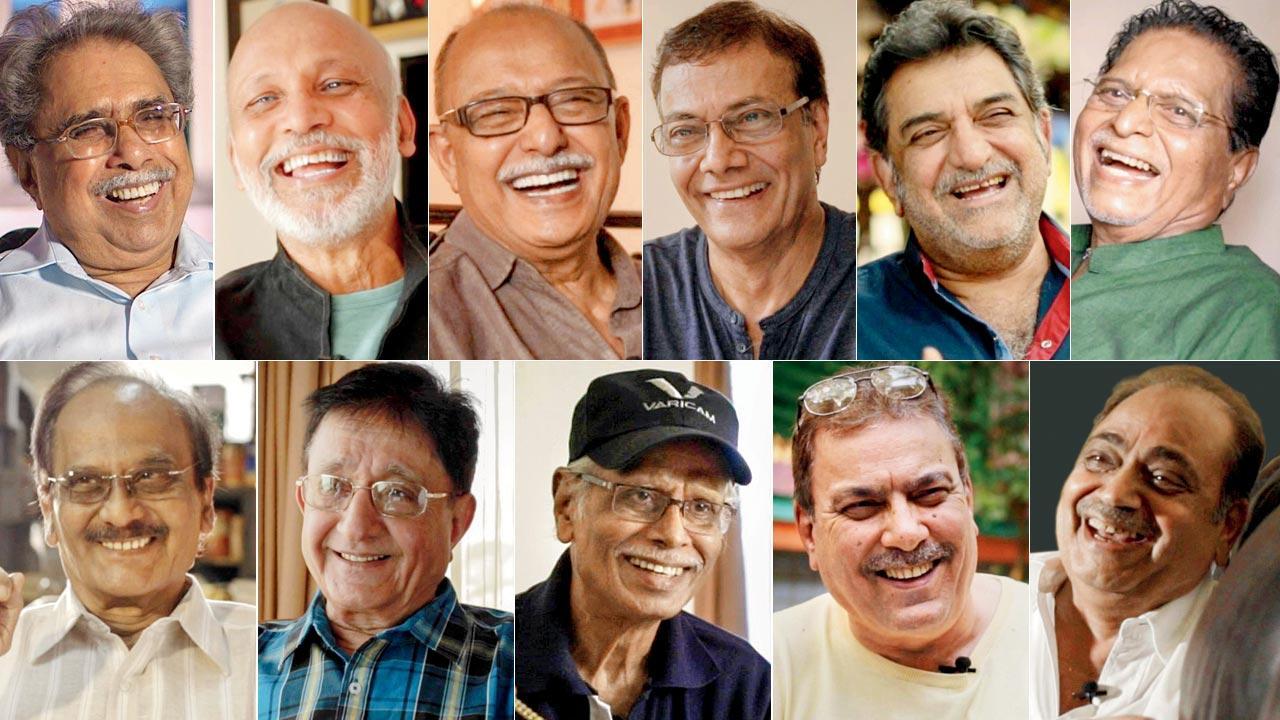
Peter Pereira, A K Bir, Barun Mukherjee, Jehangir Choudhury, Baba Azmi, Ishwar Bidri, Kamalakar Rao, Pravin Bhatt, Dilip Dutta, Nadeem Khan and Sunil Sharma, who all feature in the documentary. Pics Courtesy/Hemant Chaturvedi
Leaving the movies as a disillusioned cinematographer, Hemant Chaturvedi attempts to find answers among the veterans of his fraternity in a new documentary
Jane Borges (MID-DAY; January 16, 2022)
Cinematographer Hemant Chaturvedi’s “peculiar relationship” with his profession began somewhere post 2000, when he made his transition from television to the movies. This was the time when Chaturvedi had, unbeknownst to himself, become a tour de force, spearheading projects, which would set the tone for new age storytelling in Bollywood. There was Ram Gopal Varma’s Company (2002), followed that same year by Vishal Bhardwaj’s children’s horror comedy Makdee and Maqbool (2004). Aparna Sen’s critically-acclaimed National Award-winning 15 Park Avenue (2006), which explored the relationship between a young woman suffering from schizophrenia and her divorced sister, came soon after.
Despite such an enviable oeuvre that only grew with time, Chaturvedi’s relationship with cinematography became more and more complicated. “That eventually culminated in me taking a decision to move on,” he shares. “I realised that the nature of the beast was such that it went against my fundamental [values], and that I was not going to change. I, for some reason, came to be known as the enfant terrible of cinematography.”
Looking back, he thinks such a narrative suited many in an industry that was becoming cut-throat. “And so, for someone like me, who was not a competitive person, work became scarce,” he adds. “I remember having to wait for two or three years for my next offer. This was absurd. It’s a horrible feeling to wait for your next job—never knowing when it’s going to come to you. You end up not doing so many other good things, because you do not want to start that in case something else turns up.”
After a lot deliberation, Chaturvedi decided to call it quits in 2015—the poor box-office run of the Akshay Kumar and Sidharth Malhotra-starrer Brothers, produced by Dharma Productions, cemented this decision.
The disillusionment notwithstanding, Chaturvedi, who by then had begun experimenting with still photography, continued to have several unanswered questions about his profession, which he had dedicated nearly three decades of his life to. “I couldn’t understand how [when] someone worked with so much commitment, passion and honesty, what is that one thing that takes away the joy of being successful and engaging in better work.”
It’s around this time that he embarked on a documentary project, which would take him more than six years to realise. “In the late 1980s, when I was working as an apprentice, I had reached out to many senior cinematographers for work,” says Chaturvedi.
Jehangir Choudhury, whom he had met in 1985, while assisting on a Merchant Ivory production, was the first real inspiration. “I was still studying at St Xavier’s College [Mumbai] then… Seeing him create all this magic from behind the lens, got me really excited,” he recalls.
After returning from Jamia Millia Islamia with a mass communications degree, he tried meeting many of these cinematographers again. “But none of them had the space to hire me as an assistant. Govind Nihalani had accepted my request [in 1991], but just two weeks before the start of the film, I got a call saying that he was giving the opportunity to [playwright] Vijay Tendulkar’s son. I missed out on that, too.”
But, this was also the era of the television boom, and Chaturvedi eased into it seamlessly. “I ended up being a 100 per cent self-taught cinematographer. I had no choice, but to teach myself.”
His only regret was that he couldn’t work with any of them. The opportunity to understand their body of work only came only after he made the switch in his career. “I thought why not reconnect with these people whom I had come to admire, speak to them about their journeys, compare it with my own, and see what emerges from these conversations, which would answer every query that I ever had. I was hoping that it would help me understand the purpose of my own life.”
Between December 2015 and January 2016, Chaturvedi met with 14 elderly veteran cinematographers, including S M Anwar, Dilip Dutta, Pravin Bhatt, Kamalakar Rao, Baba Azmi, R M Rao, Ishwar Bidri, A K Bir, Nadeem Khan, Sunil Sharma, Barun Mukherjee, Peter Pereira, as well as Nihalani and Choudhury, doing extensive video interviews on his DSLR, and gathering nearly 40 hours’ worth of footage.
The videos, which sat in his hard-drive for the longest time, are now part of a soon-to-release documentary titled Chhayaankan: The Management Of Shadows.
“All of them had a very interesting trajectory. Some of them had cautiously withdrawn and given up, some had moved on to do other things, some were still doing the odd shoots here and there, while a few were in a state of denial that their career was over. This acceptance or change in their fate had an effect on their personalities, of course,” he says.
Chaturvedi doesn’t have a real excuse for delaying the documentary, except that he got busy with his other projects. “But in December 2020, when I heard that Ishwar Bidri passed away [at 88], and that Nadeem Khan was in coma for the longest time, I felt this huge sense of guilt. I realised that if this film wasn’t seen by the people [who were cast] in it, it would be a matter of tremendous shame,” adds Chaturvedi, who had spent a significant part of 2019 and 2020, including the lockdown, travelling the length and breadth of the country, documenting single-screen theatres.
Though he had a “gigantic inventory of unfinished work, this one took priority” and in June 2021, Chaturvedi began work on editing the film, shuttling between Mumbai and Pune, where his editor Suchitra Sathe, an alumnus and faculty member of the Film and Television Institute of India (FTII) was based.
While revisiting the original videos, he realised that the film, which has been pared down to 138 minutes, is not just about the journey of these cinematographers in the movies, but also their personal stories, pet peeves and relationship with the crew they worked with. “Now, I feel I know them more intimately, and I am losing them one after the other… just knowing that has been emotionally draining. I also often wonder had I ever got to work with any of these people, would my work have been different in any way?”
Between the 14 of them, they’ve shot nearly 750 films and 10,000 commercials. “That is the kind of span one had in that era. It’s just astounding to see how much work they did then. Pravin Bhatt alone has shot 120 feature films. He started in the black and white era, and ended with his son Vikram Bhatt’s film around eight years ago. Then there is R M Rao who has shot 4,000 commercials; there was a period between the 1960s and ’70s, when if you went to the theatre, you’d only see commercials shot by Rao on screen,” says Chaturvedi.
He says that the reason why many of them managed to hold on to their careers was because it was “an era of very long relationships”. “People would work together for much longer, and there was a certain loyalty and camaraderie then, which kind of eroded in the mid-1990s, when there were just too many people and too much work.”
One of the issues that he has dealt with in the film is the period when the film industry’s visual standards, he feels, had “dropped to zero”. “Most of the scenes would be shot in these bungalows with the curtains drawn. The only difference between a day and night scene, would be if the decorative lamps on the set were switched on or off… it was as bizarre as that,” he shares, explaining that this trend was observed after the studio system fell apart. “When that happened, actors started signing on multiple films, and because they didn’t have the time to come for shoots, a movie would take years to complete. A producer, who couldn’t keep a set standing for that long, would then move the shoot to a bungalow. That’s how these started becoming popular.” Some cinematographers submitted to the circumstances.
Among the more interesting journeys was that of Anwar, who is now in his 80s. “Anwar saab had a diploma in radio from an institute in Pune, and had been working for a Parsi company, where his job was to clean sockets and cables. Later, he was shunted to the camera department of the same company. His work got him to Bombay where he joined as a camera attendant at Eagle Films for a salary of Rs. 25 per month,” says Chaturvedi. Anwar was spotted accidentally by renowned cinematographer Dwarka Divecha, who asked him to do close-ups of a fight sequence they were shooting. On seeing the rushes, an impressed Divecha called on Anwar, only to learn that he had perfected his camera skills shooting birds on the terrace. Anwar went on to work as camera operator for Sholay, before helming Ramesh Sippy’s Shaan (1980).
Chaturvedi is planning to showcase his film in the festival circuit soon. He is also hoping to hold a private screening for cinematographers, especially those who have made it to the film. Each of the interviews is being edited as a standalone interview, which he intends to upload on YouTube. “I wanted to say how tortured I feel, sometimes, because I missed so many people who passed away in the last seven to 10 years prior to 2015, when I filmed these interviews… I wish someone before me had thought of this and documented so many people, who are gone forever. [Having said that] I want this to be a joyous celebration of people from an era where they were overachievers and under publicised, unlike our era of underachievers, over publicised.”
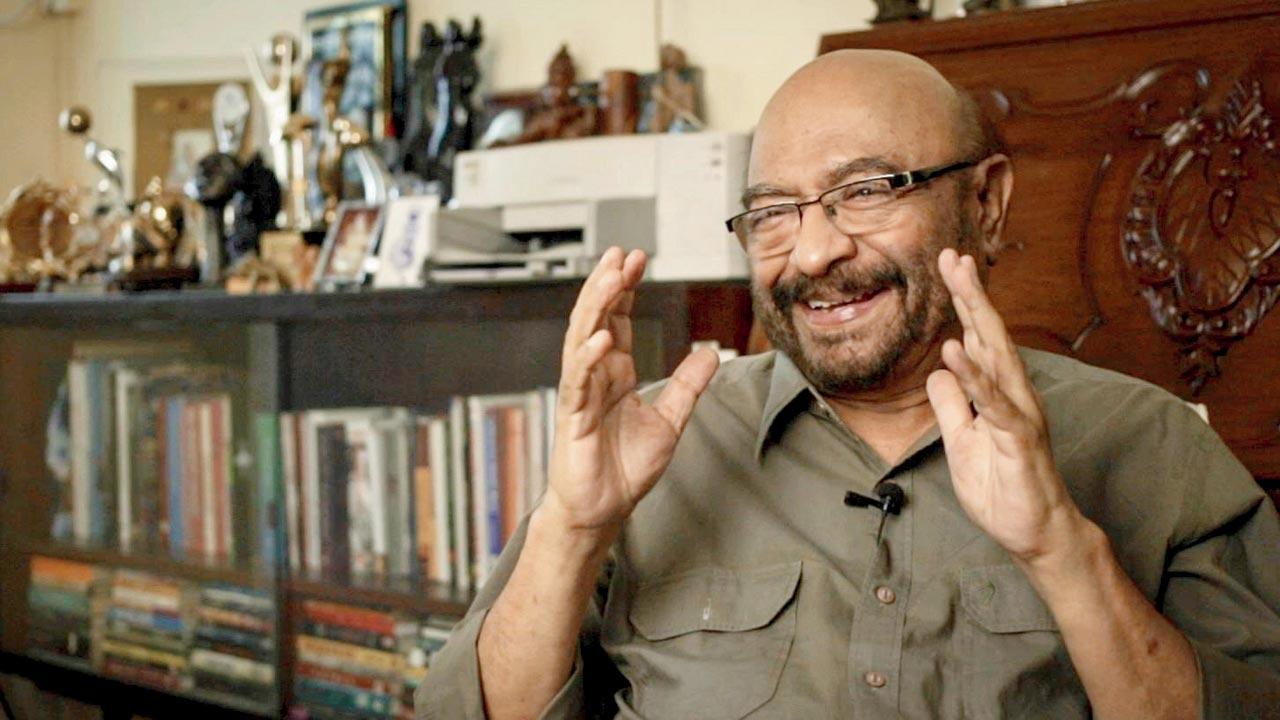
Director-cinematographer Govind Nihalani, whom Chaturvedi missed an opportunity to work with in 1991, is also part of the film
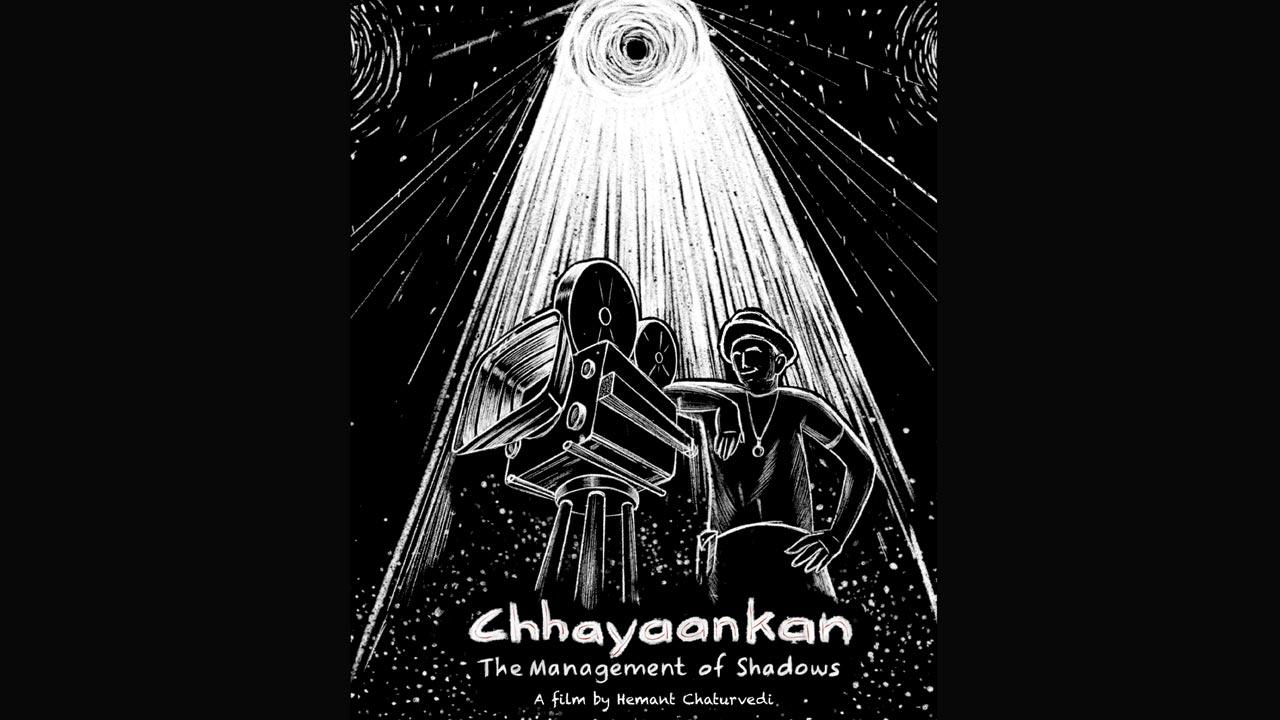
The poster of the documentary, Chhayaankan: The Management Of Shadows
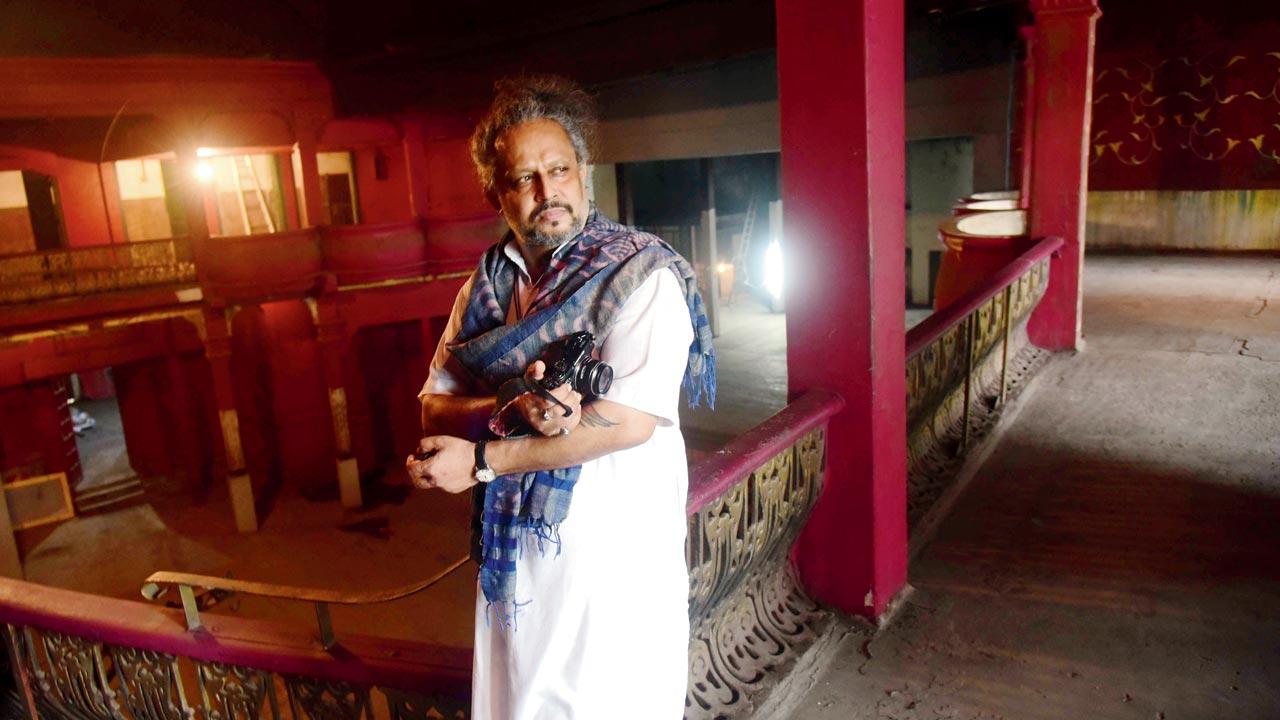
Photographer Hemant Chaturvedi recorded the interviews between December 2015 and January 2016, editing the film only last year. Pic/Suresh Karkera
Baiju Bawra: Of Bharat Bhushan, the real Baiju in Mangeshkar family and a lot more...
6:55 AM

Roshmila Bhattacharya (MUMBAI MIRROR; January 25, 2018)
He’s played Kabir and Krishna, Mirza Ghalib, Kalidas and Chaintanya, but for me Bharat Bhushan will always be Baiju who after defeating Tansen in a musical duel, allows himself to be swept up in love. I saw Vijay Bhatt’s 1952 film, Baiju Bawra, as a teenager and though I know little about ragas, “Ghanana Ghanana Ghana Garjo Re” and “O Duniya Ke Rakhwale” still resonate.
“I remember my father coming home with tommes full of notations and raagas for a six-month research. He’d sit with Naushad saab through the night working on the music,” reminisces Bhatt’s son Pravin Bhatt who was in school then and would be packed off to bed early. Naushad had impressed with his compositions in Rattan, Anmol Ghadi, Shahjehan and Deedar, but many wondered if he’d pull off a light classical score and endear it to the masses. It bagged him a Filmfare Award for Best Music Director.
Pravin Bhatt informs that Dilip Kumar had been approached to play Baiju and Nargis for Gauri. He turned down the offer—a decision he later regretted—while she was away in Europe and unavailable. Vijay Bhatt then turned to another tragic hero, Bharat Bhushan, and Meena Kumari whom he’d launched as a seven-year-old in Leatherface.
No one is sure if Baiju existed. Pravin Bhatt recalls the legend of Bakshu (also called Manjhu and Bacchu), a musician in Bahadur Shah’s court who after the Sultan’s defeat, found a patron in emperor Humayun. Another legend revolves around musician Baijnath Mishra from the court of the Raja of Chanderi who could make flowers bloom, bring rain and light oil lamps with his voice. He turned insane after losing his family, and Tansen, another disciple of Swami Haridas, cajoled his own patron, Raja Ramachandra Baghela of Rewa, to organise a contest, hoping Baiju would come. He did, hypnotising a deer and melting a marble slab with his renditions. Maybe the filmi Baiju was an amalgamation of the two, but a real Baiju exists, Lata Mangeshkar’s nephew who owes his name to the character.
“In keeping with the Mangeshkar family tradition of a ‘Nath’ appendage, I was named Srinath soon after I was born, but my father (Hridaynath) was not happy and while looking for an alternative, decided on Baijnath, Baiju’s real name in the film,” smiles Baiju, a singer-composer in his own right.
He recalls seeing the film when he was seven, the first video cassette his aunt got from London. The elders would watch it every week, raving about Ustad Amir Khan saab’s “Sargam” and DV Paluskar and his “Aaj Gawat Man Mero Jhoomke”. Baiju enjoyed his father’s bhajan, “Sacho Tero Naam Ram” with Mohd. Rafi, and his “Ho Ji Ho” cries for child actor Master Rattan from the riverbank, bemused at how young his father sounded in these parts and how he’d matured as a singer later. “In my naivety, I believed the makers had waited for him to grow up, not knowing it was Rafi saab’s voice,” Baiju laughs, marveling over how village belle Gauri’s songs were folksy and simple, a contrast to the raag-based court songs with Ustad Amir Khan who later became his father’s guru giving voice to Tansen.
Pravin Bhatt, who grew up to be a well-known cinematographer, rhapsodises about the camera angles in “O Duniya Ke Rakhwale” and the musical montage which inspired a similar montage in Muzaffar Ali’s Umrao Jaan. “Bharat Bhushan played music teacher to Rekha’s Umrao and we chatted briefly during the shoot. Baiju Bawra’s cinematographer V N Reddy, who was my grand guru — I was assistant to his assistant, Bipin Gujjar — came for the first day of shoot of Himalaya Ki God Mein, a film I landed after much pleading as my father doubted my ability to handle a colour film, telling him to try with me for two days and if I didn’t measure up, he could replace me. Reddy saab was very encouraging, telling me to boldly do what I wanted, as long as my light meter gave a reading, I’d have a scene to print,” he chuckles at the memory.
Baiju flashbacks to his aunt Lata Mangeshkar telling him that in an era when a couple of rehearsals were a must before any recording, she’d had gone directly to the set and sung “Door Koi Gaye” for Naushad with Shamshad Begum. “The recording went off without a hitch and Naushad saab later insisted he wanted her to sing 'Tu Ganga Ki Mauj' too, though Vijay Bhatt had recorded it as a solo with Rafi saab. The male version of the song was retained in the film, but for the record, Naushad saab re-recorded the song and added Lataji’s voice. She was running a temperature that day, but it was only after she’d finished that, in reply to Naushad saab’s concerned query, admitted to being unwell and asked for permission to rush back home,” he narrates.
After the film released, Bharat Bhushan’s lawyer-father sneaked out to catch the film in a theatre, and back home apologized to his son for his aversion to his profession. “Had I not come in your way, you might have become an even greater artiste. I know how fond you have been of films since your childhood, I am happy you have been able to go ahead,” he said, and years of bitterness was washed away in that moment.
Baiju Bawra drowned but through his death Bharat Bhushan was reborn. He went on to play Tansen in Sangeet Samrat Tansen and Meera. He died only four decades later, on January 27.
Vikram Bhatt files police complaint against production company for non-payment of dues
7:40 AM

Asira Tarannum (MID-DAY; May 19, 2015)
Filmmaker Vikram Bhatt has sought police action against a production company which allegedly has not paid him, his father and a handful of technicians, who worked in three films. He says that the company recently distributed a Punjabi film with an investment of nearly Rs 1 crore, but has withheld payment of those associated with their previous projects.
Says Vikram, “I had to spend money from my pocket to complete two films and they owe me more than Rs 2 crore. My father, Pravin Bhatt is 78 years old and had worked as the DoP for both projects. He is yet to be paid Rs 20 lakh. Many other workers are waiting for their dues to be cleared too.”
The company was apparently formed by three persons, of whom one Ajay Bishnoi Vikram from Chennai was the most active. Vikram functioned as its creative director till 2013. “But I wasn’t looking after the finances. In 2007, there was a raid on ASA’s mother company Techpro and since then, it started facing a lot of issues. Techpro apparently has taken a bank loan of Rs 5000 crore,” he adds.
ASA was supposed to finance Bhaag Johnny, Creature and Hate Story 2 last year, but Vikram ended up putting in his own money. “If they can invest money in a Punjabi film, why can’t they pay my workers? I believe they have also started a film in Chennai with Laxmi Rai and heard that Bishnoi gave money to a small-time actress to buy a flat. He even wanted me to take her in the all films and we had a fight over it,” he adds.
Vikram says he lodged the complaint three months ago after getting threat calls, but the case is yet to see any progress. Inspector of Versova police station Ravi Tendle, however, states, “We have informed Vikram Bhatt that it is a civil matter and he needs to go to the civil court.”
Ajay Bishnoi and his brother Anju did not respond to our calls.
There are no two sides to Bipasha Basu. She means what she says-Bhushan Patel
7:55 AM

Priya Gupta (BOMBAY TIMES; January 16, 2015)
Bhushan Patel, 48, is
extremely emotional, driven and impulsive. He is impatient and has a
bad temper, but will do anything for his work. He may have got into
horror by default, but the three films he has directed so far have been
horror films, be it 1920: Evil Returns, Ragini MMS 2 or the upcoming
romantic
story Alone, which he believes is twice as scary as his earlier two
films put together. Over a cup of coffee, he talks to Bombay Times about
his mentor and best friend Vikram Bhatt, the extremely honest Bipasha
Basu and why his father is still alive in his head. Excerpts:
How come you have come into the industry so late?
I have not come into the industry late. I am a Gujarati and my dad was a cameraman, who worked for a German TV channel based in Delhi, till he moved to Mumbai in 1975. I joined Jamnabai Narsee School and lived at Ville Parle next to Vikram Bhatt, who was three years younger to me. We were not only neighbours, but are also best friends from then. We would go to school together on a cycle, with me sitting at the back. I always had cameras at home and was always interested in photography. And after completing my graduation, I started assisting Vikram's father, Pravin uncle (Pravin Bhatt) at 20. Pravin uncle was one of the most celebrated cameramen, who had done films like Umrao Jaan and many of Bhatt sahab's films, apart from Agneepath and Hum. Bhatt sahab saw me and said, 'Mr, you should be in front of camera and not behind it. So I did small roles in four films, two of Bhatt sahab's and two of Vikram's. In the meantime, I got married to Simkie, my childhood friend from Class VIII in school. She was the daughter of my music teacher. But when I was 23, he fell seriously ill and wanted his daughter married before he died. So I didn't have too much time to struggle as an actor. Also, Vikram sat me down and told me how he felt I was a better cameraman than an actor and I then did my first film as a DOP, Gunehgar, with him. I then shot seven films as a cinematographer with Bhatt sahab and Vikram. But then after Kartoos, Bhatt sahab took a sabbatical and Vikram started working with his father, so I went on to becoming a cameraman on TV and subsequently, directed TV serials. I always say that while films gave me my fan, television gave me my AC. One of my path-breaking shows on TV was called Amber Dhara that, coincidentally, was also about conjoined twins. TV burns you out and there were many times when I felt disheartened, as while I was doing TV, I always wanted to get back to films. But like they say, you don't get anything before it is destined. Then Vikram became a producer and I can't forget the time when I was driving back home after meeting him and he called me to ask me if I would want to direct 1920: Evil Returns.
Talk about working with Mahesh Bhatt?
Everything I have learnt is from either Bhatt sahab or Vikram. The core thing I learnt from him is man management. How to keep the unit on your side, how to deal with people, how to direct an actor, what to talk to an actor. Direction is all abut talking to people and talking to the right person to make your vision come alive. So it's what you say to each person to get your point across. I learnt how to let go and how to let people be and how not to direct people. Bhatt sahab always says, 'Main acting daal nahi sakta, main acting nikaal sakta hoon.' I learnt that as a director that I can't put acting into an actor, but I need to get it out of him. Just like he has a UG Krishnamurti in his life, I always say that he is my UG. I went abroad on my first outdoor with him in London and even though I was just a camera assistant, I have shared the room with him, as he was probably fond of me and wanted me to be around. I used to stick to him like a leech and I love him from the bottom of my heart. And I still am very close to him, even though I don't speak to him so often. Whatever he has said to me is all inside my head.
Both Bipasha and Karan talked about how close they felt to you.
The three of us really came very close and I can call Bipasha a close friend now. She would tell me that I reminded her of Vikram. She is also very close to him and she feels he is one of the main reasons why she is still in the industry. Many people say Vicky (Vikram) and me are very alike, be it the way I speak or direct or even the way I say 'action' or 'cut'. We worked together with Bhatt sahab, where he was his assistant and I, his DOP. Vicky is a very close friend and is a man with a heart of gold. He is very understanding and caring. He is an anchor and even though he is younger to me, I call him my friend, philosopher and guide. He is my mentor and he gave me my first film, inspite of me having had so many other friends in the industry. He is always there for me and is less than a phone call away. Bipasha is a pleasure to work with. She is what she is on her face. What she will tell you on your face is what she will tell someone else about you in your absence. There are no two sides to Bipasha Basu. She means what she says. She lets you know how she feels. If she is angry with you, she is like a soda bottle whose fizz comes out there and then. I too am like that. I was in TV and I always felt that Karan had a star-like quality in him. I would secretly always grudge a person, who would launch him in the future. I guess I wanted him bad enough. He is a wonderful actor and is a star waiting to explode.
You have worked with two of the hottest women in India, Bipasha Basu and Sunny Leone.
Even after shooting the same number of days with the both of them, I can confidently say that I know Bipasha, but I don't know Sunny at all. Sunny is very professional and even though she was a pleasure to work with, there is this constant double wall around her.
Who do you love the most in the world?
My father. I always looked upto him and always wanted to be like him, ever since I was a child. I lost him ten years back to Alzheimer's, but I honestly can't get over the fact that he is no longer alive. I was always a papa's boy and still am. He wanted to always work with me and that is one of my biggest regrets that I could not make him work with me. I didn't have the opportunity then. I wish he was alive now, he could have shot all my films. He saw me as a DOP, but never as a director. He was the only one who was so sure that I would do something in my life, even though I never studied and was the black sheep in my family. I regret not being able to spend enough time with him. There is a time in your life when you grow up and you are prepared for one of your parents to die and I, strangely, thought that my father would outlive my mother. Honest to God, I still feel that he lives in Delhi. I had gone to Delhi to promote the film and I still felt that if I went to Sunder Nagar, where my dad's office was, he would be there. I still have not allowed myself to cry. I still talk to him and still do meet my father in my head.
Do you believe in God?
Yes. I believe in ghosts, so I believe in God.
What makes you believe in ghosts?
If you are making a romantic story, you need to know the emotion of love. I have felt fear. I can feel fear. As a child, I would wake up in the middle of the night crying and my mom would give me some lohe ka thing to calm me down. I have not had any paranormal experiences myself, but I had a friend in college, who was possessed and would speak like a girl. Once, when I was four years old, I fell very ill. It was on the night of my fourth birthday party. I started throwing up, had loose motions and in the middle of the night, my mother had to take me to AIIMS, as I had 109 degrees temperature and the doctors told her that she could see me for the last time. My dad was travelling.
I still remember some people dressed as nurses and doctors came to get me and after that, I was made to sleep naked on a slab of ice. My father returned the next morning and miraculously, I became okay within three days. My father had got me a crazy ball and I remember playing with it. Due to the high fever, the doctors said that I would either lose my sight or some thing would impact me. But when I went back to AIIMS after 15 days, I was totally fine and the doctors found it to be a miracle. I had touched death that time and come back. I still get scared remembering that. I feel that a brave person is not someone who does not get scared, but someone who overcomes his fears. I learnt to control my fear. I can experience the supernatural and therefore, I can show it on screen. I would love to see ghosts and while I have gone to graveyards looking for them, I have not seen one, so far.
Success has come to you late. Did that impact you?
Yes, because I got things late in life, I used to be a very negative person at one point in time. I would call a glass half empty than full. It also led to being bad tempered and angry. I am breathing better now. My favourite line was Roald Dahl's negative line - My room is full of things I don't have. But today, I am positive. I wake up every morning with the thought that something good is going to happen. I changed from the time Vikram gave me my first film. I now know that my good time has started.

Subscribe to:
Posts (Atom)