Showing posts with label Plabita Borthakur. Show all posts
Showing posts with label Plabita Borthakur. Show all posts
Are actors from the North East finally getting their due in Bollywood?
8:11 AM
Pallabi Dey Purkayastha (BOMBAY TIMES; July 25, 2022)
From the ’70s to the ’90s, a suave, silken-haired young man captured the imagination of moviegoers. Whether as a murderous villain or an officer and a gentleman, Danny Denzongpa was one of the busiest actors of his time, and was often the X-factor in the most formulaic of scripts. That he was from Sikkim was never really a talking point for the OG Kancha Cheena (of Agneepath). At 74, Danny still enjoys that status, though he has been selective about his scripts. And no, filmmakers do not approach him because it would be woke to do so.
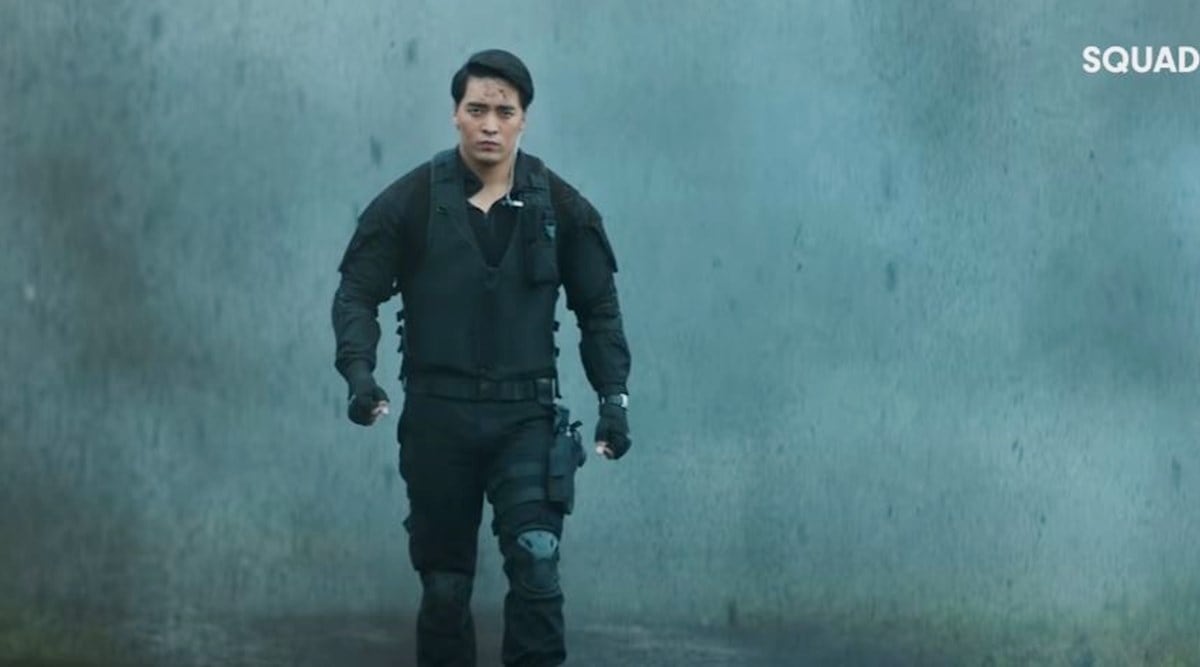
In contrast, his son Rinzing Denzongpa, who made his debut in the 2021 film Squad, finds himself fielding awkward questions about whether it is a good thing that “actors from the northeast” are finally getting their due, if Bollywood has taken that token but important step towards inclusivity. In fact, one of the most popular searches against Rinzing’s name happens to be: “Is Rinzing Denzongpa Indian?” A telling commentary on the conundrum faced by actors from the northeast today.

TOKEN REPRESENTATION OR INCLUSIVE CHANGE?
Recently, Bollywood seems to have woken up to inclusion. First, it was Chum Darang from Arunachal Pradesh making a splash as a lesbian lover to Bhumi Pednekar in Junglee Pictures’ Badhaai Do (2022). A few months later, we had Anubhav Sinha’s social commentary Anek, featuring Nagaland’s Andrea Kevichusa as a headstrong boxer torn between love for her land and her true calling in life. Kevichüsa is optimistic.
“I would say that the recognition that artistes from the region are getting is here to stay. While there are many reputed and well-known northeast actors in Hindi cinema, there is still a lot left to be explored. It’s never too late for progress and representation, and in some cases, it is still work-in-progress,” she says. While her film received mixed reactions from the audience and critics alike, her schedule, for now, is packed.
Adil Hussain (above), who hails from Assam and has featured in films across languages, including Assamese, says that he hasn’t faced any bias in his many years as an actor. “I have done pan-India films. I can look like an Assamese, a Bengali, a Malayali, a Gujarati or a Maharashtrian as I do not have the typical ‘northeastern features’. Also, I worked hard not to let my mother-tongue accent impact my Hindi fluency,” says the actor, whose repertoire includes films like Abhishek Chaubey’s Ishqiya, Gauri Shinde’s English Vinglish to Mira Nair’s The Reluctant Fundamentalist, and Ang Lee’s Life Of Pi.
He adds, “The faces from the northeast, especially those who have Mongoloid features, and the many stories of our land were never part of the mainstream narrative. Cinema is a powerful medium, and I believe, filmmakers could have been more aware about this exclusion – of how the northeast was rarely represented in our films. Now, I see that this consciousness has dawned upon many filmmakers. There is still a long way to go, but I am happy that the journey has begun.”
“It’s high time for us to be included, no? Let’s see if casting actors from here and stories from the region become regular Bollywood features. Only when that happens, we will truly know if there is any seriousness to it,” says Pink actor Andrea Tariang about the ongoing Bollywood-for-all narrative. Her movie, which also touched upon the shocking prejudice against women from the northeast as being ‘loose’, had started this very conversation in 2016.
For Chum, the conversation goes beyond the general ignorance. Give credit where it’s due, she recommends. “I think we are also regular people wanting to show our acting talents to the world. I feel beyond the looks, the culture and background, we do have some really great actors. And actors should be given opportunities based on their acting merit, as simple as that,” she says.
It is worth noting that in all their debut films, these women have played someone’s friend, lover and girlfriend, but had one common thread – even in make-believe, they always hail from the northeast. Plabita Borthakur (below), who is from Assam and has played a central figure in the Golden Globes 2018-qualified film Lipstick Under My Burkha and Rajkumar Hirani’s PK among other major projects, says tokenism is still doable as long as it leads to something meaningful.
“Even if it feels like a token representation to some, at least it’s a start. I feel people are becoming more aware now because of digitalization, and that should help with the inclusion of northeast Indians in mainstream cinema.”

LOOKS THAT MATTER
In 2014, when Omung Kumar’s biopic on Olympic-winning boxer Mary Kom released, there was a furore on social media. “A Manipuri, or at least someone from northeast India should have played the role,” said netizens. That Priyanka Chopra-Jonas (then Chopra) looks nothing like Kom in real life, fuelled the debate. While some saw this as a cultural snub, others were swayed by the popular perception of how a person from the region should look like.
Plabita, who has often faced the ‘arre aap toh northeast ki lagti hi nahin’ racist comment, attributes this to the lack of knowledge about the diversity of the region. “I believe there’s very little awareness about the northeast among people of mainland India,” shares the actor, whose last major outing was the OTT series Bombay Begums. “Hopefully, in the near future, we will have many diverse characters being played by northeast Indian actors,” she opines.
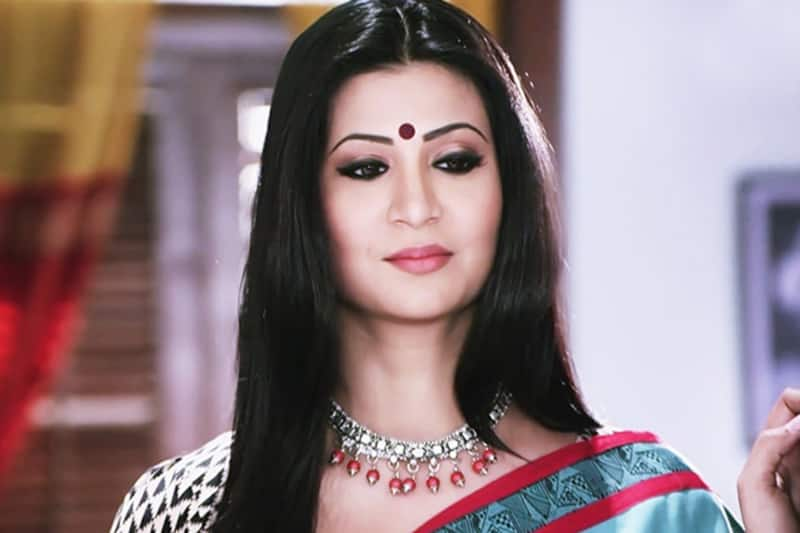
Elaborating on this, Parineeta Borthakur (Plabita’s sister; below), an established ‘mainstream’ actor who has featured in Gupta Brothers and Spy Bahu, says, “The fact that I didn’t ‘look northeastern’ enough did help me bag Bollywood projects, but I’m hopeful about playing a character from my region. Also, expecting everyone from the region to look a certain way, shows how unaware people are about the northeast.”
Parineeta stresses on fair representation and awareness. “Axone (lauded in the festival circuit and streaming on OTT) is just one film that talks about the various cultures within the region. There are very few films based on the northeast, compared to the staggering number of films being made every year about the other regions of the country. We need many more stories and much more content about the people and the region,” she concludes.
— Inputs By Ruman Ganguly & Rachana Dubey
I was privileged to play my age in this youth obsessed industry-Pooja Bhatt
8:15 AM
From offering age-appropriate role to examining #MeToo from a woman’s gaze, Pooja Bhatt discusses how Bombay Begums is the perfect web debut for her
Uma Ramasubramanian (MID-DAY; March 2, 2021)
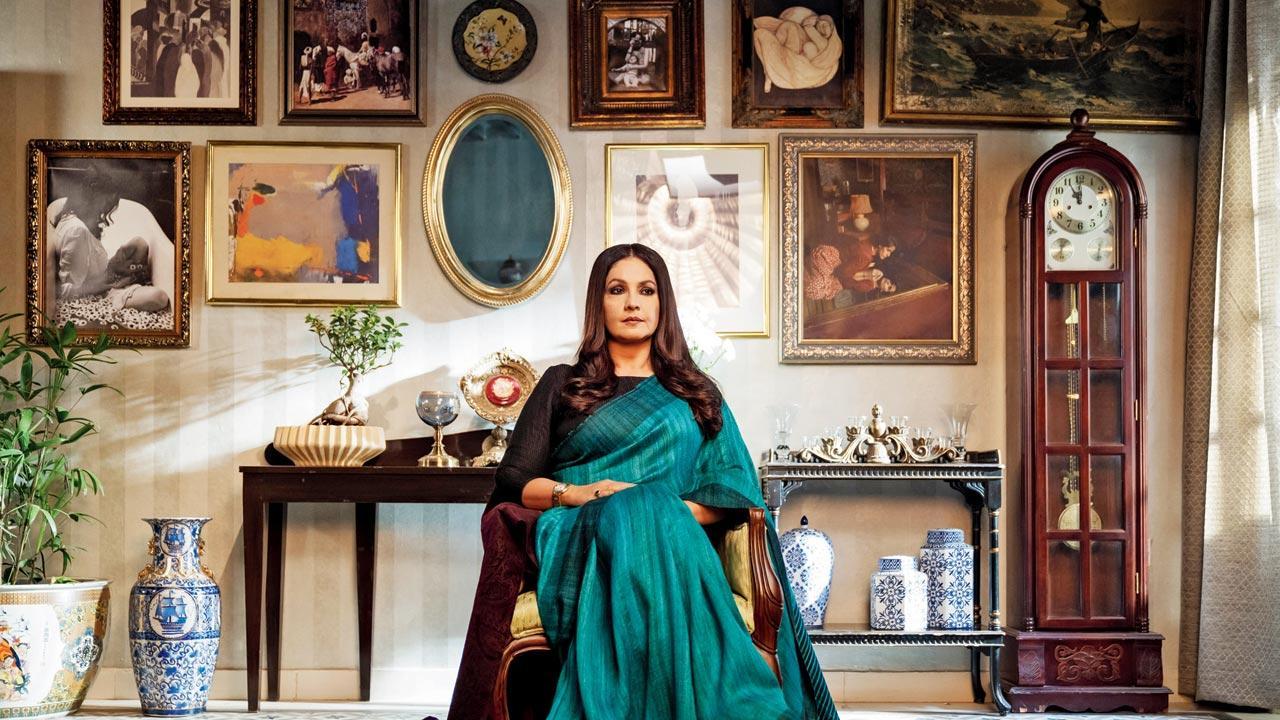
“You know what they say, life happens to you when you’re busy making other plans,” begins Pooja Bhatt, who was offered Bombay Begums when she was assisting director-father Mahesh Bhatt on Sadak 2. The Netflix series marks her foray into digital entertainment. In a way, the all-women drama is also a comeback vehicle for the actor-filmmaker, who stayed away from the big screen since the early 2000s, barring a cameo in Sadak 2.
As Rani, CEO of a leading bank, Bhatt leads the Alankrita Shrivastava-directed venture that tells the story of five women navigating their dreams and desires in a male-dominated world. The biggest incentive for the actor, 49, was that the story offered her an age-appropriate role — a rarity in Indian showbiz. “I was privileged to play my age in this youth-obsessed industry. Even if you come back 30 years later, you are catering to some fantasy that people have had about you when you were 19. Unfortunately, your best work becomes something you can’t get over. In my case, it was Dil Hai Ke Manta Nahin [1991]. [Here], I had the privilege to deal with issues that women my age do. In our world, we’re told not to say our age out loud, or [discuss] issues of menopause. Beyond that, when we try to excel in a male-dominated world, any degree of fatigue or vulnerability we exhibit is looked upon as a chink in our armour.”
Even though Rani is far divorced from her, Bhatt — one of the few female filmmakers in the industry — says she understood her journey. “I have been a producer. I know how biased the business can be, so I drew from that [experience]. Alankrita told me that I don’t need to [emphasise] my power because true power doesn’t scream. That became the bedrock for the character.”
The series brings the #MeToo movement in sharp focus, examining it from a woman’s gaze. Bhatt remembers that filming the sequence was emotionally draining for the actors. “The scene sees Plabita Borthakur’s character [the survivor] recount what happened to her. It was an uncomfortable day for all of us because you are making the person go through the entire experience all over again. There is not a single false note in the show’s [treatment of the subject].”
Abhinay Deo to use first-of-its-kind mixed-narrative format for cricket drama Doosra
8:28 AM

MUMBAI MIRROR (June 27, 2019)
 At a time when the country is reeling under the World Cup fever, acclaimed director Abhinay Deo is back with a socio-sports drama titled Doosra. The film traces how cricket has changed modern India, through the eyes of a young girl’s coming-of-age story. The film progresses from 1992 to 2002—a seminal decade in India’s contemporary history. Using a first-of-its-kind mixed-narrative format, Deo weaves archival events in a fictional tale to present a unique hybrid of cinematic story-telling.
Doosra meshes two stories of courage and identity. One focusses on a maverick cricket captain, Sourav Ganguly and his defiant young team, and the other chronicles the life of a young girl growing up in an orthodox North-Indian social structure. What brings the two narratives to a head is a single event: when Captain Sourav Ganguly pulls off his T-shirt and waves it bare-chested from the balcony at Lords after the 2002 NatWest final. It was a victory celebration that suddenly transformed into an iconic symbol of national assertiveness for a new generation of Indians.
Director Abhinay Deo says, “We secured our political freedom from the British in 1947. But it was not until July 13, 2002, when Sourav Ganguly stood bare-chested, pumping fists defiantly on that balcony at Lords, that the whole nation and I felt truly comfortable with who we are and with being unapologetically Indian. It’s perhaps because nothing galvanises this country more than cricket. This film presented me with a unique opportunity to chronicle this untold chapter in India’s modern history.”
The idea for Doosra came from Chicago-based executive producers, Masha and Rohan Saideh, which was then developed into a story and screenplay by India’s first advertising Grand Prix winner at Cannes—Agnello Dias. Actors Plabita Borthakur (PK, Lipstick Under My Burkha) and Ankur Vikal (Slumdog Millionaire) play the principal characters.
Vijay Raaz plays a 40-year-old prince in his next, Waah Zindagi
7:51 AM

Actor will be seen as a royal in his next, which revolves around the ceramic and tile industry of India
Himesh Mankad (MUMBAI MIRROR; December 12, 2018)
After playing the hapless father of two feisty girls in Vishal Bhardwaj’s Pataakha, Vijay Raaz is returning to the screen with Ashok Choudhary’s Waah Zindagi. Also featuring Sanjay Mishra, and Manoj Joshi, the film deals with the struggles of India’s ceramics and tiles industries and how the small-scale sector is impacted by stiff competition from their Chinese counterparts.
Choudhary, who has also written the film besides producing it, says that it is based on a true incident so the script took three years to complete. “In November 2017, we started shooting in Morbi district of Gujarat (which accounts for 70 per cent of India’s production of ceramic items),” he informs.
In the film, Vijay plays a 40-year-old prince who is soon to be crowned as the king. Lipstick Under My Burkha actress Plabita Borthakur plays his love interest. The actor describes his character as someone who hates lies and wants everyone under his reign to progress. “If truth can be told directly, there is no need to confuse everyone with a web of lies,” he argues, adding that the script has a strong social message. “I wanted to help Ashok and Dinesh (Yadav, director) make their story reach as many people as possible.”
He rues the fact that the ‘Make in India’ concept didn’t catch on earlier as, he notes, it would have made India selfsufficient in many aspects. “If we had this vision sooner, I am sure the scenario would have been completely different by now,” he signs off.
Plabita Borthakur begins work on next film, also featuring Naveen Kasturia
7:50 AM

Sanyukta Iyer (MUMBAI MIRROR; July 27, 2017)
Soon after her acting debut as a young college student named Rihanna Abidi in the recently released Alankrita Srivastava film, Lipstick Under My Burkha, which features Konkona Sen Sharma and Ratna Pathak Shah in lead roles, Plabita Borthakur has already started work on her second film.
The yet-untitled film by FTII alumnus and debutant filmmaker, Dinesh Yadav, follows a young boy, played by Sulemani Keeda actor and web series breakout star Naveen Kasturia, who is accused of bringing bad luck to his village.
Plabita plays Naveen’s childhood love, who he tries to reunite with during the course of the film. It is set in the remote villages of Rajasthan and Gujarat and Plabita will be seen as a small town girl alongside seasoned actors like Sanjay Mishra and Vijay Raaz. “I’m quite excited about it because once I started reading the script, I was hooked. It was a page-turner,” Plabita says.
Subscribe to:
Posts (Atom)