Showing posts with label Payal Kapadia. Show all posts
Showing posts with label Payal Kapadia. Show all posts
From Kanu Behl to Chaitanya Tamhane, filmmakers are challenging a system that decides what India can and cannot watch
9:52 AM

Jane Borges (MUMBAI MIRROR; November 23, 2025)
“It’s taken me over nine years, a large chunk of my life and a lot of blood, sweat, toil and tears to make Agra,” filmmaker Kanu Behl shares over a phone call, “I couldn’t have let this go.” Agra, which won Best Indie Film at the Indian Film Festival of Melbourne and premiered at the Cannes Directors’ Fortnight to critical acclaim, is a psychological drama, exploring sexuality and loneliness. Earlier this week, after being given severely limited screenings for his film—only 70 screens across the country—the filmmaker took to social media to call out the “long-standing systemic pattern affecting all independent films in India”: the denial of theatrical access.
His post immediately found support within the community, with 46 filmmakers, including Chaitanya Tamhane, Payal Kapadia, Shaunak Sen, Vasan Bala, co-signing a statement demanding fair access for independent films.
“The group is expanding as we speak,” Behl told Mirror, “We are now in the process of forming a body that will come together to talk about our collective rights.”
Reel dreams, real struggle
Directors Alankrita Shrivastava and Arati Kadav, co-signees to the statement, say their solidarity stems from having experienced similar helplessness. Shrivastava remembers the difficulty she faced in getting a theatrical release for her film Turning 30 (2011), a romantic comedy, starring Gul Panag, revolving around an ad executive who gets dumped and has her ideas stolen before her 30th birthday.
“We got screens in certain places where the film honestly did not have any resonance, whereas we needed more screens in places where the film was doing well,” she says.
For Kadav, who found OTT fame with Mrs (2023) — a remake of the Malayalam film, The Great Indian Kitchen — bootstrapping her career had been the norm for the longest time. Her sci-fi fantasy film Cargo (2019), starring Vikrant Massey and Shweta Tripathi, set aboard a spaceship where souls of the deceased arrive before they are prepared for reincarnation, went to over 25 festivals, including the Miami International Science Fiction Film Festival (MiSciFi).
“Though it was lapped up by everyone outside India, I struggled with distribution for about one-and-a-half years. I had put in a lot of money into this project, and felt quite dejected,” she says.
While the film didn’t get a theatrical release — Kadav says she understands “theatrical reservations for some festival films”, though the need of the hour is to find “incentives for them”—it was eventually picked up by Netflix where it had a decent five-year run. Having the backing of an industry powerhouse like Anurag Kashyap, who was among Cargo’s many co-producers helped. “I got lucky,” Kadav admits.
Showtime comes at a price
The fight at the ground level for independent films is getting harder with each passing year, says Kimaya Hemdev, director and head of acquisition at Star Entertainment Pvt Ltd. “Companies that were once only theatre owners have now also become distributors. So, you’re competing with a distributor who also has the bargaining power of a theatre,” she explains.
When producers, distributors and exhibitors are the same people, it creates a monopoly—one where, she says, “there’s a clear preference for the films they distribute, especially studio movies.”
Quality time slots and cinemas are carved out for the big studio films, which are also exonerated from paying a Virtual Print Fee —a charge producers pay to exhibitors to help cover the costs of converting to digital cinema projectors — which Hemdev says is anywhere between Rs 25,000-Rs 50,000 per screen, per show, and can be prohibitive for independent filmmakers. If a film had to run for a week with a single show daily, it would translate to Rs 3.5 lakh approx.
Audience is king
The long-held argument that there’s no audience for independent films, Behl says, is “fallacious”. “On Tuesday night, when I finally got a show [for Agra] at PVR Citi Mall in Andheri, there were 119 people who came to watch it,” he says.
According to Shrivastava, what’s happening right now is neither fair to independent films, nor the audience. “If the audience can’t access these films, how will they ever get a taste of another kind of cinema?”
Vishek Chauhan, CEO of Rupbani Cinemas, Purnia, Bihar, says that ultimately, “the programming power lies only with the audience.” He stresses that no exhibitor in their right mind would deliberately refuse a good film that promises viewership, because theatres operate as businesses and decisions depend on demand and viability. He finds it unfair to pin the blame solely on exhibitors.
Theatrical success, he says, is no longer the only metric of a film’s performance. The majority of the viewers consume films at home on OTT or television, with theatre earnings form only “12–20 per cent of a film’s overall pie.” Therefore, he says, forcing exhibitors to run films with low turnout “jeopardizes other films that could do better.”
Kerala files
Down South, in the Malayalam film industry, filmmakers working with novel scripts have tried to negotiate the system to reach the right kind of viewers. A case in point is the 2023 National Award-winning drama Aattam, written and directed by Anand Ekarshi, which turns the spotlight on a theatre group whose sole actress faces sexual assault by one of the men. According to him, “shooting and making the film is actually the easiest part; releasing the film is the toughest.”
As an early business strategy, Ekarshi raised funds to make a 10-minute pilot of his film to show producers. “The idea was to give them a glimpse of the script, understand the characters, and see what the actors could pull off.” Joy Movie Productions came on board soon after. Aattam, despite its experimental nature, turned into commercial project. It was made on a shoestring budget of Rs 3 crore, of which Rs 80 lakh was dedicated solely to marketing—the movie enjoyed a successful theatrical run and bagged a prime OTT release.
Meanwhile, the theatre run of Prasanth Vijay’s Ithiri Neram, a romantic drama starring Zarin Shihab and Roshan Mathew, earlier this month in Kerala has been hard-won. Vijay has made two critically acclaimed films before, Athisayangalude Venal and Daayam, funded by a school friend and his wife respectively, which didn’t make it to theatres. He tried to cut the risks with Ithiri Neram by getting a producer — Jomon Jacob of Mankind Cinemas and four others — who shared his sensibility. “Even after the film was made, it took a while to find the right distributor,” he says.
“But I waited, because I wanted the film to reach the last mile, even if it were fewer theatres.” The goal was also to be able to get a good OTT platform for wider reach. The film opened in 60 theatres in the first week of November and continues to reach newer audiences.
The fact that the Kerala state government has taken up initiatives to support the arts, has also come to the aid of filmmakers. Debutante filmmaker Sivaranjini J won a Rs 1.5 crore woman’s empowerment programme grant for her film, Victoria in 2022 — there is no such equivalent grant in Maharashtra for women. The production was taken care of by the Kerala State Film Development Corporation and the movie, when it releases next week, will be shown across eight government-run theatres in major cities. A government grant comes with its own set of challenges with filmmakers having to deal with red-tapeism and mounds of paperwork. “But it gives you a good start,” she admits.
Meenakshi Shedde, Senior Programming Advisor-South Asia at the Toronto International Film Festival (TIFF) and South Asia Delegate to the Berlin Film Festival for 27 years, says that in contrast with Bollywood, Kerala has a very strong grassroots film movement.
“Even the rice farmers know their cinema, and that’s unthinkable in most parts of the country,” she says, adding “that the International Film Festival of Kerala and film societies have played a huge role in shaping their taste”.
Alternative script
Internationally, independent American production house A24 has been backing indie and artistically driven films in its attempt to push high-quality cinema. Closer home, Manish Mundra, filmmaker and founder-producer, Drishyam Films has emerged as an unlikely champion of independent films — Masaan (2015) and Newton (2017) are part of the success story.
“For things to change, everyone must play a part. Producers and distributors cannot do it alone. Audiences need to show up for these films, and the government needs to recognize that cinema is a cultural resource. We need more single screens, art-house theatres and community spaces across the country, and not just urban and expensive multiplexes focused on mainstream releases,” Mundra says.
Shedde believes that independent filmmakers should also tap into movements taking place within cities like Mumbai, that provide platforms to showcase good, quality cinema. “Film Heritage Foundation and VHS [Versova Homage Screenings], for instance, regularly screen indie productions and also get audiences for these screenings.” She stresses the need for filmmakers to think more about “how to help create an audience for their films as well.
Karan Talwar, filmmaker and co-founder of Harkat Studios, has for the last decade been building an alternative community-driven space for independent and experimental films. “Harkat now screens nine to 10 films a month under our independent calendar, with guest curators and rotating themes,” he says. They operate on a 50-50 box-office sharing model, to help filmmakers earn revenue.
“We are seeing a massive uptick of people who want to come in for these screenings,” he says, adding. He believes that the one way to fight this system is to make new inroads and find new friends.
I was so bored of hearing adjectives like ‘hot and sexy’, ‘sultry actress’-Priyanka Bose
8:19 AM

Priyanka Sharma (MID-DAY; October 19, 2025)
Six years is a long wait for any actor, more so if it’s for a project close to their heart. Naturally, Priyanka Bose is relieved that Agra is finally set to release in theatres in less than a month, after much struggle.
“What’s the use of so much hard work if no one in the ecosystem nurtures it and sees that this film is potent? I am very grateful that Agra, by far my most favourite work in the Indian milieu, is coming out. Had this film become a cult, [only] Kanu [Behl, director] would have been celebrated. Artistes who are in the film need our films to come out for people to know that we are reliable.”
Also starring Rahul Roy and Mohit Agarwal, Agra premièred at the Cannes Film Festival 2023. Though the film was ready for over two years, Behl struggled to find distributors in India owing to its central theme — sexual repression in the context of urban space constraints. Bose admits she had apprehensions about taking up a part that might reinforce the stereotype she had long wanted to shed.
“I came with a lot of fear because I [have been] trying to change a certain narrative about myself. I was so bored of hearing adjectives like ‘hot and sexy’, ‘sultry actress’. I was willing to be very fearless. [But] Agra felt like a perceived danger. I would think, ‘When this comes out, the attention I will get will not be because of my craft, but because of how bold it is.’ But do people even understand this adjective? I don’t want a bravery award. I want people to understand that I am a very reliable artiste,” she says.
Bose adds that Behl understood her concerns and gave her the freedom to navigate them. “I never had that with any of the directors. Kanu Behl gave me the space to explore my skill set and potential. There is so much vulnerability in boldness. Only we know how we did it.”
The actor says she took up Agra also because of the support she received from her partner and friends. Her perseverance seems to have paid off. Last month, her film Jugnuma, co-starring Manoj Bajpayee and directed by Raam Reddy, opened in theatres to unanimous praise.
Even as she celebrates back-to-back collaborations with filmmakers she admires, Bose says her focus remains on growth. “I want to work with Neeraj Ghaywan, Konkona Sen Sharma, and Payal Kapadia. I want to work with the best. Whether they see me worthy right now or not, I’m just going to continue working on my craft. I’ll be ready when they’re ready with a script saying, ‘Pri, we think you’ll be great at this’.”
It always feels patriotic to do a film that goes to a prestigious festival-Neeraj Ghaywan
9:07 AM
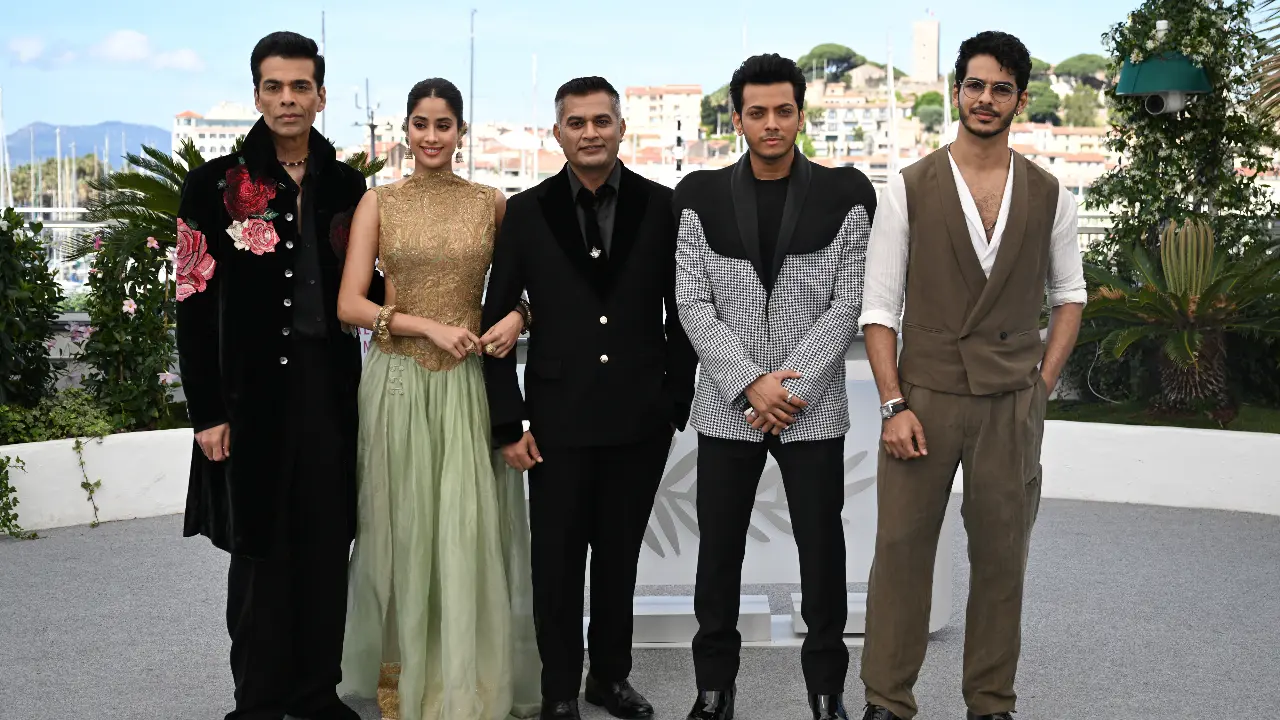
Niharika Lal (BOMBAY TIMES; May 22, 2025)
When Neeraj Ghaywan first attended Cannes, it was in 2015 for his directorial debut Masaan. The film was selected in the Un Certain Regard and won two awards – FIPRESCI Award and the Prix de l’Avenir Prometteu. A decade later, he’s back at the fest with Homebound (2025), another human story, but this time with a little help from some very big names including Martin Scorsese and Karan Johar.
As Ghaywan’s new film made the screening in the Un Certain Regard section this year, the filmmaker was joined by the team at the red carpet, the makers discussed Homebound at the Bharat Pavillion at Cannes.
‘WE SEE URBAN STORIES IN FILMS, AND THEN THERE IS A GAZE THAT IS TOWARDS SMALL-TOWN INDIA’
“The story that I wanted to say was about these two friends,” Neeraj said during a discussion at the India Pavilion at Cannes ahead of Homebound’s screening. He added, “What I also feel is that more than 60 per cent of our economy, our people, live in villages, and in our films, we don’t see villages anymore. We see urban stories in films, and then there is a gaze that is towards small-town India. But where are we talking about the stories from the heartland? That was one of the motivators for Homebound.”
The filmmaker continued, “Whenever we talk about films across the world, say, people of colour, creed, they’re all spoken of in numbers. They are part of the statistics. And when you say that, it’s like you’re trying to persuade your urban guilt – like hiding your apathy by showing false sympathy. I felt, what if we pick one person out of that statistic and see what happens in their life and how they arrive at this point? That will make for some great story, and will truly represent the kindness, empathy – that has been my intent so far.”
I feel this collaboration is quasi-disruptive in a way: Neeraj Ghaywan
Talking about collaborating with Karan, Neeraj said, “I’ve been wanting to work with Karan. (He also directed Geeli Pucchi, a part of the Ajeeb Daastaans anthology in 2021). I feel this collaboration is quasi-disruptive in a way. Independent filmmakers are always trying to figure out how to go about it.
Either we’re doing co-productions or seeking government funding, which comes with a lot of paperwork. But here, if Karan is producing my film, then it’s a different thing altogether – it paves the way for different kinds of possibilities. Our default perception is: go to a co-production, make it happen. But for me, this is a new model.”
NEERAJ AND I WANT TO TELL EMPATHETIC, HUMAN STORIES: KARAN JOHAR
“Neeraj Ghaywan and I come from two different schools of cinematic syntax,” Karan Johar said, “but I think one thing that lies common in both our belief systems is that we want to tell empathetic, sensitive human stories. That is common in both our cinemas. And it has nothing to do with syntax – it has to do with the heart the film offers.”
He explained, “I think when you see Masaan and when you see Homebound, you realize that interpersonal relationships, the handling of the emotional aspects of both the movies, and the spectrum of emotions they cover are the same.”
Karan said that’s what he tries to do in his films too. “My syntax is more theatrical, more opulent, a little more on-the-nose, because that is the kind of filmmaking I love and what I grew up watching. But even when I was eight or nine years old, while I loved the glory of Yash Chopra and the social drama with the opulence of Raj Kapoor, I also loved the empathy of Guru Dutt and the deep-rooted messaging of Bimal Roy. I could enjoy the brilliance of Satyajit Ray and dance to a song from a Raj Kapoor film in the same breath,” he said.
‘We’re beaming with pride that we have this kind of representation’
About Indian cinema finding global resonance, Karan said, “One important thing for me is: how to take our cinema to the world, apart from catering to our domestic audience. Last year, we had Payal Kapadia shine at Cannes with All We Imagine As Light (2024), and now she is on the Cannes jury.
This makes my heart so full. We are all beaming with pride.”
He added, “And the very next year, we have Homebound – this means we really are on the global map. I know these are baby steps. Every year, we have to make sure our stories continue to travel.”
‘Being at Cannes is proof that I’m not a one-film wonder’
“When Neeraj Ghaywan sir told me our film was selected, I was happy but didn’t grasp how big it was. After reading up, I understood its value – and it boosted my confidence as an actor,” says Vishal Jethwa, who made his Cannes debut this year.
“My dream was as simple as standing outside the Yash Raj Films (YRF) gate just to see what it looked like. Today, I’m part of a Karan Johar film directed by someone as brilliant as Neeraj sir. Attending Cannes with Homebound is a massive moment in my life. My debut (Mardaani 2) was successful, but some of my later films didn’t perform well at the box office. This film, however, has taken me to an international platform. It feels like proof that I’m not a one-film wonder – that I’m here to stay and meant for good things.”
30 seconds of Payal Kapadia’s All We Imagine As Light trimmed for OTT release
9:44 AM
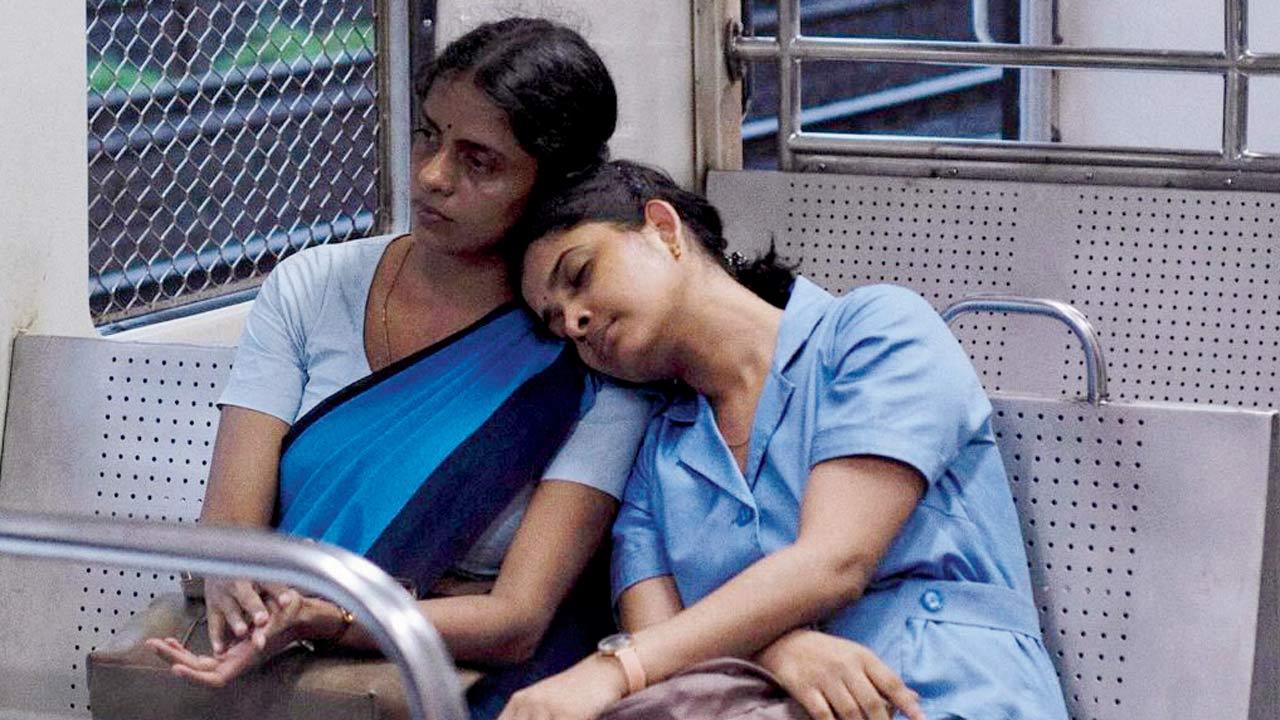
As though CBFC’s censorship isn’t stringent enough, OTT platforms further alter acquired content before their web premiere; Payal Kapadia’s All We Imagine As Light that runs 30-seconds shorter on Disney+ Hotstar is the latest case in point
Mohar Basu (MID-DAY; January 8, 2025)
The autonomy that web platforms exercise while censoring shows became evident in May 2024, when Jio Cinema dropped from its platform a 2019 episode by British comedian John Oliver that revolved around Indian elections. In the latest case of self-censorship, select scenes of Payal Kapadia’s All We Imagine As Light were altered for its digital release on Disney+ Hotstar. Interestingly, additional disclaimers relating to the consumption of cigarettes and alcohol have also been added to the OTT draft.
A source tells mid-day, “About 30 seconds of the film has been trimmed, but none of the key scenes have been tampered with. Even a contentious scene involving frontal nudity has been left untouched. With that said, at a later point in the film, when the characters are seen drinking, a disclaimer has been added. This wasn’t in accordance with the recommendation of the CBFC but an additional [call] taken by the platform.”
While the web platform didn’t respond to our query till press time, an insider from Hotstar shared, “The norm is to upload what’s given to us. Rarely are revisions or changes made. But, when there is an S&P [standards and practices, terms networks use to self-regulate content], we abide by it. The platform is liable for what it shows, so a legal clearance is due on both original and acquired content.”
Kapadia’s film, which has gone on to earn multiple awards across festivals upon its September 21, 2024, release, and even bagged two nominations at the recently concluded Golden Globes, isn’t the only film that has been tampered with. The 2012 gangster drama Gangs Of Wasseypur, which is available on Jio Cinema, is presented with a version that does not include cuss words.
“The death scene of a character has been censored, and anything alluding to sex has been trimmed. Since the film is open to all ages, it is protocol to make it suitable for viewers,” said a platform insider of the crime drama that includes abusive language and violence in abundance.
As for Kamal Haasan’s Vikram, which a CBFC certificate states has a runtime of 174.24 minutes, runs two minutes shorter on Disney + Hotstar. “Some brutal scenes have been edited out,” says a source.
Mid-day reached out to Kapadia, but she was unavailable for a comment till press time.
An A list actor might receive better treatment, while others don’t. Everyone should be treated equally-Kani Kusruti
9:15 AM

Niharika Lal (BOMBAY TIMES; January 4, 2025)
Kani Kusruti says she is happiest at home with her plants in Goa, practicing the sitar - a routine that got disrupted due to the year-round celebrations of All We Imagine As Light and Girls Will Be Girls, two internationally critically acclaimed films she was part of this year.
Kani says, "I think this is mostly the first time I felt there was more celebration than work. I feel it’s very disproportionate in terms of celebration - it’s like too much celebration. I’ve never had a year like this."
'Like in every field, in cinema, I think sometimes people get picked up by chance rather than the most deserving ones'
Kani shares, "I will honestly say, I don't think acting is really my cup of tea. I just happened to become an actor at a young age, and I ended up practicing it and continuing with it. I have many fellow actors and colleagues from Kerala, theater, and elsewhere who are way more talented, passionate about acting, and hardworking than I am. But, like in every field, especially in cinema, I think sometimes people get picked up by chance rather than the most deserving ones."
She continues, "Payal is a really nice person, a good director, and it was a great team. So, I loved working on Payal's film. Some projects come along like that, and I feel truly happy about the way we work together. But when I talk to other actors, I know they feel very happy just acting alone, just being able to play a character - they're genuinely happy. I don't have that kind of happiness. For me, happiness comes when the team is great or when we enjoy the process. I find joy in other things, like the stories we tell, not necessarily in my character."
"I thought maybe Payal reached out to me for a diploma film at FTII, didn't know it was feature film." Payal contacted Kani Kusruti for the film when she was studying at FTII. Over the years, Kani has seen different drafts of All We Imagine As Light. Payal initially offered her younger part and years later when the project was finalized she ended up doing the elder nurse role."
Today, it's understandable when someone is excited to work with Grand Prix winner Payal Kapadia. But back then, when she was just a film school student, what was it about her that made you look forward to working with her? Kani says, "It was not so much about the character for me. Why should women bear the burden of making only good films and proving themselves constantly? They should be able to make bad films too."
Kani has worked with many female directors. She says that she didn’t plan it; it just naturally happened. She says, "I’m just very happy every time it’s a female director - I feel a different kind of happiness. Maybe it’s because I’m a woman in India, and when I see female directors coming up, I already feel a sense of joy. It’s like, 'Oh, who is she? How is she thinking?' You also feel a little safer and that you can express yourself. I’m not saying all women directors are always going to be nice and amazing- not necessarily. In fact, true diversity will come when more women enter the field. Then, we’ll have all kinds of films - even bad films - made by women. Why should women bear the burden of making only good films and proving themselves constantly? They should be able to make bad films too, just like everyone else."
Kani says that the female directors who have helmed projects in the last 10 years, whether in commercial cinema or other sections, have really paved their own paths by putting in a lot of work on themselves. She says, "I believe these women are slightly exceptional in some way, which is why they’ve reached where they are today. It’s not an easy journey. They’ve worked hard, and some may have had certain privileges, but they’ve earned their place."
She says, "I’m sure male gazes and patriarchal perspectives may sometimes come from female directors too. Most female directors I’ve worked with have been kind, collaborative, and understanding. They created environments where we felt safe. And it’s not just about female directors - the sets are often run by women. Right now, we mostly talk about two genders, women and men, but there are many genders. When the industry becomes more inclusive of all genders, I think everyone will feel safe. I believe all artists, regardless of gender, have to work hard on themselves to create a healthy workspace. I consider myself fortunate that most of the male directors I’ve worked with were also good, with only a few exceptions where I felt the working environment wasn’t healthy. Most of the male and female directors I’ve collaborated with have had good spirits. However, there have been instances where I worked with female directors and felt that the workspace wasn’t ideal. So, it’s not exclusive to one gender. Creating a positive and healthy working environment is everyone’s responsibility."
Often luxuries take away from ensuring that other crew members get enough rest
What does she mean by a healthy working space? Kani explains, "What I meant by a healthy workspace is that there are often different kinds of abuses that happen- taking people for granted, exploiting their time excessively, underpaying them, making them work overtime, not providing proper contracts, or verbal abuses that sometimes occur during shooting. We have many such practices in India. I understand that someone may get angry once during a 60-day shoot. People are under stress - that much I can understand. Everyone is human. But when such behaviour becomes a habit is what is a problem. For example, an A-list actor might receive better treatment, while others don’t. Everyone should be treated equally. That’s what I meant by a healthy workspace."
Kani says that it is normal that people may occasionally misbehave, but that’s not the only issue. There are entrenched hierarchical and unethical practices in workspaces that need to be removed. She shares that fortunately, the next generation is already bringing in new ideas, and she is hopeful things will change. However, even when people don’t intend to misbehave, bad workspace practices and lack of resources can lead to stress-induced behaviors, like shouting. She says that’s why she believes the resources of a film should be allocated properly, not just for stars. Sometimes, the allocation feels excessive - for instance, spending disproportionately on entourages.
She says, "I understand the need for one or two assistants in some cases, but often, these luxuries take away from ensuring that people, like those in lighting crews, get adequate rest. These crew members often sleep the least, leave last, and arrive first."
Kani shares, "We have a history of bad practices; how to change it, I don't know. For example, in Kerala, they are trying to have an ICC (Internal Complaints Committee), but what kind of power it can have depends on whether people are willing to consciously change and whether producers are willing to put the money in the right places to establish good ethics and practices, such as ensuring people get enough rest. Are we able to allocate money in a way that we can give everyone an ample amount of rest, proper conveyance, and good food? In Hindi projects that I’ve been a part of, I see there are different eating places. Actors eat in a separate mess with specific catering, technicians have a different one, and daily-wage artists who work on the film have another buffet. I don't understand this. It's unbelievable. That disparity is so clearly visible, even in the food. So, we have to work a lot to achieve equality and treat everyone with equality."
Kani on her directors
Payal Kapadia, All We Imagine As Light
Payal was completely different. At the location, we were just trying to remake what we had achieved all day in the rehearsals. It was more like a theater production. Before going to the location, we already knew everything. Payal shot all that rehearsal on camera. Then she also edited it to see how it looked. So, she already made a film, which looked very similar, sometimes even with the actual costumes. Sometimes, it wasn't the actual actor, but another actor playing the role. We all felt we knew how the film was turning out because she made everyone involved in the film - like an equal collaborator
Shuchi Talati, Girls Will Be Girls
We would first rehearse, then every department would watch it. Everyone would know what the actors are going to do. Everybody is part of it. Then everyone would prep for the scene, right there, and then we would shoot the scene. Also, Shuchi had a completely different interpretation of the characters. The same dialogues were said with completely different intentions. So, I was very curious to watch Girls Will Be Girls finally because I was like, which Anila is coming out? I was also curious Is it the Anila close to the script, or the Anila that was discovered on the set? Shuchi made Anila different on set. She interpreted Anila very differently on set, so that was very interesting.
Richie Mehta, Poacher
Richie is not much of a rehearsal kind of person. He'd rehearse a bit on the spot but doesn't really fix the performance exactly how he wants it. He also goes with the spontaneity and what the actor brings to the scene. Most of my scenes in Richie's series were shot with handheld cameras. So, the DOP (Director of Photography) had a free-flowing approach, following the actor's movements. The DOP also chooses which parts to focus on, and sometimes it's not your face; it might be yourzfingers or what your hands are doing. This approach brings out a different kind of performance.
"All We Imagine As Light's lack of screens has no connection with Pushpa 2", says trade
9:47 AM
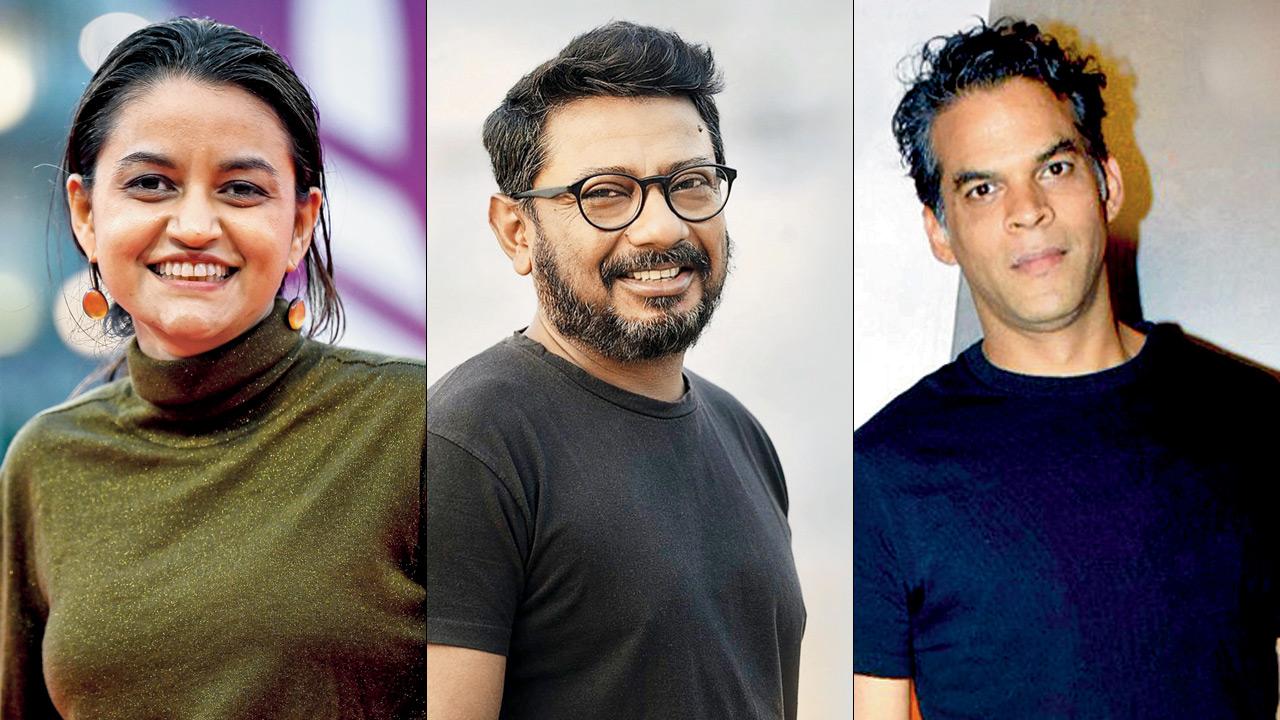
After Motwane slams Pushpa 2 for dominating screens and sidelining All We Imagine As Light, trade says Payal Kapadia’s gem couldn’t register 40 per cent occupancy in two-week run; Onir rues indie films are shortchanged
Mohar Basu, Priyanka Sharma (MID-DAY; December 12, 2024)
In a space of two weeks, the Indian audience was treated to two different releases. Cannes Grand Prix winner All We Imagine As Light made history by making Payal Kapadia the first Indian to score the Best Director nomination at the 2025 Golden Globe Awards, while Pushpa 2 – The Rule rewrote history at the Indian box office with its stupendous collections. Yet, only one of them finds a place in theatres. On Tuesday, filmmaker Vikramaditya Motwane called out the Allu Arjun-starrer for dominating screens across multiplexes, leaving no room for Kapadia’s gem to “breathe” or “find an audience”.
With All We Imagine As Light set to be re-released in select theatres, Motwane’s post has brought the question out in the open: Do mainstream entertainers sideline independent films, making it difficult for them to survive?
Trade expert Girish Wankhede strongly disagrees with Motwane. “All We Imagine… released on November 22 and had a two-week run. One understands that such a film needs institutional push, but any film needs to show 40 per cent occupancy for it to be carried forward. It couldn’t fill the occupancy requirement; its lack of screens has no connection with Pushpa 2. Since Pushpa 2 is showing 80 per cent occupancy, it is preferred,” reasons Wankhede.
If one looks at the screen count, it is skewed. Pushpa 2 – The Rule is running in 4,500 screens across the country; in contrast, All We Imagine… is expected to be re-released in 200 screens on Friday. But trade expert Akshaye Rathi says that films like the Kani Kusruti, Divya Prabha and Chhaya Kadam-starrer require alignment of all channels, especially in today’s unpredictable market.
Rathi says, “The makers of Pushpa 2 were in discussion with cinema owners for eight months before the film was released. All We Imagine’s distributors should’ve engaged with the exhibition sector and figured a way to make it reach the masses. For instance, Cinepolis is doing a week-long Japanese anime film festival in January, and it will be robustly promoted. We need to engage to make space for each other. No one wants to kill independent cinema because for theatre owners, people who appreciate such cinema are also [a source of income].”
Weighing in on the debate, filmmaker Onir says that indie films have been shortchanged for long in this country. He, however, asserts that the onus is not on exhibitors alone; he believes everyone, from the media to the audience, should do their part to support small films. “All We Imagine... didn’t get funding in India. Even the media didn’t talk about it. Not enough viewers watch indie cinema whereas the masses make sure that the [mainstream] films work,” he notes.
Onir says that change must begin from the top. “Has All We Imagine... been made tax free? Why are ministers not watching it? There has to be government support. Multiplexes have bled during the pandemic. So, now they are trying to recover money. Every producer will want their film to make money. So, whom do you blame? It’s a vicious cycle.”
Payal Kapadia scripts history, bags twin Golden Globes nods for All We Imagine As Light
8:18 AM
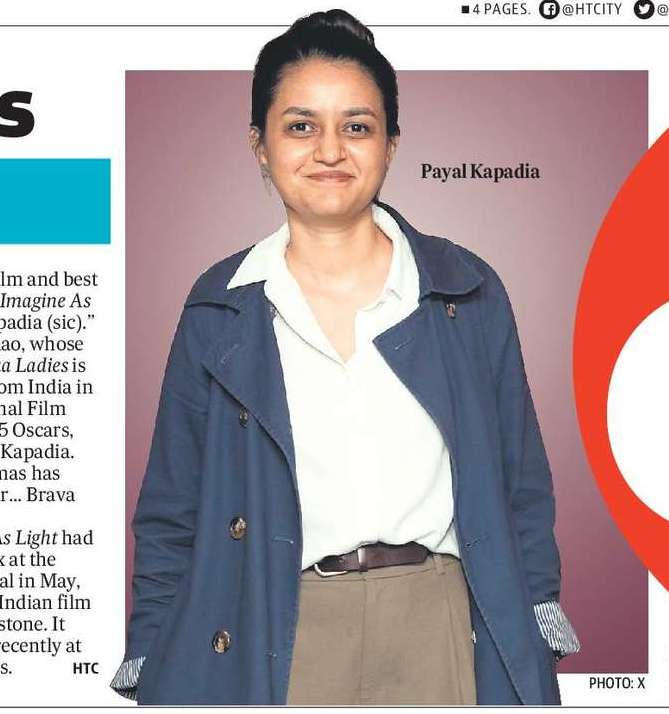
Payal Kapadia’s All We Imagine As Light receives twin Golden Globe nominations for Best Director and Best Motion Picture in Non-English Language categories
BOMBAY TIMES (December 11, 2024)
Payal Kapadia’s All We Imagine As Light is on a winning streak this year. After bagging the Grand Prix award at Cannes, it was recently named the best international feature at Gotham Awards. Now, Payal has been nominated for the Best Director category at the 82nd Golden Globe Awards and the film has secured a nom in the Best Motion Picture in a Non-English Language category.
Reacting to the news Payal stated, “I’m deeply honoured by this nomination and grateful to the HFPA for this recognition. This is a celebration of everyone who worked so passionately on the film. To everyone in India, All We Imagine as Light is still in theatres, please go watch it and support us!”
Filmmakers and actors also congratulated the team on social media. Laapataa Ladies director, Kiran Rao wrote on Instagram Stories, “Christmas has come early this year! Brava, Payal!” Divya Prabha, who is a part of AWIAL shared her story and added, “Let’s celebrate this together”. Anil Kapoor called it “what a monumental recognition of Indian cinema and storytelling prowess of Payal Kapadia. So incredibly proud!”
The film will be competing with Emilia Pérez, The Girl with the Needle, I’m Still Here, The Seed of the Sacred Fig and Vermiglio in the Best Motion Picture in a Non-English Language category. Earlier, Shekhar Kapur was nominated in the Best Direction – Motion Picture category at the 1999 Globes for Elizabeth. – Inputs by Mihir Bhanage
Golden Globes 2025 race
Emilia Pérez is leading the noms list with 10 nods. The Brutalist (7), Conclave (6), Anora (5) and Wicked (4) will be among the other films contending for the top prizes. In the TV space, The Bear, Shogun, Only Murders in the Building and Baby Reindeer are among the top contenders for key categories.
---------------------------------
HINDUSTAN TIMES (December 11, 2024)
Payal Kapadia has scripted history at the 82nd Golden Globe Awards by becoming the first Indian director to be nominated in the Best Director— Motion Picture category. She was nominated for her debut fiction feature, All We Imagine As Light.
The film also scored a nomination in the Best Motion Picture in a Non-English Language category. The 38-year-old reacted to the nomination and expressed her gratitude in a statement: “I’m deeply honoured by this nomination...This is a celebration of everyone who worked so passionately on the film. To everyone in India, All We Imagine As Light is still in theatres — please go watch it and support us!”
Soon after the announcement, congratulations began pouring in for Kapadia. Actor Anil Kapoor tweeted, “What a monumental recognition of Indian cinema and the storytelling prowess of @PayalKapadia86! So incredibly proud!” Filmmaker Hansal Mehta, who has long supported the movie as India’s “official selection for the Oscars”, too, took to X: “India’s official selection for the Oscars secures 2 nominations at the Golden Globes. Best non-English language film and best director for All We Imagine As Light and Payal Kapadia (sic).”
Director Kiran Rao, whose film badge Laapataa Ladies is the official entry from India in the Best International Film category at the 2025 Oscars, also congratulated Kapadia. She wrote: “Christmas has come early this year... Brava Payal!”
All We Imagine As Light had won the Grand Prix at the Cannes Film Festival in May, becoming the first Indian film to achieve the milestone. It was also awarded recently at the Gotham Awards.
I am not that white campus American liberal who thinks no one else can talk-Sudhir Mishra
3:36 PM
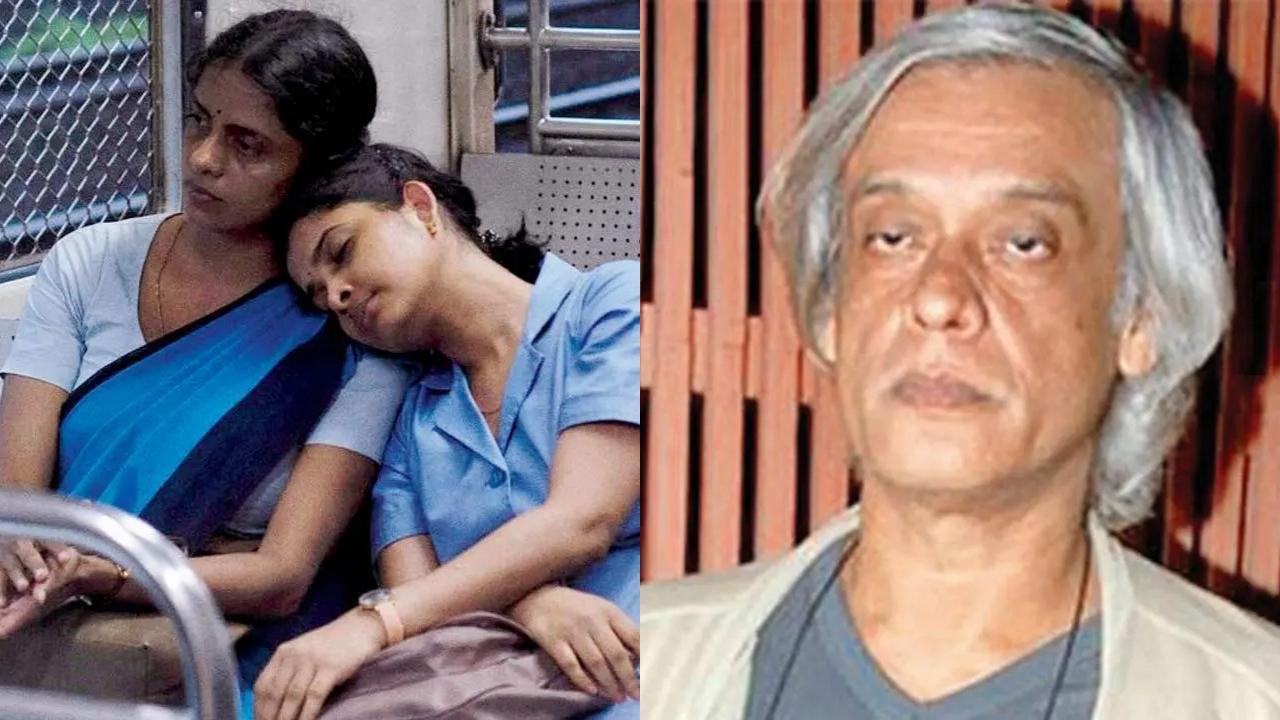
Tanaav 2 director Sudhir Mishra talks all things industry, from the surge in propaganda films to the big directors sidelining and patronising female storytellers
Priyanka Sharma (MID-DAY; December 6, 2024)
There are no pre-release jitters for Sudhir Mishra as the second season of Tanaav drops today. The director is confident of the thriller—an adaptation of the popular Israeli show, Fauda—that is set in Kashmir. To tell a story involving Kashmir politics, he has a fundamental approach.
“Luckily, I know my country. I am inquisitive, I travel and meet people not just for the sake of making something, but for its own sake. Also, I follow the craft of filmmaking, which means every character should be nuanced. I listen to the characters, and people of Kashmir. I don’t sensationalize. I am not coming into it with any agenda. Neither is there a need to create a jingoistic piece in order for it to become a hit,” he says.
Over the past few years, there has been a surge in political films. Does it pain him to see thinly-veiled propaganda films or political stories that sensationalize?
Absolutely, says Mishra. “It is sad. Why do young, talented people submit to other forces? They should stay true to their calling. Some people aren’t faithful to their own talent. I’m not here to ban anyone. I am not that white campus American liberal who thinks no one else can talk. I’m not woke; I’m a leftist. I am not here to fulfill any agenda.”
In the post-pandemic years, mid-budget films have struggled to find their deserving place on the big screen—be it Mishra’s last theatrical release Afwaah (2023), or Kiran Rao’s gem Laapataa Ladies that was rediscovered on OTT. In the current climate of horror comedies and franchises, where does it leave smaller films?
“The problem is theatrical releases are expensive. I’ve always said that films are a public service. Film theatres should be tax-free. There has to be space for all kinds of films. If somebody likes RRR [2022] or Pushpa, so be it. But there should be space for other films too, like All We Imagine As Light and Kennedy. There should be space for smaller voices. Why do the big boys want everything? Let Payal Kapadia’s film be shown,” he urges.
The director wants more female filmmakers to come to the fore. Critiquing the industry for not encouraging diverse voices, he says, “Women have told stories with great difficulty. Does the industry applaud them? No. They will say put women’s films in a festival. We need to pat them, not patronize them. Women filmmakers are much better than most of the men. All We Imagine As Light should have one good show in every town. We don’t encourage talent; we get scared of it.”
Kani Kusruti recalls she was almost rejected for Payal Kapadia's All We Imagine As Light
7:58 AM
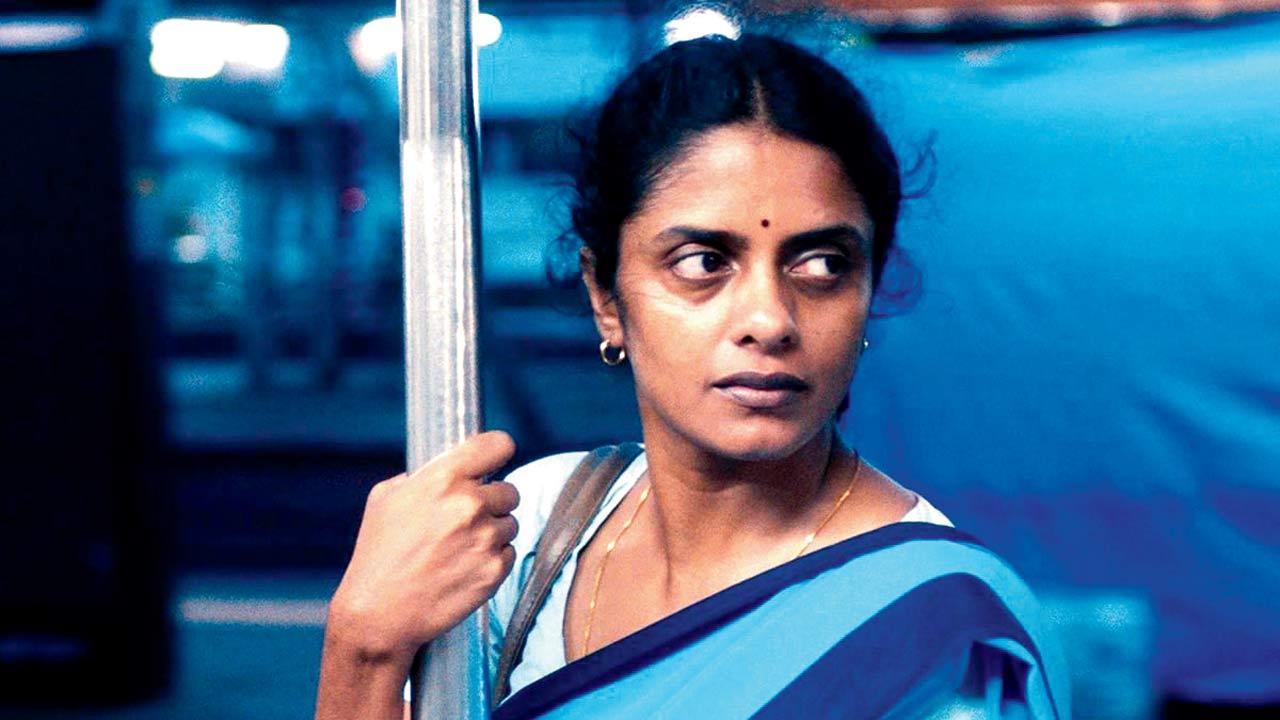
From initially being considered for another role to almost being rejected after a bad audition, Kani Kusruti reflects on her three-year journey with All We Imagine As Light
Priyanka Sharma (MID-DAY; November 22, 2024)
If movies are fated, All We Imagine As Light definitely was for Kani Kusruti. This, even before director Payal Kapadia had penned the story. Kusruti shares that the director, then a student at the Film & Television Institute of India, had reached out to her right after developing the idea.
“Payal said she was thinking of me while developing the protagonist. She had liked my work in a short film. I just wanted to be a part of her film,” she smiles.
In the Cannes Grand Prix-winning movie, Kusruti plays a nurse, Prabha, who develops an unlikely friendship with another nurse, Anu. She reveals that Kapadia had first chosen her for the role of Anu.
“Then years passed [without the film going on floors]. Since I had aged, I thought the chance was gone. Then Payal asked me if I wanted to audition for Prabha.”
While she jumped at the idea, there was a longer wait for Kusruti. Her first audition, held two years ago, didn’t quite go well, and Kapadia began auditioning other Malayali actors. The actor laughs that at one point, many actors she knew in Kerala were screen-testing for the film.
What’s more, she not only encouraged Divya Prabha to audition for the role of Anu, but also requested Kapadia if she could audition again. Lady luck smiled on her this time. Kusruti recounts, “After the second audition, when Payal asked me whether I’d like to be part of the film, I was in tears.”
All We Imagine As Light, which released today, is centred on three women’s friendship and their relationship with the city of Mumbai. Kusruti says the city is aspirational for people of Kerala. “When I was living here, a friend from Kerala visited me. She looked outside my beach-facing house and said, ‘Lovers, lovers everywhere. This is heaven.’ We discussed how you can just go out and sit. In Kerala, even that is difficult.”
I sang and showed Payal Kapadia how people from Ratnagiri dance-Chhaya Kadam
10:50 AM

Determined to bag the role in All We Imagine As Light, actor Chhaya Kadam on how she listed out many similarities between her and the Ratnagiri-bred character to director Kapadia
Priyanka Sharma (MID-DAY; November 15, 2024)
Once in a while, an actor comes across a role that resonates so strongly with them that they almost become possessive about it. For Chhaya Kadam, director Payal Kapadia’s All We Imagine As Light gave her that role. The actor was so enamoured by the character of Parvaty that she pitched hard for it.
“At one point, I thought the role shouldn’t go to any other actor. So, I started listing out similarities between the character and me. I told Payal, ‘I am also from Ratnagiri. My father was a mill worker. We used to live in a MHADA building and now we live in a tower. Everything is the same between us.’ I even sang and showed her how people from Ratnagiri dance,” she laughs.
In the Cannes Grand Prix-winning film, Kadam plays a hospital staff member, who strikes an unlikely friendship with two nurses. She had complete faith in the story and in Kapadia’s vision. That it was the director’s maiden feature did not deter her.
She reasons, “For me, the most important part is my character, then the story. I started my career with Nagraj Manjule’s Fandry [2013], which was his debut. I feel first-time directors work very hard on their film.”
This may just be Kadam’s year. She began 2024 with Laapataa Ladies that saw her as the wise Manju mai, followed it up with Madgaon Express, and then had the Cannes win for All We Imagine As Light. The one thing common in all her outings is her characters’ feminist streak.
She reflects, “I always liked characters that felt like one of us. I enjoyed films that saw the hero defeating the goons with one punch, but they never felt real. I was drawn to Smita Patil and Shabana Azmi’s brand of cinema. Now, it has become a habit to do work that I enjoy, and if we can give a social message, then nothing like it.”
It’s only in cinemas where you can cry in front of strangers-Payal Kapadia
10:18 AM
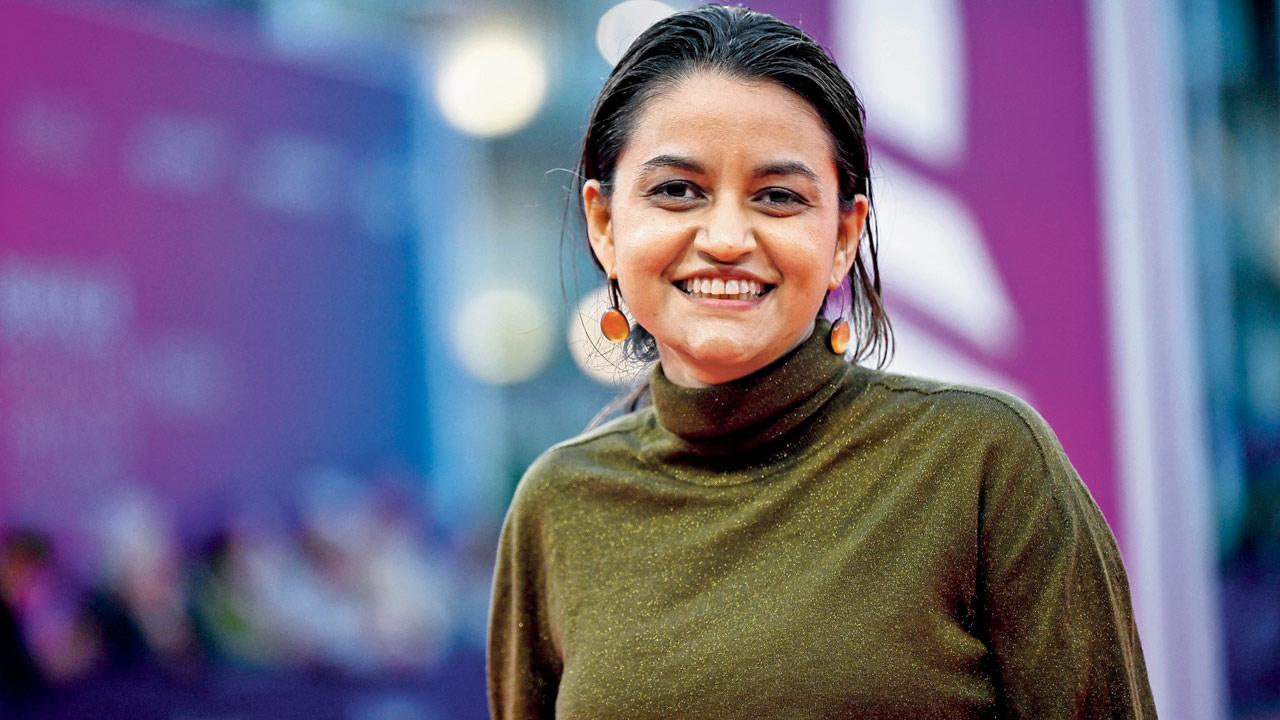
Niharika Lal (BOMBAY TIMES; November 18, 2024)
Despite her historic Grand Prix win at Cannes for All We Imagine As Light, Payal Kapadia says she didn’t want too much spotlight.
“I didn’t want to put so much out there because I felt that somewhere the film’s story gets lost in my personal story. It’s too much about ‘me, me, me’, and that sometimes overshadows the film. And I always felt like I (should) guard myself from that. As things moved on, I’ve tried to reconcile more to talking about myself and my work. Now that the film has got a lot of love, I’m feeling a little bit more confident. I want to show it around.” The filmmaker speaks to us about the themes in her film and the role that FTII played in her journey.
This FTII alumna, who brought the institution so much glory, was rejected in her first attempt when she applied for the editing course. Interestingly, becoming an editor was her first choice. "Woh safety bhi hota hai ki aap editor banoge toh you can get some work and job," she says. But then this rejection pushed her to work as an assistant director and in several other capacities in advertising and documentaries before attempting FTII again five years later in direction.
Payal believes in the importance of public institutions and says, "I love public institutions where you get some time to focus on your work, kyunki kuch bhi artistic cheez padhna aise jaldi se nahi hota. Hamare public institutes humein bahut support karte hain in sab cheezon mein. I'm totally for it. Ek accessibility honi chahiye ki aapko kuch bhi padhna ho toh ek university jahan pe aap afford kar pao. Journalism, filmmaking, or engineering - ek institutions hona chahiye jahan pe har koi ja sake. Normally, private film institutes are very expensive. It's too expensive! In our country, it is ridiculous to have it like that, I feel."
She adds, "For me, FTII was also about other students who were there. Itni diversity thi, pure desh se log aate thay wahan. Jab bhi itni diversity hoti hai toh koi bhi art school, film school, ya journalism school mein ek discourse banta hai jisse as a human being you can grow. That helped me a lot." Excerpts from an interview-
‘I love the catharsis cinemas bring’
Payal shares that when she is in India, then she go to watch films too and feels that the theater is only place where we can cry in the company of strangers. She says, "That's something you can only do in the cinema. To do it in a cinema, and where you feel so open, which is something you never do with people around. I love that catharsis. As an audience, I cry in most movies. For me, I want to be able to create that experience for the audience as a filmmaker."
Talking about the cinema scene from All We Imagine As Light she says, "The scene in All We Imagine As Light where Kani's character cries in the cinema hall is a homage to that feeling. She has tears; she is crying in the scene. I was thinking about a woman like her who's always saying - you should not show your emotions to anybody - and then she is sitting in the cinema where she finds a place to cry. Woh tab tak royi nahi aur cinema ke andar usne chhor diya aur woh aansu aane lage. That was what I was feeling."
‘I think my film is like QSQT in a way’
Whenever asked about the films she loves, Payal often says that while growing up, she used to watch Govinda's films and says, "Some of Govinda's films are really good, you have to watch them! I used to love QSQT (Qayamat Se Qayamat Tak). That was my favourite film as a kid. I used to love it. And I think my film (All We Imagine As Light) is that only. You see, how it is! It's connecting to my childhood days of QSQT (the escape theme). I loved that they were running away with the song - humne ghar chhora hai. It's a Romeo-Juliet. I loved that. And yes, so many more movies."
Hamara system aisa hai ki woh female friendship se bahut darte hain
The film is also about inter-generational friendships and female friendships. Elaborating on how female friendships are often not encouraged in our society and how women are frequently pitted against each other - whether in families, society, or the workplace - Payal said, "I wanted to make a film about this kind of internalized misogyny - hamara system aisa hai ki woh female friendship se bahut darte hain. Unko lagta hai agar ye sab auratein dost ban jayengi toh pata nahi kya ho jayega. So, that's what I wanted to make the film about. Sometimes, responses toward other women come that way, not because you're really feeling that way, but because the whole conditioning is such that it’s like we are pitted against each other."
She added, "That's something I wanted to talk about in the film because sometimes I find myself falling into that trap too. Then I think - why did I respond like this? It was a kind of self-reflexivity that I was thinking a lot about, and it came out in the writing. As I grow older, I'm reflecting more on my responses. I want to tackle that."
'So many times men are not physically in our lives, but they are still lingering there'
Talking about how she wrote about those men who seem to be present in women's lives even when they're either gone or not physically present, she shared, "Actually, my nani, to whom I've dedicated this film - when she was in her late 90s, she was kind of losing her memory, so I encouraged her to write a diary so that she could recall her past. So, she would write every day, and sometimes she would write – he (her husband) has come, and I can see him over there and smell tobacco. I started thinking about it because he died when my nani was 50 years old; she lived up to 98, so more of her life she was alone than she was with him. And I got the feeling she didn’t like him very much. Phir bhi woh aa rahe hain, woh 98 ke age mein woh tapak ke aa rahe hain, unke husband. Usko leke main bahut sochne lagi – what's this thing in our culture? That she would never remarry - at 50, you're still very young, but it's still hard for women that age to move on. Or be with somebody else because life can go on without men too, it's totally fine. That's what Parvati (Chhhaya Kadam's character) wants to do. It's her choice. I was thinking a lot about that. "
She continues, "Also, I have met women like Prabha (Kani Kusruti's character). So much of her life - how these women think and how they would respond to things - was about this guy who was not even there. Even when they were not estranged, just living somewhere else. Woh mujhe ek lady mili jo kehti thi – 'You're wearing jeans, I also want to wear jeans.' And I would say – 'Then wear jeans.' So, she would say – 'Mere pati rehte hain Dubai mein aur agar unko pata chalega ki main jeans pehen rahi hoon toh woh pareshan ho jayenge bahut, toh woh nahi pehen sakti.' He is far away, but still lingering there.
"There was another girl I met who was wearing a sari, and I asked her – 'Aren't you feeling hot? It's Bombay.' And she was like – 'My father-in-law lives in the village, but he will be very upset if I wear salwar.' Then one day, I spotted her on the street, and she was wearing a salwar. I asked her – 'What happened?' And she said – 'Off ho gaye.' (Laughs)."
Payal adds, "Toh yehi hai, ye log hote nahi hain tab bhi itna control karte hain. I connected the dots that how so many times men are not physically in our lives, but they are still there."
'It is so interesting to discover your own mother at the age of 21 - how she was and how she would think'
The title of Payal's film All We Imagine As Light has been borrowed from the title of one of her mother's paintings. Talking about how her mother and her work have encouraged her, she shares, "It took me a long time to make films. My mother was always encouraging - 'What do you want to do with your life?' Recently, she had an exhibition at Chhatrapati Shivaji Museum where they have the Jehangir Nicholson Gallery section, and they have the earliest paintings of my mother from when she was in her early 20s. So they decided to do an exhibition, and in that, I saw one of her works when she was 21. I'm just saying it is so interesting to discover your own mother at the age of 21 - how she was and how she would think."
She says, "I wish I had known at 21 what exactly I wanted to do. Seeing that painting was like meeting her again, but in a younger version. It really overwhelmed me. She was always pushing me, but never too much. She was like, 'Take your time and figure it out.' I was anyway doing odd jobs, making documentaries and all kinds of stuff. But she was always telling me - 'Maybe you want to study.' She herself went to JJ School of Arts in Bombay, where she studied for five years."
'These actresses are really the ones who made the film. They were not like actors who came to do the job'
These actresses are really the ones who made the film. Unke bina koi film hoti hi nahi. I thought it was very normal to take them there on the stage. They were not like actors who came to do the job. Hum bahut saath mein kaam kiye, script pe kaam kiye, dialogues pe, gestures pe. Nobody gives this kind of time to, especially, first-time directors like me. They were so giving and so generous. They didn't think, "Oh! It's your film, and we're part of it. They were like, hamari film hai. And not just them, but the entire crew - from make-up to costume - it became like a true team. It was really a collaboration, and I think that can only lead to a true feeling amongst all of us. Audience mein sab log baithe thay toh mujhe laga ki we should take everybody, but they were already giving me dirty looks, so I just took the three main actresses.
All We Imagine As Light director Payal Kapadia says, "I wanted to normalize female nudity"
8:25 AM
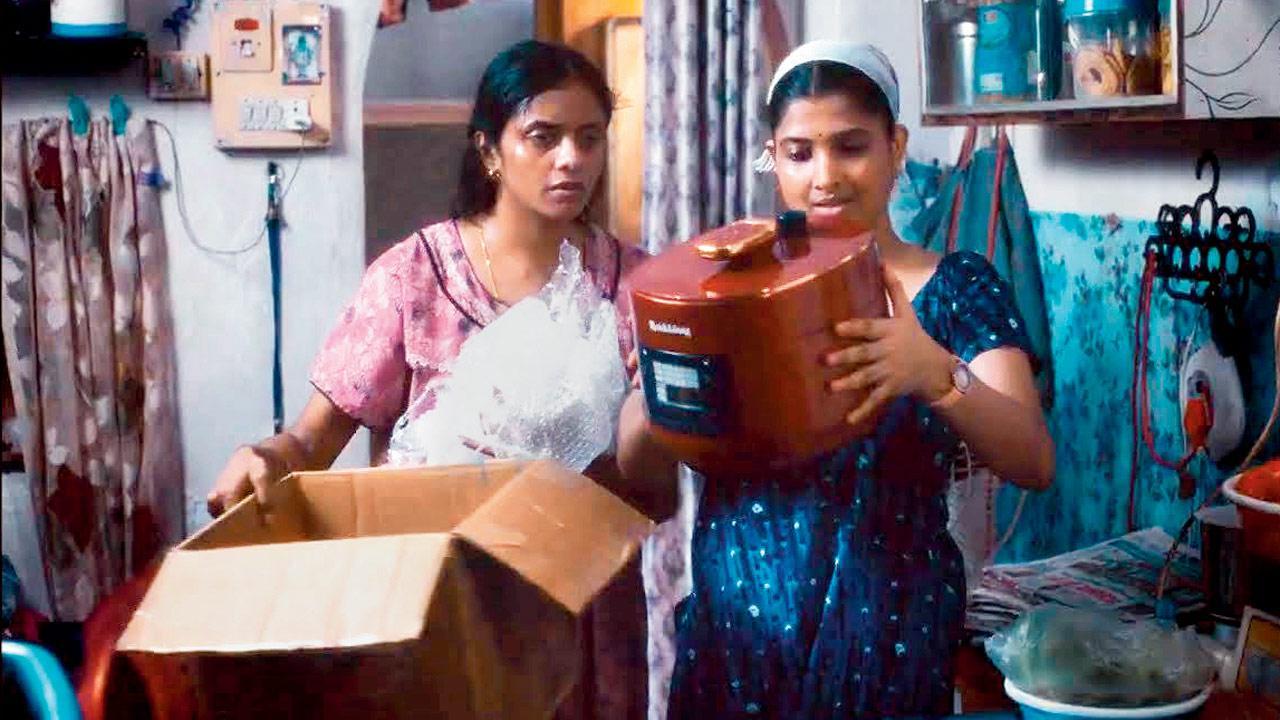
As Cannes Grand Prix-winning film All We Imagine as Light gears up for India release, director Kapadia says she wanted to authentically address the theme of desire
Priyanka Sharma (MID-DAY; November 12, 2024)
Bringing your Cannes Grand Prix-winning film home is an exhilarating feeling. But director Payal Kapadia has a specific reason, among others, to be excited about showcasing All We Imagine as Light to an Indian audience—that she won’t have to explain monsoon to viewers. “When I show my film in different countries, I have to introduce what monsoon is to us. Here when the film premièred at MAMI Film Festival, I didn’t have to explain anything,” she grins.
The Kani Kusruti, Chhaya Kadam and Divya Prabha-starrer tells the story of an unlikely friendship between women of different ages. The November 22 release is Kapadia’s attempt to resolve a conflict that has long brewed within her. “I wanted to make a generational film about female friendship. I felt it is convenient for society to be designed in a way that women shouldn’t be friends with each other. It doesn’t want us to be supportive of each other. I’ve made many mistakes with friends and other women I was close to, where I didn’t respond to them in the right way. We make films to answer certain questions that are within us. This was a core conflict, and I wanted to talk about it,” she says.
Kapadia has beautifully explored many themes pertaining to womanhood, one of them being sexual desire. As she showed female nudity, did she view it as a risk? “I wanted to normalize it. It’s a part of everyday life, like eating and drinking. I wanted to be authentic to one of the main themes, which is desire, and there are ways to get to it. But this felt the most organic thing to put into the film.”
She has had an eventful journey, from being one of the Film and Television Institute of India (FTII) students who protested against the 2015 appointment of Gajendra Chauhan as chairman and being arrested, to becoming one of the most sought-after directors. Does she feel vindicated today?
Reflecting on it, she says, “I feel FTII is a great institute. Artistes who have come before us have contributed greatly to our country. Since people from different backgrounds, regions and languages come to FTII, it adds to the diversity of the industry. Only then can interesting things happen. I’ll always be thankful for my time there.”
Hope we will have state support next year, says MAMI Mumbai Film Festival director Shivendra Singh Dungarpur
8:17 AM
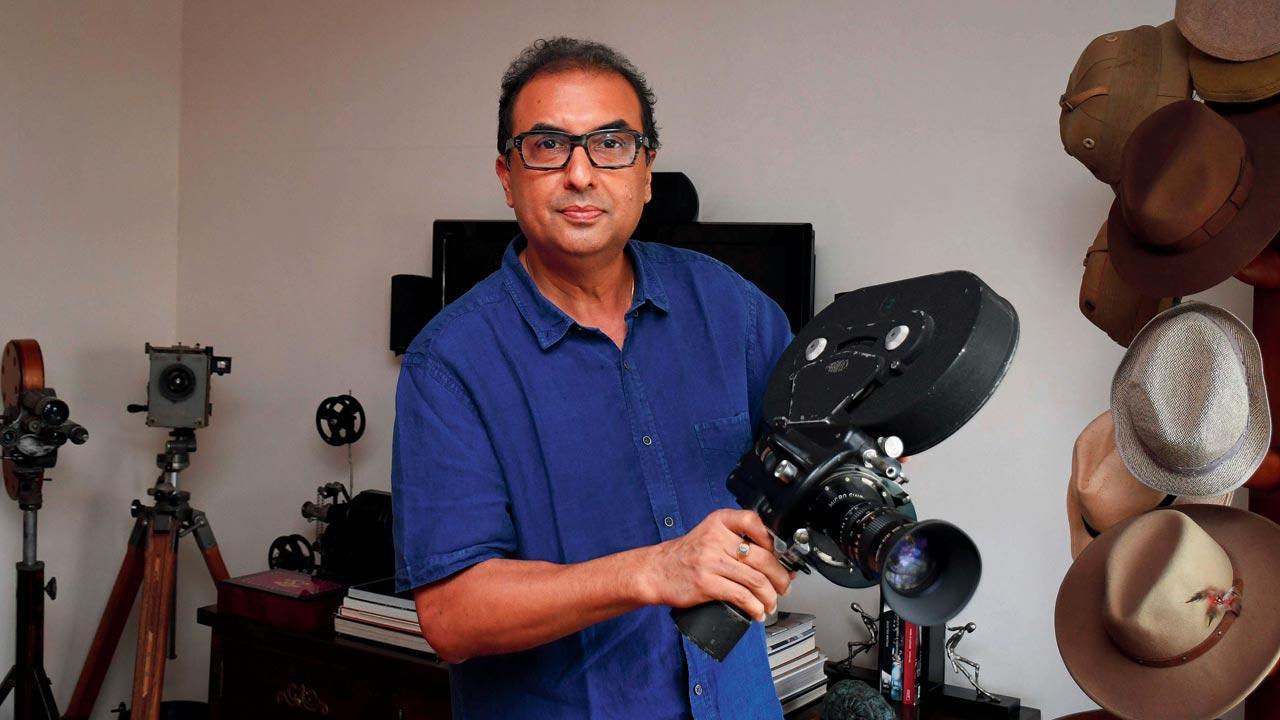
Before MAMI Mumbai Film Festival kicks off tomorrow, festival director Dungarpur confident that funding from the govt can make it a global cinematic event à la Cannes
Mohar Basu (MID-DAY; October 18, 2024)
The MAMI Mumbai Film Festival, over the years, has become a symbol of the city’s love for the movies. As the prestigious film gala sees a change of leadership this year, with film archivist Shivendra Singh Dungarpur taking on the role of the festival director, he says the idea is to bring independent cinema to the forefront. The festival, which opens tomorrow, aims to celebrate both emerging and established voices.
“This year, we are in a phase of transition. One [change] is that it’s just MAMI. No festival in the world has a tagline. We have come back to the original name,” starts Dungarpur, addressing head-on that Jio, the long-standing festival sponsor, has pulled out this time.
“The second important thing is that [over time], we didn’t feel like a festival. It has to be made into a celebration. We shouldn’t be spread out so massively that a guy from Juhu cannot meet a director, who is presenting [his film] in Goregaon. In film festivals, you should have to make little effort to go and experience the whole thing. Even with limited funding, we have got great programming this time—there is the South Asian competition, novel competition, we’ve got classics and the best of world cinema. But what was essential for me was to have an opening film that is truly Indian.”
This pursuit led him to Payal Kapadia’s Cannes Grand Prix-winning film, All We Imagine as Light. Dungarpur says the drama stands for two things that the festival stands for—the city of Mumbai, and rooting for indie filmmakers.
“A young filmmaker finds it difficult to raise funds, then she makes a film, and then he is able to take it to the world. Payal’s film will be an inspiration because it has reached the goal of the Grand Prix. We want to make sure that this festival is not about big films, it’s about independent films. We want it to be a people’s festival.”
Kapadia started her career with Dungarpur at Film Heritage Foundation, and to have his mentee’s work open the festival is a moment of great pride for him. “I have a special relationship with her. I told her that All We Imagine as Light should be the opening film for MAMI because it reflects the city. It’s rare to find a film that reflects everyone’s struggle in this city; a city where people come from different parts of the country and make a home. Usually foreign movies are chosen as the opening film. But to me, Payal’s film was the correct catalyst. There is so much buzz around this movie. Our phones have not stopped ringing; people want to come and see it. It’s wonderful to see this kind of response for an independent film. India doesn’t have the concept of a grant. It’s very tough for an independent filmmaker. That’s why you see so many sources of funding in Payal’s movie.”
Dungarpur believes MAMI has the potential to be on par with international film festivals like Venice and Cannes. He notes that the lack of state support holds India back from making a festival of that scale.
“If a movie goes to Cannes or Venice, then it goes everywhere else. I want to make Mumbai [one such destination for cinema]. We are hoping that by next year, we will have support from the state because the festival represents the city and its spirit. We want the state to be involved. You will see the reflection of state’s support of what the coming days and the next six years are going to be like.”
Mumbai’s date with MAMI
- Over six days, the festival will showcase 110-plus films from over 45 countries. These include Demi Moore’s The Substance, Emilia Perez that is France’s official entry to the 2025 Oscars, and Manoj Bajpayee’s Despatch.
- To attend screenings and events, one needs to register for a delegate badge on the MAMI website. There are badges for the press, industry delegates, cinephiles as well as for senior citizens.
- Screenings and events will be spread across prominent venues in Mumbai, including Regal Cinema and PVR Juhu. Soho House Mumbai will host the Industry Programme from October 21 to 23.

Payal Kapadia’s All We Imagine As Light to open MAMI film festival
8:19 AM
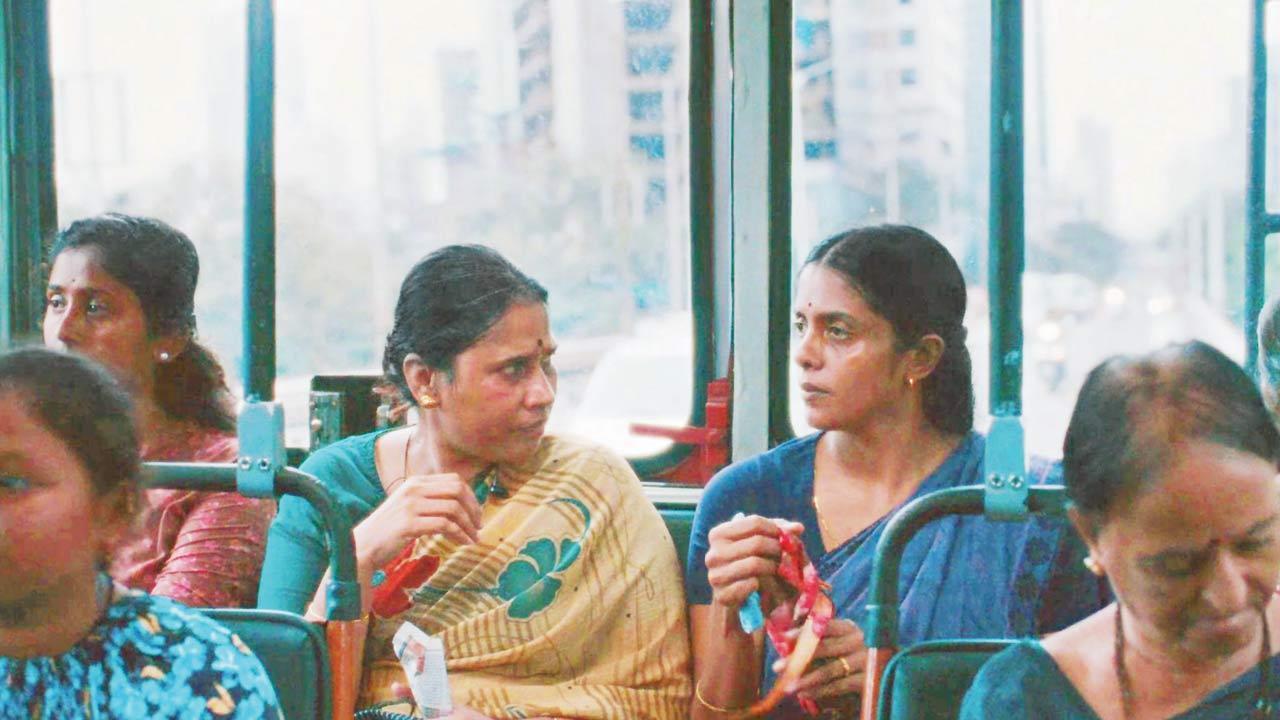
All We Imagine As Light to open MAMI Film Festival; director Payal Kapadia thrilled that Mumbai audiences will be first in India to see her Cannes Grand Prix-winning work
Mohar Basu (MID-DAY; October 9, 2024)
Payal Kapadia has fond memories of her film student days when she would attend screenings held by the MAMI (Mumbai Academy of the Moving Image) Mumbai Film Festival. Today, life has come full circle as her directorial venture, All We Imagine As Light, has been chosen as the opening film of the festival’s 2024 edition. The Kani Kusruti, Divya Prabha and Chhaya Kadam-starrer will première at the film gala on October 18.
Kapadia, whose movie made history by becoming the first Indian film to win the Cannes Grand Prix, considers it a “tremendous honour” to showcase the drama on the stage that shaped her love for cinema.
“When I was a student in Mumbai, I got a glimpse into world cinema, and cinema from other parts of the country, because of MAMI. I am happy that people in Mumbai will be able to see the film here first,” she said.
Set in Mumbai, All We Imagine As Light follows three women, who take a trip to Ratnagiri that allows them the space to reflect upon their life choices. For Shivendra Singh Dungarpur, interim festival director, hosting its India première stands for something bigger.
He said, “All We Imagine As Light will always be remembered as a film that won the Grand Prix at Cannes, but it is also an independent film that faced many challenges, especially in finding funding, before it won accolades all over the world. As we begin a new phase in MAMI, this film embodies the kind of cinema that we would like to showcase and provide a platform that will celebrate independent cinema.”
Mainstream filmon se se kamayenge aur independent cinema mein gawayenge-Nawazuddin Siddiqui
8:17 AM

Niharika Lal (BOMBAY TIMES; July 27, 2024)
“I am interested in character-driven films, not story-driven,” says Nawazuddin Siddiqui. “If you look at modern cinema, the storyline can be as simple as someone travelling from Churchgate to Virar or from the Delhi airport to Dilli-6. Lekin kirdar ke dimag mein jo chal raha hai usko jab kholte hain toh usmein bada interest aata hai. Ek insaan ka dimag itni sari complexities le ke chalta hai aur isliye mujhe character ke joh characteristics hain, unki habits hain, usko explore karne mein bada maza aata hai,” he says, as he chats with us about what kind of films interest him, his trust in the talent of young filmmakers, and why he thinks that independent filmmakers are the ones who will get Indian cinema global recognition.
‘We need to support independent films’
“We need to support independent films. Joh youngsters aa rahe hain unko motivation milega ki log support kar rahe hain. If we will not support them then the next generation will not make such independent films, they will get scared. Hamare yahan talent ki kami nahi hai, unko pata hai kam budget mein achhi filmein kaise banayi ja sakti hain. But we need to support them.”
‘Have hope from new filmmakers not in awe of mainstream cinema’
Elaborating on what he means by character-driven role Nawaz explains, “Recently, I saw a Japanese-German co-production Perfect Days (2023). There is nothing like a plot per se in the film. It is about a character who is at peace with himself and every day, he goes to clean public toilets. He is alone, but he is not sad. He is happy and content. As a viewer, one starts falling in love with the positivity of that character. Story toh kuch bhi nahi hai, lekin kitna khoobsurat kirdar hai. Mujhe kirdaron (characters) se bada lagaav hai. Mujhe kirdaar karna bahut pasand hai.”
Do Indian films have characters like this? “Hamare yahan abhi thodi kami hai. Especially mainstream mein bahut kami hai. In mainstream films, even now, it’s the story that matters the most. I have high hopes from new filmmakers and producers who are coming into the industry. They are not in awe of mainstream cinema and are making independent films, making short films – I have lots of hope from them. With time, I’m leaning more towards films like Perfect Days – even if it’s a modest budget film, it is focused more on the characters’ complexities. Paisa kamane ke liye hamari mainstream filming hain. Wahan se kamayenge aur yahan gawayenge.”
‘HAMARE DESH KA NAAM CHHOTI FILMS FILMEIN HI KARENGI’
Nawaz says that he tries his best to support young filmmakers. He adds, “Hamare desh ka naam chhoti films aur independent filmein hi karengi – aur kar rahi hain. If we want global recognition, then it is independent cinema that can get us that recognition. For instance, when Gangs Of Wasseypur opened, it was first released in Cannes. Then it also became a hit in India. Ritesh Batra’s The Lunchbox was part of international film festivals, and it also became a hit in other countries. The film was not that big a hit in India, but it was a massive hit outside.”
Last year, at a discussion on the popularity of Indian films in France, French officials said that The Lunchbox, which was a French coproduction, became quite a hit with French moviegoers and ran for several weeks.
Nawaz continues, “Be it Payal Kapadia or other young filmmakers like her, when they bring their independent thinking to films, then that will definitely add value (to Indian cinema).”
Nawaz says that in India, people want to watch independent films in theatres, but the problem is that these films have not been able to reach the moviegoers. “Agar 50 theatres mein ek show subah 10 baje aur ek raat ke 10 baje hoga toh apni film dekhne main khud na jaoon.”
In Rautu Ka Raaz, Nawaz plays the role of a police inspector. He says, “Iss story ka mujhe pace bahut achha laga. Whenever there is a murder mystery, it’s fast-paced action. Aisa iss film mein nahi hai”
I'm grateful to Kiran Rao and Aamir Khan that they thought I could do this character of Manju Mai-Chhaya Kadam
8:12 AM

Niharika Lal (BOMBAY TIMES; June 26, 2024)
When Chhaya Kadam attended Cannes this year, she debuted with a double punch: All We Imagine As Light in the main competition and Sister Midnight in the Directors’ Fortnight. While Payal Kapadia’s debut became the first Indian film to be awarded a Grand Prix, the films at Cannes are not the only ones that have captured Kadam’s versatility so far. With small roles in hits like Jawan, Andhadhun and Sairat, Kadam often leaves audiences scratching their heads, trying to recognize her from one film to the next.
She recalled an incident where, upon exiting one of her screenings, she was asked, “How was the film?” because the questioner didn’t recognize her.
However, her recent role as Manju Mai in Laapataa Ladies and her dialogues became so viral that now she’s even stopped at grocery stores by fans eager to recite her lines from the film. In a chat at the MIFF closing ceremony, Chhaya spoke to us about her Cannes debut, Laapataa Ladies, and how she picks her roles.
'Everybody who is working in films must attend Cannes'
The cast of All We Imagine As Light didn't just attend the screening - they broke into a celebratory dance on the red carpet. Later, at the award ceremony, Payal Kapadia brought her three leading actors on stage to accept the historic award.
Recalling her Cannes visit, Chhhaya says, "As an actor, after attending Cannes, I feel that everybody who is working in films must attend Cannes. Film ho toh bohot hi badi baat hai, film na bhi ho toh bhi jana chahiye. Jo filmon se pyaar karne wale log wahan ikattha hote hain na toh woh filmon ka shehar ban jata hai. When the film was selected then itself it was decided for us that we will go to Cannes. It was our producers who took us there, otherwise not all producers take their actors to Cannes. Ye log hi kamaal thay. Even stage pe agar Payal humein nahi leke jati..."
After the Grand Prix was announced, Chhaya said at the press conference that she knew they would win. She had even booked her tickets for after the ceremony and decided on clothes for the award ceremony. How did she have that confidence?
Chhaya says, "I don't know where I got that confidence from. But I had that confidence in our film. Ab main jab apne aap ko dekhti hoon, toh Cannes jane ke pehle itna (dar) tha - Main pehli baar out of India itni door gayi. Toh mujhe ye bahut doubt tha ki yaar mujhe samajh aayega na? Language problem bhi. Par doston ne kaha - kuch nahi, tu ja. Then I had to look for a house there, so I went a little early. Ab to mera confidence itna badh gaya hai."
Talking about her role, she says, "All We Imagine As Light is a story of three women. Usually, in films, women are shown at loggerheads, but in this film, it is about three different women and their friendship. The film is about Mumbai. Mumbai ek aisa shehar hai jahan kahan-kahan se log aate hain aur bas jate hain Mumbai mein. Ye film unki kahani hai. I played the role of Parvati in the film, who is from Konkan and is staying in Mumbai. When I heard about Parvati's role, I realized that I had Parvati in me. When I heard about that role, I felt that it was written for me. Ye sirf main hi karungi. We filmed in Mumbai and Ratnagiri."
'During Laapataa Ladies audition I kept saying - Marathi actress ko kyu lenge?'
Her recent role as Manju Mai in Laapata Ladies and her dialogues became so viral that now she's even stopped at grocery stores by fans.
Talking about the film, she says, "Kiran ji had done a lot of work on that film. We had a dialect trainer, Sonu Anand, who worked really hard with us on getting the dialect right. I would call him at midnight so that he could check whether I was getting the dialect right. Mujhe khud alag-alag language aur har language mein ek lehja hota hai - woh karne mein bahut maza aata hai. Lekin Laapataa Ladies ke waqt mujhe thoda darr tha. Tab tak maine jo Hindi filmein ki thi - film Hindi thi lekin mera character usmein Maharashtrian hota tha. Bolti thi Hindi lekin thi woh Marathi aurat. But this character was from UP, so I was like I don't want to get caught. My friend Romil Modi, who was the casting director of the film - I used to keep saying to him, 'Romil, nahi hoga. Ye log audition lenge aur kisi Hindi wale ko lenge, Marathi actress ko kyu lenge?' But I'm grateful to Kiran Rao and Aamir Khan that they thought I could do this character of Manju Mai."
"For me, the most important thing is my character; the director or production house comes later. I want to do different characters, and I want to get a chance to learn with every film. Otherwise, it will be like picking the same character and pasting it in every film. Kiran Rao kamaal ki director hai aur kamaal ki insaan hai. She did Dhobi Ghat; even at that time, I was offered a small role, but I couldn't do it because of my operation."
Recalling an encounter, she said, "If I'm asked, I will not remember the dialogues of Manju Mai instantly, but I keep meeting people who know the dialogue by heart. A few days back, I went to a shop and met a family from Gujarat. Aur woh log sab mujhe mere dialogue suna rahe hain. One of them told me that she tells her daughter, 'Boorbak hona sharm ki baat nahi hai, boorbak hone pe garv karna sharam ki baat hai.' (laughs)."
'I'll never say - maine kya bakwas film ki thi. Nahi. Uss waqt mere liye woh bahut important film thi isliye maine ki'
Kadam played roles of strong women such as Naani in Fandry, Suman Akka in Sairat, and Chandrakka in Nude. Talking about how she chooses scripts, she says, "Jab kuch alag karne ko milta hai toh main karti hoon. Lekin hamesha aise nahi hota. Sometimes, there is a good script, sometimes there are good people, and sometimes it’s about the bank balance - that also happens. Sometimes, I also feel like - why did I do this film? But one thing I want to say is that at present, people are talking about my good films. But what the audience thinks are my good films, I was able to do these good films because I also did some other films. Un filmon ne mujhe uss waqt ek support diya financially. Un filmon ki badaulat hi aaj main achhi film kar rahi hoon. I'll also not say - maine kya bakwas film ki thi. Nahi. Uss waqt mere liye woh bahut important thi. Uss waqt uss kaam ke liye bhi maine utni hi koshish ki thi."
How Chhaya Kadam started acting
Her acting career started when she took part in former NSD director Waman Kendre's workshop. Recalling how it all started, she said, "Mere bade bhai aur pitaji dono chhor ke chale gaye, main dono se bahut connected thi. Jab woh chale gaye toh mujhe aisa laga jaise life mein ab kuch nahi hai. Kuch karna nahi hai, aisa lagta tha sab khatm hai. Bas aisa hi hua tha mere saath. I never used to leave home and I was the youngest one. I felt like I have to get out of this, and then one day I saw Prof. Waman Kendre's acting workshop ad in the newspaper and I thought I will get out of my home and will get to meet people who will have no idea what's happening in my life. Kisi cheez mein khud ko dhaalna tha, khud ko bhool jana tha. That's what I had in my mind and that's how I ended up doing the workshop. I really enjoyed doing the workshop and he also showed me what I had and what I was lacking."
"Just yesterday, when I did an interview for Doordarshan, I remembered that someone had told me that an actor was needed in Doordarshan, and I went there and the director told me that the casting was over, but he needed an assistant. Mujhe aisa laga - yaar, main actress lag hi nahi rahi hoon kya? (laughs).
Later, she joined as an assistant and acted in the short film when the lead actress didn't turn up. She has done several films that have not been released yet. Doesn't it hurt to work in films that were not even released?
She says, "Dukh to bahut hota hai. Par woh dukh mera akele ka nahi hota. When we start discussing a project, from that time we start discussing that character. Whether the film is released or not, the preparation that one does for playing characters, it somewhere adds."
Chhaya Kadam has turned producer with her upcoming film Bardovi. She says, "It was a good subject with such good people associated with the film that I felt my name should be associated with it. Bardovi means the place between death and rebirth. It was quite challenging for me to play that role. When working with people who love their work, even if they are few in number—let's say just 50—their energy feels like that of 100. That's how I worked on that film."
Not a single producer backs small films-Nawazuddin Siddiqui
10:58 AM
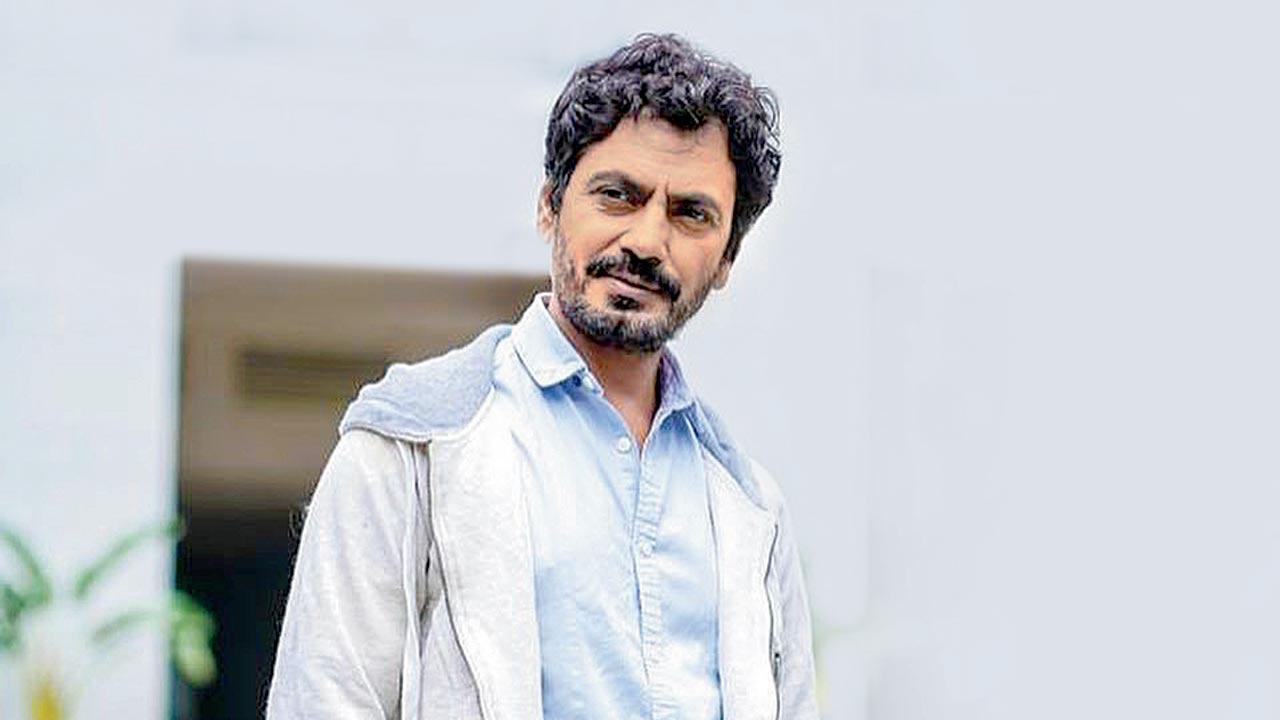
Nawaz, who fronts the small-sized Rautu Ka Raaz, calls out industry’s hypocrisy as it celebrates Payal Kapadia’s Cannes win while not supporting indie filmmakers
Priyanka Sharma (MID-DAY; June 14, 2024)
Only a few years ago, Nawazuddin Siddiqui played a cop investigating a murder in Raat Akeli Hai (2020). For Rautu Ka Raaz, the actor dons the khaki uniform again and probes a murder case. What drew him to a cop character again? His character’s inner world. “This man suffers from PTSD [post-traumatic stress disorder] after he loses the woman he loves. But the investigation helps him fill the void in his life,” he elaborates.
Teaming up with director Anand Surapur, who previously directed The Fakir Of Venice (2019), was another incentive to front the upcoming ZEE5 film. In his 25-year career, Siddiqui has repeatedly worked with filmmakers who tell unconventional stories—from Anurag Kashyap to Ritesh Batra, from Honey Trehan to Nandita Das. What ties them together, he says, is the desire to make honest films.
“If an honest film is made, we will be honoured across the world like Payal Kapadia was. She made a film about what spoke to her. There is hope for cinema till there are people like Anurag Kashyap and her.”
While the industry cheered Kapadia’s Grand Prix win at the 77th Cannes Film Festival for All We Imagine As Light, Kashyap recently remarked that the victory is entirely her own because India doesn’t support independent filmmakers. As an actor who often headlines small-size movies, Siddiqui seconds Kashyap’s opinion.
“This is a huge irony. Not a single producer backs small films. There are many filmmakers who are capable of doing some great work, but they never get support. Our country is running after fake cinema. We show people blowing up ships and planes. Kids should be entertained by this. Why are [adults] enjoying it? Small filmmakers come to me [for support], and I do as much as I can. Nobody puts money on these films. If these films get made, I know they will get accolades around the world. But producers say, ‘Sir, this doesn’t have drama or songs.’”
Lately, small-budget offerings like Madgaon Express and Munjya have made noise at the box office. The actor makes a strong case for them, stating, “What do you get from big-budget films? If we support smaller films, even the biggest movies will pale in front of them.”
India didn’t have any moment at Cannes-Anurag Kashyap
8:11 AM

BOMBAY TIMES (June 12, 2024)
“India didn’t have any moment at Cannes,” says filmmaker Anurag Kashyap, stressing that the victory of independent filmmakers at the European gala is theirs alone and the country doesn’t support that kind of award winning cinema.
India won three awards at the 77th edition of the Cannes Film Festival last month – Payal Kapadia became the first-ever director from India to win the Grand Prix for her movie All We Imagine As Light, Anasuya Sengupta was awarded best actress in the Un Certain Regard strand for The Shameless, and FTII student Chidananda S Naik earned the best short film award at the La Cinef section for Sunflowers Were the First Ones to Know.
“I get very upset when it’s said ‘India@Cannes’. This is a boost... a shot in the arm for a lot of independent filmmakers but their victory is their own,” Anurag Kashyap told PTI in an interview.
‘No funding support’
He said Kapadia’s All We Imagine As Light, which was also the first film from India in 30 years to feature in the main competition at Cannes, received funding from a French company. The Malayalam-Hindi feature, which earned the second highest award at Cannes after Palme d’Or, is an Indo-French co-production between Petit Chaos from France and Chalk and Cheese Films from India.
There were several films at Cannes with either India-set stories or Indian talent, but most were co-productions with banners from other countries. Indian-British filmmaker Sandhya Suri’s Santosh and Karan Kandhari’s Sister Midnight were funded by the UK, while Konstantin Bojanov’s The Shameless was almost self-funded. However, Chidanand’s Sunflowers... is a production of the TV Wing one-year programme under the FTII. “India just likes to take credit for a lot of things, they do not support these films, and they don’t even support these films to have a release in cinema,” he said.
‘STOP TAKING CREDIT FOR CANNES SUCCESSES’
In 2021, Kapadia had won an award at Cannes for the documentary A Night of Knowing Nothing but is yet to be released in India. “Stop taking credit for it. Even if the film is released, no one will go to watch it in the theatre,” the 51-year-old said.
Kashyap, whose films such as Gangs Of Wasseypur, Ugly, and Kennedy have screened at Cannes, said he was surprised when former FTII chairperson Gajendra Chauhan took credit for Kapadia’s win. In 2015, Kapadia was one of the students who protested against the appointment of Mahabharat actor-politician Chauhan as the FTII chief. Kapadia was among the 35 students charged under Indian Penal Code sections for offences related to unlawful assembly and rioting. The chargesheet was filed in 2016, and the next hearing is scheduled for June 26.
“The worst part is the man who put the case against her, and sent some students to jail, is the first man who took the credit and said, ‘I’m proud I was the FTII (chairperson)’. What is his name? Yudhishthir ji (his ‘Mahabharat’ role), Gajendra Chauhan said, ‘I’m so proud that she was the student when I was the head’. You are the one who put the case against her,” Kashyap added.
----------------------------------
Payal Kapadia’s film (All We Imagine As Light) happened because of the French fund, India did not even give the rebate promised to that film. Sandhya Suri’s film (Santosh) was funded by the UK film lottery fund. Karan Kandhari’s film (Sister Midnight) was funded from the UK. Konstantin’s film (The Shameless) was almost self funded and the company that funded it got no support from India.
We need indie film fund like the French one that made Cannes win possible-Payal Kapadia
9:22 AM

Basking in the afterglow of bagging a historic Cannes Grand Prix, ‘All We Imagine As Light’ director Payal Kapadia speaks to Ardhra Nair about what made it possible, the various influences that have inspired her, and why filmmaking is like stitching a quilt
Ardhra Nair (THE TIMES OF INDIA; June 2, 2024)
Can you share your experience of making an independent film without the support of big banners?
The reason I was able to make this film is because of the French public funding system, and I would like to take a moment to talk about this system. In France, a small tax is levied on every film ticket sale and a tax is levied on TV channels as well. From this, a fund is created that allows independent producers and directors to apply for funding. Distributors and exhibitors also get funding to distribute these films once they are complete. In our country, charging audiences a tax would be rather unfair. However, a tax on the profits made on blockbuster films can surely help in funding an independent film fund. If such a system was made in our country with an autonomous body to run the fund, it would only encourage more independent filmmaking. For a democracy to thrive, voices need to remain independent from big studios that are run by rich industrialists.
Looking back, how do you feel about the FTII protests? Do you stand by what you all stood up for?
The protest at FTII was one of the early student protests that took place. It was followed by many others. I am happy that we could be part of the larger discourse of the relevance of public institutions in India. Being a student of FTII was very important to me. It was a space where we could not only formulate our thoughts about filmmaking, but also about the world we inhabit. Filmmaking does not exist in a vacuum. It is through debates and discussions, questions and self-reflection that we move closer to the films we choose to make. FTII was a place that encouraged independent thought. One reason this was possible was because of affordable public education. Unfortunately, public institutes are becoming more and more expensive nowadays. These spaces can only remain relevant and encourage discourse if they remain accessible to all. If they become elitist spaces like various public universities have over many years, it will be useless to the nation. There are many private institutions that are made only to give opportunities to the elite. A space like FTII is somewhere in between at this point in time. We should strive for it to be even more accessible than the direction in which it is headed.
One of your professors, Sandeep Chatterjee, mentioned that you are grounded in poetry, and this is reflected in your filmmaking. Can you tell us more about how poetry influences your work and your approach to filmmaking?
I am influenced by many different forms of art — poetry, painting, music, animation — all find their way into my work. I think of filmmaking like stitching a quilt with many small fragments that come together to give us a whole new feeling.
What kind of cinema do you like?
I am a huge cinephile and I love watching all kinds of films. However, the cinema that excites me the most is one that mixes forms of fiction and nonfiction, and sometimes even fantasy. I like when all these forms merge into one another. For some reason in India, we have a strong urge to compartmentalize each of these types of films. But I love to mix them all up and see where it takes me.
You’ve spoken before about the importance of sisterhood in your film. Can you elaborate on how sisterhood shapes the narratives you create and why this theme is so significant to you?
I have been thinking a lot about friendship in this film. It is a very open relationship that is defined only by you and your friend. In our society, women are made to feel as if they are being pitted against one another. That is very unfortunate. I think friendship can lead to greater inclusivity and solidarity. Perhaps my time at FTII has taught me that.
What do you think about the current state of the Indian film industry, and where do you see it heading?
We don’t have just one film industry in India! We have so many different industries. Especially remarkable to me is the cinema from Tamil Nadu, Kerala, Karnataka and Maharashtra. In these states, there is a range of films that are really taking on a lot of important questions. Recently, Kerala govt started a fund that supports female filmmakers as well as filmmakers from under-represented castes. I think this is the need of the hour. I hope more states start doing the same.
What stories are you looking forward to telling next?
I am interested in seeing how I can incorporate more nonfiction into my films. I am planning on doing some short experiments as a learning exercise. Let’s see where it takes me.
How do you think winning at Cannes will impact your career?
I don’t know yet! I am hoping that the next film won’t take five years to fund like the previous one did.
If your life were a movie, what genre would it be?
If my life were a movie, it would be a tragic comedy!
----------------------------------
BOMBAY TIMES (June 2, 2024)
Payal Kapadia’s All We Imagine As Light recently won the Grand Prix, the second-highest honour at Cannes Film Festival. The filmmaker, who has been showered with congratulatory messages since the win, has released a statement and shared what steps can be taken to make such accolades more common for the Indian film industry.
Addressing how the selection for Cannes made the team both “excited and nervous”, she said, “We were in the middle of completing the postproduction when we found out that it was selected for competition at Cannes. This was beyond what we had expected. It made us both excited and nervous. Just one year ago we had started preparation on the film and now exactly one year later we were all together again but in a completely different context and a completely different world. It’s always a pleasure when a unit can be like a family of friends. And this is an extension of what our film is about.”
‘WHY CAN WE NOT SUPPORT MORE INDEPENDENT FILMMAKERS?’
Reflecting on why it took 30 years for an Indian film to be selected in Cannes’ main competition section, she said, “People at Cannes asked me why it is taking 30 years for a film to be selected. While I did ask the selection committee this question, we should also ask ourselves this as well. Why can we not support more independent filmmakers? One of the reasons I was able to make this film is because of the French Public funding system – a small tax is levied on each and every ticket sale of a film as well as a tax levied on TV channels... In our country, charging audiences a tax would be rather unfair. However, a tax on the profits made on blockbuster films can surely help in funding an independent film fund. If such a system was made in our country with an autonomous body to run the fund, & would only encourage more and more independent filmmaking. For a democracy to thrive, voices need to remain independent from big studios that are run by rich industrialists.” Payal also lauded the Kerala government’s initiative of starting “a fund that supports female filmmaker’s as well as filmmaker’s from under-represented castes. I think this is the need of the hour... I’m thankful to people in the Kerala film industry. So many well established actors and producers were very supportive to our team.”
Subscribe to:
Posts (Atom)