Showing posts with label Patna. Show all posts
Showing posts with label Patna. Show all posts
Pankaj Tripathi flies to Patna to be with brother after alleged attack
9:22 AM

Neha Maheshwri (BOMBAY TIMES; June 23, 2026)
Pankaj Tripathi landed in Patna on Monday morning (June 22) to be by his brother’s (Vijendranath Tiwari) side after the latter was allegedly attacked in Bihar in connection with a land-related dispute. The incident reportedly took place on Sunday in the actor’s ancestral village of Besland in Barauli, Gopalganj district.
According to reports, Tripathi’s brother, Vijendranath Tiwari, sustained multiple injuries after being assaulted with sticks and clubs. He was initially admitted to Gopalganj Model Hospital and was later shifted to a medical facility in Patna for further treatment.
A source close to the family says, “Pankaj Tripathi landed in Patna this morning to be with his brother and will stay there for a couple of days. Vijendranath has sustained multiple injuries but is stable and under medical supervision. The accused has been arrested, and the police are looking into the matter. Right now, the family’s entire focus is on his recovery.”
-------------------------------
The actor’s elder brother was attacked with sharp objects and is undergoing treatment after sustaining injuries
Vishakha Pandit (HINDUSTAN TIMES; June 23, 2026)
On Monday, reports emerged that actor Pankaj Tripathi’s elder brother, Vijayendranath Tripathi, was attacked with a sharp object and seriously injured in Bihar’s Gopalganj district. HT City has learnt that the actor has since reached Patna to be by his brother’s side.
A source tells us, “Pankaj has reached Patna to see his brother. He is in no condition to speak right now given the situation.” Sharing an update on Vijayendranath’s health, the source adds, “He has sustained multiple injuries. But he is stable, nothing life-threatening at this point.”
As per local police officials, the attack took place on Sunday in their ancestral village, Belsand Tiwari Tola following a dispute over land. Vijayendranath was initially admitted to Gopalganj Model Hospital late that night before being referred to a medical facility in Patna for further treatment.
Gopalganj Superintendent of Police Vinay Tiwari said that the accused has been identified, arrested and is being sent to judicial custody. He added that the family has not yet filed a written complaint.
VFX artists bring Hollywood dreams to life. Can tariffs be the kiss of death?
8:20 AM

For India’s invisible VFX army, the bigger worry is AI
Mohua Das (THE TIMES OF INDIA; October 11, 2025)
That jaw-dropping moment in ‘Mission: Impossible – The Final Reckoning’ of Tom Cruise trapped in a steel pod, watching nuclear missiles arc across the sky and cities vanish in fiery blasts was pieced together in a modest apartment in Bengaluru’s Whitefield.
“I was in my shorts, sipping chai, compositing the missile launches, the explosions and the whole sequence that was CGI,” says Mayank Tiwari, a mining-engineer-turned-VFX-compositor from Ranchi, laughing at the absurdity of working on the shot from his swivel chair.
Over the years, he’s cut out shoot plates for Hollywood films like ‘Cats & Dogs’, ‘Green Hornet’, ‘Gulliver’s Travels’, and ‘Clash of the Titans’, cleaned up skylines for ‘Tron: Legacy’, simulated a tsunami in ‘Hereafter’, and built royal banquets for ‘The Gilded Age’.
That, in a sense, is the story of India’s quiet, unseen rise as Hollywood’s visual-effects backroom, all bringing cinema’s grand illusions to life.
Today, Gaurav Choudhury in Patna who leads a 100-member team at Rotomaker, a self-described ‘offshore VFX partner’ for global studios, shows just how far this largely invisible workforce has spread. With branches in Pune, Chennai, Hyderabad, and Vijayawada, the studio brings high-end work closer to the small towns its artists come from.
“A lot of us are from Bihar, UP, and Bengal,” says Choudhury, who works on wire removal, cleanup, and frame restoration. “It lets me stay close to home and still earn almost twice what I would on an Indian project. We don’t always know which client we’re working for, but there’s a steady flow of international commercials and web series.”
Ganesh Papanna, vice-president of ABAI, a Karnataka-based non-profit for India’s animation, visual effects, gaming and comics (AVGC) industry, says Indian studios manage the nuts and bolts of high-volume, lower-cost work — while the creative design stays with Hollywood. The VFX supply chain runs like a global relay where a single shot can pass through half a dozen hands across three time zones.
Hollywood studios such as Disney or Paramount hire top vendors in the US or UK like ILM, MPC, Framestore who then send large portions of work to Indian production houses like Prime Focus, DNEG, or Prasad EFX. These major studios break down sequences into smaller tasks and pass them to mid-sized boutique studios that specialize in one or two skills. Those boutiques, in turn, rope in freelancers finishing individual shots from home.
That future, however, holds new uncertainties. There’s the spectre of Donald Trump’s proposed 100% tariff on foreign-made films. “I think the 100% tariff is on films entering America,” clarifies Papanna. But he’s confident that the industry can survive this.
“For work done outside the US, the surcharge is 25%. Even then, it’s cheaper to do it here.” The likely fallout, he says, will be leaner vendor rates. “A producer might say, ‘I can’t spend Rs 100, do it for Rs 70’ but somebody will take it.”
The math makes it obvious why India is the execution hub. “An average roto artist in India might earn around Rs 20,000-Rs 40,000 a month — roughly $3,000-$6,000 a year — for work that would cost $40,000-60,000 annually in the US.”
It’s this enormous cost gap, says Papanna, that keeps the world’s most spectacular explosions, creatures, and galaxies routed through Indian hands.
“If Hollywood is the interior designer, think of Indian VFX firms as painters and carpenters,” says Parthasarathy Iyer, who runs Andheri-based studio Katalyst Creates.
“I have about 25 artists when work comes in,” says Iyer. “They can be anywhere in Patna, Goa, or Mumbai. All they need is decent internet.”
Abhishek Prasad, director and chief technology officer of Prasad Studios including Prasad EFX, has been part of the invisible engine behind Hollywood spectacles like ‘Ben-Hur’, ‘Hercules’, ‘Hugo’ and ‘Maleficent’.
“We do a lot of detail-heavy work that may not carry our name in the end credits (due to non-disclosure agreements) but is essential for every frame to hold together,” he says. Studios, he adds, “know we understand workflows, quality check, and the discipline required.”
Scalability is key too. “We can ramp up hardware, software, and people in a month. That kind of agility isn’t easy elsewhere.”
Hollywood’s biggest VFX vendors set up shop in India in the mid-2010s. Technicolor — the French company behind the visual effects of countless Hollywood blockbusters — led the charge. Within months, they had snapped up nearly every skilled artist in the country.
“It was a gold rush,” recalls Tiwari, who rode that wave. “At first, they gave India the easy shots, but once we kept delivering smarter fixes, the trust grew. And if you were earning Rs 60,000 a month for Indian projects, you could suddenly make Rs 3-4 lakh doing the same job for a Hollywood project.”
For American studios, even that was roughly half of what they’d have paid a mid-level artist in the US. Then the bubble burst. In Feb 2025, Technicolor’s global operations went bankrupt, a casualty of the prolonged 2023 Hollywood strikes. “Overnight, over 3,000 artists in India lost jobs,” says Tiwari. But that’s also when the remote-freelance economy exploded.
Studios set up small India outposts or paid through partners. “Old colleagues from Los Angeles would message asking if I was free, had a software licence and we’d put together a team overnight. And it paid far better. What I made in a month as salary, I could now make in ten days,” says Tiwari. Day rates run anywhere from Rs 3,000 to Rs 30,000, depending on skill.
India’s main VFX hubs remain Bengaluru, Mumbai, Hyderabad, and Chennai, but mid-sized studios and freelancers can be based anywhere. “Freelancing has become very, very big,” says Papanna. "People work in a company by day and freelance at night. I’d say 35% of artists are freelance now.”
So, if tariffs aren’t the real threat, what is? “AI hasn’t fully entered VFX yet, but when it does, jobs will go,” says Iyer, who’s already adapting. “I don’t do heavy VFX now but focus on motion graphics and title montages, which I can now do myself on AI tools like Midjourney instead of hiring an artist.”
Tiwari says AI is already replacing some basic, labour-intensive tasks and cutting timelines. “But you still need a compositor’s eye so it’s not replacing my creative skills but helping me work faster.”
Prasad calls this the next upskilling wave. “Those who learn will survive,” he says. His bigger concern is elsewhere. “If international work slows, training and R&D investment could take a hit. You can lose a generation of skilled artists if opportunity dries up.”
Another reason for optimism is that Indian content is growing fast, says Prasad. “Budgets are better and the quality bar has gone up.” Iyer agrees that domestic boom — especially OTT series and CGI-heavy regional films — will keep smaller studios afloat even if Hollywood contracts shrink. “Ten years ago, there were hardly any Gujarati, Marathi, or Odia films. Now there’s one every week.”
Papanna too is upbeat. “After all, VFX in India isn’t just about Hollywood anymore,” he says. “Films like 'RRR’, ‘Brahmastra’, ‘Kalki 2898 AD’ show what’s possible here.”

Flower power in the Hindi heartland: Telugu masala rises as Hindi blockbusters fade
2:44 PM

What’s the secret sauce that makes viewers in Patna and Varanasi devour tales from Sheshadri Hills and Godavari Valley? Rajesh N Naidu dives into the fascinating world of Telugu masala movies and investigates the mysterious disappearance of the quintessential Hindi blockbuster
Rajesh N Naidu (THE ECONOMIC TIMES; December 8, 2024)
Crowds totalling two lakh souls, plenty perched atop light towers and hoarding scaffoldings for a better glimpse of the action, cops waving lathis across police barricades.
That was the scene at the trailer launch which flagged off the promotional tour for actor Allu Arjun’s Pushpa 2 – The Rule, the highly anticipated sequel of the Telugu movie Pushpa: The Rise - Part 01 (2021).
It isn’t just that the launch of a movie trailer drew such hordes. It is that all this was unfolding 1100 km from Hyderabad, in the quintessential heartland of Hindi - Patna - that makes it astounding.
Patna may seem a strange choice for a Telugu blockbuster’s opening salvo. Not so in the India of 2024, and not for those who have been observing the decades-in-the-making rise of Telugu potboilers in its home market and beyond, and the simultaneous weakening of mainstream Hindi movies.
ET spoke to film academics, distributors, seasoned journalists, entertainment companies and others to explain the seamlessness with which dubbed Telugu movies became the toast of Hindi heartland audiences, culminating in Allu Arjun’s party in Patna.
The prequel
The journey to Patna began in the late 1990s, and with one phenomenon - multiplexes. That was the start of the alienation of the mass audience from the mainstream Hindi cinema, which changed considerably in subsequent years.
What worked in the smaller confines of a multiplex was a certain genre of storytelling that clicked with urban audiences, which a new bunch of film-makers who grew up in urban environs could instantly identify with.
This contrasted with their predecessors, whose points of reference were different and who were far more grounded and aware of the world beyond the urban bubble.
They knew of the concerns and realities and dreams of people of almost all classes in the society and derived a great deal of their raw material from life, literature and lived experiences.
Consequently, their films cut across classes and geographies. Even movies like Vidhu Vinod Chopra’s Parinda (1989), which appealed to the urban audience, also struck a chord with the masses because of the universality of its storytelling. That’s not quite how it worked in the world of multiplex movies.
Avijit Ghosh, a veteran journalist and author of Cinema Bhojpuri, points out, “There was an explosion of a feel-good cinema which had sensibilities and style of narratives which worked with urban audiences.”
The new wave focused more on western culture and aesthetics. It also catered to Non-Resident Indians (NRIs) to a great extent.
Anupama Chopra, editor, The Hollywood Reporter India, points out, “There are mainstream Hindi films which are set abroad and speak a language which the masses cannot understand or relate to.”
For instance, the aesthetics of thriller writer James Hadley Chase showcased in Johnny Gaddaar (2007) may not work with the masses, with their markedly different language, ideological references, worldview and jargon.
Simply put, the single-screen audience could not identify with this cinema. This led to the disappearance of the commoner from mainstream Hindi films, resulting in the dwindling of those quintessential mass entertainers.
Brijesh Tandon, a film exhibitor from the Delhi and Uttar Pradesh regions, points out, “The masses want stories which contain multiple emotions, easily hummable music, and stories which can be watched along with families.”
These rich-in-imagination movies copiously incorporated the elements of Navarasa from Natyashastra, copiously mixing the nine emotions ranging from romance to peace, with each furthering the plot and complementing others.
Such movies were made solely with the intent to entertain. Movies like Ghayal (1990), Krantiveer (1994) and Ghatak (1996) are prime examples.
As Dr Sanjay Ranade, associate professor, Department of Communication and Journalism, University of Mumbai, underscores, “Hindi cinema as an alternative does not exist for the Hindi heartland. There is no entertainment in Hindi cinema. It is time for Hindi cinema to shut operations and go in a thinking mode.”
That is quite the indictment.
Mass entry
It is in the nature of economics that when there is demand, supply will find its way. The journey of dubbed Telugu films into Hindi heartland began with television, and interestingly, piracy.
Ira Bhaskar, who taught cinema studies at Jawaharlal Nehru University (JNU), explains, “One of the reasons why dubbed Telugu films clicked with Hindi heartland audiences is piracy. They were hardly released officially in the northern region.”
But in many areas, she says, local stores supplied dubbed Telugu films on pen drives. Those who viewed one wanted more. It had the cultural elements they craved for - the larger-than-life hero, action, themes, storytelling structure. The preeminence of the hero stood out in Telugu cinema.
Author Mukesh Manjunath in his book The Age of Heroes: The Incredible World of Telugu Cinema observes, “All Indian film industries have produced stars, megastars, and superstars. But one peculiarity differentiates the Telugu film industry from others: Telugu films do not produce stars, they manufacture ‘heroes’.”
Concurring with this thought, scriptwriter Jaidev Hemmady points out, “Telugu films have a typical larger than life hero who has a devil may care attitude which strikes a chord with the North hinterland audiences whereas mainstream Bollywood has become too politically correct.”
Sarrainodu (2016) is an example of this. In that movie, Gana, the hero, played by Allu Arjun, is a former army major who does not tolerate injustice. The story contains almost every trope that clicks with the Hindi heartland. The setting is a village. Gana is a man of principles. He is fearless. He fights for the have-nots and the oppressed.
Gana is the template for the hero the Hindi heartland craved for.
Bhaskar explains, “The Hindi heartland audience go for characters rather than actors since they do not know them well. So, the narrative of oppression, fight for justice and action genre are elements in dubbed Telugu films which work.”
The angry young man for the modern age then.
Plot twist
What also worked is the folktale structure Telugu movies tend to follow.
Take for instance, the dubbed Telugu film Don No. 1 (2008), a cult hit in the Hindi heartland. The film unfolds like a folk tale. Surya, the film’s hero, kills his parents’ killer. He wins because he is righteous.
As Manjunath notes in his book, “All mainstream Telugu films are folk tales. Not just the actions of these heroes, even the themes and tropes in these films stem from and are steeped in folk traditions.” He adds, “The hero (in Telugu films) does not survive because he is the hero; he is a hero because he survives.”
This kind of storytelling gives not only a sense of rootedness but also provides a great deal of familiarity in its setting for the Hindi heartland audience.
As Avijit Ghosh, author of the book Cinema Bhojpuri, points out, “Tropes such as a Zamindar with a henchman or a mother pining for a son, seen in old Hindi films are quite present in dubbed Telugu films. These stereotypes create a sense of familiarity with the underclass as they have been missing these elements in commercial Hindi films.”
Over the years, dubbed Telugu films also have exhibited a structure which has worked very well with non-Telugu audiences, reflected in the film’s pace and editing to its music.
Sanjay Ranade of University of Mumbai reckons that there are four key parameters which make dubbed Telugu films work in the Hindi heartland. They are slapstick comedy, crisp editing, engaging music, using interesting techniques and sound and action-oriented scenes.
Add to this the not so subtle showcasing of caste and class dynamics, along with the preeminence of family as the binding unit, and the thali is complete.
Ranade says, “In this manner, dubbed Telugu films have been creating more expansive narratives which are more generalized.”
Another aspect is their production value.
Manish Shah, owner of Goldmines Telefilms, a YouTube channel with more than 101 million subscribers which showcases dubbed southern languages films shares, “In dubbed Telugu films, money is invested in films and not in stars. As a result, the production value of these films is top-notch, which enhances their entertainment quotient.”
He adds, “Largely, there is not much vulgarity which makes them suitable for collective viewing especially with family.”
Add copious amounts of dishoom dishoom. Most of these movies being action oriented also help cut across geographical boundaries of states and appeals to the Hindi belt.
As Bhaskar points out, “Telugu films focus largely on the action genre which has high engagement value and cuts across geographical boundaries.”
Ghosh adds, “Despite modern action sequences, Telugu films have retained these elements. Also, these films have a certain degree of earthiness which the Hindi heartland audience identifies. The character Pushpa is a case in point. He is a throwback to an old hero. One can imagine a person from eastern Uttar Pradesh or Bihar emulating Pushpa’s swagger.”
Climax
No wonder then, as a seasoned event management professional puts it, the Hindi heartland is now home turf for Telugu heroes. “There is nothing unusual about Allu Arjun promoting Pushpa 2 – The Rule in Patna.
Telugu films have simply managed to achieve the masala entertainer grammar seen in mainstream Hindi films of directors Manmohan Desai and Prakash Mehra.
The Hindi heartland audience is a mass audience. It helps that the composition of the audience in Telugu-speaking states is not materially different.
The undivided Andhra Pradesh has been a cinema-loving state. This is reflected in the number of single screens (largely associated with the masses) in the state. According to the Film Federation of India, the number of single screens in undivided Andhra Pradesh was 2809. The only other state with a similarly large number of single screens is Tamil Nadu (1546).
As more and more Telugu films become bolder and bigger in their technique, scale and grandeur, will this sustain?
Let’s wait for the third installment of Pushpa.
Pehle main festival ke time par bhi kaam karta tha. But I don’t do that anymore-Pankaj Tripathi
9:21 AM

Rishabh Suri (HINDUSTAN TIMES; November 17, 2023)
Pankaj Tripathi is undeterred in his resolve to strike a work-life balance, and this is why he has stopped working on festival days. As Chhath Puja begins today, the actor — who hails from Gopalganj (Bihar)— has taken some time off to be with his family.
“Pehle main festival ke time par bhi kaam karta tha. But I don’t do that anymore,” the 47-year-old tells us, adding, “I have also started taking a weekly off now.”
A celebration native to the Bihar-Jharkhand belt, among other regions, Chhath Puja sees scores of people line up at railway stations every year to return home for festivities with their families. However, the National Award-winning actor will be in Mumbai itself. “I went to Bihar two-three years ago [for Chhath], where it is celebrated massively. My badi bhabhi celebrates it in Patna. Last year, I went to Chowpatty beach in Mumbai [for the puja]. This time, wherever there’s a water body, we will do the puja,” he says.
Sharing an insight into what the festival entails, Tripathi — who will be seen next in Atal — says: “Yeh aastha ka tyohaar hai. We worship Chhathi maiyya. Suraj ki puja hoti hai. The prasad is made using farm harvest, nothing store-bought. The offerings include sugarcane, turmeric and radish. We stand in the water and do the puja. Also, it’s probably the only festival in which there is no priest to do the puja. Jo Chhath mana raha hai, vahi puja karta hai.”
Picture abhi baaki hai: Single-screen theatres get a fresh lease of life thanks to Gadar 2, Pathaan
8:35 AM

Return of mass entertainers revives theatres in small towns. But have filmmakers got the message?
Shruti Sonal (THE TIMES OF INDIA; August 27, 2023)
A spell of rain and a weekday afternoon do little to dampen the mood of cinegoers cheering the return of Tara Singh in ‘Gadar 2’. Claps, seetis, and slogans fill the nearly housefull hall at Delite Cinema, Delhi’s oldest surviving single-screen theatre. Outside the building, people are already lining up to buy tickets for the next show.
Little wonder that manager Janmayjai Verma is beaming with delight. “Nearly all shows of the film in our 1,000-seater hall are running housefull. Even Sunny Deol couldn’t have predicted this,” says Verma.
At Liberty Cinemas, just a few kilometres away, the scenes are similar. An old man, with a few notes in his hands, tells the man at the counter: give me a ticket for whichever show has seats left.
In smaller towns, theatre owners are similarly uplifted by the return of footfalls and collections. “After ‘Pathaan’, we are finally seeing momentum again. People from other villages are also coming to see the film,” says Kamal Khurana, owner of Urvashi Cinema, located in the small town of Kichha, close to Haldwani in Uttarakhand.
The cheer was much-needed, especially after the pandemic which dealt a fresh blow to an industry already struggling to compete in the age of swanky multiplexes, OTT content, and changing consumer preferences. According to Statista, the total number of screens dropped from 9,527 in 2019 to 9,382 in 2022. For most others, an epitaph was kept ready.
SRK EFFECT
But Shah Rukh Khan’s comeback film ‘Pathaan’ in January was among the first to prove the naysayers wrong. Nearly 25 small theatres reopened across North India, cashing in on the blockbuster. Now, ‘Gadar 2’ and superstar Rajinikanth-starrer ‘Jailer’, aided by ‘OMG 2’ and ‘Bhola Shankar’, have breathed new life into the Indian box office. As per the Producers Guild of India and Multiplex Association of India, ticket sales hit nearly Rs 400 crore during the August 11-13 weekend, an all-time record.
Suman Sinha, owner of Patna’s Regent Theatre, an iconic building that is older than independent India, says that nearly 200 screens have shut down across Bihar since Covid but some are back. “Those who feared ‘Pathaan’ was a one-off success now want to lift the shutters,” he says.
The impending release of SRK’s next ‘Jawan’, Salman Khan’s third installment of the Tiger franchise, and Prabhas’ ‘Salaar’ is expected to bring more business.
MASALA FOR MASSES
It’s all about the right content, say industry experts. “Mass audiences were just not being catered to. For the films which have resonated with them, they have come to the theatres in hordes,” says Girish Johar, Mumbai-based producer and film trade expert.
Vishek Chauhan, who heads Roopbani Cinema in Bihar’s Purnea district, feels there’s a larger message: don’t ignore the common man. “If it was just a problem of economic viability, single-screens wouldn’t be surviving in states like Tamil Nadu and Andhra Pradesh. The maximum closures have occurred in regions such as Bihar and UP, and that trend began long before the pandemic,” he says. The problem, he emphasizes, was with content that alienated viewers. “In the last decade, the Hindi film industry began thinking that their business could thrive by only focusing on metros. Cinema became elitist and unrelatable to the masses. ‘Pathaan’ and ‘Gadar 2’ should serve as wake-up calls.”
Regent’s Sinha says that to fill the vacuum created by Bollywood, they had to rely on dubbed versions of English films or South Indian movies. “Hindi versions of Telugu films such as ‘RRR’ and ‘Pushpa’ did well too,” he points out.
For Gadar 2, Johar says, as per his independent data analysis, single-screen theatres are contributing more or equal collections vis-à-vis the multiplexes. The difference in ticket prices in the two segments, he explains, also means that the footfall in single-screen theatres is more. “In recent years, box office revenue from multiplexes went from 30% to 60-65%, leading many to ignore single screens,” he adds. Now, as urban and metro audiences rely more on OTT content, smaller towns and villages are coming back to the cinema spotlight.
BETTER BARGAIN
On their part, single-screens are not the khatmal-ridden, sweaty experience of yore. “Almost everyone has updated their theatres, with digital projectors, pushback seats, and new-age sound systems. In the Delhi-UP belt, nearly 90% of the halls are now air-conditioned, and the rest are on track to do so,” Khurana says.
However, unlike multiplexes, tickets even today range from Rs 70 to Rs 190, while popcorn is an affordable Rs 30.
But they are not over the hump yet. The next two quarters are going to be a real litmus test, according to Shibashish Sarkar, president of the Producers Guild of India. “Jawan, Tiger 3 and Salaar are expected to do significant business. But the big question is, can films apart from these big names do well? It’s an industry that runs for 52 weeks and not just on a few blockbusters,” he adds.
Regent’s Sinha agrees. “Like democracy, theatres like ours are of the people, by the people, and for the people. We will do all we can to save them. All we need is films which understand the pulse of the common man too.”
Though I got recognition after Panchayat, I didn’t get a place to stay-Chandan Roy
8:39 AM

It took multiple auditions, two stints in Mumbai and one popular web series for the city to accept Chandan Roy. But now that he is here, he is raring to go
Hiren Kotwani (MID-DAY; July 28, 2023)
It could be a scene right out of a ’70s Hindi movie. A wide-eyed, hopeful man alights from the train at Bandra Terminus, and on the pretext of picking up his dropped handkerchief, touches his forehead to the ground. His “pranaam” to the land that he hopes will take care of him now. That’s a tad filmi, we tell Chandan Roy. But he proudly says, “My haav-bhaav is all filmi.”
To him, he is that filmi boy who made his way from Mahnar, Bihar to Mumbai to chase the Bollywood dream. To the rest of us, he is the good-natured assistant Vikas Shukla in his breakthrough series, Panchayat.
After completing his education in Patna and working at Dainik Jagran in Delhi for two-and-a-half years, Roy first arrived in Mumbai in October 2017. What followed is the classic script of a struggling actor—sharing his first accommodation with five people in Versova, giving countless auditions, seeing his savings of Rs. 60,000 diminish over four months. Within weeks of his stay, he noticed a shift in him.
“Whoever comes to Mumbai, becomes a believer. Someone told me that whenever new people come to the city, they visit the Mumba Devi temple in Bhuleshwar. So, after about a month, I went to seek the Devi’s blessings.”
His prayers were soon answered. In January 2018, the actor landed his first role, the leading lady’s brother in a show on Baba Ramdev. In November 2018, the actor auditioned for a web series. He was told the makers were casting for two small roles.
“After two-three weeks, I got a call telling me that my audition was liked, and they wanted to test me for a bigger role. So I auditioned again. The following day, I was called for a meeting at the TVF office. There, Deepak Kumar Mishra [Panchayat director] said, ‘Where were you? We’ve been looking for you all this while.’ I thought he was asking where I lived, so I told him I was staying in Versova. He was amused by that.”
And just like that, Roy shot for Panchayat, playing leading man Jitendra Kumar’s assistant. The struggle was over. The proverbial big break was here. Or so he thought.
In March 2020, the pandemic struck and nationwide lockdown was enforced. “At the time, we were all hearing the rising number of deaths. So, I thought it would be better to return home. That way, if something happened to me, at least my family would be around me,” he recalls. Roy returned home the way he had come, an aspiring actor who had no roles, only dreams to speak of.
But something changed the very next month. Panchayat dropped on Amazon Prime Video, and overnight, Roy became a household name.
This was his big moment. Many calls—congratulatory and of offers—followed, as did months of waiting due to the lockdown. It was only in December 2020 that Roy, after borrowing Rs. 15,000 from his family, returned to the Maximum City.
This time around, he was a rising star. But Mumbai wasn’t going to roll out the red carpet for him. “A friend, who let me stay with him in Andheri, asked me to move out after a few days, fearing that his landlord would oust him. Though I got some recognition after Panchayat, I didn’t have a place to stay in Mumbai.”
Luckily, he bagged a film, Hanak (2021), to be shot in Bhopal for a month. “I didn’t care how much I got paid. My only thought was that my accommodation and meals for the month were sorted.”
The actor has since gone on to star in the second season of Panchayat, Hostel Daze 2, Pitchers 2 and the Manoj Bajpayee-led film, Gulmohar. In the past two years, he has shifted multiple houses, but has found his footing in this city that continues to astound him with its “energy”. Earlier this year, he even ticked that one box that is considered an elusive Mumbai dream— of having a place of his own.
“Itne saal jiske sapne dekhe, aakhir wahan pahuch hi gaya,” says Roy, who currently rents an apartment in Lokhandwala, Andheri. “If anything magical happens, it happens in Mumbai. There is still a lot more to do and achieve.”
It will all happen, he is sure, in the dream factory that is Mumbai. Now that he has been around for almost three years, what does he like the most about the city? “The monsoon,” he says promptly. Umm, the average Mumbaiite would disagree, hating how the rains bring life to a standstill. But the artiste in him chooses romanticisation over reality.
“If I were a kid, I’d go out to get wet in the rain. Now, I enjoy the rain indoors. The greenery all around is a beautiful sight, the smell of wet earth [calms me]. I love Mumbai rains. In Bihar, if it rained for a week like it does here, life would become impossible.”
If he is gung-ho about Mumbai rains, he is disheartened by its food scene. Vada pav and samosa pav don’t cut it for the lover of chana sattu.
“The only place I love to eat at is a restaurant called Pancham Puriwala, near Chhatrapati Shivaji Maharaj Terminus. I love their thaali with puris.” Surely, he must be a fan of the city’s famous chaats? “I think pani puri in Bihar is better than that of Delhi or Mumbai,” he grins.
But Roy isn’t complaining. He has his blinkers on, and will keep pace with this city, step for step. He has an end goal to meet—to own a house in Mumbai, a sign of permanence in the fickle city. “There is a wonderful apartment complex in Madh Island. If you go 20 floors and above, you can see the sea all around. I’d love to have a home there.”
Mumbai meri jaan?
Love about Mumbai
That it is a magical city. For people like us, it has changed our lives. I can see my dreams being fulfilled here. If you work hard, then anything is possible.
Hate about Mumbai
The traffic, because you don’t know how long you will be delayed and you get even more restless.
Expectations from Mumbai
I hope it continues to accept me, and bless me with more work.
Did Mumbai live up to it?
Much better than I had imagined, and soon. As one grows, the struggle becomes harder. Love it, and the city owns you and loves you back. Once you live here, you don’t feel like living anywhere else.
Will it remain forever home?
Yes. As long as I am young and can work. However, when I grow old, I’d prefer the mountains.
I feel blessed and privileged to have an audience waiting in anticipation of my work-Neeraj Pandey
8:26 AM
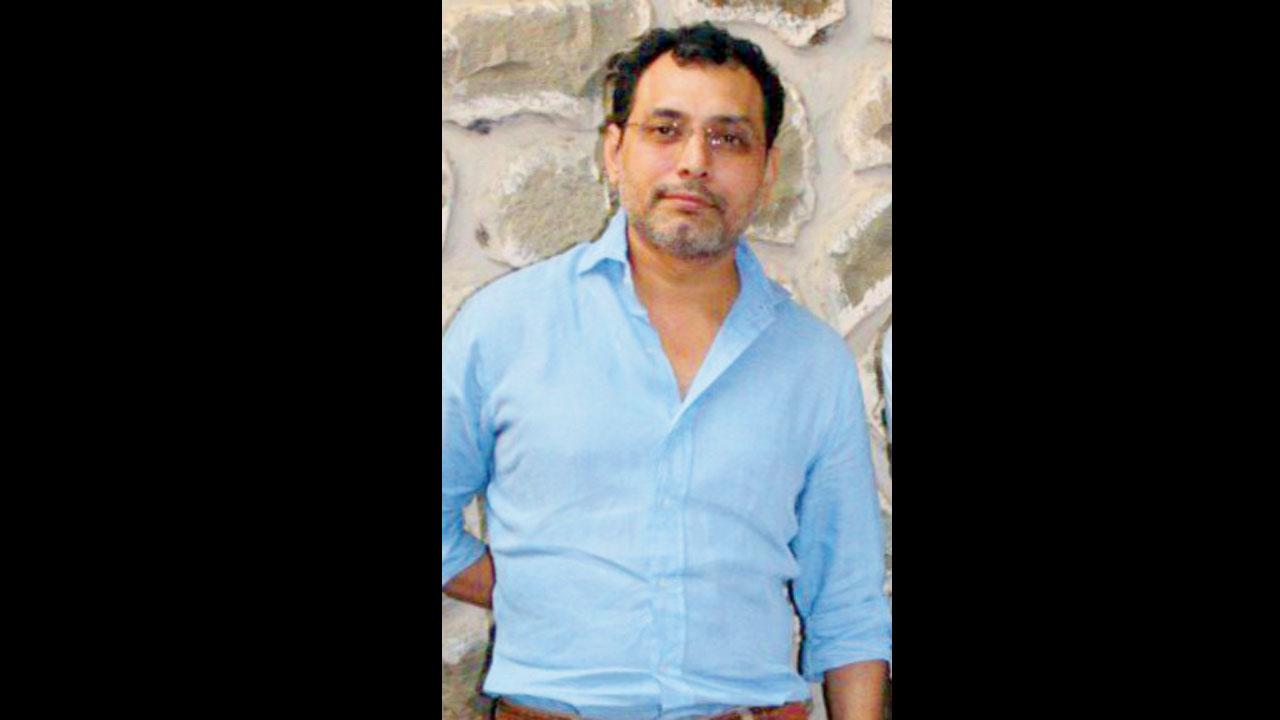
Creator Neeraj Pandey talks about his five-year journey of making Khakee: The Bihar Chapter, based on IPS officer Amit Lodha’s book Bihar Diaries
Letty Mariam Abraham (MID-DAY; November 15, 2022)
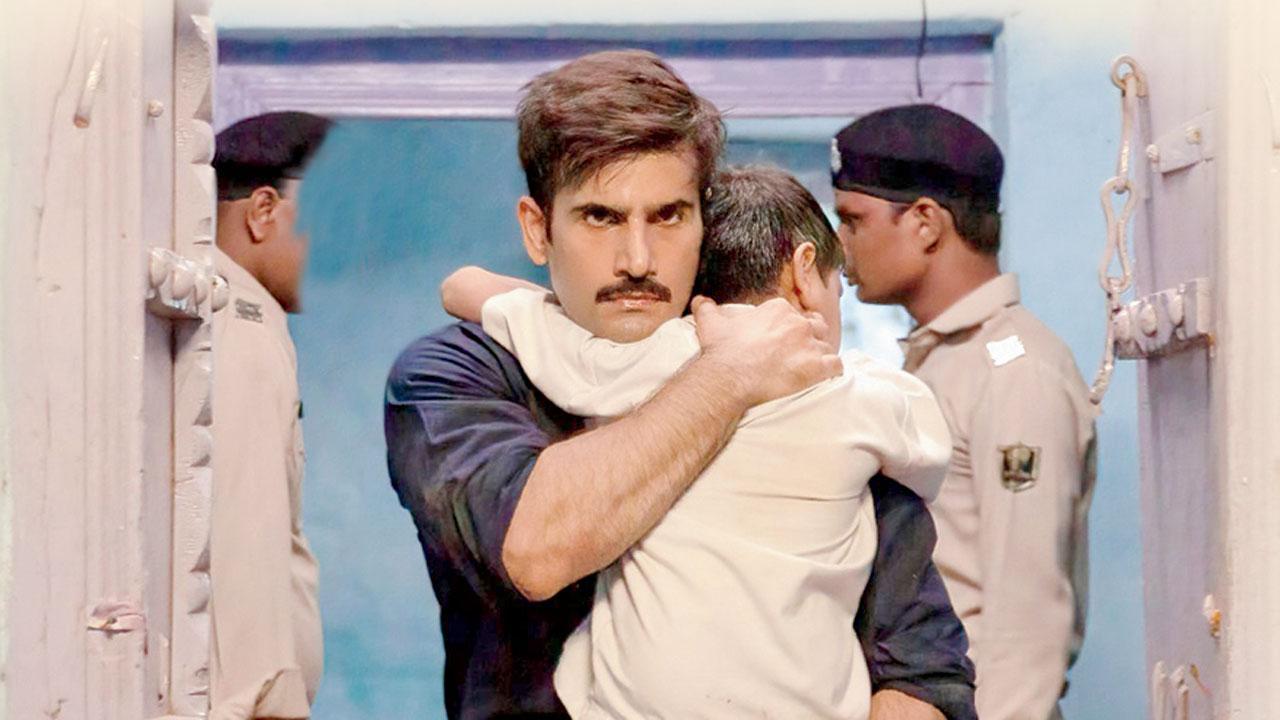
He enjoys watching mindless comedies sometimes, but making one is not his cup of tea. Instead, Neeraj Pandey likes to tell gripping thrillers when he goes behind the camera. After Special Ops 1.5: The Himmat Story (2021), the director is ready with another thriller, Khakee: The Bihar Chapter. Inspired by IPS Amit Lodha’s book Bihar Diaries: The True Story of How Bihar’s Most Dangerous Criminal Was Caught, the Netflix offering is a retelling of the conflict between the officer and Samant Pratap, one of Bihar’s most feared ganglords.
Ahead of the show’s release, creator Pandey discusses finding an unexpected hero in Lodha, and how he went beyond the book.
Edited excerpts from the interview.
What about this subject caught your fancy?
The journey started with my meeting with Amit [Lodha]. He is an ex-IITian, who chose to become an IPS officer. That acted like a magnet because I had never heard of anything like that. Thereon, [my attraction to the subject] kept on building because he is from Rajasthan, and then was posted in Patna — [he was] like a fish out of water. It made for a great story.
When dealing with a story inspired by real-life events, what are the things that you have to be careful about?
The spirit of the story is sacrosanct. We all take creative liberties [as] the story has to entertain the audience. So, you compress time and space to make it more dynamic, and in the process, some bits are left out, or you choose another route to tell what has happened. We have taken such liberties, but nothing that tinkers with the spirit of the story.
Besides referring to the book, how extensive was your personal research?
We definitely went beyond the book because Amit could write only so much about the particular case. Bhav [Dhulia, director], and Uma [Umashankar Singh, writer] and I spent a lot of time with Amit trying to get a sense of whatever we missed out on. We came across tons of material, and used it in our narrative. [We skipped] certain characters that didn’t align with our approach to this story. We also added several things that were not mentioned in the book. Amit felt they were not necessary for the book, but we felt it was important for the [visual] medium.
When did you start working on Khakee?
I started work on it in 2017. The pandemic set us back. After the first lockdown, our crew of 180 to 200 people shot in the hinterlands of Jharkhand. It had no basic infrastructure. We had equipment coming from Delhi, Kolkata, and Mumbai, and actors flying in and out. It was a long schedule, moving from one village to the other, but we finished it in one go.
There is no fixed formula for what will work. How do you manage to hit the nail on the head every time?
I trust my instinct and take the plunge. Sometimes, you spend a lot of time on [a subject], and then realise that it’s not working. It takes more courage to pull the plug at that point. I have pulled the plug on a lot of projects. Even if the project has not worked out, the journey has taught me more. As for the pressure [of delivering successful shows], I feel blessed and privileged to have an audience waiting in anticipation of my work. I would rather be in this position, than anywhere else.
What made you repeat Karan Tacker in Khakee after Special Ops?
I have been proud of his work on Special Ops. When it came to this show’s casting, we unanimously thought of casting him again because he fits the bill. Amit is exactly like him. He is an unassuming person who doesn’t look like a cop at all. If he walked into this room, you’d think he is a Netflix executive. That is what we were seeking with Karan.
Bigg Boss predominantly is a Salman Khan show. I still don’t know why the makers thought of me-Shekhar Suman
2:32 PM

Akash Wadhwa (BOMBAY TIMES; November 12, 2022)
Back in the business of hosting, actor Shekhar Suman is enjoying every bit of his stint on Bigg Boss 16. In a freewheeling chat, he spoke about BB, bringing back his popular show Movers and Shakers and his upcoming Bollywood film. Excerpts...
Since you are hosting a segment on Bigg Boss now, do you watch the show daily? Have you been following the previous seasons?
I used to watch Bigg Boss sporadically, I was never an avid watcher. But this time, since it is a part of my job, I am watching it religiously. I am not watching it just as an audience, but as a host. I have to study the contestants and their games. They are all very interesting case studies for me.
How did this offer come to you?
It came out of the blue! I still don’t know why the makers thought of me. Bigg Boss predominantly is a Salman Khan show and I wondered what I would do in it; I always thought that there was no space for anybody else as far as hosting BB was concerned. So I had my apprehensions as the show is synonymous with Salman. Also, I am used to doing my own shows and I was like, ‘What the hell am I going to do in someone else’s show’. But then, I was assured that mine is going to be a show within the main show, which I would do all by myself. So I took it up as a challenge and I am enjoying it.
What took you so long to return to hosting?
Well, we are working on bringing back another season of Movers & Shakers. My mother was not well for the past four years, so I got her from Patna to Mumbai and wanted to spend time with her. Last year, unfortunately, I lost her and after that, I did Laughter Challenge and now Bigg Boss. I am also doing a movie with Sanjay Leela Bhansali. I have taken up so many projects now.
So when are you bringing back the next season of Movers & Shakers?
Within three months. We are working on that. The show is going to remain the same, only a few segments will change.
------------------------------------
Rishabh Suri (HINDUSTAN TIMES; November 12, 2022)
Shekhar Suman has always worked at his own pace. He will do a show, disappear for a while and then come back only to repeat the same process. While he took a sabbatical in 2018 to spend time with his mother, who passed away in 2021, he was recently seen judging a comedy show.
Ask if this behaviour can be risky for actors, as makers and the viewers tend to forget people who are out of sight and the actor disagrees. He believes in the adage ‘distance makes the heart grow fonder’. “I think the best litmus test to understand if people love you is to give them something to miss. Go away. If people still want you, that means you are loved. If they have forgotten you, don’t dare come back,” says the 59-year-old.
While on a break, Suman says he was constantly asked, ‘When are you coming back?’, which he describes as the “most loving feeling you can have”. He adds, “When your wife or girlfriend goes away, you immediately call them and tell them that you are missing them. But when they are around, you take them for granted. That breathing space is very important, whether it’s between personal relations or the audience and an actor,” says Suman, who plans to return with his ’90s talk show, Movers & Shakers.
Sonu Sood talks about opening 2 primary schools in Patna and a skill development centre for women
8:32 AM

Upala KBR (MID-DAY; September 22, 2022)
Work never stops for Sonu Sood, who continues to rehabilitate those affected by the Coronavirus pandemic. After aiding migrants to return home during the 2020 lockdown, the actor diverted his attention to the education sector. Always encouraging the young to concentrate on education, in May this year, Sood helped an 11-year-old Sonu Kumar get admission in a school in Patna. He arranged for all his expenses, but that doesn’t cut it for the actor. Now, he plans to open two primary schools in Bihar for financially deprived children and a skill development centre for women.
While his primary agenda to travel to Bihar on Wednesday was to attend The Face of Pataliputra — a fashion show at the Bapu Auditorium in Patna, which also laid out the red carpet for the big-wigs of the film and fashion world, he, in tandem with the Sood Charity Foundation, also did a recce of the locations for schools. He hopes to help schools build their infrastructure for children whose parents lost their employment, owing to the pandemic.
“It’s for the needy children and families, who have lost the breadwinner and cannot go to school anymore, or learn a skill to make a living,” says Sood, adding that he met the families during the fashion show.
“I am planning to open two schools in Patna for poor kids. I will be personally seeing the locations. We are [also] building a school in Punjab, which will be functional by March next year,” says the actor, who has opened a skill-development centre for women in Mangalore.
“We are planning another centre close to Patna to empower women and help them be self-reliant. It’s a model we have been successfully working on throughout India. Professionals will teach them sewing, designing, computer coding, and more. It was long overdue in Bihar.”
He intends to meet the people while in the state to sketch out his plans further.
Taking a leaf out of his mother’s teachings, he says, “My mother always taught one thing — if you want to give someone something, give them education. Empower them and make them self-reliant. She would teach children for free.”
Hoping to continue his mother’s legacy, Sood has already taken 21,000 children under his wing. “When you educate someone, you don’t just support one person but the whole family and the coming generations,” he concludes.
Pankaj Tripathi initiates dialogue with Bihar government about creating a Film City near Patna
8:03 AM

After announcement of Noida film city, Pankaj Tripathi initiates dialogue with Bihar government about setting up similar project in state
Mohar Basu (MID-DAY; April 14, 2021)
Proud of his roots, Pankaj Tripathi has often been a part of the Bihar government’s initiatives. Now, the actor has initiated talks with the government about creating a small-scale film city in a village near Patna, thus generating employment opportunities in the state. A source says, “The actor had sent in his suggestion earlier this year to the government officials. He noted that by investing in the beautification and infrastructure development of the area, and offering the necessary facilities for filming, the state can encourage more shoots, which will in turn boost its economy.”
Confirming the development, Tripathi says he hopes to model the set-up along the lines of Meghalaya’s Mawlynnong, which has earned pride of place as Asia’s cleanest village. “A film-friendly mohalla is possible with a little funding from the government. The area can be used by filmmakers across the country, who will have a solid support system in the locals. The villagers can also act as junior artistes or be part of the crew of the films being shot there,” says the actor. Last year, the Uttar Pradesh government announced the establishment of a film city in Noida.
Gujarati film Chaal Jeevi Laiye sets a new record; completes 2 YEARS in CINEMAS
5:31 PM

At a time when people are of the belief that cinema business is going to diminish from here on, it’s heartening to see that the Gujarati blockbuster film Chaal Jeevi Laiye has managed to excel in cinemas, and how! Believe it or not, this film has completed 2 years in cinemas! Yes, you read it right. Today, that is, February 1 marks its second anniversary. Needless to say, not just the makers but even the exhibitors screening the film are grinning from ear to ear.
In fact, so happy are the multiplexes that for the anniversary week, they decided to increase the shows. Ritesh Laalan, CEO of Coconut Motion Pictures says, “The multiplexes have added the shows on their own. We haven’t told them to do so. The film this week is running in more than 200 shows across the country. Till last week, it had 50 shows, in Gujarat and Mumbai.”
A quick glance at the ticketing website, Book My Show, shows that the shows of Chaal Jeevi Laiye have indeed increased in places like Ahmedabad (currently running with 27 shows in a day), Surat (24 shows), Vadodara (17 shows) and Anand (12 shows). In Mumbai, it has the third highest number of shows, at 23. Interestingly, Chaal Jeevi Laiye has re-released in Pune, Bengaluru and Delhi-NCR with 3 shows each and in Hyderabad with 2 shows. In Kolkata, it will have one show daily. And very surprisingly, the city of Patna, too, has one show daily this week. The prices of most of these shows are priced at less than Rs. 100.
The collections of Chaal Jeevi Laiye till date are expected to be around Rs. 44-45 crore net. In comparison to Bollywood and South films, it might not seem significant but it’s a feat for a Gujarati film to reach till this mark. Also, what sets it apart is that the film has managed to find audiences for two years and yet, it’s not showing any signs of slow down. Ritesh Laalan adds, “In the week of Makar Sankranti, the collections had doubled as compared to the previous week.”
It’s no wonder that the makers are ecstatic about this feat. A success bash was organized yesterday in Ahmedabad and another one a week later, in Mumbai for the cast and crew.
Chaal Jeevi Laiye is the story of a workaholic son who takes his terminally ill father on holiday to the Himalayan state of Uttarakhand to fulfil his last wish. On the way, they meet a young woman named Ketki and the trio undertake the most unexpected but satisfying journey of their lives. Starring Siddharth Randeria, a star of Gujarati theatre and cinema, along with Yash Soni and Aarohi Patel, the film has been directed by Vipul Mehta with music by popular composer duo Sachin-Jigar.
Last year, the makers had revealed that they plan to remake this film in Hindi. In fact, they had spoken to Rishi Kapoor and were about to get Ranbir Kapoor on board as well. However, the plans went kaput after the veteran actor passed away, on April 30, 2020. Yet, the remake plan is on and they are currently hunting actors for the lead characters.
Manoj Muntashir confirms that Ajay Devgn-starrer Chanakya is still on the cards
3:56 PM

Amid rumours of Ajay-starrer Chanakya being delayed, writer-lyricist Manoj Muntashir confirms film to roll after actor fulfils previous commitments
Upala KBR (MID-DAY; January 13, 2021)
A fair share of forthcoming movies became casualties of the lockdown lull, which afforded filmmakers the time to analyse if they were worth creating in the first place. Writer-lyricist Manoj Muntashir assures us that his next with Ajay Devgn isn’t one of them.
“Chanakya has been delayed due to the pandemic. Ajay only resumed filming in November and will wrap up his prior commitments before working on this. We should roll in the last quarter of 2021,” Muntashir tells mid-day of Neeraj Panday’s directorial venture, based on the ancient Indian philosopher.
That the film requires Devgn to sport a bald look implies that he cannot juggle its shoot with another offering, says the writer. “Ajay has to go bald for the film. There are several dramatic points relating to his character. When I write the script, I make notes about his hair, clothes and accessories.” He alludes that the film, which seems worthy of being an “Oscar-entry”, is too precious to be put on the back-burner.
“Neeraj and I travelled across India, including Bihar, where Pataliputra [now, Patna] is situated, as part of research. For a year-and-a-half, we focused on travelling and reading Chanakya’s books, including Kautilya, before putting pen to paper. Neeraj is so brilliant that the process was a cakewalk.”
Recreating a different era for a film, and making it appealing for the current generation while at it, is a tall order. Muntashir says the ideal way to bridge the gap is by highlighting those aspects that can weave the two eras together. "You must note that even a film set in the ancient times must resonate with today’s youth. The dialogues have to point to the goings-on. Chanakya includes at least 15 such moments where parallels can be drawn between the eras. We've used different languages, but the film will be comprehensible. While replicating an era on screen, doing justice to the period’s languages is like balancing the double-edged sword – it cannot be entirely true to the era, and must still not be distanced from it."
I’m delighted that my film Matto Ki Saikil was seen in a theatre at the Busan Film Festival-Prakash Jha
8:00 AM

Rachana Dubey (BOMBAY TIMES; October 26, 2020)
Filmmaker-actor Prakash Jha is happy that his film, Matto Ki Saikil, in which he plays the title role, was screened at the 25th Busan International Film Festival on October 23. The movie was seen by the audience in a theatre, apart from patrons who joined the screening virtually. However, the director admits that he is disappointed that he couldn’t be present to interact with the audience there. “I am heartbroken that I couldn’t attend the festival, but I’m delighted that my film premiered at the Busan International Film Festival and was seen by people in a theatre. The fact that it opened in a theatre makes me really happy,” he says.
Matto Ki Saikil revolves around a daily-wage labourer and his cycle. “Without this cycle, his family might have to skip a meal as he relies on it to make it to work. The film explores the lives of those people in our country, who despite so much progress, have to negotiate their way through life for their basic needs. Documentary filmmaker M Gani from Mathura had approached me with this story and I was taken aback when he told me that he wants me to play a mazdoor, who sits on the mazdoor chowk every day to find work,” says Jha.
He further adds, “I also loved the story because it reminded me of my early films like Damul (1985) and Parinati (1989). The character is completely opposite of my personality, and it was difficult for me to find him within me.”
The film was shot a year ago when we weren’t living either in the time of a pandemic or a migrant labour crisis. Talking about the coincidence that Matto Ki Saikil delves into their lives, Jha says, “Today, it finds more resonance because we have seen the plight of migrants up close. When the migrant labour crisis was raging in the country, I could understand their pain and feeling of homelessness. It’s difficult even to imagine that someone had to walk 1,500 kms to reach their village. When I was travelling to Patna during the Coronavirus pandemic to see my father, I saw some migrant workers walking from Thane towards Patna. It shook me to my core.”
You will really have to search for me in Apaharan-Pankaj Tripathi
10:32 PM

As told to Ankita Chaurasia (MUMBAI MIRROR; October 14, 2020)
The first time I faced a camera was in Patna when I played a prince in a Doordarshan documentary on festivals of the Mithila region. I was pretty clueless about where to look and what to do and just about managed to pull it off.
The next time, it was for the Kannada film, Chigurida Kanasu, which was shot in the Banaras Hindu University campus. I was a National School of Drama student at the time and a bunch of us were chosen to play the protagonist Shankar’s friends. Like most friends of the hero, we were happier than him in happy times and sadder than him when he was in distress. It was a very critical role, you see!
I then shot for Hrithik Roshan’s Lakshya when I was in Delhi. Unfortunately, my part was chopped off on the editing table and I didn’t make the final cut. When I came to Mumbai, looking for work, Prakash Jha’s associate asked me to audition for a role in Nashik. Upon reaching there, I realised I had already got the part, although a small one in Apaharan. But you will really have to search for me.
Since I didn’t come to Mumbai to be ‘launched’ and was only looking to making my passion into a profession, I wasn’t nervous. I just wanted to earn enough money while trying to do interesting roles. Someone who wanted to be a hero would never play one of five henchmen in films. By the time I landed Gangs Of Wasseypur, I had been working in films for eight years and had played a gun-toting villain so many times that I didn’t realise I would become a known face after it. But it was only thanks to Anurag Kashyap and the arc that he gave Sultan Qureshi that I got noticed.
I wasn’t ever lured by the glamour of showbiz. The first time I watched a film was when my father, a priest, was called to perform a pooja at a theatre, Vasant Talkies. It was Jai Santoshi Maa. I watched spellbound but never imagined that I would appear on the same screen one day, that someone would want to click a selfie with me or that a fan would visit my parents with a gift of clothes all the way from Delhi. My parents still don’t own a TV set and have no idea that people know me now.

I feel Sandip Ssingh should come out and speak his side of the story. Running away will lead to more speculation-Shekhar Suman
8:34 AM

Rachana Dubey (BOMBAY TIMES; August 30, 2020)
For the last few days, producer Sandip Ssingh is drawing a lot of attention in the Sushant Singh Rajput case, with allegations of foul play being levelled against him by social media users and TV channels reporting that he was planning to leave the country. While Sushant Singh Rajput’s family members have reportedly stated that they don’t know him, he was seen handling all the formalities at the hospital post Sushant’s demise and even made arrangements for the actor’s funeral.
Literally caught off guard, Sandip was seen dodging the cameras on Friday. Actor Shekhar Suman, who had started the Justice For Sushant Forum, speaks to BT about his equation with Sandip Ssingh. Excerpts:
Tell us about your equation with Sandip Ssingh...
He was the producer of Sanjay Dutt’s Bhoomi (2017). We spent a month shooting in Agra together. I have known him for longer than that, though it was off and on. He had contacted my son Adhyayan for a movie, which didn’t work out, but that is how it began. There was a professional relationship. Going by my equation with him, I felt he was a fun-loving guy who was totally engrossed with a lot of projects of his own, and he knew people and people knew him in the film industry. That was it. These recent developments have come as a huge surprise. Let the investigation go on and let’s see what happens. But before this, there was nothing abnormal or unusual about him that I noticed.
Did he ever mention to you that he was a close friend of Sushant?
No, he never mentioned anything, except once in a casual conversation, he had spoken about how Ranveer Singh got Goliyon Ki Raasleela: Ram-Leela, Bajirao Mastani and Padmaavat. He did mention that these films had gone to several actors and one of them was Sushant, who had turned them down. I asked him why Sushant would do that to Sanjay Leela Bhansali’s films. He said, ‘I don’t know, maybe he didn’t like the role or something.’ Why I remember this is because one would give an arm and a leg to work with that filmmaker. This was a casual chat and I really don’t know how close he was with Sushant or anyone else. Lately, he was planning another film with Sanjay Dutt called Blockbuster. We have had a couple of close friends chatting about it. He was excited about this project, which was to be produced by Anand Pandit. He would talk about this movie. In fact, I don’t think I had much of an interaction with him when he was making the film, PM Narendra Modi, though I used to read about the film in the newspapers.
So, how did both of you touch base again after Sushant’s death? You even visited Sushant’s family in Patna at their residence along with Sandip...
I saw him on TV, managing everything around Sushant. I didn’t want to call him right then, because I felt it wasn’t the right time to do that. I started tweeting about Sushant on my own. I interpreted his demise differently from day one. I felt there is more to it than meets the eye. I felt a different sort of a connection — he was a Bihari boy, people could barely make it to his funeral because of the Coronavirus situation and I am someone who has lost a son years ago. I wanted to meet Sushant’s father and share his grief. I have lived with my tragedy for years now and I haven’t been able to get over it. My family asked me why I was getting so involved, and that I should not go to Patna in the thick of the pandemic. I said to them, ‘Let me speak to Sandip, maybe he knows the family.’ I called him. That is the first time I asked him what had happened really and he said, ‘I will tell you later.’ I asked if there was a way to meet Sushant’s father K K Singh. Sandip told me that he was planning to go to Patna after the terahvi, post June 28. I said, ‘Fair enough. Can you please let them know that I will be coming, too?’ And that’s how we went. It would have been awkward to go just like that. In Patna, I stayed with my cousins at my maternal granny’s house and he stayed elsewhere. I think it was on June 29 that we went to Sushant’s house. We didn’t exchange words with the family. We just sat there for 10 minutes. I wanted to meet (Bihar Chief Minister) Nitish Kumar for some political support for my Justice For Sushant Forum. I remember Sandip had asked me, ‘Why do you want to go ahead with this forum?’ I had said, ‘I want to, because I feel there is foul play and I should fight for it, instead of looking the other way.’ No one was talking about it at that time. It was my battle and I was okay with it being that way. I again asked him what had happened. He said, ‘I think it is suicide.’ I didn’t delve further into it. I met Tejashwi Yadav (Rashtriya Janata Dal leader), since Nitish Kumar could not make it, and told him about the forum. Prior to this meeting, Sandip, in fact, had asked me if I wanted to get Sushant’s father on to it and I said, ‘No. Later, if he wants to, he can be a part of it.’ After the press conference with Tejashwi in Patna, I didn’t speak to Sandip. And then he got into the thick of things as they are now. You see, I knew Sushant as a co-competitor from a reality show in 2010. But that was it. He had not even joined films. He was in the transition phase. I remembered him as a sweet boy. I don’t think I ever met him again after that, but I did watch some of his films.
Sushant’s family and friends have been saying that they don’t know Sandip Ssingh. How did he then make arrangements for the Patna visit?
There is a contradiction in this. From the footage that I saw on TV, he was seen with his arm around Sushant’s grieving sister. It seemed that he knew the family. He had even taken Ankita (Lokhande) to meet his family, so obviously he knew them. Also, I think for him, it’s not a big deal. And, when we went to Patna, everything was arranged and his family knew I was coming over.
On Friday, Sandip ran from the scene when he saw TV cameras following him. Reportedly, he has been dodging cameras by changing his locations, and not going to the house where he lives. Why do you think he is doing this?
I have no idea. Maybe because of the pressure and the intense media trial; anyone would be scared, especially if one feels he or she is getting cornered. But if you are honest, you should just come out and speak. That goes for everyone who knows Sushant or has anything to say. There is no need to hide and avoid speaking up. I feel Sandip should just come out and speak his side of the story like he did earlier. Running away will only lead to more speculation as to what it is that he is hiding. The investigating agencies will eventually make people speak and they will have to answer. They should come out and say it anyway. There is nothing to fear if you have been honest and have done no wrong.

No wrongdoing by Mumbai Police in Sushant Singh Rajput case, says Supreme Court
8:36 AM

Dhananjay Mahapatra (THE TIMES OF INDIA; August 20, 2020)
New Delhi: Much maligned for their manner of inquiry into the death by suicide of actor Sushant Singh Rajput, there was a silver lining for Mumbai police in the Supreme Court’s verdict ordering a CBI probe into the case on Wednesday.
Mumbai police had produced the entire inquiry records on the actor’s death, including the post-mortem examination and forensic reports during the hearing on actor Rhea Chakraborty’s plea for transfer of an FIR lodged by Patna police, on the complaint of Rajput’s father, to Mumbai police. She and Maharashtra had contended that since the June 14 incident happened at Rajput’s Bandra residence, only Mumbai police had jurisdiction over the case.
Justice Hrishikesh Roy said, “The records of the case produced before this court do not prima facie suggest any wrongdoing by Mumbai police.” The court gave a thumbs-up to Patna police for registering an FIR based on Rajput’s father and held the Bihar government was competent to recommend a CBI probe into the FIR.
The SC said Mumbai police overstretched its inquiry under Section 174 of Criminal Procedure Code for two months on the basis of an accidental death report without registering an FIR. The SC found merit in the arguments of senior advocate Maninder Singh and standing counsel Keshav Mohan, appearing for Bihar government, and senior advocate Vikas Singh, for Rajput’s father, blaming Mumbai police for impeding Patna police probe in Mumbai by obstructing and quarantining them.
“Their obstruction to the Bihar police team in Mumbai could have been avoided since it gave rise to suspicion on the bona fide of their inquiry,” Justice Roy said, while pointing to the absence of clarity in the direction of the probe—whether or not it would lead to an FIR.
On the other hand, it was a good day for the Bihar government and Patna police as the court said, “It must be held that Patna police committed no illegality in registering the complaint. Looking at the nature of the allegations in the complaint, which also relate to misappropriation and breach of trust, the exercise of jurisdiction by Bihar police appears to be in order. At the stage of investigation, they were not required to transfer the FIR to Mumbai police. For the same reason, the Bihar government was competent to give consent for entrustment of investigation to the CBI and as such, the ongoing investigation by the CBI is held to be lawful.”
------------------------
Holding the registration of FIR in Patna valid, SC says city police could have avoided obstruction of Bihar police, as it gave rise to suspicion
Faizan Khan (MID-DAY; August 20, 2020)
The Supreme Court on Wednesday ordered a Central Bureau of Investigation (CBI) probe in connection with the Sushant Singh Rajput case. The apex court also said that registration of the FIR in Patna by Bihar police is valid, and they have jurisdiction. The top court also upheld the Bihar government's move to transfer the case to CBI, and disposed of the petition of Rhea Chakraborty. The Mumbai police are exploring legal options.
SC On Mumbai Police
The apex court in its order has mentioned that the records of the case produced do not prima facie suggest any wrongdoing by the Mumbai police. However, their obstruction to the Bihar police team at Mumbai could have been avoided since it gave rise to suspicion on the bonafide nature of their inquiry. A senior police officer told mid-day, "The court didn't find any wrongdoing in our probe. We will continue with 174CrPC and if we see any crime was committed, then we will register an FIR and transferred it to CBI as directed by the top court."
"We are looking into the Supreme Court's order with our legal team and will decide accordingly," said Vinoy Chaubey, joint commissioner of Mumbai police (law and order).
"We welcome the Supreme Court's verdict, we will cooperate with the CBI. The court, in its judgment, has clearly said that Mumbai police have done professional investigation, there is no wrong doing," said Home Minister Anil Deshmukh.
A single bench of Justice Hrishikesh Roy also directed the Maharashtra police to hand over the case files to CBI and assist them in the probe. The top court also directed the CBI to look into the other cases registered in future in connection with the death of Rajput.
SC On Two State Politics
The apex court also took the note of the politics happening in the states of Bihar and Maharashtra, with allegations of political interference levelled against each. The court said in its order, "Such comments, responsible or otherwise, have led to speculative public discourse which have hogged media limelight. These developments unfortunately have the propensity to delay and misdirect the investigation. In such a situation, there is reasonable apprehension of truth being a casualty and justice becoming a victim... When truth meets sunshine, justice will not prevail on the living alone but after life's fitful fever, now the departed will also sleep well. Satyameva Jayate".
Rhea Will Appear Before CBI
After the SC order, Rhea's lawyer Satish Maneshinde issued a statement that she will fully cooperate with CBI as she cooperated with the Mumbai police and Enforcement Directorate.
"The investigation related to the death of Sushant Singh Rajput is continuing. A CBI team will visit Mumbai in due course for further investigation. Other details cannot be shared at this stage," the CBI said in its official statement.
Sushant's family issues statement
Thanking Bihar Chief Minister Nitish Kumar, Sushant's family issued a statement saying, "We, Sushant's family, thank our friends, well-wishers, media and millions of fans for their love and support. As the country's premier investigating agency has taken over the case, we believe that all those involved in the dastardly crime will be brought to justice."
- With inputs from Vishal Singh
------------------------
BMC To Grant Permission To CBI Officers
WHILE the Bihar IPS officer, Vnay Kumar, who had come to Mumbai in connection with Rajput’s case was put into quarantine, CBI officers will probably get permission for their investigation. A CBI team is supposed to come to the city on Thursday. P Velarasu, additional commissioner , BMC told mid-day, “They (CBI) are informed of the procedure. A deputy collector is designated to give exemptions. Once she gets the exemption request, the BMC will decide.” He added that officers on important government work will be exempted from quarantine.
Will CBI take over Sushant Singh Rajput death case probe? Verdict in Supreme Court today
8:27 AM

Dhananjay Mahapatra (THE TIMES OF INDIA; August 19, 2020)
The Supreme Court will pronounce its verdict on Wednesday whether CBI should investigate the mysterious death by suicide of actor Sushant Singh Rajput two months ago.
Justice Hrishikesh Roy will give the verdict on a petition filed by Rajput’s friend and actor Rhea Chakraborty, who had sought transfer of the FIR lodged by Rajput’s father in Patna to Mumbai, where the actor was found dead.
The Bihar government had referred the Patna FIR to the CBI, leading the Centre to ask the probe agency to take up the case. However, Maharashtra government had opposed the Centre’s decision to hand the case over to CBI and said that the Patna FIR should be transferred to Mumbai police in whose jurisdiction the incident happened. Mumbai police are yet to register an FIR and have continued their inquiry under an accidental death report.
Before concluding the hearing on August 14, Justice Roy recorded that Chakraborty was not opposed to a CBI probe. “You may be correct in saying that you have been a victim of media focus on the case but your stand is that if CBI probe is ordered into the incident, you have no objection,” he had said.
That day saw counsel for Bihar government and Rajput’s father K K Singh on one side, trading charges with their counterparts representing Maharashtra and Chakraborty on the other. Entering the fray, solicitor general Tushar Mehta told the apex court that it was a fit case for CBI probe as Mumbai police had not filed an FIR and declared that it was a case of suicide.
“We do not know what is the role of Chakraborty in the case — witness, accused, complainant or nobody? Yet, she moves an application in the SC, seeking transfer of the FIR to Mumbai. What is her interest in seeking transfer when she should be interested only in a fair probe, irrespective of the agency which investigates the case,” Mehta had said.
There can be two possible outcomes of the verdict. One, the court may allow CBI probe, in which case Mumbai police will have to abort its investigation. In this scenario, the CBI will take the FIR lodged by Rajput’s father in Patna too into account while taking over the case material collected so far by Mumbai police. The SC, if it orders a CBI probe, will decide which court — the one in Patna or Mumbai — will have jurisdiction over the FIR and consequent investigation.
Conversely, CBI might find it difficult to engage with the investigation in case the apex court allows Chakraborty’s plea for transfer of the Patna FIR to Mumbai police because the suicide took place in Mumbai and most witnesses and people related to Rajput are linked to Bollywood and are located in the metropolis.
Enforcement Directorate questions sister over Sushant Singh Rajput’s finances
7:25 PM

Mitu Singh is the first Rajput family member to join the agency’s investigation, sources say
Abhishek Sharan (MUMBAI MIRROR; August 12, 2020)
The Enforcement Directorate (ED) on Tuesday recorded the statement of Mitu Singh, the sister of Sushant Singh Rajput, to gather details on the state of the late actor’s finances, deposits in bank accounts, investments, expenditures and whether there was any siphoning of funds or abuse of his credit cards.
Rajput’s father, Krishna Kishore Singh, in his counter-affidavit to the Supreme Court to oppose the transfer to Mumbai police of Patna police’s July 25 first information report to look into charges, including of abetment to suicide, stated that it took him 40-odd days to approach the Patna police as he had been under “depression” after his son’s death and later felt that the Mumbai police was allegedly “derailing the inquiry”.
Singh’s affidavit stated that he had lost his son, aged 34, on June 14 and had gone into “depression” and “on regaining his senses after the mourning period of 40 days was over”, he realised that the police was allegedly “derailing the inquiry and not investigating the criminal offences committed”. He, thereafter, filed a complaint, after which the FIR was registered at the police station nearest to his residence. Singh alleged that the Mumbai police examined Rajput’s girlfriend, actress Rhea Chakraborty, “four days after the death of the actor and thereafter, in the name of inquiry, examined many witnesses, who do not lie within the ambit and scope of investigation of a criminal offence”.
Singh’s affidavit was filed after the SC asked him, Bihar and Maharashtra to submit their versions after Chakraborty moved the court to get the Patna FIR transferred to Mumbai. Maharashtra told the apex court that Mumbai police has the investigative and legal jurisdiction to probe the case as per laws and is conducting a “fair, impartial, professional” probe into the accidental death report lodged after the suicide. Maharashtra also said that Singh had not requested Mumbai police to register an FIR against Chakraborty and others on any ground. The state said that when Mumbai police recorded the statements of the close relatives of Rajput, including Singh, “none of them had any suspicion about the suicide or against anybody whatsoever in that regard”.
Mitu Singh is the first Rajput family member to have joined the agency’s investigation, sources said. The Central Bureau of Investigation, which has taken over the Patna police FIR, had on Monday recorded the statements of Rajput’s father and another of his sister.
The ED has sought information on multiple occasions from the four persons – Chakraborty, her brother Showik, father Indrajit and manager Shruti Modi – named as accused in the FIR. The ED is investigating the four for their alleged attempt to control Rajput’s life and finances to their own advantage, as per Rajput’s father’s complaint.
Me joining the CBI team probing Sushant Singh Rajput case? It’s just a rumour, says Patna SP Vinay Tiwari
12:16 PM

Niharika Lal (BOMBAY TIMES; August 11, 2020)
 Vinay Tiwari, the IPS officer from Bihar at the centre of the probe into Sushant Singh Rajput’s alleged suicide, rubbished rumours of him joining the CBI team investigating the actor’s death. The SP (Central), Patna, travelled to Mumbai to supervise Bihar Police’s probe into Sushant’s death, only to be quarantined by the Brihanmumbai Municipal Corporation (BMC) on reaching the city.
The move peeved Tiwari, who told reporters it wasn’t him, but the investigation that had been “quarantined”.
FAKE NEWS DOING THE ROUNDS
On Sunday, speculation started doing the rounds on social media that Tiwari, an IPS officer of the 2015 batch, will be joining the CBI team probing Sushant’s death. When we contacted him, he rubbished the rumour, saying, “This is fake news. It’s completely false and bogus.” Tiwari also panned reports that he had sought a central deputation. When we asked CBI spokesperson R K Gaur, he confirmed that the news of Tiwari joining CBI was “not true”. Tiwari took to social media and tweeted, “Kuch khabarein kal se prasarit ho rahi hain, woh purnatah galat, bhramik aur afwah hain. Kripya un par dhyan na de.”
Ever since he was quarantined in Mumbai, Tiwari has not only been dealing with rumours, but also fake accounts in his name on social media. He says, “This is the first time I’ve come across my fake accounts. I’ve reported these accounts to Twitter and have requested them to verify my account.”
‘NOT ME, THE INVESTIGATION WAS QUARANTINED’
An alumnus of IIT (BHU), Tiwari was handed the case a day after Sushant’s father K K Singh filed a complaint in Patna, and an FIR was registered.
But his being quarantined in Mumbai led to a lot of questions on the intent behind the move. The Mumbai Police, however, had reportedly said that he was not quarantined to obstruct the investigation. Tiwari asks, “What else could be the reason? Ek police officer ko adhikar hai ki woh investigation kare. Aur yeh bahut pavitra adhikar hai. Lekin mujhe investigation karne hi nahi diya gaya. I’ve said this before, and I’ll say it again, that it wasn’t me who was quarantined, but the investigation was quarantined. It is not about me as an individual, it is about the investigation. I had discussed an action plan with my seniors, and to execute that plan I had to move out physically. I had to interrogate people and write down their statements, then prepare my draft and submit it. But I could not do any of it because I was quarantined.”
He adds, “How could they quarantine me? Did I test positive? Was I showing any symptoms of COVID-19? Mera Coronavirus ka test kar lete agar unko laga ki main positive hoon. Main iski ninda karta hoon.”
Rhea Chakraborty alleges politics, says media has convicted her
11:09 AM

Dhananjay Mahapatra (THE TIMES OF INDIA; August 11, 2020)
New Delhi: Actor Rhea Chakraborty told the Supreme Court on Monday that it could order a CBI probe into Sushant Singh Rajput’s suicide, a stand she had taken earlier, reports Dhananjay Mahapatra.
While maintaining that the Bihar government illegally referred the Patna FIR for a probe by the CBI on the eve of the SC hearing on her transfer petition, 28-year-old Chakraborty, in her affidavit, said she had “no objection if the Supreme Court refers the matter to CBI by its order”. However, she said even if the CBI investigated the case, the jurisdiction would remain with a Mumbai court and not a Patna court.
After acceding to a CBI probe into Rajput’s alleged death by suicide, a stand she had taken earlier while requesting the home minister before moving a petition in the SC for transfer of an FIR lodged in Patna by Rajput’s father to Mumbai, Chakraborty said the case was heavily politicised by the Bihar government as the incident happened in the runup to assembly elections.
“The issue of Rajput’s suicide has been isolated and blown out of proportion... In case of Rajput’s death, the CM of Bihar is reported to be responsible for registration of the FIR in Patna,” she alleged.
Chakraborty said immediately after the “erroneous” transfer of the Patna FIR to the CBI, the Enforcement Directorate too started collateral investigations. Doubting the professional competence of both the CBI and the ED, Chakraborty said, “Investigation into financial scams of thousands of crores (of rupees) by ED and CBI never see the light of day and at the drop of a hat, cases get registered even without there being a jurisdiction in the foundational case.”
“Since the cause of action (Rajput’s suicide) occurred in Mumbai, Bihar police had no jurisdiction over the incident. Thus, the consent of Bihar under Section 6 of Delhi Special Police Establishment (DSPE) Act is bad in law. Said consent is merely to render my transfer petition infructuous.” Since the foundation for initiating the CBI probe was illegal, the inquiry by the ED too would fall foul of the law, she added.
Bihar government, through standing counsel Keshav Mohan, has filed an affidavit arguing since Chakraborty and Rajput’s father wanted a CBI probe, the state had decided to refer the Patna FIR to the central agency and, hence, Chakraborty’s petition had become infructuous. Mohan said the state government recommended a CBI probe also because Mumbai police had not registered an FIR even after nearly two months.
Chakraborty complained of violation of her right to privacy because of intense media attention on the case. She said, “Media channels are examining and cross-examining all witnesses in the case. Petitioner is already convicted by the media even before foul play is established. Extreme trauma and infringement of privacy of the rights of the petitioner is caused due to constant sensationalisation of this case.”
Subscribe to:
Posts (Atom)