Showing posts with label Pariyerum Perumal. Show all posts
Showing posts with label Pariyerum Perumal. Show all posts
No one gives so much izzat to writers, directors as much as Dharma Productions-Somen Mishra
2:55 PM

Karan Johar; (right) Somen Mishra has been the bridge between the hustle of Aaram Nagar and the Dharma bubble. Pic/Instagram@somenmishra
Karan Johar might not be happy with Homebound’s box-office performance, but the rumours of Dharma making a loss are fabricated, says Somen Mishra, the man responsible for bringing in such critically acclaimed films under the studio’s banner
Priyanka Sharma (MID-DAY; October 19, 2025)
The year end is usually reserved for reflection. But for filmmaker Karan Johar’s Dharma Productions, casually described as the be and end all of Bollywood, this is the time for redemption.
At least, it seems so, with the acclaim and applause for two of its theatrical releases in the last two month— director Neeraj Ghaywan’s Homebound and filmmaker Shazia Iqbal’s feature debut, Dhadak 2. The architect of Dharma’s redemption arc, however, is not Johar. It’s the man, who is often dubbed as Johar’s right hand, who continues to embody the Aaram Nagar hustle even as he inhabits a designated corner of the swanky Dharma office, is the bridge between independent filmmakers and the Dharma bubble, and an outsider, ironically.
But Somen Mishra hasn’t only helped the company that he has been working with for over seven years now claim some glory, he has also resurrected his own image— of the man who caused the apparent downfall of Dharma. Out of the nine theatrical titles of the production house that Mishra has backed so far, there’s only been one superhit— Good Newwz— a hit in Johar’s directorial venture Rocky Rani Kii Prem Kahaani (2023) and a moderate success with Kesari Chapter 2 (2025). Even Dhadak 2, despite critical acclaim, ended its box office run at a dismal Rs 25 crore (approximately).
Notwithstanding its selection as India’s entry for Oscars 2026, Homebound is also only crawling at the box office. In fact, days after the film’s release, Johar was heard saying on a podcast that he would rethink about producing a film like Homebound because it might not always be profitable. Unsurprisingly, the filmmaker received backlash for his statement, and later had to clarify that he was “exceptionally proud of Homebound.”
“Dharma never loses money on any film because of the kind of budgets we make the films on, the kind of value we get, satellite, OTT, music. So, it rarely happens that we lose money. Most of the number and trade conversations that I have read online (about Dharma’s films) are all false. I've read the numbers of Dhadak 2 and Homebound. They’re completely wrong. They are one of the most tight budgets and very safe films for us,” Mishra tells us.
Negativity, of course, sells online. More so, if it’s around Dharma Productions. But its isn’t without a reason, with Johar’s reputation as an unrelenting godfather of star kids, which isn’t helped by the failure of films like Naadaniyaan, Sarzameen (both starring Saif Ali Khan and Amrita Singh’s son Ibrahim Ali Khan), Ae Watan Mere Watan with Sara Ali Khan, Jahnvi Kapoor-led Mr And Mrs Mahi and her latest, Sunny Sanskari Ki Tulsi Kumari. The first three, all OTT releases, also had Mishra as a producer..
“Gunjan Saxena: The Kargil Girl, on Netflix, was a success for us. Aap Jaisa Koi, which was much appreciated, starred two outsiders (R Madhavan and Fatima Sana Shaikh) and directed by an outsider, Vivek Soni. But Nadaaniyan is talked about more. Negativity in news tracks more. If I troll someone, that will track more than if I praise someone. Otherwise, with so much praise for Homebound, it should have translated much more in the numbers. But it doesn't happen. The flip side is, when something lands, the praise is also humongous, because with Dharma, you will get attention, either way. Initially, it was difficult to understand. But now I understand. I also make all the directors and writers understand that when they’re signing a Dharma film, there will be a lot of attention on them. They should be prepared for that,” he says.
In that context, the praise surrounding Homebound and Dhadak 2 naturally makes Mishra feel vindicated, and the cherry on the top is that both the directors are not only outsiders but also those that the producer always believed in. But Mishra insists it's not his credit to take.
"I can’t take the whole credit for it. I take some credit for it. It's the directors, writers and their teams, who have made it happen. When I joined Dharma, Karan's point was, 'We do one thing great but we should also do all kinds of things because cinema keeps changing everywhere.’ So, people can abuse us but I know cinema is a long process. Both Dhadak 2 and Homebound we started developing in 2021. On Homebound, three and a half years went into writing. Out of which, around 10 months went into acquiring rights from the New York Times, for which Basharat Peer had written the article on which our film is based. Another challenge was cracking the cast. But everyone on this film took a cut. They knew what we were trying to do. I said this won't be feasible if we don't make it in a certain budget. Janhvi worked for free and even for her staff, she incurred the expense. All the writers took a cut. Dhadak 2 and Homebound are the two of the most tight-budget Dharma films in a long time. I have read some of the budget numbers online which are more than double (of the actual budget). But anybody who sees the film, anybody who knows production will tell you what the numbers are," he smiles.
With Mishra, the otherwise inaccessible umbrella of Johar's company opened to outsider voices like never before -- from Ghaywan, Iqbal, Soni, Vasan Bala, Ishita Moitra, -- the list is long.
But the bridge between the two sensibilities hasn't always been smooth. With him at the helm of things, he is expected to not only protect the voice of the director and writer, who surrender their trust in him, but also the commercial interests of the company that has hired him. It's surely a delicate balance. For instance, when Dharma decided to remake Pariyerum Perumal (2018) into Dhadak 2, it became a love story. It’s the 'Dharmafication of an anti-caste film', said several of its critics online. Mishra disagrees that he is ever asked to mould a film into the palatable, tried-and-tested template of Dharma.
"When we pitched Dhadak 2, it was pitched in a mainstream space because I feel it's much more difficult to do caste in a mainstream space. If we have to make a film for festivals, then why would we take the whole route of a love story? We aren't forcing the same love story in Homebound because that is a friendship story. But we saw a love story in Dhadak 2. In the original, the female character wasn't strong. But what's the purpose of making the female character strong, if the bonding between the two characters is not strong. So, for us, it was always a love story. Call it by any name. We wanted to go mainstream and the way to go about it was to have a love story. I don't see it as Dharmafication. Otherwise, we would have put a love story in Jigra. I don’t get told by Karan that these elements should be in the film, but we have to be honest to what the story is. There are no songs in Homebound. In fact, we have a film coming up where the filmmaker told us, 'Should we put a song?' and I said, 'Please don't. Otherwise people will say Dharma made you do this'."
Fighting the perception battle for Dharma, online, also seems to be a part of Mishra's job, even though he maintains, "I have gone quiet now." Why wouldn't it be, after all he is the most accessible face of the company, someone the internet has been familiar with for longer than he rose the ranks in the industry, from the time he used to run a popular cinema blog. Fight Club featured everything-- from news to opinions -- about cinema from Mishra and others, many of whom are now part of the industry. He soon emerged as the "daring, opinionated as well as arrogant" cinema guy, who spared nothing and no one.
Naturally, people expect him to display the same attitude towards whatever is perceived wrong about his company. But defending Dharma is a full time job, he knows.
"Sometimes I carry this baggage. Like, the other day, somebody said, 'You are not supporting Neeraj Ghaywan. You made the film only to get the festival credit.' I said, 'Okay. You are not the first one to say that. We have worked hard for four years. And how much support did the filmmaker get? You ask him.' But I know you can't fight what people are saying. Do your job because whatever you say will be misconstrued as something else. Someone said, 'You didn't promote Homebound properly. If it were left to me, I would have taken the cast to the village that the story is based in.' Had we done that, we would have been told, 'You are exploiting someone's death. You are greedy.' Only your work can speak, and Dhadak 2 is the best example. Since the day we announced it, my closest friends would tell me, 'Didn't you get any other film to remake?' When they saw the film, they were very moved by it. They said they were proven wrong about it."
Mishra insists his boss gives him a free hand, and this implicit faith is built on the initial successes that the former brought to the company, even if Johar never asked for "blockbusters" from the producer. “That’s the pressure I put on myself. My first few projects, Good Newwz, Lust Stories, Gunjan Saxena and Shershaah worked. So, the moment you initially come and deliver success, the company and the bosses will trust you. You think, 'Okay my job is done, the money thing is done. What else can I do, either get good directors or different voices'."
But faith can also create fear of failure and questions like, 'What will happen to my position in the company if the failure is too big?’ Like a Jigra. Fronted by Dharma's current biggest in-house star, Alia Bhatt, the Vasan Bala-directed action drama tanked at the box office.
“With success, it helps you to do more things. With failure, which I have learnt from Karan, you move on to the next. Get your learning and move on because you can't do anything about it. I know if it had landed well, it would have opened the door for Vasan, for more filmmakers and more things on a certain budget and scale. I still like the film very much. Vasan's craft is one of the best in terms of the staging and performances. And Alia has put her soul into that film. But even after that, there was so much conversation and dissection that happened. There is no point in doing so much.”
But does it mean Dharma won’t give another chance to Vasan? we ask him. “No. I can’t say but there have been conversations (with Vasan) about what to do and what not to do (in future). I feel some of the people who have made flop films, have gone on to make great films also. The learning is what and why it didn’t connect with people. But I don't have any fear about what happens to me in the face of a failure because people here are smart enough to know why a project failed. Also, people can see the honesty and integrity in the work. Films might not connect for various reasons. And 90-95 percent of the time, either good or bad, we know it before that. We might say whatever we say, but Karan, me, us, we know," Mishra tells us.
So, did they know that Jigra wouldn't work? “Jigra had a certain cinematic thing which people have to buy into. Those who buy the second half will buy the film. Those who can't buy the second half will not buy the film, which we all of course felt bad about. But Alia had done Raazi, why would she do another thriller? People said, this or that should have happened in the film. For me, the highlight was that 40-minute action sequence. A lot of people might not like that or might get thrown off by that. But for me, that was the highlight. Those were the concerns that if people like it, then it will land. If people don't get into that, it won't land.”
Hits and flops aside, Mishra is here for a larger cause, he emphasizes. Which is to open doors for people, like how they were opened for him— a man with no connection to the movies and also the city. "I remember Nikhil Mehrotra, whom we got to write Gunjan Saxena, jokingly told me, ‘Yahan per toh darwaze hi itne bade hain.’ So, I said, ‘Don’t worry, I am here. Talk to me.’ My idea is to make people feel safe. We aren’t mafia, we are good people. We are good to writers and directors. No one gives so much izzat to them as much we do.”
And money? “That too, ask anyone. A writer told me, ‘I got a call from Dharma asking me to send them my invoice. It has never happened before with me.”
And what about him? Is he still angry and arrogant? Mishra laughs out loud. "I was never arrogant. Online what you write, people read it in a different tone. Like someone asked a question and I replied, 'This is such a dumb question,' so this person said, 'You are calling me dumb.' But I don't think I was ever arrogant. Also, because of the blog, there was a persona that people believed. But online, you create a character. When people meet me, they say, 'You are much nicer than what you are online.'"
Rohith Vemula's story was present from the second draft, says Dhadak 2 director Shazia Iqbal
8:04 AM
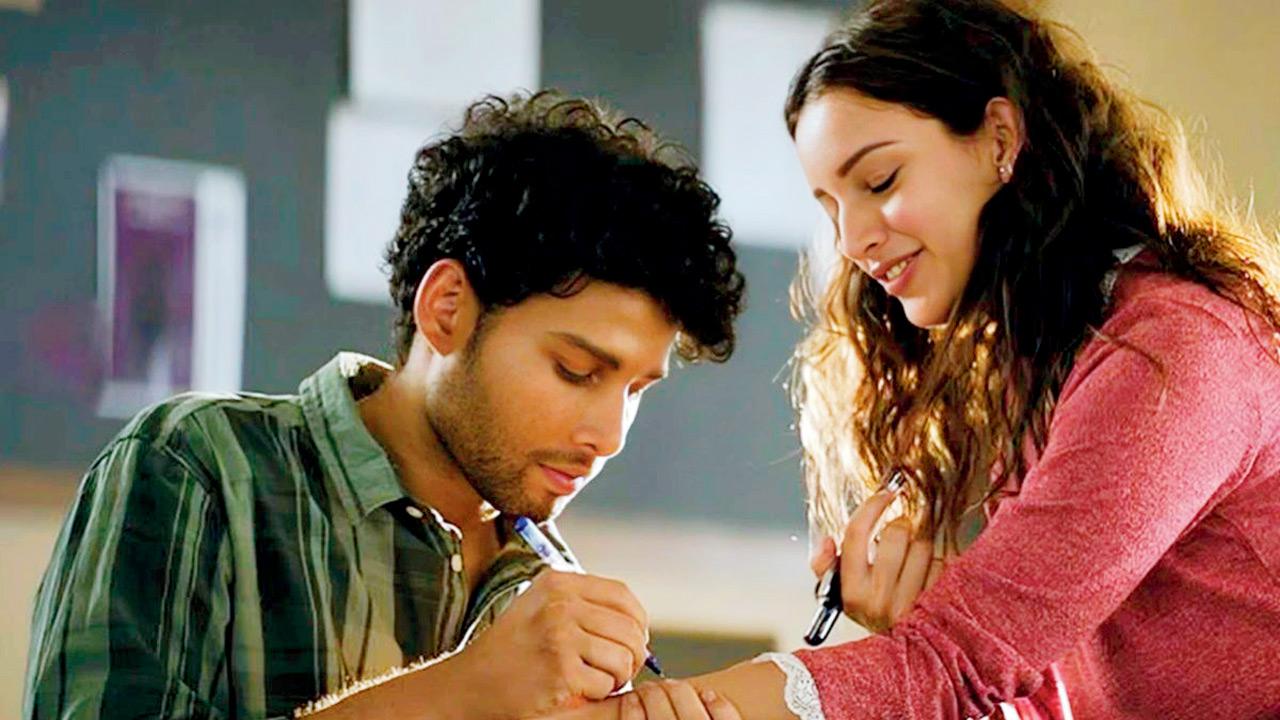
Acknowledging that Dalit student Rohith Vemula’s demise influenced ‘Dhadak 2’, director Shazia Iqbal on how she steered clear of offering a sanitised take on caste discrimination
Priyanka Sharma (MID-DAY; August 9, 2025)
Shazia Iqbal’s Dhadak 2 may not have minted money at the box office, but it has done what few films before it did. The Siddhant Chaturvedi and Triptii Dimri-starrer is being praised for being that rare mainstream Bollywood movie that has unflinchingly examined caste discrimination. It has also, through one of the film’s important characters Shekhar, put the spotlight on late Rohith Vemula, whose death by suicide in 2016, showed the harsh reality of India’s caste discrimination.
Vemula, a Dalit student at the University of Hyderabad, was one of the five Dalit students protesting against their suspension — a result of allegations that they attacked a member of the Akhil Bharatiya Vidyarthi Parishad — from the fellowship and the university’s housing facility. Reportedly upset over the disciplinary action taken against them, he died by suicide in January 2016.
Iqbal, who co-wrote Dhadak 2 with Rahul Badwelkar, acknowledges that the film borrowed from the incident. “Rohith’s story was present from the second draft itself. Both Rahul and I had been moved by what happened to Rohith. So, we were not distant from that incident. He has influenced our film. When we put the character [of Shekhar] in the film, we knew the kind of impact it would have. It was the most important story for us in the film,” she shares.
Another influence, of course, was the source material. Dhadak 2 is an official adaptation of filmmaker Mari Selvaraj’s Tamil drama Pariyerum Perumal (2018), which took on casteism. When Dharma Productions approached Iqbal over three years ago for the adaptation, she remembers being struck by a single thought.
“As a person coming from another marginalized community, I loved how strong Mari’s voice was. But the most important thing I thought was, ‘Would I have myself in the film?’ When I saw that scope, I was interested in making it,” she recalls.
The director added two more elements to her Hindi adaptation. She wanted to lend the female character more agency, and shift the setting to a city. “The setting is rural in the original film. Our close friends told us that casteism doesn’t happen in cities anymore. So, we took this core theme and reimagined the film [in a city].”
Considering Bollywood has largely shied away from unapologetically addressing casteism on screen, the director knew she would have to fight audience skepticism. She would also have to battle the perception that Karan Johar’s production house values aesthetics over truth.
When we mention that Dhadak 2 feels visually sanitised in comparison to Pariyerum Perumal, especially in the scenes involving the locality of Chaturvedi’s character Neelesh, Iqbal defends her decision, saying, “I am a follower of Dogme 95, where you go and shoot places as they are. I’m glad you gave the example of Neelesh’s basti because we shot in Bheem Nagar [in Bhopal], among the community. As a person from Mumbai who has mostly seen slums as one of the dirtiest places because they are not provided with enough municipal support to be clean, my understanding of slums was [biased]. But Bhim Nagar in Bhopal is as clean as it is shown. Except for adding two flags of Jai Bhim, we didn’t touch the lane. When the promo came out, a friend of a production hand said that the basti looked sanitized. It wouldn’t have been right if we had made it look dirty on screen because that would have been us forcing our gaze of how a basti is supposed to look.”
With ‘Dhadak 2’, Bollywood has got a new, confident voice in Shazia Iqbal. She made her debut with the feminist short film, ‘Bebaak’ (2019). She also directed a segment in the Prime Video anthology, ‘Love Storiyaan’ (2024).
It took me six months to convince Pa Ranjith for Dhadak 2-Meenu Arora
9:25 AM

Pa Ranjith, Meenu Arora and Karan Johar
‘Dhadak 2’ producer Meenu Arora reveals Pa Ranjith, who backed the Tamil film ‘Pariyerum Perumal’, was initially skeptical about giving its adaptation rights as he feared that the story’s essence would be lost
Mohar Basu (MID-DAY; July 31, 2025)
As far as starting points go, Dhadak 2 has got it right. Siddhant Chaturvedi and Triptii Dimri’s love story is built on the firm foundation of the Tamil original, Pariyerum Perumal (2018), which explored the rampant casteism in society. Meenu Arora, who has co-produced director Shazia Iqbal’s Hindi adaptation, reveals that convincing producer Pa Ranjith to part with the remake rights wasn’t easy. “He was skeptical about giving it to a Bollywood film because he didn’t want the story to lose its essence and soul. It took me six months to convince him,” she begins.
Arora remembers initiating the conversation with Ranjith in 2022, and months later, he finally gave his nod. What brought about the change of heart?
“After a few conversations, he saw how deeply I believed in the story and why I felt it needed to be told in a different cultural context. He knew we weren’t trying to replicate Pariyerum Perumal, but reinterpret its emotional core in a different world. Once that was clear, he was open to letting me take it forward. What struck me most was the film’s depth and emotional power. At its heart, it’s a deeply human story of love and longing,” says Arora.
Karan Johar was her first choice for a producer as she set out to bring the story to the Hindi film audience. Taking the project to the filmmaker was an emotional decision, she shares.
“I wanted it to be a larger-than-life and mainstream movie. I knew they’d handle the subject with sensitivity, yet make it a beautiful love story. I first shared the film with Somen [Mishra, head of creative development, Dharma Productions]. I was anxious when Karan was going to watch the film. But I knew that if he watched it, the love story would resonate with him — which it did. From that moment, Karan championed the film.”
In May, the Central Board of Film Certification (CBFC) cleared Dhadak 2 with a U/A 16+ certificate, after 16 changes, which included modifying scenes depicting caste-based discrimination. It was reportedly one of the reasons why the movie’s release was pushed.
Ask Arora about the changes, and she says, “Enough has already been said about this at the trailer launch. You have to understand why they wanted certain cuts. The CBFC was understanding of the story the director wanted to tell, and its feedback came from a place of protecting sensitivities.”
Triptii Dimri-Vicky Kaushal starrer Bad Newz explores rare medical condition
8:13 AM

After back-to-back intense roles, Animal star Triptii veers to comedy with Bad Newz; sources say film explores medical condition where she is pregnant with twins from two men
Priyanka Sharma (MID-DAY; April 27, 2024)
No role is too small. Who knows that better than Triptii Dimri, her brief part in Animal (2023) having changed her career overnight? The blockbuster’s success brought her many things, including a wider audience and the ‘national crush’ label. Last month, Karan Johar announced his next production, Bad Newz, starring Vicky Kaushal, Dimri and Ammy Virk. While the posters released in March showed Dimri sporting a baby bump, mid-day has now learnt that director Anand Tiwari’s comedy revolves around the rare medical condition, heteropaternal superfecundation.
A source tells us that like director Raj Mehta’s Good Newwz (2019), its spiritual sequel too has pregnancy as the central conflict. “While Good Newwz was about accidental sperm swap, Bad Newz is based on a medical condition called heteropaternal superfecundation, where a woman gets pregnant with twins from different men. The film is based on a true incident,” the source says.
In the comedy, the actor will be seen romancing both Kaushal and Virk. More importantly, her character marks a stark departure from her submissive role in Animal. It’s also her first light-hearted part after back-to-back intense portrayals of an ill-fated lover in Laila Majnu (2018), a woman seeking revenge in Bulbbul (2020), and a singer battling depression in Qala (2022).
“Triptii will be seen as a mainstream leading lady for the first time. Like Dharma heroines, she plays today’s woman, an ambitious chef, who can go to any lengths to further her career,” adds the source.
It’s evident that Dimri is consciously steering towards mainstream cinema this year. The actor has the horror comedy, Bhool Bhulaiyaa 3 with Kartik Aaryan, and Vicky Vidya Ka Woh Wala Video opposite Rajkummar Rao in the pipeline. That, however, doesn’t mean she has bid adieu to intense stories. The actor, along with Siddhant Chaturvedi, will front Johar’s yet-untitled romantic drama, helmed by Shazia Iqbal. From what we hear, it’s a profound love story set against the backdrop of the caste system.
“The film is a remake of the Tamil hit, Pariyerum Perumal [2018]. It is currently in post-production. The makers are contemplating titling it Dhadak 2, as a spiritual sequel to Janhvi Kapoor-Ishaan Khatter’s Dhadak [2018], which explored class difference.”
Subscribe to:
Posts (Atom)