Showing posts with label Pardes. Show all posts
Showing posts with label Pardes. Show all posts
I don’t want to live in my own ego, the ‘showman’ title is bakwaas-Subhash Ghai
3:47 PM

Neha Maheshwri (BOMBAY TIMES; August 22, 2026)
Noted filmmaker Subhash Ghai, whose filmography includes Karz (1980), Hero (1983), Ram Lakhan (1989), Khal Nayak (1993), Pardes (1996) and Taal (1999), continues to adapt to changing times. At 81, he is studying AI and connecting with Gen-Z through his film institute. Often described as Indian cinema’s biggest showman after the legendary Raj Kapoor, Ghai has little patience for the epithet.
He says, “The showman title is bakwaas. We never made a show of it anywhere... Because I don’t want to live in my own ego and self-boasting titles. I am a small filmmaker, a student of cinema who wants to learn every day. Today I am learning and connecting with Gen-Z through my school. I firmly believe that we can teach each other a few things.”
In an exclusive conversation with BT, Ghai discusses discipline, stardom, filmmaking and the changing dynamics of the Hindi film industry.
‘None of my films have gone over-budget’
Discipline has been central to his filmmaking. He says, “All our films, since Karz, have had their muhurat on October 24 and most have been released in August the next year. Why October 24? It’s my marriage anniversary and the founding anniversary of my production house and film institute. Till you don’t set a deadline, tab tak aap kaam nahi kar sakte. You might take years to find a good subject. But if I have to work on it till August 15, then I will have to find a good subject. That discipline is important. It is also important to make films within a set budget. None of our films have gone over-budget.”
He adds, “Today, every project is facing two problems: the star’s availability and access to funds and studios. That’s why we didn’t make any films because the whole wind is going against our will. So, it’s better to make small films instead of showing that I am making such a big film ki 1000 crore ki hai ya 500 crore ki hai.”
‘The character, not the market, decides whether it demands a star or a newcomer’
Ghai believes writers and directors are often overlooked once an actor becomes a star. He says, “An actor becomes a star when he delivers a memorable performance, the film succeeds and his character becomes iconic. But who creates that character? The writer. Who brings it to life? The director. Yet, neither receives the same recognition; the credit goes almost entirely to the actor. The problem is that when you work with a star, the script often begins to revolve around the star. With a newcomer, however, the actor is more likely to adapt to the script.”
Recalling Pardes, he says, “When I wanted to make Pardes, Shah Rukh Khan was the only established actor I had on board. Many stars wanted to work with me, but I was adamant about casting a newcomer opposite him. Agar kisi established actor ko lete toh shayad praise zyada milti. The character, not the market, should decide whether it needs a star or a newcomer.”
‘Individualistic cinema is for a niche market’
Ghai believes the disconnect between some contemporary films and audiences stems from filmmakers prioritising personal conviction and expression over the sensibilities of a wider audience.
He says, “Pehle bhi achhi filmein aur kharaab filmein banti thi, aur aaj bhi. The problem is that most of the younger generation today makes films based on their own convictions and ideas, which don’t necessarily match the audience. Our films matched because when we made them, we would identify who the front bencher was, who belonged to the middle class, upper middle class and balcony. Our films were made for all four sections. Ab aisa hai ki jo main kahu woh kayda... this is my expression and my voice, and that is individualistic cinema, which is essentially meant for a niche market. There are different names for it, like experimental, parallel, personal voice, issue-based or art cinema.”
‘Jo darr gaya woh marr gaya’
Ghai sees AI as another technological shift rather than a threat to cinema. He shares, “Jab black-and-white ka era tha tab sochte the ki colour aayega toh kya hoga, saari authenticity chali jaayegi. When cinemascope came into being, they said who will watch the movie on such a big scale. Toh technology ke against toh hamesha se rahe hain aur yeh aagey bhi chalta rahega. AI is artificial intelligence created by man. Real intelligence is you, your heart, mind, spirit and your thinking. Bas aapki story achhi honi chahiye, sense of framing and narration should be strong.”
Social media, however, gets a more sceptical assessment, particularly given the renewed popularity of his controversial Choli Ke Peeche Kya Hai song on reels. Ghai recalls Taal’s rocky opening: “When Taal released, it was criticized a lot in the first two days, only to pick up pace from the third day. Agar social media aaj ka hota toh Taal ki dhajjiyan uda deta. It would have been destroyed within two-three days. Courage is very important,” he says, ending on a defiant note: “Jo darr gaya woh marr gaya!”
Stardom never excited me; learnt to be happy with what I have-Apurva Agnihotri
9:07 AM

Tanvi Trivedi (BOMBAY TIMES; January 14, 2026)
Apurva Agnihotri is back on television with Seher after his stint on Anupamaa ended almost three years ago. Incidentally, he had turned down the role initially. He says, “I don’t know why my first reaction is always to say no. It was only after reading a scene that was beautifully written that I changed my mind. I’ve had offers in the past couple of years, including OTT shows, but this one worked out well for me.”
He adds, “I don’t have any regrets about letting go of work because I have never been crazily ambitious. If things go my way, I’m happy, if they don’t, I’m still happy.”
‘When I did Pardes, the industry was ruled by four-five actors’
Apurva made his acting debut with Subhash Ghai’s Pardes in 1997 and even though the film was a hit, his Bollywood career did not take off the way he expected. Ask him about this and he says, “I did three-four films after Pardes, but in those days the industry was ruled by four-five actors. People didn’t really care about anybody else and I probably didn’t have it in me to go out there and meet people or party. I was not cut out for that world.”
‘An actor is an actor, irrespective of the medium’
Television proved to be a defining space and he made a mark with Jassi Jaissi Koi Nahin, which recently completed 22 years. He credits the show’s success to strong writing.
For Apurva, the shift from films to television was never a downgrade. “An actor is an actor. Whether you act on the big screen, small screen or do plays — the actor doesn’t change.”
‘I want life to be a beautiful mix of work and home’
Apurva and his wife, actress Shilpa Agnihotri welcomed their baby Ishaani in 2022. The arrival of their daughter brought a decisive shift in priorities, he says.
“Shilpa and I have this unsaid arrangement. Only one of us works and the other stays at home to look after our daughter. Ishaani surprises us every day and it is amazing to watch her grow. What I now seek is a balance. I just want life to be a beautiful mix of work and home. Nothing else,” he adds.
‘There’s no point looking at what you don’t have’
Apurva admits that for him stardom never held the kind of pull it does for many others. “I don’t think I’m built that way. I’ve learned to be happy with what I have. That’s also a part of spirituality. There’s no point looking at what you don’t have, you rather focus on what you do,” he says.
I wouldn’t want to remake my own films. I will leave that for others to do-Subhash Ghai
8:27 AM
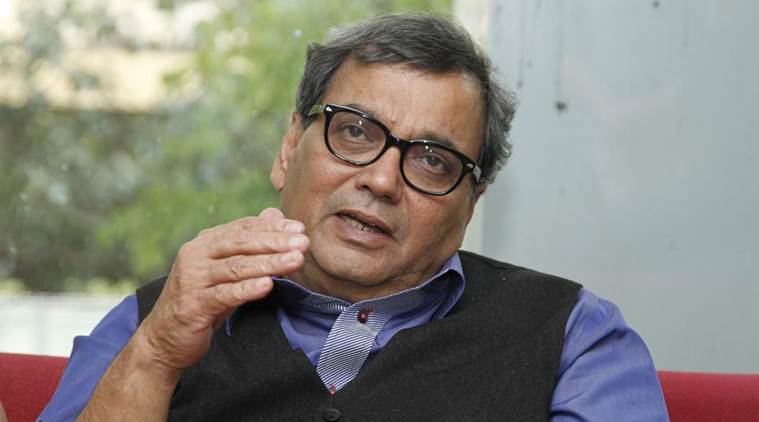
Rachana Dubey (BOMBAY TIMES; October 20, 2022)
In August this year, one of Subhash Ghai’s iconic films, Pardes, clocked in 25 years. The movie that was Mahima Chaudhry’s launch vehicle, had a story layered with themes and emotions that continue to find a connection with the viewers. While chatting with Bombay Times, Subhash Ghai, who was awarded the Lifetime Achievement Award at the recently held Filmfare Awards, recalled the time when he made a visible change to his style of storytelling and chose to make Pardes, despite several hurdles in his way.
Ghai says, “The greatest hurdle in making the film was the casting. We had a lot of discussions about whether we should cast a known name who had that star value, or find someone who suits the part to the T. I had Shah Rukh Khan in mind for Arjun’s character. I had developed it keeping him in mind, and I insisted on casting him. He was just setting foot in the industry at that time, and I got him on board immediately. He was perfect for the role. My script did not allow me to cast a star for Kusum Ganga’s and Rajiv’s characters (eventually played by Mahima and Apoorva Agnihotri). I only wanted to cast actors who could fit the bill. The distributors wanted me to cast bigger names and create a bigger project because our previous film Trimurti had not worked at the box office. I declined. I said, ‘I am making a film, not a project. I want to be sincere with what I want to say.’ Finally, when they saw Pardes, they were convinced. The rest is history! The film celebrated a golden jubilee run all over India, and Mahima won awards.”
“I got some awards for the screenplay, too,” reminisces Ghai, adding, “Today, if you asked me, I would not remake my own films. I would leave that for others to do. I would prefer creating a fresh story in my own style.”
Today, narrating stories with strong women protagonists is quite the trend, and is finding great appeal with the audience. ‘Women-oriented cinema’ is a term that has been attached to films where women play pivotal roles. Years ago, Ghai made a string of films featuring strong female characters. Rakhee as the mother in Ram Lakhan, Madhuri Dixit as the policewoman in Khalnayak or Mahima Chaudhry as Kusum Ganga in Pardes — the women in his films were strong and layered. Bring this up and he says,
“No man can ever succeed in life without the blessings of his mother. She is a woman, the creator and the nurturer of the family. So, in every story that I have narrated, I’ve depicted women at the power centre or as the power herself. Khalnayak was the last crime drama I made, after which I made three films centred around women characters — Pardes, Taal and Yaadein. The women were my heroes in these films. As a storyteller, I believe that a woman as a personality has more dimensions than a man.”
The definition of commercial cinema has changed a great deal in the last two years alone. Back in the day, when Ghai was making films back-to-back with the biggest stars, the audience’s content palette was different, and even then, there were filmmakers who had their own voices. He explains, “I’ve always thought differently from other filmmakers. I have my own style of storytelling. In fact, people tell me that I’ve made commercial films like Karz and Meri Jung, which have been ahead of their times. I have always believed in making a commercial movie the way I envision it and not as per market trends. A good filmmaker should create a market through his films. It should not be the other way around.”
Elaborating on how commerce has begun to dictate cinema as an art form, Ghai says, “Today, commerce has taken over the arts. Studios are the decision makers and they take charge of the creative aspects. They get involved in the making of a film as they are the investors. Distributors heavily depend on star-led projects. So, a lot of power goes to the stars who approve of the stories, scripts and various departments, which actually belong to no one except the directors. That is why I have held off on making any film as of now, though have developed a few exciting scripts. Maybe, I’ll make them when the time is right. The big screen always demands a great canvas of sound, cinematography, locations and larger-than-life characters. Today, visuals have taken over the soul of a story. Visuals have invaded everything, so what we need to do is to bring the soul back into a film and story. Yes, there are good films being made, but a lot of films don’t have a soul. The films from the South have substance, characterization and a huge emotional canvas which leads to drama. They’re not led by visuals alone. A grand visual canvas has no meaning if there is no drama and emotion in a story.”
When asked about making a movie, which Ghai hasn’t made since Kaanchi was released seven-eight years ago, he says, “I am holding off on making my kind of movies because to make those, you need a budget. The studios will finance a film when it has a star cast and stars work in their own time. I have to wait for them to like my script. By the time they show interest in my script, I have moved on to the next screenplay. I will make a big canvas film of my kind with an apt actress. Stars or no stars, I will make the film the way I want to, where content is paramount. Of course, it is challenging to make a film which finds a space in the hearts of the younger and evolved audience but thanks to my film school, I’m in touch with the youth. I know what they’re thinking and consuming. As a filmmaker, one has to evolve. Don’t expect me to make Kalicharan again. I will make something that resonates with today’s youth’s values and thoughts.”
When I entered Bollywood in the 90s, people didn’t want to see a new face-Apurva Agnihotri
8:04 AM

Akash Wadhwa (BOMBAY TIMES; May 1, 2021)
Having entered showbiz with Pardes in 1997, Apurva Agnihotri made his foray into the television industry with Jassi Jaissi Koi Nahin in 2003. Last seen in the show Bepannaah in 2018, the actor is now back on TV as Dr Advait Khanna in the show, Anupamaa.
“Everybody wants to get prominent and lead roles in shows. It is only with my mother’s blessings that I have managed to sustain for so long in the television industry, doing good work,” he says, adding, “However, my first instinct whenever I am offered offered a show, is to say no. I don’t know why but I prefer my alone time, without any limelight or social media. And the reason one doesn’t see me acting much is also because I also have other areas of interest. I am on the verge of finishing a script. My father was a script writer, so somewhere that is in my blood. I am inching towards my dream of writing a script and then directing it. Apart from all this, I am heavily into motor-biking. I love to travel the world on my bike. I want to go to Leh and Ladakh soon. Acting karni padti hai for bread and butter, but I have my other interests too.”
Telling us more about the process of script writing, Apurva adds, “I am enjoying the whole concept of creating characters in my scripts. As you write, then they start talking to you. The whole process is really amazing! I know it sounds crazy, but now, it is actually happening to me. I speak to my characters. And yes, I won’t be acting in my project nor will my wife Shilpa (Saklani). You have to be massively talented to be directing, writing and acting in a project at the same time. I won’t be doing that.”
Talking about being a part of Anupamaa, Apurva says, “With Rajan Shahi being the producer of the show, it felt like home ground. So, when he narrated the character to me over the phone, I immediately said yes, as I have known him for several years. I play a doctor in the show. This character will bring changes in the lives of Shah parivaar and Anupama,” he shares.
So, doesn’t he miss being a part of films? “Sabke liye Bollywood is the ultimate goal, but if you see TV as a medium has given me much more than Bollywood. Also, when I entered Bollywood in the 90s, people didn’t want to see a new face. There were Shah Rukh Khan, Ajay Devgn and other such names, which they wanted to see. So, it was very difficult for a newcomer to get a break in films. Pardes is a special film. The way Subhash Ghai presented me no one could have. But it is unfair to compare the two mediums, as television happened because of films.”
Apurva’s social media posts often feature his wife Shilpa. Speaking about her, he says, “People say opposites attract, but that’s not the case with us. We are so similar, we don’t need anyone else. We are complete with each other.”

When my second film Dil Diya Hai tanked, I realised that I can’t take the audience for granted-Aditya Datt
8:09 AM

Onkar Kulkarni (BOMBAY TIMES; November 29, 2019)
Director Aditya Datt’s last outing was Table No 21 (2013), which was a thriller. And now, he is set to explore action genre with Commando 3, starring Vidyut Jammwal, Adah Sharma and Angira Dhar. In a chat with BT, he talked about starting his Bollywood journey at the age of 20, his days as an assistant with filmmaker Mahesh Bhatt, and how his grandpa, late lyricist Anand Bakshi, has influenced him. Excerpts...
You started off as a director with Aashiq Banaya Aapne (2005). Since then, you have directed half a dozen movies. Your last film was Table No 21 (2013), and now, Commando 3 is releasing. What do you have to say about your journey so far?
When I started off with Aashiq Banaya Aapne, I was 20 years old. So, I learnt filmmaking by making films (smiles). My first film got me recognition, but what unfolded later taught me a lot. When my second film, Dil Diya Hai (2006), became a complete disaster, I realised that I can’t take narration of stories and the audience for granted. I then decided to up my game. Out of the many films I directed later (Good Luck!, 2008; and Will You Marry Me?, 2012) I was looking forward to Chai Garam, which got shelved. It had all the actors who were doing well at that time — Govinda, who had just delivered a hit (Partner), Anupam Kher who was appreciated for his performance in A Wednesday, and Jaaved Jaaferi, who had featured in Dhamaal. The film also starred Suniel Shetty, Esha Deol, Celina Jaitley and Rajpal Yadav. Due to some technicalities and fall-out with the producers, it got shelved in 2008-09. That project took up a lot of my time. I was glad that Table No 21 happened soon after, and I got a lot of appreciation for it.
You began way too early, how did you prepare yourself for the role of a director, which comes with a lot of responsibility?
I dropped out of school after Class X and started preparing myself (to become a director) from the age of 16. The plan was to study filmmaking in New York. However, when I shared the idea with my grandfather (late lyricist Anand Bakshi) he suggested that I meet Bhatt saab (Mahesh Bhatt). For the next six years, I was part of Bhatt saab’s team. I learnt a lot from him and also Tanuja Chandra and Vikram Bhatt. I am glad that my grandfather was from the industry and he was there, in the initial days, to guide me.
Are you saying that being an industry kid helped? Also, what are your views on the nepotism debate?
Frankly, I don’t know how it would have been had my nana (mom’s father) not been Anand Bakshi. My father is not from the film industry, he is a businessman. I think that I got my first film because of my grandfather’s reference. Having said that, I had to prove myself, as no one was ready to invest that kind of money in a 20-year-old. As far as nepotism is concerned, industry connections can only you provide you with an introduction card, the rest depends on your talent.
Commando 3 is your first action film. How did it happen?
Vidyut reached out to me after watching Table No 21. It was very gracious of him, as he did not know me personally. We started talking and one day, he asked me about my thoughts on action as a genre. I showed interest and he made me meet Vipul Shah (producer) and we went ahead.
You were very close to your late grandfather Anand Bakshi. What are your fondest memories of him?
I have sweet memories of the music sittings, that culture isn’t there any more. I was present when a song from Pardes (1997) was being recorded. Sometimes, I would walk into the house and see Ajay Devgn or Anil Kapoor attending a music sitting. Things were different back then. There used to be a mehfil, which used to go on for five or six hours for one song. Along with the orchestra, actors, producers and directors would be present… I also remember Nusrat Fateh Ali Khan coming to our house for a party. These celebrities would visit each other’s houses jaise apna hi ghar ho.

How the tussle between Kedarnath makers may spell trouble for newbie Sara Ali Khan
8:06 AM

Bharati K Dubey (DNA; February 22, 2018)
With the two producers of Kedarnath — KriArj Entertainment and Guy In The Sky Pictures — heading to court over their differences, will it be debutante actress Sara Ali Khan’s career that will end up bearing the brunt of it? Reportedly, she is under a contract and may require a NOC (No Objection Certificate) to do another film. Apparently, Anushka Sharma’s production house had offered her their new project Bulbul, but the newbie couldn’t sign it as Kedarnath was under production.
Due to the legal wrangle, the chances of the Abhishek Kapoor-directorial hitting the screens on its scheduled date (December 21) are dim. Today, almost all newcomers have strict contracts with the production house that’s launching them. An industry source elaborates, “They are either under contract for three films or for three-to-five years. If the contract is for a certain number of years, all the deals are routed through the producer or the agency which strikes the deal.”
ARE CONTRACTS A GOOD IDEA?
While such contracts help both, a newcomer and the production house, things can go haywire if the film gets into trouble. This raises the question of the fairness and necessity of such contracts. Filmmaker Ashwini Chaudhary says, “I am of the opinion that a producer/production house has the right to sign an exclusive contract with an actor/actress when they launch them. A lot of money and risk is involved in launching new faces in today’s time and clauses like three-film deals are, in a way, justified. All big banners are said to be following this norm. Even first-time directors are bound by such stipulations. If one is not in agreement with such clauses, they can always opt to not sign on the dotted line. Things tend to get ugly when the film is delayed or shelved. It is important for newcomers to have proper legal advice before getting into any contract.’’
CONTRACT KA SAWAAL
It may be recalled here that filmmaker Subhash Ghai had to take his Pardes heroine Mahima Chaudhary to court for violating the terms of the contract. Before starting Pardes, Mahima had agreed to do three films within five years and donate 35 per cent of her earnings from commercials, stage and TV shows to the Mukta Arts Welfare Trust. Ghai feels it’s mandatory to have a contract with a newcomer. He explains, “The company spends on his/ her grooming, marketing, and projects. I have always had a contract for three films, which included permission to do outside films after the first release. These included actors like Madhuri Dixit-Nene, Jackie Shroff, Manisha Koirala, Mahima, Kareena Kapoor Khan, Katrina Kaif and Hrithik Roshan to name a few. Some of them honoured it, while a few violated them.”
DELAY DILEMMA
Prem, which was supposed to be Tabu’s debut film took about eight years to complete. She stepped on the silver screen with Pehla Pehla Pyaar, opposite Rishi Kapoor. Satish Kaushik, director of Prem, recalls, “There was a contract, but I really don’t know the details of it. Our film got delayed and she got another offer. I don’t think we can really bind somebody after the threshold has been crossed, he/she should be allowed to go. Tying down anybody to the contract clauses could harm their career.”
In the recent years, Pulkit Samrat took Ekta Kapoor to court for non-payment and not allowing him to work outside, when there was no work for him at her company. The actor was shown his three-year contract when he evinced interest in working with another banner. Ekta refused and was in the process of sacking him, so he sued her and even won the case.
READ THE FINE PRINT
Cine and Television Artistes Association (CINTAA) has been asking their members to share their contracts, alleging that most deals are one-sided. The Association’s general secretary Sushant Singh says, “Star kids are still in a better position than those coming from a non-filmi background, the latter have no choice but to adhere to the diktats of the producers.”
This is not the case just with actors making debut in films, but also those working in TV shows. Singh says that TV debutants are bound by contracts that are unfair. Citing the case of the lead pair of Aisi Deewangi Dekhi Nahi Kahi, he says, “They came to us with a complaint that the producer has signed them for a three-to-five year contract with no renewals or holidays. They wanted to quit the show as their health was suffering. They were signed by the producer for 30 days and the contract with the channel was for 26 days. We fought for them and asked them to give a two-months notice and leave the serial. Fortunately, the serial was pulled out by the channel.’’
LOOK AT THE LAW
Singh points out that most of the contracts that actors sign often don’t hold much ground. He adds, “Newcomers, who are getting a break, should get it in writing from the producers that all their expenses would be borne by the latter while on contract. Also, there is nothing like an exclusive contract. Nobody can stop an actor from the right to livelihood, even if he/she is shooting for a serial. They have every right to do the things they want to post the shoot that they’re committed to the producer for.’’
Pardes to Chennai Express: Why August 8 has been a lucky day for Bollywood
3:56 PM

Box Office India Trade Network
This day has seen the release of some huge hit films. It is coincidence but August 8th has been a very lucky day for films at the box office over the last 20 years. There could be other big releases earlier but our database is not picking them up yet. The list of films that have been released on August 8th in the last 20 years are as follows. They are listed in their inflation adjusted gross.
BLOCKBUSTER
1. Chennai Express (2013) - 2,33,65,24,740
The biggest blockbuster of Shah Rukh Khan in the last fifteen years. The film released on Eid 2013 and became the highest grossing film ever beating the record of 3 IDIOTS. The film more than doubled the previous highest Shah Rukh Khan opening.
SUPER HIT
2. Pardes (1997) - 1,89,63,94,500
The Subhash Ghai directed love story was a slow starter barring a few big cities but picked up well in the later weeks to emerge a huge hit. The opening day was just 61 lakhs nett which was 50% of a big opener like BORDER released a few months back. It also benefited from tax exemption in Maharashtra
3. Koi Mil Gaya (2003) - 1,79,97,91,840
The film which established Hrithik Roshan as a major star after a poor period. The film opened at 2.25 crore nett on day one which was the second highest opening of the time and there was no looking back as the film did well across the board.
4. Singh Is Kinng (2008) - 1,29,92,73,360
The film still remains the only Akshay Kumar film to set an opening day record although WELCOME (2007) would also be there if there was not issues with the release. The film set an All Time Record in East Punjab by becoming the highest nett grosser beating GADAR but the share and gross figures remained lower than Gadar.
HIT
-
SEMI HIT
-
AVERAGE
-
BELOW AVERAGE
Entertainment (2014) - 76,48,55,960
The Akshay Kumar starrer did not open well which hit its chances. The collections were okay after the first week but remained a poor performer. The film scored big on television picking up the second highest rating in 2014 ahead of the likes of DHOOM 3 and KICK
FLOP
Gangs Of Wasseypur 2 (2012) - 26,98,02,060
The film is a second part of GANGS OF WASSEYPUR which was a poor performer a few months earlier. The first film was said to have gained appreciation but the initial of this one which was even lower that the first one put that fake theory out of the window. If only we had second parts of all these so called appreciated films it would help the truth come out.
Dadagiri (1997) - 26,85,98,000
A Mithun Starrer which was released at a time when the best days were over for the dancing star.
DISASTER
Basti - 2,14,87,840
A low budget film featuring Aamir Khan's brother Faisal Khan. The film had no chance at the box office.
Today, Pardes can be counted among Shah Rukh Khan’s Top 5 films-Subhash Ghai
8:02 AM

Subhash Ghai on the importance of following the director’s vision
Upala KBR (DNA; March 17, 2016)
 Subhash Ghai was once called ‘The Showman’. Through
the 1990s, he delivered hit after hit and worked with all the top heroes
of the time — from Anil Kapoor to Shah Rukh Khan and from Jackie Shroff
to Salman Khan.
Follow my vision
The filmmaker reveals that he has been writing a script for his next directorial for two years now, but it is nowhere near complete. He says, “I have to be happy about it. If I’m not, I won’t direct it. And if I don’t get the right kind of actors, I won’t start the film. The actor must suit the character. While making Ram Lakhan during the first schedule, distributors from Mumbai, Delhi and Kolkata didn’t buy the film as the Anil-Jackie combination had given a few flops earlier. They were willing to buy the film at half the price I asked for. They later repented when the film became a big hit. I never thought ki ye actors bikega hai ya nahi. It is my responsibility that they give the best performances of their lives. And that will happen if the actors follow my vision of storytelling. Like in Pardes, Shah Rukh had to show he’s in love and yet, he isn’t. He had this restless, bubbling energy about him, but he followed my vision. Today, Pardes can be counted among his top five films.”
Writers rule!
He further adds, “If my films are being remade today, it’s because I was also the writer of the script. Shatrughan Sinha in Kalicharan, Manisha Koirala in Saudagar, Sanjay Dutt and Madhuri Dixit in Khalnayak, Jackie Shroff in Yaadein, Anil Kapoor in Meri Jung and Ram Lakhan, Mahima Chaudhary in Pardes and Dilip Kumar (who made a comeback in Vidhaata and Karma) have given some of their career-best performances with me. There’s a difference between an actor who becomes a star because of the hits he gives and one who lifts his image by doing a film like Ranveer Singh in Bajirao Mastani and SRK in Devdas. It proves that they have been directed by writers of the films and these actors have followed the vision and script of the director blindly.”
Even Spielberg made flops!
Ghai says that in his career of 18 films if four didn’t do well it was because they were ahead of their time. “My films that didn’t work were not bad. In Yuuvraaj I brought in a fusion of western and Indian classical music while I made Kisna in two languages — English and Hindi. They didn’t work. Fine, but we should remember that even directors like Steven Spielberg have made flops. My working style has always been where I have controlled and contributed in every department because I have been living with the film.” the director signs off.
Film and ad units have tough time shooting, performing at Taj Mahal
8:28 AM

Sonali Joshi Pitale (MID-DAY; March 7, 2014)
Recently, producer Sanjay Kapoor and his team were shooting for their upcoming film, 'Tevar', at and around the Taj Mahal. During their 50-day
schedule, they even shot a song near the monument using a Jimmy Jib
crane camera. However, after a local complained to the archaeological
department (Archaeological Survey of India or ASI), the film unit was
asked to remove the crane.
An eyewitness says, “We had taken all the permissions from the respective departments, but for this particular song sequence, we used a Jimmy Jib camera crane. Just as we were carrying out our shoot, a local complained to the authorities. So we then had to stop using the crane and take shots with an arial camera.”
 Sanjay Kapoor brushes it off as a
minor incident. “If one follows the procedures, there shouldn’t be any
issues. It is understood that if you shoot at any place of historical
significance -- be in India or abroad -- the unit has to follow the
rules laid down by the authorities,” he says.
Interestingly, 'Tevar' is not the only film to run into trouble over flouting rules governing shoots at / near the Taj Mahal. Several film units have had to stop shooting at the monument due to failure to abide by the authorities’ rules and regulations. Performing at the Taj Mahal has been a tricky affair too. N K Pathak, superintending archaeologist (monuments), Agra, points out the due procedure for film shoots. “The producer has to submit a copy of the script to us.
A form has to be filled spelling out details about the shoot and the unit, including its crewmembers. If a unit has on board a foreigner, then his or her details have to be submitted to us. We also need to know the instrument that will be used during the film’s shoot. Safety and security of the monument is our top priority,” he says, adding that in the Tevar instance, they had to stop the shoot as the unit didn’t have permissions to use the crane.
He also clarifies that while they don’t object to filmmakers using reflectors and umbrellas, any publicity material — for example, an imprint on the umbrella or a product endorsement — is strictly forbidden. He adds, “We only charge Rs 5,000 a day, but there is a refundable security deposit of Rs 50,000 that needs to made.”
hitlist brings you other instances where film units had to stop shooting or were not allowed to perform at the Taj Mahal because of their run in with the authorities. (with inputs by Bharati Dubey)
 'Youngistaan'
The lowdown: Director Syed Ahmad Afzal recollects that shooting at the Taj Mahal in December last year was really tough for their unit. “With videography banned in certain areas of the Taj Mahal, we could only use a tripod and a camera to capture the front of the monument. Due to the ban on mirrors and umbrellas, artistes couldn’t even do their touch up in between shots. Also, I don’t see why ASI should object to umbrellas bearing logos or prints,” he says. Afzal shot most of his scenes in and around Mehtab Baug, which is close to the Taj.
 'Ekk Deewana Tha'
The lowdown: In 2011, A R Rahman along with his team of singers had planned to perform at Mehtab Bagh in Agra against the backdrop of the Taj Mahal as part of promotions for the film, Ekk Deewana Tha. But the ASI declined permission for the same. While the exact reason is not known, it is said that permission was denied due to earlier damage caused by the crew of the film, Mere Brother Ki Dulhan.
 'Mere Brother Ki Dulhan'
The lowdown: Director Ali Abbas Zafar shot a song sequence for his film at the Taj Mahal back in 2010. He recollects that apart from facing trouble while getting the required permission, the unit was also harrowed by the crowds that had gathered at the shoot. “I shot a couple of scenes and a song at the Taj Mahal using a steady cam. We were not allowed to use any equipment that has petrochemicals in it, so we couldn’t use generators anywhere in a 250 metre radius of the monument,” he says.
 'Pardes'
The lowdown: Subhash Ghai shot several scenes from the film in and around the Taj Mahal. He says, “We had to apply for permission six months in advance. And yes, there is certain equipment that can’t be used there. I only used a trolley to shoot my scenes.”
 A commercial shoot
The lowdown: In 2012, Miss Universe Olivia Culpo came to India from America for a 10-day trip aimed at spreading awareness about AIDS and women empowerment. During this trip, her crew decided to do an ad shoot with her at the Taj Mahal. Culpo apparently wore shoes at that shoot and even placed them on a bench as part of an allegedly unauthorised photo session. She soon received flak for her disrespectful act and was fined for the same.
An eyewitness says, “We had taken all the permissions from the respective departments, but for this particular song sequence, we used a Jimmy Jib camera crane. Just as we were carrying out our shoot, a local complained to the authorities. So we then had to stop using the crane and take shots with an arial camera.”
 Sanjay Kapoor brushes it off as a
minor incident. “If one follows the procedures, there shouldn’t be any
issues. It is understood that if you shoot at any place of historical
significance -- be in India or abroad -- the unit has to follow the
rules laid down by the authorities,” he says.
Interestingly, 'Tevar' is not the only film to run into trouble over flouting rules governing shoots at / near the Taj Mahal. Several film units have had to stop shooting at the monument due to failure to abide by the authorities’ rules and regulations. Performing at the Taj Mahal has been a tricky affair too. N K Pathak, superintending archaeologist (monuments), Agra, points out the due procedure for film shoots. “The producer has to submit a copy of the script to us.
A form has to be filled spelling out details about the shoot and the unit, including its crewmembers. If a unit has on board a foreigner, then his or her details have to be submitted to us. We also need to know the instrument that will be used during the film’s shoot. Safety and security of the monument is our top priority,” he says, adding that in the Tevar instance, they had to stop the shoot as the unit didn’t have permissions to use the crane.
He also clarifies that while they don’t object to filmmakers using reflectors and umbrellas, any publicity material — for example, an imprint on the umbrella or a product endorsement — is strictly forbidden. He adds, “We only charge Rs 5,000 a day, but there is a refundable security deposit of Rs 50,000 that needs to made.”
Other films that bore the brunt...
hitlist brings you other instances where film units had to stop shooting or were not allowed to perform at the Taj Mahal because of their run in with the authorities. (with inputs by Bharati Dubey)
 'Youngistaan'
The lowdown: Director Syed Ahmad Afzal recollects that shooting at the Taj Mahal in December last year was really tough for their unit. “With videography banned in certain areas of the Taj Mahal, we could only use a tripod and a camera to capture the front of the monument. Due to the ban on mirrors and umbrellas, artistes couldn’t even do their touch up in between shots. Also, I don’t see why ASI should object to umbrellas bearing logos or prints,” he says. Afzal shot most of his scenes in and around Mehtab Baug, which is close to the Taj.
 'Ekk Deewana Tha'
The lowdown: In 2011, A R Rahman along with his team of singers had planned to perform at Mehtab Bagh in Agra against the backdrop of the Taj Mahal as part of promotions for the film, Ekk Deewana Tha. But the ASI declined permission for the same. While the exact reason is not known, it is said that permission was denied due to earlier damage caused by the crew of the film, Mere Brother Ki Dulhan.
 'Mere Brother Ki Dulhan'
The lowdown: Director Ali Abbas Zafar shot a song sequence for his film at the Taj Mahal back in 2010. He recollects that apart from facing trouble while getting the required permission, the unit was also harrowed by the crowds that had gathered at the shoot. “I shot a couple of scenes and a song at the Taj Mahal using a steady cam. We were not allowed to use any equipment that has petrochemicals in it, so we couldn’t use generators anywhere in a 250 metre radius of the monument,” he says.

The lowdown: Subhash Ghai shot several scenes from the film in and around the Taj Mahal. He says, “We had to apply for permission six months in advance. And yes, there is certain equipment that can’t be used there. I only used a trolley to shoot my scenes.”
 A commercial shoot
The lowdown: In 2012, Miss Universe Olivia Culpo came to India from America for a 10-day trip aimed at spreading awareness about AIDS and women empowerment. During this trip, her crew decided to do an ad shoot with her at the Taj Mahal. Culpo apparently wore shoes at that shoot and even placed them on a bench as part of an allegedly unauthorised photo session. She soon received flak for her disrespectful act and was fined for the same.
Subscribe to:
Posts (Atom)