Showing posts with label Parasite. Show all posts
Showing posts with label Parasite. Show all posts
Cannes is like the stock exchange of global cinema-Guneet Monga
9:14 AM
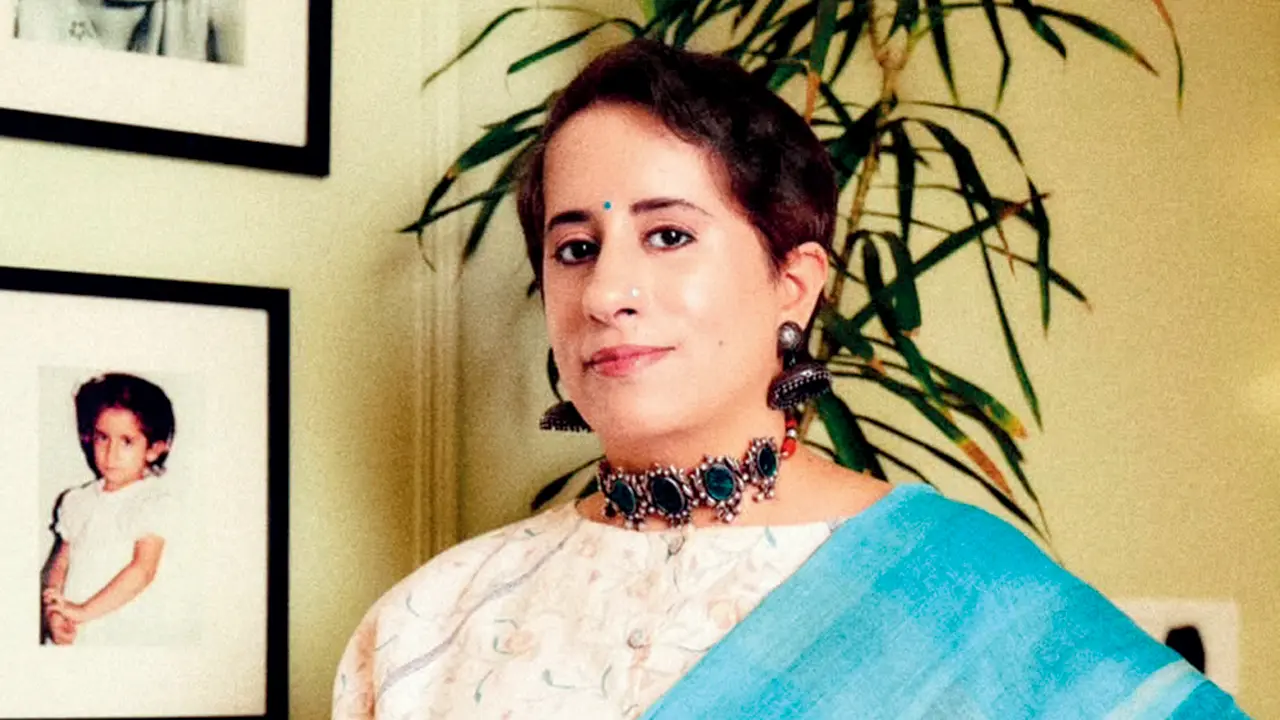
While the glamorous red carpet and the race for the prestigious Palme d’Or dominate public perception, that’s not why most people travel to the Cannes Film Festival. In fact, in the words of Guneet Monga, Cannes is “like the stock exchange of global cinema.”
At the heart of this film fest is the Marché du Film, the business arm of the Festival de Cannes, a market designed exclusively for global film professionals – including buyers, sales agents, producers, and financiers – to gather to present upcoming projects, negotiate distribution rights, and initiate co-productions.
From festival to blockbuster
But does a festival run translate to commercial success? Absolutely. Just look at The Lunchbox (2013). As the film’s producer, Guneet used the Cannes Producers Network breakfasts to secure an international co-production. That exposure didn’t just fund the film; it created a global marketplace. The Lunchbox is a blueprint for how standard market access at Cannes can catapult a localized Indian story onto the global stage.
Annually, the Marché du Film unites more than 15,000 industry professionals from over 140 countries under one roof. It acts as a launchpad where nearly 4,000 films and early-stage projects take center stage. Industry insiders can explore an unparalleled variety of content, with over 1,200 screenings – ranging from highly anticipated blockbusters to hidden documentary gems – running across 31 premium screening rooms.
What really happens at Marche du Film
Guneet Monga explains, “Some films at Cannes are literally here to be sold. At Marché du Film, market screenings happen where filmmakers, producers, studios, streamers, distributors and buyers from across the world make multimillion-dollar decisions.”
One such success story is Parasite (2019). Long before it made Oscars history, Bong Joon-ho’s masterpiece sparked an absolute frenzy at the Marché du Film. Neon snapped up the North American rights early on, while international sales agents carved out record-breaking territorial distribution deals across Europe, Asia, and Latin America. The massive baseline of guaranteed global theatrical distribution secured at the market laid the groundwork for its historic box office and award-season run.
Todd Haynes’ dark comedy-drama May December (2023) became one of the buzziest market titles in recent years. Following its screening, Netflix swooped in with an $11 million domestic rights deal for North America.
Payal Kapadia’s All We Imagine As Light (2024) is arguably one of the most brilliant and textbook examples of how the Cannes ecosystem – from early-stage market incubation to competitive screening and subsequent global distribution – can completely manufacture an international arthouse phenomenon. Before it made history as the first Indian film in 30 years to compete for the Palme d’Or, ultimately winning the prestigious Grand Prix, its entire existence was stitched together by European coproduction markets and Cannes-associated incubation pipelines.
Our house help watches Korean TV shows dubbed in Marathi-Siddharth Roy Kapur
9:53 AM

As filmmakers across Asia, Africa and the Arab world rethink their place in global cinema, one question looms large: how do you build the kind of cultural wave South Korea sent sweeping across the world?
Anand Holla (MUMBAI MIRROR; November 30, 2025)
As filmmakers across Asia, Africa and the Arab world rethink their place in global cinema, one question looms large: how do you build the kind of cultural wave South Korea sent sweeping across the world?
It’s the longest-running, cross-cultural magnum opus in the world of cinema, and its story has only just begun. For nearly three decades, films from the Global South have continued to reshape the future of cinema. Today, more than ever before, stories, talent and financing from the Global South are overhauling the global film ecosystem. And the most potent force driving this shift is not technology, budgets, or marketing — it’s authentic, culturally rooted storytelling.
Earlier this week, in Qatar, during the Doha Film Festival, this idea dominated a fascinating industry panel discussion featuring creators and producers from across the Global South. Invited to speak at the event, seasoned producer Siddharth Roy Kapur told Mumbai Mirror, “What Hollywood has managed to achieve over the last 100 years, and South Korea over the last 25, is to reach out to the world with their soft power. Both the government policy and the creative forces worked together to push out Hallyu,” he said.
Hallyu: a real superhit formula
Also known as the Korean Wave, Hallyu refers to the global spread of South Korea’s popular culture — films, K-pop, K-dramas, beauty and food. Korean cultural exports has evolved into a multi-billion-dollar global industry, supported by a mix of state-led strategy and a creative sector willing to take daring, stylistic leaps.
Yet the panelists agreed that numbers alone don’t explain Hallyu’s force. It’s the connection. “Our house help watches Korean TV shows dubbed in Marathi. Now that could be time spent watching a Marathi show,” Kapur said. “So, clearly something somewhere has resonated with the audience on a very deep level. We need to understand what that is and be able to do that with our own entertainment as well.”
The takeaway wasn’t that countries should copy Korea’s model, but that audiences worldwide are ready, even hungry, for stories that feel specific rather than generic. Kapur’s own film Dangal, for instance, became a phenomenon in China, earning over $200 million because Chinese families saw their own struggles in that story about Indian wrestlers.
The film RRR spawned fan clubs from Tokyo to Los Angeles without changing a frame for foreign viewers. K-dramas like Extraordinary Attorney Woo topped charts across Asia, Latin America and the Middle East despite being rooted in Korean legal and social structures. Nigerian film The Black Book entered Netflix’s global Top 5 in 42 countries. Japanese anime films like Suzume and Demon Slayer set records in India and Brazil even though their logic, pacing and spirituality come straight from Shinto folklore. The pattern is undeniable: people want texture. Meaning. A point of view. Besides, when stories travel, they rewrite boundaries.
“Chinese girls were taking their parents to watch Dangal,” Kapur said. “Sometimes we are blind to the commonalities between cultures which some stories are able to bring out.”
The real bottleneck, thus, isn’t talent or audience demand. It’s money. Around the world, the stories with the most cultural potential are often the least funded, which keeps entire regions from playing on the global stage. South Korea’s government, for instance, has long supported storytelling through film. In fact, just this year, the Korean Film Council (KOFIC) launched an initiative to revive mid-budget Korean films. The scheme allocates around KRW 10 billion (Rs 61 Cr) to back films with budgets between KRW 2–8 billion ((Rs12 Cr to Rs 49 Cr). Selected projects can receive grants of up to 30% of their production costs. All of this is aimed at restoring the industry’s “backbone.”
Financing: the largest hurdle
Saleem Albeik, a Palestinian film critic, novelist and cultural editor based in Paris, spoke plainly about structural obstacles. “Arab cinema mostly relies on European funding, often from France and Germany. This means limitations on the scope of the narrative. In the long run, say, over a decade, this controlled framework plays a big part in shaping what constitutes Arab cinema,” he said.
Kapur, on the other hand, spoke of the challenges faced by films that have an “Currently, the ambition in the cinema from South India is very high. Their commercial yet inventive storytelling approach is commendable. They are also taking big, bold risks because of individual financiers who are willing to take a punt on those ideas unlike in the Hindi film industry, where the financing has become very structured,” he said.
Albeik believes the way forward lies in South–South partnerships. “It’s easier to retain an authentic voice and nuance for an Egyptian film when the funding or a co-production is sourced from the Global South, like from India, Brazil, or South Africa, which share similarities on issues like socio-political tensions or poverty. There is a mutual understanding untouched by any colonial past between them, and therefore no power dynamic,” he said.
Qatar’s launch of its Film Committee signals a wider regional push. In recent years, countries from Saudi Arabia to Kenya and Indonesia have expanded film commissions, rebates and co-production programmes to build local industries with global reach.
Africa’s rising wave
If any region embodies this transition, it is Africa. Nigerian media mogul Mo Abudu, who launched the $50 million Afro Film Fund last year, spoke passionately about the stakes. “The global gatekeepers and studios don’t seem to fully realize the potential of great storytelling that they can possibly tap into from our continent,” she said. “They should think of Africa not as a charity case, but as a business case, because Africa has the youngest population globally (70 percent are under the age of 30), which means an audience and a workforce that can spend.”
Africa’s demographic weight is impossible to ignore. With a population nearing 1.5 billion in 2025 and booming streaming markets in Nigeria, Kenya, Ghana and South Africa, production and investment have surged. Abudu believes the world has barely begun to tap the continent’s narrative wealth. “We have 3,000 ethnic groups. We have 250 tribes in Nigeria alone. Be it a movie about a wedding, a funeral, a heist, or any universal theme, the specificity of our society and culture that shines through is what makes the audience experience our stories like they have never before,” she said.
India’s inflection point
In India, the diversity of filmmaking voices could inspire far richer storytelling — provided it isn’t flattened into a Bollywood-versus-regional binary. “We must take a few chances on films that haven’t been made before and help the films that have the ability to travel to do so,” Kapur said. RRR, after all, proved how quickly a local film can become a global phenomenon.
“When RRR dropped on Netflix around the world, the film had exhausted its South Asian diaspora audience overseas but generated a renewed interest from a crossover audience that started to trip out on this incredible, larger-than-life, Indian film,” said Kapur. “The next Squid Game or Parasite is going to come from somewhere. It should come from India.”
Bollywood needs government support to nurture bold storytellers-Vivek Agnihotri
8:46 AM

Vivek Ranjan Agnihotri pens an open letter to Union Commerce and Industry Minister Piyush Goyal
HINDUSTAN TIMES (April 7, 2025)
Dear Piyush Goyal ji,
Your recent remarks at the Startup Mahakumbh about Indian startups needing introspection and real value-addition in the face of global competition — especially against China’s strides in EVs, semiconductors, and robotics — were deeply resonant. Your push to move beyond superficial ventures like “fancy ice cream and cookies” and focus on meaningful innovation is timely. In this vein, I wish to highlight a sector with immense cultural and economic potential — Indian cinema — which, despite its legacy, is failing to innovate, compete globally, or harness its soft power potential like South Korea or Japan.
Globally, cinema and OTT thrive on bold storytelling and technological disruption. Films like Boyhood (shot over 12 years and released in 2014), the single-take illusion of 1917 or the social commentary of Parasite (both 2019) and even a raw, real-time dive into teenage chaos shot in one take such as that in Adolescence, showcase how innovation drives cultural influence.
Today, K-entertainment contributes over $12 billion (approximately Rs. 1,200 crore) to Korea’s economy, while Japan’s anime industry exceeds $20 billion (about Rs. 2,000 crore) in revenue. Hollywood dominates through streaming platform Netflix’s $31 billion (Rs. 3,100 crore) content budget, making it a global content empire.
Meanwhile, Indian cinema remains stagnant — copying formats without mastering their essence. We are the world’s second-largest film producer, yet ironically, most of our content ends up being sold to American platforms. It’s the East India Company syndrome all over again — we create the raw material, but others own and profit from our stories.
The decay is evident. Studios are shutting down; producers flee to real estate. Visionary filmmakers struggle to survive, while the system promotes non-actors better suited to making Instagram reels or dancing in weddings than meaningful cinema. Rooted, Indic stories are missing. Bollywood, once a soft power beacon, is now “flower power” — style without substance.
The viewer experience is equally dismal with outdated multiplex screens, exorbitant ticket and food prices, and theatres that now resemble food courts. Cinema, once a middle-class joy, is now an unaffordable luxury with diminishing returns. I speak from experience. The Kashmir Files (2022) — a non-starrer, risky narrative — broke Bollywood’s formulaic mould; but this came at a personal cost: fatwas, security threats, relentless backlash and character assassination. If truth invites such hostility, how can we expect innovation?
The industry needs government support — funding, incentives, and platforms — to nurture bold storytellers, not just star-driven fluff. Indic cinema can be the biggest startup of India, with potential to generate jobs, export cultural capital, and build global influence just as South Korea’s entertainment industry has done. Just as startups must prioritize real value, Bollywood must shift from elite appeasement to global relevance. Cinema can be an economic and cultural powerhouse, India’s leading soft power but only with introspection and disruptive innovation.
I urge your intervention to empower filmmakers who dare to dream—help Indian cinema reclaim its place as a global leader, not a copycat.
Sincerely,
Vivek Ranjan Agnihotri
Indic Filmmaker
Disclaimer: The views shared in the above article belong solely to the author
When Titanic was released in 1997, there was only one print in entire Delhi-Sanjeev Kumar Bijli
8:33 AM

By Sanjeev Kumar Bijli, Executive Director, PVR Inox Ltd (BOMBAY TIMES; April 20, 2024)
There was a time, not so long ago, when only Hindi movies used to play at the single screen cinemas in India. The ’80s and early ’90s were decades dominated by films with Amitabh Bachchan, Rishi Kapoor and Jeetendra to name a few. If we wanted to watch a Hollywood film, we either had to wait for months for it to release at the cinemas, or drive to obscure places to rent it on VHS. Hollywood studios usually gave India a miss in their overall release plan, as there just weren’t enough cinemas and business to justify the cost of releasing it here.
With the advent of multiplexes though in the late ’90s and early 2000, things began to change. The proliferation of new and premium screens gave rise to both demand and supply for English films. And from a gap of months from US release, films were released within a couple of weeks. Sometimes even on the same day as the US release.
Liberalization, rising middle class and incomes, proliferation of satellite channels and the internet, all contributed to the discovery and consumption of English films. I remember, in 1997, when Titanic was released, it was nothing short of a momentous event in India. We were operating only two properties in Delhi at the time, a four screen multiplex and a single screen. The studio, 20th Century Fox, wanted to release only one print in the entire city, and we had to choose where to play the film. We decided to play it at a single-screen cinema. Such was the euphoria and anticipation around the film, that we had the entire cinema decked up by an eminent designer.
The landscape of cinema, consumer taste and preference has evolved over the years. A day and date in sync the US release of a Hollywood film is now standard, and so is a wide release with over 500 prints or more of commercial films. The list of blockbusters that have surpassed the 50 crore to 100 crore box-office collections is long and impressive with recent hits like Oppenheimer, Barbie, Avatar proving that English films can be as big as Indian films.
But what has also emerged in the last few years is the penchant for foreign language films. The Indian audience has become extremely discerning and receptive to consuming content in foreign languages. We are travelling more, getting exposed to different cultures and watching foreign language content on streaming platforms.
A couple of years ago, through social listening, we inferred there was a huge demand for Japanese anime films. We started to distribute and screen them, and the response was phenomenal. Films like Suzume and Demon Slayer did a box office of 10 crores and 6 crores respectively. Not just anime films, other foreign language films have also done exceedingly well at the box office. Buoyed by the Oscar recognition, films like Parasite and most recently Anatomy Of A Fall did a business of 7 crores and 1.5 crores respectively.
With globalization and increased awareness, I am certain this is just the tip of the iceberg, and foreign language films have found an audience in one of the largest cinema markets in the world!

India Forum at Cannes: 'How can Indian cinema embrace its Indianness, while still being a global player?’
8:03 AM

BOMBAY TIMES (May 23, 2022)
On Day 3 of the Cannes Film Festival, the India Forum panel session on ‘India: The Content Hub Of The World’, saw a discussion on increasing acceptance of Indian content among global audiences and a debate over how Indian stories should be positioned for the international audience. Should India give a more international flavour to content to gain wider acceptability, or be unapologetically Indian in the tonality of what it makes? The session is over, but the debate continues.
UNAPOLOGETICALLY INDIAN OR CATERED TO A GLOBAL AUDIENCE: WHAT SHOULD BE INDIA’S APPROACH TO THE WORLD MARKET?
In his keynote address, Anurag Singh Thakur, Union Minister for Information and Broadcasting said that Indian content has been appreciated by the global audience, since as far back as 1946, when Chetan Anand’s film Neecha Nagar won the Palme d’Or (then known as Grand Prix of the International Film Festival). A decade later, in 1956, Satyajit Ray’s Pather Panchali won the Best Human Document award.
“India intends to give the global audience a flavour of the country’s cinematic excellence, technological prowess, rich culture and illustrious heritage of storytelling,” he said, while discussing how the country is set to manifest into the ‘content hub of the world’.
While talking about how India should approach the global market and audience, Prasoon Joshi, CBFC chairperson emphasized that India can follow the Korean approach of storytelling – in the sense that the content need not lose its local cultural connect.
He said, “How can I take India and what can be produced in India and make it palatable for the global market and reach out to that market? That’s what Korea did with K-pop or K-dramas. They reached out with a distinct Korean flavour catered to the world market. Every culture in the world has something to offer, I would hate a world which is standardized. Another thing that’s important is that India understands diversity. We are so used to diversity.”
Scott Roxborough, Europe Bureau Chief, The Hollywood Reporter, was not convinced on some nuances and pointed out the fact that though China has an incredibly strong domestic market and is now the second largest box office territory in the world, it has still not been able to really find global acceptance, even though it makes very distinct films about its culture and history.
“They (China) have not really managed to cross over to the international market, and I would argue that India hasn’t either yet, despite having a very long history of cinema, and having great traditional storytelling. The type of Indian storytelling that is so appealing to the Indian market has not yet crossed over to the international market. ”
‘LIFE OF PI TO RRR – ‘TYPICALLY INDIAN’ STORIES ARE FINDING AUDIENCE WORLDWIDE’
Scott also made the point that there should be a point beyond which governments should perhaps not get involved in the space of culture. CBFC member and actress-producer Vani Tripathi Tikoo, who was moderating the event, asked Apurva Chandra, Secretary, I&B, “Scott says the government should not be getting involved in culture, and we were discussing yesterday about education and creation of opportunities in cinema, in governance terms, what do you think should be happening? How much involvement should governance have in terms of creation of content? How does it interconnect with you and the consciousness around governance?”
Chandra said that he would like to respond to Scott as a film buff and not as a government officer. Sharing examples of Indian films that resonated with the global audience, he added, “NFDC (National Film Development Corporation of India) was the producer of The Lunchbox, a very very typical story of the Mumbai suburb, and Mr And Mrs Iyer, a film on Hindu Muslim unity. There have been a lot of stories which the world has been interested in, like Lion, Life Of Pi,and Slumdog Millionaire – that are all by foreign filmmakers but are typically Indian. And then apart from that, there are a lot of Indian films that are getting attention in other parts of the world – 3 Idiots or Dangal did very well in China. I met Ahmad Bolchin, who is a producer of RRR in Dubai, and he said that he is translating RRR into Persian, distributing it in Iran. In Dubai, they are interested in Indian serials, and would like to dub them in Arabic. That’s how Indian stories are travelling in the Middle East, in America and in other parts of the world.”
‘WE INDIANS ARE MELODRAMATIC,SO THEN WHY BE DEFENSIVE ABOUT IT?’
Veteran filmmaker Shekhar Kapur, Prasoon, and R Madhavan were all convinced that the flamboyance, the melodrama and the cultural rooting of content made in India, or by Indians, should not be something that is treated apologetically.
Underlining the social and emotional USPs of content rooted in India, Kapur said that human beings are melodramatic people and “we Indians perhaps even more so, and there is no need to be defensive about that. For us (Indians in particular, and Asians in general) everything is mythology”.
He added, “In the West, there is some kind of shyness when mythology comes up. I did a film called Elizabeth (1998), my first film outside India and I am thinking – how am I gonna do this? This is the most famous queen in the world and I am an Indian filmmaker! I was like, actually, I have a mythic idea and to me everything about Elizabeth is mythic. And when I was shooting it everybody said, ‘Shekhar, it is so melodramatic’, and I said, ‘No, it’s mythic’. Reviews also said that it is a very melodramatic film. I said, ‘Yes!’ They said it is a Bollywood film, and I said, ‘Yes!’ And then we got nominated for nine Oscars and Cate Blanchett became one of the biggest stars in the world.”
STAYING AUTHENTIC VS MAKING CONTENT THAT CAN EASILY BE TRANSLATED GLOBALLY
Kapur pointed out that there is this conflict between the West and the East and the reason Chinese films are not coming abroad yet is perhaps not because they lack a connect but because the film critics in the West have not yet learnt to celebrate the idea of living mythically.
Scott responded by making the point that succeeding in the international market comes from translation, like what Kapur did – take a very western story and telling it in a very Indian way. He said, “What you did with Elizabeth was a very compelling translation of Indian cinema – emotional, melodramatic and mythic cinema-making, with a western story. You were able to combine that and translate the language into something which was then understandable for the international audience.”
He said that it is not that Chinese cinema is not producing big distinct cinema, but that the international audience doesn’t understand that language and culture. He added, “I would argue that this is what Korea has done. They tell very Korean stories, but they have taken so much western influence to their storytelling that they are very easily translatable, and very easily understandable. Parasite, for me, could have been a Spielberg movie. It is told in a very Korean way with a very specific Korean setting, but they have managed to find a translation. And that’s what I think India needs to do ifit has to go international with storytelling, and that doesn’t mean to be untrue to the core or mythic, but you can’t expect audiences to just understand the culture.”
Madhavan also reiterated the point of being unabashed about not tailoring content to deliberately make it more globally palatable. “One of the ways that content becomes international and consumed is the fact that it becomes aspirational. Koreans have become successful because they are unabashed about how they don’t want to appease the rest of the world. They are very Korean in their nature – and that’s why my son wants to see it. I think if we are able to make those stories aspirational, of which we have many opportunities in India, we will be as much a global player as Hollywood is. ”
‘GLOBAL COLLABORATIONS CAN HELP BREAK CULTURAL BARRIERS’
To ensure that Indian stories are not lost in translation and effectively reach foreign audiences, producer Philippe Avril advised to encourage co-production across countries.
Indian musician Ricky Kej – who has won two Grammys, in 2022 and 2015, both in the Best New Age Album category, and both in collaboration with international artistes – pointed out that some of the best films narrating Indian stories have either come from Indian filmmakers who lived abroad or foreign filmmakers who told an Indian story, and hence, collaboration is the way forward.
He added, “My first major collaboration (Winds Of Samsara) was with a South African musician (flautist Wouter Kellerman), for which I won a Grammy (in 2015). My second collaboration was this year with Stewart Copeland, a former drummer of The Police from America. I won my second Grammy for that. And both albums are very strongly Indian. It is just that I got a new perspective on how to dress up the songs. The same could apply to films. I think collaboration becomes very important to break cultural barriers. ”
Just like how Parasite connected with audiences across the world, Koozhangal has been doing the same-Vignesh Shivan
8:08 AM

M Suganth (BOMBAY TIMES; October 25, 2021)

Talking to us, Vinothraj says, “I am extremely happy and I mean it straight from my heart. More than my work, I’d say this film belongs to my team. Right from its origins, the film grew into what it is today because of my team’s support. I’d like to thank the two actors Karuthadaiyaan and Chellapandi, my cinematographers Vignesh Kumulai and Jeya Parthipan, and editor Ganesh Siva at this moment. We just wanted to make a simple and honest film. And we all journeyed together with nothing but hope. It felt great when the film went to various festivals and connected with the audiences there. And now, the (Oscar) jury here has also loved the film and have chosen it as India's official entry to the Oscars. I feel elated.”
Quiz him on why the film has worked with audiences from various parts of the world, and he says, “The feedback I have been getting is that the film feels so pure and original. And nature supported me and gave me back something. Our team followed nature and that’s what has taken this film on this journey. At the film fests, people come up to me and say that the story is also something that happens in their own hometowns and that they are able to connect with it so much.”
Vinothraj says that he should thank his producers for taking his small film all the way to the Oscars. “I should thank the people who have brought the film this far, because they placed so much trust in it and promoted it. My producer Nayanthara ma’am, Vignesh Shivan sir and Sai Devanandam sir, who was initially the producer of the film... they were the ones who were extremely hopeful that the film will do something wonderful, so when that's actually happening, I am excited and happy,” he says.
---------------------
OUR FILM HAS BEEN CONNECTING WITH AUDIENCES WHEREVER IT HAS GONE SO FAR: VIGNESH SHIVAN

Looking at how they ended up producing this film, he recalls, “It was director Ram sir who identified the film and suggested we take over it when it was yet to be completed and needed a producer. Both Nayan and I watched the footage they had shot until then. It was Nayan who took the call that we should step in and produce the film. Once we completed, we applied for the International Film Festival Rotterdam. We did not think it would win there, but ever since it won the Tiger Award, it has been a dream run for us. I don’t think you can desire anything more than having your debut production representing your country at the Oscars.”
Vignesh says that they will set up a base in Los Angeles for the film’s Oscar campaign. “Obviously, we will have to,” he signs off.
------------------
KOOZHANGAL’S FESTIVAL RUN
Koozhangal has been to 34 international film festivals so far. Here is a list of some of the awards the film has won in these fests:
- Tiger Award - International Film Festival Rotterdam
- Best Debut Director - Asia Film Awards
- Best Director and Best Actor - Male - International Film Festival Of South Asia
- Best Feature Film (Premio SNCCI) - National Syndicate of Italian Film Critics's ShorTS International Film Festival, Italy
- Professional Achievement Award - Andrei Tarkovsky International Film Festival Zerkalo
- Audience Award - Burgas International Film Festival
I got a job of cleaning utensils by the gutter for Rs 100 a day-Adarsh Gourav
8:25 AM

Going behind the scenes with Adarsh Gourav nee Balram from The White Tiger, already the Himalayan, global debut lead of the year!
Mayank Shekhar (MID-DAY; January 23, 2021)
It was a Chachi 420 situation, Adarsh Gourav, 26, recalls of the time he’d checked himself into a high-end hotel in Saket in South Delhi. In the morning, he’d step out wearing clothes similar to his character Balram Halwai from The White Tiger. At night, he’d go out shopping/socialising to the mall nearby, as Gourav.
Sensing something fishy, sundry hotel staff would follow him to his room, from a distance. “To fuel the suspense,” Gourav had instructed that no housekeeping staff be allowed in.
The night before he checked out, the hotel staff entered his space and were quite “scared” to see chart papers and pictures of Priyanka Chopra Jonas, Rajkummar Rao, Mahesh Manjrekar lying all over.
They were convinced he was a contract killer: “I was just fooling around with them,” Gourav says, revealing a naturally cheeky personality that merges so seamlessly, as he slips into Balram in Ramin Bahrani’s film as well.
But what was he really up to, during the day, anyway? Working at a ‘redi’ — a roadside tea/pakoda type stall in the neighbourhood. To get a hang of a person from the underclass, engaged in a menial job — in the existing world that he wants to desperately exit from.
It took Gourav a few days to find this pakoda job, because he’d introduce himself as Balram to his potential masters. And they’d want to see his identity card before hiring.
A Good Samaritan did have him on board, which is how he got “Rs 100 a day, to clean utensils by the gutter, with bandicoots running all over. I was just thinking, what am I doing here? I needed to get the hell out,” Gourav laughs.
Which is essentially Balram’s life in his village, before he becomes the driver in the city - both in Aravind Adiga’s Booker-winning angry novel, set in Delhi in the late noughties, and the Iranian-American Bahrani’s realistic adaptation, that dropped globally on Netflix on January 22.
Gourav also spent a couple of weeks in a village called Charkhari Basti in Jharkhand (where Balram is roughly from), befriending a family — living among them anonymously, to simultaneously relive his character’s backstory: “My biggest high of being an actor is the preparation time. That’s where I have real fun. I got three and half months for Balram!”
Gourav is himself from Jamshedpur, the steel township in Jharkhand that, in terms of childhood years, he also shares with Priyanka Chopra, his co-actor and co-producer on The White Tiger. In eighth grade, he moved to Mumbai with his parents, given his father’s transferable job.
One of the reasons for this move, he reveals, was his talent for Hindustani classical music. He’s a trained vocalist. His family felt the city would offer him better opportunities to pursue music as a formal career.
It was during his performance at the Kala Ghoda Arts Festival in Mumbai that someone from the audience checked if he might be interested in acting. As a teenager, he was “thrilled” at the prospect of being on TV. The gentleman asked him to meet with his portfolio. He came over with passport-sized photos to the casting office, as if applying for an Aadhar card.
“They were, like, what are we going to do with this? And so I went to Studio 19 in Juhu, paid Rs 3,000 to get my portfolio shot.” This helped Gourav land his first role on screen, as the younger version of Shah Rukh Khan, in Karan Johar’s My Name is Khan (2010).
On each day of his three-day shoot, different members of his family would troop in to the set to gawk, awe-struck by how movies are made — “Karan Johar looks taller in real life” — knowing that this was a one-off opportunity for young Gourav.
Only in 2013, did he take up acting seriously as a profession, circling around Mumbai’s audition sub-culture — testing for parts in ads and films, doing roles of varying lengths. After several fallow months in 2019, by the time Gourav was finalised for his dream lead debut, with The White Tiger, his co-star Rajkummar Rao knew of him as a talent of sorts from roles in Mom (2017), Rukh (2017) and SRK Jr.
“His commitment inspired me a lot,” Rao says, delving on how much of the gritty movie is an outcome of both of them jamming, and the director Bahrani, “taking his actors to a point that they start living in the moment.”
The White Tiger opened to rave reviews (especially for Gourav), first in the US, where it had a limited theatrical release, with multiple allusions made to Bong Joon-ho’s Parasite (2019) and Danny Boyle’s Slumdog Millionaire (2008). This serves as good omen for an Oscar consideration.
“I’d be lying if I told you we hadn’t thought of that [global stage with an Academy nom],” says producer Mukul Deora, who’s had the rights to Adiga’s book for a decade. Adiga’s 2008 book in turn is dedicated to Bahrani himself. They were close friends and room-mates at Columbia University. Between Bahrani, who’s read multiple drafts of the novel, and I — we’ve been with The White Tiger for quarter of a century,” Deora says.
To quote a dialogue from the film, The White Tiger is basically about how “there are only two castes in India - upper and lower. For the poor, only two ways to get to the top - crime and politics.” As true for Slumdog.
Although if and when Tiger > Slumdog, it’s because Gourav > Dev Patel. Infinitely so. Because Gourav is basically Balram, as he realised off-screen in Delhi, when a mini-truck driver, randomly outside the same Saket hotel, asked him to lift construction material from the boot once, for “Rs 20 chai pani!”
Having cracked one half of the syllabus (the backstory), the toughest nut, according to Gourav, was playing the Bangalore version of his character, who becomes rich and successful!
“I literally played it by the book. In the evenings, at the hotel, I would read multiple textbooks on body language - posture, how to sit, appear confident, be alpha in a room.” Guessing Balram from The White Tiger also would’ve gone through the same unlearning.
I am grateful to Parasite for drawing positive attention towards Korean films, says Peninsula director Yeon Sang-ho
8:01 AM

With Bong Joon-ho's film opening avenues for Korean movies, famed director Sang-ho looks forward to Peninsula's India release
Mohar Basu (MID-DAY; November 24, 2020)
Celebrated filmmaker Yeon Sang-ho admits he knows little about India. As Peninsula, the sequel to his much-acclaimed Train To Busan (2016), gears up for a November 27 release in India, he is eager to see how the audience receives the apocalyptic horror film. "I had no idea that my films had a huge fan base in India. As I've only lived in South Korea, I have not [gauged] the interest [my movies] elicit abroad. I'm aware that the Indian film and animation industry are huge," says Sang-ho, speaking from Seoul.
With the world coming to a standstill due to the Coronavirus pandemic, the makers had a tough time planning the film's theatrical release. While the horror thriller hit screens in South Korea on July 15, it sought a date with the US audience a month later on August 21. "The hardest part was determining how and when to release the film so that the audience could go to theatres safely. The footfall had plummeted, and theatres were closed internationally. As one of the few films that released during the pandemic, Peninsula had satisfactory [box-office] results. People around the world were rooting for it, and that collective support showed in its success."
With Parasite (2019) sweeping the top honours at the Academy Awards earlier this year, auteur Bong Joon-ho's words — "Once you overcome the one-inch-tall barrier of subtitles, you'll be introduced to many more amazing films" — have sparked a widespread interest in South Korean movies. Quiz Sang-ho whether he feels the pressure to perform, and he says, "There is no pressure at all. I am grateful to Parasite for drawing positive attention towards Korean films. I am working hard to create films that match the expectations."

Parasite shows language isn't a barrier-Ananya Panday
8:52 AM

Having recently wrapped up the first schedule of Fighter, Ananya discusses what prompted her to foray into the South film industry early in her career
Uma Ramasubramanian (MID-DAY; April 5, 2020)
 Only two films old, Ananya Panday has an enviable line-up of projects that includes Shakun Batra's yet-untitled next and Puri Jagannadh's Fighter. While the shoot of the Deepika Padukone and Siddhant Chaturvedi-fronted relationship drama has been pushed due to the industry shutdown, the unit of Fighter was slightly more fortunate—the team of the Vijay Deverakonda-starrer had wrapped up the first schedule in early March.
Mention the multi-lingual (Hindi, Tamil, Telugu, Malayalam and Kannada), and the youngster says the film is a novel experience for her co-star as well as her. "We both are entering different territories; I am new to South cinema, and Vijay is foraying into Hindi cinema. So, we both are nervous and can relate to the other's state of mind," she shares.
Foraying into the South industry at a time when she has yet to gain a foothold in Bollywood can be viewed as a risky move. But the youngster believes it is never too early to widen one's horizon. "I have a strong character arc in the film, and my part is pivotal [to the story]. So, it has been a liberating experience to be part of such a film. Also, at the end of the day, I think content is all that matters. We shouldn't divide the industries on the basis of language. Parasite [Korean film, 2019] winning [the top honours] at the Oscars has shown that language isn't a barrier anymore," she says wisely.
Willing to take on new experiences, Panday reveals she is picking up Telugu for the actioner. "Actually, the film will be released in five languages. So when we go into dubbing, I will try and dub in as many languages as I can." Of course, a chat about Fighter is incomplete without mentioning Deverakonda, who is considered a heartthrob in Telugu cinema. "I have yet to meet someone who is so grounded and humble despite being such a huge star. He is kind and soft spoken."
Whenever we think that we know something new, that ‘something new’ stagnates-A R Rahman
7:44 AM

Onkar Kulkarni (BOMBAY TIMES; March 13, 2020)
Bombay Times caught up with music maestro A R Rahman at a recent event where he spoke about the need to keep reinventing oneself, his new fashion choices, the popularity of Korean music and his daughters, Khatija and Raheema, who have stepped into the music industry.
Bidding adieu to his all-black attire, Rahman has been upping his fashion game. His latest music video saw him making an entry on the screen in shimmery silver shoes. The ace musician and composer credits his wife, Saira Banu, for his styling. He said, “She would complain a lot about my outfits and styling. So, these days, I just accept whatever she picks because it makes her happy. She has friends in New York and Los Angeles and suitcases full of clothes keep coming home (laughs!).”
The Oscar-winning composer recently worked on a project where he had to mentor other musicians. Talking about the time when he was being mentored, Rahman told us, “I have been mentored a thousand times. First, it was my Carnatic music teachers and my father (R K Shekhar). Then, there were people like Mani Ratnam and Shekhar Kapur. Also, there was Andrew Lloyd Webber (English composer), who believed that I could write music. The idea is to always keep learning. Whenever we think that we know something new, that ‘something new’ stagnates. Inquisitiveness and the constant search for knowledge are what keep you going; without that nothing exists.”
Rahman says that since he started his training in music early in his life, he had a hard time as a student in school. “I was a bad student, because I was also working when I was studying in school. I would often get scolded for my poor attendance. I would work through the night, and in the morning, I would be at the studio,” he recalled.
Rahman, who has won two Grammy Awards for Slumdog Millionaire (2008), said that the prestigious international music award is just the roof, and one should aim for the sky. Citing the example of the Korean music industry, he said, “There is this famous saying, ‘Aim for the sky and you will reach the ceiling. Aim for the ceiling, and you will stay on the floor.’ One should always have high aspirations and ambitions. Look at the way Koreans are spending millions on marketing their music. Today, their music is almost mainstream. Everybody is talking about BTS — the South Korean boy band! I don’t even understand that music, but it’s so popular. Now, they seem to have taken over the movies, too, what with Parasite winning big at the Oscars.”
Like his son, A R Ameen, Rahman’s daughters, Khatija and Raheema, are also musically inclined. Last year, they performed on the stage for the first time with their father at the U2 concert in Mumbai. “They are taking music more seriously now. They never expected to be on stage along with me at the U2 concert. We are a musical family, and I believe that their musical education is very important. So, after me, they can take forward what I began,” he signed off.

Once lost in translation, subtitles are now in the global spotlight
4:01 PM

Indian movies used to have infamously awkward subtitles. Thanks to streaming platforms, they are getting a slick makeover
Sonam Joshi (THE TIMES OF INDIA; February 16, 2020)
 ‘Once you overcome the one-inch tall barrier of subtitles, you will be introduced to many more amazing films,” said Bong Joon Ho, director of the Korean film Parasite. The movie’s sweep at the Oscars has been hailed as a victory over that barrier.
After decades of neglect, subtitles are having a moment. In India, our infamously bad subtitles have inspired memes and parodies. But in the last few years, there has been a sea change in how subtitles are written, because of streaming platforms and new markets. Filmmakers and producers see them as a bridge to a wider audience.
“Subtitling is no longer just the domain of festival films. Now every film releases on a streaming platform sooner or later,” says Mumbai-based subtitler Jahan Singh Bakshi. “The volume of work has increased and the awareness among filmmakers and audiences has gone up. As cinema becomes global, how a film performs depends on how it’s been translated on screen.”
Subtitling is more complicated than literal translation. “It is about how to translate the essence of a dialogue for an English speaking audience,” says Bakshi, who has given Hindi-to-English subtitles for films and series such as Sacred Games, Badhaai Ho and Chhapaak. “You have to take liberties, due to cultural differences and line length. The challenge is to play with language in a way that even if you deviate from the text, you retain the emotion.”
Streaming platforms have clear guidelines for subtitles, with some preferring two or three-line subtitles in a single frame and others wanting their speakers identified.
It is important to understand the cultural context and the audience, says Kochi-based subtitler Vivek Ranjit, who has done Malayalam-to-English subtitles for films such as Angamaly Diaries and Lucifer. “I usually try to find proverbs, idioms and alternatives close to the situation,” he says. For instance, a scene from the film Jomonte Suvisheshangal where actor Dulquer Salmaan is playing dumb charades with Malayalam films was changed to Hollywood films matching his actions. Similarly, Bakshi changed an allusion to the actor Raj Babbar with Al Pacino in Khandaani Shafakhana.
Jokes and songs, which involve wordplay and local nuances, are the most challenging. “For instance, Malayalam lyrics are full of metaphors, and look silly when translated in English,” says Ranjit.
In India, subtitles have contributed to the wide popularity and commercial success of regional films such as Kumbalangi Nights, Charlie, Angamaly Diaries and Lucifer. Chennai’s veteran subtitler Rekhs, who has captioned over 520 films since 2010, says that subtitles are now a priority in the Tamil industry. “Viewers notice, and discern quality,” she says. She credits social media with advocating for better subtitles. Online pages such as Rally for Subtitles in Bengaluru and Mumbai Subtitles Database and ticketing platforms such as BookMyShow have started indicating if a film is playing with subtitles.
“The translation has to be according to the flavour of the movie,” says Rekhs, who has even used emoticons in the subtitles for the Rajinikanth starrer Kabali. “For instance, for a period film such as Bahubali: The Beginning, I used phrases such as ‘did not’ and ‘cannot’ rather than the shortened version can’t and didn’t because it went with the flavour of the film.” Her own team has grown to 12 people, and works on subtitles in Malayalam, Kannada, Telugu and Hindi, in addition to Tamil.
While some subtitling work is done by experienced professionals, a considerable amount is also handled by bigger companies. This includes subtitling for streaming platforms seeking to expand their audience through content localisation, releasing international titles with Hindi subtitles and dubs.
“It is easier to sell a film when you have subtitles done in multiple languages,” says Jyothi Nayak, SVP, Prime Focus Technologies (PFT). Subtitles are also popular with millennials. “The younger generation is on the go and on their smartphones and prefer the subtitled version,” says Nayak.
“As the OTT revolution picked up in India, the subtitling business has grown exponentially,” says Mohan Naidu, VP, Vista India, whose network of subtitling professionals has grown from a handful to over 500 today. Freelancers working with them earn anywhere from Rs 15,000 to Rs 75,000 working out of their homes, he says. PFT, which provides subtitling services for 13 languages, worked on 40,000 hours of subtitling last year, an increase of 50% as compared to the previous year. It has an in-house team of 350-400 professionals, and recruited 800-900 freelancers last year.
“Earlier subtitles were published from Hindi, regional and international languages to English, but now we see demand for regional language subtitling as well,” Nayak says. The highest demand is for subtitles in English, Hindi, Tamil, Telugu, Marathi, Bengali, Kannada and Malayalam.
Meanwhile, Rekhs is hopeful that Parasite’s win can also open doors here. “If a Korean film can be selected for the Oscars, so can an Indian film,” she says. “It depends on how it is translated. I’m sure there will be a National Award for subtitles soon.”

Minsara Kanna makers await response to the intimation mail sent to Parasite team
8:49 PM

Thinkal Menon (BOMBAY TIMES; February 21, 2020)
 Producer P L Thenappan, who holds the rights of K S Ravikumar’s two-decade-old Minsara Kanna, was planning to sue the makers of Academy Award-winning film Parasite on the grounds of ‘story theft’. Now, we have learnt that, with the help of his lawyer, he had an intimation mail sent last Wednesday to director Bong Joon Ho and the production company of the South Korean movie, seeking an explanation.
Easwar Kuppusamy, a Madras High Court advocate, who is appearing for Thenappan, says that they will initiate legal action against the makers if they fail to get a response to their mail by next Wednesday. He says, “We have provided them with details of Minsara Kanna. They can’t deny that they have lifted the basic plot (from the Tamil film). There are several films which have similar ideas, but an entire family going to a rich family’s house and deceiving them is Minsara Kanna’s plot. The only difference is that Parasite doesn’t belong to the romantic genre.”
What happens if the Parasite team doesn’t respond to the intimation mail? Easwar answers, “We will then send a legal notice to the director and the producer through Korean Embassy. We will also be informing the Academy Awards team about this. If they accept charges of plagiarism, further action will be decided. As this is a dispute between Indian and Korean production companies, we may also involve a forum of foreign advocates.” The lawyer continues, “But I foresee an amicable solution if they admit to having lifted the plot. Then, it’s up to the producer if he wants to demand monetary compensation.”
Tamil producer P L Thenappan to sue makers of Parasite?
8:26 AM

Thinkal Menon (BOMBAY TIMES; February 16, 2020)
 When South Korean film Parasite swept four major awards at the 92nd Academy Awards, a few Tamil movie buffs took to social media to point out the similarities the movie shared with Tamil film Minsara Kanna, directed by K S Ravikumar and starring Vijay, which was released in 1999. However, when we reached out to Ravikumar, he told us that while he is yet to see the film, he was happy for having come up with an Oscar-winning story 20 years ago. The story of the film was penned by M A Kennady, with Ravikumar writing its screenplay.
But now, things have taken a serious turn. In a strange move, P L Thenappan, who claims to be a producer of Minsara Kanna (KRG, a producer who is no more, is the only credited producer in the film’s titles), says that he is planning to sue the makers of the Bong Joon Ho-film. He said that talks are on with a Chennai-based lawyer and that a decision on zeroing in on an international lawyer will be made in a couple of days. Thenappan says, “I watched Parasite only after the film bagged several Academy Awards. I feel the basic plot has been lifted from our movie.”
When asked about the differences between both the movies, he told us, “Let the court decide it. There have been cases of a few Korean filmmakers suing makers of Tamil films. Let the court look into everything.”
With Parasite, the Oscar goes to inclusivity
8:04 AM

Mayank Shekhar (MID-DAY; February 11, 2020)
The Academy doesn't vote for a film. It films its vote, as a moral zeitgeist of sorts, to the world at large. Does it always get it right with the choice of Best Film, though? Can't. That it is radiantly dynamic and self-correcting, year after year, is its notable achievement.
By the Academy, we mean the Academy of Motion Picture Arts and Sciences — of America, with a much wider international membership, lately — that we know for the Oscars it hands out. And that has no Indian equivalent. Why? Never mind; enjoy your pan masala.
Mindful of the annual 'statement' the Academy makes with its top winner, must admit we got our predictions wrong ('Toughest race at the Oscars 2020', mid-day, Feb 8). Although only partly, since Bong Joon-ho and Parasite, as mentioned, were indeed most likely to win Best Director and Best Picture in our books; if Sam Mendes and his 1917 didn't. And the Parasite gongs for Best Original Screenplay (and, of course, Best International Feature) tallied with our list.
That said, what did we miss? That the most relevant/urgent American statement to be made from a global platform such as the Oscars was not much on the price of war (1917), or indeed the rise of authoritarian leaderships (Jojo Rabbit).
By picking up the first non-English film, and the first winner of Best International Feature, as the overall Best Picture, the Academy was making a full speech on acceptance. Even as Joon-ho warmed American hearts with his acceptance speech — doffing his hat to Hollywood contemporaries/greats, including his long-time cheerleader, Quentin Tarantino, in the same room.
Note that the 'best foreign-language' category has been renamed. 'Foreign' replaced with 'international'. Xenophobia, or morbid fear of the foreigner, grips Trump's America, and so many parts of the world, including ours, where humans are being indiscriminately called illegal, based on their religion, or place of birth, while the same blood flows through all.
Tcha, it's a movies award; let's talk movies. Was Bong Joon-ho, of all, the one to set record in the Oscars' 92-year history? What about Bergman, Kurosawa, Fellini, Truffaut, Renoir… What about whataboutery (in general, in life)? Times they're a changin'. As they must. How about cheering for that (always)?
Sure Joon-ho is already Hollywood mainstream, with his last two films, Snowpiercer (2013), and Netflix original Okja (2017), essentially in English, starring Tilda Swinton, among other major American talents. The latter was globally pushed by the US streaming giant more than any film I know.
Is Parasite squarely a win for South Korea then? As an Asian, tempted to believe so — more so as an Indian who's watched more Hindi films that were remakes of Korean movies than from any other language past couple of decades. So what exactly happened with Korean cinema in late '90s that explains its progressive prominence?
The government. Seriously! Post the 1997 East Asian financial crisis, the state stepped in to raise Korea's self-esteem with direct, strong investments in its 'soft power' — K-pop bands, upwards. No, really. That's what's now resulted in Hullya (Chinese term for 'Korean Wave' in pop-culture).
With movies, they banned censorship. They injected funds into a Korean Film Council, spent on film training at universities, and facilitated a full-on film-industry, pretty much from scratch. Joon-ho belongs to the generation that directly benefited from the Nobel Laureate President Kim Dae Jung's (1998-2003) staggeringly rare, liberal cultural vision, and state intervention.
Which is to take away nothing from how universal, in its specificity, Parasite is. That half-basement could be in Bandra's Chapel Road (have seen one), and the beautiful house on Pali Hill, and nothing about the story would change. This isn't always true for cinema from Seoul. It's not an easy society/culture to penetrate.
For all the Oscar gongs, the Academy couldn't find one performance in Parasite worth a nomination. I'd find it to hard to tell as well. Spotting good writing/filmmaking is easier. Joon-ho's Martin Scorsese quote at the Oscars podium was spot-on still: "The most personal is the most creative." Shouldn't matter where it's from — so long as you don't fear those one-inch tall subtitles! And you accept 'the other'. Good call, Academy. Better late than never.

Making predictions for Oscars reveals what a sterling year 2019 has been for Hollywood
8:16 AM

Mayank Shekhar (MID-DAY; February 8, 2020)
 Whether on social media or offline, one of the things I find sorely missing in all conversations on Bong Joon-ho's Parasite is how playfully the picture is plotted. People come out ruminating far more on the intensity of class-divide that the movie strikingly shines a light on. Don't let that bog you down about Bong's film. Which is already in Korean, with English subtitles, picking up an unprecedented six Oscar nominations, including for the Best Foreign Language Film, that it'll certainly take home.
I know how such a résumé intimidates mainstream audiences. Can't reiterate more: Parasite is an out-and-out fun film — to start and end with. Now go catch it, whether or not it wins Best Picture at the Academy Awards on February 9, Sunday night (Monday morning, for Indians).

Honestly, Taika Waititi's splendid farce, Jojo Rabbit. It's about a little boy in Hitler's Germany. Unless you've been living under a rock, or in complete denial (same thing), you know what the world is currently grappling with — authoritarian leaderships, pushed to the top by a brainwashed band of cult-worshipping adults, spreading hate against an imagined 'other' that they've been lulled into assuming the worst about. That's Jojo Rabbit, as a film. Will it win? No.
Because it's hard to match the film-making flourish of Sam Mendes in 1917, that remains the most anti-war film, in the history of war films. And God knows we could do with that statement too — now, more than at any time in the recent past. That said, just look at the competition — what a year it's been for Hollywood; or the Oscars, as it were.
In any other year, Todd Phillips's dark, deep Joker would've hoped to gobble up all the top trophies on its own. Probably won't. Even James Mangold's Ford v Ferrari could've been a front-runner, for all you know. Says a lot that the only Best Picture nominee that bored the crap outta me was Greta Gerwig's period piece Little Women (and that too because it just seemed too irrelevant in my buzzing head, that's all).
 For a simple example, you only have to compare Guy Ritchie's pure gangster thriller The Gentlemen this year, which is in the sort of domain Quentin Tarantino could lord over in the '90s. Look at where Tarantino is, at present, as an auteur, at the top of his game, with the semi-fictional Once Upon A Time In Hollywood!
Speaking of which, those few who vaguely dismissed Martin Scorsese's The Irishman, because they found it long, or slow or whatever, I'm pretty sure, years down the line, will wonder what the hell they were thinking when the Master delivered his masterpiece. No, it's not Goodfellas or Casino. Mull over the final 30 minutes of The Irishman, and you'll see in it a genre being lifted to meditation on life itself.
 No Hollywood studio was willing to touch The Irishman. Netflix pumped money into it. As producer, Netflix has the most nominations at the Oscars this year — Noah Baumbach's gut-wrenching Marriage Story, and Fernando Meirelle's unusually cinematic The Two Popes, being the other toasts for web as the new cinema! Academy ought to reflect this change on its prize-winners' roster.
Will they? Well, the only Oscar that Scorsese ever received was for the Hong Kong adaptation, The Departed (2006). Come on! And I don't even want to go into history and pluck out Orson Welles's Citizen Kane (1941), almost indisputably considered the greatest film in Hollywood history. It didn't win an Oscar. Which film did? How Green Was My Valley. What's that? Never mind. Just feeling better about listing films that should pick up the top awards this year. Won't feel terrible if they don't.
Oscar Predictions
Best Film: 1917
If not, then? Parasite
Best Director: Sam Mendes (1917)
If not, then? Bong Joon-ho (Parasite)
Best Actor: Joaquin Phoenix (Joker)
If not, then? Adam Driver (Marriage Story)*
Best Supporting Actor: Joe Pesci (The Irishman)
If not, then? Anthony Hopkins (The Two Popes)
Best Actress: Scarlett Johansson (Marriage Story)
If not, then? Charlize Theron (Bombshell)*
Best Supporting Actress: Margot Robbie (Bombshell)
If not, then? Laura Dern (Marriage Story)
Best Original Screenplay: Bong Joon-ho (Parasite)
If not, then? Quentin Tarantino (Once Upon a Time in Hollywood)
Best Adapted Screenplay: Todd Phillips (Joker)
If not, then? Anthony McCarten (The Two Popes)

(Crisp) Movie Review: PARASITE by FENIL SETA
10:08 PM

Parasite is the Korean film that has made waves across the world. It was a long wait but finally the film is out in theatres in India. To experience its greatness on the big screen is something else for sure. Director-writer Bong Joon Ho tells a unique story, like never before, that amuses at first but then shocks you and how! The first half is a classic and even the more serious second half is captivating. A few developments, however, are underwhelming. Each and every actor in the film is incredible and a few of them did deserve Oscar nominations. Song Kang-ho, Choi Woo-shik, Park So-dam, Lee Sun-kyun, Cho Yeo-jeong, Jeong Ji-so and Lee Jung-eun leave the maximum impact. Special mention should also be made of production designers Lee Ha-jun and Cho Won-woo. The house was made from scratch and it’s a character in itself. All in all, Parasite is a must-watch and now it has released in cinemas, do give it a try, especially if you haven’t seen it!
My rating - **** out of 5!
Acclaimed South Korean film Parasite to be premiered at 50th International Film Festival of India
8:22 AM

Niharika Lal (BOMBAY TIMES; November 8, 2019)
The 50th International Film Festival of India (IFFI) has selected a few of the best foreign films of this year that will be screened for the Indian audience between November 20 and 28. Most of these films have bagged appreciation and awards at reputed film festivals at Cannes, Venice, Berlin and Toronto, among others.
PARASITE, PORTRAIT OF A LADY ON FIRE TO PREMIERE AT IFFI
Selection committee members tell us that they have focussed on bringing the best of world cinema at IFFI. Hence, they’ve chosen the works of reputed filmmakers, new directors, winners of film festivals and also those foreign films which became popular at these festivals.
South Korean director Bong Joon-ho’s Parasite, which won the Palme d’Or at Cannes Film Festival this year, will premiere in India at IFFI. Parasite, a dark comedy thriller, tells the story of a young, poor man who begins to tutor a rich family’s daughter and the unpredictable plot is largely focused on class division and greed. Another Cannes winner that will have its India premiere at IFFI is Portrait Of A Lady On Fire – a French historical drama – which was a winner of both the Queer Palm and Best Screenplay awards. The film has been directed by French writer-director Céline Sciamma, and was also screened at the Toronto International Film Festival (TIFF).

‘HAD TO NEGOTIATE WITH PRODUCERS TO GIVE THESE FILMS TO IFFI FOR THE PREMIERE’
An I&B official tells us, “For India premiere of films at IFFI, we contact the producers of the films and then we negotiate with them for the screening of the films at the festival. There are other film festivals in India which take place before IFFI and they also try to get these films for the premiere. So while picking the best of the world cinema for IFFI, we also have to ensure that we get these films first. In the last few years, the best foreign films would usually be screened at other film festivals. But this year, we negotiated to get these films premiered at IFFI and not anywhere else."

AWARD-WINNING FILMS AT IFFI 2019...
- Venice Film Festival Horizon Award Best Actor winner A Son by Mehdi Barsaoui
- Cannes Best Actress winner Little Joe by Jessica Hausner
- Sundance Film Festival Audience award winner with nine international awards, Queen Of Hearts by May el-Toukhy
- Golden Berlin Bear Best Film winner Synonyms by Nadav Lapid
- System Crasher by Nora Fingscheidt with 10 international awards
- Cannes Jury Prize winner Bacurau, co-directed by Juliano Dornelles and Kleber Mendonça Filho with nine international awards
...WHICH INCLUDE INDIA PREMIERES OF:
- And Then We Danced by Levan Akin which had won 9 international awards
- Locarno Film Festival winner Echo by Rúnar Rúnarsson
- Silver Berlin Bear Best Director winner I Was At Home, But by Angela Schanelec
- Karlovy Vary Crystal Globe Best Director winner Patrick by Tim Mielants
- Silver Berlin Bear Best Screenplay winner Piranhas by Claudio Giovannesi
- Cannes Best Screenplay winner Portrait Of A Lady On Fire by Céline Sciamma
- Serbian film Stitches with 10 international awards directed by Miroslav Terzic

Subscribe to:
Posts (Atom)