Showing posts with label Paltan. Show all posts
Showing posts with label Paltan. Show all posts
Adopt a patient if you can and if you can’t, share the patient’s details with me-Gurmeet Choudhary
8:00 AM

Gurmeet Choudhary has been extending help to COVID patients in need of plasma, oxygen and more
Unnati Joshi (BOMBAY TIMES; April 25, 2021)

Gurmeet and his wife Debina Bonnerjee had tested COVID positive last year. He feels the situation is worse now. Sharing his first-hand experience of the current COVID crisis, the actor tells us, “When Debina and I tested positive, things were bad, but now the situation is worse.”
Gurmeet adds, “The second wave is dangerous, the virus is spreading like wildfire. People often call me and cry, log bolte hain meri maa ko bacha lo, save my child, my sister is suffering... it’s devastating. I haven’t slept for the past five-six days. There’s a shortage of medicines, injections, beds, oxygen cylinders, a lot of people are calling us for plasma, but awareness hi nahi hai, people don’t know about it. Debina and I donated plasma after our recovery, we shared it on social media as well and asked people to do the same. But nobody took it seriously, ab mahaul bahut kharab hai. Now, I have again started requesting people to donate plasma. It is necessary for the betterment of the situation.”
The actor, who is currently shooting in Dehradun, says that they are taking all the necessary precautions on set. “There aren’t many people here, the crew makes sure to wear masks, shields and PPE kits and sabka COVID test hota hai har do-teen din ke baad. Though it’s risky for actors because we have to remove masks in front of the camera, kaam bhi zaroori hai. And right now, we need money to save people. Logon ke pass hospitals mein jaane ke paise nahi hain. And even on the set, there are a lot of people who need money. Hum do saal ke liye ghar par toh nahi baith sakte hain. Work is also important.”
While in Dehradun, the actor has been visiting hospitals and meeting doctors. “People told me that it’s not safe to go to hospitals right now, but I had to go to see the situation. While I’m taking care of my safety I feel it’s also important to make sure that others are safe. My team and I are tying up with multiple hospitals across the country and trying to provide beds to them. I have requested a few of my businessmen friends to help me financially in this. I want to save as many lives as I can,” he says.
Gurmeet’s efforts have got him praise from all quarters. He says, “I don’t think anything can make me happier than this. I got a call from Varanasi on Wednesday at 2 am, the person needed help to shift his sister to a Delhi hospital. I told him that aapki behen, meri behen hai, aur uski help karna mera farz hai. I called up a few people and helped them shift her. I want to bring a ripple effect of change. I want people to help each other. Adopt a patient if you can and if you can’t, share the patient’s details with me, tag me on social media. Let’s all come together and help each other in these trying times.”
After each scene I’d gargle and take in steam. It’s a new world now-Gurmeet Choudhary
7:50 PM

TV’s Ram, Gurmeet Choudhary is headed to Jaipur to shoot for a film amidst the Coronavirus pandemic; now is set for a road trip with wife Debina
Akash Bhatnagar (MUMBAI MIRROR; September 24, 2020)

He is quick to concede that he was getting typecast and only getting offers for mythologicals after that. That’s what led him to films. On September 17, the actor got back from Jaipur after wrapping up his next film, The Wife, his first as a solo lead. He admits it wasn’t easy shooting in the midst of a pandemic. “During rehearsals I’d wear a mask and during shots I had to take it off. But I kept it on me instead of handing it to someone else. I couldn’t interact with people much on the set. After each scene I’d gargle and take in steam. It’s a new world now,” he shares, adding that shooting outside Mumbai is safer. “We all got tested in the city and on August 16, left for Jaipur, where we were tested again. Six days after everyone tested negative, we went on the set. We had our own cook and there was no outside contact.”
Back home, alerted by the Covid-19 scares in his building, his wife Debina Bonnerjee and he work out every day and do breathing exercises. “When I left for the shoot, I didn’t inform my mother as she would have been concerned. When she read about it, she screamed at me. My producer, Shariq Patel, had told me if I wanted, they would delay the shoot, but we agreed that if we went forward, others might follow,” he avers.
Gurmeet credits the TV industry for instilling confidence in filmmakers. “Debina had been shooting for her show for about a month now and we got to see how things could be done,” he says, confiding that he himself was inspired by his better half.
He lauds his late friend Sushant Singh Rajput for paving the way for TV stars to graduate to films. “He proved that TV stars can be movie stars too. After him, there was a search for the next star from TV and producers started approaching me, and now big producers are offering me work,” reminisces the actor who was last seen in Paltan, set against the backdrop of the Indo-China war. “Back then, people saw Pakistan as our only enemy, but this year, China has emerged as a real threat, too. Even the people on set told me that they saw the film recently. I wish they had seen it two years ago but that’s the magic of cinema, you never know when or how you will get your due,” says Gurmeet, who now wants to do at least two films a year. “I’m a trained dancer and a gymnast, and I want to explore dance and action in films. For now, though, the biwi is planning a road trip to Goa.”
We have never perceived China as an enemy so far, but in reality, it was always a threat-J P Dutta
8:08 AM

Amid India and China's clash in Ladakh, Paltan director JP Dutta reflects how his film about 1967 Nathu La skirmish was deemed irrelevant on release
Mohar Basu (MID-DAY; July 1, 2020)
 In 2018, when J P Dutta released Paltan, a re-telling of the 1967 Indo-China military clash along the Sikkim border, the film was deemed irrelevant. At the time, the neighbouring country was a strong market for Hindi films, and Indian actors — including Sonu Sood who featured in Paltan — were doing a string of Chinese movies. Cut to 2020: the two countries are engaged in a military standoff in Ladakh's Galwan valley.
The filmmaker says that the cross-border tension was simmering for a long time. "It is ironic that the audience could not [relate] to the film. It is because we have conventionally believed that Pakistan is our primary enemy. We have never perceived China as an enemy so far, but in reality, it was always a threat. When I read about the 1967 skirmishes between Indian and China, it caught my attention. I knew it was a story that needed to be told. Not many know that five years after 1962, the Indian army inflicted a heavy toll on the Chinese in a limited confrontation in Sikkim. We are strong enough to fight back any invasion from China," emphasises Dutta.
Incidentally, his film Refugee (2000) — that marked the debut of Abhishek Bachchan and Kareena Kapoor Khan — clocked 20 years yesterday. "Their successful careers give me immense pride," beams the filmmaker.
Tricolour movies, then and now: How Bollywood has re-invented films on desh bhakti over the years
7:41 AM

How Bollywood has re-invented films on desh bhakti over the years and made it more diverse — from war films to sports and now, social issues
BOMBAY TIMES (August 17, 2019)
The Hindi film industry has always managed to touch the hearts of cinephiles with films having a dash of patriotism and love for “desh ki mitti”. Over the years Bollywood has managed to invent and re-invent movies based on nationalism and patriotism, leading to a high success rate at the Indian box-office.
Down the decades, films like Kismet, Purab Aur Paschim, Shaheed, Upkar, Border, Ab Tumhare Hawale Watan Saathiyo, Kesari, Baby, Uri: The Surgical Strike and Lagaan have been but a few among many films that celebrated the essence of desh bhakti, evoking the love for the country among cinegoers.
Currently, Indian filmmakers are flipping through real stories to explore the genre. Apart from obvious instances such as recent war films (Uri: The Surgical Strike and Paltan come to mind) that let filmmakers tap the patriotism genre, stories of sportspersons (Dangal, Mary Kom, Bhaag Milkha Bhaag, Gold to name a few) and real incidents, where commoners played the hero (Airlift, Raazi, Pad Man, India's Most Wanted) have come to be ready formula.

‘EVERYONE FEELS PATRIOTIC’
Actor Arjun Kapoor, who starred in India's Most Wanted, says patriotism in films should not be used to further personal agenda but to encourage love for the nation. “Everyone feels patriotic. To be able to speak about it without being jingoistic is great. Sometimes you have to be jingoistic to motivate and encourage, which is also great as long as it is not used for personal agenda. You should not exploit people’s patriotic notions for personal gains,” he said.
 Actress Yami Gautam, who is on roll with the success of Uri — based on the 2016 surgical strikes that India conducted following a terrorist attack in Uri in Jammu and Kashmir — said that “gone are the days of chest-thumping patriotism”. New-age Bollywood films such as Uri seem to thrive on a maxim Yami herself endorses: “Apne desh se behad mohabbat karo, jee tod mehnat karo and desh ka naam roshan karo (love your nation immensely, work hard and make your nation proud).” She added that the success of Uri underlines the nation’s sentiment towards its soldiers.
Producer Sandip Ssingh, who has bank-rolled movies like Mary Kom, Sarbjit and PM Narendra Modi, believes that it’s the love for matrubhoomi that makes the movies strike a chord with the people. “Whether it was Manoj Kumar, who was known as ‘Mr. Bharat’, he made those films and people got emotionally connected to him.. These films will work as it already has an emotional chord attached to it, which is the nation,” he said.

WAR FILMS AND BEYOND
The war film in Bollywood really came of age with Chetan Anand’s 1964 classic, Haqeeqat, based on the 1962 Indo-China war, and probably the most accomplished war drama Hindi mainstream has ever made. The decades that followed saw Border, LOC Kargil, Lakshya, 1971 and Paltan explore various military themes, mostly highlighting patriotism.
 Actor Harshvardhan Rane, who starred in Paltan, says cinema with a patriotic vibe involves the audience. This is perhaps the only aspect about the genre that has not changed over the generations. “Love for your motherland is a very strong emotion and motivation for a story to be told. Films made with a patriotic backdrop tends to involve the audience into the plot immediately,” he said. But with changing time, filmmakers realised that there is more to explore.
In 2001, director Ashutosh Gowariker made Aamir Khan-starrer Lagaan, in which a group of villagers fight the Britishers for tax reduction via a cricket match. The film set a trend of blending desh bhakti with the sports genre in new-age Bollywood. Then there was Rang De Basanti, which, beyond being a blockbuster, also drew a connect between today’s youth and their need to find a purpose and the freedom struggle of Shahid Bhagat Singh, Rajguru, Sukhdev and Chandrashekhar Azad. Bhagat Singh, in fact, has been a subject of numerous biopics.
Actor Sonu Sood, who has essayed Bhagat Singh in 2002’s Shaheed-e-Azam, said, “There is a lot of change in films that are being made on patriotism, because people are expecting it. People have got certain thinking issues towards patriotic films and the type of content provided to the actor and audience, is something which was needed for very long.”
It was just soon after that stories revolving around women made it through — Shah Rukh Khan’s Chak De! India, Alia Bhatt’s Raazi and Kangana Ranaut's Manikarnika - The Queen of Jhansibeing some examples.
— IANS

We're still thinking of baby names-Arjun Rampal's partner Gabriella Demetriades
2:28 PM

Avinash Lohana (MUMBAI MIRROR; July 19, 2019)
Rumours that Arjun Rampal and partner Gabriella Demetriades had become parents started doing the rounds when the duo was spotted at a suburban hospital on Wednesday afternoon. The model-actress-designer’s parents flew in from South Africa earlier this week. Early on Thursday, the couple welcomed their son.
“Gabriella’s parents were at the hospital on Thursday morning, they left a little after noon, escorted by Arjun. His daughters, Mahikaa and Myra, were by their daddy’s side all day. Arjun’s friends will start visiting soon. Gabriella is expected to be discharged by Friday or Saturday,” informs a source close to the couple.
On Wednesday, Mirror had reached out to Arjun telling him we had heard that good news is on the way and that our prayers are with the two of them. He responded on Thursday, saying, “Thank you.”
In April this year, Arjun had posted a picture with a visibly pregnant Gabriella stating, “Blessed to have you and start all over again. Thank you baby for this baby.” In May, he hosted a baby shower for her at his Bandra residence where he had shifted since he parted with Mehr Jesia, after almost 20 years of marriage.
In an interview to Mirror (May 27) Arjun had revealed that he had met Gabriella through common friends. “It’s only been a year since we started dating and here we are. For keeps,” he had exulted.
Arjun’s Paltan director J P Dutta’s daughter Nidhi was among the first to congratulate him on Twitter. Speaking to us, she added, “Arjun gave me the news this morning. He’s over the moon. I’m so happy for him. Since Paltan, I have been very close to him and his family. So, it’s been a day of calling and congratulating each other. I will be visiting them today.”
------------------------
Arjun Rampal's girlfriend and new mommy Gabriella Demetriades responds to our congratulatory message
Upala KBR (MID-DAY; July 19, 2019)
Having dated for over a year, Arjun Rampal and girlfriend Gabriella Demetriades are ready to begin the new chapter of their lives. Three months after the actor shared the news of her pregnancy with his fans, the couple became proud parents to a baby boy yesterday. Rampal was a picture of happiness as he stepped out of the Khar hospital, hours after the baby's arrival, to escort his steady date's parents to their car. When mid-day congratulated Demetriades on motherhood and asked if the couple had decided on a name for the bundle of joy, she promptly replied over a message: "Not yet. Still thinking."
On Wednesday evening, the South African actor-model was admitted to the hospital. Soon after, Demetriades' parents and Rampal's daughters from his marriage with former model Mehr Jessia — Mahikaa, 17, and Myra, 14, — were seen by his side, ready to welcome the newest member of the family.
Rampal and Demetriades went public with their relationship last October when they made a joint appearance at a brand event in Bordeaux, France.

28 yrs on, CRPF revives movie hall in terror-hit Anantnag
2:33 PM

EC Has Spread LS Election To ‘Turbulent’ Seat Over Three Days
Rohan Dua & Aarti Tikoo Singh | TNN (THE TIMES OF INDIA; March 15, 2019)
Anantnag: Inside the forbidding iron gates manned by CRPF jawans, on a screen a little way in, Shahid Kapoor arrives on a motorcycle to woo ladylove Shradha Kapoor with song and dance, to loud whistles and cheers in the packed cinema hall here.
Twenty-eight years on, this lively scene returned to one of the Valley’s most turbulent areas of south Kashmir, allegedly a “safe haven” of more than “200-odd terrorists from Pakistan” and local militants, reportedly why the Lok Sabha election to this seat has been spread over three days: April 23, 29 and May 6.
On March 6, CRPF revived the 70mm screen in its office at the 40 Battalion headquarters which was reduced to rubble in a grenade attack in 1991. The building was a commercial property which was converted into a cinema hall, Heaven, by local businessmen in 1989.
“It’s an emotional comeback for the theatre. Heaven is synonymous with Kashmir and appropriately named by its owners. It was in a shambles for 30 years. We went around Delhi looking for a screen, Dolby speakers, film rights and projectors last year. We cleaned up the doors and made way for the same lights, re-painted the ticket window. That’s the film poster of Batti Gul Meter Chalu,” says Ashu Shukla, commandant, 40 Battalion, CRPF. “The movie was a hit here,” he grins.
The last movie screened here was Amitabh Bachchan-starrer Kaalia in 1991, which still ignites the love for Bollywood among locals. The theatre has been opened to civilians; the seating capacity, including balcony seats, is 525.
“We have done our bit to revive the cinema hall to give force personnel an evening of enjoyment but also an avenue for locals, especially younger generation, that such a culture existed,” said Shukla.
For the first few weeks, the CRPF has decided to screen the movie “on the house” but later may keep the rates very nominal, not beyond Rs 30-Rs 50. “We must have this continue for a long time. I’ve already seen Paltan and Batti Gul twice here,” Khaleel, who works in the neighbourhood said.
Operational concerns and routine encounters have pegged back the plans to screen the movie daily and restrict it for a weekly screening. A board with the Indian tricolour flags welcomes the moviegoers. “Reopening of Heaven Cinema hall, Ashajipora, Anantnag. Celebrating 50 years of 40 Battalion 1988-2018”.
On days when the theatre is closed for civilians, there is always a hark back to Border, Uri.
Gurmeet Choudhary and other unit members allege non-payment of dues by Paltan producer
8:20 AM

Months after J P Dutta's film hit screens, Gurmeet Choudhary and other unit hands say they haven't been compensated in full; maker refutes allegations
Sonil Dedhia (MID-DAY; February 28, 2019)
 It has been six months since J P Dutta's war drama Paltan hit theatres, but some of the cast and crew members claim they haven't received their remuneration in full yet. Those aggrieved include Gurmeet Choudhary, one of the male leads in the Arjun Rampal and Sonu Sood-starrer, and Sonal Chauhan's makeup artist.
A disgruntled Choudhary said, "My staff [hair and make-up] and I haven't received our payments." However, the actor refused to divulge further details about the pending amount or his contract with the studio.
Dr Chien Ho Liao, who played the antagonist in the military drama, stated that he has been visiting Dutta's office every alternate week to settle his dues, but to no avail. "When I was offered the film, we verbally agreed on the remuneration. I trusted J P sir as he is an industry veteran. I regret not signing the contract. More than 50 per cent of my money is pending," rued the actor.
Arjun Bundela, Chauhan's makeup artist, too had a similar story to share. "They assured me that the payment will be cleared by December, but I am yet to receive Rs 90,000 from them. Whenever I call up J P Films, they maintain that the money will be released once Zee Studios [co-producer] pays them. To my knowledge, Zee has already cleared the money."
Another cast member, Nelson Liao, said that he has made several rounds of the studio over the past four months. "My initial payment came on time, but after the film's release, I haven't received a penny. Since it is not a big amount, I am not seeking legal recourse."
This is not the first instance of a crew member crying foul - last August, Nigam Bomzan, the director of photography on the project, had slapped a notice to the makers over non-payment of dues.
When we reached out to Dutta's daughter Nidhi, she asserted that the studio had cleared all payments before the film's release last September. "Everyone knows where our office is. If they have any issues regarding non-payment of dues, they are welcome to meet us. They can also call my father, yet none of them have done it," she said.
On being pointed out that the cast members claim their multiple rounds of the Andheri office have not yielded results, she refutes the allegation. "Nobody has approached us. I would also ask Gurmeet to produce proof regarding the so-called dues. We haven't defaulted on our payments. If someone tries to defame my father or our company, I won't take it lying down."
Rampal, on his part, said, "I didn't have any payment hassle with the studio."

A ghazal could be written and composed badly, while there could be an excellent item song-Sonu Nigam
8:11 AM

Debolina Sen (BOMBAY TIMES; January 1, 2019)
Music can create magic when a melodious voice, which has made both film and non-film songs popular in equal parts, is matched to the rhythmic beats of an acclaimed percussionist. At one such recording session between singer Sonu Nigam and composer Bickram Ghosh, the duo share their views on the evolving music scenario. Excerpts...
THE CURRENT MUSIC SCENARIO IN THE COUNTRY
Sonu Nigam: Every art form is a reflection of society and a lot of ‘happening’ music is being churned out these days. People like to dance to music these days and they also like to listen to music while they drink. So, the music made now reflects that mindset. But I’m not the kind of person who is going to be looking down upon any kind of genre. The past was good, the present is good and the days ahead, will also be good for music.
Bickram Ghosh: I’ve been watching the trends closely and there’s a shift happening. It’s still gradual, but there’s a big section of listeners, who are more into high energy music. There’s also another shift, where youngsters are listening to songs not considered ‘regular’ for their age bracket. In fact, Sonu bhai’s Agneepath song Abhi Mujh Mein Kahin is still heard by a lot of people. I remember him saying that Chikni Chameli was touted as the song of the film. Ironically, people have forgotten Chikni Chameli and Abhi Mujh Mein Kahin has become the iconic song of this generation. The return of melody is a positive change that is slowly seeping in.
CHANGES THAT 2019 SHOULD BRING TO THE WORLD OF MUSIC
Sonu: I sincerely hope that independent music should get more leverage. It needs the right kind of patronage. The custodians of independent music should look after it. Film music is great and we all have been a part of it. But we shouldn’t be confined to it. Other genres like ghazal, qawwali, classical, semi-classical and light music should also get a lot of space in independent music and should be promoted well.
Bickram: I second Sonu bhai. When I think of him and his early days, the album, Deewana, comes to mind. I would say it was as big as or even bigger than some of the songs he was then singing for films. That era is slowly coming back. He has done a bunch of songs and I did an album, Phero Mon, which has done really well. We’re working in an untitled album now and hoping it’s going to really appeal to people. It’s essentially capturing the essence of romance in different hues.
ON SONGS CREATED WITH ITEM NUMBERS IN MIND
Sonu: A good song is a good song — it can be an item number or any other genre. There can be a very badly written and composed ghazal as well. And there can be an excellent item song, too. It all depends on the calibre of the musician. Instead of labelling genres, we should appreciate the merit of the artiste.
Bickram: I’m on the same page with him.
RUSH FOR REMIXES
Sonu: You can make as many remixes as possible. But you will have to create some songs for the future generation so that they can remix them as well. So, original songs are still needed (laughs). There’s also a feeling that today’s composers don’t need old voices.
Bickram: The way we have archived old songs is not up to the mark. In the US, one can still find the stems of the original tracks so that they can remix them to the audio quality of the current scenario. Sprucing up here and there is fine but the stem is important. In India, we don’t have that.
PROMISING NEW SINGERS AND MUSICIANS
Sonu: There are a bunch of great singers today. Arijit Singh sings very well and Armaan Malik ka ek gaana aya tha — Bol Do Na Zara — aur main hil gaya tha. Singing well is fine, but expression is the key. I like Javed Ali a lot. Neha Kakkar achha gati hain bahut. I also like Guru Randhawa, Hardy Sandhu and Badshah.
Bickram: There are some amazing instrumentalists like Pratik Shrivastava, who plays brilliant sarod, Abhishek Mallick’s sitar is amazing, young percussionists like Ojas Adhiya and there is a whole generation of singers in the classical genre also.
COMPOSING MUSIC IN BENGALI
Sonu: In the 26 years of my career, I’ve done a lot of work in the Bengali music industry. I would like to collaborate for a Rabindra Sangeet album with people who really know the genre well.
Bickram: Our compositions in Jal (2013), got an Oscar contention — a rare feat in music. One thing we both believe in is class. When you bring dignity to your work, it stands the test of time. Whether it is in Bangla or elsewhere, that’s what’s required. Thankfully, for most Bengali films, people have stopped using stock music now and are allocating bigger budgets, too.
FAVOURITE TRACKS OF RECENT TIMES
Sonu: Heartless by Badshah and Banja Tu Meri Rani by Guru Randhawa are all that I remember now. The film, Paltan, didn’t do too well but the songs were crazy good.
Bickram: Kulfi by Sonu Nigam.
ON THE NEED FOR A CLASSICAL BASE FOR SINGERS
Sonu: There’s no need. Depends on the genre you want to sing in, what your core talent is and how intelligently you use it. But even if you are a rapper, you should have overall knowledge of production, sound engineering, playing an instrument and so on. There are also many in the industry who never thought they will become a singer but they are doing well.
Bickram: Itna toh riyaaz karhi lo ke aap se important auto tuner na ho jaye. It’s during live shows that people get to know your worth as a musician.
(Crisp) Movie Review: PALTAN by FENIL SETA
2:28 PM

Paltan talks about an important and lost chapter in history and director J P Dutta treats it very well. Nothing much sadly happens in the first half and a few scenes of the skirmishes between Indian and Chinese forces get repetitive. These are some of the aspects that affect the impact. But once the war begins, the film goes on another level. The last 45 minutes are highly engrossing and heroic. The film also focuses on what the families of the martyrs go through, thereby exposing the futility of war. The performances are quite good. Arjun Rampal looks every inch the no-nonsense and caring Lt. Col. He also looks dashing in uniform (he also donned one in Chakravyuh which is his underrated performance; as a cop in Kahaani, he is great but is letdown by the script). Sonu Sood’s persona, dialogue delivery and build make him ideal to play a jawan and he succeeds. Harshvardhan Rane once again proves he’s quite underutilised. He is too good as the angry young sardar. Gurmeet Choudhary also plays a very interesting character with élan. Both Harshavardhan and Gurmeet are bound to get maximum claps and whistles in the end! Siddhanth Kapoor and Luv Sinha are decent while Jackie Shroff is fine in a supporting role. If the other Hindi release and the big English release of the week don’t seem appealing to you, watching Paltan would surely be no harm. Go for it and get acquainted with the untold brave adventures of our men in uniform!
My rating - *** out of 5!
Fenil's Bollywood Talk # 533
9:42 AM

A ‘THANDA’ FRIDAY AS 3 NOT-SO-EXCITING HINDI FILMS TO RELEASE; THE NUN TO DOMINATE!
The last week turned out to be very exciting as the Rajkummar Rao-Shraddha Kapoor starrer Stree turned out to be a surprise super hit. There are talks that it may earn around Rs. 56-57 crore in Week 1 and cross Rs. 100 crore mark. What will benefit Stree is that the Hindi releases tomorrow are not at all exciting for the viewers. My analysis:
PALTAN: It is directed by J P Dutta and is the third film in his ‘war triology’ after Border and LOC Kargil. The premise of the film has caught attention as it talks about the war that happened between India and China in 1967 and where the former won. Shockingly, this bit of information never became known and as alleged by the makers, the government then didn’t publicise about it either. Paltan promises to tell this untold story. The star cast comprises of a lot of actors like Jackie Shroff, Arjun Rampal, Sonu Sood, Gurmeet Choudhary, Harshvardhan Rane and Siddhanth Kapoor. Sadly, the trailer looks weak and the manner in which the war scenes are shown looks amateurish. The dramatic manner in which J P Dutta had especially shot Border is missing. Songs haven’t worked at all. The buzz hence is very less. The film can hope to have around Rs. 1-2 crore opening.
LAILA MAJNU: It’s produced by Imtiaz Ali and Ekta Kapoor and is the directorial debut of Imtiaz’s brother Sajid Ali. It is not a debut as such but the first lead roles for Avinash Tiwary and Tripti Dimri. The film has been shot in Kashmir and promises to be an eternal love story. The trailer has evoked mixed reactions and the lead actors sadly haven’t really generated excitement. That’s not good news for a film that has unknown faces. What has kept the film in the news is Imtiaz Ali backing it and the songs. Again, music isn’t chartbuster but has got noticed. Just like Paltan, Laila Majnu is all set for a poor opening of around Rs. 1-2 crore. It’s very difficult to say as of now which film will open better out of the two.
There’s one more film releasing tomorrow, titled Gali Guleiyan. Titled In The Shadows for international market, it stars Manoj Bajpayee and as per response, it is said that it is one of his finest acts. But it’s too niche and getting a very limited release.
The film that however is expected to be the top film this week is The Nun. It is the fifth film in The Conjuring Universe. All it’s films have been immensely successful. In fact, The Nun can have an opening in the Rs. 7-8 crore range. The Conjuring 2 in 2016 earned Rs. 61.18 crore and The Nun definitely has chances of reaching this mark or even crossing it.
WHICH FILM WOULD YOU LIKE TO SEE AND WHY? DO LET ME KNOW!

People got to know about 1967 Indo-China clashes after Paltan’s trailer released-J P Dutta
8:32 AM
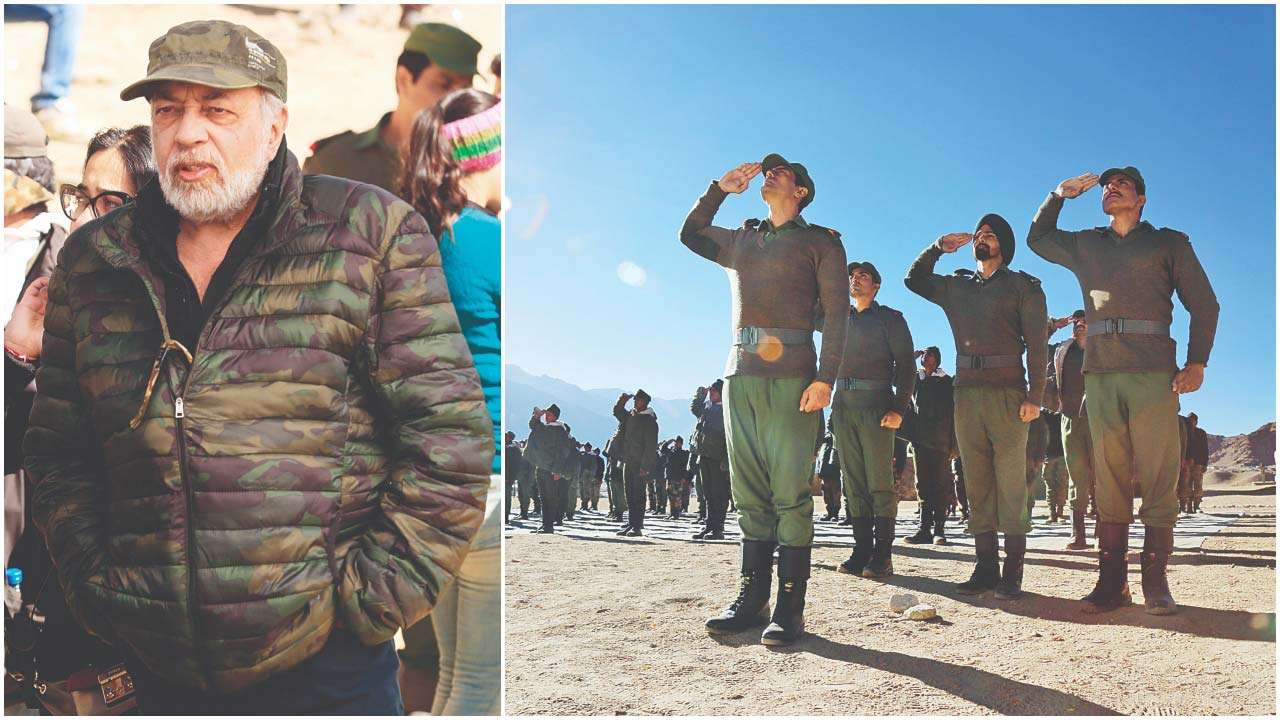
Hiren Kotwani (DNA; September 5, 2018)
Despite making movies on varied subjects like the caste, feudal and zamindari systems, warring royalties, and the Umrao Jaan (2006) remake, JP Dutta is best known as Bollywood’s war movie specialist for making Border (1997) and LOC Kargil (2003). The National Award-winning filmmaker, whose career spans over three decades, has revisited the genre and has completed his war trilogy with Paltan, which is backed by Zee Studios.
In the film, Dutta tells the story of Indian forces that fought Chinese aggression in 1967 and forced them back in the clashes at Nathu La and Cho La in Sikkim. In this interview, he talks about his latest release (which comes 12 years after his last outing, Umrao Jaan) and the Indian armed forces. Read on...
Having made different kinds of films, why did you choose to make Paltan?
I had promised that I would make a war trilogy. This is the third part. I’ve kept my word.
What, according to you, makes the story of 1967 Indo-China clashes so important?
When you talk of Indo-China conflicts, people only remember the one in 1962. I believe that wasn’t a ‘war’ because when one takes place, you know the enemy. Back then, the enemy chanted ‘Hindi-Chini Bhai Bhai’, but they stabbed us in the back. The UN was refusing to make Communist China its member, but our then-Prime Minister, Pandit Jawaharlal Nehru, insisted on its inclusion. Keeping in mind that India was pressuring and strongly recommending China’s membership, he didn’t think they would attack us, but they did, that too without any warning.
The conflict took place 50 years ago, isn’t it a little late to tell this story now?
Not many people know about this episode. Only after Paltan’s trailer released that more Indians got to know that something like this had happened in 1967. No one spoke about it and there’s no mention of it in our history.
When you made Border and LOC Kargil, you shot at actual locations...
Since 1967, the infrastructure at Nathu La has changed. It’s a different terrain now. There’s a gate at the place where the clashes happened. So, it doesn’t match the story. But it wasn’t difficult to recreate the place in Ladakh. We share a 4000-kilometre border with China; it’s similar to how Nathu La was back then.
LOC Kargil showed how the Indo-Pak battle was fought at multiple points...
Even there, we didn’t have the advantages. The enemy was at higher points and we had to fight our way up to recapture our territory. In Paltan, the drama and emotions are almost like that in Border — of one battalion fighting the opposing army. And the clashes are eyeball-to-eyeball, like Doklam.
Even though you’ve made socially-relevant movies, your name is associated more with war films. What fascinates you about this genre?
Many such tales need to be told. People want to see all sorts of films with diverse subjects. The story of a soldier staying away from his family and sacrificing his life to guard us and so we can sit in an air-conditioned room and talk in peace makes it necessary and worth the while to tell others.
In recent years, people’s opinions about the armed forces have been on two extremes. What’s your take on this?
We don’t care about our army, unless there are floods or a natural disaster or until the enemy is at the gates. The fear comes in, we get scared and we wake up to the soldiers.
Why do you think people have this attitude?
I feel it’s because India has only experienced battles and not the two World Wars like the West has. They understand the value of a soldier, country, respect for the national flag, etc. Both the World Wars impacted the entire world, except India, though many of our people were fighting for the British Army. The attitude towards the army depends on the individual and the families. The four walls of your home are the biggest school you’ll go to. What your parents talk about, what you listen to and say as you grow up, plays a crucial role.
What are your views on the word ‘jingoism’ being used to describe patriotic films in Bollywood?
Whoever uses this word for India needs to look up the dictionary, understand its meaning and what our country is all about. Our nation is a liberator, not an aggressor. We’ve never attacked any country in our entire history, ours is the only country that has always tried to defend itself against foreign invaders. Jingoism is not the right word for our country.
We hear the Ministry of Defense has appreciated the film and would like you to make another war movie.
Well, the MoD has liked the film. They always wish that I do well. I get a lot of respect from them and I also respect them immensely. It’s mutual.
What are you planning after Paltan?
I don’t know what’s next. I’ve registered 21 titles and every title is for a different subject. Let’s see...
I am the medium between the jawans and the audience-J P Dutta
8:30 AM

Rachana Dubey (BOMBAY TIMES; September 5, 2018)
After Border (1997) and LOC: Kargil (2003), J P Dutta is all set to complete his war drama trilogy with the upcoming release, Paltan. The film is based on the 1967 Indo-China military clash that took place at Nathu La, along the Sikkim border. The movie unveils the untold story of our brave soldiers, who fought an intense battle to ward off Chinese infiltration.
Point out that he is among the few Indian filmmakers, who are associated with war dramas and Dutta says, “It’s sad that mine is one of the only names that people associate with war dramas. Why is it that in our country, most filmmakers don’t connect with that man standing with a gun, guarding the borders of our nation, which has never been an aggressor or provoker, ever? A mother sends her son to the border so that you and I can spend time with our mothers. What a strong family it must be that stands behind a soldier. When filmmakers make war films, often, the idea is to not just educate viewers about what happened, but also to make them realise the futility of a war.”
Dutta, who has also written Paltan, says that the idea of sharing his vision with the audience drives him to make such films. “I am the medium between the jawans and the audience and that drives me to go after their stories. Also, tales of clashes like the one that took place at Nathu La have been brushed under the carpet.”
The director shares that making war dramas don’t drain him emotionally. “They egg me to move and seek my next story. I feel as if soldiers from across our country are calling out to me to narrate the stories of the battles that they fought for all of us,” he says.
Paltan, presented by Zee Studios & Produced by J P Films, releases on September 7

It’s frustrating that most of us are not proud of our country-J P Dutta
8:05 AM

The storyteller in J P Dutta is frustrated that people are not interested in knowing what goes on at the border; as he revisits his favourite subject with Paltan, the filmmaker talks about the stories that touch him, the tussle with Abhishek Bachchan, and why he was off the radar for long
Shaheen Parkar (MID-DAY; September 2, 2018)
Over a decade after his last Bollywood outing, the Abhishek Bachchan- Aishwarya Rai starter Umrao Jaan (2006), J P Dutta is back on the scene with Paltan. The veteran filmmaker is synonymous with war sagas, which include LOC Kargil (2003), Refugee (2000) and Border (1997). At his office at Four Bungalows, Andheri, there are tomes about the world’s biggest battles fought over the ages.
He studied history, so he considers himself a historian, who considers cinema as a medium to tell the real story. “It’s frustrating that most of us are not proud of our country. That national pride is lacking. We should be aware that we have been plundered for generations. We were never the aggressor. We have become a passive nation.”
Dutta's obsession with war-based films is because “these stories touch me the most. People need to know about what goes on at the country’s borders and the valour and sacrifices of the army folk.”
Paltan is based on the Indo-China skirmish in 1967, in which India emerged triumphant. The clashes at Nathu La and Chog La along the Sikkim border was for the control of Sikkim. He says, “This was a proper war as the two countries knew what they were fighting for, unlike the 1962 war, which was an act of terror. Those were the days of Hindi Chini Bhai Bhai, but they took us unawares. The Chinese army burnt bonfires to distract us and slipped into our land to wreak havoc.”
Dutta has been in constant touch with the army and concerned authorities for the research and permissions required. He says, “It took me two and a half years to get the nod. I wanted it to he factually correct.” About his long absence from the scene, he says, “I had begun work on a film, which I shot in Switzerland, Italy and Rajasthan. It was in 2008 when there was an economic crises worldwide. The film studio cut my budget to 45 per cent. They pulled the carpet from below my feet. I am a passionate filmmaker and did not want to compromise. I told them our creator is also our destroyer. I had conceived the project and was also ending it.” There was also a personal loss, when his dad (O P Dutta) passed away. “He used to write the dialogues for my films.”
Dutta is also known to shoot most of his films in Rajasthan, which include Ghulami, Batwara and Border. “I am known as Jaipur Dutta. I like to shoot in stark landscapes. Someone referred to me as the filmmaker who shoots in naked landscapes like in deserts and mountains. It is in the nothingness that you feel close to God.” Paltan, which stars Arjun Rampal, Sonu Sood, Luv Sinha, among others has Dutta’s daughter Nidhi looking after the production. “Luckily, there were no hiccups even though we shot at high altitudes.”
About present day Bollywood, the veteran filmmaker says, “I belong to the generation when actors were men, there was Raj Kapoor, Shammi Kapoor, Vinod Khanna and the heroines were women like Meena Kumari and Nutan. Today’s actors, Shah Rukh Khan and Salman Khan, are boys. The heroines are girls. But then, things change.”
Dutta is already planning his next. “It could be a war film, something that touches me and everyone should know about,” he concludes.
Paltan gives me an opportunity to don army fatigues-Sonu Sood
7:52 AM

Hiren Kotwani (DNA; September 1, 2018)
There’s a time in most men’s lives when they aspire to join the armed forces. Punjab da puttar, Sonu Sood, is no different. The actor, who couldn’t fulfill his childhood dream, now dons army fatigues for the first time in J P Dutta’s Paltan. The film presented by Zee Studios brings alive on screen the story of the 1967 Indo-China clashes at Nathu La and Cho La along the Sikkim border when our soldiers gave their Chinese counterparts ‘a bloody nose’. Sonu talks to us about his fascination for historicals and the PV Sindhu biopic that he’s producing. Excerpts…
What does playing a soldier mean to you? After all, you hail from Punjab, where a lot of men enlist in the army...
A considerable number of people from the North enlist in the military as a lot of invasions and attacks have taken place in that region. Moreover, due to their height, built and fitness levels, they are an apt fit. My father, too, wished to see me in an army uniform and was happy when I told him that I had signed J P Dutta’s Paltan. While he’s no longer around to see the film, (he passed away in 2016), his blessings are always with me.
Did you ever wish to join the armed forces, too?
Yes, I wanted to as a kid. I grew up in Punjab when terrorism was at its peak. Many officers used to visit my hometown, Moga, so it was inspiring to see them in uniform. Over the years, as I grew up, I was drawn towards engineering and later found my calling in acting. After all these years, Paltan gives me an opportunity to don army fatigues.
What was the first thought that came to your mind when you heard the script?
I realised we don’t know some of the most significant chapters of our history and felt I had be a part of this film. My mother was a professor of English and History. So, she had a lot of History books at our place. Whenever I’ve done a historical like Shaheed-e-Azam or Jodhaa Akbar (2008), I’ve sourced some interesting reading material from her library. I also found a couple of books that dealt with 1967 Indo-China conflicts.
Go on...
I also decided to do the film because of J P Dutta. He has an amazing command over war movies; Border (1997) and LOC Kargil (2003) prove this fact. In Paltan, I play a braveheart, Major Bishwant Singh, who was feared by the Chinese. They called him Tiger Nathu La. I feel blessed to have got an opportunity to play a real-life hero and bring to screen an untold story of our history. Though I haven’t met Major Bishwant Singh, I hope he feels I’ve done justice to his character on screen and made him proud.
In the recent years, there is a lot of talk about the flawed narrative of history with many chapters misrepresented. Do you think Paltan will be a part of that course correction?
I feel that when barely known instances of history are brought out before the people, things will change and our citizens will feel proud about what we have gone through, where we have reached today and where we aspire to be tomorrow.
Paltan comes 50 years after India gave China a bloody nose at Nathu La and Cho La along the Sikkim border. Do you feel this film should have been made earlier?
I do wish this story had been told on screen earlier. But then, as they say, better late than never.
How difficult was it to shoot in Ladakh?
Ladakh is a tough terrain with temperatures dropping to minus 30 and low oxygen levels making things even more difficult. But I remember, when I reached there after wrapping the shoot of my South film Kurukshetra, I was told not to go for a run even though the atmosphere seemed tempting. When I donned the uniform for the shoot and had to run for a scene, I didn’t feel out of breath or exhausted at all. My co-actors were surprised as they had come four days before to acclimatise themselves. They asked me how I managed, but I still don’t know. Maybe it was the uniform or the character that inspired me.
Tell us about your experience of working with J P Dutta.
He is clear about his vision. He had multiple camera set-ups for the shoot and having made war films like Border and LOC Kargil, he knows his craft well. Life is easy for actors with a filmmaker like him at the helm.
While filming this movie, real guns and bullets were used. It must have been a scary thought while shooting?
Not really. A lot of precautions were taken to ensure that no one got hurt. We, actors, received prior training and were focussed during the firing sequences. With J P sir and army personnel around, we knew nothing would go wrong.
You were missing in action for some time but it seems now, you are back in the groove with Paltan and Simmba...
I’ve always believed that it’s the film that chooses the actor and not the other way round. For about a year, I didn’t have any work and then suddenly I had back-to-back movies. Patience and perseverance always pays. I trusted my instincts and didn’t take up every offer that came my way.
What’s the update on the P V Sindhu biopic, which you are backing?
We’ve just completed the 24th draft of the script. Since the time I announced it, a lot of new developments have happened in her career. Hopefully, we’ll start work on it soon.
It’s sad to see the army being maligned; they are like Gods in uniform-Arjun Rampal
8:02 AM
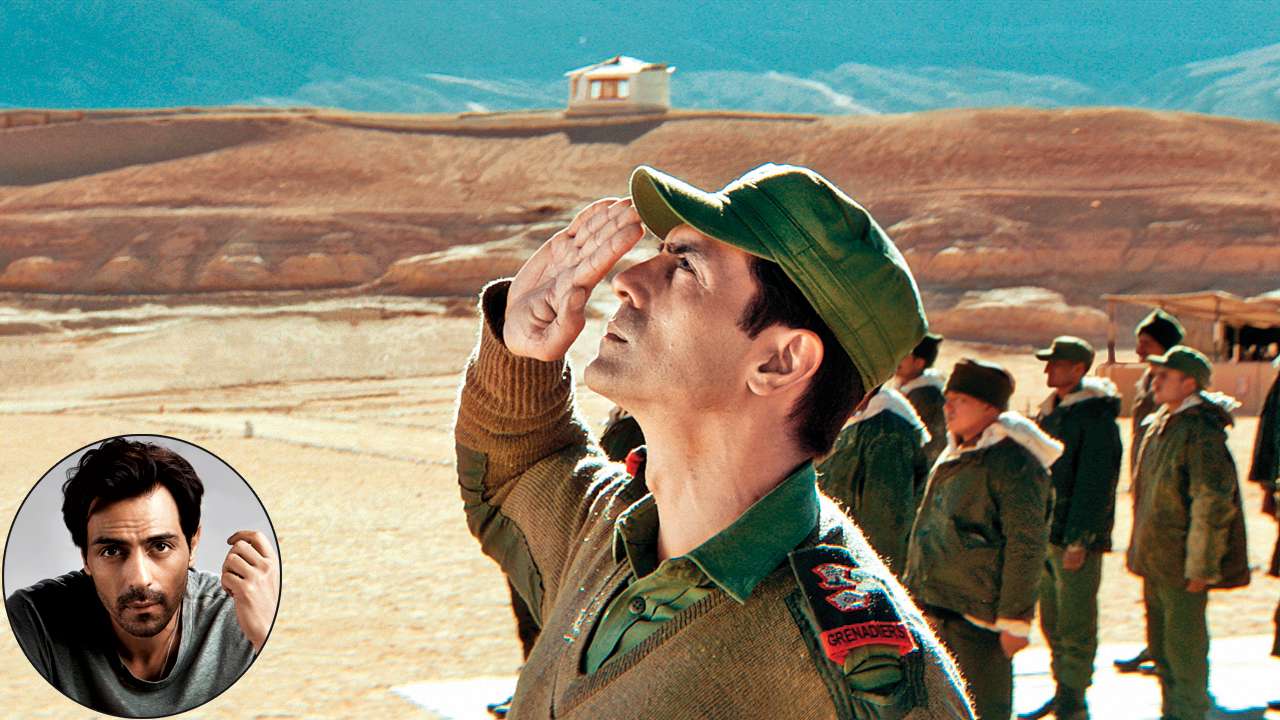
Hiren Kotwani (DNA; August 25, 2018)
The one thing constant about Arjun Rampal in the 18 years that he has been in the film industry is his cheerful disposition. Irrespective of what may be playing on his mind, he always has a smile on his face and is brimming with optimism. Last seen in Daddy (2017), which he also produced, the actor is gung-ho about his upcoming release, J P Dutta’s Paltan, which is backed by Zee Studios. He plays Lt Col Rai Singh, the Commanding Officer of 2 Grenadiers who played an important role in the 1967 Indo-China clash at Nathu La along the Sikkim border.
In a freewheeling chat, he talks about the importance of this chapter in India’s history, the armed forces’ dedication at the border and in times of natural calamities like the recent Kerala floods as well as his production plans. Yes, even though his biopic on the gangster-turned-politician didn’t fare well commercially, Arjun remains undeterred in making movies on stories that he wants to tell. Read on...
What does playing a man in a uniform mean to you?
It depends on the film you’re doing. If it’s something like Paltan, in which you are portraying a real-life character, then your responsibility increases tremendously. If you’re playing a fictional person, then you can take liberties. This movie is based on true incidents. When I first heard about it from J P sir, I was shocked that there was a fight between India and China in 1967, after 1962, in which our soldiers were massacred. It was a brave feat and this chapter should be included in our history books. It’s extremely special for me to tell this kind of a story. In fact, most of us who star in the film have some connect with the armed forces. Either someone’s grandfather, father or uncle had been in the army, so they’ve lived in cantonment areas and interacted with the personnel on a day-to-day basis.
How do you see the 1967 Nathu La and Cho La clashes as compared to the Battle of Longewala on the basis of which JP made Border (1997) or the Kargil war that was made as LOC Kargil (2003)?
In 1967, Sikkim was not a part of India. The King of Sikkim had asked Indian forces to give them protection. So, we were protecting a territory that was not a part of the nation. After 1962, there was a lot of anger, fear and conflict with China. When you speak to someone like J P sir, who is well-versed with history, the way he talks of 1962 makes sense. That was not a war. For a war to happen, a chain of events lead to that situation, both sides are alert, they prepare themselves and warn each other before the first attack.
In 1955, Pandit Nehru had suggested that Chairman Mao Zedong-led China be made a part of the United Nations Security Council (UNSC). We were trying to maintain good ties with our neighbours. But in 1962, they attacked us all of a sudden and massacred not just our soldiers, but also killed many civilians. In 1967, we had gone to protect Sikkim, knowing the history of 1962 and gave China a bloody nose. Maj Gen Sagat Singh and Lt Col Rai Singh, the characters played by Jackie Dada (Shroff) and me respectively, say ‘Let’s put a fence and seal the border.’ That’s a conflict, both the countries were prepared and it led to the clashes. In 1971, too, there was conflict. We knew the Pakistan troops were coming. All talks had gone down the drain and it was important to have our army there. I don’t think 1962 gave us a fair chance.
Why do you think it’s important to tell this story?
For the morale of our army. When you talk of making a film on unsung heroes, these are our unsung heroes. If we had not held our ground, as Jackie Dada’s character says in the trailer, ‘We cannot leave Nathu La,’ then the ground reality there would have been different today. It was eight years after this clash with China that Sikkim formally became a part of India in April-May 1975. The whole map would have changed if this event had not happened.
What do you attribute the flawed historical narrative over the years to?
It was all politically manipulated. When you see the film, you will know.
Do you see this film being a part of the course correction?
I want it to be and I hope so. I don’t know why it’s not there, but it’s an important part of Indian history. What our soldiers had done then, is there for you to see today. If you go to Nathu La, you’ll find the barbed wire fence there. There are statues of our soldiers and roads are named after them. They were awarded Param Vir Chakra and Mahavir Chakra for their bravery.
While you feel a sense of pride and responsibility in playing characters based on real soldiers, do people’s extreme views about the army upset you?
Definitely. I think the army is one organisation that works beautifully without interference. If more people get involved in its business, corruption will seep in. The army should remain an incorruptible institute. People who try to influence deals by immoral ways should be kept away. Being in the army is a selfless and honourable job. They are risking and sacrificing their lives to make sure all of us have a good life and make this nation grow. So, yes, it is upsetting when people try to malign the army. I think they should be protected by us civilians as well as politicians and bureaucrats who are required to be in touch with them. Take the Kerala floods for example; they are like Gods in uniform. The kind of work our soldiers are doing is commendable and should be lauded.
Tell us about the challenges that you faced while shooting in a rough terrain like Ladakh.
At a point beyond Khardung La, which is the highest point, the temperature was minus 28 degrees. We were told that we can expose ourselves to this climate only for two hours, following which water would start filling our lungs. Marching through while shooting the song was tough. Another challenge was using real guns and bullets. We had to be careful and ensure that we didn’t hurt anyone. The reason behind using real arms and ammunition was that you have to feel you are in a war. Otherwise, we’ve seen how actors fire all around when fake guns and blanks are used. Here, you could see where the bullets were leaving their marks.
J P Dutta has a reputation of being a tough taskmaster, too.
That’s what I thought before I met him. But he is the most amazing director to work with. His knowledge about cinema, armed forces, his personal connect with them and his passion are inspiring. He wanted to get this film out in its purest form. The only request he makes is you have to submit yourself to him, let him take you on this ride and he knows what he wants. The clarity and focus he works with, his intent is very pure. However, not many know that he has a terrific sense of humour. Also, he’s always on his feet. So, while filming, we would be standing, too, hoping he would sit so that even we could. For him to complete a trilogy of war films with Paltan is a correct choice and I’m glad to be a part of it. In fact, the whole Dutta family looked after us and made us feel a part of the family.
Indian cinema, more so the Hindi film industry doesn’t make too many war movies or historicals. Do you think there’s a certain cynicism or skepticism about our past?
I don’t know. It’s up to the filmmaker and how he can capture it well on screen. It also depends on how such films fare commercially. If Paltan does well, it will encourage more filmmakers to tell our historical stories. Not war films per se, but about incidents that many people don’t know much about. We have such a vast history, full of diversity — the Mughal invasion, British coming in as traders and ruling us, our fight for independence. There are so many stories to tell. It’s now the responsibility of the younger generation of actors. Besides, with many actors also being producers, hopefully, we’ll see more such movies.
What’s next after Paltan?
There are three movies, but I’m contemplating which one to start first. Two of them are my productions — one is a fantasy film and the other is a thriller. So, we’ll begin prep after mid-September. I wanted to finish Paltan first. After its release, I’ll have a clearer idea. Web is also an exciting phase. The idea is to create good content, experiment with diverse genres and stories. The kind of scripts I’m getting, some are real stories — one is a horror story and if done correctly, it will make for interesting viewing. There’s also a true story of a conman that I’m reading.
Paltan cinematographer Nigam Bomzan slaps legal notice on director J P Dutta and daughter
4:05 PM
 Paltan cinematographer Nigam Bomzan sues director J P Dutta and daughter over non-payment of dues and missing credit in trailer
Sonil Dedhia (MID-DAY; August 22, 2018)
With a fortnight before Arjun Rampal starrer Paltan hits screens, filmmaker J P Dutta finds himself in a legal soup. Nigam Bomzan, the director of photography on the project, has slapped a notice to the makers over non-payment of dues and missing credit in the trailer.
Bomzan tells mid-day that he filmed two schedules in Ladakh last year. "Being a fan of Dutta's work, we verbally agreed on the money but didn't sign a formal contract. I shot for 54 days, and the portions make up 80 per cent of the film. During that period, I received about 30 per cent of my remuneration."
However, he had to bow out before the final schedule commenced, owing to his sister's health issues. Shailesh Awasthi was roped in for the last leg. While Dutta and daughter Nidhi, he claims, supported his decision to exit the project, trouble began when he requested them to pay his fees. "Nidhi told me that they hadn't received the money from Zee Productions [co-producers]. But she assured me that they would clear the payment soon. After a point, she stopped replying to my messages. I have been trying to reach them since March, but there has been no response. I finally decided to take the legal route." Bomzan says his missing credit from the trailer made matters worse. "It's sad that I have to fight to get credit for my work."
When contacted, Nidhi said that they have yet to receive the notice. "It has been sent directly to Zee Productions. We made payments according to the days that he has shot. We will reply to the notice once we receive it." Talking about the credits, she added, "It's a technical error. Both the DOPs will be credited in the film's slate."
The spokesperson of Zee Studios said, "We have cleared all the payments as per the contract to J P Films."

The canvas in Paltan is huge; it’s stark and real-Anu Malik
8:01 AM

Finding himself in J P Dutta’s fold again for Paltan, Malik on challenges he faces when tackling the genre
Shaheen Parkar (MID-DAY; August 20, 2018)
His duties as judge of Indian Idol notwithstanding, Anu Malik has a busy year ahead. He is set to gauge the response that three September releases garner, all of which have been composed by him. In an industry where musicians are attempting to create a niche for themselves, Malik is happy that he can still offer variety in his composition.
The variety of genres seen in his upcoming releases, are testimony — J P Dutta’s war drama, Paltan, Shree Narayan Singh’s social drama Batti Gul Meter Chalu, and Sui Dhaga, Sharad Katariya’s tale of self-reliance.
“I want my work to do the talking,” he says, adding, “I want to surprise the audience. I want them to ask, ‘Really, Anu Malik has composed this?’” That’s the kind of reception he got for his acclaimed melody, Moh Moh Me Dhaage (Dum Laga Ke Haisha, 2015).
Thirty-eight years into the industry, Malik admits that despite being among the most revered, he had his share of ups and downs. “At times, I have been rattled, but friends like J P saab [ Dutta] kept me going.” He has collaborated with the filmmaker for multiple ventures, including Border (1997), which had the soulful Sandese Aate Hai. Yet, he says, composing for a war film is tough. “How do I approach it? The canvas is huge; it’s stark and real.”
He recalls that during Border, Dutta had rejected his initial compositions. “I was shattered.” But this also proved to be a turning point in his life, which egged him to create Sandese Aate Hai. “I was shown photographs of the [set] locations, and footage of what J P saab had shot. He made me accompany him to New Delhi, where we met Army men. They narrated their stories of keeping vigil at the border, at times, performing their duty in neck deep snow. I was moved to hear of their hardship. Something hit me. I sat with my harmonium and the tune of Sandese Aate Hai was created.”
Dutta had told him to remain unfazed by criticisms. “I followed his advice. Doing so helped me create some of my best compositions, including those in Asoka (2001) and Main Hoon Na (2004).”
Malik is hoping to recreate the magic with Paltan. The title track, which celebrates brotherhood, was released last week. “There are two more songs, one if which is sure to make people teary-eyed.”
His next films, Batti Gul Meter Chalu and Sui Dhaaga, have been shot in the heartlands. In accordance with that, his compositions will capture desi nuances. “I feel the situation and then create the sound.”
Army officers from the 1967 Indo-China military clash provided inputs for J P Dutta's Paltan
10:05 AM

Upala KBR (MID-DAY; August 15, 2018)
Staying true to his research-backed approach to war dramas, filmmaker J P Dutta ensured he did extensive homework on the 1967 Indo-China military clashes before going behind the camera for Paltan. The director reveals that he found able support in Lieutenant Attar Singh and Major Bishan Singh, who were part of the clash that took place along the Sikkim border.
 While Major Singh took over as the company commander with Captain P S Dagar as his second-in-command, Lieutenant Singh was part of the 2 Grenadiers unit during the skirmish. The former Army officers, along with the family of Captain Prithvi Singh Dagar (who lost his life in the battle), helped the makers recreate Nathu La — which served as the war front — in Ladakh.
Dutta reveals that Lieutenant Singh accompanied the unit of the Arjun Rampal and Sonu Sood starrer to Ladakh for the shoot. "Before commencing the shoot, I travelled to Nathu La to study the location. [As part of my research], I took photos from the jawans' family albums and they too would send me first-hand information over mail. Attar travelled with us to Ladakh and zeroed in on the various locations that he thought looked closest to Nathu La."
The director adds that he met several Army officers from the respective battalions while scripting the final instalment of his war trilogy. "I always start my research by reaching out to the commanding officer of the battalion in question. It took me close to a year to complete my research."

File photo of Major Bishan Singh
I run away from the paparazzi sometimes-Sonakshi Sinha
8:45 AM

Sonakshi Sinha on her ‘happy’ space, sharing the screen with dad, working on her music and looking the best she ever has
Natasha Coutinho (MUMBAI MIRROR; August 10, 2018)
Sonakshi Sinha, who takes over from Diana Penty to take the Happy Bhaag Jayegi franchise forward with Happy Phirr Bhaag Jayegi, believes that happiness is a state of mind and one needs to look for it in the smallest of things. “That’s the only way to stay happy,” she says.
The 31-year-old actress plays a Punjabi kudi in the film and insists that it was a cakewalk because even though dad Shatrughan is Bihari and mom Poonam Sindhi, she has very Punjabi traits and a playlist of only Punjabi songs. “I walk, dance and speak like a Punjabi so it was the most natural thing for me to play a character like Happy. Also, I’m not very glamorous in real life, I only look glamorous for my profession and even on screen, I mostly play simple girls whom the aam aadmi can identify with, which is the idea,” she adds.
Recalling her first meeting with the romcom’s producer, Aanand L Rai, she describes him as a “sweet and simple man” with whom she immediately connected on a spiritual level. “We spoke for an hour-and-a-half about food, the films we want to make and only five minutes about this film,” she recalls, showing no signs of pressure coming into a successful series, pointing out that people loved the first film and the original characters who are in this film as well. “That makes the job easier and the response has been positive so far,” she says. Ask her what this Happy is running away from and she says, “The paparazzi, sometimes.”
 After eight years, Sonakshi will finally be sharing the screen with her dad in
Yamla Pagla Deewana Phir Se in a song and raving about the
experience she admits that working with him had been on her wish list
for a long time but surprisingly has not happened in a full-fledged
film. “For now, I am honoured to be sharing the screen with three
legends Dharam ji (Dharmendra),
Rekha ji and dad,” she avers, adding she has grown up with Esha and
Ahana Deol. “I played many Holis in their house with Hema ji and Dharam
uncle. Even today when we meet, Dharam uncle wonders if I’m going to
complain about them. Esha and my brothers (Luv and Kush) would gang up
and bully me. But now we can laugh about it. They are amazing family
friends.”
I walk, dance and speak like a Punjabi so it
was the most natural thing for me to play a character like Happy. Also,
I’m not very glamorous in real life, I only look glamorous for my
profession and even on screen, I mostly play simple girls whom the aam
aadmi can identify with, which is the idea.
Interestingly, Luv’s second film, J P Dutta’s Paltan opens a week after hers. “I’m happy because this is the kind of film he always wanted to do and I can’t wait to watch his film,” says Sonakshi whose upcoming projects include Karan Johar’s period drama Kalank, in which she is paired with Aditya Roy Kapur, and the Arbaaz Khan-produced Dabangg 3, opposite Salman Khan. She suddenly clams up, pointing out that it’s too early to speak about them. “The Kalank shoot is still on and Dabangg 3 hasn’t even started yet,” she demurs, saying the latter is homeground because she started her career with the Khans and is here today because of them. “Doing a Dabangg with Salman or going with him on a Da-Bangg concert is like homecoming for me.”
The actress has just returned from a tour with him that also had Jacqueline Fernandez, Katrina Kaif and Daisy Shah and says that it’s a myth that girls can’t have fun. “In this age of social media, we are in touch all the time and during the tour, we all worked out and ate together,” she reveals.
Sonakshi is looking her fittest and she confides that earlier she would cheat on her diet, but over the last six months she has been consistent with her workouts and careful about what she eats. The effort has clearly paid off. “I’ve surprised myself with my own commitment. It’s been tough but rewarding. The compliments are coming in,” she says.
In her upcoming film, she has sung a new version of “Mera Naam Chin Chin Choo” with co-star Jassi Gill and goes on to reveal that she’s recorded a couple of other songs. After the release of Happy Phirr Bhaag Jayegi, she plans to shoot the music videos and release them. “I want singing to be an extension of what I’m already doing. I also paint when I have the time. The last few months have been super busy and I haven’t painted anything new, but I have a collection of over 30 paintings and I definitely want to exhibit those, hopefully soon,” she says
Interactions revealed soldiers' emotional turmoil-J P Dutta
8:32 AM

Paltan director J P Dutta on meeting Army men who were part of the 1967 Indo-China clash
Sonil Dedhia (MID-DAY; August 1, 2018)
Even though it has seen a series of A-list stars make a departure, J P Dutta's Paltan seems to be shaping up promisingly. After the maker unveiled the reel army men — Jackie Shroff, Gurmeet Choudhary, Arjun Rampal and Luv Sinha — on social media yesterday, mid-day has learnt that Dutta met the real-life heroes to learn of their struggles.
To lend authenticity to his actioner, based on the 1967 Indo-China military clashes, which saw India emerge victorious, Dutta met families of officials associated with the operation. A source says, "He [Dutta] met the family of Captain Prithvi Singh Dagar. Dagar was the officer in charge of the party laying a wire fence at Nathu La to demarcate the boundary between the two countries. This was being done at the South shoulder of Nathu La. He also met Attar Singh who was the 2/Lt then. Singh narrated the events in detail."
While the director credits such meetings for adding credibility to his war films, he says it also gives him an insight into the turmoil that the families faced. "I always wanted my films to be as close to reality as is possible. They gave us factual details, and insights into what the soldiers and their families endured emotionally. With Paltan, the journey was tougher, because little is known about the [events]. Speaking to the families enhanced our film, and helped us in developing the characters of the Army men in best way possible," Dutta says.

Subscribe to:
Posts (Atom)