Showing posts with label Paheli. Show all posts
Showing posts with label Paheli. Show all posts
Shah Rukh Khan was unsure about his Paheli look-Amol Palekar
10:57 AM

Niharika Lal (BOMBAY TIMES; July 17, 2025)
Director Amol Palekar believes Paheli has aged well – not because it aligned with the norm, but because it chose not to. “The film didn’t chase trends; it carved its own path,” he says. “I’m very proud of the film.”
At the time, casting Shah Rukh Khan – the romantic hero – as a ghost was both audacious and risky. But Palekar recalls that once people read the script, “many were intrigued by the role’s poetic complexity.” Shah Rukh, he says, “embraced it wholeheartedly, lending the character both charm and melancholy.”
As Paheli completes 20 years, Amol Palekar and Sandhya Gokhale, his long-time collaborator and wife, revisit the film, which Palekar says, “feels like an early spark in the evolution of female centric and genre-bending narratives in Indian cinema.”
‘Changing the ending honours the spirit of the original folk tale while speaking to modern sensibilities’
In the film, SRK plays a double role – of Kishanlal (Lachchi’s husband) and of a ghost (who falls in love with Lachchi). When Kishanlal goes away on business the day after his wedding, the ghost takes his place. It is based on a Rajasthani folk tale by Vijaydan Detha, titled Duvidha. However, the film’s maker changed one crucial part – the ending.
“In the original version, Lachchi returns to her husband, choosing duty over desire. She hides the fact that she had accepted the ghost as her lover despite the knowledge that he was not her husband. She chooses to live a lie and conforms to societal expectations. Sandhya thought it was dishonest. Ultimately, for us, love, honesty, and purity were the driving forces. Lachchi’s final confession (in the film) to her husband – that the ghost had given her the choice to accept or to reject him and that she chose an adulterous relationship – was quietly revolutionary. It honours the spirit of the original folk tale while speaking to modern sensibilities,” says Palekar.
Sandhya adds, “Balancing the ghost’s romantic idealism with Lachchi’s autonomy was especially delicate. We didn’t want the spirit to merely symbolize longing or escapism — he had to evolve as a character. And Lachchi had to be both rooted in her world and quietly subversive. Embedding feminism in fantasy without making it didactic was a continuous tightrope walk.”
‘We wanted the palette of the film to give a feel of a fantasy’
“We had visited every corner of Rajasthan at least 3-4 times and had noted every detail such as the motifs used on the walls of the haveli, the mannerisms observed there, the props in a baniya kacheri etc. We wanted the palette of the film to give a feel of a fantasy. The locations used, such as the big well, the sand dunes of Jaisalmer etc, were not just picturesque; they were immersive. The architecture, the light, the earthy tones — they shaped the visual language of the film,” says Palekar.
‘SRK was unsure about his look’
The idea of casting Shah Rukh as a ghost initially raised eyebrows. Palekar says, “Shah Rukh Khan’s casting as a ghost was seen as both audacious and risky. Some wondered, ‘Will audiences accept him in such an abstract, non-human role?’ But that’s precisely what made it exciting. The ghost in Paheli isn’t scary or sinister – he’s tender, philosophical, and full of yearning. Eventually, the surprise became the selling point. In later years, many (viewers) say that it was his best performance. Shah Rukh himself was unsure about his look in the Rajasthani attire and with a mustache. I had no doubts that people would love him.”
Addressing the influence that Shah Rukh and Rani had on their characters, Sandhya says, “I had Shah Rukh and Rani in my mind when I wrote their characters. Shah Rukh has given such a superlative performance in Paheli that the ghost lingers in our mind. Rani Mukerji’s Lachchi wasn’t written for a ‘star’ — she was written as a woman caught between longing and loyalty.”
20 Years of Hazaaron Khwaishein Aisi: The only criteria was no known faces-Sudhir Mishra
8:22 AM
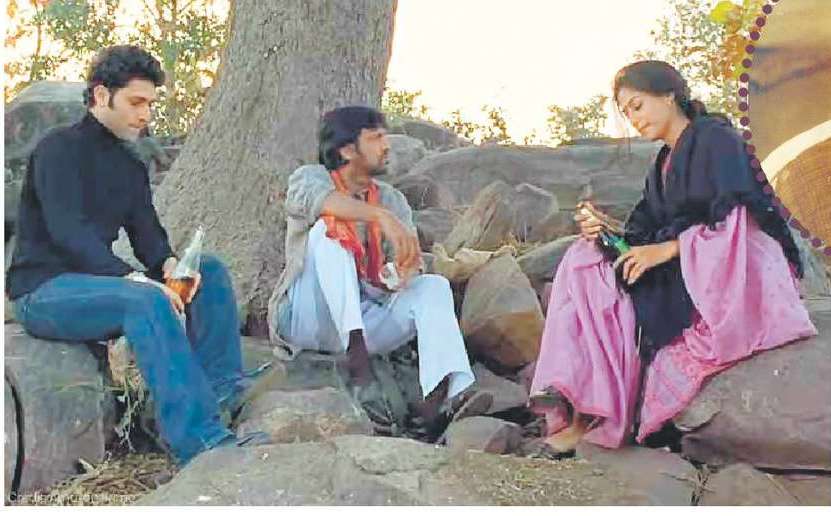
As Hazaaron Khwaishein Aisi (HKA) clocks 20 years, writer-director Sudhir Mishra reflects on its cult status now
Deep Saxena (HINDUSTAN TIMES; April 16, 2025)
Starring Kay Kay Menon, Chitrangda Singh, and Shiney Ahuja, Hazaaron Khwaishein Aisi (2005) was a semi-hit but garnered widespread love and acclaim over the years. Dismissing rumours of a remake, Sudhir Mishra, who served as both director and writer, says that a sequel could be worked out.
A big screen viewing again?
It is the time of re-releases, and Sudhir shares that there were talks about HKA, too, getting a re-release before the death of producer Pritish Nandy: “It’s surely in consideration. HKA was released without PR and was a minor hit. (But) the kind of viewership it got later is weird!”
‘Kharab nahin kar sakte’
The filmmaker feels that HKA is no longer his film: “Over the years, the audience made it their own.” He is also asked about a possible sequel or remake wherever he goes and shares, “A sequel can be done as the story of the three characters can move on. But, nothing should not be done just for the sake of it! If something comes to mind, it will be, but I can’t spoil the memory of the film – kharab nahin kar sakte.”
The biggest award
“The film was rejected by the National Award jury headed by (filmmaker) Basu Chatterjee. The industry thought that it would be sent for the Academy Awards but lost to Paheli (2005). But HKA went to several festivals and won awards all over,” the filmmaker shares, adding “The test of a film is that it has meaning for its audience across time and keeps finding other audience. HKA does. That is the biggest award!”
Fresh faces
Sudhir was certain about casting fresh faces for the film. He recalls how, Swanand Kirkire, who wrote and sang Bavra Mann and also appeared as a villager in the film, auditioned hundreds of actors for the lead roles.
“I had already cast someone for Shiney’s role, who is still very angry with me. But then, Zoya (Akhtar, filmmaker) sent Shiney. I originally tested him for Kay Kay’s role but changed it... Chitrangada was going to catch a flight when I called her... The only criteria was no known faces,” he recalls.
A lot of people didn’t know a film like Chup even existed-R Balki
8:34 AM
Niharika Lal (BOMBAY TIMES; November 25, 2022)
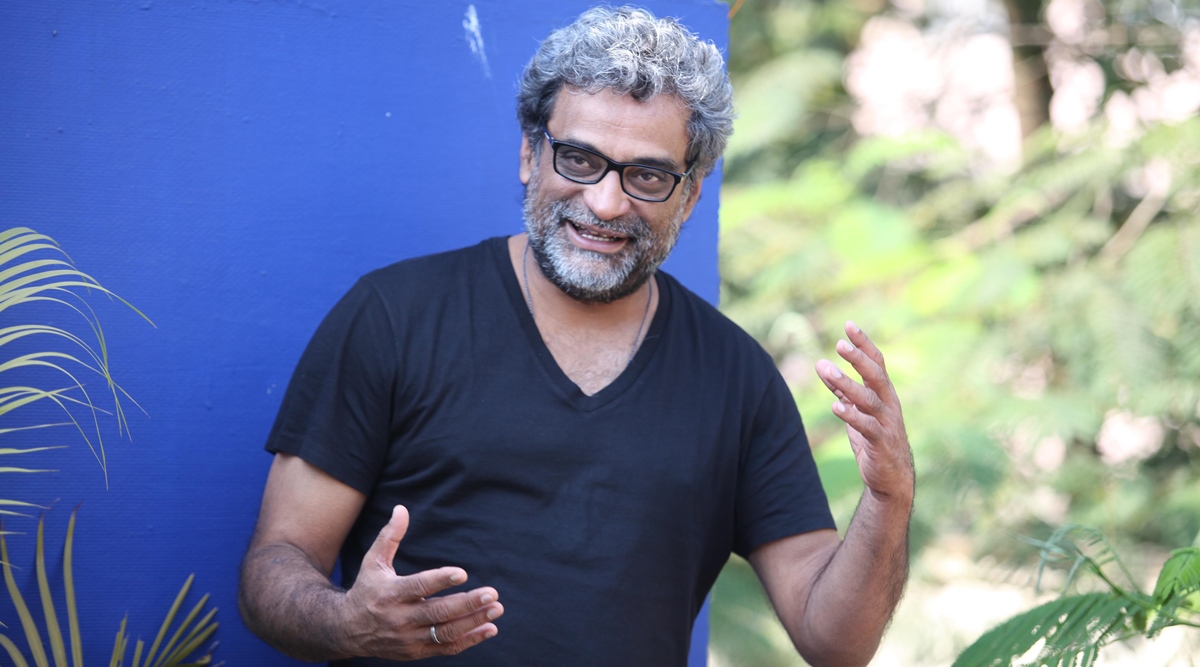
Known for films such as Cheeni Kum, Ki And Ka and Pad Man, R Balki gave a masterclass on the topic ‘Negotiating Aesthetics and Economics’ at IFFI (International Film Festival of India) 2022.
‘A LOT OF PEOPLE DIDN’T KNOW MY FILM CHUP EXISTED’
Balki said that a lot of films that fail at the box office or do not do well is because people don’t know about those films. He said, “We, in the creative world, tend to live in a bubble. A lot of people didn’t know a film like Chup even existed, and I thought it had free shows and it was great. A lot of my friends whom I met after years asked me, ‘So, what are you doing next?’, and I said I just did Chup, and they asked, ‘What is that?’ I was shocked and stunned. It didn’t reach people. Whether you like or not is different, you don’t even know about it then it is a problem.”
While word of mouth publicity gets a lot of credit for several films, Balki said he hates this cliche. “Word of mouth is mythical. I wonder how it happens? People watch the film and go and tell everyone to watch it? No. It has to be worked out in a manner so that there is already excitement around the project and all they need is a little nudge to go and watch the film. I feel a lot of creativity suffers because of a lack of science. I feel there has to be a scientific process behind word of mouth to be generated,” he added.
‘I DON’T THINK WE HAVE FOUND THE SCIENCE TO MARKET OUR FILMS’
Balki said that Bollywood doesn’t have a marketing mechanism. Not minicing his words, he expressed, “The marketing strategy is somebody is creating controversy, somebody is sleeping with someone, create some boycott, some ban. I don’t think we have found the science to market our films and a lot of creative people suffer because of it. Enough investment has not gone into developing how to market films and it is really very sad. So many people are pumping in huge bucks and yet the returns are so less.”
“If you are making 100 films and 90 of them do not make money, then there is definitely something wrong with the industry. There are pundits in this industry – producer pundit, director pundit, writer pundit, trade pundit and media pundits, and they all fall flat. They fall flat and they move on with the next theory without learning a thing. There are fantastic marketing people in cinema, but somehow when they get into this zone then their entire reading of data starts sounding outdated,” he added.
Balki further said that there is no formula for how films work. “It depends upon who does what. You can’t say the audience wants it. No, the audience wants damn good work. Who doesn’t want to see a good film, song or stars saying their best lines? But we all fall flat in understanding the theory without understanding the execution,” he added.
‘SHAH RUKH IS ONE OF THE MOST CLEVER PEOPLE IN INDIAN CINEMA’
Balki said that the stars are making one fundamental mistake that they are getting caught up in the producers’ money making machine. He said, “(They think) If I want to charge this amount then I have to do this kind of work and only then will I be able to recover the money. A lot of smaller ideas could have become bigger if bigger stars would have invested in them. Some stars have experimented and have fallen flat and have chosen to not experiment again while some stars have gone for tried and tested formulas.”
He said that Kamal Haasan experimented in the 80s with films like Sadma. Talking about Shah Rukh Khan, he said, “Shah Rukh has done Dear Zindagi. He also experimented with Swades and Paheli. If those films had worked, it would have taken a different turn. He is one of the most intelligent people in Indian cinema.”
Amol Palekar to ring in his 70th birthday with solo exhibition of his abstract art
7:40 AM

Roshmilla Bhattacharya (MUMBAI MIRROR; October 29, 2014)
 On November 24, Amol Palekar
turns 70 and he raises a toast to the occasion with a solo exhibition of
abstracts on oil in a Mumbai gallery. Talking to Mirror from Pune, Amol
says that though his acting career and its success overshadowed
everything else, the fact remains that he was a painter much before he
became an actor and hopes to die as one.
After graduating from the JJ School of Arts in 1965, he started his creative journey with his first solo exhibition two years later and had hosted seven such exhibitions till 1982. “I moved from the visual to performing arts and then to plastic art and now it's back to the first as the circle gets complete,“ he muses, recalling how excited he was when he entered theatre because it not only offered all the elements of the visual arts like colour, texture, form and space, but also new elements-sounds and a live performance. “Not many are aware that I was one of the leading per formers who brought theatre out of the proscenium arch and explored new spaces.” Looking at the installations today he points out that even the visual arts has evolved to encompass group activity, performing arts and creative use of locations. “The contours and boundaries are blurring as we move from one art form to another. Another significant difference is that I was a budding artist in my 20s when I did my first show, and now I’ll be 70, a senior citizen,” he laughs.
 He asserts that as an
actor he was only a small part of the director’s design. “The films you
love me for were Basu Chatterjee or Hrishikesh Mukherjee’s films. You
will see more of the artist in the films I directed,” says Amol,
pointing out how he filled his frames with greys and browns,
supplemented with costumes and skin instead of ugly images to show the
drought in Bangarwadi. “And in Paheli I used a huge step well to introduce the ghosts, the location with its innovative visual design is used
by even Holywood filmmakers.”
This exhibition is not a flashback to the past but a collections of his artworks painted in 2014. “I was a little apprehensive going back to painting but today when I wake up in the morning, all I want to do is go stand in front of the canvas, control and conquer that space. Today I don’t want to impress people with my strokes.
I know, like any swimmer, that it’s far more difficult to float on water without creating any ripples. Unlike acting which is all about reaching out to an audience outwardly, art is more introspective. My paintings are my dialogue with myself where even the pauses and silences speak,” he says, adding, “I hope my audience will like this journey as much as they liked my acting journey.”
Subscribe to:
Posts (Atom)