Showing posts with label No One Killed Jessica. Show all posts
Showing posts with label No One Killed Jessica. Show all posts
Today, women are not willing to be silenced-Rani Mukerji
10:08 AM

Madhureeta Mukherjee (BOMBAY TIMES; March 8, 2026)
Three decades in cinema, and over the course of 71 films, Rani Mukerji has navigated romance, drama, comedy and fierce, socially charged roles with equal conviction, constantly redefining what longevity for a leading woman in Bollywood can look like. From early films like Kuch Kuch Hota Hai, Saathiya and Hum Tum, to powerful intense roles in films like Black, Hichki, Mrs Chatterjee vs Norway, to the successful Mardaani franchise – her career has been marked by reinvention and a refusal to be boxed in by industry stereotypes. In a special Women’s Day conversation on the Bombay Times Lounge, she speaks about shattering the glass ceiling, channelling her angst around crimes against women through her art, and embracing vulnerability in a world that constantly expects women to “have it all together.”
Over the years, you’ve played women who are strong, flawed, resilient, and often ahead of their time. Looking back, do you feel these roles shaped the conversation around how women are portrayed in Hindi cinema?
I do feel that many of these roles helped shape the conversation around how women are portrayed in our cinema. My characters have often been written with agency and emotional intelligence. Hum Tum marked a shift towards urban, contemporary storytelling. Black beautifully portrayed the strength of the human spirit and a woman’s ability to rise above immense challenges. In Mardaani, my character broke stereotypes by portraying a tough, morally driven police officer, proving that women-led stories could thrive in action-driven narratives. No One Killed Jessica highlighted the power of women standing up against injustice. Hichki was a heart-warming story that addressed inclusivity and learning disabilities with great sensitivity. With Mrs Chatterjee vs Norway, I had the opportunity to anchor an intense and emotionally powerful narrative almost single-handedly.
You rewrote the rules for yourself from the start. The industry, for the longest time, had a certain image of how a leading actress should be portrayed on screen. You made your voice one of your strengths, it’s what gave you a distinctive quality. But when you were starting out, how did you use all the comments or criticism around that to fuel you?
I think it is important that certain things hurt you, as you can then make them into building blocks for your life, instead of letting it pull you down. To be resilient at times when you have been hurt shows true character. It is normal to go through that; it is part of growing up and part of evolving as a true artiste. Also, I think to live your life according to somebody else’s opinion of you is not an intelligent thing to do. In life, no one thing remains constant, so if people didn’t like my voice back then, it didn’t mean they wouldn’t like it forever. You can’t take what people tell you at first instant too much to heart. I’m very, very grateful for the comments – good and bad – because they have shaped me into the person and the actor that I am today.
The first part of the Mardaani franchise released 12 years ago, and sadly, conversations around crimes against women and safety continue to be painfully relevant even today. How do you reflect on this as someone who has fronted the franchise?
What has changed in the 12 years is that today, women are not willing to be silenced. They have a strong opinion; they are finding their voice and want their voice to be heard. Women have always associated the word fear since childhood. At some point in our lives, most of us have faced untoward situations. It happened to me. It’s probably happened to you. It happens to women, irrespective of their age and where they come from. And it doesn’t only happen outside, it happens within the walls of our homes too. All these experiences have hardened us in their own way, and the problem also is that women trust people easily. Today, we have no choice but to tell our children to be less trusting of people around them. It is something that has disturbed me from my younger days, and not being able to do anything about it makes me angry. The only way to channelize that is through my work, my art form. And having a daughter (Adira) changes the way you look at everything. Now my niece is 18, and she wants to be independent and travel and it worries me. It’s like a part of you is out there. Crimes (like in Mardaani) are happening as we speak. That is our reality. The film raises pertinent questions and talks about these uncomfortable truths. Today, we are living in scary times.
Society often puts women through various contradictions — you have to be powerful but soft, driven but not too aggressive, ambitious but not too fierce. How do you view such contradictions, and in your own journey, how did you process them?
It is very difficult. I don’t think it is easy for women in any position. It generally comes from an attitude where no one wants to be scolded by a woman, no one wants to get a dressing down from a woman. For many, seeing women in a position of power can be unsettling. I think it’s more about the male ego, which comes into the picture. I have navigated this and also dodged it. You know, when people ask me why I cut down on doing so many films, the reason was a conscious one where I wanted to work with like-minded people. There comes a time in your life when you are in a position where you can pick and choose the people who you want as part of your journey. Especially after having my daughter, I think it’s so important that she knows what I am doing means something and that mamma is part of a story that has to be told.
You’ve done romantic roles, rom-coms and dramas. Would you say that Mardaani’s Shivani Shivaji Roy is closest to Rani’s inner fire?
Yes, absolutely! Not to say that I don’t love doing romantic roles. I really love romances and I am still waiting for somebody to write a really lovely love story.
There is often an unspoken expectation from women to “do it all” and “to hold it all together” irrespective of what emotional phase they are in — whether it is in the capacity of a daughter, wife, mom or a working woman. Did you ever see yourself going through this, and how did you navigate it?
Of course, we all go through that process and it’s natural to go through different hormonal changes which we have no control over. I don’t think we should fight it. But if there is education around these emotional journeys that women have to go through at every decade of our life, it will make life easier. If you have mood swings, it’s fine. It is okay to get exasperated. On some days, you’re so tired that your emotions get all mixed up with your physical exhaustion and you break down. Also, I think, this whole thing that we’ve always been told that women have to be strong to handle everything, that myth should be broken. Women should be given a break, because suppressing our emotions is the worst thing that we can do to our bodies and health. Sharing our sadness, confusions and the dilemmas that we go through with our close ones is important. A strong support system during such times can make a huge difference.
Adira is now 10, does she realise the impact of your work, the gravity of being Rani Mukerji? She’s slowly understanding it and she’s very proud of me, which is beautiful. What more do you want?
In the beginning, seeing the pride in my parents’ eyes made my life. Then, of course, came my husband (Aditya Chopra), and now, it’s my daughter. It’s important that people close to you and your inner circle are truly proud of you and root for you. That means a lot to me. The complete interview with Rani Mukerji will drop soon on the Bombay Times YouTube channel
Delhi itself was a character in No One Killed Jessica-Raj Kumar Gupta
11:11 PM

Niharika Lal (BOMBAY TIMES; January 8, 2026)
Released in the first week of January 2011, No One Killed Jessica became a film audiences returned to each time the case saw a new turn. At the time, director Raj Kumar Gupta was warned that January releases rarely worked and that films led by women didn’t work – his had two. Yet the filmmaker says his faith in the film never wavered, a belief shared by everyone involved in the project.
A decade and a half on, the film remains iconic – for its hard-hitting subject, its authentic portrait of Delhi, its grounded courtroom sequences, and for helping open doors to female-led cinema at the time. Raj Kumar Gupta, who also wrote the film, looks back at the project that quietly reshaped the space for women-centric narratives in Hindi cinema.
‘There was no agenda behind the film’
“I wanted to tell the story, there was no agenda,” asserts Raj, adding, “I chose to tell it through the eyes of the two protagonists. One was Sabrina’s perspective and another perspective came from a character (of Rani Mukerji) who represented the media and, more broadly, the people who were seeking justice – those who wanted to see that justice was done. That is how the narrative came together. My approach was to stay focused on these viewpoints. Of course, many other characters came in and out of the story, but the core always remained centered on these two perspectives.”
‘It was a long and hard-fought battle for justice, and that was deeply inspiring’
Raj says, “When this incident happened in 1999, I was in college, so I remember it very clearly. This case was stuck in my head. Later, when we were discussing possible subjects, it came up again, and I felt it was something worth pursuing. I had lived in Delhi during my graduation, I had seen the city up close, and I had a certain point of view – both about Delhi and about the case. That perspective is what brought everything together.”
He reflects, “It was a long and hard-fought battle for justice, and that was deeply inspiring – a sister who refused to give up, who kept fighting for justice. The way the media and others collectively came together to support the cause was also powerful. This reflects society at large and is inspired by real events, and that is what ultimately compelled me to tell it.”
For the character of Jessica, Raj shares that he had Myra in mind. He says, “She was my friend. I also clearly remember the iconic smile of the real Jessica – I could see that smile in Myra, and that was extremely important for me to get it right. Although it was her first film, Myra did a great job in it.”
‘Filming the scene when Jessica was shot had an emotional complexity’
Raj recalls, “While we were shooting the first party sequence, it was one of the most complex scenes in the film not just technically, but emotionally as well. In many ways, the entire argument of the film rests on that scene. How it was shot was crucial, because later in the film, this is the very sequence that would be discussed in the courtroom.”
Shooting in real spaces
Raj Kumar Gupta wanted to shoot the film largely on real locations in Delhi. He says, "Delhi had a certain grit, a certain rawness, and that feeling was essential to the film. We had to have Delhi in the film. In many ways, Delhi itself was a character in the story. In the opening of the film, we talk about Delhi almost as if it’s a living presence."
Because of that, it was important for me to shoot across the city and the film was shot at locations like ITO, Tees Hazari, the streets of Delhi, Chandni Chowk, and other real locations.
He says, "I wanted the film to feel as authentic as possible, to be filmed in the real spaces where these events unfolded."
India Gate protest scene
Back in 2006, on Republic Day, Rang De Basanti hit the screens and gave Indian cinema one of its most unforgettable protest scenes. A couple of weeks later, what India witnessed was the RDB effect when the film served as a catalyst for civic justice in the Jessica Lal case when thousands of people, including students, gathered for a candlelight rally at India Gate.
Raj Kumar Gupta shares, "While there are many places in Delhi, when we have to think of a place in Delhi, we think of India Gate. It became a place of collective rebellion. In No One Killed Jessica, we incorporated the protest at India Gate because in reality, people protested at India Gate after Manu's acquittal. I think India Gate is one of the locations in Delhi which evokes strong emotions."
He shares, "India Gate scene was the climax of the film. That sequence had a very strong emotional arc, and logistically it was a huge challenge. We were shooting at India Gate and had permission only for certain hours. On the same day, there was a major sports event happening, so teams were being shuttled through the area. That meant we had to finish the shoot within a very tight time frame. There was also a massive crowd present during the shoot, which added to the difficulty. Despite all that, the sequence was extremely emotional. It was designed to represent the end of the film through a song, and the light, the atmosphere, and the setting all had to come together perfectly. The challenges were many - managing the crowd, executing the scene within the limited time, and ensuring that the emotional weight came through. Most of the characters seen in that sequence are people the audience has already watched fighting for justice throughout the film - friends, supporters, and allies, so it was important to bring them together in a way that felt truthful and earned."
------------------------------------------------
"The story is about hope and justice. In real life also, people came together and justice was done. The story itself is driven by a tragedy; it should not have happened. I wanted to tell the story in a format where the story never goes dark. It was a very conscious effort. We were telling the story about real people. Life is about hope. The world runs on hope. I took a hard-hitting approach, but I also took an approach where it never gets too heavy to handle." - Raj Kumar Gupta
------------------------------------------------
Raj Kumar Gupta says, "Vidya and Rani come from different schools of acting. Vidya is very meticulous; she prepares for her character and is very methodical about her approach. With Rani, she is very spontaneous. You will not believe that five minutes back, she was laughing and joking. I got to work with two contrasting and opposite actors, and the character was also such that it gave me a wide range. Vidya Balan met Sabrina, but not before the film."
Fenil's Bollywood Talk # 915
5:10 PM

WILL IKKIS BREAK THE FIRST FRIDAY JINX AFTER NO ONE KILLED JESSICA?
Usually, there’s no significant release on the first Friday of the year. But 2026 will be an exception. The war film, Ikkis, which was earlier scheduled to arrive in cinemas on December 25, will now be released on January 1. The makers chose to move ahead by a week due to the Dhurandhar wave. The decision made sense as they have got a much better screen count than what they would have achieved on Christmas Day.
Ikkis stars Agastya Nanda, Jaideep Ahlawat and the late Dharmendra. It is directed by Sriram Raghavan and backed by Dinesh Vijan’s Maddock Films. It tells the story of Arun Khetarpal, one of the youngest recipients of the Param Vir Chakra for the bravery he showed during the 1971 India-Pakistan war. The trailer has been well-received. It looks like a quality product from the assets and moreover, this is also Dharmendra’s last film. The veteran actor is no more and one can’t help but admit that this factor has also played a part in enhancing the film’s buzz.
However, though the hype has been created, it's there only to an extent. This is because the film is meant for a multiplex audience, as indicated by the promos. It is expected to open at around Rs. 3 crores and might go upto the Rs. 4 crore mark. If it jumps well on the third day, that is, Saturday, January 3, it can have a lengthy run at the box office.
It is said that films don’t work on the first Friday of the year. The last film that worked was No One Killed Jessica; it was released way back, on January 7, 2011, and it broke the Friday jinx. It now remains to be seen if Ikkis is also able to do so and thereby create history.
Usually, there’s no significant release on the first Friday of the year. But 2026 will be an exception. The war film, Ikkis, which was earlier scheduled to arrive in cinemas on December 25, will now be released on January 1. The makers chose to move ahead by a week due to the Dhurandhar wave. The decision made sense as they have got a much better screen count than what they would have achieved on Christmas Day.
Ikkis stars Agastya Nanda, Jaideep Ahlawat and the late Dharmendra. It is directed by Sriram Raghavan and backed by Dinesh Vijan’s Maddock Films. It tells the story of Arun Khetarpal, one of the youngest recipients of the Param Vir Chakra for the bravery he showed during the 1971 India-Pakistan war. The trailer has been well-received. It looks like a quality product from the assets and moreover, this is also Dharmendra’s last film. The veteran actor is no more and one can’t help but admit that this factor has also played a part in enhancing the film’s buzz.
However, though the hype has been created, it's there only to an extent. This is because the film is meant for a multiplex audience, as indicated by the promos. It is expected to open at around Rs. 3 crores and might go upto the Rs. 4 crore mark. If it jumps well on the third day, that is, Saturday, January 3, it can have a lengthy run at the box office.
It is said that films don’t work on the first Friday of the year. The last film that worked was No One Killed Jessica; it was released way back, on January 7, 2011, and it broke the Friday jinx. It now remains to be seen if Ikkis is also able to do so and thereby create history.
Most of us have been underdogs at some point, so I always tell an underdog’s story-Raj Kumar Gupta
4:48 PM

Anshul Chaturvedi (BOMBAY TIMES; August 18, 2025)
Raj Kumar Gupta last stepped behind the camera in 2019 with India’s Most Wanted. In the post-pandemic landscape – where Indian viewers are spoilt for choice with global OTT content and theatrical releases often struggle to draw crowds – he made a return to the big screen with Raid 2, delivering an impressive theatrical run. Best known for films like Aamir and No One Killed Jessica, the director believes that even in an OTT-saturated ecosystem, there is still room for procedural dramas in mainstream cinema. And the USPs of that are two elements: a distinctly Indian setting and the story of an underdog battling the system from inside to achieve justice – a narrative arc uniquely rooted in the Indian context. Excerpts from a chat:
Given the high-quality police procedural content available on OTT, how have things changed since you made the first Raid film in 2018? Is it more complicated to carve out space today than it was when the first film happened?
Even if you look at Raid (2018), it wasn’t an easy film to make, it wasn’t an easy story to tell. Of course, there was a novelty to it. We all relied on the underdog story – the story of a righteous officer against somebody who was never questioned in terms of power dynamics. And we rested it on storytelling as well as emotions. So, that has not changed.
Of course, there is a lot of exposure now to different content, but the challenge was always there. In filmmaking, the one element that we really depend on – apart from telling a good story– is the emotion of it. An American story, of course, can work here also in terms of reception; but the connection that one would have from an Indian story would be very different.
Often, your protagonist is fighting the system and from within the system. So, you’ll have a lawyer or a police officer or an Income Tax officer, who is trying to get things done in a system that is really not enabling them to sort of take things on. Is this a conscious personal sympathy point – towards people who try to deliver results while they are inside? Where does it come from?
I find them fascinating. A lot of these people are government employees, a lot of them I know personally because they’re my friends, and I’m aware of their struggle inside the system. The limitations, what they are up against, the politics of it, and there are repercussions to their actions. They have to perform their duty despite these hurdles, be resourceful without the resources, put their own resources because they are passionate and be sure about something that they are doing, because in these jobs sometimes you work with facts and evidence, and sometimes you work on your instinct. There is a heroic nature to these jobs.
So, these things really fascinate me. And it is very dramatic. I’ll give you two small examples from when I was researching Raid. One of my Income Tax friends, when they raided somebody who was evading taxes, they could not recover anything from him. And it was a very high-profile raid. Suddenly, acting on instinct, this I-T guy remembered what was the last thing that this guy wore, and he got that shirt and pants.
And there was a chit in his pants – and the entire case was built on that (what was written in it). It was so instinctive, so subtle and dramatic.
And the second incident was long back, I guess in the early 2000s or mid 2000s – when there was a riot about to happen between two communities. The DM and SP, whom I know, came in between (the two groups) and told them that if you want to harm each other, you have to first kill us. Everybody went back, nobody did anything. It was so dramatic.
So, one incident was so subtle, and the other was so in-your-face dramatic. These are the kinds of dramas that really, really fascinate me. And it is always an underdog story.
How are the characters in your stories underdogs?
In Aamir, he was a normal guy who was standing against a thought process. He was asked to do certain things he was against – and we rooted for him. In No One Killed Jessica, we rooted for Sabrina and for the journalist Meera’s character, and we wanted them to win because they were up against a system, against powerful people. If you look at Raid 1 or Raid 2, it is a normal government employee who is again standing against powerful people. In India’s Most Wanted, our protagonist went to another country to get India’s Most Wanted terrorist, and we rooted for these people.
So, that’s how that underdog element comes in, and there is an inherent emotion attached to it. Most of us – if not all of us – have been underdogs in our lives. We have been up against something or someone at some point. It might not have looked that larger-than-life in our day-to-day life, but we all have lived it.
So, what is the general throwback of your career in your mind at this point in time – after this movie?
(Laughs) I mean, as a filmmaker, I feel that my job is to tell a story and I’ve been doing it. This is my sixth film. I feel that I have just started, you know. There is a lot to learn, and there are so many new things coming. There are many stories to tell in terms of narrative style – one would want to explore various elements and stories.
In terms of throwback, one always looks at whether the stories that I’ve told till this point have connected with the audience or not. And I’m happy about the fact that, largely, it has connected to the audience. That gives me the strength to tell more stories, and explore, experiment.
One of my films has not worked – India’s Most Wanted. To some extent, Ghanchakkar had a mixed reaction. But it was an average film. I don’t know why...
What did you do differently in those two projects?
Nothing. As a filmmaker, I have told all my stories with sincerity and trusted those scripts. And I still believe in those scripts. But it happens. You know, you go with your conviction. Some work, some don’t work. And that’s the way it has been. But it has nothing to do with what I did differently in those films. So why they didn’t work is still a mystery to me, but I told those stories with equal passion.
During No One Killed Jessica you said that Delhi is a city with more power than it can handle. You have also had some degree of exposure to Delhi from your background and studying here in Ramjas College. Is it different making a film set in Delhi’s power corridors than going to the hinterland and making stories like Raid? Are there different dynamics?
Yes, for sure. Because there is a physical complexity and an emotional complexity to Delhi. Delhi is the centre of power, and so many things happen in this city which probably would not happen in a smaller town like, say, suppose – in Kanpur or Lucknow or Patna, or, for that matter, any smaller places. And our nature as humans might be very different in a bigger city than in a smaller city because of exposure...
The humour is also very different. The humour that would come in a smaller town in terms of power politics would be more defined than what would come in a place like Delhi.
Any film that you sort of watched and felt ‘I wish I had got a chance to direct this one’ recently?
No.
That means you’re happy with your CV?
No, I’m not saying that I’m happy with my CV. I’m just saying that I’m happy that I got the opportunity to make the films that I have. I’m also a student of cinema, as other filmmakers are. So, I’d love to make different films, explore different genres, and I’m glad that I’ve got an opportunity to make these films that I have made.
If you look at my films – those were not very usual, formula films. I’m happy about the fact that, largely, my work has connected to the audience. It could very easily have been otherwise, and I am fully aware of that. And that’s what gives me strength to tell more stories and explore more genres, more challenging stories.
----------------------------------------------------
It is always an underdog story... In Aamir, he was a normal guy who was standing against a thought process. In No One Killed Jessica, we rooted for Sabrina and for the journalist because they were up against a system, against powerful people. In Raid 1 or Raid 2, it is a normal government employee who is again standing against powerful people
----------------------------------------------------
As a filmmaker, I have told all my stories with sincerity and trusted those scripts. Some work, some don’t work. But it has nothing to do with what I did differently in those films. I told those stories with equal passion
Delhi has so much character, it has so much to give-Rani Mukerji
8:05 AM

Back in Delhi to film Mardaani 3, the actress reflects on the city’s unique vibe, its cinematic role in her journey, and the memories
Rani Mukerji (BOMBAY TIMES; June 18, 2025)
Delhi has a very unique vibe that cannot be felt in any other city in our country. So, to be back here, to feel the pulse of this electric city, was a delight. I made sure I visited India Gate during my stay this time. I love visiting India Gate and seeing the majestic view of the city.
I always feel it has so much character, and it has so much to give me. I felt it in my bones while shooting for Mardaani 3, and I’m thankful to everyone for the smoothest shooting experience of the film. I cannot wait to come back again to Delhi for the promotions of Mardaani 3. I want to explore the city further and spend some quality time here. Being a foodie, it is also a delight to be here again and again. I’m going back to Mumbai with my heart full, having soaked in this beautiful city once again.
I feel Delhi has so much character, it has so much to give: Rani Mukerji
Delhi holds a very important place in my heart, as I have shot some of the most special films of my career in the capital, like No One Killed Jessica (NOKJ) and Mardaani. In both these films, the city played a very important role in enhancing the narrative, and I loved soaking in the energy of Delhi to deliver performances that people gave so much love to. So, I only have love to give back to the city every single time I’m here. I have met some of the warmest people here and made friends for a lifetime. The city has always supported me as an artiste, and I’m grateful to the people here for always cheering for me and coming out to see my films every single time they hit the theatres.
It was incredibly special to be back in Delhi to shoot the third instalment of my Mardaani franchise. Again, the city plays a very integral role in the story of Mardaani 3, and I had a brilliant shooting experience. It brought back so many memories of shooting NOKJ and the first Mardaani film. I missed Pradeep Sarkar a lot this time. He and I shared some really special memories while shooting for Mardaani here, and it brought back a deluge of moments from the past.
Forgiveness is individual choice, and I’m conflicted-Raj Kumar Gupta
8:16 AM
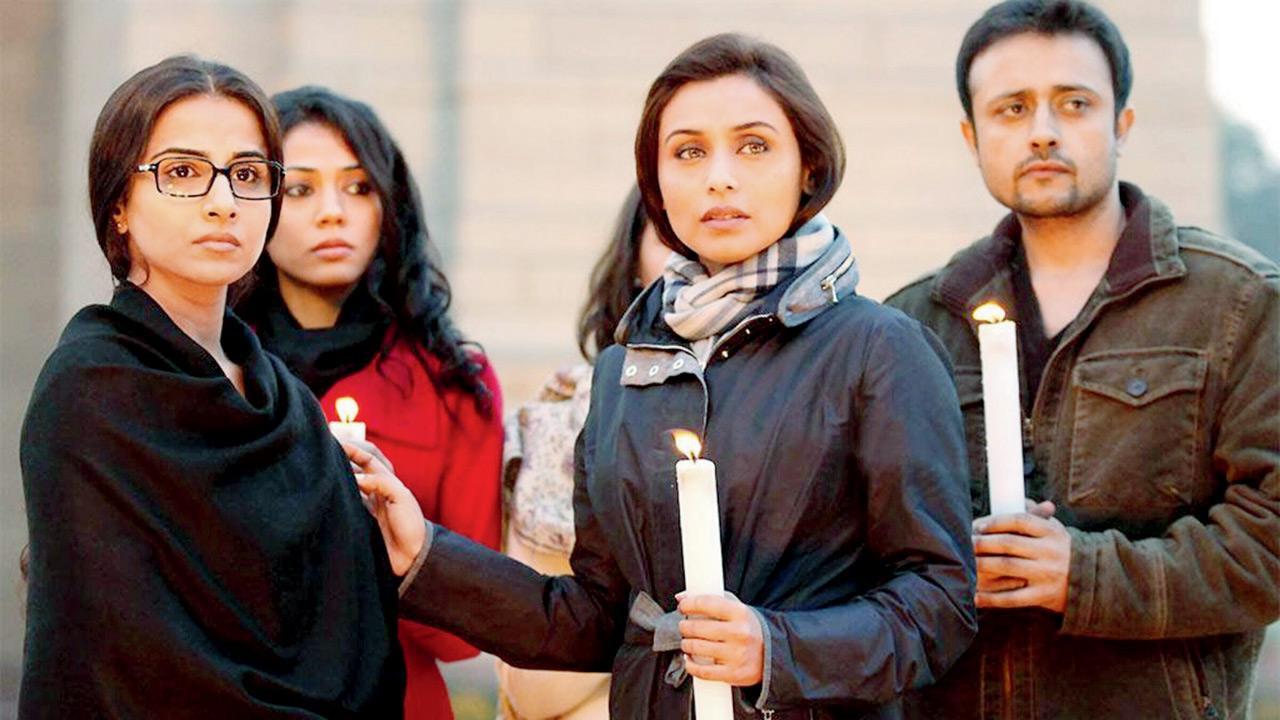
After Jessica Lal’s murderer Manu Sharma’s rehabilitation amid the success of his Indri whiskey sparks outrage, No One Killed Jessica director Raj Kumar Gupta notes that Sabrina Lal had forgiven him after he served his sentence
Mohar Basu (MID-DAY; April 21, 2025)
Last December, Manu Sharma hit headlines again. Sharma, who was sentenced to life imprisonment in 2006 for Jessica Lal’s murder and released from the prison in June 2020, was discovered to be the owner of the whiskey brand, Indri. It was found out that Sharma—born Siddharth Vashisht—now went by Siddharth Sharma and is associated with a £15 million investment in Scotland’s distillery Argyll and Bute, through his family’s company Piccadily Agro Industries. It led to wide debate over his rehabilitation and the role of privilege in it.
When we recently met director Raj Kumar Gupta, we asked him about his stand on the matter. His directorial venture No One Killed Jessica (2011)—starring Vidya Balan and Rani Mukerji—chronicled Jessica’s sister Sabrina Lal’s seven-year fight for justice.
“Sabrina Lal had fought tooth and nail to get her sister justice. But [in 2018], she had written a letter to the Tihar Jail authorities, saying she had forgiven Manu for his crime. She had said, ‘He has served his sentence and I’ve forgiven him. It will be like a catharsis to forgive and move on.’ When I had first read about her stand, I was numb. Our loss or rage can’t be more than Sabrina’s. No one suffered as much as she did. [Yet], she didn’t oppose his release. Everyone can have an individual take on it, but Sabrina reminds me of forgiveness,” he noted.
In early 2006, Sharma was acquitted after his privilege as a politician’s son had ensured that witnesses were silenced. It led to a nationwide uproar. In March 2006, the case was reopened in the Delhi High Court and he was convicted in December 2006. The recent turn of events has left Gupta with more questions than answers.
“Forgiveness is individual choice, and I’m conflicted. The court [served] justice. After that, he is back to where he is. This makes me wonder whether a criminal, who has done his time, has a right to live normally again. I wonder, doesn’t a criminal, having served his sentence, deserve to assimilate in the society or earn a living?”
The case that shook the nation
- Jessica Lal was shot dead on April 30, 1999, after she refused to serve liquor to Manu Sharma, son of former Union Minister Venod Sharma.
- In February 2006, Manu and eight others accused in the case were acquitted due to lack of evidence.
- His acquittal led to widespread outrage. Numerous candle marches, and SMS campaigns were organized to protest against the decision.
- As a result of the public outcry, the case was reopened in the Delhi High Court on a fast-track basis.
- In December 2006, Manu was convicted for the murder and sentenced to life imprisonment.
- In June 2020, he was released from the Tihar Jail for ‘good behaviour’.
How cinema made India Gate a site of protest
2:54 PM

Niharika Lal (BOMBAY TIMES; January 25, 2025)
Every year, the Republic Day parade begins at Rashtrapati Bhawan and proceeds towards India Gate. India Gate isn’t just an iconic location for Delhi but also for cinema. Back in 2006, on Republic Day, Rang De Basanti hit the screens and gave Indian cinema one of its most unforgettable protest scenes. A scene that still gives goosebumps to audiences – no shouting slogans, no waving banners, no chaos – just a crowd holding candles in silence.
The scene became a cultural phenomenon both onscreen and off-screen, inspiring many real-life protests at the site.
Since 2006, India Gate’s relevance as a protest site has been depicted in several films, including No One Killed Jessica, Raanjhanaa, as well as in the web series Delhi Crime. Ahead of Republic Day, we speak to directors to understand what keeps India Gate’s cinematic relevance alive.
‘For Rang De Basanti, I was drawn to India Gate because of the importance it holds’
Rakeysh Omprakash Mehra grew up in Delhi and attended Bal Bharati School. Talking about the protest scene in Rang De Basanti at India Gate, he says, “The entire area of India Gate and Rajpath has always been in my consciousness. It had a different meaning. I remember, in the 9th standard, I was part of the Republic Day parade. We were always mesmerized by the jawans who would stand there like a statue, without moving. Each brick has the names of martyrs from British India. I’ve always been drawn to India Gate because of the importance it holds for us. To me, India Gate also represents the Amar Jawan Jyoti.”
Talking about Rang De Basanti, which took inspiration from the real-life incidents where Air Force pilots lost their lives, he says, “In reality, when those pilots sacrificed their lives, nobody protested. I think it’s the duty of civil society to raise their voice. Everybody can’t just sit on the fence and point fingers this doesn’t work, and that doesn’t work. It is our responsibility to raise a voice, and it is very important. In Rang De Basanti, when we lose the Air Force pilot played by R Madhavan, his mother and his friends wanted justice, so they held a silent protest at India Gate. I was drawn to India Gate because of the importance it holds.”
‘INDIA GATE HAS BECOME A PLACE OF COLLECTIVE REBELLION’
Raj Kumar Gupta, the director of No One Killed Jessica, who also studied in Delhi, says that India Gate is the iconic place that defines Delhi. He showed India Gate as a protest site in No One Killed Jessica because it was the actual location of protests in the real case.
He explains, “Of course, Jantar Mantar was the place for protests in Delhi and still is. But India Gate very organically became a protest site after Rang De Basanti. Films only work as a catalyst; it was the people who made it the spot. While there are many iconic places in Delhi, India Gate is the first that comes to our minds. Over the years, India Gate has become a place of collective rebellion. It evokes strong emotions.”
He adds, “Democracy is about people’s voice, and one must speak against injustice. Over the years, with films using the imagery of a protest in the backdrop of India Gate, it has now become a symbol of the people’s voice. Besides, the monument has its own value.”
Jana is the 4 am friend of every superhero in this universe-Abhishek Banerjee
8:36 AM
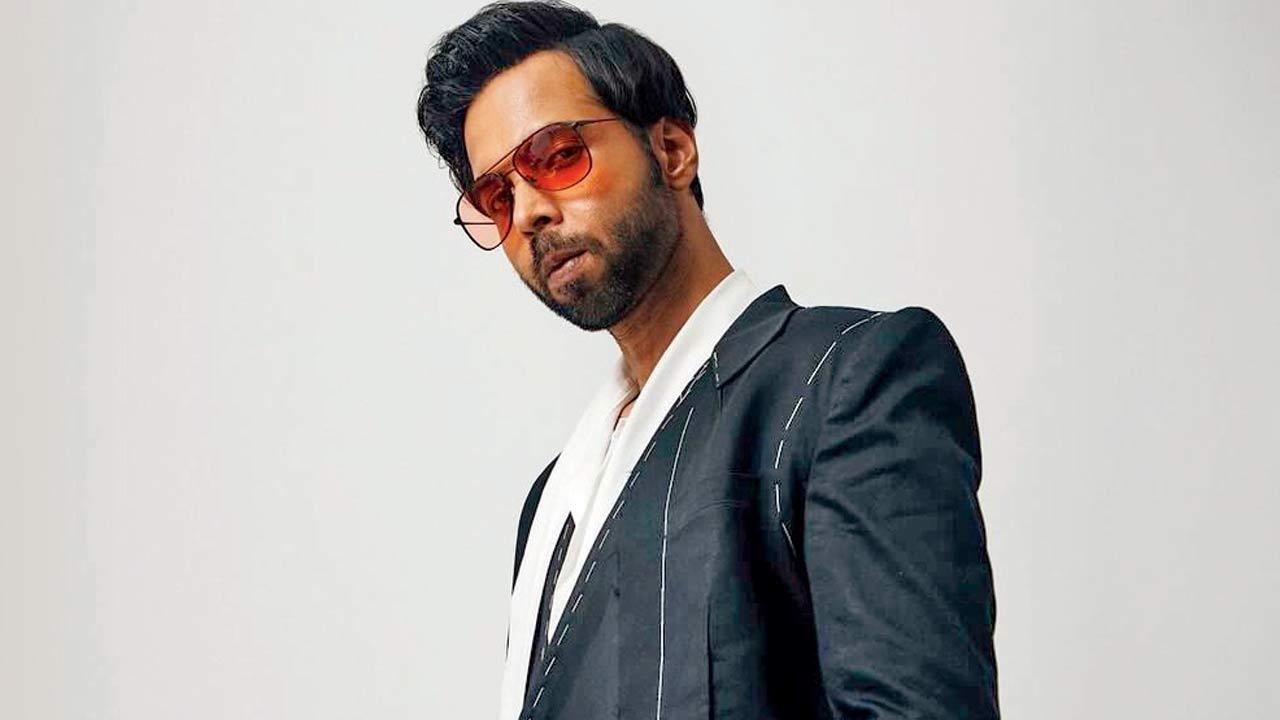
Shining in contrasting roles in Stree 2 and Vedaa, Abhishek on being horror comedy universe’s common link and tasting success after years of hard work
Mohar Basu (MID-DAY; August 24, 2024)
In the past week or so, Abhishek Banerjee has become 10 years younger. “That’s what validation does to you,” he smiles. The actor had a stellar week; he was seen as the innocent Janaa in Stree 2 and the cruel local leader Jitender in Vedaa, both films showcasing his range as a performer. He is happiest that they have earned him praise from his father.
“My dad saw both films back-to-back, and was happy that people were hooting at my entry. He never thought I could be an actor, and praise coming from him feels like an achievement. I’m glad he could see this day because we often hear that by the time one delivers a hit, their parents aren’t around to see it,” he reflects.
Banerjee’s fears were not unfounded. The movie industry can be a harsh place, and his journey hasn’t been easy. “Today, the success doesn’t feel delayed at all. I’ve worked hard to be here and enjoyed everything along the way. Also, because I am a casting director, I can assure people that no one ever rejects a good actor. If you’re good, you’ll get [a break]!”
His big break came in Paatal Lok (2020). Before that, he had caught the audience’s attention as Janaa, the lovable friend of Rajkummar Rao’s Vicky, in Stree (2018). Banerjee admits he is emotionally attached to the character.
“He is so innocent and pure that even evil energies are nice to him. Stree let him go [in the first part]. Bhediya is a beast, but is Janaa’s friend. Every time I play him, I feel my soul is cleansed. Janaa is the child version of me. My daak naam [nickname] is Bhola. I trust easily, love a lot, and have faith. Mumbai hasn’t eroded my simplicity. Janaa aligns with who I am. He is the 4 am friend of every superhero in this universe.”
That he is a part of this horror comedy universe with director Amar Kaushik makes it all the more enjoyable. The actor believes there is a lot of Janaa’s simplicity in Kaushik too. “He can give me a look, and I know exactly what he wants. I can read his face. We’re a bit of lovers,” he laughs, remembering how they first bonded.
“I’m the first actor Amar ever directed. He was the second unit director in No One Killed Jessica [2011], and I played a pickpocket. It’s crazy how far we’ve come.”
A star’s gender has no role to play in a film’s success-Rani Mukerji
8:09 AM
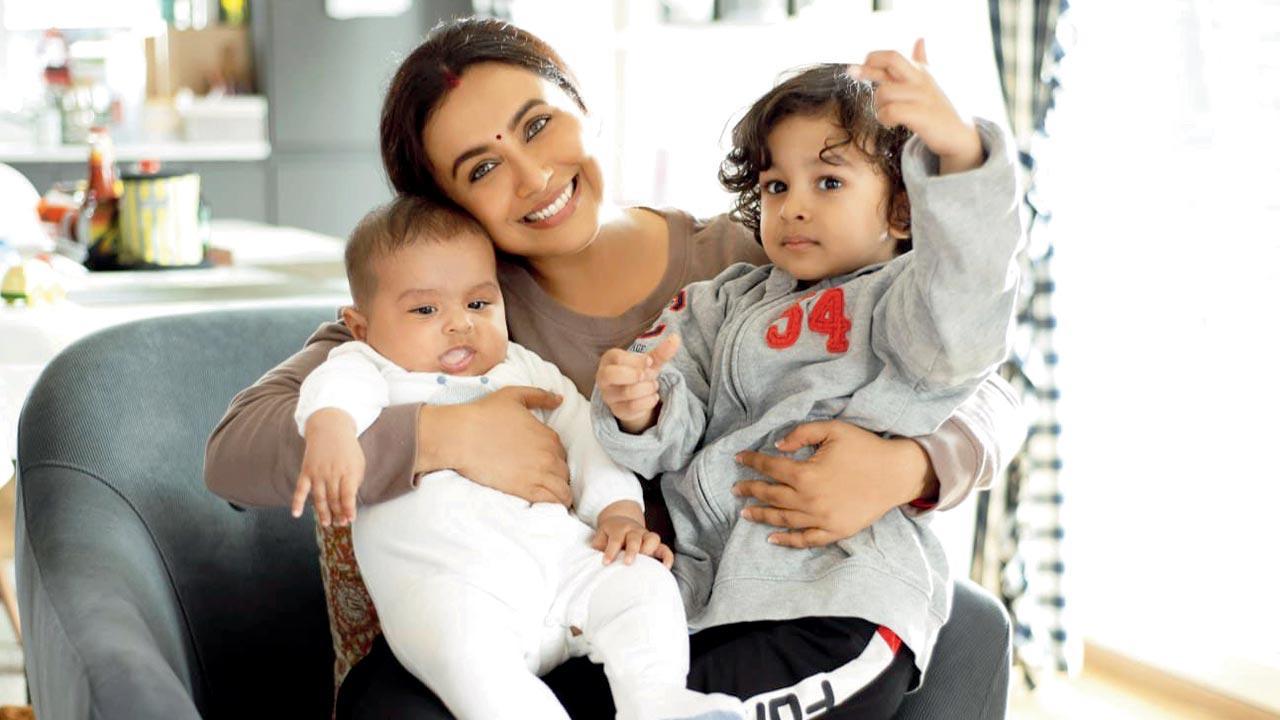
With Mrs Chatterjee vs Norway dropping online, Rani says movie’s strong BO run busted myths that only male stars and Rs. 100-crore collections make a hit
Mohar Basu (MID-DAY; May 30, 2023)
In the two weeks since it dropped on Netflix, Mrs Chatterjee vs Norway has reached audiences far and wide, consistently finding a spot in the streamer’s top 10 movies in India. It only echoes the Rani Mukerji-starrer’s successful run at the box office. The March release, said to be made on a modest budget, earned Rs 37 crore, becoming one of the few Bollywood hits of the year so far. With it, Mukerji is happy to have busted one of the Hindi film industry’s myths — that only a Rs 100-crore earner is a true box-office hit.
“There are misconceptions about what a hit means. A film is a hit when producers make money from it. It’s not only about how much it collects at the box office; one should also factor in the film’s cost,” emphasizes the actor.
So far, 2023 has witnessed a blockbuster in Pathaan, and hits in Mrs Chatterjee vs Norway, and The Kerala Story. The strong run of Ashima Chibber’s directorial venture also shut down detractors who had doubts about the prospect of women-led films, in the post-pandemic scenario.
Mukerji asserts, “There is constant chatter about whether women-centric films are box-office draws. Of course, they are! A good film will always bring people to the theatres, and a star’s gender has no role to play in a film’s success.”
Inspired by the real-life ordeal of Sagarika Chakraborty, Mrs Chatterjee vs Norway sees the leading lady play a fierce mother who takes on the legal system of Norway when her kids are taken away from her by the welfare services, on grounds of parental neglect. The drama aligned with Mukerji’s vision of bringing courageous women’s stories to the screen.
“As an actor, my vision for cinema will evolve, but the one thing that has stayed with me is the way I want to represent women on screen. I choose films where the woman is pivotal to the plot, where she is projected with dignity and power. For me, women have always been agents of change; they are independent, courageous and caring. I wanted to highlight these facets by choosing characters that echo my belief system — be it in Yuva [2004], Black [2005], No One Killed Jessica [2011], Mardaani, or Hichki [2018].”
Fenil's Bollywood Talk # 759
10:07 PM

NO FILM RELEASE IN THE FIRST WEEK OF 2023; ALL EYES ON PATHAAN
The first Friday of 2023 is here but there won’t be any release. There was a time when it was said that the films that release in the initial week of the year flop at the ticket window. This jinx became popular as several films that were released in the first week didn't work. No one was ready to accept that these films were badly made and hence, bombed. The jinx was broken by No One Killed Jessica. It was released on January 7, 2011, and yet, was a hit as it was loved and also had generated some buzz before the release.
In 2021, RRR was all set to be released on January 7, 2022. But due to the Omicron wave scare, it was pushed to March 25. Had it been released as scheduled, it would have obviously worked the same way as it did later on.
This year, no producer had planned to take up the January 6 date for the simple reason that the biggie, Adipurush, was supposed to release on January 12, 2023. Its teaser was unveiled on October 2 and was panned for its VFX and graphics. As a result, the makers decided to rework on the CGI, resulting in the postponement. The official announcement about the change of release date to June 16 was done in November. As per reports, a few makers did think of preponing their films, planned for a release in February and March, and releasing them on January 12. But due to various reasons, it couldn’t happen. T-Series, the producers of Adipurush, then announced that their small film, Kuttey, will release in the second week of January. The Hindi version of Vijay-starrer Varisu and Ajith-starrer Thunivu will also clash with Kuttey and can surprise.
But more than these films, the trade is looking forward to the release of Pathaan. It marks Shah Rukh Khan’s comeback after more than four years and hence, it has generated tremendous excitement. It’ll release on January 25 and after a disastrous 2022, the trade is hoping that this action-packed film brings some cheer and respite.
In fact, another reason why no one preferred coming on January 6 after Adipurush’s postponement is the release of Cirkus. It is directed by Rohit Shetty and released in theatres on December 23, 2022. The trade, industry and even moviegoers expected it to have a superb run at the box office. However, it had a poor opening and due to word of mouth, it is now struggling to cross the Rs. 40 crores mark. Had it been a hit, it had the potential to rule the cinemas till Pathaan’s release on Republic Day. Alas, it flopped and Adipurush also got pushed, resulting in the lack of big releases in January, except the Shah Rukh Khan starrer.
The first Friday of 2023 is here but there won’t be any release. There was a time when it was said that the films that release in the initial week of the year flop at the ticket window. This jinx became popular as several films that were released in the first week didn't work. No one was ready to accept that these films were badly made and hence, bombed. The jinx was broken by No One Killed Jessica. It was released on January 7, 2011, and yet, was a hit as it was loved and also had generated some buzz before the release.
In 2021, RRR was all set to be released on January 7, 2022. But due to the Omicron wave scare, it was pushed to March 25. Had it been released as scheduled, it would have obviously worked the same way as it did later on.
This year, no producer had planned to take up the January 6 date for the simple reason that the biggie, Adipurush, was supposed to release on January 12, 2023. Its teaser was unveiled on October 2 and was panned for its VFX and graphics. As a result, the makers decided to rework on the CGI, resulting in the postponement. The official announcement about the change of release date to June 16 was done in November. As per reports, a few makers did think of preponing their films, planned for a release in February and March, and releasing them on January 12. But due to various reasons, it couldn’t happen. T-Series, the producers of Adipurush, then announced that their small film, Kuttey, will release in the second week of January. The Hindi version of Vijay-starrer Varisu and Ajith-starrer Thunivu will also clash with Kuttey and can surprise.
But more than these films, the trade is looking forward to the release of Pathaan. It marks Shah Rukh Khan’s comeback after more than four years and hence, it has generated tremendous excitement. It’ll release on January 25 and after a disastrous 2022, the trade is hoping that this action-packed film brings some cheer and respite.
In fact, another reason why no one preferred coming on January 6 after Adipurush’s postponement is the release of Cirkus. It is directed by Rohit Shetty and released in theatres on December 23, 2022. The trade, industry and even moviegoers expected it to have a superb run at the box office. However, it had a poor opening and due to word of mouth, it is now struggling to cross the Rs. 40 crores mark. Had it been a hit, it had the potential to rule the cinemas till Pathaan’s release on Republic Day. Alas, it flopped and Adipurush also got pushed, resulting in the lack of big releases in January, except the Shah Rukh Khan starrer.
I don’t want to mourn Sabrina Lall’s death. Instead, I want to celebrate her life-Raj Kumar Gupta
8:06 AM

Director Raj Kumar Gupta – whose film No One Killed Jessica focussed on Sabrina Lall’s long, uphill battle to bring the killers of her sister Jessica Lall to book – says he’ll remember her for her relentless courage
By Raj Kumar Gupta (BOMBAY TIMES; August 17, 2021)
I don’t want to mourn Sabrina Lall’s death. Instead, I want to celebrate her life. I want to remember her as a braveheart, a fighter, and as a person of great integrity and compassion. I want to remember her as a warrior who was not afraid to fight for justice, no matter the power and strength of the opposition.
I want to remember Sabrina as a person who was responsible for galvanising the consciousness of a country into questioning — are you ready to take injustice lying down?
She certainly was not!
In a city like Delhi, that had more power than it could handle, she made us believe that courage is not something that can be bought by power and money — that courage is to stand up, face it and fight, no matter how strong the headwinds are. I also want to remember her as a gentle, beautiful, introvert soul — full of understanding and compassion for fellow human beings.
In films, the screen heroes always put up remarkable and sometimes unbelievable fights against villains and win against all odds. The part of the heroes is aptly written on paper, propped up and performed inside the confines of a studio, ably guided and assisted by highly skilled stuntmen.
In real life, there is no script, no studio, no stuntman or a stuntwoman to fight your fights. I want to remember Sabrina as someone who fought her own fights, including an incredible one, against all odds and she WON. I want to remember her as a HERO, a REAL ONE!
2010: IN AN INTERVIEW FOLLOWING APEX COURT’S JUDGMENT UPHOLDING JESSICA’S KILLER MANU SHARMA’S LIFE IMPRISONMENT
“The sense of loss remains. See, the gain has only been putting a certain thing to end, which was punishing the boy who perpetrated the crime. But that cannot bring back any of the people I’ve lost. It cannot bring back my mother or my father. When I look back, have I gained anything? I don’t think so. But like my family, I try and look at the positive side of things. I hope they’re happy wherever they are, life has to carry on. I can’t spend my life crying and moping all the time, I think the happier I am and the more I do in my life, they will be happier too... I believe they are somewhere around.”
2018: A FEW YEARS LATER, SHE SPOKE TO US ABOUT LEAVING BEHIND WHAT HAD HAPPENED, AND HOW SHE NO LONGER ‘CARED’ ABOUT MANU BEING GRANTED BAIL OR BEING RELEASED
“He messed up my family and I think he has paid for it. Fifteen years is a long enough time. I wanted justice for my sister, and I think I achieved it. Now whether he spends another two years in jail or three years, it doesn’t really matter to me.”
“It’s not about forgiveness. It’s that I don’t really — it sounds horrible — I don’t care if he comes out of jail. He messed up my entire family and I think he has paid for it. Fifteen years is a long enough time.”
“It’s been far too long for me to hold on to so much anger and resentment, and I just don’t feel that it is worth it anymore.”
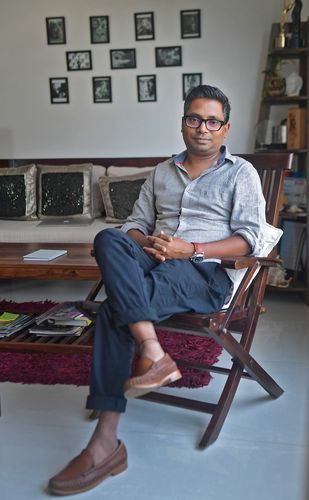
No One Killed Jessica stood up for so many things. I’m glad people still talk about it-Raj Kumar Gupta
8:26 AM

Raj Kumar Gupta’s No One Killed Jessica completed 10 years recently. Reflecting on the film, the director says he’s proud to have told a story that needed to be said
Niharika Lal (BOMBAY TIMES; January 10, 2021)

The film shows the journey of Jessica’s sister Sabrina, played by Vidya Balan, in getting justice for her sister and how she is helped by a journalist, played by Rani Mukerji. Last year, while speaking to us after Manu Sharma was released from jail early due to good conduct, the filmmaker had said, “As a filmmaker, you have to hope that these kinds of films might have an impact on those who are victims and on the culprits as well. You’d want to believe that we don’t make cinema in a vacuum. Yes, we keep making such films, but these incidents still happen. However, that shouldn’t stop us from telling those stories. We should not stop reflecting or telling stories that put a mirror to ourselves and to the society, and hoping things will improve.”
As the film completes 10 years, the director looks back at the journey and says he’s proud of telling the story that needed to be told. Excerpts from a chat:
‘NOKJ WASN’T AN EASY FILM TO MAKE’
NOKJ stood up for so many things — right things. I’m glad that people still talk about it and the film is seen as a reference point to the case. At that time, it was not an easy film to make. There were so many things that were not in favour. It was such a sensitive topic. We had female protagonists, and at that time there were not many femaleled films. It was a big challenge to make the film and to get it released. It was also believed that a January release won’t work. But the film connected with people, they loved it. I am glad that I got an opportunity to tell the story. I thank Sabrina for trusting me to tell the story which needed to be told. Ten years down the line, I am proud of the film.
‘MEDIA WAS INSTRUMENTAL IN JESSICA LALL CASE’
If you look at the word ‘media trial’, the word itself is not right. Trial — where is it supposed to happen? In the court. Media trials can never be a positive thing because obviously the media is not a court. What happened in Jessica’s case was not a media trial, I think it was a campaign for justice. I think, when the media saw that justice was not served, they raised their voice and brought out the facts. That connected with people, which further led to the campaign for justice. Ultimately, the court saw it. I think the media was instrumental in Jessica Lall’s case. It was the positive side of media.
‘SPARKED OUTRAGE WHEN WITNESSES DIDN’T STAND FOR WHAT WAS RIGHT’
In Jessica’s case, after the first trial, it was clear that justice hadn’t been served. The accused were let go. That’s when people raised their voice. Jessica was let down by the witnesses, the judiciary system and the bureaucracy. Justice wasn’t done because she was let down at so many levels. People (witnesses) should have stood for what was right, but they didn’t. That sparked an outrage. That was the moment when media questioned why justice was not done to her. Regular people stood up for her and questioned and all these happened — protests, candlelight vigils and campaigning for justice.

Amar Kaushik always saw the actor in me-Abhishek Banerjee
8:14 AM

After Stree and Bala, casting director-turned-actor Abhishek Banerjee reunites with director Amar Kaushik for Varun Dhawan-led Bhediya
Uma Ramasubramanian (MID-DAY; January 5, 2021)
From his spine-chilling act as Hathoda Tyagi in Paatal Lok to his moving performance in Unpaused, Abhishek Banerjee had a brilliant run in 2020. Now, the casting director-turned-actor is set to reunite with Bala (2019) director Amar Kaushik for his horror satire, tentatively titled Bhediya. The project, fronted by Varun Dhawan and Kriti Sanon, is expected to go on floors next month.
"I knew Amar bhai when he was an associate director, and I, a casting associate. We met on the sets of No One Killed Jessica [2011]," recounts Banerjee, thrilled to team up with the filmmaker for the third time. It was, after all, in Kaushik's Stree (2018) that Banerjee caught everyone's attention with "Vicky, please" — a dialogue that spawned numerous memes and jokes. "He always saw the actor in me. In fact, he would always ask me, 'Tu yeh role kyun nahin kar leta?' I used to tell him that I will act when the time is right. Then, he offered me a scene in Go Goa Gone [2013], promising me Rs 5000 for an hour's work. I did the cameo only because I trusted him. Eventually, when I saw Aaba [Kaushik's first short film], I realised that Amar bhai is a supremely talented director."
The actor reveals that he chased Kaushik when the latter began mounting his first feature film. "I chased him till I got the role of Jaana in Stree. The day I watched the movie on screen, I confessed to him that I am willing to be even a prop in his films," laughs the actor, who has Rashmi Rocket, Aankh Micholi and Helmet in the pipeline.

Delhi is a city with a lot of power, more power than it can handle-Raj Kumar Gupta
7:55 AM

As the legal process comes to a close in the infamous Jessica Lall murder case with Manu Sharma being released from prison after spending 17 years behind bars, Raj Kumar Gupta, who made No One Killed Jessica, reflects on the strength of Sabrina Lall, Jessica’s sister, and the typical ‘Delhi’ power mindset that drives incidents such as this
Anshul Chaturvedi (BOMBAY TIMES; June 4, 2020)
 What do you recall of the events that led you to make No One Killed Jessica? In an earlier interview you had said that NOKJ ‘was a story born out of tragedy’ and that ‘I spent 20-25 days with Sabrina. I used to sit with her for two-three hours every day. It was not easy and you get overwhelmed’.
I had finished my first film, Aamir, and I was looking for my next film. We were all aware that this (the Jessica Lall murder case) could be a good subject to explore. Emotions were running high, there was tragedy, injustice and the media had done a good job of bringing that incident to the forefront.
The first step was to meet Sabrina, tell her that we wanted to make a film on it and see what she thought about the idea. That’s how it all started. After that there were two parts. The first was sitting with Sabrina and getting her thoughts and experiences, whatever she had been through. The second part was reading – there was so much to be read, so many versions, reports and stories. For 20-25 days, I spent a couple of hours daily with Sabrina. I used to go and meet her and go through the timeline and what she had gone through. It was so emotional, overwhelming... it affected me. It was quite a long process. By the end of it, I was emotionally overwhelmed.
As far as Sabrina was concerned, I found her very open. Of course, she was very emotional. She was also very strong. There was a certain angst as well about what had happened, fairly so. She had lost her sister, she had lost her parents. But I found her very strong, very emotionally balanced. She had specifically told me that she was not ready to forgive the person who had killed her sister, but then in 2018, when she was asked about Manu being pardoned early, she was okay with it. That again shows how strong her character is – she is somebody who is ready to let go. It made me remember a quote by Mahatma Gandhi, that ‘The weak can never forgive. Forgiveness is the attribute of the strong.’
So when you researched the story, you would have spoken to the nightlife sector, the bureaucracy, the police, lawyers, the system and so and so forth. What was the sense you got in the city’s vibes – how ‘typically Delhi’ was the incident?
In No One Killed Jessica, the monologue that comes when the film begins, it is the voice of the journalist (played by Rani Mukerji) who is talking about Delhi. She says that she has never understood Delhi. It is a city where people are ready to show power, ‘You don’t know who I am’. I tried to address that because I have lived in Delhi. I studied in Delhi and spent three-four years in the city, graduating from Ramjas College. So that side of Delhi is something which I had seen. The wrong side of masculinity. It really, really disturbed me.
Do you think Delhi has changed at all in ten years? Stories of people pulling out a gun at the smallest of provocations continue to be part of what Delhi — NCR, actually — is.
I would like to believe it has. But whenever I visit Delhi, I do not see it. Delhi is a city with a lot of power, more power than it can handle. I think that is something that really corrupts people. It has too much power to be impartial or to be fair. So I don’t know if it is as bad it as it was, but I think that not much has changed. That kind of power wakes up the monster, the evil.
 What is your take on Manu — not in terms of your movie’s character, but as someone who read the news, and followed what was actually happening?
From whatever I read or saw, it was a very typical representation of what power does. It was very typical of how these characters behave, you know, when they are drunk in a bar or when they think they can get away with it. It was a very typical kind of a character.
NOKJ is among many realistic films where a Delhi-based female character has to bear the brunt of what happens – Talvar, Chhapaak, Pink, even Thappad. As a filmmaker, does this make you feel optimistic that these topics are now discussed in the public domain, or disturbed at how NCR is such a fertile territory for such topics and stories? Do such movies make a difference to how we conduct ourselves?
As a filmmaker, you have to hope that these kinds of films might have an impact on the people who are victims and on the culprits as well. You would want to believe that, we don’t make cinema in a vacuum. Yes, we keep making such films but these incidents still happen. But that should not stop us from telling those stories. It takes a lot to tell a No One Killed Jessica, or Talvar, or Chhapaak, or Thappad. I don’t think we should stop reflecting or telling stories that put a mirror to ourselves and to the society.
-----------------------------
DIDN’T MEET MANU TO PREP FOR NO ONE KILLED JESSICA: ZEESHAN
Niharika Lal (BOMBAY TIMES; June 4, 2020)
 Mohammed Zeeshan Ayyub made his film debut with No One Killed Jessica, in which he played a character based on Manu Sharma. He says he never met Manu to prepare for the role. “Raj Kumar Gupta had told me that he didn’t want me to meet the real convict, so I didn’t really prepare for the role and just acted raw. I just had two scenes in the film and a few shots. I focussed on two things for the role – the character didn’t speak English properly, and he had a Haryanvi tone. But after the movie, I never looked back or followed the case. Honestly, I never followed this case, neither before doing the film nor after.”
My character is the dark horse of Rangbaaz Phir Se-Mohd Zeeshan Ayyub
8:07 AM

Mohammed Zeeshan Ayyub discusses coming on board Rangbaaz Phir Se as his cop act wins him a nomination for Best Supporting Actor in the upcoming mid-day and Radio City Hitlist Web Awards
Shaheen Parkar (MID-DAY; March 2, 2020)

While Jimmy Sheirgill essays the central part of Amarpal Singh, a character reportedly inspired by the Rajasthan gangster Anandpal Singh, Ayyub plays the wily cop with shifting loyalties. "There is a line that differentiates the good from the bad. Once you cross over, your perspective towards life changes; this is what happens to Sanjay Singh Meena. He goes berserk, leading to conflicts, bloodshed and rivalries." The actor, who forays into digital entertainment with the action thriller, has also done the voice-over. "Usually, there is only sutradhar who narrates the story, but the makers had me do the voice-over too," he smiles.
Ayyub reveals that he instantly gave his nod to the show as there was an old connect with the makers. "The show is produced by JAR Pictures, who were the line producers of my debut film, No One Killed Jessica (2011). So, life came a full circle," says the actor, who also features in Faruk Kabir's AbNormal 377, which has been nominated in the Best Web Film category.
More About Rangbaaz Phir Se
- Though the story is set in Rajasthan, Rangbaaz Phir Se was extensively shot in Bhopal.
- Initially, Ayyub was to play another character in the action thriller. However, the makers felt he was the perfect fit for the role of the antagonist.
- Cast Your Vote For The Hitlist Web Awards
- Mohd Zeeshan Ayyub has been nominated in the Best Supporting Actor (Male) category for Rangbaaz Phir Se (Zee5).
The other nominees are:
- Rajesh Tailang (Selection Day S02; Netflix)
- Vinay Pathak (Made In Heaven; Amazon Prime)
- Neeraj Madhav (The Family Man; Amazon Prime)
- Sharib Hashmi (The Family Man; Amazon Prime)
- Pankaj Tripathi (Criminal Justice; Hotstar)
- Gopal Dutt (The Office; Hotstar)
There are 14 categories that the public can vote in. Log on to www.hitlistwebawards.com to cast your vote.
You can also vote via SMS. Send HITLIST <space> category name <space> your choice (a/b/c/d as on the website) to 57575.
Voting lines close on March 8

I have always looked to celebrate the strength of women through my films-Rani Mukerji
7:53 AM

Actor Rani Mukerji says her roles reflect her belief in how women should be perceived
Rishabh Suri (HINDUSTAN TIMES; December 3, 2019)
Right from Shashi in Yuva and Saamiya in Veer-Zaara (both 2004), to Naina Mathur in Hichki (2018), Rani Mukerji has always made sure that she plays powerful female protagonists in her films. Shivani Shivaji Roy, her cop act in Mardaani (2014), was also plotted on similar lines.
What makes Rani zero in on such brilliant characters all the time? “I have always looked to celebrate the strength of women through my films, whenever I got the opportunity,” she says, “No One Killed Jessica (2011), Black, Mardaani, Hichki, etc. are some of the favourite films of my career as they resonated with who I’m as a person in real life and my belief in how a woman should always be perceived. For me, a woman is a pillar of strength for her family, community, husband, child, and I do feel we don’t celebrate women enough.”
The actor is all set to reprise the role of the fearless and committed superintendent of police, Shivani Shivaji Roy in Mardaani 2, which is a sequel to the hugely acclaimed Mardaani, in which she took on the kingpin of a child trafficking racket. In the second part, Rani has been pitted against a young, yet dangerous villain, who can be called pure evil.
Opening up on why she thinks her character in Mardaani became so popular with masses, she says, “Mardaani 2, which releases on December 13, is another attempt to showcase what a fearless, self-made, self-believing woman can do despite being pitted against all odds. Shivani is someone who will never back down in the face of injustice, and I’m glad people have showered her with so much love and appreciation. She is one of my most favourite characters because she lives life her way and isn’t cowed down by judgements and stereotyping. A boss in a man’s world, she ensures her work speaks the loudest. She is the quintessential spirit of a woman and maybe that’s why this character resonates with so many people.”
What the versatile actor is thrilled with is the current, new generation of actors, who are choosing to pick scripts with female protagonists. “I can see the tides changing, and I can’t tell you how thrilled I am as a woman and as an artiste. I have silently tried to do my best to bring out powerful women on screen and impact the psyche of people through their life. I get so happy when I see the young actors choosing to do women-centric films that give out the correct message about women to society,” says Rani.
Raj Kumar Gupta’s faith in me is heartening-Rajesh Sharma
7:51 AM

Rajesh Sharma, who’s been a regular fixture in the director’s recent films, discusses the beginning of their collaboration
Himesh Mankad (MUMBAI MIRROR; May 7, 2019)
 After acting in films like Parineeta, Khosla Ka Ghosla and Ishqiya, Rajesh Sharma hit pay dirt for his portrayal of investigating officer NK in Raj Kumar Gupta’s No One Killed Jessica, which had Rani Mukerji and Vidya Balan as leads. For the actor, the fame came as a huge surprise as he had bagged the role quite unexpectedly.
“I was in Delhi for a show as I wasn’t doing a lot of films back then and I got an audition call for a film. I went in without any prep, met Raj Kumar’s assistant and auditioned,” Rajesh reveals, adding that on his first day of the shoot, Raj Kumar told him that he had fought with the producers to get the actor on board as the makers wanted a known face. “It gave me a sense of responsibility and brought the best out of me.”
Soon after, he reunited with the director for the Emraan Hashmi-starrer dark-comedy, Ghanchakkar. “There’s a back-story to my character in the film, which was conceptualised with a different actor as the story demanded someone in the age bracket of 65-70. Raj Kumar eventually got the age down to 45 years and cast. His faith in me is heartening,” the actor smiles.
Next up, Rajesh will pop up in the filmmaker’s Arjun Kapoor-starrer India’s Most Wanted, which chronicles the capture of a dreaded terrorist without a single bullet being fired. “Like many people, even I hadn’t heard of the mission and was surprised to discover that it took place in our country. It’s a stamp on the bravery and efficiency of our police, who are perceived negatively. This film proves that,” he asserts, adding that he plays Rajesh Singh, a senior Intelligence Bureau officer from Bihar in the film. “It’s based on a real-life character, but I’ve approached it in my unique style,” he signs off.

It’s fascinating that we were not even aware of who ‘India’s most wanted’ was-Raj Kumar Gupta
9:01 AM

Anshul Chaturvedi (BOMBAY TIMES; April 28, 2019)
Yes, people do ride on sentiments and encash them, but no, my project wasn’t timed to coincide with a nationalistic upsurge or the electoral season, I just want to tell a story of the unknown, passionate people, who do difficult things to protect us,” says Raj Kumar Gupta. Excerpts from a chat about his upcoming film India’s Most Wanted:
 Is the current surplus of movies about the defence forces, old battles and secret agents happening because filmmakers are looking to ride the nationalistic wave for Box-Office success?
It might be that somebody has been wanting to make a film on the same subject for some time and it comes together now, and it might be just about the country. In terms of filmmaking, as you know, any film takes one-two years in making. So, it is not that one is wanting to catch a certain sentiment. It is that you are wanting to make a film and the situation around you changes so much that when your film comes, it looks like you wanted to catch that sentiment, but it’s not that.
Also, it depends on what story you are telling. If you are telling a story of a soldier, and the basic premise is that he has become a soldier to defend the country, somewhere down the line, that moment will come when he will say that I joined because I wanted to do something for the country. Policemen or intelligence agency people do not do the job for money, they do it because there is a certain passion; they want to work for the country. If you are telling their story, there will be that situation, one scene will come and that will be very organic. One has to make a distinction when you see that — and don’t judge it as if one is just trying to ride a wave. When me or any other filmmaker is making that film, it is a story he has thought three-four years back and it is pure coincidence that it has come at this time. But if you ask me koi behti Ganga mein haath dhota hai ya nahi? Dhote hain. It’s not only in our industry. There is herd mentality everywhere. But just generalising it is not right.
 Movies about intelligence officers tend to have an undercurrent that they are unsung heroes. But isn’t that the core point of that nature of work — to be anonymous?
For me, their life is a story. Just because their nature of job is such, it doesn’t mean I will not tell their story. In Hollywood also, people have been fascinated by this, because it is an integral part of our lives. When I was making Raid, I was making a film on these real people who did things which were very difficult to do. That might be their job, but as a filmmaker, I find that interesting, I see it as a story that needs to be told. So yes, they are unsung, they are not coming out and saying anything, they have maintained dignity, but that should not stop me from telling their story as I find that story fascinating. Similarly, I thought that this story is something the country should know. ‘Unsung heroes’ is a phrase that one might say has been overused, but it should not stop me from telling that story.
There are so many superhero films being made, where the heroes save the world from evil. My film is also similar, just that my heroes are real heroes, based in the real world, dealing with real situations and saving real lives.
Is there a paradox between calling somebody India’s Most Wanted and having a degree of suspense for the audience about who he is? If he is most wanted, shouldn’t he be a universally recognisable name?
Don’t you think sometimes it’s fascinating to know who was India’s most wanted and we were not aware of it? Sometimes I also discover — Oh my God! Kya baat kar rahe ho! I was shocked when I learnt that he was described this way in intelligence circles. Why do we call Dawood India’s most wanted when this guy, who has killed so many people, was the biggest target? He was number one on the list. At times you discover these things and that becomes fascinating.
What’s also fascinating about these stories that one might not have heard is that they also show how these people (in the intelligence agencies) work, what they go through, what are their limitations. You see their lives. You might not know what they do to protect you and for me that’s fascinating. I might just stop and say thank you.
After your film’s teaser released, there were conflicting opinions on one element — the background voice quoting the Gita to justify killings.
What you see in film is not something cooked up. It is inspired by true events. It is a story about how one of India’s most wanted terrorists was captured without firing a single bullet. As far as the quote is concerned, when I was researching it was as intriguing to me as it is for the viewers — people who do these things, how they twist words and how they quote things to justify their acts. When somebody was interrogated, he quoted this (the Gita). And, in the film, there is a befitting reply the protagonist gives. Right now, what everyone is seeing, is one side of the film. One has to see the film to see the reply. We all know how people are brainwashed, how words are twisted and this is something which has come from the real life event. I can’t tell you more than this at this point.
When you talk of terror, it is as much about the ideology of the terrorist today, as it is about the actual acts of violence, isn’t it?
I think it is very complex. It is not something which has an easy answer. We all respect all religions and I don’t think any religion teaches violence. There are words which are twisted, quoted by these people to justify their acts.
 So the man quoting the Gita has a certain philosophy. In multiple movies, the protagonist against the state — in some movie a terrorist in Kashmir, in another a Naxalite in central India — is a challenge for the filmmaker. How much do you humanise the character who picks up a gun against the state? Are you owning him as a misguided, brainwashed citizen who can be reformed, or are you saying that this is a man who should be shot?
Of course, every side has a human story. Going back to my first film, Aamir, it has that same debate where a person from the same community is on a different side of the debate. One is wanting to do something and this man is saying this is happening to us and he should believe him, but he says I don’t believe in you, I have lived my life, I don’t see your point of view. That is a humanistic debate. In these kind of situations whenever someone is trying to prove a point, he might give his reasons, which might be true and might not be, it depends on the desperation level of someone who is trying to impose something on the other person. But it’s on me whether I have that mind to make my own opinion and then act on it. So in that sense, there was an answer in Aamir, and that’s how I approach my subject. When one is doing that job, there is a justification which one wants to give, but then there is this counter point which comes in. And it says that nothing can justify that kind of violence. No one preaches that. That debate has to happen at a human level. It has to be person to person.
There is that fine line — either you glorify a terrorist and it becomes a propaganda for that side, or you degrade him so much that looks like a caricature, an unrealistic portrayal. How do you draw that line — portraying the person as a human being and yet not being sympathetic towards him?
I think it’s a debate while you are writing, filming, pitching your character. At best, it’s your instinct hoping you don’t fall on either side and you have a balanced point of view. But, as I said, there is no justification to killing people, so in that sense, one has to come back to the argument.
Your teaser got caught up in the election fever as well. BJP supporters quoted it and asked why the Congress didn’t act against this terror from 2007 to 2013. Congress supporters asked why the current government hasn’t taken the case forward yet. A teaser about a nameless, faceless terrorist led to political debate. Did you see this coming?
I have been researching this subject since 2013. At that point, I was not aware who would be in power today. There was something that I found interesting and I started researching on it to make a film. We all know how hyper-sensitive we are and we all know how anything and everything can be politicised and right now in this environment, with the ongoing elections, anything can have any meaning, but from my point of view it is not something I want to get into. It is a film, a story I wanted to tell for the last four years. It took me some time to research, write this story to make sure that I get it right. We didn’t plan to release it now (in election season).
 How has the man who made No One Killed Jessica not made a film on Nirbhaya yet?
No One Killed Jessica was a story born out of tragedy. I spent 20-25 days with Sabrina. I used to sit with her for two-three hours every day. It was not easy and you get overwhelmed and when you are doing something like this, you keep two things in mind — the sensitivity of the subject, of people, as well as getting overwhelmed by the subject itself. Then execution slips. After I finished my research, I was not sure whether I will be able to do it. I took over a month’s break from the entire research, so that I have some perspective when I would write it. Even after I started writing it, I was not sure if I would be able to do justice to it. But as you start writing it, things start coming together and you start balancing it, then only you realise there is some form you are able to give to that story.
So it is very difficult when you are dealing with tragedy. Also, you want to have a perspective on that subject, you don’t want to just do it for the sake of doing it, thinking okay, this is the case, it is such a gruesome tragedy and now I want to bring in my emotions in telling this story.
So did you go back and disengage and de-emotionalise your reflex?
Not in terms of emotions. It’s something that the entire country has been affected by. I need to understand that, not the tragedy of it, we all know the tragedy of it. It is a sensitive subject and you have to have some perspective on that subject. You have to know the entire thing, you do not want to sensationalise it. As a filmmaker you are always scared. I am always scared as I don’t want to sensationalise things. I want to have a perspective on things and then tell those stories. So probably, five-six years down the line, I might think that I have a perspective on telling that story. Then only I would want to attempt it.
Is there any emotional cost to it for a filmmaker?
It has an emotional cost because you have to recreate those emotions. As a filmmaker it is not that you go and say that chalo ye karo, let’s shoot this. When you are shooting something like this, or even in No One Killed Jessica, or any other film, it’s never that you come and start shooting it. There is an emotional journey that you have to go through. When you are living a tragedy, it’s not just about that. You are thinking about a person who has gone through that. It kind of kills you. You become numb because you have to relive that and you have this added responsibility of doing justice to the subject or that situation, which is not easy. So emotionally it is very, very difficult.

I will always be married to casting-Abhishek Banerjee
7:51 AM

Abhishek Banerjee, who’s received high praise for his first big film turn, on the ultimate crossover — from scouting for talent to becoming one
Natasha Coutinho (MUMBAI MIRROR; September 18, 2018)
Abhishek Banerjee, who plays Jana, one of Rajkummar Rao’s two best friends in Amar Kaushik’s recently released sleeper hit, Stree, may be getting noticed for his work now, but the actor has been around for much longer. Not many know that Abhishek is a casting director who has scouted for talent in films like Shree Narayan Singh’s Batti Gul Meter Chalu, Vishal Bhardwaj’s Pataakha (co-casting with Gautam Kishanchandani), Punit Malhotra’s Student Of The Year 2 and Abhishek Varman’s multi starrer, Kalank, among others.
And even though he found firm footing in the film industry as a casting director, the 33-year-old Delhi boy with a theatre background admits that he had arrived in Mumbai 10 years ago to become an actor. “But I realised that the casting process is too difficult to breach. It was a completely disorganised industry with few key players. Fortunately, I got an opportunity to assist Gautam Kishanchandani, and found that I enjoyed the process,” he informs, adding that the casting room doubled up as an acting class for him. “I was interacting with so many actors and learning minute details about the craft.”
It was almost serendipitous how his newfound passion ultimately paved way for his first love. “I knew Amar since No One Killed Jessica. He was the associate director on the film while I was the associate casting director. He was livid when my casting partner Anmol Ahuja and I couldn’t work with him on Stree but when I asked him if there was a role for me in the film, that really moved him,” Abhishek reminisces, quick to clarify that he doesn’t usually pitch his name for projects. “It’s very embarrassing. I don’t want actors to think that I am hijacking their jobs when I am just as passionate about acting as they are.”
Recalling memories of his first big film as an actor — he has previously played the antagonist in Devashish Makhija’s Ajji last year — Abhishek smiles, “We didn’t face any difficulties while shooting in Chanderi. We fell in love with the town and its people and vice versa. The shopkeepers knew what characters we were playing and would try to get an idea of the story. We climbed on roofs to fly kites, ate heeng (asafoetida) samosas, polished off 10 plates of dal at a dhaba (five of which were apparently accounted for by his co-star, Aparshakti Khurana).”
Next up, the newbie has already signed two more films. “I’m doing Rajkummar Rao and Mouni Roy’s Made in China and Bhonsle featuring Manoj Bajpayee. I’m also considering a few good acting jobs right now. I’m glad to learn that people can imagine me in unique characters.”
Is casting taking a backseat now? Of course not,” he says. “I am motivated to do more good work and get some amazing actors to shine on-screen. Acting might be my first love but I will always be married to casting,” he adds.
Subscribe to:
Posts (Atom)