Showing posts with label Nitin Tej Ahuja. Show all posts
Showing posts with label Nitin Tej Ahuja. Show all posts
BMC budget 2026-27: Entertainment tax levy may push up film ticket prices
4:40 PM

Sanjeev Devasia & Bella Jaisinghani (THE TIMES OF INDIA; February 26, 2026)
Mumbai: The civic body is all set to impose entertainment tax after Sept 2026, once the state urban development department gives its assent to the BMC. The civic body, which intends to impose the tax on theatres, multiplexes, bowling alleys, cable TV providers, public ticket-based shows, discotheques, pubs, pool parlours, exhibitions, races, and circuses, among various forms of entertainment, is looking at mopping a revenue of over Rs 500 crore; in 2016-17, it had collected Rs 376 crore from entertainment tax levied in the city.
The prospect of film tickets becoming costlier in Mumbai looms large after the fresh imposition of entertainment tax, said experts. Nitin Datar, president of the COEAI (Cinema Owners and Exhibitors Association of India), said, "Since the GST levy was implemented, the Centre had allowed individual states to collect entertainment tax. But Maharashtra and some northern states have not implemented it."
The BMC budget document stated that as per the amendment to Maharashtra Entertainment Duty Act, the responsibility for collecting entertainment tax/fees previously levied by state govt, has been entrusted to the local authorities.
It also stated the state revenue and forest department had extended the exemption from entertainment duty from Sept 16, 2017, to Sept 30, 2026, and accordingly a proposal has been submitted to the urban development department. "We will be seeking data from the revenue authorities that are the district collectorate and will follow the model and features of the tax system adopted by them, while they levied the tax. However, that would be subject to the urban development department approving our proposal," said an official.
Datar said, "Many states in the south were levying this tax, but Maharashtra was not doing so. There are many taxes that businessmen pay to the Centre and to the states. Now with the imposition of this tax in Mumbai, it is almost certain that ticket prices will rise. The quantum of increase depends on the percentage. If 10% entertainment tax is levied, in multiplexes the ticket cost will rise from say Rs 100 to Rs 110, but in a single-screen theatre where tickets cost Rs 30-40, maximum Rs 80, even a three or four rupee increase means a lot."
Nitin Tej Ahuja, CEO, Producers Guild of India, said, "I have not reviewed the BMC tax proposal so I am yet to ascertain what it entails and what its implications are. Conceptually, however, we have made many representations to the central as well as various state govts against local bodies charging entertainment tax. The underpinning principle behind the introduction of the GST regime was ‘One Nation One Tax' and one doesn't understand the rationale why the entertainment industry should be singled out for additional levies. The whole idea behind GST was to subsume all these multiple taxes into one tax."
Birendea Nath Tiwari, president of FWICE (Federation of Western India Cine Employees), said, "The film and television industry has only recently stabilized after years of pandemic losses and the sharp impact of OTT platforms on theatrical footfall. Any re-introduction of entertainment tax at the municipal level must be handled very cautiously. If the levy directly increases ticket prices, the immediate burden will fall on the common audience, and that ultimately reduces footfall in theatres—which again affects workers and daily-wage technicians across the industry."
"FWICE believes the objective of revenue generation for the civic body should not come at the cost of revival of cinema exhibition. We request that either the tax be kept nominal or structured in a way that it is not passed on to consumers. Otherwise exhibitors, already struggling with maintenance, electricity and rental costs, will face additional financial pressure. If ticket prices rise, audiences shift faster to digital platforms, and that harms the entire ecosystem— producers, distributors, theatre owners and thousands of workers."
"Therefore, any policy must balance civic revenue with protection of employment and theatrical business sustainability. FWICE expects ticket prices may increase if the tax is directly applied per ticket, unless the govt caps or absorbs part of the levy. Theatres could face further financial strain, especially single-screen cinemas, unless concessions or differential rates are provided."
As Salman Khan, Ranveer Singh, Rohit Shetty receive threat calls, film bodies unite to discuss urgent safety measures
10:06 AM

Mohar Basu (MID-DAY; February 16, 2026)
Leading film industry bodies met in Mumbai on Saturday (February 14) to chart urgent action following recent threat calls and extortion attempts targeting members of the Hindi film fraternity.
Representatives of the Producers Guild of India, Indian Motion Picture Producers’ Association (IMPPA), Indian Film and Television Producers Council (IFTPC), Western India Film Producers’ Association (WIFPA), and the Federation of Western India Cine Employees (FWICE) convened at the IMPPA office in Andheri at noon. Those present included Guild members Nitin Tej Ahuja and Shibasish Sarkar, along with FWICE president Birendra Nath Tiwari and senior representatives from other bodies. IFTPC president Ratan Jain could not attend but extended his support to whatever decision was taken.
The meeting follows threats targeting actors Salman Khan and Ranveer Singh, and filmmaker Rohit Shetty, among others. “This is no longer about isolated incidents. There is a palpable sense of fear. When leading actors and directors receive threats, the anxiety trickles down to every unit member, from spot boys to assistant directors. This is how Sikandar (2024) was shot following threats on Salman Khan and in the past year, the fear has only escalated,” a source told mid-day.
The bodies resolved to draft a joint letter to Maharashtra Chief Minister Devendra Fadnavis seeking immediate intervention.
“We will collectively urge the state to ensure protection not just for high-profile celebrities, but for entire film units. Shoots involve hundreds of daily wage workers. Their safety cannot be compromised,” an insider told mid-day.
The source added, “If there is disruption due to fear or extortion, it directly impacts livelihoods of workers on set. These are regular people trying to make an honest earning. Films will be impacted because fear will drive people out of the industry.”
Cinemas and theatres to reopen in Maharashtra from October 22
8:29 AM

Bhavika Jain & Bella Jaisinghani (THE TIMES OF INDIA; September 26, 2021)
Mumbai: A day after the Maharashtra government announced reopening of religious places and more classes in schools, CM Uddhav Thackeray on Saturday approved the reopening of cinema halls and auditoriums in the state from October 22. A detailed standard operating procedure (SOP) is being compiled and will be issued in the next few days.
The decision was taken following a meeting of Thackeray with filmmakers, members of the state Covid task force and senior officials. Cinema and theatre professionals welcomed the announcement. Stage artistes were especially pleased that theatre reopening was advanced from the earlier appointed date of November 5.
Movie theatres and auditoriums are one of the last few sectors to reopen in the state.
---------------
Bhavika Jain & Bella Jaisinghani (THE TIMES OF INDIA; September 26, 2021)
Mumbai: CM Uddhav Thackeray has approved reopening of cinema halls and auditoriums sin the state from October 22.
Cinema halls and thetares were reopened in November last year after being shut since March 2020 and were shut again in April 2021 after the second wave hit the state. Theatre owners, filmmakers and artistes had been demanding the state allow theatres and auditoriums to function. However, the MVA government said it was treading cautiously due to the fear of a third wave. Senior officials said though SOPs are still being worked out, it is mostly likely that these places will be asked to run at 50% capacity.
However, there is still no clarity on whether only fully vaccinated individuals will be allowed entry as most mutliplexes are inside malls and only fully vaccinated people are allowed inside malls.
Birendra Nath Tiwari, president of the Federation of Western India Cine Employees, said, “Viewers have missed the experience of watching films on the big screen for months. I thank the CM and urge cinema hall owners and employees to observe all Covid-related precautions.”
Theatre actor-producer Makarand Deshpande, who attended the CM’s meeting on Saturday, was “incredibly happy.” He said, “Theatres are our temples. I am especially pleased because live performers and backstage artistes, who were out of work during the lockdown, can now resume their livelihoods. Actors can make their way to OTT platforms. But what do technicians and stage professionals do? I wish the audience arrives vaccinated because everybody, performers and audience, should be healthy.”
Another participant at the meeting was actor Aadesh Bandekar, who as Shiv Sena member had placed the Marathi industry’s concerns before the CM. He said, “Now theatre authorities as well as audiences should follow all SOPs 100% to ensure we do not face another scenario of closure. Unlike cinema, theatre is a live performance. Moreover, artistes and technicians travel from one venue to another, often on the same day, for shows. The risk of infection must be controlled.”
Welcoming the state’s decision, Nitin Tej Ahuja, CEO of Producers Guild of India, said, “Producers can now start planning for theatrical release of their films, many of which have been ready for quite some time now. The extended shutdown in one of the most important territories for box-office revenues was among the foremost reasons holding back Hindi film releases.”
But single-screen cinemas are not likely to resume shortly. Nitin Datar, president of Cinema Owners and Exhibitors Association of India said, “Our sector is facing closure. We have been requesting government for concessions in property tax and electricity bill rebates as other states have given. Until that happens, we do not have the means to reopen.”
AMC Suresh Kakani said restrictions may be further eased in Mumbai. “Though curbs on train travel were removed on August 15, we haven’t seen a mega surge in cases 40 days later,” he said.
---------------
After a seven-month shutdown, single screens, multiplexes and drama theatres will finally open on October 22
Dharmendra Jore (MID-DAY; September 26, 2021)
Single screens, multiplexes, drama theatres and auditoriums will reopen across the state from October 22 on the condition that they follow Coronavirus-related health protocols, which will soon be issued by the government.
CM Uddhav Thackeray announced this after meeting eminent people from the entertainment industry on Saturday. The State Covid Task Force members also participated in the deliberations that were held after the industry’s demand for not delaying the resumption further.
On Friday, Thackeray announced that schools and junior colleges will resume physical classes from October 4, while places of worship will be allowed to reopen on October 7, which is the first day of Navaratri.
“The standard operating procedures (SoPs) are being prepared. We will announce the SoPs soon,” said the CM in a statement.
The previous unlock in November had allowed multiplexes, cinema halls and auditoriums to operate at 50 per cent intake. Eatables were not allowed inside the halls.
The entertainment industry in Maharashtra will come face to face with the audience in October after a seven-month shutdown—the second one since last March. The reopening has been planned a weekend before Diwali, a favourite release time for big banners.
Saturday’s meeting with the CM was attended by Shiv Sena’s Rajya Sabha member Sanjay Raut, state chief secretary Sitaram Kunte, filmmakers Rohit Shetty and Kunal Kapoor, film and theatre personalities Makarand Deshpande, Subodh Bhave and Aadesh Bandekar.
Producers Guild requests CM Uddhav Thackeray to extend shooting hours beyond 4 pm
8:17 AM
THE TIMES OF INDIA (July 18, 2021)
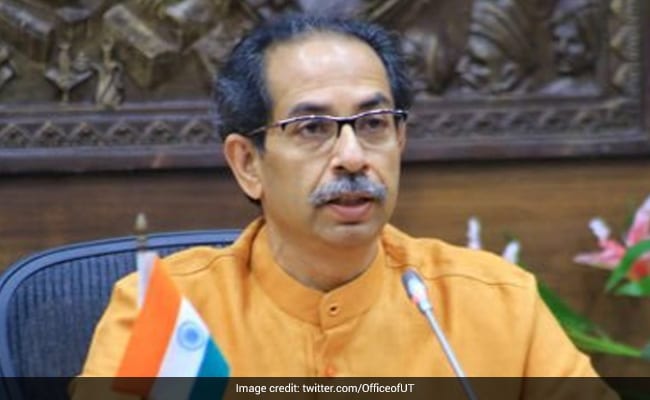
Mumbai: The clapperboard has been slapped down for film shoots to go beyond the current 4 pm deadline in the state. Chief minister Uddhav Thackeray has asked the Film and TV Producers Guild to follow all Coronavirus-appropriate norms at shoots and asked the city police to coordinate with them for permission. During a virtual meeting with the producers guild that has been demanding extension of shooting hours beyond 4 pm, Thackeray said the guild has to ensure vaccination of employees, Covid testing of the crew regularly.
Thackeray said that the state government is taking steps, slowly and carefully, to ease restrictions as cases in the state have not dropped a lot and the state was not yet out of the second wave. “We are trying to ease restrictions cautiously and safely, but everyone’s cooperation will be required for that to work,” Thackeray said, adding that despite a system being in place for sports events, spread of the virus has been reported.
Nitin Tej Ahuja, CEO of the Guild, said, “We are grateful to the CM for giving us a patient, responsive hearing. We requested that filming be permitted beyond the current deadline of 4 pm for a few reasons. Firstly, night scenes demand that they be filmed at night. This cannot be managed within the current restrictions. Secondly, talent and manpower is not replaceable, and it is not always possible to manage the time of key actors and technicians together within the 4 pm deadline. Thirdly, the risk [of Covid-19 infection] in fact reduces at night because there is less fear of crowds gathering.”
The guild informed the CM that unlike malls, restaurants, markets and public places, film shoots do not involve a floating population of outsiders. Ahuja said, “Our units consist of the same set of people, and now that studios and production houses are all getting their employees vaccinated, the threat of infection reduces. Of course, the CM said to us that he has to consider the larger picture and manage the threat of a possible third wave and we see his viewpoint...”
The Mumbai police should appoint a nodal officer to give permission.
Bollywood production houses try for mass vaccines; no luck
8:08 AM

The film industry has realised that only through rigorous and planned vaccination drives can it hope to get back on its feet again
Sugandha Rawal (HINDUSTAN TIMES; May 14, 2021)
After the second round of lockdown, getting back to work in Bollywood might require more than just a negative report, with the industry looking at widespread vaccination drive to restart activities. Though the Maharashtra government has temporarily suspended vaccination for 18-44 group, there are many production houses that are looking at procuring vaccines in bulk for their staff.
This comes after several actors, including Madhuri Dixit Nene, Anil Kapoor, Farhan Akhtar, Radhika Madan and Riteish Deshmukh, got their vaccine shot.
Actor Tamannaah Bhatia feels it’ll not only enable the industry to churn out content, but also support daily wagers. “From an industry perspective, it’ll help them get back on their feet and keep economic activity going. I hope the government, in due course of time, will address this,” says the actor.
According to Shibasish Sarkar, CEO, Reliance Entertainment, it is “impossible” to think about getting back to work without vaccination. “There’s no permanent solution to it, unless you can get your team vaccinated,” he says.
As vaccination drive picks up, some from industry have started to put out appeals to the Maharashtra government, urging them to let them get industry members inoculated.
While the Indian Motion Picture Producers’ Association (IMPPA) has written to Chief Minister Uddhav Thackeray to set up a vaccination centre for its members, Federation of Western India Cine Employees (FWICE) also has requested the state government to provide vaccines for its artists and workers. Yash Raj Films (YRF) head Aditya Chopra has requested the CM to allow the company to purchase 30,000 vaccines. One stop vaccine centre is important, too, points out J D Majethia, Chairman, TV division of IFTPC. “We’ve written to the government to make a centre in Film City,” he says.
Nitin Tej Ahuja, CEO of Producers Guild of India says, “We’ve been in talks with government departments and private bodies to facilitate mass vaccination camps for film fraternity.”
No ‘shortage’ of roadblocks
Though vaccination might seem as a potential way out, many point that the scarcity of the life saving drug is making it a tough path.
“Today, availability of vaccines is the biggest challenge. We’ve been talking directly with the manufacturers, hospitals and even laboratories, to get access to it. We haven’t been able to get it, but we’re trying to see if we can get a certain level of quantum, which can cover our staff,” Sarkar says.
To this, Birendra Nath Tiwari, President of Federation of Western Indian Cine Employees, adds, “The shortage is the biggest problem abhi. Ussi wajah se kafi aur log bhi ruke hue hain. We hope to get clarity on getting stock till May end. In fact, I might ask Salman Khan to also pitch for vaccination.”
That said, lyricist Javed Akhtar stresses that vaccination doesn’t mean letting go of other safety precautions.
“It can become safer to work when everybody is vaccinated. But even after the jab, there's no guarantee that nothing will happen to you, so one has to be careful,” he cautions.

Subscribe to:
Posts (Atom)