Showing posts with label Nitin Datar. Show all posts
Showing posts with label Nitin Datar. Show all posts
Kamathipura locals oppose plan to change Alexandra theatre plot reservation
10:11 AM

Richa Pinto (THE TIMES OF INDIA; August 12, 2026)
Mumbai: Minister Ashish Shelar's assertion that a land's original reservation cannot be altered to only suit a particular use appears to be at odds with BMC's actions. Proposals for changes in land use have been made for multiple sites in the city and a 1,005 sq m plot housing the now defunct century-old Alexandra Theatre in Byculla and a 3,439 sq m plot in Versova meant for a fire station and a civic post are set to be the latest casualties.
BMC will move a proposal on Wednesday before its improvements committee seeking to remove the Byculla plot's cinema/entertainment reservation and rezone it for residential use.
Opposing the plan, the Kamathipura development committee on Tuesday urged BMC to retain the existing reservation and protect one of the few remaining recreational amenities in the locality.
In a letter to BMC chief Ashwini Bhide, the committee said the state govt, through MAHADA, is undertaking a group redevelopment project spread across around 34 acres in Kamathipura. It said the redevelopment will substantially alter the neighbourhood and have a significant impact on available recreational and public amenities. It said it is, therefore, important to preserve land reserved for such amenities. The committee urged the civic administration not to alter the reservation "under any circumstances".
According to BMC's proposal, the theatre has been closed since 2007 and owing to the current condition of the premises and changing trends in the entertainment sector, running it is no longer economically viable. Besides, it said, the building is in a very dilapidated condition. The proposal said an application seeking cancellation of the cinema reservation and inclusion of the plot for residential use was submitted by Sameer Qazi of the state WAQF board to deputy CM Eknath Shinde on Feb 25. The state urban development department subsequently sought BMC's opinion on the proposed change
The plot's occupant, Rafiq Patel, also submitted an application to the civic development planning department. Following scrutiny and verification by the civic departments concerned, a proposal to delete the cinema reservation is now being placed before the improvements committee. Approval of the civic House of corporators will also be required for the change.
------------------------------------------
It’s curtains? Only 50 single-screen cinemas remain in Mumbai Metropolitan Region
Bella Jaisinghani (THE TIMES OF INDIA; September 16, 2026)
Mumbai: The fortunes of Alexandra Cinema, a famous single screen theatre in Nagpada, rose and ebbed like ocean tides in the last 105 years since it was founded by Ardeshir Irani and Abdulally Esoofally in 1921. Once a favourite haunt of movie-goers for its Sunday Hollywood classics, it gradually fell into disrepute for showing X-rated fare. In 2007 the last film was screened, and around 2011, Alexandra transformed into an Islamic study and prayer centre. Now it is set to be demolished to make way for a residential complex.
Audiences recall the magic of watching movies in such standalone theatres in the 1960s-70s where a samosa and ticket cost Rs 2-5 each. Spectators would freely whistle and applaud when Amitabh Bachchan beat Mohan Sherry in Trishul, laugh heartily at Mahmood’s antics in Ginny Aur Johnny, and throw coins at Jayshree T’s mujra ‘Humne maana hum pe saajan’ (Dada).
Glitzy multiplexes are a different prospect, say critics, adding tickets and food are prohibitively expensive and collective outpouring of emotion is seldom witnessed.
The Cinema Owners and Exhibitors Association of India (COEAI) provided TOI an updated list of June 2026 which shows that only 45-50 single screen cinema halls remain functional in MMR. The rest, around 125, have closed down. A requiem is being written every other week.
Owners of single screen theatres say that faulty government policies including high taxes, electricity bills, tiresome licence procedures and lack of incentives have left them suffocated. In fact, tax holidays are granted to multiplexes owned by rich corporates. The prospect of redevelopment is enticing -- only if the mandate to include a movie hall in the new premises is removed, they say.
Senior film critic Rajiv Vijayakar says, “I have watched movies in single screen theatres across India because my father had a transferable job. The atmosphere, the enthusiasm of the audience cannot be compared to a multiplex. Rarely do you see people clapping now -- maybe in some cases like Dhurandhar.”
He recalls, “Decades ago I had gone for a short three-day holiday to Mussourie, and every afternoon, I would visit a particular 50-seater theatre to watch films. I remember seeing CID 909, Shehnai and Yaadein. In Delhi I watched The Bridge On The River Kwai and Lawrence Of Arabia in Sheela Cinema, which had installed the first 70 mm screen in India. In Chennai I recall going to a nice theatre located in the basement of a building.”
Vijayakar moved to Bandra in the 1970s where Bandra Talkies and New Talkies became his standard haunt followed by Gaiety-Galaxy. “Of course it was a lovely era but let me not omit the occasional rat sightings in single screen halls,” he laughs. He recommends that the govt grant a tax holiday to single screens to revive them.
The challenge of OTT and web series is not the sole hurdle. Nitin Datar, past president of COEAI, spells out a series of factors that have brought the curtains down on single screen theatres.
“The first cause would be the [unfavourable] policies of the govt of Maharashtra, like very high property tax, electricity rates and [cumbersome] licence renewal. Then, multiplexes which were the new entrants were given a tax holiday for a period of five years, and in that duration, they earned around Rs 15-20 crores. But when our single screens asked govt for a similar incentive to compete with multiplexes, we were denied it and left high and dry,” he says.
“Thereafter the Maharashtra govt gave a tax free scheme like multiplexes to theatres in the state -- except in corporation areas like Mumbai and Pune. But after GST was introduced, govt discontinued this policy. Meanwhile exhibitors had spent a huge amount on renovation -- and they came into losses. Then the govt almost put compulsion on single screen theatres to go for digital projection and computerized ticketing. So first we used to sell paper tickets, now it was computerized. And the benefit of this was taken by agencies who monopolized the process,” Datar says.
If that were not enough, big distributors and producers were acting like a “monopoly” cartel. “Due to pressure by multiplexes, they did not supply films to all the single screen theatres,” he says.
COEAI and other associations requested the govt for subsidy and loans so single screens could survive and compete, to no avail.
Datar is presently renovating his own Uday Cinema in Ghatkopar into a commercial complex, including two screens in the mandatory cinema hall.
A high profile revival in recent years was that of Eros Cinema, Churchgate, in Jan 2024. A spokesman for Metro Realty which owns the theatre said, “The redevelopment of Eros was a capital intensive and challenging project, envisioning adaptive reuse of spaces in an iconic heritage building. It now houses an IMAX cinema, flagship store and ten dining options.” Similar financial backing is often not available to single screens in non-prime locations.
Kapil Bhopatkar’s family has owned Bharatmata Cinema in Lalbaug since 1941. The hall underwent a full makeover in March. Bhopatkar says, “The challenges for a single screen are multiple. Firstly we have no control over the content that we screen. I don’t make the films that I exhibit at Bharatmata. After all only if the film does well, the theatre does well. Moreover, we pay unusually high electricity bills because we are charged at a commercial rate. We pay huge sums in property taxes and of course there are vast upgradation costs. We need some kind of govt support and ease of licencing regulations. Those owners who want to exit the business and apply for change of user should be allowed to go.”
Bharatmata has been revamped in a tie-up with 1 Cinema, Rajat Haksar and Sunil Patil. “Ours is a heritage structure so we retained the exterior but changed the interiors -- chairs, AC, a bigger screen, better sound and 2K projections.”
Even as newer direct to home technology and OTT overtakes the cinematic experience, several generations of film lovers long for that one Drive-In or Navrang that did not force them to break the piggy bank.
------------------------------------------
Alexandra Cinema case raises wider plot reservation concerns
Sanjeev Devasia (THE TIMES OF INDIA; August 30, 2026)
Mumbai: As a proposal to change the reservation of the plot housing the shut Alexandra Cinema in Byculla to a residential plot is pending before the BMC improvement committee, questions have been raised over whether the reservation for other cinema/theatre plots will similarly be changed merely because the theatres have remained closed.
While demanding that the proposal regarding Alexandra Cinema be kept in abeyance or rejected, Congress improvement committee member Meher Haidar has demanded that the status of all cinema theatre reservations/designations under DP-2034 be made public. She has also sought a comprehensive white paper on the cancellation/amendment of reservations for RGs, PGs, open spaces and other public amenities. “This is a serious attack on public interest in the city’s planning,” Haidar said.
She pointed out that DP-2034 contains 119 cinema theatre reservations/designations, covering a total area of 3,09,284 sq m. “If the designation of one closed cinema theatre is cancelled today, will this not create a precedent for owners of other shut cinema theatres to seek cancellation of reservations for their plots?” she asked.
Shiv Sena (UBT) member Visakha Raut, who opposed the proposal, said multiplexes are beyond the reach of the common man. “Besides, you need to preserve cinemas in certain areas, including in the vicinity of Alexandra Cinema, for people from the lower- and middle-income groups,” she said. Shiv Sena (UBT) member Sachin Padwal said, “This will create a precedent, and what entertainment options will people in that particular area have?”
As per provisions of DCPR-2034, at the time of redevelopment of such plots, a cinema/theatre facility has to be provided over 30% of the plot area or with a minimum seating capacity of 300 seats, whichever is less. “If a cinema theatre is closed, it can be modernized and restarted. Then why is the reservation itself being cancelled?” Haidar asked.

25 Years of Lagaan, Gadar: Two films, one release date... and the rest is history
9:27 AM

25 years ago today, Gadar: Ek Prem Katha and Lagaan hit theatres and went on to become two of Indian cinema’s biggest success stories. We speak to members of the film fraternity as they look back on the excitement surrounding this box-office clash and reflect on what makes both films enduring classics even today
HINDUSTAN TIMES (June 15, 2026)
The expectations before release day
Filmmaker and trade expert, Girish Johar recalls that Gadar was already carrying tremendous buzz before its release. Its music had become popular and audience anticipation was high. In comparison, Lagaan appeared to be lagging initially.
“People couldn’t quite understand what Lagaan was about from its early promotional material. The creative images showed 11 men in rural costumes. And at the time, (Gadar director) Anil Sharma was a far more commercially successful director than (Lagaan director) Ashutosh Gowariker, so the odds were largely in Gadar’s favour,” he says.
Johar adds that Lagaan’s lengthy runtime also posed challenges. “Being a three-hour film, only a limited number of shows could be accommodated. There was also confusion over whether the film would have one interval or two. But the clash itself was incredibly exciting. Exhibitors were eager to screen both films, but show-sharing wasn’t common in single-screen theatres then. It was a tough call which film to screen, but all these are now fond memories.”
Why both films struck a chord
Nitin Datar, former president of the Cinema Owners and Exhibitors Association of India, recalls that many single-screen theatres preferred allocating more shows to Gadar during its initial run.
Explaining the reason, he says, “Gadar was an action film in which the protagonist takes on Pakistan’s police and political leaders. It evoked national sentiments among the audiences. I still remember people shouting ‘Bharat Mata Ki Jai’ inside theatres.”
He points out that Lagaan also carried a patriotic undercurrent, though in a very different way. “Lagaan was also rooted in national pride, but the conflict was against the British and was expressed through a cricket match rather than direct action. But ultimately both the films did well.”
DID YOU KNOW?
- Lagaan became the first Hindi film to be shot using sync sound which means that dialogues and sounds were recorded live during the shoot itself.
- Lagaan travelled to various international film festivals across the world but more importantly, it was nominated in the Best Foreign Language film at the Oscars 2001. The film’s selection was a moment of pride for Hindi cinema as it was for the first time that a commercial film had been nominated at the Oscars.
- Lagaan was the maiden production of Aamir Khan’s production house.
The legacy continues through re-releases
To mark its 25th anniversary, Lagaan returned to theatres for a limited three-day re-release on June 12, 13 and 14.
“Twenty-five years on, Lagaan remains one of Indian cinema’s defining achievements. Its return to theatres is both a celebration of the film and an opportunity for audiences to experience the scale, ambition and storytelling that make cinema timeless,” says Niharika Bijli, Lead Strategist, PVR INOX Limited.
Meanwhile, Gadar enjoyed a successful re-release in 2023, becoming one of the highest-grossing Bollywood re-releases in India. According to trade experts, the film earned an impressive Rs. 7.78 crore during its repeat theatrical run.
SUNNY DEOL’S POP CULTURE MOMENT
Sunny Deol’s ‘handpump scene’ in Gadar: where his character Tara Singh uproots a hand pump and uses it as a weapon became iconic. What was intended as an over-the-top display of emotion and strength became one of the most recognizable images in Indian pop culture.
- Natasha Coutinho

BMC budget 2026-27: Entertainment tax levy may push up film ticket prices
4:40 PM

Sanjeev Devasia & Bella Jaisinghani (THE TIMES OF INDIA; February 26, 2026)
Mumbai: The civic body is all set to impose entertainment tax after Sept 2026, once the state urban development department gives its assent to the BMC. The civic body, which intends to impose the tax on theatres, multiplexes, bowling alleys, cable TV providers, public ticket-based shows, discotheques, pubs, pool parlours, exhibitions, races, and circuses, among various forms of entertainment, is looking at mopping a revenue of over Rs 500 crore; in 2016-17, it had collected Rs 376 crore from entertainment tax levied in the city.
The prospect of film tickets becoming costlier in Mumbai looms large after the fresh imposition of entertainment tax, said experts. Nitin Datar, president of the COEAI (Cinema Owners and Exhibitors Association of India), said, "Since the GST levy was implemented, the Centre had allowed individual states to collect entertainment tax. But Maharashtra and some northern states have not implemented it."
The BMC budget document stated that as per the amendment to Maharashtra Entertainment Duty Act, the responsibility for collecting entertainment tax/fees previously levied by state govt, has been entrusted to the local authorities.
It also stated the state revenue and forest department had extended the exemption from entertainment duty from Sept 16, 2017, to Sept 30, 2026, and accordingly a proposal has been submitted to the urban development department. "We will be seeking data from the revenue authorities that are the district collectorate and will follow the model and features of the tax system adopted by them, while they levied the tax. However, that would be subject to the urban development department approving our proposal," said an official.
Datar said, "Many states in the south were levying this tax, but Maharashtra was not doing so. There are many taxes that businessmen pay to the Centre and to the states. Now with the imposition of this tax in Mumbai, it is almost certain that ticket prices will rise. The quantum of increase depends on the percentage. If 10% entertainment tax is levied, in multiplexes the ticket cost will rise from say Rs 100 to Rs 110, but in a single-screen theatre where tickets cost Rs 30-40, maximum Rs 80, even a three or four rupee increase means a lot."
Nitin Tej Ahuja, CEO, Producers Guild of India, said, "I have not reviewed the BMC tax proposal so I am yet to ascertain what it entails and what its implications are. Conceptually, however, we have made many representations to the central as well as various state govts against local bodies charging entertainment tax. The underpinning principle behind the introduction of the GST regime was ‘One Nation One Tax' and one doesn't understand the rationale why the entertainment industry should be singled out for additional levies. The whole idea behind GST was to subsume all these multiple taxes into one tax."
Birendea Nath Tiwari, president of FWICE (Federation of Western India Cine Employees), said, "The film and television industry has only recently stabilized after years of pandemic losses and the sharp impact of OTT platforms on theatrical footfall. Any re-introduction of entertainment tax at the municipal level must be handled very cautiously. If the levy directly increases ticket prices, the immediate burden will fall on the common audience, and that ultimately reduces footfall in theatres—which again affects workers and daily-wage technicians across the industry."
"FWICE believes the objective of revenue generation for the civic body should not come at the cost of revival of cinema exhibition. We request that either the tax be kept nominal or structured in a way that it is not passed on to consumers. Otherwise exhibitors, already struggling with maintenance, electricity and rental costs, will face additional financial pressure. If ticket prices rise, audiences shift faster to digital platforms, and that harms the entire ecosystem— producers, distributors, theatre owners and thousands of workers."
"Therefore, any policy must balance civic revenue with protection of employment and theatrical business sustainability. FWICE expects ticket prices may increase if the tax is directly applied per ticket, unless the govt caps or absorbs part of the levy. Theatres could face further financial strain, especially single-screen cinemas, unless concessions or differential rates are provided."
Too many ads before a movie? This court ruling could change that
8:26 AM
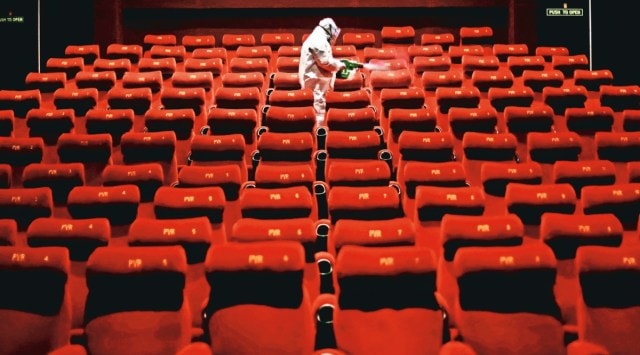
A Bengaluru court recently ordered PVR Cinemas to pay damages for delaying the start of a movie, sparking debate on how cinemas, in their quest to increase profits, could be taking their customers’ time for granted
Sunil Baghel & Bhavika Jain | TNN (THE TIMES OF INDIA; February 25, 2025)
The Bangalore (Urban) District Consumer Commission, in a first-of-its-kind order, has directed PVR Cinemas, Bangalore, and its parent company, PVR Inox, to pay Rs. 1.28 lakh as penalty to a patron who had complained he was made to sit through half-an-hour of advertisements before the movie he had gone to watch was screened.
The order requires the cinema hall chain to deposit Rs. 1 lakh into a consumer welfare fund and pay Rs. 20,000 to the complainant, Abhishek M R, for the inconvenience and mental agony caused, along with Rs. 8,000 for his legal expenses.
The court also instructed the cinema chain to clearly state the actual start time of movies on tickets and avoid similar delays in the future.
What was the complaint?
On January 6, 2024, Abhishek filed a complaint about the screening of Sam Bahadur (2023), a Bollywood biopic based on the life of Field Marshal Sam Manekshaw.
Abhishek had booked three tickets for the 4.05 pm show at PVR Cinemas in Orion Mall, Bengaluru for Rs. 825.66. Expecting the movie to run for 2 hours and 25 minutes, he planned his evening accordingly, assuming the show would end by 6.30 pm. However, Abhishek and his family sat through nearly 30 minutes of advertisements, trailers and promotional content, and the film began at 4.30 pm.
He documented the delay in a video recording, arguing that the prolonged pre-show advertisements disrupted his schedule and constituted an unfair trade practice.
What PVR said in its defence
PVR Cinemas argued that recording a video inside a theatre is illegal as it amounts to piracy, and that that made the complainant’s evidence inadmissible.
It also said theatres are legally required to screen government-mandated public service announcements (PSAs), like anti-tobacco ads, which are typically played when the attendance in the hall is at its peak.
Government guidelines, however, specify that PSAs should not exceed 10 minutes before the film starts.
The theatre chain argued that the movie’s actual runtime was 2 hours and 30 minutes, not 2 hours and 25 minutes as submitted by the complainant. It also said that audience movement and security checks can cause minor variations in movie start times.
What the court ruled
The Consumer Commission dismissed PVR’s arguments and admitted the complainant’s video evidence, noting that it did not record the actual movie screening.
The court found that while two of the advertisements shown were government-mandated PSAs, 95% of the pre-show content was commercial.
The court also said that movie screenings must begin precisely at the time printed on the ticket and recommended that theatres limit commercial ads and PSAs to the intermission period.
“Theatres cannot extend a viewer’s stay for commercial gain. Time is an economic asset, and misleading showtimes inconvenience moviegoers,” the ruling said.
How cinema halls earn
Movie theatres generate revenue through three primary streams, with box office collections being the most obvious one.
In 2023, theatrical revenue hit an all-time high of Rs. 11,200 crore, with over 1,796 films making their way to the big screen, according to Ernst & Young’s (EY) March 2024 report.
But, every time a ticket is sold, a portion of that money is split between the film’s distributor, the exhibitor (the theatre), and the government in the form of taxes.
After these deductions, the cinema owner is left with a fraction of the total ticket price. That’s where the other two revenue streams come in.
Food and beverage sales inside theatres, exorbitantly priced in most cases, is a lucrative revenue stream. A pack of popcorn, available for around Rs. 20 outside, can cost you Rs. 300 in a multiplex. This is why cinemas don’t allow moviegoers to carry any food, or even water, into the theatre. The other crucial revenue stream of course is advertising.
So, how much do cinema halls make from ads? According to an EY 2024 report, cinema halls in India earned Rs. 750 crore from in-cinema advertising in 2023. This revenue stream is likely to grow to Rs. 1,000 crore by 2026, driven by factors such as rising discretionary spends, an increase in high-quality mass content, and advancements in pricing strategies and infrastructure.
Is there a fixed limit to how many ads can play before a film?
There is no regulation limiting the duration of pre-show advertisements. The number of ads shown before a movie can vary based on factors such as the film’s popularity, the time of day, and the day of the week.
“Weekdays generally have fewer ads compared to weekends,” said Nitin Datar, president of the Cinema Owners and Exhibitors Association, adding that advertising agreements are typically made in advance and often span a year.
Big films like Pushpa 2, said Girish Wankhede, head of business strategy at Cineport Cinemas, pull in more advertising, and what is planned as a 10-12 minutes of ad slot often extends to 20-25 minutes.
Are cinema halls struggling?
In October 2024, PVR Inox, India’s largest multiplex chain, reported a consolidated net loss of Rs. 11.8 crore for the September quarter, a stark contrast to the Rs. 166 crore profit for the previous year.
This downturn, according to a Reuters report, was attributed to a 19% fall in total revenue, with movie ticket sales plummeting by 25% and food and beverage sales decreasing by 18%.
However, there are signs of resilience. In February 2025, PVR Inox reported a threefold increase in its third-quarter profit, driven by a strong line-up of new films during the festive period like Bhool Bhulaiyaa 3, Singham Again, and Pushpa 2.
Pushpa 2 alone accounted for 36% of box office collections in the quarter, marking it one of the biggest blockbusters in Indian cinema history.
So, what next for cinema halls?
The Bengaluru court’s ruling against PVR Cinemas could set a precedent, pushing theatres to be more transparent about movie start times and reconsider ad durations. However, PVR is expected to challenge the ruling.
If more consumers complain, cinema halls may have to disclose ad durations upfront or limit them. Since advertising is a major revenue source, theatres might explore shifting ads to intermissions or offering ad-free premium screenings.
Research by Rajesh Sharma
Singham Again vs Bhool Bhulaiyaa 3: Cinema owners feel the heat ahead of big Diwali releases
2:32 PM

Rajesh Naidu (THE ECONOMIC TIMES; October 13, 2024)
Singham Again and Bhool Bhulaiyaa 3 have fired up the Hindi-language film industry ahead of their Diwali release. But even as the response to the trailers of the two mega productions portends fireworks at the box-office, with some estimates suggesting potential collection of around Rs 1,000 crore, cinema owners are facing intense pressure from distributors for more shows and screens for the respective films, said industry executives.
Cinema owners in not just metros but also tier-2 and tier-3 cities across the country find themselves in a bind over the competing big-budget films, they said.
“Single-screen theatre owners are facing a tough dilemma when it comes to allocating shows between these two films,” said Anil Bohra, owner of City Light, a single-screen theatre in Palanpur, Gujarat. He added that the potential for these films to generate strong box-office business could be diminished due to their release on the same day.
Echoing concern, Brijesh Tandon, a film exhibitor from the Delhi and Uttar Pradesh regions, said, “Both films look promising and could be big money-spinners. However, I believe the clash could have been avoided. Releasing them separately would have been better, as business will inevitably get divided with both films competing on the same day.”
According to the 2024 FICCI-EY media and entertainment report, India has a total of 9,742 cinema screens. Trade analysts estimate that 25-26% of these are multiplex screens, while the majority are single screens.
Singham Again is being distributed by PVR Inox Pictures.
PVR Inox is the distribution arm of multiplex firm PVR Inox, which operates 1,747 screens across the country.
Meanwhile, Bhool Bhulaiyaa 3 is being distributed by AA Films, owned by Anil Thadani, one of the most successful pan-India distributors. “Multiplexes with at least five screens can easily allocate sufficient space and showtimes to both films. Distributors of these two films are unlikely to suffer significant losses in multiplexes,” said a person, who did not wish to be identified.
“Single-screen cinema owners, however, will face intense pressure from distributors of both films.”
Independent film distributor and trade analyst Shaaminder Malik said, “Exhibitors cannot afford to upset distributors of both films. If Singham Again has big stars and a big studio attached to it, then one cannot underestimate Anil Thadani, who is distributing Bhool Bhulaiyaa 3. He has a long-established record, brand name and quite a standing in the industry.”
He added that exhibitors are aware that these distributors and studios can distribute and produce around a dozen films a year. Nitin Datar, president of the Cinema Owners and Exhibitors Association of India, said he was optimistic despite the tension between the exhibitors and distributors. “Single-screen owners will certainly feel significant pressure from distributors,” he said. “However, this will likely be a weekend issue. By Monday, November 4, after Diwali, it will be clear which film gets more shows and screens, as the audience’s verdict will be reflected in the box-office collections.”
Trade analysts said the running time of the two films — Singham Again (about three hours) and Bhool Bhulaiya 3 (around two hours and 40 minutes) — would also play a role in how many shows and screens they get. However, expectations from both films are high, they said, as these films don’t face competition from another big-budget production for at least a month.
Of hot pizzas and cold sofas: Filling seats isn’t easy for refurbished single screens
8:45 AM

The 315 chairs at Malad's 1948-born Kasturba Talkies now come with taller backrests and a few recliners in the balcony that cost Rs 350 a pop on weekends
Sharmila Ganesan (THE TIMES OF INDIA; April 21, 2024)
For at least two years now, no one has spat inside Kasturba Talkies, a single-screen almost as old as the nation that sits at a spitting distance from Malad station. Perched above a market bursting with boots and bras, the recently-refurbished 315-seater is not named after Mahatma Gandhi's wife but after the wife of a Gujarati road contractor named Dayabhai Vasanji whose quest for 'laal patthar' (red marble) had brought him from Rajkot to Malad during the Raj era. Laal was also the colour of the gutkha stains that dotted the auditorium floor of the theater begun by Kasturba Somaiya's son Padmanabh in 1948.
Favoured by the "mastiwale" masses for several decades, the single screen donned a sophisticated red velvet carpet in 2022 when it reopened post Covid. Today, standing in its maroon spruced-up balcony whose new semi-recliner "sofa seats" get filled on weekends despite costing Rs 350 a pop, Nimish's son Dhun Somaiya - who manages the new offline and online presence of the theatre - delivers an unintentional whistle-inducer: "If you give them a good ambience, the audience will come."
In the wake of the headline-grabbing recent comeback of 90-year-old Eros Cinema near Churchgate - which reopened after a seven-year lull as a spiffy 305-seater operated by PVR-Inox - visiting little - known recently-refurbished single-screens can offer a glimpse into the inherently-different challenges and strategies that their self-orchestrated remaking's entail.
While corporates are able to absorb losses as they run multiple theatres, single screen owners say they are forced to take personal loans to meet daily expenses - ranging from incessant repairs to staff salaries - in the region of Rs 30,000. This, in turn, trickles down to the consumers in the form of ticket prices. "People sometimes ask us why they should pay so much when ours is not a PVR," says Kasturba Talkies' third generation owner Nimish Somaiya. "We don't even have parking," he adds.
As financial losses killed nearly a half of Maharashtra's single screens in the two decades preceding Covid, their number dwindled from 1200 to 475. Mumbai — which has seen a 100-odd single-screens in its black-marketing prime — boasts only around 50-odd today. Given that 25 of them — including Lower Parel's revamped Deepak Talkies and Dombivli's Tilak Talkies - shut down during the pandemic-ridden years, the new facelifts are driven as much by the desperate need to emulate multiplex-level services in the age OTTs as by state regulations that offer little choice. As per redevelopment laws, existing cinemas in Maharashtra can be redeveloped for residential and other uses as long as they retain a third of their seating capacity.
While occupancy has steadily returned to pre-Covid levels in the single screens, that’s not saying much. Various hefty taxes and costs of constant repairs and electricity add to the financial burden of theatres, causing them to see an anemic occupancy of 10 per cent.
Distributors, on their part, have different revenue-sharing terms with multiplexes as opposed to single screens. So, if a multiplex gets a 50 per cent share for a housefull show, a single screen gets only a "theatre share", usually about 10 per cent of the revenue for a packed house. “They get to celebrate Eid and Diwali while we get to celebrate funerals,” laments Manish Vira, who owns 1996-born Dombivali-West-based renovated single screens Madhuban Talkies & Pooja Talkies - among a handful of cinemas that appears on a popular ticketing app with the words 'newly-renovated' in parenthesis.
After the brief flush following Shah Rukh Khan's mammoth comeback 'Pathaan', a full house has eluded these millenial theatres where veteran cinema ushers from nearby phantom Tilak Talkies - which died during the pandemic - trickle in with their families to watch Marathi and Hindi movies at times. “We are running because the show must go on," says Manish.
"Until there is a film that warrants stepping out to a theatre, people are not going to spend exorbitant amounts," says Kapil Bhopatkar of 1930s-born Bharatmata in Lalbaug, which is currently in the process of sprouting a new air conditioner, a bigger screen, cushioned seats and a 2K projector. "The biggest challenge for exhibitors is that it all boils down to the content. And we are never the masters of content," adds Bhopatkar.
Typically, single screens install upgraded sound systems and projectors every seven to ten years, says Nitin Datar, president of the Cinema Owners And Exhibitors Association. “Handling this is much easier," says Kasturba's black-cap-sporting projectionist Vijay Jadhav, as he readies the new digital plug-and-play 2K projector for the 12.45 pm show of Akshay-Kumar-Tiger Shroff-featuring box-office-disappointment titled 'Bade Miyan Chhote Miyan'. Meant for Hollywood movies and 3D films, the projector — a far cry from the manual ancestors — has electric nerves that are cooled by two ACs. The window here overlooks its modest stall which grew taller chairs in 2022 when the two cafeterias boasting pizzas and burgers came up. Samosas that were sold at Rs 30 a pair, now come piping hot to your seat at Rs 90 a pair.
“Customer is king,” says Dhun, nostalgic for the packed houses he saw in 2023 — a plush phase that lasted from 'Pathaan' to 'Gadar 2'. To generate buzz for the current box-office non-kickstarter 'Maidaan'—a film based on the life of an esteemed football coach who revolutionized the sport in India — Dhun has invited a nearby football academy. “I wish the government gave us more sustained support,” says Dhun's father Nimish. Then, sipping on sugary chai, Nimish chides a colleague for ordering green tea.
Eros cinema to rise again; heritage features intact
8:27 AM

Bella Jaisinghani (THE TIMES OF INDIA; January 28, 2024)
Mumbai: The iconic Eros cinema hall at Churchgate, long veiled under a green curtain, has been refurbished and restored, and is set to draw a different generation of leisure seekers shortly. It was started in 1938 and had familiarized generations of Mumbaikars with the best of English cinema in its Art Deco setting, which has been preserved.
In its new avatar, Eros will be a 300-seater cinema on the upper storey apart from two levels of retail and food courts.
Other landmark single-screen theatres in South Mumbai such as Liberty, Regal, New Excelsior, New Empire, Sterling and Central Plaza have all faced challenges to their existence amid the onslaught of multiplexes and the pandemic.
Atul Gupta, managing partner of Metro Realty, the firm which has undertaken redevelopment of Eros, said, “The structure will house a 300-seater cinema. It will become the first IMAX cinema hall in the world that is located in a 90-year-old building and will have two levels operating as retail and F&B spaces. We have preserved heritage Art Deco elements including the circular lobby, staircases, murals and other features, just as we did in Metro Cinema. We have honoured all heritage guidelines.”
Gupta said, “The theatre was shut for 10 years, and we decided to take over after our successful experience of renovating Metro Cinema as an 8-screen multiplex. So we signed a deal with the owners of Eros, the Cambata family, who continue to own the property but have given it to us on lease for 30 years.”
Conservation architect Kirtida Unwalla was the consultant entrusted with preserving the Art Deco ethos of the Grade 2A cinema hall. She said, “The essential elements of the Art Deco form are all preserved. In fact, we have not only preserved but enhanced the 6-ft-tall artistic panels depicting the journey of cinema and other arts. The famous 2 staircases are still there, and we have retained and restored the old doors and windows on the ground floor. The ‘frozen fountain’ has been reproduced to the scale possible. That is a rich element of Art Deco. We have carried out all the work after securing permission from the heritage committee.” The new features too are in sync with the Art Deco style, including a canopy of light.
Meanwhile, speculation surrounding the new cinema gathered steam online. Eros theatre team invited those who had expressed misgivings and alleviated their doubts at a trial show a few days ago.
Single-screen theatres have fallen on hard times. Mrunal Gole, owner of Liberty Cinema, said the hall has been shut since Covid with government rules not enabling relaunch. Nitin Datar, president of COEIA (Cinema Owners and Exhibitors Association, India), said a list of policies has forced a majority of the 150 single screens in Mumbai to shut. “Barely 40-50 halls are left. If one refurbishes a large theatre, it can cost up to Rs 1 lakh per seat to do so, given the expenses on AC, seating, projection and other infrastructure. Our ticket rates are Rs 40-70, how can we manage?” he said.
Amid the gloom, one single-screen theatre that has got its revenue model right is Hindmata Gold in Dadar. General manager Amit Singh said, “We thankfully have 80-90% occupancy and we show the latest movies because our ticket and food rates are accessible. Many families are returning to single screens given the low costs.”
This is how India’s entry to Oscars is selected
8:45 AM

With fans already kicked about films likely to represent India at the Oscars, experts decode the selection process
Sugandha Rawal (HINDUSTAN TIMES; August 27, 2022)
Of late, there’s been buzz around films such as RRR, The Kashmir Files and Rocketry: The Nambi Effect, as they stand a chance to represent India at the Oscars next year (95th Academy Awards). But, experts suggest that fans shouldn’t get overwhelmed with the hype yet, as the official selection process hasn’t even begun.
“The process of seeking entries will start at the beginning of September, with the Film Federation of India (FFI) sending invites to all the [film] associations in India. The jury will start viewing the films on September 16, and the official entry will be announced by the end of September. That film will be sent to the Oscars in October,” says Supran Sen, secretary general, FFI.
Breaking down the process of finding India’s official entry to the Oscars, Nitin N Datar, vice president, FFI, shares, “We don’t have a fixed selection committee. We add new members every year, who are all National Film Award winners. While we watch a lot of movies to decide the official entry, some producers can also send their entries directly to the Academy, if they meet the eligibility criteria. We take note of films from all across India and not just the popular ones.”
While the jury has been formed, the names of the members haven’t been revealed yet. “That’s because once the names are out, there is a lot of pressure from people, as they try to influence the jury members’ decision,” adds Datar
Trade experts are happy with the films that are creating the buzz. Taran Adarsh says, “These films are strong contenders, as they are unique and reflect real India.” Producer and trade analyst Girish Johar adds, “These films are apt because they represent Indian viewing consumption right now.”
Director Ketan Mehta, who has been on the jury in the past, decodes the criteria for picking the official entry: “The story and filmmaking should be high quality, and the story should have the ability to travel the world.”

Single screens, integral to Mumbai's heritage, are looking for state govt’s support to revive their business
8:43 AM

The single screens, integral to city’s heritage and landscape, are looking for state govt’s support to revive their business
Nauzer K. Bharucha & Mohua Das (MUMBAI MIRROR; February 27, 2022)
Even as the return of Bollywood blockbusters to the big screen fuels what theatre owners hope could be the start of a post-Covid box office recovery, the once-teeming Central Plaza in Girgaum is reckoning with a heartbreak. The horseshoe-shaped cinema theatre designed like an opera house — which for nine decades played host to a well-heeled audience — is likely to emerge from the pandemic as a part-commercial, part-residential complex.
“It had a glorious history and even when multiplexes came to dominate, we kept pace with the times, changed the acoustics and brought in the 2K digital projection system. We believed we’d have continued patronage but the Covid-OTT invasion has been too huge,” said Sharad Doshi, owner of Central Plaza, which has been drawing thin crowds for almost a decade. “Also, our children don’t want to get tied up in a business that's steadily declining.”
It’s been a while that single screens across the city have been falling like ninepins to the juggernaut of VCRs, cable and satellite TV and then the rise and rise of multiplexes and OTT platforms. And now, overpowered by the pandemic, these theatres are shutting down at a dizzying rate.
If Mumbai had about 136 single screen cinemas with an approximate seating capacity of 99,000 before multiplexes arrived, today those numbers have dwindled to 69 out of which 20% have still not reopened despite the unlocking, according to the Cinema Owners & Exhibitors’ Association of India (COEAI). While the causes for it are the usual suspects — streaming videos, upkeep of an old cavernous building, real estate costs and shrinking patronage — cinema owners say that rigid government policies have dealt the final blow.
“It has become impossible to run a single screen theatre. The average occupancy was 8-15% even before the lockdown,’’ said Nitin Datar, COEAI president.
“Due to mounting losses, taxation, maintenance, electricity bill, salaries and Coronavirus, very few single screen cinemas will stay open in the future,” said deputy president Viraf Vatcha. “State government policies for single screen cinemas have become detrimental for the owners,’’ he added.
Vatcha, who owns New Shirin Talkies at Jacob Circle, said that with 801 seats, his theatre barely managed to sell 25 to 30 tickets per show. “Most of the shows would have to be cancelled since it would be economically unviable to operate at that low occupancy. Many such single screen cinemas in Mumbai were selling tickets as low as Rs 30 since they would have no audience if ticket prices were raised,’’ he said.
Datar added that even a big banner film runs for not more than two weeks in a single screen theatre. “Some owners are holding on due to sentimental reasons or have another source of income,’’ he said.
A theatre owner, who did not want to be named, said the big collections are only during six weeks of the year. Another six to ten weeks record average collections. “What do we do for the rest of the year?"
Architect Vilas Nagalkar, who consults the Association, said single screen owners are being compelled by the state to carry on the business even though it is not financially viable. “The state policy allows owners to redevelop their properties but with a condition that they retain a theatre one-third the size of the existing one. Many theatre plots in Mumbai have little open space and it becomes very difficult to comply with these diktats,’’ he said.
Nagalkar added that because of these restrictions, new entrants do not want to enter this business and get tied. Furthermore, the location of the theatres on the main roads without a boundary or car park, makes it impossible to redevelop the property with no relaxations from the government.
“If an old 800-seater single screen cinema owner wants to convert it into four single screens with 200 seats in each without altering the structure, the permission is unprocurable. One screen will be considered as the old screen and the other three will be considered as new ones and hence new rules shall be applied, which are impossible to follow on an old property,’’ said Vatcha, pointing that this survival script may hardly hold any possibility of resurrection.
A tragedy for decades-old movie houses that once anchored the city’s flourishing film industry from the Thirties. A pensive Rafiq Baghdadi, city historian and chronicler of the Mumbai film industry’s formative years, recalled how nine decades ago, as many as 19 cinemas came up back-to-back on the kilometre-long stretch of Grant Road including New Roshan Talkies, Nishat Cinema, Novelty Cinema, Royal Cinema, Imperial Cinema, Alfred Talkies, Daulat Talkies, Taj Talkies and Gulshan. It was no happy accident.
“This was, after all, a neighbourhood with a ready audience for the cinemas with the red light area, cotton mills, Parsi colonies, Chinatown and keema-pav eateries buzzing in its vicinity. It became an egalitarian space where no one questioned anyone’s religion or caste, people found comfort,” says Baghdadi, recounting how each theatre — owned mostly by Parsis and Bohras — had its distinct identity. “The acoustics of Capitol Cinema were designed to contain the sound of crying children, chai-samosa was an advent of Metro and most of the movie halls came up on a cemetery in the neighbourhood mohalla.”
As he looks back at the once luxurious “movie palaces” with towering screens, grand staircases and opulent lobbies with lush carpeting now reduced to crumbling shells with dusty broken seats, abandoned projector rooms and shattered glass booths, Baghdadi wonders: “Why don’t people who make movies and live in a city that is the hub of Indian cinema take interest in their own history? A lot could be achieved if a group was formed to revive these spaces as a heritage experience.”
Multiplexes with discount on tickets, freebies pull in crowds; thin audience at other screens
8:14 AM

Nitasha Natu & Sharmila Ganesan Ram | TNN (THE TIMES OF INDIA; October 23, 2021)
Mumbai: Multiplexes and theatres reopened on Friday after nearly a year to relatively sparse crowds, except for those movie halls that had offers and freebies for audiences.
One of the reasons was Covid guidelines issued by the government. Besides temperature checks and green ticks on the Aarogya Setu app, some patrons had to furnish vaccine certificates and adapt to the new normal, given that theatres were allowed to operate at 50% capacity.
At a Borivali multiplex, a very disappointed teenager walked away from the box office with his mother on being denied entry as he was underage, despite the government not mandating any such requirement.
To draw in audiences, some multiplexes had free morning shows, a few threw in a free tub of popcorn per ticket purchased and others had heavily discounted ticket prices. “We were almost sold out for morning shows across all our multiplexes in Maharashtra. The overall turnout during the day has been reminiscent to the pre-Covid days and we are certain that the sentiment would remain like this,” said Rajeev Patni, COO, Inox Leisure.
Siddhesh, a Thane-based engineering graduate, turned up at least 15 minutes early to catch the 9.55 am show of the latest James Bond movie. “I’m here for the experience,” said Siddhesh while waiting for three of his friends.
While Pooja Parikh, who caught a morning show of the new Marvel movie at Nariman Point, said it’s important to follow safety protocols, she accepted the inability to ask friends in the adjacent seat about complex movie scenes and the prospect of eating her movie staple — cheese popcornin the foyer as minor tradeoffs for the communal viewing experience. Four 20-something students converged at a Borivali movie hall after “much research” as only selected movie halls were screening the Marvel movie and the group “had not missed a single one till date”.
These two movies are the only releases that are drawing audiences for now, according to box office staff. Some multiplexes like Carnival Cinemas have opened fewer properties at present because of limited content available. “We are confident that footfall will increase on November 5 when we have two big-ticket releases. We plan to throw open all our properties then,” said Prashant Kulkarni, senior vice-president, sales marketing, Carnival Cinemas.
Multiplex managements said that audiences appeared more comfortable with stepping out now as compared to last year.
“When we had reopened cinemas for a short spell in October-November 2020, some guests were apprehensive about using washrooms. Now, masking up and sanitizing have become a way of life. Besides, our staff are 100% vaccinated and that inspires confidence," said a multiplex owner.
Single screens did not share the same experience as multiplexes. At Thane’s Vandana talkies, the larger-than-life crow sculpture that welcomes visitors, seemed desolate. The theatre was among the single screens in the city that remained shut.
Nitin Datar of Cinema Owners and Exhibitors Association of India stated that some single-screens are waiting for the big releases to reopen their gates and fortunes. Among those that reopened were Maratha Mandir, whose manager noted a drop in footfalls for their longest-running 11:30 am show. “Vaccine,” answered the monosyllabic manager when asked for the reason for this dip.
Despite the lukewarm first-day-first-show turnout and the dwindling single-screens though, film critic Dilip Thakur remained optimistic. “The craze for films and cricket will never die.”
------------
Dy CM: Decision on 100% theatre ops after Diwali
Pune: Deputy chief minister Ajit Pawar on Friday said the decision on allowing theatres and auditoriums to operate at 100% capacity would be taken post Diwali, after assessing the Covid situation in the state.
“It would be considered only if cases continue to decline as the state has announced unlocking for all sectors. The Coronavirus situation would be assessed a week after Diwali,” he said. After the weekly Covid review meeting of Pune district, Pawar said India’s feat of 1 billion vaccinations was due to planners and health fraternity.
Maharashtra cinemas all set to open their door to the audience
8:49 AM

SOPs issued by the Maharashtra government for reopening cinema halls and auditoriums on October 22 will bring some changes to the movie-going experience
Rachana Dubey (BOMBAY TIMES; October 21, 2021)
A few days ago, the Maharashtra government sent out a circular stating the standard operating procedures for cinema halls in the state. According to the guidelines, theatres can only go up to 50 per cent occupancy. Food and beverages will also have to be consumed outside the theatre, and staff and audience above the age of 18 will have to be double vaccinated. Single queue systems and use of online reservations and payments are being encouraged. Show timings will be staggered to avoid crowding at the theatre premises, too. Despite several limitations, theatre owners are quite excitedly looking forward to welcoming patrons back inside cinema halls.
Kamal Gianchandani, CEO of PVR Pictures and also the head of the Multiplex Association of India, says, “Cinemas have been prepared for a very long time to open their doors to patrons in Maharashtra. In fact, we have been operational in more or less every part of the country since July this year. Thanks to the vaccinations, the public sentiment of fear and uncertainty is wearing out really fast.”
While talking about the demand for outdoor entertainment, he adds, “There’s increased positivity in the business. If you look at the recent businesses by films like Honsla Rakh (Punjabi) and Doctor (Tamil), you’ll realise that the business is looking up and it is likely to exceed expectations. We’re actually bracing for a busy and rocking winter this year.”
Akshaye Rathi, director, Saroj Screens Pvt Ltd, believes that the business is experiencing a mix of excitement, caution and nervousness. While content makers have announced dates for some big ticket ventures to release, others are still opting for a wait-and-watch policy. “After a long spell, and with all that the central and state governments and healthcare workers have done, it looks like the business might soon go back to the old normal. After Sooryavanshi releases on Diwali, there’s a queue of films like Eternals, Bunty Aur Babli 2, Pushpa, RRR, Gangubai Kathiawadi, Laal Singh Chaddha, '83, Jersey and so on. The audience will be spoilt for choice when they start catching up with movies at theatres. The SOPs issued by the state government are similar to the rest of the country, but we do believe that they will be liberalised with time.”
One of the prominent bones of contention between the audience and theatres has been the price of tickets — historically, with a few exceptions, the prices sky-rocket during the festive season. To this, Akshaye adds, “In comparison to global standards, ticket prices in India are still pretty low, although the services and the experience, especially in multiplexes, is at par with international players. The average cost of a film ticket won’t exceed Rs. 200, irrespective of whether a film plays in the festive window or not. It’s about the show timings, the day of the week, the experience that’s thrown in and so on.”
A year ago, when cinema halls had reopened for the first time since the pandemic, even the festive season had failed to bring in the kind of footfall the business was eager for. This time, however, theatre owners believe that the audience is more than willing to come back. “The difference is that the vaccination drives have made it a safer bet for the audience to step out and watch movies. They want to make up for the lost time,” says Devang Sampat of Cinepolis, adding, “With films like Venom: Let There Be Carnage and No Time To Die, and a bunch of Marathi films, theatres are roaring to go in Maharashtra. There are only positive signs for the business right now.”
However, Nitin Datar, president, Cinema Owners and Exhibitors Association of India (Maharashtra, Goa, Karnataka and Gujarat), issues a word of caution. He says, “By Diwali, hopefully all the operational theatres, single screen included, will be up and running. But right now, I believe that about 30 per cent cinemas, which are single screens, may not be able to pull up their shutters. They’re burdened with costs for electricity, licenses, NOCs, rentals and so on. They’ve not made a penny but they have to pay a lot just to reboot their business. Even multiplexes may not open all their screens together unless they see some kind of footfall. The fact that even a family will have to be seated using distancing measures inside the hall can prove detrimental to the ticket sales, and this needs to be addressed sooner than later. The guidelines are a bit too harsh for the business to settle in. We have to stagger screen timings to avoid crowding because there will be surprise vigilance visits from government officials. No theatre wants trouble there. Many single screen theatres don’t have online booking systems for anything. Despite all of this, we’re a business that’s been waiting to open up and here we are. Hindi or English, we know one thing that a continuous flow of good content — not necessarily star-led — will be required to keep the shutters rolled up for good.”
---------------
GUIDELINES FOR CINEMA HALLS IN MAHARASHTRA
- 50 per cent seating allowed
- No operations in containment zones
- F&B not allowed inside the hall
- No entry without masks
- Fully vaccinated staff
- AC temp at 24-30 degrees
- Aarogya Setu app mandatory
Cinemas and theatres to reopen in Maharashtra from October 22
8:29 AM

Bhavika Jain & Bella Jaisinghani (THE TIMES OF INDIA; September 26, 2021)
Mumbai: A day after the Maharashtra government announced reopening of religious places and more classes in schools, CM Uddhav Thackeray on Saturday approved the reopening of cinema halls and auditoriums in the state from October 22. A detailed standard operating procedure (SOP) is being compiled and will be issued in the next few days.
The decision was taken following a meeting of Thackeray with filmmakers, members of the state Covid task force and senior officials. Cinema and theatre professionals welcomed the announcement. Stage artistes were especially pleased that theatre reopening was advanced from the earlier appointed date of November 5.
Movie theatres and auditoriums are one of the last few sectors to reopen in the state.
---------------
Bhavika Jain & Bella Jaisinghani (THE TIMES OF INDIA; September 26, 2021)
Mumbai: CM Uddhav Thackeray has approved reopening of cinema halls and auditoriums sin the state from October 22.
Cinema halls and thetares were reopened in November last year after being shut since March 2020 and were shut again in April 2021 after the second wave hit the state. Theatre owners, filmmakers and artistes had been demanding the state allow theatres and auditoriums to function. However, the MVA government said it was treading cautiously due to the fear of a third wave. Senior officials said though SOPs are still being worked out, it is mostly likely that these places will be asked to run at 50% capacity.
However, there is still no clarity on whether only fully vaccinated individuals will be allowed entry as most mutliplexes are inside malls and only fully vaccinated people are allowed inside malls.
Birendra Nath Tiwari, president of the Federation of Western India Cine Employees, said, “Viewers have missed the experience of watching films on the big screen for months. I thank the CM and urge cinema hall owners and employees to observe all Covid-related precautions.”
Theatre actor-producer Makarand Deshpande, who attended the CM’s meeting on Saturday, was “incredibly happy.” He said, “Theatres are our temples. I am especially pleased because live performers and backstage artistes, who were out of work during the lockdown, can now resume their livelihoods. Actors can make their way to OTT platforms. But what do technicians and stage professionals do? I wish the audience arrives vaccinated because everybody, performers and audience, should be healthy.”
Another participant at the meeting was actor Aadesh Bandekar, who as Shiv Sena member had placed the Marathi industry’s concerns before the CM. He said, “Now theatre authorities as well as audiences should follow all SOPs 100% to ensure we do not face another scenario of closure. Unlike cinema, theatre is a live performance. Moreover, artistes and technicians travel from one venue to another, often on the same day, for shows. The risk of infection must be controlled.”
Welcoming the state’s decision, Nitin Tej Ahuja, CEO of Producers Guild of India, said, “Producers can now start planning for theatrical release of their films, many of which have been ready for quite some time now. The extended shutdown in one of the most important territories for box-office revenues was among the foremost reasons holding back Hindi film releases.”
But single-screen cinemas are not likely to resume shortly. Nitin Datar, president of Cinema Owners and Exhibitors Association of India said, “Our sector is facing closure. We have been requesting government for concessions in property tax and electricity bill rebates as other states have given. Until that happens, we do not have the means to reopen.”
AMC Suresh Kakani said restrictions may be further eased in Mumbai. “Though curbs on train travel were removed on August 15, we haven’t seen a mega surge in cases 40 days later,” he said.
---------------
After a seven-month shutdown, single screens, multiplexes and drama theatres will finally open on October 22
Dharmendra Jore (MID-DAY; September 26, 2021)
Single screens, multiplexes, drama theatres and auditoriums will reopen across the state from October 22 on the condition that they follow Coronavirus-related health protocols, which will soon be issued by the government.
CM Uddhav Thackeray announced this after meeting eminent people from the entertainment industry on Saturday. The State Covid Task Force members also participated in the deliberations that were held after the industry’s demand for not delaying the resumption further.
On Friday, Thackeray announced that schools and junior colleges will resume physical classes from October 4, while places of worship will be allowed to reopen on October 7, which is the first day of Navaratri.
“The standard operating procedures (SoPs) are being prepared. We will announce the SoPs soon,” said the CM in a statement.
The previous unlock in November had allowed multiplexes, cinema halls and auditoriums to operate at 50 per cent intake. Eatables were not allowed inside the halls.
The entertainment industry in Maharashtra will come face to face with the audience in October after a seven-month shutdown—the second one since last March. The reopening has been planned a weekend before Diwali, a favourite release time for big banners.
Saturday’s meeting with the CM was attended by Shiv Sena’s Rajya Sabha member Sanjay Raut, state chief secretary Sitaram Kunte, filmmakers Rohit Shetty and Kunal Kapoor, film and theatre personalities Makarand Deshpande, Subodh Bhave and Aadesh Bandekar.
Single screen theatres across India struggle due to the pandemic
8:11 AM
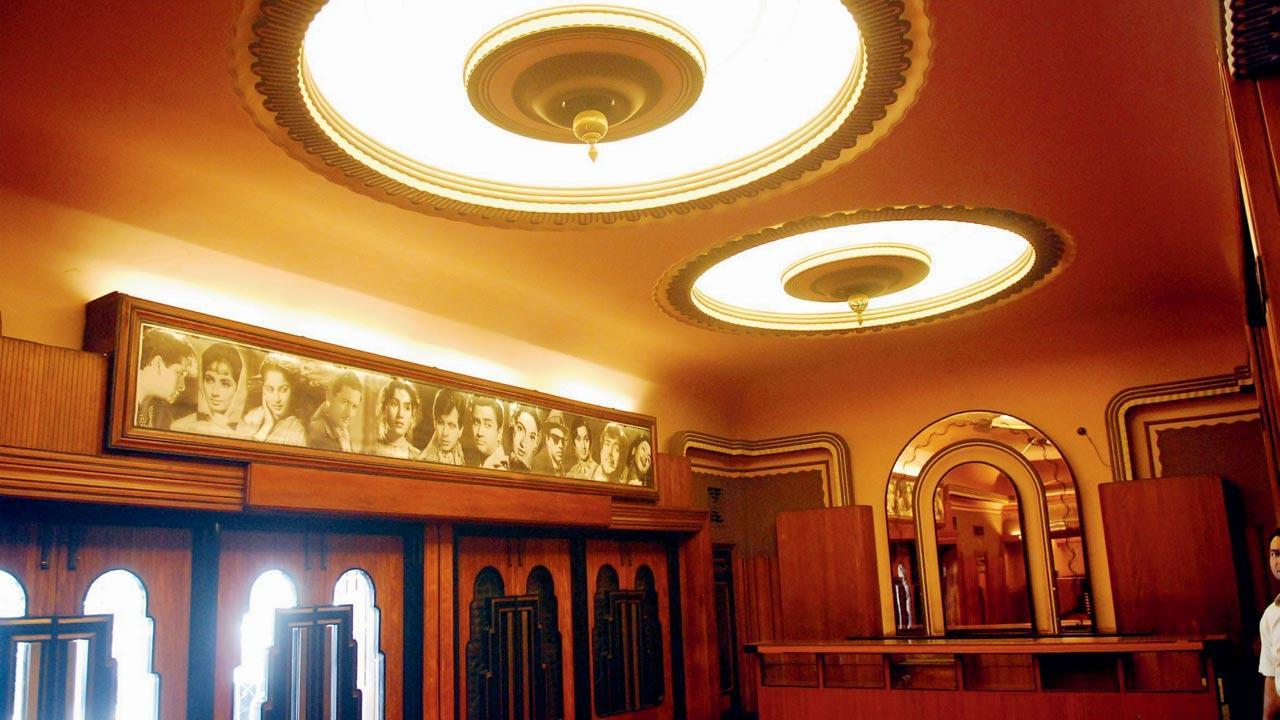
Liberty Cinema in Marine Lines
On its last legs even before the pandemic swept through India, single-screen theatres and its owners from Patiala to Purnea, ghosted by the government and Bollywood, say their era is as good as gone
Jane Borges (MID-DAY; May 9, 2021)
It's been 14 months since the box office at Colaba’s 88-year-old Regal Cinema last opened to the public. Once bursting with a sea of people, hovering around its narrow passageway, snaking into the screening hall, it now sits like an abandoned artefact on Causeway, used only by cops on Coronavirus bandobast duty to catch some shade.
Even when theatre owners were given the green signal to run shows with 50 per cent occupancy in November last year, Regal remained shut. The hope was to start sometime in the new year, when the pandemic had settled. Nothing settled. Not the pandemic, nor the movie business. Saleem Ahmadullah, director of Globe Theatres Pvt Ltd, the company that runs the single-screen theatre along with Capitol at CST, feels that the golden days of the cinema experience, are as good as gone.
The iconic Art Deco building designed by famed British architect Charles Stevens, was India’s first air conditioned theatre. Over the decades, it saw itself through several disruptions—the coming in of cable television, and later, competition from the fancier and technologically-advanced multiplexes. But, nothing put them out of business like the pandemic has. “There is absolutely no hope for Regal now,” says Ahmadullah, the dejection evident in his voice.
When India was in the throes of the first Coronavirus wave in September 2020, Nitin Datar, president of the Theatre Owners Association, in an interview to The Quint, had given a “modest estimate” of 100 single-screen cinemas across India, folding up due to COVID-19. Of these, Dattar had predicted that 25 would be from Mumbai alone. Photographer-cinematographer Hemant Chaturvedi, who visited 655 single-screen theatres across 11 states between 2019 and 2020, travelling in the middle of the lockdown, for a first-of-its-kind documentation of the last remain vestiges of India’s cinematic glory, has a grimmer forecast. In 2019, when Chaturvedi began his passion project, there were 6,300 single-screens in India. When compared with 20,000-odd single-screens in early 2000 and 9,710 in 2009, this number, he says, was alarming. He fears that half of these may bite the bullet sooner than expected. The lockdown, he thinks, has only hastened the inevitable collapse. “With people being incarcerated in their homes for nearly a year, and probably indefinitely ahead [due to the pandemic], everyone has found cheaper alternative ways to access content. My personal opinion is that the cinema halls are not going to exist after two years. They cannot recover [from this].”
While it is assumed that COVID-19 protocols can be followed in large single theatres—where people can easily sit one or two seats apart, as stipulated by the government—what doesn’t work in the favour of any cinema hall, is that it’s a closed space, says Ahmadullah. “Having a large number of people, even if the theatre is just filled to half capacity, in a closed atmosphere, it’s worrisome. It would make anyone uncomfortable.”
Another problem is the lack of recreational spaces within the premises. “Multiplexes are usually located inside a building or mall, which is designed like an entertainment centre. You have shopping stores, restaurants, etc, and so, people end up spending a lot of time there,” he says. Single-screen theatres like Regal, he says, were built with the idea of maximising the auditorium space. “And that’s why the lobbies and passages are narrow—just enough for people to walk in and out.” This also means that if there’s a large crowd inside the premises, it would be hard to follow physical distancing during entry and exit.
Mrunalini Gole, wife of late Nazir Hoosein, owner of another grand Mumbai single-screen, Liberty Cinema at Marine Lines, says that even before the pandemic, the theatre was struggling to make ends meet. “Things were going fine till about 2017. We had a tie-up with Carnival [Cinemas], which was supplying movies to us, and that ensured a minimum income for us, for a couple of years. But, unfortunately, things didn’t work out, and since 2018, we’ve not been doing too well. [The pandemic in] 2020 was the final nail in the coffin.”
Maintaining a structure like Liberty, which not only boasts of a 1,200-seater auditorium, but is an architectural marvel to behold, with opulently designed geometrical ceilings, grandly-lit carpeted stairways and mirrored walls, comes at a huge cost. Chaturvedi remembers when he got permission to shoot inside Liberty, the only request that was made, was to not waste too much time shooting the auditorium. “And that’s because they have 40,000 incandescent bulbs [lighting up the space], and one can only imagine the amount of electricity being consumed. To keep it running even for an hour would cost a lot of money,” he says.
Gole says this is why Liberty decided against opening up, when the lockdown was lifted last year. “There were no big releases [between November and March] that would attract large crowds. Today, keeping Liberty shut is a better option.”
Paying the staff has been another challenge. Most of them lived away from the work address, and were in no position to come to work, since the local trains weren’t open to public until February this year. “We held on to our staff for the longest time, paying only 25 per cent of their [original] salary. Only last month, finally, we let two of them go. If this continues, we may have to retrench a few more,” Gole admits.
In August last year, Central Plaza in Girgaum, formerly known as Central Cinema, shut its doors for good, after a near 57-year run. Gole feels that a similar fate awaits other theatres. “It hurts like hell. Because we are a heritage structure, the government should be helping us nurture and maintain it. There is absolutely no support coming in. If the government doesn’t have any pride in its heritage, then why stick us with such a label. How long can we keep digging into our own pockets?” she asks.
In Bihar’s Purnea district, Vishek Chauhan says he managed to keep his single-screen theatre, Roopbani Cinema, running due to sheer luck. Roopbani, originally built in 1960, is the oldest theatre in Purnea. Vishek, who is the fourth generation, running the family business, took over in 2009. “When I returned to my hometown 12 years ago, there were 60 theatres in the area. Today, there are four or five. I only survived because my competitors dwindled,” says Chauhan, in a telephonic interview to mid-day.
Chauhan renovated Roopbani to give it a multiplex-feel, investing in a Rs 35 lakh 2K projector, and redoing the interiors. But over time, Bollywood has switched to making more elitist content, which hurt single-screens. “Only about five, or maximum 10 films in a year, are universal— the kind of cinema that will be accepted pan-India. Otherwise, Bollywood is a fairly metro phenomenon, catering to the ultra-rich, urban resident. This also explains why they have been co-opted so seamlessly by OTT platforms like Netflix and Amazon. In the process, they have alienated a majority of India’s viewers,” he says, adding, “You need content to run a cinema hall, and if you don’t get the kind of content that your audience wants to watch, how will you run a theatre?”
That most Bollywood heroes are also shunning their stardom for what they call meaty acting roles—with the exception of Salman Khan, who can still spin box office magic with his mass entertainers—means most single-screens in the small towns of northern India no longer draw crowds. “They were already a dying breed, but the pandemic has unfortunately, broken their back. Everyone here is looking for opportunities to get out of the cinema business,” he says. To add to their woes are the distributors, demanding a lion’s share of the box office revenue. Chauhan says that during the pandemic, at least 60 theatres shut down in Bihar alone. “We have had to let go of most of our staff. How can we keep them, when we haven’t made a single penny? Fortunately, I have other business interests, and that’s how we’ve managed to pull through.”
Raghav Gupta, who runs Phul Cinema in Patiala, understands Chauhan’s despondency. The Art Deco structure, built right after Independence, was originally designed by W M Namjoshi, the architect behind Liberty and New Empire in Mumbai, Raj Mandir in Jaipur, and Golcha in Delhi. The building was restored to its original glory in October 2018, after a year-long renovation project, which cost him nearly Rs 5 crore. He had barely broken even, when the lockdown was imposed in March 2020. “We opened twice after that. Once, in November for the Diljit Dosanjh-starrer Suraj Pe Mangal Bhari and then, for a Punjabi film. Both met with disastrous results. Due to the fear of contracting the Coronavirus, most people didn’t dare to enter the theatre,” he says.
Gupta had pinned his hopes on the Salman Khan-starrer Radhe: Your Most Wanted Bhai, scheduled to release on May 13. It would have been a sure shot crowd-puller, if not for the second wave that gripped the country. The film will hit the theatres and ZEE5’s pay per view platform ZeePlex simultaneously. The release model hasn’t gone down well with many film exhibitors. “With this kind of release, we are challenging the basic fundamentals of the business. There is a huge question mark over the existence of cinemas,” he says.
Down south, where the movie industry continues to be star-driven, single-screen theatres have not had to face the kind of hopelessness felt in the rest of India. Unlike Bollywood, the south industry didn’t shy away from releasing their big ticket films during the pandemic. In January, Tamil-language action thriller Master, starring Vijay, released globally. Despite COVID restrictions and 50 per cent occupancy in theatres, it passed the Rs. 200 crore-mark at the box office. Ruban Mathivanan, owner of GK Cinemas in Chennai, which started out as a single-screen hall in 1974 and was converted into a two-screen multiplex in 2016, says that while they managed to cover up their losses with a few-odd releases during the pandemic, it has been the most difficult time to be in the business. “We have had to pay our staff through the lockdown. The government also continued to take property tax and charged us for electricity. There was absolutely no relief. It’s such a shame,” he says.
Mathivanan says that hadn’t it been for Master, and Bakkiyaraj Kannan’s film Sulthan that released in April, theatres in Tamil Nadu would have suffered the same fate as their northern counterparts. The theatres in Chennai shut shop last week, after cases peaked in the city. “We don’t know when we are going to open again. Even when we do, we will have to wait for a big release to help see us through. It’s going to be the same cycle again.”
While many theatres have stopped operations permanently during the lockdown, state laws have prevented many cinema owners from converting their properties into other businesses.
Chaturvedi says that according to the law, a plot that is originally designated as cinema property must have a theatre with 33 per cent occupancy of the original hall, on the premises, even if it is redeveloped. “There are of course, people who have managed to subvert the rule, and demolish the cinema to build a mall,” he says.
“Places like Regal and Capitol come under the heritage tag, and they cannot be demolished.” In smaller towns, many theatre owners have now converted their properties into godowns.
Chaturvedi feels that the one way in which single-screen theatres can overcome this calamity, is by reinventing themselves. “When some of these theatre owners reached out to me, asking for suggestions, I told them that one of the things that they could do, was to repurpose the cinema hall into a pay per view space, where they can make three of four smaller theatres of 30 to 50 seats each inside the venue, and tie-up with some of the leading content providers. So, if a bunch of friends want to binge watch Game Of Thrones on the big screen, with Dolby Digital theatre sound, you can host them,” says Chaturvedi. “The truth is that movies were made for the big screen and not for television. I still remember going to watch Mughal-e-Azam [in 2004], when it re-released in colour, at Gaiety Galaxy [in Bandra]. What was fascinating was that irrespective of the age and gender of the audience, they knew every moment and dialogue from the film. When Madhubala’s Anarkali says, ‘Kaaton ko murjhane ka khauf nahin hota’, and you hear 900 people say it together with her… it is like listening to a Greek theatre chorus.” This, he says, cannot be replicated ever again.

Photographer Hemant Chaturvedi, who has been documenting the last surviving cinemas of India, shares that single screens are down from 20,000 in early 2000s to 6,300 in 2019. “Most will be finished in another two years. They cannot recover from this.” Pic/Suresh Karkera

Vishek Chauhan (in white), says his theatre, Roopbani Cinema in Purnea, Bihar, has survived, because his competitors disappeared. They are already crippled by Bollywood’s new elitist content failing to attract crowds in smaller towns

Raghav Gupta, owner of Phul Cinema in Patiala, renovated the Art Deco structure in 2018 at a cost of Rs 5 crore. They had just broken even, when the pandemic hit. It has only opened twice since March 2020. PIC courtesy/Hemant Chaturvedi
I will discuss the issue of reopening of cinemas with CM Uddhav Thackeray-Amit Deshmukh
8:34 AM

THE TIMES OF INDIA (October 2, 2020)
Mumbai: Theatre owners met state cultural minister Amit Deshmukh on Thursday to lobby for reopening cinema halls soon in line with the Centre’s Unlock 5.0 plan to allow operations at 50% capacity by mid-October.
Deshmukh said he was positive about prospects for reopening theatres by adhering to safety protocols. The minister told the theatre owners he would take up the issue with chief minister Uddhav Thackeray during a cabinet meeting scheduled next week.
“If states like Gujarat, Bengal, Orissa, Punjab are ready to grant permissions, Maharashtra, which is the birthplace of movies, must take the lead,” said Nitin Datar, president of Cinema Owners & Exhibitors Association of India. The state is also among those with the largest number of theatres, which makes entertainment tax a big revenue-earner.
A standard operating procedure drafted by the Multiplex Association of India and submitted to the Centre last month has highlighted how cinemas could optimize show timings and regulate entry and exits to minimize crowding.
Proposals include staggered show slots so that not more than one screen starts a film at a time and only one has an interval at any point. A minimum gap of 15 minutes is also proposed between shows for cleaning and disinfecting while hand sanitizers are to be made available close to the entry of each theatre, apart from putting up small packs for sale.
Paper tickets may also be done away with and bookings restricted to digital platforms. Given risks associated with air conditioning, theatres say they will ensure fresh air intake in ventilation and continuously run exhausts in washrooms and common areas.
The delegation of multiplex and single screen owners and film studio owners met Deshmukh at Sahyadri, the government guest house. Issues related to licenses, power bills and property tax were discussed as the delegation pointed out that the Coronavirus lockdown had resulted in huge losses in the last six months. Deshmukh assured them that the state would try to resolve issues related to licenses and permits on priority.
“The minister has promised to look into our problems and discuss the matter with the CM. Although the government of Maharashtra has said theatres can reopen after October 31, he was keen to see that halls open sooner. We don’t want to miss out on October which is the best season for film releases and a delay will make it harder for cinemas to re-establish. The state has enough regional films to begin with and once it gets rolling, bigger producers will be willing to take a chance,” said Nitin Datar, president of Cinema Owners & Exhibitors Association of India.
The minister agreed that movies are normally slated for Dussehra, Diwali or a Christmas release as these occasions bring in crowds. "So I will discuss the issue with CM Thackeray, deputy CM Ajit Pawar and revenue minister Balasaheb Thorat on how to reopen keeping safety as a priority," said the minister.
-----------------
Mixed feelings in trade, exhibition sector as Maharashtra government continues theatre shutdown till October 31
Uma Ramasubramanian (MID-DAY; October 2, 2020)
The Uddhav Thackeray-led government announced that theatres in Maharashtra will continue to remain shut till October 31. Trade analyst Taran Adarsh believes it is a pragmatic decision. "The government has been supportive of the industry in the past, but it can't take a chance now as the number of cases is on the rise," says Adarsh. He hopes that cinemas across most states will be up and running before the festive season.
However, Manoj Desai, executive director of Bandra's G7 multiplex, does not share his optimism. Disappointed by the turn of events, he says, "Having suffered such huge losses for seven months, each day counts for us. Now, we have again lost 15 days of business. It remains to be seen if they will allow theatres to open in November."
The Multiplex Association of India urged state governments to reopen cinemas to help the exhibition sector recover from the financial impact of the pandemic.
Subscribe to:
Posts (Atom)