Showing posts with label Nil Battey Sannata. Show all posts
Showing posts with label Nil Battey Sannata. Show all posts
Narayana Murthy-Sudha Murty biopic will take its own sweet time-Ashwiny Iyer Tiwari
9:43 AM
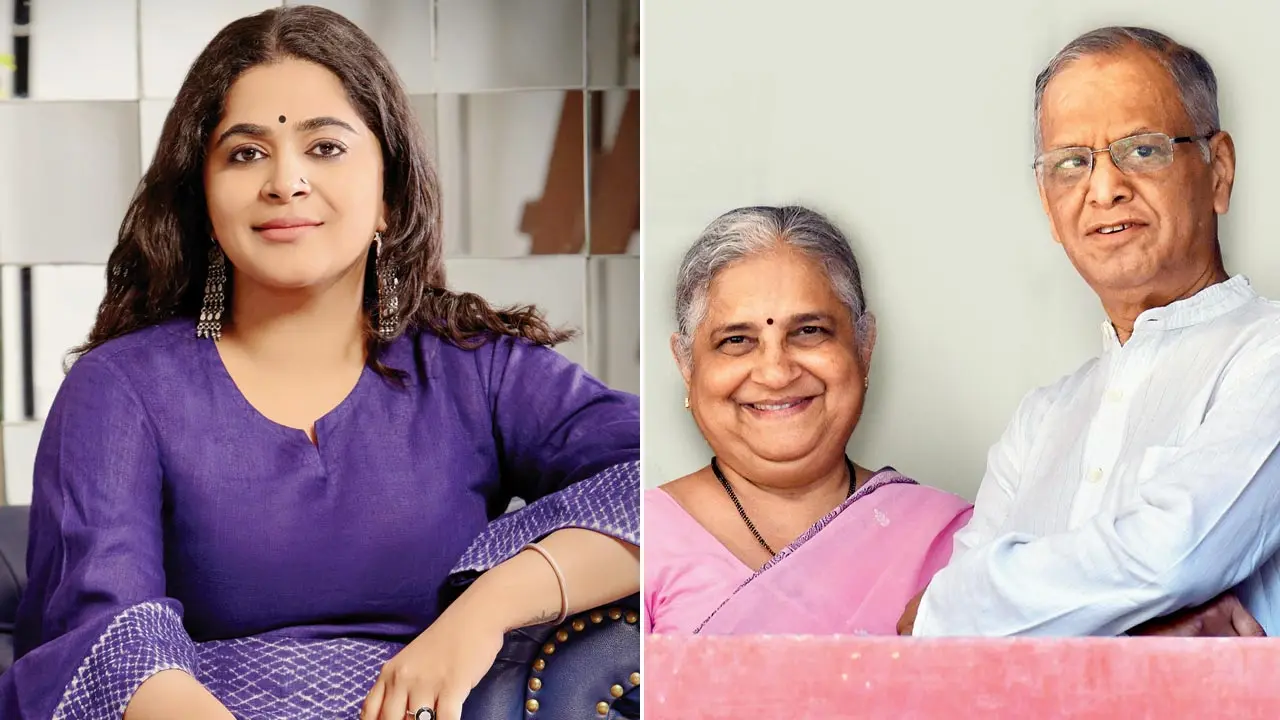
Four years after a film on Infosys founder Narayana Murthy and wife Sudha Murty was announced, director Ashwiny Iyer Tiwari says writing underway; reveals having script discussions with the couple’s son Rohan
Priyanka Sharma (MID-DAY; June 9, 2025)
A lot has happened in Ashwiny Iyer Tiwari’s life between her last directorial venture, Faadu (2022), and now. The filmmaker faced halts on developing projects, and personal loss with her mother passing on. So, when 2025 began, she wanted to do what she knows best — tell stories. The director has been busy scripting the biopic of Infosys founder N R Narayana Murthy, and his wife Sudha Murty, an educator and author.
The project was announced in 2021, but Tiwari says it will take some time before she takes it on floors. “I’m still writing. I do hope it happens, because we have been writing, and it is a complicated story to tell. I’m in touch with the family; I discuss the script with their son [Rohan Murty]. But it will take its own sweet time,” she shares.
Not too long ago, the director was also set to bring Devika Rani, Indian cinema’s first female star, and her filmmaker-husband Himanshu Rai’s love story to screen. Probe her on the movie, and she says, “That is on hold right now. The studio has changed. That is the past.”
The grammar of Hindi cinema has changed in the post-pandemic market. A change for the worse, many believe. Tiwari, a prominent voice of the middle-of-the-road cinema with beautiful films in Bareilly Ki Barfi (2017) and Panga (2020), is displeased with the industry’s obsession with box-office numbers. So much so that she took a step back in the interim.
She rues, “Did anyone ask me how much Nil Battey Sannata [2016] made at the box office? We never discussed that. Javed ji [Akhtar] once told me no one remembers the box-office numbers of the movies that people talk about. That’s because we looked at cinema as good cinema; it was a director and writer’s medium. That’s why we had amazing stories. In Tamil cinema, it’s there even today. But [in Hindi cinema], earning Rs. 100 crore became the benchmark of a good director.”
Today, box-office numbers and franchises are being pursued instead of original stories. She reveals, “I have been told so many times to make Bareilly Ki Barfi’s sequel. But then, you’re making a film just so that you can tick some [boxes]. It’s difficult to convince me to do that,” says Tiwari, who is currently shooting for a web film.
I don’t think 100 crores can be the new benchmark for every film, especially post pandemic-Ashwiny Iyer Tiwari
8:21 AM
Madhureeta Mukherjee (BOMBAY TIMES; February 23, 2023)
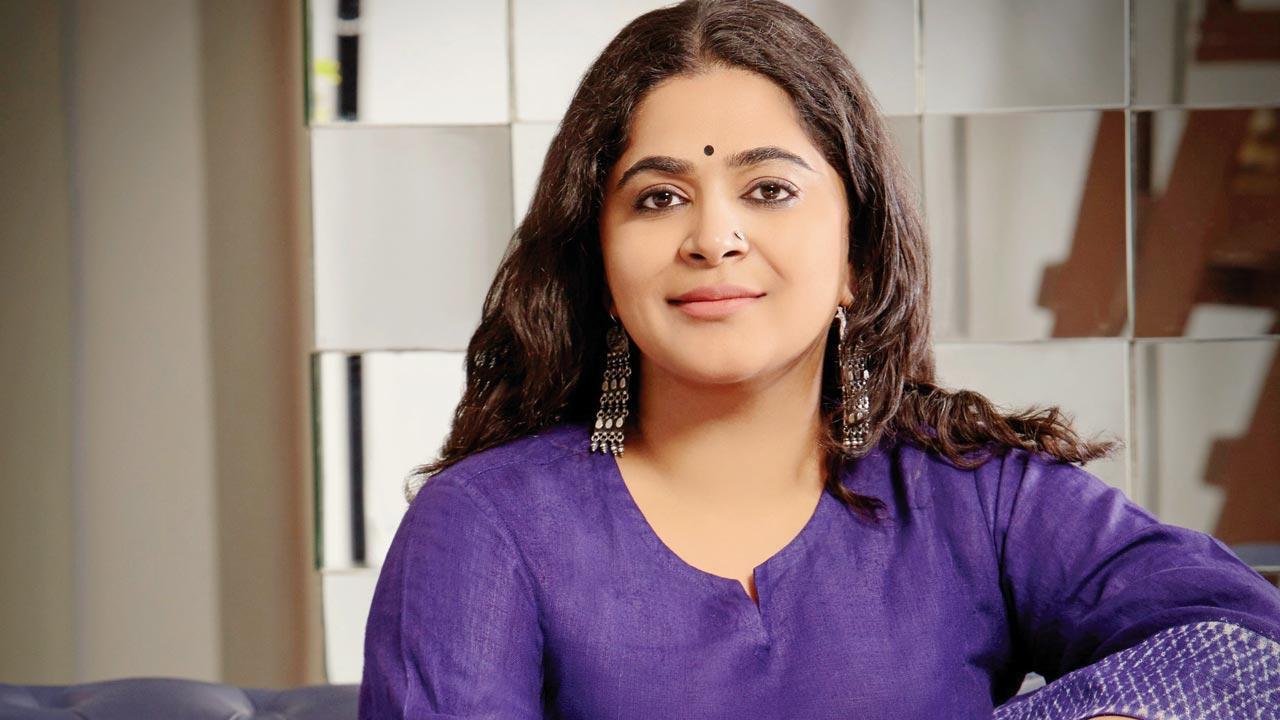
She is a woman of many talents and interests. Telling stories is what fuels her passion, and to her, the medium doesn’t matter. Her films (Nil Battey Sannata, Bareilly Ki Barfi and Panga) have a lot of heart, and brim with spirit. She lets her woman protagonist lead the way, while giving ample space for the men in the plot to shine a fine feat. Filmmaker, author and producer Ashwiny Iyer Tiwari, in a conversation with us, talks about her process and purpose, as a filmmaker. And she knows when to turn off the noise around her and focus on work and conversations, like these. Read on…
Films like Nil Battey Sannata, Bareilly Ki Barfi and Panga — have a lot of soul. The characters in these stories seem real and show a lot of finesse in the way they deal with situations in their life. Is it because the characters you present are inspired by real people and real-life experiences?
Yes, they are. My advertising background helped me see that there is a world outside our world. Everyone has ambitions, someone’s ambition could be to earn Rs 100, while someone else’s could be to see their daughter speak English and move to a big city. I wanted to see stories of people across our country, stories of people sitting in Bareilly, Lucknow, Aurangabad and places outside the big metros. We are an ambitious country and I feel that with the changing dynamics of the country, we need to view things differently. It is also about telling our stories to the world. When I made Bareilly Ki Barfi, my contemporaries from my advertising days said, ‘Yaar, tune ghar ki yaad dila di.’ However far we go, we want to go back to our core and roots.
Is there a bit of you or a huge part of you in all your stories?
I would say, yes. I think it’s the case with every filmmaker, hence, everyone has their own style, which reflects in their movies. As a filmmaker, your voice is what people come for. Maybe, I can change my genre, but not my voice.
Do you believe that the female gaze, when it comes to certain subjects, makes a difference? Or when it comes to art, it is gender-neutral?
I think the male gaze and female gaze is very important. Both Nitesh (Tiwari, husband) and I are directors, and of course, we discuss our work, read each other’s screenplays and write for each other. We see a story from both sides, objectively. If you are telling the story from the women’s point of view, then the female gaze works. Even for the web series that I directed, Faadu – A Love Story, the actors Pavail Gulati and Saiyami Kher told me that, ‘You don’t realize how sensitive you are to certain things’.
Are Nitesh and you each other’s toughest critics?
Yes, very much. We know each other’s strengths and are brutally honest. We have worked with each other for really long. We also know when to draw the line and back off, and that is also important. Our end focus is the same, but our way of filmmaking is very different.
With huge consumption of content across digital platforms, as a storyteller, is there anything that has changed about the way you set out to write, create and produce?
A lot changed because of the pandemic and given the consumption of content across genres and languages on OTT platforms. I think telling a story is like having a relationship, you have to keep doing what you think is correct. As storytellers, we need to tell stories that we believe in, but we also need to be mindful of the changing times in our society. I am not saying that we have to think of numbers while writing a film, but we should know what audience we are writing for.
One way of looking at the current scenario (in the Hindi film industry) is that of crisis, a state of panic, where we don’t know what kind of content will drive audiences to the theatres. The other way of looking at it is that it’s an exciting phase where we can unlearn and reinvent. Your production house Earthsky Pictures is creating diverse content (recently released web show Faadu, upcoming films like Bawaal and the Tarla Dalal biopic, among many), so what are your thoughts on this?
I don’t think we are the kind to panic, but we want to tell stories that we feel can connect with an audience, while aligning with good partners. No one starts out saying that they want to make a bad film. What is happening currently is no one’s fault. It’s like a cricket match — we thought that our favourite player would play well today, but it wasn’t a good day for him. I would definitely agree that the economics of making a film has to change. Somewhere, we were living in a different world where we felt that to make a good film, certain elements were required, but that’s not entirely true. During the pandemic, we weren’t allowed to work with a big crew, it was tough, but we managed. I think that a film does not belong to just the director and producer, hence, every department needs to think about the economics of the movie, so that at the end of the day no one feels the pressure.
The film industry needs to adapt quickly and constantly, the narrative is fast changing, and we need a lot of self-introspection. Do you agree?
At one point of time, we were telling slice-of-life stories and small-town films were working. Maybe, now we have grown beyond that and there are new ways of telling stories. Lots of unconventional stories are being told, and also a lot of technology has come into play and changed the way we are making films. It helps in the way the audience sinks into a story. Yes, it’s important for us to adapt as filmmakers and understand the language of the audience. I don’t think 100 crores can be the new benchmark for every film, especially post-pandemic. Not all storytellers are making big films or films with established stars or have the kind of budgets that some do. I feel it is important to encourage more storytellers to come forward, but we can’t have a young director worry about box-office numbers. That can’t be the barometer. Today, everything is in the public domain — like a film’s budget and BO numbers - and we all know that when a film features big stars, it’s a high-budget film. But all filmmakers and producers are different, and everyone can’t make the same kind of cinema.
You have told stories across formats — ads, short films, feature films, web series and novels. In a world where we are going more and more short form (even in storytelling), and people have a short attention span, how does it feel going back to writing a book? They say writing is a very lonely job. Is that space calmer and less noisy?
I love the space of writing a book. Social media has taken up a lot of our life. As creators, we need to sacrifice a lot of things too. Just like an athlete, who knows that when a game is coming up, and they need to cut off. We have to be very clear when to be out there and when to step back. We all need gratification, and for me, the most important thing is that people may not know me, but they know of my work. I am well aware that because I am doing good work and my films are out there, I am looked at. Tomorrow, if I don’t have stories to tell, no one will look at me. I am very passionate about my work, but I can detach. I have already started writing my next book, and at some point, I will go off social media too. It is important for us as directors to understand what our purpose is. We can’t be everything.
Women in your movies are seen pushing themselves beyond what they see as their limitations, like Nil Battey Sannata’s Chanda or Panga’s Jaya. Do you ever feel you have to push yourself harder, beyond your limits, to play the multiple roles that you do — director, writer, producer, mom, homemaker?
Yes, I see myself doing that as I believe that we are more than what we can do. Often, we tell ourselves that we can do only this much, but when we look back, we realize that there is probably a lot more we could have done. I feel these tags that we give ourselves — writer, filmmaker, author — are unimportant. We are all telling stories. We take ourselves too seriously, we don’t need to. I have realized that the moment you stop giving yourself these tags and do whatever you like, it’s liberating. I am a storyteller, and I can tell a story in any medium.
Ashwiny Iyer Tiwari plays with music a lot on set, which is interesting-Saiyami Kher
8:31 AM
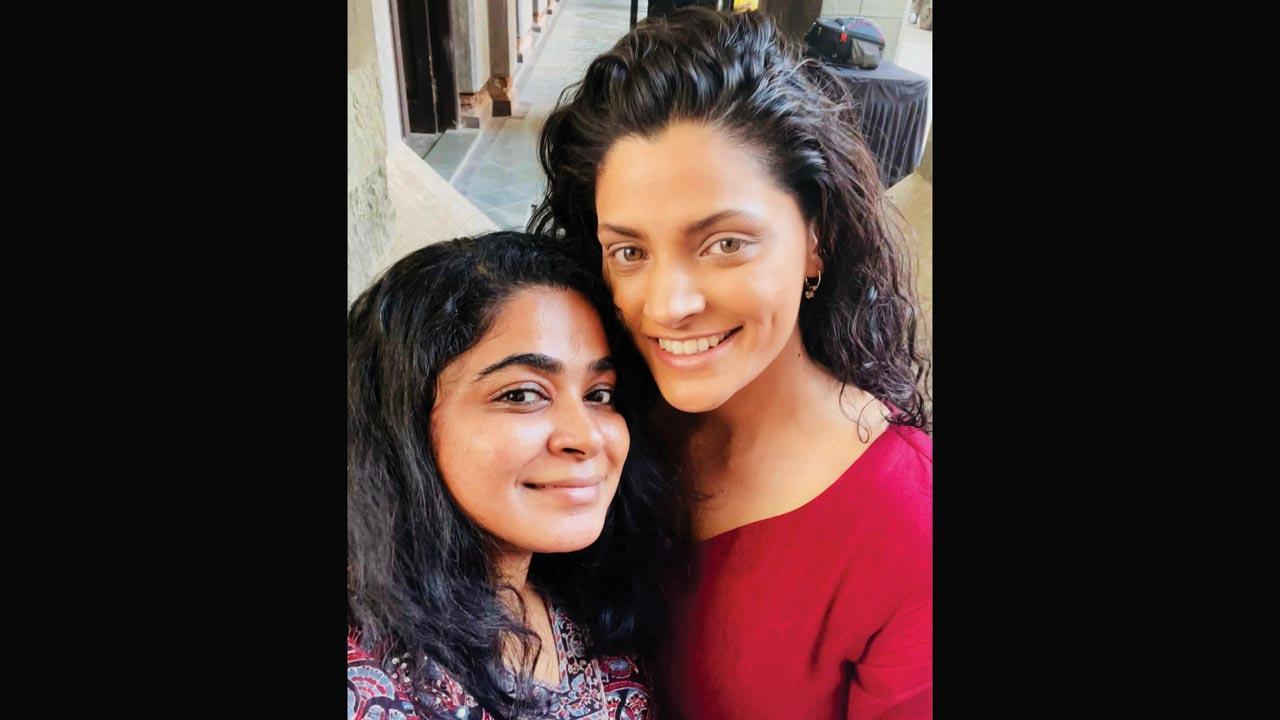
Saiyami, who is impressed by Ashwiny’s knack for developing strong women protagonists, thrilled to team up with director on Faadu
Mohar Basu (MID-DAY; January 25, 2022)
Little is known about Faadu, which the makers describe as a serendipitous love story between two people who are poles apart. For Saiyami Kher, the project boils down to a singular factor — Ashwiny Iyer Tiwari. “They say what’s meant to be, will always find a way. That’s how I feel about Faadu. Collaborating with Ashwiny was on my to-do list. She has done spectacular work with Nil Battey Sannata [2016], Bareilly Ki Barfi [2017] and Panga [2020]. I feel assured that I’m in safe hands,” says Kher, who leads the cast of the Sony LIV web series along with Pavail Gulati and Abhilash Thapliyal.
The director took the web series on floors last November. Having completed a schedule, Kher says that working with Iyer has been everything she dreamed of. “The world of this series is poetic and rooted. Ashwiny ma’am always has such strong female characters in her projects. I’m grateful she has given me the responsibility to play Manjiri. She gives a lot of attention to small details and aesthetics. She plays with music a lot on set, which is interesting,” says the actor who will kick off the next schedule in February. Besides the show, Kher will be seen in Tahira Kashyap’s upcoming movie Sharmaji Ki Beti.
I am not anxious about how the literary circle will perceive my book-Ashwiny Iyer Tiwari
7:54 AM
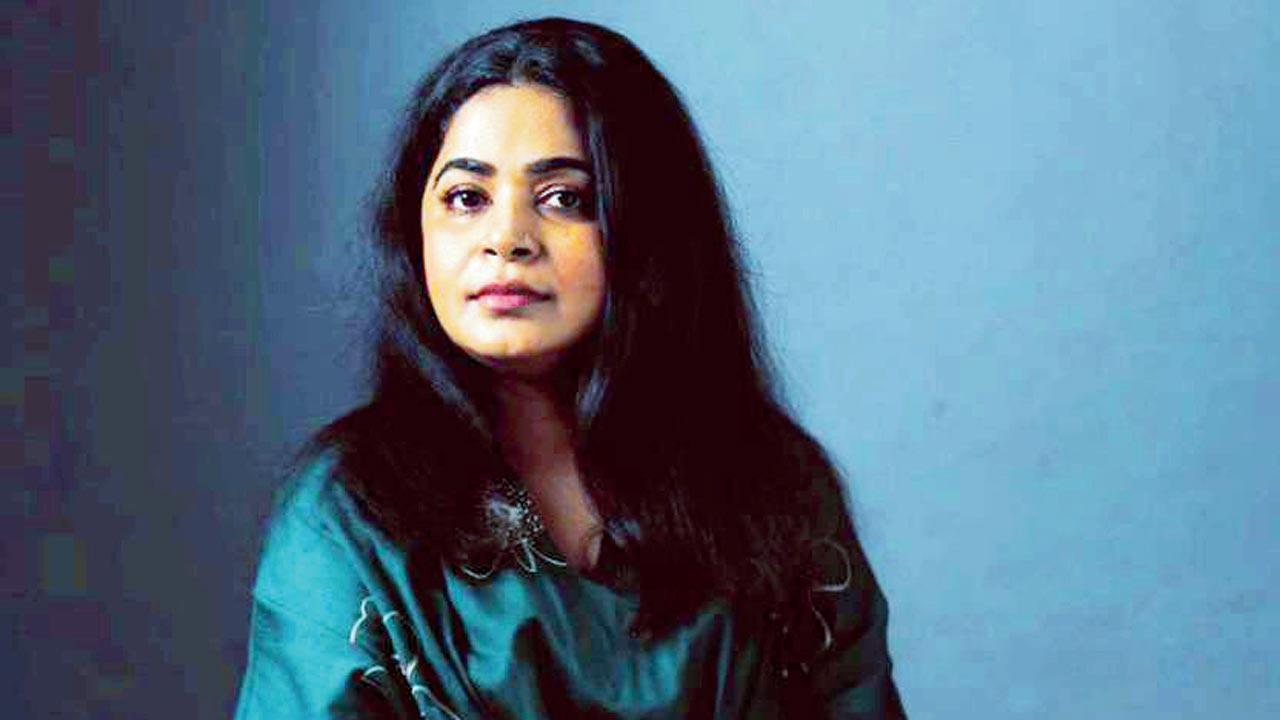
Filmmaker and artist Ashwiny Iyer Tiwari, who is making her debut as a novelist, on why good storytellers don’t carry baggage
Jane Borges (MID-DAY; July 25, 2021)
Ashwiny Iyer Tiwari is two minutes late for our scheduled Zoom call, but she is already apologising profusely. “I got the passcode wrong,” she tells us. The artist and filmmaker, who has amassed wide acclaim for her films, Nil Battey Sannata, Bareilly Ki Barfi and Panga, spends the next 10 minutes talking about writing, journalism, and how she religiously follows certain bylines in the newspapers. “I just love certain writers. I am not the quintessential Bollywood director; I am very away [from that]. But, I’m glued to everything [happening around me],” she shares.
It’s only when we flash a book at Tiwari that she laughs, apologizing again—this time for digressing. The cover of the book we are holding shows the flower of a cannonball tree, its petals layered and exposed, like the protagonist Oorja of Tiwari’s debut novel, Mapping Love (Rupa Publications), which releases this week.
The book, which Tiwari started writing three years ago, was completed only last year, during the lockdown. “The pandemic came as a surprise to all of us. One could have either cribbed about the situation [the lockdown], or tried to work around it. I chose the latter,” she says.
Tiwari still had about nine chapters to write, when she went back to it. “I realised that this was the only thing I could do for myself in the given circumstances. Of course, we had to keep praying for the wellbeing of those around us. But, there were a lot of things that were not in our control. So, keeping that in mind, I decided to cut off from everything and focus on my writing. I would sit down daily from 4 to 7 pm, and just write.” Her manuscript was ready by January this year, after which work on the edits began.
The novel tells the story of Oorja, who reeling from the loss of her mother—the one person she really loves and whose funeral she cannot attend—decides to return to India from the US, to mend her broken relationship with her estranged father, only to learn that he is missing. With a crumpled note of his in hand, she sets out on a long sojourn, from Varanasi (Benaras) to a little town near Corbett National Park, and later to Delhi, to encounter more love and loss on the way. “I am quite poetic and emotional by nature. Sometimes, we carry emotions inside us, that cannot be explained. I wanted to understand this whole idea of love, by mapping the feeling through the different characters in my story,” says Tiwari.
Mapping Love began with naming the protagonist Oorja, which means energy that is exploding. Tiwari says it gave her the head-start. “For me, it’s very important to name the character before I do anything else. Once I do that, I realise that a lot of things unveil on their own.”
Her Oorja is introspective, philosophical, and mostly, forgiving. The journey she undertakes is a spiritual one, but also, one that is filled with a lot of mystery. Tiwari’s plot has several knots, which only come undone in the end, putting the actions of her characters into perspective.
She admits that her novel cannot be pigeon-holed into a particular genre. “I never follow rules, especially when it comes to my creative work. I like challenging formats. When I made Nil Battey Sannata [2016], it didn’t seem correct for the business of movie-making. It was the story of a mother and child, and showed an economic background that we are not used to seeing in cinema. But, it did wonderfully well. At the time, I was asked, what genre does it belong to, and I coined the term mid-stream cinema,” she remembers. “The truth is, I never set out thinking about the genre. It doesn’t happen that way for me. Unless, of course, you are a novelist who writes only a particular kind of book.”
But, spirituality she feels is an over-arching theme, which consumes most writers. “Even [Haruki] Murakami whose works have a lot of magic realism, has characters who look inward. His lines, ‘And once the storm is over, you won’t remember how you made it through, how you managed to survive. You won’t even be sure, whether the storm is really over’ to me, is very spiritual.”
Tiwari, who is also an award-winning advertising professional, says the craft of writing caught her interest five years ago. “I started by writing poetry. But, even an artist, who has lived in drawings and paintings, with a specialisation in typography [she is a gold medallist in Commercial Arts from Sophia Polytechnic], the written word has always attracted me.”
One has to keep evolving as a storyteller, she feels. “What is important is that you don’t judge yourself and worry about how it will turn out. I am not anxious about how the literary circle will perceive my book. I don’t carry baggage, and that’s something I have followed with my other work, too. I just want to keep experimenting,” she says, asking, “What’s the worst that can happen?” You will never know, until you have tried.
For me, Kangana Ranaut is a fantastic actor and I don’t care what the world has to say about her-Ashwiny Iyer Tiwari
7:59 AM

Rachana Dubey (BOMBAY TIMES; January 18, 2020)
 Director Ashwiny Iyer Tiwari, who won an award each for her first film Nil Battey Sannata and Bareilly Ki Barfi, is geared up for Panga, headlined by Kangana Ranaut, Richa Chadha, Jassie Gill and Neena Gupta. Somewhere between the pre-production work on an upcoming biographical drama and scripting for two other projects, the filmmaker spoke to BT about her equation with her lead actress and why she’s eager to roll out several stories at one go, among other things. Excerpts:
In recent years, the audience has been more drawn towards great stories over star-led fare. While it was a shift that was waiting to happen, it has now put more onus on filmmakers to deliver compelling content with every film...
I don’t give in to pressures. As a technician, I see this going in two directions.
Our country, with all its diversity, encourages a wide variety of films to be made. We’ve seen a steady rise in the number of avenues of content consumption. Directors and writers have become more visible, thanks to social media. The younger audience now makes a note of the kind of work a particular filmmaker puts forth and that helps them decide whether they want to watch their next film or show. They somewhat know what to expect, which can have positive and negative outcomes.
The positive is that there is an audience waiting to consume a filmmaker’s creation. The negative outcome is that as a filmmaker, you may never find the room to experiment. If I try to make something completely different from what I have done so far, even with my best effort, I might not be able to please my audience. They might not accept my experiment. So, it’s a tricky space for filmmakers to manoeuvre. As storytellers, there is a part of our soul in each of our films. While Nil Battey Sannata, Bareilly Ki Barfi and Panga are very different films, they are driven by relationships and pure emotions.
Panga is also by far your most ambitious, large-scaled film...
For me, all my films are like my babies; equally dear to me. Now, whether you have one baby or many, the pain of delivering them and the joy you feel when you see their face for the first time is always the same. Today, when I hear positive feedback for Panga’s trailer, it validates my belief in what I had started out to do. I needed that validation because it’s taken a long time in the making. I wanted to be reassured that the emotions in this film will stay with people for posterity.
It was also reported that you both entered into a legal arrangement which assures no interference in your work from her end. Is that even possible?
It’s so bizarre and false! I don’t know if such a thing even exists. I was so upset when stories like those were doing the rounds because somewhere, it just becomes ingrained in people’s heads and they form their opinions on the basis of such stories. For me, Kangana is a fantastic actor and I don’t care what the world has to say about her. Every relationship works on mutual trust and respect. For me, an actor and a director’s relationship is one that lives beyond a film. It was important that Kangana trusts my instincts and the fact that I will never speak about her behind her back. She trusted me. And so, we could never stop talking to each other and we never communicated through other channels. We’ve been sailing in this boat for two years and any insecurity on either side would have rocked the boat long ago. Also, I believe that a talented individual will have questions and ideas. There’s no room or need for ego here. Yes, as the director, this film is my vision, but my crew and cast partnered with me. Kangana is an intelligent, disciplined girl. Such people are partners, not competitors. If she’s shining as Jaya, it’s our effort that’s being appreciated. Except for the kabaddi scenes, she didn’t even watch her scenes on the monitor. That’s trust, not insecurity, right? On my set, I’ve taken inputs from Rajkummar Rao, Ayushmann Khurrana and Swara Bhasker. So, why not Kangana? If their inputs were not interference, how is hers? This chatter needs to stop.
Your set was full of women known for their strong portrayals on screen — Kangana, Richa Chadha and Neena Gupta. How was the energy off camera?
I really enjoyed what Richa, Kangana and Neena ji did with their combination and individual scenes. They added such value to their characters that I didn’t have to make an effort to break the ice anywhere. I treat my actors like human beings. My equation with them is like a friendship or marriage where we both have to be with each other and make things work. Everyone has flaws but if you adjust and try to understand each other’s point of view, you can find your way with everyone and the process will also be a lot of fun. Actors add so much value to a story. The problem arises when you feel that no one other than yourself can add value to your film. None of my actors made impromptu improvisations without checking with me, and all of them had suggestions. We mutually respected each other’s spaces. I enjoy working in a team and as a team, and that is possible when you don’t let ‘free advice’ colour your thoughts. An egoless, open dialogue always helps.
While you were working on the post-production of Panga, you started work on Narayana and Sudha Murthy’s biographical drama apart from planning a documentary and your first with Ekta Kapoor. That is a lot on your plate…
I see people at the age of 60-65 happily working, so why should I crib about doing things I love? We have one life, and we need to make the most of this time. It’s the sheer joy of uplifting souls through stories that keeps me on my toes. Also, any story, from conceptualising to its release, takes at least nine months. In case of Panga, it’s taken more than two years. There are so many wonderful stories waiting to be told and so much talent that needs to be brought to the fore. You will never find that ideal right time for something that springs from the heart.
Given that your last two films won you awards, and Bareilly Ki Barfi was also a box office success, do you feel the pressure to live up to your own benchmark or even surpass that?
Box office matters to every filmmaker. As a creator, I feel responsible for my producers’ time and money, but I make films for posterity and to make the audience happy. It doesn’t matter if people don’t know or remember me in the future. What matters is that they should remember the characters that were created through my stories.
There were rumours and that Kangana and you didn’t get along too well at the outset. Any truth to that?
It’s nonsense! I didn’t let others’ baggage of thoughts or opinions cloud my vision, especially when it came to Kangana. I remember the day I shared the script with her (April 14, 2018), she gave an instant nod. She was deeply involved with Manikarnika - The Queen Of Jhansi at that time, and had long, tiring days, but she was attentive and receptive to my script. From that day to now, it has only been a pleasure working with someone like her who brings a lot to the table, and at times, far more than what you’d expect. She chases perfection and gets it, too. Kangana and I started off as acquaintances, and today, we are close friends who are transparent with each other.

I don’t have much of a personal life-Swara Bhasker
7:59 AM

Swara Bhasker reveals she has her plate full. Beyond acting, she is busy penning scripts for two films and is also turning producer
Pooja Sharma (HINDUSTAN TIMES; October 11, 2019)
After completing 10 years in the film business, Swara Bhasker is not only grateful for all the opportunities that came her way but also, aims to raise the acting bar. “I found love in equal measures from the audience and critics, and that’s been the most fulfilling part for me,” says Swara. Excerpts from an interview.
What are the perks of your job?
The most fulfilling part about being an actor is the number of lives we get to live via the parts we play. How we get to relive precious emotions of life, and how, sometimes, we get to experience things that we normally wouldn’t get the chance to. That and,of course, other people work hard to make you look good and glamorous all the time. (laughs)
Which films have helped shape your career?
Be it Payal from Tanu Weds Manu (2011), Bindiya from Raanjhanaa (2013) or Chanda from Nil Battey Sannata (2016), each of the characters were accepted wholeheartedly and what more can an artist ask for. It really has been a win-win situation till now.
Work wise, how would you like to push the envelope further?
I’m playing a man in a film next year. Every time, I’m playing a part that is alien to me or I’m part of a story set in a world I don’t know, I’m pushing the envelope further for myself. Also, I’m turning a film producer this year, besides writing a script and working on a second one, too. I’m diversifying beyond acting. So, there’s acting in two films, the scripts of which I’ve written like I said, and I’m producing one of them.
Have you been able to maintain your personal life?
Currently, I don’t have much of a personal life and I’m glad for all the work I can do. But I’m a very family-oriented person and I make sure that I spend enough time back home with my parents and old friends, who are like family. Ultimately, family is what makes it all worthwhile.
I directed a tapori version of Mughal-E-Azam when I was eight-Nitesh Tiwari
8:22 AM

Filmmaker Nitesh Tiwari traces his cinematic journey as he gets ready to revisit the 4 years he spent at IIT with his upcoming directorial
Avinash Lohana (MUMBAI MIRROR; July 30, 2019)

He acknowledges that there’s something about campus life which has fascinated him since his days at IIT Powai from where he acquired a BTech degree in Metallurgical Engineering. “Back then, I never thought I’d walk this path, but once I did, I knew I wanted to share those four years with the world because in college, you make friends with people from different walks of life who remain your friends for life. However, I didn’t want to make a film which was a random assortment of funny episodes, without purpose, but once I had a story, I knew this would be my next film,” he says.
Nitesh admits that the names of his characters including Anni (Sushant), Maya (Shraddha), Sexa (Varun Sharma) and Derek (Tahir Raj Bhasin), were those of his batchmates, juniors or seniors, but is quick to add that he has not modelled them on any one person, rather they are a mix of many. However, there isn’t much of him in any of these characters as he was always an ‘observer’.
“But I got involved with the cultural forum at IIT and realised that I can write and that what I was creating was liked by people. I don’t remembering studying all night for my semester exams, but I used to stay up for my plays,” laughs the Dangal director who helmed his first play when he was studying at a convent school in Ganj Basoda, Madhya Pradesh. “I directed a contemporary, tapori version of the Mughal-E-Azam when I was eight. It made people laugh and won me a prize.”
Back in the present, his Chhichhore is heading for a clash with Saaho, the big action-thriller, featuring Prabhas and Shraddha, on August 30. Buzz is, they could shift the date. “That’s a call for Sajid (Nadiadwala) sir and Fox Star Studios to take, who are far more experienced. Whatever they do will be the best for the film,” Nitesh keeps it short.
The filmmaker reunited recently with his Bhoothnath Returns actor Amitabh Bachchan to shoot the Kaun Banega Crorepati teaser, an annual event since the last nine years. “Mr Bachchan is on every director’s wish-list. The day I have something which needs his genius, I will go to him. Ditto with Aamir sir,” he says.

His next is the Ramayana, a live action Hindi, Tamil, Telugu trilingual for Madhu Mantena, Allu Aravind and Namit Malhotra,which he is directing with Mom filmmaker Ravi Udyawvar. “We want to present something which we can leave for generations of cinegoers,” Nitesh avers. But doesn’t helming a Rs 500-crore project scare him? “If you are scared that’s a good sign, it stops you from being complacent and motivates you to do better,” he reasons, refuting speculation that he’s roped in Ram Charan and Nayanthara to play Ram and Sita.
 He has also done the additional screenplay and dialogue for his filmmaker-wife Ashwiny Iyer Tiwari’s (left) Kangana Ranaut-starrer Panga. “Her films have to go through me, I have to have my say at least in the writing. But even when I am writing for Ashwiny, I give her the respect a director deserves. As a writer I have strong opinions, but I am also aware she can throw them out of the window,” he laughs, pointing out that his wife is a very different filmmaker from him, so she doesn’t need to follow his advice. “Mostly, she doesn’t and I’m glad she doesn’t listen to me because I love the way Nil Battey Sannata and Bareilly Ki Barfi turned out,” he signs off on that note.
Log subah uthke bhajan sunte hain, main Twitter pe gaaliyan khaati hoon-Swara Bhasker
7:45 AM

Neha Choudhary (BOMBAY TIMES; April 21, 2019)
Feisty and outspoken, Swara Bhasker spoke about how she landed up in Bollywood, working with Salman Khan and more at an event in Jaipur. Swara stated that being in Hindi films has been a humbling journey because she had arrived in Mumbai with ‘intellectual arrogance’. “Bollywood made me realise that every profession has its own rules. You just need to learn how to play your game. And it’s better to question those rules, however abrupt they are when you have achieved something,” she said.
Her role in Veere Di Wedding (VDW) was considered bold by many. But Swara thinks otherwise. “I have never understood what bold means. For me, doing Nil Battey Sannata was a bold choice as I played a de-glamorous mother of a 15-year-old. VDW was an obvious choice. Kaun nahi karega Sonam and Kareena ke saath ek commercial film?” Swara asked.
‘INITIALLY, BEING TROLLED WAS HURTFUL’
The actress has been vocal about her opinions on social media and as a result, has often been targeted by trolls. Opening up on that, she said, “I think I am one of those few celebrities who have verified trolls. Jaise log subah uthke bhajan sunte hain, main subah uthke Twitter pe gaaliyan khaati hoon. Initially, it was hurtful. It almost felt like that the person is standing next to you and abusing you. Now, I am used to it. I don’t read my mentions. Kuch dikh gaya toh dikh gaya, otherwise I have stopped reading my mentions.”
‘AFTER TANU WEDS MANU, I HAVE WORKED FOR Rs 1000 PER DAY’
On her mantra to survive in the film industry, Swara shared that she has never said no to work. “After Tanu Weds Manu (TWM), I was sitting at home thinking that sabko kaam achha laga, ab aage se kaam aayega. I didn’t know that you are supposed to hire managers, PRs, stylists, etc. So, no one was calling me. It took me a while to understand the game. But I decided not to say no to work. After TWM, I have worked for Rs 1000 per day. The other thing that I did was to take risks and it worked in my favour. I did every single role that people advised me not to do. People told me, if you want to be a heroine, don’t play the heroine’s best friend. In TWM, I played Kangana Ranaut’s best friend. Nobody wanted to be Salman Khan’s sister. I played Salman’s sister in Prem Ratan Dhan Payo (PRDP). And I had Nil Battey Sannata coming up after PRDP. I took that risk and it worked,” she said.
‘I LOOK AT NEPOTISM AS HOW YOU WOULD LOOK AT CASTE AND CLASS PRIVILEGE’
Being an outsider in Bollywood, Swara was asked about her opinion on nepotism. “We are lying to ourselves if we say it doesn’t exist. I think Bollywood is a very close-knit, relationship-based industry. There are insiders and outsiders; I am an outsider. Nepotism is not a question of talent. What people are pointing out is that the star kids have a certain kind of access or privilege which I or any other outsider will never get. What Sonam (Kapoor), Sara (Ali Khan) or Alia (Bhatt) have achieved in one year, it took me years to achieve. And one must not negate that privilege. I look at the whole nepotism debate as to how you would look at caste and class privilege in society,” she said.
I was one of the thousands who come to Mumbai with the dream ki Shah Rukh Khan banna hai-Swara Bhasker
11:10 AM

Riya Sharma (BOMBAY TIMES; February 19, 2019)
Actress Swara Bhasker, a Delhi University (DU) alumnus, was recently invited to speak at Shri Ram College of Commerce’s Business Conclave. From disregarding the standard advice given to aspiring actresses, to balancing her principles with her profession, Swara gave examples from her life to tell students not to live their lives only according to formulae or calculations.
‘FORMULAE ARE NOT ALWAYS RIGHT’
Swara began by telling the students that she wouldn’t lecture them, but could share lessons that she learned in the industry. “I can share with you lessons as somebody who has been a part of DU and now works in the film industry. What I’ve learnt in this 10-year journey is that formulae are not always right. My career has been a testament of going against all the advice that aspiring heroines are given,” she said, adding, “I was told that you have to be launched by big directors, and I was like, ‘Par mere papa ya mummy nahi hain Bollywood mein’.”
Swara said, “I was among the thousands of people who come to Mumbai with thedream ki Shah Rukh Khan banna hai. I was also told that if you want to be a heroine, don’t start your career with roles of the heroine’s best friend. But Tanu Weds Manu gave me a break. Everybody advised me to not do Prem Ratan Dhan Payo kyunki Salman Khan ki behen ka role kaun karega, and I thought that on Friday, more than half of the country will have watched the movie and by Sunday, a good percentage of them will remember my face because I was at Salman Khan’s side.”
The actress added, “Every heroine in her 20s is told that she must do young roles. When I got the script of Nil Battey Sannata, I thought they were offering me the daughter’s part, and I was like, ‘Waah, main 15 saal ki lagti hoon!’ But when they said you are the mother, I realised that it was a challenge and I did it. Everybody will tell you that actresses are supposed to be nice, sweet and good looking, but in Anaarkali Of Aarah, I play a badass, bad-mouthed, ‘badchalan’ street dancer. I’m not saying what I did was great, but I know that the advice people were giving me did not factor in the fact that Bollywood was changing during the years I was making my career.”
‘LEARNED TO BALANCE MY PROFESSION WITH MY IDEALS’
Swara added, “The other thing I learnt in Bollywood is that we have to choose our patterns. I had to do that in different ways. I was like, looks are not important, you cannot objectify women. Why should we wear make-up, why should we wax our legs? But look at me now, I’m wearing heels, which is one of my biggest accomplishments in Bollywood. But once when I was cribbing to my mother about all this, she said, ‘Beta, if you want to be a part of this industry, stop bitching about it. If this is the game and these are the rules, does it not make sense to play with those rules till you reach somewhere, and then try to change the rules? At least people will listen to you.’ So I learnt to strike a balance. If actresses are supposed to look nice on red carpets, then I will make that effort. I’ll find those stylists to make me look like that so that after two-three films, when I speak to an audience like you guys, I can tell you that it is all superfluous.”
Why create stories when there are none?-Ashwiny Iyer Tiwari
7:01 AM

All set to kick off her third directorial with Kangana Ranaut, Ashwiny Iyer Tiwari discusses the importance of making one’s own judgements, creating a unique space and challenging oneself
Roshmila Bhattacharya (MUMBAI MIRROR; November 8, 2018)
 On November 11, Ashwiny Iyer Tiwari’s third directorial, Panga, featuring Kangana Ranaut, kicks off in Bhopal. She has fleshed out the story from a one-line idea that came from the production studio, Fox Star. It’s a story about kabaddi, but more than that, as Ashwiny is quick to point out, it’s also about family values, relationships and challenging oneself. “A story that needs to be told and I’m telling it at the right time. That it’s also linked to a sport makes it more challenging,” says the director who after 15 years quit a steady, high-flying job in advertising to chase after a dream. Much to the dismay of her mother who’d earlier stopped her from becoming a painter, pushing her towards commercial art so she could get could draw and earn money too.
Over 200 ad films later, Ashwiny decided she wanted to direct a feature film and plunged into Nil Battey Sannata, a film about a domestic help, her 14-year-old daughter and their educational journey. “I’ve always been fearless. The least that can happen is that I have to retrace my steps to where I started,” she reasons, adding that more than the subject, the risk, for her was money. She’s been financially independent, organising events for Rs 3,500 even while studying. “And I was assured that this film would not earn me any money. But I still wanted to tell stories on a big platform,” she avers.
So, after some soul-searching, she decided to take the plunge because the goal is to tell stories, travel and eventually become a farmer in the mountains. “I don’t need too much money. Three years ago, we shifted into a small row house in Chembur so I could gift myself a garden on my 35th birthday. Since then I’ve been happy growing flowers and veggies,” she smiles.
 Ashwiny managed to convince Swara Bhasker to play a mother despite prophesies of doom and Pankaj Tripathi who’d been typecast in dark roles, to play a teacher. “Pankaj sir got cold feet on the eve of the shoot and wanted to opt out. I asked him if he could recall a teacher from his school days. He remembered one they had all imitated and I told him to simply play him. I believe a good actor is like a chameleon and Pankaj sir later admitted that it was a nice change to trade the gun for a bundle of notes,” Ashwiny reminisces, adding that three days into the Bareilly Ki Barfi shoot, her heroine Kriti Sanon, admitted that Pankaj and Seema Pahwa were like her own parents. “Sometimes a role is all about finding yourself again.”
Nil Battey Sannata got her critical acclaim while Bareilly Ki Barfi, a slice-of-life comedy which extended the relationship tale to father and daughter, was a commercial success. “My second film was for youngsters who migrate to cities and become the face of our country. As a country, we are experimenting with lifestyles and our cinema is evolving too. It’s the best time to be a creative person,” she states.
So, what was the one-line idea of Panga that appealed to her and which she took to Kangana? “If I tell you that, I would be revealing all my cards,” she laughs, flashbacking to how she’d had texted the actress saying she was the Bareilly Ki Barfi director and wanted to meet her. “She instantly called me back and asked why I was introducing myself. I met her on April 14, the South Indian New Year, and soon after the narration, she was on board, saying I was her first woman director,” she says.
Soon after that, there were reports that Ashwiny had included a non-interference clause in her contract. A strong statement denying the news as “false and baseless,” was soon issued, with a plea not to be judgemental. Ashwiny reiterates this, saying, “I like to make my own judgements on work, interactions and equations. No one has the right to pass snap judgements on my personal relationships. My equations have always been cordial and I trust Kangana to bring this character alive and she trusts me. Creation is a two-way process. Why create stories when there are none?”
The message of Panga is that if your family is with you, the sky is the limit. How supportive is her own family, in particular her writer-director husband, Nitesh Tiwari? “We’ve worked together for a long time in advertising even before coming into films. We are in sync on thoughts and lifestyle choices. There’s no power play in this relationship, whoever has the better idea wins. I don’t understand feminism, for me it’s all about balancing the Yin and the Yang within yourself. And within the family, responsibilities are meant to be shared without question,” she says, recalling how when she got the opportunity to shoot the Tamil version of Nil Battey Sannata, Nitesh packed her off to Chennai even though he was busy with Dangal then, telling her not to fret, he was their kids’ father too and would take care of them. “My grandmother raised three kids alone, my aunts have bank jobs so my uncles cook, my father still does. Life is all about juggling, balancing and finding yourself. My greatest joy was when my eight-year-old daughter Amaarisa who is hardly exposed to films, wrote in a school essay that she wants to be a famous director like her mother. I knew then; I was doing it right,” she smiles.
Any pre-shoot jitters? “With every good idea it becomes difficult because you can’t repeat success. You can only measure yourself against a lucky moment. It still feels like my first film and nervousness makes me work harder,” she signs off.
Amit Masurkar changed Newton's climax on seeing how my character shaped up-Pankaj Tripathi
7:26 AM

As told to Sanyukta Iyer (MUMBAI MIRROR; June 25, 2018)
There are two kinds of preps a person goes through before the cameras roll — the prep to become an actor, which is his life’s work and journey, and the prep to play a certain character. For me, the latter has become easier because I have been through a 20-year prep as an actor.
My first thought when I read the script today is to weed out the clichés attached to my character and give him a humane side. When Amit Masurkar, the director of Newton, presented me with the role of Aatma Singh, a disciplined CRPF officer, my initial plan was to knock off all the adjectives associated with a character like him — loud, angry, arrogant and strict. Looking at the way my version of the Assistant Commandant shaped up during the shoot, Amit went on to change the climax of the film. The ending was supposed to feature Aatma Singh’s felicitation ceremony with him being honoured with a medal for his bravery but Amit changed it to him enjoying some free time with his family at a mall. I was happy because I had managed to make him a relatable common man.
For Newton, there was some technical prep involved too. I met District Magistrate Rahul Kumar, who is also a good friend, to learn how much of a liability an officer like Aatma Singh is. Through Rahul, I met two IAS officers and a few CRPF officers working in rough terrains and Naxalite regions to better understand the impact and shortcomings of the job.

The best thing about working with directors like Amit and Shankar, as well as with Anurag Kashyap in Gangs Of Wasseypur and Ashwiny Iyer Tiwari in Nil Battey Sannata and Bareilly Ki Barfi (below), is that they give me a lot of freedom. As a theatre artiste from the National School of Drama, they trust that you will never ruin a scene for them and that gives you a lot of scope for improvisation. As an actor I have never tried to hog the limelight in any scene, and they know that I never will.
In Bareilly Ki Barfi, Ashwiny had already eradicated the clichés in dialogue at the scripting stage itself. Her idea of Narottam Mishra was a liberal Brahmin from Bareilly who smokes with his daughter. That itself is a little unbelievable. I am 42 years old, but Ashwiny wanted me to play the 60-year-old husband to Seema Pahwa who is at least 13 years older to me. She is a great storyteller and told me to play the character the way I deemed fit. If she didn’t like the way I portrayed a scene, she told me how she had imagined it.
For the film, I didn’t even grey my hair, I walked and talked slower and put on a little weight. And I looked every inch the part. Having a great supporting cast is like having a brilliant football team. One person has the ball and makes the goal, but all 11 players are always alert and help him get there. Bareilly Ki Barfi was like that. Kriti (Sanon) is such a young, sincere and hardworking actor, she would often request me the night before the shoot to rehearse with her. In fact, many new generation actors want to work harder to be better and that makes the journey more fun.

We need to have more women as decision makers-Ashwiny Iyer Tiwari
7:52 AM

Nayandeep Rakshit (DNA; April 14, 2018)
Ashwiny Iyer Tiwari has managed to strike a chord with the audience with her slice-of-life movies — Nil Battey Sannata (2016) and Bareilly Ki Barfi (2017). The director, who likes to veer towards strong female characters, is busy preparing for a few projects that have been announced.
In a tête-à-tête, she explains why the soul of her films will never change and discusses the importance given to women in cinema today. Over to her...
You have had a great journey so far…
My intention is to do good work and the rest will follow. The moment you start thinking about the result, everything falls flat. At least with me, it doesn’t work like that. All of us live in this world with hope. For me, it’s that we need to do our job with utmost honesty and sincerity. I never made Bareilly Ki Barfi with the intention that I should get an award for it. I wanted to helm a film, which is drastically different from my directorial debut. Otherwise, you tend to get comfortable with one space.
Do you feel a director’s struggle is not recognized?
As a breed of directors, we are used to a long wait. When we start writing, it takes us a lot of time to finish the screenplay. Then we pitch it to the actors and after the movie is complete, we look forward to the movie’s release. But if you are patiently waiting with a lot of integrity, it does come across.
There’s a paradigm shift in Indian cinema today...
We have typecast movies in a certain fashion. When Sai Paranjpye, Satyajit Ray or Hrishikesh Mukherjee made films, people gave them immense love and respect. Viewers don’t understand terms like mainstream or art house cinema. They are looking for good films, that’s it. A movie is directly related to the box-office numbers. Right now, because of so much exposure to world cinema, everything is changing. No one categorises an Oscar-winning film like that either.
Every director has her/his space and quirks. Are you creating a niche for yourself with certain type of films?
No. If I’m duplicating myself, then after a point, I won’t have anything new to look forward to. Stories will keep changing. But there’s one thing which will remain the same in all my films — the soul. That cannot change because then, I will be fooling my audience. They come to watch my work for a certain reason. After Nil Battey Sannata and Bareilly Ki Barfi, if I make something which is not in that zone, I would be cheating my audience. It’s not that I can’t make something else or different, but not at the cost of upsetting them.
Is there a method that you follow while designing your films?
No, I’m quite fluid that way. I have clarity of thought. It’s also because of the experience I have had in terms of advertising. I know who my audience is and what I’m trying to communicate through my film. That’s extremely important.
Are you your harshest critic?
Yes, I am. When I made Nil Battey Sannata, the budgets were much lower. So, I knew what I needed to do in my next film. That’s how you progress in life. I watch my films and invariably find scenes or shots which I could have done better.
But there are few women directors today. Do you think female directors don’t get their due?
Whether you are male or female, a director, an actor or a technician, you have to be a great human being. Eventually, through your films, people will be looking up to you. What is important is to be addressed as an individual rather than being called someone’s wife or someone’s daughter. It’s high time that we, as people, start addressing women as women. In spite of doing two films and being slightly known now, why should some people still address me as Nitesh’s (Tiwari) wife? Don’t I have my own identity? Have we ever addressed a man as someone’s husband? That really troubles me because it’s unnecessary. All of us are equals and even Nitesh doesn’t like it.
Do you feel that there’s a lot of sexism in the industry?
No, it’s largely created. I want to understand what people think of the word ‘sexism’. There are a few things that do happen. When I was shooting for my first film, the line producers couldn’t accept the fact that a woman was calling the shots. Today, the same people are calling me and asking if there’s some work. We need to have more women who are decision makers. Women are so respected in the banking sector because maximum number of banks have female head honchos. I don’t believe in screaming and shouting to get noticed.
Are you averse to making a masala action film?
I can’t do action at all. Action director Sham Kaushal ji always tells me, “Mere liye bhi bana lo kuchh, jahaan main aa ke tumhein help karunga.” And I’m like, “I can’t even kill a cockroach, how will I design stunts” (laughs)? I enjoy and appreciate masala films, but if someone asked me to make one, I won’t be able to do so.
Pankaj Tripathi goes back to jail, but this time for an interactive session
7:54 AM

Sanyukta Iyer (MUMBAI MIRROR; March 19, 2018)
 Last week, Pankaj Tripathi, the critically acclaimed actor of Newton and
Bareilly Ki Barfi, returned to his hometown, Gopalganj, in Bihar, for
some family time. While he was there, his friend, IAS officer Rahul
Kumar, invited him for an impromptu interactive session with 300
convicts at the Chanawe prison to be overseen by jail superintendent
Sandeep Kumar and Pankaj accepted immediately.
Last week, Pankaj Tripathi, the critically acclaimed actor of Newton and
Bareilly Ki Barfi, returned to his hometown, Gopalganj, in Bihar, for
some family time. While he was there, his friend, IAS officer Rahul
Kumar, invited him for an impromptu interactive session with 300
convicts at the Chanawe prison to be overseen by jail superintendent
Sandeep Kumar and Pankaj accepted immediately.“Rahul is one of the best officers in Bihar, instrumental in transforming the social life in Gopalganj district by building 11,000 toilets in the area. He is young, dynamic and fond of literature and cultural arts. Apart from farming and fishing, he has also started a film club inside the jail and will be screening Nil Battey Sannata this week,” informs the 41-year-old actor who played the earnest principal Srivastava in the Ashwiny Iyer Tiwari directorial.
While talking on inspirational subjects with the prisoners, including the freedom movement, Pankaj recalled how he had served a seven-day term in Patna jail for being a part of the aggressive student union protests in 1993. “There was nothing to do inside but read books. I finished every classic the prison library had to offer and after I was released, I quit the student union to take up literature,” he narrates.
Going back to jail was an emotional experience as he interacted with women prisoners too, including one with a two-year-old child. “There are also highly educated men inside who have watched the best of films. It made me wonder about their life behind bars today,” the actor sighs.
Till date, I haven’t seen any of our heroes get acidity in the films-Pankaj Tripathi
7:49 AM

Harshada Rege (DNA; October 7, 2017)
It’s been a great year for Pankaj Tripathi. From playing small roles in serials and movies to winning critical acclaim and applause from the audience for four films, he sure has come a long way. His brilliance as an actor can be seen in the varied characters he has played in Anaarkali of Aarah, Gurgaon, Bareilly Ki Barfi, and Newton, all of which hit the screens within a short span. He is very much in demand for strong character roles, but he is in no hurry to sign on anything that comes his way. He has a great backstory. Read on for excerpts in which he talks about his humble beginnings, to working as a cook and then finally his journey into the world of acting (and everything in between).
Do you remember the day you came to Mumbai to pursue acting?
Yes, it was on October 16, 2004, at 7.30 am by the Paschim Express.
You did a few TV shows...
Yes, I used to do TV shows. I have played an inspector in one, a lawyer in another for seven episodes. It was enough for survival. My wife was a teacher. Ghar chal jaata tha, par dukan nahi chal paati thi. But, I hadn’t come here to become a hero. In fact, if someone would have offered to put their money on a film with me, I would have told them to forget it and instead get some relative of theirs to act in it. A lot of independent people come, too. The producer is new and so is the nephew. The thing is, in India, once a man has everything, all the basic infrastructure, then he wants to make a film because every man has a story that he wants to make into a film.
With all the struggle, did you ever think about giving up?
I didn’t think of doing anything else. I am also a cook. Just the other day, I got a call when I was cooking for my daughter. A journalist from Karnataka called to talk to me about Newton getting selected for Oscar, I couldn’t even have a conversation because I was so emotional.
Your marriage has an interesting back story...
I was in 10th standard when I had decided that I will have a love marriage. Nobody in my village had done it. I had my heart set on it. I didn’t know what I was going to do in my life, but this was the one thing I was certain about.
You had girls in your school?
That was a big tragedy. I come from a village. In eighth, ninth and 10th standard, there were about six girls, who would come in after the teacher walked in and were asked to leave before the teacher exited. They even sat separately. In four years, we didn’t even ask them their names. That led to different kinds of complexities. When I went to drama school in Delhi, I often found myself unable to talk to girls. I was shocked when I came to Delhi. Bahut hichkichahat hoti thi. I would hide at times to avoid talking with women. A bit of that hesitation is still there.
So how did you meet your wife?
My sister was getting married, but the in-laws wanted to make a toilet before she started living there. This was much before Toilet - Ek Prem Katha. My friend had gone to their village to oversee the construction. He saw a girl there, came back and told me about her. He said she is beautiful, she walks like a doe. I heard all that praise and was lost. Around 11 years later we got married. We were seeing each other from 1993 to 2004. During that time, I went to the drama school. It was a different kind of time because there were no cell phones and we couldn’t write letters in case anyone in the house opened them. When I went to NSD, there was a phone there and she had a landline in her house. We decided that every day at 7.30 am and 8 pm, we’ll talk to each other. That went on for some time.
How did you think of getting into acting?
I am from Gopalganj, Bihar. We have a river near our village on the other side of which is Manoj Bajpayee’s village, Champaran. Somewhere, he had a hand to play in my becoming an actor. When Satya released, people were talking a lot about him. I was preparing for medical then. Then Shool came. By then I was acting in plays. I felt that if someone from neighbouring village can go, become an actor, probably I can, too. Later, I started working in a hotel in Patna where he was staying during a shoot. I met him there. The next day, while leaving, he forgot his slippers. I asked the hotel people to give it to me. I told them, ‘Woh guru hain, kam se kam unke charan paduka mein toh paer dalunga’. I wore out those slippers. I told him all this when we were shooting for Gangs Of Wasseypur (smiles).
Please continue...
I have a friend, Bhanu Uday, who would call me every day and ask me to come to Mumbai. He told me to come to Mumbai and not get into theatre. Theatre is difficult to survive on, there’s absolutely no money. My coming to Mumbai was about survival. I knew I liked acting, so my only dream was to survive. I was happy as long as there was enough. My only dream was to earn enough to take care of my family and maybe have a small car. For me, it’s important to sleep for eight hours than be a star. I get satisfied very easily. If someone offered me stardom and gave me four hours of sleep instead of eight, I would tell them that it’s a great offer, but I would prefer to be ranked at number four with enough sleep, instead.
Your family didn’t object to your decision of becoming an actor?
No, there was no objection from my family. You know what happens, middle-class people have a lot of dreams that don’t get fulfilled. Like someone wants to be a doctor, but could only be a clerk, someone wanted to be a pilot, but became a courier boy. Then they want their kids to fulfill those dreams. But as a farmer, my father didn’t want me to be anything else. He was a pandit, and he thought that if I become a doctor that’s good, if not, then there was farming or being a pandit. He didn’t have any balance dreams. He only asked if I would be able to run a house. I told him that I will become a professor and teach acting. So, he was happy. It was just an excuse, but it worked. I do know that I am a good teacher. I may do that in the future.
And is direction on your list?
It is, par abhi acting ki dukan chal rahi toh abhi nahi karoonga.
Which recent films have you liked?
I loved Tithi, Court and Tanu Weds Manu Part I. To tell you the truth, I don’t watch any films. I have seen 50 movies so far in my life, and I haven’t seen any English films.
Why?
I just can’t sit in a place for two hours. I haven’t even seem Sholay completely. I don’t watch all my films. I am not attracted to the glamour of films. The other thing is agar kissi abhineta ki performance bahut acchi dikh jaaye toh mein pareshaan ho jaata hoon, ki aisa kaise kar liya? I do try to explain it to myself that it’s my work and so I should watch more films but....
Do you keep in touch with theatre?
Yes, I do watch plays, I know Kumud bhai (Kumud Mishra) Gopal Tiwari, and Manav Kaul. They let me know when they have something coming up. But I haven’t seen a play for the last two-three years because of my schedule.
Do you think actors like you and Seema Pahwa have brought the other supporting actors into focus, too?
It’s not because of us, it’s because of the audience. Also, it’s about the story. Like, in Bareilly Ki Barfi, the parents are not fillers, who drop in only to create trouble. Nitesh Tiwari ne likha hi aise tha ki the story won’t be complete without them. People are also demanding it because platforms like Netflix and Amazon have come into people’s homes, especially in the urban zones. Newton and Nil Battey Sannata wouldn’t have gotten any theatres 10 years ago. The audience is growing. Even then everything is not perfect. A movie like Gurgaon got just about 80 theatres. So even now, a good film can slip away without getting noticed. But the director of that film was brilliant! I would love to work with him again. It was an enriching experience. He is a very sorted guy. Though the movie was a bit dark and brooding, he’s not anything like that. In fact, Gurgaon was technically, even more, sound than Newton.
Which directors do you want to work with?
Dibaker Banerjee. I don’t watch too many films, but I loved the short tale he directed in Bombay Talkies.
Among actors, there are two schools of thought, one which believes in eating, breathing and living the character like Nawazuddin Siddiqui is doing with Manto, while others like Naseeruddin Shah and Irrfan Khan believe in bringing the character out of oneself. Which of the two do you believe in?
I agree with Naseeruddin Shah. I can’t close a room and stay in it for five days. We have all learnt from various masters, but every actor, eventually, forms his own method of acting. No two actors can use the same method. Even if I don’t become a character, I am thinking about it, and that’s also working on building it.
Go on...
Your craft should be such that it is not visible to the viewers. There’s a difference between being effortless and bloodless. Sometimes, while chasing realism, you don’t even realise that you have become boring. I have been a cook, I know how much spice is needed. I make sure that I don’t become boring. At the same time, one has to experiment. In Gurgaon, I had decided to create maximum through minimum. Like, if you are angry, you do certain things like make your eyes big, stare for a long time, or flex your jawline. I decided to not do that and see if I can communicate. And I was successful. So, there is a craft, but I don’t ever give up on being impulsive or spontaneous. I don’t need pin drop silence on the sets or I don’t need my eye line clear. Rajkummar can’t have anyone in his eye line. I don’t need anyone to give the cue. It does make it better if you have someone doing that, but it’s not absolutely important. I don’t lose my concentration.
Do you ever get affected by a character on a psychological level?
That can happen sometimes, if I have adopted a particular physicality. In Mani Ratnam’s Raavan, a role that probably nobody other than me noticed or cared for — I had adopted a body language for a long time. That became a habit. Then you have to work on breaking that habit
Do you ever feel the need to recharge your batteries as an actor? What do you do for it?
I go back to my village. I went there recently and stayed with my parents. I am very connected to my village. I don’t do farming or any work as such, but I meet the people there. My senses are very good because of that, they get affected in mahanagars. You don’t realise what you are watching. You can’t make out the difference between music and noise. I read a lot of Hindi sahitya.
Do you think our actors focus too much on physicality?
Biceps, triceps are necessary. We want our heroes to be like superheroes. Till date, I haven’t seen any of our heroes get acidity in the films. They are perfect.
Which actors do you admire?
Om Puri. I used to like him a lot. Naseer saab’s craft you can make out. Irrfan, ab mujhe lagta hai ki unhone apna comfort zone bana liya hai. But he is a great actor. In India, an actor needs to do a lot to not get repetitive. At the end of the day, you want to become an actor and sell products. I want to save myself. I have earned people’s trust, so I can’t afford to lose it. Though you will see me in a mediocre film soon.
Why is that?
I did it for a friend.
You had said that it is difficult for you to say no to work....
It’s a small industry. Logon ko lag sakta hai ki ego mein aa gaya hai. It’s difficult to say no because people may feel he has become too big for his boots. I have just refused two-three big makers, they might feel that I struggled to meet them and now that they are offering me a film I am refusing it. They might think it’s because of ego. But when I want to refuse a film I meet the filmmaker, even the new ones, I tell them honestly that it is not about money or dates, it’s because of certain other reasons.
Please continue
Before this, I used to feel guilty about turning down films because it meant turning down a few lakhs when my father, a pandit used to stay awake all night and earn Rs 2,000. I have seen hard times. There was a time when I didn’t have more than Rs 200 to buy milk for my daughter. I remember, suddenly I got a call from a person who introduced himself as Raghav Pandey. He was related to a lady in my village. He said he was posted at INS Hamla, at Madh, he said you can come and buy things from the army canteen if you need anything. I jumped at the offer. For the next six months, the grocery would come from there because it was half the price. That was the time I was doing theatre. I am not telling you this to gain sympathy, because there has never been a day when we didn’t have dinner. My wife used to earn well.
She doesn’t work now?
Woh ladh leti hai sab se. Just today, she was saying I am going to let go of this driver because he is not good. A few days ago, she was saying that she likes me better when I play roles that have me as a slightly arrogant guy like the one in Newton. A friend of mine told her that’s because I am not like that in real life.
Have you become choosy now?
Yes, I have. I wasn’t till now. I have been refusing people for almost two-three months now. After Gurgaon, BKB, and Newton, I said to myself, ‘Dost, ab ruk jaa’. There have been times when I have done work for friends without thinking whether it was of good quality or not. But now, I have realised that the two are separate and should not be mixed. A friend of mine had come down and he was shooting a music video, he asked me to come on the day of the shoot. I went. Then he told me to get in the frame of a shot. So now there’s a shot of me in some video somewhere (laughs).
I cracked the idea of Bareilly Ki Barfi on a vacation-Ashwiny Iyer Tiwari
7:52 AM

Rachana Dubey (BOMBAY TIMES; August 16, 2017)
Ashwiny Iyer Tiwari's films
are like her simple and real. She made an impact with her directorial
debut, Nil Battey Sannata, which won critical acclaim. Her creative
genius has found an ideal partner in husband Nitesh Tiwari, who too,
delivered a solid punch at the box office with his directorial venture,
Dangal. And now, the two have joined hands for the second time on
Bareilly Ki Barfi - she as the director and he, as the writer. With the
film, produced by Junglee Pictures and BR Studios hitting the screens
this Friday, BT caught up with Ashwiny and had an interesting
conversation about her journey as a filmmaker, her equation with her
husband and why Bareilly Ki Barfi will leave you with a sweet
aftertaste. Excerpts...
Bareilly Ki Barfi revolves around an ordinary family in Uttar Pradesh. Your directorial debut Nil Battey Sannata also offered a glimpse of reality. What attracts you to slice-of-life stories?
They are simple, relatable stories. Nil Battey Sannata spoke of a certain class of people and their social dichotomies; it found takers across the board because emotions are universal. Bareilly Ki Barfi is all about love and a bunch of real, happy people. Love doesn't mean being mushy and running around trees. We've attempted a story where apart from romance, we have delved into beautiful equations between a girl and her parents. And like real people, even the characters in this film have their quirks, eccentricities and flaws. Such characters attract me because they add fun to the story without making it look laboured.
Your husband (Nitesh Tiwari) has his roots in Uttar Pradesh. How did you familiarize yourself with its landscape and culture, which are integral to the film's narrative? Did Nitesh's presence as the writer help you in that regard?
I always do extensive research on my films. So, before I started shooting, I spent a lot of time in Lucknow and Bareilly. I met many local boys and girls, observed them and even photographed them to understand their way of dressing, mannerisms and body language. During one of my trips, I actually found two boys who looked like Rajkummar (Rao) and Ayushmann (Khurrana)'s characters in the film. That apart, Nitesh and his co-writer Shreyas Jain are North Indians. While Shreyas is a well-travelled guy from Madhya Pradesh, Nitesh has spent a considerable amount of time in UP and MP. So, yes, their presence made a lot of difference to the way the characters were fleshed out. At the same time, a lot of work happens after a film is written. The set, the look of the characters a and their chemistry have to be bang on to bring out the essence of the script.
As a working mother, with two kids at home, did you find it tough to stay away, especially since Bareilly Ki Barfi's schedules were longer than those of your first film, Nil Battey Sannata?
It doesn't matter how long I've had to stay away from home. My sentiments will never change. I'm always assured that Nitesh is around, but maa toh maa hoti hai. Having said that, women should work, become independent, and follow their passions. In the bargain, children also become independent and more respectful of their mother and her time. They understand that their mother is also ambitious and learn to value her presence in their lives. I have also realized that children accommodate a lot. They adjust with what you give them, which is also right - they should mould their lives and needs around their parents the way their parents do for them.
Both Nitesh and you are creative people. Do you ever end up having creative differences?
I don't think there will be creative differences between us, there will only be healthy discussions. While Nitesh is a strong writer, I'm good at art. I can probably do a screenplay well, but his strength lies in drafting the entire film on paper. So, we have each other's back, and we work on our plus points. Having a writer at home, I feel a sense of ease while talking about an idea because we both know that we will not judge each other. A bouncing board at home is a privilege. Nil Battey Sannata happened over a cup of morning chai. Similarly, Bareilly Ki Barfi is an idea we cracked on a vacation. It's a connection that happens instantly. We can work with outsiders, but there will always be a time lapse there.
So, you do take Nitesh's presence for granted?
Of course, I do. I don't feel guilty about it. He is my bouncing board and will always be, no matter who we work with. When I get ideas, I message him and I don't care where he is, and likewise for him. He gets confused with colours and artwork and he asks me to chip in, which I do. We don't have anyone else to go to. We may get bugged temporarily, but it's the comfort that draws us to just fall back on each other's shoulders.
Bareilly Ki Barfi is just two days away from release. Considering the fact that this is just your second film, are you feeling anxious?
I can't deny that there's pressure, but I will feel so even after I have made my tenth film. It doesn't matter how many films you make - you are only as good as your last film. I feel a sense of responsibility for the money people will spend to watch my film; I don't want to let them down. That's the reason I treat every film as my debut. I don't let the fear of failure rule my mind when I am working because it distracts me. However, after I've made a film, I'm anxious about audience's reaction.
Bareilly Ki Barfi revolves around an ordinary family in Uttar Pradesh. Your directorial debut Nil Battey Sannata also offered a glimpse of reality. What attracts you to slice-of-life stories?
They are simple, relatable stories. Nil Battey Sannata spoke of a certain class of people and their social dichotomies; it found takers across the board because emotions are universal. Bareilly Ki Barfi is all about love and a bunch of real, happy people. Love doesn't mean being mushy and running around trees. We've attempted a story where apart from romance, we have delved into beautiful equations between a girl and her parents. And like real people, even the characters in this film have their quirks, eccentricities and flaws. Such characters attract me because they add fun to the story without making it look laboured.
Your husband (Nitesh Tiwari) has his roots in Uttar Pradesh. How did you familiarize yourself with its landscape and culture, which are integral to the film's narrative? Did Nitesh's presence as the writer help you in that regard?
I always do extensive research on my films. So, before I started shooting, I spent a lot of time in Lucknow and Bareilly. I met many local boys and girls, observed them and even photographed them to understand their way of dressing, mannerisms and body language. During one of my trips, I actually found two boys who looked like Rajkummar (Rao) and Ayushmann (Khurrana)'s characters in the film. That apart, Nitesh and his co-writer Shreyas Jain are North Indians. While Shreyas is a well-travelled guy from Madhya Pradesh, Nitesh has spent a considerable amount of time in UP and MP. So, yes, their presence made a lot of difference to the way the characters were fleshed out. At the same time, a lot of work happens after a film is written. The set, the look of the characters a and their chemistry have to be bang on to bring out the essence of the script.
As a working mother, with two kids at home, did you find it tough to stay away, especially since Bareilly Ki Barfi's schedules were longer than those of your first film, Nil Battey Sannata?
It doesn't matter how long I've had to stay away from home. My sentiments will never change. I'm always assured that Nitesh is around, but maa toh maa hoti hai. Having said that, women should work, become independent, and follow their passions. In the bargain, children also become independent and more respectful of their mother and her time. They understand that their mother is also ambitious and learn to value her presence in their lives. I have also realized that children accommodate a lot. They adjust with what you give them, which is also right - they should mould their lives and needs around their parents the way their parents do for them.
Both Nitesh and you are creative people. Do you ever end up having creative differences?
I don't think there will be creative differences between us, there will only be healthy discussions. While Nitesh is a strong writer, I'm good at art. I can probably do a screenplay well, but his strength lies in drafting the entire film on paper. So, we have each other's back, and we work on our plus points. Having a writer at home, I feel a sense of ease while talking about an idea because we both know that we will not judge each other. A bouncing board at home is a privilege. Nil Battey Sannata happened over a cup of morning chai. Similarly, Bareilly Ki Barfi is an idea we cracked on a vacation. It's a connection that happens instantly. We can work with outsiders, but there will always be a time lapse there.
So, you do take Nitesh's presence for granted?
Of course, I do. I don't feel guilty about it. He is my bouncing board and will always be, no matter who we work with. When I get ideas, I message him and I don't care where he is, and likewise for him. He gets confused with colours and artwork and he asks me to chip in, which I do. We don't have anyone else to go to. We may get bugged temporarily, but it's the comfort that draws us to just fall back on each other's shoulders.
Bareilly Ki Barfi is just two days away from release. Considering the fact that this is just your second film, are you feeling anxious?
I can't deny that there's pressure, but I will feel so even after I have made my tenth film. It doesn't matter how many films you make - you are only as good as your last film. I feel a sense of responsibility for the money people will spend to watch my film; I don't want to let them down. That's the reason I treat every film as my debut. I don't let the fear of failure rule my mind when I am working because it distracts me. However, after I've made a film, I'm anxious about audience's reaction.

I am not living under Nitesh Tiwari’s shadow-Ashwiny Iyer Tiwari
7:57 AM

Mohar Basu (MID-DAY; July 31, 2017)
For an industry that thrives on gender divide, it doesn’t come as a surprise that director Ashwiny Iyer Tiwari has to constantly battle loose talk about borrowing her husband Nitesh Tiwari’s name for eyeballs. This, despite the fact that she has a critically acclaimed film like Nil Battey Sannata (2016) to her credit.
“He is better with writing, I am good with the vision,” Iyer points out, as she adds that there is clear demarcation of work between them. “We are thorough professionals. We got used to it when we were in advertising. It’s difficult to report to your boss and be married to him,” Tiwari tells us as the duo reflects on how well they’ve handled it so far. They both admit that life has changed for them post the success of Tiwari’s directorial Dangal (2016). The film’s success, they assert, has only cemented their professional partnership.
With Iyer’s next directorial Bareilly Ki Barfi, starring Rajkummar Rao, Ayushmann Khurrana and Kriti Sanon up for release, she says that her husband’s name lends more credibility to the film. “Expectations build up in a good way. There’s no denying that people look at him more than me. I’m glad because it helps my film. But I don’t want people to misinterpret it as me living under his shadow. I have not directed this film because of his guidance.”
Iyer elaborates, “He never comes for my shoots because people are quick to assume that he is overpowering my work. We are aware of these issues but we never keep any ego between us. Yes, it does bother me sometimes. But we can’t control how people think.”
She adds, “The best part was when we both won awards at the same award function, and it was gratifying to see him clapping with my mum. And I did the same when he won. We are both individual achievers. There is the mindset that if a woman is doing well, there has to be a man helping her with it. I have to live with this. I am proud of being Nitesh Tiwari’s wife.”
Tiwari quips that he too has been on the receiving end of this. “For months before Dangal, I was Ashwiny’s husband once Nil Battey Sannata became a success. I celebrate her success more than her.” Iyer adds with an assuring nod, “If you go to his Facebook page, it still has the poster of Nil Battey Sannata. He didn’t change it even after Dangal became a huge hit. I love the fact that my husband respects my work so immensely. That evens out a lot of negative talk,” she signs off.
Nitesh Tiwari and I work for a good night’s sleep-Ashwiny Iyer Tiwari
12:38 PM

Filmmaker Ashwiny Iyer Tiwari on working in tandem with her director-husband on her next, the comedy-drama Bareilly Ki Barfi, and not taking their collective success seriously
Sanyukta Iyer (MUMBAI MIRROR; July 25, 2017)
Nil Battey Sannata director Ashwiny Iyer Tiwari had finished shooting her debut film and was flying back to Mumbai from Delhi when the self-diagnosed Tsundoku — the Japanese word for a person who buys books even though they may never read them — purchased five books at the airport. "I couldn't sleep on the flight and started on a French book, The Ingredients Of Love. One line stuck in my head. Returning home, I told Nitesh that there was something really nice about that sentence and even though he thought I was crazy to want to jump from one film to another so quickly, we began to spin a story around it," Ashwiny reminisces.
For the next 12 months, her husband, Nitesh Tiwari, the director of the wrestling-drama Dangal, went on to write for her a script with Shreyas Jain, which she loved. After giving her the title, Nil Battey Sannata for the earlier film, he once again delivered a cracker, Bareilly Ki Barfi, and Ashwiny knew instantly that she wanted to shoot this romcom in the small town of Uttar Pradesh.
Produced by Junglee Pictures, the slice-of-life comedy-drama has Ayushmann Khurrana, Rajkummar Rao and Kriti Sanon as leads. While the versatile Rajkummar balances the mild-mannered salesman at a sari shop-turned-streetsmart lover boy and Ayushmann is a perfect fit as the Romeo, Kriti could appear a tad westernised to play Bitti, a starry-eyed, small-town girl? Ashwiny doesn't agree. "As storytellers, we need to break the dichotomy of perceptions towards actors. All through his career, Pankaj Tripathi has only been seen as a gangster, politician or cop. I broke the mould in Nil Battey Sannata by putting him in the shoes of a school principal and it worked. He returns in Bareilly as a quirky father. Ditto, Kriti. Just because she is tall and beautiful in western wear, we have typecast her in modern-day commercial roles. That's not right."
She goes on to reveal that contrary to perceptions, Kriti is one of the simplest people in real life. "Her father's a chartered accountant and her mother is a physics professor. She comes from a modest upbringing and brings that on the table," she adds.
Ashwiny drew extensively from her personal journey as an ad filmmaker for the film. A Mumbai girl, her work took her to Uttar Pradesh, West Bengal, Orissa, among other places. When she moved to writing for TV, she understood that the saas-bahu audience set the box-office registers ringing too. "I am a small-town woman at heart. I've shared food with neighbours and grown up with open doors. It still exists in real India. Unfortunately, in the chaos of the city, we've lost out on personal interactions," she sighs.
The challenge, she admits, was to ensure that the dialogue wasn't over-the-top or vulgar while translating it from the script to the big screen. "There's a line at the end of the trailer — 'Sandaas se leke Sushila tak sab dikh raha hai' — which has been well-received but could've fallen flat," she reasons.
Ashwiny laughs when referred to as one-half of Bollywood's leading director couple after she bagged the Filmfare Best Debut Director award on the same stage as Nitesh, who picked up the Best Director award for Dangal. "Nitesh and I have worked together for years and have seen it all through a beautiful corporate job. Filmmaking for us is just a by-product of advertising with a lot more glamour. We understand that some years will see acclaim and awards, which could be followed by a year of no films and no trophies. Nitesh and I just work for a good night's sleep," she smiles, adding that she comes from the arts while Nitesh is the quintessential writer. "We have lots of conversations and there are no judgements. We discuss extensively during prep, but once a film goes on floors we do not interfere. No opinions are ever imposed."
At the end of the day, she adds, Nitesh and she are just parents doing a full-time job to take care of their seven-year-old-twins and treat them to family vacations. "My daughter recently surprised me by writing 'director' in an essay on 'What do you want to be when you grow up?' I asked her what she thought a 'director' did and she said they are hardworking artistes, just like her mother. That's my life!" she signs off with a laugh.
Nitesh Tiwari scripts the love story, Bareilly Ki Barfi, for wife Ashwiny Iyer Tiwari
7:45 AM

Trailer of the upcoming romantic comedy, Bareilly Ki Barfi, unveils today
Natasha Coutinho (MUMBAI MIRROR; July 19, 2017)
Nitesh Tiwari, director of Aamir Khan’s wrestling drama Dangal, is excited about his wife Ashwiny Iyer Tiwari’s upcoming directorial, Junglee Pictures and BR Studios’ Bareilly Ki Barfi, whose trailer unveils today. He has co-written the romcom with Shreyas Jain and the proud husband can’t stop beaming. “I was sceptical only during Nil Battey Sannata (Ashwiny’s debut film) as I had not attended even a single day’s shoot and had no idea what Ashwiny was doing. But after seeing the film, I have stopped questioning her,” he admits, adding that the sweet love story, set in the small town of Uttar Pradesh, is inspired by personal experiences.
He goes on to reveal that both Shreyas and he come from small towns in Madhya Pradesh and their script borrows from the lives that they have lived. “There are characters modelled on people we have grown up with. This is the first time we have written something lighthearted and quirky and I’m eager to see the audience’s response,” he says. The film features Ayushmann Khurrana, Kriti Sanon and Rajkummar Rao.
Nitesh has also scripted and directed the new ad campaign for the ninth season of Amitabh Bachchan’s Kaun Banega Crorepati. “This is my first independent project for KBC. In the past, I worked on the show as part of an agency. This season’s theme is that one shouldn’t judge someone’s potential according to their financial status and appearance because they could surprise you in the future. The campaign reflects both the objective of the game show as well as how we think as a society,” he says, pointing out that KBC campaigns have always been socially relevant but they wanted to do something different this time around. “The emphasis was on playing down societal biases, KBC as a show has always been a great leveller not differentiating on the basis of gender, looks or bank balance. Knowledge is the only thing that matters and my co-writer Nikhil Mehrotra and I have delivered the message with humour because that’s what cuts across all age groups and social classes.”
Nitesh’s next directorial is reportedly Siddharth Roy Kapur and Ronnie Screwvala’s adaptation of the novel How I Braved Anu Aunty and Co-founded a Million Dollar Company but he won’t be drawn into discussing this. “In Bollywood everything is on a slow burner till the time is right to serve the dish. As of now, the meal is still cooking. I usually keep multiple stories ready because you never know which subject works. This is one of the many subjects but a lot of things have to fall in place for a film to work,” he signs off.
Nitesh Tiwari, director of Aamir Khan’s wrestling drama Dangal, is excited about his wife Ashwiny Iyer Tiwari’s upcoming directorial, Junglee Pictures and BR Studios’ Bareilly Ki Barfi, whose trailer unveils today. He has co-written the romcom with Shreyas Jain and the proud husband can’t stop beaming. “I was sceptical only during Nil Battey Sannata (Ashwiny’s debut film) as I had not attended even a single day’s shoot and had no idea what Ashwiny was doing. But after seeing the film, I have stopped questioning her,” he admits, adding that the sweet love story, set in the small town of Uttar Pradesh, is inspired by personal experiences.
He goes on to reveal that both Shreyas and he come from small towns in Madhya Pradesh and their script borrows from the lives that they have lived. “There are characters modelled on people we have grown up with. This is the first time we have written something lighthearted and quirky and I’m eager to see the audience’s response,” he says. The film features Ayushmann Khurrana, Kriti Sanon and Rajkummar Rao.
Nitesh has also scripted and directed the new ad campaign for the ninth season of Amitabh Bachchan’s Kaun Banega Crorepati. “This is my first independent project for KBC. In the past, I worked on the show as part of an agency. This season’s theme is that one shouldn’t judge someone’s potential according to their financial status and appearance because they could surprise you in the future. The campaign reflects both the objective of the game show as well as how we think as a society,” he says, pointing out that KBC campaigns have always been socially relevant but they wanted to do something different this time around. “The emphasis was on playing down societal biases, KBC as a show has always been a great leveller not differentiating on the basis of gender, looks or bank balance. Knowledge is the only thing that matters and my co-writer Nikhil Mehrotra and I have delivered the message with humour because that’s what cuts across all age groups and social classes.”
Nitesh’s next directorial is reportedly Siddharth Roy Kapur and Ronnie Screwvala’s adaptation of the novel How I Braved Anu Aunty and Co-founded a Million Dollar Company but he won’t be drawn into discussing this. “In Bollywood everything is on a slow burner till the time is right to serve the dish. As of now, the meal is still cooking. I usually keep multiple stories ready because you never know which subject works. This is one of the many subjects but a lot of things have to fall in place for a film to work,” he signs off.
Subscribe to:
Posts (Atom)