Showing posts with label Nikkhil Advani interview. Show all posts
Showing posts with label Nikkhil Advani interview. Show all posts
Jinnah wanted to be in Bombay even as he governed Pakistan-Nikkhil Advani
9:00 AM

As a boy in 1980s Bombay, Nikkhil Advani tuned out his grandmother’s stories of Partition. Forty years later, he has made it his business to tell them
Anindita Paul (MUMBAI MIRROR; September 20, 2026)
In the late summer of 1947, as the British empire unspooled into the blood and panic of Partition, Nikkhil Advani’s ancestors left Sindh on a commercial flight. They were not among the millions crammed onto wooden train roofs or marching through the dust of the Punjab; his father, Suresh, was an infant, born in 1946 into an affluent, well-connected Sindhi family in Karachi and Hyderabad. When his great-grandfather sensed the geopolitical tides turning, he booked tickets, gathered the family, and flew to Bombay. They landed unmaimed, stepped off the tarmac, and walked straight into the cold, levelling reality of displacement.
On the journey, Advani’s grandfather carried a heavy money belt strapped around his waist. But the cash was not his. He worked for Habib Bank, which was shifting its headquarters to Karachi at Muhammad Ali Jinnah’s behest, and had been entrusted to deliver the funds to its Bombay branch. He handed over every rupee. For Advani’s grandmother, Lila, the story was a testament to her husband’s unyielding integrity—though during the lean years that followed, she would occasionally wonder aloud how different their lives might have been had he simply kept it.
The family’s fortune was gone. In the single-room flat on Raghavji Road that they lived in, Advani’s grandmother nursed no soft, weeping nostalgia for lost estates; she wanted her sons to work towards careers in engineering, and demanded flawless academic credentials.
“I don’t want to belittle those who suffered the horrors of migration by pretending their pain is mine,” Advani says. “My family was fortunate. But the atmosphere in that one-room flat was defined by a single imperative: every generation must outperform the last.”
A generation, removed
Growing up in the comfortable, cosmopolitan Bombay of the 1980s—his father by then a corporate executive in a pharmaceutical firm—young Advani initially tuned out his grandmother’s constant monologues about Partition. “To a kid in a safe, prosperous city, it felt like an endless lecture,” he admits. “My reaction was, ‘Who cares? I’m not struggling.’ It took 30 years to realize those weren’t history lessons; they were meant to remind us of how we had built – rebuilt – everything from scratch.”
When Advani announced his intention to forgo a conventional career for the unstable world of Hindi cinema, his grandmother viewed it as sheer madness. How could making movies constitute a proper profession? What she may not have realized just then was Partition wasn’t this family’s only inheritance. A deep love for cinema may have been handed down genetically, too. Advani’s grandfather, the one who had guarded the bank’s cash through that trip from Karachi, had a Friday ritual: he would leave his jacket draped over his office chair so that his manager would assume he’s around, while he slipped out to catch a matinee.
Besides, Advani’s true artistic education unfolded outside formal classrooms. After studying at St Xavier’s College and taking a film appreciation course at FTII, he served an apprenticeship alongside the fiercely political, iconoclastic directors of 1990s Bombay—Saeed Mirza, Kundan Shah, and Sudhir Mishra. These were sets where filmmaking was treated as social inquiry rather than commercial gloss. Nights were spent in messy apartments listening to Hindustani classical records and late-night ghazals; Mishra once dragged him to a gathering at Shekhar Kapur’s house where Nusrat Fateh Ali Khan sang until daybreak. Advani absorbed the music, the politics, and the intellectual friction without quite knowing where to put them.
“When you’re young, you’re like a sponge,” he says. “You don’t always have the context for what you’re taking in, but it stays somewhere inside you. Then, years later, something happens and you realize, ‘Oh, I heard this before. I saw this before. I was around this before.’”
Flying Blind in 1947
That delayed understanding eventually collided with his work as a director. When Advani turned his camera to history, he eschewed monumental hagiography in favour of panicky, unscripted friction. In Freedom At Midnight, his epic streaming chronicle adapted from Larry Collins and Dominique Lapierre’s book, Independence arrives through argument, and administrative absurdity—where bureaucrats haggle over splitting railways, treasuries, and even the instruments of a police band in Lahore.
At the centre of the storm, the architects of Indian independence—Gandhi, Nehru, Patel, Jinnah, Mountbatten—are stripped of their textbook composure. They sweat in humid rooms. They operate in a lacuna of intelligence.
“Today, we have the privilege of hindsight,” Advani, now 55, observes. “Eighty years later, it is easy to debate what a statesman ought to have done. But in 1947, they were flying blind—there was no precedent, no telemetry, no script. I wanted the audience to be there with them, without knowing what was going to happen.”
That idea also drove The Revolutionaries, adapted from Sanjeev Sanyal’s book. The series turns its lens toward armed anti-colonialists like Rash Behari Bose, Bagha Jatin, and Sachindra Nath Sanyal, whose militant struggles were largely swallowed by official Congress narratives. Yet rather than reducing them to violent zealots, Advani recovers their intellectual world—their debates over Irish resistance, poetry, and philosophy, alongside the quiet, personal sacrifices of women like Pratibha Lahiri.
“I knew after Freedom At Midnight that critics would point at the stories I have left out,” Advani says. “In modern India, if you leave a vacuum in historical storytelling, someone may fill it with cheap propaganda. My job isn’t to hand out moral verdicts, though of course I pull the frame toward the people I admire. My job is to resurrect the volatility of the moment before the history books froze it in place.”
Ruptures of Empire
That insistence on context over caricature met its stiffest test in his portrayal of Muhammad Ali Jinnah. Freedom At Midnight drew both sharp praise and fierce pushback for humanising the founder of Pakistan.
“Before Jinnah was the Quaid-e-Azam, he was just a Bombay guy,” Advani says. “And he wanted to be in Bombay even as he governed Pakistan. I found that incredibly interesting.”
He has watched that fluid relationship with the past extend to his own filmography. Younger audiences now dissect his earlier mainstream hits like Kal Ho Naa Ho or Chandni Chowk To China through entirely modern lenses—sometimes with nostalgia, sometimes with utter bewilderment.
“The people asking me for a Chandni Chowk sequel today were four years old when it was released,” he laughs. “They didn’t care about narrative structure; they just saw Akshay Kumar [who plays a chef in the film] fighting a giant potato and somehow it worked for them.”
Films wait intact for the next generation; family memory does not. With that in mind, on his father Suresh’s 80th birthday this year, after the release of the second season of Freedom At Midnight, the family invited Gitanjali Chandrasekharan’s Talered, a platform that specializes in customised oral histories, to help them document their vanishing memories of Sindh. The result, a custom-made coffee-table book with a record of survival, food, family jokes, and small evasions, was then gifted to family members.
Nikkhil Advani on shooting funeral scene in Freedom At Midnight: "People felt they were in the same room as Gandhi’s body"
9:25 AM

In today’s divided climate, showrunner and director Nikkhil Advani on making Freedom At Midnight 2, balancing multiple viewpoints in a beloved, politically charged story
Letty Mariam Abraham (MID-DAY; January 13, 2026)
Revisiting India’s history isn’t just about watching events unfold — it’s about pausing, cross-checking references, and asking if every detail holds up. That’s exactly how we watched Freedom At Midnight. For showrunner-director Nikkhil Advani, adapting Dominique Lapierre and Larry Collins’s celebrated book Freedom At Midnight was no easy task — it demanded sensitivity, balance, and an uncompromising commitment to historical accuracy. Yet, it was also a journey he relished. In conversation with mid-day, Advani speaks about why the entire 14-episode series was shot in one go, the pressure of portraying real-life figures on screen, and why the scene following Mahatma Gandhi’s assassination remains his favourite. Excerpts from the interview.
What was the reaction to the first season of Freedom At Midnight?
The response to the first season, I think was good. It was a tough show to make. Given that so many people had read the book [Freedom At Midnight], and it’s a favourite topic for so many, [people thought] we’d screw it up. To be able to overcome that and balance so many points of view was [not easy]. It’s a huge ensemble piece, the responsibility of getting it right is much higher than on a fiction show. The reviews were heartening. We got so many calls and tweets [saying] ‘they balanced it’ — be it in the pragmatism, [Pandit Jawaharlal] Nehru’s ideology when he torn between Gandhi’s stance and [politics of it]. I think we got a lot of things right and got some stuff wrong.
Beyond the book, how did you ensure the things you showed were accurate?
Anything that we felt that needed to be backed up [with facts], or when there was a different point of view on an incident or fact, we [referred] to our strong research team. The writing room basically followed three things. One, that every scene is to follow the logline. Then SonyLIV’s head Danish Khan said while we are watching a lesson in history, there should be a level of drama, that constant ticking clock, which is also there in the background music and you feel it when a bomb is going to blow up, or something is going to happen. The third big thing was the moment somebody in the writing room read [a fact] differently, we backed it up with outside sources and annotations.
Today, opinions are more polarized than ever. Did you feel the pressure to balance the narrative?
As a filmmaker, you’re always dealing with polarized opinions. It’s just because of social media today that possibly it’s easier for me to understand what somebody very far away is thinking about what I’ve made. People always had dissenting opinions and polarized opinions, but we followed the book as our source material. It was a chaotic and confusing time, and nobody predicted it would blow up the way it did.
While filming, at any point, did you feel emotionally charged about the patriotism depicted?
For me, patriotism is a very personal. Whether it is Akshay Kumar trying to airlift over 170,000 Indians (in Airlift), or a film about a man discovering that the motherland is everything through a story of migration, even Mrs Chatterjee vs Norway [2023] is extremely patriotic. The subject is very interesting. As for Freedom At Midnight, I think that Nehru’s Tryst With Destiny speech is such a big moment in all our lives. If I’ve made people feel proud of being an Indian at the end of the seven episodes, then I’ve done my patriotic duty.
When you cast Chirag Vohra, Sidhant Gupta, and Rajendra Chawla — did you envision them carrying the show so beautifully?
That’s the big advantage of the platform. Their whole thing was cast for the character and don’t bother about stars. So, whether it’s Chirag, Rajendra Chawla, or Sidhant, they are all incredible theatre actors. Most of them have worked with top directors who I hold in high regard. They were all good actors.
Did anyone’s performance surprise you?
It did not surprise me, but one of my favourite performances Anurag Thakur who plays Madanlal Pawar. He will be the standout performance of season two. I think Anurag Thakur is a name that most cinephiles and lovers of great good storytelling and good cinema are going to be talking about for the next 15-20 years. There’s also a scene after the assassination that is my favourite. I remember when Chirag was made to lie down on the funeral pyre, the room had about 80 people, but there was pin drop silence. People felt they were in the same room as Gandhi’s body. I got goosebumps. The way Sardar and Nehru brokedown was too good. I never imagined the scene to come out so beautifully.
Did you know?
Nikkhil Advani shot ‘Freedom At Midnight’ Seasons 1 and 2 together. He says, “For ‘Rocket Boys’ also we shot both seasons together. When you make a period show of this scale, genre, and pilot, you have to make it together because it just makes production sense. It took a year to write the 14 episodes, and they were written together.”
Queer films should not be made commercially-Nikkhil Advani
9:30 AM

Nikkhil Advani and a still from Sabar Bonda
Onkar Kulkarni (BOMBAY TIMES; October 16, 2025)
Back in 2003, Nikkhil Advani directed Kal Ho Naa Ho. The film subtly depicted homosexuality through the comedic misunderstanding between characters played by Saif Ali Khan and Shah Rukh Khan, often mistaken as a couple by Kantaben (Sulbha Arya).
Sharing his thoughts on how queer narratives should be approached in cinema, the filmmaker, who stepped into the indie space as an executive producer for Sabar Bonda, said, “Queer films should not be made commercially! A queer love story has so many complexities. It’s not only about sexuality. It’s about so many other things. When you make commercial, mainstream cinema, you have to work within a box. You have to work as per the formula. You have to have certain things which you think the audience is going to accept.”
‘The hands of the directors are tied when it comes to commercial cinema’
Having helmed mainstream projects like Kal Ho Naa Ho, D-Day, Patiala House and Batla House, Advani believes indie cinema provides the creative freedom needed to do justice to sensitive subjects.
“The hands of the directors are tied when it comes to commercial cinema because they are catering to such large and diverse audiences. So, it’s just not possible. A subject like this should be treated with the kind of nuance, subtlety, respect and dignity which it can only get from indie cinema. So when it comes to commercial cinema, we are happy with films on spies,” he adds.
You can’t even name five mainstream filmmakers who are united-Nikkhil Advani
9:53 AM

Rohan Kanawade, Nikkhil Advani
Priyanka Sharma (MID-DAY; September 24, 2025)
Rarely does this emotion strike filmmakers, but when it does, it hits hard. Nikkhil Advani experienced it — that feeling of a filmmaker reminding you of your younger self — when he watched Rohan Kanawade’s Sabar Bonda. “Rohan is the filmmaker we set out to be 30 years ago. But along the way, we had to take other decisions,” he says. “The purity with which Rohan has made the film is beautiful.”
Sabar Bonda tells the story of Anand, who, while navigating the grief of his father’s demise, finds love in Balya. The Marathi film has Advani, Vikramaditya Motwane, Sai Tamhankar, and Nagraj Popatrao Manjule as its executive producers. It’s notable how the movie brought several filmmakers together. Not a rare phenomenon, according to independent producer Shiladitya Bora, who recently told us that mainstream Bollywood filmmakers have more unity than their indie counterparts.
But Advani disagrees. “You can’t even name five mainstream filmmakers who are united. In the 1990s, 44 Aram Nagar was Sudhir Mishra’s office where all of us — myself, Tigmanshu Dhulia, Irrfan Khan, Manoj Bajpayee, Anurag Kashyap — used to hang out. Today, there’s more unity among indie artistes because their struggle is the same.”
As an executive producer, Advani is happy to nurture Kanawade and hopefully ease some of his struggles. Asked whether he felt almost envious while watching the director’s work, and he admits, “When I saw Aligarh [2016], I said, ‘Wow! Hansal [Mehta], what have you done?’ When we saw Udaan [2010], we were like, ‘Who is Vikram!’ I want to be jealous of [good] films when I see them.”
Advani, who made his directorial debut with Kal Ho Naa Ho (2003), knows that preserving one’s voice is far from easy. For Kanawade, he has a simple advice.
“He has to learn from me. I made Salaam-E-Ishq [2007] as my second film. My [approach] was that since nobody is giving me credit for my first love story, I’ll make six love stories. The decision was wrong because it was [born] out of arrogance. But you have to tell yourself, ‘I won’t go against [my instincts]’.”
I’m glad that after 21 years, people are still watching Kal Ho Naa Ho, dancing to Maahi Ve-Nikkhil Advani
8:13 AM
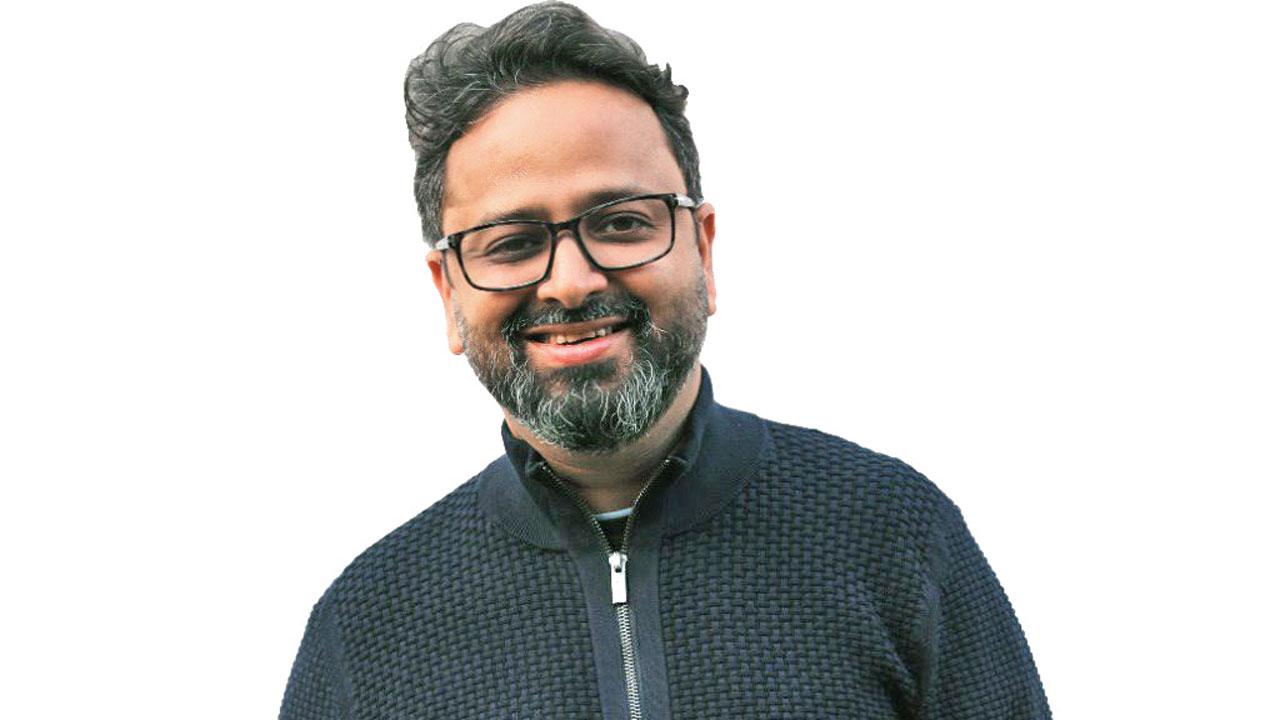
Niharika Lal (BOMBAY TIMES; December 10, 2024)
Call it serendipity or coincidence, Nikkhil Advani ended up with two releases on the same day last month – the re-release of Kal Ho Naa Ho and the release of the period drama Freedom At Midnight. He says he can’t really take credit for either of the projects or the release dates. “I was just offered the projects, and I didn’t say no,” he said during a conversation.
‘I ENJOY BEING ON SET’
Nikkhil says he enjoys filmmaking. “I enjoy being on set. I love being in a writers’ room. As a showrunner and producer, I constantly have to be in rooms where budgets are being discussed and, more importantly, where budget cuts are being slashed. I’ve never really enjoyed being in an editing room, though. I hate it because every time I watch my footage, I find myself thinking, ‘I could have shot this better. I wanted it to be better. Maybe we can change this,” he says.
‘IT WAS A CONSCIOUS DECISION TO USE LIGHTS LIKE THE CROWN’
Watching Freedom At Midnight may remind the audience of the historical drama The Crown. Nikkhil says, “Was it a conscious decision to be like The Crown? Yes, very much. What The Crown does is use very harsh backlight from the windows, and they shoot a lot on sets. We were also shooting extensively on sets, so it became an automatic reference point for us. Agar aap blue ya green screen use karte ho, then half your budget goes into VFX, and you can’t do anything else.”
He further explains, “These are things I’ve learned over the years. For instance, if I want the audience to feel a little more stressed out, I use darker colours and wood paneling. Colours were thought out very carefully because I wanted the audience to be emotionally connected to every scene of Freedom At Midnight.”
‘TRIED TO BE AS AUTHENTIC AS POSSIBLE’
Nikkhil says that as far as authenticity is concerned, the team tried their best. He explains, “But I don’t think it can ever be enough, right? The people being spoken about and shown in this story were giants. It’s not just about getting their physicality, speech, or walk right. What they thought, what they said, their vision – it was immense. What I tried to do was put the audience into a room with them and show, yeh log kaise thay.”
‘People still dance to Maahi Ve and send me clips’
“Neither did I have a choice about the release of Freedom At Midnight, nor did I have a say in the re-release of Kal Ho Naa Ho,” shares the filmmaker, adding, “I’m just glad that after 21 years, people are still watching Kal Ho Naa Ho, dancing to Maahi Ve, and sending me video clips.”
He says, “I didn’t consciously make these choices. Someone offered me Freedom At Midnight, and someone offered me Kal Ho Naa Ho. Maine keval bola, ‘Mujhe kaam chahiye, mujhe kaam karna hai.’ My sister (Monisha Advani) and my production partner, Madhu (Bhojwani), often ask me, ‘When will you turn around and start saying no?’ And I reply, ‘I won’t. I’ll never say no. If I’m offered a project, why would I say no?’ Logon ke paas kaam nahi hai. People often say, ‘You’re doing so much work,’ and the reason is simple I say yes to everything. When I was doing the post-production for Vedaa, I was simultaneously shooting Freedom At Midnight. I don’t say no; I only say yes. Karan (Johar) told me to do Kal Ho Naa Ho, and I said, Okay.”
I have never seen a time when a filmmaker hasn’t been able to talk to the CBFC about the changes-Nikkhil Advani
8:29 AM
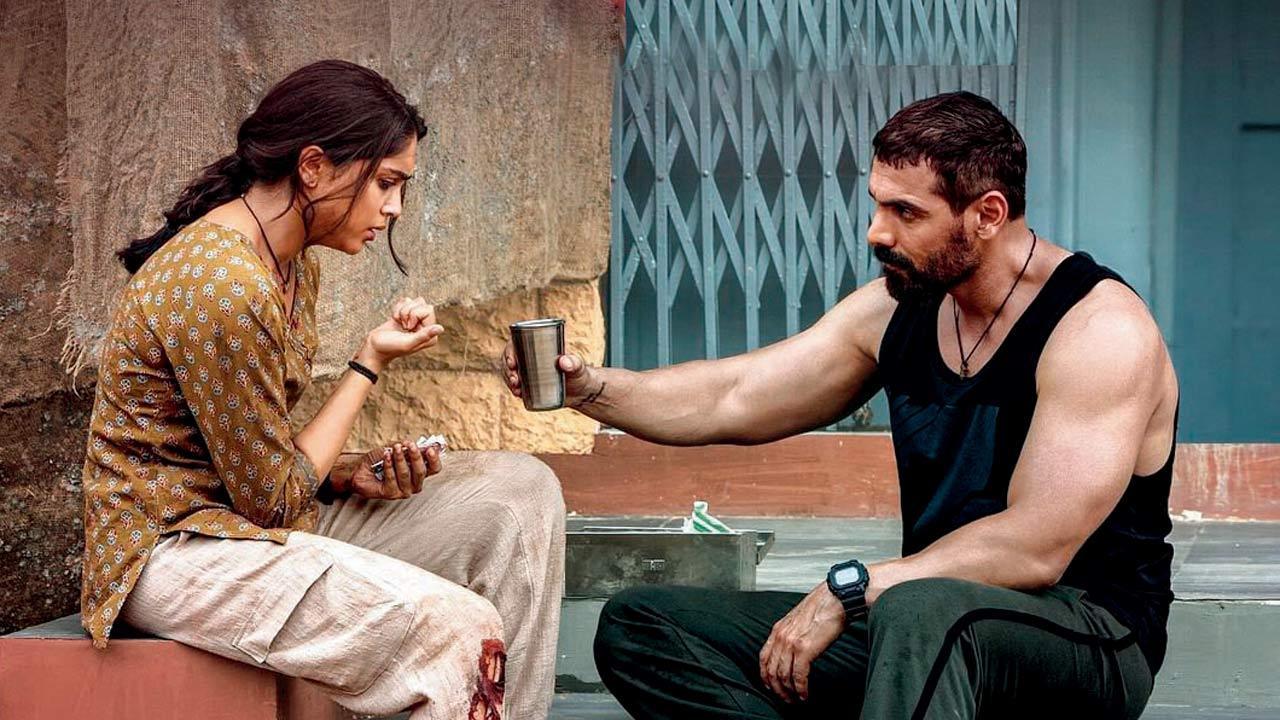
As Vedaa awaits CBFC’s clearance for a month, director Nikkhil shocked that Board has sent it to Revising Committee without apprising him of issues
Mohar Basu (MID-DAY; July 27, 2024)
“Arre, aap toh Kal Ho Naa Ho [2003] jaisi film banate thhe!” This is all that filmmaker Nikkhil Advani heard from one of the members the Central Board of Film Certification (CBFC) after he screened Vedaa for the body on June 25. There has been no formal response from the CBFC regarding the John Abraham and Sharvari-starrer since, except the communication in early July that it was being sent ahead to the Revising Committee.
What exactly is the CBFC’s concern with the movie, which is eyeing an August 15 release? That’s the first question we ask the director when we get on a call with him.
“I would tell you, but I have no idea. The norm is that the Examining Committee watches the film, sends us a list of objections or reservations, and then we discuss further. For instance, in Mrs Chatterjee vs Norway [2023], they had an issue with the word ‘harami’ being used. We explained to them that the protagonist is from the outskirts of Kolkata, and is semi-educated. She is enraged and desperate. They understood our perspective. Neena Gupta’s character in the film was modelled on Sushma Swaraj; [through her] we had shown Swaraj’s speech in the Parliament. While we had paraphrased it, the board suggested it be kept verbatim because this speech was documented in public records. We incorporated that change. I have never had this experience where the CBFC has held something for a month, and I have no idea what the issue is,” says Advani, who expressed his disappointment in a lengthy post on Instagram on July 25.
The teaser of Vedaa indicates an undercurrent of caste issue, and a heavy dose of action. For now, Advani is focused on its July 29 screening for the Revising Committee. The filmmaker informs that the screening was initially scheduled for July 25, but was cancelled due to the heavy rains. Despite the hurdles, he doesn’t believe that it’s a tough time for filmmakers today.
“I am doing my best work today. I am making Freedom at Midnight, Rocket Boys; I don’t think it’s the worst time to be a filmmaker.”
Advani adds, “I will say, however, that I have never seen a time when a filmmaker hasn’t been able to talk to the CBFC about the changes. Every time we’ve come across a situation like this, we’ve sat across the table and discussed the recommendations. Earlier, a representative would be sent to my office to discuss the changes. But this time it feels like I have been ghosted.”
August 15 has two more Hindi releases in Rajkummar Rao’s Stree 2 and Akshay Kumar’s Khel Khel Mein. At the moment, it seems unlikely that Vedaa will meet its release date.
“[A delay in release] cannot happen because it will lead to major losses for me and the studio. Right now, we are hoping that the Monday screening happens. Then we can negotiate the changes needed. Our promotional window is reduced. Vedaa is a potboiler set in current times. It releases in two weeks and our first trailer hasn’t come yet!” says the filmmaker.
mid-day texted CBFC chairperson Prasoon Joshi, who didn’t respond till press time. However, a member of the Revising Committee, who was to watch the film on Thursday, on condition of anonymity, assured that Vedaa will be viewed on July 29.
The insider added, “There was a city-wide red alert on Thursday, which is why we had to push the screening. The delay is only because of the backlog of other films; there is no ulterior motive. There are some objectionable bits in the film, they will be addressed by the Revising Committee. The film will meet its release date.”
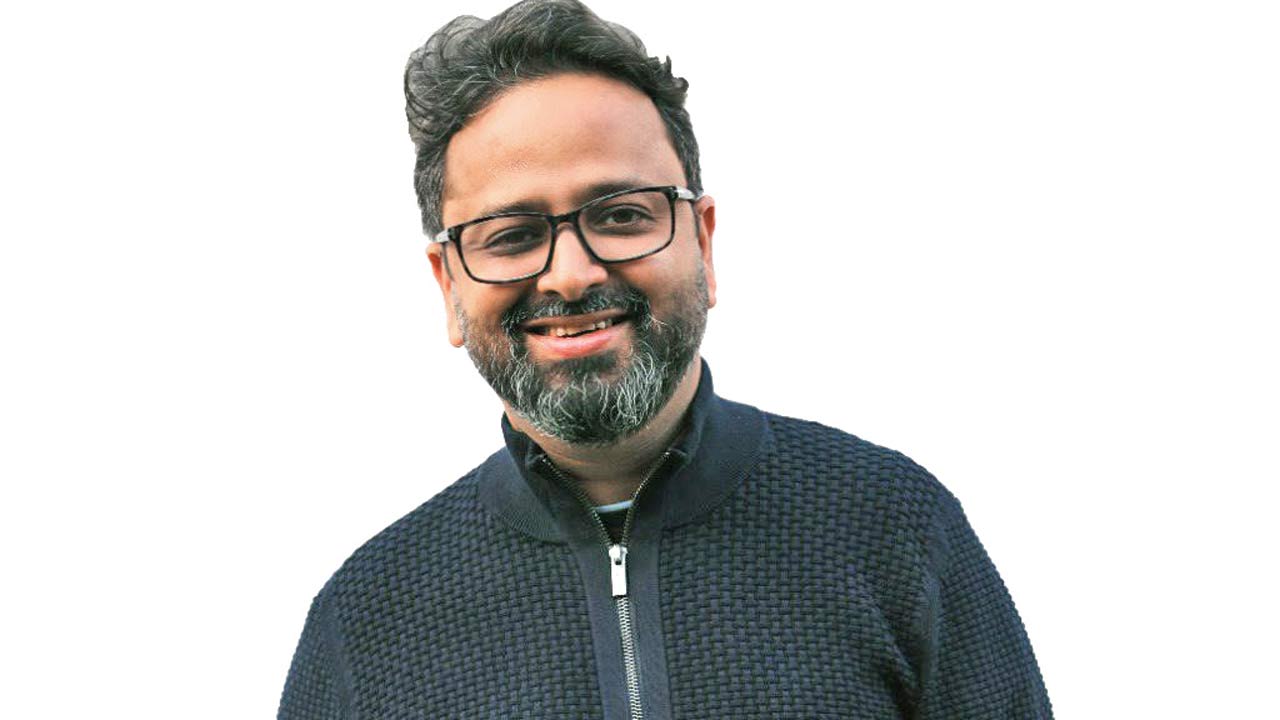
People feel there’s no pressure while making OTT content, but that’s not true-Nikkhil Advani
8:13 AM
BOMBAY TIMES (November 5, 2023)
Director, producer and screenwriter Nikkhil Advani recently completed 20 years in the entertainment industry. Sharing details about his journey in Bollywood, Nikkhil whose directorial debut was Kal Ho Naa Ho (2003), said, “Actually, I am celebrating 30 years in this industry. For the first 10 years, I worked as an associate director with film directors, Saeed Mirza and Sudhir Mishra. Then I worked with Karan Johar and Aditya Chopra. I want to give credit to Yash Johar for helping me in this journey.”
He added, “Directing and producing is a work of the right brain and left brain. My left brain is always talking about directing and my right brain is always talking about producing.”
Elaborating on the impact of OTT and the change it has brought about, the filmmaker explains, “Just as there is the pressure at the box office for what will be the number on Friday, on Saturday, or will the picture continue to rock the box office on Monday, people think that it does not happen on OTT. But it does and there the pressure spreads. It gets shared because OTT is not only a director’s medium. The platform has decided how this subject should be. Films in theatres have slumped because people now think that they would get this much on OTT.”
Vedaa directed by Nikkhil, starring John Abraham, Sharvari Wagh and Abhishek Banerjee will release next year. “I am also starting with Freedom At Midnight, a book by Larry Collins and Dominique Lapierre. Making a film on that is a dream come true,” signs off the filmmaker.
It’s sad if youth has only film stars as its heroes. They need to learn about people like Homi Bhabha-Nikkhil Advani
8:24 AM

With Rocket Boys opening to wide applause, creator Nikkhil Advani says he wanted to reacquaint viewers with worthy idols like Bhabha and Sarabhai
Uma Ramasubramanian (MID-DAY; February 8, 2022)
In a sea of crime thrillers and YA shows, it is refreshing to find a story that is rooted in the world of science. Rocket Boys is an unusual offering in the Indian OTT scene — as much for remembering heroes from a field that should be hailed more often, as for the deft handling of the subject. The Sony LIV series, which sees Jim Sarbh as Homi Bhabha and Ishwak Singh as Vikram Sarabhai, has opened to high praise.
With this, creator Nikkhil. Advani believes he has achieved the primary goal behind developing the show. “The intention to create this show can be summed up in one line: It’s sad if the youth of this country has only cricketers and film stars as its heroes. They need to learn about people like Bhabha and Sarabhai who were not only scientists, but also Renaissance [men]. They encouraged art and culture, and set up institutions. They paved the way for India to become what it has today,” says Advani.
One of the big wins of the show is its casting. If Singh is wonderful as the idealistic Sarabhai, Sarbh shines bright as the dynamic and irreverent Bhabha. Director Abhay Pannu says that Sarbh was the only choice to portray Bhabha. “The show was written after he was signed on. While we were doing research on Homi Bhabha, we realised he is an intriguing personality with a wicked sense of humour. Jim has a similar personality; he is charming and intelligent. Casting Jim was a no-brainer. Also, I don’t think there are many Parsi actors out there.”
Beginning in the 1940s, the eight-part offering traces the early years of the two physicists that formed the foundation for their greatness. “When we are showing their lives in 1940s, they themselves didn’t know that they would become such luminaries. They are making mistakes, falling in and out of love, fighting with each other. Everybody goes through what they went through, but their ambitions were much bigger,” says Advani, adding that the second season is in the offing. “We shot both seasons together. After a well-deserved break, Abhay will work on the second season’s post-production.”
While making The Empire, we have blindly followed the book-Nikkhil Advani
8:51 AM

As he backs a show on Mughal emperor Babur in current social climate, creator Nikkhil Advani says The Empire is true to Alex Rutherford’s written word and vetted by historian
Mohar Basu (MID-DAY; August 10, 2021)
One look at the trailer of The Empire, and zealous Indian netizens immediately drew comparisons with the iconic Game Of Thrones. While the comparisons are premature, there’s no denying that creator Nikkhil Advani has taken on an ambitious task — through the eight-part Disney+ Hotstar offering that is adapted from the first book in Alex Rutherford’s Empire Of The Moghul series, he will offer a retelling of the life and times of Mughal emperor Babur up until the First Battle of Panipat in 1526. With the material of this nature at hand, wasn’t he inclined to design it as an elaborate big-screen outing? “This story can’t be told in two hours; that would be gross injustice to the book. Our intention is to adapt all six books in the series,” begins Advani.
The creator’s singular brief to director Mitakshara Kumar, who has trained under Sanjay Leela Bhansali, was to make it an extravagant affair. “I was constantly hovering around to ensure we made it bigger,” he laughs, adding that shooting post the 2020 lockdown was an ordeal. “Our crew strength [pre-lockdown] was 400, and post the lockdown, we were told only 50 junior artistes could be used. [Since 2020], we went to Uzbekistan thrice; the weather was a spoilsport every time. Writing was relatively easier. We brought down a Hollywood writing consultant [Matt Pyken] who joined the director, Bhavani Iyer, myself and the internal teams from Emmay and Hotstar. During the lockdown, we went back to writing, and were able to flesh out the women characters better. These women [influenced] the dynasty by being manipulative, courageous, kind and sacrificial.”
The team hired a historian to ensure they are factually accurate, every step of the way. “From the scripts to the costumes, the lyrics to dialogues, everything was sent to Ejaz bhai [Syed Ejaz Hussain, History department, Visva Bharati University] for vetting. This was followed by an intensive legal vetting at the streaming giant’s end.”
Though the period drama was earlier announced with Shabana Azmi, Ronit Roy and Dia Mirza, the latter two were replaced to include Kunal Kapoor, Drashti Dhami and Dino Morea. Asked what led to the change in the cast, he says, “We changed our approach to the story. Earlier, we wanted three heroes to play Kunal’s character, but that was reduced to two. Kunal did justice to both, the younger and older parts. Drashti came well-recommended by Gaurav Banerjee [president and head, Hindi and English Entertainment, Star India] because we didn’t have time to set up her character. Her off-screen image was important for that instant connect and given her television presence, she was a great fit.”
Difficult as it is to achieve the grand scale of the show, Advani probably has a bigger hurdle. It presumably cannot be easy to tell an honest story about Mughals in the current political and social climate. He takes a pause before saying, “I am lucky that we have the rights to the book. We have blindly followed the book. Diana Preston and her husband Michael Preston, who use the pen name Alex Rutherford, are avid historians of the Mughal period. As creators, we have to be true to the characters.”
The creator hopes that the drama creates “hungama” so that he can make the second instalment even grander. “I envy the makers of Mirzapur. They put out a teaser, and fans go gaga. I hope we are able to create that frenzy. But eventually, as a creator, I hope we can tell the story that we are supposed to be telling,” he smiles, leaving us to decode that loaded sentence.
Bellbottom and Satyameva Jayate 2 will be theatrical-Nikkhil Advani
8:05 AM

Juhi Chakraborty (HINDUSTAN TIMES; January 29, 2021)
As the web has taken the entertainment world by storm, many Bollywood stars have warmed up to the idea of being a part of the online boom. So, does it mean that the OTT platforms will now go star chasing? Filmmaker Nikkhil Advani doesn’t see that happening. “While e-cinema is a director’s medium, commercial cinema is an actor’s medium, with all the Friday numbers. A very big aspect of OTT belongs to the platform. They know what is being liked and consumed. Till today, in none of the platform meetings that I sat in have I heard that we need to take a star,” he says.
The OTT versus theatres debate raged on last year, and many were called out for releasing their films on OTT because of the pandemic. While Advani believes that it was the need of the hour, he says there can never be a contest between the two mediums. “The audience that consumes OTT is very different from the audience that goes to cinemas. The overlap happens in cities like Mumbai and Delhi, may be other metros slightly… but the theatre consumption of cinema is very different,” he explains.
But going forward, he says OTT platforms may guide the kind of films they buy just like the ones they commission. “They will take active interest in the storyline, casting production. So, when that happens then we can say that OTT has become some kind of an alternative to cinema,” he adds.
Advani, too, has a mixed bag in terms of theatrical and web releases this year, which include Mumbai Diaries 26/11 and Moghuls. “Bellbottom and Satyameva Jayate 2 will be theatrical. We are demarcating very clearly; pure feature film on theatres, where budgets, scale and point of consumption is suited to cinema,” he concludes.
The idea for my segment in Unpaused came from solitude and depression-Nikkhil Advani
8:07 AM

Helming a short film centred on lockdown in Amazon's anthology Unpaused, director Nikkhil Advani on how the Richa-starrer gives hope amid pandemic
Mohar Basu (MID-DAY; December 16, 2020)
It all started with a call from Amazon Prime Studio's content head, Aparna Purohit. The brief for Unpaused, the streaming giant's anthology that unites filmmakers Nikkhil Advani, Raj-DK, Nitya Mehra, Tannishtha Chatterjee and Avinash Arun Dhaware, was simple — intimate tales of lockdown.
"Every filmmaker was assigned a budget. We were given three days for shoot. The unit comprised 10 people, and at no point did the floor have more than six people," says Advani, who has helmed The Apartment, featuring Richa Chadha, Sumeet Vyas and Ishwak Singh. "The messaging was clear — while the pandemic is all-consuming, there's light at the end of the tunnel. The cynic in me would've made it gritty and dark, but the creative freedom at work made me feel like a kid in a candy store."
Advani's story is rooted in loneliness, an all too familiar emotion during the lockdown. When Chadha's character learns of her husband's sexual indiscretions, she spirals into a maze of self-blame and attempts to end her own life. "The film's idea came from solitude and depression. Just a day before the lockdown, the lead character is faced with a truth that shatters her belief. When her close ones are no longer accessible, help comes from the one place she never thought was possible," narrates the director, emphasising that casting was crucial to the story. "Richa had to hold the scenes, but the critical casting was Sumeet's. He has a good boy vibe to him. So I knew I was casting against the grain."
Sushant Singh Rajput's demise put the focus on the acute loneliness faced by many in the Hindi film industry. "Whatever has happened since Sushant's death has played on my mind. It made me realise how synthetic the film industry is."

Rakeysh Omprakash Mehra, Shoojit Sircar and Nikkhil Advani share their perspective on patriotism
8:55 AM

Rakeysh Omprakash Mehra, Shoojit Sircar and Nikkhil Advani share their perspective on patriotism and how the sentiment has been expressed differently in our cinema
Rachana Dubey (BOMBAY TIMES; August 15, 2020)
On Independence Day, filmmakers Rakeysh Omprakash Mehra, Shoojit Sircar and Nikkhil Advani participated in a discussion on the Bombay Times Talk Show about the depiction of patriotism in Hindi cinema. Over the years, Rakeysh has helmed films like Rang De Basanti (2006), Delhi 6 (2009) and Bhaag Milkha Bhaag (2013), all of which had uniquely linked events of national and historic importance with an entertaining narrative. Shoojit debuted as a filmmaker with Yahaan (2005), a drama set against the backdrop of Kashmir. He also helmed Madras Cafe (2013), a partreal-part-fictitious account of the disturbance in the Tamil Nadu region at the turn of the 1990s. Nikkhil directed DDay (2013), a precursor to several films in the future that would talk about bringing
India’s Most Wanted terrorist to book. He also directed Batla House (2019), which was widely appreciated for its balanced narrative of the much-debated Batla House encounter in Delhi. Excerpts from our conversation with the trio:

PATRIOTISM MEANS DIFFERENT THINGS TO DIFFERENT PEOPLE: RAKEYSH OMPRAKASH MEHRA
To begin with, it is very sad that a subject like Rang De Basanti remains relevant even today. What inspired me to make that film was my experience while growing up. I can’t define patriotism, because it means different things to different people. It was not patriotism, but something to do with the state, which was the villain in my film. We had had enough, and we had to say something. I wouldn’t call Rang De Basanti a patriotic movie. Patriotic film is a label; a film like Rang De Basanti or Shaheed (1965) works on different levels. A movie is a movie, and it’s a story. Thumping your chest and saying that your film is patriotic, is jingoism. If I had to, I would still make Rang De Basanti today. The struggle to make the film is not important. It’s the voice of the film that matters. Films need to be made when they are not allowed to be made. Thinking that patriotism is winning against someone, defeats the very idea of patriotism. Shoojit Sircar’s Madras Cafe belongs to a voice and to the people; not to any state. That is a true patriotic film. I have never understood defeating another nation as patriotism. Also, when we are making films, we come from a place of responsibility. Let the expression of those who can express prevail. I don’t want any filmmaker to be misunderstood when he talks about freedom of expression; the mention of that leads to a debate. When I was making Rang De Basanti, someone said that we were doing some politically incorrect things in the film. In my naivety, I told the person that filmmaking is not about being politically correct; it’s about being humanely and emotionally correct.

IT’S NEVER EASY TO MAKE FILMS THAT QUESTION THE SYSTEM: SHOOJIT SIRCAR
 We are all storytellers, and we want to tell stories that compel us. Madras Cafe didn’t release in Tamil Nadu, Malaysia and Canada. It had deferred releases in Singapore and London, because the issue at hand was so sensitive. It was not an easy film to make. It was a true story, but in our country, we are not as democratic with cinema as the West is. We still can’t talk about things that are already in the public domain in one form or the other. It’s never easy to make films that question the system. As filmmakers, we are also responsible individuals and conscious citizens. We are not here just to show some glamour. That part of us is always overlooked by different sections of people. We are conscious of our social reforms and what is happening around us. One has to give it to our rational judgement, too. We are lawabiding individuals. So, even if I talk about freedom to express, it is never absolute. It has its own discipline.

WHEN I TALK OF PATRIOTISM, I AM INTERESTED IN THE FREEDOM TO SAY WHAT I HAVE TO SAY: NIKKHIL ADVANI
When I was making D-Day, I had to haggle for every rupee. Also, I was not allowed to use the name of the individual, but I got all the threats, and I had to get security. It’s not easy to make such films. Every time that we are thinking of a subject, we have to analyse what we can keep and what we can’t, and what the repercussions could be. Patriotism, to me, is a very personal thing. However, today it is being defined by people who assess it on the basis of what you do or don’t do. Not conforming to certain ideas makes you an anti-national, which is not the way to look at things. Filmmakers are always soft targets, who are constantly reminded about what they have to do or what they can do.
When we are talking about something that can polarise public opinion, people have to understand that we do it with even more caution. We think harder on whether we should do it or not and how we should go about it. We’re constantly being told about the repercussions. Eventually, we are here to tell stories, and we do it with absolute responsibility. When I talk of patriotism, I am interested in the freedom to say what I have to say. Not having that, will only drive filmmakers away from narrating difficult, and yet very important stories.

For how long can you sit at home and wait for things to become ‘normal’ like it used to be?-Nikkhil Advani
6:30 PM

Prashant Singh (HINDUSTAN TIMES; August 12, 2020)
Since March-end, Bollywood hasn’t been in the full-on work mode, due to the Coronavirus induced lockdown. However, that hasn’t stopped a few filmmakers/actors from working actively during this time, and one of them happens to be Nikkhil Advani. The filmmaker has been constantly busy with multiple film as well as web productions, besides his own next directorial venture.
“For how long can you sit at home and wait for things to become ‘normal’ like it used to be?’ he asks, adding that everyone needs to “step out and start out again” at some point. While one of his co-productions, Bellbottom, starring Akshay Kumar, has gone on floors in the UK, his other project, the John Abraham-starrer Satyameva Jayate 2 is readying to hit the floors soon.
Advani’s office, too, has been functional “with permitted number of staff members” for several weeks now, from where his team is working on various projects. “I myself am out everyday, for meetings and other things even if I am not in office. We have to find a way out of all of this. The post-production work, including editing, is on vis-à-vis Arjun Kapoor-Rakul Preet Singh starrer. Plus, we are also working on a few web shows including one on the Mughals,” he says.
Advani feels “people’s work (in general) has already suffered a lot”. “With all the social distancing measures etc., it’s high time that we all start functioning. If we ourselves don’t try to make things normal, how will they become normal?” asks the filmmaker, adding that the idea should be to “endeavour for a sense of normalcy”.
“There’s a lot of work happening through video calls etc., but wherever required, we need to step out. There’s a need to kick-start life at some point. My office has been open and my team is working smoothly out of there. In fact, Milap (Milan Zaveri; director of Satyameva Jayate series) has done the entire pre-production work on the sequel from office itself,” says Advani.
I wanted to celebrate the brave Cama doctors who had saved the day-Nikkhil Advani
8:15 AM

Giving the finishing touches to his web series Mumbai Diaries 26/11, Nikkhil Advani discusses retelling the 2008 terror attacks with sensitivity
Mohar Basu (MID-DAY; May 6, 2020)
 Among the most promising shows on Amazon Prime's slate this year is Nikkhil Advani's Mumbai Diaries 26/11. The eight-part series, starring Konkona Sen Sharma and Mohit Raina, offers a fictionalised account of the terror attack that took place at the Cama Hospital, among other venues, on November 26, 2008. Though the show was earlier titled Bombay Hospital, Advani says it was a unanimous decision to rechristen it. "There is a hospital in south Bombay called Bombay Hospital. Our show is not only about what happened at the [Cama] hospital that night; it also deals with the overarching theme of humanity. We had to come up with a title that sums up the theme," reasons the director.
With the release of Dev Patel-starrer Hotel Mumbai last year, the recreation of stories as sensitive as the 26/11 terror attacks has been widely debated. Is it judicious to tap into those memories? "We Mumbaikars still discuss where we were on that [fateful] night. I hope we have treated the story with sensitivity. The show plays out in a hospital, and little has been said about the hospital staff in our stories of 26/11. I wanted to celebrate the brave doctors who had saved the day."
The drama, which went on floors last August, was wrapped up only days before the Coronavirus lockdown was announced across the country. Counting himself among the fortunate few whose projects remain unaffected, the director is working with his post-production team remotely to meet the deadline.
"Luckily, the show was shot in sync sound, so we don't have the problem of dubbing. Given the subject, it is likely to release around November 26. People talk about how editing from home is a challenge, but it isn't. My editor puts the edited content on Vimeo for the post-production supervisor and me to see. We are constantly on Zoom calls, telling each other what works, and what doesn't," he shares, adding that his 2013 offering, D-Day, too was edited remotely.
Irrfan Khan convinced Rishi Kapoor to stay in desert one night-Nikkhil Advani
8:20 AM

As told to Roshmila Bhattacharya (MUMBAI MIRROR; May 1, 2020)
 Today, a scene from my 2013 film, D-Day, flashes through my mind. Irrfan (Khan) looking at Chintuji, and laughing, amazed that they had finally managed to capture this much-wanted terrorist, despite their carefully-laid plans having failed. I remember Irrfan urging me to let the camera continue to roll, and what emerged was this moment of delicious irony.
We were shooting in the desert and while Irrfan and a lot of team bunked out in tents, Chintuji would drive two hours back to the hotel. He was averse to early morning shoots, but there was this sunrise shot we had to shoot with him and he was refusing to comply, saying, “I’m an actor, not a doodhwala.” Irrfan finally managed to convince him to spend the night in the desert with us with the promise of Chicken Jungli and alcohol. It was a near-impossible feat in Kutch, but he delivered on his promise and I got my shot.
Chintuji’s bungalow and our building in Bandra shared a common boundary wall. Every evening, while returning from R K Studios at 7.30 pm, he’d look out for my car, and if he saw it standing, he’d call me and invite me over for a jashn during which he would berate me for that Friday’s release, even when I reminded him I had not made the film. To be fair, he was also wowed by a few young filmmakers. My own Chandni Chowk To China’s trailer had impressed him. He’d called all his friends to say the film was another Sholay and I was the next Ramesh Sippy. After its release, I got an earful from him, saying I had made him look like a ch****a. More recently, he called me from New York, saying “Just saw the Batla House trailer… Fabulous”. Then, adding, “Par trailer toh tu hamesha achcha hi kaat ta hai, hope you’ve not f***ed up the film.”
On Wednesday evening, after speaking to his secretary, Shantiji, I messaged him, “I heard that you are unwell. Prayers and wishes for you always, sir.” The next morning, he was gone...our jashns are over.
The writing of Hasmukh could have been much better-Nikkhil Advani
8:15 AM

Despite having comedian Vir Das on board, showrunner Nikkhil Advani admits Hasmukh suffered due to weak writing, discusses roping in new creative team for the black comedy's second season
Mohar Basu (MID-DAY; April 28, 2020)
 In hindsight, showrunner Nikkhil Advani admits he has greater clarity on why the Vir Das-fronted Hasmukh failed to strike a chord with the audience. "Fundamentally, what went wrong was that people perceived it as a comedy. It was not supposed to be a laugh-out-loud funny show; it was a tale of morality versus ambition," explains Advani, who is already using his learning from the first edition to develop a sharper sophomore season.
Even though the team behind the script included bright minds like Das and him, the producer states that he has roped in new writers for the next outing. "The writing could have been much better. So, we are bringing other writers on board to develop a more layered second season. This was not meant to be a polished show. The jokes weren't supposed to be nuanced because a stand-up comic from Saharanpur doesn't want to be Trevor Noah, he aspires to be like Jaspal Bhatti or Kapil Sharma. The jokes should have been more crass. Also, the positioning was wrong because when Vir plays Hasmukh, people expect great comedy."
Giving credit where it is due, the filmmaker points out the series brought forth the leading man's acting skills. "Whether people enjoyed the show or not, they liked Vir's performance. The acting department [elevated the show], be it Vir or his chemistry with Ranvir Shorey."
Soon after it dropped online, the black comedy landed in a legal soup after a lawyer moved the Delhi High Court alleging that one of the episodes — in which they have been referred to as "thieves, scoundrels, goons and rapists" — maligns the image and reputation of advocates. However, Advani refused to comment on the subject saying it is sub-judice.
I will cherish my association with glossy cinema because it allowed me to make my first film-Nikkhil Advani
7:47 AM

Neha Maheshwri (BOMBAY TIMES; August 14, 2019)
When Nikkhil Advani came on board as the director of Batla House, he barely knew about the controversial encounter that shook the Delhi Police in 2008. However, it was his urge to tell the story that kept the writer-director-producer intrigued and invested in the subject. In a chat with Bombay Times, Nikkhil talks about what went into the making of Batla House, what the experience has taught him, and how he has tried to present an unbiased narrative. Excerpts…
 Your last directorial venture was Guddu Engineer (2016). While you have written films like Baazaar (2018) and produced films like Lucknow Central (2017) and Satyameva Jayate (2018) after that, you stayed away from direction. What’s it about this subject that made you want to direct the film?
I am not a producer who has become a director; I am a director who turned producer, so that I could tell the stories that I wanted to. I am not a producer, who wants to make Rs 200 or 300 crore from my films, I don’t choose a script thinking about its box-office performance. If I knew how to do it, I wouldn’t be making a film like Batla House. With this movie, John Abraham, Ritesh Shah (writer) and I hope to trigger conversations and make people aware of this incident. The (glossy) films I made earlier also had a dose of reality in them, but today, it’s all about content-based cinema. And, that’s the kind of cinema I would like to associate with.
The fact that we hadn’t yet documented an incident (Batla House) of such magnitude, drew me to it. Still, it took me four years; we made 30-40 drafts, and I felt that the story was missing something until we hit upon the final draft. Around a couple of years ago, I suggested to Ritesh that we swap the beginning and end. We got flash cards, wrote a line for every scene and laid them down on the floor of the office. And then, we rearranged them. That’s how we threaded the story together. Besides the encounter, the personal journey of Sanjeev Kumar Yadav (the real-life police officer, who inspired John Abraham’s character) and his wife Shobhna, caught my interest. I told Sanjeev Kumar that I wanted to know everything that happened in his personal life. The aftermath of the incident made him wonder if he was actually guilty, as assumed by the rest of the world. He even tried to commit suicide thrice. Come to think of it, he won three medals post that incident. When I met them in 2015, Shobhna told me that she had asked him for a divorce just a few hours before the encounter, but later, decided to be with him. Sanjeev had thought that he would emerge as a hero after the encounter. On the contrary, he drew a lot of flak.
Was DCP Sanjeev Kumar Yadav (then ACP) open to the idea of baring his life for a Bollywood film?
He isn’t open about such things; Shobhna is. I think that’s also because she shielded him and bore the brunt — she was subjected to nasty remarks, rants and accusatory glances, almost implying that her husband was a murderer. He believed so strongly in the system that he was sure it will exonerate him. However, the system kept playing games with him till he realised that he would have to fight it out. The incident changed him; he feels that he has become smarter. He wanted me to get the details right, so much so, he insisted that we use the same model of the car, which was used by him and his team. He told me, ‘Tum log Bollywood mein kuchh bhi karte ho. Aisa mat karo, because a lot is at stake for many people with this film’. He is very quiet and cautious. I have to give him credit for allowing me to present the other viewpoints.
While doing research on the film, you must have visited Batla House (the place where the encounter took place) and interacted with its current inhabitants. The incident must have left them scarred for life…
Yes, it has and will continue to, even after this film. We visited Batla House like any other naive film unit, taking photographs, while people stared at us in bewilderment. We realised that L-18 Batla House (the building where the alleged terrorists were holed up) is stuck in time. It’s unusually quiet, people hardly look you in the eye. My narrative is around Sanjeev Kumar, his wife, the special cell, the group of boys and what led them to court. I can assure you that the residents of Batla House will find the film biased, though I have shown both perspectives. The moment I cast John Abraham to play the police officer, I knew that everyone would assume that my perspective is in Delhi Police’s favour. That’s why for me, the most important casting in the film was of the defence lawyer. I wanted a strong artiste to convince the audience that I have not cheated them. Hence, I got Rajesh Sharma on board, he is ruthless in the court scenes. Though we have stuck to facts, I grappled with my own biases. The film is about perspectives — who is right and which side is to be believed, and how a particular perspective can change the entire narrative.
You have made several typical Bollywood commercial movies over the years, including Kal Ho Naa Ho (2003), Salaam-E-Ishq: A Tribute To Love (2007), Chandni Chowk To China (2009) and Katti Batti (2015). Some were commercial successes, some were critically acclaimed, while there were a few which didn’t leave a mark. However, with outings like D-Day (2013) and now Batla House, have you found the zone that you really want to be in?
I like stories that are a little politically motivated, thrilling and edge-of-the-seat. So, if this is my zone, I accept it whole-heartedly. Having said that, my association with glossy cinema is something I will cherish for life because it allowed me to make my first film. My friends Irrfan, Saurabh Shukla, Tigmanshu Dhulia, Anurag Kashyap and Manoj Bajpayee would often call me a sell-out (laughs!). Before Kal Ho Naa Ho, Shah Rukh Khan and I wanted to make a film on the lines of Dil Se, but we couldn’t get the right script and Yash (Johar) uncle told me that we should make a love story first. He said, ‘Uske baad tujhe jo karna hai kar’. On a serious note, a lot of hard work went into making Kuch Kuch Hota Hai (1998) and Kabhi Khushi Kabhie Gham (2001), I was an associate director on both movies. Kal Ho Naa Ho also took a lot of hard work and all these are iconic Bollywood movies. As a generation of filmmakers, we brought organisation to our craft. We decided that we will no longer make a film over three years. We would work on one film at a time and expected the actors to be invested completely in it, unlike earlier when an actor shot two projects at a time. Big stars like Shah Rukh, Salman Khan and Akshay Kumar accepted the change and are advocating it themselves. A lot of change, that nobody gives us credit for, was done behind the camera, too, like the way we approached production, scheduling and budgeting.
You spent almost four years to complete Batla House, including research and filming. That’s a lot of time to invest in a film. What has this experience taught you?
It has taught me patience. I feel that after D-Day, I should have waited for Batla House. I am not saying that Hero (2015) and Katti Batti are mistakes; they are missteps. I don’t think I gave enough to those films, because I didn’t believe in them as much as I should have. As filmmakers, our decisions are governed by several factors, like running the house, paying instalments, rent, school fees or going on holidays and that’s when we start compromising. The decision to make a film should only be governed by a good story. If you can take care of other factors, you are in a wonderful space. That’s what I aspire to do.

I didn't want Nora Fatehi to be just an item girl in Batla House-Nikkhil Advani
8:24 AM

Keen to have a dance number in Batla House, director Nikkhil Advani explains why he chalked out a special role for Nora Fatehi
Sonil Dedhia (MID-DAY; August 8, 2019)
 Regardless of the film's subject, item numbers have become a staple in Hindi movies. While John Abraham's Batla House is a cop drama about the 2008 police encounter in Delhi, the narrative makes room for Nora Fatehi's dance number, O Saki Saki remix. Quiz director Nikkhil Advani on it, and he says it is the result of having his fingers burnt in the past. "To this day, critics tell me that they loved D-Day [2013]. But the audience did not go to theatres to watch it. I want people to watch Batla House. If that means John's character needs to crush a phone by his hand or we need [to include] an item number, I will do it," he argues.
However, the conscientious director reveals that he could not make peace with incorporating an item number to grab eyeballs. One to understand the value of a story, Advani chalked out a character for Fatehi that fit organically in the cop drama. "It was the toughest part of the film to work on because I didn't want Nora to be just an item girl. I made sure she had a role and did acting and dialogue workshops with her. She is an integral part of the movie. I am convinced about Saki Saki being a part of Batla House."
Asserting that he feels a sense of responsibility with his projects, he adds, "I think about how my 12-year-old child will react to a scene, or my wife, for that matter. I had an item song planned for D-Day where the girl was supposed to dance around Rishi Kapoor's character. That's when the Nirbhaya [case] happened. So, I decided not to shoot the song as the timing was wrong."
I owe Dr Koppillil Radhakrishnan a film on his life and achievements-Nikkhil Advani
8:14 AM

Nikkhil Advani reveals that he plans to bring the memoirs of the man behind Mangalyaan on screen even as he applauds Akshay Kumar’s film on the same subject which releases on the same Friday as his Batla House encounter
Roshmila Bhattacharya (MUMBAI MIRROR; July 29, 2019)
 How does it feel to see a five-year dream come alive on screen? Isn’t this the best time for a film like Batla House given that the audience today has evolved?
Yes, that Article 15 on castesim has done so well is heartening. And I’m excited because I’ve managed to say all that I wanted to through this film. But there are butterflies now as August 15 nears. Batla House is dear to me and I want people to understand it. The encounter which happened on September 19, 2008, was a conflicting operation, it created a lot of noise. In all the noise, truth tends to get lost. And truth is connected to people, be it a committed police officer who was suddenly labelled a murderer or a student a terrorist because of his complicity.
John Abraham’s character is modelled on then ACP Sanjeev Kumar Yadav. Would you say the encounter changed him as a person?
The police officer who inspired the film is cautious, committed to following the rule of law. He only shared that much which is in the public domain but he approves that we are telling the story from three points of view: his seven-member special cell team, the students’ defence and what the court accepted. He was constantly urging us to cross-check facts.
Has D-Day added to the pressure of delivering a quality film?
After D-Day I was suddenly tagged a “respectable filmmaker”, a legacy which irrespective of box-office outcome, was cemented by my TV show POW, also films like Airlift and Bazaar which I produced. Batla House is also a collaboration with Ritesh Shah, the writer of D-Day, Pink, Airlift and Raid and has the attraction of John who has a Madras Café and Parmanu too. All this makes it, as Bhushan Kumar says, a ‘mudda ka film’.
Are you nervous about the clash with Akshay Kumar’s Mission Mangal?
From what I’ve seen, that film looks good. After it releases and does, as I hope, extremely well, I want to make another film on Dr Koppillil Radhakrishnan. Born in a village in Kerala, he was the Chairman of the Space Commission at ISRO and spearheaded the mission to Mars. He empowered women scientists and it’s good Mission Mangal focusses on them. But I have the rights to Dr Radhakrishnan’s autobiography, My Odyssey: Memoirs Of The Man Behind The Mangalyaan Mission, and I owe him a film on his life and achievements.
Milap Zaveri’s Marjaavaan is now on a collision course with Hrithik Roshan and Tiger Shroff’s next. Does the October 2 release date still stand?
That will be a collective decision taken by Milap, the producers and the studio. And while this is not a reflection of his work, it’s important for Milap to come up with a quality hit film after Satyameva Jayate. Just the teaser has everyone talking about Hrithik and Tiger’s film, so some brainstorming on our release is in store.
Is Satyameva Jayate 2 a 2020 Independence Day release?
It’s too early to speculate on the release when Milap is still working on the script. As of now, all that I can say is that the sequel will feature John and Divya Khosla Kumar.
Will you kick off your football film with John, 1911, after Batla House?
We kick off 1911 next year, after John wraps up some commitments and I finish shooting the first season of my series. John, Bhushan and I have a commitment to produce six joint ventures; John and I will collaborate on four, 1911 is the first.
Buzz is, Anil Kapoor and Dimple Kapadia have joined Shabana Azmi, Ronit Roy and Dia Mirza in Mughals?
That’s speculation. It’s just Shabana ji, Ronit and Dia for Babar’s story, but with each season, we plan to get more interesting and get as big a star cast. We’ve spent two years on research, are collaborating with a writing team from Hollywood whose approach is far more dramatic than our history book perspective. I’ve been to Uzbekistan and Rajasthan twice on recce. It’s exciting but also exhausting.
Then there’s swipe right, swipe left story of Indoo Ki Jawani with a Rs 200 crore heroine Kiara Advani and Aditya Seal...
That’s a fun film about experiments with a dating app going wrong as a girl in Ghaziabad tries to be one up on her boyfriend. It’s been put together entirely by my producer partners Madhu (Bhojwani) and Monisha (Advani). They heard the script, finalised the cast, set things in place while I was shooting Batla House.
When I finally picked up the Batla House script, I couldn’t put it down-Nikkhil Advani
8:13 AM

Roshmila Bhattacharya (MUMBAI MIRROR; October 22, 2018)

My writer Ritesh Shah has lived the dream longer. He spent a year researching and meeting people before coming to me, thinking the maker of D-Day, Airlift and P.O.W.: Bandi Yudhh Ke was the best person for this film. At the time I was preoccupied with other projects. When I finally picked up the script, I couldn’t put it down. I just felt it needed some more work. (Smiles) I didn’t know it’d take four years and 30 drafts before we could take it to the floors. I have never felt more energised or more nervous.
Nervous, why?
It’s such a huge responsibility. I’ve to be fair to both sides. It’s not just the story of then ACP Sanjeev Kumar Yadav who in 2008 with a seven-member Special Cell Team barged into Flat 108 of L-18 Batla House in search of Atif Bashir, Chief of the Indian Mujahideen believed to be behind several bomb explosions across India between 2003– 2008 culminating in a series of blasts in Delhi. It’s also about three young students of Jamia Millia Islamia—Okla University in our film – who were accused, arrested or killed. I need to be able to look at those who shared their trauma with us in the eye, to hear them say that justice was done when they see the first copy. I know this film will trigger discussion, conversation…
...Maybe even controversy?
My production house is already being asked by various people to share the draft even though Batla House is not a documentary but a work of fiction inspired by true events. For that matter we are also getting enquires from certain communities asking if they’ve been correctly represented in my upcoming film Baazaar despite it being cleared by the CBFC. All I can say is that we are a responsible production house who despite being given a choice of ‘U/A’ and ‘A’ accepted an adult certificate for Satyameva Jayate because we didn’t want to expose kids to graphic violence.
Has John Abraham who plays the protagonist met DCP Sanjeev Kumar Yadav who headed the encounter?
Yes, they’ve had a few meetings during which John absorbed certain nuances in his speech and body language which he wants to incorporate into his character. He’s been taking Urdu lessons as a large part of the narrative is in it.
Getting back to Baazaar, why has it taken the film so long to come to the theatres?
We were looking for the right partner who believed in the film, in my choice of Saif (Ali Khan) to play the protagonist and in newcomer Rohan Mehra to play the second lead. Also, in debutant director Gauravv Chawla. We found it in Viacom18 who will market it well.
Weren’t you supposed to direct Baazaar yourself?
I was, but then my sister, Monisha Advani who is my production partner, suggested I listen to what Gauravv had done with the first 30 pages of the script. By the time he came to the third scene I knew he was the best person for the job. Even Saif who’d told me he wanted me on the set everyday, called on the second day to say I didn’t need to be there. He’s an intelligent guy, and because he reads and thinks so much, he needs a director who can can answer all his questions.
I’ve been busy with Moghuls. So far everything I’ve done, I could see happen before my eyes. But every shot in this series needs some kind of VFX. I had to imagine snow here and mountains there. It was a challenge. We’ve just wrapped up the first episode.
Your take on #MeToo?
This has been a year of churning and I’m glad that the world is finally waking up to women’s rights. My sister and my other producer partner, Madhu Bhojwani, headed an HR company till they retired and I convinced them to join me. Sixty per cent of our work force are women and certain guidelines regarding sexual harassment were already in place in our company before all #MeToo exploded. I can assure that no woman is unsafe or unprotected with us.
Subscribe to:
Posts (Atom)