Showing posts with label Nikkhil Advani. Show all posts
Showing posts with label Nikkhil Advani. Show all posts
Jinnah wanted to be in Bombay even as he governed Pakistan-Nikkhil Advani
9:00 AM

As a boy in 1980s Bombay, Nikkhil Advani tuned out his grandmother’s stories of Partition. Forty years later, he has made it his business to tell them
Anindita Paul (MUMBAI MIRROR; September 20, 2026)
In the late summer of 1947, as the British empire unspooled into the blood and panic of Partition, Nikkhil Advani’s ancestors left Sindh on a commercial flight. They were not among the millions crammed onto wooden train roofs or marching through the dust of the Punjab; his father, Suresh, was an infant, born in 1946 into an affluent, well-connected Sindhi family in Karachi and Hyderabad. When his great-grandfather sensed the geopolitical tides turning, he booked tickets, gathered the family, and flew to Bombay. They landed unmaimed, stepped off the tarmac, and walked straight into the cold, levelling reality of displacement.
On the journey, Advani’s grandfather carried a heavy money belt strapped around his waist. But the cash was not his. He worked for Habib Bank, which was shifting its headquarters to Karachi at Muhammad Ali Jinnah’s behest, and had been entrusted to deliver the funds to its Bombay branch. He handed over every rupee. For Advani’s grandmother, Lila, the story was a testament to her husband’s unyielding integrity—though during the lean years that followed, she would occasionally wonder aloud how different their lives might have been had he simply kept it.
The family’s fortune was gone. In the single-room flat on Raghavji Road that they lived in, Advani’s grandmother nursed no soft, weeping nostalgia for lost estates; she wanted her sons to work towards careers in engineering, and demanded flawless academic credentials.
“I don’t want to belittle those who suffered the horrors of migration by pretending their pain is mine,” Advani says. “My family was fortunate. But the atmosphere in that one-room flat was defined by a single imperative: every generation must outperform the last.”
A generation, removed
Growing up in the comfortable, cosmopolitan Bombay of the 1980s—his father by then a corporate executive in a pharmaceutical firm—young Advani initially tuned out his grandmother’s constant monologues about Partition. “To a kid in a safe, prosperous city, it felt like an endless lecture,” he admits. “My reaction was, ‘Who cares? I’m not struggling.’ It took 30 years to realize those weren’t history lessons; they were meant to remind us of how we had built – rebuilt – everything from scratch.”
When Advani announced his intention to forgo a conventional career for the unstable world of Hindi cinema, his grandmother viewed it as sheer madness. How could making movies constitute a proper profession? What she may not have realized just then was Partition wasn’t this family’s only inheritance. A deep love for cinema may have been handed down genetically, too. Advani’s grandfather, the one who had guarded the bank’s cash through that trip from Karachi, had a Friday ritual: he would leave his jacket draped over his office chair so that his manager would assume he’s around, while he slipped out to catch a matinee.
Besides, Advani’s true artistic education unfolded outside formal classrooms. After studying at St Xavier’s College and taking a film appreciation course at FTII, he served an apprenticeship alongside the fiercely political, iconoclastic directors of 1990s Bombay—Saeed Mirza, Kundan Shah, and Sudhir Mishra. These were sets where filmmaking was treated as social inquiry rather than commercial gloss. Nights were spent in messy apartments listening to Hindustani classical records and late-night ghazals; Mishra once dragged him to a gathering at Shekhar Kapur’s house where Nusrat Fateh Ali Khan sang until daybreak. Advani absorbed the music, the politics, and the intellectual friction without quite knowing where to put them.
“When you’re young, you’re like a sponge,” he says. “You don’t always have the context for what you’re taking in, but it stays somewhere inside you. Then, years later, something happens and you realize, ‘Oh, I heard this before. I saw this before. I was around this before.’”
Flying Blind in 1947
That delayed understanding eventually collided with his work as a director. When Advani turned his camera to history, he eschewed monumental hagiography in favour of panicky, unscripted friction. In Freedom At Midnight, his epic streaming chronicle adapted from Larry Collins and Dominique Lapierre’s book, Independence arrives through argument, and administrative absurdity—where bureaucrats haggle over splitting railways, treasuries, and even the instruments of a police band in Lahore.
At the centre of the storm, the architects of Indian independence—Gandhi, Nehru, Patel, Jinnah, Mountbatten—are stripped of their textbook composure. They sweat in humid rooms. They operate in a lacuna of intelligence.
“Today, we have the privilege of hindsight,” Advani, now 55, observes. “Eighty years later, it is easy to debate what a statesman ought to have done. But in 1947, they were flying blind—there was no precedent, no telemetry, no script. I wanted the audience to be there with them, without knowing what was going to happen.”
That idea also drove The Revolutionaries, adapted from Sanjeev Sanyal’s book. The series turns its lens toward armed anti-colonialists like Rash Behari Bose, Bagha Jatin, and Sachindra Nath Sanyal, whose militant struggles were largely swallowed by official Congress narratives. Yet rather than reducing them to violent zealots, Advani recovers their intellectual world—their debates over Irish resistance, poetry, and philosophy, alongside the quiet, personal sacrifices of women like Pratibha Lahiri.
“I knew after Freedom At Midnight that critics would point at the stories I have left out,” Advani says. “In modern India, if you leave a vacuum in historical storytelling, someone may fill it with cheap propaganda. My job isn’t to hand out moral verdicts, though of course I pull the frame toward the people I admire. My job is to resurrect the volatility of the moment before the history books froze it in place.”
Ruptures of Empire
That insistence on context over caricature met its stiffest test in his portrayal of Muhammad Ali Jinnah. Freedom At Midnight drew both sharp praise and fierce pushback for humanising the founder of Pakistan.
“Before Jinnah was the Quaid-e-Azam, he was just a Bombay guy,” Advani says. “And he wanted to be in Bombay even as he governed Pakistan. I found that incredibly interesting.”
He has watched that fluid relationship with the past extend to his own filmography. Younger audiences now dissect his earlier mainstream hits like Kal Ho Naa Ho or Chandni Chowk To China through entirely modern lenses—sometimes with nostalgia, sometimes with utter bewilderment.
“The people asking me for a Chandni Chowk sequel today were four years old when it was released,” he laughs. “They didn’t care about narrative structure; they just saw Akshay Kumar [who plays a chef in the film] fighting a giant potato and somehow it worked for them.”
Films wait intact for the next generation; family memory does not. With that in mind, on his father Suresh’s 80th birthday this year, after the release of the second season of Freedom At Midnight, the family invited Gitanjali Chandrasekharan’s Talered, a platform that specializes in customised oral histories, to help them document their vanishing memories of Sindh. The result, a custom-made coffee-table book with a record of survival, food, family jokes, and small evasions, was then gifted to family members.
I don’t think I can do a Kantaben today-Nikkhil Advani
10:03 AM

Debarati S Sen (BOMBAY TIMES; June 7, 2026)
More than two decades after Kal Ho Naa Ho became one of Bollywood's most-loved films, filmmaker Nikkhil Advani is looking back at one of its most memorable comic tracks with a more critical and evolved perspective. Speaking at the ongoing Kashish Pride Film Festival, he admitted that the iconic ‘Kanta Ben’ sequence from the 2003 blockbuster - once celebrated for its humour - would likely not find a place in his filmmaking today.
"A lot has changed since I made Kal Ho Naa Ho. We are more educated and far more aware now. I don't think I can do a Kanta Ben today," he said. The filmmaker was referring to the recurring comic subplot in which the character Kanta Ben repeatedly misunderstands the relationship between Shah Rukh Khan and Saif Ali Khan's characters, creating a series of humorous situations that became hugely popular with audiences.
A MORE SENSITIVE APPROACH
While he noted that the sequence was created in the spirit of harmless fun and has even been appreciated by members of the LGBTQ+ community over the years, he believes his own understanding has evolved significantly. "At the time it was great fun, and I've had many people from the community tell me they enjoyed it. But I also believe I've become more sensitive with time," he said.
Nikkhil pointed to his more recent work as an example of how the industry's approach to gender and sexuality is gradually changing. He cited Mumbai Diaries, which featured a storyline involving a young person undergoing gender transition.
"When we made Mumbai Diaries, there was a storyline involving a young person who was transitioning. We made a conscious effort to cast someone from the community, and we had an intimacy advisor working with us throughout the process," he explained.
According to the filmmaker, such measures are becoming increasingly important as the industry attempts to portray diverse identities with greater authenticity and respect.
INDUSTRY SLOWLY ADAPTING
Nikkhil acknowledged that much of this shift has been driven by evolving industry practices and global standards, particularly on international streaming platforms.
"These are important steps that the industry is beginning to accept. It was an OTT (Amazon) show, and because it was a multinational platform, there were global standards regarding gender identity and other sensitive issues," he said. However, he was quick to add that progress remains uneven and that Indian cinema still has considerable ground to cover when it comes to meaningful LGBTQ+ representation. "So yes, we are changing. But we still have a long way to go."
He added, “What the filmmakers at KASHISH are doing is remarkable. Full marks to them," he said. Highlighting the challenges faced by queer storytellers, he added, "It's not easy making these films, and it's even harder ensuring that they are seen."
Dug Dug director Ritwik Pareek praises Anurag Kashyap: "He said, give me your film’s Blu-ray to impress me"
2:43 PM

Director Ritwik Pareek recalls how after a chance encounter, Anurag Kashyap rallied support for the release of ‘Dug Dug’ that has been ready since 2021
Mohar Basu (MID-DAY; April 28, 2026)
Making Dug Dug wasn’t the hardest part for indie filmmaker Ritwik Pareek. Getting it released was. The satire premièred at the 2021 Toronto International Film Festival (TIFF). What followed was an almost five-year wait, until filmmakers Anurag Kashyap, Vikramaditya Motwane, Nikkhil Advani, and Vasan Bala came on board as executive producers and paved the road to its release.
According to the first-time feature director, without Kashyap, Dug Dug wouldn’t have found its way to cinemas. He first met Kashyap at his masterclass at the International Film Festival of Kerala in 2023. The director recalled, “Anurag sir said, ‘If you want to impress me, give me a Blu-ray of your film.’ So, I gave it to him.”
Kashyap didn’t watch the movie at the time. But after watching it at a screening in Los Angeles, he called Pareek immediately. “He loved it, and through Anurag sir, [they] all came,” he said, referring to Motwane, Advani, and Bala.
For Pareek, the lesson is that independent filmmakers cannot survive alone. “You have to create your own tribe. If you’re a lone wolf, you can’t survive. It took me a year to understand that I was wasting my time waiting. Anurag sir says that as soon as a movie is over, move on to the next. It was hard to move on because this journey had not ended.”
He noted that the problem lies in India’s distribution system as “independent films are rarely promoted with the same seriousness as mainstream cinema.”
Nikkhil Advani on shooting funeral scene in Freedom At Midnight: "People felt they were in the same room as Gandhi’s body"
9:25 AM

In today’s divided climate, showrunner and director Nikkhil Advani on making Freedom At Midnight 2, balancing multiple viewpoints in a beloved, politically charged story
Letty Mariam Abraham (MID-DAY; January 13, 2026)
Revisiting India’s history isn’t just about watching events unfold — it’s about pausing, cross-checking references, and asking if every detail holds up. That’s exactly how we watched Freedom At Midnight. For showrunner-director Nikkhil Advani, adapting Dominique Lapierre and Larry Collins’s celebrated book Freedom At Midnight was no easy task — it demanded sensitivity, balance, and an uncompromising commitment to historical accuracy. Yet, it was also a journey he relished. In conversation with mid-day, Advani speaks about why the entire 14-episode series was shot in one go, the pressure of portraying real-life figures on screen, and why the scene following Mahatma Gandhi’s assassination remains his favourite. Excerpts from the interview.
What was the reaction to the first season of Freedom At Midnight?
The response to the first season, I think was good. It was a tough show to make. Given that so many people had read the book [Freedom At Midnight], and it’s a favourite topic for so many, [people thought] we’d screw it up. To be able to overcome that and balance so many points of view was [not easy]. It’s a huge ensemble piece, the responsibility of getting it right is much higher than on a fiction show. The reviews were heartening. We got so many calls and tweets [saying] ‘they balanced it’ — be it in the pragmatism, [Pandit Jawaharlal] Nehru’s ideology when he torn between Gandhi’s stance and [politics of it]. I think we got a lot of things right and got some stuff wrong.
Beyond the book, how did you ensure the things you showed were accurate?
Anything that we felt that needed to be backed up [with facts], or when there was a different point of view on an incident or fact, we [referred] to our strong research team. The writing room basically followed three things. One, that every scene is to follow the logline. Then SonyLIV’s head Danish Khan said while we are watching a lesson in history, there should be a level of drama, that constant ticking clock, which is also there in the background music and you feel it when a bomb is going to blow up, or something is going to happen. The third big thing was the moment somebody in the writing room read [a fact] differently, we backed it up with outside sources and annotations.
Today, opinions are more polarized than ever. Did you feel the pressure to balance the narrative?
As a filmmaker, you’re always dealing with polarized opinions. It’s just because of social media today that possibly it’s easier for me to understand what somebody very far away is thinking about what I’ve made. People always had dissenting opinions and polarized opinions, but we followed the book as our source material. It was a chaotic and confusing time, and nobody predicted it would blow up the way it did.
While filming, at any point, did you feel emotionally charged about the patriotism depicted?
For me, patriotism is a very personal. Whether it is Akshay Kumar trying to airlift over 170,000 Indians (in Airlift), or a film about a man discovering that the motherland is everything through a story of migration, even Mrs Chatterjee vs Norway [2023] is extremely patriotic. The subject is very interesting. As for Freedom At Midnight, I think that Nehru’s Tryst With Destiny speech is such a big moment in all our lives. If I’ve made people feel proud of being an Indian at the end of the seven episodes, then I’ve done my patriotic duty.
When you cast Chirag Vohra, Sidhant Gupta, and Rajendra Chawla — did you envision them carrying the show so beautifully?
That’s the big advantage of the platform. Their whole thing was cast for the character and don’t bother about stars. So, whether it’s Chirag, Rajendra Chawla, or Sidhant, they are all incredible theatre actors. Most of them have worked with top directors who I hold in high regard. They were all good actors.
Did anyone’s performance surprise you?
It did not surprise me, but one of my favourite performances Anurag Thakur who plays Madanlal Pawar. He will be the standout performance of season two. I think Anurag Thakur is a name that most cinephiles and lovers of great good storytelling and good cinema are going to be talking about for the next 15-20 years. There’s also a scene after the assassination that is my favourite. I remember when Chirag was made to lie down on the funeral pyre, the room had about 80 people, but there was pin drop silence. People felt they were in the same room as Gandhi’s body. I got goosebumps. The way Sardar and Nehru brokedown was too good. I never imagined the scene to come out so beautifully.
Did you know?
Nikkhil Advani shot ‘Freedom At Midnight’ Seasons 1 and 2 together. He says, “For ‘Rocket Boys’ also we shot both seasons together. When you make a period show of this scale, genre, and pilot, you have to make it together because it just makes production sense. It took a year to write the 14 episodes, and they were written together.”
Queer films should not be made commercially-Nikkhil Advani
9:30 AM

Nikkhil Advani and a still from Sabar Bonda
Onkar Kulkarni (BOMBAY TIMES; October 16, 2025)
Back in 2003, Nikkhil Advani directed Kal Ho Naa Ho. The film subtly depicted homosexuality through the comedic misunderstanding between characters played by Saif Ali Khan and Shah Rukh Khan, often mistaken as a couple by Kantaben (Sulbha Arya).
Sharing his thoughts on how queer narratives should be approached in cinema, the filmmaker, who stepped into the indie space as an executive producer for Sabar Bonda, said, “Queer films should not be made commercially! A queer love story has so many complexities. It’s not only about sexuality. It’s about so many other things. When you make commercial, mainstream cinema, you have to work within a box. You have to work as per the formula. You have to have certain things which you think the audience is going to accept.”
‘The hands of the directors are tied when it comes to commercial cinema’
Having helmed mainstream projects like Kal Ho Naa Ho, D-Day, Patiala House and Batla House, Advani believes indie cinema provides the creative freedom needed to do justice to sensitive subjects.
“The hands of the directors are tied when it comes to commercial cinema because they are catering to such large and diverse audiences. So, it’s just not possible. A subject like this should be treated with the kind of nuance, subtlety, respect and dignity which it can only get from indie cinema. So when it comes to commercial cinema, we are happy with films on spies,” he adds.
You can’t even name five mainstream filmmakers who are united-Nikkhil Advani
9:53 AM

Rohan Kanawade, Nikkhil Advani
Priyanka Sharma (MID-DAY; September 24, 2025)
Rarely does this emotion strike filmmakers, but when it does, it hits hard. Nikkhil Advani experienced it — that feeling of a filmmaker reminding you of your younger self — when he watched Rohan Kanawade’s Sabar Bonda. “Rohan is the filmmaker we set out to be 30 years ago. But along the way, we had to take other decisions,” he says. “The purity with which Rohan has made the film is beautiful.”
Sabar Bonda tells the story of Anand, who, while navigating the grief of his father’s demise, finds love in Balya. The Marathi film has Advani, Vikramaditya Motwane, Sai Tamhankar, and Nagraj Popatrao Manjule as its executive producers. It’s notable how the movie brought several filmmakers together. Not a rare phenomenon, according to independent producer Shiladitya Bora, who recently told us that mainstream Bollywood filmmakers have more unity than their indie counterparts.
But Advani disagrees. “You can’t even name five mainstream filmmakers who are united. In the 1990s, 44 Aram Nagar was Sudhir Mishra’s office where all of us — myself, Tigmanshu Dhulia, Irrfan Khan, Manoj Bajpayee, Anurag Kashyap — used to hang out. Today, there’s more unity among indie artistes because their struggle is the same.”
As an executive producer, Advani is happy to nurture Kanawade and hopefully ease some of his struggles. Asked whether he felt almost envious while watching the director’s work, and he admits, “When I saw Aligarh [2016], I said, ‘Wow! Hansal [Mehta], what have you done?’ When we saw Udaan [2010], we were like, ‘Who is Vikram!’ I want to be jealous of [good] films when I see them.”
Advani, who made his directorial debut with Kal Ho Naa Ho (2003), knows that preserving one’s voice is far from easy. For Kanawade, he has a simple advice.
“He has to learn from me. I made Salaam-E-Ishq [2007] as my second film. My [approach] was that since nobody is giving me credit for my first love story, I’ll make six love stories. The decision was wrong because it was [born] out of arrogance. But you have to tell yourself, ‘I won’t go against [my instincts]’.”
I know it’s very difficult to get a theatrical release nowadays, says Sabar Bonda director Rohan Kanawade
8:28 AM
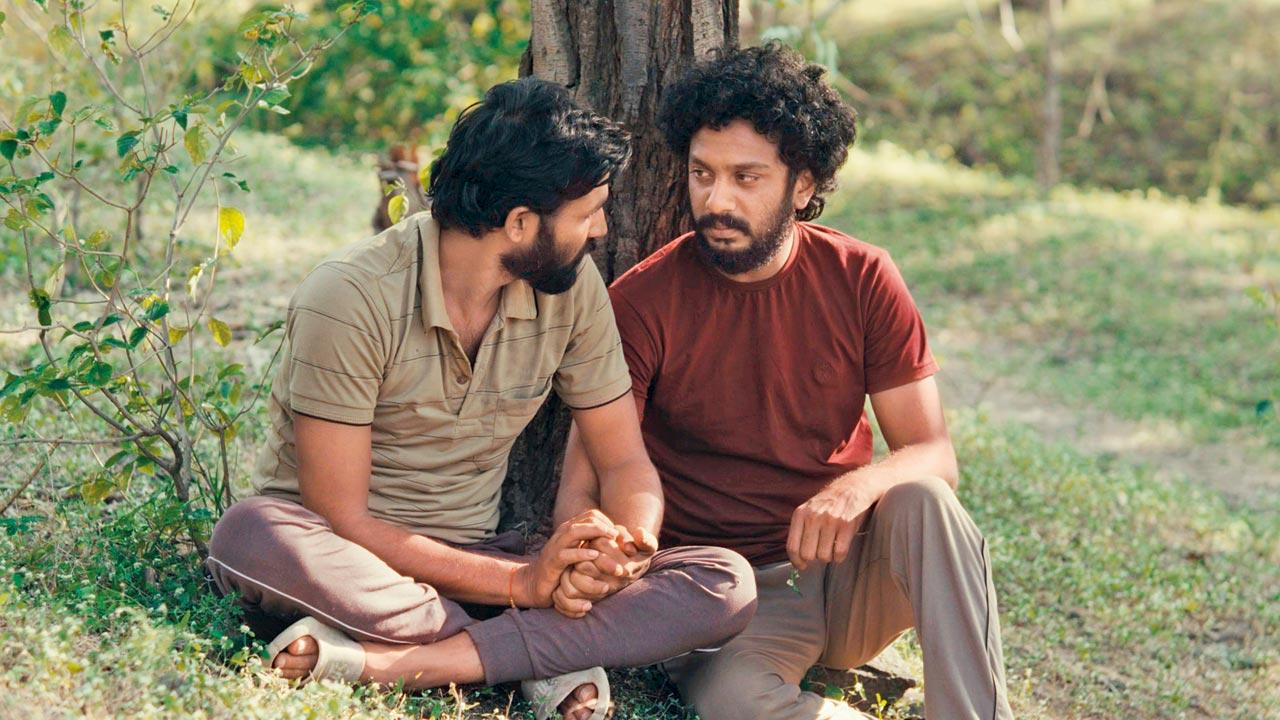
Director Rohan Kanawade reveals he was initially fearful of Sabar Bonda not finding a release in today’s market
Priyanka Sharma (MID-DAY; September 16, 2025)
Faith over fear — this principle has guided filmmaker Rohan Kanawade up to this point. His maiden feature film, Sabar Bonda, won the Grand Jury Prize in the World Cinema: Dramatic category at the Sundance Film Festival in January. Despite the win, the director wasn’t sure whether his romantic drama would be picked up for a theatrical release. Today, his faith in the movie has trumped his fear as actor and producer Rana Daggubati is bringing Sabar Bonda to theatres. “I didn’t know it would be this quick,” he chuckles.
“I know it’s very difficult to get a theatrical release nowadays. So many of my filmmaker friends have made their movies and they aren’t getting distribution. So, it was scary when we were making Sabar Bonda. But with all these people joining it, the release will be stronger,” he says, happy to have the support of filmmakers Vikramaditya Motwane, Nikkhil Advani, Nagraj Manjule, and actor Sai Tamhankar who have come on board as executive producers.
Starring Bhushaan Manoj and Suraaj Suman, the Marathi movie revolves around Anand who falls in love with Balya when he visits his ancestral village during the mourning period of his father’s demise. With Kanawade giving us a tender queer romance, we ask him about the love stories that influenced him in his childhood.
“My dad used to take us to watch films all the time. So, I used to watch all the Aamir Khan, Salman Khan, and Shah Rukh Khan films. I cried when I watched Kuch Kuch Hota Hai [1998],” he recalls.
But if there was a film that aroused his curiosity about what goes on behind the camera, it was the Marathi classic, Maherchi Sadi (1991). “While all the women in the audience were crying for Alka Kubal’s character, I asked my father all about the projector and kept on looking at all those colourful rays coming out of it.”
If the seeds of filmmaking were sown that day, they were further nurtured by Marathi filmmakers Jabbar Patel, Sumitra Bhave, and cinema legend Satyajit Ray, whose works Kanawade devoured.
“I realized how differently you can tell stories. There is not only one way to tell a story — I saw that in films made by these filmmakers. Sometimes if you feel jealous of other filmmakers, it inspires you to push yourself.”
Fear is another emotion he has come to terms with. “When you are writing something new, you have fears. But you have to force yourself to make what you want to.”
I’m not too fond of the fact that lot of people have made it into a business to report numbers-Abhishek Bachchan
8:46 AM
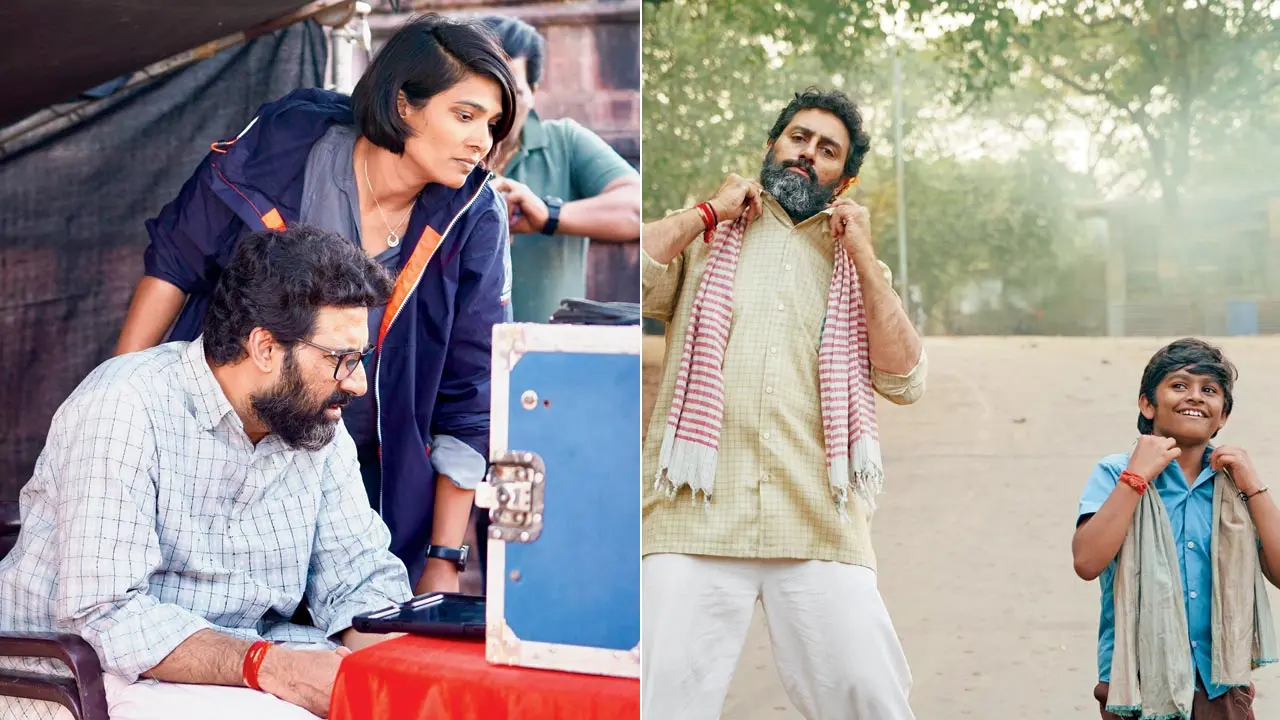
Abhishek Bachchan on director Madhumita’s unique storytelling lens and emotional clarity, and his young co-star Daivik Bhagela
Letty Mariam Abraham (MID-DAY; July 8, 2025)
When this reporter saw Kaalidhar Laapata, our first reaction was to go home and ask our parents what is on their bucket list. When we ask the same of Abhishek Bachchan, who headlines the Zee5 film, he says there are too many things he wants to do but refuses to tell us what exactly. “I feel if I talk about it, then it doesn’t happen.”
The film, written and directed by Madhumita, is the Hindi adaptation of the Tamil film K.D (2019). It follows a middle-aged man experiencing memory loss and a sense of abandonment after overhearing his family’s plan to leave him behind during a religious gathering. He then embarks on a journey during which he meets an eight-year-old orphan, and they set out to fulfil items on his bucket list. In conversation with mid-day, Bachchan talks about what drew him to the film, why Daivik Bhagela was the right choice as his co-star, and why understanding the economics of films is important.
What was your initial reaction to the narration of the story of Kaalidhar Laapata?
I just loved the way Madhumita had written the film and the way she wanted to tell the story more than just the subject matter. I loved her approach to it; she made it very human. I loved the fact that she was going to end up saying some very profound things — things that stay with you long after the film is over. But [she said] it in such a casual manner. The conduit of all of this is a 10-year-old kid. I found that very interesting.
We’ve often noticed that you have great chemistry with child co-stars. It somehow brings out the child in you. Do you agree?
You feel that? [Laughs] They do, right? I mean, just by their countenance alone, they kind of make you very carefree because they’re so innocent and not inhibited at all. So I think that does bring out a lot of the child in you.
Is that how you felt working with Baghela?
Daivik is very sweet, but he’s an old soul. Immensely well-prepared. He’s a wonderful actor and has got a very bright future ahead of him. A lot of that has got to do with the fact that he comes from a very renowned theatre troupe in Bhopal, where we shot the film. His confidence is something else. When we were casting, Madhumita said that she needed a kid who just has to be the character — confident to the point of being overconfident and chalu. How do you cast a kid like that? And in walked Daivik. Before he could say anything, we were sure this is the guy. He had that X-factor in him, which was brilliant.
What was his reaction to you?
I don’t think it was anything much. Everybody told me that he might be intimidated, so I’d have to be careful and make it casual for him. So I thought I would have to handle him. Daivik walked in — he was totally cool. I was very happy with that. You always think, with kids you have to behave in a particular way. He was like a normal co-star. I’m not saying he’s mature or that he has grown up too fast. I’m saying that he was very well-prepared and embodied all the qualities that the character needed. He was not precocious at all.
What was it like working under Madhumita’s vision?
I had a truly wonderful time working with Madhumita. Her crystal-clear vision for the film, and especially how she intended to adapt the script from page to screen, was something I thoroughly enjoyed and found incredibly inspiring. I also deeply appreciated her insightful notes and her consistent focus on the emotional depth of the characters in every moment. It was a genuine pleasure collaborating with her.
What do you want people to see in Kaalidhar Laapata — the film, your performance, the child actor?
It’s always the film. It can’t be about me or the kid. No one aspect of the film is larger than the entire film. I just hope they enjoy it. If they have a smile on their face at the end of it, I’m already happy. I’m going to go tell Nikkhil [Advani, producer] and Madhumita that I’m done. [If people have] watched the film, gone home and asked their parents, ‘Hey, I’ve never asked you. You’ve done so much for me. What can I do for you? What’s on your bucket list?’ Then we’re flying.
Do you follow the economics of moviemaking?
Of course. You have to. I think it’s very important for people within the film industry too. I don’t agree that it’s important for people outside the film industry, though. When I go to a movie, I’m not going to see a hit or flop film. I go to see a good film or a bad film, and that’s what the audience should do too. I’m not too fond of the fact that today a lot of the film industry and media houses have made it into a business to report the numbers. That can’t be the discussion. The discussion has to be around: did you enjoy the film or not? I’ve seen Amar Akbar Anthony [1977]. I don’t know how many times I’ve seen it. I don’t know the collections of the film. I just know that it’s a very entertaining and fun film. So that’s the way a film should be for the audience. But as an actor or somebody who is part of the film industry, it’s very important to be cognizant of the economics because it is a commercial art. You’re selling a ticket; you owe them their money’s worth. So you have to be aware of that.
You expect to see Abhishek Bachchan in a sharp suit, not struggling with memory loss in a village-Madhumita
9:11 AM
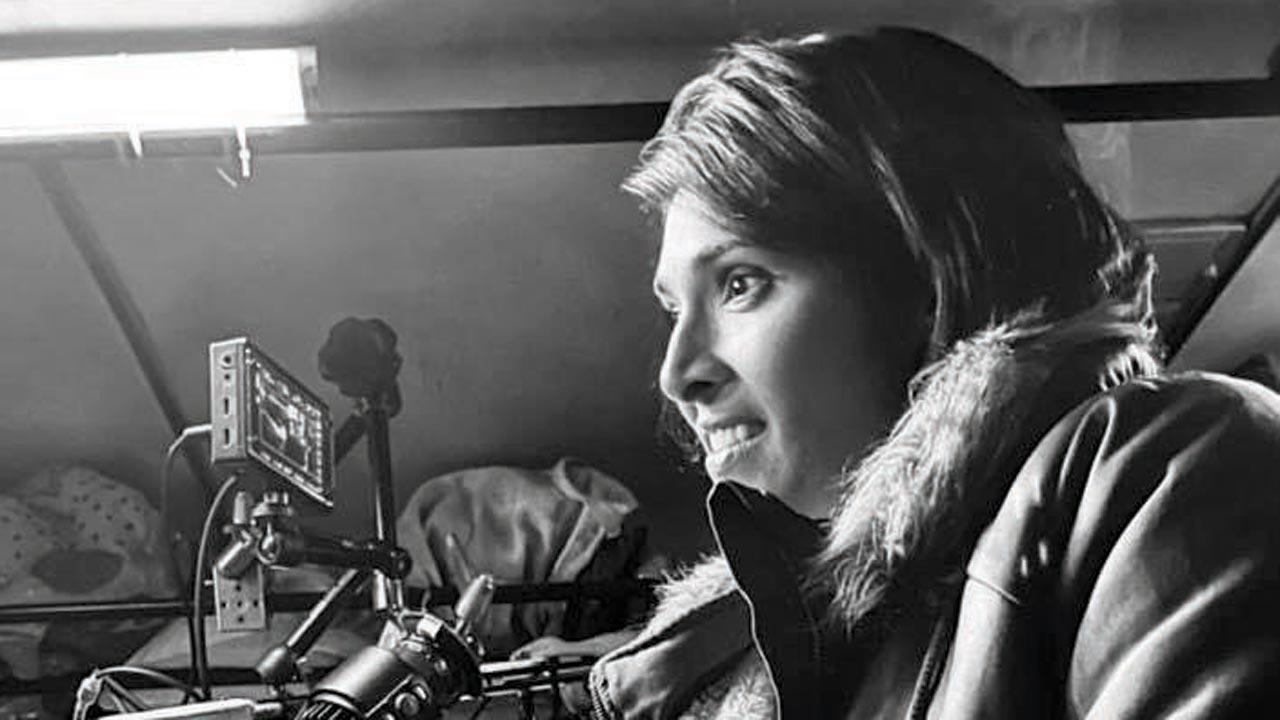
Debuting in Hindi cinema with Kaalidhar Laapata, director Madhumita reveals she dislikes the label ‘female filmmaker’ and the misguided notions it comes with
Mohar Basu (MID-DAY; July 5, 2025)
What drives a filmmaker to remake their movie for a new set of viewers? The curiosity to see whether the story can be told differently without losing its essence, says Madhumita. For her Hindi film debut with Kaalidhar Laapata, the director has adapted her Tamil offering, KD (2019). “After KD received accolades, I was fielding calls from all corners — Malayalam, Hindi, and even Korean filmmakers,” she laughs.
She chose to adapt the film in Hindi as the language and culture offered familiarity. There was another reason she revisited the story of a man who sets out to live his life with joy and purpose, after learning that he is battling dementia.
“In KD, our hero is an 80-year-old man. For the Hindi version, I thought what if our protagonist was younger, someone who has never lived for himself? He’s not ready to say goodbye. Also, in the Tamil version, the little boy is tough and short-tempered. But Ballu, in Hindi, holds on to his innocence like a prized toy. So, adapting KD in Hindi was also about exploring new shades of hope,” reflects Madhumita.
In Kaalidhar Laapata, Abhishek Bachchan has stepped into the protagonist’s role. For the director, he was the anchor of the Z5 film.
“I never write a character with a specific actor in mind because if that actor says no, it’s like having your favourite dessert snatched away just as you’re about to take a bite! So, I focus on building the character authentically. Nikkhil Advani, one of our producers, arranged a narration with Abhishek Bachchan. AB sir is known for his suave, urban roles; he’s the guy you expect to see in a sharp suit, not struggling with memory loss in a small village. But that’s exactly what drew me to him for Kaalidhar.”
Madhumita is part of the growing pool of women filmmakers in India. Ask her the challenges she faces, and she cuts in, “Being labelled a female filmmaker and having my gender precede my work can be exhausting. I’m proud to be a woman, but I don’t believe my gender should define how my work is evaluated. One of the biggest challenges is the assumption that women can only tell certain kinds of stories, like feel-good films or rom-coms. Beyond that, the daily challenges aren’t so different from what women face in any industry. There is also an idea that cinema is less safe for women, but that’s not true.”
I would it take at least six months to get Abhishek Banerjee on board for Stolen-Gaurav Dhingra
8:36 AM
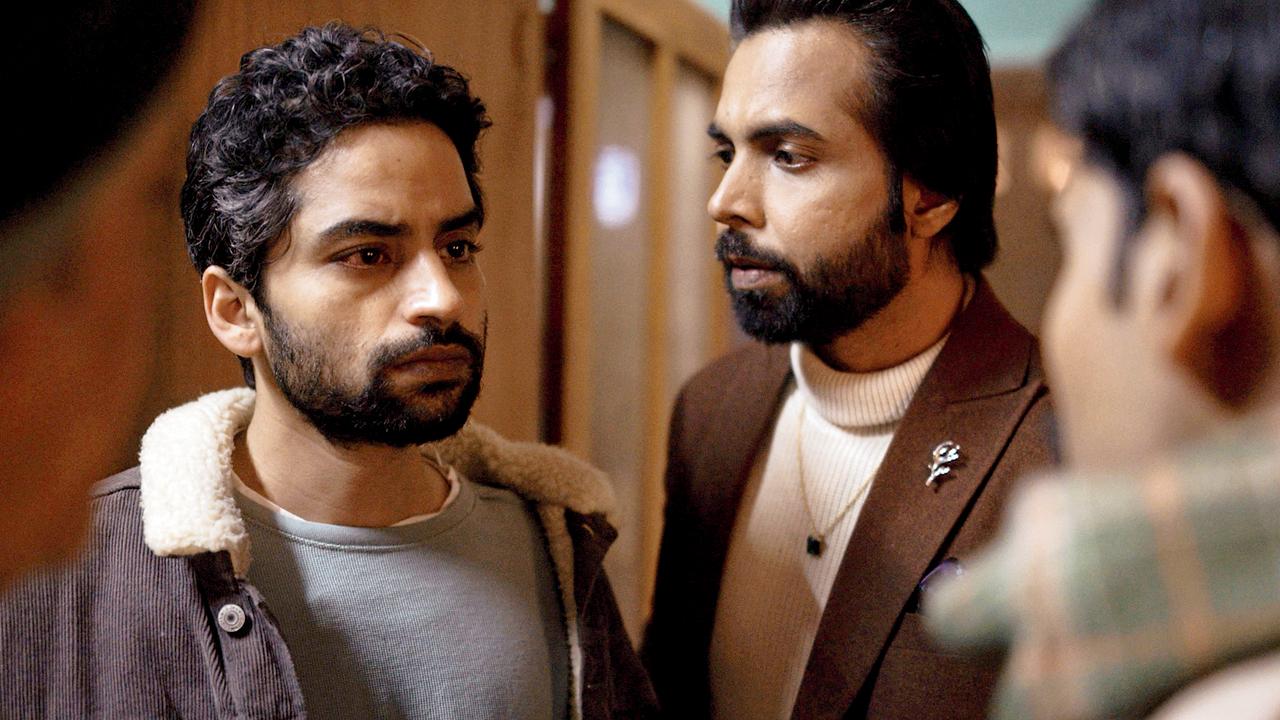
Co-writer and producer Gaurav Dhingra discusses how he got Abhishek Banerjee for Stolen in three days
Priyanka Sharma (MID-DAY; June 1, 2025)
Actor Abhishek Banerjee-led thriller, Stolen, is finally arriving home following its acclaimed international film festival run. But the film’s origin can be traced back to 2019, when debutant director Karan Tejpal shared with producer Gaurav Dhingra a story about two boys who were mistaken to be child lifters.
“Karan showed me some videos of two Assamese boys from Mumbai, who had gone fishing in Karbi Anglong, in Assam. They were mistaken to be child lifters, and then lynched [by a mob]. Karan wanted to explore the idea and shoot it in one take. That got me excited,” says Dhingra, who has also co-written the film.
At the same time, the producer was working on a separate series about missing children in India. “While this was going on, one of the stories we found, for the series we were doing, was about missing children being picked up from a bus station. Both the Karbi Anglong and the child lifting stories merged, and gave birth to Stolen,” he says, adding that it took them almost two years to write the script.
The time spent, however, was worth it as every actor they approached gave their nod after reading the first draft itself. Banerjee’s confirmation came in three days, shares Dhingra.
“We had just seen Paatal Lok. I felt Abhishek had a lot of range. He read the script the very next day. Usually, you need to give a lot of narrations. I was shocked because I thought it would take at least six months. But Abhishek said he wanted to take a day to read it again and respond. Two days later, he said he wanted to do it. It was that simple,” he shares.
Heaping praise on the actor, Dhingra says, “Abhishek is fantastic. We couldn’t ask for a better person.”
Another rarity that has happened with Stolen is the coming together of four top Bollywood filmmakers — Anurag Kashyap, Vikramaditya Motwane, Kiran Rao, and Nikkhil Advani — as executive producers. How difficult was this feat to achieve? Dhingra says he actually didn’t have to do anything.
“Everything is in the power of the material. We did a screening in Mumbai, and called some friends from the industry. Nikkhil and Vikram saw the film and were blown away. They asked me what I needed. I said that I was trying to sell the film. But then the industry was down. Later, Anurag called me, and said that he had heard much about the film and wanted to see it. Kiran, who saw it last, [was someone] I knew [as an assistant director] from Swades [2004], and Mangal Pandey [2005]. Earlier this year, I brought them together to present the film so that the audience sees their credibility and makes the film bigger. I’m so grateful. It’s extremely rare that such level of filmmakers come together to push a film.”

Gaurav Dhingra, Kiran Rao, Nikkhil Advani, Anurag Kashyap, Vikramaditya Motwane
Saif Ali Khan to start filming for Rahul Dholakia’s period drama after Jewel Thief promotions
9:34 AM
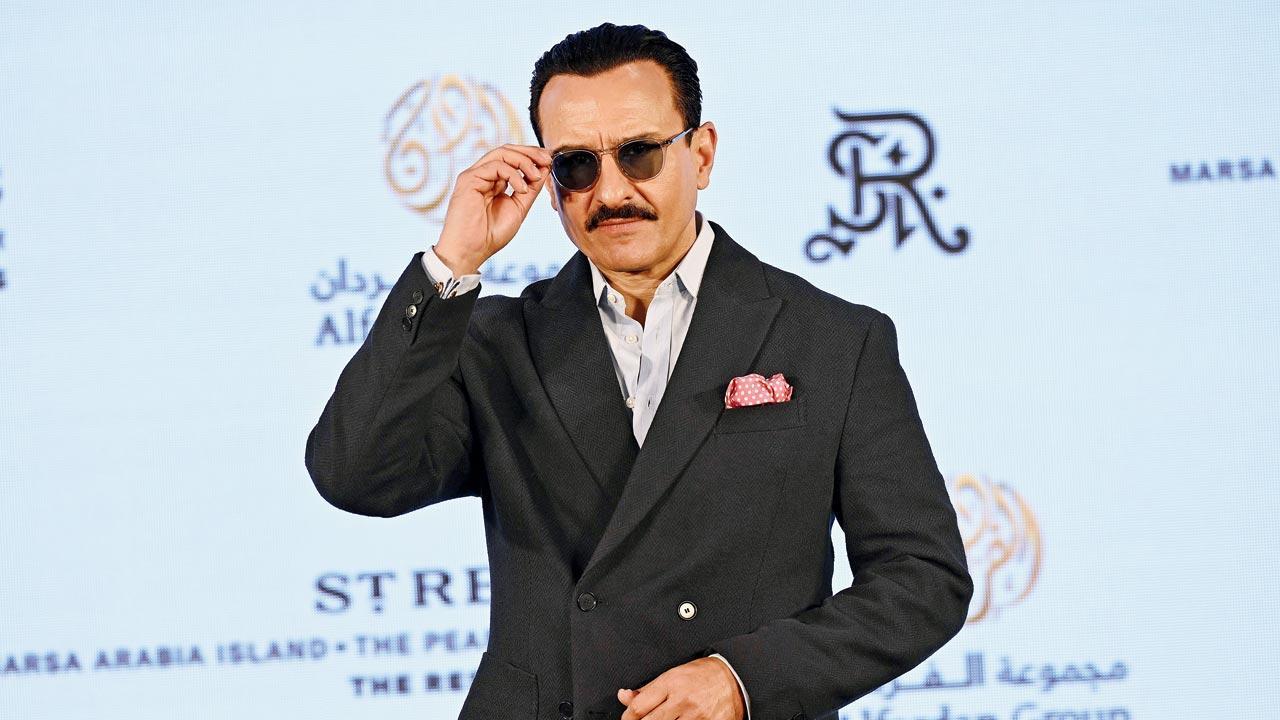
Sources say Saif Ali Khan, in his first shoot since January home invasion, to begin filming director Rahul Dholakia’s period drama on India’s inaugural election, this week
Mohar Basu (MID-DAY; April 22, 2025)
In January, mid-day had reported that the shoot of Saif Ali Khan’s film with director Rahul Dholakia had to be deferred from its January 20 date after the attack on the actor in his Bandra home earlier that week (Saif’s health above all else, Jan 19). Three months on, the period piece, which chronicles India’s first general election, has gone on floors. Sources tell us that the yet-untitled film rolled on April 20 near Grand Hotel in Ballard Estate, with Khan expected to join this week. It will mark his first shoot since his attack.
The actor plays Sukumar Sen, India’s first Chief Election Commissioner, alongside Pratik Gandhi and Deepak Dobriyal in the Nikkhil Advani production. The director is said to have kicked off filming with a crowd scene.
An insider tells us, “The set had over 200 extras who formed the crowd. It was a charged sequence with Pratik and Deepak. The unit will shoot across different locations in the city over the next few weeks. Saif and the director intend to shoot a chunk of the drama by May-end. The actor has wrapped up the promotions for Jewel Thief, and will turn his attention to this project in the coming days.”
In their first collaboration, Dholakia and Khan will offer a retelling of how Sen orchestrated the country’s inaugural general election that was held between October 1951 and February 1952. The Indian National Congress secured a majority, leading to Pandit Jawaharlal Nehru’s appointment as the first Prime Minister.
The source adds, “The period is vital to the storytelling. The production design team will build massive sets depicting India of the 1950s.”
Who is Sukumar Sen, the character Saif Ali Khan plays?
Sukumar Sen was the first Election Commissioner of India, who oversaw the first two elections in the then-newly independent country. While the inaugural general election was held between October 1951 and February 1952, the second took place between February and March 1957.
My friends started out with me, but raced ahead-Ira Dubey
9:16 AM

Accepting that everybody has their own career path, Bollywood actor Ira Dubey on her connection with Fatima Jinnah as she gears up for Freedom At Midnight 2
Letty Mariam Abraham (MID-DAY; February 18, 2025)
In the last decade-and-a-half, Ira Dubey has largely concentrated on acting, be it in a wide range of plays or in shows like Potluck and Scoop. But now, the actor is ready for the next step in her career—writing and direction. Will wearing multiple hats be overwhelming? Maybe. But Dubey is excited about the road ahead that will see her not only direct her first film but also return to the new season of Freedom At Midnight where she plays Fatima Jinnah, a leading women’s rights activist in Pakistan. In conversation with mid-day, she talks about life of an actor on stage, films and OTT, her love for writing, and battling self-doubt. Edited excerpts from the interview.
Does juggling writing, acting and producing a show get overwhelming?
One has to try and find [the time]. I have been a stage actor for almost 20 years. Theatre is close to my heart. I won’t ever give it up. If you had the good fortune of having theatre in your life, I don’t think you’d ever give it up for that very reason. Whether it’s Naseer [Naseeruddin Shah] sir or late Om Puri or Shabana ji [Azmi] or my mother [Lillete Dubey], some of our finest actors come from theatre and still go back to it. That’s because it’s an actor’s medium more than a film.
Are you planning to foray into direction as well?
I’ve been a festival director and I’ve directed [plays] for stage, but I haven’t helmed anything on film yet. I’m writing something that I would like to direct. The journey of writing and directing films began last year. Every time you want to try on a different hat, you become a student. I didn’t go to film school to learn directing, I haven’t assisted any directors. But then, some of the most successful directors never studied film. It can be overwhelming, but you have to strike a balance. When you live in a city with rent and bills to pay, [it becomes difficult] to sustain your writing career and enjoy yourself. I have to balance that now with finding the time to write and research.
How do you deal with writer’s block?
I don’t even know if I have experienced writer’s block. I used to enjoy writing very much when I was younger. I used to write poetry, I was a voracious reader. I used to read a book a day up to my 20s. Then, life took over and I focused more on my acting career. I moved away not only from reading, but also from writing. So, it’s like I’m opening a very old door. Writer’s block is something that you have to [go through]. It’s like that famous Robert Frost quote: The best way out is always through.
Do you battle with self-doubt?
I think all of us do. I think self-doubt is healthy in a way, and in some ways, it’s not. Again, it’s about finding out how you walk that line. I’m a perfectionist. I was an overachiever in school. It has taken me 15 years to find that part of myself. You don’t have to be the master at everything you do. It’s more about coming into your own, knowing that a lot of it is about the process, and is not result-oriented.
When did you start asking yourself these questions?
Some of it began after I lost my dad in 2015, and some I’ve always had. I went through a dark period in my 20s. It’s something I may talk about in a film someday. There are certain low periods in everybody’s life. How you deal with those and emerge out of them teaches you so many things in retrospect. Going through [a dark phase] in my late teens and early 20s, and then losing my father at 31 propelled me towards this self-awareness.
How do you view your film career?
I don’t know where I am in my film career, to be honest with you. I always quote this example—my mother started working in films in her 40s. Clint Eastwood started directing in his 70s. People’s careers have turned around in their 50s and 70s. Life is unpredictable. When I look back, there were moments in those 15 years where I have been very frustrated, wished things were different, been envious of other people and wondered why things were happening for them and not for me. I have friends who started out around the same time as me, but they’ve raced far ahead of me. I felt the pinch. But at the end of the day, the belief in yourself, your ability, and your talent are far more important because those will carry you forward.
What is the status of Potluck season 3 and Freedom At Midnight season 2?
We were hoping there will be a third season of Potluck. The second season of Freedom At Midnight will be out in August. In 2017, I was asked to do a reading of a book called Mr And Mrs Jinnah: The Marriage That Shook India. I completely fell in love with the book and acquired the rights to develop a two-season show that didn’t ever get made. I remember meeting Nikkhil [Advani] and Mira Nair [for it]; she was quite interested, but she needed time as she was working on a couple of things at the time. Just before COVID hit, I had to give it up because somebody wanted the lifetime rights and I couldn’t afford that. In 2022, Nikkhil offered me Fatima’s character in Freedom At Midnight. Nikhil’s partner, Madhu Bhojwani, had watched me in three plays and loved me in them. The role just made perfect sense. I didn’t give a damn about the fact that she had grey hair or that she was older. Fatima is an absolutely fascinating character.
Saif Ali Khan attack: Shoot of Netflix film, promotions of Jewel Thief and Kartavya pushed
3:18 PM
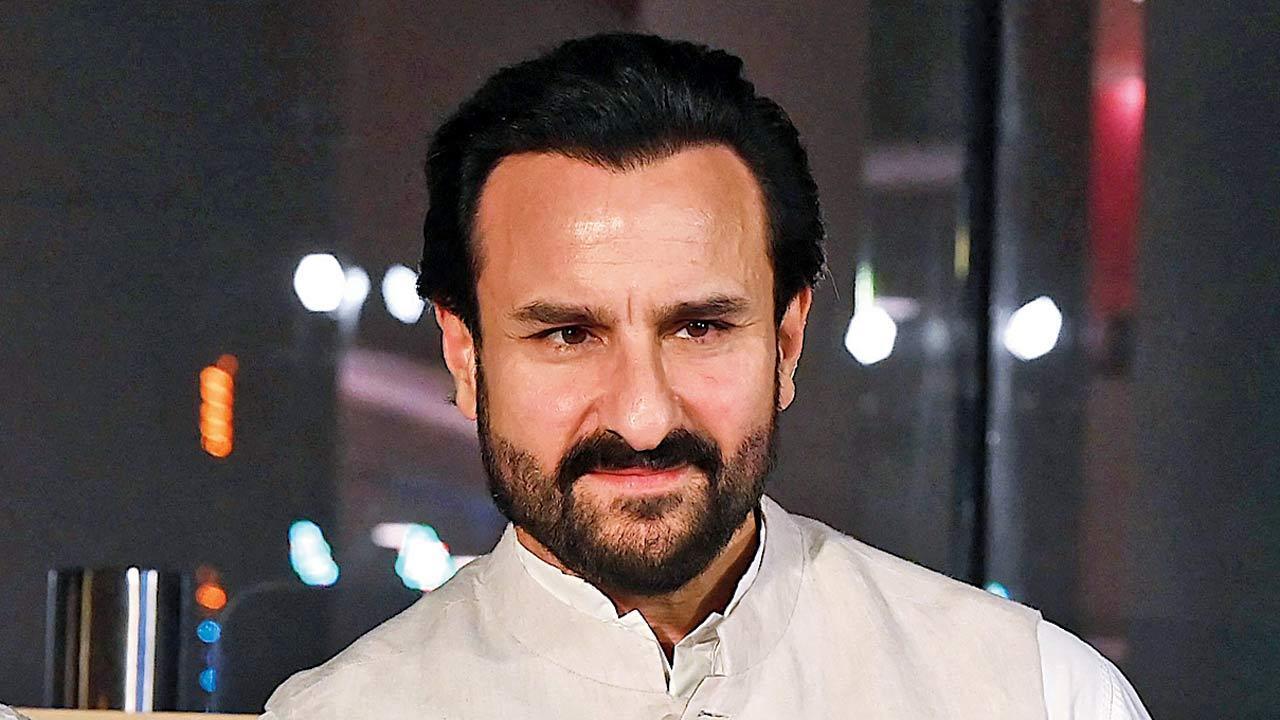
As Saif Ali Khan recovers after being stabbed during a burglary attempt, sources say the actor has promotions for Jewel Thief and Kartavya lined up in the next few months
Mohar Basu, Upala KBR (MID-DAY; January 17, 2025)
Thursday afternoon brought relief to Saif Ali Khan’s family and fans as the team of doctors at the Lilavati Hospital, following the surgery, issued a statement that the actor “is out of danger”. He had suffered six injuries after being stabbed by an alleged burglar at his Bandra residence in the early hours of January 16. The actor, who is on the road to recovery now, has a packed 2025 ahead. In the next few months, he is expected to kick off promotions for his summer releases, Jewel Thief — The Red Sun Chapter, and Kartavya.
It is heard that Jewel Thief, also starring Jaideep Ahlawat, is targeting a March-end release. An insider tells mid-day, “The heist thriller, which is directed by Robbie Grewal, with certain sequences helmed by Kookie Gulati, was wrapped up late last year. The project has now moved into the final post-production stage. While Saif had finished a chunk of the dubbing in November, he only has two days of dubbing left. The team is likely to begin promotions in mid-March before its March 27 release.” Meanwhile, Kartavya, an OTT film helmed by Pulkit of Bhakshak (2024) fame, is slated to release mid-2025. “The promotions will begin after May,” adds the source.
On the shooting front, Khan’s next will be Race 4 that is expected to roll in August. A source says, “The producers are currently finalizing a director.” The actor also has Priyadarshan’s yet-untitled next and Devara: Part 2 in his kitty.
----------------------------------------
Sources say Saif Ali Khan’s historical drama with director Rahul Dholakia, which was to roll on January 20, was deferred till he recovers from the stabbing injuries
Mohar Basu (MID-DAY; January 18, 2025)
On Friday, Saif Ali Khan, who suffered multiple injuries after he was stabbed by an intruder in his Bandra residence a day earlier, was shifted out of the intensive care unit of Lilavati Hospital. The actor has been advised rest and restricted movement for a week by his team of doctors. With Khan’s recovery being the top priority of his family and collaborators, we have heard that director Rahul Dholakia and producer Nikkhil Advani have deferred their yet-untitled Netflix film with him that was to kick off on January 20.
Sources tell us that a set was built at Madh Island for the project that also stars Pratik Gandhi and Deepak Dobriyal. But in light of recent events, the makers informed the team that the shoot has been pushed until he recuperates. A unit hand tells us, “Originally, we were supposed to shoot in April, but because things progressed fast, the filming was advanced to January 20. Given the unfortunate incident, the team has reverted to the original plan of shooting by March-end or early April. It can be pushed further ahead as the makers want to give Saif sir as much time as he wants for his recovery. After he has healed, Nikkhil sir and Rahul sir will meet him and chalk out the plan as per his convenience.”
The film is reportedly a historical drama chronicling India’s first general elections that were held between October 1951 and February 1952. Khan will portray Sukumar Sen, India’s first Chief Election Commissioner, who played a pivotal role in executing the country’s landmark democratic process.
I’m glad that after 21 years, people are still watching Kal Ho Naa Ho, dancing to Maahi Ve-Nikkhil Advani
8:13 AM
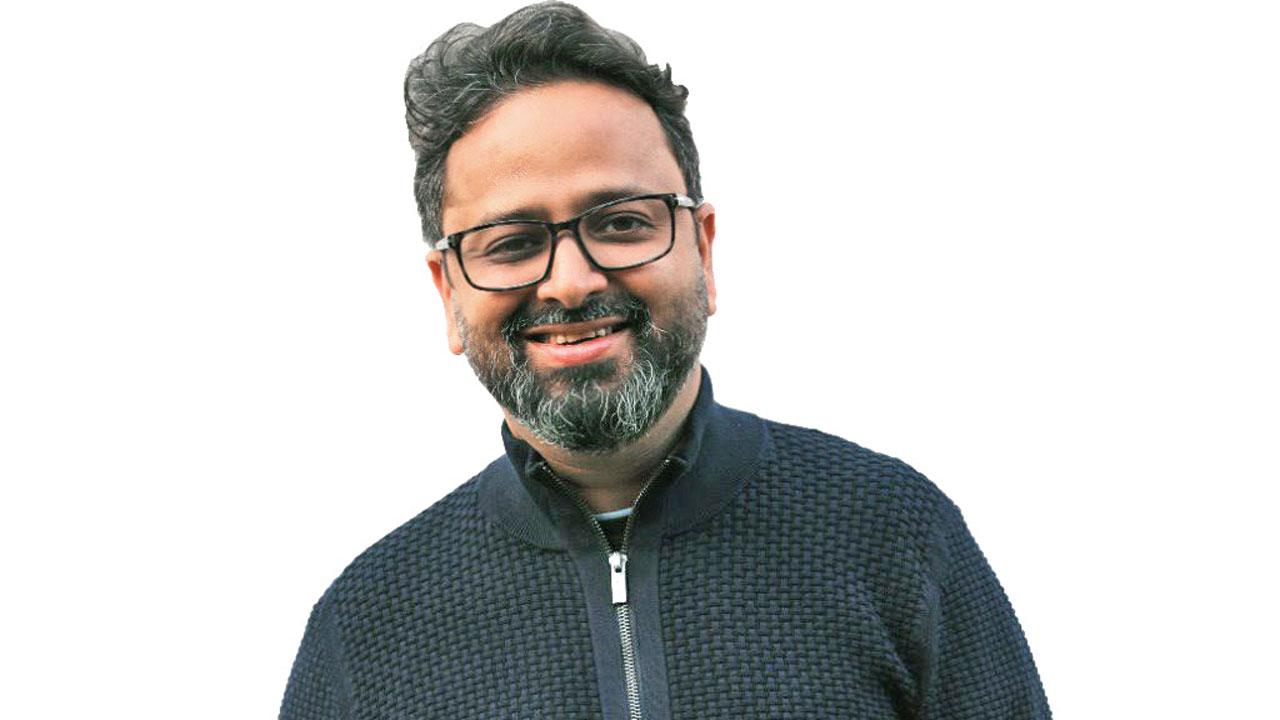
Niharika Lal (BOMBAY TIMES; December 10, 2024)
Call it serendipity or coincidence, Nikkhil Advani ended up with two releases on the same day last month – the re-release of Kal Ho Naa Ho and the release of the period drama Freedom At Midnight. He says he can’t really take credit for either of the projects or the release dates. “I was just offered the projects, and I didn’t say no,” he said during a conversation.
‘I ENJOY BEING ON SET’
Nikkhil says he enjoys filmmaking. “I enjoy being on set. I love being in a writers’ room. As a showrunner and producer, I constantly have to be in rooms where budgets are being discussed and, more importantly, where budget cuts are being slashed. I’ve never really enjoyed being in an editing room, though. I hate it because every time I watch my footage, I find myself thinking, ‘I could have shot this better. I wanted it to be better. Maybe we can change this,” he says.
‘IT WAS A CONSCIOUS DECISION TO USE LIGHTS LIKE THE CROWN’
Watching Freedom At Midnight may remind the audience of the historical drama The Crown. Nikkhil says, “Was it a conscious decision to be like The Crown? Yes, very much. What The Crown does is use very harsh backlight from the windows, and they shoot a lot on sets. We were also shooting extensively on sets, so it became an automatic reference point for us. Agar aap blue ya green screen use karte ho, then half your budget goes into VFX, and you can’t do anything else.”
He further explains, “These are things I’ve learned over the years. For instance, if I want the audience to feel a little more stressed out, I use darker colours and wood paneling. Colours were thought out very carefully because I wanted the audience to be emotionally connected to every scene of Freedom At Midnight.”
‘TRIED TO BE AS AUTHENTIC AS POSSIBLE’
Nikkhil says that as far as authenticity is concerned, the team tried their best. He explains, “But I don’t think it can ever be enough, right? The people being spoken about and shown in this story were giants. It’s not just about getting their physicality, speech, or walk right. What they thought, what they said, their vision – it was immense. What I tried to do was put the audience into a room with them and show, yeh log kaise thay.”
‘People still dance to Maahi Ve and send me clips’
“Neither did I have a choice about the release of Freedom At Midnight, nor did I have a say in the re-release of Kal Ho Naa Ho,” shares the filmmaker, adding, “I’m just glad that after 21 years, people are still watching Kal Ho Naa Ho, dancing to Maahi Ve, and sending me video clips.”
He says, “I didn’t consciously make these choices. Someone offered me Freedom At Midnight, and someone offered me Kal Ho Naa Ho. Maine keval bola, ‘Mujhe kaam chahiye, mujhe kaam karna hai.’ My sister (Monisha Advani) and my production partner, Madhu (Bhojwani), often ask me, ‘When will you turn around and start saying no?’ And I reply, ‘I won’t. I’ll never say no. If I’m offered a project, why would I say no?’ Logon ke paas kaam nahi hai. People often say, ‘You’re doing so much work,’ and the reason is simple I say yes to everything. When I was doing the post-production for Vedaa, I was simultaneously shooting Freedom At Midnight. I don’t say no; I only say yes. Karan (Johar) told me to do Kal Ho Naa Ho, and I said, Okay.”
Vivek Agnihotri has not seen Freedom At Midnight, the trailer. He has not seen anything-Nikkhil Advani
4:46 PM
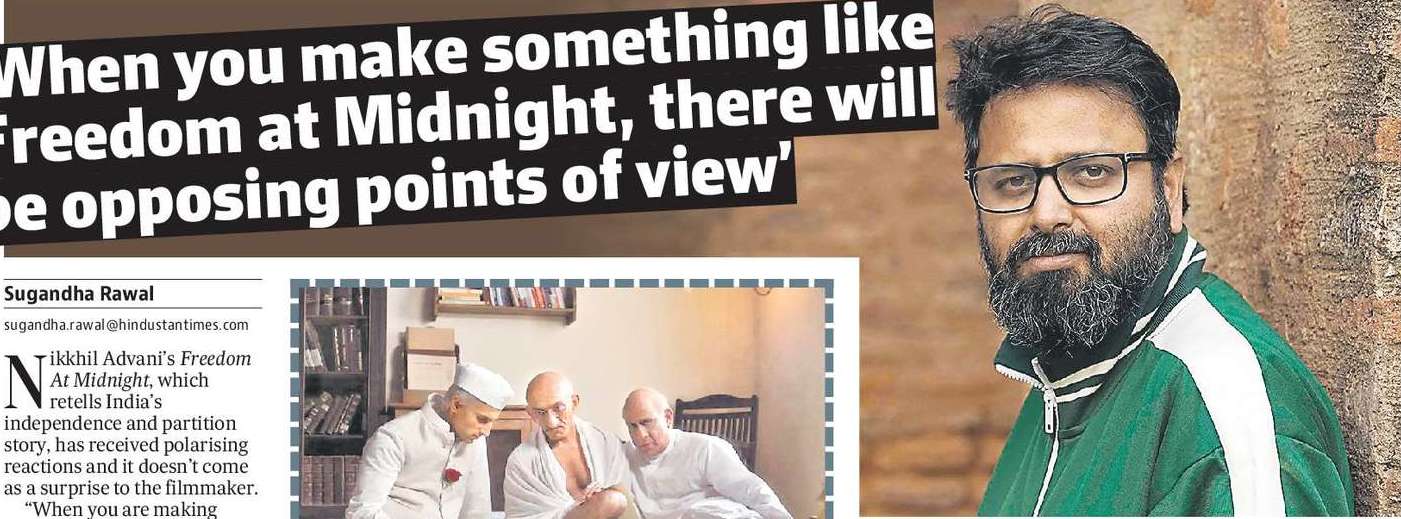
Sugandha Rawal (HINDUSTAN TIMES; November 23, 2024)
Nikkhil Advani’s Freedom At Midnight, which retells India’s independence and partition story, has received polarising reactions and it doesn’t come as a surprise to the filmmaker.
“When you are making something like Freedom At Midnight, there will be opposing points of view,” Advani tells us, adding, “I’m sure there are experts who know more about the partition and days leading to independence. And they will have some point of opinion”.
He asserts, “What we have tried to do is just stick to the events that took place between August 16, 1946, to January 30, 1948, which are indisputable. These events took place in history. We have just followed events and tried to take the audience into those rooms.”
Mention director Vivek Agnihotri’s tweet that criticises the filmmaker for allegedly not depicting the history with full honesty, he replies, “He has not seen the show, the trailer. He has not seen anything (about the show). He has just read an article from a magazine and shared the tweet.”
Advani further states that he has done his best to give a balanced narrative, stressing that he was only focused on capturing the harrowing pain of the tragic chapter of Indian history and not on taking any sides. “There’s only one side here. And it is that the partition was horrible and it should never have happened. People were torn apart, and friends were torn apart. There is no other side,” he stresses.
Sharing his own experience, he reveals, “My grandparents were part of that (partition). I’m a second-generation refugee. Although I was born in 1971, my grandparents spoke about the times. I have heard some of the saddest and most tragic stories. It is indisputable that partition was a very tragic consequence.”
“The show has a definite end,” Advani concludes by saying that he doesn’t plan to turn it into a franchise.
I’m not hiding behind the character of Jawaharlal Nehru-Sidhant Gupta
3:07 PM
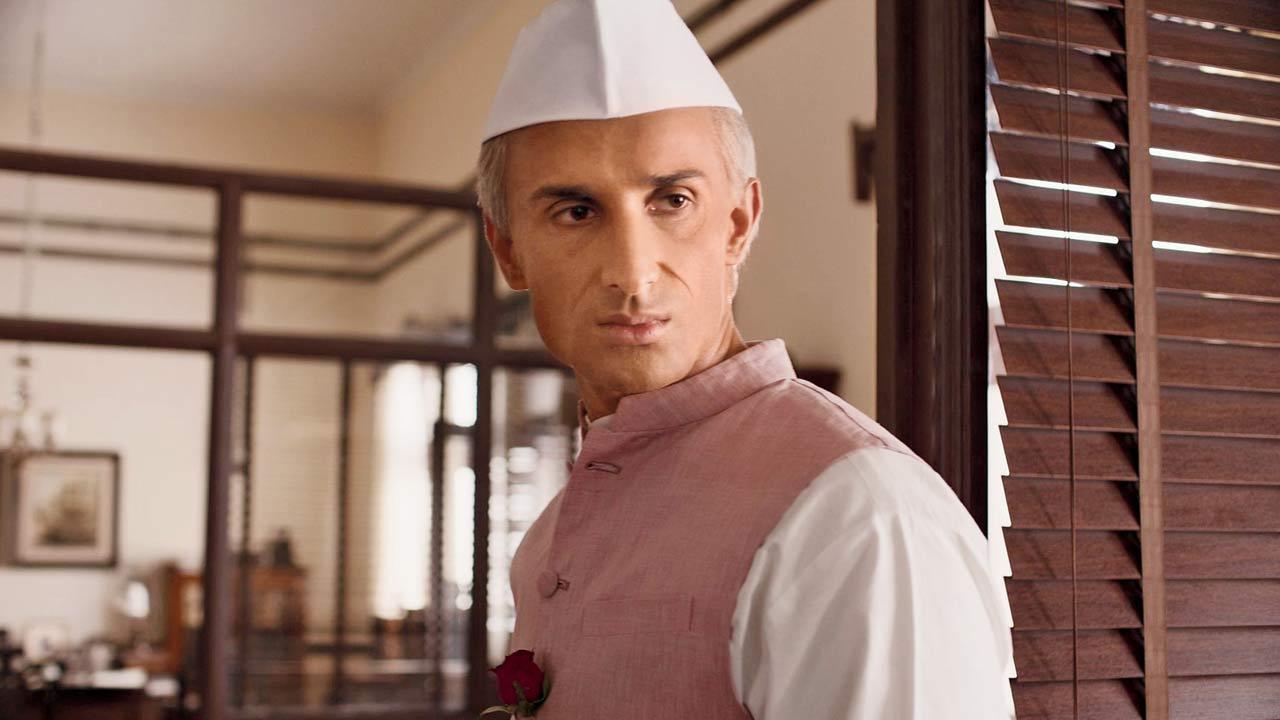
Resurfacing on the scene with Freedom At Midnight, Sidhant Gupta says he didn’t go on a signing spree after Jubilee’s success as he wanted to stay true to his craft
Priyanka Sharma (MID-DAY; November 10, 2024)
What does one do after emerging as a breakout star? Most likely, go on a signing spree. But Sidhant Gupta, who burst on the scene last year with Jubilee, vanished from the spotlight. Now, over one-and-a-half years on, the actor is back on screen as India’s first prime minister Pandit Jawaharlal Nehru in Nikkhil Advani’s period drama, Freedom At Midnight.
“As an actor, you get to know yourself as you move along, when success and acceptance come in. Why am I doing this work? This has been a life-changing question for me. I asked myself this when no one wanted to work with me, and I ask myself this today as well. When I read the script of Freedom At Midnight, I got my answer,” begins the actor. He is aware that the audience would have expected to see more of him after Jubilee.
But he instead dived deep into the Sony LIV series, which follows the events leading up to India’s partition and independence in 1947. “Nothing else mattered, not the perception of people. I didn’t want to take the safe route. I don’t want to keep doing the same three-film [deal] and back-to-back shifts. I want to stick to my guns,” he says.
That is not to say that Gupta is averse to commercial outings. After Jubilee, the actor read multiple scripts, but stayed true to his pursuit as an artiste. “If the characters are appealing, I might do those [mainstream projects] as well. I’m not hiding behind the character of Jawaharlal Nehru. I’m doing the job that actors sign up to do, which is to become someone else.”
Besides the creative satisfaction that Freedom At Midnight—also starring Chirag Vohra and Rajendra Chawla—offered, Gupta immensely enjoyed being on Advani’s set. He says the creator-director treats his unit like a family.
Recalling an incident from their Patiala shoot, the actor shares, “One day, we had to stall the shoot as the rains weren’t stopping. A day’s cost is enormous in such a huge show. So, usually, you see directors and producers thinking about how to save money. But Nikkhil sir took the entire unit to Chandigarh for a day and threw a bash. When I told him it was commendable, he replied, ‘This will drive the team for the next 15-20 days.’”
John Abraham is the biggest action star of our country; taught me about action sequences and their safety-Sharvari
8:20 AM

Terming Vedaa as an important film to boost her ‘belief in her craft,’ Sharvari on how she underwent five-month boxing prep and learnt action tricks from co-star John
Mohar Basu (MID-DAY; August 13, 2024)
Sharvari’s star is on the rise after the unexpected success of Munjya. The actor followed it up with Maharaj. But her third release of the year, Vedaa, is of prime importance to her. Reason? Nikkhil Advani’s directorial venture is her first stab at playing the titular role. If starring in and as is tough, matching up to John Abraham in an action film is tougher. She says she underwent five-month intensive training in boxing before facing the camera.
“I had never taken up boxing before. To learn it from scratch was a challenge. I had to build my physical fitness and endurance before I even started learning boxing. I specifically had to learn the speed bag for the film,” she recounts.
On screen, Abraham plays her mentor, who helps her toughen up as she fights against caste violence. Off screen, the dynamics weren’t too different.
“John is the biggest action star of our country. In real life, he taught me a lot about action sequences and their safety. It has been enriching to learn some tricks of the trade from John. But we were all in service of our director’s vision. I’ve been a huge fan of Nikkhil’s work and to be directed by him in a titular role is motivating for someone like me who comes with no backing in this industry.”
Leading the August 15 release gives a boost of confidence to the four-project-old actor. Even as she comes off Munjya’s success, she asserts that her focus is on her craft more than the box-office numbers.
“This film is important for my survival, growth, and my belief in my craft. Different languages, different lives and stories attract me as an actor. My character’s relentless fight for equality and justice inspired me to be a part of Vedaa. For me, the most important things are the story and what my character is trying to say.”
That’s where Vedaa, with its messaging about standing up against casteism, spoke to her. Sharvari views it as a story of resilience and challenging the status quo.
She states, “It’s a tale of empowerment, demonstrating that even in the face of adversity, the human spirit can triumph. We want to remind viewers that standing up for what is right, with courage and conviction, can lead to lasting change, and that every individual has the power to make a difference.”
I have never seen a time when a filmmaker hasn’t been able to talk to the CBFC about the changes-Nikkhil Advani
8:29 AM
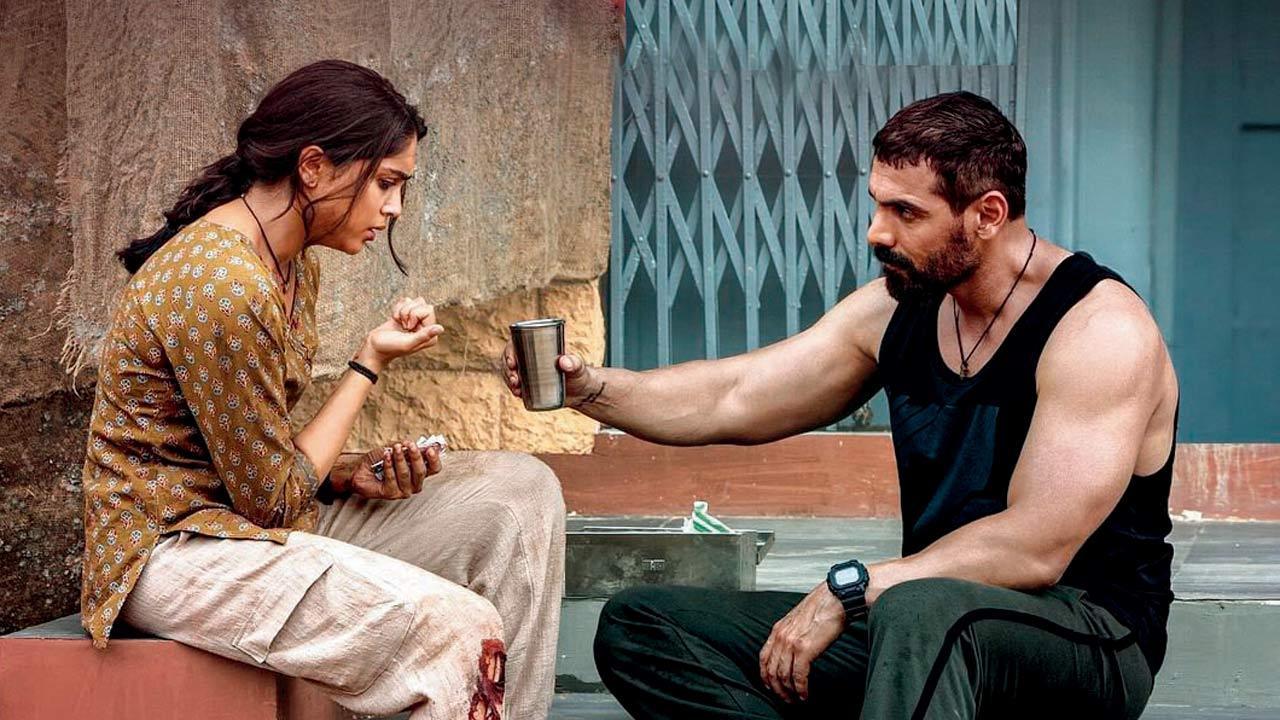
As Vedaa awaits CBFC’s clearance for a month, director Nikkhil shocked that Board has sent it to Revising Committee without apprising him of issues
Mohar Basu (MID-DAY; July 27, 2024)
“Arre, aap toh Kal Ho Naa Ho [2003] jaisi film banate thhe!” This is all that filmmaker Nikkhil Advani heard from one of the members the Central Board of Film Certification (CBFC) after he screened Vedaa for the body on June 25. There has been no formal response from the CBFC regarding the John Abraham and Sharvari-starrer since, except the communication in early July that it was being sent ahead to the Revising Committee.
What exactly is the CBFC’s concern with the movie, which is eyeing an August 15 release? That’s the first question we ask the director when we get on a call with him.
“I would tell you, but I have no idea. The norm is that the Examining Committee watches the film, sends us a list of objections or reservations, and then we discuss further. For instance, in Mrs Chatterjee vs Norway [2023], they had an issue with the word ‘harami’ being used. We explained to them that the protagonist is from the outskirts of Kolkata, and is semi-educated. She is enraged and desperate. They understood our perspective. Neena Gupta’s character in the film was modelled on Sushma Swaraj; [through her] we had shown Swaraj’s speech in the Parliament. While we had paraphrased it, the board suggested it be kept verbatim because this speech was documented in public records. We incorporated that change. I have never had this experience where the CBFC has held something for a month, and I have no idea what the issue is,” says Advani, who expressed his disappointment in a lengthy post on Instagram on July 25.
The teaser of Vedaa indicates an undercurrent of caste issue, and a heavy dose of action. For now, Advani is focused on its July 29 screening for the Revising Committee. The filmmaker informs that the screening was initially scheduled for July 25, but was cancelled due to the heavy rains. Despite the hurdles, he doesn’t believe that it’s a tough time for filmmakers today.
“I am doing my best work today. I am making Freedom at Midnight, Rocket Boys; I don’t think it’s the worst time to be a filmmaker.”
Advani adds, “I will say, however, that I have never seen a time when a filmmaker hasn’t been able to talk to the CBFC about the changes. Every time we’ve come across a situation like this, we’ve sat across the table and discussed the recommendations. Earlier, a representative would be sent to my office to discuss the changes. But this time it feels like I have been ghosted.”
August 15 has two more Hindi releases in Rajkummar Rao’s Stree 2 and Akshay Kumar’s Khel Khel Mein. At the moment, it seems unlikely that Vedaa will meet its release date.
“[A delay in release] cannot happen because it will lead to major losses for me and the studio. Right now, we are hoping that the Monday screening happens. Then we can negotiate the changes needed. Our promotional window is reduced. Vedaa is a potboiler set in current times. It releases in two weeks and our first trailer hasn’t come yet!” says the filmmaker.
mid-day texted CBFC chairperson Prasoon Joshi, who didn’t respond till press time. However, a member of the Revising Committee, who was to watch the film on Thursday, on condition of anonymity, assured that Vedaa will be viewed on July 29.
The insider added, “There was a city-wide red alert on Thursday, which is why we had to push the screening. The delay is only because of the backlog of other films; there is no ulterior motive. There are some objectionable bits in the film, they will be addressed by the Revising Committee. The film will meet its release date.”
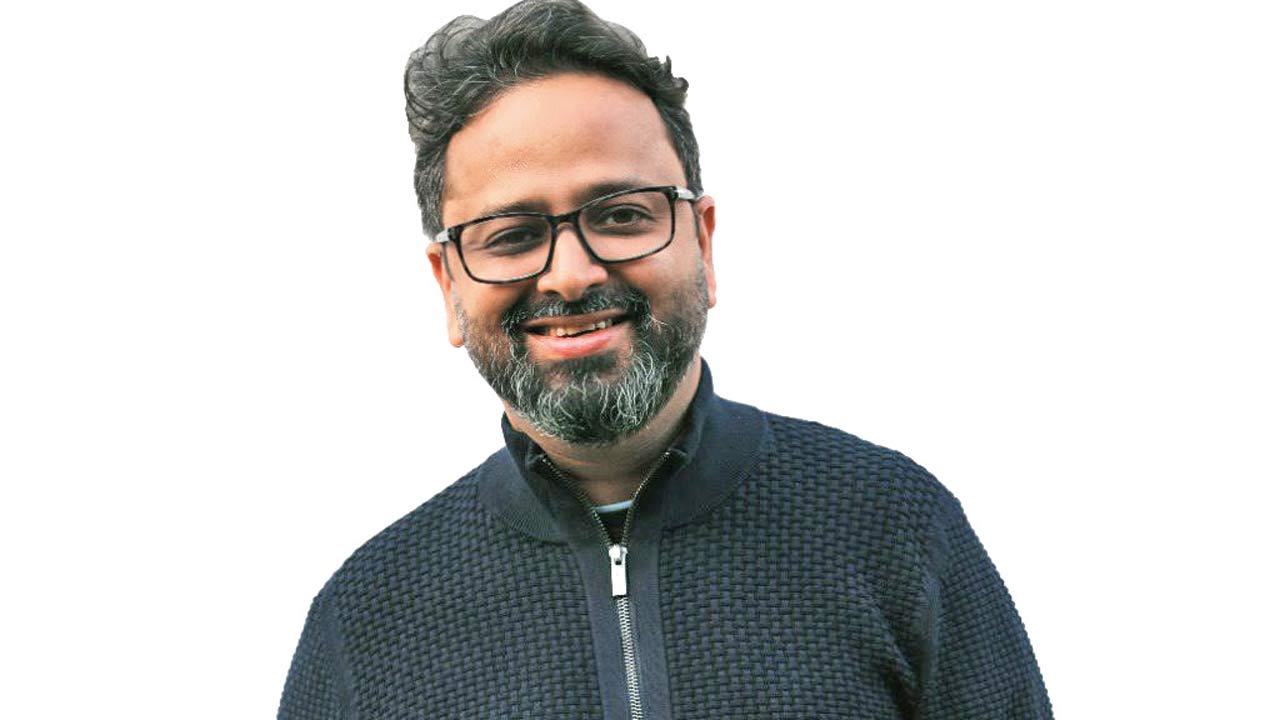
Abhishek Banerjee talks about Stree 2 and Vedaa clash: "You’ll see me in two opposite roles on same day"
7:58 AM
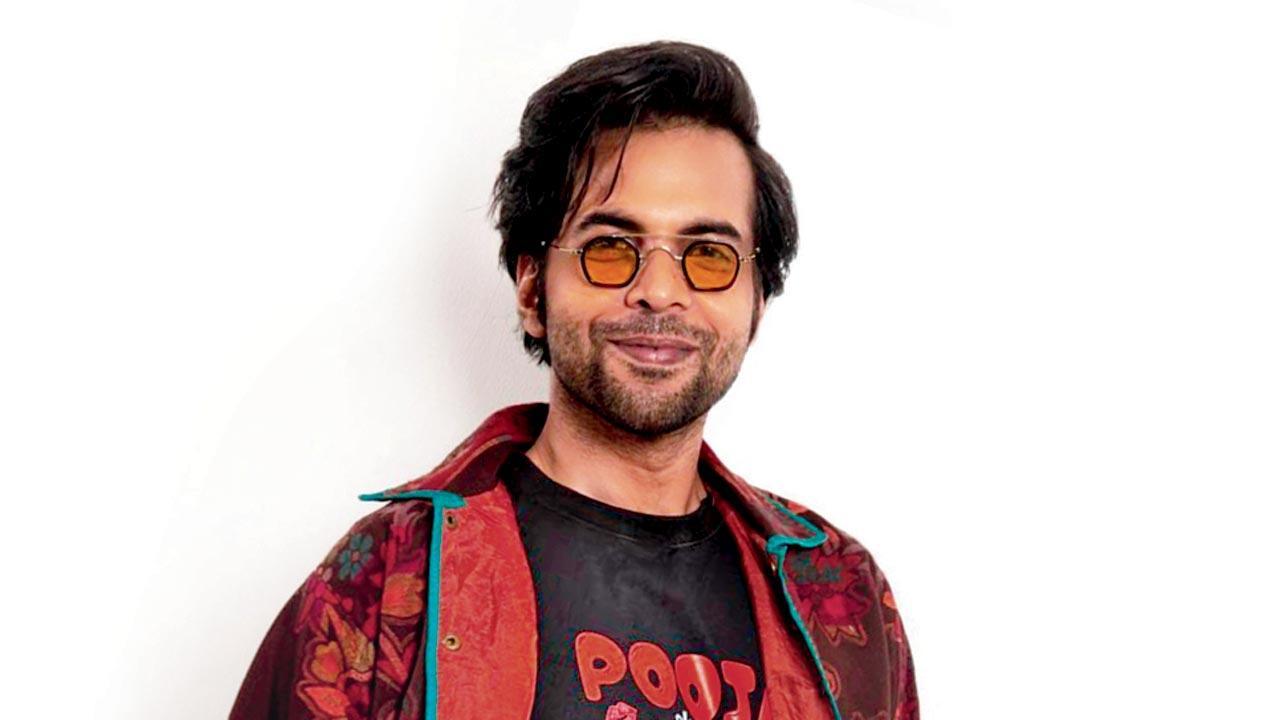
With Stree 2 and Vedaa set for a BO clash, Abhishek believes that holiday weekend will easily accommodate both films; says they will showcase his versatility
Mohar Basu (MID-DAY; July 14, 2024)
It’s common for films to clash at the box office. What’s uncommon is for an actor’s two releases to clash with one another. Abhishek Banerjee will have two releases, Stree 2 and Vedaa, on August 15. “It took me back to the OG question of which parent do I love the most,” he laughs, when we get on a call with him.
“Being an only child, I was often asked this question and I could never answer it because I love them both equally. So, as destiny has put me in this situation again, I’ll pray for the well-being of both movies.”
Box-office clashes may be bad for business, but it’s good for an actor as it shows their versatility. Banerjee believes that a holiday weekend can accommodate multiple films.
“There is a lot of money to make as it’s a long weekend and the audience would crave a good movie. They will go for both if the movies are good. As an actor, what more could I have asked for? I came to Bombay to see myself in theatres, and the whole country will see me doing two polar opposite roles in the two most loved genres, action and comedy.”
Stree 2, led by Rajkummar Rao and Shraddha Kapoor, comes six years after the much-loved first instalment. Naturally, the expectations are high, heightened further by the latest horror comedy, Munjya’s unexpected success.
“Stree is one of the most loved films of contemporary Indian cinema, and I know the excitement is high. When you have a hardworking and passionate director like Amar Kaushik, you’re in for a treat. I saw a few scenes while dubbing, and it turned out better than I had imagined while shooting.”
But it is Vedaa that the actor has kept an eye out for. Director Nikkhil Advani’s action entertainer sees him as an antagonist to John Abraham’s hero.
“It’s my first serious role in a theatrical outing. All my theatrical releases have been comedy. Thank God Nikkhil sir could see me in Vedaa; it takes a long time to gain the trust of directors that you can do different genres. I got to portray a full-fledged baddie and that too opposite John! I was a little nervous in the beginning, but John helped me feel comfortable and motivated me throughout the journey.”
Check out Sidhant Gupta as Pandit Jawaharlal Nehru in Nikkhil Advani's Freedom At Midnight
9:46 AM
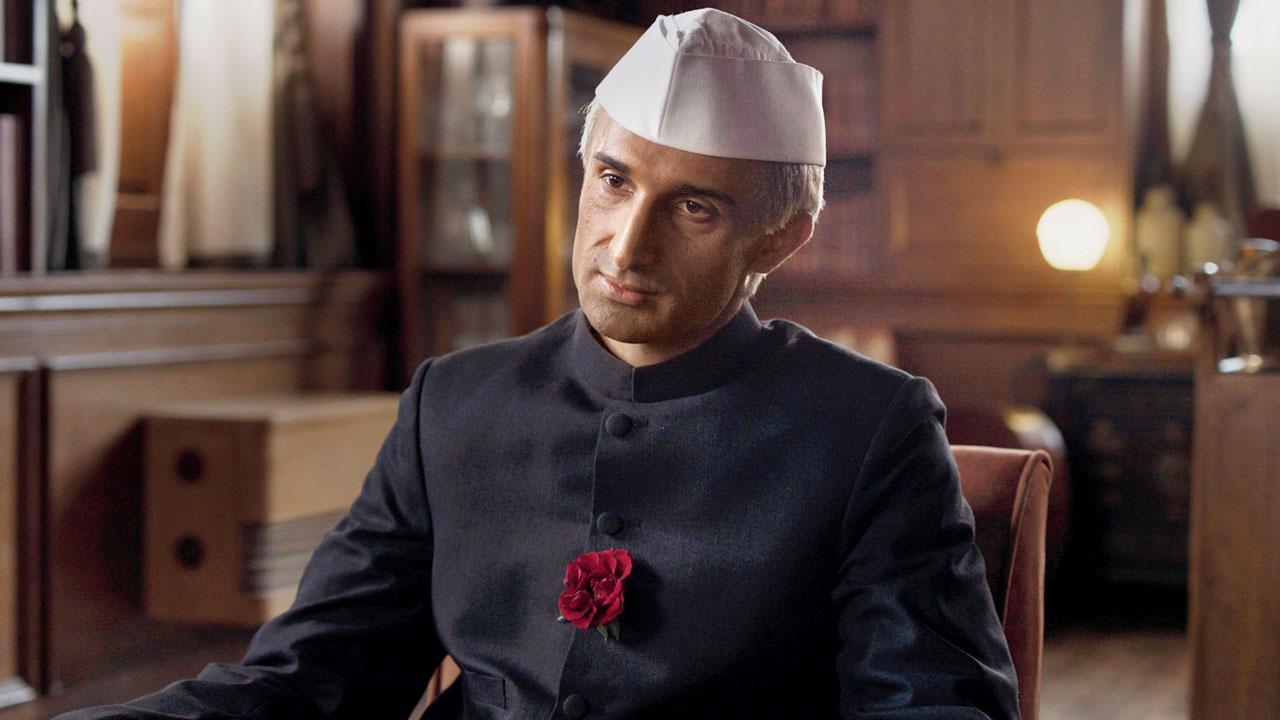
Sharing exclusive picture of Sidhant as Nehru, Freedom at Midnight creator on how the series adapted from the eponymous book looks at India’s independence struggle through personal accounts
Letty Mariam Abraham (MID-DAY; May 3, 2024)
There is something about history that draws Nikkhil Advani, something about real-life events that make for compelling storytelling. A case in point—Rocket Boys that focused on Homi Bhabha and Vikram Sarabhai. Now, the director-showrunner is gearing up to bring the most important chapter of Indian history to the screen with Freedom At Midnight.
In June 2022, Advani had announced the historical drama that is based on Dominique Lapierre and Larry Collins’ acclaimed book of the same name. Almost two years on, he has shared the series’ first look with mid-day, which sees actor Sidhant Gupta as Pandit Jawaharlal Nehru.
“This show is a profound tribute to the luminaries of our freedom movement—Mahatma Gandhi, Jawaharlal Nehru, and Sardar Vallabhbhai Patel,” says Advani. While Gupta will be seen on screen after his breakout role in Jubilee (2023), Chirag Vohra and Rajendra Chawla will slip into the roles of Gandhi and Patel respectively. The Sony LIV series took birth over a simple conversation between Danish Khan, the platform’s business head, and Advani.
“Over the course of interacting on [shows], Danish sir and I have become not just collaborators, but also friends. He took one second after hearing the initial pitch of Rocket Boys to greenlight it. For Freedom, he came to me with a sparkle in his eye and asked, ‘How would you like to make your favourite book into a show?’”
The rest, as they say, is history. The team took the project on floors in late January this year. Besides being an ode to the heroes, Advani says Freedom at Midnight is also a means to take the audiences back to their roots, as they view India’s freedom struggle and the Partition through untold tales.
“We know the major sacrifices and struggles that led to our independence. What Dominique Lapierre and Larry Collins got was access to Lord Louis Mountbatten’s diaries and notes. So, in between all those milestones, we have some personal accounts that make that time come alive. We have tried to capture that.”
Subscribe to:
Posts (Atom)