Showing posts with label New Empire. Show all posts
Showing posts with label New Empire. Show all posts
Two Mumbai film projectionists among nine shortlisted for prestigious prize organized by Film Heritage Foundation
8:36 AM

Mohammed Aslam Fakih, 75
Two City Technicians Among Nine Shortlisted For Prestigious Prize
Sharmila Ganesan (THE TIMES OF INDIA; July 23, 2023)
In place of a recent Tom Cruise, a not-so-recent Abhishek Bachchan is strutting towards us. Two hours before the day's first show of 'Mission Impossible: Dead Reckoning', the sole screen at Regal Cinema is playing a grainy trailer of the 2012 action flick 'Players'. It's the only thing Mohammed Aslam Fakih has on 35mm that makes Simplex X-L whirr to life. Like a vintage car, the tall, retired six-decade-old analogue projector makes a comforting old sound each time its 75-year-old "mechanic" Aslam Fakih loops the film reel through its top and bottom rollers, animating the gears, soundhead and other parts whose names he didn't know when he first entered Regal's flip-switch-filled projection room as an apprentice on Independence Day in 1970.
"I miss using my limbs," smiles the analogue-watch-sporting projectionist even as both man and machine gear up for a special evening in the push-button digital age.
On July 26, just before Simplex X-L projects legendary director Kamal Amrohi's 1949 spine-tingler 'Mahal' on to Regal's screen part of Film Heritage Foundation's (FHF) film projection in practice workshop, the spotlight would be trained on Aslam Fakih instead of the other way around. The 75-year-old SSC pass Richard Burton fanboy -- who has spent half a century spanning Alfred Hitchcock to Christopher Nolan working at Regal -- is among nine faceless projectionists from across the country who have been nominated for a unique lifetime achievement award. Organized by FHF to honour the unsung technicians who have wound, rewound, oiled and toiled behind rays of light in cinemas for decades, the first-of-its-kind ceremony--which will see chief guest Naseeruddin Shah presenting a cash prize of Rs 50,000 each to three long-haul projectionists -- includes names such as Tardeo's 62-year-old Dara Mistry, the long-defunct New Empire's happy-go-lucky former projectionist, and Kolkata's Sukumar Ghosh.
The idea came from Shivendra Singh Dungarpur of FHF who would keep looking over his shoulder at the rays of light coming from the projection room as a child while bingeing back-to-back movies with his grandma, Usha Rani, in the stalls of a Patna cinema hall. Much like the young protagonist of the Italian classic 'Cinema Paradiso', Dungarpur was spellbound watching the projectionist at work during curiosity-induced interval-time trips to the projector room where he would sometimes see a man rushing in to grab a few cans of print and race off with them to another cinema on his bicycle.
"Till the early 2000s, you couldn’t screen a film on celluloid without a projectionist," says Dungarpur, who will never forget Khogse, a projectionist at Pune's FTII whose "projection was perfect when he was drunk" and M K Bangarappa aka Bangari who had screened films like Bergman’s 'Persona' and Kurosawa’s 'Rashomon' for the villagers in Karnataka's remote Heggodu village.
Keen to give them their due, FHF ran a social media campaign calling for nominations from around the country. Those who wished to nominate a projectionist had to download a form, fill in the details of the projectionist, how long and where he had worked and why they were nominating him. FHF then set up a selection committee comprising cinematographer and photographer Hemant Chaturvedi who has been travelling all over India for the last few years photographing single screen cinemas, acclaimed filmmaker Ashim Ahluwalia and Roosi Modi, the owner of close to 70 cinemas across India including Mumbai's Strand, Excelsior and New Empire who started as a projectionist himself. Spanning Kolkata to Kerala, the shortlisted nominees include National Film Archive of India's P A Salam and Lakhan Lal Yadav of Raipur's Raj Talkies who have spent five decades projecting celluloid.
For 62-year-old nominee Dara Mistry - a Girgaon bachelor whose earthy tongue pronounces Sean Connery as Shane Connery - the evening will mark his first time inside a single screen since Parsi New Year of 2014. Half an hour past that March midnight before Navroz, the gates that this doorkeeper-turned-projectionist used to open for a living had closed permanently. Mistry stepped out of Fort's New Empire theatre after the last show of 'The Pirates Of The Caribbean' to a notice announcing the closure of the century-old cinema inside which he had operated a projector called Century for 33 years. "That was 'the end'," laughs Mistry, now a Rs 12000-a-month-earning catering shop hand who sometimes watches old Dharmendra or Dileep Kumar starrers on his touchscreen phone after retiring to his projector-room-sized rental home.
"I can't afford to catch movies outside anymore," says Mistry, who became an office boy following the shutdown of New Empire.
"I had no experience in electricals. I learnt to check the fuse on the job," says Mistry.

Dara Mistry, 62
Check out Hemant Chaturvedi's stunning pictures of Mumbai's single screen cinemas
8:36 AM

Hemant Chaturvedi backgrounded by Capitol`s antique wrought iron and wood balcony. Pic/Suresh Karkera
The silence in an abandoned theatre is louder than any film soundtrack, says Hemant Chaturvedi, on the Bombay leg of a photo journey shooting remains of India's single-screen cinemas
Meher Marfatia (MID-DAY; January 17, 2021)
He must be the only person on the planet who went to the movies throughout lockdown. In a year redefining the phrase annus horribilis, Hemant Chaturvedi trained his Olympus OMD and Pen-F cameras on "beautiful ruins" of single-screen theatres in remote reaches of Maharashtra, Gujarat, Rajasthan, Punjab, Haryana, Delhi, Uttarakhand, UP, MP, Goa and Kashmir.
The result: 55,000 frames from which he will cull the cream for a seminal book and series of exhibitions. Steering his sturdy Force Motors Jeep across 32,000 kilometres, he has uncovered 655 theatres, scouring the country's length and breadth on this remarkable quest.
About 9,710 single screens in 2009 dwindled to 6,300 in 2019. Visiting 500 towns, Hemant discovered each theatre, depending on size and location, had a similar ecosystem, scaled higher or lower by the social demographic encircling it. Ubiquitous chai and juice stalls, paan and cigarette shops touts sidled up to hissing black-market ticket prices were common features.
Interconnected livelihoods sank with shrinking footfall in halls. A teashop owner revealed an 1,100-seater theatre opposite him ran four to six House Full screenings a day, to which crowds of 4,000-6,000 thronged. Even a quarter of them purchasing a cup averaged 1,000-1,500 cups at showtime. Ordering 100 litres of milk daily, the chaiwala currently buys barely five.
From the 1980s-'90s, the slide gradually gutted cinemas in major metros and smaller tier towns alike. While multiplexes brought steep taxes and distributor rates, the shift from celluloid to digital content finally throttled struggling theatres. Seemingly spared halls gasp for survival with B- to C-grade flicks serving erotica, horror, or a steamy soup of both.
"For a book on multiplexes, I wouldn't have wandered but told the story of one multiplex. They're identical," says Hemant. The magic of the movies smote him young, at six, watching an I S Johar film in a makeshift spot in Assam where his Air Force officer father was posted. They squatted on Dalda ghee tins, the reel burnt halfway, the misadventure ended.
The 1980s St Xavier's collegian remembers films at nearby Capitol with enthusiastic, often tipsy, men lolled on wooden benches in a haze of beedi smoke and whirring fans. Describing "the elegance of Regal, the hyperbole of Liberty, the proximity of Metro, the warmth of New Empire", he grades certain differences. "New Empire has an intimacy and calm elegance less stressful on the eye than opulent Liberty."
His is an exacting passion. "Revisiting theatres, I checked my favourite seats: Balcony first row centre, A-24/25/26, gave uninterrupted viewing and as a budding audiophile I thought the sound best in that position. I saw countless movies on chairs with these numbers, skipping shows without seats of my choice."
The Bombay leg is a curious one, says the cinematographer of Company, Maqbool, Ishaqzaade and Kubaan, dedicated today to visual conservation. Rolling from January 2019 in ancestral Allahabad, his efforts to shoot Bombay cinemas were thwarted by apathy and evasiveness of proprietors and managing staff. "Dashing around for a month, I managed three: Mayur in Borivli, Nishat and New Roshan on Grant Road."
Leaving to photograph cinemas in 11 states, he recently resumed the Bombay tryst. "Serendipitously, I found the number of a college friend, Kamal Sidhwa Taraporevala (from the family owning Regal). She led me to her cousin Daisy Sidhwa, who forwarded a mail explaining my project to Saleem Ahmadullah of Globe Theatres. He orchestrated permissions for Capitol and Regal, and Liberty and New Empire from their proprietors. This in a swift hour after 22 months of perseverance. Maxie Cooper of New Empire got me to Fred Poonawala of Edward. Suddenly, I had five iconic theatres in my kitty. In another glorious turn, Sharad Doshi of Central Plaza introduced Ashish Doshi of Royal Opera House."
Bombay's matinee-mad beating heart attracted the cosmopolitan attention this city's cinema scene would expect. Yet, Parsi theatre owners and exhibitors like the Sidhwa, Kuka, Bhavnagri, Dubash, Mody and Bharucha patriarchs stood out as trade pioneers.
Unique to Bombay, halls opened in the late 1800s and early 1900s as proscenium theatres for musical and dramatic performances. Edward, Capitol, Royal Opera House, New Roshan and Nishat are living examples, with classic circular balconies extending close to the edge of the stage and private boxes for affluent patrons.
Theatres with the grand-scale brilliance of Liberty and Royal Opera House are rare. "There was no era-specific architecture after crossing Dadar. Lotus and complexes like Satyam-Sundaram-Sachinam at Worli, and Gaiety-Galaxy-Gemini in Bandra, represent the '70s utilitarian concrete aesthetic. The further from South Bombay, the simpler the structures."
Besides vanishing facades and interiors, Hemant captures stunning details of memorabilia that dodged being sold by weight. Lovingly salvaged are hand-stitched screens, tattered posters, smeared spittoons, brass ashtrays in halls like Liberty's preview theatre and over 400 tickets.
Some cinemas offered free two samosas and two besan laddoos with tickets bought on the first day of a new release. Burning with film fever, audiences hung off balconies, piled impossibly on each other's laps, gyrated boisterously in the aisle and exercised a strange control when songs flashed—"They believed the film flopped if anyone left to pee during a song sequence. Holding it in ensured a hit!" With scatological whimsy are also pasted prints of stars on theatre toilet doors as signage, Tabu and Jayaprada among images announcing the Ladies loo and actors of Sanjeev Kumar's vintage the Gents.
Quirky anecdotes abound. Many ushers flung Coca Cola bottle caps at the screen when popular songs appeared, to incite audiences into thinking these were coins to throw likewise. Post-show, the staff divided the tinkling metal cascade. Then there's the projectionist confessing he misses being roundly abused by irate filmgoers ("Ab toh gaali bhi nahi padti, hum gaali khaane ke liye taras rahe hai")—operating digital projectors means no disruptive film break or flickering screen.
In Gujarat, Nataraj Talkies, from the 1920s in princely Wadhwan, is shut, unsafe from the 2003 earthquake. Its proprietor Bhawani Singh graciously allowed Hemant photos before taking him for a drive. Halting at a stone wall, they stared at the enigmatic entrance and "booking office" of a nameless open-air cinema, circa 1906.
Apparently, the Maharaja of Wadhwan was at Watson's Esplanade Hotel in Bombay on the fateful July 1886 day, when the Lumiere Brothers debuted their Cinematographe in India. Spellbound, the royal ordered the projector. By the time the siblings sailed back to France, the piece was manufactured and shipped, it was 1906. This is the wooden ticket window of the theatre the ruler built to regale his people with silent films.
More movie mania is fanned at The Charlie Circle, started in Adipur, Kutch, by Dr Ashok Aswani. The Chaplin impersonator's appreciation club celebrates their hero's birthday every April 16 with wonderful affection and mixed ethnic gusto. Dressed up with the comedian's typical moustache, top hat and stick, excited kids travel in trucks doing the garba, cut cake and watch a Chaplin flick. Charlie Doctor, as Aswani is dubbed, prescribes anxious patients "Rx: See twice daily, Modern Times/The Tramp". The homeopath was irrevocably Chaplin-smitten in the '70s at a Gandhidham theatre called Oslo—acquainted with the Swedish king and queen, its proprietor had their ambassador inaugurate his cinema.
From Vinay Kumar Chumble, of Vijayanand Theatre in Nasik (Government of India-recognised as the longest running cinema, 1916-2021) came quite a story. On the plot of now extinct Damodar Theatre, Dadasaheb Phalke trundled projector and reels on a handcart, strung a white dhoti between two trees and screened movies. Suspecting him of sorcery, locals ripped the cloth and smashed the equipment. Nasik police intervened, convincing them this signalled modern technology.
Necessity breeds ingenuity. An owner in Maharashtra, gone beyond budget erecting Asha Talkies in the 1940s, was stuck with a single projector. He tided over the minutes to change reels for a restless audience, hiring Lavani dancers. Backgrounded by a halogen spotlight and colourful spinning wheel, they exited stage as that light switched off.
"Every theatre, especially an original structure with minimal renovation, is equally important," asserts Hemant. "Denied access saddens me. All I want are a few photographs. Unimaginably important to Bombay are Maratha Mandir, Naaz, Alfred, Royal, Palace, Central Plaza, Super, Gulshan, Imperial and Deepak. Maratha Mandir is designed by the genius architect W M Namjoshi. I've photographed five of his theatres. Phul in Patiala, Golcha in Delhi, Raj Mandir in Jaipur, the Liberty and New Empire interiors here. Maratha Mandir is critical to the parallel Namjoshi retrospective."
Bharat Mata and Moti are almost done. Hoping to catch scattered remnants of impenetrable properties still high on his Bombay wish-list, Hemant pleads, "I need just an hour for pictures. These buildings will fall. The book is forever, a chance at immortality for theatres."
Nasir Mulla, of Manek Talkies in Akola, cheers the level secularism of shared-screen cinema, telling Hemant: "Other than the seats you can afford, irrespective of caste, creed, race or religion, once the lights dim, everyone is equal. With the same goal—to be entertained. There's no space in the world more socially unifying than a theatre."
Any better reason for the show to go on?


10 Years Of Wanted: Salim Khan lending Rs. 1 crore to save the film, theatres painting new ‘Housefull’ boards and many such forgotten trivia!
3:03 PM
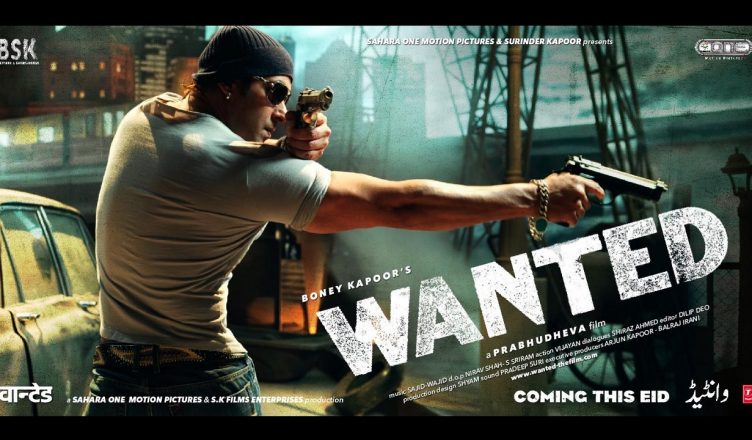
Bollywood is going through a great phase at present. So many different kinds of subjects are being attempted and are getting commercial success. Masala films continue to do well and the era of single screens, whistles, claps et al is very much thriving, albeit only in certain parts of the country. But 10 years ago, things were gloomy for the industry. The films were getting success but there used to vast periods of drought in between two hit films. Also, while footfalls in multiplexes were steady, in single screens, it was poor. The multiplex strike of April-June 2009 had further crippled the business of single screen cinemas.
But then came Wanted, which ushered in a new era. In producer Boney Kapoor’s words, “It brought back the concept of hero, something which was in vogue years back when Amitabh Bachchan used to play such characters. Somehow such cinema had become extinct.” Superstar Salman Khan played the lead role who, just like the industry, was also going through a tough time. Wanted put him back in the big league. Till today, he’s following the ‘Wanted’ formula of making mass-friendly, action entertainers (and with him doing away with his shirt in the finale fight) and now not just single screens but even multiplexes are lapping it up.
10 months before Wanted, Aamir Khan-starrer Ghajini was also an attempt in reviving the testosterone-driven cinema. But it was not a complete action film and had other elements too. Wanted, meanwhile, had action in adequate doses and catered to the single-screen audiences who went crazy over the film and how. On the joyous occasion of Wanted’s 10th anniversary, we go down memory lane and bring back some not-so-known trivia about the film, including how Salman Khan’s father Salim Khan emerged as an angel for producer Boney Kapoor in times of crisis:
BEFORE RELEASE:
1. Wanted was earlier titled Wanted: Dead Or Alive. The makers were in favour of simply Wanted as the film’s title. However, a producer down South had the rights who asked for a huge amount of money to part with the title. According to unconfirmed reports, it was Salman Khan who paid for the title from his own pocket.
2. Not just Salman, but even his father Salim Khan made a major contribution to the film. The B4U group had filed a case against Boney Kapoor in the High Court and demanded a stay on its release. In September 2006, Boney had signed a MoU with B4U for a joint venture for which the latter had extended an advance of Rs. 10 crore to acquire rights of the former’s five films. The price of these films wasn’t fixed and moreover, B4U and Boney couldn’t reach an understanding. Meanwhile, Boney Kapoor was in a debt trap and in the absence of any funds from B4U, he joined hands with Sahara One Motion Pictures and produced Wanted. B4U hence moved the High Court which upheld that Boney can’t create third party rights to his films. It also directed him to furnish Rs. 10 crore as security deposit. Fearing that Wanted’s release may suffer, Boney moved the Supreme Court which allowed the film to release on its scheduled date. But it was told to deposit Rs. 2 crore within a week. Raising Rs. 2 crore was a difficult task for Boney and this is when Salim Khan stepped in. He immediately lent him Rs. 1 crore. Boney was moved to tears at this gesture. Salim saab however felt it was the most apt thing to do and stated, “I know people who have crores lying in Swiss banks and benaami accounts but they will not help you with even a lakh when it comes to the crunch. In fact, if you tell someone that you are looking for monetary help, that is the surest way of driving them away from your life. I think most of us are born selfish.”
3. Wanted began the trend of having Eid releases for Salman Khan. Barring 2013, Salman has had a release on this festival every year from 2009 to 2019 and is also scheduled to have a film coming on Eid 2020 as well. But it’ll be interesting to know that initially, Wanted was to arrive much earlier. The multiplex strike pushed it ahead, just like most films. Till April 2009, Wanted was to hit screens on July 3 and it was also to clash with Dulha Mil Gaya, which featured Shah Rukh Khan in a supporting role. Then it was moved to August 7. Later it got a release on September 18, 2 days before Ramzan Eid. The teaser was released with Love Aaj Kal, that came out on July 31.
4. Another minor jolt suffered by Boney Kapoor is when the Central Board of Film Certification (CBFC) gave the film an adults-only certificate. Several industry insiders, trade and even audience were left shocked since the film had violence but it was not too gory either. There were fears that it might restrict the film’s appeal. Even Salman in many interviews expressed his disagreement with Wanted’s ‘A’ rating.
5. Salman Khan promoted the film extensively. From the promotions itself, it was evident that Salman’s ‘re-birth’ has happened with Wanted. Even in the songs, he seemed in top form after a long time. His dance steps in ‘Mera Hi Jalwa’ was quite appreciated. He said in an interview, “It’s really amazing to see the dance steps I have done. I can’t believe that it’s me in the song, dancing like this, yakeen hi nahin hota ki aisa bhi kuch ho sakta hai!”
6. Salman Khan also used his game show on television, ‘Dus Ka Dum’ to promote Wanted. In a rare move, Boney Kapoor’s wife, the late Sridevi made an appearance in the memorable episode along with Boney, director Prabhudheva and actress Ayesha Takia. Without Sridevi’s knowledge, Salman sneaked in two of her paintings and presented in front of the audiences. Sridevi surprised one and all when she said that for one of the paintings, she used the tips given by Salman. What also made this episode special is that Boney and Sridevi’s daughter Janhvi, who is now also an actress, was present in the audiences’ section and Salman lovingly addressed her and her younger sister Khushi as two other beautiful creations of Sridevi.
AFTER RELEASE:
1. Wanted released in 1400 screens and its first day collections stood at Rs. 5.10 crore. It was the ninth biggest opener of the year but emerged as the fourth biggest grosser of 2009 as it collected Rs. 60.24 crore in its lifetime.
2. It was the massiest film of 2009 and after a long time, such a film had come in cinemas. As a result, his traditional fan base was out in full force. Around 70% of business in the first week was done in single screens, as per a report.
3. In Mumbai, Ankur cinema in Govandi had to paint a ‘Housefull’ board because they didn’t have one. Theatres in South Mumbai like Liberty and New Empire had to dig out the ‘Housefull’ board from their storage rooms as they didn’t need them for a long time. The scenario was similar in many single screens across the country.
4. Manoj Desai, executive director of G7 Multiplex in Mumbai, popularly called as Gaiety-Galaxy cinema complex, was heard saying, "Wanted has got the film industry and also the single screen cinemas out of the ICU. The film has got 100 per cent collections till now and it is only going to get better."
5. Boney Kapoor reported that in Rishi theatre in Uttar Pradesh’s Bulandshahr, a gun firing took place between two sections of Salman Khan fans. It led to a riot-like situation and police had to resort to firing outside the theatre to disperse the crowd.
6. In Paras cinema in Jaipur, the cops had to request the theatre management to sell 200 tickets less to keep the audience in control.
7. In the biggest theatre in Hubli, Karnataka, almost 5,000 people gathered outside to buy tickets.
8. Unlike the norm, Wanted was released in all 3 theatres in Kanpur and police protection was adequately provided.
A lot of films’s tenth, twentieth, twenty fifth anniversaries are celebrated nowadays and many of these at times seem unnecessary. However, Wanted deserves to be feted as it was the first step in making our industry bigger and better. Today, most of the films in the Rs. 200 and Rs. 300 crore club belong to the action masala genre. Hence, Wanted is responsible for opening the eyes of the producers that such films are not dead, as believed then by many, and that they’ll always have an audience. May we have many such pan-India flicks in the future too!

Historians, film buffs remember New Empire's glory days
9:10 AM

With the shutting down of New Empire, one of the few surviving Art Deco style single screen cinemas in the city, historians and film buffs remember the glory days and why these must be salvaged, somehow…
Dhara Vora (MID-DAY; March 31, 2014)
Earlier top film stars would be hailed as jubilee stars; today it’s all about entering the `200- crore club. This change in focus from quality to quantity transcends through several elements of Indian cinema — from the cost of samosas to the number of screens in each multiplex. While the latter might have made cinema more accessible, it has proved to be dead ringers for single-screen cinema halls. While some struggle to survive, others adapt and many have shut down.
Recently, the city bid adieu to New Empire cinema hall near CST station. City history lovers and architects might cry over the loss of this gem, though such is the apathy towards these venues that inspite of being shut for a week, no one noticed when the curtains came down, one last time.
Cinema, an art
City historian Deepak Rao says, “Going to the cinema hall would be an experience and an art earlier — from booking tickets in advance to waiting for the next big Western film to release. From the food to the hall, everything contributed to the feel.”
Film critic and city historian Rafique Baghdadi puts things into perspective: “Manto had once said, ‘If you really want to know about the condition of a place, you should check the state of its bathroom’. And, New Empire was a very well-kept and a lovely looking theatre. During my college days, the morning shows would usually be English films that were packed. They would even have broth on the menu at the food section.”
Art Deco
The 1,000-seater theatre was made in the then- prevalent Art Deco style of architecture, and was one of Mumbai’s oldest single- screen cinema halls. Regal opened in 1933, Metro in 1938, Liberty in 1949, while New Empire originally opened in 1908 as a live theatre where you could even watch plays. It was renovated later in the Art Deco style in 1937.
Fritz von Drieberg of John Roberts and Company designed the theatre. “The original structure was made in the Baroque style by architect Arthur Payne with the interiors done by O’Connor and Gerard. It was the first theatre in Asia to have a cantilevered balcony. It opened with a grand performance by Batliwala and Company,” says Baghdadi.
Rao recalls the time when New Empire also screened World Boxing Championships before the movies, which drew in huge crowds. Apart from screening English movies it also once screened a French film.

Iconic South Mumbai single-screen New Empire downs its shutters
8:15 AM

Virat A Singh (MUMBAI MIRROR; March 27, 2014)
On Friday, March, 21, when several theatres across Mumbai were busy preparing for new box office releases, the curtains were brought down forever at one of the city's oldest theatres and a famous landmark of south Mumbai - the New Empire Cinema.
In its heyday, the theatre's foyer was a hub of activity, with a balcony seat costing not more than Rs 150. On Friday morning, however, bar a few voices of protest from the dejected staff, the theatre bore a deserted look with ironically, a poster of the dubbed Hollywood film '300 - Rise Of An Empire', fluttering in the gentle breeze.
Pasted on the walls and gates of the theatre run by Rumanek Estates Pvt Ltd was a message of doom that said, "Due to financial losses, debts, as well as superior competition, the management is unable to continue running New Empire Theatre. Hence it hereby declares the permanent and irrevocable closure."
In happier times, the theatre ranked among the very best in the city, popular for the unforgettable Hollywood films it screened. In fact, from the 1960s to the late 80s, movie buffs recall watching films such as Love Story, North To Alaska, Around The World In 80 Days and scores of other hits there.
However, gradually the quality of films dropped, and there even came a time when the theatre got identified with the sleazy films it screened. In the last couple of years, however, the scene changed and the theatre began screening more of Bollywood, as well as Hollywood movies dubbed in regional languages.
It was on February 21, 1908 that the place opened as a live theatre. Seating was provided for an audience of 1,000, in orchestra stalls, circle and gallery levels. There were boxes with additional accommodation, and it had a large stage along with a domed ceiling. It was said to be the first theatre in Asia to be constructed with a cantilevered balcony, and historians claim its interiors still are one of the finest Art Deco style interiors in the city.
In 1937, it was re-named New Empire Cinema, and it underwent major renovations in 1996.
 Reflecting on the end of an era, Burge Cooper, 65, the owner of New Empire, said, "It's been almost a week since we shut down. We thought that once journalists got to know, many would flock here with queries.... others would question us about the decision. But, it seems, maybe we are not that famous anymore. Or, no one bothers about single screen theatres in this age of multiplexes."
On a more serious note, Cooper said, "It's the mounting losses that did us in. We reached a point where nothing could be done. We've been incurring losses for almost seven years. In fact, the accumulated losses exceed Rs 2.58 crore, apart from other debts. There's just no hope of recovering the losses by exhibiting films."
Cooper said they decided to down shutters this month as losses would only multiply with the IPL season and vacations ahead, and there wasn't any point in holding back the inevitable. Also, the fact that four to five theatres, some with more than four screens, exist in the vicinity, further contributed to the decision.
According to Cooper, running a single screen theatre incurred huge expenditure, especially when the number of people watching the films was few. "The theatre has 581 seats, so if we ran a film with only 20 to 50 people present, we still had to keep the air-conditioners on, we had to employ a full staff, and take care of other expenses too. Besides, you must also consider that 45 per cent of the ticket price went towards entertainment tax," Cooper explained.
"Sure, we did explore every avenue to break even. For instance, we contemplated reducing the number of seats and providing more facilities to attract more patrons. But nothing seemed feasible," Cooper lamented.
It was Cooper's father-in-law Rusi Modi, who took over the theatre in 1948. Manager C P Umrekar, who has been working there for almost 40 years, could barely mask his nostalgia and pain over the closure. "This was a drama theatre and later converted into a film theatre. It was extremely popular with several Bollywood personalities, but those were times when there were just four or five theatres in entire Mumbai," Umrekar recalled.
"Even in the late 90s the situation wasn't so bad, but post 2002 the situation changed. That's what forced several single screen theatres to call it quits," said Umrekar.
Subscribe to:
Posts (Atom)