Showing posts with label Neeraj Ghaywan. Show all posts
Showing posts with label Neeraj Ghaywan. Show all posts
Vishal Jethwa told me, ‘I feel like your girlfriend, you’re pampering me so much!’-Ishaan Khatter
10:06 AM

As Homebound travels through the Oscars race, Ishaan Khatter says the journey gifted him a deep friendship with co-star Vishal Jethwa
Akash Bhatnagar (HINDUSTAN TIMES; January 5, 2026)
Ishaan Khatter has had a dream run on screen over the past year. One of the biggest highlights was Neeraj Ghaywan’s Homebound — India’s official entry to the Oscars 2026. The film, starring Ishaan alongside Vishal Jethwa and Janhvi Kapoor, even made it to the Top 15 shortlist. While campaigning for the Oscars in the US, Ishaan says the experience not only changed his career, but also cemented a deep friendship with Vishal.
“As actors, we’ve literally been each other’s sahara through it all, just like the friendship in the film,” Ishaan shares, adding, “One of the first things Neeraj sir told us was, ‘I need you guys to be vulnerable with each other. Don’t just be colleagues who only share success and happiness. Share your insecurities and be honest with each other.’ And that set the tone.”
Recalling their first meeting, Ishaan says, “The first time we met one-on-one, he came home, I made him coffee, and we just spoke. We got to know each other on a deeper level from day one. While prepping, we would travel through villages in Barabanki. Vishal ke pair mein chot lag gayi thi and usme kaanch chala gaya tha. He had surgery and a cast, so walking was tough. Main usko godi mein leke chalta tha, and he would laugh and say, ‘I feel like your girlfriend, you’re pampering me so much!’”
That bond, Ishaan says, only grew stronger as the two travelled together during the Oscar campaign in the US.
Martin Scorsese understood the pressure we faced-Vishal Jethwa
9:44 AM

Akash Bhatnagar (HINDUSTAN TIMES; November 16, 2025)
The campaign for India’s official entry into Oscars 2026, Homebound, has begun in the US, starting with a screening hosted by veteran filmmaker Martin Scorsese, 82, who also serves as an executive producer on the film. The movie, starring Ishaan Khatter and Vishal Jethwa, gave the team a rare chance to meet Scorsese in person, a moment Vishal calls “surreal”.
Recalling their meeting, the 31-year-old shares, “The entire team was very nervous, the most being Neeraj (Ghaywan, director) sir. Martin sir understood the pressure we were feeling and tried to put us at ease by sharing stories from his life and his films.”
The actor also confesses to a small personal request, which turned out to be a highlight of his day. “Everyone was clicking pictures with him. But mujhe thoda lalach tha ki hum Indian film leke aaye hain to sir se thoda Indian style mein photo khichwaun. So, I asked if I could get a solo picture with him doing a namaste, and he instantly agreed. My day was made with that,” he says.
He further reveals Martin’s contribution to Homebound, sharing, “Martin sir had given many inputs on the story. One advice was ‘stick to the boys’. Following this, Neeraj sir removed the bit about Ishaan’s love story from the film.”
I was so bored of hearing adjectives like ‘hot and sexy’, ‘sultry actress’-Priyanka Bose
8:19 AM

Priyanka Sharma (MID-DAY; October 19, 2025)
Six years is a long wait for any actor, more so if it’s for a project close to their heart. Naturally, Priyanka Bose is relieved that Agra is finally set to release in theatres in less than a month, after much struggle.
“What’s the use of so much hard work if no one in the ecosystem nurtures it and sees that this film is potent? I am very grateful that Agra, by far my most favourite work in the Indian milieu, is coming out. Had this film become a cult, [only] Kanu [Behl, director] would have been celebrated. Artistes who are in the film need our films to come out for people to know that we are reliable.”
Also starring Rahul Roy and Mohit Agarwal, Agra premièred at the Cannes Film Festival 2023. Though the film was ready for over two years, Behl struggled to find distributors in India owing to its central theme — sexual repression in the context of urban space constraints. Bose admits she had apprehensions about taking up a part that might reinforce the stereotype she had long wanted to shed.
“I came with a lot of fear because I [have been] trying to change a certain narrative about myself. I was so bored of hearing adjectives like ‘hot and sexy’, ‘sultry actress’. I was willing to be very fearless. [But] Agra felt like a perceived danger. I would think, ‘When this comes out, the attention I will get will not be because of my craft, but because of how bold it is.’ But do people even understand this adjective? I don’t want a bravery award. I want people to understand that I am a very reliable artiste,” she says.
Bose adds that Behl understood her concerns and gave her the freedom to navigate them. “I never had that with any of the directors. Kanu Behl gave me the space to explore my skill set and potential. There is so much vulnerability in boldness. Only we know how we did it.”
The actor says she took up Agra also because of the support she received from her partner and friends. Her perseverance seems to have paid off. Last month, her film Jugnuma, co-starring Manoj Bajpayee and directed by Raam Reddy, opened in theatres to unanimous praise.
Even as she celebrates back-to-back collaborations with filmmakers she admires, Bose says her focus remains on growth. “I want to work with Neeraj Ghaywan, Konkona Sen Sharma, and Payal Kapadia. I want to work with the best. Whether they see me worthy right now or not, I’m just going to continue working on my craft. I’ll be ready when they’re ready with a script saying, ‘Pri, we think you’ll be great at this’.”
I bet people are envious that Martin Scorsese presented Neeraj Ghaywan's film-Richa Chadha
10:08 AM

Renuka Vyavahare (BOMBAY TIMES; October 4, 2025)
In July this year, Masaan celebrated a decade since its release. Richa Chadha reflects on one of her most defining roles and shares insights into what makes the film still so poignant and relevant. Masaan also marked the powerful directorial debut of Neeraj Ghaywan and beyond Richa, featured compelling performances by Shweta Tripathi & Vicky Kaushal. Excerpts from a chat with Richa…
Masaan was a landmark film of your career. What does this film mean to you, personally and professionally?
Even though Gangs Of Wasseypur gave me a breakthrough, it was Masaan that opened my eyes to the world. It gave me credibility. A film is forever. And I am so grateful that I have this in my filmography as early work. Also, it was the time of great innocence because I met Neeraj as the script supervisor on Gangs of Wasseypur. Varun Grover was the lyricist for Oye Lucky! Lucky Oye!. I knew these creators would become conscience keepers of the film business. But so sweet that we all began this way.
Neeraj Ghaywan’s stories often dig deeper and work as a social commentary on societal disparities. What was it like to work with him?
Neeraj is self-aware, conscientious, honest and compassionate. Every day on the film was a new learning. I wish I had the wisdom then that I have today, but even friendship with Neeraj is something that leaves you richer with more meaning, like an education of some kind. Look at Homebound (India’s official entry for the Best International Feature Film category at the Academy Awards). I bet people are envious that Martin Scorsese presented his film! Wow!
Vicky Kaushal started his career in a way with this film, what were your first thoughts on himas a co-actor?
I remember Vicky not just as a co-actor, but also as an assistant director on Gangs Of Wasseypur. He was always charming, very driven and hardworking.
There’s a lot of talk on how AI can be used to alter endings of movies while re-releasing them. It happened with Raanjhanaa. Varun Grover shared a funny video on how some believed the ending of Masaan could be happier. What are your thoughts on this?
I think Masaan was as happy as it could be. We are living in a world where we rush to repress our natural instincts and feelings. So, what if the ending of a film makes you feel sad? Are you hoping to go through life without feeling sad, angry, hopeless or frustrated ever? Sorry, I am not delusional. I think using AI to alter ends or beginnings is how some businesspeople think they are proving that they’ve become savvy with tech.
What makes Masaan so relevant even today?
Masaan is still relevant because it reflects the hypocrisy of a system that seeks to delegitimize and shame the youth for healthy curiosity about coitus, in the most populous country of the world. It showcases the hypocrisy of a society that hates a majority of its own people, based on their assumptions about a belief system from thousands of years ago.
Shahid Kapoor is feeling bad that everyone, except him, has seen Homebound-Ishaan Khatter
8:43 AM

Ishaan Khatter expresses his excitement over Homebound being India’s official entry to the Oscars 2026
Upala KBR (MID-DAY; October 7, 2025)
Unexpected is how Ishaan Khatter describes Homebound’s selection as India’s official entry to the Academy Awards 2026. When the announcement was made on September 19, the actor was miles away, flying from the US to India.
“I got the news on the flight WiFi. Immediately, messages started popping up on my phone. It was the first time in two years that Neeraj [Ghaywan, director] gave me gaalis because I was not answering my phone,” he laughs, before adding, “When I landed, the first person I called was him and then my mom [Neelima Azim].”
Ghaywan’s directorial venture, also starring Vishal Jethwa and Janhvi Kapoor, tells the story of a deep friendship between two men from marginalized communities against the backdrop of the COVID-19 pandemic. As has become the norm almost every year, this year’s selection for the Oscar entry too has sparked debate. Shutting out the noise, Khatter stands strong behind his movie.
“The film talks of unity, empathy, compassion, and that message coming from India is beautiful because we find unity in diversity. That is the idea of India I subscribe to. We aren’t telling stories of the hinterland, which forms 90 per cent of our population. The idea of making this film was to humanize these people whom we often see as statistics or overlook. Also, I’ve seen its universal appeal in the way audiences reacted to it at Cannes Film Festival and TIFF [Toronto International Film Festival].”
It’s noteworthy how the actor went from playing a prince in The Royals earlier this year to a labourer from an Uttar Pradesh village in Homebound. Though Khatter comes from a privileged background, he says he could connect with his character because of his wide exposure.
“As a middle-class Indian, you’re exposed to different cultural and social elements; you are able to expand your worldview as you fraternise with all classes of society. So when I played Mohammed Shoaib Ali, it wasn’t a culture shock. We all saw the migrant crisis during the pandemic and we all did what we could to help, but there is an urban apathy.”
While Homebound has received an outpouring of love from the world over, Khatter reveals that his half-brother Shahid Kapoor hasn’t caught it yet. “Shahid is shooting in Sicily. He is feeling bad that everyone, except him, has seen the film. I told him not to discuss the film with anybody till he watches it. He is very proud [of the Oscar entry].”
A telling sign of the movie’s merit perhaps was when Martin Scorsese came on board as its executive producer. Ishaan Khatter is understandably overwhelmed to have the legend associated with ‘Homebound’.
“I didn’t have the fortune to meet Mr Martin Scorsese, Neeraj [Ghaywan] interacted with him. He is arguably the greatest living filmmaker. That he came on board speaks of his deep passion for cinema. He was an admirer of Neeraj’s ‘Masaan’ [2015] and ‘Geeli Pucchi’ [2021]. He wanted to present ‘Masaan’, so that circle is complete with ‘Homebound’,” says Khatter.
Complaining about nepotism gives a loser’s vibe-Vishal Jethwa
10:42 AM
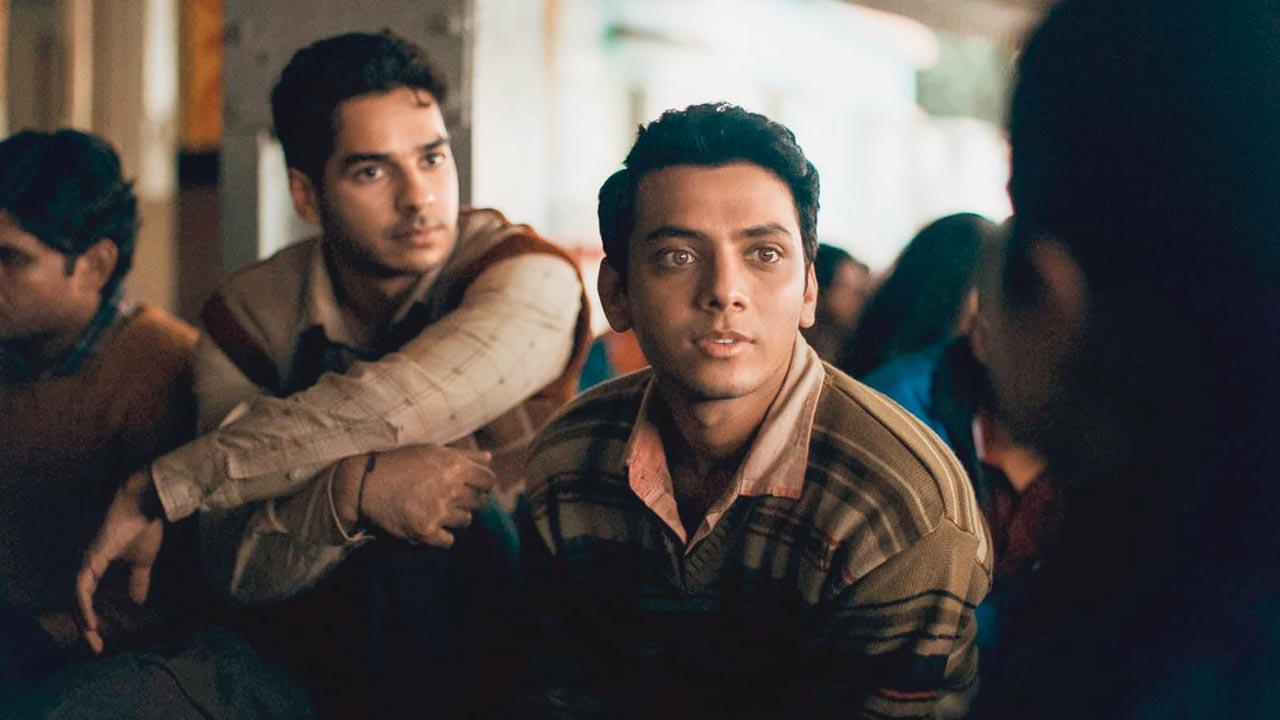
Oscar-bound film ‘Homebound’s actor Vishal Jethwa on taking inspiration from Shah Rukh Khan and Akshay Kumar
Mohar Basu (MID-DAY; October 5, 2025)
It’s been a few days since the country’s most talked-about film hit the screens. Naturally, leading man Vishal Jethwa is still absorbing the wave of love and acclaim for Homebound — India’s official entry to the Oscars.
When we get on a call with him, he starts with, “Everyone is talking about the film, and the fact that it’s officially entered for the Oscars,” he says. “Usually, when a film is selected, there’s some debate — people ask, ‘Why this film? Why not another with a better story or performance?’ But this time, I’ve only heard appreciation. That makes me so happy.”
For Jethwa — who had blink-and-miss roles opposite Irrfan Khan in Hindi Medium (2017) and in the Salman Khan-starrer Tiger 3 (2023), then played the antagonist in Mardaani 2 (2019), and a patient suffering from Duchenne muscular dystrophy in Salaam Venky (2022) — the journey to this moment is not lost on him.
Recalling his first big-screen appearances, he says, “I did a role of a tea vendor in Hindi Medium, a 30 to 40-second character with Irrfan sir. I’m glad I at least got to share that much screen time with him.”
Now, people are hailing his act as the moving performance of the year. “Someone told me I’m the next Irrfan Khan,” he says, almost incredulous. “I felt very strange. I couldn’t accept it at all.”
Jethwa, well aware that he is an outsider who has carved a place for himself, doesn’t wish to engage in conversations about nepotism or the lack of a godfather in the industry. He acknowledges that the journey is challenging but accepts that even those with a film background “don’t have it easy”.
Rather than complaining, he says, “I take inspiration from people like Shah Rukh Khan and Akshay Kumar, not from those who keep complaining about nepotism. I accept that nepotism exists. But if you keep complaining about it, it gives a loser’s vibe.”
Jethwa credits his director Neeraj Ghaywan for shaping his performance as Chandan in Homebound. The actor shares that the director advised them “to live the character” rather than act the part. Ghaywan asked him to read Annihilation of Caste.
“My [knowledge] about caste and religion is mostly bookish. Experiencing it is very different. Shooting the film changed me. It changed how I looked at society and identity. He’s a director who truly walks the talk. He wanted us to deliver lines in a way that was authentic, not preachy.”
Despite international acclaim, Homebound’s theatrical performance in India has been mixed. Jethwa says he hasn’t tracked the numbers closely, “I don’t think a film like Homebound is made for monetary reasons. Still, I want people to go to the theatres so the message can reach more people.”
New discovery
While film offers are pouring in, what surprised Vishal Jethwa more was when post Cannes, companies and designers approached him for fashion. “Another wing has opened up in my life,” he says.
Janhvi Kapoor, Ishaan Khatter's Homeboud to close Indian Film Festival of Melbourne after Cannes and TIFF
8:49 AM

Mohar Basu (MID-DAY; August 1, 2025)
Director Neeraj Ghaywan’s Homebound is becoming a festival favourite. After its première at the Cannes Film Festival, the Ishaan Khatter, Vishal Jethwa, and Janhvi Kapoor-starrer made the cut for the Toronto International Film Festival. Now, the drama — based on an essay by Basharat Peer in The New York Times — has been selected as the closing film of the Indian Film Festival of Melbourne (IFFM).
The drama, which will be screened on August 24, follows two childhood friends from northern India who aspire to become police officers. But as their dream starts to become a reality, their friendship begins to falter. If Ghaywan explored grief and caste discrimination through his maiden directorial venture, Masaan (2015), he trains his lens on friendship this time. “Homebound explores the fragile threads of friendship, ambition, and the emotional cost of breaking free to come into your own,” he shares.
Producer Karan Johar believes that its story about identity will hit home with the Indian diaspora in Australia. He says, “Homebound is a story of aspiration, identity, and the quiet heartbreak that comes with change. Neeraj has crafted a hauntingly beautiful film. To showcase it as the closing film at IFFM is the perfect next step in its journey.”
Did you know?
Homebound is based on an essay by Basharat Peer in The New York Times, in which he told the story of two friends, Mohammad Saiyub and Amrit Kumar, who were struggling to reach their village during the 2020 Covid lockdown.
With Mardaani 2, I made my acting debut, but with Cannes, I made my fashion debut-Vishal Jethwa
8:33 AM

Akash Bhatnagar (HINDUSTAN TIMES; June 1, 2025)
Vishal Jethwa had one of the biggest moments of his career recently as he got to walk the red carpet at the Cannes Film Festival as his film Homebound, co-starring Janhvi Kapoor and Ishaan Khatter, premiered at the festival. Calling it a “surreal” feeling, the actor admits that he was nervous and scared before going to the French Riviera.
“I was worried about how I would present myself. Sab log wahan itni achchi English bolenge, main kahin left-out naa feel karoon. I had a lot of nervous excitement. But once I got there, I don’t know what magic happened, I felt so confident. Apart from my clothes, I was wearing my confidence. For those five minutes on the red carpet, I was living my dream,” he says.
Vishal’s outfit at the red carpet also came in limelight and the actor insists it added a layer of confidence. “Mere woh outfit pehente hi logon ka nazariya badal gaya. With Mardaani 2 (2019), I made my acting debut, but with this, I made my fashion debut. The golden shoulders felt like they were my wings, and I was flying,” he says.
The film received a good reception at the screening, including a nine-minute standing ovation, and Vishal gets emotional remembering that.
“Everyone was crying, and they were happy tears. I touched Neeraj (Ghaywan; director) sir’s feet and hugged Karan (Johar; filmmaker) sir for giving me this opportunity. We were crying because a standing ovation like that has to be earned. Aap use khareed nahin sakte,” he says, adding, “There were foreigners who were hugging each other and crying after watching the film. They came, shook my hand and even said ‘thank you’ to me. I felt very proud.”
Even before the premiere, Homebound had a big achievement, as American filmmaker Martin Scorsese came on board as an Executive Producer.
But Vishal shares, “I don’t watch many Hollywood films, and the ones I have watched were all his. So, when his name first came up, I asked, ‘Who he was’. But when people told me about his films, I realised the magnanimity of it. Just to know that a top global director knew my name was more than an award for me,” he gushes.
The actor was accompanied by his mother to Cannes, and he shares why it was so important for him: “People are supporting me now, but it was my mum who was always with me. They know me as actor Vishal Jethwa, but it was my mum who held my hand and took me to auditions. So, she deserves to live my success with me the most. My dream is to walk the red carpet of Cannes with my mum, and that’s yet to be fulfilled.”
Vishal also asserts that the Cannes experience strengthened his bond with co-stars Janhvi and Ishaan. “During filming, we were in character. But at Cannes, we got a chance to know each other. Janhvi and I had such different family and financial backgrounds growing up, but we share a comfortable zone, where we can talk about anything to each other. Even Ishaan and I dance together and have a lot of fun. I feel glad that I got to make my Cannes debut with them,” he ends.
It always feels patriotic to do a film that goes to a prestigious festival-Neeraj Ghaywan
9:07 AM
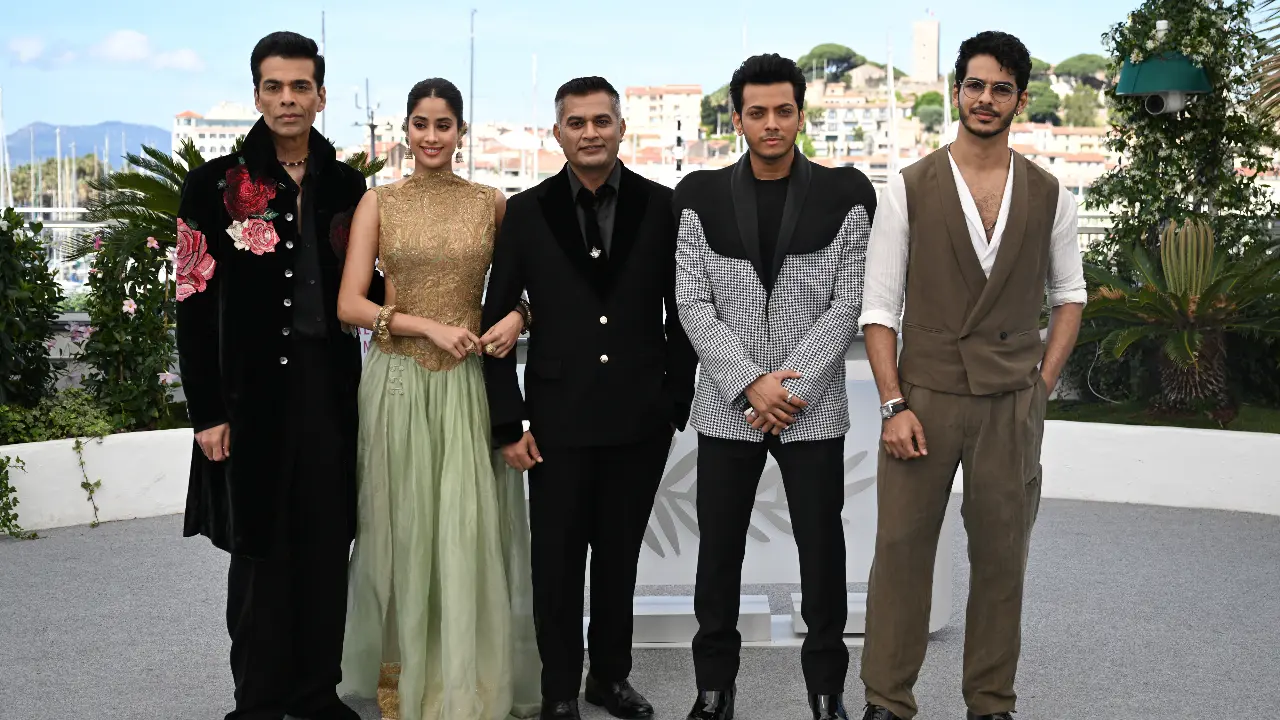
Niharika Lal (BOMBAY TIMES; May 22, 2025)
When Neeraj Ghaywan first attended Cannes, it was in 2015 for his directorial debut Masaan. The film was selected in the Un Certain Regard and won two awards – FIPRESCI Award and the Prix de l’Avenir Prometteu. A decade later, he’s back at the fest with Homebound (2025), another human story, but this time with a little help from some very big names including Martin Scorsese and Karan Johar.
As Ghaywan’s new film made the screening in the Un Certain Regard section this year, the filmmaker was joined by the team at the red carpet, the makers discussed Homebound at the Bharat Pavillion at Cannes.
‘WE SEE URBAN STORIES IN FILMS, AND THEN THERE IS A GAZE THAT IS TOWARDS SMALL-TOWN INDIA’
“The story that I wanted to say was about these two friends,” Neeraj said during a discussion at the India Pavilion at Cannes ahead of Homebound’s screening. He added, “What I also feel is that more than 60 per cent of our economy, our people, live in villages, and in our films, we don’t see villages anymore. We see urban stories in films, and then there is a gaze that is towards small-town India. But where are we talking about the stories from the heartland? That was one of the motivators for Homebound.”
The filmmaker continued, “Whenever we talk about films across the world, say, people of colour, creed, they’re all spoken of in numbers. They are part of the statistics. And when you say that, it’s like you’re trying to persuade your urban guilt – like hiding your apathy by showing false sympathy. I felt, what if we pick one person out of that statistic and see what happens in their life and how they arrive at this point? That will make for some great story, and will truly represent the kindness, empathy – that has been my intent so far.”
I feel this collaboration is quasi-disruptive in a way: Neeraj Ghaywan
Talking about collaborating with Karan, Neeraj said, “I’ve been wanting to work with Karan. (He also directed Geeli Pucchi, a part of the Ajeeb Daastaans anthology in 2021). I feel this collaboration is quasi-disruptive in a way. Independent filmmakers are always trying to figure out how to go about it.
Either we’re doing co-productions or seeking government funding, which comes with a lot of paperwork. But here, if Karan is producing my film, then it’s a different thing altogether – it paves the way for different kinds of possibilities. Our default perception is: go to a co-production, make it happen. But for me, this is a new model.”
NEERAJ AND I WANT TO TELL EMPATHETIC, HUMAN STORIES: KARAN JOHAR
“Neeraj Ghaywan and I come from two different schools of cinematic syntax,” Karan Johar said, “but I think one thing that lies common in both our belief systems is that we want to tell empathetic, sensitive human stories. That is common in both our cinemas. And it has nothing to do with syntax – it has to do with the heart the film offers.”
He explained, “I think when you see Masaan and when you see Homebound, you realize that interpersonal relationships, the handling of the emotional aspects of both the movies, and the spectrum of emotions they cover are the same.”
Karan said that’s what he tries to do in his films too. “My syntax is more theatrical, more opulent, a little more on-the-nose, because that is the kind of filmmaking I love and what I grew up watching. But even when I was eight or nine years old, while I loved the glory of Yash Chopra and the social drama with the opulence of Raj Kapoor, I also loved the empathy of Guru Dutt and the deep-rooted messaging of Bimal Roy. I could enjoy the brilliance of Satyajit Ray and dance to a song from a Raj Kapoor film in the same breath,” he said.
‘We’re beaming with pride that we have this kind of representation’
About Indian cinema finding global resonance, Karan said, “One important thing for me is: how to take our cinema to the world, apart from catering to our domestic audience. Last year, we had Payal Kapadia shine at Cannes with All We Imagine As Light (2024), and now she is on the Cannes jury.
This makes my heart so full. We are all beaming with pride.”
He added, “And the very next year, we have Homebound – this means we really are on the global map. I know these are baby steps. Every year, we have to make sure our stories continue to travel.”
‘Being at Cannes is proof that I’m not a one-film wonder’
“When Neeraj Ghaywan sir told me our film was selected, I was happy but didn’t grasp how big it was. After reading up, I understood its value – and it boosted my confidence as an actor,” says Vishal Jethwa, who made his Cannes debut this year.
“My dream was as simple as standing outside the Yash Raj Films (YRF) gate just to see what it looked like. Today, I’m part of a Karan Johar film directed by someone as brilliant as Neeraj sir. Attending Cannes with Homebound is a massive moment in my life. My debut (Mardaani 2) was successful, but some of my later films didn’t perform well at the box office. This film, however, has taken me to an international platform. It feels like proof that I’m not a one-film wonder – that I’m here to stay and meant for good things.”
Neeraj Ghaywan reminded me of Majid Majidi in many ways-Ishaan Khatter
3:01 PM
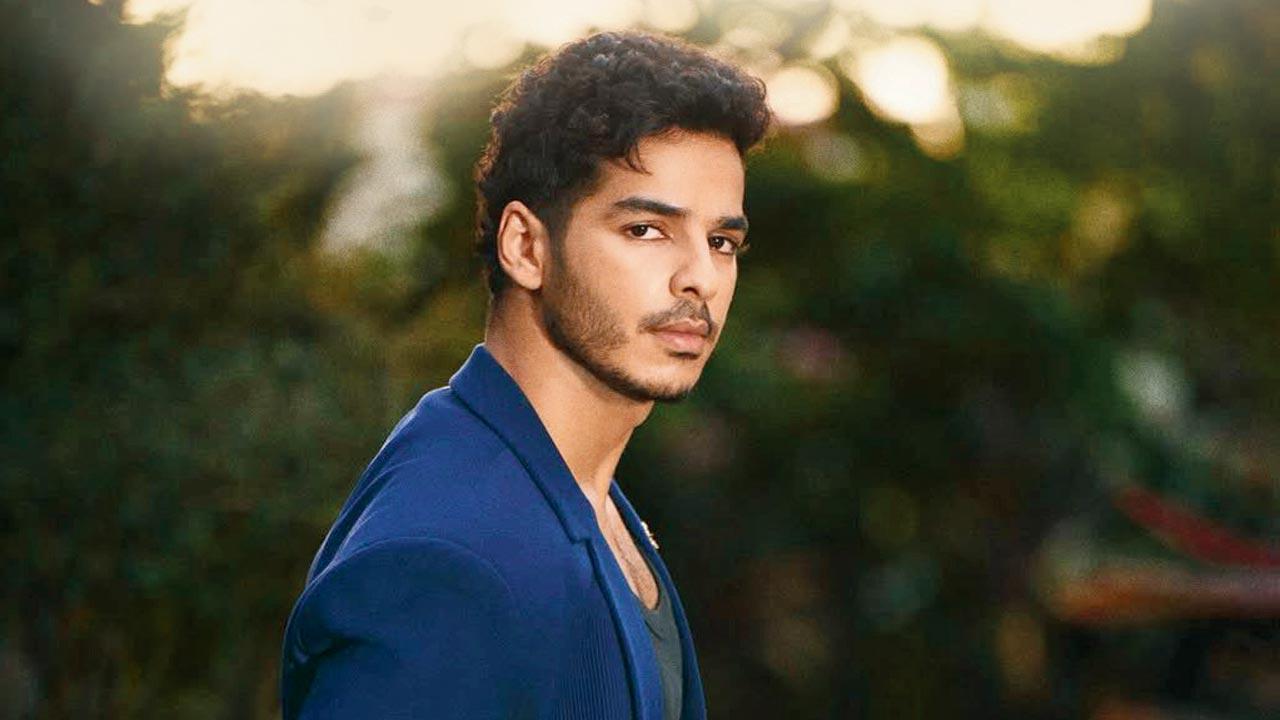
Ishaan Khatter says Homebound’s première at Cannes will help him realize his long-time dream of going to the prestigious gala with a movie and not for a red carpet appearance
Mohar Basu (MID-DAY; May 16, 2025)
Everywhere you go this week, the one man people are discussing is Ishaan Khatter. Some are talking about his washboard abs and the many shirtless sequences in The Royals, others about how droolworthy he is as a romantic hero. Amid all the love pouring in, the actor’s takeaway is simple — “Trust your instincts”. He tells us that he went into the Netflix series, knowing that it would be entertaining. “When reading the script, I went from one episode to the next quickly. Also, it let me explore different facets of myself as a performer — whether it’s the romance, the comedy, or the drama that I tried to bring more of. It gave me all these opportunities in one role, which is rare,” he assesses.
While his chiselled abs became a talking point, Khatter says the emotionality of Aviraaj’s character was beautiful to him. “When people say that, oh, it's one page, it's one minute of screen time. But what if that one line is Rome Burns, that's literally the biggest sequence of your film. The scene where he is going through his father’s stuff, it was not much to look at on the page. But when we shot it, I think we brought that out. My director allowed me to take the lead. There is a deep wound to his relationship with his father because there're so many answers that he never got. And he's still battling it and the inner child in him is still dealing with that. And for me, it was quite simple. Why does he escape? Why he is an escapist is because he's actually deeply emotionally connected and sensitive about his father. And that's why he ran away. And when he ran away, he actually didn't get to be with him in his last moment. So, he has no closure. And the guilt stayed with him. Through the series, you see him get that closure but then also get the shock of his life, obviously. It was essential for you to understand this guy and not just think he's an asshole.”
Director Priyanka Ghose’s rom-com, also starring Zeenat Aman and Bhumi Pednekar, has become widely popular. What does success like this do to Khatter? “It fuels me,” he says, elaborating, “Whatever I do going forward, I don’t want to pressure myself. Let it be the driving force, but not enough to change the way I make decisions. Also, I have to enjoy this moment. I worked my butt off to get here.”
As he revels in this moment, another professional milestone is around the corner. Over the weekend, the actor will head to the Cannes Film Festival for Homebound’s première. Neeraj Ghaywan’s directorial venture, also starring Vishal Jethwa and Janhvi Kapoor, has Martin Scorsese as its executive producer.
“Homebound has already given us so much. Bear in mind it's not released. Nobody has seen the film. We've just had the process so far. But even when I finished the film, I felt my heart was full. Neeraj is a very special director. His set is a beautiful place to be. It reminds you of why you want to do this in the first place. Because there are some people that just give a damn. And a lot of people don't, unfortunately. He really cares about what he's making. He reminded me of Majid Majidi in many ways. In terms of what he did for me as an actor. Not all directors take the responsibility of your acting. People hire professionals to do their job. And that's the job. But he's equally as invested in what you're bringing. It doesn't just extend to the lead actor of his film. It extends to every little detail. And who he is, is what you see in his films. He's very sensitive. He's very thoughtful. He's very empathetic. He observes those little things about life. And he's able to take you through a journey and convey his thoughts and his worldview and his social commentary in his films with such a light hand that it's never a lesson, it's never preaching, it's never a lecture. It's for you to reflect on and take away whatever you want to take from it. I love him. I, at the drop of a hat, like, will do anything with him.”
Khatter will watch Homebound’s final cut for the first time at the prestigious film festival. At a time when many Indian actors go to Cannes to walk the red carpet and make news for their fashion choices, he is among the rare ones to head there with a movie.
“A film festival is for the movies. Cinema is primary. My dream was always to go there with a film. I didn’t want to just go there as an attendee. So, it’s a [dream realized].”
Vishal Jethwa on Homebound’s Cannes 2025 debut with Martin Scorsese: "I didn’t exactly know who he is"
4:01 PM

As Homebound readies for its Cannes première with Martin Scorsese as its executive producer, actor Vishal Jethwa shares his initial lack of clarity and eventual joy to have the legend’s ‘blessing’
Mohar Basu (MID-DAY; May 2, 2025)
Vishal Jethwa was at the gym when director Neeraj Ghaywan called to tell him that their movie, Homebound, has been selected for the 78th edition of the Cannes Film Festival. “My world changed in that moment,” he recalls. Having the drama, also starring Ishaan Khatter and Janhvi Kapoor, selected for the prestigious film festival’s Un Certain Regard section was something Jethwa didn’t even dream of. So, one can imagine his joy, when earlier this week, Hollywood heavyweight Martin Scorsese came on board Homebound as an executive producer.
Getting Scorsese’s seal of approval is a rare feat. “When I heard Martin Scorsese’s name, I thought he was a big name. I didn’t exactly know who he is. When Ishaan and Neeraj sir told me of his films, I realized that even though I have only seen a few Hollywood movies, I’ve seen a lot of his work — from Shutter Island [2010] to The Wolf Of Wall Street [2014]. It’s a surreal feeling. His eyes are on us. This is a big blessing,” Jethwa beams.
Homebound happened to the actor like most other films did — by pursuing it because it felt right instinctively. He says, “My process is that I should trust at least one person [in the film’s team]. If Dharma Productions is offering me a film and I don’t know anything else about it, I’ll say yes. Or if Sanjay Leela Bhansali is directing a film, it’s a yes.”
The actor’s reason to do Homebound was Ghaywan, who has displayed his distinctive voice with Masaan (2015) and the segment, Geeli Pucchi, in Ajeeb Daastaans (2021). He shares, “During [one of the] many auditions, Neeraj sir called and briefed me. Finally, one day, he called me to the Dharma office, where Ishaan, Neeraj sir, and I met for the first time. I was a bit scared. In that meeting, my chemistry with Ishaan was checked, and then, the [casting] decision was taken. It’s only after meeting sir that I understood the depth he has; he knows you completely within a few minutes of meeting you. He must have seen a lot of ups and downs to empathize like this.”
Working with Khatter was another highlight for Jethwa, who believes he has a lot to learn from his co-star. “His confidence and dedication to work [are inspiring]. He is easy-going and intelligent,” he says.
Maine aur meri mom ne mannatein maangi thi ki mujhe Homebound mil jaaye-Vishal Jethwa
9:46 AM

Akash Bhatnagar (HINDUSTAN TIMES; April 14, 2025)
Filmmaker Karan Johar’s next production Homebound has been officially selected for the 78th Cannes Film Festival in the Un Certain Regard category. Actor Vishal Jethwa, who stars in the film alongside Ishaan Khatter and Janhvi Kapoor, is over the moon.
“I knew about Cannes, but I am realizing its importance now. I have been getting so many calls and messages, but I don’t know what to feel right now. I am excited to go there, but also very nervous. I don’t know how to process it all,” he says.
The 30-year-old insists that this achievement is a result of his 16 years of hard work. “I started working as a background dancer in 2009. I never got work due to someone’s favour; I always earned it. Maine aur meri mom ne mannatein maangi thi ki mujhe yeh film (Homebound) mil jaaye,” he says, adding that the first person he spoke to about the Cannes feat was his mum: “She started crying, as it has been a long journey for me — from a background dancer to Cannes.”
While he can’t reveal details about the film, Vishal informs that the Neeraj Ghaywan directorial is about friendship. The actor insists that even though he had a great debut with Mardaani 2 (2019), his subsequent works failed to create an impact:
“Those films were critically acclaimed, but they didn’t reach the audience and didn’t do well commercially. Homebound came as another opportunity for me to take my work and personality to more people. It will show the industry that I am not a one-hit wonder; I am here to stay.”
Nobody gives you a chance just because they love you-Sanjay Kapoor
8:02 AM

Amid resurgence of many ’90s stars, House of Lies actor Sanjay Kapoor says only those who were focused throughout their career have reclaimed their place in the movies
Priyanka Sharma (MID-DAY; June 7, 2024)
Merry Christmas, Murder Mubarak, and now House Of Lies—Sanjay Kapoor has had a release every two months in the year so far. That’s a lot by any standard. To the actor, it’s a reaffirmation that perseverance always pays off.
“It’s not by chance that I did Bloody Daddy [2023], Made In Heaven 2, Merry Christmas, and so on. I have worked my ass off. It’s 30 years of experience, focus and perseverance [at work]. In the last one year, I have worked with directors Sriram Raghavan, Zoya Akhtar, Neeraj Ghaywan, Prakash Jha and Homi Adajania. People are happy even if they get to work with two or three such directors in their lifetime,” says the actor, who leads the Zee5 murder mystery.
The industry is witnessing a resurgence of several ’90s stars. While Bobby Deol made an assured comeback with Aashram and Animal (2023), Manisha Koirala recently headlined Sanjay Leela Bhansali’s Heeramandi: The Diamond Bazaar. Kajol and Raveena Tandon have fronted web series. How does Kapoor view this revival of sorts?
“These actors haven’t got work today by chance. Manisha had done great work even before, be it Bombay [1995] or 1942: A Love Story [1994]. Sometimes, you go through a transitional phase—you aren’t young enough to play a youngster, nor old enough to play an older character. With OTT, people are getting more opportunities. Also, you never heard anything wrong about all the actors you’ve mentioned. You heard their names only with regard to their work. These actors never lost hope or confidence in themselves. Bobby has spoken about it himself. It’s not that all the ’90s actors have made a comeback. There were others who lost their focus. Nobody is here to make your life; you have to build your own. Nobody is giving you a chance just because they love you.”
It’s certainly a wise lesson that his daughter Shanaya Kapoor, who is foraying into movies with Mohanlal’s Vrushabha, can benefit from. Kapoor says his journey has taught Shanaya the importance of being dedicated.
“Shanaya is intelligent. She has seen that this industry is not a bed of roses; you have to work hard. I don’t have to advise her, I’m always there for her. She is focused. During the pandemic, she was taking diction and dance classes. She didn’t waste that time. Mentally, she will be strong because she has seen my journey in the industry.”
Forget actors, I’m the only one in the Hindi film industry who acknowledged his Dalit identity-Neeraj Ghaywan
8:30 AM
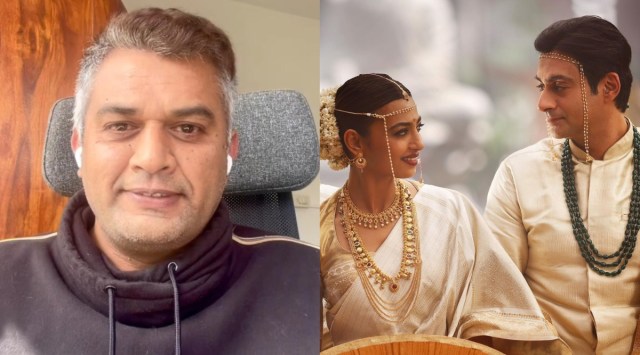
Renuka Vyavahare (BOMBAY TIMES; August 28, 2023)
Directed by Neeraj Ghaywan, one of the episodes of Made In Heaven (MIH) season 2, titled 'The Heart Skipped A Beat', featuring a Buddhist wedding, went on to become the series’ most acclaimed short. However, along with the appreciation came the credit crisis. While Neeraj thanked various people who inspired his episode in an Instagram post including activist and author Yashica Dutt, soon after, the latter questioned why she wasn’t given a formal credit on the show. She claimed the episode’s central character Pallavi Menke (played by Radhika Apte) was based on her life. Neeraj, known for his courageous vision and acclaimed films like Masaan, Geeli Pucchi (a short film where Konkona Sen Sharma plays a Dalit queer character) and Juice (a short on patriarchy starring Shefali Shah), for the first time, addresses the controversy, representation of Dalit characters in mainstream cinema and why pushing this narrative is so important. Excerpts...
Yashica has appreciated your work even before, and in a recent interview with us (after the series dropped) she said, “Neeraj Ghaywan’s work is important, but this is my life. I wasn’t acknowledged.” What is your reaction to that?
I have also championed Yashica’s work earlier. In the story, Pallavi Menke is a Maharashtrian Dalit from the Vidarbha region. She then goes to Columbia University (USA) and becomes an Ivy League professor. The episode is about her getting married to a man belonging to another caste, and how his family has issues with her (Buddhist) wedding ceremony. They are not in complete acceptance of her. They like her academic accolades but want to erase her caste identity. The episode handles this conflict. I don’t know how this is a homage to any one person. Even if you claim ownership to the term ‘coming out’, can you claim ownership to the act? So many people have hidden and then finally proclaimed their identities due to the fear of being judged. I hid my identity for 35 years, then suddenly spoke about it. People who never shied away from their identity and took the hate head on, their struggles were bigger. Look at (filmmaker) Nagraj Manjule, he inspires me. A part of me is Yashica, Nagraj, Bezwada… and so many people who don’t want to be named. Pallavi Menke is a sum of all of us, our pain and anguish. She is a symbol of the cumulative experience of all of us, so no one person can claim to be her.
So, your personal experiences and struggle with your identity is what translates on to your work?
Making this episode (MIH) for me has been a very personal journey. Zoya Akhtar, Reema Kagti and Alankrita Shrivastava are the writers of the show. They had this idea. Someone who’s accomplished from the Dalit community realizes that they may have come a long way, but it doesn’t insulate them from the ugly face of casteism. We chatted the whole day and I talked about how I proclaimed my Dalit identity on Twitter, and you had broken that story. (A story by the same author featured in BOMBAY TIMES; January 7, 2018, titled, Neeraj Ghaywan: There was always this fear of my work being attributed to my identity as a Dalit).
Before that happened, I hid my own identity in school, during my Engineering college, MBA days and even in my corporate life, because I have seen how people treat you when you come from a quota. My name was Neeraj Kumar and it’s still that on my passport. Now it’s become my middle name. (Pallavi Menke in the episode refers to caste neutral surnames like these). If you tell people your full name, they will scrutinize your last name, where are you from, which region, where are your parents from, etc. We know what they are getting at, and this kind of scrutiny scars you. I reclaimed my identity by going back to my surname and so does Pallavi.
What were your own battles after you proclaimed your Dalit identity?
After I spoke to Bombay Times in 2018, my extended family who hadn’t proclaimed their identity and were earlier proud of my work as a director, were also exposed. It was a bit complex for me because they weren’t happy about it. We used this track in the story, where Pallavi’s brother isn’t happy about her coming out. I opened up a lot about myself through this episode. I touched upon manual scavenging. Every achiever from the caste will have a story where their previous generations cleaned the toilets. I have heard these experiences from so many people including activist Bezwada Wilson, who is a pioneer in abolishing this practice. At some places, it has still not changed.
Go on…
I must tell you this. When my house help of ten years saw your piece in Bombay Times (2018), she picked up the newspaper and asked me, Dada, hey kaay aahe? (What has been written?) I was scared to tell her what it meant. It took me 2-3 days to muster up the courage to tell her that I am a Dalit. She reacted, “Aap Jai Bhim wale ho? Mujhe fark nahi padta.” Same with my driver. It’s scary because you have been putting up a different picture for the world for years. Since the time you broke that piece, I haven’t spoken to anyone. Not even my school or office friends. I stopped going to my college reunion because no one reached out to me after knowing what I have been through. All this fear and trepidation came out when I spoke to the show creators, and all of this went into that episode.
Your decision to choose Konkona, a straight woman to essay gay character and Radhika Apte, a Brahmin woman to play a Dalit character was a topic of discussion. There's an argument that on one hand you push for representation and on the other, actors from the community don’t find a place in these stories. What would you say to that?
My responsibility as a filmmaker is not just to be inclusive. The inclusion needs to make drama sense. The character must resonate with people and that needs a solid performance. I knew no one could play Konkona’s character in Geeli Pucchi better than her or Radhika’s character in MIH. Should I tell my stories efficiently or compromise on the casting to sound right and make a middling drama that no one will watch? Forget actors, I am the only artiste in the Hindi film industry who has acknowledged his Dalit identity. A lot of people don’t want to proclaim their identities. It’s their choice. If I do find newcomers who are open about their sexuality or caste, do they fit the part? You also need great actors to pull it off as these are complex characters.
You never shy away from making a political statement, through your feisty Dalit characters, who seek equality and not sympathy...
We all are political beings, especially the ones belonging to the marginalized communities. It could be Dalits, women, LGBTQIA+, specially abled people or minorities, I am not talking about electoral politics but our relationship with the world and society and how it’s all connected. Their rights which have been denied are linked to the state. Their mere existence is a political statement.
‘The film industry is not casteist. They are caste ignorant’
The way it is structured, it is very local centric. Caste is not what is shown in Hindi movies of the 80’s, where someone says, “Tu paani waha se pina.” It is way different than that. It is a reality that exists even today in Mumbai, where all of us get public holidays, but not the safaai karmacharis (sweepers and garbage collectors). Have you ever seen your building trash not being taken? They don’t have a choice. There are filmmakers who are now addressing this, but there is a problem with the gaze. It exudes a saviour complex. When filmmakers who are not from the community tell (Dalit) stories, they have a patronizing undertone. “Humne tumhara uddhar kar diya tum pe film banake. Praise me.” These films are not about the Dalit point of view. Dalit people become subjects here and not full-bodied characters with assertion, who can do other things beyond their caste markers. Patriarchy also exists in our community which needs to be called out. This conscience is slowly changing.
‘Calling it a Dalit wedding was wrong. It should have been called a ‘Buddhist wedding’’
When the response to MIH came in, something inside me changed. I got heartfelt reactions from people who thought they were finally seen and heard. Their trauma was acknowledged. The one thing that I want to humbly acknowledge is that we called it a Dalit wedding. That was wrong. It should have been called a ‘Buddhist wedding’.
‘I don’t want people to appreciate my work because it’s about a social cause’
People welcomed me with open arms once I revealed my identity. No one saw me differently, but this happened after Masaan. When I was making it, I didn’t tell anyone about it. I couldn’t even confide in Varun Grover, who was the film’s writer, I only told him later. Once I came through, people did not change their opinion of me. They only see my work and that’s how I want it to be. I don’t want people to appreciate my work because it’s about a social cause. I shouldn’t have to rely on the crutches of something political or marginalized characters to win brownie points. “Isne important topic pe picture banaya, so appreciate karo.” I don’t want that. A film should be judged solely for its art, clear narrative, and great storytelling. I don’t want any tokenism.
There has never been a Dalit wedding representation in mainstream cinema-Radhika Apte
8:17 AM

Amid growing belief that marginalized communities must represent themselves on screen, Radhika on playing a Dalit character in Made In Heaven 2
Mohar Basu (MID-DAY; August 22, 2023)
When you’re featuring in a single episode that only takes a few days to be shot, you hardly expect an overwhelming response. But Radhika Apte’s episode in the second season of Made In Heaven has become a dialogue-starter, and for good reason. The Neeraj Ghaywan-helmed episode showcases a Dalit-Buddhist wedding, a rare depiction in mainstream Indian cinema. While the episode is being hailed, the larger discourse of late has been about casting actors with lived-in experience. Where does Apte stand on it?
She starts with, “It’s called acting, isn’t it? We don’t cast Muslim actors for Muslim parts, and Christian for Christian parts. There are [two] subjects here —one is casting the right actor. [The other is that] people need representation, highlighting how people of different castes need equal opportunities at work. It’s not fair to mix it up. Who you are cannot be the only part you get, then the experience of an actor is gone. I will only get upper-middle class, Hindu women parts. The character is not confined to its religion, caste or geography alone. We are talking about the emotional liberation of a person on screen.”
The episode tells the story of Apte’s Pallavi Menke, a Columbia alumnus who came out as a Dalit through her book, pushing for a Dalit-Buddhist wedding. Gender is equally crucial here, a two-fold marginalizing force at work.
“I am a woman who has experienced discrimination, humiliation and disrespect. I acknowledge how it varies in degrees,” says Apte, adding that she modelled her character on Ghaywan.
“I based Pallavi on Neeraj. His experiences made their way into the performance. I can call myself woke, but when the episode came out, I realized from the responses how large the issue is. There has never been a [Dalit wedding] representation in mainstream cinema.”
Which brings us to Yashica Dutt and Sumit Baudh, the latter credited by the makers in a social media post for using the term ‘coming out’ in the Indian caste-identity context. After the episode streamed, Dutt called out the makers on social media for not crediting her while allegedly appropriating her life story. In a recent interview to mid-day, director Ghaywan said that he had woven his life experiences into creating the protagonist (Pallavi Menke is me, Aug 20).
Apte adds, “There are a lot of people Neeraj and I discussed. Of course, Yashica was one of the inspirations Neeraj had, and her book [Coming Out as a Dalit] was phenomenal. But the only person we discussed for the character’s emotional journey is Neeraj. His stories about his time in Pune are scary and horrific.”
Zoya Akhtar on Apte:
“I’ve wanted to collaborate with Radhika for a while. So when the character of Pallavi Menke came up, we approached her. We felt she’d be perfect because she is a talented actor, who also has the knowledge and sensitivity to understand how important Pallavi’s narrative is. Radhika had the right blend of strength and vulnerability that was required to make an impact. Also, she has a million-dollar smile.”
Pallavi Menke is me-Neeraj Ghaywan
8:42 AM

Director Neeraj Ghaywan opens up on the conversation-starter episode of Made in Heaven that spotlights owning your Dalit identity
Mayank Shekhar (MID-DAY; August 20, 2023)
"Pallavi Menke is me,” filmmaker Neeraj Ghaywan confesses, before apologising for emotionally choking up, during a video call with mid-day, along with Alankrita Shrivastava, Reema Kagti, Zoya Akhtar, writer-directors of the second season of the Emmy-nominated series, Made In Heaven (MIH), on Amazon Prime Video.
Ghaywan is referring to Radhika Apte’s Ambedkarite Dalit, upper-class, lead-character, in the fifth episode of MIH, titled The Heart Skipped A Beat, directed by him. That’s singularly turned into a conversation-starter online.
The episode—focusing on publicly reclaiming/owning one’s Dalit identity—climaxes with the protagonist putting her foot down to host an additional Buddhist wedding, while getting married into an upper-caste family.
Ghaywan—who Akhtar describes as “wild card entry” into the MIH franchise, and has been credited for “additional story” for the said episode—says, “The writers, Alankrita, Reema and Zoya had an idea about where they wished to go [with the episode]—about an accomplished person, from the marginalized, Dalit community, who’s received love, adulation, internationally. But is still not off the clutches of caste.”
“Which hearkens back to B R Ambedkar. This man was the most well-read in our country. And when he was coming back to India, after his education abroad [reading law at Columbia University], he expected garlands to welcome him. But he was thrown out of the lodge he was staying. That’s when it hit him that no matter what you do, the inter-generational trauma is not going to escape you!”
When Ghaywan entered the writers’ room, he recalls, “I somehow ended up speaking about my entire life. I haven’t even spoken as much to my therapist! And I poured a lot of myself [into the writing later]. It is scary to put out something you’ve spent all your years, growing up, hiding away from the world.”
For instance, Ghaywan points out, “When she [Pallavi Menke] talks about using a [caste-neutral] last name, Kumar—that’s me. Soon as you tell someone your full name, there is endemic scrutiny in our country. People want to know where you are from, location, gotra, caste… It’s genuinely scarring. In my passport, my last name is still Kumar. But I’ve reclaimed Ghaywan. It’s been five years.”
In 2018, Ghaywan had publicly owned his Dalit identity over a post on X (formerly known as Twitter). He says, “A lot of the press picked that up. My extended family were still masking [their Dalit identity]. They felt miffed, that it’s public now, and everybody knows they’re related to me. Which is what we used for Pallavi’s brother’s track [in the MIH episode]. And that boy’s character is also right about having to live with India’s reality.”
Ghaywan adds, “The other thing that weighs me down is being the only acknowledged artiste in the whole of the film industry, while 25 per cent of the country belongs to the [Dalit] community. That weight is too much to carry. I have doubts about myself. That reflects in Pallavi’s life too.
“Also, as an artiste, who wants to tell different kinds of stories, I’m always pulled into every panel discussion to talk about caste. Even on MIH, they want to talk to me about episode five. Which was my way of exorcising demons; a catharsis. I was scared about how the parents would react. Will my niece unfollow me on Instagram?”
“But there’s been so much love. I didn’t expect people crying to me to say it’s the first time in centuries, they’ve felt seen, heard—that we exist with our beauty, that is ours. [Dalit issues] have always been seen in an atrocity-porn sort of way—through a privileged caste, ‘white-male saviour’ complex.”
The character Pallavi on MIH is a Columbia-alum, who ‘comes out’ a Dalit, through her book. Which, on the face of it, relates to author Yashica Dutt who, in turn, has complained on social media, about feeling slighted, erased for not being credited for the inspiration.
“Whatever we had to say [on the issue], we already have,” says MIH co-creator Kagti, referring to a statement issued by the show’s directors, citing all other inspirations for the episode, to “deny any claim that Ms Dutt’s life or work was appropriated.”
Ghaywan adds, “Art reflects reality. And if it doesn’t, then it’ll become hollow. [What] if you tell Truffaut, look at all the post-modern kitsch that you’ve shown—why have you not attributed? You have to see things through the lens of art.”
Speaking of which, Akhtar, in another context, points out instances in MIH that are based on real life, “The in-laws [Neelam, Samir Soni], in love, running away from a wedding [in episode three] was taken from a news report. So was the girl marrying herself [in the finale episode]. Stories are rooted in truth—your personal lives, families’, literature, news, political zeitgeist—that’s how you make fiction.”
Apart from caste, MIH touches on multiple issues, from ‘colourism’ to domestic abuse, over a seven-part, second season. Was that a conscious call? Kagti rebuts, “That’s a reductive way of looking at it. Women’s empowerment is at the base of the show, [and the irony] of two people [Sobhita Dhulipala, Arjun Mathur] organizing weddings—one of whom is divorced; the other can’t ever get married!”
According to Akhtar, “[MIH] is the love story of Tara and Karan [the said central protagonists]—that your soulmate can be somebody you’re not married to, or in [physically] intimate man-woman relationship with.”
As for Shrivastava, “The show is about insiders and outsiders, and what it takes to feel like you ‘belong’—whether socially, geographically, financially. It’s reflective of the city of Delhi.”
Tarun Tahiliani calls out Made In Heaven 2 makers; says it is a ‘breach of faith’
3:28 PM

HINDUSTAN TIMES (August 19, 2023)
Tarun Tahiliani is miffed with the makers of Made in Heaven 2 (MIH 2) after his designs that were lent out to the styling team of the OTT show were presented in the second episode under a fictitious label name.
Taking to Instagram, the fashion designer wrote: “It is most unfortunate when a popular OTT series violates the understanding behind the provision of clothing in the first place… This is a shocking breach of faith. If this is what the production house intended, they should have engaged a costume designer, had costumes designed and proceeded as they saw fit.”
Interestingly, the makers featured couturier Sabyasachi and his designs in the first episode and gave him due credit. However, this courtesy wasn’t extended to Tahiliani.
Despite repeated attempts, Tahiliani; Bhawna Sharma, the show’s stylist; Alankrita Shrivastava, the director of the episode in question and the show’s creators and producers, couldn’t be reached for a comment.
A dramatic turn
Earlier this week, the web show made headlines when Dalit author Yashica Dutt claimed that an episode directed by Neeraj Ghaywan showed a version of her life on screen “without permission or credit”. The makers have released a statement, dismissing the allegations: “We are deeply disturbed with the misleading reports… We will continue to platform stories and voices that are bigger than us.”

Neeraj Ghaywan’s work is important, but this is my life-Yashica Dutt
8:28 AM

Dalit author Yashica Dutt on the Made In Heaven episode supposedly based on her
Chandrima Pal (BOMBAY TIMES; August 18, 2023)
Ever since the second season of Made In Heaven arrived with band, baaja and designer lehngas, audiences have been busy picking their favourite moments, weddings and dialogues from the show. The most talked-about episode at the moment features the compelling story of a Dalit writer and activist, who is feted globally for embracing her caste identity and 'coming out', but faces predictable prejudices back home when she wishes to marry in a Buddhist inter-caste ceremony.
While showrunner Neeraj Ghaywan has received a fair bit of appreciation for his presentation of the feisty Pallavi Menke (played by Radhika Apte), he has also come under heavy criticism from Dalit writer, activist Yashica Dutt, whose life and work has been at the heart of the story.
In a post that went viral earlier this week, Yashica expresses her dismay at how Neeraj and the production house used her words and her book 'Coming out as a Dalit', her experiences (studied in Columbia and embraced her Dalit identity, grandmother was engaged with manual cleaning) to create a powerful narrative, and yet did not acknowledge her or seek her permission before doing so.
Though Neeraj later doffed a hat to Yashica in a social media post, he has not responded to the author's call for credits and declined to comment on the controversy when we reached out to him.
Meanwhile, in a conversation with this publication, Yashica spoke at length about why she feels it is important to call out the Hindi TV/film tradition of "taking anything from anywhere to create its narratives" without due credits and why she wants show creators
Excerpts...
In 2021, you praised Neeraj Ghaywan for his depiction of a Dalit woman in Geeli Pucchi as part of the Ajeeb Daastans anthology. You wrote how watching Konkona Sen's character Bharti Mandal acknowledge that she is a Dalit, was a "cathartic" experience for you. Now we have the same filmmaker, whose depiction of another Dalit woman, Pallavi Menke, has caused you "heartbreak" since it strips you of your identity and your voice by not acknowledging you as the inspiration behind the protagonist. What changed between the two shows you think, and why?
That is for the makers of Made In Heaven to answer. All I can say is, the difference between the two characters is that Bharti Mandal was a composite of a queer and Dalit character. Perhaps many. Pallavi is identifiably a single person - me. Ever since that episode went on air, I have been receiving hundreds of messages and calls from those who know me, or have followed my work and read my book, saying that Pallavi Menke walks like me, talks like me. But I am never acknowledged.
I support Neeraj's work - it is important. The Dalit discourse is important and the Dalit women characters he portrays, is important. But it is a separate issue. Here, everybody can see, Pallavi is a living person. Since I live in the public eye, and have some works published to my name, people assume I have access to wealth and power. But I am a journalist and writer who has had to walk the talk. I have lived the shame and talked about it in the public space - from a family involved in manual cleaning to talking about it, owning my identity on an international platform - that's my leap.
Did the makers of the show reach out to you before or after the show, or respond to your social media post seeking acknowledgement?
No. Neeraj had posted on his IG before I posted about it. So, no formal communication from the production house or the streaming platform so far.
Were you ever approached by any other production house for TV or film rights of your book?
In the past four years since the book was published in India, it has had a huge impact. I was approached by a few fairly big production houses to adapt the book into a show. Especially after I was conferred the Sahitya Akademi Yuva Puraskar. But I was still not ready to relive the trauma of having lived through my experiences and telling my story. It is still very fresh and I am not ready for it. Besides, the book is yet to be published in the US and other regions and I did not wish to undermine the chances of readers discovering my work by putting it out there right now. But regardless of what happens to the book, it is important to understand that while there are many who see me in Pallavi Menke, there are millions watching the show, who will not know that this is me, my life's work, because the show runners have not acknowledged me. I still have the TV and digital licensing rights, and I am still trying to figure out what to do next.
But you also write in your post that the work Neeraj has been doing is important.
Absolutely. I am not cancelling or calling out, but calling in with respect and empathy. The book is still fresh, alive, breathing. What they have done is created a likeness of a person who is very much present. I may not have got married in the Buddhist tradition as depicted in the episode or married to an Indian, but everything else about Pallavi is me. This episode is an homage without any acknowledgement. And that is not acceptable.
You have written in your book, and also in your social media posts, about how much the cinematic representation of Dalit characters has changed over the years.
Yes, if you look at Dukhi (Sadgati, Satyajit Ray) or Kachra (Lagaan, Ashutosh Gowariker), these are characters without a voice, or agency. They suffer in silence and accept their destiny, surrender to the system. And while Tamil cinema has had a longer history with unapologetically Dalit characters, Bollywood is now at a powerful moment as far as Dalit representation is concerned. When was the last time you had a Dalit character say "Personal is political," on screen? That merits a celebration, even as we must continue to have these conversations.
Till the time of going to press, neither Amazon or the show creators were willing to comment.
Neeraj Ghaywan bats for Kachra; calls out food app for being ‘extremely insensitive’
8:19 AM
Vinay MR Mishra (HINDUSTAN TIMES; June 9, 2023)
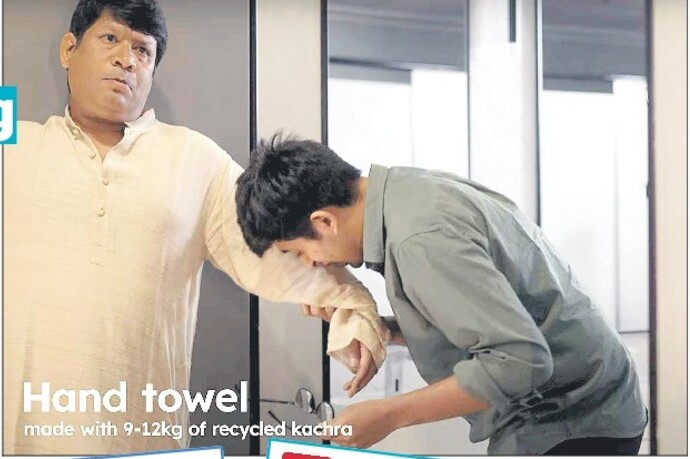
On Thursday, filmmaker Neeraj Ghaywan slammed a video campaign by food aggregator Zomato, calling it “extremely insensitive”. The now-deleted video saw actor Aditya Lakhia, known for playing Kachra in Lagaan (2001), showcasing the importance of recycling garbage.
Ghaywan says, “It (the ad) has the savarna saviour complex of having an oppressor caste emancipate a Dalit. The take should have been progressive. It celebrates saviours, but puts the oppressed in the same cycle of being a perpetual victims.”
The 42-year-old says the ad, which showed Kachra’s character as a tablecloth, “normalises casteism”. He rues, “It is insensitive to use a character to make a ‘funny’ commercial about sustainable recycling. Companies need to have an inclusivity orientation.”
Lakhia, who is absolutely “fine” with the ad being pulled down, says, “The idea was to give out a positive message. We did not aim to hurt anybody. But if someone is hurt, one must respect that.”
While the ad has been pulled down, Zomato has also issued an apology for hurting “the sentiments of certain communities and individuals”. When we reached out to the app, they refused to comment further.

There’s no way of knowing when the slots for vaccinations open. There’s too much chaos-Neeraj Ghaywan
8:08 AM

Sugandha Rawal (HINDUSTAN TIMES; May 12, 2021)
Filmmaker Neeraj Ghaywan is appalled by the technical complexities of Coronavirus vaccine registration. Calling the whole process “cumbersome”, he feels the chaos is depriving those who’re unprivileged, access to the life saving drug.
“There’s no way of knowing when the slots open. There’s too much chaos. I can do it because I have a laptop and fast internet,” Ghaywan shares, adding that the entire process is unfair, especially for people who aren’t well-versed technologically.
He adds, “You see 300 slots and then by the time you get an OTP, they’re gone. By chance if any slot is available, it will ask for captcha. Now, an underprivileged person won’t even understand what is a captcha.”
Bothered by this, he questions the safety of rest of the population. “If I weren’t helping my staff, where would they go? I can’t believe this kind of technology and improper planning is for a life saving drug. I understand there’s a vaccine scarcity, which is a bigger problem, but people are also being denied the same because of the complications of the system.”
He expressed his disappointment on Twitter, and was asked by some to give a solution. “Just because I don’t have a solution, it doesn’t mean I can’t ask a question. My job isn’t to find answers. I’m relying on the state or the government for that,” he stresses.
He’s using social media to help people asking for oxygen cylinders, ICU beds etc. “But I gave up because I realised people are asking for medical help, and I know it’s not available. It was harrowing,” he says.
Subscribe to:
Posts (Atom)