Showing posts with label Nathu La. Show all posts
Showing posts with label Nathu La. Show all posts
People got to know about 1967 Indo-China clashes after Paltan’s trailer released-J P Dutta
8:32 AM
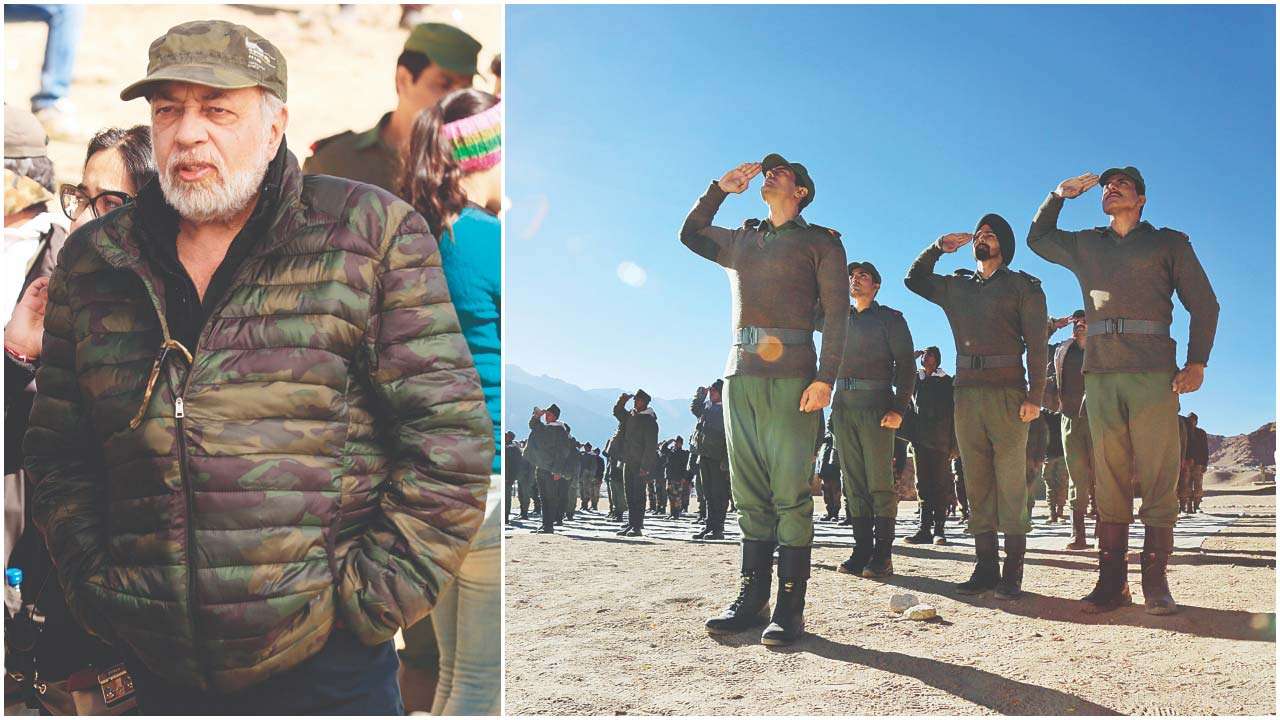
Hiren Kotwani (DNA; September 5, 2018)
Despite making movies on varied subjects like the caste, feudal and zamindari systems, warring royalties, and the Umrao Jaan (2006) remake, JP Dutta is best known as Bollywood’s war movie specialist for making Border (1997) and LOC Kargil (2003). The National Award-winning filmmaker, whose career spans over three decades, has revisited the genre and has completed his war trilogy with Paltan, which is backed by Zee Studios.
In the film, Dutta tells the story of Indian forces that fought Chinese aggression in 1967 and forced them back in the clashes at Nathu La and Cho La in Sikkim. In this interview, he talks about his latest release (which comes 12 years after his last outing, Umrao Jaan) and the Indian armed forces. Read on...
Having made different kinds of films, why did you choose to make Paltan?
I had promised that I would make a war trilogy. This is the third part. I’ve kept my word.
What, according to you, makes the story of 1967 Indo-China clashes so important?
When you talk of Indo-China conflicts, people only remember the one in 1962. I believe that wasn’t a ‘war’ because when one takes place, you know the enemy. Back then, the enemy chanted ‘Hindi-Chini Bhai Bhai’, but they stabbed us in the back. The UN was refusing to make Communist China its member, but our then-Prime Minister, Pandit Jawaharlal Nehru, insisted on its inclusion. Keeping in mind that India was pressuring and strongly recommending China’s membership, he didn’t think they would attack us, but they did, that too without any warning.
The conflict took place 50 years ago, isn’t it a little late to tell this story now?
Not many people know about this episode. Only after Paltan’s trailer released that more Indians got to know that something like this had happened in 1967. No one spoke about it and there’s no mention of it in our history.
When you made Border and LOC Kargil, you shot at actual locations...
Since 1967, the infrastructure at Nathu La has changed. It’s a different terrain now. There’s a gate at the place where the clashes happened. So, it doesn’t match the story. But it wasn’t difficult to recreate the place in Ladakh. We share a 4000-kilometre border with China; it’s similar to how Nathu La was back then.
LOC Kargil showed how the Indo-Pak battle was fought at multiple points...
Even there, we didn’t have the advantages. The enemy was at higher points and we had to fight our way up to recapture our territory. In Paltan, the drama and emotions are almost like that in Border — of one battalion fighting the opposing army. And the clashes are eyeball-to-eyeball, like Doklam.
Even though you’ve made socially-relevant movies, your name is associated more with war films. What fascinates you about this genre?
Many such tales need to be told. People want to see all sorts of films with diverse subjects. The story of a soldier staying away from his family and sacrificing his life to guard us and so we can sit in an air-conditioned room and talk in peace makes it necessary and worth the while to tell others.
In recent years, people’s opinions about the armed forces have been on two extremes. What’s your take on this?
We don’t care about our army, unless there are floods or a natural disaster or until the enemy is at the gates. The fear comes in, we get scared and we wake up to the soldiers.
Why do you think people have this attitude?
I feel it’s because India has only experienced battles and not the two World Wars like the West has. They understand the value of a soldier, country, respect for the national flag, etc. Both the World Wars impacted the entire world, except India, though many of our people were fighting for the British Army. The attitude towards the army depends on the individual and the families. The four walls of your home are the biggest school you’ll go to. What your parents talk about, what you listen to and say as you grow up, plays a crucial role.
What are your views on the word ‘jingoism’ being used to describe patriotic films in Bollywood?
Whoever uses this word for India needs to look up the dictionary, understand its meaning and what our country is all about. Our nation is a liberator, not an aggressor. We’ve never attacked any country in our entire history, ours is the only country that has always tried to defend itself against foreign invaders. Jingoism is not the right word for our country.
We hear the Ministry of Defense has appreciated the film and would like you to make another war movie.
Well, the MoD has liked the film. They always wish that I do well. I get a lot of respect from them and I also respect them immensely. It’s mutual.
What are you planning after Paltan?
I don’t know what’s next. I’ve registered 21 titles and every title is for a different subject. Let’s see...
I am the medium between the jawans and the audience-J P Dutta
8:30 AM

Rachana Dubey (BOMBAY TIMES; September 5, 2018)
After Border (1997) and LOC: Kargil (2003), J P Dutta is all set to complete his war drama trilogy with the upcoming release, Paltan. The film is based on the 1967 Indo-China military clash that took place at Nathu La, along the Sikkim border. The movie unveils the untold story of our brave soldiers, who fought an intense battle to ward off Chinese infiltration.
Point out that he is among the few Indian filmmakers, who are associated with war dramas and Dutta says, “It’s sad that mine is one of the only names that people associate with war dramas. Why is it that in our country, most filmmakers don’t connect with that man standing with a gun, guarding the borders of our nation, which has never been an aggressor or provoker, ever? A mother sends her son to the border so that you and I can spend time with our mothers. What a strong family it must be that stands behind a soldier. When filmmakers make war films, often, the idea is to not just educate viewers about what happened, but also to make them realise the futility of a war.”
Dutta, who has also written Paltan, says that the idea of sharing his vision with the audience drives him to make such films. “I am the medium between the jawans and the audience and that drives me to go after their stories. Also, tales of clashes like the one that took place at Nathu La have been brushed under the carpet.”
The director shares that making war dramas don’t drain him emotionally. “They egg me to move and seek my next story. I feel as if soldiers from across our country are calling out to me to narrate the stories of the battles that they fought for all of us,” he says.
Paltan, presented by Zee Studios & Produced by J P Films, releases on September 7

It’s sad to see the army being maligned; they are like Gods in uniform-Arjun Rampal
8:02 AM
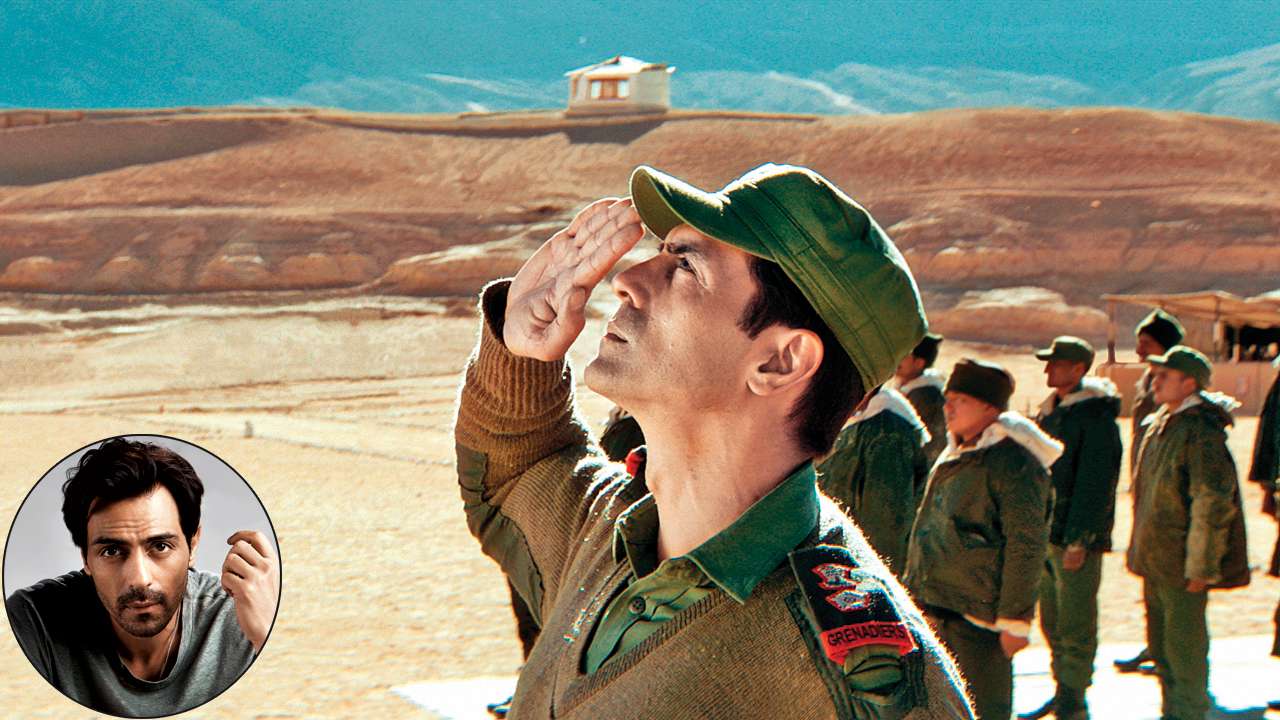
Hiren Kotwani (DNA; August 25, 2018)
The one thing constant about Arjun Rampal in the 18 years that he has been in the film industry is his cheerful disposition. Irrespective of what may be playing on his mind, he always has a smile on his face and is brimming with optimism. Last seen in Daddy (2017), which he also produced, the actor is gung-ho about his upcoming release, J P Dutta’s Paltan, which is backed by Zee Studios. He plays Lt Col Rai Singh, the Commanding Officer of 2 Grenadiers who played an important role in the 1967 Indo-China clash at Nathu La along the Sikkim border.
In a freewheeling chat, he talks about the importance of this chapter in India’s history, the armed forces’ dedication at the border and in times of natural calamities like the recent Kerala floods as well as his production plans. Yes, even though his biopic on the gangster-turned-politician didn’t fare well commercially, Arjun remains undeterred in making movies on stories that he wants to tell. Read on...
What does playing a man in a uniform mean to you?
It depends on the film you’re doing. If it’s something like Paltan, in which you are portraying a real-life character, then your responsibility increases tremendously. If you’re playing a fictional person, then you can take liberties. This movie is based on true incidents. When I first heard about it from J P sir, I was shocked that there was a fight between India and China in 1967, after 1962, in which our soldiers were massacred. It was a brave feat and this chapter should be included in our history books. It’s extremely special for me to tell this kind of a story. In fact, most of us who star in the film have some connect with the armed forces. Either someone’s grandfather, father or uncle had been in the army, so they’ve lived in cantonment areas and interacted with the personnel on a day-to-day basis.
How do you see the 1967 Nathu La and Cho La clashes as compared to the Battle of Longewala on the basis of which JP made Border (1997) or the Kargil war that was made as LOC Kargil (2003)?
In 1967, Sikkim was not a part of India. The King of Sikkim had asked Indian forces to give them protection. So, we were protecting a territory that was not a part of the nation. After 1962, there was a lot of anger, fear and conflict with China. When you speak to someone like J P sir, who is well-versed with history, the way he talks of 1962 makes sense. That was not a war. For a war to happen, a chain of events lead to that situation, both sides are alert, they prepare themselves and warn each other before the first attack.
In 1955, Pandit Nehru had suggested that Chairman Mao Zedong-led China be made a part of the United Nations Security Council (UNSC). We were trying to maintain good ties with our neighbours. But in 1962, they attacked us all of a sudden and massacred not just our soldiers, but also killed many civilians. In 1967, we had gone to protect Sikkim, knowing the history of 1962 and gave China a bloody nose. Maj Gen Sagat Singh and Lt Col Rai Singh, the characters played by Jackie Dada (Shroff) and me respectively, say ‘Let’s put a fence and seal the border.’ That’s a conflict, both the countries were prepared and it led to the clashes. In 1971, too, there was conflict. We knew the Pakistan troops were coming. All talks had gone down the drain and it was important to have our army there. I don’t think 1962 gave us a fair chance.
Why do you think it’s important to tell this story?
For the morale of our army. When you talk of making a film on unsung heroes, these are our unsung heroes. If we had not held our ground, as Jackie Dada’s character says in the trailer, ‘We cannot leave Nathu La,’ then the ground reality there would have been different today. It was eight years after this clash with China that Sikkim formally became a part of India in April-May 1975. The whole map would have changed if this event had not happened.
What do you attribute the flawed historical narrative over the years to?
It was all politically manipulated. When you see the film, you will know.
Do you see this film being a part of the course correction?
I want it to be and I hope so. I don’t know why it’s not there, but it’s an important part of Indian history. What our soldiers had done then, is there for you to see today. If you go to Nathu La, you’ll find the barbed wire fence there. There are statues of our soldiers and roads are named after them. They were awarded Param Vir Chakra and Mahavir Chakra for their bravery.
While you feel a sense of pride and responsibility in playing characters based on real soldiers, do people’s extreme views about the army upset you?
Definitely. I think the army is one organisation that works beautifully without interference. If more people get involved in its business, corruption will seep in. The army should remain an incorruptible institute. People who try to influence deals by immoral ways should be kept away. Being in the army is a selfless and honourable job. They are risking and sacrificing their lives to make sure all of us have a good life and make this nation grow. So, yes, it is upsetting when people try to malign the army. I think they should be protected by us civilians as well as politicians and bureaucrats who are required to be in touch with them. Take the Kerala floods for example; they are like Gods in uniform. The kind of work our soldiers are doing is commendable and should be lauded.
Tell us about the challenges that you faced while shooting in a rough terrain like Ladakh.
At a point beyond Khardung La, which is the highest point, the temperature was minus 28 degrees. We were told that we can expose ourselves to this climate only for two hours, following which water would start filling our lungs. Marching through while shooting the song was tough. Another challenge was using real guns and bullets. We had to be careful and ensure that we didn’t hurt anyone. The reason behind using real arms and ammunition was that you have to feel you are in a war. Otherwise, we’ve seen how actors fire all around when fake guns and blanks are used. Here, you could see where the bullets were leaving their marks.
J P Dutta has a reputation of being a tough taskmaster, too.
That’s what I thought before I met him. But he is the most amazing director to work with. His knowledge about cinema, armed forces, his personal connect with them and his passion are inspiring. He wanted to get this film out in its purest form. The only request he makes is you have to submit yourself to him, let him take you on this ride and he knows what he wants. The clarity and focus he works with, his intent is very pure. However, not many know that he has a terrific sense of humour. Also, he’s always on his feet. So, while filming, we would be standing, too, hoping he would sit so that even we could. For him to complete a trilogy of war films with Paltan is a correct choice and I’m glad to be a part of it. In fact, the whole Dutta family looked after us and made us feel a part of the family.
Indian cinema, more so the Hindi film industry doesn’t make too many war movies or historicals. Do you think there’s a certain cynicism or skepticism about our past?
I don’t know. It’s up to the filmmaker and how he can capture it well on screen. It also depends on how such films fare commercially. If Paltan does well, it will encourage more filmmakers to tell our historical stories. Not war films per se, but about incidents that many people don’t know much about. We have such a vast history, full of diversity — the Mughal invasion, British coming in as traders and ruling us, our fight for independence. There are so many stories to tell. It’s now the responsibility of the younger generation of actors. Besides, with many actors also being producers, hopefully, we’ll see more such movies.
What’s next after Paltan?
There are three movies, but I’m contemplating which one to start first. Two of them are my productions — one is a fantasy film and the other is a thriller. So, we’ll begin prep after mid-September. I wanted to finish Paltan first. After its release, I’ll have a clearer idea. Web is also an exciting phase. The idea is to create good content, experiment with diverse genres and stories. The kind of scripts I’m getting, some are real stories — one is a horror story and if done correctly, it will make for interesting viewing. There’s also a true story of a conman that I’m reading.
Army officers from the 1967 Indo-China military clash provided inputs for J P Dutta's Paltan
10:05 AM

Upala KBR (MID-DAY; August 15, 2018)
Staying true to his research-backed approach to war dramas, filmmaker J P Dutta ensured he did extensive homework on the 1967 Indo-China military clashes before going behind the camera for Paltan. The director reveals that he found able support in Lieutenant Attar Singh and Major Bishan Singh, who were part of the clash that took place along the Sikkim border.
 While Major Singh took over as the company commander with Captain P S Dagar as his second-in-command, Lieutenant Singh was part of the 2 Grenadiers unit during the skirmish. The former Army officers, along with the family of Captain Prithvi Singh Dagar (who lost his life in the battle), helped the makers recreate Nathu La — which served as the war front — in Ladakh.
Dutta reveals that Lieutenant Singh accompanied the unit of the Arjun Rampal and Sonu Sood starrer to Ladakh for the shoot. "Before commencing the shoot, I travelled to Nathu La to study the location. [As part of my research], I took photos from the jawans' family albums and they too would send me first-hand information over mail. Attar travelled with us to Ladakh and zeroed in on the various locations that he thought looked closest to Nathu La."
The director adds that he met several Army officers from the respective battalions while scripting the final instalment of his war trilogy. "I always start my research by reaching out to the commanding officer of the battalion in question. It took me close to a year to complete my research."

File photo of Major Bishan Singh
Subscribe to:
Posts (Atom)