Showing posts with label Naseeruddin Shah. Show all posts
Showing posts with label Naseeruddin Shah. Show all posts
Naseeruddin Shah's favourite line was ‘There are no bad actors, there are only lazy actors’-Aahana S Kumra
11:19 PM

S Farah Rizvi (HINDUSTAN TIMES; September 5, 2026)
The eagle has landed – this was how actor Aahana S Kumra and her batchmates reacted when actor-theatre director Naseeruddin Shah walked onto their film school campus 20 years ago. To them, he was not merely a teacher but a standard-setter.
"For some reasons he always knew if we reached unprepared,” Kumra recounts her college and theatre days. “And you could never prepare enough, because he was always over-prepared as a teacher. His favourite line was ‘There are no bad actors, there are only lazy actors.’”
The teaching phase soon shifted from the classroom to the stage for both mentor and mentee.
In 2010, while Kumra was backstage at a play, “Naseer sir approached me with a George Bernard Shaw script. ‘Take and read this,’ he said. That was the day where I finally started to act for a play and in 2011 I performed for By George, at the NCPA under his direction. And it also earned me painting from him and Ratna (Pathak Shah) maam.”
Kumra says that as his students, they all value his sharp insight into the industry’s calculated realities. “He understands that young actors rarely get second chances,” she explains. “If you say no to a producer, you’re replaced. He knows producers have inflated egos—a lost chance is often lost forever.”
On a lighter note, she shares that he fondly calls her a “feisty cat,” and she shares new actors ask her, ‘Naseer sir ke sath kaise kaam kar sakte hain’ and she reverts, ‘Koi tareeka hain hi nahi unke sath kaam kar paane ka. It’s sheer good luck.”
On Main Vapas Aaunga, she adds, “I cried when saw him on screen no doubt it one of his best. He just loves Imtiaz Ali and calls him a rare director. Sir always enjoys portraying a Sardar character—he understands they speak with such buland awaz and as they age it becomes feeble yet authoritative.”
And what does the master think of his former student?
He told us at an event, “Ahana Kumra is one of my students and now also a good friend. Her career hasn’t gone as well as I’d hoped, but she’s been doing some offbeat films. She’s a girl with gumption, and I definitely feel her day will come. Some find success at 20, others at 30 or 40. Look at Boman Irani and Gajraj Rao. So I keep encouraging her and telling her not to get disheartened. I really believe her time will come.” (Input by Aadrika Sominder)
Naseeruddin Shah wishes ‘more strength’ to student protestors
9:16 AM

Aadrika Sominder (HINDUSTAN TIMES; September 1, 2026)
Over a month after posting an impassioned video condemning the police crackdown on students protesting over alleged irregularities and paper leaks in the NEET-UG exams, Naseeruddin Shah has a new message for student protestors.
“I wish these kids all the best, and I wish them more strength,” the veteran actor told HT City on the sidelines of the launch of Mahmood Farooqui's memoir The Tihar Players, in the Capital on Sunday. Asked if he believes such protests could change the state of affairs, he said, “This kind of protest will definitely work.”
In his July video, Shah had compared Delhi Police personnel who lathi-charged students to American ICE agents, and also took a dig at A-list actors who chose silence during the protests. His message drew criticism from Kangana Ranaut and Piyush Mishra.
At the event, the 76-year-old praised a theatrical performance by former Tihar Jail inmates, saying, “Seldom have I seen this much truth in a performance, performed by those who have gained redemption.”
Over the years, Shah has mentored several actors in the Indian film and theatre industry. During an on-stage interaction with Farooqui, who held drama classes during his own prison time at the Tihar Jail, Shah said, “I find that many of my student actors struggle to shed their inhibitions even in simple exercises such as drinking from an imaginary cup, and the women resort to crying after reading an imaginary break-up letter from their boyfriends, mainly because they join these classes to get a job. But I’m sure you didn’t get this struggle in the jail."
He also recalled his own years at boarding school, likening that experience to being in jail. He recounted how punishments there were far harsher than what students face today. “The teachers today would be arrested,” he quipped.
What Mumbai is now, the stars of that time used to stay in Lahore-Vedang Raina
10:19 AM

Nishad Neelambaran (HINDUSTAN TIMES; August 15, 2026)
Vedang Raina has been riding high after the success of Imtiaz Ali’s Main Vaapas Aaunga. The 26-year-old actor has been praised for his strong performance in the romantic drama that revolves around the partition period in 1947. It wasn’t just a film for Raina, but a redemption after Jigra (2024), and an eye-opener in a lot of ways, as he holds the film responsible for changing his perspective on the significance of Independence Day and what it meant for the country back then. Excerpt:
What a year you have had with Main Vaapas Aaunga. Did you always anticipate it becoming the biggest movie of the year?
No, I still don’t think it’s the biggest movie of the year. But it’s done its bit and found its audience. I’m very grateful for that. While shooting the only thing I understood at that time was that it’s an honour to be part of a film in which Imtiaz Ali is directing, and to be playing the younger version of Naseeruddin Shah. I think those two things were like the highlight of my journey in this industry.
What was Imtiaz Ali’s process like?
It wasn’t really like a narration, not in the typical sense. With him, it was like he had certain ideas in his head. It lasted maybe two minutes, and he spoke about the concept of the film. And this is the character I want you to play. And for me, it was the fact that Imtiaz sir was making it. I said, okay, fine. Like, I’m on it. Let me know when we start.
What does Independence Day mean to you after Main Vaapas Aaunga?
I feel this immense sense of belonging to the country and an immense sense of pride. After Main Vaapas Aaunga, I’ve had a different outlook on what that day meant, how much it means to the people and how important it was in the history of our country. As a kid, I did not get into it that much. But now, I really got in-depth into what that day was like for so many people. And what it stands for now.
You also went to the partition museum. Did that open up a different world to you of what actually happened decades ago?
Yes, 100%. That was probably the most important thing that I did in pre-production. Sharvari and I went to the partition museum in Amritsar. We spent four hours there. The museum was amazing, but it was those anecdotes from the people. There were 15-20 minute videos of actual people who went through that partition journey. And what that migration was like for them. That experience was really important.
What were the things that you found that we don’t talk about when we talk about Independence Day and partition?
The Radcliffe Line [drawn by Sir Cyril Radcliffe] that we know of: I didn’t know that Sir Radcliffe hadn’t ever been in India before. He came here for a few weeks, and he was in his hotel room. And he had so much pressure from the higher-ups to make the line between India and Pakistan that he didn’t really get to go talk to the people, understand what it means, what those areas mean, what those people are like in those places. And for them, it was kind of just like a line that they drew. Which sounds so terrible. Lahore was such a big part of Indian culture. It was the heart of India. What we call Madhya Pradesh right now was Lahore because that was kind of central India. It was not the capital, but it was the hub of culture, art, music and movies. What Mumbai is now, the stars of that time used to stay in Lahore and everything used to come from there... And I’m thinking just that line could have changed the lives of maybe 1000s of people.
Have you heard anything about partition or the freedom struggle from your grandparents or parents?
I must have heard stories about the partition, but also we are from Kashmir. My grandparents were in Kashmir at that time. So, it was different for them. They didn’t experience any migration at that time. Later they did, of course. My nana used to talk about how things were, what Mahatma Gandhi was doing, what Pandit Jawahar Lal Nehru ji was doing, and what the political climate was. He is very politically aware. He’s always had very strong opinions on politics.
Do you have strong political views as well?
Yeah, I’d say not as extreme as him. I do have political opinions, and I do have strong opinions.
Diljit, in Main Vaapas Aaunga, says the major problem in partition was that there was no social media. If we had to go through something similar now, how do you think the Gen Z would react? Will they ‘clock it’?
(Laughs) 100 per cent they will. We’ve seen a little whiff of what social media and something that is an important subject to our country means in recent times, right? And just imagine something like the partition [happening]. Well, there would be one side where Gen Z would be making those reels, but also we are such a strong collective voice now. And not just Gen Z, but all generations. Because of social media, we have a strong, collective voice that cannot be ignored. That is something that we’ve proven.
There has never been absolute freedom under any regime, irrespective of ideology-Mahesh Bhatt
9:51 AM

Mohar Basu (MID-DAY; June 27, 2026)
Sahir Ludhianvi’s iconic poem Woh Subah Kabhi To Aayegi spoke about revolting against oppression and creating a tomorrow shaped by equality. That hope forms the backbone of Wo Subah Hum Hi Se Aayegi, a play presented by Mahesh Bhatt that follows a young man navigating a changing India in the early 1990s.
While the filmmaker built an enduring career in movies, he has also produced several plays. What has it taught him? That theatre remains the country’s richest talent pool, even if it doesn’t receive the respect it deserves.
On a call with mid-day, Bhatt expressed his disappointment as he said, “The problem is that theatre has become a springboard to films and television. There are people like Naseeruddin Shah and Makarand Deshpande for whom theatre is an end in itself, but for many others, it’s merely a means to an end. That’s unfortunate because this is where you discover writers and actors.”
The director insisted that the country’s attitude towards the art form needs to change. Drawing comparisons with the West, he noted, “A Broadway play gets as much respect and coverage as a film. We haven’t built that culture in India. There are successful plays here, but they don’t offer the recognition that films, streaming, or television do.”
Theatre also allows a censorship-free domain for artistes. Even as Bhatt agreed on the point, he noted that art forms will almost always face resistance. His films serve as an example.
“Arth [1982] was criticized, Zakhm [1998] had problems with the Censor Board. There has never been absolute freedom under any regime, irrespective of ideology. Every age has had this tug-of-war between the creative force and institutions that seek to regulate thought.”
All of Imtiaz Ali’s women are mature but have a childish quality to them-Anjana Sukhani
10:01 AM
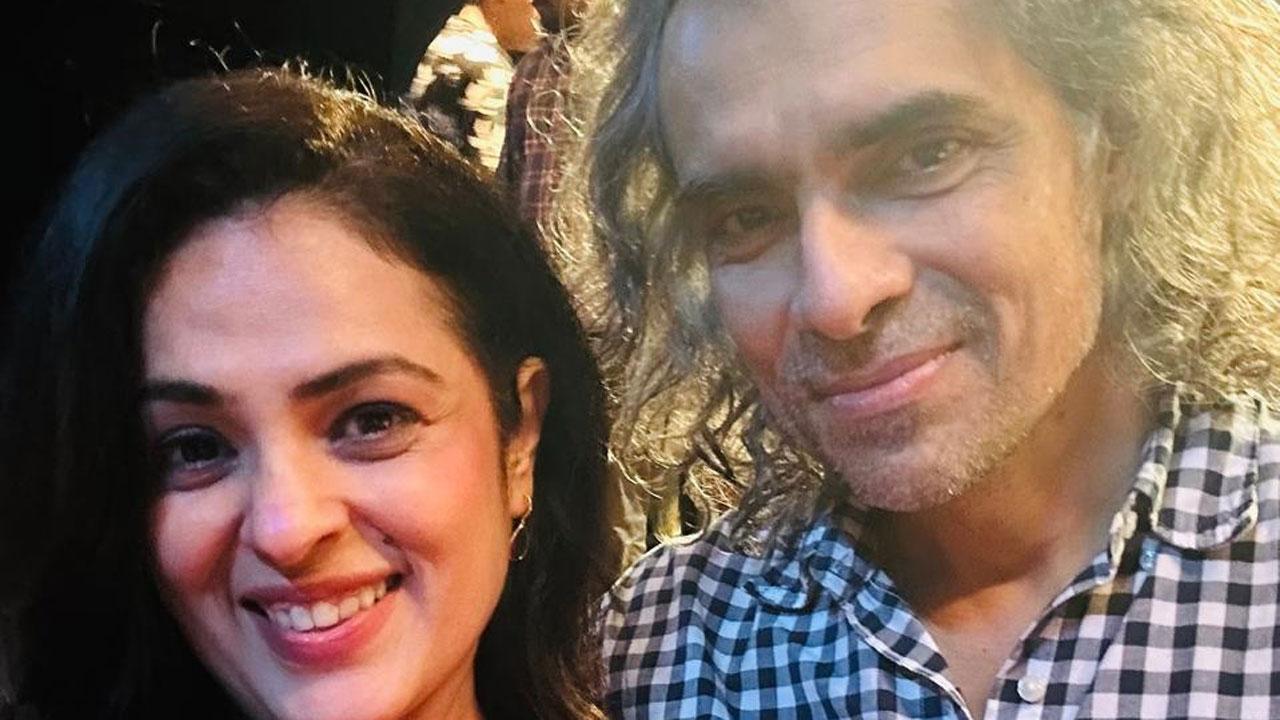
Priyanka Sharma (MID-DAY; June 13, 2026)
“How many actors can really say that I am in an Imtiaz Ali film?” asks Anjana Sukhani, her excitement evident as she speaks to mid-day about Main Vaapas Aaunga. Her journey began with a call inviting her to meet the filmmaker. The role: Naseeruddin Shah’s daughter-in-law and caretaker in the Diljit Dosanjh, Vedang Raina, and Sharvari Wagh-starrer.
“He wanted to see me on camera,” recalls Sukhani, who was first asked to send an introduction video. “When I met him at his office, I think he saw Meher in me. He narrated the part to me. And [I had] no questions. Who am I to say no to Imtiaz?” she says. During their discussions, she realised that Meher shares shades of Geet from Jab We Met (2007).
“Like Geet, [played by Kareena Kapoor Khan] Meher has no filter. I feel all of Imtiaz’s women are mature but have a childish quality to them. She innocently speaks about the wrong things at the most unfavourable time. It’s an endearing character,” says the actor.
Sukhani also cherishes her experience of working alongside Shah. Marvelling at the veteran actor’s commitment, she says, “Every time I did a scene with him, I teared up because of the way he performed. Just watching him perform is a masterclass in itself.”
Her admiration also extends to Dosanjh. “Diljit comes with a lot of sincerity and honesty as an artiste. He knows everybody’s lines, so when I fumbled, he would tell me my line.”
Hamara naseeb hai ki Naseeruddin Shah hain-Paresh Rawal
8:33 AM

Akash Gulankar (BOMBAY TIMES; June 1, 2026)
The opening day of the ongoing Shreeram Lagoo National Theatre Festival was no less than a treat for theatre enthusiasts from the city as two stalwarts took the stage – Naseeruddin Shah and Paresh Rawal. Their candid interaction was a masterclass for those present as the two actors reflected on acting, theatre, their journeys, influences and more.
ACTING IS A MUTUAL PRETENCE: PARESH RAWAL
Speaking about his approach to acting, Paresh Rawal said he believes in allowing performances to flow naturally. “I absorb and assimilate what I can. At the same time, I ensure that overthinking does not take over my performances. My acting should be easygoing,” he said.
Describing acting as a mutual pretence between performers and audiences, Rawal added, “If you slit someone’s throat with a sword on stage, the audience is not going to go to the police station and file a complaint. They know you are pretending, and they pretend to believe it.”
Shah stressed the importance of constant thought while performing. “Thought and action should be simultaneous. An actor must not stop thinking,” he said, adding that actors should remain immersed in the context of the character and what has been written.
However, Shah also had a word of caution for actors on excessive indulgence in a role. “You cannot and should not become the character,” he said.
IF THE WRITING IS GOOD, HALF THE ACTOR’S WORK IS ALREADY DONE: NASEERUDDIN SHAH
As the conversation unfolded, Rawal asked Shah whether he preferred to make an emotional or cerebral impact on audiences. “Of course, cerebral,” Shah replied, adding, “It is easy to make people cry with fake tears. But if audiences understand humans better after watching a performance, that’s more meaningful than somebody coming backstage crying and hugging me.”
Shah also emphasized that theatre is not about displaying one’s talent. “You don’t do plays to show off how good an actor you are. You do it to communicate the written word. Strong writing remains the foundation of good acting. If the writing is good, half the actor’s work is already done. The performances of mine that were appreciated were all well-written. Otherwise, I don’t think I would have been able to bring anything to the table,” he added.
On a concluding note, Rawal acknowledged the influence of Shah on his acting and praised him, saying, “Hamara naseeb hai ki Naseer hain.”
I wasn’t sure of doing Abbaji’s role in Maqbool-Pankaj Kapur
9:52 AM
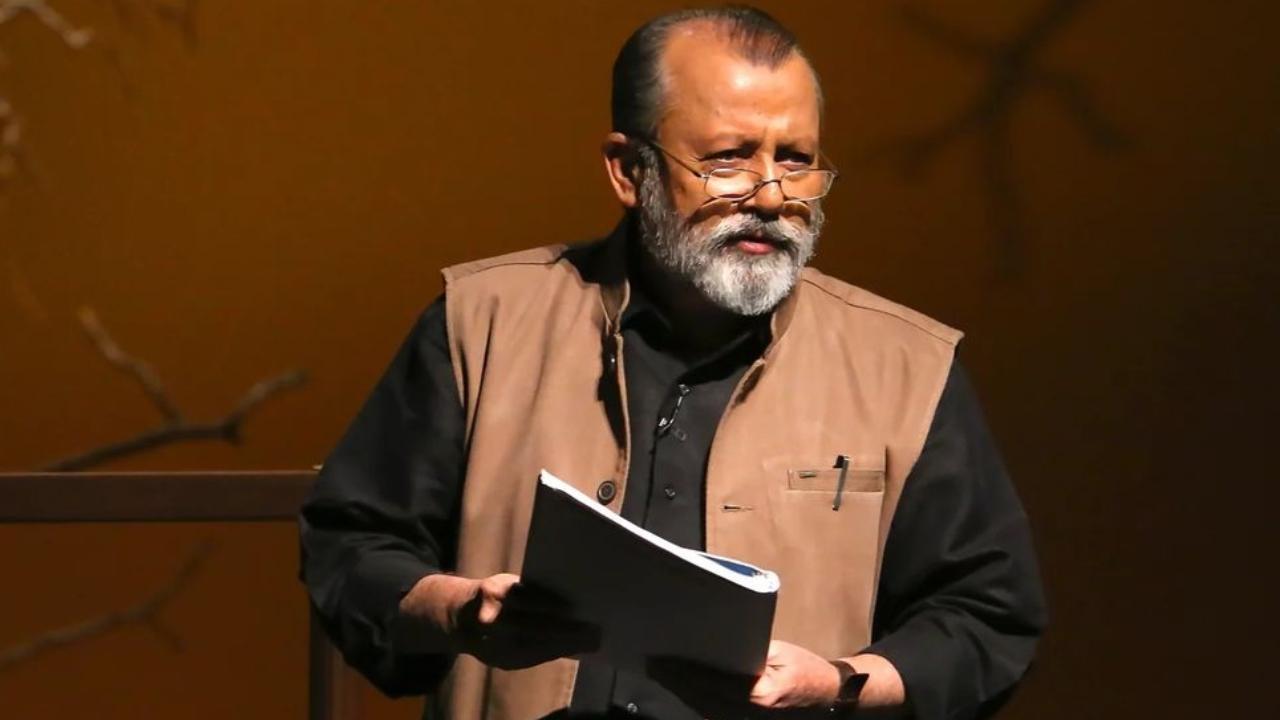
Preeti Atulkar (BOMBAY TIMES; April 17, 2026)
At 18, when Pankaj Kapur shared his desire to pursue a career in acting, his father asked him if it was the glamour that he found attractive or if he truly had the ability to act. To find the answer, Kapur decided to join the National School of Drama. When he was leaving home to join NSD, his father, an English professor, told him — ‘Now, don’t look back.’ Kapur didn’t. In a career spanning five decades, the actor has excelled in different genres. During a recent interaction in Nagpur, the actor reflected on his journey in showbiz, recalled his NSD days and more.
‘DISCUSSIONS HELPED SHAPE ABBAJI’S CHARACTER IN MAQBOOL’
The conversation steered towards Kapur’s powerful screen performances and it would have been incomplete without the mention of Abbaji in Vishal Bhardwaj’s Maqbool. Interestingly, Kapur was initially hesitant to play the character.
“When Vishal Bhardwaj approached me with the role, I wasn’t sure of doing it. But he was insistent. So, I asked him to leave the script with me and said I would get back within a month. Eventually, I agreed,” said Kapur, adding, “I later got to know that Bhardwaj had offered the role to Naseeruddin Shah first, but he was interested in playing another character and suggested my name instead. Multiple meetings and discussions helped shape Abbaji’s character more effectively. For example, I had suggested to Vishal that Abbaji, who is short in height, be surrounded by tall, well-built bodyguards. The thought was that it will subtly reflect Abbaji’s authority and power,” said Kapur, who featured in the film with Irrfan and Tabu.
‘GRATEFUL TO ALKAZI SAHAB FOR GIVING ME A CHANCE TO DISCOVER MY OWN WORLD’
As Kapur spoke about his NSD days, there was a palpable happiness in his voice. “All the people who enter the world of acting hold Konstantin Stanislavski’s name in very high regard. In my first year, I went to the NSD library and took out Stanislavski’s An Actor Prepares,” Kapur recalled, adding, “Coincidentally, the then director of the institute, Ebrahim Alkazi, was walking in front of me. To impress him, I held the book up. He looked at me and asked which book I had taken and I, proudly, said, ‘Sir, I took out An Actor Prepares.’ To my surprise, he asked me to keep the book back on the rack.”
Kapur asked him why and Alkazi’s response changed his perspective. “He told me that Stanislavski wrote this book after 40 years of theatre experience and gave the world the concept of method acting. He told me, ‘You have to make your own way first. Once you achieve that, you can read this book’. Believe me, it’s been 50 years since I passed out of NSD and I have still not read the book. I am very grateful to Alkazi sahab for giving me a chance to discover my own world,” Kapur shared.
On Jaane Bhi Do Yaaro...
Kapur, who played the builder Tarneja in Kundan Shah’s cult comedy Jaane Bhi Do Yaaro, says that many have thought of remaking the film, but no one has till date. “I think such films are made only once in a lifetime. Many have contributed significantly to the film, but Kundan Shah’s name comes first in that list. It was commendable for him to think, write, and then execute with so much hard work and little money. It’s a film which will stay with the audiences for a long time to come,” Kapur shared.
‘Shahid has made right film choices’
Appreciating his son Shahid Kapoor’s professional moves, Kapur who has directed him in Mausam, said, “It is not easy to direct him because he is a huge star and a fine artiste. I would like to say that he is the best actor in his age group. The kind of characters he is picking need a lot of courage considering the fact that he is a star. He is constantly finding his way, which is a sign of growth for an actor.”
I knew I was only six handshakes away from Naseeruddin Shah-Siddhant Shelar
2:43 PM
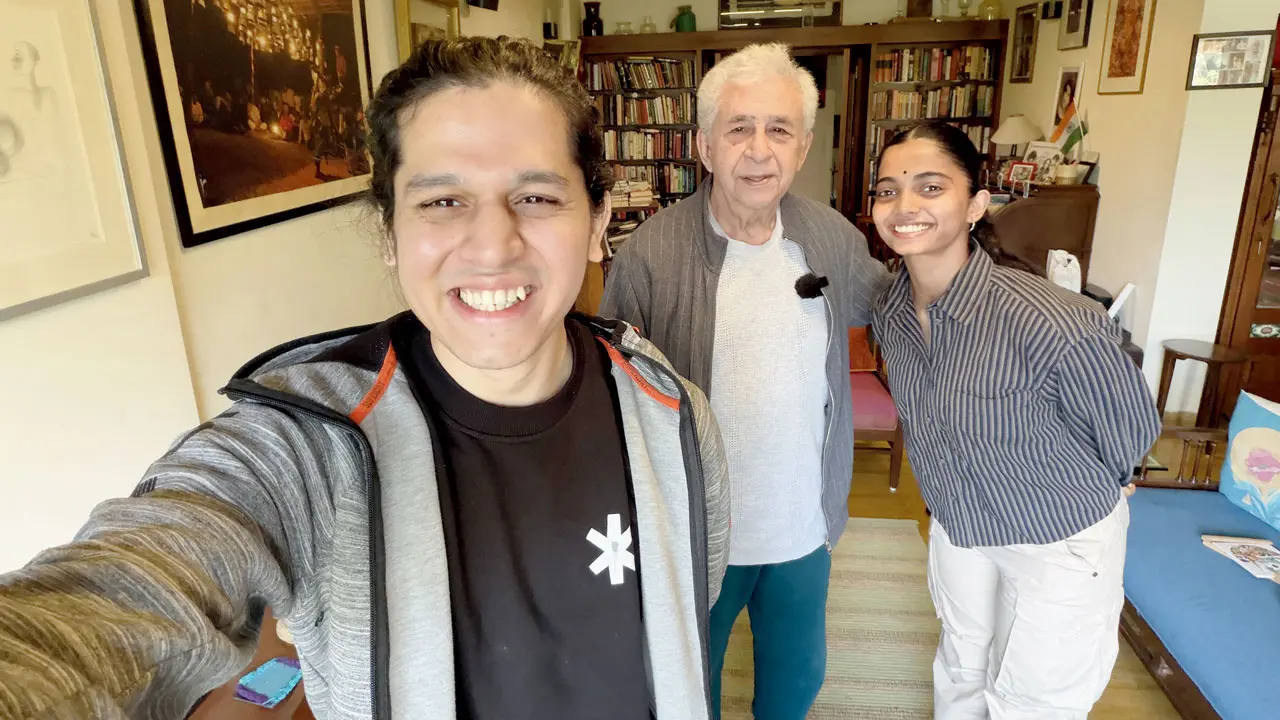
Filmmaker Siddhant Shelar (left) with Naseeruddin Shah (centre) and a friend
Debut filmmaker Siddhant Shelar cold-emailed acting icon Naseeruddin Shah to make a film raising awareness on air pollution. Shah said yes, and the story is one for the books
Akshita Maheshwari (MID-DAY; March 15, 2026)
What does one do when breathing becomes equivalent to smoking? When there seems to be no relief despite months of suffering? We asked a filmmaker, and he asked Naseeruddin Shah!
Siddhant Shelar is a copywriter and filmmaker. For his debut though, he chose to go out with a bang. Frustrated with the AQI skyrocketing around him, he decided to make his first short film AQI: Yeh Q Hai about that same subject. The coolest part? He cold-emailed acting legend Naseeruddin Shah to be part of his film and he said yes!
“There is a theory that you’re only six people away from someone,” says Shelar, “I have seen many dreams, like I’ll reach out to Sachin Tendulkar,” he says in a comical voice, “But when you send out a mail like that, you don’t expect to hear back. But I’m delulu. I knew I was only six handshakes away from him [Shah].”
Shelar’s short is a PSA which compares the AQI to how many cigarettes you’re inadvertently smoking. Along with a film, he starts a mission asking his viewers to mass-mail the Ministry of Environment and demand some accountability. His film sits at 30,000 views on Instagram on the day of release.
We ask Shelar what it was like working with a legend? “He has this aura; you get intimidated. But his humility overtakes everything. We constantly hear complaints of nepotism in Bollywood. But he is gracious enough to give anyone a chance,” says Shelar.
The funniest anecdote from set? “I wanted to get a terrace shot of him like in A Wednesday [2008]. We couldn’t manage that, so we decided to shoot indoors,” Shelar says, “Sir said, ‘Why don’t you take a low angle?’ and just in the flow I said, ‘We can try it but I don’t think it’ll work’. He asked, ‘But why?’ The moment I said it I thought, ‘What have I said?’.” You don’t leave Naseeruddin Shah unanswered, so Shelar explained, “You take lower angles to show a villain, to make him seem scary. But we wanted to show him as a common man, so I wanted to meet his eye level.” Shah did oblige, but Shelar still doesn’t know what he thought. He’s too nervous to ask anyway.
“We all have ideas sitting in our notes apps. We keep saying, ‘Someday I’ll make it.’ Today, I’m in that timeline of my life,” he says with a beaming smile. If you haven’t already, check out his film on Instagram @ahyperactivepsyche and tap on the link in his bio to join his mission.
What is next for him? “I want to give space to people and NGOs who have been working on this cause for longer me. I have mailed dozens of them. My dashboard on Instagram is at 4 lakh views right now and I only have 1000 followers. I can give NGOs eyeballs.” If you’re an NGO that wants to connect with him, you can reach him on Instagram.
Tannishtha Chatterjee-Sharib Hashmi's Breast Of Luck takes on the C-word with jokes and joy
2:17 PM

Actor Tannishtha Chatterjee turns her cancer journey into a play that uses humour, music and community to confront illness head-on
Sharmila Ganesan (THE TIMES OF INDIA; February 4, 2026)
So, your doctor is a man?” he asks, eyes on the road. “Yes,” she shrugs, head wrapped in a scarf. “The oncologist is a man. He was referred to me by my gynaecologist.” “Okay. She must be sure of his credentials then.” “He. My gynaecologist is a man.” “What? You mean he touches you?”
Questionable questions, awkward puns, well-timed expletives and several unreciprocated high-fives animate ‘Breast of Luck’, a play whose protagonists choose to sing, dance and laugh their way through the grimness of cancer.
Co-written and staged by Tannishtha Chatterjee — who was diagnosed with stage IV oligometastatic cancer last year — and Sharib Hashmi, whose wife has beaten mouth cancer four times, the musical comedy, directed by Leena Yadav, opened at the G5A in Mumbai recently to a packed house.
The room included Naseeruddin Shah, Dia Mirza, Tanvi Azmi and Divya Dutta, apart from Chatterjee’s doctors and cancer survivors. At the end of the first show, Chatterjee turned to the room and said, “Honestly, I don’t know how I am doing except that I have stopped chasing certainty.” Shah reassured her: “This is the most cathartic and best thing you could have done for yourself.”
Songs Over Sorrow
To be staged at the Kala Ghoda Arts Festival on February 4 to mark World Cancer Day, the script sees opposites distract before they attract. Sheila Roy is a cool, composed classical singer, while Arun Mohan is a goofy divorced stockbroker who punctuates dad jokes with high-fives. When she launches into her riyaaz every morning at 5, he winces and rings her up on the intercom, begging her to stop. Their heated exchanges morph into real-world meetings on a dating app. Just as Roy begins to enjoy Mohan’s company, the story swerves: she is diagnosed with stage IV oligometastatic breast cancer.
She pushes Mohan away, convinced love will only expose her vulnerability. He refuses to leave, insisting on staying, his caregiving peppered with relentless puns. That refusal to surrender humour, intimacy or companionship to illness anchors the play’s emotional centre.
Often reduced to a serious trope in movies, the Big C finds its funny bone in the drama. “Exactly. That is the USP,” Hashmi says. “Otherwise, it could easily have become a sad story. We chose to see it from a lighter side — with songs, jokes, laughter.”
The play draws from a deep personal well. Interspersed through the second half are real hospital visuals — insurance IVRs (interactive voice responses), chemotherapy rooms, and injections. At one point, you watch Chatterjee singing through an injection. “The targeted medicine was extremely painful. But when I sing, those 10 minutes used to pass more quickly,” says Chatterjee, who had invited her friend, a documentary cinematographer, to shoot on the last day of her chemo.
Music, laughter and community sustained Chatterjee through the medical journey. Incidentally, Chatterjee — best known for her performances in ‘Dekh Indian Circus’ (2011), ‘Gulaab Gang’ (2014), and ‘Angry Indian Goddesses’ (2015) — was supposed to meet Hashmi of ‘Family Man’ and ‘Filmistaan’ fame on the day her biopsy report arrived. Hashmi had been shooting for her film ‘Full Plate’ and had casually discussed a collaboration.
“The day I got my report, I was supposed to meet Sharib for coffee. I almost cancelled,” she recalls. “I was devastated. But I thought if I go home, I’ll have to tell my mother and I’ll feel worse. So I went.”
A year before Chatterjee was diagnosed, she had lost her father to cancer. “He died in my arms in the hospital ICU. He was so full of life. When I was diagnosed, my main concern was my mom, who’s 70 plus. How would I give this news to her? Because it wasn’t stage one, or stage two, or even stage three — it was stage four.”
When she confided in Hashmi, he called his wife Nasreen, who has lived with cancer since 2018. “She gave me a lot of strength,” Chatterjee says. “She said, ‘Look at me. I’ve relapsed four times. I’m here. I’m doing everything.’ After that call, I looked at Sharib and said, let’s write a play for her.”
The script took shape during chemotherapy. Rehearsals were scheduled between hospital visits. Improvisations were shaped as much by pain as by laughter. “I was writing while going through treatment. I wanted to laugh constantly. I didn’t want to pull myself down,” says Chatterjee, who found humour in the mundane — doctors clinically debating silicone implants, nurses scolding her and her friends for laughing too loudly in hospital rooms.
The rehearsals weren’t easy. “I had, and still have, terrible nerve damage in my shoulder and left arm. Everyone had to be careful while hugging me or touching me because it’s excruciating if it goes beyond a certain range of mobility.”
Hashmi relates to Arun Mohan not only as a performer but as a caregiver. “After my wife’s diagnosis, our lives changed completely,” he says. “But she treated cancer like a fever — with courage, humour, incredible strength. We tried to bring that spirit into the play.”
Medical professionals echo that sentiment carefully. Breast oncoplastic surgeon Dr Vani Parmar notes that a cancer diagnosis often arrives as a shock, particularly for younger women. “The treatments — radical surgeries, long chemotherapy sessions, hair loss, weakness — lead to immense physical, emotional, social and financial strain, along with a constant fear of recurrence and death,” she says. Changes to appearance, she adds, often trigger anxiety and depression. “‘Chemo brain’, or brain fog, is also part of the territory.”
Chatterjee recalls days when she told her doctor she couldn’t do another chemo cycle. “He understood. He knew that in three days, I’d feel differently.” That reassurance — from doctors and fellow survivors — mattered enormously.
While psychological counselling is not routinely integrated into many hospitals, it is increasingly being recognized as an essential part of cancer care.
Dr. Priyadarshini Deo, counsellor at the Centre for Cancer and Palliative Care at Kokilaben Dhirubhai Ambani Hospital, points to studies showing that humour and movement-based activities can significantly enhance emotional health. “Humour and lightness reduce stress, ease anxiety, improve communication and strengthen relationships, especially with caregivers,” she says.
Argument For Lightness
A case for lightness arrives in actor Lisa Ray’s memoir Close To The Bone, in which she recalls the day she was diagnosed with cancer by a “jittery, rabbit-faced doctor”. “He spoke very slowly, pausing for a long time between each word, as if to gauge my reaction. You. Have. Multiple. Myeloma.”
The doctor, Ray writes, reminded her of the rabbit in ‘Alice in Wonderland’. “As he kicked me down the hole, he never said the word ‘cancer’.” “Oh,” Ray replied. “Do you want me to get you some water?”
Her response, she writes, might seem strange. “But he did look parched. Also, it never occurred to me that I wouldn’t get better… I was framing it as just another adventure.”
Apart from music, what sustained Chatterjee after her diagnosis was community. “I cried alone in my car with my reports,” she says. “My sister told me — you can’t save yourself alone.” Friends video-called her and joked about everything from Trump’s antics to local absurdities. “It helped me sleep. It made me feel light.”
Why, we ask her, is cancer so often portrayed in popular culture only through despair and solemnity? “Because it usually comes from an external perspective, not lived experience,” Chatterjee says. “I think there’s a fear — how can I be sensitive (towards the topic)? I was fearless because it’s me.”
The play does not trivialize her struggles, including her prolonged insurance battles. Her arguments with an automated voice convey her frustration. “The day my insurance refused me, I was at my lowest. The treatment is excruciatingly expensive. I’m not a commercial actor. I’m an alternative, arthouse actor. I’m not rolling in money. And I have a mother and a daughter to take care of,” says Chatterjee. Her daughter lived with the actor’s sister in the US during treatment.
Care for the caregiver, too, is crucial, Dr Parmar reminds us. “There is emotional burnout, financial strain and disrupted routines. Clear communication, shared decision-making and emotional support make the biggest difference.” She urges the integration of psychological and financial support into standard cancer care. “Good healthcare at an affordable cost is a right.”
“My doctors told me this isn’t just about cancer,” Chatterjee says. “In any illness, people should watch it — to see how art, music, laughter and community are therapeutic.”
The audience response suggests the message has landed. Survivors have cried and laughed in equal measure. Caregivers have recognized themselves. Those who have lost loved ones have found something gentler than grief alone. Hashmi’s wife has seen the play three times. “She loved it,” he says.
Naseeruddin Shah Urdu event: Organizers change tune, cite overbooking, security issues
3:48 PM

Foundation rejects charges that cancellation was because of anticipated controversy over actor’s participation
Dipti Singh (MUMBAI MIRROR; February 10, 2026)
Five days after Mumbai Mirror first broke the story of veteran actor Naseeruddin Shah’s cancelled poetry recital – and prompted a wave of public debate and online outrage – the co-organizers of Urdu Jalsa 2026, Bazm-E-Ahbab Foundation, has finally spoken up with a version starkly at odds with the university’s account.
Billed as a cultural and literary highlight, Shah’s session titled ‘Preet Nagar’, scheduled on February 1 at Mumbai University’s Kalina campus, was scrapped hours before showtime, leaving audiences confused and prompting speculation.
But Tausif Shaikh, co-founder of the Bazm-E-Ahbab Foundation and co-organizer of the festival, told Mumbai Mirror the cancellation was not Shah’s decision; it was the organizers' call, driven by what he described as “security concerns”.
“Yes, we had invited Naseer sahab and everything was planned in detail,” Shaikh said. “When we checked bookings on the evening of January 31, they had crossed 1,200, three times the seating capacity of the venue. We feared overcrowding and security concern. That’s why we had to cancel only this one session.”
Shaikh denied that the cancellation was because of anticipated controversy over Shah’s participation. “We thought safety came first,” he said.
He insisted the Urdu Department knew about the invitation. “This was a co-organized festival. Details were shared and approved. How can the department not know?” he asked.
The department has denied any role and even said it did not invite Shah.
Dr Abdullah Imtiyaz, the head of department, had told Mirror, “We did not invite him. The university or the Urdu Department has no role in this. Has anybody seen an invitation letter from us?”
When contacted, Shah provided a trail of emails and promotional materials showing months of coordination with Bazm-E-Ahbab founder Ghazal Sheikh, including formal invitations, discussions on dates, booking logistics, and even poster designs prepared for hoardings and online bookings. The thread, beginning November 23, 2025, and running through January 24, 2026, confirms Shah’s participation and details for Preet Nagar, a session named after a village on the Indo-Pak border that once inspired icons like Sahir Ludhianvi, Faiz Ahmad Faiz, Amrita Pritam and Shiv Kumar Batalvi.
Initially constrained by travel commitments, Shah had agreed, at the organizers' insistence, to recite Faiz’s Dua, Ludhianvi’s Mere Geet and a short story by Imtiaz Ali Taj. The session was slated to be anchored by journalist-filmmaker Imtiyaz Khaleel.
Despite these specifics, the university continues to maintain it had “no knowledge” of any such invitation. While the rest of the Urdu Jalsa 2026 festival went ahead on February 1-2, it is the cancelled Shah session that has dominated public attention.
“If the event was pulled for crowd safety, as claimed, why do official accounts diverge so sharply? And if the university was not involved in the planning of Shah’s poetry recital, how did months of planning, email exchanges, posters and bookings come about? Were they not aware of it all,” asked a Urdu research scholar, who was one of those who bought tickets for Shah’s session.
Speaking about the controversy around the event, Shah said : “The event wasn’t cancelled, only I was!”
Being told TV actors can’t act hit me hard-Vikrant Massey
10:10 AM

(L-R) Rashmi Doshi, Rashi Agarwal, Vikrant Massey, Prathibha Kunda (Chairperson FICCI FLO Hyderabad), and Shilpa Raju
Shreya Varanasi (BOMBAY TIMES; February 9, 2026)
From television breakout to National Award-winning lead, Vikrant Massey has redefined the “outsider” success story. The 12th Fail star recently sat down with the FICCI Ladies Organisation (FLO) in Hyderabad to discuss his transition to films and the widespread acclaim following his 71st National Film Award win.
‘I was fascinated by the hustle of film sets’
Money was the reason I stepped out of my home at the age of 16. My goal then was simple – to earn for education, a home, and eventually Rs. 1 lakh a month. I grew up in Andheri Versova, where all the shootings used to happen. I was one of those kids standing in a crowd, watching Jackie Shroff, Anil Kapoor, and Sanjay Dutt shoot from the sidelines. I was fascinated by the lights, the walkie-talkies, and people running around with scripts.
‘Being told TV actors can’t act hit me hard’
Despite making a mark on TV with shows like Balika Vadhu, I faced skepticism when he transitioned to films. There was this unfortunate preconceived notion that TV actors can’t act. That was the first sting, the first jab I took on my chin. It honestly surprised me, because I felt these people didn’t know where actors like Naseeruddin Shah, Shah Rukh Khan, Om Puri, Irrfan Khan came from. Some of the greatest stalwarts came from television. Amid many challenges, one thing I always felt very strongly, and still continue to hold on to, is that what I do in front of the camera, between action and cut, is what matters the most.
‘Insider or outsider, it’s performance that matters most’
Today, with 21 years of experience, I can honestly say that people who are sitting at a certain stature are there because of the quality of work and dedication. Success doesn’t come easily; you have to work relentlessly for it. For every role, I must perform and position myself as a strong contender. Yes, there is that insider-outsider divide, but it’s only up until access.
‘The impact of 12th Fail meant a lot to me’
Vidhu Vinod Chopra sir told me very honestly, ‘I want to make a theatrical film, but OTT gives you Vikrant Massey for free — why would anyone come to see you in a theatre?’ That was brutal, but it was true. I was very lucky to be part of 12th Fail. People didn’t see the story of an IPS officer; they started seeing themselves. I would quietly enter theatres in the final minutes, sit in the last row and watch people completely immersed. Once, an elderly man sitting next to me started weeping, his chest was shaking, and he held my hand very tightly. That was the moment I realised I had done something that would last.
Blame game erupts after Mumbai University calls off Naseeruddin Shah’s Urdu event
10:17 AM

Actor rejects Urdu Dept’s allegation that he opted out of Feb 1 jalsa, calls it “a lie”; co-organiser Bazm-E-Ahbab stays mum; no official clarification yet
Dipti Singh (MUMBAI MIRROR; February 4, 2026)
A showpiece literary session featuring veteran actor Naseeruddin Shah and co-organised by University of Mumbai’s Urdu Department was cancelled at the last moment, triggering a controversy over cultural exclusion. Confusion surrounds who was behind the cancellation of the February 1 event titled Preet Nagar, a “soulful literary session” tracing the progressive tradition of Urdu literature, which was to be a part of Urdu Jalsa 2026 at the varsity’s Vidyanagri campus in Kalina.
Sources said that university officials and co-organisers Bazm-E-Ahbab Foundation called the event off citing “security concerns”, while Abdullah Imtiyaz, the Head of the university’s Urdu Department, tried to suggest initially that actor himself had opted out. Later, he tried to pin the responsibility for the cancellation on Bazm-E-Ahbab, distancing his department from the controversy.
Responding to Mumbai Mirror over messages, Shah clarified that his opting out of the event was “a lie”. “The announcement that I had refused to attend is a lie. I was informed at the very last moment, late night of the 31st (January) in fact that the event was cancelled. It was something I was really looking forward to,” he wrote, adding that he had been given “no reason” for the cancellation.
He further said that he had received an email from one Ghazal Shaikh, who had been coordinating with him. “The email sent to me by one Ghazal Shaikh who was coordinating stated: ‘Really sorry for the bad news that due to some un circumstances we are not able to held your session in Mumbai University tomorrow i.e. 01 Feb 2026’.”
Shah’s intent to participate can be gauged from the fact that days before the event, he had shared a short video congratulating the Urdu department for organising the event and announced his presence on stage. This video was shared on the social media handles of Bazm-E-Ahbab and Tausif Ahmed Shaikh, the co-founder of the organization. However, Shaikh remained unavailable for comment despite repeated texts and calls from Mirror.
Preet Nagar was touted as a narrative and performance-led session of poetry-reading, which would reference the works and ideals of poets such as Sahir Ludhianvi and Faiz Ahmed Faiz.
Two versions of cancellation, no clarity
The controversy erupted after invitees were informed on the day of the event that Shah would not be attending and the session stood cancelled. When contacted, Imtiyaz, the Urdu HoD, initially said the actor himself had called off his participation and blamed social media rumours.
“That invitation was cancelled by Shri Naseeruddin Shah and not us. There is a rumour and misinformation being spread on social media by a Malegaon-based reporter, who did not get placed here and barely attended the event for 10 minutes,” Imtiyaz told Mumbai Mirror.
However, after being confronted over a phone call by Shah himself on Tuesday, Imtiyaz reached out to Mumbai Mirror again, distancing the university from the controversy and claiming the Urdu Department had nothing to do with the cancellation.
“We did not invite Naseeruddin Shah. It was the co-organizers who were coordinating with him. They might have cancelled the event. We do not know anything about this,” he said. He, however, maintained that he had no contact information of the Bazm-E-Ahbab office-bearers, raising further questions about who exactly was responsible for the invite and its abrupt withdrawal.
Neither Mumbai University nor the Bazm-E-Ahbab Foundation has issued an official clarification so far.
Vivaan Shah on Ikkis prep: "First call was to my uncle, who fought in 1971 war"
10:46 AM

S Farah Rizvi (HINDUSTAN TIMES; January 26, 2026)
As the country gears up to celebrate Republic Day on January 26, actor Vivaan Shah is reflecting on what he calls the most defining role of his career: playing an Army officer, Captain Vijendra Malhotra, in the recent release Ikkis.
The actor shares, “Wearing an Army uniform is a turning point for any actor; it leaves you overwhelmed and emotional. I always wanted to play someone from the forces. What I didn’t know is how it’s going to impact me forever,” the 36-year-old tells us.
Speaking about the response to his role, he says, “I play a diligent Army man, and when people say I pulled it off convincingly, it fills me with pride. Such roles are difficult because you have to authentically convey what an officer looks like. You only win when people remember the role, not the actor.”
Portraying a real-life hero came with the weight of responsibility. “I became friends with both his daughters, and they gave me so much warmth. At a screening, one of them tapped me on the shoulder and said, ‘You are playing my father.’ It was surreal,” he says.
He further recalls meeting war veterans who had served under Captain Malhotra: “They came up and said they really appreciated my performance. Isse badi baat kya ho sakti hai?”
That sense of authenticity came from preparation that began at home. “The first person I called was my uncle, retired Colonel Zameeruddin Shah (brother of Vivaan’s father, actor Naseeruddin Shah), who fought in the 1971 war at Longewala. He laid the foundation of my research,” Vivaan ends.
Anupam Kher says Naseeruddin Shah apologized in person for 2020 remarks
10:01 AM

HINDUSTAN TIMES (December 1, 2025)
In 2020, actor Naseeruddin Shah had called Anupam Kher a “clown” and a sycophant while criticizing his pro-government stance on social media. Anupam had responded sharply at the time with a video on X. Now, in a recent conversation with Samdish on YouTube, Kher has revealed that Naseeruddin later apologized to him in person.
Speaking about their equation, Kher said, “I still have great respect for him. However, he sometimes speaks loosely about me. We met recently at H D Pathak’s death, where he apologized and said, ‘Sorry, yaar.’ He hugged me, because I always hug him. I genuinely like him a lot, and he is one of the actors who inspired me to take up acting. But I think sometimes he just says these things.”
Kher added that despite Shah’s brilliance, he often senses “bitterness” in his comments. “He is a brilliant and intelligent man and God has given him so much. Nobody is a bigger star than him in parallel cinema. Yet sometimes his bitterness targets me, sometimes Dilip Kumar, and sometimes Rajesh Khanna.”
Ever since I came to Mumbai, I haven’t missed a single play that Naseeruddin Shah has done-Vijay Varma
9:08 AM
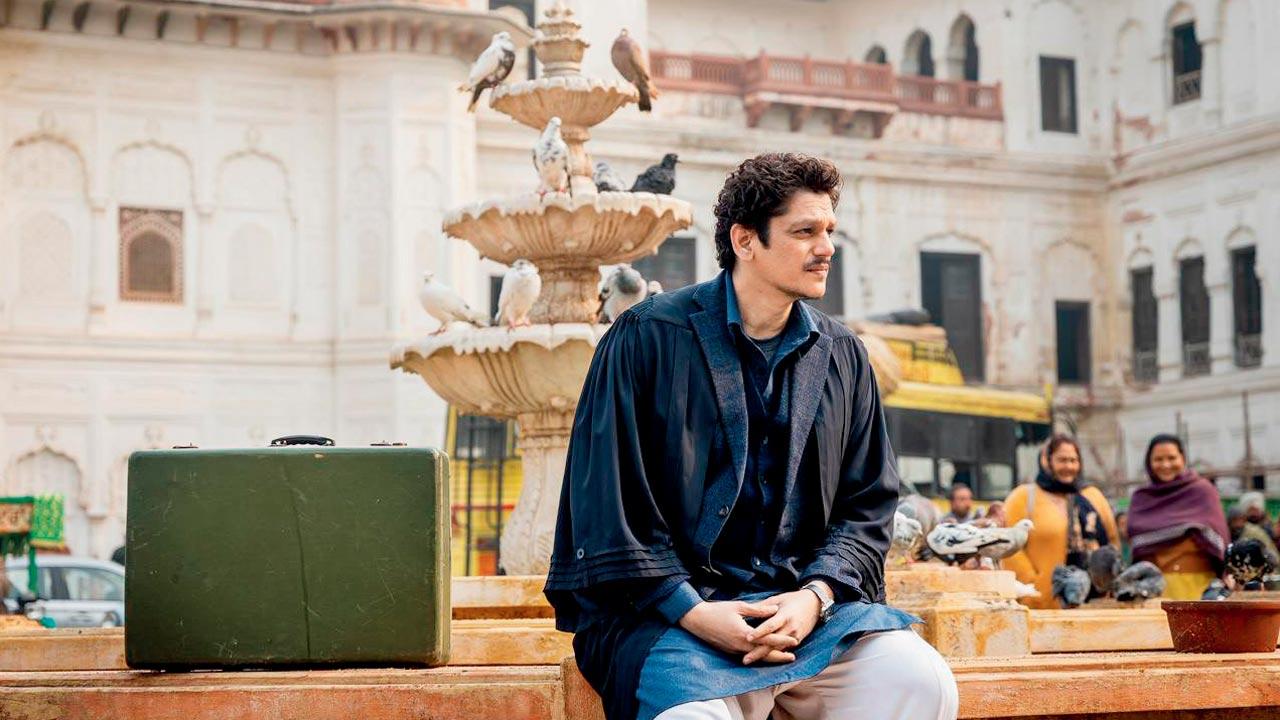
Vijay Varma discusses how he turned down several conventional romantic dramas before saying yes to his first love story in ‘Gustaakh Ishq’
Priyanka Sharma (MID-DAY; November 24, 2025)
Enough of embracing dark and intense characters — be it in Darlings (2022), Jaane Jaan (2023), or Dahaad (2023). Now, Vijay Varma is in the mood for love. The actor attempts his first love story with director Vibhu Puri’s Gustaakh Ishq, opposite Fatima Sana Shaikh. To the audience, his switch from brooding characters to a lover boy may seem like an aberration. But to Varma, it feels natural.
“I wasn’t surprised that Vibhu offered me this part. I came from a stage background, the memories [of being part of romantic dramas] are living within me. When the announcement happened, it looked like an anti-casting because Mirzapur, Dahaad, and Darlings came back-to-back and [gave me] the intense tag. That tag won’t be dropped even with this film,” he says.
Gustaakh Ishq isn’t the first romantic script to have been offered to the actor. A lot of nos were said before he lost his heart to the period love story. “Many romantic films came to me all these years, but I didn’t see myself in them. I don’t want to dance a lot in movies. I don’t want to sing and dance because they are not my forte. So, I needed to pick the script that works for me.”
There was another reason to say yes to the movie — Naseeruddin Shah. Varma starred with the veteran actor in IC 814 (2024), but they didn’t share screen space. To finally face the camera with Shah is a moment of pride in Varma’s 17-year career. “He was my teacher [at Film and Television Institute of India]. I have worked backstage in his theatre productions. Ever since I came to Mumbai, I haven’t missed a single play that he has done. I’ve idolized him. I feel like patting my own back because as a boy in Hyderabad, I wished to meet him. And here I spent two months with him in the winter of Amritsar, enjoying delicacies together,” he marvels.
Starring in a romantic drama? Check. Sharing screen space with your hero? Check. Does Varma have any more wishes? “I have to do a comedy, not because I want to break an image, but because I want to do every kind of film. It’s just a matter of time with the right script,” he smiles.
I told Naseeruddin Shah, 'I have a right to blackmail you'-Vibhu Puri
10:21 AM

Priyanka Sharma (MID-DAY; November 21, 2025)
Many films are born as adaptation of books. In contrast, Gustaakh Ishq was born because a book could not be adapted. First-time producer Manish Malhotra had initially approached Vibhu Puri to adapt a 400-page book. When the director said the adaptation would take far too long, Malhotra asked him one question: ‘Do you have something that you want to make?’ Enter Gustaakh Ishq, starring Naseeruddin Shah, Vijay Varma, and Fatima Sana Shaikh.
Puri recalls, “I told Manish this story set in old Delhi and Punjab. As soon as he heard it, Manish said he wanted to make it.”
For the director, reuniting with the veteran actor after Taj: Divided By Blood was a dream come true. But the dream was on the verge of not materializing. “Initially, I thought he would be khadoos. But Naseer saab was so nice to me during Taj that I fell in love with him. He agreed to star in this film, but then we had some date issues. So, Manish and I went to his house and I said, ‘If you don’t want to do it, tell me who I should work with.’ Naseer said that I was blackmailing him, to which I said, ‘Yes, I will. I have a right to do that to you’,” he grins.
Romances have dominated the box office in 2025. As he brings his love story, Puri believes the audience has had enough of action offerings. “Between 1987 and 1989, films like Aag Hi Aag [1987] and Aag Ka Gola [1989] were being made. Then suddenly, there was Qayamat Se Qayamat Tak [1988], followed by Maine Pyar Kiya [1989] and Aashiqui [1990]. It changed the entire decade. After COVID too, everyone thought people will only watch event films. But in the end, a person needs happiness, love, and affection.”
Naseeruddin Shah on Farhan Akhtar’s comment: "He is right, but..."
10:48 AM

Rishabh Suri (HINDUSTAN TIMES; November 11, 2025)
In an exclusive chat with us, actor Naseeruddin Shah has reacted to Farhan Akhtar calling his past comments “distasteful”, saying that his remarks about Farhan’s performance in Bhaag Milkha Bhaag were exaggerated by the media.
“He is right but I think my statement has been exaggerated a bit,” he tells us. When we ask which bits were exaggerated, the 75-year-old adds, “I don’t think you need to be a genius to figure that out! Read both statements.”
In 2013, Naseer had stirred controversy with his blunt take on Farhan’s performance in Bhaag Milkha Bhaag: “I don’t care about Farhan Akhtar and I don’t watch his films. I liked his first film Dil Chahta Hai (2001)... I’m not a great fan of his acting or his films. But I admire him.”
In another interview, he said, “Building up muscles and growing your hair is not working hard on your acting. At least he should have tried to look like Milkha.”
Farhan (51) had recently told India TV, “I’ve known him for so many years. We worked together in Zindagi Na Milegi Dobara (2011)... If you want me to improve in my work, there is a way of communicating... To go in the press and say this, I found that distasteful.”
Aryan Khan is a special kid; his vision made Ghafoor a rage-Arshad Warsi
10:15 AM

Akash Wadhwa (BOMBAY TIMES; November 13, 2025)
Actor Arshad Warsi, during his recent visit to the city, expressed his deep affection for the people of Lucknow and its culture, recalling warm exchanges with locals on set and praising the city’s renowned hospitality and courteous etiquette. In an exclusive interview with us, the Dedh Ishqiya actor spoke about his three decades in the industry and what keeps him relevant, his kids’ desire to be actors, and the secret behind his ever‑cheerful vibe. Excerpts…
You have visited Lucknow many times. What is your impression of the city and its people?
I love Lucknow. Every time I come here, I feel the city is getting better. The people are warm, polite and full of tehzeeb. I have been coming here for the past 30-years and there is a huge difference in Lucknow then and now! The city is cleaner, more organized, and the spirit is still the same.
Also, I love both Lucknow’s chicken and chikan (kurtas). I remember, we were shooting Dedh Ishqiya in the courtyard of a house in old Lucknow and I casually mentioned to Naseer saab (Naseeruddin Shah) that ‘hamein ek hafta ho gaya Lucknow mein aur humne yahan kebabs nahi khaye hain abhi tak’. People around us heard that and in no time a few of them got kebabs from their homes for us! We had so many kebabs that the entire unit could feast on them that day. That’s the kind of affection you get here in Lucknow — instant, sweet and real. Here, even the smallest conversation has respect in it. Mumbaikars are casual in their tone, but Lucknowites’ speech has grace and sweetness.
You’ve been in the industry for three decades. How do you manage to stay relevant and loved?
Honestly, you can’t manufacture these things. You can put up an act and fake for fifteen minutes, but the truth ultimately shows. I think I’m just lucky and have a cheerful nature — maybe school and upbringing shaped that. I stay happy, and that reflects. I believe what you give is what you get. I’ve been nice to people, and they’ve been the same back to me. That’s the real secret. Everybody in the industry has been nice to me and so have I been to them. You get what you give. I teach and tell my kids the same thing.
Your children are reportedly also drawn to cinema. How do you feel about that?
Yes, both my son and daughter want to act. My son is currently assisting Siddharth Anand and has assisted Rajkumari Hirani. Of course, I’m scared — it is a tough job today. Acting is not an easy profession anymore as the success rate is so low. Out of 150 crore, a handful become actors.
So, will you help your kids with your contacts in the industry?
Nobody can help anybody here — you have to make your own way. I can’t make a call to a director and ask them to invest hundreds of crores on my kids. Koi mere bete pe satta kyun lagayega? Even a casual call to a filmmaker to meet my kids means to expect them take them in their project, which I will not do. Why would anybody do that? Why would filmmakers bet on my kids if I ask them to do so? Why should I recommend my kids to anyone?
With so many years in the industry, do you wish to graduate to direction as well?
Oh yes, definitely! I am going to direct someday, I don’t know when but I know it will happen for sure. If you ask me what’s delaying my direction dream, it’s the continuous flow of acting offers. I do not make much noise about myself but I am pretty busy. I really need to get off my acting work to direct.
Did you anticipate that a small role like that of Ghafoor in your recently released web series, The Bas***** Of Bollywood will become such a big rage?
Not really. Aryan (Khan), the director of the series, is a very special kid. He is one of those directors who has a movie playing in his head. I did a small part in the series because I like him and Shah Rukh (Khan). But the outcome was huge. And working with him I realized that he is one of those directors whom you listen to when he speaks and act on it. While doing the series, I was 100 per cent sure the youngsters will love it. But I wasn’t sure about the grownups. And nothing what you saw in my character was impromptu, it was all scripted and envisioned by Aryan. The success of the song and my character Ghafoor is due to Aryan.
Jim Sarbh insisted on going bald for his role in Made In India-Robbie Grewal
8:41 AM
Upala KBR (MID-DAY; September 28, 2025)
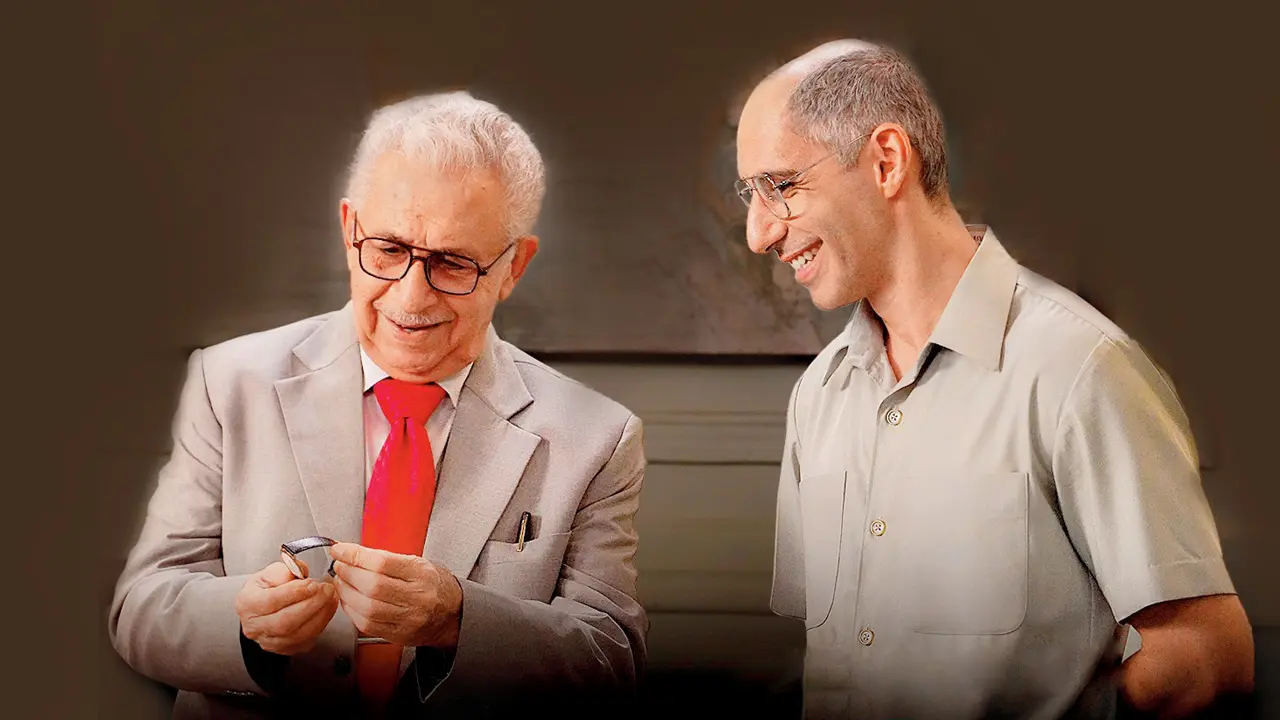
Robbie Grewal has high praise for Naseeruddin Shah and Jim Sarbh. The reason? The actors leave little for the director to do on set. They come so well prepared that the filmmaker can sit back and let them interpret the story, get into character physically and mentally, and put their best foot forward. That is exactly what he did when he adapted Vinay Kamath’s book Titan: Inside India’s Most Successful Consumer Brand into a six-episode series, Made In India: A Titan Story.
The series chronicles Titan’s journey from its establishment in 1984, when Jehangir Ratanji Dadabhoy Tata, insulted by a Swiss watch company, hired Xerxes Desai to create a new watch brand made entirely in India.
“It’s a compelling story and a part of history, so we wanted to make it,” says Grewal. “It is a story about JRD. Who is not enamoured by him or the journey of making a watch into a brand? The Tatas are a name to reckon with and we trust it. If you look closely, Naseer saab has an uncanny resemblance to JRD Tata. The physical similarity and the body language were a perfect fit. Luckily for us, he agreed when we approached him [for the role]. He loved the writing. Jim was a natural choice to play Xerxes Desai, who is the pivotal protagonist of the story,” explains the director. The series also stars Namita Dubey, Vaibhav Tatwawadi, Kaveri Seth, Lakshvir Saran, and Paresh Ganatra in key roles.
Grewal loves to observe Shah’s passion and dedication to his work rather than comment on it. He feels Sarbh is cut from the same cloth. Both actors, despite the age difference, exude a similar understanding of their characters.
“Naseer saab takes his job so seriously and is so well prepared before the shot. Whether it is two or five pages, he comes on set as JRD Tata. Both Naseer saab and Jim are from theatre, and while every actor has a different method of acting, they are similar in terms of understanding their characters and being prepared for it. They ideate, understand, and develop their characters pre-shoot. The material to create magic happens before the shoot. They bring so much to the table,” shares the director.
What surprised him further was Sarbh’s decision to go bald to play Desai instead of relying on prosthetics.
He shares, “They say actors are vain. Many would have worn a prosthetic scalp cap but Jim is a true actor. He insisted on going bald from day one. He told me that he wanted to be Xerxes Desai and to be him he had to be like him.”
I got married just a day before Iqbal's shooting began-Shreyas Talpade
9:00 AM
Vishakha Pandit (HINDUSTAN TIMES; August 26, 2025)
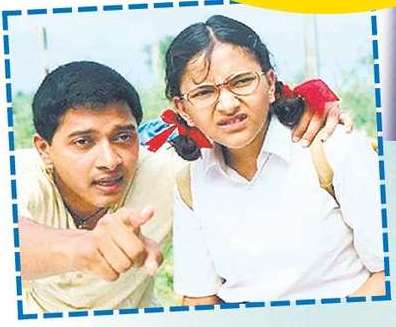
It’s been two decades since the story of a deaf and mute boy who dreams of donning the blue jersey for Team India hit the screens. Iqbal (2005), the underdog story by filmmaker Nagesh Kukunoor, changed the landscape for both Bollywood sports films and then-debutant Shreyas Talpade.
“It was the turning point of my career. Now that the film has completed 20 years, it feels unreal,” the 49-year-old tells us. He was juggling theatre and television when he had auditioned for the film, but had no idea that it was for the lead. “I thought it was for a small role. Once I was on board, I couldn’t believe it! And my only thought was: this is my one opportunity, and I cannot let it go,” he recalls.
The actor’s journey was not without its sacrifices or challenges. “I got married just a day before shooting began, and the next morning, I flew to Hyderabad for training. There was no honeymoon, only Iqbal,” he says with a laugh. The preparation was rigorous — cricket training, milking buffaloes, practising sign language, and more cricket training.
And while shooting the climax, Shreyas suffered an ankle injury: “I pushed through and gave the shot again because I knew how important it was. Thankfully, the ankle wasn’t fractured, just twisted.”
All these years later, Shreyas insists that he remembers every single day on the sets vividly. “Naseeruddin (Shah, actor) sir and Girish (Karnad, actor) ji were so warm. We’d eat together, play Scrabble, watch films. They never made me feel the pressure I could have felt,” he shares, adding, “Nagesh always said that this is not just a sports film, but a story of a boy with dreams. That’s why it connected with so many people and is still so fresh. It changed my life forever.”
Subscribe to:
Posts (Atom)