Showing posts with label Nana Patekar. Show all posts
Showing posts with label Nana Patekar. Show all posts
Nana Patekar’s son Malhar dismisses speculation about family ties
2:58 PM

S Farah Rizvi (HINDUSTAN TIMES; October 15, 2026)
A trained filmmaker and social worker, Malhar Patekar, son of the late actor Nana Patekar, says he has drawn strength from his parents’ “resilient nature” during the tough time of losing his father recently.
Speaking to us, Malhar shares, “When growing up as a kid, I imbibed a lot of strength and resilience from my parents. Also, whatever it looks like from the outside to people doesn’t matter to me; in reality, we as a family were strongly and emotionally connected even my uncle and cousins, for that matter. Mujhe sab ka pyar mila hamesha and that matters.”
“Itna sab kuch viral ho raha, woh kitna ghalat hai. Just because we don’t share family pics on Insta, that doesn’t mean we don’t bond. Even after parting ways, my parents were on a good note; 38-39 saal ka bond tha, and things are never what they might look like… The things I read usska jawab yeh hain ke woh akele nahi thhe, kabhi nahin thhe, nor was he unwell because we all never left his side; one of us was always with him. He was very active and doing two and a half hours of working out in a gym; youngsters nahin kar pate, that was his level of fitness.”
Recalling the day he lost his father, Malhar says, “Nana ji was in Goa, and my cousin Prasad, who used to look into all his entertainment-related meetings, was sent off by him to Mumbai as he had to shoot for KBC Marathi with Madhuri ji (Dixit) in a day; also, my other brother, Amay, only left after settling him upstairs in the house. Nana ji was someone jo kabhi kisi ko pareshan nahi karte. So, when he felt uneasy, he only texted him, and it was only after some time that he called him. He reached immediately, but it was late. I got a call from my mum around 5 am while I was in Pune. Uske baad kya hua kuch yaad hi nahi, I felt the world around me stopped.”
On Nana raking less work of late, Malhar shares, “He didn’t want to do films as repetitive ho gaya tha, so he wanted to make his own stories. He believed in evolving as an actor, and that he had in mind. I remember him telling me that ‘kaam ek jaisa nahin hona chahiye.’ He did Khamoshi because he wanted to show that Nana can deliver his best without those heavy dialogues associated with his numerous characters. More recently, it was social work that kept him at peace and happy; working on bringing schools to Kashmir and also working towards farmers was all that had been going on. And that is now my prerogative, too.”
Malhar also shares his thoughts on the reactions: “Without naming anyone, I want to say that the case people are bringing up unnecessarily is already over. Judiciary se clear hua hain, case khatam ho chuka; phir bhi bol rahe. Aise logo ko main unko kuch nahi boluga; joh sach hai wahi rahega, bhagwan unka bhala kare, this is what I have to say to them.”
Nana Patekar no more; how this character artist turned into the biggest star in Maharashtra in the 90s
10:21 AM

Box Office India Trade Network
Nana Patekar is no more as he reportedly died due to a cardiac arrest at the age of 75. He was a rare actor that made a transistion from a character artist to a very successful hero. He made an entry into films in the late 70's doing some Marathi films but first came to attention with the B R Chopra superhit film, AAJ KI AWAZ, where he played the antagonist.
Then came the sleeper Hit ANKUSH in 1986 and these films gave him a good fan following due to his dialogue delivery with the public in Maharashtra. It all erupted with the blockbuster film TIRANGAA which actually made Nana Patekar a full fledged star. This was followed by more Blockbusters like KRANTIVEER and AGNI SAKSHI. At that point of time, he was probably the biggest star in Maharashtra as his films fetched a huge premium here sometimes taking the prices ahead of the biggest stars.
The 93-97 period was huge for Nana Patekar as barring KHAMOSHI (1996), all his films succeeded. The films were TIRANGAA (1993), KRANTIVEER (1994), HUM DONO (1995), AGNI SAKSHI (1996), YESHWANT (1997) and GHULAM-E-MUSTHAFA (1997). Barring HUM DONO, all the other films were bonafide Hit films in Maharashtra and a lot was down to his star pull in the state.
As makers tried to cash in this success, it became very repetitive which led to the downfall as the dialogues which were organic in the likes of TIRANGAA and KRANTIVEER became very forced which led to films not faring well. Yet, a decade later, he found huge success with WELCOME (2007) with an insanely popular character and arguably, this was his most famous character. Its unlikely that someone so unconventional in terms of the male lead will ever reach the status that Nana Patekar did in the 90's.
The sessions with Nana Patekar would be educative for me, the energy invigorating-Ananth Narayan Mahadevan
9:57 AM

Onkar Kulkarni (THE TIMES OF INDIA; October 11, 2026)
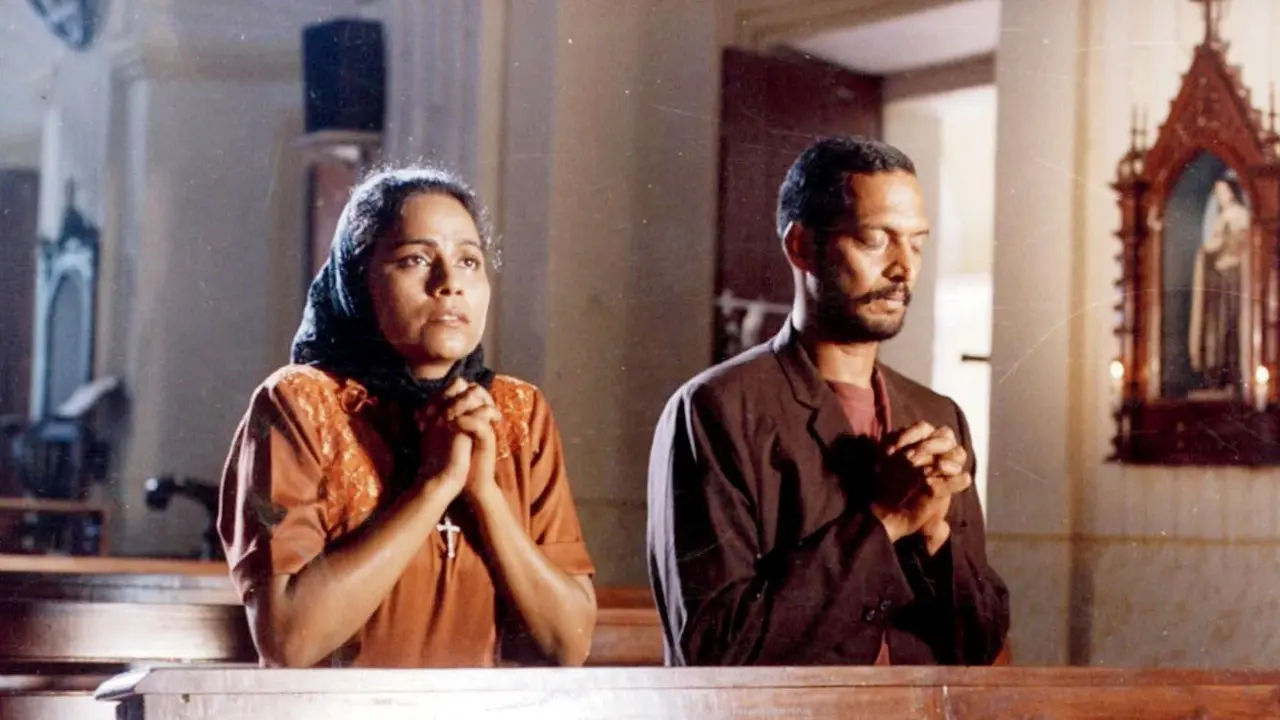
It is still difficult for filmmaker Ananth Narayan Mahadevan to believe that Nana Patekar is no more. The two shared a long-standing creative association, having first worked together on Hum Dono, and then reuniting for The Confession Of Mary — a film that would become among Patekar’s last few projects.
The film had recently had a market screening at the Toronto International Film Festival and is now nearing completion of post-production. Patekar was also expected to complete the remaining dubbing work for the film before his untimely death.
“I was in the middle of my yoga when the news hit me. It was numbing and I am still processing the truth,” Mahadevan says.
“I had spoken to him a few days back, prompting him to go to the Toronto Film Festival for a screening of our film, but he revealed how long haul flights made him claustrophobic. He admitted that he had once returned from the airport, blowing up 7 lakhs on a ticket to Melbourne because the flight was too long.”
Mahadevan says the two remained in regular touch, even after Patekar moved to Pune. “We spoke at regular intervals. He had ideas to make another film with me and we ended up having exploratory conversations. Since he had shifted to Pune he would visit Mumbai only for work. The exchange deal would be filter coffee packets from my side and mangoes on his part. But the sessions would be educative for me and the energy invigorating.”
He adds, “The Confession Of Mary was close to his heart. In our first meeting for the film he was clear that he wanted a character he hadn’t played before. The character of the Kerala priest who was accused in a scandal touched him so much that he delved into it with childlike enthusiasm.”
Patekar, Mahadevan recalls, also gave him a compliment that has stayed with him. He told me, “I normally comb through scripts to modify the rough patches but The Confession Of Mary was near perfect and I jumped straight into the shoot.”
Now, with Patekar’s death, the film has taken on a meaning that neither the actor nor the filmmaker could have anticipated while making it.
Nana Patekar was brutally honest, perhaps why he was often misunderstood-Dimple Kapadia
9:40 AM

Renuka Vyavahare (BOMBAY TIMES; October 10, 2026)
Dimple Kapadia and Nana Patekar worked together in four films, including Krantiveer (1994) and Prahaar: The Final Attack (1991), both of which became iconic for capturing the angst, frustration and helplessness of common man and the middle class. Prahaar was the only feature film Nana directed in his career, with Dimple, Madhuri Dixit and Gautam Joglekar among its cast.
Shaken by the news of Nana’s untimely demise, Dimple says she is still struggling to process the loss. “It’s unbelievable. It’s not sinking in. I wanted to call him the other day, but I delayed it and now I can’t speak to him ever. I wish I had made that call. I won’t be able to get over this.”
Looking back at their journey and friendship, she recalls Nana as an actor and co-star who was deeply invested in his colleagues.
“He was a fine actor and a great co-star who was always giving. It was wonderful to work with him because he wasn’t selfish. He cared about how I would look in a scene too, and how my character came across. That’s rare.”
On a personal note, she says, “Nana was brutally honest. He never minced his words. If he wanted to say something to you, he would say it to your face. That was perhaps why he was often misunderstood. But he always said things for your own good. The intent was your bhalai. He wasn’t rude, just unfiltered and well-intentioned. There was an angst all over his face, but he was extremely warm and caring as a person.”
Dimple remembers several instances of his spontaneous interventions on set. “There was a courtroom scene in one of our films where I had to be teary-eyed, and he would yell at me from a distance, ‘Aiyee Dimpy, glycerine nahi use karneka.’” She laughs, recalling how Nana never hesitated to push his co-stars to give their best.
She also remembers a scene in another film where Nana’s character was supposed to investigate hers. “I am shown putting my knitting needles aside when he enters. He saw the prop and started knitting himself. For a man to do that was powerful and spontaneous. It made the scene look organic and impactful.”
Dimple is particularly grateful that she got to experience Nana not just as an actor but as a director. “I’m glad I was directed by Nana in Prahaar. Was he calm on set as a director? Not at all. He was totally mad,” she says with a smile. “But there was so much to learn from him as an artiste and as a person.”
Reflecting on their much-loved pairing in Krantiveer, she adds, “We fed off each other’s energy in Krantiveer. This is such a great loss for Hindi cinema, Marathi cinema and theatre. I’m going to miss him and his simplicity.”
Nana Patekar was invincible, people like him never truly die but live on in our memories-Mahesh Manjrekar
2:56 PM

Neha Maheshwri (BOMBAY TIMES; October 9, 2026)
Veteran actor Nana Patekar, who died in Goa on October 8 at the age of 75, was known as much for his fearless, forthright nature as for his powerful performances. Mahesh Manjrekar, who directed him in the Marathi film Natsamrat (2016), remembers an actor whose stature never came in the way of his simplicity and warmth. From his unassuming lifestyle to the way he stood up for junior artistes, Mahesh shares anecdotes that offer a glimpse of the man behind the formidable screen persona.
Mahesh says, “Nana was the most rooted guy I’ve ever seen. He could speak his mind in front of anybody. He had no interest in luxuries in life or fancy cars; he was happy with what he had. In fact, he didn’t even have a driver. He used to drive when he wanted to and would ask, ‘Tere ko pick karna hai?’ That’s how simple he was.”
‘Nana was like a child’
Natsamrat brought Mahesh and Nana together professionally, and their collaboration sparked chatter even before the film went on floors, with some predicting that it might not even release.
Mahesh recalls, “Both of us are known for talking honestly and fearlessly. So, once Natsamrat was announced, many predicted that the film would not be released because of our collaboration. Nana had this habit of watching the scenes on the monitor. So, on the first day of the shoot, while watching a scene on the monitor, he couldn’t hear the sound. Nana being Nana, he scolded the sound recordist, leaving him nervous and shit scared, which made the cameraman nervous as well. What happens when a man is scared? He makes more mistakes, which is exactly what happened that day. So, the next morning, I told Nana that we needed to change the sound recordist and the cameraman. He asked why, saying that they were good. I told him, ‘They are scared and they can’t work under pressure.’ So, Nana went and hugged both of them, abused them a little bit, and that was it. It was smooth sailing after that. He was like a child.”
Mahesh also reveals that Nana had once wanted to collaborate with him on another film, but he chose not to direct it because he did not feel personally convinced by the subject.
He shares, “Nana wanted to do a film with me, but I told him that I didn’t see a film on that subject. It might turn out to be a wonderful film, but my coming on board might harm it because I couldn’t see myself making it with the conviction it required. I felt I was incapable of doing justice to it. So, he threatened me, saying, ‘Phir main karta hoon,’ and I said, ‘Kar’ (laughs!). Trust me when I say, he was like a child.”
‘Our generation idolized him’
Nana’s impact on Mahesh and his contemporaries went back to the early years of his career. For a generation of actors and artistes who had grown up watching Nana establish himself as a formidable performer, seeing him stand up for junior artistes left an equally lasting impression.
Mahesh shares, “Our generation idolized Nana Patekar as an actor and the man he was beyond that persona. We were in awe of him. He was a very nice human being. So, when he was signed in the parallel role in the Hindi film Aaj Ki Awaz, which starred Raj Babbar, who was extremely popular then, it was a matter of great pride for us. A bunch of us excited youngsters went to watch the shoot and were thrilled to see Nana Patekar shoulder to shoulder with Raj Babbar. While we were standing there, a man walked up to us and told us to stand in another corner. One should have seen the firing he got from Nana, who told him, ‘Kis tareeke se baat kar rahe ho?’ Our pride for him grew tenfold. See, we all come from middle-class families and were not exposed to the glamour side of the industry. At that time, there were no vanity vans or anything like that. So, during lunchtime, Nana called us all in and ordered food for everyone. We were dumbstruck to be having lunch with an actor we had idolized forever.”
Mahesh adds, “Nana Patekar is such a guy that you feel such people are invincible. Nana Patekars don’t die but live on in our memories.”
------------------------------------------
As told to Upala KBR (MID-DAY; October 9, 2026)
People like Nana Patekar don’t die. We always feel he is there. He had that fire and strength in whatever he did.
I directed him in Natsamrat [2016]. When I told Nana, ‘Let’s do this’, he said yes. It was just a verbal commitment. Nana was like a possessed man working on the film; he was like a 60-year-old child who got a toy.
On the first day of the shoot, Nana came, sat on the monitor to see the scene. Then by mistake, some wire got loose, and the next scene’s dialogue did not get recorded, and Nana started firing the sound recordist. On the second day, I told Nana, ‘We need to hire a new sound recordist and a cameraman’. When he asked why, I said, ‘They are scared of you as you [yell at] them. They get nervous.’ He just looked at me quietly, went to those two guys, and hugged them. From that day on, I did not have a single problem. He was like that — always expressing immediately what he felt, and there was no malice in it.
He was a perfectionist in his work. I worked with two of the greatest actors in Marathi cinema and theatre, Vikram Gokhale and Nana Patekar.
After Natsamrat was complete, he just hugged me and said, ‘We have made a great film’. I miss him so much. I’ll never be able to work with him.
Every time he signed a film, he used to call me. The last thing he told me was that he was doing a Raju [Rajkumar] Hirani film. I feel so sad that the movie [will] never [get] made. Both of them would have been magic together.
I came to London recently, and on Wednesday night, I was scrolling through Instagram and saw him reviewing a book he had read. I wondered why he was looking pale. I told my wife, ‘I will call him first thing tomorrow morning’. I went to sleep with that thought, and at 3 am [London time], I got a call that he is no more. That video felt like him saying goodbye to me before he went.
------------------------------------------
Natasha Coutinho (HINDUSTAN TIMES; October 9, 2026)
Mahesh Manjrekar who directed the landmark 2016 Marathi drama film Natsamrat, and had known Nana Patekar since their theatre days tells us, “This is the biggest loss for me after my mother and father. We have lost Vikram Ghokhale and now Nana, the pillars of the Marathi film industry. I cant believe he is no more, it’s a feeling I cant explain. I was looking forward to working with him again but couldn’t find a subject that could justify his talent."
Recalling their days as newcomers in the industry he says, “I knew him for almost 42 years, having met during our theatre days. I remember we once visited his film sets and considered him as the pride of Maharashtra even back then. Someone tried to shoo us away from the sets because we were not known back then and he lost his cool.”
He adds that just a few days his wife Medha Manjrekar and he were planning to meet Nana. “He used to call her Sarkar (like he did in Natsamarat, the film in which they acted together.) He was like family to us and would keep checking on Medha especially after she was diagnosed with cancer,” says Manjrekar.
Nana Patekar had agreed to do Mission Tiranga; we were set to roll it out in 2027-Mehul Kumar
10:57 AM

S Farah Rizvi (HINDUSTAN TIMES; October 9, 2026)
Reflecting on the passing of the late actor Nana Patekar, filmmaker Mehul Kumar, who worked with him on three projects including Tirangaa (1993), Krantiveer (1994), and Kohram (1999) says, “He always brought something of his own to the table as an actor that made his characters unforgettable. He understood acting in a way few do.” Their connection, Kumar notes, transcended professional boundaries; it was a bond rooted in family.
Their collaboration began with Tirangaa, a project that paired Nana with the veteran actor Rajkumar. “People used to say that this film would never be complete,” Kumar recalls. “But it became a super hit. This was followed by Kohram, which featured an unusual pairing of Amitabh Bachchan and Nana, based on the subject of terrorism. However, it was Krantiveer I feel that stood as the defining project of our partnership,” he says.
Kumar adds, “Distributors initially questioned the decision to cast Nana in a solo lead, but I remained resolute. I told them, ‘I am not making a film with just any hero. This film was written for Nana. He was in my mind and character, and only he could do this.’”
Addressing their working dynamic, Kumar explains, “When I work with big artists, I tell them the whole story scene-wise, so there is no discussion on set during Tirangaa he told me, ‘See Mehul, I have just one condition. I am working with Rajkumar for the first time, and I don’t want any interference in my scenes.’ That was his condition and I was like ‘arre nahin kuch nahin hoga’. He worked accordingly, and there was never a problem.”
Recalling their final meeting at a film premiere, Kumar shares, “We were sitting together and staying at the same hotel, so he asked me, ‘Mehul, come tomorrow morning. We will sit and talk.’ We spent an hour talking about Mission Tiranga, my fourth ambitious project with him.”
Kumar had even envisioned a new project with the actor. “Nana had already agreed to do it anytime, and we were set to roll it out in 2027. It wasn’t a sequel, but a story centered entirely around him. Now, my mission is incomplete without him.”
Concluding on the irreplaceable nature of the actor’s craft, Kumar says, “Nobody can fill his shoes. You cannot give his roles to anyone else. Even the title Mission Tiranga cannot be used for anyone else. Tirangaa and Krantiveer can never be remade; they are legendary films.”
Nana Patekar loved talking about food-Suresh Triveni
10:56 AM

Natasha Coutinho (HINDUSTAN TIMES; October 9, 2026)
Director Suresh Triveni and Nana collaborated on the 2026 action-drama film Subedaar. Patekar made a striking retro special cameo appearance in the film as Lance Naik Nana Waghmare.
Suresh tells us, “I was fortunate to work with him and he readily agreed. His bond with Anil Kapoor was incredible and he told me clearly, ‘Main yeh karunga toh Anil ke liye karunga.’ It was honourary, he did it as a favour to us. We shot his scenes in Mumbai rather than Chambal. We shot at J W Marriott, while he was also shooting for Vishal Bhardwaj's O'Romeo. He had got his dabba and was eating it in between speaking to me. He loved talking about food. He wrapped his portions in two-and half hours. He had to stand on a tall surface because we were to add VFX. He played a soldier and knew how to uncock the gun. He said ‘yeh mujhe mat sikha main jaanta hoon’ and just did it quickly. "
On an emotional note he says, “There was a certain warmth and for me it was a bucket list tick to see him and Anil sir together. Anil sir gave him cues for the shot though he was not needed there. That scene echoed in the climax and a lot of people reached out to me that they were surprised. The idea was to have multiple cameos in that scene but once he came on board he is equivalent to many.”
Anil Sharma reveals he was in talks with Nana Patekar for Gadar 3
10:52 AM

As told Priyanka Sharma (MID-DAY; October 9, 2026)
When someone says Nana Patekar, I think of how jovial he was, and the ease that he worked with. Sometimes on sets, he would serve food to people, other times he would cook for everyone. It’s very difficult to find someone as simple as him.
He was a knowledgeable man, a great artiste, a greater human being, and more than that, a remarkable social activist. He would walk miles in rural areas to help the under-privileged, especially with the water-related issues that they faced.
The talk about him being difficult to work with never had any truth in it. I would say that after Dharam ji [Dharmendra], Nana Patekar ji was the easiest actor to work with. There were talks happening about us collaborating on Gadar 3, but now [that will remain an unfulfilled wish].
I last spoke to him a few months ago. I had thought of visiting him this Ganpati, but I couldn’t make it. Now I feel jo karna hai, turant karlena chahiye.
Nana Patekar recorded the song Ek Machhar in one perfect take-Anil Mattoo
10:51 AM

As told to Chaitanya Padukone (MID-DAY; October 9, 2026)
Off screen, my close buddy, more like an elder brother, Nana had a fitness fetish, and he loved cooking his own food. A versatile actor par excellence, Nana [real name Vishwanath Patekar], who played a suspended yet rebel police officer in my crime-action drama movie Yeshwant [1997], opposite actor Madhoo, was always energy and enthusiasm personified. Beyond being a fabulous, intense, romantic, and comic actor, Nana had a terrific sense of music. He often attended live classical music concerts.
Even after 30 years, Nana’s voice still resonates and reigns as a timeless audio-visual banger. [I remember] Nana had a one-line sarcastic dialogue [in Yeshwant], which I felt had the potential to click as a filmy track — Ek Machhar Saala Aadmi Ko Hijra Bana Deta Hai — picturised inside a prison cell. And who better than Nana could do justice [to it] in his signature gravelly, crackling-bass, and mesmerizing voice? We brought lyricist Sameer [Anjaan] and composer duo Anand-Milind to develop that jibe-line into a three-stanza, rap-style song. Nana recorded the song in one perfect take.
We were [always] in touch and would often meet during Ganeshotsav. I wished him on his birthday every year, which coincided with New Year’s. We will miss him a lot — the ‘one and only Nana Patekar’.
How Nana Patekar took care of pregnant Sonali Kulkarni while promoting Deool
10:50 AM

As told to Priyanka Sharma (MID-DAY; October 9, 2026)
I have worked on three projects with Nana sir — Taxi No 9211 [2006], the Marathi films Deool [2011], and Dr Prakash Baba Amte [2014]. I went from being scared of someone called ‘The Nana Patekar’ to becoming someone so close to him that I started calling him Nana sir. My relationship with him had a beautiful arc — of friendship and admiration, to the extent of making fun of him. He was a dear friend, and had complete authority to call me anytime.
His acting always felt unscripted. I remember a scene from Taxi No 9211 where my character was leaving [him for good]. By the time his character rushed to see me, the train had left. The longing, pathos, and feeling of loss on his face said a lot about him as an actor. He was funny in films like Welcome [2007]. I always complimented him, saying, ‘Sir, I really like your comedy’, and he enjoyed [hearing that]. He loved, splurged money [on others], and complimented them abundantly. Nana sir lived his life on his own terms.
[I remember] I was pregnant during the promotions of Deool. When he got to know about it, he turned so soft with me. He took care of me during the film’s music launch, and I was almost eight-and-a-half months pregnant then. Nana sir laughed and said, ‘This is the first time I am posing with a heroine who is pregnant’.
His heart beat for farmers, and he did a lot of work for them through his NGO, NAAM Foundation.
Bohot pyaar diya hai Nana sir ne. He would have hated to be ill or hospitalized. He was always fit and passionate. I’m happy for him because now he will get to meet his dearest mom again. I’m still unable to believe that we are talking about Nana sir, not because he has won an award or so, but because he’s not there with us. It will take me some time to process this.
Seema Biswas recalls tasting Nana Patekar's mutton curry being a vegetarian
10:48 AM
As told to Upala KBR (MID-DAY; October 9, 2026)
Nana Patekar and I first worked together in ‘Khamoshi: The Musical’ [1996]. It was wonderful working with him in my first Bollywood movie. He was committed and passionate towards his work. When we would travel on the ferry together in Goa, we discussed only work; no gossip or chitchat. Nana was a good cook and would make great mutton curry. Despite being a vegetarian, I ate some by mistake, and he teased me how I was a vegetarian being a Bengali.
We worked together again after 31 years in ‘Shakti Shalini’, and it was just the same — lots of creative discussions for the film’s betterment. He knew about each and every department of filmmaking and would have inputs on the same. What amazed me was the way he kept himself fit after so many years. In ‘Shakti Shalini’, his attire was simple — a dhoti, chaadar, and turban, yet he had one of the fittest physiques at 75. It’s impossible for me to believe that he is no more.
Nana Patekar joked about being a better cook than an actor-Aditya Sarpotdar
10:47 AM

Pics/mid-day archives, Instagram
As told to Mohar Basu (MID-DAY; October 9, 2026)
What I will remember about Nana Patekar is not just the extraordinary actor he was, but the way he existed on a film set. He was friends with everyone. It didn’t matter whether you were an actor, a technician, or a spot boy; he made himself available to people.
One of the things I will always remember is his relationship with food and how he brought that to the set. Every schedule, he would cook. He would make mutton for nearly 50 people on the set, preparing the curry from scratch, grinding the spices, spending hours getting the preparation right, and then feeding everybody. He was a fantastic cook and took enormous pride in it. He would often joke about being a better cook than an actor, which, given the actor he was, was obviously quite something. His Kolhapuri-style mutton was special.
I had long conversations with him, where he would talk about filmmakers he had worked with and the experiences in his career. He had this wealth of knowledge, but he never made you feel like he was lecturing you.
He had this wonderful enthusiasm for cinema even after all these years. That’s something I found inspiring. It made me think about what it means to continue loving the process after you’ve been doing something for 50 years.
That is the Nana Kaka I will remember. A great actor, certainly. But also a friend to everyone on set, a raconteur, a cook, a mentor, and above all, someone who never stopped being excited about cinema.
Nana Patekar’s water conservation project made Dhondalgaon tanker-free for a decade
10:45 AM

MID-DAY (October 9, 2026)
As film lovers across India mourned the death of veteran actor Nana Patekar on Thursday, a village in central Maharashtra remembered how he helped make it ‘tanker-free’ by funding a water conservation project ten years ago.
Drought relief
Patekar, 76, passed away at his Goa residence in the early hours of Thursday. NAAM Foundation, set up by Patekar and fellow Marathi actor Makarand Anaspure, adopted Dhondalgaon, a village in Vaijapur tehsil, in 2016. Every year, the village, 57 km from Chhatrapati Sambhajinagar city, would need water supplied through tankers as the monsoon ended and Diwali approached, said river expert Anand Asolkar.
During the Nizam era, the village was famous for its sweet limes, which were transported to other parts of the country from nearby Karanjgaon railway station. But with local river barrages choked with silt, farmers could no longer cultivate sweet lime trees or grow more than one crop a year.
4.5-km stretch desilted
“After establishing the NAAM Foundation, Makarand Anaspure and Nana Patekar were in search of a village where a water conservation project could be undertaken... I told them about Dhondalgaon... They came here on October 2, 2015, and inaugurated the work,” Asolkar told PTI.
“There were 12 barrages and they were completely filled with silt, so no water stopped there. The villagers also contributed to the work and we desilted a stretch of 4.5 km. It created storage capacity of nearly 20 crore litres of water,” he said.
Two crops, sometimes three
The project changed the village’s economy, said Asolkar. “Almost 70 per cent of farmers here now grow two crops in a year; some even grow three crops. The village has been tanker-free from 2016 to this day, except for a few months in 2018 when there was a severe drought,” he said.
Water fuels dairy boom
An activist said that the availability of water also provided a boost to dairy farming. The village now produces up to 10,000 litres of milk every day, among the highest in the district. The milk business provides employment to nearly 800 local youths.
“Nana adopted our village, and the way people looked at our village changed. Politicians began to give priority to the development of our village. I take pride in saying that not a single farmer suicide has taken place here since this work was completed,” Sable said.
‘It changed everything’
The village sarpanch said local people had acquired a negative mindset due to repeated droughts. But the water conservation project led by NAAM Foundation changed everything.
Food for thought: Nana’s Virat Kohli connection
Nana was known to be quite a foodie. His love for cricket is also well-known. In previous interviews, he has fondly spoken about Virat Kohli being among his favourite cricketers. “I like Virat Kohli so much that whenever he gets out early while playing for India, I don’t feel like eating my food after that,” Patekar once famously said.
Incidentally, on Thursday, when the news of Patekar’s sudden passing spread, the swashbuckling India batter was among the first to offer his tribute to the great actor. “A true legend of Indian cinema. His work and legacy will live on for generations. Rest in peace, Nana Patekar ji. Om Shanti,” Kohli wrote to his 73.5 million followers on ‘X’.
The reply from some of Kohli’s followers was equally touching. “He was a mad, mad fan of you, Virat Kohli, just like us. We are truly gonna miss him,” wrote one follower to Kohli. “It’s great to see a true legend of cricket giving a tribute to a true legend of cinema,” wrote another.
Film fraternity mourns Nana Patekar: "He had a heart like a saint"
10:39 AM

As the film fraternity mourns Nana Patekar, veteran entertainment journalist Bharati K Dubey speaks to Johny Lever, Anil Mattoo, Firoz Nadiadwala and Rahul Deshpande about the gentle, generous man behind cinema’s angriest voice
Bharati K Dubey (MUMBAI MIRROR; October 9, 2026)
Johny Lever was asleep in his vanity van when he felt someone touch his feet and massage his leg. He looked up to find Nana Patekar. His make-up man and spot boy watched, astonished that the formidable actor had begun tending to a colleague. “He said, ‘You sleep, don’t get up,’” Lever recalls.
It is this memory that returns as Lever absorbs Patekar’s death in Goa on October 8, aged 75. The actor who could terrify audiences in Parinda (1989), rouse them in Krantiveer (1994) and make them laugh as Uday Shetty in Welcome (2007) was an attentive friend. He called, checked on them and invited them home. “Every 15 days or a month, I would get a call from him,” Lever tells me.
The generosity friends remember
That affection had been there from their first meeting, at an industry event at the Taj hosted by Balasaheb Thackeray. Patekar approached Lever with enthusiastic praise for his work. Their friendship gave Lever a different understanding of the actor’s much-discussed temper. “Whatever was in his heart, he would speak it right to your face,” he says.
The same lack of pretence marked his generosity. Lever remembers Patekar’s support for Baba Amte’s Anandwan, the community for people affected by leprosy and other disabilities. “Nana used to give three-quarters of his earnings to Baba Amte’s Anandwan,” he says, recalling help offered without publicity. “That man was very unique. He had a heart like a saint.”
For director Anil Mattoo, that instinct to help became personal after his brother Sharad died of a heart attack last year. Patekar called and supplied a doctor’s contact in Pune, should Mattoo need one. “He would pick up my phone in a minute,” he says. It was the reassurance of a friendship stretching back four decades, to a time when Mattoo was championing Patekar’s talent.
The force on screen
Mattoo had seen him in the Marathi play Purush and recommended him for a role in N Chandra’s Ankush (1986), originally intended for Ravindra Mahajani. The film’s unemployed young men needed an actor who could make their frustration convincing. “He was a powerhouse with raw energy,” Mattoo says.
That energy was tested on a production with little money. Mattoo remembers fight scenes with real bottles and no fight master; Sunil Dutt, watching, wondered whether the actors intended to make another film. By Yeshwant (1997), Mattoo was directing Patekar himself, drawing on his conviction to portray an honest policeman confronting corruption.
The famous “Ek machhar…” sequence grew out of that conviction. Patekar suggested the line, Mattoo says, and lyricist Sameer developed it into a song. When Farah Khan heard the track, she wondered what she could choreograph to it; Mattoo eventually directed the sequence himself. Its force, he felt, came from the honesty of Patekar’s delivery.
A trust that endured
The collaboration left Mattoo eager to return to Yeshwant with a remake or sequel. There was no finished subject, and Patekar had not signed, but Mattoo felt sure he would consider it. “He never refused a film offer from me,” he says.
That readiness to back an idea extended beyond cinema. Classical vocalist Rahul Deshpande remembers proposing a national audience for Vasantotsav, the festival honouring his grandfather, Vasantrao Deshpande. Patekar, whose affection for Vasantrao had extended to Rahul, replied, “We will take it to the international level.” He involved himself in the smallest details, treating it as a family occasion.
Deshpande valued his perceptive observations on ghazals, natyasangeet and ragas, but learnt most from watching how he lived. “His concern for farmers, drought-affected families and people in distress was not something he merely spoke about; he acted on it,” he says. The NAAM Foundation, founded with Makarand Anaspure in 2015, gave that concern a continuing purpose.
More than a colleague
Producer Firoz Nadiadwala had discussed joining Patekar in that work for farmers. They also had films in mind, but their friendship, begun in 1990, preceded their professional association on Welcome. “I will not say he was, he is my elder brother,” Nadiadwala says.
That closeness allowed blunt conversations over meals at Patekar’s Khadakwasla farmhouse. Patekar would laugh and ask, “Kaisa baat karta hai re tu?” They had spoken only the previous evening and expected to meet in Mumbai shortly. “He was normal, everything was okay,” Nadiadwala says.
He treasures a photograph of Patekar with his three children, taken at their office last year. “For me, he is always going to be there,” he says. “It’s just that I won’t see him.” Lever cannot stop thinking about his friend either. Audiences will remember a voice that commanded attention; those who knew him will remember how readily he gave them his.
"Work will not stop, whether I am here or not": Nana Patekar refused to look away from Maharashtra’s farm crisis
10:38 AM

Ardhra Nair & Abhijeet Patil (THE TIMES OF INDIA; October 9, 2026)
Pune/Chhatrapati Sambhajinagar/Kolhapur: Everybody remembers Nana Patekar as the actor of thunderous monologues, piercing stares and charged silences. But far away from the arc lights, he spent years lending that same fierce intensity to a far greater cause — helping Maharashtra’s drought-scorched farming communities rebuild their lives.
For Patekar — fondly called Nana — his deepest satisfaction didn’t come from cinema, but from helping the farmers.
In an annual report of NAAM Foundation, the organization he founded with fellow actor Makarand Anaspure in 2015, Patekar reflected on what truly mattered: “The greatest happiness came from going beyond oneself and doing something for another person. The work would never be finished. What mattered was the satisfaction of having tried hard. The rain would come too little, too much or at the wrong time. The problems would multiply, as the fight was with changing nature. But the work will not stop. Whether I am here or not.”
Now, those words echo with a haunting resonance. The mission he believed would outlive him has become the strongest testament to his legacy.
As drought and water scarcity continue to haunt Maharashtra, the state has lost a man who refused to see the farm crisis as someone else’s burden. He used his rare celebrity not to elevate himself, but to focus attention on the state’s most vulnerable section.
For hundreds of families, Nana wasn’t a star. He was the helping hand that appeared when everything else seemed lost.
The luxury car that never arrived
It all began in 2015 when Nana was about to buy a luxury car and had even set aside Rs 1.5 crore. Then a late-night television report changed everything.
It showed widows and children of farmers who had died by suicide. Shaken, he called his friend Anaspure. They split the car fund into cheques of Rs 15,000 each and gave them to the bereaved families. But the report kept haunting him. He realized charity could ease pain for a moment, but not end the crisis. That restlessness shaped his philanthropy — and turned one decision into a near folklore.
What started as direct help became a larger mission — of water, education and rural rehabilitation.
‘He held my daughter in his arms and gave us hope’
Vimal Gaikwad from Chhatrapati Sambhajinagar was among the first women to receive help from NAAM Foundation. She was pregnant when her husband, a farmer crushed by drought and debt, died by suicide. “I was working as a farm worker when NAAM Foundation’s Sangita Kulkarni met me. She counselled me and told me all was not lost. Until then, nobody had spoken openly to me about my husband’s death,” Gaikwad recalled.
She remembered her first meeting with Nana. “I met him when my daughter was only a month old. He held her in his arms. The foundation provided me with financial aid and helped me set up a flour mill. Eleven years later, that mill has allowed me to raise my children with dignity,” teary-eyed Gaikwad said.
‘Nana changed the destiny of my family’
For Vaibhav Kalyane (25) from drought-hit Latur, Nana’s intervention altered the course of his life. “The continuous drought meant our family struggled even for two square meals every day. NAAM Foundation sponsored my entire engineering education. Today, I work in an engineering firm in Chhatrapati Sambhajinagar,” Kalyane, the first graduate in his family, said.
“Even this year, the soybean crop on our 2.5-acre farm has failed. But as I have a stable job, my family doesn’t have to worry too much,” he said.
‘It feels like losing a family member’
Sachin Chavan (27) was just 14 when his father died by suicide in Chhatrapati Sambhajinagar. “The debt and failed crops destroyed our family. My elder brother had to abandon his education after Std XII. I would have met the same fate if NAAM Foundation had not stepped in,” he recalled.
The foundation financed his engineering degree. Today, Chavan too works in the engineering sector. “When the news (of Nana’s passing) came, everyone in my office was saddened. Other actors entertained us, but Nana felt like family. For me, it feels like losing someone close all over again,” he said.
Many of the students whose lives were transformed by NAAM Foundation now return as volunteers, helping others walk the same difficult path they once travelled.
A lifeline after disaster
When devastating floods submerged large parts of Kolhapur and Sangli in 2019, Nana showed up once again. Through NAAM Foundation, 40 truckloads of relief material, including food, clothes and tin sheets, were dispatched to affected areas. After the floodwaters receded, more than 4,000 volunteers helped villagers clear debris and rebuild shattered homes.
Premila Bhokare from Danwad village still remembers meeting Nana at a rehabilitation camp. “I broke down when I saw him. We had lost almost everything,” she said.
Nana listened quietly before replying. “You have lost nothing. Don’t cry over a house or utensils. Those can be built again,” Bhokare recalled Nana’s words, which were not mere consolation.
“He helped rebuild the house. He ensured we got utensils, clothes, books and stationery for the children. Most people donate what they no longer need. Nana specifically asked people to donate new clothes, so disaster victims could preserve their dignity,” she said.
Rebel without a pause: Actor Nana Patekar no more
10:35 AM

Bella Jaisinghani (THE TIMES OF INDIA; October 9, 2026)
Mumbai: “I don’t know whether I will be here tomorrow,” he said at an event in Goa, days before his unexpected passing. “We all have to go someday. That time comes in the life of everyone. But before that time comes… we have to think… am I able to do what I want to do? Have I made the effort?”
In Vishwanath ‘Nana’ Patekar’s case, the legacy bears out the effort. His screen presence rarely depended on conventional heroism. His strength lay in making characters feel unpredictable, wounded, volatile or quietly dangerous, often within the same scene. Over a career spanning nearly five decades in Hindi and Marathi cinema, Patekar moved effortlessly between rage and restraint, menace and vulnerability, theatricality and deadpan humour.
On Thursday, the voice that had championed the cause of the underdog on screen and oppressed farmers in real life was stilled. Patekar (75) was declared dead at 5.20 am Octoober 8 after having suffered a heart attack in Goa’s Dona Paula. He was found lying on the floor and taken to Manipal Hospital where doctors tried unsuccessfully to revive him. He had reached out to a friend after experiencing discomfort around 2.30 am but his message went unseen till an hour or so later.
Patekar’s remains were later transported to Donje village, Pune, where he was cremated on the grounds of his own farmhouse.
Born on New Year’s Day January 1, 1951, Nana Patekar came from a working-class Maharashtrian family of Murud-Janjira. He had to shoulder the burden of earning a livelihood at the age of 13. Despite his sunburnt upbringing, his fondness for art prompted him to enrol at JJ School of Applied Art in Mumbai.
He had recalled in an interview how he would paint posters and occasionally even zebra crossings on the road to supplement his income. Nana worked in advertising for two years before making his way into theatre, onward to cinema. On stage he found a fitting mentor in director Vijaya Mehta. His play Purush ran for 16 years.
He made his film debut in Muzaffar Ali’s ‘Gaman’ (1978) which was followed by the success of Jabbar Patel’s ‘Sinhasan’ (Marathi, 1979). Nana’s career took flight with impressive performances in Salaam Bombay, Ankush and Parinda.
Awards and accolades followed with Krantiveer, Prahaar (which he directed), Yashwant, Ghulam E Mustafa and Tirangaa. His popularity grew through a screen persona that blended street angst with neo-nationalism. His personal reputation as a short-tempered artist with a mercurial temperament often fed into the public image. Occasionally, Patekar would break out of the mould to do a quirky, witty film like Raju Ban Gaya Gentleman or Thodasa Roomani Ho Jaaye.
The actor lived out the slogan ‘Jai Jawaan Jai Kisaan’ issued by former PM Lal Bahadur Shastri. Nana joined the Territorial Army as a captain in 1988, underwent training for his film Prahaar, and later served with the Maratha Light Infantry during the Kargil War. The public-spirited actor also instituted the NAAM Foundation to help tackle rural distress in Maharashtra.
Yet the ‘angry young man’ did face a few controversies, mainly allegations of sexual harassment levelled by actress Tanushree Dutta during the MeToo movement. Nana subsequently steered clear of the limelight for a few years. In later years, he made a comeback with films like Raajneeti, Natsamrat and Kaala with Rajinikanth.
He is survived by his wife Neelakanti and son Malhar.
(With inputs by Aarushi Mehrishi)
Tiger Shroff’s zombie comedy to reunite Paresh Rawal, Nana Patekar and others
11:10 PM

Upala KBR (MID-DAY; August 16, 2026)
They have made audiences laugh across three franchises and now the cult quartet is ready to take on the undead. mid-day had earlier reported that producer Firoz A Nadiadwallah was planning to reunite Paresh Rawal, Nana Patekar, Anil Kapoor, and Suniel Shetty, potentially for the fourth instalment of the Welcome franchise (More mischief in the making, March 8). Now, a source reveals that the foursome will reunite in director Ahmed Khan’s yet-untitled zombie comedy, headlined by Tiger Shroff.
The film will see the veteran actors reprise their iconic characters — Yeda Anna (Shetty), Uday Shetty (Patekar), Majnu Bhai (Kapoor), and Dr Ghunghroo (Rawal) — crowd favourites since Awara Paagal Deewana (2002), Welcome (2007) and Welcome Back (2015).
“While the movie is a horror-supernatural-drama, it is also a comedy as it will cater to all kinds of audiences, including children,” shares a source from the creative team. Nadiadwallah wants the film to be “a part of the family universe”.
While Kapoor and Patekar did not feature in Welcome To The Jungle, Rawal appeared as Das rather than Dr Ghunghroo. “The idea was to bring back their characters in some way as people love and miss them.”
Shroff’s action hero persona is certain to draw children to theatres, the source assures. “Tiger will play the main protagonist who fights the zombies. Children love and connect to him and that was a major reason for getting him on board.” The veteran actors are also “excited to play the 2.0, new-age versions” of their iconic characters.
“Firoz wants a grand, stylish, and larger-than-life look and feel of the film with ample VFX and comic doses. The film will be shot in UAE, Europe, and across India, and is expected to roll by end of the year. Once the scripting is complete, the heroines will be finalized,” adds the insider.
Once I started doing movies, theatre se darr lagne laga-Nawazuddin Siddiqui
10:54 AM

Onkar Kulkarni (BOMBAY TIMES; July 28, 2026)
For an actor who has spent over two decades redefining realism on screen, theatre has always been home. That’s where his story started. Now, after a 30-year gap, Nawazuddin Siddiqui is finally returning to the stage with Naqaab, directed by Paritosh Painter. This also marks a personal milestone — the acting debut of his 15-year-old daughter, Shora.
The play premiered in Chicago on July 17 and will do a nine-city US tour. Nawaz opens up about why films had begun leaving him creatively unfulfilled, why theatre continues to be an actor’s greatest school, and the reason he wanted Shora to make her acting debut on stage, instead of the screen.
‘I started feeling that as an artiste I haven’t done something challenging for long’
Speaking about returning to theatre, Nawaz says, “When I came from the National School of Drama (NSD) to Mumbai, it was a struggle and then I started getting smaller roles. Once I started doing movies, theatre se darr lagne laga. Camera ke saamne maza aane laga. Aur phir theatre kiya hi nahi. Over the years, I started getting the feeling that as an artiste I haven’t done something challenging for long. Mujhe lagne laga ki shayad uss type ka kaam hi nahi ho raha movies mein where I can experiment. I am not dismissing cinema. Great work is happening in cinema too, but sometimes you get that feeling when you are doing films year after year.”
‘Depth wale characters hote hain theatre mein. Cinema mein limitations hoti hain’
Explaining why theatre intimidates even seasoned film actors, Nawaz says, “Cinema has retakes. In cinema you don’t get to explore much. In this play I am playing four-five characters. Depth wale characters hote hain theatre mein. Cinema mein limitations hoti hain. In theatre I can play Hamlet, Othello, but it is not possible in Hindi films. When they make movies, they want to play safe, and after all, they have to make money. So, I wanted to experiment and theatre helped me do that.”
‘Theatre actors have brought realism into this industry’
When asked if one of the reasons to turn to theatre was because today’s films no longer excite him, Nawaz reflects on the cinema that inspired him to become an actor.
“When I saw Parinda, I was shocked to see Nana Patekar’s role. When I saw Seema Biswas’s performance in Bandit Queen, I was blown away. Films like Satya, Maqbool and Sparsh excited me. These experiments broke industry clichés. If you see these films, you’ll realize that it’s theatre actors who have delivered some of the most realistic performances on screen. They brought realism to the industry. Today, cinema is all about the box office. People ask, ‘How much has the film made? Rs 100 crore? Okay, let’s go and watch it.’”
‘Shora hasn’t even seen much of my work’
Equally special for Nawaz is introducing his daughter Shora to acting through theatre rather than films. At just 15, she is playing a 26-year-old character in Naqaab. “Shora also wanted to act, so she trained under Paritosh Painter who’s directing the play.”
He firmly believes theatre teaches what workshops cannot. “Shora did five-six workshops in London, but it wasn’t enough. I thought let’s get her on stage and make her learn. We started from 50 instead of zero and she needs to reach 100. The role is very difficult. It will be easier for her to do films now.”
Nawaz admits his daughter doesn’t go easy on him. He smiles and shares, “She doesn’t like my roles. She hasn’t even seen much of my work. She has seen Gangs Of Wasseypur. If I make a mistake on stage, she tells me. She is critical of my work. I am not.”
There is no formula, just a lot of guts and prayers-Akshay Kumar
9:49 AM

Actor Akshay Kumar reflects on the success of Welcome To The Jungle and the hunger that keeps him going after three decades
Medha Shri Dahiya (HINDUSTAN TIMES; June 30, 2026)
Actor Akshay Kumar is riding high on the success of Welcome To The Jungle. At a time when every theatrical release feels like a gamble, the film’s strong box-office run has reaffirmed the actor’s enduring connect with audiences. Equally at home in action and comedy, Kumar sits down for a candid chat, making one thing clear at the outset: “Dekh, main dil se bolunga jo bolunga, headline ya TRP ke liye nahi.” Excerpts:
You’ve completed more than three decades in the industry. What is the biggest misconception people still have about Akshay Kumar?
That I have some secret machine at home that produces four films a year! But it’s all about time management and discipline. Another misconception is that because I’ve been around for more than three decades, everything comes easy to me now. It doesn’t. Every Friday still feels like an exam result. Every film still gives me butterflies. The day I stop being nervous or excited about a new project, I think that’s the day I should retire. So no secret formula... just discipline, consistency and still having the hunger of a newcomer.
Bollywood has been going through phases where audience tastes have changed every few years. How have you stayed relevant?
Being relevant and understanding what audiences want is one of the hardest things to predict. Sometimes you need to give audiences something they didn’t even know they wanted. Following trends doesn’t guarantee success either. The trick is not to be scared. If you believe in something, go for it wholeheartedly. There is no formula, just a lot of guts and prayers.
The most important person I wish to thank for not only today but also the past 20 years is (filmmaker) Anees Bazmee ji. This man is the creator of Welcome, without his genius filmmaking none of the 30+ cast members of Welcome To The Jungle, would be standing here enjoying this weekend, especially me.
The first rule of martial arts is to never forget where you come from… I will cherish Anees ji for what he has given us all and the road he paved for so many of us.
Welcome To The Jungle is quite literally standing on the shoulders of giants. From Anees ji, Ferozji (A Nadiadwala, filmmaker), Anil ji (Kapoor, actor) and Nana ji (Patekar, actor) and now my friend Ahmed (Khan, director of Welcome To The Jungle).
Welcome To The Jungle has stormed past Rs. 65 crore in its opening weekend. The industry is happy and relieved and the audience is truly enjoying the laugh riot. What do you have to say?
Just two words: Jai Mahakal!
What lessons have you learnt from the successes and setbacks of your films?
That you can’t always trust your instincts. Sometimes you can love, admire and be excited about a project, yet it simply doesn’t connect with the audience. But I’m not the kind of actor who is only looking for blockbusters. There are so many stories to tell and so many talented artistes and technicians to work with. Some of my films over the last five years have been my favourites, and others I’m not sure even my family went to see. But I never stopped trying. Better to be relentless than too scared to make your next hit or flop.
What excites you most creatively now?
The number of hungry artistes, writers and debut directors getting opportunities excites me. Personally, having come from the background that I have, I still love good old-fashioned action, memorable dialogues and songs you can listen to on repeat. Today everything moves so fast. One minute something is viral, the next minute it’s forgotten. All you can do is try to be the best version of yourself and hope people connect with it.
Do you still get nervous before a film release? Does home production add more pressure?
I do get nervous, but not to the point where I can’t eat or sleep. Give me home-cooked food and a pillow any day of the week and I’m happy. These days, I’m more nervous for everyone else involved in the film. I’ve experienced success, failure, heartache and triumph enough times. I just want the best for everyone around me.
Many younger actors look up to your discipline and work ethic. In an industry that often celebrates overnight success, what habits are truly non-negotiable for longevity?
Be authentic. Be original. Don’t try to look, dance or act like someone else. Be a producer’s actor and remember that you’re only as big as your last hit film. Stay humble on your way up, otherwise the fall will be much more painful.
Do you take feedback from your wife and kids?
Always have, always will. You never know where the next great idea will come from.
When you look back at your journey from Rajiv Bhatia to Akshay Kumar, is there a struggle or sacrifice that still moves you emotionally?
No matter how much you do later, there is no substitute for being present in a child’s life. Luckily, my wife (former actor and author Twinkle Khanna) understands better than anyone, but it’s hard for a child to understand why Daddy has to leave home to entertain others when all he wants is to make them laugh the most.
The Welcome franchise is known for its madcap humour and ensemble chaos. What makes Welcome To The Jungle different?
The earlier Welcome films were madness in a living room. This one is madness in a jungle! We’ve taken the chaos, multiplied it by ten and dropped everyone into the middle of nowhere.
There are helicopters, action sequences, mistaken identities and so many characters that even we sometimes needed a headcount on set. What makes it fresh is that it’s not just a comedy of dialogues anymore. It’s comedy on a much bigger canvas — an adventure-comedy where something goes wrong every five minutes.
Aneet Padda wraps up Shakti Shalini with a sequence celebrating protagonist’s victory over an evil spirit
9:30 AM

Upala KBR (MID-DAY; May 28, 2026)
May has been busy for Saiyaara (2025) star Aneet Padda, who was shooting the final schedule of her next, Shakti Shalini. Like all good things, this one came to an end too. On May 27, director Aditya Sarpotdar wrapped the horror comedy at Chitrarth Studio in Powai, where they filmed an elaborate sequence that sees the celebration of the protagonist’s victory over evil.
The latest chapter in the Maddock Horror Comedy Universe sees Padda in a double role — as an ordinary woman-turned-protector Shakti, and an evil spirit Shalini. The story revolves around the vengeful ghost who punishes men, as she was betrayed and killed in a brutal manner, and her eventual face-off with Shakti.
About the last day of the shoot, a source shared, “Massive sets depicting a Rajasthani village and the interiors of a house were built. The sequence shows the village people, especially women, celebrating the defeat of evil.”
Things have progressed briskly on Shakti Shalini — also starring Vishal Jethwa and Viineet Kumar Siingh — since the horror comedy rolled in March. In early May, Padda and the team headed to Rajasthan and Madhya Pradesh.
The source elaborated, “Viineet, who portrays the antagonist, and Aneet shot the climax across Chambal, Datia, Antri, Panihar, Gwalior, and Morena in Madhya Pradesh. They filmed significant portions in Dholpur and Barkhandi in Rajasthan. Nana Patekar and Seema Biswas joined the unit in May.”
Subscribe to:
Posts (Atom)