Showing posts with label Namrata Rao interview. Show all posts
Showing posts with label Namrata Rao interview. Show all posts
After talking about breakfast, Javed Akhtar said, ‘Achcha, abhi aapko shot mil gaya mere rone ka’-Namrata Rao
3:20 PM
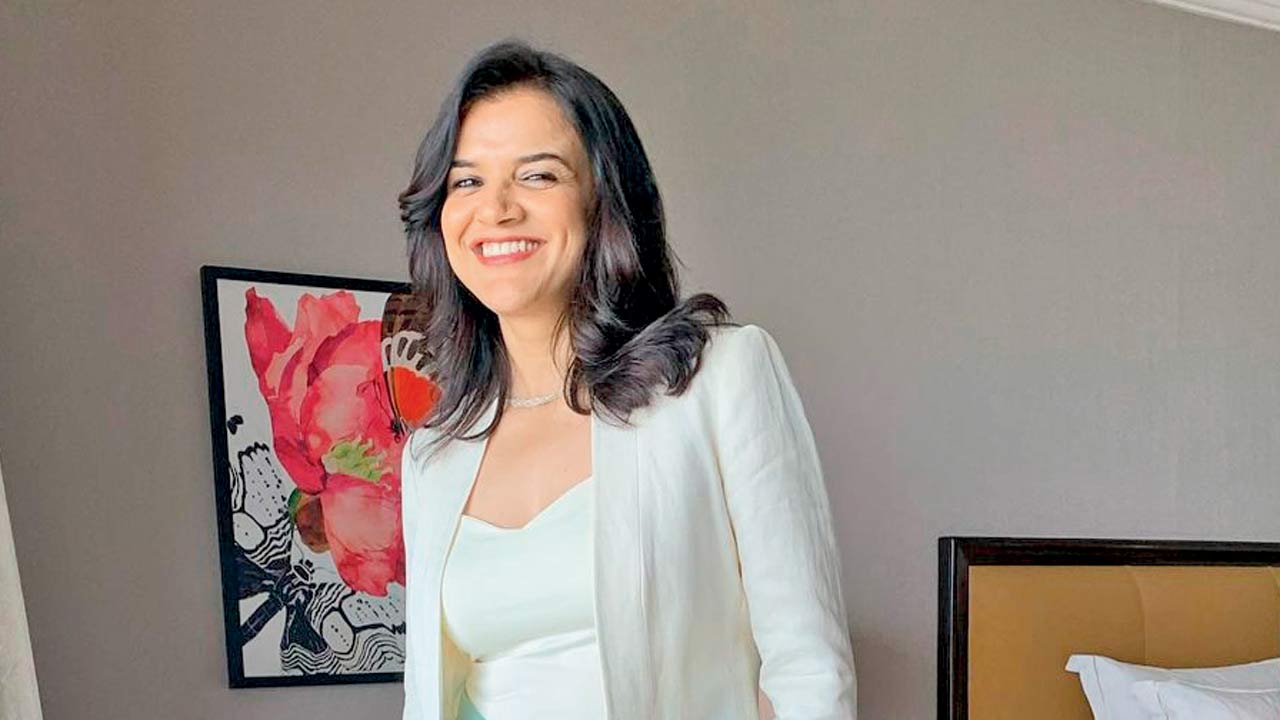
Angry Young Men director on how the docu series taps into the ‘cool’ side of Salim-Javed; says industry stalwarts have yet to pen their last promised script
Mohar Basu (MID-DAY; August 23, 2024)
Everyone has a favourite Salim-Javed film. Even Namrata Rao, the director of Angry Young Men, a docu-series that tells the story of Bollywood’s most successful screenwriter duo, Salim Khan and Javed Akhtar. She says, “Deewaar [1975] would be my favourite film, but I also love Shakti [1982].” It certainly is hard to pick, considering the duo delivered 22 blockbusters.
Together, the two writers shaped a glorious chapter of Hindi cinema. Rao, one of the industry’s most successful editors, has turned director to bring that era alive again. She worked on the Prime Video offering for three years. It all started when Zoya Akhtar, with whom she had worked on Lust Stories (2018) and Gully Boy’s (2019) songs, shared Angry Young Men’s idea with her.
“I was editing Lust Stories [2018] with Zoya. She told me then [that she had this idea]. I was very taken even then. In December 2020, she asked me if I wanted to direct it.”
The stalwarts collaborated for more than 15 years, giving us gems in Sholay (1975), Don (1978), Trishul (1978) and many more. When making a documentary that charts their career, how does one even start to make sense of such vast material?
“With a chart of their chronology,” replies Rao. “First, the anecdotes of their lives in the public domain were sought out—what was their process, the interesting things they did together and how they parted. But when we started interviewing them, the story changed. What was interesting was to tap into their personality. They are cool guys, they are badass. They dreamt big and made it happen. Like Javed saab says, ‘I didn’t think this wouldn’t happen; I always thought this could go in my biography.’ I found it beautiful how they have aged, from their young photos to the last photoshoot.”
Anyone who has seen the documentary will agree that it is true to its two subjects. The fact that it’s not a piece of glorification comes from them.
“They symbolize the wisdom about success and failure, and what it means as you age! They know storytelling better than any of us. So, they have the ability to offer what I would want. I remember when we shot the scene where Javed saab chokes up about his breakfast; he then makes light of it within minutes, saying, ‘Achcha, abhi aapko shot mil gaya mere rone ka.’ I was taken aback when Salim sir spoke about his mother because I got an insight into the vulnerabilities of this rough and tough man. They own their lives, their failures and successes, and even that they fu**ed up! I discussed a lot about Sholay [1975] with them—how they showed that a widow could be remarried, but didn’t give her a happy ending. They said, ‘You can’t push the envelope all at the same time. You first bring in the idea and then you normalize it. The story of Sholay required a tragedy to make it as big!’”
After 80-plus interviews—ranging from Amitabh Bachchan to Karan Johar, from Salman Khan to Farhan and Zoya Akhtar—Rao had 800 hours of footage. But she remained loyal to the storytelling over her favourite films. The only criticism is that Angry Young Men doesn’t have much for those who know them already.
“At the end of the day, the story represents them. As they got candid, I realized their mantra is: bolo yaar, aage dekha jaayega. That rubbed off on me. I’ve never seen their kind of confidence in anyone. That you can believe in something and stand by it, whether it goes your way or not, is what I loved about their story.”
We end the interview with two important questions. First, why did she not show them together?
“That was always the idea. We started in the pandemic when movement was limited. It wasn’t easy to shoot two people of that age. Then we fell into a pattern. I enjoyed catching them in their space. The last thing we shot was the photos when they went to Shivaji Park to inaugurate Diwali lighting. We shot at Raj Thackeray’s house!”
And is the last script of Salim-Javed happening any time soon? “Everyone at the première had that question. I can tell you they aren’t acting on it. But they are angry young men who do what they want to; maybe just as unexpectedly, they will get back someday!”
I lived the pregnant character of Vidya Balan in Kahaani myself-Namrata Rao
8:09 AM

Film editor Namrata Rao tells us what it takes to be Bollywood’s most wanted
Gaurav Dubey (MID-DAY; October 11, 2015)
A favorite of Yash Raj Films, Namrata Rao is considered one of the leading film editors in the industry today. She bagged the National Award for Best Editor for Kahaani (2012). Namrata started her career with Oye Lucky! Lucky Oye! (2008), Ishqiya (2010), Band Baaja Baaraat (2010) and Love Sex aur Dhokha (2010). She also worked on this year’s Detective Byomkesh Bakshy and Dum Laga Ke Haisha. We caught up with her at the Yash Raj Studios in Andheri, where she is busy working on the Shah Rukh Khan-starrer, Fan. Excerpts from a conversation:
How has your journey been in the industry been so far?
It’s been great fun. I didn’t even realise that it’s been eight years already. I am lucky I’m doing something I enjoy. I have only done films which I can connect to — every film has a part of me.
Bollywood has always been a male-dominated industry. How difficult was it to get a break?
Firstly, to be a film editor was a tough call to take. I took time to even convince myself. There was no one from my family in this line. But once I decided that I’ll jump off the cliff and see where I land, I had also figured out my way up, if I failed miserably. The industry may be male-dominated, but that is the case with life as well.
You have been associated with filmmaker Dibakar Banerjee for a long time. How is it to work with him?
I was editing a lot of documentaries when I was studying in Kolkata. One of them, I Am The Very Beautiful (2006), was directed by Shyamal Karmakar who was also my professor. It was an interesting documentary about homosexuality. After seeing the documentary, Dibakar connected with me. We spoke a lot about the docu and he later asked me to edit his film, Oye Lucky! Lucky Oye!
There is a growing audience for unconventional films nowadays. What is your take on it?
There’s a limitation on stories and there are limited stories to be told, so then you start experimenting — that’s the reason why people are loving the unconventional films and stories nowadays.
How do you choose your projects?
The first reading of a script should touch me. If it doesn’t, I reject it. I have to relate to the character or a part of the story to edit the film.
What was your turning point in the industry?
An important film for me was Kahaani. I lived the pregnant character of Vidya Balan in the film myself. For an entire year, I was with Vidya’s character. It is difficult for me to explain the experience, but I had no connectivity with reality when I was editing the film. I’m again waiting for that miracle to happen. Oye Lucky! Lucky Oye! was also a game changer for me. If Dibakar had not shown trust in me, it would have been difficult. When I did Ishqiya, I realised how everyone has their own way of making a film.
What was your first reaction when you heard about getting a National Award for Kahaani?
I didn’t believe it. I first got a call from a news agency asking for my reaction. I told them you have the wrong information. Then, I saw it in the news — that’s when I realised that I had bagged the award. I was estatic.
Did life change after that?
My life did not change, but it gave me more bargaining power for money. I could make better choices. But more than the National Award, it was the success of the film that mattered.
You are in great demand right now and everyone wants to work with you.
I don’t give much importance to all this. I don’t even think about awards. My biggest nightmare is when I finish the edit of a film, I wonder if I will be able to edit another one. With every new film, I feel the same way. Storytelling is a skill. It keeps getting better with practice, but you have to keep trying and do your best.
How difficult was it to work on Kanu Behl’s upcoming film, Titli, after your divorce with him?
Kanu and I know each other since we were teenagers. We grew up together, got married and then got divorced. He will always be a part of my life. After the divorce, there was a bit of awkwardness, but when we started working together, it was just like old times. It was the same problem, the same fights and same issues and that’s because we are still good friends.
What are your suggestions for upcoming film editors?
They need to be fearless and believe in themselves. Only a good storyteller can be a film editor. You also need a lot of patience. You need to take risks and then keep at it. I don’t think too much about the awards.
Subscribe to:
Posts (Atom)