Showing posts with label Nagraj Popatrao Manjule. Show all posts
Showing posts with label Nagraj Popatrao Manjule. Show all posts
Vijay Varma-starrer gambler drama Matka King to release in April
3:30 PM
Priyanka Sharma (MID-DAY; February 18, 2026)
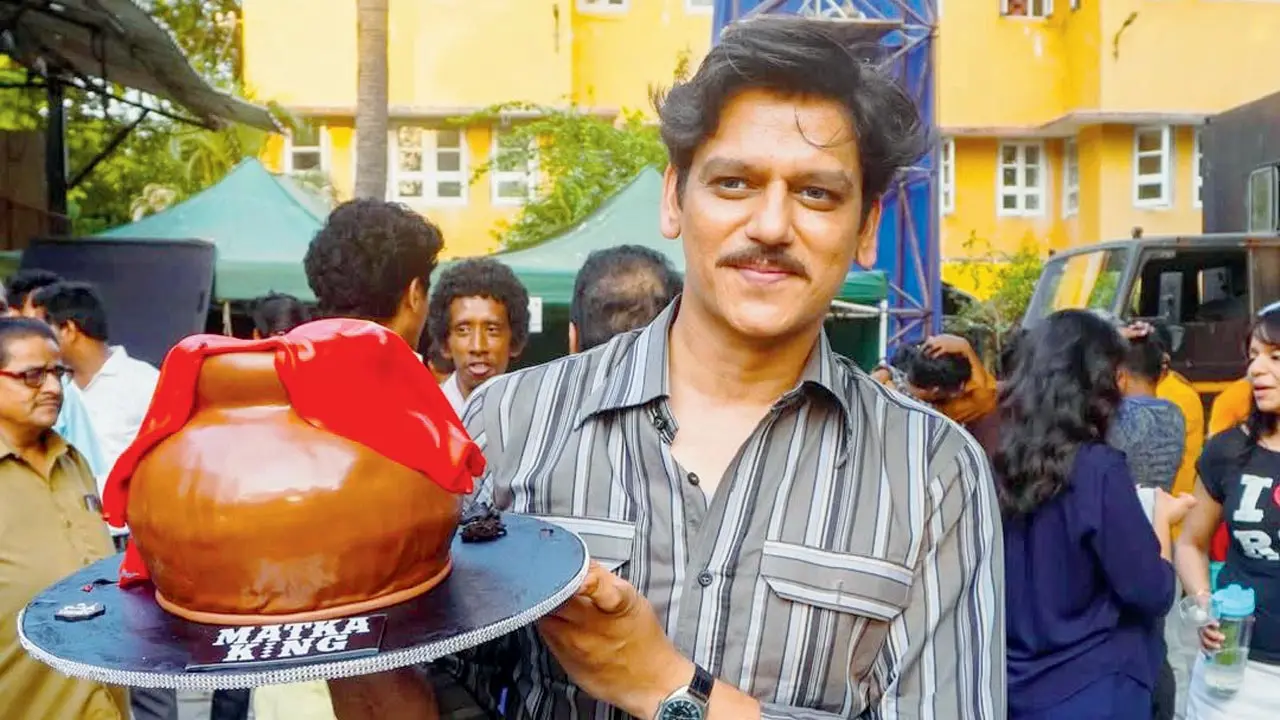
In June 2024, Vijay Varma announced that he had begun shooting for filmmaker Nagraj Manjule’s web series, Matka King. The crime drama was included in Prime Video’s slate of projects for 2025, but was a no-show throughout the year. So, where does Manjule’s series stand over a year-and-a-half since it went on floors?
mid-day has learnt that the drama — which is set in the 1960s and tells the story of a cotton trader in Mumbai, who invented a form of gambling called ‘Matka’ — will première in April 2026.
A source revealed, “Matka King’s shoot was wrapped in 2025, and the top bosses at the streamer were keen to release it the same year. But a show of this scale needed time to get the best result. It will present Bombay of the 1960s authentically, and marks Nagraj’s first attempt at a period drama. The director doesn’t believe in rushing things to fit a deadline. The show is now ready and set to drop online in April.”
Jhund actor Babu Chhetri murdered in drunken brawl in Nagpur
10:36 AM
Soumitra Bose (THE TIMES OF INDIA; October 9, 2025)
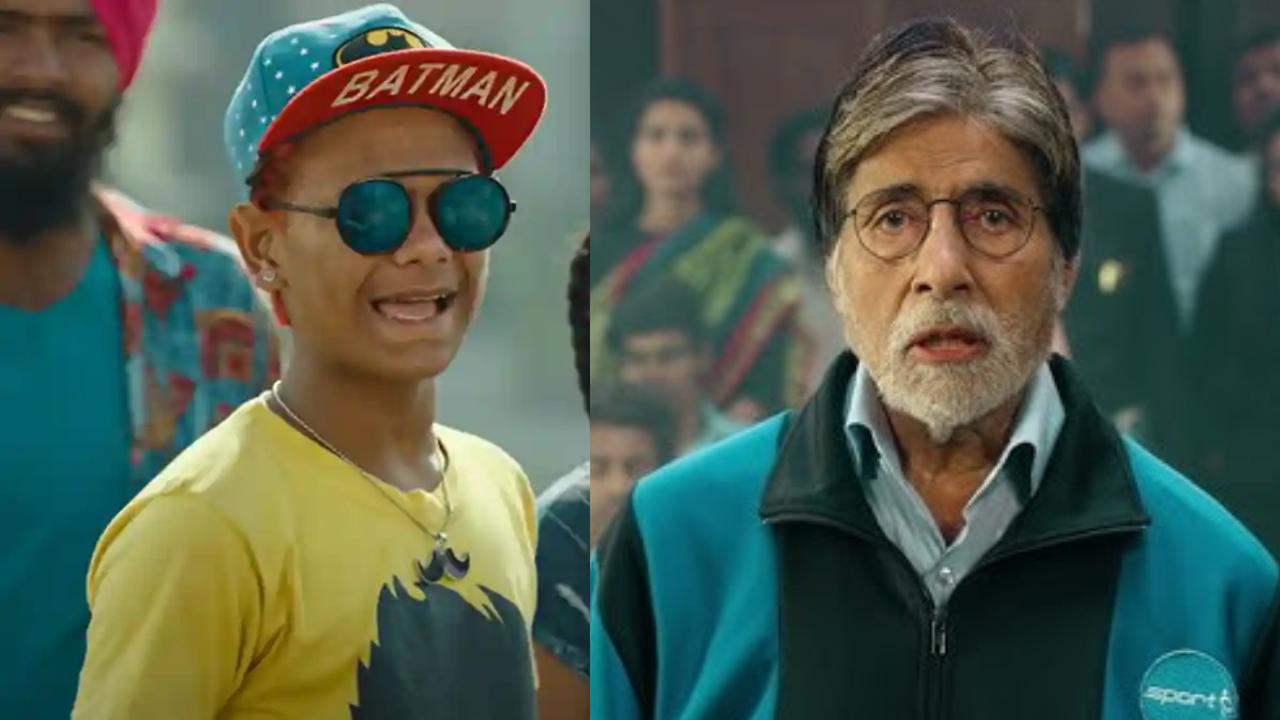
Nagpur: ‘Jhund' actor Priyanshu Kshatriya, alias Babu Chhetri, 21, who captivated audiences alongside Amitabh Bachchan, was found murdered in North Nagpur's Om Sai Nagar-II in the Jaripatka area early Wednesday. Chhetri's body, bound with electrical wire and marred by stab wounds, was found soaked in blood inside an under-construction building, which locals say had become a hub of criminals.
Chhetri's death snuffed out a promising journey of reform that began to reshape his troubled past. "Over the last two years, my brother was reforming. Suddenly, a killer took him away. He had left promising to return soon, but we had no idea he wouldn't ever," Chhetri's sister, Shilpa, told TOI.
His rise to fame was as raw as the streets he came from. Spotted by acclaimed director Nagraj Popatrao Manjule while sitting near railway tracks selling coal, the then-17-year-old was cast in ‘Jhund' (2021), a film inspired by coach Vijay Barse's work with slum youths. Chhetri's authentic portrayal of a wayward teen finding purpose through football earned him Rs 25,000 and instant recognition.
Yet, fame didn't immediately alter his path. With a history of petty thefts — mobile snatching, burglaries, including a 2022 case involving jewellery — Chhetri was a frequent name in police records. Despite his on-screen redemption, he remained a thief off-screen. However, the last two years marked a turning point. Family members insist Chhetri distanced himself from his past, with no new criminal cases since 2023.
That hope was shattered on Wednesday when Chhetri, lured to a party by key suspect Dhruv Shah — a man with his own rap sheet — became embroiled in a drunken brawl. Police said the night took a deadly turn when Chhetri, in a heated moment, threatened to kill Shah. Unnerved, Shah allegedly stabbed Chhetri repeatedly, said police. The actor's body was found hours later in the same neighbourhood ‘Jhund' was immortalized, mirroring the gritty realism of his breakout film.
"Barking dogs drew the attention of neighbours in the early hours of day. They followed the dogs only to find his body before alerting cops," said Jaripatka police station's senior inspector Arun Kshirsagar, adding Dhruv was swiftly arrested. Police are piecing together the night's events, with Shah now in custody. "It was a party that spiralled out of control. Alcohol and old grudges fuelled violence," a senior officer stated.
Forensics teams are analysing the murder weapon — a knife recovered nearby — and CCTV footage for clues. The brutality of the attack, with Chhetri bound and stabbed, suggests personal vendetta. "This is devastating," a ‘Jhund' crew member posted on X. Sources stated the film crew expressed condolences, calling the loss "heart-wrenching."
His family, grieving a son who was "finally finding his way," demanded justice. "There may be more than one assailant," claimed a kin.
You can’t even name five mainstream filmmakers who are united-Nikkhil Advani
9:53 AM

Rohan Kanawade, Nikkhil Advani
Priyanka Sharma (MID-DAY; September 24, 2025)
Rarely does this emotion strike filmmakers, but when it does, it hits hard. Nikkhil Advani experienced it — that feeling of a filmmaker reminding you of your younger self — when he watched Rohan Kanawade’s Sabar Bonda. “Rohan is the filmmaker we set out to be 30 years ago. But along the way, we had to take other decisions,” he says. “The purity with which Rohan has made the film is beautiful.”
Sabar Bonda tells the story of Anand, who, while navigating the grief of his father’s demise, finds love in Balya. The Marathi film has Advani, Vikramaditya Motwane, Sai Tamhankar, and Nagraj Popatrao Manjule as its executive producers. It’s notable how the movie brought several filmmakers together. Not a rare phenomenon, according to independent producer Shiladitya Bora, who recently told us that mainstream Bollywood filmmakers have more unity than their indie counterparts.
But Advani disagrees. “You can’t even name five mainstream filmmakers who are united. In the 1990s, 44 Aram Nagar was Sudhir Mishra’s office where all of us — myself, Tigmanshu Dhulia, Irrfan Khan, Manoj Bajpayee, Anurag Kashyap — used to hang out. Today, there’s more unity among indie artistes because their struggle is the same.”
As an executive producer, Advani is happy to nurture Kanawade and hopefully ease some of his struggles. Asked whether he felt almost envious while watching the director’s work, and he admits, “When I saw Aligarh [2016], I said, ‘Wow! Hansal [Mehta], what have you done?’ When we saw Udaan [2010], we were like, ‘Who is Vikram!’ I want to be jealous of [good] films when I see them.”
Advani, who made his directorial debut with Kal Ho Naa Ho (2003), knows that preserving one’s voice is far from easy. For Kanawade, he has a simple advice.
“He has to learn from me. I made Salaam-E-Ishq [2007] as my second film. My [approach] was that since nobody is giving me credit for my first love story, I’ll make six love stories. The decision was wrong because it was [born] out of arrogance. But you have to tell yourself, ‘I won’t go against [my instincts]’.”
I know it’s very difficult to get a theatrical release nowadays, says Sabar Bonda director Rohan Kanawade
8:28 AM
Director Rohan Kanawade reveals he was initially fearful of Sabar Bonda not finding a release in today’s market
Priyanka Sharma (MID-DAY; September 16, 2025)
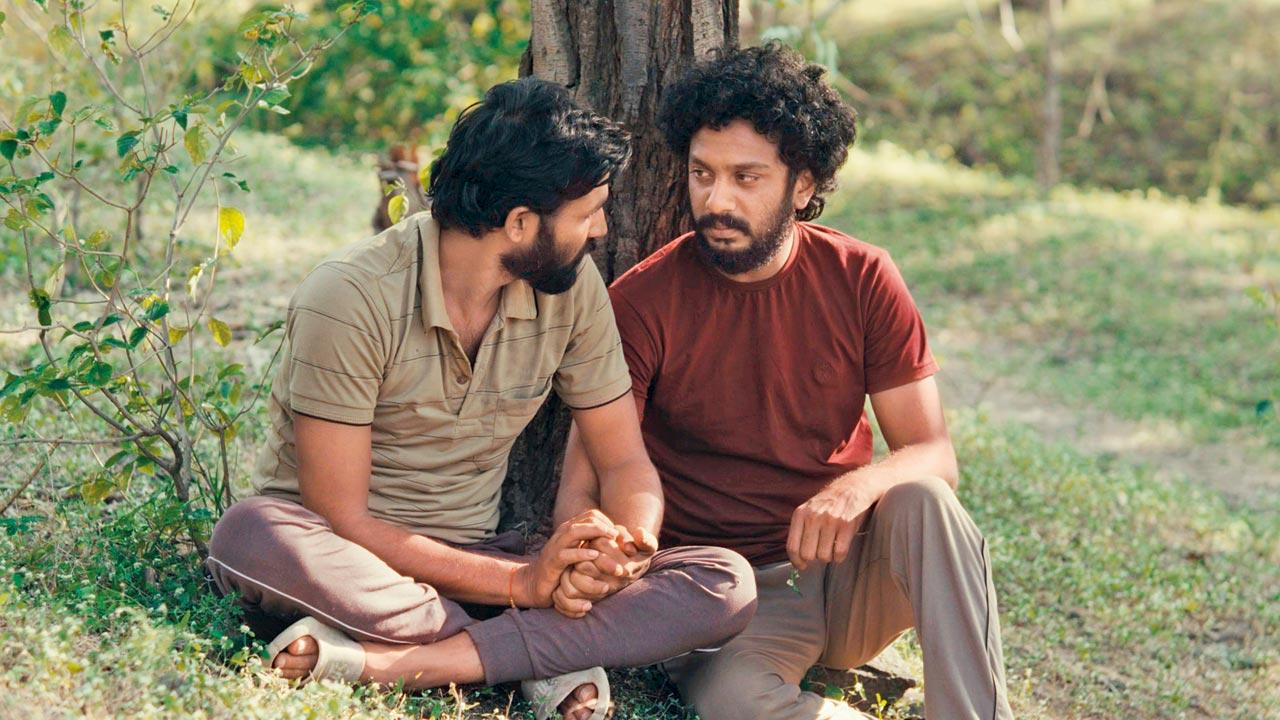
Faith over fear — this principle has guided filmmaker Rohan Kanawade up to this point. His maiden feature film, Sabar Bonda, won the Grand Jury Prize in the World Cinema: Dramatic category at the Sundance Film Festival in January. Despite the win, the director wasn’t sure whether his romantic drama would be picked up for a theatrical release. Today, his faith in the movie has trumped his fear as actor and producer Rana Daggubati is bringing Sabar Bonda to theatres. “I didn’t know it would be this quick,” he chuckles.
“I know it’s very difficult to get a theatrical release nowadays. So many of my filmmaker friends have made their movies and they aren’t getting distribution. So, it was scary when we were making Sabar Bonda. But with all these people joining it, the release will be stronger,” he says, happy to have the support of filmmakers Vikramaditya Motwane, Nikkhil Advani, Nagraj Manjule, and actor Sai Tamhankar who have come on board as executive producers.
Starring Bhushaan Manoj and Suraaj Suman, the Marathi movie revolves around Anand who falls in love with Balya when he visits his ancestral village during the mourning period of his father’s demise. With Kanawade giving us a tender queer romance, we ask him about the love stories that influenced him in his childhood.
“My dad used to take us to watch films all the time. So, I used to watch all the Aamir Khan, Salman Khan, and Shah Rukh Khan films. I cried when I watched Kuch Kuch Hota Hai [1998],” he recalls.
But if there was a film that aroused his curiosity about what goes on behind the camera, it was the Marathi classic, Maherchi Sadi (1991). “While all the women in the audience were crying for Alka Kubal’s character, I asked my father all about the projector and kept on looking at all those colourful rays coming out of it.”
If the seeds of filmmaking were sown that day, they were further nurtured by Marathi filmmakers Jabbar Patel, Sumitra Bhave, and cinema legend Satyajit Ray, whose works Kanawade devoured.
“I realized how differently you can tell stories. There is not only one way to tell a story — I saw that in films made by these filmmakers. Sometimes if you feel jealous of other filmmakers, it inspires you to push yourself.”
Fear is another emotion he has come to terms with. “When you are writing something new, you have fears. But you have to force yourself to make what you want to.”
I sang and showed Payal Kapadia how people from Ratnagiri dance-Chhaya Kadam
10:50 AM

Determined to bag the role in All We Imagine As Light, actor Chhaya Kadam on how she listed out many similarities between her and the Ratnagiri-bred character to director Kapadia
Priyanka Sharma (MID-DAY; November 15, 2024)
Once in a while, an actor comes across a role that resonates so strongly with them that they almost become possessive about it. For Chhaya Kadam, director Payal Kapadia’s All We Imagine As Light gave her that role. The actor was so enamoured by the character of Parvaty that she pitched hard for it.
“At one point, I thought the role shouldn’t go to any other actor. So, I started listing out similarities between the character and me. I told Payal, ‘I am also from Ratnagiri. My father was a mill worker. We used to live in a MHADA building and now we live in a tower. Everything is the same between us.’ I even sang and showed her how people from Ratnagiri dance,” she laughs.
In the Cannes Grand Prix-winning film, Kadam plays a hospital staff member, who strikes an unlikely friendship with two nurses. She had complete faith in the story and in Kapadia’s vision. That it was the director’s maiden feature did not deter her.
She reasons, “For me, the most important part is my character, then the story. I started my career with Nagraj Manjule’s Fandry [2013], which was his debut. I feel first-time directors work very hard on their film.”
This may just be Kadam’s year. She began 2024 with Laapataa Ladies that saw her as the wise Manju mai, followed it up with Madgaon Express, and then had the Cannes win for All We Imagine As Light. The one thing common in all her outings is her characters’ feminist streak.
She reflects, “I always liked characters that felt like one of us. I enjoyed films that saw the hero defeating the goons with one punch, but they never felt real. I was drawn to Smita Patil and Shabana Azmi’s brand of cinema. Now, it has become a habit to do work that I enjoy, and if we can give a social message, then nothing like it.”
Forget actors, I’m the only one in the Hindi film industry who acknowledged his Dalit identity-Neeraj Ghaywan
8:30 AM
Renuka Vyavahare (BOMBAY TIMES; August 28, 2023)
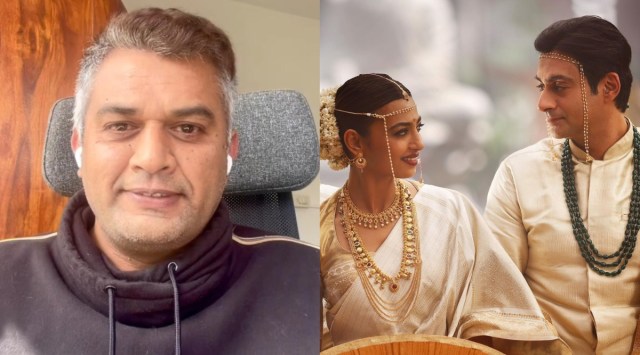
Directed by Neeraj Ghaywan, one of the episodes of Made In Heaven (MIH) season 2, titled 'The Heart Skipped A Beat', featuring a Buddhist wedding, went on to become the series’ most acclaimed short. However, along with the appreciation came the credit crisis. While Neeraj thanked various people who inspired his episode in an Instagram post including activist and author Yashica Dutt, soon after, the latter questioned why she wasn’t given a formal credit on the show. She claimed the episode’s central character Pallavi Menke (played by Radhika Apte) was based on her life. Neeraj, known for his courageous vision and acclaimed films like Masaan, Geeli Pucchi (a short film where Konkona Sen Sharma plays a Dalit queer character) and Juice (a short on patriarchy starring Shefali Shah), for the first time, addresses the controversy, representation of Dalit characters in mainstream cinema and why pushing this narrative is so important. Excerpts...
Yashica has appreciated your work even before, and in a recent interview with us (after the series dropped) she said, “Neeraj Ghaywan’s work is important, but this is my life. I wasn’t acknowledged.” What is your reaction to that?
I have also championed Yashica’s work earlier. In the story, Pallavi Menke is a Maharashtrian Dalit from the Vidarbha region. She then goes to Columbia University (USA) and becomes an Ivy League professor. The episode is about her getting married to a man belonging to another caste, and how his family has issues with her (Buddhist) wedding ceremony. They are not in complete acceptance of her. They like her academic accolades but want to erase her caste identity. The episode handles this conflict. I don’t know how this is a homage to any one person. Even if you claim ownership to the term ‘coming out’, can you claim ownership to the act? So many people have hidden and then finally proclaimed their identities due to the fear of being judged. I hid my identity for 35 years, then suddenly spoke about it. People who never shied away from their identity and took the hate head on, their struggles were bigger. Look at (filmmaker) Nagraj Manjule, he inspires me. A part of me is Yashica, Nagraj, Bezwada… and so many people who don’t want to be named. Pallavi Menke is a sum of all of us, our pain and anguish. She is a symbol of the cumulative experience of all of us, so no one person can claim to be her.
So, your personal experiences and struggle with your identity is what translates on to your work?
Making this episode (MIH) for me has been a very personal journey. Zoya Akhtar, Reema Kagti and Alankrita Shrivastava are the writers of the show. They had this idea. Someone who’s accomplished from the Dalit community realizes that they may have come a long way, but it doesn’t insulate them from the ugly face of casteism. We chatted the whole day and I talked about how I proclaimed my Dalit identity on Twitter, and you had broken that story. (A story by the same author featured in BOMBAY TIMES; January 7, 2018, titled, Neeraj Ghaywan: There was always this fear of my work being attributed to my identity as a Dalit).
Before that happened, I hid my own identity in school, during my Engineering college, MBA days and even in my corporate life, because I have seen how people treat you when you come from a quota. My name was Neeraj Kumar and it’s still that on my passport. Now it’s become my middle name. (Pallavi Menke in the episode refers to caste neutral surnames like these). If you tell people your full name, they will scrutinize your last name, where are you from, which region, where are your parents from, etc. We know what they are getting at, and this kind of scrutiny scars you. I reclaimed my identity by going back to my surname and so does Pallavi.
What were your own battles after you proclaimed your Dalit identity?
After I spoke to Bombay Times in 2018, my extended family who hadn’t proclaimed their identity and were earlier proud of my work as a director, were also exposed. It was a bit complex for me because they weren’t happy about it. We used this track in the story, where Pallavi’s brother isn’t happy about her coming out. I opened up a lot about myself through this episode. I touched upon manual scavenging. Every achiever from the caste will have a story where their previous generations cleaned the toilets. I have heard these experiences from so many people including activist Bezwada Wilson, who is a pioneer in abolishing this practice. At some places, it has still not changed.
Go on…
I must tell you this. When my house help of ten years saw your piece in Bombay Times (2018), she picked up the newspaper and asked me, Dada, hey kaay aahe? (What has been written?) I was scared to tell her what it meant. It took me 2-3 days to muster up the courage to tell her that I am a Dalit. She reacted, “Aap Jai Bhim wale ho? Mujhe fark nahi padta.” Same with my driver. It’s scary because you have been putting up a different picture for the world for years. Since the time you broke that piece, I haven’t spoken to anyone. Not even my school or office friends. I stopped going to my college reunion because no one reached out to me after knowing what I have been through. All this fear and trepidation came out when I spoke to the show creators, and all of this went into that episode.
Your decision to choose Konkona, a straight woman to essay gay character and Radhika Apte, a Brahmin woman to play a Dalit character was a topic of discussion. There's an argument that on one hand you push for representation and on the other, actors from the community don’t find a place in these stories. What would you say to that?
My responsibility as a filmmaker is not just to be inclusive. The inclusion needs to make drama sense. The character must resonate with people and that needs a solid performance. I knew no one could play Konkona’s character in Geeli Pucchi better than her or Radhika’s character in MIH. Should I tell my stories efficiently or compromise on the casting to sound right and make a middling drama that no one will watch? Forget actors, I am the only artiste in the Hindi film industry who has acknowledged his Dalit identity. A lot of people don’t want to proclaim their identities. It’s their choice. If I do find newcomers who are open about their sexuality or caste, do they fit the part? You also need great actors to pull it off as these are complex characters.
You never shy away from making a political statement, through your feisty Dalit characters, who seek equality and not sympathy...
We all are political beings, especially the ones belonging to the marginalized communities. It could be Dalits, women, LGBTQIA+, specially abled people or minorities, I am not talking about electoral politics but our relationship with the world and society and how it’s all connected. Their rights which have been denied are linked to the state. Their mere existence is a political statement.
‘The film industry is not casteist. They are caste ignorant’
The way it is structured, it is very local centric. Caste is not what is shown in Hindi movies of the 80’s, where someone says, “Tu paani waha se pina.” It is way different than that. It is a reality that exists even today in Mumbai, where all of us get public holidays, but not the safaai karmacharis (sweepers and garbage collectors). Have you ever seen your building trash not being taken? They don’t have a choice. There are filmmakers who are now addressing this, but there is a problem with the gaze. It exudes a saviour complex. When filmmakers who are not from the community tell (Dalit) stories, they have a patronizing undertone. “Humne tumhara uddhar kar diya tum pe film banake. Praise me.” These films are not about the Dalit point of view. Dalit people become subjects here and not full-bodied characters with assertion, who can do other things beyond their caste markers. Patriarchy also exists in our community which needs to be called out. This conscience is slowly changing.
‘Calling it a Dalit wedding was wrong. It should have been called a ‘Buddhist wedding’’
When the response to MIH came in, something inside me changed. I got heartfelt reactions from people who thought they were finally seen and heard. Their trauma was acknowledged. The one thing that I want to humbly acknowledge is that we called it a Dalit wedding. That was wrong. It should have been called a ‘Buddhist wedding’.
‘I don’t want people to appreciate my work because it’s about a social cause’
People welcomed me with open arms once I revealed my identity. No one saw me differently, but this happened after Masaan. When I was making it, I didn’t tell anyone about it. I couldn’t even confide in Varun Grover, who was the film’s writer, I only told him later. Once I came through, people did not change their opinion of me. They only see my work and that’s how I want it to be. I don’t want people to appreciate my work because it’s about a social cause. I shouldn’t have to rely on the crutches of something political or marginalized characters to win brownie points. “Isne important topic pe picture banaya, so appreciate karo.” I don’t want that. A film should be judged solely for its art, clear narrative, and great storytelling. I don’t want any tokenism.
Sometimes, I would get worried, but I had that zidd to make Jhund-Nagraj Popatrao Manjule
8:50 AM
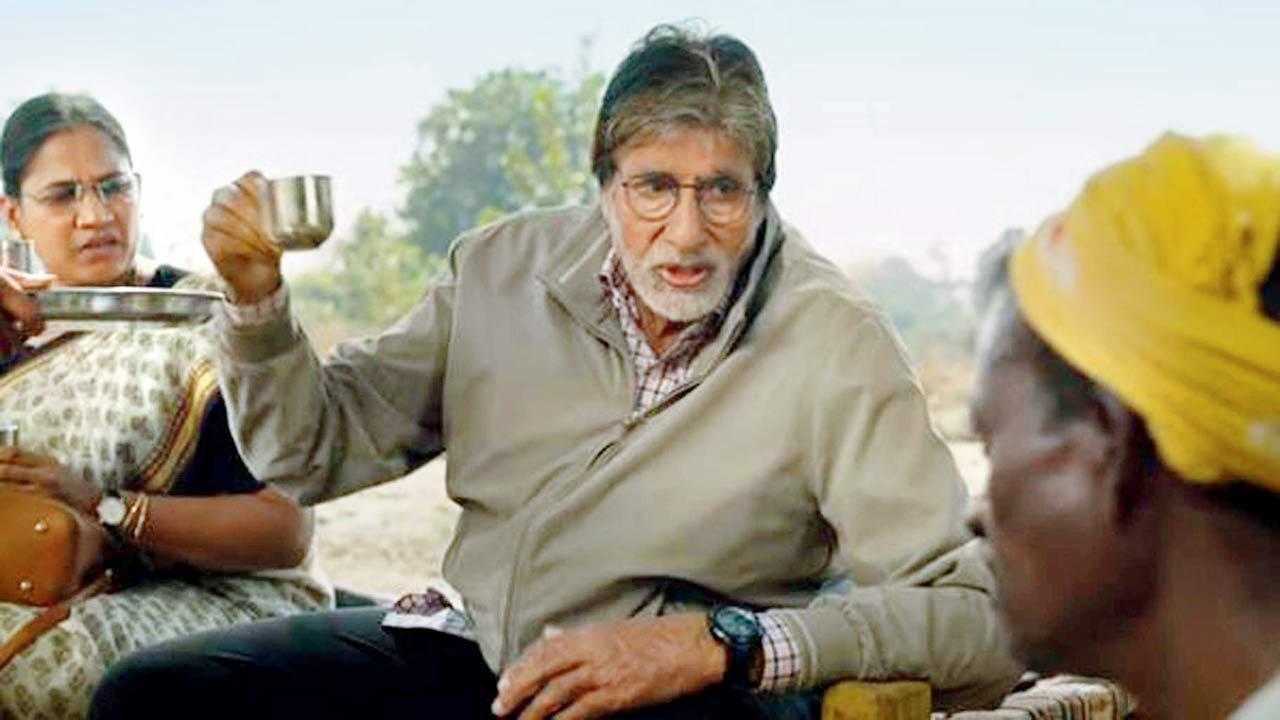
Bringing to screen Barse’s story of rehabilitating slum kids, Jhund director on how he saw film to completion despite producers backing out mid-way
Mohar Basu (MID-DAY; March 2, 2022)
The trailer of Amitabh Bachchan’s Jhund may make one assume that it’s a modern-day rendition of Sidney Poitier’s To Sir, with Love (1967). When we get on a call with director Nagraj Manjule, we start our chat on this note. “Jhund is a multifaceted story. The power of education in transforming societies is an aspect of the film. But we haven’t limited Jhund to just that,” he says. For Manjule, the sports drama’s theme can be captured in five words — “the power of a team”.
Jhund is inspired by the real-life story of Vijay Barse, a social worker from Nagpur who founded Slum Soccer, an organisation that uplifts underprivileged children through football. The film didn’t have an easy journey to the screen — it was started in 2017, but the producers backed out mid-way. In 2018, producer Bhushan Kumar stepped in to back the project. Manjule says the making of the drama was a test of his determination.
“I learnt the ability to power through this phase. Sometimes, things fall apart for the better. We had a set in Pune that we had to pull down. But it turned out to be [an advantage] as we eventually shot in Nagpur, where the story is originally set. Sometimes, I would get worried, but I had that zidd to make the film. I wouldn’t get the chance to work with Bachchan sir again. More than that, I had shown a dream to the kids, and I couldn’t take that away from them.”
Having shouldered the responsibility of telling Barse’s story to the world, he is eager to know the social worker’s reaction. “I met him and his students in Nagpur when the film first came to me. The reason I made Jhund in Hindi is because his students come from across the country. Cinema is a language in itself, and I knew I had to bring the soul of their stories into my narrative.”
The acclaimed director is still in a state of disbelief about Bachchan headlining his debut Hindi feature film. Remembering his first meeting with the megastar, the Sairat maker says, “I’ve been a huge fan since I was a kid. But as a director, I knew I couldn’t be starry-eyed. I had to remind myself that I am making a movie with him.”
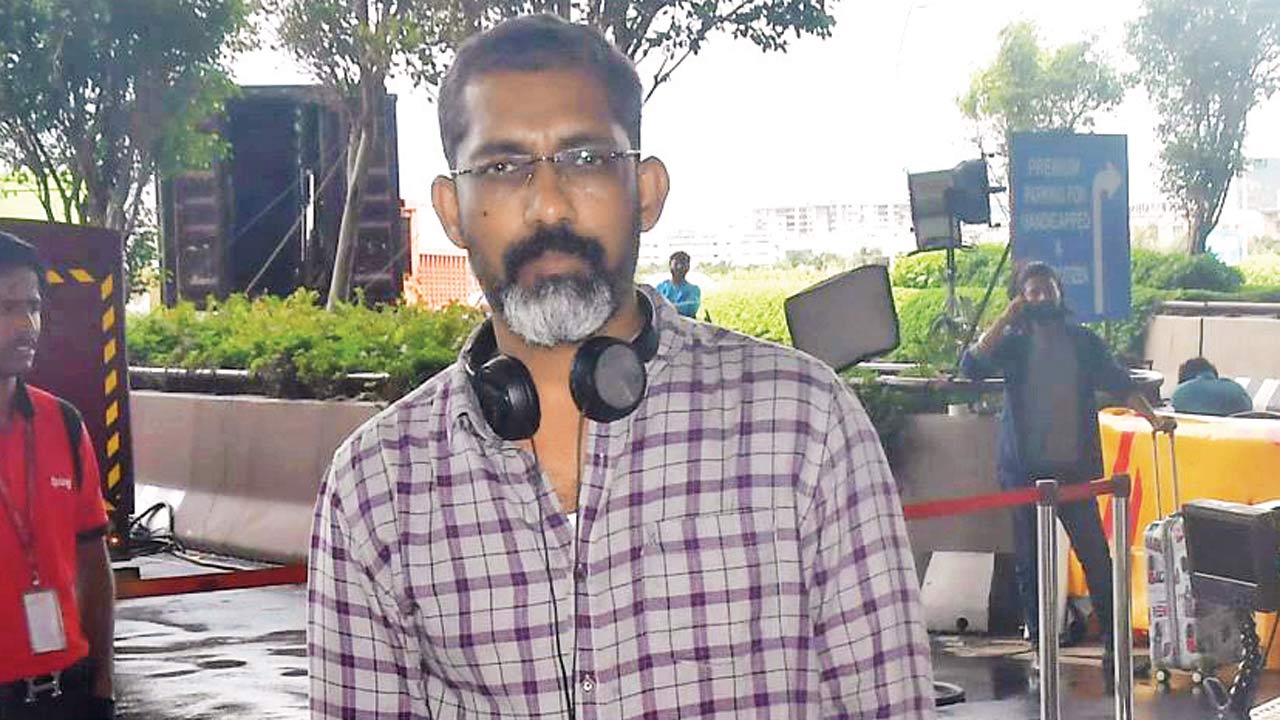
Nagraj Manjule was certain that Jhund is meant for the big screen and I supported him-Bhushan Kumar
8:26 AM
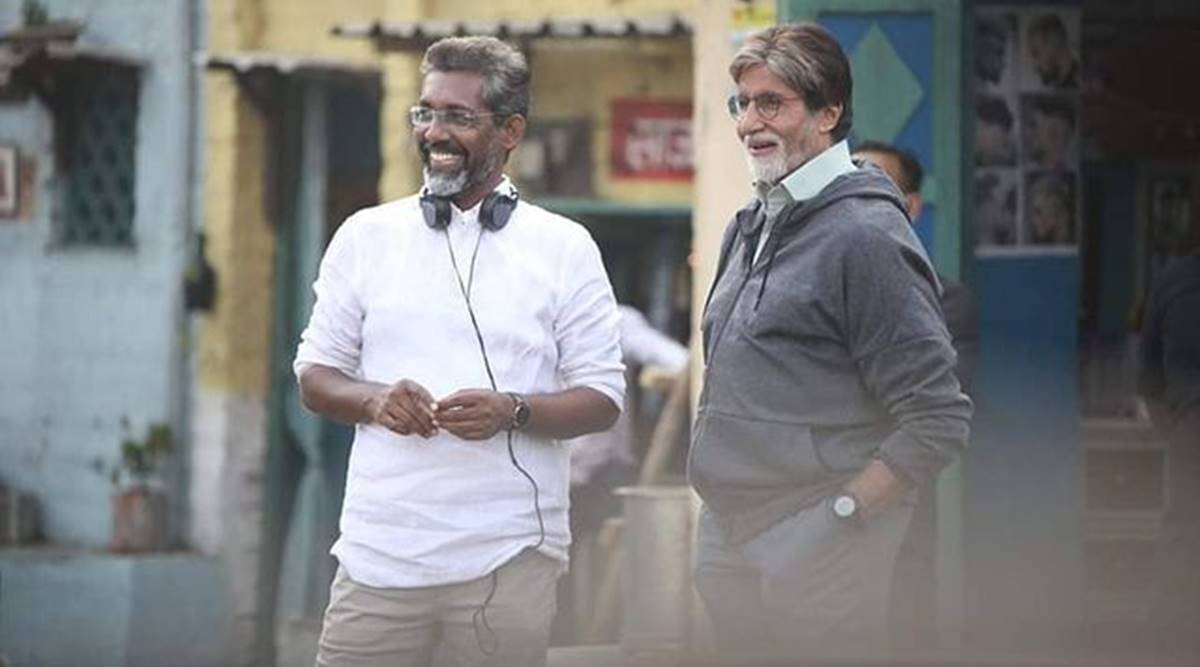
Neha Maheshwri (BOMBAY TIMES; March 1, 2022)
Jhund marks Sairat director Nagraj Manjule’s directorial debut in Bollywood. The film helmed by him is headlined by Amitabh Bachchan and backed by producer Bhushan Kumar. The movie, based on the life of Vijay Barse (played by Amitabh Bachchan), who founded the NGO Slum Soccer, hits the big screen on March 4. In an exclusive chat with BT, Nagraj Manjule and Bhushan Kumar talk about what makes Jhund special and their association of mutual trust and admiration. Excerpts:
The two taglines — ‘Isse Jhund nahi team kahiye’ and ‘Badi film bade parde par’ — grab your attention instantly while watching the trailer. Is that a comment on the film or the teamwork behind it?
Nagraj Manjule: It is a comment on perception. What might seem wrong to you, could be right in my eyes. Similarly, what I see as a team, people perceive as jhund. The film revolves around the lives of slum dwellers and how we tend to judge people on the basis of their background and looks. For instance, a dark-skinned person is often assumed to be a villain, while a man with innocent looks is assumed to harbour no ill intentions. Jhund addresses these stereotypes. Besides, Bachchan sir hain toh yeh film automatically badi hai mere liye.
Bhushan Kumar: It’s been almost three-and-a-half years since we started making the film. Several opportunities came our way to release it on an OTT platform, which has become an extremely powerful medium with an impressive viewership. But when Nagraj ji showed me the film during the lockdown, everyone in the team felt strongly that we should hold the film back for a theatrical release. Nagraj ji is the creative person behind the film, and he was certain ki yeh bade parde ki film hai, aur wahin aani chahiye. As a producer, I have to support him and respect his vision.
Since the film is releasing in theatres after three-and-a-half years, did you have any content becoming dated?
Bhushan: This movie doesn’t belong to the thriller, comedy or action genre, which generally tends to become dated after a couple of years. This is a reality-based story adapted by Nagraj ji, so the film becoming dated was out of the question. No one can predict how a film will fare at the box office, but as a producer, you must have conviction about your product as well as the interests of the director at heart. I kept him informed about the OTT option, but he had made up his mind about the film releasing in theatres. As producers, we should also take steps to ensure the smooth functioning of theatres. Theatres khatam nahi hone chahiye. It’s a good sign that the fear of watching a film in theatres, owing to Coronavirus, is reducing.
Nagraj, you have always chosen the cast of your films depending on the characters, which often included picking untrained actors. So, did you write the central character in the film keeping Amitabh Bachchan in mind?
Nagraj: I am a fan of Bachchan sir and have admired him since my childhood. Main jab chhota tha tab Bachchan sir ke jaise shirt ko gaanth maar kar school mein jaata tha, aur maar khaata tha uske liye. I must have watched all his films. It was beyond my imagination that I would ever be able to work with him. However, things fell into place when I pitched an idea to Bhushan sir and everyone felt that it could be developed with Bachchan sir playing the central character. I wanted to flesh out the story before approaching him. So, Jhund is the first film for which I have developed a script keeping the actor in mind. I usually follow a different process because there is an inexplicable pressure and fear when I have to decide on an actor before writing. That should not be the case, because if you like what you write, you can work on the project more confidently.
Bhushan, this is the first time Nagraj is making a Hindi film, what prompted you to back the project?
When I heard a brief narration of the story, wahin se main iss film ke saath jud gaya tha. Hum content se judte hain. As a studio, we make all kinds of films, including action and massy entertainers. Hum Jhund bhi banaate hain, Thappad bhi banaate hain aur Kabir Singh bhi. Jhund mein humne football aur slum ke bachhon ki duniya dikhaayi hai. The kids cast in the film are those who live in the slums. The actors are real. We haven’t taken any established actors for kids.
When you choose the cast for a film with such real characters, the process must be exciting and interesting. Can you take us through it?
Nagraj: These kids meet the requirement of the characters. My brother, who does the casting for me, spent two months in Nagpur and went around the slum settlements. We must have auditioned 600 children, who knew how to play a bit of football. They underwent a prep for around one-and-a-half years. When you watch the film, you will get a glimpse into their reality and background.
How encouraging it is to have a producer who backs your film without producer who backs your film without putting any box-office pressure on you?
Nagraj: It’s extremely encouraging. On many occasions, there are financiers who come on board as producers. It helps if a producer is also creatively inclined and isn’t just thinking about making money. It’s a pleasant surprise that someone with immense knowledge about the business aspect of filmmaking isn’t just looking at it as a business prospect. He never asked me how the film was shaping up and visited the set only once.
Bhushan: Not everything is just about the money in business. Thankfully, we have enough funds, and I don’t need to put in so much effort. It can result in tunnel vision. So, it’s not always the money. It is also about a feeling of pride, and Jhund evokes a sense of pride in you. I am positive about Jhund, as Nagraj ji has made a very good film and I am sure we won’t be in losses.
No one is doing charity by making films on Dalits. Do them right or stay away-Somnath Waghmare
8:10 AM

Despite the occasional film centred around a Dalit character, Hindi cinema has pretty much skirted around the realities of the caste system. This week, the poster of a forthcoming film, Madam Chief Minister, drew criticism for its problematic representation of a Dalit politician. Filmmaker and researcher Somnath Waghmare spoke to Sonam Joshi about the controversy and the importance of Dalit filmmakers telling their own stories
Sonam Joshi (THE TIMES OF INDIA; January 10, 2021)
Your academic research at the Tata Institute of Social Sciences in Mumbai focuses on the portrayal of caste in Marathi cinema. What about Hindi films? Has there been a positive change?
Historically, the Hindi film industry has been dominated by savarnas and keeps putting out their stories. Even though Mumbai was B R Ambedkar’s city, he has zero presence in cinema. For example, Franz Osten’s Achhut Kanya came out in 1936 when Ambedkar was already a strong leader and had debated with Gandhi on the Poona Pact but it ignores this. Instead, the cinema of that time glorified Gandhi’s idea of Harjians but not Ambedkar’s social vision of ‘educate, agitate, organise.’ Bimal Roy’s Sujata, which was made in 1959 and has a Dalit protagonist, makes a reference to Mahatma Gandhi but not to Ambedkar. These were parallel and progressive filmmakers but they ignored the anti-caste discourse and portrayed Dalit women as victims and male Brahmins as saviours. This tradition continues in films till today, whether it’s Bandit Queen or Article 15. In the latter, the police officer who came from a dominant caste doesn’t know his own caste. Is this possible in India?
After criticism, actor Richa Chadha who plays the lead in Madam Chief Minister, which is loosely based on Mayawati, argued that it was better that she play the role rather than such stories not being told at all. What is your take?
This argument reflects caste arrogance. Let’s start with the poster which was problematic because there was no reason to show the protagonist with a broom in her hand.
Mayawati is a well-educated woman and a four-time CM. Was she ever seen sweeping with a broom? Her father worked in a post office and she was a teacher. It is a stereotypical idea of Dalits to give her a broom and make her look weak. Even if there aren’t enough Dalit stories being told on screen, no one is doing charity by making these films. If you don’t have the skill, capacity or understanding to deal with such issues, it is better to pass the mike to people who do.
Do you draw hope from the rise of filmmakers such as Nagraj Popatrao Manjule (Marathi) and Pa Ranjith (Tamil)?
Filmmakers such as Manjule and Ranjith have tried to break this narrative of victimisation. For instance, in Kabali, Ranjith takes a mainstream actor like Rajinikanth and then talks about Ambedkarite politics. Manjule’s Sairat takes the core caste question in the village to the mainstream with a lot of honesty. Fandry also talks about Dalit assertion because the character doesn’t die in the end. These filmmakers portray Dalits as normal humans. Most importantly, these films have an ideological position. For instance in Kaala, Rajinikanth is a Dalit don from Mumbai’s Dharavi and uses symbols like Ambedkar, Phule and Buddha. In Fandry too, you see the imagery of these social reformers and their ideas come across. We see more people from marginalised communities attempting this in regional cinema but in Bollywood, where dominant castes dominate, there are very few possibilities.
How can the film industry encourage more diversity?
There are many Dalits, Adivasis and OBCs in the Hindi and Marathi film industries but they hide their identity by changing their last names. In 2019, Neeraj Ghaywan put out a call on Twitter for assistant directors and assistant writers from Dalit, Bahujan and Adivasi (DBA) backgrounds. Actor Niharika Singh also launched a film training programme for the DBA community. This is the only way. People may abuse reservations but because of them there is some diversity in every government department today. There is an annual diversity report in Hollywood. Imagine if we had to create a report like this. The truth would come out.
What are the common caste stereotypes portrayed in films?
Filmmakers usually glorify their own castes while Dalits, adivasis and OBCs are shown as peons and criminals. Recently, there was an ad that showed a man with a Dalit surname as an online stalker, which was later withdrawn. I haven’t seen any character named Waghmare in films, who isn’t a criminal. During research, I found that post-Sairat, there were no Dalit stories but a reaction in the form of titles with dominant caste surnames such as Carry On Deshpande. There is a lot of anti-reservation discourse in cinema as well.
What about your own journey as a filmmaker?
I choose subjects that are close to my experience. I made Battle of Bhima Koregaon in 2017 because I heard stories of the battle from my mother and grandmother while growing up. I am making a film on Chaityabhoomi, the resting place of Ambedkar, where lakhs gather every year on his death anniversary on December 6. I am also working on a biopic of anti-caste activist and sociologist Gail Omvedt, who came to India from the US, and her husband Dr Bharat Patankar, who lived just 10 km from my college.
However, there is one thing that I discovered when I went back to my village in Maharashtra due to the lockdown — caste hasn’t changed at all. Your personal worth is still decided by your position in the caste hierarchy. Even if you do a PhD from Oxford University, they still see you the same way.
We have been told that exams won't be conducted; not sure what will happen in new term-Rinku Rajguru
8:39 AM

The Coronavirus pandemic having meddled with her exam schedule, Hundred actor Rinku Rajguru, expresses concern about her education
Shaheen Parkar (MID-DAY; May 17, 2020)
Tucked away in her hometown, Solapur's Akluj, amid the lockdown, Sairat star Rinku Rajguru is worried about her education. "There were rumours about [our exams] being pushed. We were on tenterhooks. Now, we have been told that they won't be conducted. There is concern about what will happen when the new term begins," says the first-year student of an arts degree course [from Akluj].
A series of regional offerings followed her 2016 hit, Rajguru is now back in Nagraj Manjule's fold with Jhund, which has her share screen space with Amitabh Bachchan. But, even an outing with the megastar won't dissuade the daughter of two teachers from completing her education. "My parents insist that I complete my studies. So, I can't pursue acting at the cost of academics," says Rajguru, who became a sensation with Sairat, only to go back and give her SSC and HSC exams.
More recently, Rajguru featured in the Lara Dutta-starrer web series, Hundred, in a role that director Ruchi Narain tailor-made for her. "I play a Marathi mulgi, who is full of life. She is diagnosed with a life-threatening illness, but that doesn't stop her from doing what she wants to do." Shot across Mumbai, the series also gave her a chance to discover the city.
Amitabh Bachchan's Jhund, Abhishek's Ludo to release on Netflix?
8:43 AM

Sources say T-Series is in talks with Netflix for direct-to-web release of several films, including Big B's Jhund and Abhishek's Ludo
Mohar Basu (MID-DAY; April 29, 2020)
 Last week, mid-day reported that due to Coronavirus lockdown, Akshay Kumar is considering releasing Laxmmi Bomb directly on Disney+ Hotstar. Now, many medium-budget movies seem to be following suit. Sources indicate that T-Series is in the final stages of sealing a multi-release deal with Netflix. A source reveals, "The studio has eight to 10 films that are close to the finish line. While the head honchos were in talks with Netflix, Amazon Prime and other OTT platforms for a direct-to-web release, their conversation with Netflix has advanced considerably. Nagraj Manjule's Jhund and Anurag Basu's Ludo, starring Abhishek Bachchan, Rajkummar Rao and Fatima Sana Shaikh, are among the movies in discussion."
Since the studio is a joint producer on some of the projects, it will require consent of the other parties too. "For instance, they have co-produced Kiara Advani-starrer Indoo Ki Jawani with Nikkhil Advani. So, both parties must be willing to do away with a theatrical release, and must agree on the money. Currently, the team is choosing films that it thinks have a better prospect digitally and seeking approvals from co-producers," adds the source.
mid-day reached out to the production house, which did not respond till press time.
I wanted to work with Nagraj Manjule even before Sairat released-Riteish Deshmukh
8:17 AM

Riteish Deshmukh on doing a trilogy with the filmmaker, working with Tiger Shroff and staying away from action in their film
Himesh Mankad (MUMBAI MIRROR; February 26, 2020)
 After a negative turn in Marjaavaan, Riteish Deshmukh is returning to the marquee as one of the central characters in Baaghi 3. The actor is an unusual entrant in the Sajid Nadiadwala-produced series, which is fronted by Tiger Shroff and is known for action sequences. Conceding that he was surprised when the role came to him, Riteish says, “I knew what Nadiad was going to offer. When he asked me to listen to a story of two brothers and Ahmed (Khan, director) came over for a narration, I was game.”
The 41-year-old actor reveals that the dynamic between his and Tiger’s character is like that of a mother and son. “One is weak while the other is strong. My character may be the elder brother, but Tiger’s Ronnie behaves more like his mother,” Riteish smiles.
The larger-than-life action sequences were shot in Serbia, which is portrayed as Syria in the film. “I had seen huge sets while working on Housefull 4 but to be around blasts, five-six tankers, army guys and choppers was like being in a toy store,” gushes the actor. When asked if he felt the fear of missing out, since he doesn’t have adrenaline-pumping scenes like Tiger in the film, Riteish reasons, “Things are designed in a certain way. Besides, everyone can’t do everything. My job here wasn’t to do action.”
He has shared screen space with Tiger’s father, Jackie, in Housefull 3 but this is his first film with the former. “I share a close bond with Jaggu Dada. Tiger is disciplined, lovable and well brought-up,” he smiles.
 Next up for Riteish is a trilogy on Shivaji Maharaj, the Maratha warrior-king, which will be directed by Sairat filmmaker Nagraj Manjule. “A film on Chhatrapati Shivaji Maharaj is a big responsibility. We have to be true to real events as people respect this great personality. Hopefully, we will do justice to the subject,” he says.
The film goes on the floors this year. “I had wanted to work with Nagraj ever since I watched Fandry (the director’s debut film); this was before Sairat released. He, too, had wanted to make a film on Chhatrapati Shivaji Maharaj for a while. When we met, everything just fell in place,” the actor shares, adding that he will start prepping for the role soon.
Ritiesh hails his debut, Tujhe Meri Kasam (2003), as a gamechanger. “I have grown as an actor. In the early days, I was called ‘wooden’ and ‘furniture’. To get favourable reviews after that is a big deal,” he explains.
He has been a regular fixture in several franchises, including Masti, Kya Kool Hai Hum and Housefull. When asked to name one of his films that had the potential to be spun into a series, he says, “It has to be Bluffmaster. Once, Abhishek (Bachchan, co-star) and I had spoken to Rohan Sippy (director) to make part two, but some things are not meant to be.” And will there be Housefull 5 soon? “Akshay, Nadiad and I are already discussing Housefull 8,” he jokes.
Amitabh Bachchan-starrer Jhund in post-production; eyeing May 8 for theatrical release
7:49 AM

Amitabh Bachchan takes to the field for a character inspired by Vijay Barse and his struggle to empower slum kids through soccer
Roshmila Bhattacharya (MUMBAI MIRROR; January 13, 2020)
 This is going to be a busy year for Dadasaheb Phalke winner Amitabh Bachchan, with over half-a-dozen films in the works. One of them is Jhund, inspired by Vijay Barse, a retired sports professor from Hislop College in Nagpur, who once saw some slum kids playing football with a broken plastic bucket, which kept them away from gambling, stealing and drinking. He realised that the sport could be a great way to empower them and pioneered ‘Jhoparpatti Football’ or ‘Slum Soccer’ which spread across the country and even abroad. Directed by Nagraj Manjule, the film is produced by Bhushan Kumar and Savita Raj Hiremath, and is currently in post-production with an eye on May 8 for theatrical release.
In 2014, Savita saw Barse in an episode of Aamir Khan’s talk show Satyamev Jayate and chased him for the rights to his story, only to learn that he had sold them to another production house. Undeterred, she convinced the filmmakers to part with the rights and discussed the film with Bachchan’s office. “They liked the subject and told me to get in touch after getting a director on board,” she shares.
After watching the Marathi film Sairaat (2016) and given the character’s Maharashtrian background, she thought Manjule would be the best person to direct the film. “But getting hold of him was difficult, he would never pick up the phone. Many Bollywood filmmakers were after him, when I told him Mr Bachchan was interested, he was immediately excited, being a huge fan who’d watch his films four times and even imitated his hairstyle,” recalls Savita, who has produced Khosla Ka Ghosla (2006) which won the National Award for Best Feature Film. Quiz her on her long hiatus from filmmaking and she points out that back then, she was plagued by questions of who’s the hero and the heroine, does the film have an item number and suchlike. Rather than put together proposals, she decided to focus on her advertising agency, returning to cinema only when films like Vicky Donor, Neerja, Do Dooni Char, Badhaai Ho and AndhaDhun proved that content was back.
Initialy, Bachchan had opted out of Jhund, but Aamir Khan who is fond of Nagraj, convinced him to return and Savita admits that it’s impossible to think of another actor in the role. “We shot for 45 days on a set in Nagpur, there were no ego hassles or hierarchy. Mr Bachchan was like a father figure to the kids who were from real slums, never sitting in his vanity van but with them. He taught them not just the rules of the game which he knows well, but also about life itself, through stories. We had two KBC hosts on the sets with Nagraj doing the Marathi version of the game show and Mr Bachchan would give the kids five questions as part of their homework. One day when a song was being shot, while drumming on the plastic tables, the kids came up with a 30-second magical piece of music which we have incorporated,” she exults.
She adds that Nagraj, while making the film, lived with his actors and crew in the same house, cooking, eating, sleeping and dreaming with them. “They were his family and that bond translates on screen. The film is not just about soccer but about channelising opportunities, bringing the haves and have-nots together on the same platform and erasing the gap.”
The film was shot in Faridabad, Kolkata, Chennai and Trivandrum, as the kids took on local teams in tournaments across the country, with the climax shot in Nagpur. “None of the kids, not even the players drawn from local school and college teams, were trained actors. But they were not nervous or over-awed by Mr Bachchan. It was only after the shot that they’d admit their legs had been shaking,” Savita laughs, saying it’s a good time to return to cinema with a film that chronicles a man’s struggle to better the lives of kids who are not his own.
People love and respect me. I, therefore, believe that I owe them something-Amol Palekar
8:10 AM

As veteran actor Amol Palekar returns to stage after 25 years, he speaks of his three-point guide to picking new projects
Vinaya Patil (MID-DAY; November 17, 2019)
It is the thrill of doing something "totally new" that has pushed Amol Palekar to give us all the beautiful movies that he has. His new play, Kusur – The Mistake, is no different. Written and co-directed by Sandhya Gokhale, the play is a social thriller, and "an experiment never seen before," according to her.
The play, an adaptation of Danish film Den Skyldige, sees Palekar's return to the stage after 25 years. It will be first staged at NCPA on November 24, the day Palekar turns 75. He plays the role of an ACP which is "extremely challenging, physically and emotionally, especially at this age," Palekar says, adding that even as the play is a thriller, it can be categorised into a niche socio-political genre. "In India, when you say political, one only imagines party politics. But that's not what this play is about; it has several layers to it that can open up to multiple issues," he explains, seated in his home-turned-studio in a quiet lane on Pune's Prabhat Road.
On what made him end his stage hiatus, Palekar says, "I am an actor by accident and director by choice. I hadn't acted in years. The reasons are many. Once I know that I have had a successful project—personally and for the audience—my interest in it vanishes. I, then, want to do something different. People love and respect me, which is overwhelming. I, therefore, believe that I owe them something, and this was my best possible chance—an extremely challenging script. It is nothing close to what I have done in the past."
But, even for the talented artiste, "unknown territory is always scary, especially when you are successful." It is his formative theatre days that have taught him to do it. Has it ever failed, his attempt at experimenting? "Very rarely, perhaps a couple of times: once with the 2013 Marathi movie Houn Jau Dya that I directed and with a French classic adaptation," he says. The couple of failures though were far too less in comparison with the numerous hits that the actor has delivered over the decades—from Chhoti Si Baat and Ankahee to Bhumika, Thodasa Roomani Ho Jaye and Apne Paraye.
What Then Does He Look At In The Projects He Chooses?
Three things. "It has to offer something new, to me and to the audience. It has to say something about contemporary spaces, and very importantly, if it is not a progressive thought, it must at least not be a regressive one," says the man who insists that he "acts with conviction". And in that case, he does not want to take up something regressive and present it convincingly. That is "supremely dangerous."
Which brings us to his idea of contemporary spaces and standing up for the right causes. Palekar, who has more often than not challenged the establishment, says he is not against parties but against "atrocities committed by the establishment." From speaking against The Emergency to protesting the government's idea of censorship, he says he must be the "only man to have protested the maximum number of governments—Congress, BJP, Janta Dal and more."
On the current state of cinema, Palekar says the scene in India is once again where it was during the Renaissance period of the early 1970s. "We are once again making some path-breaking cinema, regional cinema is rising yet again, and movies are going beyond pure entertainment." The one disappointing bit though, for him with regard to regional cinema vis-à-vis Bollywood, is that the latter has trained us to look at art from an extremely commercial point of view. Citing an example of the Marathi hit Sairat, Palekar says that all that was spoken about the movie was its crossing the Rs 100-crore mark. "[Nagraj] Manjule has done some phenomenal work with that movie. It is his filmmaking that has turned a simple story into beauty. But no one spoke about that," he sighs, hoping that the way we look at art and cinema evolves for the better, sooner than later.
Jhund postponed to November; makers keen to release trailer or music on Amitabh Bachchan's birthday
8:12 AM

Upala KBR (MID-DAY; July 11, 2019)
 Amitabh Bachchan’s Jhund may not be able to keep its September 20 date with the audience, but the film’s team is hard at work, inching towards a new deadline. Even as the makers of the Nagraj Manjule-directed venture are eyeing a November weekend for release, the immediate plan is to release the trailer or music of the sports drama on October 11, as a tribute to the megastar who turns 77.
Savita Raj Hiremath, who is producing the film along with Bhushan Kumar, Manjule and Raj Hiremath, tells mid-day, “We are planning to release the teaser in the first week of October. We might also release the official trailer or launch the music on Bachchan sir’s birthday.”
The drama — based on the life of professor Vijay Barse, who founded the NGO Slum Soccer that works towards the upliftment of underprivileged kids through football — had gone on floors last December. Prod Hiremath on the two- month delay in release, and she attributes it to the overlapping schedules of Bachchan and Manjule. “My director got busy with the Marathi version of Kaun Banega Crorepati [Kon Honar Crorepati], which was not [accounted for] earlier. He got the offer out of the blue after the Nagpur schedule of Jhund got over. However, as soon as my director wraps up his KHC shoot, Bachchan sir will start shooting for the Hindi version. The film is almost complete, barring a one-day shoot with Bachchan sir. So, Bhushan, Nagraj and I are currently working out the dates and will soon announce the release date.”
Jhund marks the Bollywood debut of Manjule, who shot to fame with Sairat (2016).
You will see me rap in the music video of Kon Honar Crorepati-Nagraj Manjule
8:55 AM

Himesh Mankad (MUMBAI MIRROR; April 29, 2019)
 Mirror had earlier reported (March 4) that Nagraj Manjule is making his small screen debut as the host of Kon Honar Crorepati, the Marathi version of Kaun Banega Crorepati. Now, we have learnt that the director, who recently wrapped up his Hindi directorial debut featuring Amitabh Bachchan, Jhund, has turned singer for his show. “Yes, I’ve sung the title song which captures the show’s essence. I am not a great singer, but my voice sounds surprisingly good. You will see me rap in the music video too,” Nagraj informs.
The Hindi version of KBC is hosted by the Big B but the National Award-winning director is quick to add, “It’s wrong to compare yourself with Mr Bachchan, no one can do what he does. He has made the show memorable and I’d like to carry it forward to the best of my ability. It’s an unchartered territory for me, but the fact that it connects people with their dreams is something I can relate to. It requires a dignified approach and I hope to succeed.” Good wishes from his Jhund leading man has boosted his confidence. Nagraj who has grown up watching Bachchan, says his dedication motivates him.
The filmmaker who hit pay dirt with his Marathi film Sairat, is currently busy with the postproduction of the sports drama set against the backdrop of slum football. He reveals that researching the subject was a tedious but enjoyable journey. “I worked on it for over two years to make it as authentic as possible. I had to understand the sport before writing the story, and in doing so I realised that it belongs in my zone,” he asserts.
Was it difficult to get Bachchan on board? “No, he loved the story so I didn’t have to convince him. He trusted my vision and came on board,” Nagraj signs off with a smile.
Nagraj Manjule to kick off his Hindi debut directorial, Jhund, with Amitabh Bachchan in November
8:08 AM

Sairat director Nagraj Manjule’s first Hindi film, with the actor, kicks off in November in Nagpur
Roshmila Bhattacharya (MUMBAI MIRROR; September 26, 2018)
After his 2016 Marathi romance-drama Sairat, which was recently remade in Hindi as Dhadak, director Nagraj Manjule will kick off his first Hindi film, Jhund, in November with a start-to-finish schedule in Nagpur. Based on the life of Vijay Barse, the founder of slum soccer, it has Amitabh Bachchan playing a retired sports teacher who weans street kids off a life of crime and drugs and redirects their talent to build a soccer team.
Speaking to Mirror, an excited Nagraj, a self-proclaimed Bachchan fan who has admitted to going to school with his shirt tails tied like the actor’s Vijay in Deewar and copying his mannerisms, acknowledged that working with his idol on a story like this is a dream come true. He started work on this script after Sairat wrapped up, and though Big B’s character is based on a real person, the way it’s written, it’s moved far away from the source material. “No other actor fits the role, only Mr Bachchan can do justice to this particular character. All the others in the film are newcomers since I am known to work with fresh talent. The combination of Mr Bachchan and this young team will be something to look forward to,” the National Award winner promises.
Produced by Bhushan Kumar and Savita Raj Hiremath, the film will be completed in around 80 days with Bachchan filming for 45 days straight in Nagpur. The street kids have undergone training and will be rehearsing with him for a couple of days before the film rolls.
When quizzed on the prep and the shoot, Nagraj revealed that he had chosen to film in Nagpur because the story is based there. “I wanted the look to be as authentic as possible. Nagpur has its own charm and feel. The lanes of the city are different from Mumbai and Pune and my film can be best showcased there,” he reasoned.
Bachchan had committed himself to the film last year, but after several delays in the shooting, had opted out in April this year. However, after Bhushan came on board as producer, he convinced the veteran actor to return to play the protagonist.
Now, I am waiting for Nagraj Manjule to see Dhadak-Shashank Khaitan
8:31 AM

Chaya Unnikrishnan (DNA; July 12, 2018)
After helming two superhits, Humpty Sharma Ki Dulhania (2014) and Badrinath Ki Dulhania (2017), Shashank Khaitan is ready with his next directorial, Dhadak. The film, which is based on the Marathi blockbuster Sairat, will mark the debut of late Sridevi and Boney Kapoor’s daughter Janhvi. It also stars Ishaan who won acclaim for his debut movie, Majid Majidi’s Beyond The Clouds. Here, the director talks about working with the newbies, comparisons with Sairat and why he wanted to tell a new story set in a different region.
Humpty Sharma Ki Dulhania and Badrinath Ki Dulhania were based on original scripts. What prompted you to make an adaptation of Sairat?
I saw Sairat for the first time with my mother in Nashik. I remember I got out of the theatre shocked, excited and completely dazed. Immediately, the thought occurred to me that I should adapt it. I called Karan (Johar) and requested him to see Sairat. Within two days, I watched the film with him, again. Karan asked me why I wanted to adapt it, when it was already such a big hit. ‘What is it you want to tell that is different?’ he questioned. I took him through the changes that I wanted to make in terms of the set up, where I wanted to take the movie, how I wanted the characters to be slightly varied and the conflict that would be similar yet different at the same time. I wanted to take the essence of Sairat and make a film that would have my voice, which is Dhadak and give it its own identity.
What were the challenges while making Dhadak?
The challenges were the same as they were with my earlier films — to make an honest movie. Here, the responsibility was more because we were adapting not only a cult film of Maharashtra but also of India. I had to ensure that I made it with the same honesty, not try to justify anything but take the responsibility of making a good film. Also, Janhvi and Ishaan, who were entering the movie business, were completely depending on my guidance. I had to ensure that I got the best performances out from them. That’s been the approach — to keep it simple and not complicate it. While adapting the film, I had to make sure that I retained everything that I felt good about the movie and didn’t do anything different just for the sake of it.
Ever since the trailer is out, there has been talk about how you have given this story a better and glamorous spin...
(Cuts in) It’s not better. People are assuming that after watching the trailer. Udaipur looks exactly the way it is. I am not trying to make it glamorous. I am staying authentic to how the city is. That is the way people there dress or look. There is a little bit of royalty, which comes from a different class and that’s where I wanted to set the film. I understand that region better than if I had tried to go more rural or in the interiors. Sairat starts with a cricket match and I have played the sport as a youngster in places like Lasalgaon and Kolhapur. That is one of the reasons I connected to Sairat on a much deeper level. I know Marathi, I have studied it while living in Nashik. I understood the victory of language that was there. Having understood it, I wanted to tell a new story. If I set Dhadak in Maharashtra or in the interiors, then why am I making this film? I can just dub or subtitle the original. But I wanted to give it a different voice and approach in a different region. Udaipur is actually a nice conflict. It has amazing palaces, small gullies and places that look completely distinct. It’s an honest adaptation and not something done for the heck of it.
Are you prepared for the comparisons? How do you plan to cope with it?
I don’t need to cope with it as I am completely prepared for comparisons with Sairat. I know the pros and cons of what we have done. I am aware that people, who have seen the original, especially in Maharashtra, wouldn’t readily be accepting it. Even as far as the song Zingaat is concerned, there is a mixed reaction. People, who didn’t understand the original version, love the song. I am aware of the criticism as well. While making creative material, I am open to both praise and criticism. Even when Dhadak’s title track released, I knew what impact it would have. I knew how Pehli Baar, which is Yad Lagla in the original, would be received. The reason for retaining these songs is not commercial. It was done because they added something to the movie. Sairat’s music is world class, the melody is rich and universal. It ignites emotion. I am open to whatever people have to say, I have extreme faith in Dhadak and I’m proud of the film.
After working with Varun Dhawan and Alia Bhatt, how was it working with Janhvi, who was a debutante and Ishaan, who was just one film old?
This was to be Ishaan’s debut film, too, but he got a unique opportunity to collaborate with Majid Majidi and we were more than happy to let him do so. Working with Janhvi and him has been a lovely experience. Yes, this is the first time I am directing debutantes. When I worked with Varun and Alia, they were one film old and had learnt a lot from Karan Johar, but they were still new and young. Now, I am much older than when I first met Varun and have a fatherly instinct towards Janhvi and Ishaan. I have a certain process with which I direct my actors, so I took them over that journey as well.
Midway through the shoot, there was a tragedy when Sridevi passed away. It must have been difficult for Janhvi to resume after that. How did you handle it?
Janhvi resumed 13-14 days after her mother’s demise. It was difficult, but half the job was done by her family, who were extremely strong. They really took care of her. Janhvi herself is a brave girl. Her first day on the set was normal. We didn’t make any conscious effort to sympathise with her or try to be stricter or more disciplined. We just let the day go as it progressed. We wanted to get back to work as we had our commitment to our producer. Even Janhvi didn’t want to take a longer break because an empty mind is something which will trouble you more. It worked out well for her as she had a film to go and work on it.
Did you make any changes in the schedule or the scenes for her?
No, I stuck to the schedule. It was not one scene, we had a 12-hour shift. We kept shooting like maniacs. If you change a scene, it shows an effort to say that listen ‘I am feeling bad for you’. We didn’t want to take that approach. We didn’t want to sympathise, we can’t with a loss that great. There’s nothing I can say or do that will make her feel better. We didn’t try and change anything to suit her. There was one emotional scene and a couple of fun sequences. Some of them were tough scenes, but she approached it professionally.
Janhvi and Ishaan share a cute chemistry as is evident from the trailer. How did you achieve that?
I didn’t actually work on their chemistry. We just kept working on the script and in the process we were spending a lot of time together, especially Ishaan and Jahnvi, because they were reading and constantly performing. I had taken them with me on two recces and everywhere I went in Rajasthan. By the time we were ready for the shoot, they were not only comfortable with me but also with the entire unit. They automatically connected to the fact that Udaipur is home. They felt they knew their characters very well, they had trust in each other and that trust led to chemistry. You can look at that person with love and if the scene demands, you can fight with that person too because you trust each other. We spent 10 months together before shooting and that really helped because we got to know each other.
Did you tell them to see Sairat before shooting for Dhadak?
Ishaan saw it with me for the first time. Janhvi said she had already seen it. But once we decided we are making a film based on it, none of us saw it. I didn’t want to see it because when I was adapting and rewriting it, I wanted it to come from my own instinct rather than watching and writing the same scene. I wanted to flow with what I know naturally. I requested Ishaan and Janhvi also to not see it because the setting of the film is different. Since Dhadak is not set in Maharashtra, but Rajasthan, inherently they are different characters. I didn’t want those (Sairat) characters to influence them because they (Janhvi-Ishaan) might perform it well but it might be wrong for the region. I told them to just trust the script, flow with it and my direction.
Now that the film is a week away from release, what are your thoughts?
I am extremely excited for the world to see the film, and proud of both the kids. I am waiting for Nagraj Manjule (director of Sairat) and his team to see it. I am sure we will show it to them soon. As I said earlier, I would like to know people’s opinion. I would love it if they like the film, and if they ask ‘why did you do it’, I would respect that opinion, too.
Bhushan Kumar takes over Jhund as producer; convinces Amitabh Bachchan to come on board as lead
7:54 AM

Avinash Lohana (MUMBAI MIRROR; June 7, 2018)
 Mirror (April 30) had earlier reported that Amitabh Bachchan had opted
out of National Award winning Marathi filmmaker, Nagraj Manjule’s Hindi
debut titled Jhund, reportedly on account of several delays. We have now
learnt that Bhushan Kumar has come on-board the film as a producer and
has convinced the 75-year-old actor to return to the project to play the
lead.
Mirror (April 30) had earlier reported that Amitabh Bachchan had opted
out of National Award winning Marathi filmmaker, Nagraj Manjule’s Hindi
debut titled Jhund, reportedly on account of several delays. We have now
learnt that Bhushan Kumar has come on-board the film as a producer and
has convinced the 75-year-old actor to return to the project to play the
lead.“Mr Bachchan had even returned the signing amount to the former producers but when Bhushan heard the script he really liked it. He decided to back the film and subsequently met him to bring him back. The makers are now working on getting fresh dates from Mr Bachchan for the shoot,” informs a source close to the development, adding that Manjule has already started work on the pre-production.
Bhushan, who has previously worked with the Big B on Nitesh Tiwari’s Bhoothnath Returns, says, “I am glad that the project will take off soon and I am getting an opportunity to work with Amit ji again. When (filmmaker) Savita Hiremath got the script to me and I saw Nagraj’s dedication to the subject, it made me want to back it. The subject is very good.” The filmmaker will produce the film with Manjule, and Savita and Raaj Hiremath.
In Jhund, Bachchan will play a retired sports teacher who starts a slum soccer movement.
A self-proclaimed fan of Big B, Manjule had earlier admitted to Mirror (September 30) that he grew up copying the actor’s clothes, speech and mannerisms. The Sairat director had also revealed that his Hindi debut touches upon the issues of drug-abuse and crime and will portray how sports can help reform kids. “I started working on the script after Sairat was wrapped up. Even though it is based on a real-life character, the way I’ve written the part and the film, it moves far away from the source,” Manjule had added.
Amitabh Bachchan opts out of Sairat director Nagraj Manjule's Hindi debut Jhund?
9:11 AM

Avinash Lohana (MUMBAI MIRROR; April 30, 2018)
 Mirror (September 30, 2017) had earlier reported that the National
Award-winning Marathi filmmaker, Nagraj Manjule, who had directed the
2016 romantic drama Sairat, will be making his Bollywood debut with a
film titled Jhund. Amitabh Bachchan was to play a retired sports teacher
who starts a slum soccer movement. We have now learnt that the
75-year-old actor has opted out of the project.
Mirror (September 30, 2017) had earlier reported that the National
Award-winning Marathi filmmaker, Nagraj Manjule, who had directed the
2016 romantic drama Sairat, will be making his Bollywood debut with a
film titled Jhund. Amitabh Bachchan was to play a retired sports teacher
who starts a slum soccer movement. We have now learnt that the
75-year-old actor has opted out of the project.“Mr Bachchan had committed himself to the film last year, but the shooting kept getting delayed without any clarity. As he had to give those dates to other filmmakers and was unable to wait any longer, he has decided to opt out,” a source close to the development informs Mirror. The source adds that there were some other issues as well. “This included copyright. Mr Bachchan has returned the signing amount to the makers,” says the source.
A self-proclaimed fan of Big B, Nagraj had admitted that he grew up copying the actor’s clothes, speech and mannerisms. He would go to school with his shirt tails tied, like Bachchan from Yash Chopra’s 1975 crime drama Deewar and would be reprimanded by his teachers. He had gone on to reveal that his film touches upon the issues of drug-abuse and crime and will portray how sports can help reform kids. “I started working on the script after Sairat was wrapped up. Even though it is based on a real-life character, the way I’ve written the part and the film, it moves far away from the source,” Nagraj had added.
Subscribe to:
Posts (Atom)