Showing posts with label Mulk. Show all posts
Showing posts with label Mulk. Show all posts
Anubhav Sinha begins shooting for Mulk 2 with Taapsee Pannu
9:50 AM

Sources say seven years after legal drama Mulk’s release, filmmaker Anubhav Sinha has begun filming its sequel with Taapsee Pannu
Priyanka Sharma (MID-DAY; April 14, 2025)
Anubhav Sinha’s career can be divided into two parts, pre- and post-Mulk (2018). The Rishi Kapoor and Taapsee Pannu-led courtroom drama marked a new chapter in his filmmaking career as he went on to helm several hard-hitting movies. Now, it looks like the director is back to where it all started—sources tell us he is filming his next, Mulk 2. For the sequel, Sinha has reunited with not only Pannu, but also Gaurav Solanki, who wrote Article 15 (2019).
In February, Pannu had hinted at a reunion as she celebrated five years of their film, Thappad (2020). A source says, “Anubhav has begun filming his next with Taapsee. Like Mulk, the movie explores a socially relevant theme.”
The 2018 offering examined the bigotry faced by a Muslim family. It’s not known yet whether Mulk 2 picks up where the first ended or is a spiritual sequel.
The movie will apparently also feature Manoj Pahwa, who starred in Mulk.
My nationalism is different. Nobody can force that nationalism on anyone-Anubhav Sinha
8:28 AM

Anshul Chaturvedi (BOMBAY TIMES; December 31, 2024)
Anubhav Sinha’s first OTT project, IC 814: The Kandahar Hijack, hit some turbulence almost as soon as it took off, but held on to its flight path, broke through to calmer skies after a while, and coasted thereafter. The director looks back at 2024 from the lens of the series. The initial days were a mix of audience appreciation and unexpected trolling, he says, but as he looks back, he is happy at the reach of the show and the praise for his work, and wants to make more films on India’s intelligence agencies. Excerpts from a chat:
You entered the OTT space for the first time in 2024 with IC 814, and the series was talked about a lot, continues to be. What has been the feedback, other than the immediate controversy around release time?
Bahut tareef aati hai. I’m not saying I’m endorsing it, but people in general believe this is my best work. I was with Naseer bhai recently and he doesn’t need to, but he was still saying how wonderful it was to make the show, and how people reacted to it. The reviews, too, were very kind to the show. So, I have no complaints about that. In terms of the audience love and press’s love, it was outstanding. The PR teams were constantly telling me that 10/10 reviews, not a single lukewarm review. I’ve been told by responsible people that this is the best show of the year. Aur mujhe zyada shows karne bhi nahi thay, ek karna tha, woh kar liya maine.
Do you agree with the view that it’s your best work?
That’s not my call. I don’t think my best work is my call, and I don’t think best work is an absolute measure... that there can be a measure to judge your best. It is the way sometimes people express love, and I don’t think it has any bearing on you or any of your other good work. I don’t take it very seriously. But two things happened – one, most people ended up calling it a ‘movie’, and my deduction is that because they binged it, it felt like a movie. And two, a very large percentage of the reactions said, ‘This is your best work’. I don’t know if there is a way to measure if it is. But it’s their way of expressing love.
You didn’t talk too much when the series released, perhaps because much of the public conversation veered off into what was probably a needless controversy. As you look back at the year, what stays with you from the whole thing?
I think it was such a huge hit. The actors get more feedback than us, because actors meet people on a daily basis. And also, the numbers that Netflix keeps telling me. It is probably their biggest hit of the year. And baaki haan, thodi bahut controversy thi, thoda shor tha. Ab you know how internet has become so... it has become very impossible to figure what a human being is saying and what a computer is saying.
You had made a point regarding the portrayal of the people from the intelligence services – that you brought them with their flaws, as they were as people, and not like some Avengers entity. In Hollywood films, like a Zero Dark Thirty or any other, they also struggle with their flaws, and that’s how things happen in real life. Perhaps our audiences are not as accustomed to the grey portrayal. Did the community ever get back to you? Because it’s easier to put a policeman or an intelligence officer as one of those heroes on a horse who just come and do everything.
There’s a shot when they get out of the aircraft in Kandahar – the first time the four of them walking in. That’s my most favourite image from the series, actually. So, I thought what we accomplished... How ridiculous is it that a plane which is carrying close to 200 people is hijacked by some people that we don’t know who, why for three days and they take it to a city called Kandahar, where Osama bin Laden lives, where Mullah Omar lives, who are also internally at war. How ridiculous is that situation! And guess what? We brought them all back!
Ever since I’ve worked in this series, I have studied a lot about spying and intelligence gathering and all. It’s not as easy as it sounds. I think the four guys that went to Kandahar did a fabulous job, all four of them. They were talking to extremely unreasonable people, but they got everyone back safe. I think we did fairly well. And you know, such mature people who at the end of it are discussing, did we win? But they got the people back and that’s what the series is.
When I did my research, I realized our agencies are quite fantastic. But you know, you can see anything in any light. And that’s okay. US mein filmein banti rehti hain unki agencies ko celebrate karne ke liye. Hamare yahan unko celebrate karne ke liye filmein hi nahi banti. Bahut rare. I can’t remember many. And the things that our agencies have done are outstanding, and I’m a fan. I think I’d love to make more films about their achievements.
Do you feel under pressure to reassert your pro-nation credentials?
By whom?
Just by the trolls, or random critics who can question your nationalism over micro points in a show?
No, I don’t even read them anymore. I used to when it started in Mulk. I used to, but not anymore. I am who I am. I have loved Gandhi all my life. I have loved Bhagat Singh all my life. I want to read Vivekananda. These are the stalwarts of this country.
My nationalism is different. Nobody can force that nationalism on anyone. I deeply love where I am from – Banaras. My company is called Benaras. I have been saying this for years that I am made up of two cities – Banaras and Aligarh. These are two of the most precious cities to me as an individual.
I don’t question anyone else’s nationalism. Yours can be different, mine can be different. You celebrate, I crib and I fix. As long as... Country is a word, country is a geopolitical word, it’s the society that we’re talking about. It’s a society that we live in. Country is people. If I think there’s something that I need to do to criticize some of those people, I will.
As to the controversy at the time of the release – I mean, when you’re receiving 40 calls a day praising this thing and calling it your best work and what not, then this noise, at the same time, obviously is not welcome. And there are moments when you’re disturbed. But no, I think I’ve learned to deal with it.
You’re not new to being disturbed.
Just the other day I was talking to somebody, and he said, ‘Anubhav, your films love India so much. Not many do’. I asked, ‘Why do you say that?’ He said, ‘Because a man is looking at his country in a manner that a 4,000-year-old, 5,000-year-old tradition bothers him and he says, let’s correct it.’
I’m a great believer of this country. And the more I travel, the more I think we are probably the greatest country in the world. But we need to fix some problems, and we will fix them. We are a very young country. We’ve only just begun. The US got liberated in 1776. What was it doing 75 years later? It was still struggling with slavery. It still had the long civil war coming up. India is way ahead of that in 75 years. And you know, it’s a 10,000 times more complex society.
Expectations will be higher now. Iss saal ka ye aap ka best work tha toh ek do saal rahega woh pressure thoda?
Haan, but I can’t pay much heed to it. Aisa bahut zyada seriously leta nahi main inn sab baaton ko, na apne aap ko. I like to be happy. I like to eat good food. I’m playing the piano from the past 18 months – learning. That’s my big high every day.
Are you calmer, or more cynical, as the year ends?
Both, interestingly. I was telling Sudhir bhai (Sudhir Mishra) the other day – I said, ‘I’m getting more cynical’. He laughed. But I find myself way calmer now. Like this time, I did not react to the controversy. I did not feel like it.
The calm of the cynic?
I don’t know what that is. What is a cynic? A cynic is one who foresees the futility of things, right? So ya, but it has no contradiction with calm. The more you live, the more you understand the futility of most things, and it makes you cynical. Wiser, cynical. I think wise and cynic are close to each other. Wisdom is a problem. And age gets you wisdom, you can’t help.
Has age got you wisdom?
Yeah, I think so.
I don’t believe that films show a mirror to society. All that films can do is trigger a discussion-Anubhav Sinha
8:29 AM
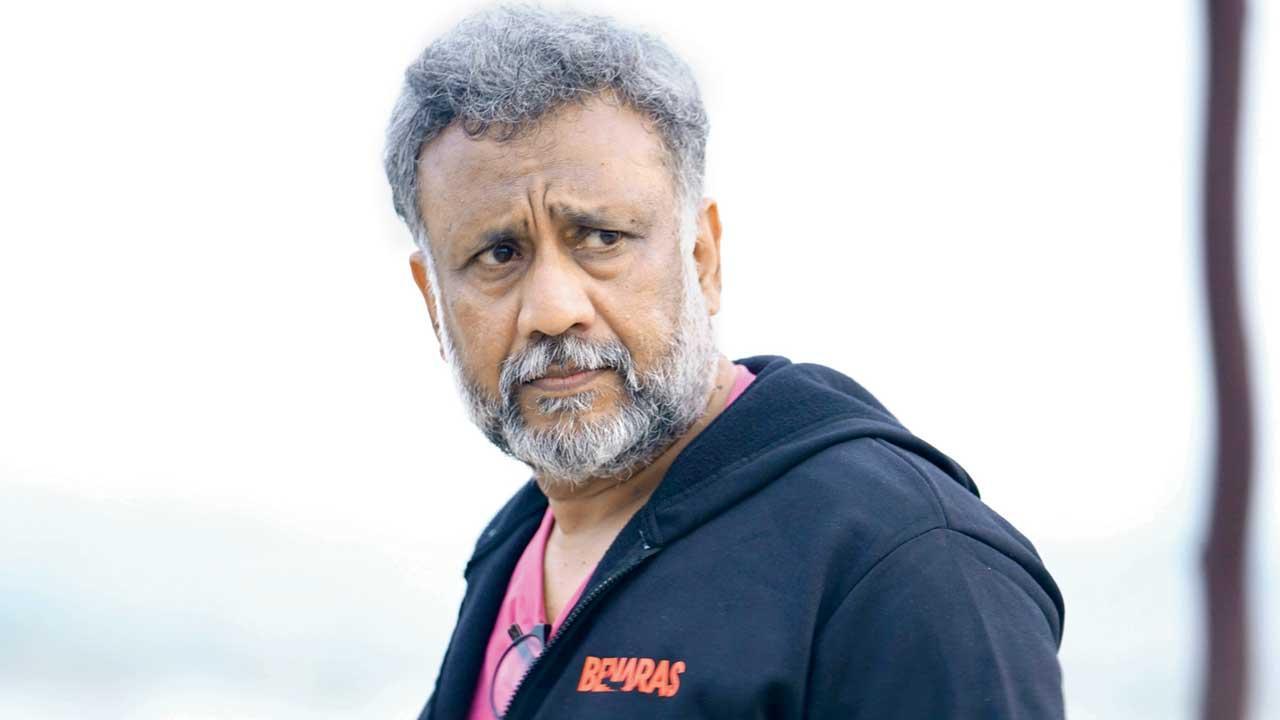
Niharika Lal (BOMBAY TIMES; December 16, 2024)
Anubhav Sinha ko gussa kyun aata hai? When former IPS officer Aloke Lal recently posed this question to the filmmaker during a conversation about his films at the Crime Literature Festival in Dehradun, Anubhav shared an anecdote. He revealed that a senior filmmaker had recently advised him to “be less angry” and make lighter films.
He said, “I know I’m that irritating man (who points out issues). I’d love to make funny films; I’d love to not see all this (the problems in society), but I don’t know how not to see all of this. I’d love to not see it.” He later added, “If you look at my films, they all complain (about the issues in our society), and all of these films end on a note of hope.”
‘I DON’T BELIEVE THAT FILMS SHOW A MIRROR TO SOCIETY’
Discussing Article 15, Aloke Lal told Anubhav, “When I was SP Barabanki, I distinctly recall the road shown in Article 15. In fact, the scene where Ayushmann’s character joins as ASP and is clueless about the caste system – that aspect of the film resonated with me. Do you think Article 15 and your other socially relevant films have an impact on society?”
Anubhav responded, “Personally, I think that when we make such films, they have no significant impact on society. People watch a film, discuss it for a while, and then forget all about it. I don’t believe that films show a mirror to society. All that films can do is trigger a discussion.”
‘Mulk is a love story’
Anubhav shared that he has travelled a lot, and visited many countries, and found that there is no country in the world equal to India. He said, “Mujhe lagta hai ki ye duniya ka sabse behtareen mulk hai, uske baad bhi agar aap meri pichhli paanch filmein dekhein toh kaafi shikayatein hain. So I asked myself, ‘Tu shikayatein bahut karta hai.’ And then I thought that we also have complaints against our father, against our mother, against our school.”
He elaborated, “Hum Amitabh Bachchan ko dekh kar bade hue hain. Toh hum woh brooding lover hain jo ishq ka izhaar kam karte hain aur bolte hain – arey, pyaar toh hai, toh baar-baar batana kya?”
Talking about Mulk, Anubhav said, “When Mulk was being released, I said that it is a love story. It’s a love story between Hindus and Muslims – and in love stories, people fight.”
Exhibitors told me ‘Who will see a film about people who don’t look like them?’-Anubhav Sinha
4:01 PM
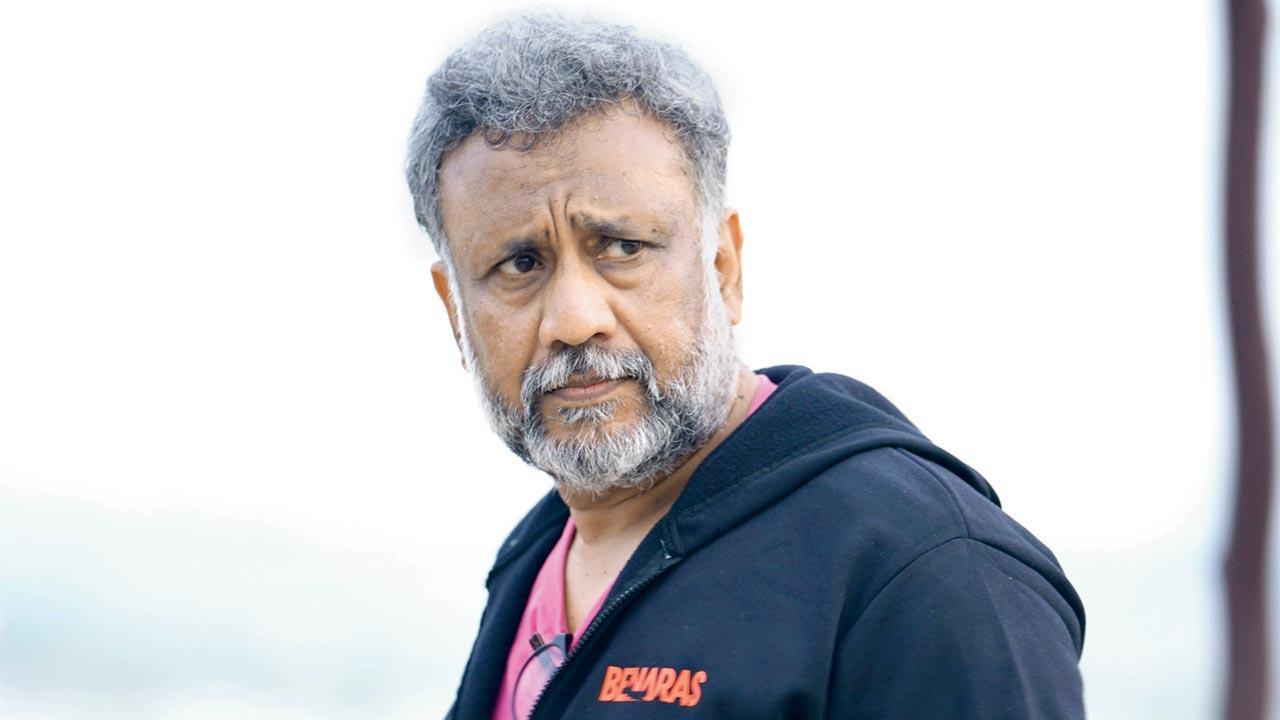
Upset about Anek’s underwhelming run, director Sinha says he had a nagging feeling that mainstream audience wasn’t ready to see north-east actors on screen
Mohar Basu (MID-DAY; June 28, 2022)
With Mulk (2017), Article 15 (2019) and Thappad (2020), Anubhav Sinha married content and commerce. But his hot streak stood broken with Ayushmann Khurrana and Andrea Kevichusa-starrer Anek. When we sit down to chat with the filmmaker, that’s where we begin. “When I made Anek, no one was questioning me. I had three back-to-back successes, so everyone felt I knew something. That isn’t true. Nobody knows anything. When I told Ayushmann the story, he lobbied for it. I wanted to do another film first, but everyone liked this project more,” he says.
Walking into the film that champions inclusivity, Sinha worried whether the mainstream audience would accept north-east actors on screen. “I had the nagging feeling that mainstream India will be put off looking at faces they are not used to. The Hindi accent [used] is not regular either. Within four days of releasing the film, I was in Istanbul with an acclaimed political journalist. He said the reason you made the film is the very reason the [audience] isn’t watching it. It broke my heart further. When I spoke to exhibitors, they said, ‘Who will see a film about people who don’t look like them?’”
Confident of his material, the filmmaker states that a good film always lives on. “It has dropped on Netflix, so it will find more viewers.”
The movie’s political leaning could be a deterrent at a time when the language of Hindi cinema is changing amid the saffron wave. But Sinha believes a movie about mainland authoritarianism should find takers. “The mainland thinks they are India. But I chose the north-east to tell that story. Starting from Mulk to Article 15, there were questionable scenes from the point of view of the State. I am not referring to the current regime, but to the State in general. The CBFC, however, has always been kind to me.”
Anek’s underwhelming response, fortunately, hasn’t shaken Sinha’s belief in his stories. His production house is backing several powerful movies — from Bheed to Hansal Mehta’s Faraaz, from Sudhir Mishra’s Afwaah to an anthology. “I am trying to find a different formula for theatrical release. A film like Faraaz or even Anek is not playing the same game as say, a Bhool Bhulaiyaa 2. I am working on a formula whereby films shouldn’t be denied the opportunity of being in theatres because that’s where the captive audience is. That captivity is a choice at home. It shouldn’t be denied to a film.”
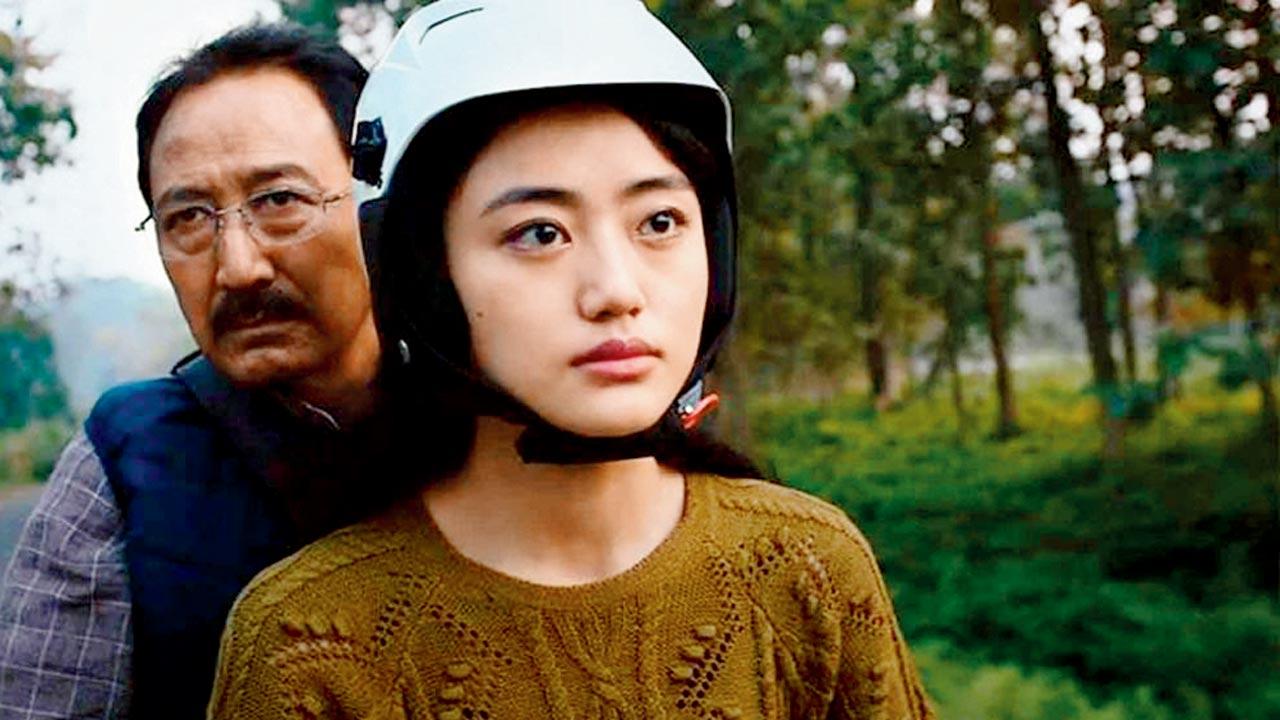
Anubhav Sinha knows how to channel the best in me-Taapsee Pannu
8:37 AM
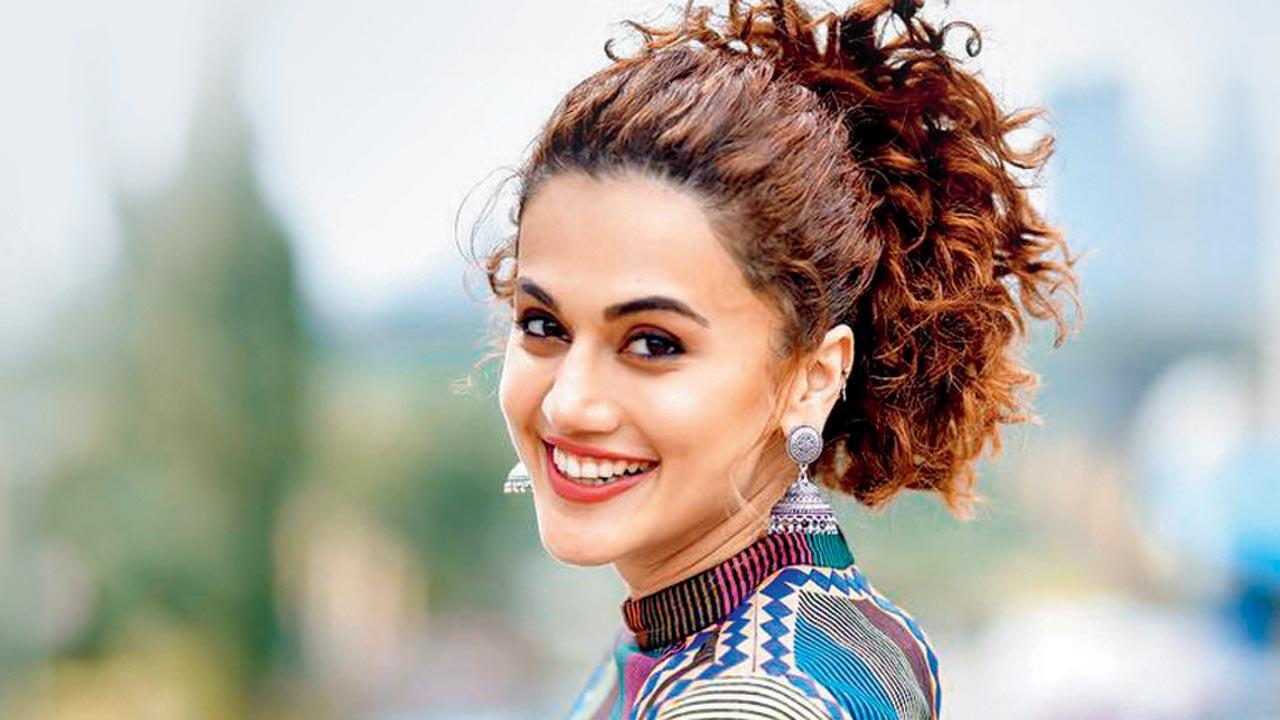
After Mulk and Thappad, Taapsee reunites with Sinha for anthology set against the pandemic; to lead Sudhir Mishra’s socio-political short film
Mohar Basu (MID-DAY; February 25, 2022)
Last July, Anubhav Sinha announced that he is bringing together prolific filmmakers Sudhir Mishra, Hansal Mehta, Ketan Mehta and Subhash Kapoor for an anthology film set against the backdrop of the Coronavirus pandemic. Among the first to get locked is Mishra’s short film, which will be headlined by Taapsee Pannu. For the actor, the project is a perfect blend of the old and the new — where she has teamed up with Sinha on Mulk (2018) and Thappad (2020), the anthology marks her first collaboration with Mishra.
Pannu, known to straddle diverse genres, is happy to tick one more off her list. “It’s a socio-political drama that spans across two generations. I couldn’t be more thrilled to be working with Sudhir sir who is solid with his craft,” she says. Working under Sinha’s banner is a homecoming of sorts for her. “Anubhav sir knows how to channel the best in me. Being surrounded by such masterful filmmakers is a blessed experience.”
The pandemic has been a grim reminder of the uncertainty of life. When Mishra sat down to develop a human drama set against one of the biggest challenges faced by mankind, he found himself concentrating on the idea of being young, and how one generation passes the baton to the next. “Personally, this is one of those stories that leave an indelible mark. I couldn’t have asked for a better team to bring it to life with. Taapsee is one of the finest artistes of today’s times. Her spirit will elevate the film,” says the director. This will be his second venture with Sinha after the recently announced Afwaah.
For Sinha, whose banner Benaras Media Works is producing the anthology with T-Series, the project is an attempt to understand the myriad emotions we went through in the past two years, seen through the lenses of five filmmakers. “It’s a layered narrative about human relationships. Taapsee is perceptive; she infuses a lived-in experience into her roles, making the story even more relatable,” he says, while Bhushan Kumar describes Mishra’s directorial venture as “one of the most stirring stories I have read in recent times.”
Rishi Kapoor was upset & wondered why I wouldn’t have a drink being a Punjabi myself-Taapsee Pannu
8:20 AM

Legendary actor Rishi Kapoor’s family, friends and colleagues remembered fond memories of the actor on his first death anniversary yesterday. BT spoke to one of his younger co-stars, Taapsee Pannu, about the bond she shared with him
Onkar Kulkarni (BOMBAY TIMES; May 1, 2021)
Taapsee Pannu stepped into Bollywood in 2013 with Chashme Baddoor. The film had her sharing screen space with veteran actor Rishi Kapoor. While he had decades of experience behind him, Taapsee had mostly done few films down South back then. But, the two common things between them were that they belonged to big Punjabi families and loved food. While Chashme Baddoor was a breezy comedy, years later, the two worked together again in the intense film, Mulk (2018), which was directed by Anubhav Sinha. The film won them both immense appreciation and applause. While there was a gap of five years between the two films, what hadn’t changed was the bond between the two actors. In a conversation with BT, Taapsee reminisces his words of wisdom to her and the banter they shared. Excerpts:
‘SINCE I HAIL FROM A PUNJABI FAMILY, I GOT USED TO WORKING WITH RISHI JI PRETTY SOON’
The first time I met Rishi Kapoor was on the sets of Chashme Baddoor. My first reaction on seeing him was different from the one I had on seeing other veteran or senior actors. He was this big Punjabi man and had intimidating energy. On meeting me, he immediately asked me my name. He said, ‘I was told that you are a Sardarni, but your name doesn’t sound like one’. I told him that he would have to complain to my parents regarding that (laughs!).
He laughed and the next thing he asked me was the number of films I had done down South. I told him that I had acted in 10 movies. Then, he looked at David sir (David Dhawan, director of Chashme Baddoor) and said, ‘She is a veteran! She is not a newcomer and this is not her first film.’
Since I hail from a Punjabi family, I got used to him pretty soon because, as I mentioned earlier, he is like this typical Punjabi man who talks loudly. My family is full of such high-pitched Punjabi people. So, it was a fun ride shooting Chashme Baddoor and Mulk with him.

‘RISHI JI HAD A VERY HONEST AURA AROUND HIM’
He wouldn’t sugar coat things and would treat everyone as an equal. Regardless of your age or your position, he would give his honest opinion, so you didn’t need to second guess what he felt. This way, it becomes easy to understand your co-star. It really helped me during Mulk. Whatever he felt, whether it was good or bad, he just made it clear. He had a very honest aura around him.
I think we established a certain bond, because he was really sweet to me. His way of complimenting wasn’t regular (laughs!). Whenever he did that, you wondered if it was a compliment or a scolding. He did compliment me on my choice of films and my work. Though he was such a big star and hailed from a legendary family, it never felt like he was inaccessible or I couldn’t talk to him if I felt like. I was an outsider who was totally inexperienced in comparison to what he had achieved. But still, it just felt like he was a part of my extended family.
‘THERE USED TO BE CONSTANT BANTER BETWEEN US’
One of the things we bonded over was food. He used to enjoy recommending food and I enjoyed giving him feedback. The other thing he loved was his drink in the evenings. He was really upset and wondered why I wouldn’t have it being a Punjabi myself. This used to be a topic of constant banter between us.
There are many lessons that I learnt from him. One that stayed with me was what he taught me when we sat at the breakfast table during the shooting of Mulk. He said that one must always keep their personal and professional life apart. He said, ‘Never let your personal life get into your professional work, because that will affect you in the long run. You won’t be able to complain about it to anyone, because it is your own fault, and you will probably end up feeling guilty. So, always be mindful of your professional life to be different from your personal equation with people.’ He didn’t say it in these many words, but did share examples where getting personal equations in professional space damaged a lot of things.

I want to look back and say that I made my mamma proud-Prateik Babbar
8:09 AM

Rachana Dubey (BOMBAY TIMES; February 11, 2021)

“This is going to be work-in-progress for me till my last breath. I am fortunate and grateful to have arrived at this point where I can focus on my craft. And it’s been a journey to get here. It’s a hustle which never stops. The journey is ongoing. What saved me from drowning mentally and emotionally, and I say saved, because I thought everything was over for me and my career was done with, was the love and passion for the arts,” he says.
“I missed it all and I started chasing it again about two-three years ago. It’s been a rocky road for me, but I am hanging in there like a rock, chin-up and looking forward to a bright future,” says Prateik.
Talking about the time when the realisation kicked in, the actor adds, “It must have been 2016-17, when I went clean of alcohol and drugs for a few months in a row. I could think with a clear head. That’s when I started missing my work. It was something I needed for my soul and that is when I started picking up different kinds of roles. I rebooted myself with plays and short films. I did things for no money at all, at times. I did things for free for people to just remember that I exist and I haven’t left the stage yet. I had to test the waters again. Once I did that, there was no looking back. One show, one movie led to another with Mulk (2018), Baaghi 2 (2018) and Chhichhore (2019). It was gradual.”
When asked about the responsibility of living up to his mother, the legendary actress Smita Patil’s name, Prateik, soaked in emotions, says, “Yes, I do feel a sense of responsibility to live up to my mother’s legacy. People may see that as a burden, but I will not call it that. If it’s seen as a weight on my shoulders, I’d say it’s one that I am proud of. I will carry it till my last breath with absolute pride. My mother was a magical woman, who did magical things in a shortlived career and life. She touched way too many people and she is a part of our country’s cinema heritage. I am honoured and fortunate to be her son. It will be an honour to be able to live up to her name, and if I can be a little reflection of her.”
He further shares, “I am trying my best to make her proud. That’s the reason I am here. I wish I could be a little like her. I wish I can make her parents, my aunt and myself feel a little content in saying one day that this magical woman was my mother. One day, when I am old and frail, I want to be able to look back and say that I really did what I could to make my mamma proud.”

I think OTT, cinema halls, television and radio will coexist-Anubhav Sinha
8:33 AM

Shamayita C (BOMBAY TIMES; January 12, 2021)

You travelled to another city in the middle of the Coronavirus pandemic to be a part of a physical film festival. How does it feel?
I am very happy to be in Kolkata. Though the vaccine is about to roll out, things will not get back to normal overnight. So, what we need to do is take good care of ourselves, always wear masks and use sanitisers.
While cinema halls struggle to bring the audience back to the theatres, a lot of films are being released online. How do you think this impacts the industry?
When television was launched, people asked if that would take away from cinema’s craze. Now OTT is here. But cinema is cinema, you know. It is not just about watching a certain content and story. It is also about the experience of watching it collectively. So I think, OTT, cinema halls, television, radio — all of these will coexist.
Your film Mulk was screened at this festival.If you had to choose one of your films for the screening, which one would that be?
My last three films (Mulk, Article 15 and Thappad) are also the most talked about films of my career and Thappad is my most favourite. Though it did not appear so, it was a very difficult film. In fact, all three were difficult because they were swimming against the tide, at least the perceived tide.
Article 15 put the spotlight on the issue of discrimination on the basis of caste. A subject that’s rarely tackled in our mainstream cinema.
Mainstream cinema doesn’t talk much about the caste discrimination prevalent in our society. With Article 15, it turned into a mainstream conversation. Even kids from posh neighbourhoods started talking about it. Now, whenever a caste-based incident takes place in our country, they can relate to it.
I think Rishi Kapoor didn’t celebrate his performance in Mulk as much as he should have-Anubhav Sinha
8:40 AM

On the second anniversary of Mulk, the filmmaker says that he still can’t think of anyone who could have pulled off the role of Murad Ali Mohammed better than Rishi Kapoor
Itishree Misra (BOMBAY TIMES; August 4, 2020)
 It’s been two years since the release of Mulk, a film that Anubhav Sinha said marked his rebirth as a filmmaker. The story of a Muslim family trying to fight prejudice and regain their honour after a family member turns into a terrorist, the film had Rishi Kapoor and Taapsee Pannu in pivotal roles. The late Rishi Kapoor’s role of Murad Ali Mohammed in the film has been called one of his best performances, and Sinha says that he still can’t think of any other actor who could have pulled it off. On Mulk’s second anniversary, we talk to the director about Rishi Kapoor and the life he put into the character of Murad:
How did you come to cast Rishi Kapoor in the film?
I had never met Rishi Kapoor ji, a friend took me to meet him. Before I met him, I was wondering... pata nahi role karenge ki nahi. But surprisingly, when he heard the story, he really liked the idea and agreed to do the film. I still do not know whom I could have cast as Murad Ali had Chintu ji not done it. It’s impossible for me to think of anyone else in that role. It was written for him and was done brilliantly by him. I wanted a person who looked very vulnerable, endearing and at the same time, very courageous when the situation demanded it. Someone you would want to stand up for, someone you would love. The moment I conceived the character, the first name that came to my mind was of Amitabh Bachchan. But then, I thought that he won’t look defeated. Then slowly, it shifted to Rishi Kapoor. And by the time I had finished writing, I knew that it had to be him.
Rishi Kapoor made Murad Ali Mohammed a very believable character...
Rishi ji was always very nonchalant about his work. I think Rishi Kapoor didn’t celebrate his performance in Mulk as much as he should have. It’s certainly one of his best, if not the best performance. He was never like... maine kya badhiya kaam kiya. He was very casual about his stardom and acting. He had lived all his life being Prithviraj Kapoor’s grandson and Raj Kapoor’s son, so it had become very routine for him.
Reportedly, it would take him three hours for the make-up and prosthetics and another hour to get it off. He didn’t mind that?
I remember we were shooting in Lucknow in October-November and it was unusually hot for that time of the year. He would crib ki, ‘mujhe garmi lag rahi hai, ab mein aur shoot nahi karunga’, but he would still continue to shoot.
In an interview to us, Rishi Kapoor had said that it was the toughest role that he had ever played and he couldn’t ever imagine being cast in that role...
It was that endearing personality of his caught in that bizarre situation that reminded me of Balraj Sahni saheb in Garm Hava (1974). That distraught character, torn between choices, no support system, that’s the same vulnerability that Rishi ji brought into the character of Murad Ali, and that’s why his performance always reminded me of Balraj Sahini’s.
I hope to shoot Ayushmann Khurrana’s film in December-Anubhav Sinha
8:35 AM

A month before, Anubhav Sinha to film a short on pandemic; remembers Rishi on Mulk’s anniversary
Roshmila Bhattacharya (MUMBAI MIRROR; August 3, 2020)
 Anubhav Sinha plans to get back to action in November with a 25-minute short, part of a five-film anthology on the common theme of the Coronavirus pandemic. It will be helmed by five directors in Maharashtra, Gujarat, Goa and Delhi. While Hansal Mehta’s film is dark and funny, Sudhir Mishra’s is a social with political undertones and Subhash Kapoor’s has elements of science-fiction. Ketan Mehta is yet to finalise his subject but Anubhav’s film is about how the pandemic started out as a rich man’s disease with only those who had been to Italy and China at risk, but has now resulted in a clear class divide. “The rich are safe in their homes, five-star hotels and private hospitals while the poor struggle to survive,” he rues. Born out of regular phone conversations with filmmaker-friends, the project aims to chronicle these unusual times.
In December, he expects to roll with the Ayushmann Khurrana-starrer which was to flag off in April. “The film will be shot in a nearby jungle. I hope a vaccine finds its way to Mumbai by then because I hate talking through a mask and no matter how much we pretend, most directors are incorrigibly indisciplined,” asserts the filmmaker who has been working on two other scripts through the lockdown, one alone, the other with Thappad co-writer, Mrunmayee Lagoo. Will either of them reunite him with Taapsee Pannu? “Taapsee is a habit and I may have something for her, but she has to like it too,” he says.
Today is the second anniversary of Mulk, which featured Rishi Kapoor, Taapsee and Rajat Kapoor in the lead. Anubhav recalls going to meet Rishi nervously for the role of Murad Ali Mohammed. He was Immediately thrown off when the veteran actor looked pointedly at his script and asked, “Pura sunayenge?” He agreed to do the film after a 15-minute narration, wondering curiously, “Hero kaun hai?” This time Anubhav surprised him, saying, “You are.”
It was a struggle getting finance, but Mulk finally rolled in October 2017, in Lucknow. As he was setting up the second shot, the director noticed his ‘hero’ observing him with a smile. When prodded, Rishi admitted he was wondering if he was old school or like some new-age directors, taking the shot from 15 angles. Anubhav smiled back, “I’m somewhere in between the two.” Anubhav himself wondered if Rishi was anything like his uncle, Shammi, with whom he’d done his first TV serial, Shikast, and discovered the two Kapoors shared a passion for food and had the same flamboyance.
“Both were born stars—one in the home of Prithviraj Kapoor, the other in Raj Kapoor’s—and instinctive actors who didn’t believe in too much discussion. Chintu ji would simply insist I explain the scene to him before the shot and observe me carefully while I spoke. From that he’d deduce what I wanted,” reminisces Anubhav.
They finished Mulk in 27 days but even after the final shot was taken on November 9, “Chintu ji wasn’t convinced the film was over and insisted I keep 10 days as a back-up. Then, one day my CFO came to me asking if I had some shooting left, saying Chintu ji had allotted dates between January 5 and 15, 2018,” he recounts with a smile. “During the censor screening, Chintu ji was on tenterhooks, calling every 30 seconds for an update, afraid Mulk would be banned. After a 90-minute discussion, when I stepped out with a U/A certificate and told him so, he repeated in disbelief, ‘You mean picture release hogi!’”
 The film opened on August 3, 2018, to rave reviews. Soon after, Rishi was diagnosed with cancer and went away to the US for treatment. “On his return, we met at the Bachchans’ Diwali party. I ran to hug him little knowing that he’d go away so soon. I had planned many more movies with him,” Anubhav sighs.
 Social distancing on a set is an oxymoron; it won’t happen-Anubhav Sinha
8:35 AM

Anubhav Sinha, whose next with Ayushmann Khurrana was to kick off in April, says he is not bullish about returning to sets soon
Himesh Mankad (MUMBAI MIRROR; July 9, 2020)
 Since the last three months, Anubhav Sinha’s Instagram account has been full of food posts. Aloo matar, noodles, falafel, hummus, Turkish menemen… He interrupts you with a laugh, “It’s stopped now. I found out that my weight had ballooned to 106 kg and fled from cooking. Now, it’s only diet food.” A self-confessed foodie, the director has always enjoyed pottering around the kitchen, but his busy work schedule kept him away. He re-discovered both cooking and reading during the Coronavirus-triggered lockdown. “I can finish a book in two to three days and read five-six in the last few months, including some on Indian history. I promise to find more time for things outside of work now. I’m also focused on my fitness, but not doing anything about it,” he jokes.
While cooped up at home, Anubhav also virtually connected with some filmmaker friends, including Anurag Kashyap, Hansal Mehta, Sudhir Mishra, Subhash Kapoor, Vishal Bhardwaj and Ketan Mehta. They discussed current affairs and concepts for films, shared feedback on trailers, read each other’s scripts and even spoke about wanting to work together. “It will happen someday,” he avers, adding that for now, Hansal has a fresh perspective on something he is pondering over. “I may not agree with him, but it makes me think along different lines.”
 In the last two years, Anubhav has made a mark with three hard-hitting films — Mulk, Article 15 and Thappad — which had people discussing issues like casteism, communalism and sexism. Would he make any of them differently today? “It’s too soon to say, since I’ve just made these films. There may be some technical changes, but not in the interpretation of the material,” he says.
Interestingly, despite being a workaholic, Anubhav doesn’t miss being on the set. “I have been relentless these past three decades. I’ve fallen, stood up and fallen again. When you make the biggest film in the history of Bollywood, Ra.One, and get so much flak, it drains you… haunts you for years. I was exhausted physically and emotionally. So, I am actually happy doing nothing,” he maintains.
Since the release of the Shah Rukh Khan-led superhero film, Anubhav hasn’t made a big-scale commercial film. Instead, he shifted to realistic cinema. Are there plans to embrace the mainstream again? “I’m sure, I will make another superhero film before I retire. I want the circle to be complete, but it does not necessarily mean a Ra.One sequel. I want to make a big superhero film and I will. I owe it to myself, but not in the next four-five years,” he is quick to add.
For now, he teams up with Ayushmann Khurrana again after Article 15 for a yet-untitled political thriller, which was to roll in April. “My next is very new and different from what I have done in the past, an interesting combo of my previous work but with a larger canvas. It’s a bigger film in its scope and what it can change,” he keeps it short.
Anubhav has been working on four-five scripts, but has yet to decide on the cast. “Earlier, I would think of an idea and decide the cast immediately, I don’t work that way anymore,” he says. With the film industry opening up for shoots, when does he plan to kick off the project? “I’m not bullish about shooting soon. For the next year-and-a-half, shoots will become slower and at least 20 per cent more expensive since a lot of money will be spent on protecting the people who work with you. Social distancing on a film set is an oxymoron. It can’t happen, it won’t happen. We can keep lying to ourselves though,” he retorts.
I wondered why Rishi Kapoor won the Filmfare award for Best Actor only once-Pritish Nandy
8:04 AM

Remembering the actor who went from a teen heartthrob to one of Hindi cinema’s finest
Pritish Nandy (MUMBAI MIRROR; May 1, 2020)
 Rishi Kapoor was a clever, witty man always ready to discover a repartee even when there was no reason for one. He enjoyed the art of one-upmanship, particularly when it came to conversations. And yet bonhomie was not just part of his craft as an actor, it was second nature for him.
Rishi entered movies a decade before I came to this city. It was 1973 and his father, the legendary Raj Kapoor, launched him opposite a stunningly beautiful Dimple Kapadia in a teenage romance called Bobby which he directed on the basis of a flimsy K A Abbas story that went on to become the year’s biggest hit-- and the second biggest hit of the seventies. Adjusted for inflation, Bobby is still one of the twenty biggest hits of Hindi cinema.
In the same year, another young man who also started his career with a K A Abbas film, found his defining role in a Salim-Javed scripted actioner called Zanjeer that went on to become a big hit. Though Zanjeer collected much less at the box office than Bobby, it launched a new trend for action movies that made Amitabh Bachchan the popular star he soon became. So, 1973 was the year when both the hottest teenage romance and the Angry Young Man hit the ground running. A decade later, when I took charge of Filmfare, they were both at the top of their careers. The critics swore by Rishi. But Amitabh had an unparalleled fan club that ensured the focus never shifted from him.
They worked together in quite a few films, most famously in Manmohan Desai’s Amar Akbar Anthony, Naseeb and Coolie. And then 36 years later, I watched them together in 102 Not Out. It wasn’t much of a film but the two of them were a riot together. Curiously, over the years while Amitabh got embroiled in controversies, in movies as much as in politics, Rishi stayed away from the limelight and continued to build his repertoire of remarkable roles. He chose few and he chose wisely, and his reputation as an amazing actor kept growing.
The last film of his that I watched and loved was Mulk. It was about a Muslim family trying desperately hard to reclaim its lost honour when one of its members is accused of being involved in terrorism. Rishi’s was a compelling act and, as I watched the film mesmerised by his performance, I wondered why he won the Filmfare award for Best Actor only once and that too for his debut film 46 years ago. He was an actor who deserved many more. But then, as Rishi once asked me over a long phone conversation, are all Best Actor Awards really meant for best actors or only big stars who get their fan clubs to vote en masse? I really had no answer for him then. I still don’t have one today. But yes, I would have loved him to win the Filmfare Best Actor Award for Mulk.
He was always one for the ages. The romantic teenager who stole our hearts eventually turned into one of our finest actors, one who will be forever remembered for the roles he made so memorable. There are some things that even the Grim Reaper cannot take away from us.

Kabir Singh's popularity is evidence that most people subscribe to abusive relations-Anubhav Sinha
7:59 AM
Even as he tackles gender imbalance in marriages with Thappad, Anubhav Sinha says cannot turn blind eye to people’s preferences when considering success of films like Kabir Singh
Sonia Lulla (MID-DAY; February 28, 2020)
With commercial offerings like Dus, Cash and Ra. One on his resume, Anubhav Sinha, the man better remembered for newer offerings including Mulk, Article 15 and today’s release, Thappad, has been abundantly asked about the trigger point that inspired the change in his choice of film subject. “I know something has dramatically changed, but I don’t know what it is. I haven’t had the time for introspection. Perhaps, a year or two later, I’ll take time off and write a book about it,” he jokes, adding that for him, the most noticeable difference is how earnest he is today as a filmmaker. “I’ve become loyal to the reason behind making the film. That reflects in the writing, casting, shooting, and promotional work,” says Sinha, who has acquired positive reactions from fans and critics alike.
Bang in the middle of shooting for the Taapsee Pannu starrer that tackles gender imbalance in marriages, the makers had been witness to the mammoth reception that Shahid Kapoor’s 2019 release Kabir Singh garnered. Helmed by creators who justified violence in relationships by calling it a sign of love, the film seemed to fly in the face of everything they stood for. But, Sinha says he didn’t tweak Thappad’s narrative in the wake of people’s reactions. “I haven’t seen [Kabir Singh], but I’m aware of how popular it is, and that goes to show that there’s a large section that subscribes to that kind of a relationship. We won’t respect the violence, but we must acknowledge that such a large number is happy to entertain a relationship like that.”
He finds his victory in the way the male audience has reacted to his offering. “They’ve thanked me for making it. Some have even said they needed to apologise to their [partners] for things they’ve done. That is inspiring.”
Taapsee trends
Two days ahead of the release of Thappad, Twitter was abuzz with the hashtag #BoycottThappad. Netizens had been calling for a ban of the film owing to leading lady Pannu’s involvement in an anti- CAA protest. In January, she had joined a peaceful protest at Carter Road in Mumbai, supporting students of Jawaharlal Nehru University, who were attacked by a masked mob in January. Trolls compared her to Deepika Padukone
Sonia Lulla (MID-DAY; February 28, 2020)
With commercial offerings like Dus, Cash and Ra. One on his resume, Anubhav Sinha, the man better remembered for newer offerings including Mulk, Article 15 and today’s release, Thappad, has been abundantly asked about the trigger point that inspired the change in his choice of film subject. “I know something has dramatically changed, but I don’t know what it is. I haven’t had the time for introspection. Perhaps, a year or two later, I’ll take time off and write a book about it,” he jokes, adding that for him, the most noticeable difference is how earnest he is today as a filmmaker. “I’ve become loyal to the reason behind making the film. That reflects in the writing, casting, shooting, and promotional work,” says Sinha, who has acquired positive reactions from fans and critics alike.
Bang in the middle of shooting for the Taapsee Pannu starrer that tackles gender imbalance in marriages, the makers had been witness to the mammoth reception that Shahid Kapoor’s 2019 release Kabir Singh garnered. Helmed by creators who justified violence in relationships by calling it a sign of love, the film seemed to fly in the face of everything they stood for. But, Sinha says he didn’t tweak Thappad’s narrative in the wake of people’s reactions. “I haven’t seen [Kabir Singh], but I’m aware of how popular it is, and that goes to show that there’s a large section that subscribes to that kind of a relationship. We won’t respect the violence, but we must acknowledge that such a large number is happy to entertain a relationship like that.”
He finds his victory in the way the male audience has reacted to his offering. “They’ve thanked me for making it. Some have even said they needed to apologise to their [partners] for things they’ve done. That is inspiring.”
Taapsee trends
Two days ahead of the release of Thappad, Twitter was abuzz with the hashtag #BoycottThappad. Netizens had been calling for a ban of the film owing to leading lady Pannu’s involvement in an anti- CAA protest. In January, she had joined a peaceful protest at Carter Road in Mumbai, supporting students of Jawaharlal Nehru University, who were attacked by a masked mob in January. Trolls compared her to Deepika Padukone
I tell people to not take me too seriously-Anubhav Sinha
8:16 AM

Kavita Awaasthi (HINDUSTAN TIMES; February 26, 2020)
After his last two releases — Mulk (2018) and Article 15 (2019) — filmmaker Anubhav Sinha admits that a lot is riding on his latest release, the Taapsee Pannu-starrer, Thappad. Sinha points out that since his last two releases, which were thought-provoking, relevant and insightful, there are a lot of expectations from him and he is learning how to handle it. “It is scary and I don’t like pressure at all. I tell people to not take me too seriously,” he says, adding that labels like 2.0 version (of Anubhav Sinha) amuse him. “They asked me to make a sequel of Ra.One so many times that I ended up making a sequel of myself,” quips the filmmaker who directed the Shah Rukh Khan-starrer in 2011.
Talking about his experience of working with Taapsee, for the second time after Mulk, Sinha says, “When you spend time with a person, you learn more about the person, and you develop a chemistry. Of course, I know her better as an actor and as a person today, and I feel that when you know an actor better, chances are that you will deliver better results together. Taapsee is selfless and transparent as an actor. She doesn’t want you to find any Taapsee in the movie, just the character. That is charming about her.”
Thappad is a film about a woman’s self-respect, their conditioning and our society. With this film, Sinha attempts to bring forth topics like self-respect and the dignity of women and turn it into a discussion. He says, “If a film stays with you after you leave the theatre, and it leaves you with some questions about yourself and society, then that’s the maximum a film can do. What the audience does with those questions is up to them, and I have no control over that. All I can do is quietly slide in some questions into your pocket and the rest is up to the audiences and who you are.”
This year, he will have three film releases including Thappad, Abhi Toh Party Shuru Hui Hai and another one in October. “We will talk about the third one, a little later. I am enjoying this pace of working and I love making movies. I plan to keep this pace on, as long as I can, and I am not getting any younger,” he says.
Earlier, I was only trying to make profitable propositions-Anubhav Sinha
8:56 AM

Anubhav Sinha says he has changed as a filmmaker, choosing to make films that take a stand, even if it is over ‘just one slap’
Roshmila Bhattacharya (MUMBAI MIRROR; February 24, 2020)
 Years ago, a lady, who had taken regular beatings from her award-winning director-husband for 20 years, told me that if a woman did not walk out of the marriage after the first slap, she might never do it. Was the trigger for your upcoming film, Thappad, a story like this?
I’ve heard many such stories, but this one is not rooted in a real incident. It came from a moment of epiphany. I was sitting with Taapsee (Pannu)— we were flying somewhere—and I wondered why we didn’t make films on chhoti chhoti baatein, like an otherwise-perfect husband slapping his wife for the first time and her reaction to it. She pondered over it for a while and told me that if I ever made this film, she wanted to be in it. The thought kept returning to me. Finally, after many additions, I was ready with a story.
How many women know that a single slap can land a man in jail?
Not many. We, particularly women, are clueless about the law in India. And even when informed, there’s so much stigma attached to going to the cops, which is seen as ruining family prestige, that a woman would rather lie than show the husband in a bad light. I know it’s ridiculous because he has violated her self-respect, but women are conditioned to believe that it’s their responsibility to keep the family together. So, while this film is about domestic violence, it is also a trigger to touch on such conditioning through several other female characters, including one who is happy to live without a man because she has had it so good before her husband died.
Self-respect and dignity aren’t usually on top of our priority list. Did you, at any point, try to convince your co-writer, Mrunmayee Lagoo Waikul, to bring in a few clichés to make the premise more acceptable?
(Laughs) Actually, the opposite happened. One day, Mrunmayee told me that Vikram (Taapsee’s husband in the film who hits her, played by Pavail Gulati,) was too good a guy and we needed to make him darker. I asked her if she would forgive her husband, a very sweet man, if he did what Vikram had, and she replied, “Maybe I would, once” and I retorted, “Then, what Amrita (Taapsee’s character) is doing is wrong? The film is wrong?” She assured me it wasn’t. That conversation became a scene in the film between Amrita and her lawyer, Netra. It disturbed me for a few days because my co-writer felt the guy should be forgiven and I didn’t agree with that. But then, I understood that this goes back to the same conditioning we were talking about where women take the blame of confrontation and consequently, don’t want to disturb the balance. But I wanted to disturb this balance; otherwise we normalise such a situation that men would happily live with.
In the credits, your name reads Anubhav Susheela Sinha. Why?
Susheela is my mother’s name. When I was making the so-called commercial blockbusters, she had dismissed them as “bakwas, bas maar peet”. One day, during the post-production of Thappad, I got emotional over a scene and felt that had she been alive, she’d have liked this film and thought to dedicate it to her by taking her name as my middle name. My producer Bhushan Kumar volunteered to do the same, so did several others in the crew.
Would you call yourself a good son, husband and father today?
I’d like to believe I am, but it is not a question for me to answer. At least I am aware of who I am, and I try to better myself.
After Mulk, Article 15 and Thappad, how do you feel when you look back on your earlier films, like Dus, Cash and Ra.One?
(Laughs) I feel I have grown up. Earlier, I was only trying to make profitable propositions. My creativity was limited to how beautiful a film looked and sounded. Today, I am a purist, I make a film because there is a voice I want to raise. I am no longer aiming for a Rs 100-crore box-office, but since a film is a capital-intensive art form, I’ve to ensure that no one loses money, but makes some.
You’re in a good space, given your last two films were hits.
Article 15 was not the first film on casteism, but it brought the discussion into the mainstream. Going by the numbers, there was a sense of urgency to watch it, and that’s encouraging. Money is a heartless commodity, and it loves precedence. Now that my last two films have worked, there is money to invest in films rooted in real issues. It feels like there’s an audience for ‘content cinema’, a term I don’t subscribe to.
Buzz is, you will soon start a ‘highly political drama’, Anek, with Ayushmann Khurrana and Taapsee Pannu…
I’ve read this too, but all that I’m ready to say at this moment is I start shooting a film in April.
Ever wanted to go back to making an action film, like War or Baaghi?
I know my next three films, they are not War or Baaghi. But the idea of a big action film is appealing. Nothing is impossible...
For firebrand Taapsee Pannu, playing a submissive woman in Thappad was tough
8:50 AM

Sangeeta Yadav (HINDUSTAN TIMES; February 23, 2020)
When it’s a Taapsee Pannu movie, one expects that she will pack a powerful punch with her fierce and bold act. The actor hopes that her next film Thappad, which highlights the subject of domestic violence, will help her go beyond her firebrand image and set a new benchmark in acting.
“Thappad is one of the most challenging projects of my career because I carry this image of a firebrand actor. People think that ise koi maarega toh yeh ghumaake maaregi. We were trying to strip off that firebrand image to make her resonate with the average Indian woman who still keeps things to herself and does not fight back. To make my audience believe that I can play a character that is submissive and vulnerable, was tough,” says Taapsee.
Calling it a passion project for her and director Anubhav Sinha, Taapsee recalls how a casual chat led to the making of this film. “During the promotions of Mulk (2018), I was chatting with Anubhav sir and I told him that if I could ask someone to make a film, it'll be on domestic violence. It is very personal to me and I can’t explain why,” she says.
Right after Sinha finished the shooting of Article 15 (2019), he gave her the script and she took it on.
Taapsee says they consciously didn’t add a heavy dose of domestic violence in the film. “We refrained from making it into a film full of excessive domestic violence because then people might disconnect with it, saying ‘Aisa toh hamare ghar mein nahin hota. Upper middle class ya educated logo ke ghar mein nahin hota hai’. But the reality is that it happens everywhere. So it was deliberately kept like that,” says Taapsee.
The actor, who has always played strong characters in films such as Pink (2016), Naam Shabana (2017) and Badla (2019), shares that while shooting for the film, she felt claustrophobic. “I was desperate to come out of the character. When the shoot got over, I didn’t get back to normalcy for 30 days. I had to take a break from work to disconnect,” shares Taapsee, who has her hands full with films such as Haseen Dilruba, Rashmi Rocket, Shabaash Mithu and Looop Lapeta.
I didn’t do anything with the thought that I want to go against society-Neena Gupta
8:15 AM

Rachana Dubey (BOMBAY TIMES; January 20, 2020)
 It took Neena Gupta years of waiting and a social media post to gradually reclaim her place as one India's finest actresses; a point she proved with her performance in the National Award winner, Badhaai Ho. She’s now one of her generation’s busiest actresses. It’s not the screen time that matters to her. It’s what the story is trying to say. Ahead of Panga’s release, she spoke to BT about expressing herself through social media and deriving strength to live life on her own terms. Excerpts...
In an interview, you mentioned that you have a small role in Panga, but you still went ahead and did it. What attracted you to the part?
It’s an important story. The character, though small, is that of a mother and offers an interesting, realistic take. You often hear mothers saying, “Bas, ab hum tere liye kuch nahi karenge.” But, when the need arises, she is the first to jump to her children’s rescue. Yeh aur baat hai ki yeh Jaya ke comeback ki kahani hai; in our country, women are not encouraged to take up sports as a career, especially when it’s something niche like kabaddi, quintessentially known as the guys’ game. That underlying discussion in the film impressed me.
Do you think that not encouraging girls as much towards sports has to do with the societal mindset?
(Cuts in...) It’s a societal thing — a big chunk of society still believes ki ek accha ladka mil jaaye beti ko, haath peele kar dein, bacche ho jaayein, ghar sambhal le. People still think that women are meant for this. In 99 per cent cases, this is the reason a woman doesn’t get the push and encouragement when she needs it. Traditionally, our society has always seen women as homemakers and men as bread-earners. Perhaps, the demarcations are engraved in stone.
But you have never led your life on the basis of these demarcations. Your decisions — whether it was to have a child, get married, or have a career of your choice — have never been dictated by societal norms.
I didn’t do anything with the thought that I want to go against society or bend any rules. This is how I am and in spite of being like that, I pushed my daughter Masaba to get married to her lover, instead of having a live-in relationship. This dichotomy has to do with the way I have been brought up. Even though I did things which were not in accordance with the society’s norms, deep down, I am an orthodox woman. I have changed with the times, lekin khurech ke dekhoge toh, kahin na kahin you will find that orthodox woman inside me. In a way, it’s good because I don’t get carried away with things.
Circumstances are changing for women but it’s scary because men are not changing at the same pace, which can lead to trouble. Women are independent and not taking sh*t from men anymore. When they didn’t have their financial independence, they had to put up with everything the man said. Nahin to kahan jaati woh? That’s not the case now.
It must have been a hard path for you to follow, where do you derive the strength?
From myself! I look after myself, I’m disciplined and honest. I don’t say one thing and do another. You have to put your foot down and reach out for what you want. Life is too short to wait for someone to bring it to you. Today, everyone’s life today is complicated. Nanak dukhiya sab sansar...there’s pain and trouble everywhere you go. I’m happy even with my complicated life. If something untoward happens, I cry for days and weeks, but I move on. It’s not as if I forget my pain, but I move on. It’s a difficult and stressful life that we all lead, but I have learnt to see happiness even in my unhappiness.
Have you passed on some of these lessons to your daughter whose life has been under media scrutiny?
I don’t think I had to pass on these lessons. She’s seen me fighting my own battles throughout. Of course, she is her own person. You know how mothers feel when they see their daughter separating from her husband. At that time, she and I were in pain, but we moved on. Each time that I feel low, I loudly tell myself, ‘Chal aage chal, Neena!’ You have to do that.
Talking about your work, you lend every character, irrespective of screen-time, a certain gravitas. Do you dig deep into your emotional coffers for that?
It comes organically to me. I love acting and I am the happiest when I am playing an interesting character. For me, enacting a part means being in the character’s avatar, feeling the lines that I am saying and listening to the co-actor for actions and reactions. My experiences and observations also come in handy. I make a mental note of things I see and hear around me.
Last year, you won awards for your performance in Badhaai Ho (2018). Did that change your perspective towards your work?
The real difference occurs when people start approaching me with more and better quality of work. That’s the real kick.
You took to social media and wrote to the industry at large, asking for work. That might have seemed odd to many, but do you think that turned things around for you?
Yes, it did. People may have reasons to detest social media, but it gave me a lot. When I wrote that note on my page, and I started meeting people after that, they seemed so moved. They actually felt bad that I could write something like that, sensing the frustration with which I wrote it. Anubhav Sinha was the first to approach me with Mulk (2018). And then, many filmmakers came around and things changed. The last two years have been busy and a lot of fun.
A few months ago, when Saand Ki Aankh was up for release, you again wrote a message on social media, this time about casting older women for older roles. That sparked the ageism debate…
(Laughs!) That statement was taken out of context. Galat samajh liya mujhe. Fact is that there are a lot of roles meant for younger women and far lesser roles for older women. The backstory is that, much before I wrote that post, I had messaged Anurag Kashyap. I had heard that he was making Saand Ki Aankh (2019). I wrote to him saying that it’s a good role for me. He replied saying that even though he would have cast me, the financers wanted younger actors for it. So, it is not me or anyone else who decides these things. So, who am I to take offence? I was only expressing a wish — I meant to say that I wish I could do that film kyunki itne acche roles aur scripts kam aate hain. That was made out to be something else. Bhumi Pednekar and Taapsee Pannu did a fantastic job. Even I did older women roles when I was 28. I’ve been playing older characters for many years. Kya bhool gaye hain sab? Actors find it difficult to get great roles. If I was in Bhumi and Taapsee’s shoes, even I would have jumped at that script. The mistake I made was to put up something that was in my heart on a public platform. You need to be cautious with social media.
You really seem to have taken a liking to social media. Your pictures and videos in a glamourous avatar have surprised many simply because it’s not something that most women in your age-bracket might do.
I was always like this — one moment in a saree and the next moment in a pair of shorts (laughs!). People have not seen me like this because of the work I was doing. Remember, I was playing older characters? I was always clad in saris or salwar suits. Social media has given me a chance to show the world that this is also something that I can do.
Did your daughter, Masaba, have a role to play in this?
Sometimes, I wear Masaba’s creations or take her inputs, and sometimes, I wear my own outfits. Like the yellow dress I wore in the video posted on January 1, is my own. I just believe that there is no harm in flaunting what you know is good about your body. Like I know I don’t have a bikini body, so I won’t flaunt it. The surprise in seeing me in a certain way has to do with years of conditioning.

Mulk ke baad bhi main bas Mulk hi bana raha hoon-Anubhav Sinha
8:11 AM

Niharika Lal (BOMBAY TIMES; December 17, 2019)
 Anubhav Sinha has helmed socially relevant films like Mulk and Article 15 and he has also directed Tum Bin, a full-fledged romantic drama. While interacting with the audience at Jashn-e-Rekhta, Anubhav, who has received death threats and been a punching bag for trolls on social media, said that he believes in not thinking about consequences when there is a story that needs to be told. The filmmaker, who spent a year in Delhi, jobless and trying to figure out what he wanted to do with his life, revealed that it was the trolls who made him realise about the power he had as a filmmaker. Referring to his years before Mulk as a ‘past life’, he also said that being praised for Article 15 prompted him to go into hiding in Kashmir. Besides talking at length about filmmaking, Anubhav also discussed the current situation in the country.
‘I REALISED THAT I HAD THE POWER TO CONTROL WHAT PEOPLE SAW AND THOUGHT ABOUT FOR THREE HOURS’
While talking about how he decided to make Mulk, the filmmaker revealed that it was the Twitter trolls that gave him the push. He said, “Till two years ago, being a filmmaker was my profession. Mulk as a subject is something I felt very strongly about. I used to talk to people on Twitter. Paid trolls mujhse jhagda karte thay, Pakistan ka visa dete thay. It was a useless exercise, and that’s when I realised that as a filmmaker, I had the power to control what people saw and thought about for three hours. And that was when I decided that there should be a purpose to filmmaking, now it’s not just a profession.”
He directed Mulk because he felt strongly about the subject. What is the one piece of advice he would give to budding filmmakers? “Tumhare samaj mein jis baat ko le kar sabse zyada gussa hai usko le kar film banao. Film achhi banegi. Kyunki Mulk ko lekar main bahut naraz tha, phir banayi maine Article 15, woh bhi Mulk hai, next film bhi woh hi hai. Mulk ke baad bhi main bas Mulk hi bana raha hoon,” he answered.
Talking about the reactions he received for Article 15, the filmmaker said, “When I named my film Article 15, people in the industry were wondering, ‘What kind of a name is this for a film?’ But that film did more business than big films, but what’s more important is that Article 15 struck an emotional chord with the audience. People called me up to tell me how much they liked Mulk and Article 15. Usually, when a film is good, they just drop a text. I got so scared with all the praise and love that a few days after the release of Article 15, I went into hiding. Main bhaag gaya tha Kashmir kyunki wahan network nahi hota hai, aur ab toh bilkul hi nahi hota hai. Uska jab status change hua tha usse kuch din pehle hi main Kashmir ho ke aaya tha. That’s the first time I went to Kashmir.”
‘PEOPLE WERE READY TO SLIT MY THROAT FOR `1 LAKH, SO I WAS LIKE I WILL PAY `2 LAKH, DO NOT SLIT MY THROAT’
Before the release of Article 15, Anubhav Sinha received death threats. The filmmaker told the audience that the Police Commissioner of Mumbai had provided him with security a couple of days before the release of Article 15. He joked, “Zubaan kaatne ki dhamki mil rahi thi mujhe. People were ready to slit my throat for Rs 1 lakh, so I was like I will pay Rs 2 lakh, do not slit my throat.”
‘JO LOG MERA BHARAT MAHAAN KE NAARE LAGATE HAIN, MAIN UN SAB SE KAHIN ZYADA APNE DESH SE PYAAR KARTA HOON’
The director is not one to mince his words while expressing his dissatisfaction with where the country is headed. However, Anubhav revealed that his friends and well-wishers stop him from tweeting. When asked why he answered, “Phir aap kahenge siyasi baat kar raha hai. Bol doon?” Many from the audience shouted, “Bol ke lab azaad hain tere.” He paused, and continued, “Kyunki aaj kal virodh mana hai. Aur mujhe virodh pasand hai. Mera desh pareshan hai. Jo log Mera Bharat Mahaan ke naare lagate hain, main unn sab se kayi zyada apne desh se pyaar karta hoon. Log jab sadak par nikalte hain toh mujhe bahut taqleef hoti hai. Jab ek pradesh hum se baat nahi kar pata toh mujhe bahut taqleef hoti hai. Ye mera farz hai, aur yeh mera haq hai ki main uss taqleef ka izhar karoon. Aur woh main karta hoon, aur woh fashionable nahi hai aaj kal. Toh isliye mujhe daant padti hai.”
‘UNTIL I MET SHAH RUKH KHAN, I USED TO THINK I AM THE MOST HARDWORKING GUY ON THE PLANET’
Anubhav Sinha told the audience that after Cash (2007), people stopped answering his calls, and he thought that his career was finished. But then he got a call from Shah Rukh Khan to direct Ra.One (2011). Talking about his equation with Shah Rukh, the director shared, “Shah Rukh isn’t a star. It’s a privilege to know him. I always tell him that I am more interested in getting to know him than making a film with him, because I get to learn so much from him. I love how he’s humble and arrogant at the same time. He has continued to be a middle-class boy even at this stage of his life when he is ‘Shaaaaaaah Rukh Khan’. And until I met him, I used to think I was the most hardworking guy on the planet.”

Naseeruddin Shah recited a nazm for my first TV series-Anubhav Sinha
8:33 AM

Anubhav Sinha recalls after Naseeruddin Shah’s surprise visit on his set in the capital over the weekend
Roshmila Bhattacharya (MUMBAI MIRROR; October 22, 2019)
Last Sunday, Anubhav Sinha had two guests on the sets of his next film, Thappad, which he is not only directing but jointly producing with Bhushan Kumar. One of them, Ravish Kumar, recipient of the 2019 Ramon Magsaysay Award for Journalism, was expected. The two are long-time friends and whenever the journalist is in Mumbai or the filmmaker is in Delhi, they make it a point to catch up. “I told him we were shooting in the capital, on Tolstoy Road, and he dropped by the next day,” recounts Anubhav.
It was the other visitor, Naseeruddin Shah, who took Anubhav by surprise. “It was the last day of the shoot and after ‘pack up’ we retired to a bungalow and discussed everything, from cinema to journalism and the world at large. Many from the team, who had earlier planned to make a quick getaway, hung around because it was a rare ensemble,” he smiles.
The filmmmaker regrets that he has not had a chance to work with Naseer yet despite having known him for three decades. “He recited a nazm by Gulzar saab for my first TV series, Shikast. When we met recently, I told him, ‘Aap mere saath shooting karne aaiye’ and he promised, ‘Jald hi aata hoon,’” Anubhav recounts, saying that now that he is done with Thappad, he is working on some scripts and if he can see a role for the actor in any of them, he will approach him. “If he agrees, it will be a privilege for me to direct him.”
Last year, after watching Mulk, which was about a Muslim family trying to reclaim lost honour after a kin turns to terrorism, Naseer had called Anubhav. “I was shooting for Article 15 at the time, and we spoke for a long time. He loved Mulk and had lots of good things to say about it. I consider that conversation my Oscar. My other Oscar came when Shyam Babu (Benegal) praised Article 15,” he exults. Has Naseer seen Article 15 yet? “No, but when Naseer bhai and Ratna ji (actress Ratna Pathak Shah) have the time, I’ll be happy to arrange a screening for them,” he says.
Meanwhile, he’s happy with the way his women-centric drama has translated on screen. “It’s still being edited, but Thappad is a good script and has a wonderful ensemble cast (Taapsee Pannu, Dia Mirza, Ratna Pathak Shah, Tanvi Azmi, Geetika Vaidya, Maya Sarao, Naila Grewal, Gracy Goswami). Their performances have shaped it into a good film,” he smiles with satisfaction. Point out that after Mulk and Article 15, the pressure is on to pull off a hat-trick and he groans, “There’s too much pressure and I don’t like it. I keep telling people not to take me seriously.”
We’re happy, industry ne ma baap ki izzat rakh li-Manoj Pahwa & Seema Pahwa
8:06 AM
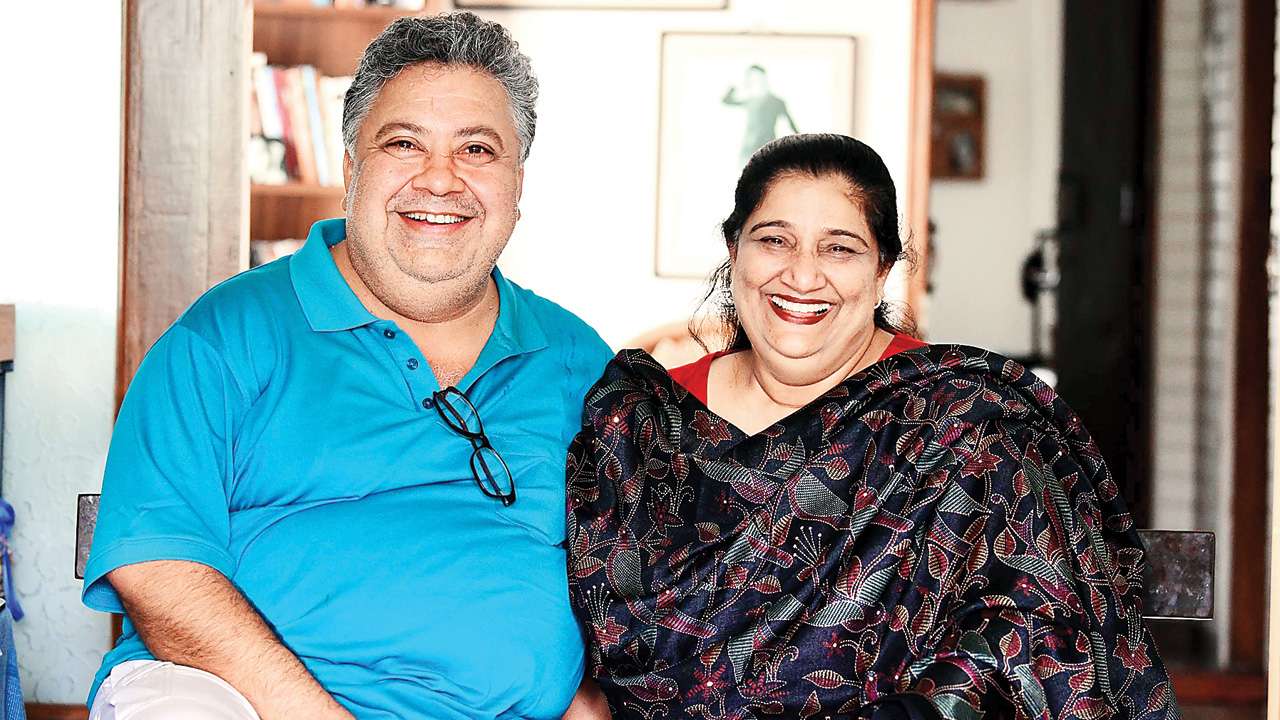
Manoj Pahwa and Seema Pahwa get candid about the appreciation they are receiving for their work
Deepali Singh (DNA; July 22, 2019)
She was a delight to watch as the mother who is obsessed with her daughter’s wedding in 2017’s Bareilly Ki Barfi as well as Shubh Mangal Saavdhan. He was talked about for the poignant portrayal of a Muslim man accused of terrorism, in last year’s Mulk and as a police officer with a dark side in Article 15. But ask Seema Pahwa and Manoj Pahwa if they were pleasantly surprised by the appreciation from the industry and they reply, almost in unison, that they would have, had they not been prepared for it. “Iski taiyyari toh bohot saalon se ho rahi thi,” says Seema with a smile.
The couple met each other in Delhi, where they were part of the same theatre group. While Seema became a household name with her role as Badki in 1985’s popular soap Hum Log, her husband was noted for playing Bhatia in 2001’s comedy show Office Office. Post marriage and two kids, the couple moved to Mumbai in 1994 to continue their work in television, films and theatre. Like Seema says, more than three decades of work has brought them to this juncture.
CONTENT IS KING
The couple attributes their recognition to the kind of films being made now. “Content has become hero now, and when the story takes precedence, then the characters become important,” believes Manoj. The result then is the casting of good actors for those roles. “Ab vaisa daur chal raha hai. In content-driven films, characters ubhar ke aate hain. That’s why films like Bareilly Ki Barfi, Shubh Mangal Saavdhan, Mulk and Article 15 are appreciated,” he states.
While it may not have been a big deal for the Pahwas, Seema is glad that her son Mayank and daughter Manukriti — both National School of Drama grads — saw the appreciation coming their parents’ way. “For years, they had been seeing us work, but nothing much was happening. We’re happy, industry ne ma-baap ki izzat rakh li!” she laughs.
ROLE REVERSAL
Manoj’s last two films saw him in serious and intense roles, while Seema’s recent movies have explored her lighter side. Ironically, such roles were exactly what they were not known for. Seema’s image as the serious Badki was so impactful that once a director turned away from her while narrating a comedy script to her husband! “But we are theatre actors and we have done so many different kinds of roles on stage. It’s just that we got typecast in films that were being made earlier,” reasons Manoj, who has usually been the one making the audience laugh.
The role reversal of sorts has been a pleasant change for them. Of late, directors are approaching them with different kinds of roles. “Now, I am being offered characters that were actually meant for him!” exclaims Seema, citing films like Ferrari Ki Sawaari and Ek Ladki Ko Dekha Toh Aisa Laga, where the roles were originally written as male characters and offered to Manoj. “As long as the money is coming to our house, it’s fine!” Manoj laughs.
SUPPORT FOR EACH OTHER
Over the years, the couple has been each other’s support through thick and thin. What about criticism? “Oh, yes, we don’t share the kind of relationship where you only have to say good things about each other. We discuss each other’s work and if need be, criticise it as well,” shares Seema. “There are some films of mine that neither my wife nor my children are interested in. That’s criticism without even saying a word! There are some that even I don’t tell them about. Bolke gaali thodi khaani hai!” Manoj guffaws.
With both their children into the performing arts too, there are often some healthy discussions over dinner. “They learn from our experience and we also get updated about what appeals to the youth of today. That check is good for us and our experience is valuable for them. God has blessed us with this combination of young artistes and senior actors,” says the doting mother.
The actress is now ready with her directorial debut, Pind Daan, which she has written as well. The cast reads like a who’s who of talent, including Naseeruddin Shah, Konkona Sen Sharma, Vinay Pathak, Supriya Pathak and Vikrant Massey among others. Is Manoj in it as well? “Of course, inko kaise jaane deti!” Seema grins, as Manoj cuts in jokingly, “Maine toh bhaagne ki poori koshish ki thi!”
HONING THEIR CRAFT
Over the years, the couple has also kept its relationship with theatre alive and can often be seen in plays by Naseeruddin Shah’s Motley theatre group. For Manoj, theatre is like a paathshaala, which keeps them refreshed and raring to go, while for Seema, it’s the instant response she gets from the audience which makes being on stage so special for her. Working with a stalwart like Naseer, too, has been a blessing for them. “Where else would we find someone who still corrects us, who can tell us even today that we’re not doing it right? There is still so much to learn and it’s a wonderful process that keeps you on your toes as an actor,” Manoj adds.
While Seema and Manoj are acting in a couple of plays in the ongoing Motleyana Festival at Prithvi Theatre, next Sunday is a Pahwa Special as all four of them are involved in story-readings. Seema will read a story by Ismat Chughtai, Manoj, one by Saadat Hasan Manto and their daughter Manukriti is reading a story written by their son Mayank. “When the brochure came out, I sent my son a picture of the same (Mayank is learning filmmaking in London) and told him he should feel proud of himself. After all, Naseer saab liked the story so much that he’s put it in the same bracket as Ismat and Manto,” says the beaming father.
The Pahwas certainly seem to be enjoying their share of success. And rightly so!
Subscribe to:
Posts (Atom)